

Artificial intelligence classifies primary progressive aphasia from connected speech
Open accessThe DOI matches its Crossref record; 66 of the 66 references it cites were found in a registry or an index.
Abstract
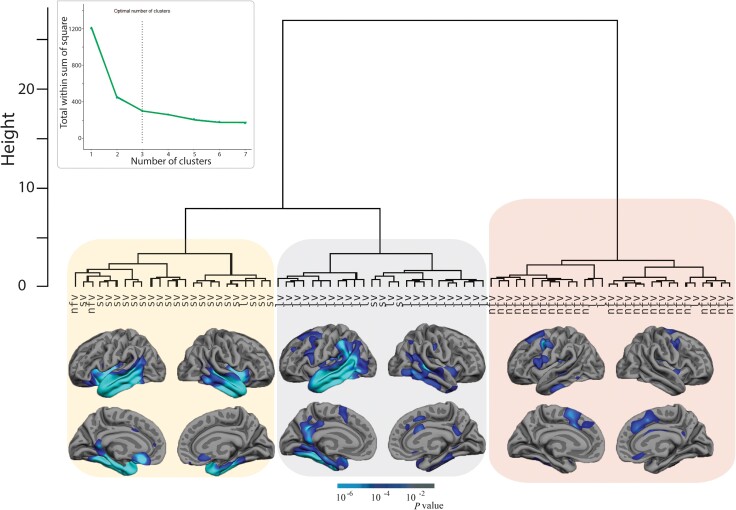
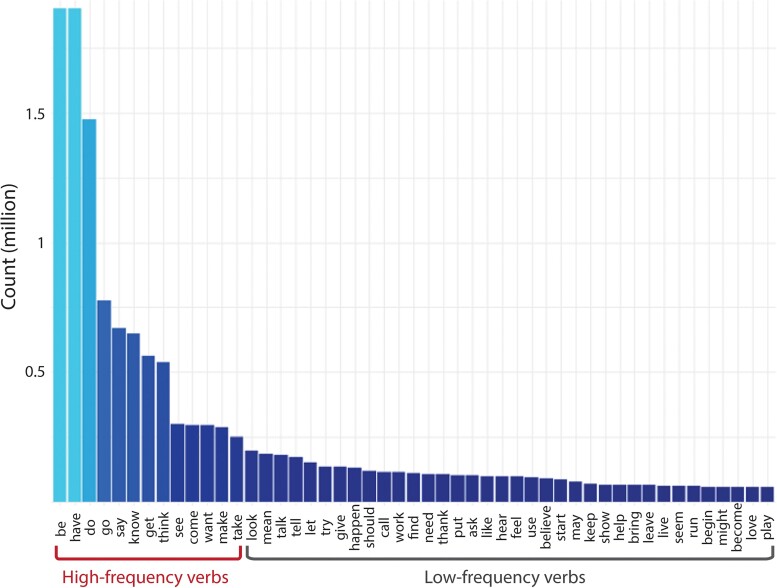
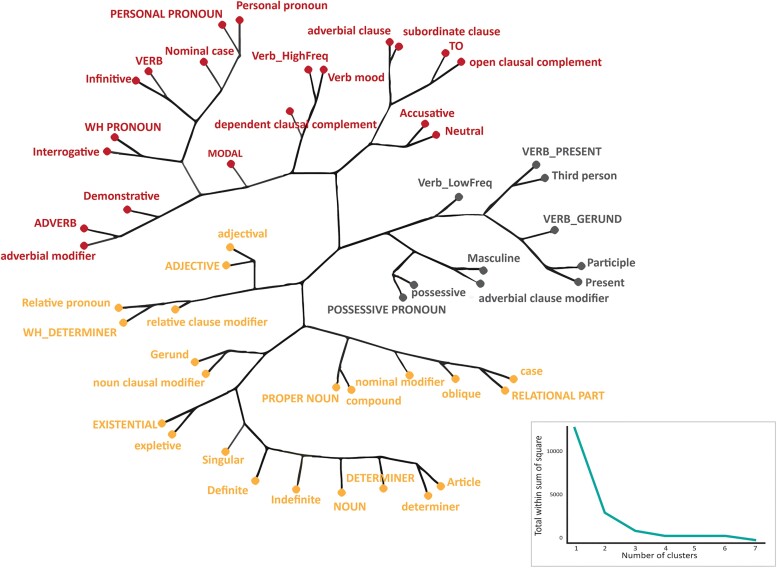
Neurodegenerative dementia syndromes, such as primary progressive aphasias (PPA), have traditionally been diagnosed based, in part, on verbal and non-verbal cognitive profiles. Debate continues about whether PPA is best divided into three variants and regarding the most distinctive linguistic features for classifying PPA variants. In this cross-sectional study, we initially harnessed the capabilities of artificial intelligence and natural language processing to perform unsupervised classification of short, connected speech samples from 78 pateints with PPA. We then used natural language processing to identify linguistic features that best dissociate the three PPA variants. Large language models discerned three distinct PPA clusters, with 88.5% agreement with independent clinical diagnoses. Patterns of cortical atrophy of three data-driven clusters corresponded to the localization in the clinical diagnostic criteria. In the subsequent supervised classification, 17 distinctive features emerged, including the observation that separating verbs into high- and low-frequency types significantly improved classification accuracy. Using these linguistic features derived from the analysis of short, connected speech samples, we developed a classifier that achieved 97.9% accuracy in classifying the four groups (three PPA variants and healthy controls). The data-driven section of this study showcases the ability of large language models to find natural partitioning in the speech of patients with PPA consistent with conventional variants. In addition, the work identifies a robust set of language features indicative of each PPA variant, emphasizing the significance of dividing verbs into high- and low-frequency categories. Beyond improving diagnostic accuracy, these findings enhance our understanding of the neurobiology of language processing.
Overview
The claims and statistics of this paper haven’t been checked yet.
Free: it reads the open-access text and checks the first 5 claims that cite a source we can check. Create a free account to check every claim.
Integrity signals
Registry
Cites
Statistics
Figures


Verification
Claims the paper makes
The claims and statistics of this paper haven’t been checked yet.
Free: it reads the open-access text and checks the first 5 claims that cite a source we can check. Create a free account to check every claim.
Claims other papers make about this one
Each is checked against this paper’s own text: does it say what the citing paper says it does?
The source backs part of the claim, not all of it — or backs it for a different population, condition or comparison.
In the citing paper
“Even in dementia syndromes where language symptoms are not dominant, such as the behavioral variant of frontotemporal dementia, automated speech analysis can detect subtle linguistic and acoustic patterns that reflect underlying cognitive, behavioral, or socio-emotional changes.91,92”
From Review of Artificial Intelligence for Clinical Use in Alzheimer's Disease and Related Dementias (2026) · cites this paper as [92]
Experimental — accuracy not yet measured
Self-check
Percentages, sums and reported differences re-computed from the paper’s own numbers.
The self-check needs the paper’s full text.
Citations
Cites
Scikit-learn: Machine Learning in Python
Pedregosa, F., Varoquaux, G., Gramfort, A., Michel, V., Thirion, B., Grisel, O., Blondel, M., Müller, A., Nothman, J., Louppe, G., et al. (2012) · arXiv · doi:10.48550/arxiv.1201.0490 · Cited by 71,016
Exploring the Limits of Transfer Learning with a Unified Text-to-Text Transformer
Raffel, C., Shazeer, N., Roberts, A., Lee, K., Narang, S., Matena, M., Zhou, Y., Li, W., & Liu, P. J. (2019) · arXiv · doi:10.48550/arxiv.1910.10683 · Cited by 10,929
(1995) · Cited by 6,864
Classification of primary progressive aphasia and its variants
Gorno-Tempini, M. L., Hillis, A. E., Weintraub, S., Kertesz, A., Mendez, M., Cappa, S. F., Ogar, J. M., Rohrer, J. D., Black, S., Boeve, B. F., et al. (2011) · Neurology · doi:10.1212/wnl.0b013e31821103e6 · Cited by 5,141
(2006) · Cited by 3,931
An improved Bonferroni procedure for multiple tests of significance
SIMES, R. J. (1986) · Biometrika · doi:10.1093/biomet/73.3.751 · Cited by 2,396
The spatial and temporal signatures of word production components
Indefrey, P., & Levelt, W. J. M. (2004) · Cognition · doi:10.1016/j.cognition.2002.06.001 · Cited by 2,144
Thorndike, R. L. (1953) · Psychometrika · doi:10.1007/bf02289263 · Cited by 2,051
Qualitative Assessment of Verbal Fluency Performance in Frontotemporal Dementia
van den Berg, E., Jiskoot, L. C., Grosveld, M. J. H., van Swieten, J. C., & Papma, J. M. (2017) · Dementia and Geriatric Cognitive Disorders · doi:10.1159/000477538 · Cited by 2,046
Fischl, B., Liu, A., & Dale, A. M. (2001) · IEEE Transactions on Medical Imaging · doi:10.1109/42.906426 · Cited by 1,751
Western Aphasia Battery--Revised
Kertesz, A. (2012) · PsycTESTS Dataset · doi:10.1037/t15168-000 · Cited by 1,367
English Verb Classes and Alternations
김두식 (2006) · 담화·인지언어학회 학술대회 발표논문집 · Cited by 1,276
Towards a functional neuroanatomy of speech perception
Hickok, G., & Poeppel, D. (2000) · Trends in Cognitive Sciences · doi:10.1016/s1364-6613(00)01463-7 · Cited by 1,135
Discrete Cortical Regions Associated with Knowledge of Color and Knowledge of Action
Martin, A., Haxby, J. V., Lalonde, F. M., Wiggs, C. L., & Ungerleider, L. G. (1995) · Science · doi:10.1126/science.270.5233.102 · Cited by 1,066
Mesulam, M. ‐. (2001) · Annals of Neurology · doi:10.1002/ana.91 · Cited by 992
Nouns and verbs are retrieved with differently distributed neural systems.
Damasio, A. R., & Tranel, D. (1993) · Proceedings of the National Academy of Sciences · doi:10.1073/pnas.90.11.4957 · Cited by 840
The Spatial and Temporal Signatures of Word Production Components: A Critical Update
Indefrey, P. (2011) · Frontiers in Psychology · doi:10.3389/fpsyg.2011.00255 · Cited by 767 · cited 1×
“62,63 Directionality in the language circuit is supported further by the pattern of impairment and potential compensation shown in Fig.”
BackgroundFinding Groups in Data: An Introduction to Cluster Analysis.
Gentle, J. E., Kaufman, L., & Rousseuw, P. J. (1991) · Biometrics · doi:10.2307/2532178 · Cited by 732
Lexical organization of nouns and verbs in the brain
Caramazza, A., & Hillis, A. E. (1991) · Nature · doi:10.1038/349788a0 · Cited by 666
Multitask Prompted Training Enables Zero-Shot Task Generalization
Sanh, V., Webson, A., Raffel, C., Bach, S. H., Sutawika, L., Alyafeai, Z., Chaffin, A., Stiegler, A., Scao, T. L., Raja, A., et al. (2021) · arXiv · doi:10.48550/arxiv.2110.08207 · Cited by 612
Connected speech production in three variants of primary progressive aphasia
Wilson, S. M., Henry, M. L., Besbris, M., Ogar, J. M., Dronkers, N. F., Jarrold, W., Miller, B. L., & Gorno-Tempini, M. L. (2010) · Brain · doi:10.1093/brain/awq129 · Cited by 546
Stanza: A Python Natural Language Processing Toolkit for Many Human Languages
Qi, P., Zhang, Y., Zhang, Y., Bolton, J., & Manning, C. D. (2020) · arXiv · doi:10.48550/arxiv.2003.07082 · Cited by 476 · cited 1×
“44 The Stanza parser identified 103 language features.”
BackgroundEvidence for a possible neuroanatomical basis for lexical processing of nouns and verbs
Daniele, A., Giustolisi, L., Silveri, M. C., Colosimo, C., & Gainotti, G. (1994) · Neuropsychologia · doi:10.1016/0028-3932(94)00066-2 · Cited by 415
Typical and atypical pathology in primary progressive aphasia variants
Spinelli, E. G., Mandelli, M. L., Miller, Z. A., Santos‐Santos, M. A., Wilson, S. M., Agosta, F., Grinberg, L. T., Huang, E. J., Trojanowski, J. Q., Meyer, M., et al. (2017) · Annals of Neurology · doi:10.1002/ana.24885 · Cited by 409
Primary progressive aphasia and the evolving neurology of the language network
Mesulam, M.-M., Rogalski, E. J., Wieneke, C., Hurley, R. S., Geula, C., Bigio, E. H., Thompson, C. K., & Weintraub, S. (2014) · Nature Reviews Neurology · doi:10.1038/nrneurol.2014.159 · Cited by 394
Words and Rules: The Ingredients of Language
Algeo, J. (2000) · Journal of English Linguistics · doi:10.1177/00754240022005117 · Cited by 389
Neuroanatomical distribution of five semantic components of verbs: Evidence from fMRI
Kemmerer, D., Castillo, J. G., Talavage, T., Patterson, S., & Wiley, C. (2008) · Brain and Language · doi:10.1016/j.bandl.2007.09.003 · Cited by 388
Verb Retrieval in Aphasia. 1. Characterizing Single Word Impairments
Sloan Berndt, R., Mitchum, C. C., Haendiges, A. N., & Sandson, J. (1997) · Brain and Language · doi:10.1006/brln.1997.1727 · Cited by 371
Primary Progressive Aphasia: Longitudinal Course, Neuropsychological Profile, and Language Features
Weintraub, S. (1990) · Archives of Neurology · doi:10.1001/archneur.1990.00530120075013 · Cited by 310
A Neural Basis for the Retrieval of Words for Actions
Tranel, D., Adolphs, R., Damasio, H., & Damasio, A. R. (2001) · Cognitive Neuropsychology · doi:10.1080/02643290126377 · Cited by 269
Neural Substrates of Action Event Knowledge
Kable, J. W., Lease-Spellmeyer, J., & Chatterjee, A. (2002) · Journal of Cognitive Neuroscience · doi:10.1162/08989290260138681 · Cited by 266
Semantic Factors in Verb Retrieval: An Effect of Complexity
Breedin, S. D., Saffran, E. M., & Schwartz, M. F. (1998) · Brain and Language · doi:10.1006/brln.1997.1923 · Cited by 235
Classification and pathology of primary progressive aphasia
Harris, J. M., Gall, C., Thompson, J. C., Richardson, A. M. T., Neary, D., du Plessis, D., Pal, P., Mann, D. M. A., Snowden, J. S., & Jones, M. (2013) · Neurology · doi:10.1212/01.wnl.0000436070.28137.7b · Cited by 232
Primary progressive aphasia: A tale of two syndromes and the rest
Sajjadi, S. A., Patterson, K., Arnold, R. J., Watson, P. C., & Nestor, P. J. (2012) · Neurology · doi:10.1212/wnl.0b013e3182574f79 · Cited by 231
Automated classification of primary progressive aphasia subtypes from narrative speech transcripts
Fraser, K. C., Meltzer, J. A., Graham, N. L., Leonard, C., Hirst, G., Black, S. E., & Rochon, E. (2014) · Cortex · doi:10.1016/j.cortex.2012.12.006 · Cited by 229 · cited 1×
“11 used three different classifiers on a large set of lexicosemantic features.”
MethodDeterioration of naming nouns versus verbs in primary progressive aphasia
Hillis, A. E., Oh, S., & Ken, L. (2004) · Annals of Neurology · doi:10.1002/ana.10812 · Cited by 226
Fisher’s exact approach for post hoc analysis of a chi-squared test
Shan, G., & Gerstenberger, S. (2017) · PLOS ONE · doi:10.1371/journal.pone.0188709 · Cited by 223
Verb deficits in Alzheimer’s disease and agrammatism: Implications for lexical organization
Kim, M., & Thompson, C. K. (2004) · Brain and Language · doi:10.1016/s0093-934x(03)00147-0 · Cited by 205
Kemmerer, D., & Gonzalez-Castillo, J. (2010) · Brain and Language · doi:10.1016/j.bandl.2008.09.010 · Cited by 197
The role of the left frontal lobe in action naming: rTMS evidence
Cappa, S. F., Sandrini, M., Rossini, P. M., Sosta, K., & Miniussi, C. (2002) · Neurology · doi:10.1212/wnl.59.5.720 · Cited by 194
Quantitative application of the primary progressive aphasia consensus criteria
Wicklund, M. R., Duffy, J. R., Strand, E. A., Machulda, M. M., Whitwell, J. L., & Josephs, K. A. (2014) · Neurology · doi:10.1212/wnl.0000000000000261 · Cited by 177
Montembeault, M., Brambati, S. M., Gorno-Tempini, M. L., & Migliaccio, R. (2018) · Frontiers in Neurology · doi:10.3389/fneur.2018.00692 · Cited by 171
White-matter pathways for speech and language processing
Friederici, A. D. (2015) · Handbook of clinical neurology · doi:10.1016/b978-0-444-62630-1.00010-x · Cited by 164
The impact of semantic reference on word class: An fMRI study of action and object naming
Saccuman, M. C., Cappa, S. F., Bates, E. A., Arévalo, A. L., Rosa, P. A. D., Danna, M., & Perani, D. (2006) · NeuroImage · doi:10.1016/j.neuroimage.2006.04.179 · Cited by 147
Action selectivity in parietal and temporal cortex
Noppeney, U., Josephs, O., Kiebel, S. J., Friston, K. J., & Price, C. J. (2005) · Cognitive Brain Research · doi:10.1016/j.cogbrainres.2005.08.017 · Cited by 116
A DOUBLE DISSOCIATION BETWEEN LINGUISTIC AND PERCEPTUAL REPRESENTATIONS OF SPATIAL RELATIONSHIPS
Kemmerer, D. L., & Tranel, D. (2000) · Cognitive Neuropsychology · doi:10.1080/026432900410766 · Cited by 113
The Functional Neuroanatomy of Thematic Role and Locative Relational Knowledge
Wu, D. H., Waller, S., & Chatterjee, A. (2007) · Journal of Cognitive Neuroscience · doi:10.1162/jocn.2007.19.9.1542 · Cited by 105
Grammatical impairments in PPA
Thompson, C. K., & Mack, J. E. (2014) · Aphasiology · doi:10.1080/02687038.2014.912744 · Cited by 98
Use of the Progressive Aphasia Severity Scale (PASS) in monitoring speech and language status in PPA
Sapolsky, D., Domoto-Reilly, K., & Dickerson, B. C. (2014) · Aphasiology · doi:10.1080/02687038.2014.931563 · Cited by 96
Self-citationCinderella revisited: A comparison of fluent and non-fluent aphasic speech
Bird, H., & Franklin, S. (1996) · Journal of Neurolinguistics · doi:10.1016/0911-6044(96)00006-1 · Cited by 90
Logopenic, mixed, or Alzheimer-related aphasia?
Sajjadi, S. A., Patterson, K., & Nestor, P. J. (2014) · Neurology · doi:10.1212/wnl.0000000000000271 · Cited by 76
Ingram, R. U., Halai, A. D., Pobric, G., Sajjadi, S. A., Patterson, K. E., & Ralph, M. A. L. (2020) · Brain · doi:10.1093/brain/awaa245 · Cited by 60
Semantic weight and verb retrieval in aphasia
Barde, L. H. F., Schwartz, M. F., & Boronat, C. B. (2005) · Brain and Language · doi:10.1016/j.bandl.2005.11.002 · Cited by 54
Automatic Subtyping of Individuals with Primary Progressive Aphasia
Themistocleous, C., Ficek, B., Webster, K., den Ouden, D.-B., Hillis, A. E., & Tsapkini, K. (2021) · Journal of Alzheimer’s Disease · doi:10.3233/jad-201101 · Cited by 51
Lukic, S., Borghesani, V., Weis, E., Welch, A. E., Bogley, R., Neuhaus, J. M., Deleon, J., Miller, Z., Kramer, J. H., Miller, B. L., et al. (2021) · Cortex · doi:10.1016/j.cortex.2021.05.006 · Cited by 47
A syntax–lexicon trade-off in language production
Rezaii, N., Mahowald, K., Ryskin, R., Dickerson, B., & Gibson, E. (2022) · Proceedings of the National Academy of Sciences · doi:10.1073/pnas.2120203119 · Cited by 46
Self-citationMonitoring Progression of Primary Progressive Aphasia: Current Approaches and Future Directions
Sapolsky, D., Domoto‐Reilly, K., Negreira, A. M., Brickhouse, M. J., McGinnis, S. M., & Dickerson, B. C. (2011) · Neurodegenerative Disease Management · doi:10.2217/nmt.11.2 · Cited by 32
Self-citationRezaii, N., Ren, B., Quimby, M., Hochberg, D., & Dickerson, B. C. (2023) · Brain Communications · doi:10.1093/braincomms/fcad136 · Cited by 25
Self-citationAutomated analysis of written language in the three variants of primary progressive aphasia
Josephy-Hernandez, S., Rezaii, N., Jones, A., Loyer, E., Hochberg, D., Quimby, M., Wong, B., & Dickerson, B. C. (2023) · Brain Communications · doi:10.1093/braincomms/fcad202 · Cited by 25
Self-citationTeichmann, M. (2021) · Revue Neurologique · doi:10.1016/j.neurol.2020.12.001 · Cited by 24
Venturini, T., Jacomy, M., & Jensen, P. (2019) · SSRN Electronic Journal · doi:10.2139/ssrn.3378438 · Cited by 24
Rezaii, N., Michaelov, J. A., Josephy‐Hernandez, S. E., Ren, B., Hochberg, D., Quimby, M., & Dickerson, B. C. (2023) · Annals of Neurology · doi:10.1002/ana.26744 · Cited by 20
Self-citationArtificial Intelligence Enables a Paradigm Shift in Understanding Nonfluent AphasiaPreprint
Rezaii, N., & Dickerson, B. C. (2023) · doi:10.31234/osf.io/wn7vc · Cited by 4
Self-citationAn information-theoretic analysis of agrammatism in Broca’s aphasiaPreprint
Rezaii, N. (2023) · medRxiv · doi:10.1101/2023.04.23.23288999 · Cited by 3
Self-citationSanati, M., Bayat, S., Panahi, M. M., Khodadadi, A., Rezaee, S., Ghasimi, M., Besharat, S., Mahboubi‐Fooladi, Z., Almasi‐Dooghaee, M., Taheri, M. S., et al. (2024) · medRxiv · doi:10.1101/2024.04.09.24305534 · Cited by 3
Self-citationRobertson, C., Rezaii, N., Hochberg, D., Quimby, M., Wolff, P., & Dickerson, B. C. (2024) · medRxiv · doi:10.1101/2024.05.02.24306657 · Cited by 2
Self-citation
Research works printed but not linked: 2
- Grimshaw, 1993, Semantic structure and semantic content in lexical representation
- Jackendoff, 1990, Semantic structures
Cited by
Large language models for disease diagnosis: a scoping review
Zhou, S., Xu, Z., Zhang, M., Xu, C., Guo, Y., Zhan, Z., Fang, Y., Ding, S., Wang, J., Xu, K., et al. (2025) · npj Artificial Intelligence · doi:10.1038/s44387-025-00011-z · Cited by 122
Artificial Intelligence in Psychiatry: A Review of Biological and Behavioral Data Analyses
BAYDİLİ, I., Taşçı, B., & Taşçı, G. (2025) · Diagnostics · doi:10.3390/diagnostics15040434 · Cited by 97
Large Language Models in Medical Diagnostics: Scoping Review With Bibliometric Analysis
Su, H., Sun, Y., Li, R., Zhang, A., Yang, Y., Xiao, F., Duan, Z., Chen, J., Hu, Q., Yang, T., et al. (2025) · Journal of Medical Internet Research · doi:10.2196/72062 · Cited by 79
Zhong, G., Liu, Q., Huang, Y., Geng, H., & Xu, T. (2025) · Advanced Materials · doi:10.1002/adma.202508206 · Cited by 27
Advanced AI techniques for classifying Alzheimer’s disease and mild cognitive impairment
Tascedda, S., Sarti, P., Rivi, V., Guerrera, C. S., Platania, G. A., Santagati, M., Caraci, F., & Blom, J. M. C. (2024) · Frontiers in Aging Neuroscience · doi:10.3389/fnagi.2024.1488050 · Cited by 18
Metadata
- Authors
- Rezaii, N., Hochberg, D., Quimby, M., Wong, B., Brickhouse, M., Touroutoglou, A., Dickerson, B. C., & Wolff, P.
- Affiliations
- Harvard University (US)
- Emory University (US)
- Corresponding author
- Rezaii, Neguine
- ORCID
- Venue
- Brain
- Publisher
- Oxford University Press (OUP)
- Published
- 2024-06-24
- Volume
- 147
- Issue
- 9
- Pages
- 3070-3082
- ISSN
- 0006-8950 (ISSN-L)
- 1460-2156
- PMC
- PMC11370793
- OpenAlex
- W4399973052
- Cited by
- 44
- References
- 62
- Citations by year
- 2026: 25 · 2025: 14 · 2024: 5
- FWCI
- 12.93
- Type
- journal article
- Language
- en
- Open access
- hybrid
- doi.org
- Licence
- Locations
- Brain (publishedVersion, cc-by-nc)
- PubMed Central (publishedVersion, cc-by-nc)
- PubMed (publishedVersion)
- Funders
- National Institute on Deafness and Other Communication Disorders (R01 DC014296, R21 DC019567)
- National Institute on Aging (R21 AG073744)
- National Institute of Neurological Disorders and Stroke (NS131395)
- Primary Care Innovation Fund (2023A063002)
- Athinoula A. Martinos Center for Biomedical Imaging
- Center for Functional Neuroimaging Technologies (P41EB015896)
- National Institute of Biomedical Imaging and Bioengineering
- National Institutes of Health (S10RR021110, S10RR023043, S10RR023401)
- Topics
- Health Sciences › Medicine › Psychiatry and Mental health › Dementia and Cognitive Impairment Research
- Life Sciences › Neuroscience › Cognitive Neuroscience › Neurobiology of Language and Bilingualism
- Health Sciences › Health Professions › Speech and Hearing › Voice and Speech Disorders
- Keywords
- primary progressive aphasia, connected speech, large language models, natural language processing, unsupervised classification, cortical atrophy, linguistic features, verb frequency, speech-based diagnosis, neurodegenerative dementia
- MeSH terms
- Aged, Artificial Intelligence, Atrophy, Cross-Sectional Studies, Female, Humans, Male, Middle Aged, Natural Language Processing, Speech, Aphasia, Primary Progressive
About these checks
Registry, retraction, Cites and statistics results are computed, not judged, with one exception: a printed reference that no index lists is read once by a model before it counts as a citation error. Claims are extracted by a model and kept only when their quote appears verbatim in the text; each cited source is then checked, with a model’s help, for whether it says what the claim relies on. Those verdicts can be wrong — read the claim’s quote and the cited source before relying on one.
Statistics and arithmetic are recomputed, not judged.
Confidence bands are shown only for fields calibrated on our annotated test set. None is calibrated yet, so no band is shown.
What counts as a claim ›How we measure confidence ›How we check this ›
Are you an author, or do you see a problem with this page? Request a review
Data sources
Bibliographic data: Semantic Scholar, OpenAlex, Crossref.
Contains information from the Semantic Scholar Academic Graph Datasets, made available under the ODC Attribution License (ODC-BY 1.0).
Semantic Scholar’s data is described in: Kinney, R., et al. (2023). The Semantic Scholar Open Data Platform. arXiv:2301.10140.
