

Hantavirus Cardiopulmonary Syndrome Due to Imported Andes Hantavirus Infection in Switzerland: A Multidisciplinary Challenge, Two Cases and a Literature Review
Open accessThe DOI matches its Crossref record; 36 of the 36 references it cites were found in a registry or an index.
Abstract
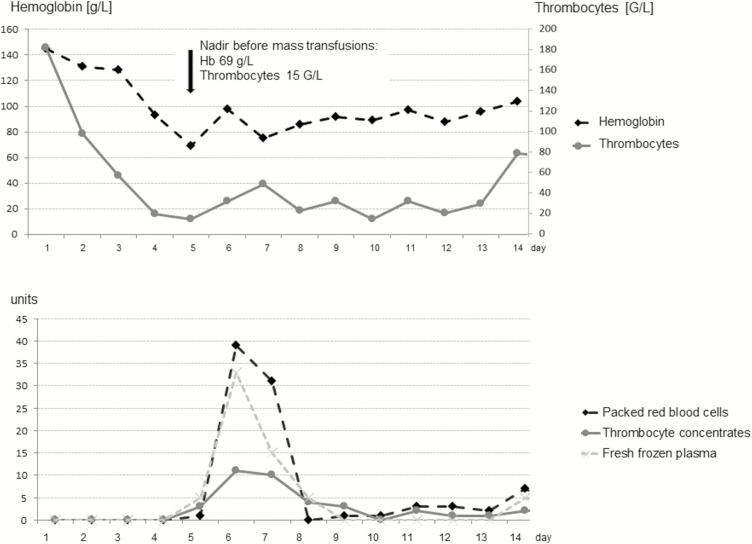
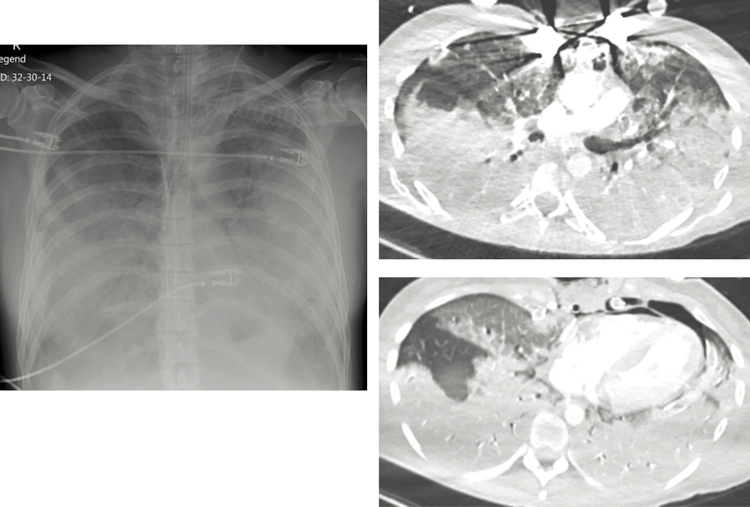
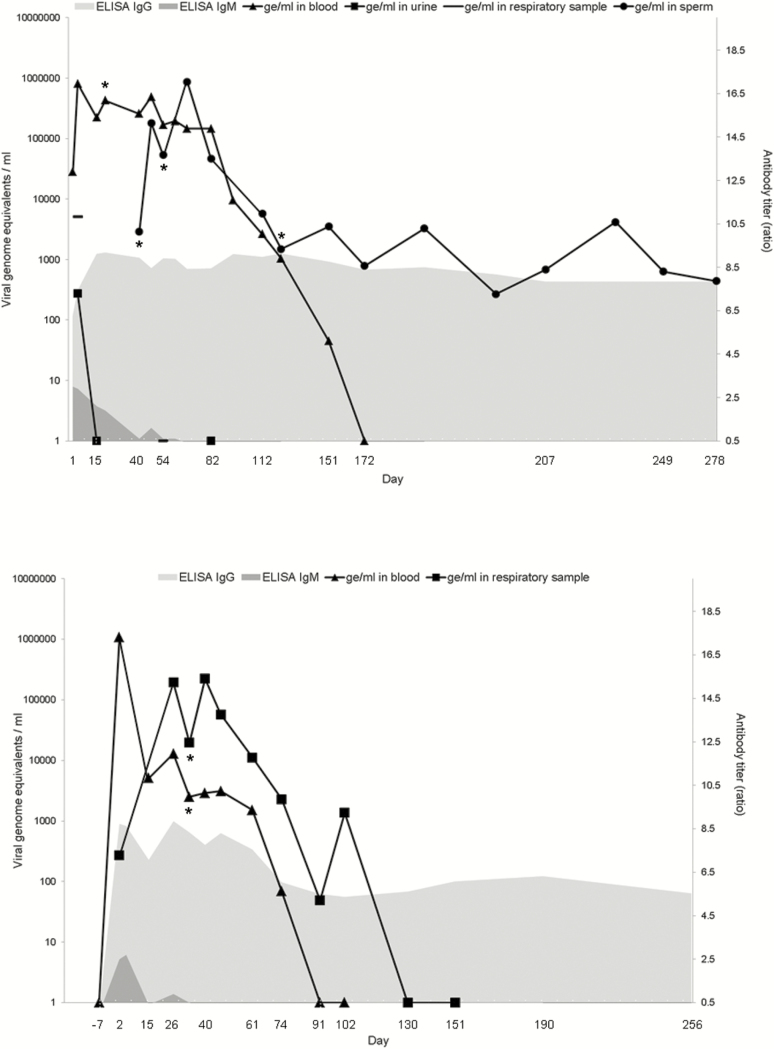
Two travellers returning from South America were diagnosed with Andes hantavirus infection, the only member of the Hantaviridae family known to be transmitted from person to person. We describe the clinical course and therapeutic and infection control measures. While both patients showed high viral load (VL) and shedding over several months, 1 patient recovered within 1 week from severe respiratory illness that required noninvasive ventilation, whereas the second patient developed severe hantavirus cardiopulmonary syndrome that required extracorporeal membrane oxygenation for 27 days. The clinical course in the latter patient was complicated by severe disseminated intravascular coagulopathy with diffuse hemorrhage that necessitated mass transfusions, as well as by multiple organ failure, including the need for renal replacement therapy. Results of VL in blood, respiratory secretions, and semen for the first 9 months of follow-up are reported. To our knowledge, these are the first cases of Andes hantavirus infection detected in Europe.
Overview
The claims and statistics of this paper haven’t been checked yet.
Free: it reads the open-access text and checks the first 5 claims that cite a source we can check. Create a free account to check every claim.
Integrity signals
Registry
Cites
Statistics
Figures
Verification
Claims the paper makes
The claims and statistics of this paper haven’t been checked yet.
Free: it reads the open-access text and checks the first 5 claims that cite a source we can check. Create a free account to check every claim.
Self-check
Percentages, sums and reported differences re-computed from the paper’s own numbers.
The self-check needs the paper’s full text.
Citations
Cites
Biosafety in microbiological and biomedical laboratories
Richmond, J. Y., & McKinney, R. W. (1999) · U.S. G.P.O. , For sale by the Supt. of Docs., U.S. G.P.O. eBooks · Cited by 1,483
Carstens, E. B. (2010) · Archives of Virology · doi:10.1007/s00705-009-0547-x · Cited by 1,135
Genetic Identification of a Hantavirus Associated with an Outbreak of Acute Respiratory Illness
Nichol, S. T., Spiropoulou, C. F., Morzunov, S., Rollin, P. E., Ksiazek, T. G., Feldmann, H., Sanchez, A., Childs, J., Zaki, S., & Peters, C. J. (1993) · Science · doi:10.1126/science.8235615 · Cited by 1,129 · cited 1×
“HCPS was first described in 1993 in a patient with Sin Nombre virus infection in the United States [9, 10].”
BackgroundHuggins, J. W., Hsiang, C. M., Cosgriff, T. M., Guang, M. Y., Smith, J. I., Wu, Z. O., LeDuc, J. W., Zheng, Z. M., Meegan, J. M., Wang, Q. N., et al. (1991) · Journal of Infectious Diseases · doi:10.1093/infdis/164.6.1119 · Cited by 463 · cited 1×
“World hantavirus infection causing renal syndrome [34].”
Hantavirus in African Wood Mouse, Guinea
Klempa, B., Fichet-Calvet, E., Lecompte, E., Auste, B., Aniskin, V., Meisel, H., Denys, C., Koivogui, L., ter Meulen, J., & Krüger, D. H. (2006) · Emerging Infectious Diseases · doi:10.3201/eid1205.051487 · Cited by 337 · cited 9×
“IPC measures were discontinued when follow-up RT-PCR tests indicated decreasing viral loads (VLs) after 10 weeks.”
MethodInfluentialAdams, M. J., Lefkowitz, E. J., King, A. M. Q., Harrach, B., Harrison, R. L., Knowles, N. J., Kropinski, A. M., Krupovic, M., Kuhn, J. H., Mushegian, A. R., et al. (2016) · Archives of Virology · doi:10.1007/s00705-016-2977-6 · Cited by 274
An Unusual Hantavirus Outbreak in Southern Argentina: Person-to-Person Transmission?
(1997) · Emerging Infectious Diseases · doi:10.3201/eid0302.970210 · Cited by 250 · cited 2×
“Reports of 2 ANDV outbreaks [18, 19] provide strong epi-”
BackgroundFerrés, M., Vial, P., Marco, C., Yañez, L., Godoy, P., Castillo, C., Hjelle, B., Delgado, I., Lee, S., Mertz, G. J., et al. (2007) · The Journal of Infectious Diseases · doi:10.1086/516786 · Cited by 210
Hantavirus Pulmonary Syndrome: The First 100 US Cases
Khan, A. S., Khabbaz, R. F., Armstrong, L. R., Holman, R. C., Bauer, S. P., Graber, J., Strine, T., Miller, G., Reef, S., Tappero, J., et al. (1996) · Journal of Infectious Diseases · doi:10.1093/infdis/173.6.1297 · Cited by 201 · cited 1×
“HCPS was first described in 1993 in a patient with Sin Nombre virus infection in the United States [9, 10].”
BackgroundHuman hantavirus infections: epidemiology, clinical features, pathogenesis and immunology
Manigold, T., & Vial, P. (2014) · Swiss Medical Weekly · doi:10.4414/smw.2014.13937 · Cited by 168 · cited 1×
“In this phase, the disease can rapidly progress to multiorgan failure, and death may occur within 24 hours [25].”
Background
Research works printed but not linked: 2
- ProMED-mail. Available at: https://www.promedmail.org/. Accessed 20 January 2017.
- Fue confirmado el séptimo caso de hantavirus de este ano en la Araucanía. Available at: http://www.araucaniacuenta.cl/fue-confirmado-el-septimo-caso-de- hantavirus-de-este-ano-en-la-araucania/. Accessed 27 January 2017.
Cited by
Hantavirus in humans: a review of clinical aspects and management
Vial, P. A., Ferrés, M., Vial, C., Klingström, J., Ahlm, C., López, R., Le Corre, N., & Mertz, G. J. (2023) · The Lancet Infectious Diseases · doi:10.1016/s1473-3099(23)00128-7 · Cited by 233
"Super-Spreaders" and Person-to-Person Transmission of Andes Virus in Argentina
Martínez, V. P., Di Paola, N., Alonso, D. O., Pérez-Sautu, U., Bellomo, C. M., Iglesias, A. A., Coelho, R. M., López, B., Periolo, N., Larson, P. A., et al. (2020) · New England Journal of Medicine · doi:10.1056/nejmoa2009040 · Cited by 247
From Ancient to Emerging Infections: The Odyssey of Viruses in the Male Genital Tract
Tortorec, A. L., Matusali, G., Mahé, D., Aubry, F., Mazaud‐Guittot, S., Houzet, L., & Dejucq‐Rainsford, N. (2020) · Physiological Reviews · doi:10.1152/physrev.00021.2019 · Cited by 133
Viral shedding and viraemia of Andes virus during acute hantavirus infection: a prospective study
Marcela Ferrés, G., Martínez-Valdebenito, C., Henriquez, C., Marco, C., Angulo, J., Barrera, A., Palma, C., Pinto, G. B., Cuiza, A., Ferreira, L., et al. (2024) · The Lancet Infectious Diseases · doi:10.1016/s1473-3099(24)00142-7 · Cited by 82
Alonso, D. O., Iglesias, A., Coelho, R., Periolo, N., Bruno, A., Córdoba, M. T., Filomarino, N., Quipildor, M., Biondo, E., Fortunato, E., et al. (2019) · Journal of Medical Virology · doi:10.1002/jmv.25446 · Cited by 70
“This might be also useful to decrease underreporting in Argentina.”
BackgroundInfluential
Metadata
- Authors
- Kuenzli, A. B., Marschall, J., Schefold, J. C., Schafer, M., Engler, O. B., Ackermann-Gäumann, R., Reineke, D. C., Suter-Riniker, F., & Staehelin, C.
- Affiliations
- University of Bern (CH)
- Spiez Laboratory (CH)
- Spiez Laboratory, Federal Office for Civil Protection, Switzerland
- Institute for Infectious Diseases, University of Bern, Switzerland
- Corresponding author
- Staehelin, Cornelia
- Venue
- Clinical Infectious Diseases
- Publisher
- Oxford University Press (OUP)
- Published
- 2018-05-22
- Volume
- 67
- Issue
- 11
- Pages
- 1788-1795
- ISSN
- 1058-4838 (ISSN-L)
- 1537-6591
- PMC
- PMC6233683
- OpenAlex
- W2886313076
- Cited by
- 34
- References
- 36
- Citations by year
- 2026: 10 · 2025: 3 · 2024: 1 · 2023: 6 · 2022: 3 · 2021: 4 · 2020: 3 · 2019: 1 · 2018: 3
- FWCI
- 2.08
- Type
- journal article
- Language
- en
- Open access
- hybrid
- doi.org
- Licence
- Locations
- Clinical Infectious Diseases (publishedVersion, cc-by-nc-nd)
- Europe PMC (PubMed Central) (publishedVersion, cc-by-nc-nd)
- PubMed Central (publishedVersion, cc-by-nc-nd)
- PubMed (publishedVersion)
- BORIS (University Library Bern) (submittedVersion, cc-by-nc-nd)
- Open Access CRIS of the University of Bern
- Topics
- Health Sciences › Medicine › Infectious Diseases › Viral Infections and Vectors
- Health Sciences › Medicine › Epidemiology › Virology and Viral Diseases
- Health Sciences › Medicine › Infectious Diseases › Viral Infections and Outbreaks Research
- Keywords
- Andes hantavirus, hantavirus pulmonary syndrome, imported infections, human-to-human transmission, viral load, viral shedding, extracorporeal membrane oxygenation, non-invasive ventilation, disseminated intravascular coagulation, multiple organ failure, renal replacement therapy, infection control, Switzerland
- MeSH terms
- Travel-Related Illness, Communicable Diseases, Imported, Antibodies, Viral, Disseminated Intravascular Coagulation, Female, Humans, Male, Middle Aged, South America, Switzerland, Thorax, Tomography, X-Ray Computed, Hantavirus Pulmonary Syndrome, Viral Load
About these checks
Registry, retraction, Cites and statistics results are computed, not judged, with one exception: a printed reference that no index lists is read once by a model before it counts as a citation error. Claims are extracted by a model and kept only when their quote appears verbatim in the text; each cited source is then checked, with a model’s help, for whether it says what the claim relies on. Those verdicts can be wrong — read the claim’s quote and the cited source before relying on one.
Statistics and arithmetic are recomputed, not judged.
Confidence bands are shown only for fields calibrated on our annotated test set. None is calibrated yet, so no band is shown.
What counts as a claim ›How we measure confidence ›How we check this ›
Are you an author, or do you see a problem with this page? Request a review
How to cite
Cite CoChat for the checks on this page, and the paper for its own findings.
- This page
- CoChat. (2026). Citation check: Hantavirus Cardiopulmonary Syndrome Due to Imported Andes Hantavirus Infection in Switzerland: A Multidisciplinary Challenge, Two Cases and a Literature Review. https://app.cochat.ai/papers/10.1093/cid/ciy443
- The paper
- Kuenzli, A. B., Marschall, J., Schefold, J. C., Schafer, M., Engler, O. B., Ackermann-Gäumann, R., Reineke, D. C., Suter-Riniker, F., & Staehelin, C. (2018). Hantavirus Cardiopulmonary Syndrome Due to Imported Andes Hantavirus Infection in Switzerland: A Multidisciplinary Challenge, Two Cases and a Literature Review. Clinical Infectious Diseases. https://doi.org/10.1093/cid/ciy443
Data sources
Bibliographic data: Semantic Scholar, OpenAlex, Crossref.
Contains information from the Semantic Scholar Academic Graph Datasets, made available under the ODC Attribution License (ODC-BY 1.0).
Semantic Scholar’s data is described in: Kinney, R., et al. (2023). The Semantic Scholar Open Data Platform. arXiv:2301.10140.
