

Biocurators and Biocuration: surveying the 21st century challenges
Open accessThe DOI matches its Crossref record; 16 of the 16 references it cites were found in a registry or an index.
Abstract
Curated databases are an integral part of the tool set that researchers use on a daily basis for their work. For most users, however, how databases are maintained, and by whom, is rather obscure. The International Society for Biocuration (ISB) represents biocurators, software engineers, developers and researchers with an interest in biocuration. Its goals include fostering communication between biocurators, promoting and describing their work, and highlighting the added value of biocuration to the world. The ISB recently conducted a survey of biocurators to better understand their educational and scientific backgrounds, their motivations for choosing a curatorial job and their career goals. The results are reported here. From the responses received, it is evident that biocuration is performed by highly trained scientists and perceived to be a stimulating career, offering both intellectual challenges and the satisfaction of performing work essential to the modern scientific community. It is also apparent that the ISB has at least a dual role to play to facilitate biocurators' work: (i) to promote biocuration as a career within the greater scientific community; (ii) to aid the development of resources for biomedical research through promotion of nomenclature and data-sharing standards that will allow interconnection of biological databases and better exploit the pivotal contributions that biocurators are making. DATABASE URL: http://biocurator.org.
Overview
The claims and statistics of this paper haven’t been checked yet.
Free: it reads the open-access text and checks the first 5 claims that cite a source we can check. Create a free account to check every claim.
Integrity signals
Registry
Cites
Statistics
Figures
Verification
Claims the paper makes
The claims and statistics of this paper haven’t been checked yet.
Free: it reads the open-access text and checks the first 5 claims that cite a source we can check. Create a free account to check every claim.
Self-check
Percentages, sums and reported differences re-computed from the paper’s own numbers.
The self-check needs the paper’s full text.
Citations
Cites
The Arabidopsis Information Resource (TAIR): gene structure and function annotation
Swarbreck, D., Wilks, C., Lamesch, P., Berardini, T. Z., Garcia-Hernandez, M., Foerster, H., Li, D., Meyer, T., Muller, R., Ploetz, L., et al. (2007) · Nucleic Acids Research · doi:10.1093/nar/gkm965 · Cited by 1,074 · cited 2×
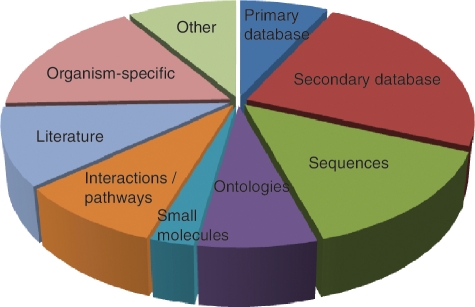
“As shown in Figure 2, the types of data being handled by biocurators were diverse: spanning nucleotide sequences; protein sequences, families, interactions and pathways; small molecules; model organisms; the literature; and (9), 18% with organism-specific resources (e.g. SGD; 10)], dictyBase (11), TAIR (12), etc.]; 16…”
Ongoing and future developments at the Universal Protein Resource
The UniProt Consortium (2011) · Nucleic Acids Research · doi:10.1093/nar/gkq1020 · Cited by 729
The IntAct molecular interaction database in 2010
Aranda, B., Achuthan, P., Alam-Faruque, Y., Armean, I., Bridge, A., Derow, C., Feuermann, M., Ghanbarian, A. T., Kerrien, S., Khadake, J., et al. (2010) · Nucleic Acids Research · doi:10.1093/nar/gkp878 · Cited by 620
The 2012 Nucleic Acids Research Database Issue and the online Molecular Biology Database Collection
Galperin, M. Y., & Fernandez-Suarez, X. M. (2012) · Nucleic Acids Research · doi:10.1093/nar/gkr1196 · Cited by 213
EMAGE mouse embryo spatial gene expression database: 2014 update
Richardson, L., Venkataraman, S., Stevenson, P., Yang, Y., Moss, J., Graham, L., Burton, N., Hill, B., Rao, J., Baldock, R. A., et al. (2014) · Nucleic Acids Research · doi:10.1093/nar/gkt1155 · Cited by 161
Field, D., Sansone, S.-A., Collis, A., Booth, T., Dukes, P., Gregurick, S. K., Kennedy, K., Kolar, P., Kolker, E., Maxon, M., et al. (2009) · Science · doi:10.1126/science.1180598 · Cited by 149
Saccharomyces Genome Database provides mutant phenotype data
Engel, S. R., Balakrishnan, R., Binkley, G., Christie, K. R., Costanzo, M. C., Dwight, S. S., Fisk, D. G., Hirschman, J. E., Hitz, B. C., Hong, E. L., et al. (2010) · Nucleic Acids Research · doi:10.1093/nar/gkp917 · Cited by 125
The 2011 Nucleic Acids Research Database Issue and the online Molecular Biology Database Collection
Galperin, M. Y., & Cochrane, G. (2010) · Nucleic Acids Research · doi:10.1093/nar/gkq1243 · Cited by 103
EMAGE mouse embryo spatial gene expression database: 2010 update
Richardson, L., Venkataraman, S., Stevenson, P., Yang, Y., Burton, N., Rao, J., Fisher, M., Baldock, R. A., Davidson, D. R., & Christiansen, J. H. (2010) · Nucleic Acids Research · doi:10.1093/nar/gkp763 · Cited by 101 · cited 1×
“UniProtKB (7), IntAct (8), EMAGE (9), 18% with organism-specific resources (e.”
BackgroundTowards BioDBcore: a community-defined information specification for biological databases
Gaudet, P., Bairoch, A., Field, D., Sansone, S.-A., Taylor, C., Attwood, T. K., Bateman, A., Blake, J. A., Bult, C. J., Cherry, J. M., et al. (2011) · Database · doi:10.1093/database/baq027 · Cited by 95
Cited by
CARD 2017: expansion and model-centric curation of the comprehensive antibiotic resistance database
Jia, B., Raphenya, A. R., Alcock, B., Waglechner, N., Guo, P., Tsang, K. K., Lago, B. A., Dave, B. M., Pereira, S., Sharma, A. N., et al. (2017) · Nucleic Acids Research · doi:10.1093/nar/gkw1004 · Cited by 2,661
“Biocuration, the act of making biological information accessible to both humans and computers via databases and data sharing tools, is thus an increasingly important part of biomedical research (5) and CARD seeks to fulfill this need for AMR research and surveillance.”
BackgroundAn Evidence‐Based Framework for Evaluating Pharmacogenomics Knowledge for Personalized Medicine
Whirl‐Carrillo, M., Huddart, R., Gong, L., Sangkuhl, K., Thorn, C. F., Whaley, R., & Klein, T. E. (2021) · Clinical Pharmacology & Therapeutics · doi:10.1002/cpt.2350 · Cited by 810
“9 This challenge was further complicated by our use of qualitative criteria when assigning LOE.”
MethodPubTator: a web-based text mining tool for assisting biocuration
Wei, C.-H., Kao, H.-Y., & Lu, Z. (2013) · Nucleic Acids Research · doi:10.1093/nar/gkt441 · Cited by 566
“Biocuration has become an essential part of biological discovery and biomedical research (1–3).”
BackgroundAite, M., Chevallier, M., Frioux, C., Trottier, C., Got, J., Cortés, M. P., Mendoza, S. N., Carrier, G., Dameron, O., Guillaudeux, N., et al. (2018) · PLOS Computational Biology · doi:10.1371/journal.pcbi.1006146 · Cited by 137
(2017) · Methods in Molecular Biology · doi:10.1007/978-1-4939-3743-1 · Cited by 133
Gaudet, P., Škunca, N., Hu, J. C., & Dessimoz, C. (2017) · Methods in Molecular Biology · doi:10.1007/978-1-4939-3743-1_3 · Cited by 102
Davis, A. P., Wiegers, T. C., Roberts, P. M., King, B. L., Lay, J. M., Lennon-Hopkins, K., Sciaky, D., Johnson, R., Keating, H., Greene, N., et al. (2013) · Database · doi:10.1093/database/bat080 · Cited by 107
Antimicrobial resistance surveillance in the genomic age
McArthur, A. G., & Tsang, K. K. (2017) · Annals of the New York Academy of Sciences · doi:10.1111/nyas.13289 · Cited by 102
The Hemiptera (Insecta) of Canada: Constructing a Reference Library of DNA Barcodes
Gwiazdowski, R., Foottit, R. G., Maw, H. E. L., & Hebert, P. D. N. (2015) · PLoS ONE · doi:10.1371/journal.pone.0125635 · Cited by 116
“The development of a DNA barcode library, for any group of organisms, requires the integration of taxonomic expertise, technologies, and cooperation among institutions [12,13], and helps to create new collaborative opportunities for constructing libraries at national and regional scales [14,15,16].”
BackgroundAgBioData consortium recommendations for sustainable genomics and genetics databases for agriculture
Harper, L., Campbell, J., Cannon, E. K. S., Jung, S., Poelchau, M., Walls, R., Andorf, C., Arnaud, E., Berardini, T. Z., Birkett, C., et al. (2018) · Database · doi:10.1093/database/bay088 · Cited by 84
Müller, H.-M., Auken, K. M. V., Li, Y., & Sternberg, P. W. (2018) · BMC Bioinformatics · doi:10.1186/s12859-018-2103-8 · Cited by 85
Cohen, P. R. (2015) · Physical Biology · doi:10.1088/1478-3975/12/4/045008 · Cited by 94
“Curation refers to a growing movement to make biological knowledgemachine-readable [11, 12, 27].”
BackgroundDavis, A. P., Wiegers, T. C., Johnson, R. J., Lay, J. M., Lennon-Hopkins, K., Saraceni-Richards, C. A., Sciaky, D., Grondin, C., & Mattingly, C. J. (2013) · PLoS ONE · doi:10.1371/journal.pone.0058201 · Cited by 72
An overview of the BioCreative 2012 Workshop Track III: interactive text mining task
Arighi, C. N., Carterette, B., Cohen, K. B., Krallinger, M., Wilbur, W. J., Fey, P., Dodson, R. J., Cooper, L., Slyke, C. E. V., Dahdul, W., et al. (2013) · Database · doi:10.1093/database/bas056 · Cited by 74
“Biocurators from Reactome, SGD and Merck Serono participated in the evaluation. eFIP performance was evaluated for document retrieval, sentence-level information extraction and document ranking.”
BackgroundMethodInfluentialThe SIB Swiss Institute of Bioinformatics’ resources: focus on curated databases
(2016) · Nucleic Acids Research · doi:10.1093/nar/gkv1310 · Cited by 65
“Expert biocuration (16,17) is a crucial part of SIB’s mission to provide world-class resources and infrastructure for life scientists.”
BackgroundVasilev, B., & Atanasova, M. (2025) · Applied Sciences · doi:10.3390/app15031206 · Cited by 67
Reiser, L., Berardini, T., Li, D., Muller, R., Strait, E., Li, Q., Mezheritsky, Y., Vetushko, A., & Huala, E. (2016) · Database · doi:10.1093/database/baw018 · Cited by 57
“org), (ii) reducing database and tool development costs through the creation of shared, distributed software, infrastructure and tools (4, 5, 26) and (iii) more public education and outreach about the importance of curation and the costs of maintaining and improving essential community resources (15, 27).”
BackgroundThe Evidence and Conclusion Ontology (ECO): Supporting GO Annotations
Chibucos, M. C., Siegele, D. A., Hu, J. C., & Giglio, M. G. (2016) · Methods in molecular biology · doi:10.1007/978-1-4939-3743-1_18 · Cited by 33
“Recording evidence is essential because: (1) knowing what methodologies were used is central to the scientifi c method and can impact one’s evaluation of the data or results; (2) associating evidence with data maintained electronically allows for selective data queries and retrieval from even the largest of databases;…”
MethodDavis, A. P., Wiegers, T. C., King, B. L., Wiegers, J., Grondin, C., Sciaky, D., Johnson, R. J., & Mattingly, C. J. (2016) · PLoS ONE · doi:10.1371/journal.pone.0155530 · Cited by 32
Undergraduate Biocuration: Developing Tomorrow's Researchers While Mining Today's Data.
Mitchell, C. S., Cates, A., Kim, R. B., & Hollinger, S. K. (2015) · Europe PMC (PubMed Central) · Cited by 30
Chen, Q., Britto, R., Erill, I., Jeffery, C. J., Liberzon, A., Magrane, M., Onami, J.-I., Robinson‐Rechavi, M., Sponarova, J., Zobel, J., et al. (2020) · Genomics Proteomics & Bioinformatics · doi:10.1016/j.gpb.2018.11.006 · Cited by 26
Gloaguen, P., Bournais, S., Alban, C., Ravanel, S., Seigneurin‐Berny, D., Matringe, M., Tardif, M., Kuntz, M., Ferro, M., Bruley, C., et al. (2017) · PLANT PHYSIOLOGY · doi:10.1104/pp.17.00242 · Cited by 31
“…requirement, when seeking to exploit the vast amount of heterogenous data available in databases and the literature, biocuration (Howe et al., 2008; Burge et al., 2012; Dauga, 2015), which consists of coherently collecting, organizing, and structuring data from published articles, databases, and…”
BackgroundGarcia‐Pelaez, J., Rodríguez, D., Medina-Molina, R., García‐Rivas, G., Jerjes-Sánchez, C., & Treviño, V. (2018) · Database · doi:10.1093/database/bay137 · Cited by 27
“(A) Using a PubMed query in (1), specifying the number of records (2) and loading them up (3).”
BackgroundMethodInfluentialMulti-label Deep Learning for Gene Function Annotation in Cancer Pathways
Guan, R., Wang, X., Yang, M. Q., Zhang, Y. L., Zhou, F., Yang, C., & Liang, Y. (2018) · Scientific Reports · doi:10.1038/s41598-017-17842-9 · Cited by 24
“ coverage H m rank x ( ) 1 max ( , ) 1 (8) S i m”
Poretsky, E., Blake, V. C., Andorf, C. M., & Sen, T. Z. (2025) · Database · doi:10.1093/database/baaf011 · Cited by 17
Biocuration - mapping resources and needs
Holinski, A., Burke, M. L., Morgan, S., McQuilton, P., & Palagi, P. M. (2020) · F1000Research · doi:10.12688/f1000research.25413.2 · Cited by 16
A new workflow for the effective curation of membrane permeability data from open ADME information
Esaki, T., Yonezawa, T., & Ikeda, K. (2024) · Journal of Cheminformatics · doi:10.1186/s13321-024-00826-z · Cited by 16
“Furthermore, curation generally incurs considerable cost and time [25].”
BackgroundOpenness and trust in data-intensive science: the case of biocuration
Gabrielsen, A. M. (2020) · Medicine Health Care and Philosophy · doi:10.1007/s11019-020-09960-5 · Cited by 17
NeuroTransDB: highly curated and structured transcriptomic metadata for neurodegenerative diseases
Bagewadi, S., Adhikari, S., Dhrangadhariya, A., Irin, A. K., Ebeling, C., Namasivayam, A. A., Page, M., Hofmann‐Apitius, M., & Senger, P. (2015) · Database · doi:10.1093/database/bav099 · Cited by 19
“An obvious prerequisite for any curation process is to have access to specially trained personnel, who understand the key attributes required to adequately describe an expression experiment and are able to complete these attributes by reference to appropriate resources (31).”
BackgroundCole, C., Krampis, K., Karagiannis, K., Almeida, J. S., Faison, W. J., Motwani, M., Wan, Q., Golikov, A., Pan, Y., Simonyan, V. V., et al. (2014) · BMC Bioinformatics · doi:10.1186/1471-2105-15-28 · Cited by 14
“Biological information is usually concentrated in databases mainly of two types: primary databases comprised of raw data submitted by researchers, and secondary databases that extract and filter the information available from the primary databases and add additional annotations generated either manually or automatical…”
BackgroundA document classifier for medicinal chemistry publications trained on the ChEMBL corpus
Papadatos, G., van Westen, G. J. P., Croset, S., Santos, R., Trubian, S., & Overington, J. P. (2014) · Journal of Cheminformatics · doi:10.1186/s13321-014-0040-8 · Cited by 12
“Manual document data entry and curation is expensive and time-consuming [2,3].”
BackgroundRecent advances in biocuration: Meeting Report from the fifth International Biocuration Conference
Gaudet, P., Arighi, C. N., Bastian, F., Bateman, A. G., Blake, J. A., Cherry, J. M., D’Eustachio, P., Finn, R. D., Giglio, M. G., Hirschman, L., et al. (2012) · Database · doi:10.1093/database/bas036 · Cited by 11
Ambert, K. H., Cohen, A. M., Burns, G. A. P. C., Boudreau, E., & Sonmez, K. (2013) · Frontiers in Neuroinformatics · doi:10.3389/fninf.2013.00038 · Cited by 6
“…in the world; for a less-well-known resource, such as the NR (which has contributions from only 13 individuals, to date), some level of usefulness will need to be demonstrated before it becomes a resource to which researchers are regularly willing to submit new information (Burge et al., 2012).”
BackgroundTriage by ranking to support the curation of protein interactions
Mottin, L., Pasche, E., Gobeill, J., de Laval, V. R., Gleizes, A., Michel, P.-A., Bairoch, A., Gaudet, P., & Ruch, P. (2017) · Database · doi:10.1093/database/bax040 · Cited by 11
“Curators play a key role to define the content and ensure the quality of the biomedical databases and to spot-light the major findings (6–8).”
BackgroundTowards the Collaborative Curation of the Registry underlying identifiers.org
Juty, N., Novère, N. G. L., Hermjakob, H., & Laibe, C. (2013) · Database · doi:10.1093/database/bat017 · Cited by 9
“This is by no mean unique to the Registry: any resource relying on curation activities (22) is facing the same challenges (23, 24).”
BackgroundJBioWH: an open-source Java framework for bioinformatics data integration
Vera, R., Pérez‐Riverol, Y., Perez, S., Ligeti, B., Kertész‐Farkas, A., & Pongor, S. (2013) · Database · doi:10.1093/database/bat051 · Cited by 12
“In addition, the number of data types used by different user groups in life sciences is also rapidly increasing [for recent reviews see (1)].”
BackgroundOverview of the BioCreative VI text-mining services for Kinome Curation Track
Gobeill, J., Gaudet, P., Dopp, D., Morrone, A., Kahanda, I., Hsu, Y.-Y., Wei, C.-H., Lu, Z., & Ruch, P. (2018) · Database · doi:10.1093/database/bay104 · Cited by 10
“Biomedical big data not only offers tremendous potential for making discoveries but also demands unprecedented efforts to keep structured databases up to date with the findings described in the torrent of publications (1).”
BackgroundBiocuration: A New Challenge for the Tunicate Community
Dauga, D. (2014) · genesis · doi:10.1002/dvg.22842 · Cited by 9
“%) having worked as bioinformaticians, programmers, or in other areas of computational science (Burge et al., 2012).”
BackgroundGenomics data curation roles, skills and perception of data quality
Huang, H., Jörgensen, C., & Stvilia, B. (2015) · Library & Information Science Research · doi:10.1016/j.lisr.2014.08.003 · Cited by 8
“The genomics profession has moved from a data production role to an activist role for promoting the wider use and data sharing of genomic data (Burge et al., 2012).”
BackgroundInfluentialFuture of Evidence Synthesis in Precision Oncology: Between Systematic Reviews and Biocuration
Boca, S. M., Panagiotou, O. A., Rao, S., McGarvey, P. B., & Madhavan, S. (2018) · JCO Precision Oncology · doi:10.1200/po.17.00175 · Cited by 8
Bekkar, A., Estreicher, A., Niknejad, A., Casals‐Casas, C., Bridge, A. J., Xénarios, I., Dorier, J., & Crespo, I. (2018) · Database · doi:10.1093/database/bay031 · Cited by 7
“However, human expertise remains essential for the construction of useful PKNs (18–20).”
BackgroundSarma, G., & Faúndez, V. (2017) · Cellular Logistics · doi:10.1080/21592799.2017.1392400 · Cited by 8
MetaRNA-Seq: An Interactive Tool to Browse and Annotate Metadata from RNA-Seq Studies
Kumar, P., Halama, A., Hayat, S., Billing, A. M., Gupta, M., Yousri, N. A., Smith, G. M., & Suhre, K. (2015) · BioMed Research International · doi:10.1155/2015/318064 · Cited by 6
“The importance of biocurating biological databases was realized in recent years [11, 12].”
BackgroundLa biocuración en biodiversidad: proceso, aciertos, errores, soluciones y perspectivas
Castillo, M., Michán, L., & Luis‐Martínez, A. (2014) · Acta Botanica Mexicana · doi:10.21829/abm108.2014.199 · Cited by 6
Marrano, A., Cabugos, L., Hafner, A., Kapoor, B., McNamara, J. P., O'Donnell, M. N., Reiser, L., Tello-Ruiz, M. K., Zhang, H., & Staton, M. E. (2025) · Database · doi:10.1093/database/baaf034 · Cited by 5
Gendering data care: curators, care, and computers in data-centric biology
Gabrielsen, A. M. (2023) · Science as Culture · doi:10.1080/09505431.2023.2260830 · Cited by 7
“This corresponds with biocurator surveys where the majority of respondents are female (Burge et al ., 2012; International Society for Biocuration and Vasilevsky, 2021).”
BackgroundWorking in biocuration: contemporary experiences and perspectives
Davies, S. R. (2025) · Database · doi:10.1093/database/baaf003 · Cited by 8
Domain knowledge and data quality perceptions in genome curation work
Huang, H. (2015) · Journal of Documentation · doi:10.1108/jd-08-2013-0104 · Cited by 6
OncoPubMiner: a platform for mining oncology publications
Xu, Q., Liu, Y., Hu, J., Duan, X., Song, N., Zhou, J., Zhai, J.-C., Su, J., Liu, S., Chen, F., et al. (2022) · Briefings in Bioinformatics · doi:10.1093/bib/bbac383 · Cited by 5
Díaz-Rodríguez, M., Lithgow-Serrano, O. W., Guadarrama-García, F., Tierrafría, V. H., Gama‐Castro, S., Solano-Lira, H., Salgado, H., Rinaldi, F., Méndez-Cruz, C.-F., & Collado‐Vides, J. (2021) · Biochimica et Biophysica Acta (BBA) - Gene Regulatory Mechanisms · doi:10.1016/j.bbagrm.2021.194753 · Cited by 3
Target discovery from protein databases: challenges for curation
Chichester, C. H., & Gaudet, P. (2015) · Drug Discovery Today Technologies · doi:10.1016/j.ddtec.2015.01.003 · Cited by 2
“Most annotation teams employ experienced, generally PhD-level scientists with a strong research background in life sciences [15].”
BackgroundDealing with different conceptions of pollution in the Gene Regulation Knowledge Commons
Chatterjee, A., Swierstra, T., & Kuiper, M. T. R. (2021) · Biochimica et Biophysica Acta (BBA) - Gene Regulatory Mechanisms · doi:10.1016/j.bbagrm.2021.194779 · Cited by 2
Applying Never-Ending Learning (NEL) Principles to Build a Gene Ontology (GO) Biocurator
do Amaral, L. R., Alves, A. H. D. S., Mendes, R. D. L., Gomes, M. D. S., Bertarini, P. L. L., & Junior, E. R. H. (2021) · IEEE Congress on Evolutionary Computation (CEC) · doi:10.1109/cec45853.2021.9504981 · Cited by 2
Data Mining, Quality and Management in the Life Sciences
Zadissa, A., & Apweiler, R. (2022) · Methods in molecular biology · doi:10.1007/978-1-0716-2095-3_1 · Cited by 2
Slenter, D. (2024) · Research Publications (Maastricht University) · doi:10.26481/dis.20240624ds · Cited by 2
Davies, S. R. (2025) · Minerva · doi:10.1007/s11024-025-09590-2 · Cited by 2
“(Strasser 2019 : 142) Indeed, biocuration continues to suffer from a lack of visibility: as Burge et al. ( 2012 ) note, “for most users… how databases are maintained, and by whom, is rather obscure” (p.1).”
Fifth International Biocuration Conference : Meeting for Biocurators
明日佳, 坂. (2012) · Journal of Information Processing and Management · doi:10.1241/johokanri.55.214 · Cited by 1
Extracting Molecular Entities and Their Interactions from Pathway Figures Based on Deep Learning
He, F., Wang, D., Innokenteva, Y., Kholod, O., Shin, D., & Xu, D. H. (2019) · IEEE International Conference on Bioinformatics and Biomedicine (BIBM) · doi:10.1109/bibm47256.2019.8983234 · Cited by 1
The Curation and Analysis of Rice Stress-Resistance Genes Based on RiceWiki
张, 烨. (2015) · Hans Journal of Computational Biology · doi:10.12677/hjcb.2015.53004
Scheuer, K. S., Hanlon, B. M., Dresel, J. W., Nolan, E. D., Davis, J. C., & Loewe, L. (2017) · bioRxiv (Cold Spring Harbor Laboratory) · doi:10.1101/099192
“There seems to be little debate over the need for curating biological data, 10 especially as it keeps growing (BOURNE AND MCENTYRE 2006; BURKHARDT et al. 2006; 11 SALIMI AND VITA 2006; HOWE et al. 2008; BURGE et al. 2012).”
BackgroundThe State of the Curation Nation
Edmunds, S. (2012) · doi:10.59350/6rh88-esf96
MouseScholar: Evaluating an Image+Text Search System for Biocuration
Trabucco, J. T., Floricel, C., Arighi, C. N., Shatkay, H., Raciti, D., Ringwald, M., & Marai, G. E. (2023) · IEEE International Conference on Bioinformatics and Biomedicine (BIBM) · doi:10.1109/bibm58861.2023.10385503 · Cited by 1
“In biology and biomedical research, analyzing scientific articles to integrate biological data into well-structured data repositories is a process known as biocuration [1].”
BackgroundPosada-Reyes, A.-B., Méndez-Cruz, C.-F., Martínez-Luna, S. B., & Varela-Vega, A. (2025) · TIES Revista de Tecnología e Innovación en Educación Superior · doi:10.22201/dgtic.26832968e.2025.13.49
The three pillars approach and a practicum portfolio for FAIR research in political science
Meyers, N. (2025) · European Political Science · doi:10.1057/s41304-025-00552-6
“…is to combine forces across institutions leveraging disciplinary and subdisciplinary strengths like the “ Data Curation Network: A Cross-Institutional Staffing Model for Curating Research Data” (John-ston et al. 2018) or the International Society of Biocuration (Bateman 2010; Burge et al. 2012).”
The State of the Curation Nation
Edmunds, S. (2012) · doi:10.59350/qr8ss-p3p70
Grattepanche, C. (2022) · theses.fr (ABES) · doi:10.70675/bf158bd9zab55z49c5za183z6067384637bd
AI in biocuration: challenges, opportunities, and a roadmap for sustainable integration
Arnaboldi, V., Schriml, L. M., Jeffryes, M., Li, P., Bello, S., Sternberg, P. W., Bult, C. J., & Cook, C. E. (2026) · Bioinformatics Advances · doi:10.1093/bioadv/vbag102 · Cited by 2
“…have typically undertaken curation by extracting relevant information from published papers or manuscripts and entering them into a database to enhance those resources (Howe et al. 2011, Burge et al. 2012, Skrzypek and Nash 2015, International Society for Biocuration 2018, Holinski et al. 2020).”
Metadata
- Authors
- Burge, S., Attwood, T. K., Bateman, A., Berardini, T. Z., Cherry, M., O'Donovan, C., Xenarios, L., & Gaudet, P.
- Affiliations
- SIB Swiss Institute of Bioinformatics (CH)
- Corresponding author
- Gaudet, P.
- Venue
- Database
- Publisher
- Oxford University Press (OUP)
- Published
- 2012-03-20
- Volume
- 2012
- Issue
- 0
- Pages
- bar059-bar059
- ISSN
- 1758-0463 (ISSN-L)
- PMC
- PMC3308150
- OpenAlex
- W2148083369
- Cited by
- 68
- References
- 16
- Citations by year
- 2026: 1 · 2025: 7 · 2024: 2 · 2023: 2 · 2022: 3 · 2021: 4 · 2020: 3 · 2019: 1 · 2018: 8 · 2017: 4 · 2016: 7 · 2015: 10 · 2014: 5 · 2013: 7 · 2012: 4
- FWCI
- 22.51
- Type
- journal article
- Language
- en
- Open access
- gold
- doi.org
- Licence
- cc-by-nc
- Locations
- Database (publishedVersion, cc-by-nc)
- PubMed Central (publishedVersion, cc-by-nc)
- PubMed (publishedVersion)
- SERVAL (Université de Lausanne) (publishedVersion, other-oa)
- Archive ouverte UNIGE (University of Geneva) (publishedVersion, other-oa)
- IRIS (submittedVersion, cc-by-nc)
- Research Explorer (The University of Manchester) (submittedVersion)
- Archive ouverte UNIGE (University of Geneva) (submittedVersion, cc-by)
- Topics
- Physical Sciences › Computer Science › Information Systems › Research Data Management Practices
- Health Sciences › Medicine › Health Informatics › Biomedical Text Mining and Ontologies
- Life Sciences › Biochemistry, Genetics and Molecular Biology › Molecular Biology › Genomics and Phylogenetic Studies
- Keywords
- biocuration, career aspirations, nomenclature standards, data exchange standards
- MeSH terms
- Workforce, Adult, Database Management Systems, Female, Humans, Male, Middle Aged, Societies, Scientific, Databases, Factual, Biomedical Research
About these checks
Registry, retraction, Cites and statistics results are computed, not judged, with one exception: a printed reference that no index lists is read once by a model before it counts as a citation error. Claims are extracted by a model and kept only when their quote appears verbatim in the text; each cited source is then checked, with a model’s help, for whether it says what the claim relies on. Those verdicts can be wrong — read the claim’s quote and the cited source before relying on one.
Statistics and arithmetic are recomputed, not judged.
Confidence bands are shown only for fields calibrated on our annotated test set. None is calibrated yet, so no band is shown.
What counts as a claim ›How we measure confidence ›How we check this ›
Are you an author, or do you see a problem with this page? Request a review
Data sources
Bibliographic data: Semantic Scholar, OpenAlex, Crossref.
Contains information from the Semantic Scholar Academic Graph Datasets, made available under the ODC Attribution License (ODC-BY 1.0).
Semantic Scholar’s data is described in: Kinney, R., et al. (2023). The Semantic Scholar Open Data Platform. arXiv:2301.10140.
