

Biocurators and Biocuration: surveying the 21st century challenges
Open accessThe DOI matches its Crossref record; 16 of the 16 references it cites were found in a registry or an index.
Abstract
Curated databases are an integral part of the tool set that researchers use on a daily basis for their work. For most users, however, how databases are maintained, and by whom, is rather obscure. The International Society for Biocuration (ISB) represents biocurators, software engineers, developers and researchers with an interest in biocuration. Its goals include fostering communication between biocurators, promoting and describing their work, and highlighting the added value of biocuration to the world. The ISB recently conducted a survey of biocurators to better understand their educational and scientific backgrounds, their motivations for choosing a curatorial job and their career goals. The results are reported here. From the responses received, it is evident that biocuration is performed by highly trained scientists and perceived to be a stimulating career, offering both intellectual challenges and the satisfaction of performing work essential to the modern scientific community. It is also apparent that the ISB has at least a dual role to play to facilitate biocurators' work: (i) to promote biocuration as a career within the greater scientific community; (ii) to aid the development of resources for biomedical research through promotion of nomenclature and data-sharing standards that will allow interconnection of biological databases and better exploit the pivotal contributions that biocurators are making. DATABASE URL: http://biocurator.org.
Overview
The claims and statistics of this paper haven’t been checked yet.
Free: it reads the open-access text and checks the first 5 claims that cite a source we can check. Create a free account to check every claim.
Integrity signals
Registry
Cites
Statistics
Figures
Verification
Claims the paper makes
The claims and statistics of this paper haven’t been checked yet.
Free: it reads the open-access text and checks the first 5 claims that cite a source we can check. Create a free account to check every claim.
Self-check
Percentages, sums and reported differences re-computed from the paper’s own numbers.
The self-check needs the paper’s full text.
Citations
Cites
The Arabidopsis Information Resource (TAIR): gene structure and function annotation
Swarbreck, D., Wilks, C., Lamesch, P., Berardini, T. Z., Garcia-Hernandez, M., Foerster, H., Li, D., Meyer, T., Muller, R., Ploetz, L., et al. (2007) · Nucleic Acids Research · doi:10.1093/nar/gkm965 · Cited by 1,074 · cited 2×
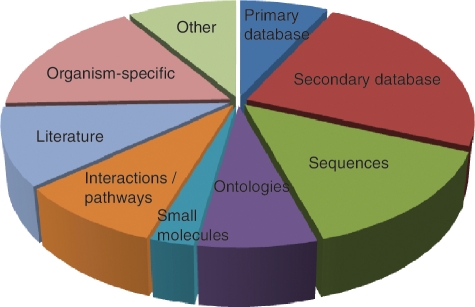
“As shown in Figure 2, the types of data being handled by biocurators were diverse: spanning nucleotide sequences; protein sequences, families, interactions and pathways; small molecules; model organisms; the literature; and (9), 18% with organism-specific resources (e.g. SGD; 10)], dictyBase (11), TAIR (12), etc.]; 16…”
Ongoing and future developments at the Universal Protein Resource
The UniProt Consortium (2011) · Nucleic Acids Research · doi:10.1093/nar/gkq1020 · Cited by 729
The IntAct molecular interaction database in 2010
Aranda, B., Achuthan, P., Alam-Faruque, Y., Armean, I., Bridge, A., Derow, C., Feuermann, M., Ghanbarian, A. T., Kerrien, S., Khadake, J., et al. (2010) · Nucleic Acids Research · doi:10.1093/nar/gkp878 · Cited by 620
The 2012 Nucleic Acids Research Database Issue and the online Molecular Biology Database Collection
Galperin, M. Y., & Fernandez-Suarez, X. M. (2012) · Nucleic Acids Research · doi:10.1093/nar/gkr1196 · Cited by 213
EMAGE mouse embryo spatial gene expression database: 2014 update
Richardson, L., Venkataraman, S., Stevenson, P., Yang, Y., Moss, J., Graham, L., Burton, N., Hill, B., Rao, J., Baldock, R. A., et al. (2014) · Nucleic Acids Research · doi:10.1093/nar/gkt1155 · Cited by 161
Field, D., Sansone, S.-A., Collis, A., Booth, T., Dukes, P., Gregurick, S. K., Kennedy, K., Kolar, P., Kolker, E., Maxon, M., et al. (2009) · Science · doi:10.1126/science.1180598 · Cited by 149
Saccharomyces Genome Database provides mutant phenotype data
Engel, S. R., Balakrishnan, R., Binkley, G., Christie, K. R., Costanzo, M. C., Dwight, S. S., Fisk, D. G., Hirschman, J. E., Hitz, B. C., Hong, E. L., et al. (2010) · Nucleic Acids Research · doi:10.1093/nar/gkp917 · Cited by 125
The 2011 Nucleic Acids Research Database Issue and the online Molecular Biology Database Collection
Galperin, M. Y., & Cochrane, G. (2010) · Nucleic Acids Research · doi:10.1093/nar/gkq1243 · Cited by 103
EMAGE mouse embryo spatial gene expression database: 2010 update
Richardson, L., Venkataraman, S., Stevenson, P., Yang, Y., Burton, N., Rao, J., Fisher, M., Baldock, R. A., Davidson, D. R., & Christiansen, J. H. (2010) · Nucleic Acids Research · doi:10.1093/nar/gkp763 · Cited by 101 · cited 1×
“UniProtKB (7), IntAct (8), EMAGE (9), 18% with organism-specific resources (e.”
BackgroundTowards BioDBcore: a community-defined information specification for biological databases
Gaudet, P., Bairoch, A., Field, D., Sansone, S.-A., Taylor, C., Attwood, T. K., Bateman, A., Blake, J. A., Bult, C. J., Cherry, J. M., et al. (2011) · Database · doi:10.1093/database/baq027 · Cited by 95
Burkhardt, K., Schneider, B., & Ory, J. J. (2006) · PLoS Computational Biology · doi:10.1371/journal.pcbi.0020099 · Cited by 51
The Biocurator: Connecting and Enhancing Scientific Data
Salimi, N., & Vita, R. (2006) · PLoS Computational Biology · doi:10.1371/journal.pcbi.0020125 · Cited by 48
Gaudet, P., Fey, P., Basu, S., Bushmanova, Y., Dodson, R. J., Sheppard, K. A., Just, E. M., Kibbe, W. A., & Chisholm, R. L. (2010) · Nucleic Acids Research · doi:10.1093/nar/gkq1103 · Cited by 42
Towards BioDBcore: a community-defined information specification for biological databases
Gaudet, P., Bairoch, A., Field, D., Sansone, S., Taylor, C. F., Attwood, T. K., Bateman, A. G., Blake, J. A., Bult, C. J., Cherry, J. M., et al. (2010) · Nucleic Acids Research · doi:10.1093/nar/gkq1173 · Cited by 40
Bioinformatics: Curation generation
Sanderson, K. (2011) · Nature · doi:10.1038/nj7333-295a · Cited by 18 · cited 1×
“While the roles of biocurators in managing and augmenting biomedical data have been increasingly well-documented in the literature (3–6), the nature of their career paths is not well understood, either outside the biocurator community or within it.”
BackgroundInside FlyBase: Biocuration as a career
Pierre, S. S., & McQuilton, P. (2009) · Fly · doi:10.4161/fly.3.1.7769 · Cited by 18 · cited 1×
“While the roles of biocurators in managing and augmenting biomedical data have been increasingly well-documented in the literature (3–6), the nature of their career paths is not well understood, either outside the biocurator community or within it.”
Background
Cited by
CARD 2017: expansion and model-centric curation of the comprehensive antibiotic resistance database
Jia, B., Raphenya, A. R., Alcock, B., Waglechner, N., Guo, P., Tsang, K. K., Lago, B. A., Dave, B. M., Pereira, S., Sharma, A. N., et al. (2017) · Nucleic Acids Research · doi:10.1093/nar/gkw1004 · Cited by 2,661
“Biocuration, the act of making biological information accessible to both humans and computers via databases and data sharing tools, is thus an increasingly important part of biomedical research (5) and CARD seeks to fulfill this need for AMR research and surveillance.”
BackgroundAn Evidence‐Based Framework for Evaluating Pharmacogenomics Knowledge for Personalized Medicine
Whirl‐Carrillo, M., Huddart, R., Gong, L., Sangkuhl, K., Thorn, C. F., Whaley, R., & Klein, T. E. (2021) · Clinical Pharmacology & Therapeutics · doi:10.1002/cpt.2350 · Cited by 810
“9 This challenge was further complicated by our use of qualitative criteria when assigning LOE.”
MethodPubTator: a web-based text mining tool for assisting biocuration
Wei, C.-H., Kao, H.-Y., & Lu, Z. (2013) · Nucleic Acids Research · doi:10.1093/nar/gkt441 · Cited by 566
“Biocuration has become an essential part of biological discovery and biomedical research (1–3).”
BackgroundAite, M., Chevallier, M., Frioux, C., Trottier, C., Got, J., Cortés, M. P., Mendoza, S. N., Carrier, G., Dameron, O., Guillaudeux, N., et al. (2018) · PLOS Computational Biology · doi:10.1371/journal.pcbi.1006146 · Cited by 137
(2017) · Methods in Molecular Biology · doi:10.1007/978-1-4939-3743-1 · Cited by 133
Metadata
- Authors
- Burge, S., Attwood, T. K., Bateman, A., Berardini, T. Z., Cherry, M., O'Donovan, C., Xenarios, L., & Gaudet, P.
- Affiliations
- SIB Swiss Institute of Bioinformatics (CH)
- Corresponding author
- Gaudet, P.
- Venue
- Database
- Publisher
- Oxford University Press (OUP)
- Published
- 2012-03-20
- Volume
- 2012
- Issue
- 0
- Pages
- bar059-bar059
- ISSN
- 1758-0463 (ISSN-L)
- PMC
- PMC3308150
- OpenAlex
- W2148083369
- Cited by
- 68
- References
- 16
- Citations by year
- 2026: 1 · 2025: 7 · 2024: 2 · 2023: 2 · 2022: 3 · 2021: 4 · 2020: 3 · 2019: 1 · 2018: 8 · 2017: 4 · 2016: 7 · 2015: 10 · 2014: 5 · 2013: 7 · 2012: 4
- FWCI
- 22.51
- Type
- journal article
- Language
- en
- Open access
- gold
- doi.org
- Licence
- cc-by-nc
- Locations
- Database (publishedVersion, cc-by-nc)
- PubMed Central (publishedVersion, cc-by-nc)
- PubMed (publishedVersion)
- SERVAL (Université de Lausanne) (publishedVersion, other-oa)
- Archive ouverte UNIGE (University of Geneva) (publishedVersion, other-oa)
- IRIS (submittedVersion, cc-by-nc)
- Research Explorer (The University of Manchester) (submittedVersion)
- Archive ouverte UNIGE (University of Geneva) (submittedVersion, cc-by)
- Topics
- Physical Sciences › Computer Science › Information Systems › Research Data Management Practices
- Health Sciences › Medicine › Health Informatics › Biomedical Text Mining and Ontologies
- Life Sciences › Biochemistry, Genetics and Molecular Biology › Molecular Biology › Genomics and Phylogenetic Studies
- Keywords
- biocuration, career aspirations, nomenclature standards, data exchange standards
- MeSH terms
- Workforce, Adult, Database Management Systems, Female, Humans, Male, Middle Aged, Societies, Scientific, Databases, Factual, Biomedical Research
About these checks
Registry, retraction, Cites and statistics results are computed, not judged, with one exception: a printed reference that no index lists is read once by a model before it counts as a citation error. Claims are extracted by a model and kept only when their quote appears verbatim in the text; each cited source is then checked, with a model’s help, for whether it says what the claim relies on. Those verdicts can be wrong — read the claim’s quote and the cited source before relying on one.
Statistics and arithmetic are recomputed, not judged.
Confidence bands are shown only for fields calibrated on our annotated test set. None is calibrated yet, so no band is shown.
What counts as a claim ›How we measure confidence ›How we check this ›
Are you an author, or do you see a problem with this page? Request a review
Data sources
Bibliographic data: Semantic Scholar, OpenAlex, Crossref.
Contains information from the Semantic Scholar Academic Graph Datasets, made available under the ODC Attribution License (ODC-BY 1.0).
Semantic Scholar’s data is described in: Kinney, R., et al. (2023). The Semantic Scholar Open Data Platform. arXiv:2301.10140.
