

Body image concerns in women with polycystic ovary syndrome: a systematic review and meta-analysis
Open accessThe DOI matches its Crossref record; 26 of the 27 references it cites were found in a registry or an index, and 1 are not checked yet.
Abstract
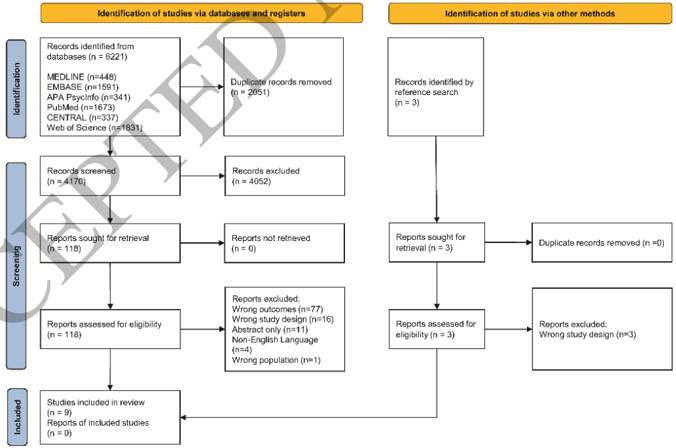
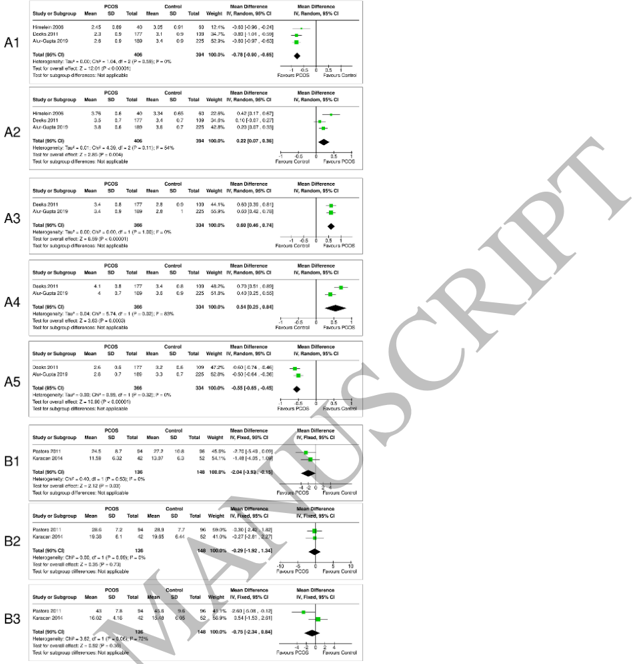
OBJECTIVE: To assess differences in body image concerns among women with and without polycystic ovary syndrome (PCOS). DESIGN: This is a systematic review and meta-analysis. METHODS: Electronic databases (MEDLINE, EMBASE, APA PsychInfo, PUBMED, Web-of-Science Core Collection, and Cochrane Controlled Register of Trials [CENTRAL]) were searched from inception through July 2022. Outcome measures included validated questionnaires reporting on body image concerns. Methodological quality was assessed by the Grading of Recommendations, Assessment, Development and Evaluations (GRADE) system, and included studies were assessed for risk of bias. Meta-analyses were performed using the inverse variance method based on random or fixed effects models (Review Manager, Version 5). RESULTS: A total of 918 women with PCOS and 865 women without PCOS from 9 studies were included. Meta-analysis of 3 studies using Multidimensional Body-Self Relations Questionnaire Appearance Scale (MBSRQ-AS) showed those with PCOS reported higher dissatisfaction with appearance evaluation and appearance orientation compared to those without PCOS (mean difference [MD] = -0.78, I2 = 0%, P < .00001, and MD = 0.22, I2 = 54%, P = .004, respectively). Meta-analysis of 2 studies showed higher dissatisfaction with overweight preoccupation, lower body area satisfaction, and body weight classification on MBSRQ-AS subscales in those with PCOS compared to those without PCOS (all P < .001). Meta-analysis of 2 studies using the Body Esteem Scale for Adolescents and Adults (BESAA) showed significantly lower scores for the weight subscale in those with PCOS compared to those without PCOS (P = .03). CONCLUSIONS: Those with PCOS experience more significant body image concerns, emphasising the importance of awareness in the clinical care of PCOS. Considering the limited evidence, further studies are warranted to identify drivers and mitigating factors.
Overview
The claims and statistics of this paper haven’t been checked yet.
Free: it reads the open-access text and checks the first 5 claims that cite a source we can check. Create a free account to check every claim.
Integrity signals
Registry
Cites
Statistics
Figures
Verification
Claims the paper makes
The claims and statistics of this paper haven’t been checked yet.
Free: it reads the open-access text and checks the first 5 claims that cite a source we can check. Create a free account to check every claim.
Claims other papers make about this one
Each is checked against this paper’s own text: does it say what the citing paper says it does?
The cited source says what the claim attributes to it.
In the citing paper
“While not entirely negative, this type marketing can be misleading and harmful for individuals with vulnerabilities such as body image concerns [60], which are prevalent among women with PCOS [61].”
From Availability and Use of Digital Technology Among Women With Polycystic Ovary Syndrome: Scoping Review (2025) · cites this paper as [61]
The cited source says what the claim attributes to it.
In the citing paper
“Women with PCOS often experience greater body dissatisfaction compared to those without the condition (Davitadze et al., 2023)”
From Mindfulness acting with awareness and emotional eating among polycystic ovary syndrome women with infertility: the mediating role of depression (2024) · cites this paper as Davitadze et al., 2023
Self-check
Percentages, sums and reported differences re-computed from the paper’s own numbers.
The self-check needs the paper’s full text.
Citations
Cites
Wan, X., Wang, W., Liu, J., & Tong, T. (2014) · BMC Medical Research Methodology · doi:10.1186/1471-2288-14-135 · Cited by 11,735
Teede, H. J., Misso, M. L., Costello, M. F., Dokras, A., Laven, J., Moran, L., Piltonen, T., Norman, R. J., International PCOS Network, Andersen, M., et al. (2018) · Human Reproduction · doi:10.1093/humrep/dey256 · Cited by 1,593
Self-citationPolivy, J., & Herman, C. P. (2002) · Annual Review of Psychology · doi:10.1146/annurev.psych.53.100901.135103 · Cited by 1,228
Body-Esteem Scale for Adolescents and Adults
Mendelson, B. K., Mendelson, M. J., & White, D. R. (2001) · Journal of Personality Assessment · doi:10.1207/s15327752jpa7601_6 · Cited by 1,003
Yildiz, B. O., Bozdag, G., Yapici, Z., Esinler, I., & Yarali, H. (2012) · Human Reproduction · doi:10.1093/humrep/des232 · Cited by 704
Clinical and psychological correlates of quality-of-life in polycystic ovary syndrome
Hahn, S., Janssen, O. E., Tan, S., Pleger, K., Mann, K., Schedlowski, M., Kimmig, R., Benson, S., Balamitsa, E., & Elsenbruch, S. (2005) · European Journal of Endocrinology · doi:10.1530/eje.1.02024 · Cited by 387
Body Image: Body Image: A Handbook of Theory, Research, and Clinical Practice
Tamburrino, M. B. (2003) · JAMA · doi:10.1001/jama.289.14.1861 · Cited by 377
Depression and Body Image among Women with Polycystic Ovary Syndrome
Himelein, M. J., & Thatcher, S. S. (2006) · Journal of Health Psychology · doi:10.1177/1359105306065021 · Cited by 248
Deeks, A. A., Gibson-Helm, M. E., Paul, E., & Teede, H. J. (2011) · Human Reproduction · doi:10.1093/humrep/der071 · Cited by 202
Self-citationComparison of four heterogeneity measures for meta‐analysis
Lin, L. (2020) · Journal of Evaluation in Clinical Practice · doi:10.1111/jep.13159 · Cited by 184
Research works printed but not linked: 4
- Hosseini SA, Padhy RK. Body Image Distortion. StatPearls [Internet]. 2022 Sep 5 [cited 2022 Dec 11]; Available from: https://www.ncbi.nlm.nih.gov/books/NBK546582/
- Himelein MJ, Thatcher SS. Depression and body image among women with polycystic ovary syndrome. J Health Psychol. 2006 Jul;11(4):613-25.
- Deeks AA, Gibson-Helm ME, Paul E, Teede HJ. Is having polycystic ovary syndrome a predictor of poor psychological function including anxiety and depression? Human Reproduction [Internet]. 2011 Jun 1 [cited 2022 Nov 5];26(6):1399-407. Available from: https://academic.oup.com/humrep/article/26/6/1399/2914254
- Alur-Gupta S, Chemerinski A, Liu C, Lipson J, Allison K, Sammel MD, et al. Body image distress increased in women with PCOS and mediates depression and anxiety. Fertil Steril [Internet]. 2019 Nov 1 [cited 2022 Oct 22];112(5):930. Available from: /pmc/articles/PMC6858949/
Cited by
Stener-Victorin, E., Teede, H., Norman, R. J., Legro, R., Goodarzi, M. O., Dokras, A., Laven, J., Hoeger, K., & Piltonen, T. T. (2024) · Nature Reviews Disease Primers · doi:10.1038/s41572-024-00511-3 · Cited by 495
Self-citationAlur-Gupta, S., Dokras, A., & Cooney, L. G. (2024) · Fertility and Sterility · doi:10.1016/j.fertnstert.2024.01.018 · Cited by 65
Anxiety, depression, and body image among infertile women with and without polycystic ovary syndrome
Jannink, T. I., Bordewijk, E. M., Aalberts, J. L., Hendriks, J., Lehmann, V., Hoek, A., Goddijn, M., van Wely, M., ANDES study group, de Bruin, J. P., et al. (2024) · Human Reproduction · doi:10.1093/humrep/deae016 · Cited by 46
Cooney, L. G., Gyorfi, K. M., Sanneh, A., Bui, L. M., Mousa, A., Tay, C. T., Teede, H. J., Stener‐Victorin, E., & Brennan, L. (2024) · The Journal of Clinical Endocrinology & Metabolism · doi:10.1210/clinem/dgae462 · Cited by 45
Self-citationBody image and mental health in women with polycystic ovary syndrome–a cross-sectional study
Hofmann, K., Decrinis, C., Bitterlich, N., Tropschuh, K., Stute, P., & Bachmann, A. (2025) · Archives of Gynecology and Obstetrics · doi:10.1007/s00404-024-07913-4 · Cited by 37
“A meta-analysis by Davitadze et al., which included studies using the MBSRQ-AS as a measurement tool and involved 918 women with PCOS and 865 women without PCOS, found that women with PCOS have significantly greater body image concerns compared to women without PCOS [8].”
InfluentialSicari, F., Merlo, E. M., Gentile, G., Nucera, R., Portelli, M., Settineri, S., Myles, L. A. M., & Militi, A. (2023) · Children · doi:10.3390/children10101691 · Cited by 32
Alkheyr, Z., Murad, M. H., Das, P., Aljenaee, K., Kamel, C., Hajji, S. A., Flood, J., Atkin, S. L., & Ali, K. F. (2024) · PLoS ONE · doi:10.1371/journal.pone.0301707 · Cited by 36
Brand, K. M. G., Gottwald‐Hostalek, U., & Andag‐Silva, A. (2025) · Women s Health · doi:10.1177/17455057241311759 · Cited by 38
Teede, H. J., Mousa, A., Tay, C. T., Costello, M., Brennan, L., Norman, R. J., Peña, A. S., Boyle, J. A., Joham, A. E., Berry, L., et al. (2024) · The Medical Journal of Australia · doi:10.5694/mja2.52432 · Cited by 32
Self-citationRío, J. P. D., Tsompanidis, A., Gaspar, P. A., Maturana, A., Rojas, G., Dagnino‐Subiabre, A., Olea, A., Maliqueo, M. A., Echiburú, B., de Guevara, A. L., et al. (2025) · Frontiers in Neuroendocrinology · doi:10.1016/j.yfrne.2025.101188 · Cited by 15
Polycystic Ovary Syndrome and Eating Disorders—A Literature Review
Góral, A., Żywot, K., Zalewski, W., Jagodziński, A., & Murawski, M. (2024) · Journal of Clinical Medicine · doi:10.3390/jcm14010027 · Cited by 16
Jannink, T. I., Bordewijk, E. M., Lehmann, V., Hoek, A., Goddijn, M., & van Wely, M. (2025) · Human Reproduction · doi:10.1093/humrep/deaf214 · Cited by 11
Wright, P. J., Burts, C., Harmon, C., & Corbett, C. F. (2025) · JMIR Infodemiology · doi:10.2196/68469 · Cited by 8
“While not entirely negative, this type marketing can be misleading and harmful for individuals with vulnerabilities such as body image concerns [60], which are prevalent among women with PCOS [61].”
Development and validation of a body image scale for Polycystic Ovary Syndrome
Huang, Y., Wang, Z., Hu, Z., Wang, L., Yu, L., Yuanjia, H., Sun, L., Yang, J., & Lei, X. (2025) · European Journal of Obstetrics & Gynecology and Reproductive Biology · doi:10.1016/j.ejogrb.2025.113977 · Cited by 8
Yang, M., Wang, X., Zhang, Y., Qian, W., & Tang, Y. (2024) · Frontiers in Psychology · doi:10.3389/fpsyg.2024.1499705 · Cited by 6
Lewis, H. K., Vora, D., Craddock, N., Foye, U., Cini, E., & Freestone, M. C. (2025) · Body Image · doi:10.1016/j.bodyim.2025.101971 · Cited by 8
Broughton, S., Armeni, E., Chu, A., Yee, A. L. J., Manta, A., Baig, S. A., Blendis, E., & Kempegowda, P. (2026) · European Journal of Endocrinology · doi:10.1093/ejendo/lvag023 · Cited by 7
Self-citationMagnusson, B. M., Long, M. C., Larson, R. J., Maycock, L., Wood, E. H., Stratford, G., & Thacker, E. L. (2025) · Journal of Psychosomatic Obstetrics & Gynecology · doi:10.1080/0167482x.2025.2541951 · Cited by 5
“Similarly, several previous studies have shown that individuals with PCOS have increased prevalence of poor body image [32,33].”
Viveiros, T. M., Deshpande, N. R., Karderinis, I., Ma, Y., Clarke, S. A., Talaulikar, V. S., & Wattar, B. H. A. (2025) · Clinical Endocrinology · doi:10.1111/cen.70062 · Cited by 4
“This is exacerbated by a lower self ‐ esteem and greater body dissatisfaction, which is particularly significant in women experiencing subfertility or hyperandrogenic symptoms such as hirsutism [20, 21].”
Ismail, N., & Ismail, M. S. (2024) · International Journal Of Scientific Advances · doi:10.51542/ijscia.v5i6.1 · Cited by 6
“Additionally, hormonal imbalances inherent to PCOS, particularly hyperandrogenism and insulin resistance, are known to exacerbate mood disturbances [19,20]. prevalent among women with PCOS, with symptoms often leading to social withdrawal and a heightened risk for depression and anxiety [16,22].”
BackgroundAlsaidan, A. A., Thirunavukkarasu, A., & Alsulami, H. H. (2025) · Saudi Medical Journal · doi:10.15537/smj.2025.46.1.20240797 · Cited by 4
“5,16,30 Interestingly, this phenomenon is also common in patients without PCOS.”
Adshead, C., Sheffield, D., Fido, D., Lagojda, L., Kyrou, I., Randeva, H. S., Williams, S., & Kite, C. (2026) · Psychology International · doi:10.3390/psycholint8010015 · Cited by 4
Song, E., Fang, Y., Li, X., Fu, W., He, H., Gao, Z., Tian, X., & Gao, B. (2026) · Frontiers in Nutrition · doi:10.3389/fnut.2026.1809416 · Cited by 4
Haley, E. N., Coyne, P., Carlin, A. M., Santarossa, S., Loree, A. M., Braciszewski, J. M., Brescacin, C., & Matero, L. (2025) · Obesity Surgery · doi:10.1007/s11695-024-07633-3 · Cited by 3
Healthy Moms, Healthy Babies: Culinary and Lifestyle Medicine for PCOS and Preconception Health
Thomas, O. W., & Kudesia, R. (2025) · American Journal of Lifestyle Medicine · doi:10.1177/15598276251327923 · Cited by 3
“28 However, rather than focusing on a speci fi c number on the scale, or limited metrics such as body mass index (BMI), a health at every size framework can be utilized to emphasize that a healthy lifestyle has many bene fi ts, independent of weight loss.”
Al-Maghaireh, D., Basyouni, N., Alsaqer, K., Kawafha, M., Al‐Ma'ani, M., Hamad, H. J., Hamadeh, L., Sheyab, H., & Kofahi, A. A. (2024) · Nutrition & Food Science · doi:10.1108/nfs-06-2024-0211 · Cited by 2
Moelle, E. C., & Papps, F. A. (2025) · Body Image · doi:10.1016/j.bodyim.2025.101894 · Cited by 2
AlMekhlafi, S. A., & Campo-Redondo, M. (2026) · PLoS ONE · doi:10.1371/journal.pone.0333908 · Cited by 3
“Depression may be triggered more by psychological and societal issues with body image than by weight itself [26,27].”
Mirghani, H. O., & Shaman, A. A. (2026) · Frontiers in Psychology · doi:10.3389/fpsyg.2026.1755505 · Cited by 2
“In addition, dermatological care, exercise, and mental health support significantly improve self-esteem levels over time (Davitadze et al., 2023; Magnusson et al., 2025).”
Cotellessa, L., Maitre, H., Giton, F., Bongiovanni, S., Pigny, P., Robin, G., Catteau-Jonard, S., & Giacobini, P. (2026) · EBioMedicine · doi:10.1016/j.ebiom.2026.106398 · Cited by 2
Manta, A., Broughton, S., Baig, S. A., Armeni, E., & Kempegowda, P. (2026) · European Journal of Endocrinology · doi:10.1093/ejendo/lvag153 · Cited by 2
Self-citationChildbirth experiences in women with polycystic ovary syndrome: A cohort study
Husby, A. E., Simpson, M. R., Dalbye, R., Larsen, M., Vanky, E., & Løvvik, T. S. (2024) · Acta Obstetricia Et Gynecologica Scandinavica · doi:10.1111/aogs.14800 · Cited by 2
“33 Unwanted weight gain, hirsut-ism, and infertility/subfertility contribute to less body confidence.”
BackgroundUrban, W., Rutkowski, K., Klasa, K., Jach, R., Kacalska‐Janssen, O., & Mielimąka, M. (2025) · Ginekologia Polska · doi:10.5603/gpl.103884 · Cited by 2
Does polycystic ovary syndrome affect self-confidence and happiness?
Erener, N. S., Turhan, İ., & Bayraktar, E. (2025) · Revista da Associação Médica Brasileira · doi:10.1590/1806-9282.20251064 · Cited by 1
“A meta-analysis by Davitadze et al. also confirmed increased body dissat-isfaction in women with PCOS, highlighting the importance of psychological care in clinical practice 16 .”
Achkar, N. E., Moubarak, V., Obeïd, S., Malaeb, D. N., Sakr, F., Dabbous, M., Zaarour, P., Hallit, S. R., & Fekih‐Romdhane, F. (2026) · International Journal of Women s Health · doi:10.2147/ijwh.s580988 · Cited by 1
“16,17 Furthermore, low body appreciation has been linked with higher levels of emotional and restrained eating and body surveillance indicating that women with PCOS may experience diminished body appreciation as a consequence of visible or metabolic symptoms, which could in turn increase…”
Williams, S. L., Henry, S., Elder, L., Soucie, K. M., & Parton, M. (2026) · Sex Roles · doi:10.1007/s11199-026-01647-0 · Cited by 1
“At least three decades of research have shown worse body image, or body dissatisfaction, in individuals with PCOS compared to those without PCOS (Davitadze et al., 2023; Himelein & Thatcher, 2006; Kogure et al., 2019).”
Husby, A. E., Simpson, M. R., Dalbye, R., Løvvik, T. S., & Vanky, E. (2026) · International Breastfeeding Journal · doi:10.1186/s13006-026-00843-8 · Cited by 1
“Women with PCOS suffer from poorer body image and lower self-esteem [38].”
Su, D., Gao, Y., Sun, X., Su, H., 马瑞琼, Liu, Y., Jiang, X., Zhang, M., Lei, T., Tan, C., et al. (2026) · BMC Women s Health · doi:10.1186/s12905-026-04727-1 · Cited by 1
“The potential reasons for this trend may be that patients pay greater attention to their own body hair growth and are more sensitive to subtle changes in hair density and distribution, especially in visible sites such as the chin, upper lip, and lower abdomen [27, 28].”
Body Dysmorphism and Sleep Quality among PCOS Patients: Assessing the Predictive Role of Alyxthymia
Perveen, S., Gulfam, S., & Khan, H. (2025) · Annals of Human and Social Sciences · doi:10.35484/ahss.2025(6-ii)03 · Cited by 1
Simão, D. O., Santos, A. V. M. P., Vieira, V. S., dos Reis, F. M., Cândido, A. L., Comim, F. V., Tosatti, J. A. G., & Gomes, K. B. (2025) · Experimental and Clinical Endocrinology & Diabetes · doi:10.1055/a-2502-8913 · Cited by 1
Body image concerns in endocrine conditions
Lathia, T. B. (2025) · Thyroid Research and Practice · doi:10.4103/trp.trp_42_24
Self-citationGlobal Context of Specific Diseases and Quality of Life: The Example of Polycystic Ovary Syndrome
Pirotta, S., Rao, V. S., & Avery, J. (2024) · Springer eBooks · doi:10.1007/978-3-031-32046-0_59-1
Polycystás ovarium szindrómás betegek életminőségét vizsgáló kérdőív magyar nyelvű adaptációja
Nagy, V., & Papp-Zipernovszky, O. (2025) · Orvosi Hetilap · doi:10.1556/650.2025.33312
POLYCYSTIC OVARY SYNDROME (PCOS): THE OVERLOOKED PSYCHIATRIC STRUGGLE
Wubuli, D., Gupta, I., & -, B. A. M. D. (2025) · International Journal of Recent Advances in Multidisciplinary Research · doi:10.64485/ijramr.30.08.20256040
Global Context of Specific Diseases and Quality of Life: The Example of Polycystic Ovary Syndrome
Pirotta, S., Rao, V. S., & Avery, J. (2025) · Springer eBooks · doi:10.1007/978-3-031-73363-5_59
Assessment of Body Image Disturbance in Women with Polycystic Ovary Syndrome
Debo, M. Y., Issa, M. A., & Haddad, A. M. (2025) · Nursing and Health · doi:10.13189/nh.2025.100201
Percy, C. A., Turner, A., Alper, B., & Wark, P. A. (2026) · JMIR Formative Research · doi:10.2196/69206
“PCOS has a significant adverse impact on mental health and quality of life [7,8], including higher rates of depression [9-12], anxiety, body image concerns [13], sexual dysfunction [14,15], relationship issues, and disordered eating [16-18].”
Jha, P., & Thakur, N. K. (2025) · International Journal of Research in Medical Sciences · doi:10.18203/2320-6012.ijrms20253585
Kirwan, R., Peele, L., Nuckols, G., Kohlhoff, G., Cabre, H. E., Olenick, A., & Steele, J. (2025) · medRxiv · doi:10.64898/2025.12.03.25341536
“It has been well documented that women with PCOS already experience higher rates of anxiety, depression, and lower quality of life (QOL) as a result of negative body image and weight-related concerns 26–29 .”
Orłowa, A., Turlej, K., Oparcik, A., Kurczoba, L., Baranowska, A., Pakuła, A., Cieślak, M., Patrzykąt, K. M., Szyszka, K., & Pawłowska, J. (2025) · International Journal of Innovative Technologies in Social Science · doi:10.31435/ijitss.4(48).2025.4472
Mindful Eating and Mindfulness-Based Practices for Healthier Eating
(2026) · Frontiers research topics · doi:10.3389/978-2-8325-7591-8
Khare, J., Pendharkar, P. S., Gupta, S., Garg, N., Suran, A., Jindal, S., & Bansal, S. (2025) · CHRISMED Journal of Health and Research · doi:10.4103/cjhr.cjhr_9_25
Kanamanapalli, P. V., Kuppusamy, S., Thyagaraju, C., & Subramanian, S. K. (2026) · Annals of Neurosciences · doi:10.1177/09727531261440667
“27 Similarly, Alkheyr et al. found lower body image satisfaction, reduced self-confidence and greater social avoidance among women with PCOS in a Middle Eastern cohort.”
Moghaddam, R. A., Hasanpoor‐Azghady, S. B., & Fasanghari, M. (2026) · Health Science Reports · doi:10.1002/hsr2.71944
“In line with this, a systematic review and meta‐ analysis across diverse populations also found that women with PCOS experienced higher levels of body dissatisfaction than their non‐PCOS counterparts [41].”
Perspective Chapter: Women’s Body Image – Medical Implications Across the Lifespan
Roman, D., Popescu, S., & Sorescu, T. (2026) · IntechOpen eBooks · doi:10.5772/intechopen.1015480
Grzelak, M., & Kulikowska, E. (2026) · International Journal of Innovative Technologies in Social Science · doi:10.31435/ijitss.2(50).2026.5970
Endothelial Dysfunction as an Early Marker of Atherosclerosis: a review of current evidence
Slowik, K., Spaczyńska-Kwiatkowska, M., Mielniczek, Z., Szwed, A., Matusik, A., Matoga, G., Kasprzycka, K., Musiał, M., Niedziela, W., & Kulińska, K. (2026) · African Journal of Biomedical Research · doi:10.69980/ajbr
Sami, A. R., Qayyum, A., Sadia, S., Andleeb, J., Javaid, S., & Tahir, F. N. (2026) · Esculapio · doi:10.51273/esculap.v22i02.1416
Herbert, S., Squires, A. P., Gilligan, C., & Woolf, K. (2026) · Journal of the Academy of Nutrition and Dietetics · doi:10.1016/j.jand.2026.156433
Murray, K., Rizzo, I., & Watsford, C. R. (2026) · Clinical Psychologist · doi:10.1080/13284207.2026.2713450
Badalyan, M., & Rosenbaum, D. L. (2026) · Women s Health · doi:10.1177/17455057261479600
“9,13 This suggests that body image findings in specific diagnostic groups may be consistent in diverse gynecological presentations as well.”
InfluentialYan, Y., Qiu, J., Yang, D., Tang, T., & Liu, X. (2026) · Journal of Psychosomatic Research · doi:10.1016/j.jpsychores.2026.112968
Vine, D. F., Moran, L., Teede, H. J., & Khomami, M. B. (2026) · Advances in Nutrition · doi:10.1016/j.advnut.2026.100734
“Weight gain, body shape, and image are highly ranked issues for patients and health care professionals caring for those with PMOS [22,24,87,88].”
Self-citationChen, L., Liang, Q., Lv, D., Zeng, L., Zeng, X., Cai, H., & Chen, S. (2026) · Frontiers in Psychiatry · doi:10.3389/fpsyt.2026.1898660
“In particular, there is a lack of systematic examination of the dynamic relationship between social pressure related to appearance, body image, and fear of negative evaluation (FNE) (6).”
Social Media and Self-Diagnosis: The Psychological Impact of PCOS Content on GenZ Women
Sarfraz, Z., Mustafa, S., Shoukat, R., Sami, A. R., Shahid, M., Gul, A., Asif, K., & Tahir, F. N. (2026) · History of Medicine/ru · doi:10.48047/hm.v12.i1.2026.233-246
Kudupudi, N. J., & Vijayan, K. (2026) · Journal of Cortexplore · doi:10.65320/jce.vol.1.issue4.39
李红涛, Yin, T., Wang, Y., Wang, Y., Xu, N., Yi, W., & Yang, H. (2026) · Frontiers in Endocrinology · doi:10.3389/fendo.2026.1978249
“A 2023 meta-analysis of nine studies found greater appearance-and weight-related concerns in PMOS but judged the evidence limited (31).”
Jones, S. C., Nutter, S., & Saunders, J. F. (2026) · Journal of Health Psychology · doi:10.1177/13591053261491731
Irmak, E., & Şanlıer, N. (2026) · Frontiers in Nutrition · doi:10.3389/fnut.2026.1928327
“Instead, the presence of body dissatisfaction, psychological symptoms and disturbed eating behaviors may coexist and interact within the complex psychosocial burden of PMOS (5, 7).”
Diagnosis and Multidisciplinary Management of Polyendocrine Metabolic Ovarian Syndrome
Valdez‐Sinon, A. N., Hosseinzadeh, P., & Moragianni, V. A. (2026) · Obstetrics and Gynecology Clinics of North America · doi:10.1016/j.ogc.2026.08.004 · Cited by 1
Afifa, I., Gita, V. M., & Shanti, K. M. (2026) · Jurnal Kebidanan Midwiferia · doi:10.21070/midwiferia.v12i2.1915
Examining the Association Between PCOS Symptoms and Depression Severity
Lee, J. (2026) · ScholarWorks (Walden University)
Metadata
- Authors
- Davitadze, M., Malhotra, K., Khalil, H., Hebbar, M., Tay, C. T., Mousa, A., PCOS SEva team, Robinson, L., Sheikh, J., Melson, E., Lathia, T., Selvan, C., Teede, H., Brennan, L., Stener-Victorin, E., & Kempegowda, P.
- Affiliations
- University of Birmingham (GB)
- Dayanand Medical College & Hospital (IN)
- Dudley Group NHS Foundation Trust (GB)
- Monash University (AU)
- La Trobe University (AU)
- Department of Physiology and Pharmacology, Karolinska Institute , Stockholm , Sweden
- University Hospitals Birmingham NHS Foundation Trust (GB)
- Corresponding author
- Kempegowda, Punith
- ORCID
- Venue
- European Journal of Endocrinology
- Publisher
- Oxford University Press (OUP)
- Published
- 2023-08
- Volume
- 189
- Issue
- 2
- Pages
- R1-R9
- ISSN
- 0804-4643 (ISSN-L)
- 1479-683X
- OpenAlex
- W4386153906
- Cited by
- 57
- References
- 26
- Citations by year
- 2026: 22 · 2025: 23 · 2024: 11 · 2023: 1
- FWCI
- 2.32
- Type
- journal article
- Language
- en
- Open access
- hybrid
- doi.org
- Licence
- Locations
- European Journal of Endocrinology (publishedVersion, cc-by-nc)
- PubMed (publishedVersion)
- University of Birmingham Research Portal (University of Birmingham) (submittedVersion, cc-by-nc)
- Figshare (submittedVersion, cc-by-nc)
- La Trobe University
- Funders
- National Health and Medical Research Council
- Topics
- Health Sciences › Medicine › Reproductive Medicine › Ovarian function and disorders
- Social Sciences › Psychology › Clinical Psychology › Eating Disorders and Behaviors
- Social Sciences › Psychology › Clinical Psychology › Body Image and Dysmorphia Studies
- Keywords
- polycystic ovary syndrome, body image concern, body dissatisfaction, appearance evaluation, appearance orientation, body weight classification, body area satisfaction, body esteem, women's health
- MeSH terms
- Adolescent, Adult, Body Image, Female, Humans, Polycystic Ovary Syndrome, Databases, Factual, PubMed, Overweight
About these checks
Registry, retraction, Cites and statistics results are computed, not judged, with one exception: a printed reference that no index lists is read once by a model before it counts as a citation error. Claims are extracted by a model and kept only when their quote appears verbatim in the text; each cited source is then checked, with a model’s help, for whether it says what the claim relies on. Those verdicts can be wrong — read the claim’s quote and the cited source before relying on one.
Statistics and arithmetic are recomputed, not judged.
Confidence bands are shown only for fields calibrated on our annotated test set. None is calibrated yet, so no band is shown.
What counts as a claim ›How we measure confidence ›How we check this ›
Are you an author, or do you see a problem with this page? Request a review
Data sources
Bibliographic data: Semantic Scholar, OpenAlex, Crossref.
Contains information from the Semantic Scholar Academic Graph Datasets, made available under the ODC Attribution License (ODC-BY 1.0).
Semantic Scholar’s data is described in: Kinney, R., et al. (2023). The Semantic Scholar Open Data Platform. arXiv:2301.10140.
