

Empagliflozin and health-related quality of life outcomes in patients with heart failure with reduced ejection fraction: the EMPEROR-Reduced trial
Open accessThe DOI matches its Crossref record; 14 of the 15 references it cites were found in a registry or an index.
Abstract
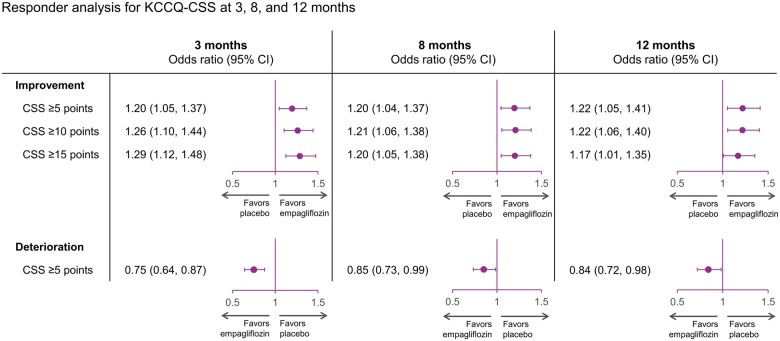
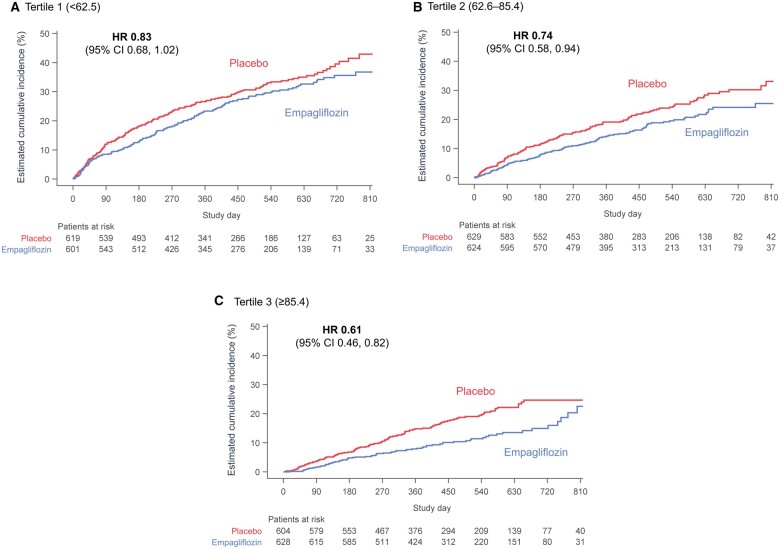
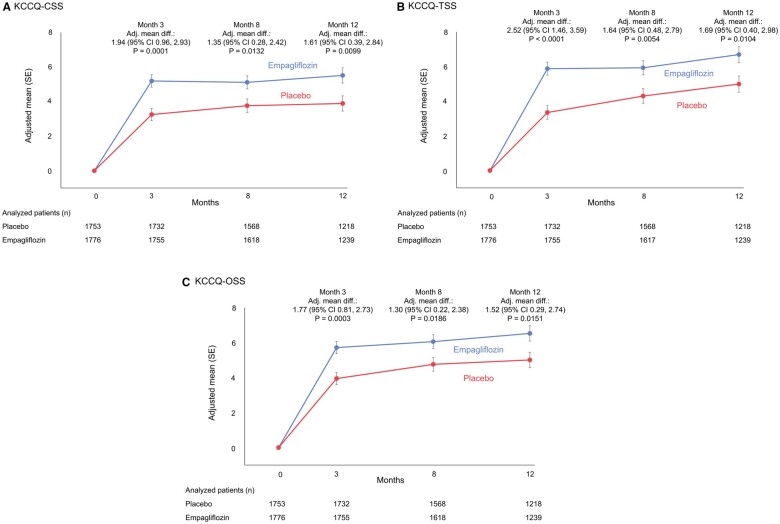
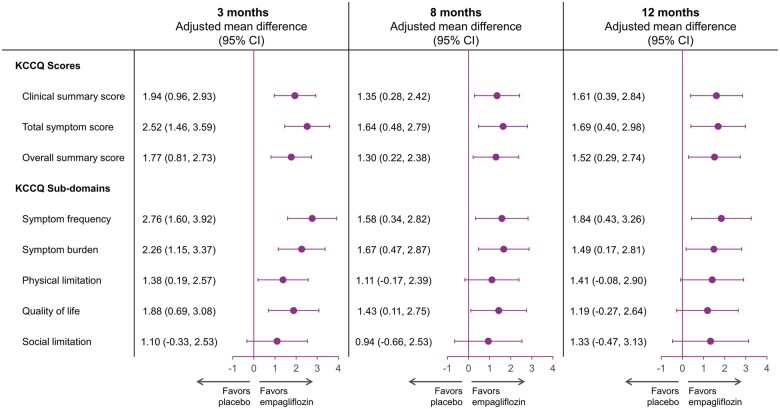
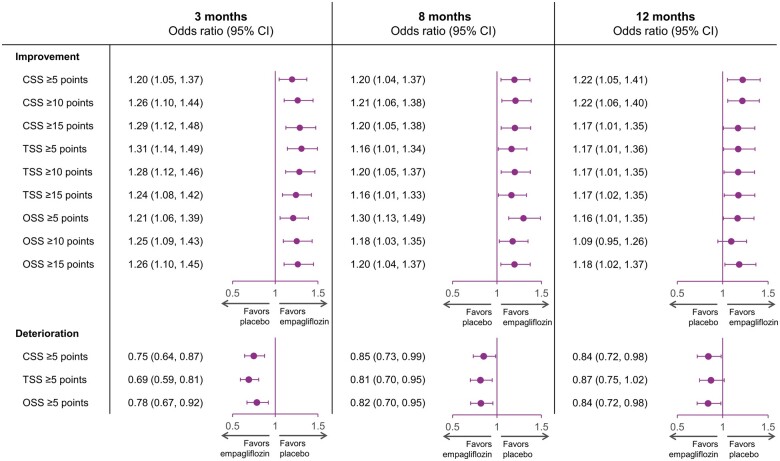
Aims: In this secondary analysis of the EMPEROR-Reduced trial, we sought to evaluate whether the benefits of empagliflozin varied by baseline health status and how empagliflozin impacted patient-reported outcomes in patients with heart failure with reduced ejection fraction. Methods and results: Health status was assessed by the Kansas City Cardiomyopathy Questionnaires-clinical summary score (KCCQ-CSS). The influence of baseline KCCQ-CSS (analyzed by tertiles) on the effect of empagliflozin on major outcomes was examined using Cox proportional hazards models. Responder analyses were performed to assess the odds of improvement and deterioration in KCCQ scores related to treatment with empagliflozin. Empagliflozin reduced the primary outcome of cardiovascular death or heart failure hospitalization regardless of baseline KCCQ-CSS tertiles [hazard ratio (HR) 0.83 (0.68–1.02), HR 0.74 (0.58–0.94), and HR 0.61 (0.46–0.82) for <62.5, 62.6–85.4, and ≥85.4 score tertiles, respectively; P-trend = 0.10]. Empagliflozin improved KCCQ-CSS, total symptom score, and overall summary score at 3, 8, and 12 months. More patients on empagliflozin had ≥5-point [odds ratio (OR) 1.20 (1.05–1.37)], 10-point [OR 1.26 (1.10–1.44)], and 15-point [OR 1.29 (1.12–1.48)] improvement and fewer had ≥5-point [OR 0.75 (0.64–0.87)] deterioration in KCCQ-CSS at 3 months. These benefits were sustained at 8 and 12 months and were similar for other KCCQ domains. Conclusion: Empagliflozin improved cardiovascular death or heart failure hospitalization risk across the range of baseline health status. Empagliflozin improved health status across various domains, and this benefit was sustained during long-term follow-up. Clinical trial registration: URL: https://www.clinicaltrials.gov. Unique identifier: NCT03057977.
Overview
The claims and statistics of this paper haven’t been checked yet.
Free: it reads the open-access text and checks the first 5 claims that cite a source we can check. Create a free account to check every claim.
Integrity signals
Registry
Cites
Statistics
Figures
Verification
Claims the paper makes
The claims and statistics of this paper haven’t been checked yet.
Free: it reads the open-access text and checks the first 5 claims that cite a source we can check. Create a free account to check every claim.
Claims other papers make about this one
Each is checked against this paper’s own text: does it say what the citing paper says it does?
The check wasn’t confident either way, so it gives no verdict — never disputed.
In the citing paper
“Treatment with empagliflozin did not affect visual analogue scale dyspnoea, diuretic response, NT-proBNP levels, or duration of hospital stay, but was safe, increased urinary output, and reduced a combined endpoint of worsening HF, re-hospitalization for HF, or death at 60 days compared with placebo.”
From 2023 ESC guidelines for the management of cardiovascular disease in patients with diabetes. (2023) · cites this paper as [498]
Experimental — accuracy not yet measured
Self-check
Percentages, sums and reported differences re-computed from the paper’s own numbers.
The self-check needs the paper’s full text.
Citations
Cites
Dapagliflozin in Patients with Heart Failure and Reduced Ejection Fraction
McMurray, J. J. V., Solomon, S. D., Inzucchi, S. E., Køber, L., Kosiborod, M. N., Martinez, F. A., Ponikowski, P., Sabatine, M. S., Anand, I. S., Bělohlávek, J., et al. (2019) · New England Journal of Medicine · doi:10.1056/nejmoa1911303 · Cited by 7,140
Self-citationCardiovascular and renal outcomes with empagliflozin in heart failure
Packer, M., Anker, S. D., Butler, J., Filippatos, G., Pocock, S. J., Carson, P., Januzzi, J., Verma, S., Tsutsui, H., Brueckmann, M., et al. (2020) · New England Journal of Medicine · doi:10.1056/nejmoa2022190 · Cited by 5,206 · cited 6×
“However, in the current trial, neither NYHA class nor KCCQ health status at baseline exerted a statistically significant influence on the magnitude of the response to empagliflozin.(8,15) Importantly, even in patients with the worst KCCQ health status at baseline, the effect of empagliflozin to reduce the risk of hear…”
BackgroundMethodResultInfluentialSelf-citationGreen, C. P., Porter, C. B., Bresnahan, D. R., & Spertus, J. A. (2000) · Journal of the American College of Cardiology · doi:10.1016/s0735-1097(00)00531-3 · Cited by 1,827 · cited 1×
“Quality of life outcome measures The KCCQ-23 is a 23-item, disease-specific measure that assesses the impact of heart failure on the perspective of patients of their health status.(10) The KCCQ-23 has been shown to be valid, reliable, and sensitive to clinical changes, and KCCQ scores are associated with death, hospit…”
BackgroundMonitoring clinical changes in patients with heart failure: A comparison of methods
Spertus, J., Peterson, E., Conard, M. W., Heidenreich, P. A., Krumholz, H. M., Jones, P., McCullough, P. A., Pina, I., Tooley, J., Weintraub, W. S., et al. (2005) · American Heart Journal · doi:10.1016/j.ahj.2004.12.010 · Cited by 562 · cited 1×
“We performed responder analyses to investigate the proportion of patients on empagliflozin and placebo who had >_5-, >_10-, and >_15point improvement or >_5-point deterioration in KCCQ scores at 3, 8, and 12 months; these thresholds are generally regarded as clinically meaningful changes.(13,14) Odds ratios (ORs) alon…”
MethodSelf-citationDevelopment and validation of a short version of the Kansas City Cardiomyopathy Questionnaire
Spertus, J. A., & Jones, P. G. (2015) · Circulation Cardiovascular Quality and Outcomes · doi:10.1161/circoutcomes.115.001958 · Cited by 491 · cited 1×
“The KCCQ-23 has been shown to be valid, reliable, and sensitive to clinical changes, and KCCQ scores are associated with death, hospitalization, and costs.(11,12) The KCCQ-23 was completed via paper-and-pen version in person by patients at randomization, 3, 8, and 12 months (more specifically, at 12, 32, and 52 weeks)…”
MethodPacker, M., Anker, S. D., Butler, J., Filippatos, G., Ferreira, J. P., Pocock, S. J., Carson, P., Anand, I., Doehner, W., Haass, M., et al. (2021) · Circulation · doi:10.1161/circulationaha.120.051783 · Cited by 435
Self-citationNassif, M. E., Windsor, S. L., Tang, F., Khariton, Y., Husain, M., Inzucchi, S. E., McGuire, D. K., Pitt, B., Scirica, B. M., Austin, B., et al. (2019) · Circulation · doi:10.1161/circulationaha.119.042929 · Cited by 424
Kosiborod, M. N., Jhund, P. S., Docherty, K. F., Diez, M., Petrie, M. C., Verma, S., Nicolau, J. C., Merkely, B., Kitakaze, M., DeMets, D. L., et al. (2020) · Circulation · doi:10.1161/circulationaha.119.044138 · Cited by 350
Self-citationHealth-Related Quality of Life Outcomes in PARADIGM-HF
Lewis, E. F., Claggett, B. L., McMurray, J. J. V., Packer, M., Lefkowitz, M. P., Rouleau, J. L., Liu, J., Shi, V. C., Zile, M. R., Desai, A. S., et al. (2017) · Circulation: Heart Failure · doi:10.1161/circheartfailure.116.003430 · Cited by 219 · cited 1×
“5 points in favor of active treatment.(16,17) Nevertheless, if 5- and 10point thresholds are applied to the participants in the EMPERORReduced trial, patients in the empagliflozin groups were 15–20% more likely to show meaningful improvement and 15–20% less likely to show meaningful deterioration in health status.”
BackgroundSelf-citationEkman, I., Chassany, O., Komajda, M., Böhm, M., Borer, J. S., Ford, I., Tavazzi, L., & Swedberg, K. (2011) · European Heart Journal · doi:10.1093/eurheartj/ehr343 · Cited by 206 · cited 1×
“5 points in favor of active treatment.(16,17) Nevertheless, if 5- and 10point thresholds are applied to the participants in the EMPERORReduced trial, patients in the empagliflozin groups were 15–20% more likely to show meaningful improvement and 15–20% less likely to show meaningful deterioration in health status.”
Background
Research works printed but not linked: 1
- Packer M, Butler J, Filippatos GS, Jamal W, Salsali A, Schnee J, Kimura K, Zeller C, George J, Brueckmann M, Anker SD, Zannad F, Packer M, Anker SD, Butler J, Filippatos G, Zannad F, George J, Brueckmann M, Perrone S, Nicholls S, Janssens S, Bocchi E, Giannetti N, Verma S, Jian Z, Spinar J, Seronde M‐F, Böhm M, Merkely B, Chopra V, Senni M, Taddei S, Tsutsui H, Choi D‐J, Chuquiure E, La Rocca HPB, Ponikowski P, Juanatey JRG, Squire I, Butler J, Januzzi J, Pina I, Pocock SJ, Carson P, Doehner W, Miller A, Haas M, Pehrson S, Komajda M, Anand I, Teerlink J, Rabinstein A, Steiner T, Kamel H, Tsivgoulis G, Lewis J, Freston J, Kaplowitz N, Mann J, Petrie M, Bernstein R, Cheung A, Green J, Januzzi J, Kaul S, Ping CLS, Lip G, Marx N, McCullough P, Mehta C, Ponikowski P, Rosenstock J, Sattar N, Scirica B, Tsutsui H, Verma S, Wanner C, Welty FK, Parhofer KG, Clayton T, Pedersen TR, Lees KR, Konstam MA, Greenberg B, Palmer M; EMPEROR-Reduced Trial Committees and Investigators. Evaluation of the effect of sodium-glucose co-transporter 2 inhibition with empagliflozin on morbidity and mortality of patients with chronic heart failure and a reduced ejection fraction: rationale for and design of the EMPEROR-Reduced trial. Eur J Heart Fail 2019; 21: 1270– 1278. 31584231 · DOI
Cited by
Items 101–183 of 183
Pagel, P. S., Hang, D., Freed, J. K., & Crystal, G. J. (2025) · Journal of Cardiothoracic and Vascular Anesthesia · doi:10.1053/j.jvca.2025.05.010 · Cited by 7
Vlasschaert, C., Sidhu, B., & Silver, S. A. (2021) · Current Opinion in Nephrology & Hypertension · doi:10.1097/mnh.0000000000000703 · Cited by 5
Tian, J., Ding, F., Wang, R., Han, G., Yan, J., Yuan, N., Du, Y., Han, Q., & Zhang, Y. (2022) · Risk Management and Healthcare Policy · doi:10.2147/rmhp.s384936 · Cited by 4
“In follow-up studies recently, the data of PROM scores at several different time points was simply extracted and collated, without subjecting it to dynamic trend analysis.(5,6) Growth models can be used to analyse the change of repeated measurement data at multiple nodes.”
MethodAcute and chronic heart failure: exciting therapeutic perspectives
Crea, F. (2023) · European Heart Journal · doi:10.1093/eurheartj/ehac767 · Cited by 5
Sodium-Glucose Co-Transporter Type 2 Inhibitors and Heart Failure: A Review of the State of the Art
Meza-González, Y. A., Alfonso-Arrieta, N., Salas-Solorzano, S., & Flórez‐García, V. (2023) · Iberoamerican Journal of Medicine · doi:10.53986/ibjm.2023.0009 · Cited by 6
“capacity and quality of life of these patients [29, 30].”
BackgroundThe year in cardiovascular medicine 2021: heart failure and cardiomyopathies
Bauersachs, J. K., de Boer, R. A., Lindenfeld, J. M., & Bozkurt, B. (2022) · Cardiologia Croatica · doi:10.15836/ccar2022.27 · Cited by 5
Erhalt von Leistungsfähigkeit und Lebensqualität bei chronischer Herzinsuffizienz
von Haehling, S., Arzt, M. E., Doehner, W., Edelmann, F., Evertz, R., Ebner, N., Herrmann‐Lingen, C., Garfias‐Veitl, T., Koziolek, M. J., Noutsias, M., et al. (2022) · Der Kardiologe · doi:10.1007/s12181-022-00537-5 · Cited by 4
Head-to-Head in Heart Failure: Comparative Insights on Empagliflozin and Dapagliflozin
Cozma, D. C., Văcărescu, C., & Stoicescu, C. I. (2025) · Biomedicines · doi:10.3390/biomedicines13102422 · Cited by 3
“%) and higher median NT-proBNP levels ( ≈ 1900 pg/mL vs. ≈ 1430 pg/mL) compared to those in DAPA-HF [2,3].”
InfluentialAkintunde, A. A., & Orugun, S. T. (2025) · BMC Cardiovascular Disorders · doi:10.1186/s12872-025-05192-8 · Cited by 3
Zhang, X., Zhang, Y., & Hu, Y. (2022) · Frontiers in Cardiovascular Medicine · doi:10.3389/fcvm.2022.1039348 · Cited by 6
Payment, Coverage, and Health Economics of SGLT2 Inhibitors
Pham, N.-Y. T., Argyropoulos, C., & Koppula, S. (2021) · Kidney360 · doi:10.34067/kid.0000742021 · Cited by 3
Kheniser, K. G., Aminian, A., & Kashyap, S. R. (2022) · Metabolic Syndrome and Related Disorders · doi:10.1089/met.2022.0039 · Cited by 4
Walther, C. P., Benoit, J. S., Bansal, N., Nambi, V., Navaneethan, S. D., Feldman, H. I., Appel, L. J., Chen, J., Cohen, D. L., Go, A. S., et al. (2022) · American Journal of Kidney Diseases · doi:10.1053/j.ajkd.2022.09.016 · Cited by 3
Tolkacheva, V. V., Karapetyan, L. V., Khutsishvili, N. I., Galochkin, S. A., Kazakhmedov, E. R., & Kobalava, Z. D. (2023) · Russian Journal of Cardiology and Cardiovascular Surgery · doi:10.17116/kardio202316041362 · Cited by 3
Chronic heart failure with reduced EF: A decade of major pharmacological innovations
Trochu, J. (2023) · La Presse Médicale · doi:10.1016/j.lpm.2023.104219 · Cited by 4
A Saudi Heart Association Position Statement on Obesity and Cardiovascular Disease
AlHabeeb, W., Kinsara, A. J., Bakhsh, A., Tash, A. A., Alshammary, A., Almasood, A. S., Alghalayini, K. W., Arafah, M., Hamdy, O., Alsifri, S. N., et al. (2024) · Journal of the Saudi Heart Association · doi:10.37616/2212-5043.1391 · Cited by 6
“SGLT-2 inhibitors have been shown to improve CV outcomes in patients with HF, particularly CV death, HF hospitalization and HF symptoms as well as quality of life [328 e 332].”
BackgroundPharmacological management of heart failure: a patient-centred approach
Fibbi, G., Sato, R., Vatic, M., Genreith, F. P., & von Haehling, S. (2024) · Expert Opinion on Pharmacotherapy · doi:10.1080/14656566.2024.2418414 · Cited by 6
“Later on, in the EMPEROR-Reduced trial, empagliflozin reduced CV events by 25% in NYHA class II-IV HFrEF patients and improved their quality of life [63,64].”
Bauersachs, J. K., & Böhm, M. (2022) · Der Kardiologe · doi:10.1007/s12181-021-00524-2 · Cited by 3
Focus on heart failure and cardiomyopathies: new ESC Guidelines and key meta-analyses
Crea, F. (2023) · European Heart Journal · doi:10.1093/eurheartj/ehad647 · Cited by 3
Fudim, M., YARANOV, D. M., Gupta, R., Letarte, L., Sears, S. F., Howard, B. G., Uriel, N. Y., Raje, V., Mahmood, K., Pinney, S., et al. (2025) · Journal of Cardiac Failure · doi:10.1016/j.cardfail.2025.08.019 · Cited by 2
Patient-Centered Outcomes in Heart Failure Pharmacotherapy
Kido, K., Hashiguchi, M., & Guglin, M. E. (2025) · JACC Advances · doi:10.1016/j.jacadv.2025.102356 · Cited by 3
SGLT2 Inhibitors Improve Cardiac Failure by Reducing Whole-Body Oxygen Demand: A Hypothesis
Onoue, T., & Kataoka, M. (2022) · Clinical Drug Investigation · doi:10.1007/s40261-022-01220-z · Cited by 2
Pinho, I. D. A., Pimentel, M. J., Oliveira, C., Matos, M. I., Vale, C., Matias, P., Pereira, J., Marques, P. S., Leite-Moreira, A. F., Friões, F., et al. (2024) · International Journal of Cardiology · doi:10.1016/j.ijcard.2024.132341 · Cited by 2
Self-citationTan, Y. J., Linden, S., & Ong, S. C. (2024) · PLoS ONE · doi:10.1371/journal.pone.0305257 · Cited by 4
“EPG also slowed decline in glomerular filtration rate and improved health-related quality of life (HRQoL) in both HF phenotypes [13, 14] without increasing the risk for hypotension and volume depletion [15].”
BackgroundRapid recommendations: Updates from 2020 guidelines: part 1
O’Toole, D. (2021) · Canadian Family Physician · doi:10.46747/cfp.6712912 · Cited by 2
Habon, T., & Sepp, R. (2022) · Cardiologia Hungarica · doi:10.26430/chungarica.2022.52.2.122 · Cited by 2
“Utóbbi vizsgálatok a klinikai vizsgálatok hierarchiájának csúcsán álló randomizált, kettős vak, placebokontrollált, multicentrikus vizsgálatokban, immár célzottan, nagyszámú HFrEF-betegpopulációban igazolták két SGLT2-gátló, a dapagliflozin és empagliflozin rizikócsökkentő hatását a CV-mortalitás és a SzE miatti hospi…”
BackgroundCrea, F. (2023) · European Heart Journal · doi:10.1093/eurheartj/ehad815 · Cited by 2
Recommandations rapides: Mises à jour des lignes directrices 2020 : 1 re partie
O’Toole, D. (2021) · Canadian Family Physician · doi:10.46747/cfp.6712e326 · Cited by 1
Assessing health status after discharge for decompensated heart failure: a patient‐centred priority
Reza, N., & Butler, J. (2022) · European Journal of Heart Failure · doi:10.1002/ejhf.2521 · Cited by 3
Self-citationMochel, J. P., Ward, J. L., Blondel, T., Kundu, D., Merodio, M. M., Zemirline, C., Guillot, E., Giebelhaus, R. T., de la Mata, A. P., Iennarella‐Servantez, C. A., et al. (2023) · Research Square · doi:10.22541/au.170022092.29999283/v1 · Cited by 2
Self-citationХасанов, Н. Р. (2021) · Russian Journal of Cardiology · doi:10.15829/1560-4071-2021-4807 · Cited by 1
REDUCE LAP-HF II interatrial shunt trial: neutral, but necessary
Kapur, N. K., Upshaw, J. N., & Wessler, B. S. (2022) · The Lancet · doi:10.1016/s0140-6736(22)00108-8 · Cited by 1
Wang, D., Zhang, C., Zhu, P., He, S., & Chen, X. (2022) · Frontiers in Pharmacology · doi:10.3389/fphar.2022.910858 · Cited by 1
“FIGURE 3 Visual predictive check plots from CSS (A), from TSS (B), from OSS (C), and a–k from the studies (Kosiborod et al., 2020; Abraham et al., 2021; Butler et al., 2021; Nassif et al., 2021; Butler et al., 2022a).”
BackgroundMethodInfluentialFeng, L., Chen, S., Liu, J., Li, C., Cao, H.-S., Tao, L., Fang, F., Huo, F., Liu, L., Wubu'er, P., et al. (2025) · Contemporary Clinical Trials Communications · doi:10.1016/j.conctc.2025.101497 · Cited by 1
“For our calculations, we referred to sample size data from prior trials investigating SGLT2 inhibitors and selected an SD of 17 points [28 – 32].”
Coppo, E., Valpuesta, A. G., Silva, J. J. S., Rebollo, J. F., Caballero, E. G., & Chulián, S. G. (2025) · Expert Review of Cardiovascular Therapy · doi:10.1080/14779072.2025.2534712 · Cited by 3
“By contrast, the EMPEROR-Reduced trial reported a significant improvement in KCCQ-CSS after 3 months of treatment with empagliflozin [42,43], as did the EMPA-TROPISM in the KCCQ-12 score with empagliflozin [14].”
Sideris, K., Bunsawat, K., Brinker, L. M., Braun, E., Iacovelli, J. J., Chen, A., Simmons, J. M., Zhao, J., Carter, S., Tseliou, E., et al. (2026) · The American Journal of Cardiology · doi:10.1016/j.amjcard.2026.02.062 · Cited by 3
Kim, C., Kim, S., Lee, D. Y., Han, E., Lee, Y., & You, S. C. (2026) · Diabetes Obesity and Metabolism · doi:10.1111/dom.70985 · Cited by 2
Jurin, I., Hanžek, A., Lišnjić, P., & Jakljević, T. (2026) · Acta Clinica Belgica · doi:10.1080/17843286.2026.2719667 · Cited by 1
CLINICAL EFFECTIVENESS OF EMPAGLIFLOZIN IN PATIENTS WITH HEART FAILURE
Росул, М. М., Блецкан, М. М., Ivano, N. V., Korabelschykova, M. O., & Rudakova, S. O. (2023) · Wiadomości Lekarskie · doi:10.36740/wlek202303130 · Cited by 1
Advances in Cardiology in 2023
Bendiab, N. T., Khedim, N., Kazi-Tani, D., Bensalah, M., Sari, A., & Djafour, S. (2024) · International Journal of Medical Science and Clinical Research Studies · doi:10.47191/ijmscrs/v4-i01-15 · Cited by 1
Hierarchical End Points in Prior Heart Failure Trials and the HEART-FID Trial
Harrington, J., Mentz, R. J., Rockhold, F. W., Garg, J., Butler, J., Pasquale, C. G. D., Ezekowitz, J. A., Lewis, G. D., O’Meara, E., Ponikowski, P. P., et al. (2024) · Circulation Heart Failure · doi:10.1161/circheartfailure.123.010676 · Cited by 1
“18 These findings, though important to providers and patients, are not captured in a traditional time-to-first event analysis.”
BackgroundSelf-citationJankowska, E. A., & Ponikowski, P. P. (2021) · European Heart Journal · doi:10.1093/eurheartj/ehab839 · Cited by 1
Self-citationGalyavich, A. S., Fomin, I. V., Равилевич, Г. И., Valeeva, F. V., Георгиевна, В. Н., Salasyuk, A. S., Tarlovskaya, E. I., Хасанов, Н. Р., Шутов, А. М., Volodina, E. N., et al. (2021) · Russian Journal of Cardiology · doi:10.15829/1560-4071-2021-4791 · Cited by 1
Modern Approaches to Treatment of Chronic Heart Failure in Patients with Type 2 Diabetes Mellitus
Gorb, Y. G., Serik, S. A., Tkachenko, O. V., & Ryabukha, V. V. (2022) · Ukraïnsʹkij žurnal medicini bìologìï ta sportu · doi:10.26693/jmbs07.01.014 · Cited by 1
“Вторинний аналіз результатів дослідження EMPREROR-Reduced показав, що емпагліфлозин не тільки знижував ризик серцевосудинної смерті або госпіталізації з приводу ХСН, а також значно покращував стан здоров’я та якість життя пацієнтів, і цей корисний вплив його був стійким під час тривалого спостереження [97].”
Sodium–glucose co-transporter-2 inhibitors
Lee, M. M. Y., Docherty, K. F., & Jhund, P. S. (2022) · Oxford University Press eBooks · doi:10.1093/med/9780198766223.003.0051 · Cited by 1
Evidencia molecular y clínica del beneficio cardiovascular de los inhibidores SGLT2: estado del arte
Gómez, L. S., & Negrete, J. P. G. (2022) · Medicina UPB · doi:10.18566/medupb.v41n2.a07 · Cited by 4
von Haehling, S., Arzt, M. E., Doehner, W., Edelmann, F., Evertz, R., Ebner, N., Herrmann‐Lingen, C., Garfias‐Veitl, T., Koziolek, M. J., Noutsias, M., et al. (2022) · Die Kardiologie · doi:10.1007/s12181-022-00574-0 · Cited by 1
The Year in Cardiothoracic and Vascular Anesthesia: Selected Highlights from 2022
Martin, A. K., Feinman, J. W., Bhatt, H. V., Fritz, A. V., Subramani, S., Malhotra, A. K., Townsley, M. M., Sharma, A., Patel, S. J., Ha, B., et al. (2022) · Journal of Cardiothoracic and Vascular Anesthesia · doi:10.1053/j.jvca.2022.11.002 · Cited by 1
Recalibrating Our Understanding of Meaningful Health Status Change in Heart Failure
Sandhu, A. T. (2025) · JACC Heart Failure · doi:10.1016/j.jchf.2025.102679 · Cited by 1
Crea, F. (2021) · European Heart Journal · doi:10.1093/eurheartj/ehab154
Windler, E. E. T., Zyriax, B., & Augustin, M. (2021) · Gynäkologische Endokrinologie · doi:10.1007/s10304-021-00418-2
“der Wasserverlust eine entscheidende Rolle spielt [8].”
Windler, E. E. T., Zyriax, B., & Augustin, M. (2022) · Journal für Gynäkologische Endokrinologie/Schweiz · doi:10.1007/s41975-022-00231-5
Juniar, S. D., Alsagaff, M. Y., Lestari, P., & Pikir, B. S. (2022) · Cardiovascular and Cardiometabolic Journal (CCJ) · doi:10.20473/ccj.v3i1.2022.60-74
Empagliflozin as a part of optimal medical therapy for chronic heart failure
Uskach, T. M. (2022) · Russian Cardiology Bulletin · doi:10.17116/cardiobulletin20221702116 · Cited by 1
Jhund, P. S. (2022) · European Journal of Heart Failure · doi:10.1002/ejhf.2672
Кanorskiy, S. G. (2022) · Meditsinskiy sovet = Medical Council · doi:10.21518/2079-701x-2022-16-17-44-51 · Cited by 1
Sodium–glucose co-transporter 2 inhibition: the saga continues
Crea, F. (2022) · European Heart Journal · doi:10.1093/eurheartj/ehac590
Focus on trials: dementia, lipids, thrombosis, and heart failure
Crea, F. (2022) · European Heart Journal · doi:10.1093/eurheartj/ehac746 · Cited by 2
CADTH (2023) · Canadian Journal of Health Technologies · doi:10.51731/cjht.2023.547
Improving the Quality of Life for Patients With Heart Failure and Preserved Ejection Fraction
Weintraub, W. S. (2023) · Journal of the American College of Cardiology · doi:10.1016/j.jacc.2022.11.032
Zhang, Y., Zhou, G., Zhou, Y., Tu, Y., Shi, W. S., Shi, W., Long, R., Kong, D., Yang, F., & Chen, N. (2023) · Research Square · doi:10.21203/rs.3.rs-2629789/v1
Skouri, H. N., Massih, T. A., Chaaban, S., Chammas, E., Mohamad, M. A., Nasr, S., & Turquieh, F. (2023) · World Journal of Cardiovascular Diseases · doi:10.4236/wjcd.2023.133012
Late breaking trials in heart failure
Crea, F. (2023) · European Heart Journal · doi:10.1093/eurheartj/ehad516
Innovative trials in heart failure, dyslipidaemias, and sinus node dysfunction
Crea, F. (2023) · European Heart Journal · doi:10.1093/eurheartj/ehad706
Sodium–glucose cotransporter 2 inhibitors
Seferovic, P. M., Cosentino, F., Rosano, G., & Januzzi, J. L. (2023) · Oxford University Press eBooks · doi:10.1093/med/9780198891628.003.0050
Self-citationChallenges of Sodium-glucose Transporter-2 Inhibitors Use in a low Socioeconomic Setting
Cruz, L. J., Frías-Ureña, K., López, L. A., Torres-Bueno, L., Urraca, J., Díaz-Henríquez, K., & Gutiérrez, A. (2023) · Medical Research Archives · doi:10.18103/mra.v11i12.4830
Heart failure in diabetes: Current clinical management
Santiago‐Vacas, E. (2024) · Elsevier eBooks · doi:10.1016/b978-0-323-88426-6.00014-2
SGLT2 Inhibitors and Mechanism of Cardiovascular Benefits in Type 2 Diabetes
Nandave, M. (2024) · Springer eBooks · doi:10.1007/978-981-97-7568-2_2 · Cited by 1
Dhingra, N. K., Nwajei, E., Verma, R. K., Pfarr, E., Gąsior, T., & Verma, S. (2025) · JTCVS Open · doi:10.1016/j.xjon.2025.03.018
Self-citationThe Korean Mavacamten Experience: Small Steps Toward Big Questions in HCM Care
Cho, D. (2025) · Korean Circulation Journal · doi:10.4070/kcj.2025.0147
David, B. J., Buot, B. C. J., Tugade, R. E. R., & Gerodias, F. R. (2025) · Philippine journal of cardiology. · doi:10.69944/pjc.69d1d8143d
Burdeina, L. V., Nazarova, M. S., Kuzmіnova, N. V., Lozinsky, S. E., Shkarivsky, Y. L., Firchuk, M. V., & Knyazkova, І. І. (2025) · World of Medicine and Biology · doi:10.26724/2079-8334-2025-3-93-261-266
Nguyen, H. L. H., Pham, A. T. N., Trinh, T. C., Than, T. H. N., Nguyen, T. N. H. M., & Pham, T. H. (2025) · medRxiv · doi:10.1101/2025.10.21.25337981 · Cited by 1
“18,19 These benefits were extended across the full LVEF spectrum in the EMPEROR-Preserved and DELIVER trials, which demonstrated similar gains in health status for patients with HFmrEF and HFpEF.”
Salah, H. M., Al’Aref, S. J., Khan, M. S., Al‐Hawwas, M., Vallurupalli, S., Mehta, J. L., Mounsey, J. P., Greene, S. J., McGuire, D. K., Lópes, R. D., et al. (2022) · Figshare · doi:10.6084/m9.figshare.19128968
Self-citationOuyang, X., Wang, J., Chen, Q., Peng, L., Li, S., & Tang, X. (2023) · Figshare · doi:10.6084/m9.figshare.23167847
Marx-Schütt, K. (2026) · Elsevier eBooks · doi:10.1016/b978-0-323-87862-3.00016-1
Rôle des péricytes et des cellules endothéliales dans l'insuffisance cardiaque
Cornuault, L. (2022) · theses.fr (ABES) · doi:10.70675/902151b1zd809z4b09z9562zd16a859cc3f2
Wang, Z., Wang, Y., Shangguan, W., & Li, T. (2026) · Frontiers in Cardiovascular Medicine · doi:10.3389/fcvm.2026.1776906 · Cited by 1
“Heart failure with reduced ejection fraction (HFrEF) represents one of the cardiovascular phenotypes in which the clinical benefits of SGLT2 inhibitors are most firmly established.”
InfluentialSGLT2 Inhibitors in the Modern Cardiology Era: Mechanisms, Outcomes, and Clinical Applications
Neshat, N., Daneii, P., Neshat, S., Mojahedi, A., Frishman, W. H., & Aronow, W. S. (2026) · Cardiology in Review · doi:10.1097/crd.0000000000001420
Derkach, E. V., & Ignatyeva, V. I. (2026) · Russian Journal of Cardiology · doi:10.15829/1560-4071-2026-7028
“Клинические исследования показали, что до-бавление к терапии как АРНИ, так и иНГЛТ-2 спо-собствует повышению качества жизни, связанного со здоровьем [17-19].”
SGLT2i in heart failure: Cardiorenal mechanisms, clinical evidence and translational perspectives
Grujic-Milanovic, J., Rajković, J., Novaković, R., Sharifi‐Rad, J., & Călina, D. C. (2026) · Clinical and Translational Discovery · doi:10.1002/ctd2.70204
Clinical Evidence of Cardioprotective Effects of SGLT2 Inhibitors
Usman, M. S., Verma, S., & Pandey, A. (2026) · Handbook of experimental pharmacology · doi:10.1007/164_2026_827
Self-citationSGLT2 inhibitors: mechanisms, physiology and pharmacology, and clinical applications
Zheng, X.-T., Xie, H.-Y., Wang, X.-H., Zhao, Y., Yang, J.-Y., Liu, Y.-X., Yuan, X.-L., Tang, H.-F., Jiang, Z., & Hu, H.-J. (2026) · Molecular Biomedicine · doi:10.1186/s43556-026-00604-3
“…including fewer urgent hospital interventions and sustained improve - ments in Kansas City Cardiomyopathy Questionnaire scores, suggests that relatively rapid metabolic, haemodynamic, or cellular stress-response mechanisms may contribute in addition to delayed structural remodelling [153, 154].”
Metadata
- Authors
- Butler, J., Anker, S. D., Filippatos, G., Khan, M. S., Ferreira, J. P., Pocock, S. J., Giannetti, N., Januzzi, J. L., Piña, I. L., Lam, C. S. P., Ponikowski, P., Sattar, N., Verma, S., Brueckmann, M., Jamal, W., Vedin, O., Peil, B., Zeller, C., Zannad, F., Packer, M., & the EMPEROR-Reduced Trial Committees and Investigators
- Affiliations
- University of Mississippi Medical Center (US)
- Berlin-Brandenburger Centrum für Regenerative Therapien (DE)
- National and Kapodistrian University of Athens (GR)
- French Clinical Research Infrastructure Network (FR)
- London School of Hygiene & Tropical Medicine (GB)
- McGill University Health Centre (CA)
- Harvard University (US)
- Wayne State University (US)
- National University of Singapore (SG)
- Wroclaw Medical University (PL)
- University of Glasgow (GB)
- St. Michael's Hospital (CA)
- Boehringer Ingelheim (Germany) (DE)
- Boehringer Ingelheim (Sweden) (SE)
- Baylor University Medical Center (US)
- Corresponding author
- Butler, Javed
- ORCID
- Venue
- European Heart Journal
- Publisher
- Oxford University Press (OUP)
- Published
- 2021-01-09
- Volume
- 42
- Issue
- 13
- Pages
- 1203-1212
- ISSN
- 0195-668X (ISSN-L)
- 1522-9645
- PMC
- PMC8014525
- OpenAlex
- W3118491390
- Semantic Scholar
- 146157902fba3e8a7341f493b3df753958cf2c97
- Cited by
- 183
- References
- 15
- Citations by year
- 2026: 10 · 2025: 21 · 2024: 26 · 2023: 47 · 2022: 52 · 2021: 26
- FWCI
- 19.49
- Type
- journal article
- Language
- en
- Open access
- hybrid
- doi.org
- Licence
- Locations
- European Heart Journal (publishedVersion, cc-by-nc)
- PubMed Central (publishedVersion, cc-by-nc)
- PubMed (publishedVersion)
- LSHTM Research Online (London School of Hygiene and Tropical Medicine) (acceptedVersion)
- HAL (submittedVersion, cc-by-nc)
- Funders
- Boehringer Ingelheim & Eli Lilly and Company Diabetes Alliance
- Topics
- Health Sciences › Medicine › Cardiology and Cardiovascular Medicine › Heart Failure Treatment and Management
- Health Sciences › Medicine › Endocrinology, Diabetes and Metabolism › Diabetes Treatment and Management
- Health Sciences › Medicine › Cardiology and Cardiovascular Medicine › Heart rate and cardiovascular health
- Keywords
- empagliflozin, heart failure with reduced ejection fraction, health-related quality of life, Kansas City Cardiomyopathy Questionnaire, patient-reported outcomes, baseline health status, responder analysis, cardiovascular mortality, heart failure hospitalization, EMPEROR-Reduced trial, SGLT2 inhibitors, symptom scores, treatment response variability, long-term follow-up
- MeSH terms
- Benzhydryl Compounds, Glucosides, Heart Failure, Humans, Quality of Life, Stroke Volume
About these checks
Registry, retraction, Cites and statistics results are computed, not judged, with one exception: a printed reference that no index lists is read once by a model before it counts as a citation error. Claims are extracted by a model and kept only when their quote appears verbatim in the text; each cited source is then checked, with a model’s help, for whether it says what the claim relies on. Those verdicts can be wrong — read the claim’s quote and the cited source before relying on one.
Statistics and arithmetic are recomputed, not judged.
Confidence bands are shown only for fields calibrated on our annotated test set. None is calibrated yet, so no band is shown.
What counts as a claim ›How we measure confidence ›How we check this ›
Are you an author, or do you see a problem with this page? Request a review
Data sources
Bibliographic data: Semantic Scholar, OpenAlex, Crossref.
Contains information from the Semantic Scholar Academic Graph Datasets, made available under the ODC Attribution License (ODC-BY 1.0).
Semantic Scholar’s data is described in: Kinney, R., et al. (2023). The Semantic Scholar Open Data Platform. arXiv:2301.10140.
