

Empagliflozin and health-related quality of life outcomes in patients with heart failure with reduced ejection fraction: the EMPEROR-Reduced trial
Open accessThe DOI matches its Crossref record; 14 of the 15 references it cites were found in a registry or an index.
Abstract
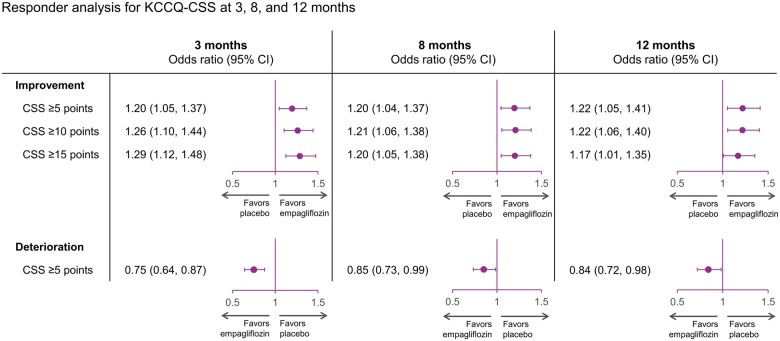
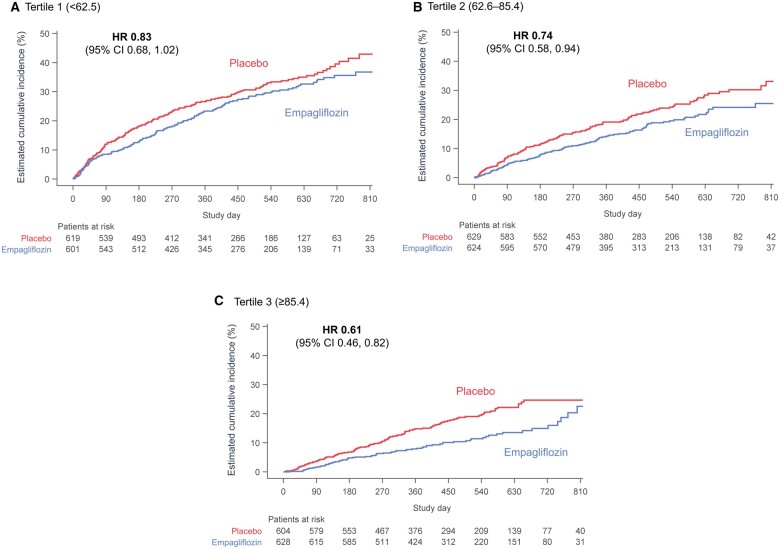
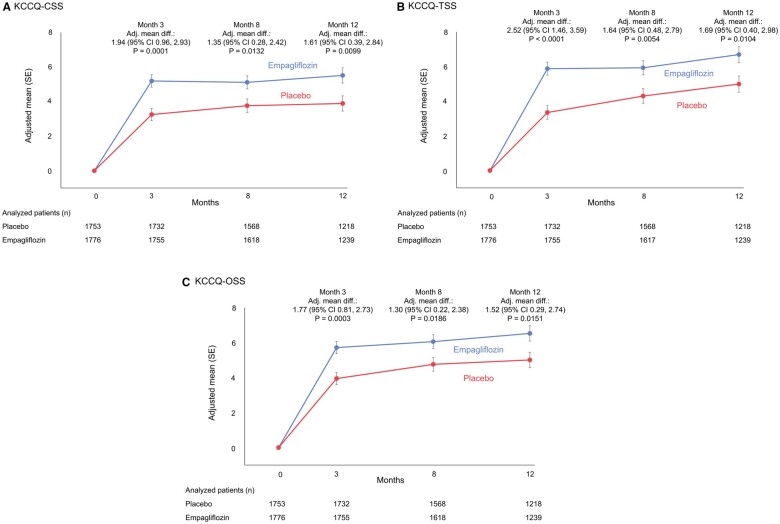
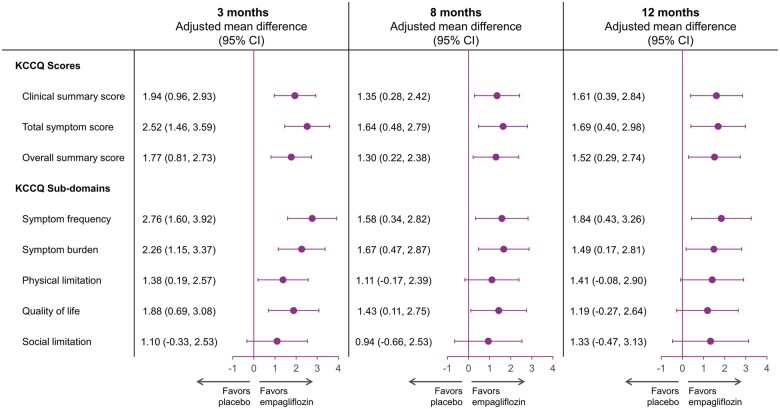
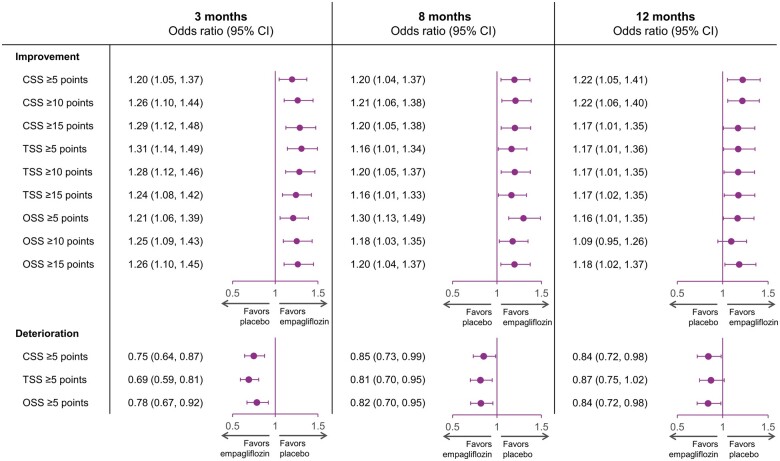
Aims: In this secondary analysis of the EMPEROR-Reduced trial, we sought to evaluate whether the benefits of empagliflozin varied by baseline health status and how empagliflozin impacted patient-reported outcomes in patients with heart failure with reduced ejection fraction. Methods and results: Health status was assessed by the Kansas City Cardiomyopathy Questionnaires-clinical summary score (KCCQ-CSS). The influence of baseline KCCQ-CSS (analyzed by tertiles) on the effect of empagliflozin on major outcomes was examined using Cox proportional hazards models. Responder analyses were performed to assess the odds of improvement and deterioration in KCCQ scores related to treatment with empagliflozin. Empagliflozin reduced the primary outcome of cardiovascular death or heart failure hospitalization regardless of baseline KCCQ-CSS tertiles [hazard ratio (HR) 0.83 (0.68–1.02), HR 0.74 (0.58–0.94), and HR 0.61 (0.46–0.82) for <62.5, 62.6–85.4, and ≥85.4 score tertiles, respectively; P-trend = 0.10]. Empagliflozin improved KCCQ-CSS, total symptom score, and overall summary score at 3, 8, and 12 months. More patients on empagliflozin had ≥5-point [odds ratio (OR) 1.20 (1.05–1.37)], 10-point [OR 1.26 (1.10–1.44)], and 15-point [OR 1.29 (1.12–1.48)] improvement and fewer had ≥5-point [OR 0.75 (0.64–0.87)] deterioration in KCCQ-CSS at 3 months. These benefits were sustained at 8 and 12 months and were similar for other KCCQ domains. Conclusion: Empagliflozin improved cardiovascular death or heart failure hospitalization risk across the range of baseline health status. Empagliflozin improved health status across various domains, and this benefit was sustained during long-term follow-up. Clinical trial registration: URL: https://www.clinicaltrials.gov. Unique identifier: NCT03057977.
Overview
The claims and statistics of this paper haven’t been checked yet.
Free: it reads the open-access text and checks the first 5 claims that cite a source we can check. Create a free account to check every claim.
Integrity signals
Registry
Cites
Statistics
Figures
Verification
Claims the paper makes
The claims and statistics of this paper haven’t been checked yet.
Free: it reads the open-access text and checks the first 5 claims that cite a source we can check. Create a free account to check every claim.
Claims other papers make about this one
Each is checked against this paper’s own text: does it say what the citing paper says it does?
The check wasn’t confident either way, so it gives no verdict — never disputed.
In the citing paper
“Treatment with empagliflozin did not affect visual analogue scale dyspnoea, diuretic response, NT-proBNP levels, or duration of hospital stay, but was safe, increased urinary output, and reduced a combined endpoint of worsening HF, re-hospitalization for HF, or death at 60 days compared with placebo.”
From 2023 ESC guidelines for the management of cardiovascular disease in patients with diabetes. (2023) · cites this paper as [498]
Experimental — accuracy not yet measured
Self-check
Percentages, sums and reported differences re-computed from the paper’s own numbers.
The self-check needs the paper’s full text.
Citations
Cites
Dapagliflozin in Patients with Heart Failure and Reduced Ejection Fraction
McMurray, J. J. V., Solomon, S. D., Inzucchi, S. E., Køber, L., Kosiborod, M. N., Martinez, F. A., Ponikowski, P., Sabatine, M. S., Anand, I. S., Bělohlávek, J., et al. (2019) · New England Journal of Medicine · doi:10.1056/nejmoa1911303 · Cited by 7,140
Self-citationCardiovascular and renal outcomes with empagliflozin in heart failure
Packer, M., Anker, S. D., Butler, J., Filippatos, G., Pocock, S. J., Carson, P., Januzzi, J., Verma, S., Tsutsui, H., Brueckmann, M., et al. (2020) · New England Journal of Medicine · doi:10.1056/nejmoa2022190 · Cited by 5,206 · cited 6×
“However, in the current trial, neither NYHA class nor KCCQ health status at baseline exerted a statistically significant influence on the magnitude of the response to empagliflozin.(8,15) Importantly, even in patients with the worst KCCQ health status at baseline, the effect of empagliflozin to reduce the risk of hear…”
BackgroundMethodResultInfluentialSelf-citationGreen, C. P., Porter, C. B., Bresnahan, D. R., & Spertus, J. A. (2000) · Journal of the American College of Cardiology · doi:10.1016/s0735-1097(00)00531-3 · Cited by 1,827 · cited 1×
“Quality of life outcome measures The KCCQ-23 is a 23-item, disease-specific measure that assesses the impact of heart failure on the perspective of patients of their health status.(10) The KCCQ-23 has been shown to be valid, reliable, and sensitive to clinical changes, and KCCQ scores are associated with death, hospit…”
BackgroundMonitoring clinical changes in patients with heart failure: A comparison of methods
Spertus, J., Peterson, E., Conard, M. W., Heidenreich, P. A., Krumholz, H. M., Jones, P., McCullough, P. A., Pina, I., Tooley, J., Weintraub, W. S., et al. (2005) · American Heart Journal · doi:10.1016/j.ahj.2004.12.010 · Cited by 562 · cited 1×
“We performed responder analyses to investigate the proportion of patients on empagliflozin and placebo who had >_5-, >_10-, and >_15point improvement or >_5-point deterioration in KCCQ scores at 3, 8, and 12 months; these thresholds are generally regarded as clinically meaningful changes.(13,14) Odds ratios (ORs) alon…”
MethodSelf-citationDevelopment and validation of a short version of the Kansas City Cardiomyopathy Questionnaire
Spertus, J. A., & Jones, P. G. (2015) · Circulation Cardiovascular Quality and Outcomes · doi:10.1161/circoutcomes.115.001958 · Cited by 491 · cited 1×
“The KCCQ-23 has been shown to be valid, reliable, and sensitive to clinical changes, and KCCQ scores are associated with death, hospitalization, and costs.(11,12) The KCCQ-23 was completed via paper-and-pen version in person by patients at randomization, 3, 8, and 12 months (more specifically, at 12, 32, and 52 weeks)…”
MethodPacker, M., Anker, S. D., Butler, J., Filippatos, G., Ferreira, J. P., Pocock, S. J., Carson, P., Anand, I., Doehner, W., Haass, M., et al. (2021) · Circulation · doi:10.1161/circulationaha.120.051783 · Cited by 435
Self-citationNassif, M. E., Windsor, S. L., Tang, F., Khariton, Y., Husain, M., Inzucchi, S. E., McGuire, D. K., Pitt, B., Scirica, B. M., Austin, B., et al. (2019) · Circulation · doi:10.1161/circulationaha.119.042929 · Cited by 424
Kosiborod, M. N., Jhund, P. S., Docherty, K. F., Diez, M., Petrie, M. C., Verma, S., Nicolau, J. C., Merkely, B., Kitakaze, M., DeMets, D. L., et al. (2020) · Circulation · doi:10.1161/circulationaha.119.044138 · Cited by 350
Self-citationHealth-Related Quality of Life Outcomes in PARADIGM-HF
Lewis, E. F., Claggett, B. L., McMurray, J. J. V., Packer, M., Lefkowitz, M. P., Rouleau, J. L., Liu, J., Shi, V. C., Zile, M. R., Desai, A. S., et al. (2017) · Circulation: Heart Failure · doi:10.1161/circheartfailure.116.003430 · Cited by 219 · cited 1×
“5 points in favor of active treatment.(16,17) Nevertheless, if 5- and 10point thresholds are applied to the participants in the EMPERORReduced trial, patients in the empagliflozin groups were 15–20% more likely to show meaningful improvement and 15–20% less likely to show meaningful deterioration in health status.”
BackgroundSelf-citationEkman, I., Chassany, O., Komajda, M., Böhm, M., Borer, J. S., Ford, I., Tavazzi, L., & Swedberg, K. (2011) · European Heart Journal · doi:10.1093/eurheartj/ehr343 · Cited by 206 · cited 1×
“5 points in favor of active treatment.(16,17) Nevertheless, if 5- and 10point thresholds are applied to the participants in the EMPERORReduced trial, patients in the empagliflozin groups were 15–20% more likely to show meaningful improvement and 15–20% less likely to show meaningful deterioration in health status.”
Background
Research works printed but not linked: 1
- Packer M, Butler J, Filippatos GS, Jamal W, Salsali A, Schnee J, Kimura K, Zeller C, George J, Brueckmann M, Anker SD, Zannad F, Packer M, Anker SD, Butler J, Filippatos G, Zannad F, George J, Brueckmann M, Perrone S, Nicholls S, Janssens S, Bocchi E, Giannetti N, Verma S, Jian Z, Spinar J, Seronde M‐F, Böhm M, Merkely B, Chopra V, Senni M, Taddei S, Tsutsui H, Choi D‐J, Chuquiure E, La Rocca HPB, Ponikowski P, Juanatey JRG, Squire I, Butler J, Januzzi J, Pina I, Pocock SJ, Carson P, Doehner W, Miller A, Haas M, Pehrson S, Komajda M, Anand I, Teerlink J, Rabinstein A, Steiner T, Kamel H, Tsivgoulis G, Lewis J, Freston J, Kaplowitz N, Mann J, Petrie M, Bernstein R, Cheung A, Green J, Januzzi J, Kaul S, Ping CLS, Lip G, Marx N, McCullough P, Mehta C, Ponikowski P, Rosenstock J, Sattar N, Scirica B, Tsutsui H, Verma S, Wanner C, Welty FK, Parhofer KG, Clayton T, Pedersen TR, Lees KR, Konstam MA, Greenberg B, Palmer M; EMPEROR-Reduced Trial Committees and Investigators. Evaluation of the effect of sodium-glucose co-transporter 2 inhibition with empagliflozin on morbidity and mortality of patients with chronic heart failure and a reduced ejection fraction: rationale for and design of the EMPEROR-Reduced trial. Eur J Heart Fail 2019; 21: 1270– 1278. 31584231 · DOI
Cited by
2021 ESC guidelines for the diagnosis and treatment of acute and chronic heart failure
McDonagh, T. A., Metra, M., Adamo, M., Gardner, R. S., Baumbach, A., Böhm, M., Burri, H., Butler, J., Čelutkienė, J., Chioncel, O., et al. (2021) · European Heart Journal · doi:10.1093/eurheartj/ehab368 · Cited by 13,344
Self-citationAuthors/Task Force Members:, McDonagh, T. A., Metra, M., Adamo, M., Gardner, R. S., Baumbach, A., Böhm, M., Burri, H., Butler, J., Čelutkienė, J., et al. (2022) · European Journal of Heart Failure · doi:10.1002/ejhf.2333 · Cited by 2,171
Self-citation2023 ESC guidelines for the management of cardiovascular disease in patients with diabetes.
Marx, N., Federici, M., Schütt, K., Müller-Wieland, D., Ajjan, R. A., Antunes, M. J., Christodorescu, R. M., Crawford, C., Di Angelantonio, E., Eliasson, B., et al. (2023) · European Heart Journal · doi:10.1093/eurheartj/ehad192 · Cited by 1,642
Self-citationVirani, S. S., Newby, L. K., Arnold, S. V., Bittner, V., Brewer, L. C., Demeter, S. H., Dixon, D. L., Fearon, W. F., Hess, B., Johnson, H. M., et al. (2023) · Circulation · doi:10.1161/cir.0000000000001168 · Cited by 1,598
Vaduganathan, M., Docherty, K. F., Claggett, B. L., Jhund, P. S., de Boer, R. A., Hernandez, A. F., Inzucchi, S. E., Kosiborod, M. N., Lam, C. S. P., Martinez, F., et al. (2022) · The Lancet · doi:10.1016/s0140-6736(22)01429-5 · Cited by 996
Self-citationVirani, S. S., Newby, L. K., Arnold, S. V., Bittner, V., Brewer, L. C., Demeter, S. H., Dixon, D. L., Fearon, W. F., Hess, B., Johnson, H. M., et al. (2023) · Journal of the American College of Cardiology · doi:10.1016/j.jacc.2023.04.003 · Cited by 596
Maddox, T. M., Januzzi, J. L., Allen, L. A., Breathett, K., Brouse, S., Butler, J., Davis, L. L., Fonarow, G. C., Ibrahim, N. E., Lindenfeld, J., et al. (2024) · Journal of the American College of Cardiology · doi:10.1016/j.jacc.2023.12.024 · Cited by 362
Self-citationButler, J., Packer, M., Filippatos, G., Ferreira, J. P., Zeller, C., Schnee, J., Brueckmann, M., Pocock, S. J., Zannad, F., & Anker, S. D. (2022) · European Heart Journal · doi:10.1093/eurheartj/ehab798 · Cited by 264
Self-citationButler, J., Filippatos, G., Jamal Siddiqi, T., Brueckmann, M., Böhm, M., Chopra, V. K., Pedro Ferreira, J., Januzzi, J. L., Kaul, S., Piña, I. L., et al. (2022) · Circulation · doi:10.1161/circulationaha.121.057812 · Cited by 206
Self-citationLiu, Z., Ma, X., Ilyas, I., Zheng, X., Luo, S., Little, P. J., Kamato, D., Sahebkar, A., Wu, W., Weng, J., et al. (2021) · Theranostics · doi:10.7150/thno.54498 · Cited by 155
“In secondary analysis of the EMPEROR-Reduced trial indicated that patients treated with empagliflozin had improvement in health status [31].”
Dapagliflozin for heart failure according to body mass index: the DELIVER trial
Adamson, C., Kondo, T., Jhund, P. S., de Boer, R. A., Cabrera Honorio, J. W., Claggett, B., Desai, A. S., Alcocer Gamba, M. A., Al Habeeb, W., Hernandez, A. F., et al. (2022) · European Heart Journal · doi:10.1093/eurheartj/ehac481 · Cited by 154
“14–20 Therefore, the effect of SGLT2 inhibition was examined according to body mass index (BMI) in the Dapagliflozin Evaluation to Improve the LIVEs of Patients With PReserved Ejection Fraction Heart Failure (DELIVER) trial.”
MethodSelf-citationKosiborod, M. N., Angermann, C. E., Collins, S. P., Teerlink, J. R., Ponikowski, P., Biegus, J., Comin-Colet, J., Ferreira, J. P., Mentz, R. J., Nassif, M. E., et al. (2022) · Circulation · doi:10.1161/circulationaha.122.059725 · Cited by 142
Self-citationTomasoni, D., Fonarow, G. C., Adamo, M., Anker, S. D., Butler, J., Coats, A. J. S., Filippatos, G. S., Greene, S. J., McDonagh, T. A., Ponikowski, P. P., et al. (2022) · European Journal of Heart Failure · doi:10.1002/ejhf.2397 · Cited by 149
Self-citationGuía ESC 2021 sobre el diagnóstico y tratamiento de la insuficiencia cardiaca aguda y crónica
McDonagh, T. A., Metra, M., Adamo, M., Gardner, R. S., Baumbach, A., Böhm, M., Burri, H., Butler, J., Čelutkienė, J., Chioncel, O. D., et al. (2022) · Revista Española de Cardiología · doi:10.1016/j.recesp.2021.11.027 · Cited by 179
Self-citationHundertmark, M., Adler, A., Antoniades, C. A., Coleman, R. L., Griffin, J. L., Holman, R. R., Lamlum, H., Lee, J., Massey, D., Miller, J. J. J. J., et al. (2023) · Circulation · doi:10.1161/circulationaha.122.062021 · Cited by 133
Impact Analysis of Heart Failure Across European Countries: An ESC-HFA Position Paper
Rosano, G. M. C., Seferovic, P. M., Savarese, G., Spoletini, I., Lopatin, Y. M., Gustafsson, F., Bayés‐Genís, A., Jaarsma, T., Abdelhamid, M., González, A., et al. (2022) · ESC Heart Failure · doi:10.1002/ehf2.14076 · Cited by 132
Self-citationJankowska, E. A., Kirwan, B., Kosiborod, M., Butler, J., Anker, S. D., McDonagh, T. A., Dorobanţu, M., Dróżdż, J., Filippatos, G. S., Keren, A., et al. (2021) · European Heart Journal · doi:10.1093/eurheartj/ehab234 · Cited by 122
Self-citationApplications of SGLT2 inhibitors beyond glycaemic control
O’Hara, D. V., Lam, C. S. P., McMurray, J. J. V., Yi, T. W., HOCKING, S. L., Dawson, J., Raichand, S., Januszewski, A. S., & Jardine, M. (2024) · Nature Reviews Nephrology · doi:10.1038/s41581-024-00836-y · Cited by 131
“SGLT2 inhibitors led to more people experiencing a clinically meaningful improvement in symptom scores (OR 1.15, 95% CI 1.08–1.23, in DAPA-HF; OR 1.20, 95% CI 1.05–1.37, in EMPEROR-Reduced) and fewer experiencing a deterioration in symptoms, compared with placebo 66,101 .”
InfluentialSelf-citationKosiborod, M. N., Bhatt, A. S., Claggett, B. L., Vaduganathan, M., Kulac, I. J., Lam, C. S. P., Hernandez, A. F., Martinez, F. A., Inzucchi, S. E., Shah, S. J., et al. (2023) · Journal of the American College of Cardiology · doi:10.1016/j.jacc.2022.11.006 · Cited by 86
Self-citationPacker, M., Butler, J., Zeller, C., Pocock, S. J., Brueckmann, M., Ferreira, J. P., Filippatos, G., Usman, M. S., Zannad, F., & Anker, S. D. (2023) · Circulation · doi:10.1161/circulationaha.123.065748 · Cited by 86
Self-citationSalah, H. M., Al’Aref, S. J., Khan, M. S., Al-Hawwas, M., Vallurupalli, S., Mehta, J. L., Mounsey, J. P., Greene, S. J., McGuire, D. K., Lopes, R. D., et al. (2022) · Cardiovascular Diabetology · doi:10.1186/s12933-022-01455-2 · Cited by 82
“The efficacy outcomes were chosen based on prior studies showing reduction in the risk of all-cause mortality and hospitalization for HF and improvement in KCCQ scale score in patients receiving SGLT2 inhibitors outside of the context of AHF [5, 14].”
MethodSelf-citationGao, M., Bhatia, K., Kapoor, A. B., Badimón, J. J., Pinney, S., MANCINI, D. M., Santos‐Gallego, C. G., & Lala, A. (2024) · JAMA Network Open · doi:10.1001/jamanetworkopen.2024.5135 · Cited by 88
Use of Patient-Reported Outcomes in Heart Failure: From Clinical Trials to Routine Practice
Savarese, G., Lindenfeld, J. M., Stolfo, D., Adams, K. F., Ahmad, T., Desai, N. R., Ammirati, E., Gottlieb, S. S., Psotka, M. A., Rosano, G. M. C., et al. (2023) · European Journal of Heart Failure · doi:10.1002/ejhf.2778 · Cited by 76
Mechanisms and Models in Heart Failure: A Translational Approach
Mann, D. L., & Felker, G. M. (2021) · Circulation Research · doi:10.1161/circresaha.121.318158 · Cited by 84
McMurray, J. J. V., Docherty, K. F., de Boer, R. A., Hammarstedt, A., Kitzman, D. W., Kosiborod, M. N., Maria Langkilde, A., Reicher, B., Senni, M., Shah, S. J., et al. (2024) · Circulation · doi:10.1161/circulationaha.123.065061 · Cited by 60
“9,17,18 Although less consistent than with KCCQ-TSS, in total, the available data suggest that SGLT2 inhibitors also improve KCCQ-PLS modestly in patients with HFrEF.”
MethodSelf-citationFilippatos, G. S., Anker, S. D., Butler, J., Farmakis, D. T., Ferreira, J. P., Gollop, N. D., Brueckmann, M., Iwata, T., Pocock, S., Zannad, F. M., et al. (2022) · European Journal of Heart Failure · doi:10.1002/ejhf.2707 · Cited by 58
Self-citationTurgeon, R. D., Barry, A. R., Hawkins, N. M., & Ellis, U. M. (2021) · European Journal of Heart Failure · doi:10.1002/ejhf.2141 · Cited by 53
Pleiotropic effects of SGLT2 inhibitors and heart failure outcomes
Theofilis, P., Sagris, Μ., Oikonomou, E. K., Antonopoulos, A. S., Siasos, G., Tsioufis, K., & Tousoulis, D. (2022) · Diabetes Research and Clinical Practice · doi:10.1016/j.diabres.2022.109927 · Cited by 48
Savarese, G., Butler, J., Lund, L. H., Bhatt, D. L., & Anker, S. D. (2021) · Cardiovascular Research · doi:10.1093/cvr/cvab271 · Cited by 48
Self-citationEmpagliflozin in Heart Failure with a Preserved Ejection Fraction. Reply.
Anker, S. D., Butler, J., & Packer, M. (2022) · PubMed · doi:10.1056/nejmc2118470 · Cited by 30
Butler, J., Stebbins, A., Melenovský, V., Sweitzer, N. K., Cowie, M., Stehlik, J., Khan, M. S., Blaustein, R. O., Ezekowitz, J. A., Hernandez, A. F., et al. (2022) · Circulation Heart Failure · doi:10.1161/circheartfailure.121.009337 · Cited by 44
Self-citationHundertmark, M., Agbaje, O. F., Coleman, R. L., George, J. T., Grempler, R., Holman, R. R., Lamlum, H., Lee, J., Milton, J. E., Niessen, H. G., et al. (2021) · ESC Heart Failure · doi:10.1002/ehf2.13406 · Cited by 40
“Of note, secondary analyses of EMPEROR-Reduced and DAPA-HF suggest a sustained improvement in KCCQ.66,67 The 6 min walking tests entail a few limitations as they are highly effort dependent, are potentially falsely negative due to non-cardiac reasons (e.g. injuries), and do not correlate specifically well with QoL.68…”
MethodInfluentialConnelly, K. A., Mazer, C. D., Puar, P., Teoh, H., Wang, C., Mason, T., Akhavein, F., Chang, C., Liu, M., Yang, N., et al. (2022) · Circulation · doi:10.1161/circulationaha.122.062769 · Cited by 41
Self-citationThe year in cardiovascular medicine 2021: heart failure and cardiomyopathies
Bauersachs, J. K., de Boer, R. A., Lindenfeld, J. M., & Bozkurt, B. (2022) · European Heart Journal · doi:10.1093/eurheartj/ehab887 · Cited by 47
Mulugeta, H., Sinclair, P. M., & Wilson, A. (2023) · Scientific Reports · doi:10.1038/s41598-023-47567-x · Cited by 42
Advances in management of heart failure
Heidenreich, P. A., & Sandhu, A. T. (2024) · BMJ · doi:10.1136/bmj-2023-077025 · Cited by 44
Natale, P., Tunnicliffe, D. J., Toyama, T., Palmer, S. C., Saglimbene, V. M., Ruospo, M., Gargano, L., Stallone, G., Gesualdo, L., & Strippoli, G. F. (2024) · Cochrane Database of Systematic Reviews · doi:10.1002/14651858.cd015588.pub2 · Cited by 70
Verma, S., Anker, S. D., Butler, J., & Bhatt, D. L. (2020) · ESC Heart Failure · doi:10.1002/ehf2.13148 · Cited by 32
Self-citationEmpagliflozin: A Review in Symptomatic Chronic Heart Failure
Frampton, J. E. (2022) · Drugs · doi:10.1007/s40265-022-01778-0 · Cited by 38
“Similarly, empagliflozin reduced the risk of the primary endpoint, regardless of ischaemic aetiology (yes vs no) [23], presence of CKD [37], presence of anaemia [38], health status [Kansas City Cardiomyopathy Questionnaire-23 (KCCQ-23)-clinical summary score (CSS)] [39], NT-proBNP level [40] and systolic blood pressur…”
BackgroundResultInfluentialGreene, S. J., Butler, J., & Kosiborod, M. (2024) · The American Journal of Medicine · doi:10.1016/j.amjmed.2023.04.019 · Cited by 29
Self-citationButler, J., Khan, M. S., Friede, T., Jankowska, E. A., Fabien, V., Goehring, U.-M., Dorigotti, F., Metra, M., Piña, I. L., Coats, A. J. S., et al. (2022) · European Journal of Heart Failure · doi:10.1002/ejhf.2478 · Cited by 30
Self-citationNguyen, B.-N., Mital, S., Bugden, S., & Nguyen, H. V. (2023) · International Journal of Cardiology · doi:10.1016/j.ijcard.2023.01.080 · Cited by 27
Zannad, F. M., Alikhaani, J. D., Alikhaani, S., Butler, J., Gordon, J. P., Jensen, K., Khatib, R., Mantovani, L. G., Martinez, R., Moore, W., et al. (2023) · European Journal of Heart Failure · doi:10.1002/ejhf.2828 · Cited by 27
Self-citationHernandez, M., Sullivan, R. D., McCune, M. E., Reed, G. L., & Gladysheva, I. P. (2022) · Diagnostics · doi:10.3390/diagnostics12040989 · Cited by 23
“Empagliflozin led to more 5-point, 10-point, and 15-point improvements in and fewer deteriorations in KCCQ-CSS at 3 months compared to placebo [125].”
ResultCould SGLT2 Inhibitors Improve Exercise Intolerance in Chronic Heart Failure?
Voorrips, S. N., Saucedo‐Orozco, H., Sánchez-Aguilera, P., de Boer, R. A., van der Meer, P., & Westenbrink, B. D. (2022) · International Journal of Molecular Sciences · doi:10.3390/ijms23158631 · Cited by 26
“Butler [202] Substudy EMPEROR R 2021 3730 HFrEF patients; NYHA II-IV; (LVEF ≤ 40%) 54%; 48%; 48% for patients with KCCQ of <62.”
BackgroundResultVolterrani, M., Hálasz, G., Adamopoulos, S. N., Agostoni, P., Butler, J., Coats, A. J. S., Solal, A. C., Doehner, W., Filippatos, G., Jankowska, E. A., et al. (2025) · European Journal of Preventive Cardiology · doi:10.1093/eurjpc/zwad400 · Cited by 22
Self-citationShchendrygina, A., Rakisheva, A., Giverts, I., Rustamova, Y., & Soloveva, A. E. (2024) · Cardiac failure review · doi:10.15420/cfr.2024.05 · Cited by 24
Diagnosis and Management of Heart Failure
Gladysheva, I. P., & Sullivan, R. D. (2022) · MDPI eBooks · doi:10.3390/books978-3-0365-4153-2 · Cited by 22
Johansson, I., Balasubramanian, K., Bangdiwala, S. I., Mielniczuk, L. M., Hage, C., Sharma, S. K., Branch, K. R., Zhu, J. M., Kragholm, K. H., Sliwa, K. S., et al. (2022) · European Journal of Heart Failure · doi:10.1002/ejhf.2535 · Cited by 22
Metra, M., Tomasoni, D., Adamo, M., Amir, O., Anker, S. D., Bayés‐Genís, A., Böehm, M., Butler, J., Chioncel, O. D., Filippatos, G. S., et al. (2025) · ESC Heart Failure · doi:10.1002/ehf2.15408 · Cited by 28
Self-citationLawson, C. A., Tay, W. T., Bernhardt, L., Richards, M., Zaccardi, F., Tromp, J., Teng, T. K., Hung, C., Chandramouli, C., Wander, G. S., et al. (2023) · JACC Asia · doi:10.1016/j.jacasi.2023.03.005 · Cited by 23
“Additionally, there is now also an emergence of therapeutic agents that provide cardiorenal protective benefits for people with DM and CKD.(29-32) This study aimed to investigate the clinical correlates and outcomes of DM and CKD in patients with HFpEF and HFrEF in a multinational cohort in Asia and to disentangle the…”
BackgroundSelf-citationOuyang, X., Wang, J., Chen, Q., Peng, L., Li, S., & Tang, X. (2023) · Cardiovascular Diabetology · doi:10.1186/s12933-023-01860-1 · Cited by 20
“Given that there were three RCTs [9, 31, 32] with duration of follow-up more than 1 years, and the remaining seven RCTs [25–30, 33] with follow-up time less than 1 year, subgroup analysis based on the follow-up duration was also conducted.”
BackgroundMethodPredicting Heart Failure Outcomes Using Patient-Reported Health Status
El-Sabawi, B. R., Al-Garadi, M. A., Steitz, B. D., Perkins, A. M., McCoy, A. B., Sengstack, D. G., Greevy, R. A., Burnell, E. H., Schlendorf, K. H., Lindenfeld, J., et al. (2025) · Journal of the American College of Cardiology · doi:10.1016/j.jacc.2025.03.545 · Cited by 21
Efficacy and Safety of Empagliflozin According to Background Diuretic Use in HFrEF
Dhingra, N. K., Verma, S., Butler, J., Anker, S. D., Ferreira, J. P., Filippatos, G. S., Januzzi, J. L., Lam, C. S. P., Sattar, N. A., Zaremba-Pechmann, L., et al. (2023) · JACC Heart Failure · doi:10.1016/j.jchf.2023.06.036 · Cited by 20
Self-citationBakbak, E., Verma, S., Krishnaraj, A., Quan, A., Wang, C., Pan, Y., Puar, P., Mason, T., Verma, R., Terenzi, D. C., et al. (2023) · American Journal of Physiology-Heart and Circulatory Physiology · doi:10.1152/ajpheart.00141.2023 · Cited by 19
Self-citationOriecuia, C., Tomasoni, D., Sala, I., Bonfioli, G. B., Adamo, M., Gussago, C., Lombardi, C., Pagnesi, M., Savarese, G., Metra, M., et al. (2023) · European Heart Journal - Cardiovascular Pharmacotherapy · doi:10.1093/ehjcvp/pvad088 · Cited by 20
Malik, A., Bagchi, A. K., Jassal, D. S., & Singal, P. K. (2024) · Molecular Medicine Reports · doi:10.3892/mmr.2024.13198 · Cited by 18
Yang, M., Kondo, T., Jhund, P. S., Alcocer-Gamba, M. A., Borleffs, C. J. W., Chiang, C., Colet, J. C., Desai, A. S., Dobreanu, D., Dróżdż, J., et al. (2024) · European Journal of Heart Failure · doi:10.1002/ejhf.3352 · Cited by 18
Self-citationNHC/ SHA 2023 Focused update of the 2019 guidelines for the management of heart failure
Habeeb, W. A., Tash, A. A., Elasfar, A., Almasood, A. S., Bakhsh, A., Elshaer, F., Ayoubi, F. A., Alghalaini, K., Alqaseer, M., Alhussein, M., et al. (2023) · Journal of the Saudi Heart Association · doi:10.37616/2212-5043.1334 · Cited by 25
Horiuchi, Y., Asami, M., Yahagi, K., Oshima, A., Gonda, Y., Yoshiura, D., Komiyama, K., Yuzawa, H., Tanaka, J., Aoki, J., et al. (2024) · Journal of Clinical Medicine · doi:10.3390/jcm13061670 · Cited by 18
“Improvement in quality of life, as assessed by the Kansas City Cardiomyopathy Questionnaire, has been observed very early after the initiation of SGLT2is [38–40].”
He, Z., Yang, L., Nie, Y., Wang, Y., Wang, Y., Niu, X., Bai, M., Yao, Y., & Zhang, Z. (2021) · International Journal of Cardiology · doi:10.1016/j.ijcard.2021.10.008 · Cited by 16
Volterrani, M., Hálasz, G., Adamopoulos, S. N., Agostoni, P., Butler, J., Coats, A. J. S., Solal, A. C., Doehner, W., Filippatos, G., Jankowska, E. A., et al. (2025) · European Journal of Heart Failure · doi:10.1002/ejhf.3440 · Cited by 25
Self-citationEffects of Sotagliflozin on Health Status in Patients With Worsening Heart Failure
Bhatt, A. S., Bhatt, D. L., Steg, P. G., Szarek, M. J., Cannon, C. P., Leiter, L. A., McGuire, D. K., Lewis, J. B., Riddle, M. C., Voors, A. A., et al. (2024) · Journal of the American College of Cardiology · doi:10.1016/j.jacc.2024.06.036 · Cited by 16
Yang, M., Kondo, T., Talebi, A., Jhund, P. S., Docherty, K. F., Claggett, B. L., Vaduganathan, M., Bachus, E., Hernandez, A. F., Lam, C. S. P., et al. (2025) · JACC Heart Failure · doi:10.1016/j.jchf.2024.10.020 · Cited by 16
Self-citationButt, J. H., Docherty, K. F., Kosiborod, M., Inzucchi, S. E., Køber, L., Langkilde, A. M., Martínez, F. A., Bengtsson, O., Ponikowski, P. P., Sabatine, M. S., et al. (2023) · JACC Heart Failure · doi:10.1016/j.jchf.2023.04.016 · Cited by 17
Self-citationAngiotensin-Neprilysin Inhibition and Left Ventricular Assist Device Therapy
Čikeš, M., Brugts, J. J., Claggett, B. L., Jorde, U. P., Milicić, D., Planinc, I., Ruschitzka, F. T., Uriel, N. Y., Kulac, I. J., Jakuš, N., et al. (2025) · JACC Heart Failure · doi:10.1016/j.jchf.2025.102657 · Cited by 15
El-Saied, S. B., El-Sherbeny, W. S., & Sharkawy, S. E. (2023) · IJC Heart & Vasculature · doi:10.1016/j.ijcha.2023.101329 · Cited by 13
“The EMPEROR-reduced trial found that empagliflozin reduced HF hospitalization by 25 % with improvements in QOL and a significant reduction in eGFR [20].”
BackgroundAiming at harmony. Comparing and contrasting International HFrEF Guidelines
Tomasoni, D., Adamo, M., Bozkurt, B., Heidenreich, P. A., McDonagh, T. A., Rosano, G. M. C., Virani, S., Zieroth, S. R., & Metra, M. (2022) · European Heart Journal Supplements · doi:10.1093/eurheartjsupp/suac124 · Cited by 14
“Based on DAPA-HF (Dapagliflozin and Prevention of AdverseOutcomes in HF) and EMPEROR-Reduced (Empagliflozin Outcome Trial in Patients with Chronic HF and a Reduced EF) trials, ESC guidelines recommend dapagliflozin or empagliflozin for all patients with HFrEF to reduce CV mortality and HF hospitalizations (CoR I, LoE…”
BackgroundEpidemiology and treatment of acute and chronic heart failure
Crea, F. (2023) · European Heart Journal · doi:10.1093/eurheartj/ehad022 · Cited by 13
Norre, T., Grimm, D. G., & Simonsen, U. (2022) · Basic & Clinical Pharmacology & Toxicology · doi:10.1111/bcpt.13714 · Cited by 14
“The effect was also significant in health-related quality of life outcomes.(72,73) Post hoc analyses revealed that the effect was independent of diabetic status, age and sacubitril/ valsartan or enalapril treatment.”
BackgroundThe year in cardiovascular medicine 2021: diabetes and metabolic disorders
Cosentino, F., Bhatt, D. L., Marx, N., & Verma, S. (2022) · European Heart Journal · doi:10.1093/eurheartj/ehab876 · Cited by 13
Self-citationHu, Y., Zhang, Y., Han, P., Pan, Y., Liu, J., Li, Y., Pan, D., & Ren, J. (2025) · International Journal of Cardiology · doi:10.1016/j.ijcard.2025.133743 · Cited by 13
Kubica, J., Kubica, A., Grzelakowska, K., Stolarek, W., Grąbczewska, Z., Michalski, P., Niezgoda, P., Bartuś, S., Budaj, A., Dąbrowski, M., et al. (2023) · Cardiology Journal · doi:10.5603/cj.a2021.0133 · Cited by 16
“Treatment with empagliflozin and dapagliflozin was safe and well tolerated, resulting in excellent adherence to medication — a key factor in the long-term treatment of patients with chronic diseases [39, 50].”
BackgroundLong Term Changes in Health-Related Quality of Life for People with Heart Failure: The ECHOES Study
Roalfe, A. K., Taylor, C. J., & Hobbs, R. F. (2022) · ESC Heart Failure · doi:10.1002/ehf2.14182 · Cited by 9
Zhang, L., Ji, R., He, G., Tian, A., Huo, X., Zheng, Y., Qi, L., Mi, Y., Yan, X., Wang, B., et al. (2023) · Journal of the American Heart Association · doi:10.1161/jaha.122.028782 · Cited by 10
Usman, M., Hamid, A., Qazi, S. U., Kosiborod, M., Bhatt, D. L., Khan, M. S., Vaduganathan, M., & Butler, J. (2024) · Global Cardiology · doi:10.4081/cardio.2024.35 · Cited by 15
Self-citationChallenges and opportunities in the management of acute heart failure and cardiac amyloidosis
Crea, F. (2023) · European Heart Journal · doi:10.1093/eurheartj/ehad403 · Cited by 9
Tsutsui, H., Sakamaki, H., Momomura, S., Sakata, Y., Kotobuki, Y., Linden, S., Reifsnider, O. S., Rakonczai, P., Stargardter, M., Murata, T., et al. (2023) · Journal of Cardiology · doi:10.1016/j.jjcc.2023.02.007 · Cited by 11
Kerwagen, F., Riemer, U., Wachter, R., von Haehling, S., Abdin, A., Böhm, M., Schulz, M., & Störk, S. (2023) · The Lancet Regional Health - Europe · doi:10.1016/j.lanepe.2023.100778 · Cited by 10
SGLT2 inhibitors: a new pillar of the heart failure regimen
DeSa, T. B., & Gong, T. (2021) · Reviews in Cardiovascular Medicine · doi:10.31083/j.rcm2204133 · Cited by 11
Revascularisation for Ischaemic Cardiomyopathy
Wa, M. L. K., Assar, S. Z., Kirtane, A. J., & Perera, D. (2023) · Interventional Cardiology Reviews Research Resources · doi:10.15420/icr.2023.06 · Cited by 11
Docherty, K. F., Buendía, R., Folkvaljon, F., de Boer, R. A., Cowie, M., Hammarstedt, A., Kitzman, D. W., Kosiborod, M., Langkilde, A. M., Reicher, B., et al. (2024) · Circulation Heart Failure · doi:10.1161/circheartfailure.124.012349 · Cited by 11
Self-citationMorillas, H., Galcerá, E., Alania-Torres, E., Seller, J., Larumbe, A., Núñez, J. E., & Valle, A. (2022) · Reviews in Cardiovascular Medicine · doi:10.31083/j.rcm2304139 · Cited by 9
“More patients on SGLT2 inhibitors had a clinically meaningful ( ≥ 5 points) improvement and fewer patients had a ≥ 5 points deterioration in KCCQ scores, compared to placebo [38,39].”
Cardiomyopathies and myocardial fibrosis: diagnostic and therapeutic challenges
Crea, F. (2022) · European Heart Journal · doi:10.1093/eurheartj/ehac688 · Cited by 8
Jhund, P. S. (2023) · Diabetes Obesity and Metabolism · doi:10.1111/dom.15171 · Cited by 8
“28,29 A threshold of a five-point change is a validated meaningful change and patients who received an SGLT-2i in these trials were 15%-20% more likely to experience a five-point improvement in scores at 8 months and 15% less likely to have a deterioration in their score of ≥ 5 points at 8 months…”
BackgroundSGLT2 Inhibitors in Heart Failure with Reduced Ejection Fraction
Rastogi, T., & Girerd, N. (2022) · Heart Failure Clinics · doi:10.1016/j.hfc.2022.03.006 · Cited by 9
Lee, M. M. Y., & Sattar, N. A. (2023) · Diabetes Obesity and Metabolism · doi:10.1111/dom.15085 · Cited by 11
Self-citationNature and Magnitude of the Benefits of Dapagliflozin and Empagliflozin for Heart Failure
Cleland, J. G. F. (2024) · Circulation · doi:10.1161/circulationaha.123.068089 · Cited by 10
“…are strongly recommended in international guidelines for treating patients with heart failure who have a reduced (HFrEF) or preserved (HFpEF) left ventricular ejection fraction, based on the results of several large, randomised trials showing reductions in morbidity and perhaps mortality (4-7).”
BackgroundClark, K. A. A. (2023) · Postgraduate Medical Journal · doi:10.1093/postmj/qgad022 · Cited by 8
Babă, D.-F., Suciu, H., Avram, C., Danilesco, A., Moldovan, D.-A., Rauta, R. C., Huma, L., & Sin, I. A. (2023) · International Journal of Environmental Research and Public Health · doi:10.3390/ijerph20043471 · Cited by 7
Empagliflozin in the treatment of heart failure
Shafiq, A., Hameed, I., Biegus, J., Fudim, M., & Khan, M. S. (2024) · Future Cardiology · doi:10.1080/14796678.2024.2360818 · Cited by 10
Self-citationMochel, J. P., Ward, J. L., Blondel, T., Kundu, D., Merodio, M. M., Zemirline, C., Guillot, E., Giebelhaus, R. T., de la Mata, A. P., Iennarella‐Servantez, C. A., et al. (2024) · Scientific Reports · doi:10.1038/s41598-024-71202-y · Cited by 11
Self-citationNetwork Meta-Analysis of Quality of Life in Heart Failure With Reduced Ejection Fraction
Margaryan, R., Sepehrvand, N., Ouwerkerk, W., Tromp, J., Turgeon, R. D., & Ezekowitz, J. A. (2025) · Circulation Heart Failure · doi:10.1161/circheartfailure.125.013074 · Cited by 6
Erbay, İ., Güdül, N. E., Süner, A. F., Aladağ, P., Karacar, U., & Avcı, A. (2025) · Clinical Cardiology · doi:10.1002/clc.70190 · Cited by 7
“Recent studies have demonstrated that SGLT2 inhibitors improve QoL in HF patients, primarily through gains in functional status and symptom relief [12, 13].”
Qiu, M., Ding, L., & Zhou, H. (2021) · Cardiovascular Diagnosis and Therapy · doi:10.21037/cdt-20-984 · Cited by 6
“Meanwhile, the benefits of SGLT2is for heart failure outcomes are paralleled by reverse cardiac remodeling (19,20) and improvement in quality of life (5,19,21).”
BackgroundCrea, F. (2023) · European Heart Journal · doi:10.1093/eurheartj/ehad234 · Cited by 6
Spertus, J. A. (2021) · European Heart Journal · doi:10.1093/eurheartj/ehab057 · Cited by 8
Crea, F. (2022) · European Heart Journal · doi:10.1093/eurheartj/ehac497 · Cited by 5
Gard, E. K., Noaman, S. Q., Stub, D. A., Vriesendorp, P. A., Htun, N., Johnston, R., Gartner, E., Dick, R., Walton, A., Kaye, D. M., et al. (2024) · Heart Lung and Circulation · doi:10.1016/j.hlc.2024.02.002 · Cited by 4
Heart Failure Treatment in the Last Years of Life: A Nationwide Study of 364 000 Individuals
Sundström, J., Gustafsson, S., Cars, T., & Lindholm, D. P. (2024) · European Journal of Heart Failure · doi:10.1002/ejhf.3426 · Cited by 4
Metadata
- Authors
- Butler, J., Anker, S. D., Filippatos, G., Khan, M. S., Ferreira, J. P., Pocock, S. J., Giannetti, N., Januzzi, J. L., Piña, I. L., Lam, C. S. P., Ponikowski, P., Sattar, N., Verma, S., Brueckmann, M., Jamal, W., Vedin, O., Peil, B., Zeller, C., Zannad, F., Packer, M., & the EMPEROR-Reduced Trial Committees and Investigators
- Affiliations
- University of Mississippi Medical Center (US)
- Berlin-Brandenburger Centrum für Regenerative Therapien (DE)
- National and Kapodistrian University of Athens (GR)
- French Clinical Research Infrastructure Network (FR)
- London School of Hygiene & Tropical Medicine (GB)
- McGill University Health Centre (CA)
- Harvard University (US)
- Wayne State University (US)
- National University of Singapore (SG)
- Wroclaw Medical University (PL)
- University of Glasgow (GB)
- St. Michael's Hospital (CA)
- Boehringer Ingelheim (Germany) (DE)
- Boehringer Ingelheim (Sweden) (SE)
- Baylor University Medical Center (US)
- Corresponding author
- Butler, Javed
- ORCID
- Venue
- European Heart Journal
- Publisher
- Oxford University Press (OUP)
- Published
- 2021-01-09
- Volume
- 42
- Issue
- 13
- Pages
- 1203-1212
- ISSN
- 0195-668X (ISSN-L)
- 1522-9645
- PMC
- PMC8014525
- OpenAlex
- W3118491390
- Semantic Scholar
- 146157902fba3e8a7341f493b3df753958cf2c97
- Cited by
- 183
- References
- 15
- Citations by year
- 2026: 10 · 2025: 21 · 2024: 26 · 2023: 47 · 2022: 52 · 2021: 26
- FWCI
- 19.49
- Type
- journal article
- Language
- en
- Open access
- hybrid
- doi.org
- Licence
- Locations
- European Heart Journal (publishedVersion, cc-by-nc)
- PubMed Central (publishedVersion, cc-by-nc)
- PubMed (publishedVersion)
- LSHTM Research Online (London School of Hygiene and Tropical Medicine) (acceptedVersion)
- HAL (submittedVersion, cc-by-nc)
- Funders
- Boehringer Ingelheim & Eli Lilly and Company Diabetes Alliance
- Topics
- Health Sciences › Medicine › Cardiology and Cardiovascular Medicine › Heart Failure Treatment and Management
- Health Sciences › Medicine › Endocrinology, Diabetes and Metabolism › Diabetes Treatment and Management
- Health Sciences › Medicine › Cardiology and Cardiovascular Medicine › Heart rate and cardiovascular health
- Keywords
- empagliflozin, heart failure with reduced ejection fraction, health-related quality of life, Kansas City Cardiomyopathy Questionnaire, patient-reported outcomes, baseline health status, responder analysis, cardiovascular mortality, heart failure hospitalization, EMPEROR-Reduced trial, SGLT2 inhibitors, symptom scores, treatment response variability, long-term follow-up
- MeSH terms
- Benzhydryl Compounds, Glucosides, Heart Failure, Humans, Quality of Life, Stroke Volume
About these checks
Registry, retraction, Cites and statistics results are computed, not judged, with one exception: a printed reference that no index lists is read once by a model before it counts as a citation error. Claims are extracted by a model and kept only when their quote appears verbatim in the text; each cited source is then checked, with a model’s help, for whether it says what the claim relies on. Those verdicts can be wrong — read the claim’s quote and the cited source before relying on one.
Statistics and arithmetic are recomputed, not judged.
Confidence bands are shown only for fields calibrated on our annotated test set. None is calibrated yet, so no band is shown.
What counts as a claim ›How we measure confidence ›How we check this ›
Are you an author, or do you see a problem with this page? Request a review
Data sources
Bibliographic data: Semantic Scholar, OpenAlex, Crossref.
Contains information from the Semantic Scholar Academic Graph Datasets, made available under the ODC Attribution License (ODC-BY 1.0).
Semantic Scholar’s data is described in: Kinney, R., et al. (2023). The Semantic Scholar Open Data Platform. arXiv:2301.10140.
