

Metabolic profiling of angiopoietin-like protein 3 and 4 inhibition: a drug-target Mendelian randomization analysis
Open accessThe DOI matches its Crossref record; 22 of the 22 references it cites were found in a registry or an index.
Abstract
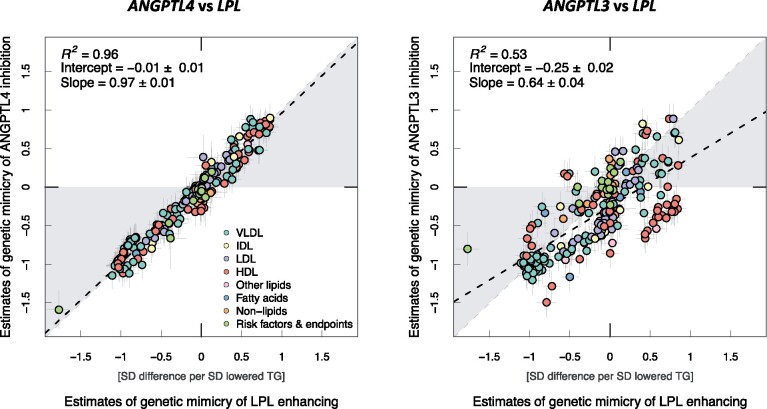
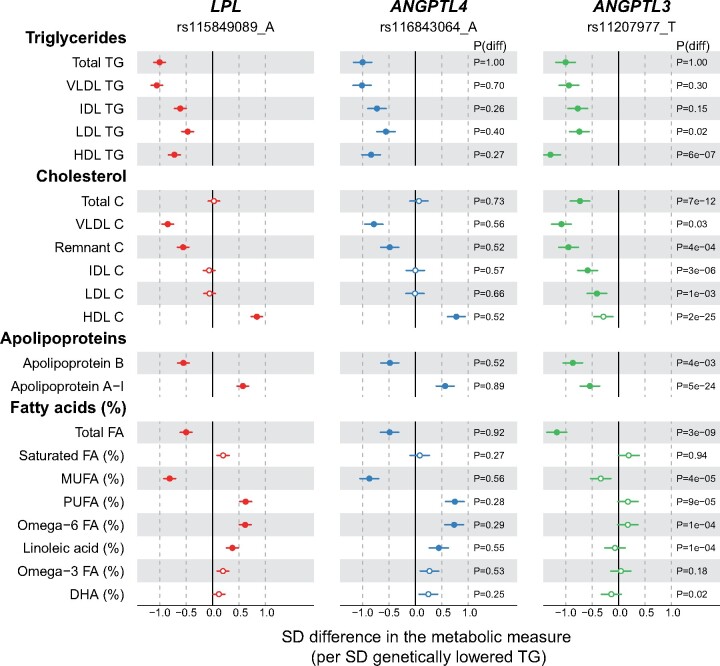
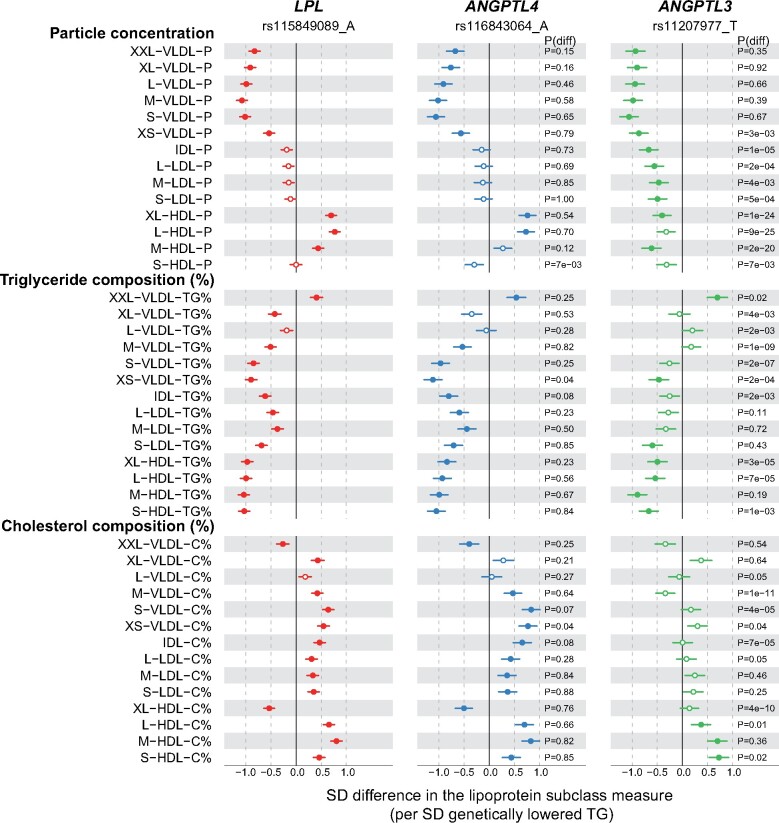
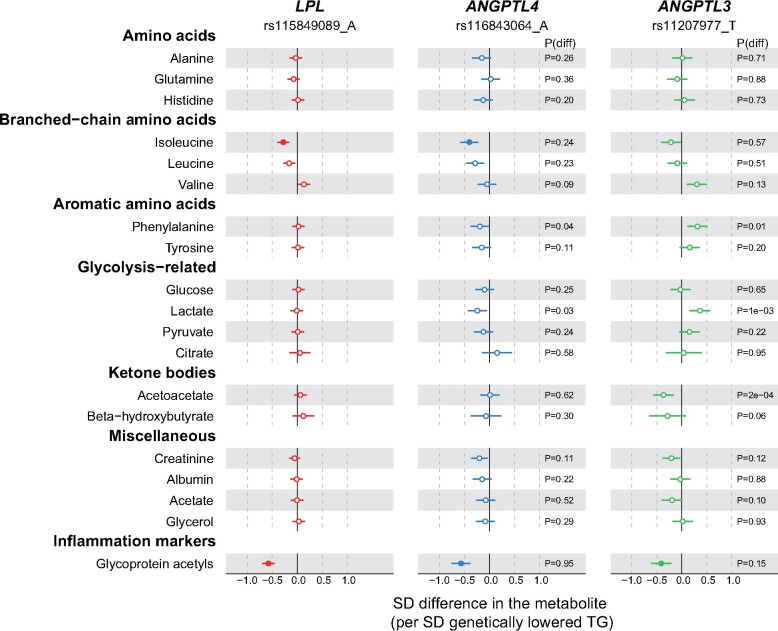
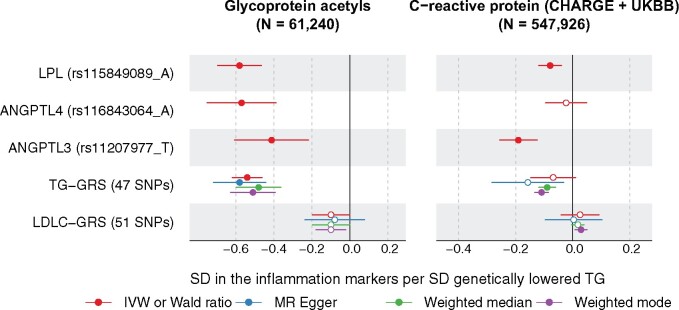
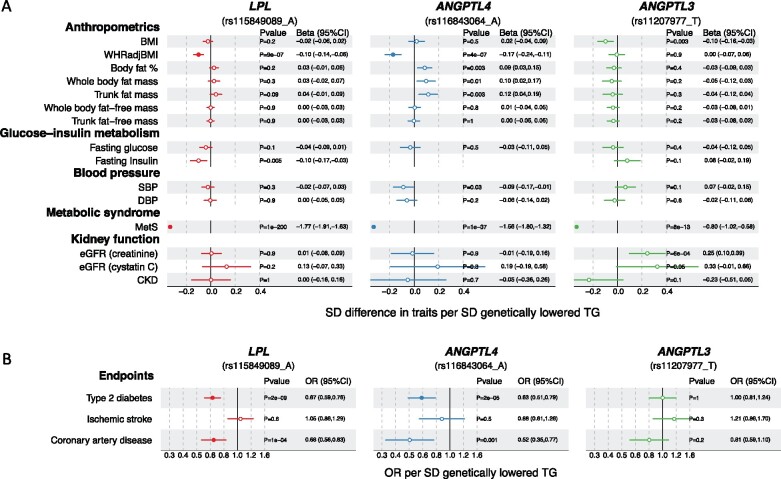
Aims: Angiopoietin-like protein 3 (ANGPTL3) and 4 (ANGPTL4) inhibit lipoprotein lipase (LPL) and represent emerging drug targets to lower circulating triglycerides and reduce cardiovascular risk. To investigate the molecular effects of genetic mimicry of ANGPTL3 and ANGPTL4 inhibition and compare them to the effects of genetic mimicry of LPL enhancement. Methods and results: Associations of genetic variants in ANGPTL3 (rs11207977-T), ANGPTL4 (rs116843064-A), and LPL (rs115849089-A) with an extensive serum lipid and metabolite profile (208 measures) were characterized in six cohorts of up to 61 240 participants. Genetic associations with anthropometric measures, glucose-insulin metabolism, blood pressure, markers of kidney function, and cardiometabolic endpoints via genome-wide summary data were also explored. ANGPTL4 rs116843064-A and LPL rs115849089-A displayed a strikingly similar pattern of associations across the lipoprotein and lipid measures. However, the corresponding associations with ANGPTL3 rs11207977-T differed, including those for low-density lipoprotein and high-density lipoprotein particle concentrations and compositions. All three genotypes associated with lower concentrations of an inflammatory biomarker glycoprotein acetyls and genetic mimicry of ANGPTL3 inhibition and LPL enhancement were also associated with lower C-reactive protein. Genetic mimicry of ANGPTL4 inhibition and LPL enhancement were associated with a lower waist-to-hip ratio, improved insulin-glucose metabolism, and lower risk of coronary heart disease and type 2 diabetes, whilst genetic mimicry of ANGPTL3 was associated with improved kidney function. Conclusions: Genetic mimicry of ANGPTL4 inhibition and LPL enhancement have very similar systemic metabolic effects, whereas genetic mimicry of ANGPTL3 inhibition showed differing metabolic effects, suggesting potential involvement of pathways independent of LPL. Genetic mimicry of ANGPTL4 inhibition and LPL enhancement were associated with a lower risk of coronary heart disease and type 2 diabetes. These findings reinforce evidence that enhancing LPL activity (either directly or via upstream effects) through pharmacological approaches is likely to yield benefits to human health.
Overview
The claims and statistics of this paper haven’t been checked yet.
Free: it reads the open-access text and checks the first 5 claims that cite a source we can check. Create a free account to check every claim.
Integrity signals
Registry
Cites
Statistics
Figures
Verification
Claims the paper makes
The claims and statistics of this paper haven’t been checked yet.
Free: it reads the open-access text and checks the first 5 claims that cite a source we can check. Create a free account to check every claim.
Claims other papers make about this one
Each is checked against this paper’s own text: does it say what the citing paper says it does?
The cited source says what the claim attributes to it.
In the citing paper
“Genetically proxied levels of lipids were significantly associated with CAD33,34”
From Genetic insights into causal effects of lipids and lipid-modifying targets on calcific aortic valve stenosis: a Mendelian randomized study (2025) · cites this paper as [34]
The check wasn’t confident either way, so it gives no verdict — never disputed.
In the citing paper
“CETP variants in the China Kadoorie Biobank that were strongly associated with HDL-C, but not with apolipoprotein B, did not associate with CVD 77 .”
From Integrating genomics with biomarkers and therapeutic targets to invigorate cardiovascular drug development (2021) · cites this paper as [77]
Experimental — accuracy not yet measuredIn the citing paper
“such SBP associations have not been identified in drug-target MRs using HDL-C raising variants in CETP 79 77 , for reasons that are unclear.”
From Integrating genomics with biomarkers and therapeutic targets to invigorate cardiovascular drug development (2021) · cites this paper as [77]
Self-check
Percentages, sums and reported differences re-computed from the paper’s own numbers.
The self-check needs the paper’s full text.
Citations
Cites
Antiinflammatory Therapy with Canakinumab for Atherosclerotic Disease
Ridker, P. M., Everett, B. M., Thuren, T., MacFadyen, J. G., Chang, W. H., Ballantyne, C., Fonseca, F., Nicolau, J., Koenig, W., Anker, S. D., et al. (2017) · New England Journal of Medicine · doi:10.1056/nejmoa1707914 · Cited by 9,482
Mach, F., Baigent, C., Catapano, A. L., Koskinas, K. C., Casula, M., Badimon, L., Chapman, M. J., De Backer, G. G., Delgado, V., Ference, B. A., et al. (2020) · European Heart Journal · doi:10.1093/eurheartj/ehz455 · Cited by 8,961
Davey Smith, G., & Ebrahim, S. (2003) · International Journal of Epidemiology · doi:10.1093/ije/dyg070 · Cited by 5,882 · cited 1×
“The metabolic effects of ANGPTL3, ANGPTL4, and LPL were assessed via Mendelian randomization (MR) analysis.(7) ANGPTL3 inhibition, ANGPLT4 inhibition, and LPL enhancement were instrumented by rs11207977-T, rs116843064-A, and rs115849089-A, respectively (details shown Supplementary material online, Supplemental Note, T…”
MethodMach, F., Baigent, C., Catapano, A. L., Koskinas, K. C., Casula, M., Badimon, L., Chapman, M. J., De Backer, G. G., Delgado, V., Ference, B. A., et al. (2019) · Atherosclerosis · doi:10.1016/j.atherosclerosis.2019.08.014 · Cited by 4,854
Mendelian randomization: genetic anchors for causal inference in epidemiological studies
Davey Smith, G., & Hemani, G. (2014) · Human Molecular Genetics · doi:10.1093/hmg/ddu328 · Cited by 4,677 · cited 1×
“To elucidate whether the associations with inflammation markers were specific to LPL pathways or as a general result of lowering triglycerides, we assessed the relationship of a triglycerides polygenic instrument on CRP and GlycA using two-sample MR analysis.(12) Four methods (including inverse varianceweighted, MR-Eg…”
MethodEfficacy and safety of low-dose colchicine after myocardial infarction
Tardif, J.-C., Kouz, S., Waters, D. D., Bertrand, O. F., Diaz, R., Maggioni, A. P., Pinto, F. J., Ibrahim, R., Gamra, H., Kiwan, G. S., et al. (2019) · New England Journal of Medicine · doi:10.1056/nejmoa1912388 · Cited by 3,159 · cited 1×
“Recent genetic studies and randomized controlled trials indicate a causal role for inflammation in CVDs, including findings from genetic studies of the interleukin-6 receptor and phase III clinical trials of antiinflammatory drugs for the treatment of CHD, such as CANTOS trial of canakinumab,(15) a monoclonal antibody…”
BackgroundPhenoScanner: a database of human genotype-phenotype associations.
Staley, J. R., Blackshaw, J., Kamat, M. A., Ellis, S., Surendran, P., Sun, B. B., Paul, D. S., Freitag, D., Burgess, S., Danesh, J., et al. (2016) · Bioinformatics · doi:10.1093/bioinformatics/btw373 · Cited by 1,479 · cited 1×
“Furthermore, we used PhenoScanner to examine the potential pleiotropic effects of the genotypes by conducting PheWAS across any disease or trait in the catalogue.(10)”
MethodSelf-citationGenetic and Pharmacologic Inactivation of ANGPTL3 and Cardiovascular Disease
Dewey, F. E., Gusarova, V., Dunbar, R. L., O’Dushlaine, C., Schurmann, C., Gottesman, O., McCarthy, S., Van Hout, C. V., Bruse, S., Dansky, H. M., et al. (2017) · New England Journal of Medicine · doi:10.1056/nejmoa1612790 · Cited by 885 · cited 1×
“Loss-of-function variants in ANGPTL3 are associated with lower concentrations of triglycerides, low-density lipoprotein (LDL) and highdensity lipoprotein (HDL) cholesterol, together with lower risk of coronary heart disease (CHD).(1) Loss-of-function variants in ANGPTL4 are associated with lower triglycerides, higher…”
BackgroundFerence, B. A., Kastelein, J. J. P., Ray, K. K., Ginsberg, H. N., Chapman, M. J., Packard, C. J., Laufs, U., Oliver-Williams, C., Wood, A. M., Butterworth, A. S., et al. (2019) · JAMA · doi:10.1001/jama.2018.20045 · Cited by 703
Self-citationWürtz, P., Kangas, A. J., Soininen, P., Lawlor, D. A., Davey Smith, G., & Ala-Korpela, M. (2017) · American Journal of Epidemiology · doi:10.1093/aje/kwx016 · Cited by 686 · cited 1×
“The metabolic profiles include routine lipids and individual lipids and their composition in 14 lipoprotein subclasses, fatty acids, amino acids, ketone bodies, glycolysis-related metabolites, and various other measures.(9)”
BackgroundSelf-citation
Cited by
Small molecule metabolites: discovery of biomarkers and therapeutic targets
Qiu, S., Cai, Y., Yao, H., Lin, C., Xie, Y., Tang, S., & Zhang, A. (2023) · Signal Transduction and Targeted Therapy · doi:10.1038/s41392-023-01399-3 · Cited by 884
Richardson, T. G., Leyden, G. M., Wang, Q., Bell, J. A., Elsworth, B., Davey Smith, G., & Holmes, M. V. (2022) · PLOS Biology · doi:10.1371/journal.pbio.3001547 · Cited by 304
Self-citationHolmes, M. V., Richardson, T. G., Ference, B. A., Davies, N. M., & Davey Smith, G. (2021) · Nature Reviews Cardiology · doi:10.1038/s41569-020-00493-1 · Cited by 184
Self-citationLi, Z., Zhang, B., Liu, Q., Tao, Z., Ding, L., Guo, B., Zhang, E., Zhang, H., Meng, Z., Guo, S., et al. (2023) · EBioMedicine · doi:10.1016/j.ebiom.2023.104543 · Cited by 148
Genetics of coronary artery disease in the post‐GWAS era
Chen, Z., & Schunkert, H. (2021) · Journal of Internal Medicine · doi:10.1111/joim.13362 · Cited by 117
Cadby, G., Giles, C., Melton, P. E., Huynh, K., Mellett, N. A., Duong, T., Nguyen, T. A., Cinel, M. A., Smith, A., Olshansky, G., et al. (2022) · Nature Communications · doi:10.1038/s41467-022-30875-7 · Cited by 111
Lovegrove, C. E., Howles, S., Furniss, D., & Holmes, M. V. (2024) · Journal of Bone and Mineral Research · doi:10.1093/jbmr/zjae136 · Cited by 96
“84 88”
Self-citationTriglycerides and cardiovascular disease
Esan, O., & Wierzbicki, A. S. (2021) · Current Opinion in Cardiology · doi:10.1097/hco.0000000000000862 · Cited by 81
Cummings, B. B., Joing, M. P., Bouchard, P. R., Milton, M. N., Moesta, P. F., Ramanan, V., Lane, A., Hirman, J., Trauger, J. W., Maratos-Flier, E., et al. (2025) · The Lancet · doi:10.1016/s0140-6736(25)00825-6 · Cited by 49
Lipids, lipid-modifying drug target genes and migraine: a Mendelian randomization study
Bi, Y., Zhu, Y., Tang, S., & Huang, Y. (2023) · The Journal of Headache and Pain · doi:10.1186/s10194-023-01633-x · Cited by 47
“Enhanced LPL activity could lead to increased level of Apo-A1 in a previous Mendelian randomization study [45].”
BackgroundLandfors, F., Henneman, P., Chorell, E., Nilsson, S. K., & Kersten, S. (2024) · European Heart Journal Open · doi:10.1093/ehjopen/oeae035 · Cited by 42
“42,43 The degree of concordance was reported as the coefficient of determination ( R 2 ).”
BackgroundMagnesium Depletion Score and Metabolic Syndrome in US Adults: Analysis of NHANES 2003 to 2018
Wang, X., Zeng, Z., Wang, X., Zhao, P., Xiong, L., Liao, T., Yuan, R., Yang, S., Kang, L., & Liang, Z. (2024) · The Journal of Clinical Endocrinology & Metabolism · doi:10.1210/clinem/dgae075 · Cited by 45
Genetic inhibition of angiopoietin-like protein-3, lipids, and cardiometabolic risk
Gobeil, É., Bourgault, J., Mitchell, P. L., Houessou, U., Gagnon, É., Girard, A. S., Paulin, A., Manikpurage, H. D., Côté, V., Couture, C., et al. (2024) · European Heart Journal · doi:10.1093/eurheartj/ehad845 · Cited by 37
Kristensen, K. K., Leth-Espensen, K. Z., Kumari, A., Grønnemose, A. L., Winther, A.-M. L., Young, S. G., & Ploug, M. (2021) · Frontiers in Cell and Developmental Biology · doi:10.3389/fcell.2021.702508 · Cited by 35
The landscape of the methodology in drug repurposing using human genomic data: a systematic review
Wang, L., Lü, Y., Li, D., Zhou, Y., Yu, L., Mesa‐Eguiagaray, I., Campbell, H. J., Li, X., & Τheodoratou, E. (2024) · Briefings in Bioinformatics · doi:10.1093/bib/bbad527 · Cited by 38
Association of genetically predicted lipid traits and lipid-modifying targets with heart failure
Xiao, J., Ji, J., Zhang, N., Yang, X., Chen, K., Chen, L., & Huang, W. (2022) · European Journal of Preventive Cardiology · doi:10.1093/eurjpc/zwac290 · Cited by 35
[Incisional hernia after surgery for abdominal aortic aneurysm].
Augestad, K. M., Wilsgaard, T., & Solberg, S. K. (2002) · Tidsskrift for Den Norske Laegeforening · Cited by 41
A genetic map of human metabolism across the allele frequency spectrum
Zoodsma, M., Beuchel, C. F., Yasmeen, S., Kohleick, L., Nepal, A., Koprulu, M., Kronenberg, F., Mayr, M., Williamson, A., Pietzner, M., et al. (2025) · Nature Genetics · doi:10.1038/s41588-025-02355-3 · Cited by 29
“3b), considerably expanding previous genetic observations 24 .”
Szili‐Török, T., Sokooti, S., Osté, M. C. J., Neto, A. W. G., Dullaart, R. P. F., Bakker, S. J. L., & Tietge, U. J. F. (2022) · Cardiovascular Diabetology · doi:10.1186/s12933-022-01475-y · Cited by 27
Landfors, F., Chorell, E., & Kersten, S. (2022) · Journal of Lipid Research · doi:10.1016/j.jlr.2022.100313 · Cited by 25
“Consistent with a previous report (50), we found that ANGPTL4 suppression and LPL enhancement have very similar metabolic effects, strongly suggesting that ANGPTL4 impacts plasma lipids exclusively via LPL.”
BackgroundMethodResultInfluentialChronic high-fat feeding and prolonged fasting in liver-specific ANGPTL4 knockout mice
Spitler, K. M., Shetty, S. K., Cushing, E. M., Sylvers-Davie, K. L., & Davies, B. S. J. (2021) · American Journal of Physiology-Endocrinology and Metabolism · doi:10.1152/ajpendo.00144.2021 · Cited by 23
The Atlas of cardiovascular disease in Europe and a focus on frailty and cardiovascular risk
Crea, F. (2022) · European Heart Journal · doi:10.1093/eurheartj/ehac066 · Cited by 21
Zhou, Y., Adeluwa, T., Zhu, L., Salazar-Magaña, S., Sumner, S., Kim, H., Gona, S., Nyasimi, F. M., Kulkarni, R. N., Powell, J. E., et al. (2025) · Cell Genomics · doi:10.1016/j.xgen.2025.100875 · Cited by 23
Luo, S., Zheng, M., Wong, V. W., & Yeung, S. L. A. (2024) · eGastroenterology · doi:10.1136/egastro-2024-100114 · Cited by 19
“In the case of ANGPTL3, recent studies have employed liver cis-eQTL, 49 cis - pQTL and protein-truncating variants (PTVs) 47 55 to mimic the effects of RNA-based therapies, antibodies and gene-editing strategies, respectively.”
Impact of Remnant Cholesterol on Cardiovascular Risk in Diabetes
Elías-López, D., Wadström, B. N., Vedel‐Krogh, S., Kobylecki, C. J., & Nordestgaard, B. G. (2024) · Current Diabetes Reports · doi:10.1007/s11892-024-01555-1 · Cited by 18
Impact of loss-of-function in angiopoietin-like 4 on the human phenome
Gagnon, E., Bourgault, J., Gobeil, É., Thériault, S., & Arsenault, B. J. (2024) · Atherosclerosis · doi:10.1016/j.atherosclerosis.2024.117558 · Cited by 17
Rosoff, D. B., Bell, A. S., Wagner, J., Mavromatis, L. A., Hamandi, A. M., Park, L. Y., Jung, J., & Lohoff, F. W. (2023) · Cellular and Molecular Gastroenterology and Hepatology · doi:10.1016/j.jcmgh.2023.09.001 · Cited by 17
How to Handle Elevated Triglycerides: Life after PROMINENT
Pirillo, A., & Catapano, A. L. (2023) · Current Atherosclerosis Reports · doi:10.1007/s11883-023-01175-2 · Cited by 16
“…elevated levels of TG and an increased risk of cardiovascular disease [10], while individuals who carry loss-of-function mutations in the APOC3, ANGPTL3 or ANGPTL4 genes (encoding inhibitors of LPL) have lower TG levels and a lower CV risk [48–51], suggesting new targets for the treatment of HTG.”
ANGPTL4 promotes nephrotic syndrome by downregulating podocyte expression of ACTN4 and podocin
Li, Y., Xu, Z., Deng, H., Liu, M. R., Lin, X., Zhang, M., Li, G., Yue, S., & Gao, X. (2022) · Biochemical and Biophysical Research Communications · doi:10.1016/j.bbrc.2022.11.081 · Cited by 15
Optimizing treatment of cardiovascular risk factors in cerebral small vessel disease using genetics
Koohi, F., Harshfield, E. L., Gill, D., Ge, W., Burgess, S., & Markus, H. S. (2024) · Brain · doi:10.1093/brain/awae399 · Cited by 14
“45,46 Although medications such as fibrates, omega-3s and metformin modulate LPL, 47 recent interest focuses on developing drugs that directly target LPL activation for cardiovascular prevention.”
ANGPTL4-the Link Binding Lipid Metabolism and Inflammation
Zhang, Y., Liang, J., Li, Z., Zuo, Y., & Dai, L. (2024) · Current Medicinal Chemistry · doi:10.2174/0109298673320024240829070906 · Cited by 12
Do Triglyceride-Rich Lipoproteins Equal Low-Density Lipoproteins in Risk of ASCVD?
Wadström, B. N., Wulff, A. B., Pedersen, K. M., & Nordestgaard, B. G. (2023) · Current Atherosclerosis Reports · doi:10.1007/s11883-023-01153-8 · Cited by 13
Li, H., Zhang, L., Yang, F., Feng, X., Fu, R., Zhao, R., Li, X., & Li, H. (2023) · Frontiers in Genetics · doi:10.3389/fgene.2023.1269291 · Cited by 12
Shah, R. V., Hwang, S., Murthy, V. L., Zhao, S., Tanrıverdi, K., Gajjar, P., Duarte, K., Schoenike, M., Farrell, R., Brooks, L. C., et al. (2023) · Journal of the American Heart Association · doi:10.1161/jaha.122.029980 · Cited by 11
Relationship between remnant cholesterol and short‐term prognosis in acute ischemic stroke patients
Tan, Z., Zhang, Q., Liu, Q., Meng, X., Wu, W., Wang, L., & Wu, J. (2024) · Brain and Behavior · doi:10.1002/brb3.3537 · Cited by 10
Evolving ANGPTL-based lipid-lowering strategies and beyond
Ng, D. S. (2021) · Current Opinion in Lipidology · doi:10.1097/mol.0000000000000764 · Cited by 9
Genetics of remnant cholesterol
Wulff, A. B., & Nordestgaard, B. G. (2025) · Current Opinion in Lipidology · doi:10.1097/mol.0000000000000991 · Cited by 8
Lin, S., Ma, L., Mo, J., Zhao, R., Li, J., Yu, M., Jiang, M., & Peng, L. (2024) · Aging · doi:10.18632/aging.205778 · Cited by 10
Silbernagel, G., Higbie, H., Meininger, T., Lemen, D., Li, H., Chen, Y., Wen, Y., Zhen, Y., Qian, Y., Korovianskaia, P., et al. (2025) · Atherosclerosis · doi:10.1016/j.atherosclerosis.2025.120485 · Cited by 6
Fu, L., Liu, Q., Cheng, H., Zhao, X., Xiong, J., & Mi, J. (2025) · Journal of the American Heart Association · doi:10.1161/jaha.124.038857 · Cited by 6
“Given the pivotal role of LPL in improving cardiometabolic health, our investigation, alongside previous pharmacological and genetic studies, 72,85,100 underscored a substantial clinical necessity for the development of drugs that enhance LPL activity.”
Niu, Q., Zhang, T., Mao, R., Zhao, N., & Deng, S. (2024) · Scientific Reports · doi:10.1038/s41598-024-69180-2 · Cited by 5
Zou, C., Yang, B., Zhang, J., Zhang, Y., Ye, D., Zhu, H., Bai, T., & Jiang, G. (2025) · Phenomics · doi:10.1007/s43657-024-00212-7 · Cited by 5
“The MR-Egger intercept detected the significant pleiotropy in the causal links of HDL-C levels with S13), indicating the effectiveness of the genetic instruments, except for ANGPTL3, which was consistent with previous studies (Richardson et al. 2022; Wang et al. 2021).”
Chen, Y., Zhang, Y., Wang, X., Hong, Y., He, X., Zhou, Z., & Ding, X. (2025) · BMC Cancer · doi:10.1186/s12885-025-15032-9 · Cited by 5
“An increasing number of research indicates that elevated triglycerides are causally associated with inflammation initiation and progression [43, 44].”
Qiu, Y., Song, B., Yin, Z., Wang, M., Tao, Y., Xie, M., Duan, A., Chen, Z., Si, K., & Wang, Z. (2025) · European Stroke Journal · doi:10.1177/23969873241265019 · Cited by 5
“52 ANGPTL3 is an endogenous inhibitor of endothelial lipase that could reduce TG concentrations and LDL-C through negative regulation of LPL. 35 Previous studies have shown that ANGPTL3 inhibition was related to a lower risk of atherosclerotic cardiovascular disease.”
Wang, F., Zhu, L., Cui, H., Guo, S., Wu, J., Li, A., & Wang, Z. (2024) · Frontiers in Nutrition · doi:10.3389/fnut.2024.1404123 · Cited by 4
Hipertrigliceridemia (> 150 mg/dl) como marcador de riesgo cardiovascular
López-Miranda, J. (2025) · Clínica e Investigación en Arteriosclerosis · doi:10.1016/j.arteri.2025.500822 · Cited by 4
Li, M., Duan, H., Luo, J., Tan, Y. T., Liu, M., Zhao, X., Shi, D., & Ma, X. (2024) · Medicine · doi:10.1097/md.0000000000040770 · Cited by 4
“This efficacy aligns with findings from prior research, under-scoring the reliability of the genetic instruments [39,40] (Figure S1, Supplemental Digital Content, http://links.lww.com/MD/ O86 and Tables S10 and S11, Supplemental Digital Content, http://links.lww.com/MD/O85, http://links.lww.com/MD/…”
Huang, A., Wu, X., Lin, J., Wei, C., & Xu, W. (2024) · Frontiers in Endocrinology · doi:10.3389/fendo.2024.1331031 · Cited by 5
Wu, C., Pu, Q., Zou, Y., Jin, J., Lei, Y., Hu, Y., Chen, Z., & Yu, L. (2025) · Scientific Reports · doi:10.1038/s41598-025-15525-4 · Cited by 3
“Genetically proxied levels of lipids were significantly associated with CAD 33,34 (Supplementary table S5).”
Crea, F. (2021) · European Heart Journal · doi:10.1093/eurheartj/ehab132 · Cited by 3
Inhibition of ANGPTL3 as a Target for Treating Dyslipidemias
Watts, G. F., Chan, D. C., & Raal, F. J. (2023) · Elsevier eBooks · doi:10.1016/b978-0-323-88286-6.00027-3 · Cited by 3
New inflammatory predictors of cardiovascular events and the role of Mendelian randomizations
Crea, F. (2023) · European Heart Journal · doi:10.1093/eurheartj/ehad804 · Cited by 3
Huang, K., Huang, S., & Xiong, M. (2024) · Lipids in Health and Disease · doi:10.1186/s12944-024-02026-y · Cited by 3
“Because the drug target gene ANGPTL3 was not detected in the positive control (CAD) cohort, this gene was excluded from further evaluation, although the results were consistent with previous findings [26].”
ResultD’Erasmo, L., Tramontano, D., & Arca, M. (2025) · Current Opinion in Endocrinology Diabetes and Obesity · doi:10.1097/med.0000000000000941 · Cited by 3
Wulff, A. B., Varbo, A., Nordestgaard, A. G., & Nordestgaard, B. G. (2026) · Expert Opinion on Therapeutic Targets · doi:10.1080/14728222.2026.2639678 · Cited by 2
Asl, S. K., Rahimzadegan, M., & Asl, A. K. (2024) · Heliyon · doi:10.1016/j.heliyon.2024.e28983 · Cited by 6
Insight into the role of angiopoietin‑like protein 4 in podocypopathies (Review)
Calabrese, V., Zirino, F., Vienna, F., Siligato, R., Cernaro, V., & Santoro, D. (2024) · World Academy of Sciences Journal · doi:10.3892/wasj.2024.244 · Cited by 2
Hypertriglyceridemia (> 150 mg/dL) as a marker of cardiovascular risk
López-Miranda, J. (2025) · Clínica e Investigación en Arteriosclerosis (English Edition) · doi:10.1016/j.artere.2025.500822 · Cited by 2
Fu, J., Zhang, Z., Xu, Y., Han, L., Fan, H., & Lu, Y. (2025) · Journal of Affective Disorders · doi:10.1016/j.jad.2025.120057 · Cited by 1
Antibody-Based Therapeutics for Hypercholesterolemia
Tomlinson, B., & Chan, P. (2025) · Biologics · doi:10.2147/btt.s500456 · Cited by 1
Fan, F., Chen, Y., Peng, W., Yan, W., Tan, H., Zhang, C., Tan, S., Xiao, Q., Gao, Y. H., Zhang, J., et al. (2025) · Journal of Cellular and Molecular Medicine · doi:10.1111/jcmm.70967 · Cited by 1
Drug targets for lipid modification and risk of type 2 diabetes: a cis-Mendelian randomization study
Chen, Z., Triatin, R. D., Luo, L., Snieder, H., Schmidt, A. F., Ditmarsch, M., Kastelein, J. J. P., Dullaart, R. P. F., Kuivenhoven, J. A., & Thio, C. H. L. (2026) · Cardiovascular Diabetology · doi:10.1186/s12933-026-03209-w · Cited by 1
“…is associated with a reduction in CAD without affecting T2D risk [41, 42] but others have shown that genetic inhibition of ANGPTL3 as well as ANGPTL4 are associated with reductions in both CAD and T2D [43, 44] MR studies into APOC3 have shown that genetic inhibition only reduces CAD [41, 42, 44].”
Translating Lipoprotein Genetics Into New Therapies
Hegele, R. A. (2026) · Circulation Research · doi:10.1161/circresaha.126.328828 · Cited by 2
Outland, E. H., Xin, Y., Dickson, A. L., Mundo, S., Tao, R., Zhong, X. Y., Karakoc, G., Serley, S., Jiang, L., Cox, N. J., et al. (2025) · medRxiv · doi:10.1101/2025.03.07.25323588 · Cited by 1
Bi, Y., Zhu, Y., Tang, S., & Huang, Y. (2023) · Figshare · doi:10.6084/m9.figshare.23993407
Gu, X., Wang, X., Yang, Y., Guan, K., Chang, H.-C., Liu, D., Wang, W., Wu, T., He, P., Wang, J., et al. (2024) · Clinical and Translational Discovery · doi:10.1002/ctd2.70019
Pedicino, D., & Patrono, C. (2025) · European Heart Journal · doi:10.1093/eurheartj/ehaf485
Chen, C.-K., Kuo, C., Chang, Y.-J., Zhang, W., Doherty, M., Chang, M., & Chen, T. (2025) · International Journal of Endocrinology · doi:10.1155/ije/2357272
Bi, Y., Zhu, Y., Tang, S., & Huang, Y. (2023) · Figshare · doi:10.6084/m9.figshare.23993380
Bi, Y., Zhu, Y., Tang, S., & Huang, Y. (2023) · Figshare · doi:10.6084/m9.figshare.23993383
Bi, Y., Zhu, Y., Tang, S., & Huang, Y. (2023) · Figshare · doi:10.6084/m9.figshare.23993368
Bi, Y., Zhu, Y., Tang, S., & Huang, Y. (2023) · Figshare · doi:10.6084/m9.figshare.23993365
Bi, Y., Zhu, Y., Tang, S., & Huang, Y. (2023) · Figshare · doi:10.6084/m9.figshare.23993353
Bi, Y., Zhu, Y., Tang, S., & Huang, Y. (2023) · Figshare · doi:10.6084/m9.figshare.23993395
Bi, Y., Zhu, Y., Tang, S., & Huang, Y. (2023) · Figshare · doi:10.6084/m9.figshare.23993404
Bi, Y., Zhu, Y., Tang, S., & Huang, Y. (2023) · Figshare · doi:10.6084/m9.figshare.23993398
Huang, K., Huang, S., & Xiong, M. D. (2024) · Figshare · doi:10.6084/m9.figshare.25107705
Bi, Y., Zhu, Y., Tang, S., & Huang, Y. (2023) · Figshare · doi:10.6084/m9.figshare.23993392
Bi, Y., Zhu, Y., Tang, S., & Huang, Y. (2023) · Figshare · doi:10.6084/m9.figshare.23993350
Bi, Y., Zhu, Y., Tang, S., & Huang, Y. (2023) · Figshare · doi:10.6084/m9.figshare.23993401
Bi, Y., Zhu, Y., Tang, S., & Huang, Y. (2023) · Figshare · doi:10.6084/m9.figshare.23993377
Huang, K., Huang, S., & Xiong, M. D. (2024) · Figshare · doi:10.6084/m9.figshare.25107880
Bi, Y., Zhu, Y., Tang, S., & Huang, Y. (2023) · Figshare · doi:10.6084/m9.figshare.23993362
Bi, Y., Zhu, Y., Tang, S., & Huang, Y. (2023) · Figshare · doi:10.6084/m9.figshare.23993359
Bi, Y., Zhu, Y., Tang, S., & Huang, Y. (2023) · Figshare · doi:10.6084/m9.figshare.23993356
Bi, Y., Zhu, Y., Tang, S., & Huang, Y. (2023) · Figshare · doi:10.6084/m9.figshare.23993374
Bi, Y., Zhu, Y., Tang, S., & Huang, Y. (2023) · Figshare · doi:10.6084/m9.figshare.23993389
Bi, Y., Zhu, Y., Tang, S., & Huang, Y. (2023) · Figshare · doi:10.6084/m9.figshare.23993371
Zhang, Q., Yu, S., Wu, H., & Zhang, J. (2026) · International Journal of Gynecology & Obstetrics · doi:10.1002/ijgo.70792
“19,20 This approach utilizes cis-eQTL specificity in regulating target gene mRNA expression, increasing confidence in mechanism-based causal inference.”
Yang, G., Zhang, D. Y., Fischman, C. J., Cuchel, M., Suszták, K., & Rader, D. J. (2026) · American Journal of Kidney Diseases · doi:10.1053/j.ajkd.2026.06.015
ANGPTL4 Inhibition in Adults with Elevated Triglyceride Levels
O’Donoghue, M. L., Juliano, R. A., Yi, B. A., Chung, B., Hughes, M., Gaudet, D., White, H. D., Watts, G. F., Kuder, J., Im, K., et al. (2026) · New England Journal of Medicine · doi:10.1056/nejmoa2612463
Metadata
- Authors
- Wang, Q., Oliver-Williams, C., Raitakari, O. T., Viikari, J., Lehtimäki, T., Kähönen, M., Järvelin, M.-R., Salomaa, V., Perola, M., Danesh, J., Kettunen, J., Butterworth, A. S., Holmes, M. V., & Ala-Korpela, M.
- Affiliations
- Baker Heart and Diabetes Institute (AU)
- MRC/BHF Cardiovascular Epidemiology Unit, Department of Public Health and Primary Care, University of Cambridge , Cambridge, UK
- University of Turku (FI)
- Tampere University (FI)
- Oulu University Hospital (FI)
- Finnish Institute for Health and Welfare (FI)
- University of Helsinki (FI)
- University of Cambridge (GB)
- National Institute for Health and Care Research (GB)
- Computational Medicine, Faculty of Medicine, University of Oulu and Biocenter Oulu , Oulu, Finland
- Corresponding author
- Wang, Qin
- ORCID
- Venue
- European Heart Journal
- Publisher
- Oxford University Press (OUP)
- Published
- 2020-12-22
- Volume
- 42
- Issue
- 12
- Pages
- 1160-1169
- ISSN
- 0195-668X (ISSN-L)
- 1522-9645
- PMC
- PMC7982288
- OpenAlex
- W3111241027
- Cited by
- 89
- References
- 22
- Citations by year
- 2026: 5 · 2025: 18 · 2024: 22 · 2023: 29 · 2022: 7 · 2021: 7
- FWCI
- 6.81
- Type
- journal article
- Language
- en
- Open access
- hybrid
- doi.org
- Licence
- Locations
- European Heart Journal (publishedVersion, cc-by-nc)
- PubMed Central (publishedVersion, cc-by-nc)
- PubMed (publishedVersion)
- UTUPub (University of Turku) (submittedVersion)
- Työväentutkimus Vuosikirja (submittedVersion)
- Spiral (Imperial College London) (submittedVersion, cc-by-nc)
- Tampere University Institutional Repository (Tampere University) (submittedVersion, cc-by-nc)
- STM:n Hallinnonalan avoin julkaisuarkisto (Julkari) (submittedVersion)
- Apollo (University of Cambridge) (submittedVersion)
- Apollo
- Funders
- The Academy of Finland (297338, 307247, 322098, 286284, 134309, 126925, 121584, 124282, 129378, 117787, 41071)
- Novo Nordisk foundation (NNF17OC0027034, NNF17OC0026062)
- Oulu Health and Wellfare Center
- Social Insurance Institution of Finland
- Competitive State Research Financing of the Expert Responsibility area of Kuopio
- ERDF European Regional Development Fund (539/2010: A31592)
- EU Horizon 2020 (633595, 755320)
- EU Research Council (742927)
- Sigrid Juselius
- Finnish Cardiovascular Research
- Juho Vainio
- Paavo Nurmi
- Finnish Cultural
- Tampere Tuberculosis
- Emil Aaltonen
- Yrjö Jahnsson
- Signe and Ane Gyllenberg
- Finnish Diabetes Research
- British Heart Foundation Intermediate Clinical Research Fellowship (FS/18/23/33512)
- National Institute for Health Research Oxford Biomedical Research Centre
- Topics
- Health Sciences › Medicine › Cardiology and Cardiovascular Medicine › Lipid metabolism and disorders
- Health Sciences › Medicine › Cardiology and Cardiovascular Medicine › Lipoproteins and Cardiovascular Health
- Life Sciences › Biochemistry, Genetics and Molecular Biology › Genetics › Genetic Associations and Epidemiology
- Keywords
- ANGPTL3, ANGPTL4, lipoprotein lipase, triglycerides, lipid profile, glycoprotein acetyls, C-reactive protein, waist-to-hip ratio, renal function, coronary artery disease, type 2 diabetes, cardiovascular risk
- MeSH terms
- Angiopoietin-like Proteins, Angiopoietin-Like Protein 4, Angiopoietin-Like Protein 3, Diabetes Mellitus, Type 2, Pharmaceutical Preparations, Humans, Angiopoietins, Mendelian Randomization Analysis
About these checks
Registry, retraction, Cites and statistics results are computed, not judged, with one exception: a printed reference that no index lists is read once by a model before it counts as a citation error. Claims are extracted by a model and kept only when their quote appears verbatim in the text; each cited source is then checked, with a model’s help, for whether it says what the claim relies on. Those verdicts can be wrong — read the claim’s quote and the cited source before relying on one.
Statistics and arithmetic are recomputed, not judged.
Confidence bands are shown only for fields calibrated on our annotated test set. None is calibrated yet, so no band is shown.
What counts as a claim ›How we measure confidence ›How we check this ›
Are you an author, or do you see a problem with this page? Request a review
Data sources
Bibliographic data: Semantic Scholar, OpenAlex, Crossref.
Contains information from the Semantic Scholar Academic Graph Datasets, made available under the ODC Attribution License (ODC-BY 1.0).
Semantic Scholar’s data is described in: Kinney, R., et al. (2023). The Semantic Scholar Open Data Platform. arXiv:2301.10140.
