

Prevalence of statin intolerance: a meta-analysis
Open accessThe DOI matches its Crossref record; 212 of the 213 references it cites were found in a registry or an index.
Abstract
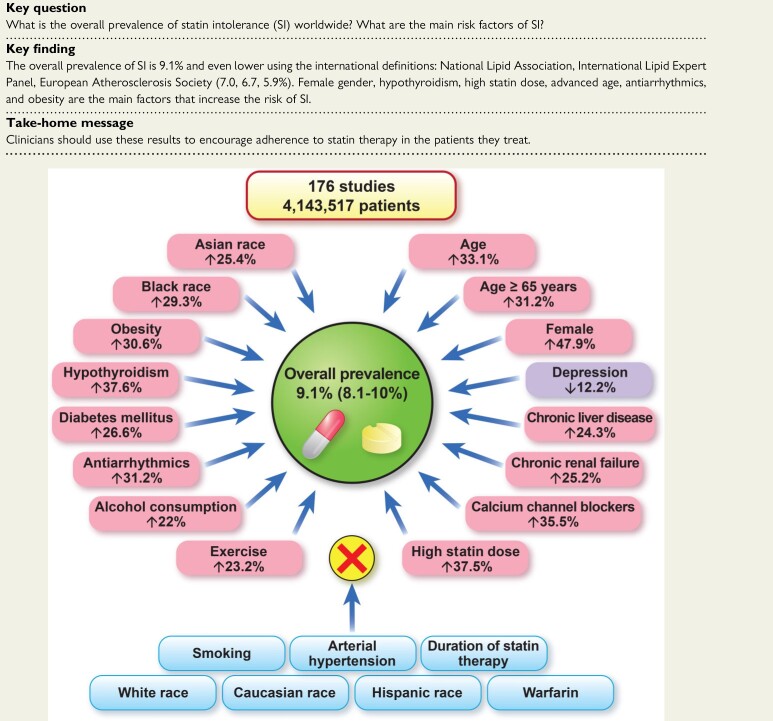
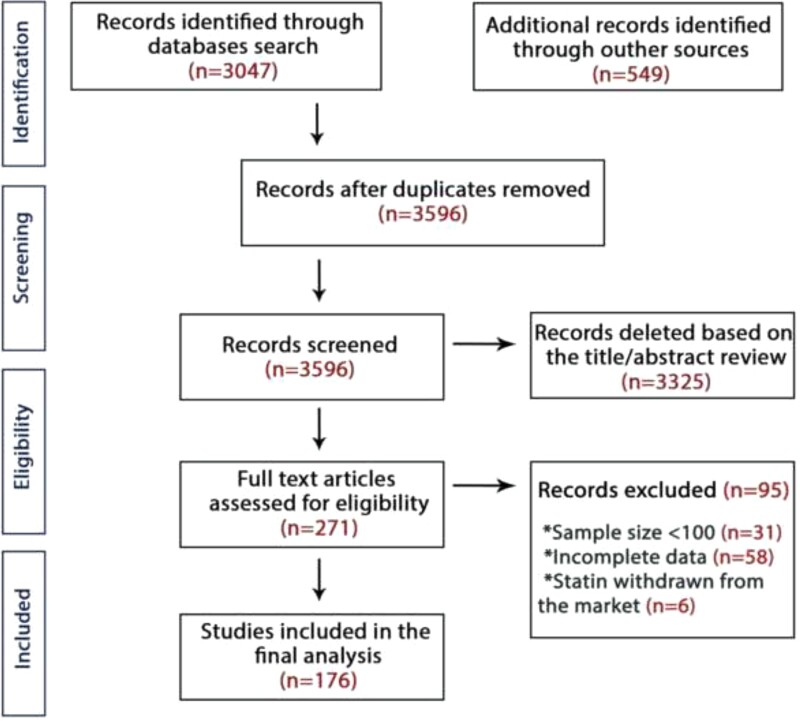
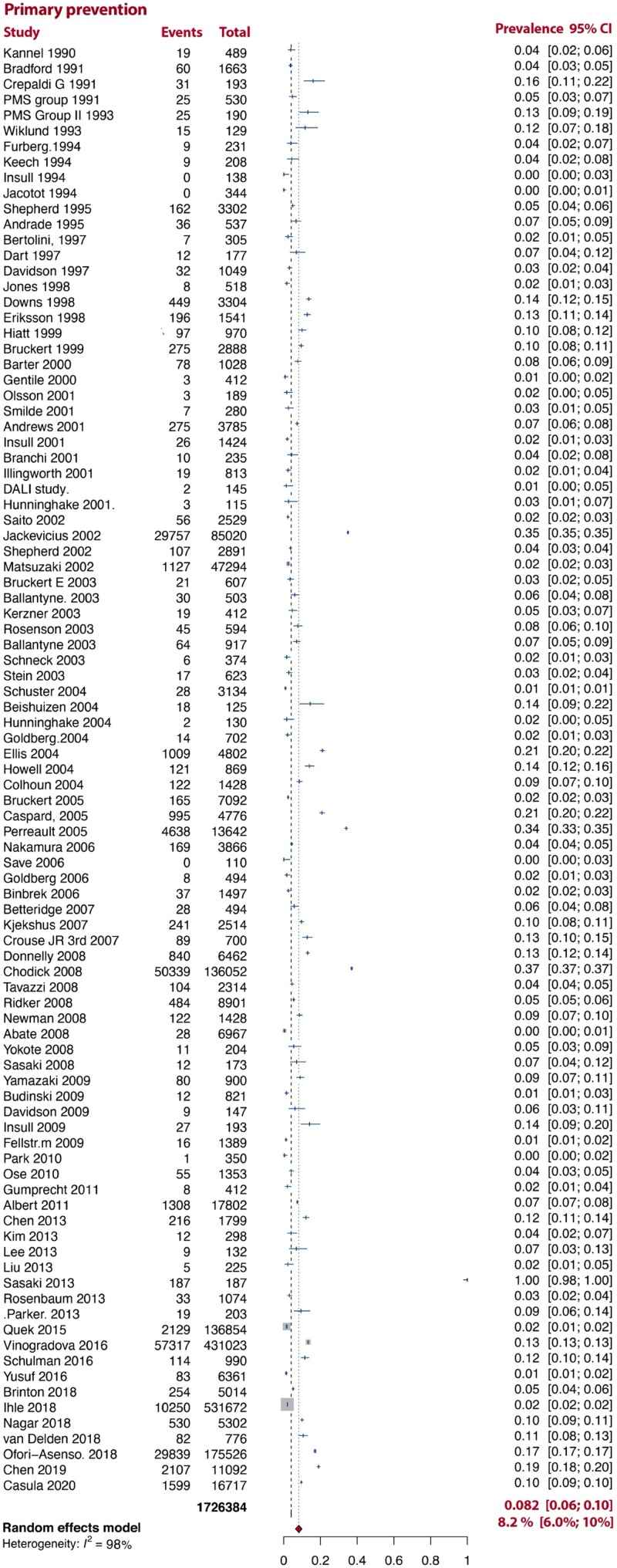
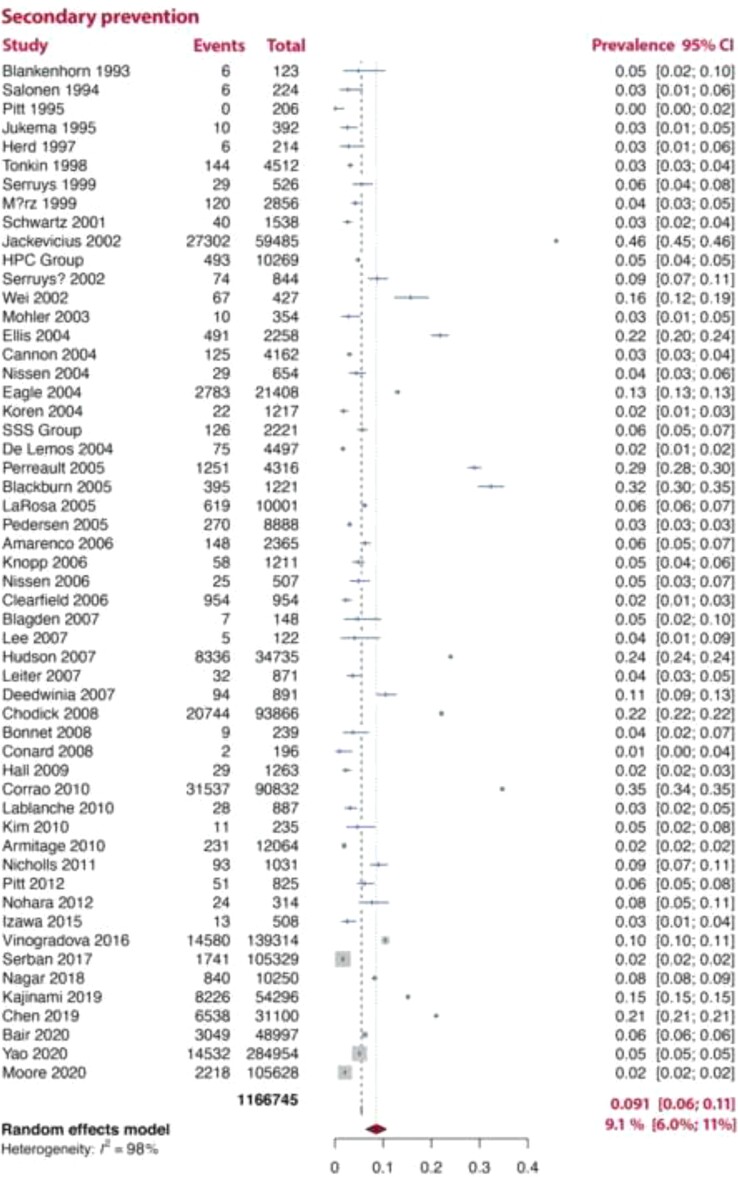
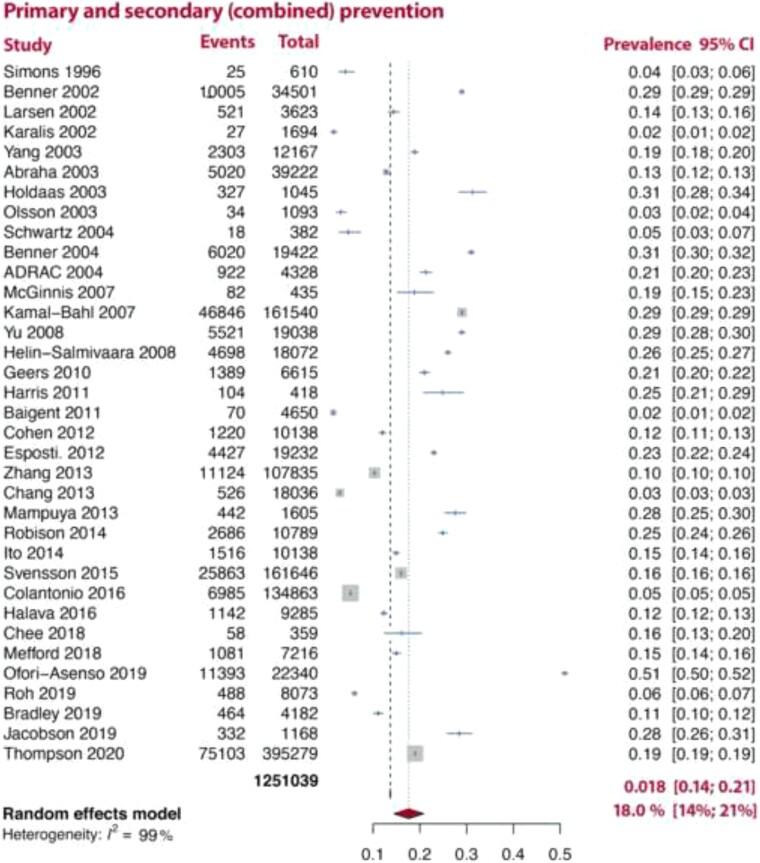
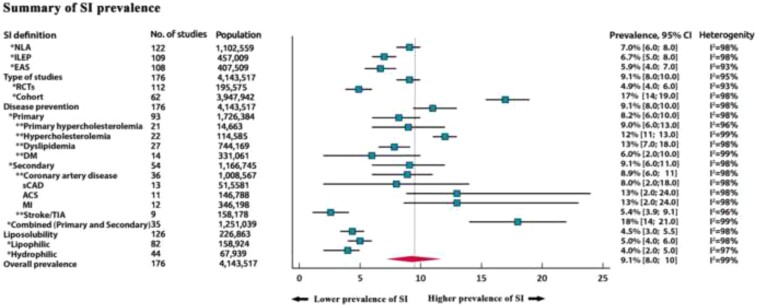
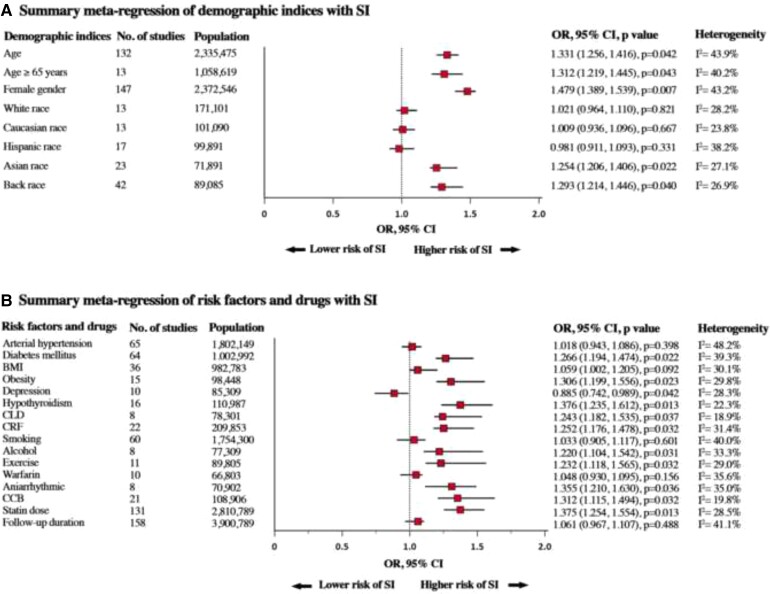
Aims: Statin intolerance (SI) represents a significant public health problem for which precise estimates of prevalence are needed. Statin intolerance remains an important clinical challenge, and it is associated with an increased risk of cardiovascular events. This meta-analysis estimates the overall prevalence of SI, the prevalence according to different diagnostic criteria and in different disease settings, and identifies possible risk factors/conditions that might increase the risk of SI. Methods and results: We searched several databases up to 31 May 2021, for studies that reported the prevalence of SI. The primary endpoint was overall prevalence and prevalence according to a range of diagnostic criteria [National Lipid Association (NLA), International Lipid Expert Panel (ILEP), and European Atherosclerosis Society (EAS)] and in different disease settings. The secondary endpoint was to identify possible risk factors for SI. A random-effects model was applied to estimate the overall pooled prevalence. A total of 176 studies [112 randomized controlled trials (RCTs); 64 cohort studies] with 4 143 517 patients were ultimately included in the analysis. The overall prevalence of SI was 9.1% (95% confidence interval 8.0–10%). The prevalence was similar when defined using NLA, ILEP, and EAS criteria [7.0% (6.0–8.0%), 6.7% (5.0–8.0%), 5.9% (4.0–7.0%), respectively]. The prevalence of SI in RCTs was significantly lower compared with cohort studies [4.9% (4.0–6.0%) vs. 17% (14–19%)]. The prevalence of SI in studies including both primary and secondary prevention patients was much higher than when primary or secondary prevention patients were analysed separately [18% (14–21%), 8.2% (6.0–10%), 9.1% (6.0–11%), respectively]. Statin lipid solubility did not affect the prevalence of SI [4.0% (2.0–5.0%) vs. 5.0% (4.0–6.0%)]. Age [odds ratio (OR) 1.33, P = 0.04], female gender (OR 1.47, P = 0.007), Asian and Black race (P < 0.05 for both), obesity (OR 1.30, P = 0.02), diabetes mellitus (OR 1.26, P = 0.02), hypothyroidism (OR 1.37, P = 0.01), chronic liver, and renal failure (P < 0.05 for both) were significantly associated with SI in the meta-regression model. Antiarrhythmic agents, calcium channel blockers, alcohol use, and increased statin dose were also associated with a higher risk of SI. Conclusion: Based on the present analysis of >4 million patients, the prevalence of SI is low when diagnosed according to international definitions. These results support the concept that the prevalence of complete SI might often be overestimated and highlight the need for the careful assessment of patients with potential symptoms related to SI.
Overview
The claims and statistics of this paper haven’t been checked yet.
Free: it reads the open-access text and checks the first 5 claims that cite a source we can check. Create a free account to check every claim.
Integrity signals
Registry
Cites
Statistics
Figures
Verification
Claims the paper makes
The claims and statistics of this paper haven’t been checked yet.
Free: it reads the open-access text and checks the first 5 claims that cite a source we can check. Create a free account to check every claim.
Claims other papers make about this one
Each is checked against this paper’s own text: does it say what the citing paper says it does?
The source backs part of the claim, not all of it — or backs it for a different population, condition or comparison.
In the citing paper
“nearly 10% of patients treated with statins experience statin intolerance and the odds of statin intolerance are greater in women and Asians.(3)”
From Overall and sex-specific effect of berberine for dyslipidemia: systematic review and meta-analysis of placebo-controlled trials (2022) · cites this paper as [3]
Experimental — accuracy not yet measuredThe cited source says what the claim attributes to it.
In the citing paper
“Finally, there may simply not be a sufficient number of add-on and alternative therapies to statins given that approximately 9.1% of patients are intolerant to statins [25].”
From Established and Emerging Lipid-Lowering Drugs for Primary and Secondary Cardiovascular Prevention (2023) · cites this paper as [25]
The cited source says what the claim attributes to it.
In the citing paper
“Age, female gender, Asian and Black race, obesity, diabetes mellitus, hypothyroidism, chronic liver disease, renal failure, antiarrhythmic drugs, calcium channel blockers, alcohol consumption and higher statin dose were associated with a greater risk of statin intolerance [25].”
From Established and Emerging Lipid-Lowering Drugs for Primary and Secondary Cardiovascular Prevention (2023) · cites this paper as [25]
Experimental — accuracy not yet measured
Self-check
Percentages, sums and reported differences re-computed from the paper’s own numbers.
The self-check needs the paper’s full text.
Citations
Cites
The PRISMA 2020 statement: An updated guideline for reporting systematic reviews
Page, M. J., McKenzie, J. E., Bossuyt, P. M., Boutron, I., Hoffmann, T. C., Mulrow, C. D., Shamseer, L., Tetzlaff, J. M., Akl, E. A., Brennan, S. E., et al. (2021) · BMJ · doi:10.1136/bmj.n71 · Cited by 108,283
Quantifying heterogeneity in a meta‐analysis
Higgins, J. P. T., & Thompson, S. G. (2002) · Statistics in Medicine · doi:10.1002/sim.1186 · Cited by 36,763
Ahmed, A., Jorna, T., & Bhandari, S. (2016) · Nephron · doi:10.1159/000447068 · Cited by 11,717
Global Burden of Cardiovascular Diseases and Risk Factors, 1990–2019
Roth, G. A., Mensah, G. A., Johnson, C. O., Addolorato, G., Ammirati, E., Baddour, L. M., Barengo, N. C., Beaton, A. Z., Benjamin, E. J., Benziger, C. P., et al. (2020) · Journal of the American College of Cardiology · doi:10.1016/j.jacc.2020.11.010 · Cited by 11,449
Estimating the mean and variance from the median, range, and the size of a sample
Hozo, S. P., Djulbegovic, B., & Hozo, I. (2005) · BMC Medical Research Methodology · doi:10.1186/1471-2288-5-13 · Cited by 9,062
The PRISMA 2020 statement: an updated guideline for reporting systematic reviews
Page, M. J., McKenzie, J., Bossuyt, P., Boutron, I., Hoffmann, T., mulrow, C., Shamseer, L., Tetzlaff, J., Akl, E., Brennan, S. E., et al. (2020) · doi:10.31222/osf.io/v7gm2_v1 · Cited by 8,090
Prevention of Coronary Heart Disease with Pravastatin in Men with Hypercholesterolemia
Shepherd, J., Cobbe, S. M., Ford, I., Isles, C. G., Lorimer, A. R., Macfarlane, P. W., McKillop, J. H., & Packard, C. J. (1995) · New England Journal of Medicine · doi:10.1056/nejm199511163332001 · Cited by 7,449
Sacks, F. M., Pfeffer, M. A., Moye, L. A., Rouleau, J. L., Rutherford, J. D., Cole, T. G., Brown, L., Warnica, J. W., Arnold, J. M. O., Wun, C.-C., et al. (1996) · New England Journal of Medicine · doi:10.1056/nejm199610033351401 · Cited by 7,439
Stone, N. J., Robinson, J. G., Lichtenstein, A. H., Bairey Merz, C. N., Blum, C. B., Eckel, R. H., Goldberg, A. C., Gordon, D., Levy, D., Lloyd-Jones, D. M., et al. (2014) · Circulation · doi:10.1161/01.cir.0000437738.63853.7a · Cited by 7,081
Research works printed but not linked: 3
- Higgins, 2021, Cochrane Handbook for Systematic Reviews of Interventions version 6.2
- Howell, 2004, Compliance with statins in primary care, Pharm J, 272, 23
- Adverse Drug Reactions Advisory Committee (ADRAC), 2004, Risk factors for myopathy and rhabdomyolysis with the statins, Aust Adv Drug Reactions Bull, 23, 1
Cited by
Items 201–300 of 523
Rakhshanda, S., Liaw, S., Rhee, J., Rye, K., & Jonnagaddala, J. (2024) · Studies in health technology and informatics · doi:10.3233/shti240362 · Cited by 6
Artificial Intelligence in Cardiovascular Imaging and Cardiovascular Prevention
Falconi, M. L., Aineseder, M., de Arenaza, D. P., Lara, M. A. R., Benítez, S., & Masson, W. M. (2024) · Revista Argentina de Cardiología · doi:10.7775/rac.es.v92.i1.20727 · Cited by 6
Alunno, A., Carubbi, F., Campanozzi, E., Bellisario, F., Schoones, J. W., Mariani, F. M., Ruscio, E. D., Altieri, P., & Ferri, C. (2023) · Frontiers in Cardiovascular Medicine · doi:10.3389/fcvm.2023.1234601 · Cited by 6
Ganjali, S., Riahi, M. M., Mahboobnia, K., Iranshahy, M., Banach, M., Jangjoo, A., Ashari, S., Tayarani‐Najaran, Z., & Sahebkar, A. (2023) · Archives of Medical Science · doi:10.5114/aoms/168120 · Cited by 6
Self-citationSignificance of Statin-Associated Muscle Symptoms and Its Impact on Patients Adherence and Outcomes
Al-Makhamreh, H. K., Toubasi, A. A., Obaid, Y. Y., & Albustanji, F. H. (2023) · Journal of Cardiovascular Pharmacology · doi:10.1097/fjc.0000000000001386 · Cited by 6
Statin-Intolerant Patients Exhibit Diminished Muscle Strength Regardless of Lipid-Lowering Therapy
Vinci, P., Girolamo, F. G. D., Pellicori, F., Panizon, E., Pirulli, A., Tosoni, L. M., Altamura, N., Rizzo, S., Perin, A., Fiotti, N., et al. (2025) · Journal of Clinical Medicine · doi:10.3390/jcm14041221 · Cited by 6
Statin‑associated myasthenia gravis: a real-world retrospective and pharmacovigilance study
Lu, Y., Huang, D., Shen, J., Yang, M., & Wang, S. (2025) · Expert Opinion on Drug Safety · doi:10.1080/14740338.2025.2467183 · Cited by 6
Acute Coronary Syndromes in Women: A Narrative Review of Sex-Specific Characteristics
Theofilis, P., Vlachakis, P. K., Mantzouranis, E., Sakalidis, A., Chrysohoou, C. A., Leontsinis, I., Lazaros, G. A., Dimitriadis, K. S., Drakopoulou, M. I., Vordoni, A., et al. (2023) · Angiology · doi:10.1177/00033197231218331 · Cited by 6
Pang, J., Sanfilippo, F. M., Chan, D. C., & Watts, G. F. (2023) · Current Opinion in Endocrinology Diabetes and Obesity · doi:10.1097/med.0000000000000842 · Cited by 6
Dyslipidemia and lower extremity arterial disease
Paraskevas, K. I., Poredoš, P., Stanek, A., Blinc, A., Jawień, A., Antignani, P. L., Mansilha, A., & Mikhailidis, D. P. (2024) · International Angiology · doi:10.23736/s0392-9590.24.05266-0 · Cited by 6
Self-citationDiscovery of Oral AMP-Activated Protein Kinase Activators for Treating Hyperlipidemia
Wang, M., Han, Z., Fan, B., Qu, K., Zhang, W., Li, W., Li, J., Li, L., Li, J., Li, H., et al. (2024) · Journal of Medicinal Chemistry · doi:10.1021/acs.jmedchem.3c01267 · Cited by 6
Henry, P., Cariou, B., Farnier, M., Lakhdari, S. L., & Detournay, B. (2022) · Archives of cardiovascular diseases · doi:10.1016/j.acvd.2022.10.004 · Cited by 6
Ji, D., Dong, S., Wang, T., Wei, J., Shen, P., Lin, H., Shi, L., Guan, X., & Xu, Y. (2025) · Neurology · doi:10.1212/wnl.0000000000213489 · Cited by 6
Hsueh, T.-P., Lin, W.-L., Hu, W.-L., & Hung, Y. (2024) · The American Journal of Chinese Medicine · doi:10.1142/s0192415x24500174 · Cited by 6
Did Australia's COVID-19 Restrictions Impact Statin Incidence, Prevalence or Adherence?
Livori, A., Lukose, D., Bell, J. S., Webb, G. I., & Ilomäki, J. (2022) · Current Problems in Cardiology · doi:10.1016/j.cpcardiol.2022.101576 · Cited by 6
Lipid clinic experience with bempedoic acid in three UK centres
Jakubowska, A., Al Hasani, W., Williams, J., MacMahon, Z., Balbas, B., Crook, M. A., Viljoen, A., Reynolds, T. M., & Wierzbicki, A. S. (2024) · Current Medical Research and Opinion · doi:10.1080/03007995.2024.2341870 · Cited by 5
“Statin intolerance occurs in up to 20% of patients in simply reported studies and 1–2% of patients in strictly observed prospective studies with evidence of re-challenge 16 .”
BackgroundIdentification and analysis of the molecular targets of statins in colorectal cancer
Firouzjaei, A. A., Mahmoudi, A. A., Almahmeed, W. A., Teng, Y., Kesharwani, P., & Sahebkar, A. (2024) · Pathology - Research and Practice · doi:10.1016/j.prp.2024.155258 · Cited by 5
Self-citationde Kermenguy, C., Durand, A., Tollenaere, Q., Pabic, E. L., Paillard, F., & Mahé, G. (2024) · BMC Cardiovascular Disorders · doi:10.1186/s12872-024-04289-w · Cited by 5
Deo, S. V., Al-Kindi, S. G., Virani, S. S., & Fremes, S. E. (2023) · Journal of Thoracic and Cardiovascular Surgery · doi:10.1016/j.jtcvs.2023.05.028 · Cited by 5
Taha, H., Kandil, H., Badran, H. M., Farag, N. M., Khamis, H., Nasr, G. M., Samy, M., Abdrabou, M., Abuelezz, M., & Shaker, M. M. (2024) · The Egyptian Heart Journal · doi:10.1186/s43044-024-00562-7 · Cited by 5
Li, W., Sun, L., & Yan, S. (2024) · Frontiers in Cardiovascular Medicine · doi:10.3389/fcvm.2024.1375040 · Cited by 5
Eficacia y seguridad de los inhibidores de la PCSK9 en la vida real
González-Guerrero, A., Navarrete-Rouco, E., Benaiges, D., Steinhauer, E. G., Marcos, L., Oliveras, A., Recasens, L., & Pedro‐Botet, J. (2025) · Clínica e Investigación en Arteriosclerosis · doi:10.1016/j.arteri.2024.500755 · Cited by 5
Mijnster, R. J. M., van der Bijl, M. F., Niesthoven, A., Kranenburg, L. W., van der Kuy, P. H. M., Merkelbach, I., Lafeber, M., & van Lennep, J. E. R. (2025) · Atherosclerosis · doi:10.1016/j.atherosclerosis.2025.120514 · Cited by 5
Serour, M. H., Egaimi, M., & Khan, Z. U. (2024) · Cureus · doi:10.7759/cureus.61572 · Cited by 5
Huang, A., Wu, X., Lin, J., Wei, C., & Xu, W. (2024) · Frontiers in Endocrinology · doi:10.3389/fendo.2024.1331031 · Cited by 5
Statin Intolerance: An Overview for Clinicians
Surma, S., Lewek, J., Penson, P. E., & Banach, M. (2023) · Contemporary diabetes · doi:10.1007/978-3-031-26681-2_23 · Cited by 5
Self-citationChrysohoou, C. A., & Tsioufis, K. P. (2024) · Archives of Medical Science · doi:10.5114/aoms/190351 · Cited by 5
Hart, O., Xue, N., & Khashram, M. (2023) · ANZ Journal of Surgery · doi:10.1111/ans.18580 · Cited by 5
Seo, Y. H., Hong, J.-Y., Kim, Y.-K., Kim, K. H., Kwon, T., & Bae, J. (2025) · BMC Cardiovascular Disorders · doi:10.1186/s12872-025-05081-0 · Cited by 5
Кашталап, В. В. (2022) · Russian Journal of Cardiology · doi:10.15829/1560-4071-2022-5285 · Cited by 5
Bempedoic Acid for Lipid Management in the Indian Population: An Expert Opinion
Hiremath, J., Mohan, J. C., Hazra, P., Sawhney, J. P. S., Mehta, A., Shetty, S., Oomman, A., Shah, M., Bantwal, G., Agarwal, R., et al. (2023) · Cureus · doi:10.7759/cureus.35395 · Cited by 5
Deaney, C., Donaldson, M., & Meskauskiene, A. (2023) · Journal of Primary Care & Community Health · doi:10.1177/21501319231172709 · Cited by 5
Sarabi, P. Z., Moradi, M., Bagheri, M., Khalili, M. R., Moradifard, S., Jamialahmadi, T., Ghasemi, F., & Sahebkar, A. (2024) · Anti-Cancer Agents in Medicinal Chemistry · doi:10.2174/0118715206271583231206052403 · Cited by 5
Self-citationMarquina, C., Morton, J. I., Brett, T., Lloyd, M., Radford, J. C., Heal, C. F., Hespe, C. M., Gill, G., SULLIVAN, D. R., Zomer, E., et al. (2023) · Circulation Genomic and Precision Medicine · doi:10.1161/circgen.122.003842 · Cited by 5
Nguyen, T., Trompet, S., Brodersen, J., Hoogland, J., Debray, T. P. A., Sattar, N. A., Jukema, J. W., & Westendorp, R. G. J. (2022) · European Journal of Preventive Cardiology · doi:10.1093/eurjpc/zwad383 · Cited by 5
Are statin side effects dependent on sex? A narrative review
Braszak-Cymerman, A., Moszak, M., Bryl, W., & Walczak-Galezewska, M. K. (2025) · Menopause Review/Przegląd Menopauzalny · doi:10.5114/pm.2025.154683 · Cited by 5
Hua, S., Sun, L., Zhang, H., Shiu, C., Zhang, S., Zhu, Y., Yan, X., Gu, P., Huang, Z., & Jiang, W. (2025) · Pharmaceutical Biology · doi:10.1080/13880209.2025.2492650 · Cited by 5
Sridharan, K., & Sivaramakrishnan, G. (2024) · Journal of clinical lipidology · doi:10.1016/j.jacl.2024.12.010 · Cited by 6
Nicholls, S. J., Ray, K. K., Lincoff, A. M., Sarnes, E., Gillard, K. K., Bloedon, L., Migliaccio-Walle, K., Elsea, D., & Nissen, S. E. (2026) · American Journal of Cardiovascular Drugs · doi:10.1007/s40256-025-00753-w · Cited by 4
“Patients who are either unwilling or unable to take guideline-directed statin therapy often remain at high LDL-C levels and at an elevated risk of experiencing major adverse cardiovascular events (MACE) [14, 15].”
Small interfering RNA (siRNA) in dyslipidemia: a systematic review on safety and efficacy of siRNA
Alla, S. S. M., Shah, D. J., Meyur, S., Agarwal, P., Alla, D., Moraboina, S. L., Ghadvaje, G. V., Bayeh, R. G., Malireddi, A., Shajan, T., et al. (2025) · Journal of Experimental Pharmacology · doi:10.2147/jep.s521579 · Cited by 4
Cinza-Sanjurjo, S., Barrios, V., Fierro-González, D., Polo-García, J., & Pallarés-Carratalá, V. (2024) · Cardiovascular Therapeutics · doi:10.1155/2024/4227941 · Cited by 4
“[30].”
Diévart, F., Bruckert, É., Aboyans, V., Bekka, S., Boccara, F., Munoz, B. B. B., Emmerich, J., Farnier, M., Gallo, A., Lemesle, G., et al. (2024) · Archives of cardiovascular diseases · doi:10.1016/j.acvd.2024.02.004 · Cited by 4
Statinunverträglichkeit – Statinverträglichkeit
Vogt, A. (2023) · Die Innere Medizin · doi:10.1007/s00108-023-01535-9 · Cited by 4
Stürzebecher, P. E., Schneider, T., Gouni‐Berthold, I., Frenzel, O., Weingärtner, O., Kassner, U., Schatz, U., Laufs, U., & Katzmann, J. L. (2025) · European Journal of Preventive Cardiology · doi:10.1093/eurjpc/zwaf619 · Cited by 4
Bempedoic Acid: A Review in Cardiovascular Risk Reduction in Statin-Intolerant Patients
McGuigan, A., & Blair, H. A. (2025) · American Journal of Cardiovascular Drugs · doi:10.1007/s40256-024-00714-9 · Cited by 4
Mangone, L. A., Kwon, O. S., Johnson, B. T., Wu, Y., & Pescatello, L. S. (2024) · Mayo Clinic Proceedings Innovations Quality & Outcomes · doi:10.1016/j.mayocpiqo.2024.01.003 · Cited by 4
Pohl, S., Engelbertz, C. M., Reinecke, H., Malyar, N. M., Meyborg, M., Brix, T. J., Varghese, J., & Gebauer, K. (2024) · Nutrition Metabolism and Cardiovascular Diseases · doi:10.1016/j.numecd.2024.03.007 · Cited by 4
The year in cardiovascular medicine 2022: the top 10 papers in dyslipidaemias
Tokgözoğlu, L. S., Orringer, C. E., & Catapano, A. L. (2023) · European Heart Journal · doi:10.1093/eurheartj/ehac750 · Cited by 4
Yang, J., Zhang, R., Han, B., Li, H. Z., Wang, J., Xiao, Y., Yu, X., Guan, S., Dai, C., Yan, H., et al. (2024) · Lipids in Health and Disease · doi:10.1186/s12944-024-02244-4 · Cited by 4
Aebi, P. S., Adam, L., Haller, M. L., Bardoczi, J. B., Gencer, B., Bonnet, F., Beer, J. H., Carballo, S., Christ‐Crain, M., Feller, M., et al. (2025) · BMJ Open · doi:10.1136/bmjopen-2024-093833 · Cited by 4
Preventive cardiology for the aging population: how can we better design clinical trials of statins?
Wierzbicki, A. S. (2024) · Expert Review of Cardiovascular Therapy · doi:10.1080/14779072.2024.2302122 · Cited by 5
Gergely, T. G., Brenner, G. B., Nagy, R. N., Sayour, N. V., Makkos, A., Kovácsházi, C., Tian, H., Schulz, R., Giricz, Z., Görbe, A., et al. (2023) · International Journal of Molecular Sciences · doi:10.3390/ijms24021585 · Cited by 4
Zhang, M., Jiang, Y., Lu, P., Shen, Z., Gao, X. Y., & Wang, X. (2025) · Journal of Agricultural and Food Chemistry · doi:10.1021/acs.jafc.4c11879 · Cited by 4
Beyond Cholesterol Reduction: Statin Pleiotropy and Peripheral Arterial Disease
Penton, A. A., Langert, K. A., Maier, K. G., & Gahtan, V. (2023) · IntechOpen eBooks · doi:10.5772/intechopen.1001143 · Cited by 4
AlSaihati, H., Alazabi, N. I., Bakeer, R. M., Abol-Fetouh, G. M., Ahmed-Farid, O. A.-H., Alshedi, A. F., & Alsabeelah, N. F. (2025) · Metabolic Brain Disease · doi:10.1007/s11011-025-01663-1 · Cited by 4
Karami, J., Razi, B., Imani, D., Aslani, S., Pakjoo, M., Fasihi, M., Mohammadi, K., & Sahebkar, A. (2024) · Current Pharmaceutical Design · doi:10.2174/0113816128285148240122112045 · Cited by 4
Self-citationLouro, R., Melo, R. G. E., Ruivo, J., Almeida, A. G., Pinto, F. J., & Caldeira, D. (2023) · Expert Review of Cardiovascular Therapy · doi:10.1080/14779072.2023.2274502 · Cited by 3
Gibson, C., Mount, R. R., Lee, J., & Backes, J. M. (2022) · Future Cardiology · doi:10.2217/fca-2022-0020 · Cited by 3
Talkhan, A., Elkasaby, M. H., Osman, A. S. A., Elsharkawy, M. M., Shehata, M., khalefa, K. A., Seleim, A. M., Elezz, A. M. A., Fishman, W. H., & Aronow, W. S. (2026) · Cardiology in Review · doi:10.1097/crd.0000000000001473 · Cited by 3
Bouillet, B., Boulestreau, R., Aboyans, V., Béliard, S., Boccara, F., Cariou, B., Charrière, S., Moulin, P., Vergès, B. L., Valéro, R., et al. (2026) · Diabetes & Metabolism · doi:10.1016/j.diabet.2026.101725 · Cited by 3
Yamashita, S., Araki, E., Arai, H., Yokote, K., Tanigawa, R., Saito, A., Suganami, H., Minamikawa, S., & Ishibashi, S. (2025) · Journal of Atherosclerosis and Thrombosis · doi:10.5551/jat.65707 · Cited by 3
Yamashita, S., Araki, E., Arai, H., Yokote, K., Tanigawa, R., Kunitomi, K., Ikegami, K., Suganami, H., Tanahashi, M., Minamikawa, S., et al. (2026) · Journal of clinical lipidology · doi:10.1016/j.jacl.2026.01.008 · Cited by 3
Schiele, F., Sabouret, P. F., Puymirat, É., ABDENNBI, K., LEBEAU, F., MELTZ, M., Kownator, S., & Angoulvant, D. (2023) · Panminerva Medica · doi:10.23736/s0031-0808.22.04799-1 · Cited by 3
How Will Our Practice Change After the CLEAR Outcomes Trial?
Abrahams, T., Nelson, A. J., & Nicholls, S. J. (2024) · Current Atherosclerosis Reports · doi:10.1007/s11883-024-01188-5 · Cited by 3
Kafol, J., Fras, Z., Novaković, M., Sperling, L. S., Cevc, M., Krevel, B., Kafol, L., Kelenc, A., Kepic, K., Vrbinc, K. N., et al. (2026) · Lipids in Health and Disease · doi:10.1186/s12944-026-02897-3 · Cited by 3
Iribarren, C., Lu, M., Go, A. S., Rana, J. S., Ngai, K., & Rogers, A. M. (2026) · American Heart Journal · doi:10.1016/j.ahj.2026.107430 · Cited by 3
Sex Differences in Statin Intolerance: Insights From the CLEAR Outcomes Trial
Naderi, S., Brennan, D. M., Li, N., Lincoff, A. M., Nicholls, S. J., Nissen, S. E., Plutzky, J., Powell, H. A., Robinson, P. L., & Cho, L. (2026) · Clinical Cardiology · doi:10.1002/clc.70288 · Cited by 3
Cha, J., Hong, S. J., Lim, S., Kim, J. H., Joo, H. J., Park, J. H., Yu, C. W., Lim, D., Kim, J., Jeong, J., et al. (2024) · Korean Circulation Journal · doi:10.4070/kcj.2024.0036 · Cited by 3
Bhandari, A., Oli, P. R., Shrestha, D. B., Dawadi, S., Pathak, B. D., Bhandari, M., Sedhai, Y. R., Basnet, B., Regmi, L., Singh, A., et al. (2023) · Health Sciences Review · doi:10.1016/j.hsr.2023.100116 · Cited by 3
Bortolin, R. H., Leite, F. D. S., Luchessi, A. D., Esposito, J., Barbosa, I. N., de Freitas, R. C. C., Sonawane, A. R., Singh, S. A., Aïkawa, E., Telles-Silva, K. A., et al. (2025) · Toxicology · doi:10.1016/j.tox.2025.154159 · Cited by 3
Usova, E., Alieva, A. S., Звартау, Н. Э., & Shlyakhto, E. V. (2023) · Russian Journal of Cardiology · doi:10.15829/1560-4071-2023-5717 · Cited by 3
Update on statin-associated myopathy symptoms in the view of new clinical management strategies
Musumeci, O., & Drago, S. F. A. (2025) · Current Opinion in Neurology · doi:10.1097/wco.0000000000001405 · Cited by 3
Carpio-Tenorio, C. D., Llerena-Velastegui, J., Villacis‐Lopez, C., Placencia‐Silva, M., Santander-Fuentes, C., Benitez-Acosta, K., Sanahuja-Montiel, C., Dominguez-Gavilanes, D., Carrasco-Perez, P., & Calderon-Lopez, C. (2023) · Current Problems in Cardiology · doi:10.1016/j.cpcardiol.2023.102191 · Cited by 3
Goyal, A., Shah, S., Dahal, K., Changez, M. I. K., Tariq, M. D., Zuhair, V., Shamim, U., Abbasi, H. Q., Shrestha, A. B., Sah, R., et al. (2024) · Cardiovascular Endocrinology & Metabolism · doi:10.1097/xce.0000000000000302 · Cited by 3
Jamialahmadi, T., Reiner, Ž., Riahi, M. M., Emami, S. A., Tayarani‐Najaran, Z., Salehabadi, S., Kesharwani, P., Al‐Rasadi, K., & Sahebkar, A. (2023) · Current Medicinal Chemistry · doi:10.2174/0929867331666230918114451 · Cited by 3
Self-citationAnderson, J. L., May, H. T., Winslow, T., Le, V. T., Iverson, L., Bair, T. L., Knowlton, K. U., & Muhlestein, J. B. (2026) · American Heart Journal · doi:10.1016/j.ahj.2026.107473 · Cited by 3
Grant, J. K., & Orringer, C. E. (2024) · Journal of clinical lipidology · doi:10.1016/j.jacl.2024.07.007 · Cited by 3
van den Bosch, S. E., Kowsoleea, F. C., Corpeleijn, W. E., Huisman, S. A., Kowsoleea, A. I. E., Wiegman, A., & Hutten, B. A. (2026) · Atherosclerosis · doi:10.1016/j.atherosclerosis.2026.120659 · Cited by 3
A Review of Statin Intolerance: a Focus on Statin-Attributed Muscle Symptoms
Orringer, C. E., Grant, J. K., & Tokgözoğlu, L. S. (2022) · Current Atherosclerosis Reports · doi:10.1007/s11883-022-01059-x · Cited by 3
Avenatti, E., DiGregorio, H. R., Hajj, E. C. E., Gullapelli, R., Williams, K., Shahid, I., Bose, B., Hagan, K., Nicolas, J. C., Lahan, S., et al. (2025) · American Journal of Preventive Cardiology · doi:10.1016/j.ajpc.2025.100959 · Cited by 3
Petry, N., Massmann, A., Bell, M. E., Schultz, A., & Heukelom, J. V. (2024) · Personalized Medicine · doi:10.1080/17410541.2024.2342223 · Cited by 3
Statin Intolerance—We Know Everything, We Know Nothing
Banach, M. (2022) · Journal of Clinical Medicine · doi:10.3390/jcm11175250 · Cited by 3
Self-citationÖtéves sztatinperzisztencia akut myocardialis infarktus után, korábban sztatint nem szedőkben
Simonyi, G., Ferenci, T., Finta, E. P., & Medvegy, M. (2024) · Orvosi Hetilap · doi:10.1556/650.2024.32966 · Cited by 3
Nagy, G. G., Márk, L., Gerencser, A., Reiber, I., Kiss, N., Rokszin, G., Fábián, I., Csanádi, Z., Karádi, I., Aradi, D., et al. (2024) · Journal of Clinical Medicine · doi:10.3390/jcm13216562 · Cited by 3
Bempedoic Acid: Results of the CLEAR Program
Sudano, I. (2024) · Cardiovascular Medicine · doi:10.4414/cvm.2024.1379434015 · Cited by 3
Statin therapy during pregnancy
Stürzebecher, P. E., & Laufs, U. (2025) · European Heart Journal · doi:10.1093/eurheartj/ehaf666 · Cited by 3
The importance of the diet in the prevention of atherosclerosis progression
Mustafin, R. N., & Galieva, E. A. (2024) · Voprosy Pitaniya · doi:10.33029/0042-8833-2024-93-6-16-26 · Cited by 3
Hendzel, A., Krzyżanowski, F., Kłoda, K., Mastalerz–Migas, A., & Babicki, M. (2025) · Archives of Medical Science · doi:10.5114/aoms/196806 · Cited by 3
Celebrating the 90th birthday of the scientist who discovered statins: Akira Endō
Surma, S., Mikhailidis, D. P., & Banach, M. (2024) · European Heart Journal · doi:10.1093/eurheartj/ehad831 · Cited by 3
Self-citationDoença Cardiovascular Aterosclerótica, Necessidades não Satisfeitas, e Inclisiran
Ferreira, J., Palma, I., Pereira De Moura, J., Gouveia, M., Corte-Real, A., & Silva, A. M. E. (2023) · Medicina Interna · doi:10.24950/rspmi.1603 · Cited by 3
Inclisiran: A knight in shining armor?
Kelly, M. S., & Dixon, D. L. (2022) · American Heart Journal Plus Cardiology Research and Practice · doi:10.1016/j.ahjo.2022.100138 · Cited by 3
Wonderling, D. E., Mariani, A., Samarasekera, E. J., Wilkinson, C., Patel, R. S., & Mills, J. D. (2024) · BMJ · doi:10.1136/bmj.q637 · Cited by 3
Mangoni, A. A., Hulin, J.-A., & Tommasi, S. (2026) · Pharmacological Reviews · doi:10.1016/j.pharmr.2026.100147 · Cited by 2
Katzmann, J. L., & Laufs, U. (2026) · Current Atherosclerosis Reports · doi:10.1007/s11883-026-01390-7 · Cited by 2
Bouillet, B., Boulestreau, R., Aboyans, V., Béliard, S., Boccara, F., Cariou, B., Charrière, S., Moulin, P., Vergès, B. L., Valéro, R., et al. (2026) · Archives of cardiovascular diseases · doi:10.1016/j.acvd.2026.01.001 · Cited by 2
Lipid lowering therapy: implications of recent clinical trials
Backes, J. M., & Hilleman, D. E. (2024) · Future Cardiology · doi:10.2217/fca-2023-0132 · Cited by 2
Tomlinson, B. (2026) · Expert Opinion on Pharmacotherapy · doi:10.1080/14656566.2026.2642210 · Cited by 2
Efficacy and safety of PCSK9 inhibitors in real life
González-Guerrero, A., Navarrete-Rouco, E., Benaiges, D., Steinhauer, E. G., Marcos, L., Oliveras, A., Recasens, L., & Pedro‐Botet, J. (2025) · Clínica e Investigación en Arteriosclerosis (English Edition) · doi:10.1016/j.artere.2025.500755 · Cited by 2
Bempedoic acid: a CLEAR therapeutic option for statin-intolerant patients?
Volpe, M., & Patrono, C. (2023) · European Heart Journal · doi:10.1093/eurheartj/ehad206 · Cited by 2
Chiusolo, S., Masini, G., Zywicki, V., Bort, I. R., Malloggi, L., Gargani, L., Palagi, C., & Caterina, R. D. (2026) · International Journal of Cardiology · doi:10.1016/j.ijcard.2025.134140 · Cited by 2
Metadata
- Authors
- Bytyçi, I., Penson, P. E., Mikhailidis, D. P., Wong, N. D., Hernandez, A. V., Sahebkar, A., Thompson, P. D., Mazidi, M., Rysz, J., Pella, D., Reiner, Ž., Toth, P. P., & Banach, M.
- Affiliations
- University Clinical Center of Kosovo (XK)
- Liverpool John Moores University (GB)
- The Royal Free Hospital (GB)
- University of California, Irvine (US)
- Health Outcomes, Policy, and Evidence Synthesis (HOPES) Group, University of Connecticut School of Pharmacy , Storrs, CT , USA
- Mashhad University of Medical Sciences (IR)
- Hartford Hospital (US)
- King's College London (GB)
- Medical University of Lodz (PL)
- University of Pavol Jozef Šafárik (SK)
- University Hospital Centre Zagreb (HR)
- Johns Hopkins University (US)
- Corresponding author
- Banach, Maciej
- ORCID
- Venue
- European Heart Journal
- Publisher
- Oxford University Press (OUP)
- Published
- 2022-02-16
- Volume
- 43
- Issue
- 34
- Pages
- 3213-3223
- ISSN
- 0195-668X (ISSN-L)
- 1522-9645
- PMC
- PMC9757867
- OpenAlex
- W4206276470
- Semantic Scholar
- b007bd7cf108592753fe4848f81c9e1ef6523c14
- Cited by
- 481
- References
- 213
- Citations by year
- 2026: 93 · 2025: 108 · 2024: 132 · 2023: 100 · 2022: 46
- FWCI
- 22.93
- Type
- journal article
- Language
- en
- Open access
- hybrid
- doi.org
- Licence
- Locations
- European Heart Journal (publishedVersion, cc-by)
- PubMed Central (publishedVersion, cc-by)
- PubMed (publishedVersion)
- Liverpool John Moores University (acceptedVersion)
- KTH Publication Database DiVA (KTH Royal Institute of Technology) (submittedVersion, other-oa)
- Archivio istituzionale della ricerca (Alma Mater Studiorum Università di Bologna) (submittedVersion, cc-by)
- eScholarship (California Digital Library) (submittedVersion, cc-by)
- Topics
- Health Sciences › Medicine › Cardiology and Cardiovascular Medicine › Lipoproteins and Cardiovascular Health
- Life Sciences › Biochemistry, Genetics and Molecular Biology › Cancer Research › Cancer, Lipids, and Metabolism
- Life Sciences › Pharmacology, Toxicology and Pharmaceutics › Toxicology › Pharmacovigilance and Adverse Drug Reactions
- Keywords
- statin intolerance, prevalence, statin adverse effects, diagnostic criteria, risk factors, primary and secondary prevention, obesity, diabetes mellitus, age and sex differences, cardiovascular risk, lipid-lowering therapy, statin-induced myopathy, rhabdomyolysis, hyperglycemia, hypokalemia, hypomagnesemia
- MeSH terms
- Female, Humans, Lipids, Male, Risk Factors, Prevalence, Randomized Controlled Trials as Topic, Hydroxymethylglutaryl-CoA Reductase Inhibitors, Atherosclerosis
About these checks
Registry, retraction, Cites and statistics results are computed, not judged, with one exception: a printed reference that no index lists is read once by a model before it counts as a citation error. Claims are extracted by a model and kept only when their quote appears verbatim in the text; each cited source is then checked, with a model’s help, for whether it says what the claim relies on. Those verdicts can be wrong — read the claim’s quote and the cited source before relying on one.
Statistics and arithmetic are recomputed, not judged.
Confidence bands are shown only for fields calibrated on our annotated test set. None is calibrated yet, so no band is shown.
What counts as a claim ›How we measure confidence ›How we check this ›
Are you an author, or do you see a problem with this page? Request a review
Data sources
Bibliographic data: Semantic Scholar, OpenAlex, Crossref.
Contains information from the Semantic Scholar Academic Graph Datasets, made available under the ODC Attribution License (ODC-BY 1.0).
Semantic Scholar’s data is described in: Kinney, R., et al. (2023). The Semantic Scholar Open Data Platform. arXiv:2301.10140.
