

Effects of person-centred care in patients with chronic heart failure: the PCC-HF study
Open accessThe DOI matches its Crossref record; 37 of the 38 references it cites were found in a registry or an index.
Abstract
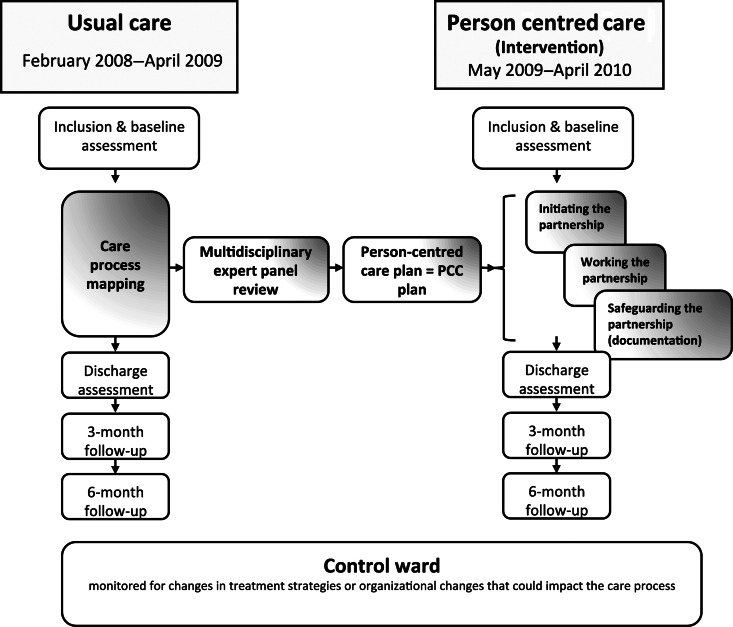
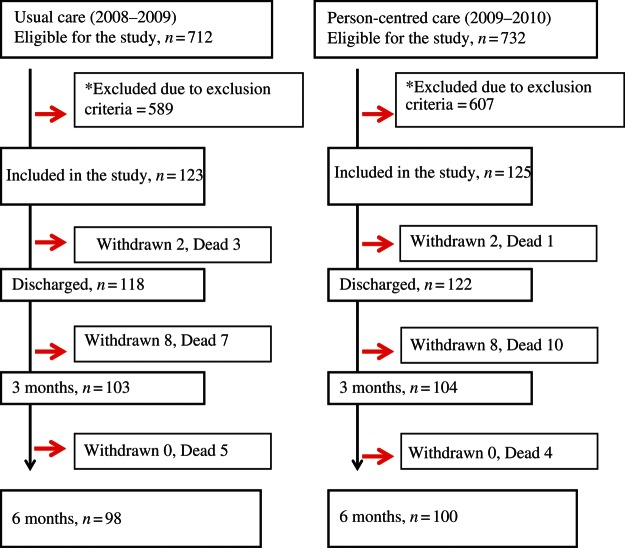
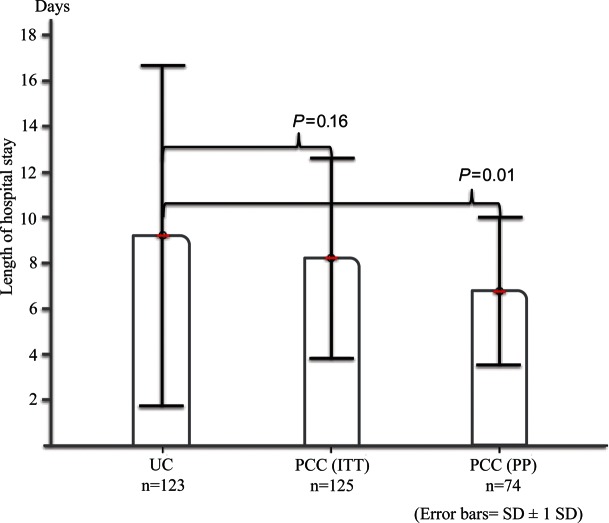
AIMS: Person-centred care (PCC) emphasizes a partnership in care between patients and healthcare professionals and is advocated by WHO as a key component of quality health care. We evaluated outcomes of PCC in hospitalized patients with chronic heart failure (CHF) with respect to the length of hospital stay (LOS), activities of daily living (ADL), health-related quality of life (HRQL) and 6-month readmission rate. METHODS AND RESULTS: During 2008-2010, 248 consecutive patients hospitalized for symptoms of worsening CHF were enrolled in a controlled before and after designed study. A Usual care group (n= 123) was recruited according to pre-defined criteria to map usual CHF care and assess outcomes at five designated hospital wards. Based on the mapping, a panel of in-house clinicians and researchers developed measures aimed at aligning usual care with basic PCC principles. These measures were incorporated into a study protocol to guide care procedures at the same five wards. Person-centred care was then implemented at these wards and evaluated in 125 patients. Both length of hospital stay and 6-month readmission were extracted from patient records. Activities of daily living were evaluated at baseline and discharge and HRQL was evaluated at baseline and after 3 months. In the analysis of all patients, the LOS was reduced by 1 day (P = 0.16) while retaining ADL (P = 0.07). When PCC was fully implemented (per protocol analysis), LOS was reduced by 2.5 days (P = 0.01) and the ADL-level better preserved (P = 0.04). Health-related quality of life and time-to-first readmission did not differ. CONCLUSION: In this proof-of-concept study, our findings suggest that a fully implemented PCC approach shortens hospital stay and maintains functional performance in patients hospitalized for worsening CHF, without increasing risk for readmission or jeopardizing patients' HRQL.
Overview
The claims and statistics of this paper haven’t been checked yet.
Free: it reads the open-access text and checks the first 5 claims that cite a source we can check. Create a free account to check every claim.
Integrity signals
Registry
Cites
Statistics
Figures
Verification
Claims the paper makes
The claims and statistics of this paper haven’t been checked yet.
Free: it reads the open-access text and checks the first 5 claims that cite a source we can check. Create a free account to check every claim.
Claims other papers make about this one
Each is checked against this paper’s own text: does it say what the citing paper says it does?
In the citing paper
“Structured education programmes are recommended in patients with diabetes to improve diabetes knowledge, glycaemic control, disease management, and patient empowerment.”
From 2023 ESC guidelines for the management of cardiovascular disease in patients with diabetes. (2023) · cites this paper as [821]
Self-check
Percentages, sums and reported differences re-computed from the paper’s own numbers.
The self-check needs the paper’s full text.
Citations
Cites
Developing and evaluating complex interventions: the new Medical Research Council guidance
Craig, P., Dieppe, P., Macintyre, S., Michie, S., Nazareth, I., & Petticrew, M. (2008) · BMJ · doi:10.1136/bmj.a1655 · Cited by 10,995
Crossing the Quality Chasm: A New Health System for the 21st Century
Baker, A. (2001) · BMJ · doi:10.1136/bmj.323.7322.1192 · Cited by 10,736
Kushner (2021) · doi:10.12788/jfp · Cited by 3,799
ESC Guidelines for the Diagnosis and Treatment of Acute and Chronic Heart Failure 2008
Dickstein, K., Authors/Task Force Members, Cohen-Solal, A., Filippatos, G., McMurray, J. J. V., Ponikowski, P., Poole-Wilson, P. A., Strömberg, A., van Veldhuisen, D. J., Atar, D., et al. (2008) · European Journal of Heart Failure · doi:10.1016/j.ejheart.2008.08.005 · Cited by 3,512
Self-citationThe impact of patient-centered care on outcomes.
Stewart, M., Brown, J. B., DONNER, A. P., McWhinney, I. R., Oates, J., Weston, W. W., & Jordan, J. (2000) · PubMed · Cited by 3,141
Patient-centredness: a conceptual framework and review of the empirical literature
Mead, N., & Bower, P. (2000) · Social Science & Medicine · doi:10.1016/s0277-9536(00)00098-8 · Cited by 2,976 · cited 1×
“A central component of PCC is that the professional and patient jointly develop a care and treatment plan using resources identified in each patient’s illness history but also by defining potential barriers.(7)”
BackgroundKatz, S. (1963) · JAMA · doi:10.1001/jama.1963.03060120024016 · Cited by 2,421 · cited 1×
“ADL was self-assessed at admission and assessed by a nurse at discharge with the Katz–ADL index.(20) The Katz-ADL index assesses the functional performance in six activities, including bathing, dressing, toileting, transferring continence, and feeding.”
MethodGreen, C. P., Porter, C. B., Bresnahan, D. R., & Spertus, J. A. (2000) · Journal of the American College of Cardiology · doi:10.1016/s0735-1097(00)00531-3 · Cited by 1,827
Cleland, J. (2003) · European Heart Journal · doi:10.1016/s0195-668x(02)00823-0 · Cited by 1,549
COMMITTEE ON QUALITY OF HEALTH CARE IN AMERICA
Kohn, L. T., Corrigan, J. M., & Donaldson, M. S. (2000) · Cited by 1,540
Cited by
Items 201–300 of 325
Lesnovska, K. P., Börjeson, S., Hollman, G., Hjortswang, H., & Wenemark, M. (2018) · Scandinavian Journal of Gastroenterology · doi:10.1080/00365521.2018.1495759 · Cited by 12
“This is an important step in the direction of evaluating health care in a person-centered way, as health care organizations strive for a person-centered approach in every part of health care [25].”
BackgroundÖberg, U., Isaksson, U., Jutterström, L., Orre, C. J., & Hörnsten, Å. (2019) · JMIR Research Protocols · doi:10.2196/10250 · Cited by 13
“Additionally, person-centered care (PCC) that enables custom solutions and person-centered approaches that strengthen self-efficacy and patient empowerment are beneficial [10,13-14].”
Ek, C., Liljegren, P.-D., & Edin‐Liljegren, A. (2023) · JMIR Human Factors · doi:10.2196/43125 · Cited by 11
“This component emphasizes a holistic view of the person or patient that is more than the illness or disease that the person is diagnosed with [25,26].”
Marinkovic, V. D., Rogers, H. L., Lewandowski, R. A., & Stević, I. (2022) · Intelligent systems reference library · doi:10.1007/978-3-030-79353-1_5 · Cited by 11
Forsgren, E., & Saldert, C. (2022) · Health Expectations · doi:10.1111/hex.13606 · Cited by 10
Maleki, M., Mardani, A., Iloonkashkooli, R., Khachian, A., Glarcher, M., & Vaismoradi, M. (2023) · Frontiers in Cardiovascular Medicine · doi:10.3389/fcvm.2023.1224302 · Cited by 8
Tistad, M., Flink, M., Ytterberg, C., Eriksson, G. M., Guidetti, S. G. E., Tham, K., & von Koch, L. (2018) · BMJ Open · doi:10.1136/bmjopen-2018-022222 · Cited by 8
Rantala, A., Behm, L., & Rosén, H. (2019) · Healthcare · doi:10.3390/healthcare7010041 · Cited by 14
Jakobsson, S., Ringström, G., Andersson, E., Eliasson, B., Johannsson, G., Simrén, M., & Ung, E. J. (2019) · Journal of Clinical Nursing · doi:10.1111/jocn.15120 · Cited by 22
Wennman, I., Ringheim, A., & Wijk, H. (2020) · American Journal of Hospice and Palliative Medicine® · doi:10.1177/1049909120905259 · Cited by 8
“These findings align with studies conducted within other specialties, but which have the same ambition of implementing a person-centered approach to accomplish safe care of high quality.(12,13) The short waiting time and individual solutions that characterize advanced home care were interpreted as contributing to safe…”
ResultIngadóttir, B., Thylén, I., Ulin, K., & Jaarsma, T. (2020) · Patient Education and Counseling · doi:10.1016/j.pec.2020.02.023 · Cited by 8
“The fulfillment of knowledge expectations (mean difference between expected (KEhp) and received (RKhp) knowledge) for the total scale and the six dimensions, at three different time points: at two weeks (T2), six months (T3) and 12 months (T4) after the CRT procedure.”
BackgroundGoulding, A., Allerby, K., Ali, L., Gremyr, A., & Wærn, M. (2018) · BMC Psychiatry · doi:10.1186/s12888-018-1852-2 · Cited by 8
Rababah, J. A., Al‐Hammouri, M. M., Tawalbeh, L. I., Alhawatmeh, H. N., & Hasan, M. (2022) · Nursing Forum · doi:10.1111/nuf.12719 · Cited by 9
Innovative Nursing Care: Education and Research
Trifkovič, K. Č., Lorber, M., Reljić, N. M., Štiglic, G., & The University of Maribor (2022) · De Gruyter eBooks · doi:10.1515/9783110786088 · Cited by 9
The Partnering with Patients Model of Nursing Interventions: A First Step to a Practice Theory
Moyle, W., Rickard, C. M., Chambers, S. K., & Chaboyer, W. P. (2015) · Healthcare · doi:10.3390/healthcare3020252 · Cited by 8
“PCC therefore encourages patient autonomy and input into decision making, individualising patient care and involving patients in a dialogue about their care [15,16].”
BackgroundCorporate social responsibility and person-centered care: a scoping review
Buttiġieġ, S. C., Tomaselli, G., Byers, V., Cassar, M., Tjerbo, T., & Rosano, A. (2019) · Journal of Global Responsibility · doi:10.1108/jgr-01-2019-0006 · Cited by 7
Association of patient-reported outcomes with hospitalization risk in atrial fibrillation
Chen, Y., Tertulien, T., Althouse, A. D., Johnson, A. E., Gisi, B., & Magnani, J. W. (2021) · American Heart Journal Plus Cardiology Research and Practice · doi:10.1016/j.ahjo.2021.100007 · Cited by 8
“Implementation of patient-centered care may reduce length of hospital stay, enhance physical functioning, and increase self-efficacy in cardiovascular disease [24,25].”
BackgroundMahomed‐Asmail, F., Hlayisi, V.-G., Joubert, K., Metcalfe, L., Graham, M. A., & Swanepoel, D. W. (2023) · Frontiers in Psychology · doi:10.3389/fpsyg.2023.1162588 · Cited by 7
“However, with the rising interest and understanding of what patient-centeredness means, scholars have argued that there is a conceptual difference between the terms (Starfield, 2011; Ekman et al., 2012; Lines et al., 2015).”
BackgroundLee, S., & Shin, S. (2023) · Journal of Korean Critical Care Nursing · doi:10.34250/jkccn.2023.16.3.87 · Cited by 10
Lövestam, E., Fjellström, C., Koochek, A., & Andersson, A. (2014) · International Journal of Applied Linguistics · doi:10.1111/ijal.12064 · Cited by 7
Implementation of patient-focused care: before-after effects
Wilde‐Larsson, B., Inde, M., Carlson, A., Nordström, G. M., Larsson, G., & Rystedt, I. (2014) · International Journal of Health Care Quality Assurance · doi:10.1108/ijhcqa-06-2013-0067 · Cited by 8
The person-centred approach to an ageing society
Ekman, I., Britten, N., Bordin, J., Codagnone, C., Edén, S., Forslund, D., Fredman, P., Grip, L., Hedman, H., Hesselbom, T., et al. (2013) · European Journal for Person Centered Healthcare · doi:10.5750/ejpch.v1i1.644 · Cited by 7
Self-citationPerson-centred care: Possibilities, barriers and effects in hospitalised patients
Wolf, A. (2012) · Gothenburg University Publications Electronic Archive (Gothenburg University) · Cited by 20
Self-citationDumping adherence: a person-centred response for primary care
Granger, B. B., Britten, N., Swedberg, K. B., & Ekman, I. (2020) · Family Practice · doi:10.1093/fampra/cmaa060 · Cited by 7
Self-citationESPEN practical guideline on ethical aspects of medical nutrition therapy
Cardenas, D., Burgos, R., Rothenberg, E. M., Ballmer, P., Barrocas, A., Bischoff, S. C., Cuerda, C. G., Genton, L., Gura, K. M., Hiesmayr, M., et al. (2026) · Clinical Nutrition · doi:10.1016/j.clnu.2026.106622 · Cited by 8
The precarious future of the discourse of person-centered medicine
Little, M. (2014) · European Journal for Person Centered Healthcare · doi:10.5750/ejpch.v2i1.699 · Cited by 6
Lalloo, E. C., Temple, F., Berg, M., Berg, U., Alumeti, D. M., Mulunda, A., & Bogren, M. U. (2024) · Sexual & Reproductive Healthcare · doi:10.1016/j.srhc.2024.100979 · Cited by 6
Changing the ward culture in a clinic during the implementation of person-centred care
Wolf, A., Ulin, K., & Carlström, E. (2017) · Journal of Hospital Administration · doi:10.5430/jha.v6n5p31 · Cited by 8
“,[52] who demonstrated that organizations with mixed cultural profiles sustain new treatment or service programmes more than twice as long as organizations with a narrow set of dominating cultures.”
BackgroundSelf-citationPokorná, A., Klugar, M., Kelnarová, Z., & Klugarová, J. (2019) · doi:10.35279/jewma201905.07 · Cited by 8
Druker, K., Mazzucchelli, T. G., Hennessey, N. W., & Beilby, J. M. (2019) · Journal of Fluency Disorders · doi:10.1016/j.jfludis.2019.105726 · Cited by 10
Steel, A., Rickwood, C., Bradley, R. D., Foley, H., & Harnett, J. (2020) · The Journal of Alternative and Complementary Medicine · doi:10.1089/acm.2020.0095 · Cited by 6
“Previous research has found a PCC approach to CVD treat-ment or management can reduce length of hospital stay while better preserving activities of daily living, 6 reduce patient uncertainty about CVD, 31 and encourage patient self-efficacy in symptom management.”
Angelini, E., Wolf, A., Wijk, H., Brisby, H., & Baranto, A. (2024) · BMC Health Services Research · doi:10.1186/s12913-024-10769-8 · Cited by 6
“Implementing PCC in health care is therefore likewise challenging, as exemplified by Ekman et al.’s discovery of a fidelity of only 60% to the intervention in chronic heart failure care when implementing PCC, despite a rigorous design [18].”
InfluentialSelf-citationStomski, N. J., Morrison, P., Maben, J., Amorin-Woods, L., Ardakani, E. M., & Théroux, J. (2019) · Complementary Therapies in Medicine · doi:10.1016/j.ctim.2019.03.023 · Cited by 8
Gasser, F., Bala, S., Westergren, A., Ekstrand, J., & Hagell, P. (2023) · Journal of Patient-Reported Outcomes · doi:10.1186/s41687-023-00623-6 · Cited by 5
“For example, studies have found PCC to be associated with shortened hospital stay [8], improved health outcomes, well-being, as well as cost-effectiveness [9–15] compared to regular care.”
BackgroundSweileh, W. M. (2024) · Journal of Evaluation in Clinical Practice · doi:10.1111/jep.13988 · Cited by 11
Hospital Nurses’ Experience of Patient-Centered Nursing
Chung, S., & Hwang, J. (2021) · Quality Improvement in Health Care · doi:10.14371/qih.2021.27.1.26 · Cited by 5
Person-centered medicine: identifying the way forward
Miles, A., & Mezzich, J. E. (2011) · The International Journal of Person Centered Medicine · doi:10.5750/ijpcm.v1i2.60 · Cited by 5
“In the second paper, Ekman and her associates [7], in an article appearing within the European Heart Journal, evaluated the clinical and service outcomes of person-centered care approaches in patients with chronic heart failure (CHF) in terms of length of hospital stay (LOS), activities of daily living (ADL), health-r…”
Strategies to Improve Therapeutic Compliance in General Medicine
Turabián, J. L. (2019) · Community Medicine and Health Education Research · doi:10.33702/cmher.2019.1.1.5 · Cited by 4
Kobrai-Abkenar, F., Pourghane, P., Jafarzadeh-Kenarsari, F., Roshan, Z. A., & Edvardsson, D. (2020) · Heliyon · doi:10.1016/j.heliyon.2020.e05154 · Cited by 7
“…decreasing patient situational anxiety (Mullaney et al., 2016), reduced discomfort, aggression and use of neuroleptic drugs (Sloane et al., 2004; Fossey et al., 2006), and enhanced well-being and positive patient-reported experiences (Slater et al., 2014; Bridges et al., 2010), They improved…”
BackgroundVariations in sustained home visiting care for mothers and children experiencing adversity
Kanda, K., Blythe, S. L., Grace, R., Elcombe, E. L., & Kemp, L. (2021) · Public Health Nursing · doi:10.1111/phn.13014 · Cited by 6
Advancement of Efficiency Evaluation for Healthcare
Canolle, F., Antonić, D., Nova, A. C., Goncharuk, A. G., Melo, P., Raposo, V., & Vinot, D. (2022) · Intelligent systems reference library · doi:10.1007/978-3-030-79353-1_6 · Cited by 5
Person-centred web-based support - development through a Swedish multi-case study
Josefsson, U., Berg, M., Koinberg, I., Hellström, A., Nolbris, M. J., Ranerup, A., Sparud‐Lundin, C., & Skärsäter, I. (2013) · BMC Medical Informatics and Decision Making · doi:10.1186/1472-6947-13-119 · Cited by 4
“This can lead to sharing of information, shared deliberation and shared decisionmaking in order to achieve commonly agreed goal [12,16].”
BackgroundMicroangiopathie thrombotique tumorale pulmonaire
Merad-Boudia, M., Alibay, A., Ammari, S., Antoun, S., Bouguerba, A., Ayed, S., & Vincent, F. (2017) · Revue des Maladies Respiratoires · doi:10.1016/j.rmr.2017.02.008 · Cited by 4
Frohmader, T. J., Lin, F. F., & Chaboyer, W. P. (2017) · Nurse Education in Practice · doi:10.1016/j.nepr.2017.04.002 · Cited by 6
“Others have found PCC improves the perceived health care and satisfaction of patients (Ekman et al., 2012; Lusk and Fater, 2013) and improved the hospital discharge process (Ulin et al.”
InfluentialRosén, H., Persson, R. G., & Persson, E. I. (2016) · Nordic journal of nursing research · doi:10.1177/2057158516661461 · Cited by 15
“This phenomenon contradicts the essence of the implemented person-focused care based on the patient’s story.(6) Nurses’ desire to be close to patients and to spend more time with them has also been described in other studies.”
MethodLarsson, I. (2013) · DiVA - Jönköping University · Cited by 7
Patient-Centeredness In Pharmacist Practice: Filling A Foundation For What Counts To Patients
Olson, A. W. (2020) · University of Minnesota Digital Conservancy (University of Minnesota) · Cited by 5
Dellenborg, L. (2020) · kritisk etnografi Swedish Journal of Anthropology · doi:10.33063/diva-432453 · Cited by 6
Chou, K., Cheng, Y., Fang, H.-C., Wu, F., Lin, P., & Tsai, C. (2022) · BMC Medical Education · doi:10.1186/s12909-022-03450-3 · Cited by 3
A Better Grounding for Person-Centered Medicine?
Little, M. (2013) · The American Journal of Bioethics · doi:10.1080/15265161.2013.804344 · Cited by 3
“Yet the reform movements still proliferate—humane medicine, patient-centered care, narrative-based medicine, empathic care, mindful practice, values-based medicine, and most recently—and perhaps significantly—person-centered medicine (Ekman et al. 2012; Henry, Zaner, and Dittus 2007; Miles and Mezzich 2011a; Miles and…”
BackgroundPractical issues in acute heart failure management
Riley, J. P. (2014) · British Journal of Cardiac Nursing · doi:10.12968/bjca.2014.9.1.18 · Cited by 3
Unné, A., & Rosengren, K. (2014) · Pharmacy · doi:10.3390/pharmacy2030205 · Cited by 3
Personalising health promotion for more impact
Lau‐Walker, M. (2014) · Open Research (University of Surrey) · Cited by 3
Lewandowski, R. A. (2020) · Journal of applied management and investments · Cited by 8
Calitri, R., Carter, M., Code, C., Lamont, R. A., Dean, S. G., & Tarrant, M. (2021) · Frontiers in Psychology · doi:10.3389/fpsyg.2021.624952 · Cited by 6
“Patient-centered care has had a positive impact, with this model of care shown to improve adherence to treatments (Thompson and McCabe, 2012) and lead to better health outcomes (Ekman et al., 2012).”
BackgroundThe Need to Reconstruct “Person-Centeredness” Based on Inherent Tensions
Zimmerman, S. I., Moczygemba, W., Sloane, P. D., & Fazio, S. (2026) · Journal of Applied Gerontology · doi:10.1177/07334648251339928 · Cited by 9
“Other support about cost savings also exist, such as from person-centered homes for patients with heart failure (Ekman et al., 2012; Sahlen et al., 2015).”
Foo, A. Y. Y., Kho, B. P., & Chai, M. W. (2021) · Malaysian Journal of Pharmacy · doi:10.52494/bfbz8207 · Cited by 2
“PCC approaches were also found to reduce the need for high-cost, high intensity care such as hospitalization or emergency department visits, as well as resulting in shortened hospital length of stay for those admitted [11-13].”
BackgroundTáborský, M., Kautzner, J., Fedorco, M., Čurila, K., Wünschová, H., Pyszko, J., Novák, M., Kozák, M., Válek, M., Polášek, R., et al. (2022) · Cor et Vasa · doi:10.33678/cor.2022.024 · Cited by 4
Kegl, B., Fekonja, Z., Kmetec, S., McCormack, B. G., & Reljić, N. M. (2023) · De Gruyter eBooks · doi:10.1515/9783110786088-008 · Cited by 2
Ulin, K., Fors, A., Ali, L., Ekman, I., & Jansson, I. (2023) · Scandinavian Journal of Caring Sciences · doi:10.1111/scs.13164 · Cited by 4
Self-citationAllerby, K., Gremyr, A., Ali, L., Wærn, M., & Goulding, A. (2023) · Nordic Journal of Psychiatry · doi:10.1080/08039488.2023.2199726 · Cited by 4
“Our LoS findings differ from those of PCC studies based in other hospital settings [26,27].”
ResultMcMahon, D., Dixon, D. L., Quinn, T., & Gallacher, K. (2023) · Cerebral Circulation - Cognition and Behavior · doi:10.1016/j.cccb.2023.100197 · Cited by 4
“It has been shown in many settings and contexts to enhance adherence to treatment plans [22,23], improve health outcomes and increase participant satisfaction with healthcare services [24,25].”
BackgroundEkman, N., Fors, A., Moons, P., Boström, E., & Taft, C. (2024) · BMJ Open · doi:10.1136/bmjopen-2024-085198 · Cited by 3
Self-citationHelms, T. M., Köpnick, A., Leber, A. W., Zugck, C., Steen, H., Karle, C. A., Remppis, A., & Zippel‐Schultz, B. (2021) · Der Internist · doi:10.1007/s00108-021-01173-z · Cited by 2
Rosengren, K., Ulin, K., & Carlström, E. (2019) · Journal of Hospital Administration · doi:10.5430/jha.v8n2p7 · Cited by 2
Abboah‐Offei, M., Bristowe, K., & Harding, R. (2020) · AIDS Care · doi:10.1080/09540121.2020.1798865 · Cited by 2
[Study on the living condition of people affected by leprosy in Guizhou province].
Hongjiang, M., Ke, W., Bao, X., & Wang, Y. (2005) · PubMed · Cited by 2
Ali, L. (2013) · Gothenburg University Publications Electronic Archive (Gothenburg University) · Cited by 3
Physiotherapists need to engage in a person-centred ethics for better health
Lundberg, M. (2019) · European Journal of Physiotherapy · doi:10.1080/21679169.2019.1606551 · Cited by 2
Garcia, D., Cloninger, K. M., Molander‐Söderholm, K., Ottosson, L. C., Jönsson, I., Riccciardi, M. R., Zieliński, A., Nik, F. H., Lindskär, E., Nima, A. A., et al. (2018) · Springer eBooks · doi:10.1007/978-3-319-28099-8_2304-1 · Cited by 2
Why Bhutan needs a policy push on person‐centred care
Pelzang, R. (2023) · Journal of Evaluation in Clinical Practice · doi:10.1111/jep.13831 · Cited by 3
What is known about patient-centered care application in post-surgical breast cancer patients?
Nadia, S., Rivai, F., Sidin, I., & Pasinringi, S. A. (2023) · Breast Disease · doi:10.3233/bd-239004 · Cited by 2
“Compared with the traditional biomedical perspective, the main component of PCC focuses on the comprehensive perspective on the patient’s situation, the patient’s understanding and experience of his/her situation, and his/her participation in the decision-making [7].”
Bambas, A. Z., Wahidie, D., Yılmaz-Aslan, Y., Brzoska, P., & Kiessling, C. (2025) · BMC Health Services Research · doi:10.1186/s12913-025-12567-2 · Cited by 1
Kunj, M., Kumar, D., & Kumar, A. (2025) · Journal of Pharmacy And Bioallied Sciences · doi:10.4103/jpbs.jpbs_1817_24 · Cited by 1
“[5] Similar results were reported by Ekman et al. , [6] who observed that metoprolol medication significantly improved QoL in a randomized controlled study.”
Rutakumwa, R., Ninsiima, S., Settuba, E., Kyohangirwe, L., Mpango, R. S., Tusiime, C., Turyahabwa, J., Knizek, B. L., Kaleebu, P., Nyirenda, M., et al. (2025) · PLOS mental health. · doi:10.1371/journal.pmen.0000316 · Cited by 2
Wong, A. K. C., Wong, F. K. Y., Ng, S. S. M., Wong, M. C. S., Wolf, A., Cheng, A. S. K., Wu, K., Choi, N. G., Lee, P. H., Kwan, R. Y. C., et al. (2026) · BMC Family Practice · doi:10.1186/s12875-026-03287-5 · Cited by 1
“Complementing this, the intervention is also guided by the Gothenburg Centre for Person-Centred Care (GPCC) model [18], which emphasizes shared decision-making, and support policy and service redesign to address the needs of aging populations in community settings.”
Self-citationPerson-centred care in rheumatology nursing in patients undergoing biological therapy
Larsson, I. (2013) · Cited by 1
Acute decompensated heart failure: diagnosis and management
Riley, J. P. (2013) · British Journal of Nursing · doi:10.12968/bjon.2013.22.22.1290 · Cited by 1
On molecularly personalized medicine clinical trials
Sanaye, R., & Daneshfard, B. (2017) · Personalized Medicine Universe · doi:10.1016/j.pmu.2016.10.002 · Cited by 1
Raposo, V., Antonić, D., Nova, A. C., Lewandowski, R. A., & Melo, P. (2022) · Intelligent systems reference library · doi:10.1007/978-3-030-79353-1_7 · Cited by 1
“[63] identified several frameworks, some in specific fields—like dementia, older person services, and acute care settings [22, 30]—and other developed as generic frameworks—like the Santana et al.”
BackgroundBonazza, F., Lamiani, G., Borghi, L., Negro, S. D., Leone, D., & Vegni, E. A. M. (2024) · Frontiers in Psychology · doi:10.3389/fpsyg.2024.1445082 · Cited by 1
“O. died after a few hours. process, including better health outcomes, greater adherence to treatment, improved patient satisfaction, and better psychosocial adjustment (Bertakis and Azari, 2011; Ekman et al., 2012).”
BackgroundSantiago, M. G., Valenza-Peña, G., Gámiz-Molina, A. B., Raya-Benítez, J., Ciuró, A. H., López‐López, L., & Valenza, M. C. (2025) · Expert Review of Respiratory Medicine · doi:10.1080/17476348.2025.2489735 · Cited by 1
“Involving patients in their care may enhance their ability to perform daily life activities [38].”
Delivering high-quality cardiovascular care
Neubeck, L., Lira, M. T., Vellone, E., Fitzsimons, D., Dullaghan, L., & Sanders, J. (2021) · Oxford University Press eBooks · doi:10.1093/med/9780198849315.003.0002 · Cited by 1
Exploring the assessment process on a ward for older people : a constructivist grounded theory
Wiltjer, H. (2026) · Warwick Research Archive Portal (University of Warwick) · doi:10.82444/warw.33754582 · Cited by 1
Person-Centred Care in Chronic Kidney Disease: The CKD-SMS Study
Havas, K. (2018) · Queensland University of Technology · doi:10.5204/thesis.eprints.116549 · Cited by 1
Developing a Patient-Centred Management Program for People with Heart Failure in Jordan
Alkouri, O. A. (2019) · Adelaide Research & Scholarship (AR&S) (University of Adelaide) · Cited by 2
Personcentrerad vård på sjukhus. En utvärdering av utskrivningsprocessen.
Ahlm, E., & Öhgren, N. (2012) · Gothenburg University Publications Electronic Archive (Gothenburg University)
Elderly Men’s Experience of Information Material about Melanoma—A Qualitative Study
Rosengren, K. (2013) · Healthcare · doi:10.3390/healthcare1010005 · Cited by 1
Implementation of person-centered care Facilitators and Barriers
Alharbi, T. S. J. (2014) · Gothenburg University Publications Electronic Archive (Gothenburg University) · Cited by 7
Patienters upplevelser av delaktighet inom sluten depressionsvård
Ekman, M., & Nilsson, E. (2016) · Gothenburg University Publications Electronic Archive (Gothenburg University)
Health in connection with takotsubo syndrome. Experiences, symptoms and utilization of health care
Wallström, S. (2016) · Gothenburg University Publications Electronic Archive (Gothenburg University)
Nurses’ learning capabilities using action research
Svanholm, J., Sommer, I., Jensen, H. F., Laustsen, A., Delmar, C., & Schjødt, I. (2018) · Nordisk Sygeplejeforskning · doi:10.18261/issn.1892-2686-2018-03-03
“(10) the dissemination of information is largely controlled by the agenda of health care professionals.”
BackgroundThe research nurse and the management of the subject in clinical studies: A person‐centred process
Brioni, E., & Magnaghi, C. (2019) · Journal of Advanced Nursing · doi:10.1111/jan.14016
Joining-the-dots: caring for patients in advanced age
Miskelly, P., Kerse, N. M., & Wiles, J. L. (2020) · Quality in Ageing and Older Adults · doi:10.1108/qaoa-08-2019-0042
Wolf, A., Bååthe, F., Nilsson, K., Andersson, E., Wikström, E., & Erlandsson, F. (2020) · doi:10.21203/rs.3.rs-25056/v1
Self-citationKajian Literatur: Faktor-Faktor yang Mempengaruhi Partisipasi Pasien dalam Keselamatan Pasien
Susanti, W. P., & Nurmalia, D. (2021) · Holistic Nursing and Health Science · doi:10.14710/hnhs.4.1.2021.62-73
Metadata
- Authors
- Ekman, I., Wolf, A., Olsson, L.-E., Taft, C., Dudas, K., Schaufelberger, M., & Swedberg, K.
- Affiliations
- University of Gothenburg (SE)
- Corresponding author
- Wolf, A.
- Venue
- European Heart Journal
- Publisher
- Oxford University Press (OUP)
- Published
- 2011-09-15
- Volume
- 33
- Issue
- 9
- Pages
- 1112-1119
- ISSN
- 0195-668X (ISSN-L)
- 1522-9645
- PMC
- PMC3751966
- OpenAlex
- W2134662258
- Cited by
- 325
- References
- 38
- Citations by year
- 2026: 6 · 2025: 8 · 2024: 10 · 2023: 15 · 2022: 25 · 2021: 38 · 2020: 41 · 2019: 27 · 2018: 25 · 2017: 24 · 2016: 21 · 2015: 26 · 2014: 23 · 2013: 24 · 2012: 7
- FWCI
- 12.71
- Type
- journal article
- Language
- en
- Open access
- hybrid
- doi.org
- Licence
- cc-by-nc
- Locations
- European Heart Journal (publishedVersion, cc-by-nc)
- Europe PMC (PubMed Central) (publishedVersion, cc-by-nc)
- PubMed Central (publishedVersion, cc-by-nc)
- PubMed (publishedVersion)
- Funders
- Vetenskapsrådet
- Topics
- Health Sciences › Medicine › Cardiology and Cardiovascular Medicine › Heart Failure Treatment and Management
- Health Sciences › Medicine › Epidemiology › Chronic Disease Management Strategies
- Health Sciences › Medicine › Geriatrics and Gerontology › Geriatric Care and Nursing Homes
- Keywords
- person-centred care, chronic heart failure, length of hospital stay, hospital readmission, activities of daily living, health-related quality of life, patient-provider partnership, functional performance
- MeSH terms
- Activities of Daily Living, Aged, Aged, 80 and over, Chronic Disease, Female, Heart Failure, Humans, Length of Stay, Male, Patient Readmission, Quality of Life, Case-Control Studies, Patient-Centered Care
About these checks
Registry, retraction, Cites and statistics results are computed, not judged, with one exception: a printed reference that no index lists is read once by a model before it counts as a citation error. Claims are extracted by a model and kept only when their quote appears verbatim in the text; each cited source is then checked, with a model’s help, for whether it says what the claim relies on. Those verdicts can be wrong — read the claim’s quote and the cited source before relying on one.
Statistics and arithmetic are recomputed, not judged.
Confidence bands are shown only for fields calibrated on our annotated test set. None is calibrated yet, so no band is shown.
What counts as a claim ›How we measure confidence ›How we check this ›
Are you an author, or do you see a problem with this page? Request a review
Data sources
Bibliographic data: Semantic Scholar, OpenAlex, Crossref.
Contains information from the Semantic Scholar Academic Graph Datasets, made available under the ODC Attribution License (ODC-BY 1.0).
Semantic Scholar’s data is described in: Kinney, R., et al. (2023). The Semantic Scholar Open Data Platform. arXiv:2301.10140.
