

Effects of selective heart rate reduction with ivabradine on left ventricular remodelling and function: results from the SHIFT echocardiography substudy
Open accessThe DOI matches its Crossref record; 23 of the 23 references it cites were found in a registry or an index.
Abstract
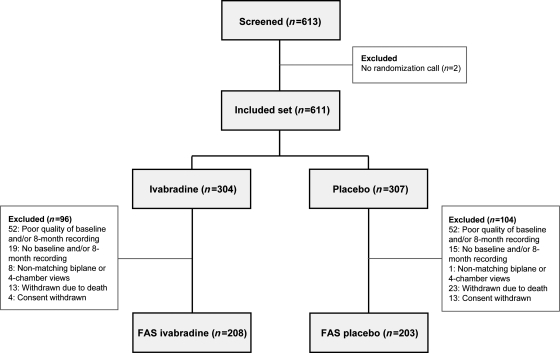
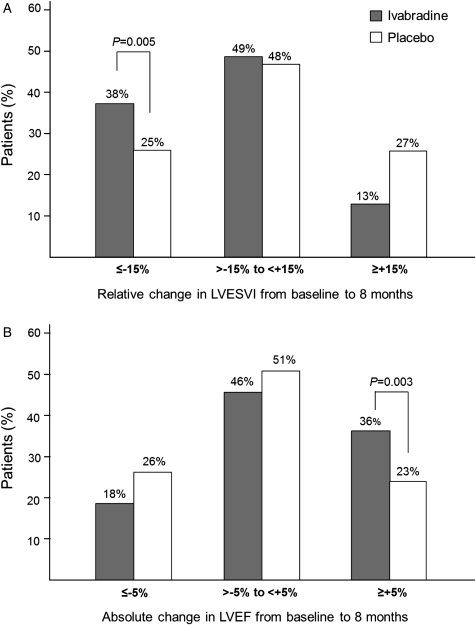
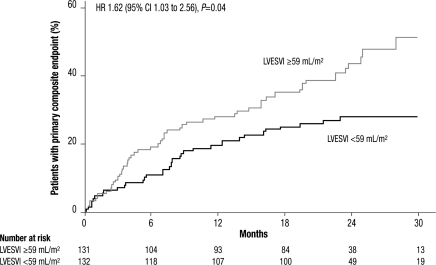
AIMS: The SHIFT echocardiographic substudy evaluated the effects of ivabradine on left ventricular (LV) remodelling in heart failure (HF). METHODS AND RESULTS: Eligible patients had chronic HF and systolic dysfunction [LV ejection fraction (LVEF) ≤35%], were in sinus rhythm, and had resting heart rate ≥70 bpm. Patients were randomly allocated to ivabradine or placebo, superimposed on background therapy for HF. Complete echocardiographic data at baseline and 8 months were available for 411 patients (ivabradine 208, placebo 203). Treatment with ivabradine reduced LVESVI (primary substudy endpoint) vs. placebo [-7.0 ± 16.3 vs. -0.9 ± 17.1 mL/m(2); difference (SE), -5.8 (1.6), 95% CI -8.8 to -2.7, P< 0.001]. The reduction in LVESVI was independent of beta-blocker use, HF aetiology, and baseline LVEF. Ivabradine also improved LV end-diastolic volume index (-7.9 ± 18.9 vs. -1.8 ± 19.0 mL/m(2), P= 0.002) and LVEF (+2.4 ± 7.7 vs. -0.1 ± 8.0%, P< 0.001). The incidence of the SHIFT primary composite outcome (cardiovascular mortality or hospitalization for worsening HF) was higher in patients with LVESVI above the median (59 mL/m2) at baseline (HR 1.62, 95% CI 1.03-2.56, P= 0.04). Patients with the largest relative reductions in LVESVI had the lowest event rates. CONCLUSION: Ivabradine reverses cardiac remodelling in patients with HF and LV systolic dysfunction.
Overview
The claims and statistics of this paper haven’t been checked yet.
Free: it reads the open-access text and checks the first 5 claims that cite a source we can check. Create a free account to check every claim.
Integrity signals
Registry
Cites
Statistics
Figures
Verification
Claims the paper makes
The claims and statistics of this paper haven’t been checked yet.
Free: it reads the open-access text and checks the first 5 claims that cite a source we can check. Create a free account to check every claim.
Claims other papers make about this one
Each is checked against this paper’s own text: does it say what the citing paper says it does?
The cited source says what the claim attributes to it.
In the citing paper
“For example, in the echocardiography substudy of the SHIFT trial (discussed previously), among the 411 patients who had paired baseline and 8-month follow-up echocardiography data, there was an increase in LVEF of 2.4% (SD, 7.7) in ivabradine-treated patients compared with a decrease of 0.1% (SD, 8.0%) in the placebo group (P < 0.001).”
From CCS/CHFS Heart Failure Guidelines Update: Defining a New Pharmacologic Standard of Care for Heart Failure With Reduced Ejection Fraction (2021) · cites this paper as [80]
Self-check
Percentages, sums and reported differences re-computed from the paper’s own numbers.
The self-check needs the paper’s full text.
Citations
Cites
Lang, R. M., Bierig, M., Devereux, R. B., Flachskampf, F. A., Foster, E., Pellikka, P. A., Picard, M. H., Roman, M. J., Seward, J., Shanewise, J. S., et al. (2005) · Journal of the American Society of Echocardiography · doi:10.1016/j.echo.2005.10.005 · Cited by 11,318
Ivabradine and outcomes in chronic heart failure (SHIFT): a randomised placebo-controlled study
Swedberg, K., Komajda, M., Böhm, M., Borer, J. S., Ford, I., Dubost-Brama, A., Lerebours, G., & Tavazzi, L. (2010) · The Lancet · doi:10.1016/s0140-6736(10)61198-1 · Cited by 2,563 · cited 4×
“0001).(6) In this article, we present the results of the prespecified echocardiographic substudy of the SHIFT trial, aiming to evaluate the effects of ivabradine vs.”
MethodResultInfluentialSelf-citationCohn, J. N., Ferrari, R., & Sharpe, N. (2000) · Journal of the American College of Cardiology · doi:10.1016/s0735-1097(99)00630-0 · Cited by 2,161
Heart Rate, Life Expectancy and the Cardiovascular System: Therapeutic Considerations
Boudoulas, K. D., Borer, J. S., & Boudoulas, H. (2015) · Cardiology · doi:10.1159/000435947 · Cited by 1,938
Self-citationBristow, M. R., Gilbert, E. M., Abraham, W. T., Adams, K. F., Fowler, M. B., Hershberger, R. E., Kubo, S. H., Narahara, K. A., Ingersoll, H., Krueger, S., et al. (1996) · Circulation · doi:10.1161/01.cir.94.11.2807 · Cited by 1,303
Böhm, M., Swedberg, K., Komajda, M., Borer, J. S., Ford, I., Dubost-Brama, A., Lerebours, G., & Tavazzi, L. (2010) · The Lancet · doi:10.1016/s0140-6736(10)61259-7 · Cited by 1,099
Self-citationSolomon, S. D., Anavekar, N., Skali, H., McMurray, J. J. V., Swedberg, K., Yusuf, S., Granger, C. B., Michelson, E. L., Wang, D., Pocock, S., et al. (2005) · Circulation · doi:10.1161/circulationaha.105.561423 · Cited by 873
Self-citationSt John Sutton, M., Pfeffer, M. A., Plappert, T., Rouleau, J. L., Moyé, L. A., Dagenais, G. R., Lamas, G. A., Klein, M., Sussex, B., & Goldman, S. (1994) · Circulation · doi:10.1161/01.cir.89.1.68 · Cited by 823
Kramer, D. G., Trikalinos, T. A., Kent, D. M., Antonopoulos, G. V., Konstam, M. A., & Udelson, J. E. (2010) · Journal of the American College of Cardiology · doi:10.1016/j.jacc.2010.05.011 · Cited by 492 · cited 2×
“A recent analysis compared 30 clinical event trials and 88 remodelling trials with the same drug or device therapy and reported that the odds ratio associated with therapy for long-term mortality correlate with the shorter term effect of the therapy on LVEF, end-systolic volume, and enddiastolic volume.(5) It is there…”
MethodResultDoughty, R. N., Whalley, G. A., Walsh, H. A., Gamble, G. D., López-Sendón, J., & Sharpe, N. (2004) · Circulation · doi:10.1161/01.cir.0000108928.25690.94 · Cited by 328
Research works printed but not linked: 1
- Vercauteren M Favre J Mulder P Mahlberg-Gaudin F Thuillez C Richard V Protection of endothelial function by long-term heart rate reduction induced by ivabradine in a rat model of chronic heart failure Eur Heart J 2007 28 suppl 48 P468
Cited by
Items 101–200 of 304
Heart rate manipulation in dilated cardiomyopathy: Assessing the role of Ivabradine
Raja, D. C., Kapoor, A., Sinha, A., Kashyap, S., Khanna, R., Kumar, S., Garg, N., Tewari, S., & Goel, P. K. (2017) · Indian Heart Journal · doi:10.1016/j.ihj.2017.08.009 · Cited by 18
Sustained-Release Ivabradine Hemisulfate in Patients With Systolic Heart Failure
Ye, F., Wang, X., Wu, S., Ma, S., Zhang, Y., Liu, G., Liu, K., Yang, Z., Pang, X., Xue, L., et al. (2022) · Journal of the American College of Cardiology · doi:10.1016/j.jacc.2022.05.027 · Cited by 17
Management of pericarditis and myocarditis: Could heart-rate-reducing drugs hold a promise?
Roubille, F., Tournoux, F., Roubille, C., Merlet, N., Davy, J., Rhéaume, É., Busseuil, D., & Tardif, J. (2013) · Archives of cardiovascular diseases · doi:10.1016/j.acvd.2013.06.047 · Cited by 18
Self-citationBeneficial effect of ivabradine in dilated cardiomyopathy from Becker muscular dystrophy
Finsterer, J., Stöllberger, C., & Berger, E. E. (2012) · Herz · doi:10.1007/s00059-012-3643-8 · Cited by 17
Pharmacological interventions for heart failure in people with chronic kidney disease
Ravani, P., Quinn, R. R., & Strippoli, G. F. (2016) · Cochrane Database of Systematic Reviews · doi:10.1002/14651858.cd012466 · Cited by 16
Nambiar, L., & Meyer, M. (2018) · Coronary Artery Disease · doi:10.1097/mca.0000000000000610 · Cited by 19
Early NT‐proBNP Decrease With Ivabradine in Ambulatory Patients With Systolic Heart Failure
Sargento, L., Satendra, M., Longo, S., Lousada, N., & dos Reis, R. P. (2013) · Clinical Cardiology · doi:10.1002/clc.22183 · Cited by 16
Zugck, C., Störk, S., & Stöckl, G. (2017) · International Journal of Cardiology · doi:10.1016/j.ijcard.2017.03.131 · Cited by 16
Lee, Y., Lin, P.-L., Chiou, W., Huang, J. L., Lin, W. Y., Liao, C. T., Chung, F., Liang, H., Hsu, C., & Chang, H. Y. (2021) · ESC Heart Failure · doi:10.1002/ehf2.13182 · Cited by 17
Role of the Funny Current Inhibitor Ivabradine in Cardiac Pharmacotherapy: A Systematic Review
Petite, S. E., Bishop, B. M., & Mauro, V. F. (2016) · American Journal of Therapeutics · doi:10.1097/mjt.0000000000000388 · Cited by 17
Chan, C., Lin, Y., Chen, Y., Lu, Y., Chen, S., & Chen, Y. (2019) · International Journal of Molecular Sciences · doi:10.3390/ijms20133224 · Cited by 15
Ivabradine Treatment Reduces Cardiomyocyte Apoptosis in a Murine Model of Chronic Viral Myocarditis
Li‐Sha, G., Li, L., Zhou, D., Shi, Z., Gu, X., Guang-Yi, C., Li, J., Lin, J., Maoping, C., & Li, Y. (2018) · Frontiers in Pharmacology · doi:10.3389/fphar.2018.00182 · Cited by 15
“In this study, we found that the heart rate of untreated mice in CVMC2 group was faster than that of the normal mice, and the LVEF and LVFS were significantly reduced, but IVA treatment reduced the heart rate, shrunk the left ventricular chambers, and apparently improved LVEF and LVFS.”
BackgroundInfluentialChan, C., Chen, Y., Chang, S., Lin, Y., Kao, Y., Chen, S.-A., & Chen, Y. (2018) · Journal of Cardiac Failure · doi:10.1016/j.cardfail.2018.09.016 · Cited by 15
Elevated Resting Heart Rate in Adolescent Men and Risk of Heart Failure and Cardiomyopathy
Lindgren, M., Robertson, J., Adiels, M., Schaufelberger, M., Åberg, M., Torén, K., Wærn, M., Åberg, N. D., & Rosengren, A. (2020) · ESC Heart Failure · doi:10.1002/ehf2.12726 · Cited by 16
“98) Cardiorespiratory fitness Low (1–4) 171 185 (17) 22 610 (10) 29 622 (14) 32 606 (17) 40 058 (20) 46 289 (24) Medium (5–7) 586 868 (58) 115 449 (53) 117 641 (57) 111 643 (59) 119 971 (60) 122 164 (62) High (8–9) 250 310 (25) 81 292 (37) 57 711 (28) 44 660 (24) 39 168 (20) 27 479 (14)”
Villacorta, A. S., Villacorta, H., Teixeira, J. A. C., Precht, B. C., Porto, P. B. D. A., Rodrigues, L. U., Neves, M., Xavier, A. R., Kanaan, S., Mesquita, C. T., et al. (2018) · Journal of Cardiovascular Pharmacology and Therapeutics · doi:10.1177/1074248418799364 · Cited by 15
Dias, P., & Terracciano, C. M. (2013) · Journal of the American Heart Association · doi:10.1161/jaha.113.000287 · Cited by 15
“The most striking finding of the SHIfT trial, obtained from the echocardiographic substudy, was the reversal of cardiac remodeling in the left ventricle with pronounced increase in left ventricular ejection fraction and reduced left ventricular systolic volume.(15) Effects of ivabradine in preventing arrhythmias were…”
Correale, M., Mazzeo, P., Tricarico, L., Croella, F., Fortunato, M., Magnesa, M., Amatruda, M., Alfieri, S., Ferrara, S., Ceci, V., et al. (2022) · Clinical Drug Investigation · doi:10.1007/s40261-022-01166-2 · Cited by 14
“Although the mechanism is not completely known, a reduction in heart rate and a prolongation of the diastolic phase might be a key to achieve reverse remodelling through β-blocker treatment [2, 73].”
BackgroundGold, M. R., Ellenbogen, K. A., Leclercq, C., Lowy, J., Rials, S. J., Shoda, M., TOMASSONI, G. F., Issa, Z. F., SARRAZIN, J., Jennings, J. M., et al. (2023) · Circulation Arrhythmia and Electrophysiology · doi:10.1161/circep.122.011714 · Cited by 15
Afshani, M. R., Torfi, E., Akiash, N., Jahanshahi, A., Mohamadi, A., & Sherafat, O. (2024) · Acta cardiologica. Supplementum · doi:10.1080/00015385.2023.2240130 · Cited by 16
“It has recently been reported that some treatments, including ivabradine and sacubitril/valsartan, reduce ventricular volumes in diabetic patients with HF when added to the renin-angiotensin system inhibitors and beta-blockers [9,10].”
McMurray, J. J. V. (2015) · European Heart Journal · doi:10.1093/eurheartj/ehv190 · Cited by 15
“61 mL/m(2)).(10) Another possibility is that differential metabolic remodelling in ischaemic and non-ischaemic HF might result in a differential response to treatment.”
BackgroundIvabradine as adjuvant treatment for chronic heart failure
Benstoem, C., Kalvelage, C., Breuer, T., Heussen, N. M., Marx, G., Stoppe, C., & Brandenburg, V. M. (2020) · Cochrane Database of Systematic Reviews · doi:10.1002/14651858.cd013004.pub2 · Cited by 17
New drugs: big changes in conservative heart failure therapy?
Berliner, D., & Bauersachs, J. K. (2018) · European Journal of Cardio-Thoracic Surgery · doi:10.1093/ejcts/ezy421 · Cited by 14
“Beyond that, a substudy of the SHIFT (Systolic Heart Failure Treatment with the If inhibitor ivabradine) trial revealed a significant enhancement in left ventricular function and reduction in left ventricular volumes [40] in patients receiving ivabradine.”
Xu, Y., Zhang, W., Zhong, X., Yan, S., Chen, H., Guo, R., Luo, X., & Liu, Q. (2020) · Annals of Noninvasive Electrocardiology · doi:10.1111/anec.12816 · Cited by 16
“The SHIFT echocardiography subgroup analysis showed that ivabradine slowed down the heart rate, thus reversing the left ventricular volume in patients with heart failure (Tardif et al., 2011).”
MethodKaufmann, B. A., Goetschalckx, K., Min, S. Y., Maeder, M. T., Bucher, U., Nietlispach, F., Bernheim, A. M., Pfisterer, M. E., & Rocca, H. B. (2015) · International Journal of Cardiology · doi:10.1016/j.ijcard.2015.04.282 · Cited by 15
Bonadei, I., Sciatti, E., Vizzardi, E., Fabbricatore, D., Pagnoni, M., Rossi, L., Carubelli, V., Lombardi, C., & Metra, M. (2018) · Cardiovascular Therapeutics · doi:10.1111/1755-5922.12323 · Cited by 15
Novel drugs for heart rate control in heart failure
Bielecka-Dabrowa, A. M., von Haehling, S., Rysz, J., & Banach, M. (2018) · Heart Failure Reviews · doi:10.1007/s10741-018-9696-x · Cited by 14
Li, H., Duan, Y., Chen, B., Zhao, Y. C., Su, W., Wang, S., Wu, J., & Lu, L. (2020) · Medicine · doi:10.1097/md.0000000000018341 · Cited by 15
Elzeneini, M., Aranda, J. M., Al‐Ani, M. A., Ahmed, M. M., Parker, A. M., & Vilaro, J. R. (2020) · Heart Failure Reviews · doi:10.1007/s10741-020-10029-x · Cited by 13
“Two echocardiography-driven sub-analyses of the SHIFT trial also showed that ivabradine improves stroke volume by improving ventricular-arterial coupling [43] and enhances LV reverse remodeling and ejection fraction [44].”
MethodHeart failure in elderly: progress in clinical evaluation and therapeutic approach.
Iacoviello, M., & Antoncecchi, V. (2013) · PubMed Central · doi:10.3969/j.issn.1671-5411.2013.02.010 · Cited by 14
Mullasari, A. S., The PROFICIENT investigators, Mahajan, A. U., Chanana, B. B., Kahali, D., Basavanna, D., Prakash, D., Chopda, M., Gadkari, M. A., Misra, M., et al. (2020) · Cardiology and Therapy · doi:10.1007/s40119-020-00200-8 · Cited by 13
Kario, K., Hoshide, S., Mizuno, H., Kabutoya, T., Nishizawa, M., Yoshida, T., Abe, H., Katsuya, T., Okawara, Y., Kanegae, H., et al. (2022) · Clinical Research in Cardiology · doi:10.1007/s00392-022-02051-w · Cited by 12
“Data from the SHIFT echocardiography substudy also showed that ivabradine reversed LV remodeling [26].”
MethodEmpfehlung zur Herzinsuffizienz: Was gibt es Neues?
Hasenfuss, G. P., Edelmann, F., & Wachter, R. (2013) · Der Internist · doi:10.1007/s00108-013-3312-x · Cited by 13
Joyce, E., Hoogslag, G. E., Leong, D. P., Fox, K. M., Schalij, M. J., Marsan, N. A., Bax, J. J., & Delgado, V. (2013) · Heart · doi:10.1136/heartjnl-2012-303406 · Cited by 11
Wong, J. A., Roberts, J. D., & Healey, J. S. (2021) · Canadian Journal of Cardiology · doi:10.1016/j.cjca.2021.01.024 · Cited by 11
Ivabradine: In Adults with Chronic Heart Failure with Reduced Left Ventricular Ejection Fraction
Perry, C. M. (2012) · American Journal of Cardiovascular Drugs · doi:10.1007/bf03262475 · Cited by 11
“001) in this SHIFT substudy.([23]) Ivabradine improved diastolic left ventricular function in rats,([24]) and improved systolic function and protected the myocardium against ventricular dysfunction induced by myocardial ischemia in rabbits.”
Pharmacologic Options for the Management of Systolic Heart Failure: Examining Underlying Mechanisms
Mancini, G. B. J., Howlett, J. G., BORER, J. S., Liu, P. P., Mehra, M. R., Pfeffer, M. A., Swedberg, K. B., & Tardif, J. (2015) · Canadian Journal of Cardiology · doi:10.1016/j.cjca.2015.02.013 · Cited by 13
Self-citationClinical Trials Update AHA Congress 2010
Horowitz, J. D., Rosenson, R. S., McMurray, J. J. V., Marx, N., & Remme, W. J. (2011) · Cardiovascular Drugs and Therapy · doi:10.1007/s10557-011-6285-9 · Cited by 12
Heart rate reduction in heart failure: ivabradine or beta blockers?
Guglin, M. E. (2012) · Heart Failure Reviews · doi:10.1007/s10741-012-9347-6 · Cited by 12
“Similar to findings from other studies, greater decreases in HR were associated with greater benefits in general and greater increases in left ventricular ejection fraction in particular [34].”
ResultIs there a heart rate paradox in acute heart failure?
Lourenço, P., Ribeiro, A., Cunha, F. M., Pintalhão, M., Marques, P. S., Cunha, F., Silva, S., & Bettencourt, P. (2015) · International Journal of Cardiology · doi:10.1016/j.ijcard.2015.10.129 · Cited by 12
Is There a Role for Ivabradine Beyond its Conventional Use?
Bonadei, I., Vizzardi, E., Sciatti, E., Carubelli, V., Lombardi, C., D’Aloia, A., & Metra, M. (2014) · Cardiovascular Therapeutics · doi:10.1111/1755-5922.12080 · Cited by 11
Optimal Heart Rate Modulation Using Ivabradine
Imamura, T., & Kinugawa, K. (2021) · International Heart Journal · doi:10.1536/ihj.21-355 · Cited by 11
Cardiac and Hemodynamic Benefits: Mode of Action of Ivabradine in Heart Failure
Pereira-Barretto, A. C. (2015) · Advances in Therapy · doi:10.1007/s12325-015-0257-6 · Cited by 11
“In the echocardiography substudy of the SHIFT trial [61], the effect of ivabradine on LV remodeling was selected as the primary objective.”
BackgroundMethodInfluentialIvabradine in patients with heart failure: a systematic literature review
Khan, Z., Brière, J., Olewińska, E., Khrouf, F., & Nikodem, M. (2023) · Journal of Market Access & Health Policy · doi:10.1080/20016689.2023.2262073 · Cited by 10
“[68] who found that these positive effects can occur regardless of a patient’s base-”
BackgroundResultKodsi, M. H., Makarious, D., Gan, G. C. H., Choudhary, P., & Thomas, L. (2023) · ESC Heart Failure · doi:10.1002/ehf2.14555 · Cited by 10
Clinical perspective: the importance of heart rate reduction in heart failure
Cowie, M., & Davidson, L. L. (2012) · International Journal of Clinical Practice · doi:10.1111/j.1742-1241.2012.02968.x · Cited by 10
Hidalgo, F. J. (2017) · International Journal of Clinical Cardiology · doi:10.23937/2378-2951/1410093 · Cited by 10
Kim, H. B., Hong, Y. J., Park, H., Ahn, Y., & Jeong, M. H. (2018) · Chonnam Medical Journal · doi:10.4068/cmj.2018.54.3.167 · Cited by 11
“Actually, Ivabradine has been shown to have prognostic benefits, and improve the functional and safety parameters in systolic heart failure.(8,9) In patients with MI associated with reperfusion arrhythmia, long-term reperfusion of ischemia lasts for several hours during percutaneous coronary intervention.”
BackgroundPharmacology of Ivabradine and the Effect on Chronic Heart Failure
Zhou, Y., Wang, J., Meng, Z., Zhou, S., Peng, J., Chen, S., Wang, Q., & Sun, K. (2019) · Current Topics in Medicinal Chemistry · doi:10.2174/1568026619666190809093144 · Cited by 11
Ivabradine for the treatment of chronic heart failure
Henri, C., O’Meara, E., de Denus, S., Elzir, L., & Tardif, J. (2016) · Expert Review of Cardiovascular Therapy · doi:10.1586/14779072.2016.1165092 · Cited by 10
Self-citationHow Heart Rate Should Be Controlled in Patients with Atherosclerosis and Heart Failure
da Silva, R. M. F. L., Borges, A. S. R., Penha‐Silva, N., Resende, E. S., Tse, G., Liu, T., Roever, L., & Biondi‐Zoccai, G. (2018) · Current Atherosclerosis Reports · doi:10.1007/s11883-018-0757-3 · Cited by 12
Implications of Doppler Echocardiography-guided Heart Rate Modulation Using Ivabradine
Hori, M., Imamura, T., Narang, N., & Kinugawa, K. (2021) · Internal Medicine · doi:10.2169/internalmedicine.7343-21 · Cited by 10
“Chronotropic control may improve the cardiac output in patients who otherwise are tachycardic (3), while allowing for greater reverse remodeling and improved clinical outcomes (4).”
BackgroundSisakian, H. S., Sargsyan, T., & Khachatryan, A. (2016) · Acta cardiologica. Supplementum · doi:10.1080/ac.71.3.3152092 · Cited by 10
Ivabradine on Aortic Stiffness in Patients with Heart Failure
Nar, G., İnci, S., Aksan, G., Demirelli, S., Soylu, K., Yüksel, S., Gülel, O., & İçli, A. (2015) · Journal of Investigative Medicine · doi:10.1097/jim.0000000000000159 · Cited by 10
“Moreover, ivabradine treatment has been shown to improve cardiac remodelling.(30) However, details of the favorable contribution of ivabradine in HF remain unknown.”
BackgroundResultIvabradine and endothelium: an update
Dallapellegrina, L., Sciatti, E., & Vizzardi, E. (2020) · Therapeutic Advances in Cardiovascular Disease · doi:10.1177/1753944720934937 · Cited by 9
Mechanoenergetische Defekte bei Herzinsuffizienz
Maack, C. (2023) · Herz · doi:10.1007/s00059-022-05161-3 · Cited by 9
“mit einer Heraufregulation der SR-Ca2+-ATPase-Expression assoziiert ist [28] und dass sich bei Patienten mit HFrEF das LV-Schlagvolumen durch selektives Senken der Herzfrequenz von 93 auf 68 Schläge pro Minute mit Ivabradin innerhalb von 4h um 50% erhöht [29], was am ehesten auf die Reversion der negativen Kraft-Frequ…”
BackgroundBurashnikov, A., & Antzelevitch, C. N. (2018) · Pacing and Clinical Electrophysiology · doi:10.1111/pace.13474 · Cited by 9
Volterrani, M., & Iellamo, F. (2016) · Cardiac failure review · doi:10.15420/cfr.2016:12:1 · Cited by 10
Current drug therapy for heart failure with reduced ejection fraction
Berliner, D., Hallbaum, M., & Bauersachs, J. K. (2018) · Herz · doi:10.1007/s00059-018-4712-4 · Cited by 8
Martin, A., Bories, M.-C., Tence, N., Baudinaud, P., Pechmajou, L., Puscas, T., Marijon, É., Achouh, P., & Karam, N. (2021) · Frontiers in Cardiovascular Medicine · doi:10.3389/fcvm.2021.713658 · Cited by 10
Heart rate and heart failure: the role of ivabradine therapy
Reil, J., & Böhm, M. (2013) · Current Opinion in Cardiology · doi:10.1097/hco.0b013e32836043af · Cited by 9
Self-citationDedkov, E. I., Bogatyryov, Y., McCooey, D., Christensen, L. P., Weiss, R. M., & Tomanek, R. J. (2014) · Journal of Cardiovascular Pharmacology and Therapeutics · doi:10.1177/1074248414553231 · Cited by 9
Does heart rate really matter to patients with heart failure?
Miller, R. J. H., & Howlett, J. G. (2016) · Current Opinion in Cardiology · doi:10.1097/hco.0000000000000368 · Cited by 8
Patel, P. A., Ali, N., Roy, A., Pinder, S., Cubbon, R. M., Kearney, M. T., & Witte, K. K. (2018) · Journal of General Internal Medicine · doi:10.1007/s11606-018-4578-4 · Cited by 8
Wan, H., Huang, T., Zhang, H., & Wu, Q. (2020) · Clinical Therapeutics · doi:10.1016/j.clinthera.2020.10.005 · Cited by 8
Faragli, A., Tano, G. D., Carlini, C. C. D., Nassiacos, D., Gori, M., Confortola, G., Muzio, F. P. L., Rapis, K., Abawi, D., Post, H., et al. (2021) · Frontiers in Cardiovascular Medicine · doi:10.3389/fcvm.2021.665202 · Cited by 8
“In previous studies, ivabradine has been shown to reduce the risk of re-hospitalizations due to worsening HF (25), reverse cardiac remodeling, and improvement of life quality in patients withHFrEF and in sinus rhythm (11, 26).”
BackgroundIt Is All About Heart Rate. Or Is It?
Sarraf, M., & Francis, G. S. (2012) · Journal of the American College of Cardiology · doi:10.1016/j.jacc.2012.01.019 · Cited by 8
“Ivabradine, a pure bradycardic agent, also has antiremodeling activity both in patients (2) nd in animal models of heart failure (3).”
BackgroundAdams, K. F., Giblin, E. M., Pearce, N., & Patterson, J. H. (2017) · Pharmacotherapy The Journal of Human Pharmacology and Drug Therapy · doi:10.1002/phar.1934 · Cited by 7
Clinical Implications of Ivabradine in the Contemporary Era
Imamura, T. (2024) · Medicina · doi:10.3390/medicina60020303 · Cited by 7
“In a sub-analysis of the SHIFT trial, ivabradine therapy yielded modest cardiac reverse remodeling [20].”
Risk-benefit assessment of ivabradine in the treatment of chronic heart failure
Ptaszynski, P. A., Urbanek, I., Kaczmarek, K. A., & Cygankiewicz, I. (2014) · Drug Healthcare and Patient Safety · doi:10.2147/dhps.s43275 · Cited by 10
Effects of Ivabradine on Residual Myocardial Ischemia after PCI Evaluated by Stress Echocardiography
Calcagno, S., Infusino, F., Dettori, O., Taccheri, T., Bruno, P., Maestrini, V., Sardella, G., Mancone, M., & Fedele, F. (2019) · Cardiology Research and Practice · doi:10.1155/2019/9185876 · Cited by 7
“Moreover, an interesting SHIFT substudy showed the reversed LV remodeling with marked reductions of LV volumes and significant improvements of LV ejection fraction (LVEF) in patients treated with ivabradine [9].”
BackgroundPharmacologic Bases of Antiarrhythmic Therapy
Tamargo, J. L., & Delpón, E. (2013) · Elsevier eBooks · doi:10.1016/b978-1-4557-2856-5.00054-6 · Cited by 7
The implication of optimal heart rate in patients with systolic dysfunction following TAVR
Imamura, T., Tanaka, S., Ushijima, R., Sobajima, M., Fukuda, N., Ueno, H., Besser, S. A., & Kinugawa, K. (2021) · Journal of Cardiac Surgery · doi:10.1111/jocs.15394 · Cited by 7
“A subanalysis of the SHIFT trial observed that the heart rate reduction using ivabradine was associated with a more improved cardiac function compared with the placebo arm.(12) Furthermore, such an improvement in cardiac function, which was defined as left ventricular end‐systolic volume index < 59ml/m(2), was associa…”
MethodIvabradine in systemic sclerosis related pulmonary arterial hypertension
Correale, M., Montrone, D., Ieva, R., Biase, M. D., & Brunetti, N. D. (2012) · European Journal of Internal Medicine · doi:10.1016/j.ejim.2012.09.008 · Cited by 7
Borlaug, B. A. (2013) · Journal of the American College of Cardiology · doi:10.1016/j.jacc.2013.07.028 · Cited by 7
Tromp, J., Lam, C. S. P., Alemayehu, W. G., de Filippi, C. R., Melenovský, V., Sliwa, K. S., Lopatin, Y. M., Arango, J. L., Bahit, M. C., Roessig, L., et al. (2024) · European Journal of Heart Failure · doi:10.1002/ejhf.3397 · Cited by 6
The Effect of Silibinin on the Pharmacokinetics of Ivabradine and N-Desmethylivabradine in Rats
Chen, X.-P., Zheng, H.-T., Cai, W.-W., Li, M., Zhang, J., & Hu, J. (2015) · Pharmacology · doi:10.1159/000435890 · Cited by 6
Cleland, J. G. F., Coletta, A. P., Cullington, D., Castiello, T., de Boer, R. A., & Clark, A. L. (2011) · European Journal of Heart Failure · doi:10.1093/eurjhf/hfr149 · Cited by 6
Taş, S., Taş, Ü., Özpelit, E., Edem, E., & Akdeniz, B. (2018) · Europe PMC (PubMed Central) · doi:10.6515/acs.201805_34(3).20180129a · Cited by 6
“Patients receiving ivabradine were shown to have a significant reduction in left ventricular systolic and diastolic volumes.(12) As ivabradine does not have inotropic or direct vasodilating effects and reduces HR by a direct effect on the sinoatrial node, the effects of ivabradine treatment were primarily attributed t…”
BackgroundIvabradine Approved and Other Uses in Clinical Practice: A Systematic Review
Hajiqasemi, M., Ebrahimzade, M., Ghelichkhan, Z. A., Huang, X., Morkos, D., Jennings, D. L., & Talasaz, A. H. (2024) · Journal of Cardiovascular Pharmacology · doi:10.1097/fjc.0000000000001609 · Cited by 7
Effects of Heart Rate Reduction by Ivabradine for Heart Failure Beyond β-Blockers
Seo, Y., & Ohte, N. (2019) · Circulation Journal · doi:10.1253/circj.cj-19-0751 · Cited by 6
Waranugraha, Y., Rizal, A., Tjahjono, C. T., Vilado, I. Y., David, N. I., Abudan, F., & Setyaningrum, D. A. (2024) · Heart Lung and Circulation · doi:10.1016/j.hlc.2023.09.005 · Cited by 6
Chronic Heart Failure With Preserved Ejection Fraction: Effective Treatment Possible?
Кanorskiy, S. G., & Borisenko, Y. V. (2018) · Kardiologiia · doi:10.18087/cardio.2018.6.10154 · Cited by 6
“При сердечной недостаточности со сниженной ФВ ЛЖ ивабрадин значительно уменьшал риск сердечно-сосудистой смерти и / или госпитализации по поводу ухудшения течения сердечной недостаточности [13], уменьшал ремоделирование миокарда [14].”
Akute und chronische Herzinsuffizienz im Spiegel der neuen ESC-Leitlinie
Pöss, J., Link, A., & Böhm, M. (2013) · Herz · doi:10.1007/s00059-013-3986-9 · Cited by 6
Self-citationRole of ivabradine and heart rate lowering in chronic heart failure: guideline update
Chow, S. L., Page, R. L., II, & Depré, C. (2018) · Expert Review of Cardiovascular Therapy · doi:10.1080/14779072.2018.1489235 · Cited by 6
“Other reports demonstrated improved cardiac function [67] and HRQOL [68] in substudies of the SHIFT population.”
BackgroundResultLiraglutide in Heart Failure: Caution is Needed
Michel Komajda, N. (2017) · European Journal of Heart Failure · doi:10.1002/ejhf.707 · Cited by 6
Update on ivabradine for heart failure
BORER, J. S., & Tavazzi, L. (2016) · Trends in Cardiovascular Medicine · doi:10.1016/j.tcm.2016.01.004 · Cited by 5
“[15] Tardif JC, O'Meara E, Komajda M, Böhm M, Borer JS, Ford I, et al.”
BackgroundSelf-citationCada, D. J., Bindler, R. J., & Baker, D. E. (2015) · Hospital Pharmacy · doi:10.1310/hpj5009-806 · Cited by 5
He, R., Li, L., Han, C., An, W., Liu, Z., & Gao, J. (2024) · Heliyon · doi:10.1016/j.heliyon.2024.e33779 · Cited by 6
“The SHIFT study [23] subgroup analysis showed that ivab-radine not only lowered heart rate but also reversed left ventricular remodeling in patients with HFrEF, thereby improving cardiac function and long-term prognosis.”
MethodOda, H., Hayashi, Y., Oyanagi, N., Tanaka, K., Ozaki, K., Kashiwa, A., Hosaka, Y., Tsuchida, K., & Takahashi, K. (2024) · BMC Cardiovascular Disorders · doi:10.1186/s12872-024-04189-z · Cited by 5
“Ivabra-dine has a CRR effect and can control the increased heart rate resulting from sympathetic excitation in HF, without depressing cardiac function [19, 20].”
BackgroundGonzález‐Juanatey, J. R., Sánchez, M. A., Raposeiras‐Roubín, S., & Castillo, J. C. (2012) · Revista Española de Cardiología Suplementos · doi:10.1016/s1131-3587(12)70034-1 · Cited by 5
Cardiovascular biomarkers and surrogate end points: key initiatives and clinical trial challenges
Heinonen, T. M., Aamer, M., Marshall, C. G., Black, D. M., & Tardif, J. (2012) · Expert Review of Cardiovascular Therapy · doi:10.1586/erc.12.84 · Cited by 5
Self-citationOcaranza, M. P., Jalil, J., Altamirano, R., de León, A., Moya, J., Lonis, A., Gabrielli, L., Nab, P. M., Samuel Córdova, A., Alejandro Paredes, C., et al. (2021) · Frontiers in Pharmacology · doi:10.3389/fphar.2021.565724 · Cited by 5
“In previous clinical trials of HFrEF, patients receiving betablockers, angiotensin converting enzyme inhibitors (ACEIs), angiotensin II type 1 receptor blockers (ARBs), or ivabradine, LVEF has improved by 2–12% over the course of 5–20 months (Tardif et al., 2011; Sze and Daubert, 2018; Maki and Takeda, 2020).”
MethodImplications of Heart Rate in Patients with Left Ventricular Assist Devices
Imamura, T., Kinugawa, K., Narang, N., Nishida, H., Pinney, S., Jeevanandam, V., & Ota, T. (2022) · International Heart Journal · doi:10.1536/ihj.21-468 · Cited by 5
Prognostic and symptomatic benefits with ivabradine: lessons from the SHIFT trial
Michel Komajda, N. (2015) · European Heart Journal Supplements · doi:10.1093/eurheartj/suv058 · Cited by 5
Decreasing heart rate in heart failure: pros and cons
Natale, E., & Marsocci, A. (2018) · Journal of Cardiovascular Medicine · doi:10.2459/jcm.0000000000000564 · Cited by 5
Kučerová, A., Doškář, P., Dujka, L., Lekešová, V., Volf, P., Koščová, K., Neužil, P., & Málek, F. (2018) · Journal of International Medical Research · doi:10.1177/0300060518799566 · Cited by 5
“These experimental results were confirmed in the SHIFT echocardiography substudy.(4) Reverse electrical remodeling as a shortening of the intrinsic QRS interval has been described in patients receiving optimal medical therapy, including beta blockers and angiotensin-converting enzyme inhibitors; in patients receiving…”
ResultPharmacological Bases of Antiarrhythmic Therapy
Tamargo, J. L., & Delpón, E. (2017) · Elsevier eBooks · doi:10.1016/b978-0-323-44733-1.00054-7 · Cited by 8
Kawasaki, S., Sakai, Y., Harasawa, S., Inatsu, A., Kubota, Y., Hirama, A., Kashiwagi, T., & Iwabu, M. (2024) · Therapeutic Apheresis and Dialysis · doi:10.1111/1744-9987.14107 · Cited by 5
“According to a previous study, ivabradine reduces LV end-systolic volume index (LVESVI) and contributes to LVEF improvement, suggesting the possibility of reverse remodeling [18, 19].”
MethodNew technologies, new therapies: toward personalized medicine in heart failure patients?
de Groote, P., Pinet, F., & Bauters, C. (2012) · European Heart Journal · doi:10.1093/eurheartj/ehs432 · Cited by 5
Lattuca, B., & Roubille, F. (2014) · International Journal of Cardiology · doi:10.1016/j.ijcard.2014.09.106 · Cited by 5
“Beyond the acute impact in severe acute HF, favorable LV remodeling could also be hoped as reported in an echocardiographic substudy of the Shift trial [11].”
Background
Metadata
- Authors
- Tardif, J.-C., O'Meara, E., Komajda, M., Böhm, M., Borer, J. S., Ford, I., Tavazzi, L., & Swedberg, K.
- Affiliations
- Montreal Heart Institute (CA)
- Universitätsklinikum des Saarlandes (DE)
- SUNY Downstate Health Sciences University (US)
- University of Glasgow (GB)
- Maria Cecilia Hospital (IT)
- University of Gothenburg (SE)
- Corresponding author
- Tardif, Jean-Claude
- Venue
- European Heart Journal
- Publisher
- Oxford University Press (OUP)
- Published
- 2011-08-29
- Volume
- 32
- Issue
- 20
- Pages
- 2507-2515
- ISSN
- 0195-668X (ISSN-L)
- 1522-9645
- PMC
- PMC3195263
- OpenAlex
- W2170675714
- Cited by
- 300
- References
- 23
- Citations by year
- 2026: 4 · 2025: 8 · 2024: 13 · 2023: 11 · 2022: 17 · 2021: 20 · 2020: 20 · 2019: 14 · 2018: 24 · 2017: 20 · 2016: 28 · 2015: 30 · 2014: 20 · 2013: 32 · 2012: 31
- FWCI
- 19.80
- Type
- journal article
- Language
- en
- Open access
- green
- www.ncbi.nlm.nih.gov
- Licence
- cc-by-nc
- Locations
- European Heart Journal (publishedVersion)
- Europe PMC (PubMed Central) (publishedVersion, cc-by-nc)
- PubMed Central (publishedVersion, cc-by-nc)
- PubMed (publishedVersion)
- ENLIGHTEN (Jurnal Bimbingan dan Konseling Islam) (submittedVersion)
- Topics
- Health Sciences › Medicine › Cardiology and Cardiovascular Medicine › Heart rate and cardiovascular health
- Health Sciences › Medicine › Cardiology and Cardiovascular Medicine › Heart Failure Treatment and Management
- Health Sciences › Medicine › Cardiology and Cardiovascular Medicine › Cardiovascular Function and Risk Factors
- Keywords
- ivabradine, heart rate reduction, left ventricular remodeling, heart failure with reduced ejection fraction, systolic dysfunction, left ventricular end-systolic volume index, left ventricular end-diastolic volume index, left ventricular ejection fraction, SHIFT trial, cardiovascular mortality, hospitalization for worsening heart failure, beta-blockers
- MeSH terms
- Ivabradine, Aged, Anti-Arrhythmia Agents, Arrhythmias, Cardiac, Benzazepines, Double-Blind Method, Echocardiography, Female, Heart Failure, Humans, Male, Middle Aged, Stroke Volume, Ventricular Dysfunction, Left, Ventricular Remodeling
About these checks
Registry, retraction, Cites and statistics results are computed, not judged, with one exception: a printed reference that no index lists is read once by a model before it counts as a citation error. Claims are extracted by a model and kept only when their quote appears verbatim in the text; each cited source is then checked, with a model’s help, for whether it says what the claim relies on. Those verdicts can be wrong — read the claim’s quote and the cited source before relying on one.
Statistics and arithmetic are recomputed, not judged.
Confidence bands are shown only for fields calibrated on our annotated test set. None is calibrated yet, so no band is shown.
What counts as a claim ›How we measure confidence ›How we check this ›
Are you an author, or do you see a problem with this page? Request a review
Data sources
Bibliographic data: Semantic Scholar, OpenAlex, Crossref.
Contains information from the Semantic Scholar Academic Graph Datasets, made available under the ODC Attribution License (ODC-BY 1.0).
Semantic Scholar’s data is described in: Kinney, R., et al. (2023). The Semantic Scholar Open Data Platform. arXiv:2301.10140.
