

Effects of selective heart rate reduction with ivabradine on left ventricular remodelling and function: results from the SHIFT echocardiography substudy
Open accessThe DOI matches its Crossref record; 23 of the 23 references it cites were found in a registry or an index.
Abstract
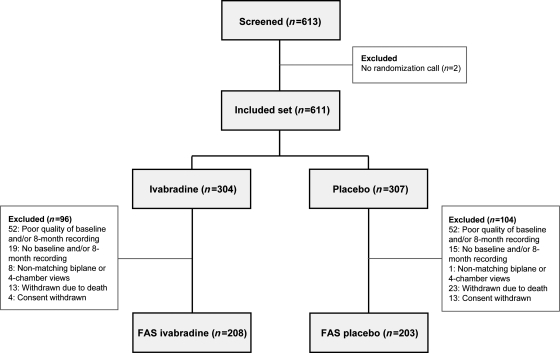
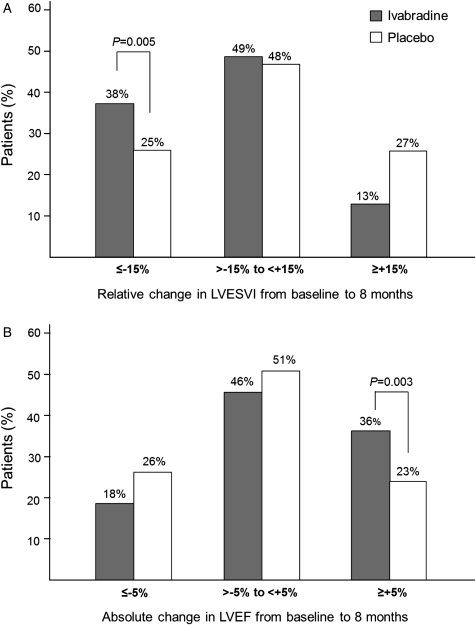
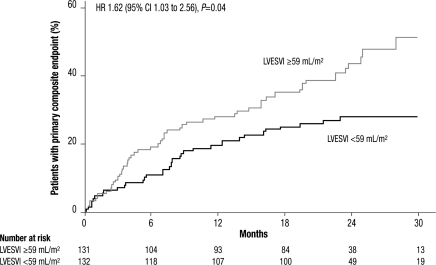
AIMS: The SHIFT echocardiographic substudy evaluated the effects of ivabradine on left ventricular (LV) remodelling in heart failure (HF). METHODS AND RESULTS: Eligible patients had chronic HF and systolic dysfunction [LV ejection fraction (LVEF) ≤35%], were in sinus rhythm, and had resting heart rate ≥70 bpm. Patients were randomly allocated to ivabradine or placebo, superimposed on background therapy for HF. Complete echocardiographic data at baseline and 8 months were available for 411 patients (ivabradine 208, placebo 203). Treatment with ivabradine reduced LVESVI (primary substudy endpoint) vs. placebo [-7.0 ± 16.3 vs. -0.9 ± 17.1 mL/m(2); difference (SE), -5.8 (1.6), 95% CI -8.8 to -2.7, P< 0.001]. The reduction in LVESVI was independent of beta-blocker use, HF aetiology, and baseline LVEF. Ivabradine also improved LV end-diastolic volume index (-7.9 ± 18.9 vs. -1.8 ± 19.0 mL/m(2), P= 0.002) and LVEF (+2.4 ± 7.7 vs. -0.1 ± 8.0%, P< 0.001). The incidence of the SHIFT primary composite outcome (cardiovascular mortality or hospitalization for worsening HF) was higher in patients with LVESVI above the median (59 mL/m2) at baseline (HR 1.62, 95% CI 1.03-2.56, P= 0.04). Patients with the largest relative reductions in LVESVI had the lowest event rates. CONCLUSION: Ivabradine reverses cardiac remodelling in patients with HF and LV systolic dysfunction.
Overview
The claims and statistics of this paper haven’t been checked yet.
Free: it reads the open-access text and checks the first 5 claims that cite a source we can check. Create a free account to check every claim.
Integrity signals
Registry
Cites
Statistics
Figures
Verification
Claims the paper makes
The claims and statistics of this paper haven’t been checked yet.
Free: it reads the open-access text and checks the first 5 claims that cite a source we can check. Create a free account to check every claim.
Claims other papers make about this one
Each is checked against this paper’s own text: does it say what the citing paper says it does?
The cited source says what the claim attributes to it.
In the citing paper
“For example, in the echocardiography substudy of the SHIFT trial (discussed previously), among the 411 patients who had paired baseline and 8-month follow-up echocardiography data, there was an increase in LVEF of 2.4% (SD, 7.7) in ivabradine-treated patients compared with a decrease of 0.1% (SD, 8.0%) in the placebo group (P < 0.001).”
From CCS/CHFS Heart Failure Guidelines Update: Defining a New Pharmacologic Standard of Care for Heart Failure With Reduced Ejection Fraction (2021) · cites this paper as [80]
Self-check
Percentages, sums and reported differences re-computed from the paper’s own numbers.
The self-check needs the paper’s full text.
Citations
Cites
Lang, R. M., Bierig, M., Devereux, R. B., Flachskampf, F. A., Foster, E., Pellikka, P. A., Picard, M. H., Roman, M. J., Seward, J., Shanewise, J. S., et al. (2005) · Journal of the American Society of Echocardiography · doi:10.1016/j.echo.2005.10.005 · Cited by 11,318
Ivabradine and outcomes in chronic heart failure (SHIFT): a randomised placebo-controlled study
Swedberg, K., Komajda, M., Böhm, M., Borer, J. S., Ford, I., Dubost-Brama, A., Lerebours, G., & Tavazzi, L. (2010) · The Lancet · doi:10.1016/s0140-6736(10)61198-1 · Cited by 2,563 · cited 4×
“0001).(6) In this article, we present the results of the prespecified echocardiographic substudy of the SHIFT trial, aiming to evaluate the effects of ivabradine vs.”
MethodResultInfluentialSelf-citationCohn, J. N., Ferrari, R., & Sharpe, N. (2000) · Journal of the American College of Cardiology · doi:10.1016/s0735-1097(99)00630-0 · Cited by 2,161
Heart Rate, Life Expectancy and the Cardiovascular System: Therapeutic Considerations
Boudoulas, K. D., Borer, J. S., & Boudoulas, H. (2015) · Cardiology · doi:10.1159/000435947 · Cited by 1,938
Self-citationBristow, M. R., Gilbert, E. M., Abraham, W. T., Adams, K. F., Fowler, M. B., Hershberger, R. E., Kubo, S. H., Narahara, K. A., Ingersoll, H., Krueger, S., et al. (1996) · Circulation · doi:10.1161/01.cir.94.11.2807 · Cited by 1,303
Böhm, M., Swedberg, K., Komajda, M., Borer, J. S., Ford, I., Dubost-Brama, A., Lerebours, G., & Tavazzi, L. (2010) · The Lancet · doi:10.1016/s0140-6736(10)61259-7 · Cited by 1,099
Self-citationSolomon, S. D., Anavekar, N., Skali, H., McMurray, J. J. V., Swedberg, K., Yusuf, S., Granger, C. B., Michelson, E. L., Wang, D., Pocock, S., et al. (2005) · Circulation · doi:10.1161/circulationaha.105.561423 · Cited by 873
Self-citationSt John Sutton, M., Pfeffer, M. A., Plappert, T., Rouleau, J. L., Moyé, L. A., Dagenais, G. R., Lamas, G. A., Klein, M., Sussex, B., & Goldman, S. (1994) · Circulation · doi:10.1161/01.cir.89.1.68 · Cited by 823
Kramer, D. G., Trikalinos, T. A., Kent, D. M., Antonopoulos, G. V., Konstam, M. A., & Udelson, J. E. (2010) · Journal of the American College of Cardiology · doi:10.1016/j.jacc.2010.05.011 · Cited by 492 · cited 2×
“A recent analysis compared 30 clinical event trials and 88 remodelling trials with the same drug or device therapy and reported that the odds ratio associated with therapy for long-term mortality correlate with the shorter term effect of the therapy on LVEF, end-systolic volume, and enddiastolic volume.(5) It is there…”
MethodResultDoughty, R. N., Whalley, G. A., Walsh, H. A., Gamble, G. D., López-Sendón, J., & Sharpe, N. (2004) · Circulation · doi:10.1161/01.cir.0000108928.25690.94 · Cited by 328
Research works printed but not linked: 1
- Vercauteren M Favre J Mulder P Mahlberg-Gaudin F Thuillez C Richard V Protection of endothelial function by long-term heart rate reduction induced by ivabradine in a rat model of chronic heart failure Eur Heart J 2007 28 suppl 48 P468
Cited by
Heart Rate, Life Expectancy and the Cardiovascular System: Therapeutic Considerations
Boudoulas, K. D., Borer, J. S., & Boudoulas, H. (2015) · Cardiology · doi:10.1159/000435947 · Cited by 1,938
Self-citationCardiovascular remodelling in coronary artery disease and heart failure
Heusch, G., Libby, P., Gersh, B., Yellon, D., Böhm, M., Lopaschuk, G., & Opie, L. (2014) · The Lancet · doi:10.1016/s0140-6736(14)60107-0 · Cited by 734
Self-citationLee, M. M. Y., Brooksbank, K. J. M., Wetherall, K., Mangion, K., Roditi, G., Campbell, R. T., Berry, C., Chong, V., Coyle, L., Docherty, K. F., et al. (2021) · Circulation · doi:10.1161/circulationaha.120.052186 · Cited by 437
McDonald, M., Virani, S., Chan, M., Ducharme, A., Ezekowitz, J. A., Giannetti, N., Heckman, G. A., Howlett, J. G., Koshman, S. L., Lepage, S., et al. (2021) · Canadian Journal of Cardiology · doi:10.1016/j.cjca.2021.01.017 · Cited by 287
“001).(80) Similarly, patients with NYHA II-IV symptoms and LVEF < 40% who were switched from an ACEI/ARB to an ARNI in the openlabel, single-arm Prospective Study of Biomarkers, Symptom Improvement, and Ventricular Remodeling During Sacubitril/Valsartan Therapy for Heart Failure (PROVE-HF) study, there was an increase…”
MethodSelf-citationBöhm, M., Borer, J., Ford, I., Gonzalez-Juanatey, J. R., Komajda, M., Lopez-Sendon, J., Reil, J.-C., Swedberg, K., & Tavazzi, L. (2013) · Clinical Research in Cardiology · doi:10.1007/s00392-012-0467-8 · Cited by 248
Self-citationResting Heart Rate: Risk Indicator and Emerging Risk Factor in Cardiovascular Disease
Böhm, M., Reil, J.-C., Deedwania, P., Kim, J. B., & Borer, J. S. (2015) · The American Journal of Medicine · doi:10.1016/j.amjmed.2014.09.016 · Cited by 236
Self-citationDobrzynski, H., Anderson, R. H., Atkinson, A., Borbas, Z., D'Souza, A., Fraser, J. F., Inada, S., Logantha, S. J. R. J., Monfredi, O., Morris, G. M., et al. (2013) · Pharmacology & Therapeutics · doi:10.1016/j.pharmthera.2013.04.010 · Cited by 199
Komajda, M., Isnard, R., Cohen-Solal, A., Metra, M., Pieske, B., Ponikowski, P., Voors, A. A., Dominjon, F., Henon-Goburdhun, C., Pannaux, M., et al. (2017) · European Journal of Heart Failure · doi:10.1002/ejhf.876 · Cited by 204
Self-citationA Clinical Perspective of Anti-Fibrotic Therapies for Cardiovascular Disease
Lu, F. Y., Murphy, A. J., & Dart, A. M. (2017) · Frontiers in Pharmacology · doi:10.3389/fphar.2017.00186 · Cited by 166
Ernande, L., Bergerot, C., Girerd, N., Thibault, H., Davidsen, E. S., Pignon-Blanc, P. G., Amaz, C., Croisille, P., Buyzere, M. D., Rietzschel, E. R., et al. (2014) · Journal of the American Society of Echocardiography · doi:10.1016/j.echo.2014.01.001 · Cited by 144
Biomarker-assist score for reverse remodeling prediction in heart failure: The ST2-R2 score
Lupón, J., Gaggin, H. K., de Antonio, M., Domingo, M., Galán, A., Zamora, E., Vila, J., Peñafiel, J., Urrútia, A., Ferrer, E., et al. (2015) · International Journal of Cardiology · doi:10.1016/j.ijcard.2015.02.019 · Cited by 132
Selective Heart Rate Reduction With Ivabradine Unloads the Left Ventricle in Heart Failure Patients
Reil, J., Tardif, J., Ford, I., Lloyd, S. M., O’Meara, E., Michel Komajda, N., BORER, J. S., Tavazzi, L., Swedberg, K. B., & Böhm, M. (2013) · Journal of the American College of Cardiology · doi:10.1016/j.jacc.2013.07.027 · Cited by 126
“In total, the present analysis used 275 of the 411 patients of the SHIFT echocardiography substudy, specifically excluding those in the substudy who did not have both HR and stroke volume (SV) measured at the time of both echocardiographic measurements.”
BackgroundMethodResultInfluentialSelf-citationImprovements in Left Ventricular Hypertrophy and Diastolic Function Following Renal Denervation
Schirmer, S. H., Sayed, M. M. Y. A., Reil, J., Ukena, C., Linz, D., Kindermann, M., Laufs, U., Mahfoud, F., & Böhm, M. (2013) · Journal of the American College of Cardiology · doi:10.1016/j.jacc.2013.10.073 · Cited by 135
“reduction improves left ventricular (LV) remodeling (10) and outcomes (11) in heart failure.”
BackgroundSelf-citationGold, M. R., Daubert, J., Abraham, W. T., Ghio, S., Sutton, M. S. J., Hudnall, J. H., Cerkvenik, J., & Linde, C. M. (2014) · Heart Rhythm · doi:10.1016/j.hrthm.2014.11.014 · Cited by 116
Heart rate reduction in coronary artery disease and heart failure
Ferrari, R., & Fox, K. M. (2016) · Nature Reviews Cardiology · doi:10.1038/nrcardio.2016.84 · Cited by 112
Tavazzi, L., Swedberg, K. B., Michel Komajda, N., Böhm, M., BORER, J. S., Lainščak, M., Robertson, M., & Ford, I. (2013) · International Journal of Cardiology · doi:10.1016/j.ijcard.2013.10.068 · Cited by 109
“Heart rate reductionwith ivabradinewas associatedwith incremental effectiveness at lowest heart rates achieved [28], improved quality of life [29], and enhanced left ventricular remodeling [30].”
BackgroundSelf-citationHidalgo, F. J., Anguita, M., Castillo, J. C., Rodríguez, S., Pardo, L., Durán, E., Sánchez, J. J., Ferreiro, C., Pan, M., Mesa, D., et al. (2016) · International Journal of Cardiology · doi:10.1016/j.ijcard.2016.04.136 · Cited by 99
Ljubojević-Holzer, S., Radulović, S., Leitinger, G., Sedej, S., Sacherer, M., Holzer, M., Winkler, C., Pritz, E., Mittler, T., Schmidt, A. G., et al. (2014) · Circulation · doi:10.1161/circulationaha.114.008927 · Cited by 99
Borow, K. M., Yaroshinsky, A., Greenberg, B., & Perin, E. C. (2019) · Circulation Research · doi:10.1161/circresaha.119.314951 · Cited by 94
Pagel, P. S., Tawil, J. N., Boettcher, B. T., Izquierdo, D. A., Lazicki, T. J., Crystal, G. J., & Freed, J. K. (2020) · Journal of Cardiothoracic and Vascular Anesthesia · doi:10.1053/j.jvca.2020.07.016 · Cited by 101
Pathophysiology of atrial fibrillation
Jalife, J., Allessie, M. A., Antzelevitch, C. N., Iesaka, Y., Jackman, W. M., Scheinman, M. M., & Chen, S. (2011) · Wiley eBooks · doi:10.1002/9781119963868.ch2 · Cited by 86
Castagno, D., Petrie, M. C., Claggett, B. L., & McMurray, J. J. V. (2012) · European Heart Journal · doi:10.1093/eurheartj/ehs004 · Cited by 88
Kuwabara, Y., Kuwahara, K., Takano, M., Kinoshita, H., Arai, Y., Yasuno, S., Nakagawa, Y., Igata, S., Usami, S., Minami, T., et al. (2013) · Journal of the American Heart Association · doi:10.1161/jaha.113.000150 · Cited by 79
“In addition, a subanalysis of the SHIFT study, in which the effects of ivabradine treatment on outcome in heart failure patients with resting heart rates >70 beats/min were studied, also showed that the improvement in left ventricular systolic function seen with ivabradine treatment was associated with a decrease in h…”
Efficacy and Safety of Ivabradine in Japanese Patients With Chronic Heart Failure ― J-SHIFT Study ―
Tsutsui, H., Momomura, S., Yamashina, A., Shimokawa, H., Kihara, Y., Saito, Y., Hagiwara, N., Ito, H., Yano, M., Yamamoto, K., et al. (2019) · Circulation Journal · doi:10.1253/circj.cj-19-0227 · Cited by 77
Left Ventricular Reverse Remodeling in Heart Failure: Remission to Recovery
Boulet, J., & Mehra, M. R. (2021) · Structural Heart · doi:10.1080/24748706.2021.1954275 · Cited by 86
Ivabradine for the Treatment of Cardiovascular Diseases
Ide, T., Ohtani, K., Higo, T., Tanaka, M., Kawasaki, Y., & Tsutsui, H. (2018) · Circulation Journal · doi:10.1253/circj.cj-18-1184 · Cited by 73
Adamo, M., Godino, C., Giannini, C., Scotti, A., Liga, R., Curello, S., Fiorina, C., Chiari, E., Chizzola, G., Abbenante, A., et al. (2018) · European Journal of Heart Failure · doi:10.1002/ejhf.1343 · Cited by 72
New Therapeutic Targets in Cardiology: Heart Failure and Arrhythmia: HCN Channels
Roubille, F., & Tardif, J. (2013) · Circulation · doi:10.1161/circulationaha.112.000145 · Cited by 77
“An echocardiographic substudy was also conducted in 411 patients with HF in SHIFT.91 Ivabradine improved both LV end-systolic and end-diastolic volume indexes compared with placebo by −5.8 and −5.5 mL/m2 (P 0.001 and P=0.002, respectively) from baseline to the 8-month follow-up, which translate into placebo-corrected…”
InfluentialSelf-citationIvabradine: Role in the Chronic Heart Failure Armamentarium
Psotka, M. A., & Teerlink, J. R. (2016) · Circulation · doi:10.1161/circulationaha.115.018094 · Cited by 73
“004) and mild decreases in end-systolic and -diastolic volumes after 8 months of ivabradine relative to placebo.(51,52)”
BackgroundHCN Channels—Modulators of Cardiac and Neuronal Excitability
Herrmann, S., Schnorr, S., & Ludwig, A. (2015) · International Journal of Molecular Sciences · doi:10.3390/ijms16011429 · Cited by 55
“function [55–60] are probably largely caused by the heart rate lowering mechanism of the drug rather than by a direct ventricular action.”
BackgroundBöhm, M., Borer, J. S., Camm, J., Ford, I., Lloyd, S. M., Komajda, M., Tavazzi, L., Talajic, M., Lainscak, M., Reil, J.-C., et al. (2015) · European Journal of Heart Failure · doi:10.1002/ejhf.258 · Cited by 61
Self-citationThe Treatment of Heart Failure with Reduced Ejection Fraction
Berliner, D., Hänselmann, A., & Bauersachs, J. K. (2020) · Deutsches Ärzteblatt international · doi:10.3238/arztebl.2020.0376 · Cited by 80
Aimo, A., Vergaro, G., González, A., Barison, A., Lupón, J., Delgado, V., Richards, M., de Boer, R. A., Thum, T., Arfsten, H., et al. (2022) · European Journal of Heart Failure · doi:10.1002/ejhf.2522 · Cited by 60
Self-citationLeft Ventricular Remodelling: A Problem in Search of Solutions
Cokkinos, D. V., & Belogianneas, C. (2016) · European Cardiology Review · doi:10.15420/ecr.2015:9:3 · Cited by 62
“Apart from its heart rate lowering benefit, this drug has been shown to reduce apoptosis and REM in the Systolic Heart Failure Treatment with the I(f) Inhibitor Ivabradine Trial (SHIFT).(7) Ivabradine is a useful alternative to useful al in patients who cannot tolerate the beta-blockers.”
BackgroundMethodDocherty, K. F., Campbell, R. T., Brooksbank, K. J. M., Dreisbach, J. G., Forsyth, P., Godeseth, R. L., Hopkins, T., Jackson, A. M., Lee, M. M. Y., McConnachie, A., et al. (2021) · Circulation · doi:10.1161/circulationaha.121.054892 · Cited by 60
“Sacubitril/valsartan, compared with valsartan, increased plasma levels of ANP (P=0.013), midregional proadrenomedullin (P 0.001), GLP-1 (P 0.001), galectin-3 (P=0.045), and urinary cGMP (P=0.001).”
BackgroundInfluentialHeart Failure After ST-Elevation Myocardial Infarction: Beyond Left Ventricular Adverse Remodeling
Buono, M. G. D., Garmendia, C. M., Seropian, I. M., Gonzalez, G. E., Berrocal, D. H., Biondi‐Zoccai, G., Trankle, C. R., Bucciarelli‐Ducci, C., Thiele, H., Lavie, C. J., et al. (2022) · Current Problems in Cardiology · doi:10.1016/j.cpcardiol.2022.101215 · Cited by 62
BORER, J. S., Böhm, M., Ford, I., Robertson, M., Michel Komajda, N., Tavazzi, L., & Swedberg, K. B. (2013) · The American Journal of Cardiology · doi:10.1016/j.amjcard.2013.10.033 · Cited by 52
Self-citationFang, Y., Debunne, M., Vercauteren, M., Bråkenhielm, E., Richard, V. J., Lallemand, F., Henry, J., Mulder, P. G. H., & Thuillez, C. (2011) · Journal of Cardiovascular Pharmacology · doi:10.1097/fjc.0b013e31823e5e01 · Cited by 55
Böhm, M., Michel Komajda, N., BORER, J. S., Ford, I., Maack, C., Tavazzi, L., Moyne, A., & Swedberg, K. B. (2017) · European Journal of Heart Failure · doi:10.1002/ejhf.1021 · Cited by 53
Self-citationBarillà, F., Pannarale, G., Torromeo, C., Paravati, V., Acconcia, M. C., Tanzilli, G., Mangieri, E., Dominici, T., Martino, F., Pannitteri, G., et al. (2016) · Clinical Drug Investigation · doi:10.1007/s40261-016-0424-9 · Cited by 51
“[15].”
O’Meara, E., Rouleau, J. L., White, M., Roy, K., Blondeau, L., Ducharme, A., Neagoe, P.-E., Sirois, M. G., Lavoie, J., Racine, N., et al. (2014) · Circulation: Heart Failure · doi:10.1161/circheartfailure.114.001100 · Cited by 49
“Inter-reader and intrareader variability was excellent, as previously reported.(11)”
MethodSelf-citationWang, C. C., Wu, C., Tsai, M., Lee, C., Huang, W. C., Chou, H., Huang, J. L., Chi, N., Yen, H., Tzeng, B., et al. (2019) · PubMed Central · doi:10.6515/acs.201905_35(3).20190422a · Cited by 54
Gallet, R., Ternacle, J., Damy, T., Guendouz, S., Brémont, C., Seemann, A., Guéret, P., Dubois‐Randé, J., & Lim, P. (2014) · International Journal of Cardiology · doi:10.1016/j.ijcard.2014.07.093 · Cited by 50
“Underlying mechanisms include reversal of LV remodeling and improvement in diastolic function and arterial ventricular coupling [28, 29].”
BackgroundHeart rate as a prognostic marker and therapeutic target in acute and chronic heart failure
Oliva, F. G., Sormani, P., Contri, R., Campana, C., Carubelli, V., Cirò, A., Morandi, F., Tano, G. D., Mortara, A., Senni, M., et al. (2017) · International Journal of Cardiology · doi:10.1016/j.ijcard.2017.09.191 · Cited by 53
Libhaber, E. N., Sliwa, K. S., Bachelier, K., Lamont, K. T., & Böhm, M. (2015) · International Journal of Cardiology · doi:10.1016/j.ijcard.2015.04.081 · Cited by 48
“On the contrary, HR reduction reduces oxygen consumption [34] and improves ventricular remodeling [35].”
BackgroundSelf-citationResting heart rate in late adolescence and long term risk of cardiovascular disease in Swedish men
Lindgren, M., Robertson, J., Adiels, M., Schaufelberger, M., Åberg, M., Torén, K., Wærn, M., Åberg, N. D., & Rosengren, A. (2018) · International Journal of Cardiology · doi:10.1016/j.ijcard.2018.01.110 · Cited by 48
Impact of Worsening Renal Function Related to Medication in Heart Failure
Rocca, H. B., Knackstedt, C., Eurlings, L. W. M., Rolny, V., Krause, F., Pfisterer, M. E., Tobler, D., Rickenbacher, P. R., Maeder, M. T., & for the TIME-CHF investigators (2014) · European Journal of Heart Failure · doi:10.1002/ejhf.210 · Cited by 44
Li, Y., Zhang, T., Na-Dan, Z., Li‐Sha, G., Qin, L., Guan, X., & Lin, J. (2012) · PLoS ONE · doi:10.1371/journal.pone.0039394 · Cited by 45
“The study confirmed HR as an important target in heart failure, and showed that selective reduction of HR with ivabradine can improve outcomes [16].”
BackgroundHeart Rate Reduction with Ivabradine in Patients with Acute Decompensated Systolic Heart Failure
Sargento, L., Satendra, M., Longo, S., Lousada, N., & dos Reis, R. P. (2014) · American Journal of Cardiovascular Drugs · doi:10.1007/s40256-013-0060-1 · Cited by 44
DEEDWANIA, P. C. (2013) · Drugs · doi:10.1007/s40265-013-0117-0 · Cited by 44
“The echocardiography substudy of the SHIFT trial showed that ivabradine has a beneficial effect on LV remodelling and function in patients with chronic HF [70].”
MethodPfister, R., Michels, G., Sharp, S. J., Luben, R., Wareham, N. J., & Khaw, K.-T. (2012) · European Journal of Heart Failure · doi:10.1093/eurjhf/hfs104 · Cited by 41
“Importantly though, in patients with manifest heart failure, selective heart rate-lowering treatment was associated with a significant improvement in parameters of left ventricular remodelling in a randomized controlled trial, providing evidence for a potential causal role for elevated heart rate in the progression of…”
BackgroundHulot, J., ter Maaten, J. M., Bayés‐Genís, A., Halliday, B. P., Metra, M., Moura, B., Petrie, M. C., Savarese, G., Senni, M., Linhout, S. V., et al. (2025) · European Journal of Heart Failure · doi:10.1002/ejhf.3732 · Cited by 49
Pieske, B. M., Pieske‐Kraigher, E., Lam, C. S. P., Melenovský, V., Sliwa, K. S., Lopatin, Y. M., Arango, J. L., Bahit, M. C., O’Connor, C. M., Patel, M. J., et al. (2023) · European Journal of Heart Failure · doi:10.1002/ejhf.2836 · Cited by 43
Medical Therapy for Functional Mitral Regurgitation
Milwidsky, A., Mathai, S. V., Topilsky, Y., & Jorde, U. P. (2022) · Circulation Heart Failure · doi:10.1161/circheartfailure.122.009689 · Cited by 38
Thyroid hormones and cardiac remodeling
Cokkinos, D. V., & Chryssanthopoulos, S. (2016) · Heart Failure Reviews · doi:10.1007/s10741-016-9554-7 · Cited by 37
Ivabradine in Cardiovascular Disease Management Revisited: a Review
Chen, C., Kaur, G., Mehta, P. K., Morrone, D., Godoy, L. C., Bangalore, S., & Sidhu, M. S. (2021) · Cardiovascular Drugs and Therapy · doi:10.1007/s10557-020-07124-4 · Cited by 35
Linde, C. M., Curtis, A. B., Fonarow, G. C., Lee, K. L., Little, W. C., TANG, A. S. L., Levya, F., Momomura, S., Manrodt, C., Bergemann, T. L., et al. (2015) · International Journal of Cardiology · doi:10.1016/j.ijcard.2015.09.023 · Cited by 38
Pharmacological interventions for heart failure in people with chronic kidney disease
Lunney, M., Ruospo, M., Natale, P., Quinn, R. R., Ronksley, P. E., Konstantinidis, I., Palmer, S. C., Tonelli, M. A., Strippoli, G. F., & Ravani, P. (2020) · Cochrane Database of Systematic Reviews · doi:10.1002/14651858.cd012466.pub2 · Cited by 43
Novel Therapies for Heart Failure – Where Do They Stand? –
Greenberg, B. (2016) · Circulation Journal · doi:10.1253/circj.cj-16-0742 · Cited by 34
Lupón, J., Wijk, S. S., Januzzi, J. L., de Antonio, M., Gaggin, H. K., Pfisterer, M. E., Galán, A., Shah, R. V., Rocca, H. B., & Bayés‐Genís, A. (2015) · International Journal of Cardiology · doi:10.1016/j.ijcard.2015.11.163 · Cited by 31
Meyer, M., Rambod, M., & LeWinter, M. M. (2017) · Heart Failure Reviews · doi:10.1007/s10741-017-9660-1 · Cited by 32
Beta-blockers in atrial fibrillation—trying to make sense of unsettling results
Meyer, M., & Lustgarten, D. L. (2023) · EP Europace · doi:10.1093/europace/euad010 · Cited by 31
“The importance of sinus rhythm is also corroborated in the SHIFT heart failure trial of ivabradine, which selectively lowers sinus rates, and the salutary effects of atrial fibrillation ablation therapy in heart failure with a reduced ejection fraction.(8,9) In the historic heart failure trials of beta-blockers, atria…”
ResultNew medications for heart failure
Gordin, J. S., & Fonarow, G. C. (2016) · Trends in Cardiovascular Medicine · doi:10.1016/j.tcm.2016.02.008 · Cited by 32
“[27] Tardif J, O’Meara E, Komajda M, Bohm M, Borer JS, Ford I, et al.”
BackgroundTsutsui, H., Momomura, S., Yamashina, A., Ogawa, H., Shimokawa, H., Kihara, Y., Saito, Y., Hagiwara, N., Ito, H., Ako, J., et al. (2016) · Circulation Journal · doi:10.1253/circj.cj-15-1112 · Cited by 29
Oba, Y., Kabutoya, T., Kohro, T., Imai, Y., Kario, K., Sato, H., Nochioka, K., Nakayama, M., Fujita, H., Mizuno, Y., et al. (2022) · Circulation Journal · doi:10.1253/circj.cj-22-0314 · Cited by 32
The Biological Effects of Ivabradine in Cardiovascular Disease
Speranza, L., Franceschelli, S., & Riccioni, G. (2012) · Molecules · doi:10.3390/molecules17054924 · Cited by 32
“This molecule was also found to have beneficial effects on cardiac remodelling, capillary density and left ventricular dysfunction [34,35].”
BackgroundAdvances in the management of heart failure: the role of ivabradine
Müller‐Werdan, U., Stöckl, G., & Werdan, K. (2016) · Vascular Health and Risk Management · doi:10.2147/vhrm.s90383 · Cited by 30
Nguyen, L. S., Squara, P., Amour, J., Carbognani, D., Bouabdallah, K., Thierry, S., Apert-Verneuil, C., Moyne, A., & Cholley, B. (2018) · Critical Care · doi:10.1186/s13054-018-2124-8 · Cited by 30
Ivabradine Improves Heart Rate Variability in Patients with Nonischemic Dilated Cardiomyopathy
Kurtoğlu, E., Balta, Ş., Karakuş, Y., Yaşar, E., Çuğlan, B., Kaplan, Ö., & Gözübüyük, G. (2014) · Arquivos Brasileiros de Cardiologia · doi:10.5935/abc.20140109 · Cited by 32
Ivabradine: An Intelligent Drug for the Treatment of Ischemic Heart Disease
Riccioni, G. (2012) · Molecules · doi:10.3390/molecules171113592 · Cited by 29
“non-dihydropyridine calcium channel blockers and β-blockers, has no direct effects on myocardial contractility, ventricular repolarization, intracardiac conduction, and improve left ventricular ejection fraction (LVEF) in patients with chronic heart failure and cardiac systolic dysfunction [26].”
BackgroundIvabradine: Cardioprotection By and Beyond Heart Rate Reduction
Heusch, G., & Kleinbongard, P. (2016) · Drugs · doi:10.1007/s40265-016-0567-2 · Cited by 29
“In the echocardiographic substudy of the SHIFT trial, ivabradine reversed left ventricular remodeling [60].”
BackgroundKlein, F. J., Bell, S., Runte, K. E., Lobel, R. M., Ashikaga, T., Lerman, L. O., LeWinter, M. M., & Meyer, M. (2016) · American Journal of Physiology-Heart and Circulatory Physiology · doi:10.1152/ajpheart.00301.2016 · Cited by 28
“Heart rate is an established treatment target in dilated cardiomyopathy, where a lower heart rate reduces LV chamber size (25).”
BackgroundCurrent Challenges in the Management of Heart Failure
Komajda, M. (2015) · Circulation Journal · doi:10.1253/circj.cj-15-0368 · Cited by 31
Lee, Y., Chiou, W., Hsu, C., Lin, P., Liang, H., Chung, F., Liao, C., Lin, W., & Chang, H. (2020) · European Heart Journal - Cardiovascular Pharmacotherapy · doi:10.1093/ehjcvp/pvaa125 · Cited by 31
Influence of ivabradine on reverse remodelling during mechanical unloading
Navaratnarajah, M., Ibrahim, M., Siedlecka, U., van Doorn, C. A., Shah, A. P., Gandhi, A., Dias, P., Sarathchandra, P., Yacoub, M. H., & Terracciano, C. M. (2012) · Cardiovascular Research · doi:10.1093/cvr/cvs318 · Cited by 27
Effects of ivabradine therapy on heart failure biomarkers
Ordu, S., Yıldız, B. S., Alihanoğlu, Y. İ., Ozsoy, A., Tosun, M., Evrengül, H., Kaftan, H. A., & Özhan, H. (2015) · Cardiology Journal · doi:10.5603/cj.a2015.0012 · Cited by 27
Heart rate: surrogate or target in the management of heart failure?
Böhm, M., & Reil, J. C. (2012) · Heart · doi:10.1136/heartjnl-2012-302301 · Cited by 28
Self-citationKato, N., Kinugawa, K., Imamura, T., Muraoka, H., Minatsuki, S., Inaba, T., Maki, H., Shiga, T., Hatano, M., Yao, A., et al. (2012) · Circulation Journal · doi:10.1253/circj.cj-12-1241 · Cited by 30
Li, Y., Luo, Q., Li‐Sha, G., Chen, Y., Na-Dan, Z., Zhang, T., Guan, X., & Lin, J. (2013) · Biochemical and Biophysical Research Communications · doi:10.1016/j.bbrc.2012.12.147 · Cited by 26
Gerbaud, É., Montaudon, M., Chasseriaud, W., Gilbert, S., Cochet, H., Pucheu, Y., Horovitz, A., Bonnet, J., Douard, H., & Coste, P. (2014) · Archives of cardiovascular diseases · doi:10.1016/j.acvd.2013.12.001 · Cited by 26
“HR reduction with ivabraine reverses LV remodelling in patients with heart failure nd documented LV systolic dysfunction (LVEF ≤ %35) [7].”
BackgroundMethodInfluentialTherapeutic Use and Molecular Aspects of Ivabradine in Cardiac Remodeling: A Review
Kamisah, Y., & Hassan, H. H. C. (2023) · International Journal of Molecular Sciences · doi:10.3390/ijms24032801 · Cited by 30
Roubille, F., Lattuca, B., Busseuil, D., Leclercq, F., Davy, J., Rhéaume, É., & Tardif, J. (2013) · Medical Hypotheses · doi:10.1016/j.mehy.2013.05.002 · Cited by 25
“On contrary, many evidences show that a drug, such as ivabradine, that is able to reduce HR in patients with stable HF could lead to favourable left ventricular remodeling as demonstrated, in particular, in the echographic analyses of the SHIfT study [10].”
BackgroundSelf-citationMentz, R. J., DeVore, A. D., Tasissa, G., Heitner, J. F., Piña, I. L., Lala, A., Cole, R., Lanfear, D., Patel, C. B., Ginwalla, M. B., et al. (2020) · American Heart Journal · doi:10.1016/j.ahj.2019.12.024 · Cited by 23
Rosa, G. M., Ferrero, S., Ghione, P., Valbusa, A., & Brunelli, C. (2013) · Expert Opinion on Drug Metabolism & Toxicology · doi:10.1517/17425255.2014.876005 · Cited by 23
“The main limitation of the study by Tardif was that, given the BB dosage observed in SHIFT (which was similar to other published data) and the effect on LV ejection fraction of the higher doses, further investigation would be required to shed light on the comparison between ivabradine and more aggressive b-blockade, w…”
MethodResultGill, H., Chehab, O., Allen, C. J., Patterson, T., Redwood, S. R., Rajani, R., & Prendergast, B. (2021) · European Journal of Heart Failure · doi:10.1002/ejhf.2097 · Cited by 25
Pharmacologic and Endovascular Reversal of Left Ventricular Remodeling
Jaiswal, A., Nguyen, V. Q., Carry, B. J., & Jemtel, T. H. L. (2016) · Journal of Cardiac Failure · doi:10.1016/j.cardfail.2016.03.017 · Cited by 26
Ivabradine: A Unique and Intriguing Medication for Treating Cardiovascular Disease
Nawarskas, J. J., Bowman, B. N., & Anderson, J. R. (2015) · Cardiology in Review · doi:10.1097/crd.0000000000000070 · Cited by 24
“Another subgroup analysis of the SHIFT trial looked at 411 patients that had echocardiography done at baseline and at 8 months into treatment to determine whether LV remodeling was affected by ivabradine therapy.(75) After 8 months of treatment, ivabradine was associated with an improvement in the primary end point of…”
MethodBouabdallaoui, N., O'Meara, E., Bernier, V., Komajda, M., Swedberg, K., Tavazzi, L., Borer, J. S., Bohm, M., Ford, I., & Tardif, J.-C. (2019) · ESC Heart Failure · doi:10.1002/ehf2.12513 · Cited by 21
“In HFrEF, heart rate lowering with ivabradine has shown to be associated with significant LV structural changes that have been associated with better survival.(21,35) Furthermore, the role of ivabradine in promoting LV reverse remodelling was shown to be independent from baseline LVEF, LV volumes, and background thera…”
BackgroundMethodResultInfluentialSelf-citationMarcos‐Garcés, V., Bertolín‐Boronat, C., Merenciano-Gonzalez, H., Mas, M. L. M., Alberola, J. I. C., López, L., Rubio, A. P., Pérez-Solé, N., Ríos‐Navarro, C., de Dios, E., et al. (2025) · International Journal of Molecular Sciences · doi:10.3390/ijms262210964 · Cited by 24
Sasmita, B. R., Huang, B., Liu, G., Yang, Y., & Luo, S. (2021) · Clinical Cardiology · doi:10.1002/clc.23581 · Cited by 22
“Analysis was done by dividing parameter index into four groups including LVEDD,(21,24) LVESD,(21,24) LVEDV,(21,24,26) and LVESV.(21,24,26) Based on these four F IGURE 1 Flow diagram of data collection BRYAN ET AL.”
MethodResultInfluentialBORER, J. S., DEEDWANIA, P. C., Kim, J. B., & Böhm, M. (2016) · The American Journal of Cardiology · doi:10.1016/j.amjcard.2016.08.089 · Cited by 21
Self-citationO’Connor, D. M., SMITH, R. S., Piras, B. A., Beyers, R. J., Lin, D., Hossack, J. A., & French, B. A. (2016) · Journal of the American Heart Association · doi:10.1161/jaha.115.002989 · Cited by 21
“associated with a significant decrease in the LV end-systolic volume index and improved ejection fraction.(5,6) Subsequently, ivabradine was added to the 2012 European Society of Cardiology guidelines on heart failure, indicated in addition to b-blockers in patients with chronic symptomatic systolic heart failure with…”
BackgroundShao, S., Zhang, Y., Gong, M., Yang, Q., Yuan, M., Yuan, M., Suo, Y., Wang, X., Li, Y., Bao, Q., et al. (2021) · Oxidative Medicine and Cellular Longevity · doi:10.1155/2021/1257283 · Cited by 22
Heart Rate as a Marker of Relapse During Withdrawal of Therapy in Recovered Dilated Cardiomyopathy
Halliday, B. P., Vazir, A., Owen, R., Gregson, J., Wassall, R., Lota, A. S., Khalique, Z., Tayal, U., Jones, R. E., Hammersley, D. J., et al. (2021) · JACC Heart Failure · doi:10.1016/j.jchf.2021.03.010 · Cited by 20
New Therapeutics for Heart Failure: Focusing on cGMP Signaling
Mangmool, S., Duangrat, R., Parichatikanond, W., & Kurose, H. (2023) · International Journal of Molecular Sciences · doi:10.3390/ijms241612866 · Cited by 21
“The results of the SHIFT echocardiography sub-study proved the beneficial outcomes of ivabradine on the reversal of cardiac remodeling (Table 7).”
BackgroundResultInfluentialIvabradine: Heart Rate and Left Ventricular Function
Ferrari, R. (2014) · Cardiology · doi:10.1159/000362086 · Cited by 19
The role of heart rate may differ according to pathophysiological setting: from SHIFT to SIGNIFY
Ferrari, R., & Fox, K. M. (2015) · European Heart Journal · doi:10.1093/eurheartj/ehv150 · Cited by 18
Wahlberg, K. J., Infeld, M. M., Plante, T. B., Novelli, A., Habel, N., Burkhoff, D., Barrett, T. C., Lustgarten, D. L., & Meyer, M. (2023) · Journal of the American Heart Association · doi:10.1161/jaha.123.032873 · Cited by 19
“…modulation alters cardiac dimensions and performance came from the echocardiographic sub-study of the SHIFT trial of ivabradine in patients with heart failure and reduced ejection fraction (HFrEF), 36 where a 9 bpm reduction in heart rate resulted in a smaller LV size and higher ejection fraction.”
BackgroundChoi, H. Y., Noh, Y.-H., Cho, S., Ghim, J., Choe, S., Kim, U.-J., Jung, J. A., Bae, K., & Lim, H.-S. (2013) · Clinical Therapeutics · doi:10.1016/j.clinthera.2013.04.012 · Cited by 18
The effects of heart rate control in chronic heart failure with reduced ejection fraction
Grande, D., Iacoviello, M., & Aspromonte, N. (2018) · Heart Failure Reviews · doi:10.1007/s10741-018-9704-1 · Cited by 21
Metadata
- Authors
- Tardif, J.-C., O'Meara, E., Komajda, M., Böhm, M., Borer, J. S., Ford, I., Tavazzi, L., & Swedberg, K.
- Affiliations
- Montreal Heart Institute (CA)
- Universitätsklinikum des Saarlandes (DE)
- SUNY Downstate Health Sciences University (US)
- University of Glasgow (GB)
- Maria Cecilia Hospital (IT)
- University of Gothenburg (SE)
- Corresponding author
- Tardif, Jean-Claude
- Venue
- European Heart Journal
- Publisher
- Oxford University Press (OUP)
- Published
- 2011-08-29
- Volume
- 32
- Issue
- 20
- Pages
- 2507-2515
- ISSN
- 0195-668X (ISSN-L)
- 1522-9645
- PMC
- PMC3195263
- OpenAlex
- W2170675714
- Semantic Scholar
- bee2cf0fde4ece41e998f2f148585d6ff6231dd3
- Cited by
- 300
- References
- 23
- Citations by year
- 2026: 4 · 2025: 8 · 2024: 13 · 2023: 11 · 2022: 17 · 2021: 20 · 2020: 20 · 2019: 14 · 2018: 24 · 2017: 20 · 2016: 28 · 2015: 30 · 2014: 20 · 2013: 32 · 2012: 31
- FWCI
- 19.80
- Type
- journal article
- Language
- en
- Open access
- green
- www.ncbi.nlm.nih.gov
- Licence
- cc-by-nc
- Locations
- European Heart Journal (publishedVersion)
- Europe PMC (PubMed Central) (publishedVersion, cc-by-nc)
- PubMed Central (publishedVersion, cc-by-nc)
- PubMed (publishedVersion)
- ENLIGHTEN (Jurnal Bimbingan dan Konseling Islam) (submittedVersion)
- Topics
- Health Sciences › Medicine › Cardiology and Cardiovascular Medicine › Heart rate and cardiovascular health
- Health Sciences › Medicine › Cardiology and Cardiovascular Medicine › Heart Failure Treatment and Management
- Health Sciences › Medicine › Cardiology and Cardiovascular Medicine › Cardiovascular Function and Risk Factors
- Keywords
- ivabradine, heart rate reduction, left ventricular remodeling, heart failure with reduced ejection fraction, systolic dysfunction, left ventricular end-systolic volume index, left ventricular end-diastolic volume index, left ventricular ejection fraction, SHIFT trial, cardiovascular mortality, hospitalization for worsening heart failure, beta-blockers
- MeSH terms
- Ivabradine, Aged, Anti-Arrhythmia Agents, Arrhythmias, Cardiac, Benzazepines, Double-Blind Method, Echocardiography, Female, Heart Failure, Humans, Male, Middle Aged, Stroke Volume, Ventricular Dysfunction, Left, Ventricular Remodeling
About these checks
Registry, retraction, Cites and statistics results are computed, not judged, with one exception: a printed reference that no index lists is read once by a model before it counts as a citation error. Claims are extracted by a model and kept only when their quote appears verbatim in the text; each cited source is then checked, with a model’s help, for whether it says what the claim relies on. Those verdicts can be wrong — read the claim’s quote and the cited source before relying on one.
Statistics and arithmetic are recomputed, not judged.
Confidence bands are shown only for fields calibrated on our annotated test set. None is calibrated yet, so no band is shown.
What counts as a claim ›How we measure confidence ›How we check this ›
Are you an author, or do you see a problem with this page? Request a review
Data sources
Bibliographic data: Semantic Scholar, OpenAlex, Crossref.
Contains information from the Semantic Scholar Academic Graph Datasets, made available under the ODC Attribution License (ODC-BY 1.0).
Semantic Scholar’s data is described in: Kinney, R., et al. (2023). The Semantic Scholar Open Data Platform. arXiv:2301.10140.
