

No effect of PCSK9 inhibitor alirocumab on the incidence of diabetes in a pooled analysis from 10 ODYSSEY Phase 3 studies
Open accessThe DOI matches its Crossref record; 34 of the 34 references it cites were found in a registry or an index.
Abstract
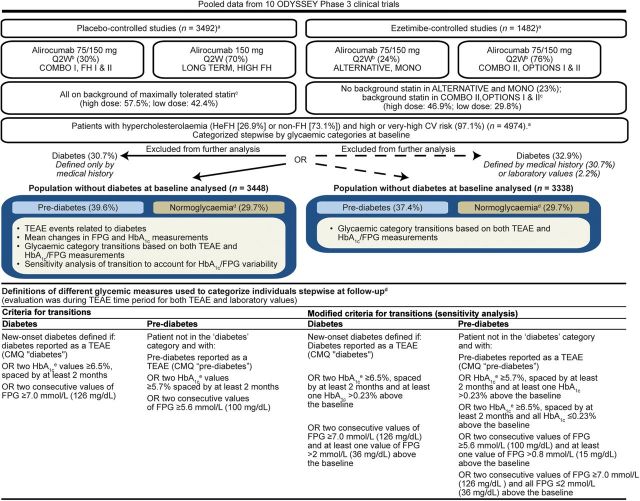
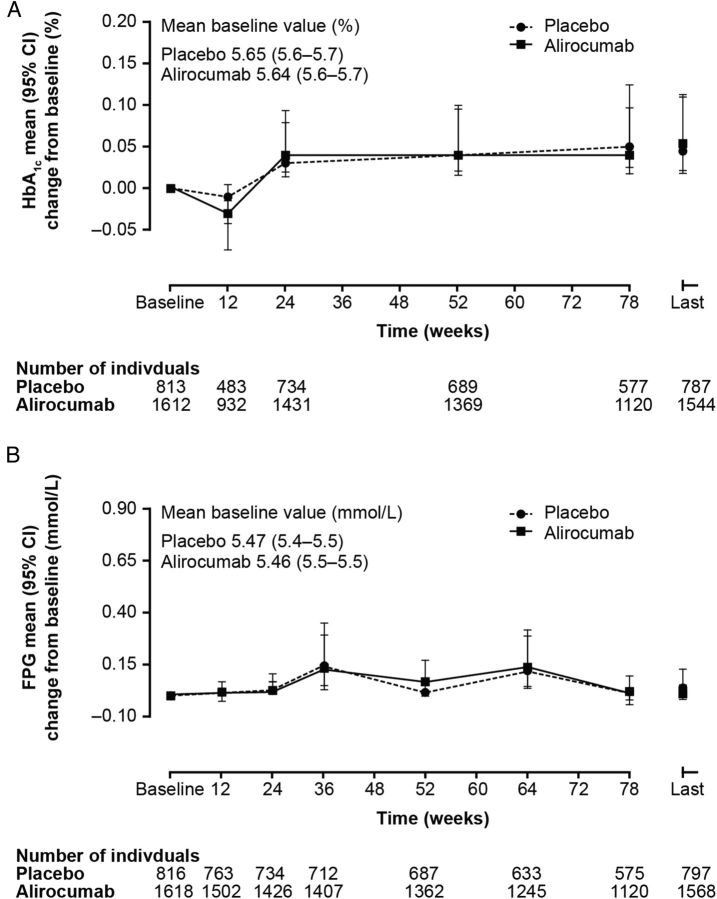
Statins have modest adverse effects on glycaemic control. Alirocumab, a proprotein convertase subtilisin/kexin type 9 inhibitor, lowers low-density lipoprotein cholesterol. This study assessed the effects of alirocumab on new-onset diabetes and pre-diabetes incidence in individuals without diabetes at baseline. Pooled analysis of 10 ODYSSEY Phase 3 trials (n = 4974) of 24–104 weeks duration. Six trials (n = 4211) were ≥52 weeks in length. Most patients received background maximally tolerated statin. Alirocumab effect on the rate of diabetes-related treatment-emergent adverse events (TEAEs), and/or fasting plasma glucose (FPG) and glycated haemoglobin A1C (HbA1C) was measured at baseline and every 12–24 weeks. Transition to diabetes analysis combined TEAE and FPG/HbA1C laboratory data. At baseline, 30.7% of individuals had diabetes and were excluded from the current analysis. The remaining 3448 individuals without diabetes had pre-diabetes (39.6%) or were normoglycaemic (29.7%). The hazard ratio (HR; 95% confidence interval) for diabetes-related TEAEs in alirocumab was 0.64 (0.36–1.14) vs. placebo and 0.55 (0.22–1.41) vs. ezetimibe. The HR associated for transition from pre-diabetes to new-onset diabetes for alirocumab was 0.90 (0.63–1.29) vs. placebo and 1.10 (0.57–2.12) vs. ezetimibe. Mean change in FPG/HbA1C over time showed no difference between treatment groups in patients without diabetes. There was no evidence of an effect of alirocumab on transition to new-onset diabetes in 3448 individuals without diabetes at baseline with a follow-up period of 6–18 months, compared to either placebo or ezetimibe. Longer follow-up with larger number of individuals is needed to conclusively rule out an effect.
Overview
The claims and statistics of this paper haven’t been checked yet.
Free: it reads the open-access text and checks the first 5 claims that cite a source we can check. Create a free account to check every claim.
Integrity signals
Registry
Cites
Statistics
Figures
Verification
Claims the paper makes
The claims and statistics of this paper haven’t been checked yet.
Free: it reads the open-access text and checks the first 5 claims that cite a source we can check. Create a free account to check every claim.
Claims other papers make about this one
Each is checked against this paper’s own text: does it say what the citing paper says it does?
The cited source says what the claim attributes to it.
In the citing paper
“Mendelian randomisation analyses 8,20,21 have shown that genetically determined loss of function of PCSK9 is associated with an increased risk of incident diabetes, but clinical trials of PCSK9 inhibitors have shown no such effect.9”
Self-check
Percentages, sums and reported differences re-computed from the paper’s own numbers.
The self-check needs the paper’s full text.
Citations
Cites
European Guidelines on cardiovascular disease prevention in clinical practice (version 2012)
Authors/Task Force Members:, Perk, J., De Backer, G., Gohlke, H., Graham, I., Reiner, Ž., Verschuren, M., Albus, C., Benlian, P., Boysen, G., et al. (2012) · European Heart Journal · doi:10.1093/eurheartj/ehs092 · Cited by 8,490
Rosuvastatin to Prevent Vascular Events in Men and Women with Elevated C-Reactive Protein
Ridker, P. M., Danielson, E., Fonseca, F. A. H., Genest, J., Gotto, A. M., Kastelein, J. J. P., Koenig, W., Libby, P., Lorenzatti, A. J., MacFadyen, J. G., et al. (2008) · New England Journal of Medicine · doi:10.1056/nejmoa0807646 · Cited by 6,674 · cited 1×
“15 000 individuals at 24 months exposure.(3,4) In the Collaborative Atorvastatin in”
BackgroundAuthors/Task Force Members, Graham, I., Atar, D., Borch-Johnsen, K., Boysen, G., Burell, G., Cifkova, R., Dallongeville, J., De Backer, G., Ebrahim, S., et al. (2007) · European Heart Journal · doi:10.1093/eurheartj/ehm316 · Cited by 3,753
Rosuvastatin to Prevent Vascular Events in Men and Women With Elevated C-Reactive Protein
Ridker, P. M., Danielson, E., Fonseca, F. A. H., Genest, J., Gotto, A. M., Kastelein, J. J. P., Koenig, W., Libby, P., Lorenzatti, A. J., MacFadyen, J. G., et al. (2009) · Obstetrical & Gynecological Survey · doi:10.1097/01.ogx.0000344393.60303.0a · Cited by 3,641
ESC/EAS Guidelines for the management of dyslipidaemias
Reiner, Ž., Catapano, A. L., De Backer, G., Graham, I., Taskinen, M.-R., Wiklund, O., Agewall, S., Alegria, E., Chapman, M. J., Durrington, P., et al. (2011) · European Heart Journal · doi:10.1093/eurheartj/ehr158 · Cited by 3,549
Standards of medical care in diabetes 2010
American Diabetes Association (2010) · Diabetes Care · doi:10.2337/dc10-s011 · Cited by 3,470
Statins and risk of incident diabetes: A collaborative meta-analysis of randomised statin trials
Sattar, N., Preiss, D., Murray, H. M., Welsh, P., Buckley, B. M., de Craen, A. J., Seshasai, S. R. K., McMurray, J. J., Freeman, D. J., Jukema, J. W., et al. (2010) · The Lancet · doi:10.1016/s0140-6736(09)61965-6 · Cited by 2,436 · cited 2×
“a meta-analyses with 91 140 participants followed for an average of 4 years.(5) In a subsequent analysis of five statin trials (n 1⁄4 32 752) with a weighted mean (standard deviation [SD]) follow-up of 4.”
BackgroundMethodEfficacy and Safety of Alirocumab in Reducing Lipids and Cardiovascular Events
Robinson, J. G., Farnier, M., Krempf, M., Bergeron, J., Luc, G., Averna, M., Stroes, E. S., Langslet, G., Raal, F. J., El Shahawy, M., et al. (2015) · New England Journal of Medicine · doi:10.1056/nejmoa1501031 · Cited by 2,296
Self-citationPreiss, D. (2011) · JAMA · doi:10.1001/jama.2011.860 · Cited by 1,390
Ridker, P. M., Pradhan, A., MacFadyen, J. G., Libby, P., & Glynn, R. J. (2012) · The Lancet · doi:10.1016/s0140-6736(12)61190-8 · Cited by 816 · cited 2×
“99).(4) Since the initial JUPITER report, several meta-analyses reported a small increase in the risk of statin-associated diabetes.”
Background
Cited by
Sabatine, M. S., Leiter, L. A., Wiviott, S. D., Giugliano, R. P., Deedwania, P., De Ferrari, G. M., Murphy, S. A., Kuder, J. F., Gouni-Berthold, I., Lewis, B. S., et al. (2017) · The Lancet Diabetes & Endocrinology · doi:10.1016/s2213-8587(17)30313-3 · Cited by 603
Self-citationPCSK9 genetic variants and risk of type 2 diabetes: a mendelian randomisation study
Schmidt, A. F., Swerdlow, D. I., Holmes, M. V., Patel, R. S., Fairhurst-Hunter, Z., Lyall, D. M., Hartwig, F. P., Horta, B. L., Hyppönen, E., Power, C., et al. (2017) · The Lancet Diabetes & Endocrinology · doi:10.1016/s2213-8587(16)30396-5 · Cited by 380
Mach, F., Ray, K. K., Wiklund, O., Corsini, A., Catapano, A. L., Bruckert, E., De Backer, G., Hegele, R. A., Hovingh, G. K., Jacobson, T. A., et al. (2018) · European Heart Journal · doi:10.1093/eurheartj/ehy182 · Cited by 370
Self-citationRay, K. K., Colhoun, H. M., Szarek, M., Baccara-Dinet, M., Bhatt, D. L., Bittner, V. A., Budaj, A. J., Diaz, R., Goodman, S. G., Hanotin, C., et al. (2019) · The Lancet Diabetes & Endocrinology · doi:10.1016/s2213-8587(19)30158-5 · Cited by 315
Self-citationPCSK9: From Basic Science Discoveries to Clinical Trials
Shapiro, M. D., Tavori, H., & Fazio, S. (2018) · Circulation Research · doi:10.1161/circresaha.118.311227 · Cited by 285
Karatasakis, A., Danek, B. A., Karacsonyi, J., Rangan, B. V., Roesle, M. K., Knickelbine, T., Miedema, M. D., Khalili, H., Ahmad, Z., Abdullah, S., et al. (2017) · Journal of the American Heart Association · doi:10.1161/jaha.117.006910 · Cited by 215
Targeting proprotein convertase subtilisin/kexin type 9 (PCSK9): From bench to bedside
Bao, X., Liang, Y., Chang, H., Cai, T., Feng, B., Gordon, K., Zhu, Y., Shi, H., He, Y., & Xie, L. (2024) · Signal Transduction and Targeted Therapy · doi:10.1038/s41392-023-01690-3 · Cited by 187
Leiter, L. A., Cariou, B., Müller‐Wieland, D., Colhoun, H. M., Del Prato, S., Tinahones, F. J., Ray, K. K., Bujas‐Bobanovic, M., Domenger, C., Mandel, J., et al. (2017) · Diabetes, Obesity and Metabolism · doi:10.1111/dom.13114 · Cited by 139
Self-citationRay, K. K., Leiter, L. A., Müller‐Wieland, D., Cariou, B., Colhoun, H. M., Henry, R. R., Tinahones, F. J., Bujas‐Bobanovic, M., Domenger, C., Letierce, A., et al. (2018) · Diabetes, Obesity and Metabolism · doi:10.1111/dom.13257 · Cited by 102
Self-citationCan LDL cholesterol be too low? Possible risks of extremely low levels
Olsson, A. G., Angelin, B., Assmann, G., Binder, C. J., Björkhem, I., Cedazo‐Minguez, A., Cohen, J., von Eckardstein, A., Farinaro, E., Müller‐Wieland, D., et al. (2017) · Journal of Internal Medicine · doi:10.1111/joim.12614 · Cited by 100
Self-citationSafety of Alirocumab (A PCSK9 Monoclonal Antibody) from 14 Randomized Trials
Jones, P. H., Bays, H. E., Chaudhari, U., Pordy, R. C., Lorenzato, C., Miller, K., & Robinson, J. G. (2016) · The American Journal of Cardiology · doi:10.1016/j.amjcard.2016.08.072 · Cited by 100
“Furthermore, alirocumab does not increase incidence of new-onset diabetes based on phase 3 data.(18) Although our analysis did not find any neurocognitive event differences between alirocumab and placebo/ezetimibe, a network meta-analysis of phase 2 and 3 trials with alirocumab and evolocumab did find the incidence of…”
BackgroundSelf-citationHandelsman, Y., & Lepor, N. E. (2018) · Journal of the American Heart Association · doi:10.1161/jaha.118.008953 · Cited by 86
Deedwania, P., Murphy, S. A., Scheen, A., Badariene, J., Pineda, A. L., Honarpour, N., Keech, A. C., Sever, P. S., Pedersen, T. R., Sabatine, M. S., et al. (2021) · JAMA Cardiology · doi:10.1001/jamacardio.2020.3151 · Cited by 83
“001) and without MetS (median [interquartile range], 92 [81-108] mg/dL vs 29 [18-44] mg/dl; P < .”
BackgroundMacchi, C., Banach, M., Corsini, A., Sirtori, C., Ferri, N., & Ruscica, M. (2019) · European Journal of Preventive Cardiology · doi:10.1177/2047487319831500 · Cited by 75
The Role of High-Density Lipoproteins in Diabetes and Its Vascular Complications
Wong, N. K. P., Nicholls, S. J., Tan, J. T. M., & Bursill, C. A. (2018) · International Journal of Molecular Sciences · doi:10.3390/ijms19061680 · Cited by 81
“Fortunately, this effect has not been borne out in clinical trials [133,138,139], with an overall efficacy and safety profile that makes PCSK9 inhibitors very promising as future therapeutic agents.”
BackgroundLipids and peripheral neuropathy
Iqbal, Z., Bashir, B., Ferdousi, M., Kalteniece, A., Alam, U., Malik, R. A., & Soran, H. (2021) · Current Opinion in Lipidology · doi:10.1097/mol.0000000000000770 · Cited by 82
Diabetogenic Action of Statins: Mechanisms
Carmena, R., & Betteridge, D. J. (2019) · Current Atherosclerosis Reports · doi:10.1007/s11883-019-0780-z · Cited by 85
Therapeutic targets of hypercholesterolemia: HMGCR and LDLR
Ma, S., Sun, W., Gao, L., & Liu, S. (2019) · Diabetes Metabolic Syndrome and Obesity · doi:10.2147/dmso.s219013 · Cited by 80
Rosenson, R. S., Daviglus, M. L., Handelsman, Y., Pozzilli, P., Bays, H., Monsalvo, M. L., Elliott-Davey, M., Somaratne, R., & Reaven, P. (2019) · Diabetologia · doi:10.1007/s00125-019-4856-7 · Cited by 73
Emerging Non-statin Treatment Options for Lowering Low-Density Lipoprotein Cholesterol
Bardolia, C., Amin, N. S., & Turgeon, J. (2021) · Frontiers in Cardiovascular Medicine · doi:10.3389/fcvm.2021.789931 · Cited by 74
“To date, no clinical trials have demonstrated an increase rate of diabetes with PCSK9 inhibitor use (11, 56, 57).”
BackgroundLeiter, L. A., Banach, M., Catapano, A. L., Duell, P. B., Gotto, A. M., Laufs, U., Mancini, G. B. J., Ray, K. K., Hanselman, J. C., Ye, Z., et al. (2022) · Diabetes Obesity and Metabolism · doi:10.1111/dom.14645 · Cited by 74
“Criteria for the glycaemic control subgroups are consistent with standard of care guidelines and are similar to definitions used for studies investigating the effect of other LLTs on glycaemic control.(28,29) Changes from baseline in HbA1c levels and fasting glucose levels were assessed.”
MethodSelf-citationUpdated Understanding of the Crosstalk Between Glucose/Insulin and Cholesterol Metabolism
Xiao, X., Luo, Y., & Peng, D. (2022) · Frontiers in Cardiovascular Medicine · doi:10.3389/fcvm.2022.879355 · Cited by 70
PCSK9 and diabetes: is there a link?
Momtazi‐Borojeni, A. A., Banach, M., Pirro, M., Stein, E. A., & Sahebkar, A. (2017) · Drug Discovery Today · doi:10.1016/j.drudis.2017.01.006 · Cited by 65
New Perspectives on Atherogenic Dyslipidaemia and Cardiovascular Disease
Lorenzatti, A. J., & Toth, P. P. (2020) · European Cardiology Review · doi:10.15420/ecr.2019.06 · Cited by 72
Cao, Y., Liu, H., Dong, Q., Li, S., & Li, J. (2018) · Diabetes, Obesity and Metabolism · doi:10.1111/dom.13235 · Cited by 61
“Additionally, Colhoun et al16 and Sattar et al17 separately reported the results of pooled analysis concerning the association between diabetes risk and alirocumab or evolocumab.”
ResultKoh, K. K., Nam, C. W., Chao, T.-H., Liu, M.-E., Wu, C.-J., Kim, D.-S., Kim, C.-J., Li, I., Li, J., Baccara-Dinet, M. T., et al. (2018) · Journal of Clinical Lipidology · doi:10.1016/j.jacl.2017.09.007 · Cited by 63
“In a previously published analysis including 10 phase 3 studies from the ODYSSEY program (n 5 3448), no evidence was found that alirocumab affects the incidence of new-onset diabetes and the hemoglobin A1c levels in patients with no diabetes at baseline with a follow-up period of 6 to 18 months.(28) The occurrence of…”
Self-citationDaniels, S. R., Caprio, S., Chaudhari, U., Manvelian, G. Z., Baccara‐Dinet, M. T., Brunet, A., Scemama, M., Loizeau, V., & Bruckert, É. (2020) · Journal of clinical lipidology · doi:10.1016/j.jacl.2020.03.001 · Cited by 65
Self-citationRao, A. S., Lindholm, D., Rivas, M. A., Knowles, J. W., Montgomery, S. B., & Ingelsson, E. (2018) · Circulation: Genomic and Precision Medicine · doi:10.1161/circgen.118.002162 · Cited by 60
Yang, S.-H., Xu, R.-X., Cui, C.-J., Wang, Y., Du, Y., Chen, Z.-G., Yao, Y.-H., Ma, C.-Y., Zhu, C.-G., Guo, Y.-L., et al. (2018) · Cardiovascular Diabetology · doi:10.1186/s12933-018-0689-9 · Cited by 56
“Furthermore, clinical trials showed that PCSK9 inhibitors did not increase the risk of onset-diabetes [14, 15], whereas genetics studies exhibited a link between PCSK9 genetic variants and risk of type 2 diabetes [16, 17].”
BackgroundTang, Y., Li, S.-L., Hu, J.-H., Sun, K.-J., Liu, L.-L., & Xu, D.-Y. (2020) · Cardiovascular Diabetology · doi:10.1186/s12933-020-01009-4 · Cited by 51
Leiter, L. A., Zamorano, J. L., Bujas‐Bobanovic, M., Louie, M. J., Lecorps, G., Cannon, C. P., & Handelsman, Y. (2017) · Diabetes Obesity and Metabolism · doi:10.1111/dom.12909 · Cited by 50
“Furthermore, a pooled analysis of 10 ODYSSEY trials (including the COMBO II study) did not reveal an increase in new-onset diabetes or adverse changes in glycaemic parameters with alirocumab treatment.(11) A recently published study of the effects of the PCSK9 inhibitor evolocumab in patients with DM also found consis…”
Self-citationPCSK9 inhibitors and cardiovascular outcomes
Steffens, D., Bramlage, P., Scheeff, C., Kasner, M., Hassanein, A., Friebel, J., & Rauch-Kröhnert, U. (2020) · Expert Opinion on Biological Therapy · doi:10.1080/14712598.2020.1677604 · Cited by 43
“Alirocumab did not increase the incidence of new-onset diabetes [48].”
BackgroundBeyond LDL: What Role for PCSK9 in Triglyceride-Rich Lipoprotein Metabolism?
Dijk, W., May, C. L., & Cariou, B. (2018) · Trends in Endocrinology and Metabolism · doi:10.1016/j.tem.2018.03.013 · Cited by 53
Self-citationKhoury, P. E., Elbitar, S., Ghaleb, Y., Khalil, Y. A., Varret, M., Boileau, C., & Abifadel, M. (2017) · Current Atherosclerosis Reports · doi:10.1007/s11883-017-0684-8 · Cited by 52
Cardiovascular disease prevention strategies for type 2 diabetes mellitus
Katsiki, N., Purrello, F., Tsioufis, C., & Mikhailidis, D. P. (2017) · Expert Opinion on Pharmacotherapy · doi:10.1080/14656566.2017.1351946 · Cited by 42
“In this context, a recent meta-analysis showed that the risk for NOD significantly increased when a greater LDL-C reduction was achieved, that is, from 13% to 29% in the subgroups with 30–40% and 40–50% LDL-C lowering, respectively [118].”
BackgroundInfluentialLorenzatti, A. J., Eliaschewitz, F. G., Chen, Y., Lu, J., Baass, A. W., Monsalvo, M. L., Wang, N., Hamer, A. W., & Ge, J. (2019) · Diabetes Obesity and Metabolism · doi:10.1111/dom.13680 · Cited by 44
“Likewise, an open-label study and two pooled analyses of ODYSSEY phase 3 studies showed that treatment with alirocumab had no notable effect on measures of glycaemic control (HbA1c or FPG) in patients with or without diabetes.(37,42,43) In a systematic review and meta-analysis including 18 randomised studies with evol…”
BackgroundSattar, N. A., Toth, P. P., Blom, D. J., Koren, M. J., Soran, H., Uhart, M., Elliott, M., Cyrille, M., Somaratne, R. M., & Preiss, D. (2017) · The American Journal of Cardiology · doi:10.1016/j.amjcard.2017.07.047 · Cited by 42
Hyperglycaemic disorders associated with PCSK9 inhibitors: a real-world, pharmacovigilance study
Goldman, A., Raschi, E., Cukierman‐Yaffe, T., Dankner, R. S., Shouval, R., Shechter, M., Ben‐Zvi, I., Gerstein, H. C., & Maor, E. (2021) · European Journal of Preventive Cardiology · doi:10.1093/eurjpc/zwab209 · Cited by 38
Alirocumab for the treatment of hypercholesterolemia
Tomlinson, B., Hu, M., Zhang, Y., Chan, P., & Liu, Z.-M. (2017) · Expert Opinion on Biological Therapy · doi:10.1080/14712598.2017.1305354 · Cited by 38
“This has been examined carefully with alirocumab and in a pooled analysis of 10 ODYSSEY Phase III trials, there was no evidence of an effect of alirocumab on transition to new-onset diabetes in 3448 individuals without diabetes at baseline with a follow-up period of 6–18 months, compared to either placebo or ezetimibe…”
MethodPCSK9 Inhibition to Reduce Cardiovascular Events
Dullaart, R. P. F. (2017) · New England Journal of Medicine · doi:10.1056/nejme1703138 · Cited by 37
Eisenga, M. F., Zelle, D. M., Sloan, J. H., Gaillard, S., Bakker, S. J. L., & Dullaart, R. P. F. (2017) · Diabetes Care · doi:10.2337/dc16-2258 · Cited by 35
“In comparison, 6–18 months of treatment with the PCSK9 inhibitor alirocumab did not affect transition to new-onset diabetes in populations at high cardiovascular risk, but longer follow-up is required to more conclusively rule out any association (32).”
BackgroundCirculating PCSK9 levels are not associated with the conversion to type 2 diabetes
Ramin‐Mangata, S., Wargny, M., Pichelin, M., May, C. L., Thedrez, A., Blanchard, V., Nativel, B., Santos, R. D., Benseñor, I. M., Lotufo, P. A., et al. (2019) · Atherosclerosis · doi:10.1016/j.atherosclerosis.2019.11.027 · Cited by 35
Self-citationLeiter, L. A., Müller‐Wieland, D., Baccara‐Dinet, M. T., Letierce, A., Samuel, R., & Cariou, B. (2017) · Diabetic Medicine · doi:10.1111/dme.13450 · Cited by 34
Self-citationColhoun, H. M., Leiter, L. A., Müller-Wieland, D., Cariou, B., Ray, K. K., Tinahones, F. J., Domenger, C., Letierce, A., Israel, M., Samuel, R., et al. (2020) · Cardiovascular Diabetology · doi:10.1186/s12933-020-0991-1 · Cited by 33
Self-citationTaskinen, M., Prato, S. D., Bujas‐Bobanovic, M., Louie, M. J., Letierce, A., Thompson, D. E., & Colhoun, H. M. (2018) · Atherosclerosis · doi:10.1016/j.atherosclerosis.2018.07.017 · Cited by 34
Self-citationEfficacy and safety of PCSK9 monoclonal antibodies: an evidence-based review and update
Kaddoura, R., Orabi, B., & Salam, A. M. (2020) · Journal of Drug Assessment · doi:10.1080/21556660.2020.1801452 · Cited by 34
Chen, Y., Yuan, Z., Lu, J., Eliaschewitz, F. G., Lorenzatti, A. J., Monsalvo, M. L., Wang, N., Hamer, A. W., & Ge, J. (2019) · Diabetes Obesity and Metabolism · doi:10.1111/dom.13700 · Cited by 33
A phenome-wide association study to discover pleiotropic effects of PCSK9, APOB, and LDLR
Safarova, M. S., Satterfield, B. A., Fan, X., Austin, E. E., Ye, Z., Bastarache, L. A., Zheng, N. S., Ritchie, M. D., Borthwick, K. M., Williams, M. S., et al. (2019) · npj Genomic Medicine · doi:10.1038/s41525-019-0078-7 · Cited by 32
Müller‐Wieland, D., Leiter, L. A., Cariou, B., Letierce, A., Colhoun, H. M., Prato, S. D., Henry, R. R., Tinahones, F. J., Aurand, L. A., Maroni, J. M., et al. (2017) · Cardiovascular Diabetology · doi:10.1186/s12933-017-0552-4 · Cited by 30
“Sub-analyses of individual and pooled data from ODYSSEY Phase 3 studies showed a similar efficacy and safety profile in individuals receiving alirocumab with and without DM [30, 31], with no effect on glycaemic control [32].”
BackgroundSelf-citationRamin-Mangata, S., Thedrez, A., Nativel, B., Diotel, N., Blanchard, V., Wargny, M., Aguesse, A., Billon-Crossouard, S., Vindis, C., Le May, C., et al. (2021) · Atherosclerosis · doi:10.1016/j.atherosclerosis.2021.03.044 · Cited by 28
Self-citationPharmacological management of diabetic dyslipidemia
Filippatos, T. D., Florentin, M., Georgoula, M., & Elisaf, M. (2016) · Expert Review of Clinical Pharmacology · doi:10.1080/17512433.2017.1263565 · Cited by 33
“adverse events and/or fasting plasma glucose and HbA1c at baseline and every 12–24 weeks [177].”
BackgroundCybulska, B., Kłosiewicz−Latoszek, L., Penson, P. E., Nabavi, S. M., Lavie, C. J., & Banach, M. (2020) · Progress in Cardiovascular Diseases · doi:10.1016/j.pcad.2020.12.008 · Cited by 35
Cariou, B., Leiter, L. A., Müller‐Wieland, D., Bigot, G., Colhoun, H. M., Prato, S. D., Henry, R. R., Tinahones, F. J., Letierce, A., Aurand, L. A., et al. (2017) · Diabetes & Metabolism · doi:10.1016/j.diabet.2017.01.004 · Cited by 29
Self-citationGinsberg, H. N., Farnier, M., Robinson, J. G., Cannon, C. P., Sattar, N. A., Baccara‐Dinet, M. T., Letierce, A., Bujas‐Bobanovic, M., Louie, M. J., & Colhoun, H. M. (2018) · Diabetes Therapy · doi:10.1007/s13300-018-0439-8 · Cited by 28
Self-citationSafety of the PCSK9 inhibitor alirocumab: insights from 47 296 patient-years of observation
Goodman, S. G., Steg, P. G., Szarek, M. J., Bhatt, D. L., Bittner, V., Díaz, R., Harrington, R. A., Jukema, J. W., White, H. D., Zeiher, A. M., et al. (2024) · European Heart Journal - Cardiovascular Pharmacotherapy · doi:10.1093/ehjcvp/pvae025 · Cited by 29
Self-citationPEARL: A Non-interventional Study of Real-World Alirocumab Use in German Clinical Practice
Parhofer, K. G., von Stritzky, B., Pietschmann, N., Dorn, C., & Paar, W. D. (2019) · Drugs - Real World Outcomes · doi:10.1007/s40801-019-0158-0 · Cited by 28
Page, M. M., & Watts, G. F. (2017) · Diabetes Obesity and Metabolism · doi:10.1111/dom.13070 · Cited by 29
“No increase in rates of incident diabetes or prediabetes was observed, but maximum follow-up was only 18 months.(111) Diabetes has also not emerged as a treatment-related adverse effect in phase III trials of evolocumab.”
BackgroundBai, J., Gong, L., Li, Q., & Wang, Z. (2018) · Journal of clinical lipidology · doi:10.1016/j.jacl.2018.01.004 · Cited by 26
Alirocumab safety in people with and without diabetes mellitus: pooled data from 14 ODYSSEY trials
Leiter, L. A., Tinahones, F. J., Karalis, D. G., Bujas‐Bobanovic, M., Letierce, A., Mandel, J., Samuel, R., & Jones, P. H. (2018) · Diabetic Medicine · doi:10.1111/dme.13817 · Cited by 25
Self-citationBococizumab for the treatment of hypercholesterolaemia
Ferri, N., Corsini, A., Sirtori, C. R., & Ruscica, M. (2017) · Expert Opinion on Biological Therapy · doi:10.1080/14712598.2017.1279602 · Cited by 26
“Although randomized controlled trials with PCSK9 antagonists showed no evidence of increased development of diabetes [53], PCSK9 genetic variants, associated with lower LDL-C, positively correlated to an increased risk of type-2 diabetes mellitus [54].”
BackgroundImpact of PCSK9 inhibitors in glycaemic control and new-onset diabetes
González-Lleó, A. M., Sánchez-Hernández, R. M., Plana, N., Ibarretxe, D., Rehues, P., Ribalta, J., Llop, D., Wägner, A. M., Masana, L., & Boronat, M. (2024) · Cardiovascular Diabetology · doi:10.1186/s12933-023-02077-y · Cited by 23
“Large-scale clinical studies conducted to date have not observed a higher incidence of diabetes mellitus (DM) among participants treated with PCSK9i [12, 13].”
BackgroundResultChen, Q., Wu, G., Li, C., Qin, X., Liu, R., & Zhang, M. (2019) · American Journal of Cardiovascular Drugs · doi:10.1007/s40256-019-00386-w · Cited by 23
Pleiotropic effects of proprotein convertase subtilisin/kexin type 9 inhibitors?
Filippatos, T. D., Christopoulou, E. C., & Elisaf, M. (2018) · Current Opinion in Lipidology · doi:10.1097/mol.0000000000000523 · Cited by 22
Das, A. K., Saboo, B., & Unnikrishnan, A. (2021) · Diabetes Metabolic Syndrome and Obesity · doi:10.2147/dmso.s294842 · Cited by 21
Galis, P., Bartosova, L., Farkašová, V., Barteková, M., Ferenczyová, K., & Rajtík, T. (2024) · Frontiers in Endocrinology · doi:10.3389/fendo.2024.1451100 · Cited by 21
Dufour, R., Bergeron, J., Gaudet, D., Weiss, R., Hovingh, G. K., Qing, Z., Yang, F., Andisik, M. D., Torri, A., Pordy, R. C., et al. (2016) · International Journal of Cardiology · doi:10.1016/j.ijcard.2016.11.046 · Cited by 24
Self-citationPCSK9 inhibition: the dawn of a new age in cholesterol lowering?
Preiss, D., & Mafham, M. (2016) · Diabetologia · doi:10.1007/s00125-016-4178-y · Cited by 25
Ganda, O. P., Plutzky, J., Sanganalmath, S. K., Bujas‐Bobanovic, M., Koren, A., Mandel, J., Letierce, A., & Leiter, L. A. (2018) · Diabetes Obesity and Metabolism · doi:10.1111/dom.13384 · Cited by 22
“and previous sub-analyses that revealed no effect of alirocumab on glycaemic parameters(31,33,45) or no increase in new-onset DM compared with controls.(45) Furthermore, in a recent meta-analysis of”
ResultSelf-citationLamantia, V., Bissonnette, S., Wassef, H., Cyr, Y., Baass, A. W., Dufour, R., RABASA-LHORET, R. P. R., & Faraj, M. (2016) · Journal of clinical lipidology · doi:10.1016/j.jacl.2016.09.013 · Cited by 25
PCSK9 monoclonal antibodies: An overview
Kaddoura, R., Orabi, B., & Salam, A. M. (2020) · Heart Views · doi:10.4103/heartviews.heartviews_20_20 · Cited by 21
“HEART VIEWS Volume 21 / Issue 2 / April-June 2020 101 increase in diabetes incidence,[58,65] the current body of evidence[1,60,65] did not prove that alirocumab[33,55,59,66] nor evolocumab[48,57,67-70] use would significantly increase the incidence of new-onset diabetes or worsen the preexisting diabetic condition.”
BackgroundChen, T., Wang, Z., Xie, J., Xiao, S., Li, W., & Liu, N. (2023) · Nutrition Metabolism and Cardiovascular Diseases · doi:10.1016/j.numecd.2023.05.033 · Cited by 20
PCSK9 and carbohydrate metabolism: A double-edged sword
Filippatos, T. D., Filippas-Ntekouan, S., Pappa, E. T., Panagiotopoulou, T., Tsimihodimos, V., & Elisaf, M. (2017) · World Journal of Diabetes · doi:10.4239/wjd.v8.i7.311 · Cited by 20
Unexplained reciprocal regulation of diabetes and lipoproteins
Higuchi, S., Izquierdo, M. C., & Haeusler, R. A. (2018) · Current Opinion in Lipidology · doi:10.1097/mol.0000000000000521 · Cited by 20
Dijk, W., & Cariou, B. (2019) · Diabetes Obesity and Metabolism · doi:10.1111/dom.13636 · Cited by 20
“No evidence was found for an increased transition from normoglycaemia to pre-diabetes or towards diabetes, based on treatment-emergent adverse effects (TEAEs) or the composite of TEAEs with threshold values for HbA1c or fasting plasma glucose levels.(92) In a pre-specified secondary analysis of the FOURIER trial, the…”
BackgroundMethodSelf-citationHepatocyte Rap1a contributes to obesity- and statin-associated hyperglycemia
Wang, Y., Spolitu, S., Zadroga, J. A., Sarecha, A. K., & Özcan, L. (2022) · Cell Reports · doi:10.1016/j.celrep.2022.111259 · Cited by 19
“Clinical trials of PCSK9 inhibitors did not show an effect of these drugs on glycemia or T2D diagnosis; however, an increase in T2D risk has been observed in individuals with PCSK9 loss-of-function variants (Colhoun et al., 2016; Ference et al., 2016; Lotta et al., 2016; Sabatine et al., 2017; Sattar et al., 2017; Sch…”
Lorenzatti, A. J., Eliaschewitz, F. G., Chen, Y., Fialkow, J. A., Lu, J., Baass, A. W., Monsalvo, M. L., Hsu, H., Somaratne, R. M., & Ge, J. (2018) · Clinical Cardiology · doi:10.1002/clc.23018 · Cited by 18
Paquette, M., Saavedra, Y. G. L., Chamberland, A., Prat, A., Christensen, D. L., Lajeunesse‐Trempe, F., Kaduka, L. U., Seidah, N. G., Dufour, R., & Baass, A. W. (2017) · Metabolic Syndrome and Related Disorders · doi:10.1089/met.2017.0027 · Cited by 19
Alirocumab for the treatment of hyperlipidemia in high-risk patients: an updated review
Farnier, M. (2017) · Expert Review of Cardiovascular Therapy · doi:10.1080/14779072.2017.1409115 · Cited by 18
“duration, there was no evidence of an effect of alirocumab on the incidence of new-onset diabetes in 3448 individuals without diabetes at baseline [59].”
BackgroundHenry, R. R., Müller‐Wieland, D., Taub, P. R., Bujas‐Bobanovic, M., Louie, M. J., Letierce, A., & Ginsberg, H. N. (2018) · Diabetes Obesity and Metabolism · doi:10.1111/dom.13273 · Cited by 19
“Furthermore, a pooled analysis of 10 ODYSSEY phase 3 studies, with follow-up periods of between 24 and 104 weeks, indicated that there was no evidence of an effect of alirocumab on the transition to new-onset diabetes in those individuals without diabetes or with pre-diabetes at baseline.(33) Also of note, subgroup an…”
MethodSelf-citationGirolamo, F. G. D., Pellin, L., Roni, C., Biolo, G., Sinagra, G., & Fabris, E. (2025) · European Journal of Internal Medicine · doi:10.1016/j.ejim.2025.106442 · Cited by 16
Saitoski, K., Ryaboshapkina, M., Hamza, G. M., Jarnuczak, A. F., Berthault, C., Carlotti, F., Armanet, M., Sengupta, K., Underwood, C. R., Andersson, S., et al. (2022) · Journal of Biological Chemistry · doi:10.1016/j.jbc.2022.102096 · Cited by 14
Impact of PCSK9 Immunization on Glycemic Indices in Diabetic Rats
Momtazi‐Borojeni, A. A., Jaafari, M. R., Abdollahi, E., Banach, M., & Sahebkar, A. (2021) · Journal of Diabetes Research · doi:10.1155/2021/4757170 · Cited by 15
PCSK9 Inhibition in Atherosclerotic Cardiovascular Disease
Delialis, D., Dimopoulou, M., Papaioannou, M., Kotsira, G., Maneta, E., Mavraganis, G., Loutos, C., Georgiopoulos, G. A., & Stamatelopoulos, K. S. (2023) · Current Pharmaceutical Design · doi:10.2174/1381612829666230412105238 · Cited by 14
Farnier, M. (2016) · Current Opinion in Lipidology · doi:10.1097/mol.0000000000000356 · Cited by 13
Molecular and cellular biology of PCSK9: impact on glucose homeostasis
Tcheoubi, S. E. R., Akpovi, C. D., Coppée, F., Declèves, A., Laurent, S., Agbangla, C., & Burtéa, C. (2022) · Journal of drug targeting · doi:10.1080/1061186x.2022.2092622 · Cited by 13
“First of all, it is worthy to mention that in spite of the FOURNieR and ODiSSeY studies [11, 12, 145] and the OLSeR-1 extension study [146] that support the absence of link of PCSK9i with new onset T2DM, a meta-analysis of 20 phase 2/3 randomised clinical trials assessing PCSK9i versus placebo with…”
ResultPCSK9 inhibitors: a non-statin cholesterol-lowering treatment option
Pokrywka, G. S. (2018) · Postgraduate Medicine · doi:10.1080/00325481.2018.1436843 · Cited by 13
“[85] and in >3300 individuals with prediabetes or normogly-”
BackgroundTeramoto, T., Usami, M., Takagi, Y., Baccara‐Dinet, M. T., & for the ODYSSEY Japan Investigators (2018) · Journal of Atherosclerosis and Thrombosis · doi:10.5551/jat.45070 · Cited by 14
Self-citationPCSK9 Inhibitor: Safe Alternative to Fill the Treatment Gap in Statin-Limited Conditions?
Xiao, Y., Ba, Z., Pang, S., Liu, D., Wang, H., Liang, H., Wang, Y., & Yuan, J. (2022) · Reviews in Cardiovascular Medicine · doi:10.31083/j.rcm2311380 · Cited by 12
“Hence, unlike genetic variants that affect both intracellular and extracellular PCSK9 concentrations, mAbs have a limited effect on intracellular PCSK9 concentrations in pancreatic beta cells, resulting in an insignificant effect on glycemia [47,48].”
BackgroundInfluentialShapiro, M. D., Taub, P. R., Louie, M. J., Lei, L., & Ballantyne, C. M. (2023) · Atherosclerosis · doi:10.1016/j.atherosclerosis.2023.06.973 · Cited by 12
Giglio, R. V., Muzurović, E. M., Patti, A. M., Toth, P. P., Agarwal, M. A., Almahmeed, W. A., Klisic, A. N., Ciaccio, M., & Rizzo, M. (2023) · Journal of Cardiovascular Pharmacology and Therapeutics · doi:10.1177/10742484231186855 · Cited by 12
Efficacy and Safety of PCSK9 Monoclonal Antibodies in Patients With Diabetes
Marouf, B. H., Iqbal, Z., Mohamad, J. B., Bashir, B., Schofield, J. D., Syed, A. A., Kilpatrick, E. S., Stefanutti, C., & Soran, H. (2022) · Clinical Therapeutics · doi:10.1016/j.clinthera.2021.12.005 · Cited by 12
Anti-PCSK9 treatment: is ultra-low low-density lipoprotein cholesterol always good?
Noto, D., Giammanco, A., Barbagallo, C. M., Cefalu, A. B., & Averna, M. R. (2018) · Cardiovascular Research · doi:10.1093/cvr/cvy144 · Cited by 12
Association between serum PCSK9 and coronary heart disease in patients with type 2 diabetes mellitus
Huang, J., Gu, J.-X., Wang, K., Zhang, A., Hong, T.-T., Li, S.-S., Yao, X., Yang, M. J., Yin, Y., Zhang, N., et al. (2023) · Diabetology & Metabolic Syndrome · doi:10.1186/s13098-023-01238-z · Cited by 12
“In the previous FOURIER and ODYSSEY trials, long-term follow-up showed that, the PCSK9 inhibitor alirocumab was more effective in reducing the occurrence of MACEs than the placebo control group [42, 43].”
MethodAlirocumab for the treatment of hypercholesterolaemia
Pepa, G. D., Bozzetto, L., Annuzzi, G., & Rivellese, A. A. (2017) · Expert Review of Clinical Pharmacology · doi:10.1080/17512433.2017.1318063 · Cited by 13
“of developing diabetes in 3448 hypercholesterolaemic patients without diabetes during a follow-up period of 6–18 months [52]; nevertheless, the gold standard for evaluating glucose intolerance, i.”
BackgroundXu, M., Wu, X., Liu, Z., Ding, Y., Kong, W., Little, P. J., Xu, S., & Weng, J. (2022) · Biochemical and Biophysical Research Communications · doi:10.1016/j.bbrc.2022.07.031 · Cited by 11
Geranylgeranyl isoprenoids and hepatic Rap1a regulate basal and statin-induced expression of PCSK9
Wang, Y., Tinsley, B., Spolitu, S., Zadroga, J. A., Agarwal, H., Sarecha, A. K., & Özcan, L. (2024) · Journal of Lipid Research · doi:10.1016/j.jlr.2024.100515 · Cited by 10
“Although this view has been challenged by many trials using anti-PCSK9 antibodies (66, 67), a recent meta-analysis of randomized clinical trials of PCSK9 inhibitors reported a modest increase in plasma glucose and HbA1C with anti-PCSK9 antibodies (68).”
MethodBiotechnology Approaches for the Treatment of Dyslipidemia
Parolini, C. (2020) · Cardiovascular Drugs and Therapy · doi:10.1007/s10557-020-07017-6 · Cited by 10
“In line with previously published clinical trials [57, 58], the LDL-C reduction at week 24 was of 49% and 47.”
MethodNew agents to reduce cholesterol levels: implications for nephrologists
Vecchio, L. D., Baragetti, I., & Locatelli, F. (2019) · Nephrology Dialysis Transplantation · doi:10.1093/ndt/gfz013 · Cited by 9
Hypolipidemic Drugs and Diabetes Mellitus—Mechanisms and Data From Genetic Trials
Filippatos, T. D., Panagiotopoulou, T., Tzavella, E., & Elisaf, M. (2018) · Journal of Cardiovascular Pharmacology and Therapeutics · doi:10.1177/1074248418757011 · Cited by 9
Brandts, J., & Müller‐Wieland, D. (2019) · Current Atherosclerosis Reports · doi:10.1007/s11883-019-0802-x · Cited by 10
Self-citation
Metadata
- Authors
- Colhoun, H. M., Ginsberg, H. N., Robinson, J. G., Leiter, L. A., Müller-Wieland, D., Henry, R. R., Cariou, B., Baccara-Dinet, M. T., Pordy, R., Merlet, L., & Eckel, R. H.
- Affiliations
- University of Edinburgh (GB)
- Columbia University (US)
- University of Iowa (US)
- St. Michael's Hospital (CA)
- University of California San Diego (US)
- Centre Hospitalier Universitaire de Nantes (FR)
- Regeneron (United States) (US)
- Sanofi (France) (FR)
- University of Colorado Anschutz (US)
- Corresponding author
- Colhoun, Helen M.
- ORCID
- Venue
- European Heart Journal
- Publisher
- Oxford University Press (OUP)
- Published
- 2016-07-26
- Volume
- 37
- Issue
- 39
- Pages
- 2981-2989
- ISSN
- 0195-668X (ISSN-L)
- 1522-9645
- PMC
- PMC5081037
- OpenAlex
- W2486690983
- Cited by
- 172
- References
- 34
- Citations by year
- 2026: 8 · 2025: 4 · 2024: 18 · 2023: 15 · 2022: 9 · 2021: 8 · 2020: 14 · 2019: 19 · 2018: 30 · 2017: 32 · 2016: 15
- FWCI
- 35.45
- Type
- journal article
- Language
- en
- Open access
- hybrid
- doi.org
- Licence
- cc-by-nc
- Locations
- European Heart Journal (publishedVersion, cc-by-nc)
- Europe PMC (PubMed Central) (publishedVersion, cc-by-nc)
- PubMed Central (publishedVersion, cc-by-nc)
- PubMed (publishedVersion)
- HighWire Press Open Archive (submittedVersion)
- RWTH Publications (RWTH Aachen) (submittedVersion, other-oa)
- Edinburgh Research Explorer (University of Edinburgh) (submittedVersion, cc-by-nc)
- Funders
- Sanofi and Regeneron Pharmaceuticals, Inc
- Topics
- Health Sciences › Medicine › Cardiology and Cardiovascular Medicine › Lipoproteins and Cardiovascular Health
- Health Sciences › Medicine › Endocrinology, Diabetes and Metabolism › Diabetes, Cardiovascular Risks, and Lipoproteins
- Health Sciences › Medicine › Cardiology and Cardiovascular Medicine › Lipid metabolism and disorders
- Keywords
- alirocumab, PCSK9 inhibitors, new-onset diabetes, prediabetes, diabetes incidence, ezetimibe, LDL cholesterol lowering, fasting blood glucose, glycated haemoglobin A1c, treatment-emergent adverse events, ODYSSEY trial
- MeSH terms
- Proprotein Convertase 9, Antibodies, Monoclonal, Diabetes Mellitus, Enzyme Inhibitors, Humans, Hypercholesterolemia, Cholesterol, LDL, Incidence, Antibodies, Monoclonal, Humanized
About these checks
Registry, retraction, Cites and statistics results are computed, not judged, with one exception: a printed reference that no index lists is read once by a model before it counts as a citation error. Claims are extracted by a model and kept only when their quote appears verbatim in the text; each cited source is then checked, with a model’s help, for whether it says what the claim relies on. Those verdicts can be wrong — read the claim’s quote and the cited source before relying on one.
Statistics and arithmetic are recomputed, not judged.
Confidence bands are shown only for fields calibrated on our annotated test set. None is calibrated yet, so no band is shown.
What counts as a claim ›How we measure confidence ›How we check this ›
Are you an author, or do you see a problem with this page? Request a review
Data sources
Bibliographic data: Semantic Scholar, OpenAlex, Crossref.
Contains information from the Semantic Scholar Academic Graph Datasets, made available under the ODC Attribution License (ODC-BY 1.0).
Semantic Scholar’s data is described in: Kinney, R., et al. (2023). The Semantic Scholar Open Data Platform. arXiv:2301.10140.
