

No effect of PCSK9 inhibitor alirocumab on the incidence of diabetes in a pooled analysis from 10 ODYSSEY Phase 3 studies
Open accessThe DOI matches its Crossref record; 34 of the 34 references it cites were found in a registry or an index.
Abstract
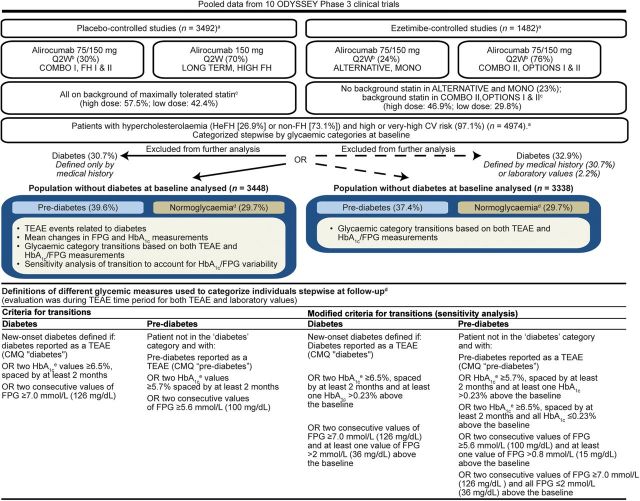
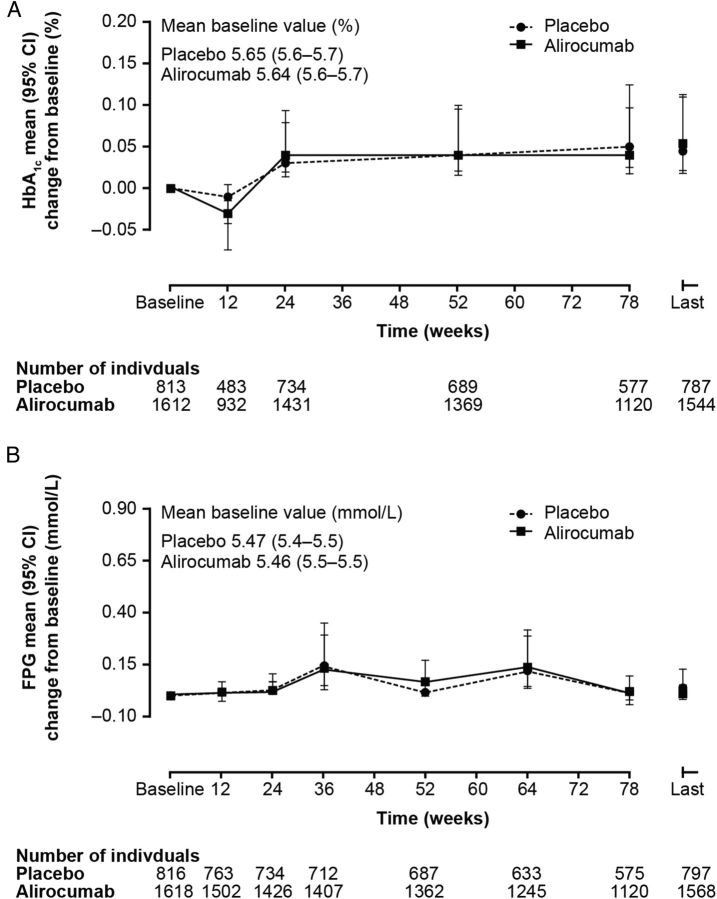
Statins have modest adverse effects on glycaemic control. Alirocumab, a proprotein convertase subtilisin/kexin type 9 inhibitor, lowers low-density lipoprotein cholesterol. This study assessed the effects of alirocumab on new-onset diabetes and pre-diabetes incidence in individuals without diabetes at baseline. Pooled analysis of 10 ODYSSEY Phase 3 trials (n = 4974) of 24–104 weeks duration. Six trials (n = 4211) were ≥52 weeks in length. Most patients received background maximally tolerated statin. Alirocumab effect on the rate of diabetes-related treatment-emergent adverse events (TEAEs), and/or fasting plasma glucose (FPG) and glycated haemoglobin A1C (HbA1C) was measured at baseline and every 12–24 weeks. Transition to diabetes analysis combined TEAE and FPG/HbA1C laboratory data. At baseline, 30.7% of individuals had diabetes and were excluded from the current analysis. The remaining 3448 individuals without diabetes had pre-diabetes (39.6%) or were normoglycaemic (29.7%). The hazard ratio (HR; 95% confidence interval) for diabetes-related TEAEs in alirocumab was 0.64 (0.36–1.14) vs. placebo and 0.55 (0.22–1.41) vs. ezetimibe. The HR associated for transition from pre-diabetes to new-onset diabetes for alirocumab was 0.90 (0.63–1.29) vs. placebo and 1.10 (0.57–2.12) vs. ezetimibe. Mean change in FPG/HbA1C over time showed no difference between treatment groups in patients without diabetes. There was no evidence of an effect of alirocumab on transition to new-onset diabetes in 3448 individuals without diabetes at baseline with a follow-up period of 6–18 months, compared to either placebo or ezetimibe. Longer follow-up with larger number of individuals is needed to conclusively rule out an effect.
Overview
The claims and statistics of this paper haven’t been checked yet.
Free: it reads the open-access text and checks the first 5 claims that cite a source we can check. Create a free account to check every claim.
Integrity signals
Registry
Cites
Statistics
Figures
Verification
Claims the paper makes
The claims and statistics of this paper haven’t been checked yet.
Free: it reads the open-access text and checks the first 5 claims that cite a source we can check. Create a free account to check every claim.
Claims other papers make about this one
Each is checked against this paper’s own text: does it say what the citing paper says it does?
The cited source says what the claim attributes to it.
In the citing paper
“Mendelian randomisation analyses 8,20,21 have shown that genetically determined loss of function of PCSK9 is associated with an increased risk of incident diabetes, but clinical trials of PCSK9 inhibitors have shown no such effect.9”
Self-check
Percentages, sums and reported differences re-computed from the paper’s own numbers.
The self-check needs the paper’s full text.
Citations
Cites
European Guidelines on cardiovascular disease prevention in clinical practice (version 2012)
Authors/Task Force Members:, Perk, J., De Backer, G., Gohlke, H., Graham, I., Reiner, Ž., Verschuren, M., Albus, C., Benlian, P., Boysen, G., et al. (2012) · European Heart Journal · doi:10.1093/eurheartj/ehs092 · Cited by 8,490
Rosuvastatin to Prevent Vascular Events in Men and Women with Elevated C-Reactive Protein
Ridker, P. M., Danielson, E., Fonseca, F. A. H., Genest, J., Gotto, A. M., Kastelein, J. J. P., Koenig, W., Libby, P., Lorenzatti, A. J., MacFadyen, J. G., et al. (2008) · New England Journal of Medicine · doi:10.1056/nejmoa0807646 · Cited by 6,674 · cited 1×
“15 000 individuals at 24 months exposure.(3,4) In the Collaborative Atorvastatin in”
BackgroundAuthors/Task Force Members, Graham, I., Atar, D., Borch-Johnsen, K., Boysen, G., Burell, G., Cifkova, R., Dallongeville, J., De Backer, G., Ebrahim, S., et al. (2007) · European Heart Journal · doi:10.1093/eurheartj/ehm316 · Cited by 3,753
Rosuvastatin to Prevent Vascular Events in Men and Women With Elevated C-Reactive Protein
Ridker, P. M., Danielson, E., Fonseca, F. A. H., Genest, J., Gotto, A. M., Kastelein, J. J. P., Koenig, W., Libby, P., Lorenzatti, A. J., MacFadyen, J. G., et al. (2009) · Obstetrical & Gynecological Survey · doi:10.1097/01.ogx.0000344393.60303.0a · Cited by 3,641
ESC/EAS Guidelines for the management of dyslipidaemias
Reiner, Ž., Catapano, A. L., De Backer, G., Graham, I., Taskinen, M.-R., Wiklund, O., Agewall, S., Alegria, E., Chapman, M. J., Durrington, P., et al. (2011) · European Heart Journal · doi:10.1093/eurheartj/ehr158 · Cited by 3,549
Standards of medical care in diabetes 2010
American Diabetes Association (2010) · Diabetes Care · doi:10.2337/dc10-s011 · Cited by 3,470
Statins and risk of incident diabetes: A collaborative meta-analysis of randomised statin trials
Sattar, N., Preiss, D., Murray, H. M., Welsh, P., Buckley, B. M., de Craen, A. J., Seshasai, S. R. K., McMurray, J. J., Freeman, D. J., Jukema, J. W., et al. (2010) · The Lancet · doi:10.1016/s0140-6736(09)61965-6 · Cited by 2,436 · cited 2×
“a meta-analyses with 91 140 participants followed for an average of 4 years.(5) In a subsequent analysis of five statin trials (n 1⁄4 32 752) with a weighted mean (standard deviation [SD]) follow-up of 4.”
BackgroundMethodEfficacy and Safety of Alirocumab in Reducing Lipids and Cardiovascular Events
Robinson, J. G., Farnier, M., Krempf, M., Bergeron, J., Luc, G., Averna, M., Stroes, E. S., Langslet, G., Raal, F. J., El Shahawy, M., et al. (2015) · New England Journal of Medicine · doi:10.1056/nejmoa1501031 · Cited by 2,296
Self-citationPreiss, D. (2011) · JAMA · doi:10.1001/jama.2011.860 · Cited by 1,390
Ridker, P. M., Pradhan, A., MacFadyen, J. G., Libby, P., & Glynn, R. J. (2012) · The Lancet · doi:10.1016/s0140-6736(12)61190-8 · Cited by 816 · cited 2×
“99).(4) Since the initial JUPITER report, several meta-analyses reported a small increase in the risk of statin-associated diabetes.”
Background
Cited by
Items 101–176 of 176
PCSK9 inhibitors and diabetes risk: a question worth asking?: Table 1
Sattar, N. A. (2016) · European Heart Journal · doi:10.1093/eurheartj/ehw346 · Cited by 9
PCSK9 in diabetes: sweet, bitter or sour?
Paneni, F., & Costantino, S. (2018) · European Heart Journal · doi:10.1093/eurheartj/ehy432 · Cited by 9
PCSK9 Monoclonal Antibodies Have Come a Long Way
Zendjebil, S., & Steg, P. G. (2024) · Current Atherosclerosis Reports · doi:10.1007/s11883-024-01243-1 · Cited by 8
“A pooled analysis of 10 Alirocumab trials also found no increased risk of new onset diabetes [37].”
Rana, K., Reid, J., Rosenwasser, J. N., Lewis, T., Sheikh‐Ali, M., Choksi, R. R., & Goldfaden, R. F. (2019) · Diabetes Metabolic Syndrome and Obesity · doi:10.2147/dmso.s167375 · Cited by 8
“36 mg/dL for both).(45) This pooled analysis of 10 trials determined that there is no evidence that alirocumab affects the incidence Rana et al Dovepress”
BackgroundInfluentialBococizumab for the treatment of hypercholesterolaemia
Ferri, N., Corsini, A., Sirtori, C. R., & Ruscica, M. (2017) · Expert Opinion on Biological Therapy · doi:10.1080/14712598.2017.1330849 · Cited by 9
The evolving therapeutic landscape of PCSK9 inhibition
Mansfield, B. S., Bene-Alhasan, Y. O., Ballantyne, C. M., & Raal, F. J. (2026) · Atherosclerosis · doi:10.1016/j.atherosclerosis.2026.120670 · Cited by 11
Choi, J., Khan, A. M., Jarmin, M., Goldenberg, N., Glueck, C. J., & Wang, P. (2017) · Lipids in Health and Disease · doi:10.1186/s12944-017-0493-7 · Cited by 10
“In pooled analyses of 6 trials of ALI including 4211 patients for 52 weeks or longer, there was no evidence for transition to new-onset diabetes in 3448 cases without diabetes at entry with a follow up period of 6–18 months, compared to either placebo or ezetimibe [14].”
Müller‐Wieland, D., Rader, D. J., Moriarty, P. M., Bergeron, J., Langslet, G., Ray, K. K., Manvelian, G. Z., Thompson, D. E., Bujas‐Bobanovic, M., & Roth, E. M. (2019) · The Journal of Clinical Endocrinology & Metabolism · doi:10.1210/jc.2018-02703 · Cited by 7
Self-citationGlycaemic Effects of Non-statin Lipid-Lowering Therapies
Collins, P. D., & Sattar, N. A. (2016) · Current Cardiology Reports · doi:10.1007/s11886-016-0795-9 · Cited by 7
Pathophysiology and Management of Dyslipidemias Associated with Insulin-Resistant States
Maki, K. C., Benes, L. B., & Dicklin, M. R. (2020) · Contemporary cardiology · doi:10.1007/978-3-030-56514-5_16 · Cited by 8
Estimating the effect of lipid‐lowering agents on novel subtypes of adult‐onset diabetes
Ye, J., Guo, K., Li, J., Li, X., Zhou, Z., & Yang, L. (2024) · Diabetes/Metabolism Research and Reviews · doi:10.1002/dmrr.3793 · Cited by 5
“44 Tragante et al. suggested that PCSK9 inhibitors may not affect the risk of diabetes.”
BackgroundRole of proprotein convertase subtilisin/kexin type 9 (PCSK9) in diabetic complications
Imaralu, O. E., Narasimhulu, C. A., Singal, P. K., & Singla, D. K. (2023) · Canadian Journal of Physiology and Pharmacology · doi:10.1139/cjpp-2023-0223 · Cited by 5
Doubling of Hemoglobin A1c on PCSK9 Inhibitor Therapy
Memon, R., Malek, R., & Munir, K. M. (2018) · The American Journal of Medicine · doi:10.1016/j.amjmed.2018.08.026 · Cited by 5
INNOVATIVE WAYS OF IMPROVING MEDICINE, PSYCHOLOGY AND BIOLOGY
Vladlenov, D., Khrebtii, H. I., Коваль, Г., Вакаров, О. С., Карбованець, О. І., Голомб, Л., Петросова, В. І., Руснак, І., Кулачек, В., Кулачек, Я., et al. (2023) · Іnternational Science Group eBooks · doi:10.46299/isg.2023.mono.med.2 · Cited by 45
Tackling Residual Atherosclerotic Risk in Statin-Treated Adults: Focus on Emerging Drugs
Takata, K., & Nicholls, S. J. (2018) · American Journal of Cardiovascular Drugs · doi:10.1007/s40256-018-0312-1 · Cited by 4
LDL-C Targets in Secondary Prevention: How Low Should We Go?
Bayoumy, K., Gaber, M., Mani, P., Puri, R., Donnellan, E., Cho, L., Clark, D., Martin, S. S., & Elshazly, M. B. (2019) · Current Cardiovascular Risk Reports · doi:10.1007/s12170-019-0619-8 · Cited by 4
PCSK9 inhibitors and diabetes mellitus
Vohnout, B., Lisičanová, J., & Havranová, A. (2018) · Vnitřní lékařství · doi:10.36290/vnl.2018.170 · Cited by 4
The pharmacology of cholesterol-lowering drugs: The pharmacology of cholesterol-lowering drugs
Ballantyne, C. M., & Catapano, A. L. (2022) · European Atherosclerosis Journal · doi:10.56095/eaj.v1i1.7 · Cited by 4
Chung, J., Kim, H., Lim, W., Seo, J.-B., Zo, J., Kim, M., & Kim, S. (2023) · Scientific Reports · doi:10.1038/s41598-023-42277-w · Cited by 6
Investigational therapies for hypercholesterolemia
TOMKIN, G. H., & Owens, D. (2017) · Expert Opinion on Investigational Drugs · doi:10.1080/13543784.2017.1315407 · Cited by 6
“The neurocognitive events were largely driven by the ODYSSEY LONG TERM and OSLER 2 Trials [59,61,64,65].”
BackgroundMethodLow-Density Lipoprotein Cholesterol and the On-Target Effects of Therapy
Everett, B. M. (2017) · Journal of the American College of Cardiology · doi:10.1016/j.jacc.2016.11.036 · Cited by 4
“Of note, no relationship between alirocumab and type 2 diabetes among those with pre-diabetes was noted in a recently published report from theODYSSEYprogram, although the results were not stratified by achieved LDL-C (13).”
ResultБарбараш, О. Л., & Кашталап, В. В. (2017) · Aterotromboz = Atherothrombosis · doi:10.21518/2307-1109-2017-1-94-104 · Cited by 3
PCSK9 inhibition and diabetes: turning to Mendel for clues
Lee, J.-H., & Hegele, R. A. (2016) · The Lancet Diabetes & Endocrinology · doi:10.1016/s2213-8587(16)30398-9 · Cited by 3
Malvandi, A. M., Canclini, L., Alliaj, A., Magni, P., Zambon, A., & Catapano, A. L. (2020) · Expert Opinion on Biological Therapy · doi:10.1080/14712598.2020.1801628 · Cited by 3
“Clinical trials of PCSK9i did not show signals of new-onset diabetes, though their median follow-up is relatively short [88,89].”
BackgroundBouillet, B., Boulestreau, R., Aboyans, V., Béliard, S., Boccara, F., Cariou, B., Charrière, S., Moulin, P., Vergès, B. L., Valéro, R., et al. (2026) · Archives of cardiovascular diseases · doi:10.1016/j.acvd.2026.01.001 · Cited by 2
Self-citationBouillet, B., Boulestreau, R., Aboyans, V., Béliard, S., Boccara, F., Cariou, B., Charrière, S., Moulin, P., Vergès, B. L., Valéro, R., et al. (2026) · Diabetes & Metabolism · doi:10.1016/j.diabet.2026.101725 · Cited by 3
Self-citationEffects of evolving lipid-lowering drugs on carbohydrate metabolism
Tsimihodimos, V., & Elisaf, M. (2017) · Diabetes Research and Clinical Practice · doi:10.1016/j.diabres.2017.12.012 · Cited by 2
Type 2 diabetes genetic risk and incident diabetes across diabetes risk enhancers
Moura, F. A., Kamanu, F., Wiviott, S. D., Giugliano, R. P., Udler, M. S., Florez, J. C., Ellinor, P. T., Sabatine, M. S., Ruff, C. T., & Marston, N. (2024) · Diabetes Obesity and Metabolism · doi:10.1111/dom.16123 · Cited by 2
Efficacité et sécurité des inhibiteurs de PCSK9 dans le diabète
Dijk, W., May, C. L., & Cariou, B. (2019) · Médecine des Maladies Métaboliques · doi:10.1016/s1957-2557(19)30044-6 · Cited by 2
Self-citationSafety Issues Associated With the Clinical Application of PCSK9 Inhibitors: Current Findings
Wang, D., & Zhang, D. (2022) · Cardiology in Review · doi:10.1097/crd.0000000000000441 · Cited by 2
Farnier, M. (2018) · Annals of Translational Medicine · doi:10.21037/atm.2018.01.02 · Cited by 2
“These results are consistent with other analyses from trials with alirocumab and evolocumab showing no association with an increased risk of new-onset diabetes (12,18).”
ResultSerhiyenko, V. A., & Serhiyenko, A. A. (2023) · INTERNATIONAL JOURNAL OF ENDOCRINOLOGY (Ukraine) · doi:10.22141/2224-0721.19.1.2023.1242 · Cited by 1
Zhang, R., Wang, Y., Peng, Y., Zhao, J., & Zhang, Z. (2023) · Frontiers in Cardiovascular Medicine · doi:10.3389/fcvm.2023.1117143 · Cited by 2
“The results showed that, compared with placebo or ezetimibe, effect of alirocumab on transition to NOD couldn’t be proved (17).”
Cariou, B., Thys, A., Oliveira, A. R., Letertre, M. P. M., Guyomarch, B., Carpentier, M., Cannet, C., Morcel, P., Ernould, A., Flet, L., et al. (2025) · Diabetes Obesity and Metabolism · doi:10.1111/dom.16305 · Cited by 1
“6,37 Among the strengths of our study, we can mention the cross-over design, which limits the impact of interindividual variability, including the effect of anti-diabetic drugs (especially GLP-1 RAs) on TG metabolism.”
Self-citationUddin, M., Shah, A., Hemida, M. F., Afridi, M. J., Bacha, Z., Iftikhar, H., Khan, S., Saif, H., Jamal, A., Syed, A., et al. (2025) · Journal of clinical lipidology · doi:10.1016/j.jacl.2025.11.012 · Cited by 1
Talkhan, A., Elkasaby, M. H., Osman, A. S. A., Elsharkawy, M. M., Shehata, M., khalefa, K. A., Seleim, A. M., Elezz, A. M. A., Fishman, W. H., & Aronow, W. S. (2026) · Cardiology in Review · doi:10.1097/crd.0000000000001473 · Cited by 3
Viguier, T., Bezin, J., Hlavaty, A., Khouri, C., & Pariente, A. (2026) · Drug Safety · doi:10.1007/s40264-026-01731-0 · Cited by 1
PCSK9 inhibition is not associated with new-onset diabetes
Fernández-Ruíz, I. (2016) · Nature Reviews Cardiology · doi:10.1038/nrcardio.2016.132 · Cited by 1
Monthly PCSK9 inhibitors: The CHOICE for prolonged duration of effect
de Carvalho, L. S. F., & Yoshida, H. (2016) · Atherosclerosis · doi:10.1016/j.atherosclerosis.2016.09.013 · Cited by 1
Dyslipidaemias: new mechanistic insights and the 2016 ESC Guidelines
Lüscher, T. F. (2016) · European Heart Journal · doi:10.1093/eurheartj/ehw504 · Cited by 1
Drugs That Affect Lipid Metabolism
Ali, A. N., Kim, J. J., Pisano, M. E., & Goad, N. T. (2017) · Side effects of drugs annual · doi:10.1016/bs.seda.2017.06.033 · Cited by 1
Low-density lipoprotein: the culprit. From evidence to counselling, drugs, and vaccination
Lüscher, T. F. (2017) · European Heart Journal · doi:10.1093/eurheartj/ehx468 · Cited by 1
Proprotein Convertase Subtilisin Kexin 9 (PCSK9) Inhibition: A Lipocrinologic Review.
Kalra, S. (2018) · PubMed · Cited by 1
Mäkelä, K. A., Jokelainen, J. J., Stenbäck, V., AUVINEN, J. P., Järvelin, M., Tulppo, M. P., Leppäluoto, J., Keinanen-Kiukaanniemi, S. M., & Herzig, K. (2021) · Journal of Clinical Medicine · doi:10.3390/jcm10050994 · Cited by 1
“The use of statins has been linked to increased risk of T2D [41], but PCSK9 inhibitors have also been implicated in the development of diabetes [15,16] and further long-term observations are required.”
BackgroundLipidmanagement zur Reduktion des kardiovaskulären Risikos bei Typ-2-Diabetes
Brandts, J. (2023) · Die Diabetologie · doi:10.1007/s11428-023-01094-5 · Cited by 1
How safe are proprotein convertase subtilisinekexin type 9 inhibitors in diabetes?
Chen, T., & Liu, N. (2024) · Current Opinion in Lipidology · doi:10.1097/mol.0000000000000934 · Cited by 1
Nashawi, M., Sheikh, O., Mir, M., Te, T., & CHILTON, R. J. (2020) · Cardiovascular Endocrinology & Metabolism · doi:10.1097/xce.0000000000000204 · Cited by 1
Lower diabetes rate in patients with familial hypercholesterolaemia: What is the link?
Parhofer, K. G. (2020) · European Journal of Preventive Cardiology · doi:10.1177/2047487320903158 · Cited by 1
Gibt es eine „untere Grenze“ beim LDL-C?
Leitolf, H., & Klose, G. (2016) · CardioVasc · doi:10.1007/s15027-016-1031-7
Iyengar, S. (2016) · Journal of Clinical and Preventive Cardiology · doi:10.4103/2250-3528.192689
Robinson, J. G. (2017) · Journal of the American College of Cardiology · doi:10.1016/j.jacc.2017.01.056
Self-citationLipidwirksame Therapie bei Diabetes mellitus jenseits von Statinen
Müller‐Wieland, D. (2017) · CardioVasc · doi:10.1007/s15027-017-1274-y
Self-citationMüller‐Wieland, D., Brandts, J., Marx, N., & Schütt, K. S. (2018) · Der Diabetologe · doi:10.1007/s11428-018-0394-z
Self-citationSession Three: Innovating Beyond Glucose Control in Diabetes Care
Michel, L. (2017) · EMJ Diabetes · doi:10.33590/emjdiabet/10314488
Emerging Lipoprotein-Related Therapeutics for Patients with Diabetes
Bobik, A., Cohen, N. D., Jenkins, A. J., Kyaw, T. S., SULLIVAN, D. R., Wu, X., Yu, X.-Y., & Little, P. J. (2023) · Contemporary diabetes · doi:10.1007/978-3-031-26681-2_30
Toth, P. P., Rizzo, M., & Banach, M. (2023) · Contemporary diabetes · doi:10.1007/978-3-031-26681-2_27
Koutsogianni, A. D., Barkas, F., Tellis, C. C., Tselepis, A. D., Liamis, G. L., & Liberopoulos, E. N. (2023) · Journal of Atherosclerosis Prevention and Treatment · doi:10.53590/japt.02.1051
Khalil, Y. A. (2021) · theses.fr (ABES) · doi:10.70675/1964fe3fz37bfz493azb98czc7caecac12cf
Bouillet, B., Boulestreau, R., Aboyans, V., Béliard, S., Boccara, F., Cariou, B., Charrière, S., Moulin, P., Vergès, B. L., Valéro, R., et al. (2025) · Annales d Endocrinologie · doi:10.1016/j.ando.2025.102471
Self-citationHuang, J., 顾俊旭, Wang, K., Zhang, A.-M., Hong, T.-T., Li, S.-S., Yao, X.-Q., Yang, M., Yin, Y., Zhang, N., et al. (2024) · Figshare · doi:10.6084/m9.figshare.26656591
Huang, J., 顾俊旭, Wang, K., Zhang, A.-M., Hong, T.-T., Li, S.-S., Yao, X.-Q., Yang, M., Yin, Y., Zhang, N., et al. (2024) · Figshare · doi:10.6084/m9.figshare.26656588
Huang, J., 顾俊旭, Wang, K., Zhang, A.-M., Hong, T.-T., Li, S.-S., Yao, X.-Q., Yang, M., Yin, Y., Zhang, N., et al. (2024) · Figshare · doi:10.6084/m9.figshare.24873194
Huang, J., 顾俊旭, Wang, K., Zhang, A.-M., Hong, T.-T., Li, S.-S., Yao, X.-Q., Yang, M., Yin, Y., Zhang, N., et al. (2024) · Figshare · doi:10.6084/m9.figshare.26656576
Huang, J., 顾俊旭, Wang, K., Zhang, A.-M., Hong, T.-T., Li, S.-S., Yao, X.-Q., Yang, M., Yin, Y., Zhang, N., et al. (2024) · Figshare · doi:10.6084/m9.figshare.26656582
Huang, J., 顾俊旭, Wang, K., Zhang, A.-M., Hong, T.-T., Li, S.-S., Yao, X.-Q., Yang, M., Yin, Y., Zhang, N., et al. (2024) · Figshare · doi:10.6084/m9.figshare.26656579
Additional file 1 of Impact of PCSK9 inhibitors in glycaemic control and new-onset diabetes
González-Lleó, A. M., Sánchez-Hernández, R. M., Plana, N., Ibarretxe, D., Rehues, P., Ribalta, J., Llop, D., Wägner, A. M., Masana, L., & Boronat, M. (2024) · Figshare · doi:10.6084/m9.figshare.24940593
Huang, J., 顾俊旭, Wang, K., Zhang, A.-M., Hong, T.-T., Li, S.-S., Yao, X.-Q., Yang, M., Yin, Y., Zhang, N., et al. (2024) · Figshare · doi:10.6084/m9.figshare.26656594
Huang, J., 顾俊旭, Wang, K., Zhang, A.-M., Hong, T.-T., Li, S.-S., Yao, X.-Q., Yang, M., Yin, Y., Zhang, N., et al. (2024) · Figshare · doi:10.6084/m9.figshare.26656585
Huang, J., 顾俊旭, Wang, K., Zhang, A.-M., Hong, T.-T., Li, S.-S., Yao, X.-Q., Yang, M., Yin, Y., Zhang, N., et al. (2023) · Figshare · doi:10.6084/m9.figshare.24873075
Ebrahimi, P., Akbari, T., Namin, S. M., Eslami, V., Ramezani, P., Hussain, A., & Shahid, F. (2026) · Journal of Medical Case Reports · doi:10.1186/s13256-025-05793-z
“While recent data suggest a modest rise in HbA1c with PCSK9i, this must be weighed against the substantial reduction in Major adverse cardiovascular events (MACE) and recurrent thrombosis risk in high-risk post-MI populations [30, 31].”
Effect of Lipid Management on Coronary Heart Disease Risk in Persons With Type 2 Diabetes
Brandts, J., & Ray, K. K. (2026) · Elsevier eBooks · doi:10.1016/b978-0-323-87862-3.00019-7
Le rôle du récepteur aux LDL et de PCSK9 dans le diabète de type 2
Ramin‐Mangata, S. (2020) · theses.fr (ABES) · doi:10.70675/26622ba5zb0fcz4d30za6e6z5c95a0b5a33d
The implication of PCSK9 in the development of peripheral neuropathy
Jaafar, A. K. (2023) · theses.fr (ABES) · doi:10.70675/052d27efz680bz4b84z971fz32bbbc915092
PCSK9 in the Immunometabolism of Type 2 Diabetes
Villari, P., & Labate, A. M. (2026) · International Journal of Molecular Sciences · doi:10.3390/ijms27219723
Metadata
- Authors
- Colhoun, H. M., Ginsberg, H. N., Robinson, J. G., Leiter, L. A., Müller-Wieland, D., Henry, R. R., Cariou, B., Baccara-Dinet, M. T., Pordy, R., Merlet, L., & Eckel, R. H.
- Affiliations
- University of Edinburgh (GB)
- Columbia University (US)
- University of Iowa (US)
- St. Michael's Hospital (CA)
- University of California San Diego (US)
- Centre Hospitalier Universitaire de Nantes (FR)
- Regeneron (United States) (US)
- Sanofi (France) (FR)
- University of Colorado Anschutz (US)
- Corresponding author
- Colhoun, Helen M.
- ORCID
- Venue
- European Heart Journal
- Publisher
- Oxford University Press (OUP)
- Published
- 2016-07-26
- Volume
- 37
- Issue
- 39
- Pages
- 2981-2989
- ISSN
- 0195-668X (ISSN-L)
- 1522-9645
- PMC
- PMC5081037
- OpenAlex
- W2486690983
- Cited by
- 172
- References
- 34
- Citations by year
- 2026: 8 · 2025: 4 · 2024: 18 · 2023: 15 · 2022: 9 · 2021: 8 · 2020: 14 · 2019: 19 · 2018: 30 · 2017: 32 · 2016: 15
- FWCI
- 35.45
- Type
- journal article
- Language
- en
- Open access
- hybrid
- doi.org
- Licence
- cc-by-nc
- Locations
- European Heart Journal (publishedVersion, cc-by-nc)
- Europe PMC (PubMed Central) (publishedVersion, cc-by-nc)
- PubMed Central (publishedVersion, cc-by-nc)
- PubMed (publishedVersion)
- HighWire Press Open Archive (submittedVersion)
- RWTH Publications (RWTH Aachen) (submittedVersion, other-oa)
- Edinburgh Research Explorer (University of Edinburgh) (submittedVersion, cc-by-nc)
- Funders
- Sanofi and Regeneron Pharmaceuticals, Inc
- Topics
- Health Sciences › Medicine › Cardiology and Cardiovascular Medicine › Lipoproteins and Cardiovascular Health
- Health Sciences › Medicine › Endocrinology, Diabetes and Metabolism › Diabetes, Cardiovascular Risks, and Lipoproteins
- Health Sciences › Medicine › Cardiology and Cardiovascular Medicine › Lipid metabolism and disorders
- Keywords
- alirocumab, PCSK9 inhibitors, new-onset diabetes, prediabetes, diabetes incidence, ezetimibe, LDL cholesterol lowering, fasting blood glucose, glycated haemoglobin A1c, treatment-emergent adverse events, ODYSSEY trial
- MeSH terms
- Proprotein Convertase 9, Antibodies, Monoclonal, Diabetes Mellitus, Enzyme Inhibitors, Humans, Hypercholesterolemia, Cholesterol, LDL, Incidence, Antibodies, Monoclonal, Humanized
About these checks
Registry, retraction, Cites and statistics results are computed, not judged, with one exception: a printed reference that no index lists is read once by a model before it counts as a citation error. Claims are extracted by a model and kept only when their quote appears verbatim in the text; each cited source is then checked, with a model’s help, for whether it says what the claim relies on. Those verdicts can be wrong — read the claim’s quote and the cited source before relying on one.
Statistics and arithmetic are recomputed, not judged.
Confidence bands are shown only for fields calibrated on our annotated test set. None is calibrated yet, so no band is shown.
What counts as a claim ›How we measure confidence ›How we check this ›
Are you an author, or do you see a problem with this page? Request a review
Data sources
Bibliographic data: Semantic Scholar, OpenAlex, Crossref.
Contains information from the Semantic Scholar Academic Graph Datasets, made available under the ODC Attribution License (ODC-BY 1.0).
Semantic Scholar’s data is described in: Kinney, R., et al. (2023). The Semantic Scholar Open Data Platform. arXiv:2301.10140.
