

Reduction of low density lipoprotein-cholesterol and cardiovascular events with proprotein convertase subtilisin-kexin type 9 (PCSK9) inhibitors and statins: an analysis of FOURIER, SPIRE, and the Cholesterol Treatment Trialists Collaboration
Open accessThe DOI matches its Crossref record; 16 of the 19 references it cites were found in a registry or an index.
Abstract
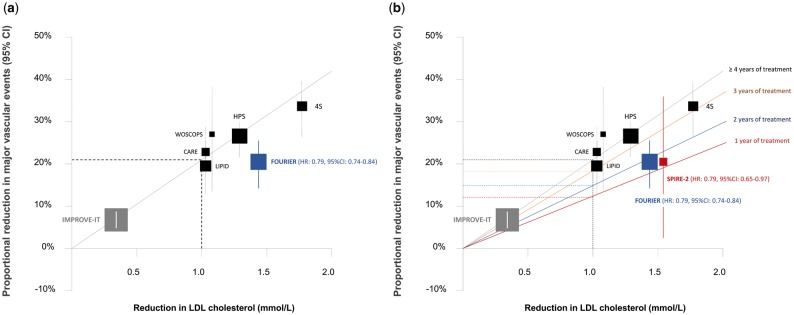
Treatment with proprotein convertase subtilisin-kexin type 9 (PCSK9) inhibitors reduce low density lipoprotein cholesterol (LDL-C) by approximately 45–60%, whether used alone or in combination with a statin.1 , 2 Two large cardiovascular outcomes trials have now reported that lowering LDL-C with a PCSK9 inhibitor when added to treatment with a statin reduces the risk of major cardiovascular events.3 , 4 We sought to compare the efficacy of PCSK9 inhibitors and statins for reducing the risk of cardiovascular events by comparing the results of the FOURIER and SPIRE trials with the results of the Cholesterol Treatment Trialists (CTT) meta-analysis of statin trials.5 , 6 In the FOURIER trial, 27 564 patients with cardiovascular disease and LDL-C levels above 1.8 mmol/L (70 mg/dL) on statin therapy were randomized to either 140 mg every 2 weeks (or 420 mg monthly) of evolocumab subcutaneously or matching placebo.3 At 48 weeks, treatment with evoloculmab reduced LDL-C by 59%, from a baseline level of 2.4 mmol/L (92 mg/dL) to 0.78 mmol/L (30 mg/dL). Using the CTT method of imputation for missing values, this translated into a 1.4 mmol/L (53.4 mg/dL) absolute difference in LDL-C between the two treatment groups. After a median follow-up of 26 months (2.2 years), treatment with evolocumab reduced the incidence of the composite primary cardiovascular endpoint of cardiovascular death (CVD), myocardial infarction (MI), stroke, coronary revascularization, or hospitalization for unstable angina by 15%, from 11.3 to 9.8% (hazard ratio 0.85, 95% CI: 0.79–0.92, P < 0.001). The key secondary endpoint of CVD, MI, or stroke was reduced by 20%, from 7.4 to 5.9% (HR 0.80, 95% CI: 0.73–0.88, P < 0.001). When measured per mmol/L reduction in LDL-C, treatment with evolocumab reduced the risk of the primary outcome by 11.0% (HR 0.89, 95% CI: 0.84–0.94) per mmol/L reduction in LDL-C, and reduced the key secondary endpoint by 14.7% (HR 0.85, 95% CI: 0.80–0.91) per mmol/L reduction in LDL-C. The magnitude of this effect appears to be slightly less than the 22% reduction in risk (HR 0.78, 95% CI: 0.76–0.80) per mmol/L reduction in LDL-C during treatment with a statin as reported by CTT collaboration (P for difference = 1.6 × 10⁻⁵ for primary outcome; P = 0.015 for secondary outcome).5 , 6 Similarly, in two large-scale cardiovascular outcomes trials designated as SPIRE-1 and SPIRE-2, a total of 27 438 participants with either a history of cardiovascular disease, familial hypercholesterolaemia or who were at high risk for cardiovascular disease were randomized to either 150 mg every 2 weeks of bococizumab subcutaneously or matching placebo.4 The SPIRE trials were stopped early due to high rates of the development of neutralizing antidrug antibodies that resulted in an attenuation of the LDL-cholesterol lowering effect of bococizumab over time. The short duration of follow-up limits the usefulness of the findings in these prematurely terminated trials, but do shed some light on the effects of this class of drug. Because the median follow-up prior to discontinuation of the SPIRE-1 trial was only 7 months, we limit our analysis to the results of the SPIRE-2 trial which had a median follow-up of 12 months. Among 10 621 patients with a baseline LDL-C greater than 2.6 mmol/L (100 mg/dL) enrolled in the SPIRE-2 trial, treatment with bococizumab reduced LDL-C by 54.6% at 14 weeks as compared to placebo which attenuated to a 40.6% reduction at 52 weeks, resulting in a reduction in LDL-C from a baseline level of 3.5 mmol/L (133.9 mg/dL) to 2.1 mmol/L (79.5 mg/dL) or a 1.5 mmol/L (57.3 mg/dL) absolute difference in LDL-C between the two treatment groups at 1 year. After a median follow-up of 1.0 year, treatment with bococizumab reduced the incidence of the primary composite outcome of CVD, MI, stroke, or hospitalization for unstable angina requiring urgent coronary revascularization by 21%, from 4.2 to 3.2% (HR 0.79, 95% CI: 0.65–0.97, P = 0.02), and reduced the key secondary outcome of CVD, MI or stroke by 26%, from 3.6 to 2.7% (HR 0.74, 95% CI: 0.60–0.92, P = 0.007). When measured per mmol/L reduction in LDL-C, treatment with bococizumab reduced the risk of the primary outcome by 14.5% (HR 0.85, 95% CI: 0.75–0.98) per mmol/L reduction in LDL-C, and reduced the key secondary endpoint by 18.2% (HR 0.82, 95% CI: 0.71–0.94) per mmol/L reduction in LDL-C. As observed in the FOURIER trial, the magnitude of this effect appears to be slightly less than the 22% reduction in risk per mmol/L reduction in LDL-C during treatment with a statin (P for difference = 0.19 for primary outcome; P = 0.52 for secondary outcome).5 , 6 Indeed, when plotted on the CTT regression line, the results of the FOURIER trial does appear to fall slightly below the regression line describing the average expected benefit from treatment with a statin (Figure 1 A).6 However, this may not be a fair comparison. It should be noted that the CTT regression line is based on the observed red
Overview
The claims and statistics of this paper haven’t been checked yet.
Free: it reads the open-access text and checks the first 5 claims that cite a source we can check. Create a free account to check every claim.
Integrity signals
Registry
Cites
Statistics
Figures
Verification
Claims the paper makes
The claims and statistics of this paper haven’t been checked yet.
Free: it reads the open-access text and checks the first 5 claims that cite a source we can check. Create a free account to check every claim.
Claims other papers make about this one
Each is checked against this paper’s own text: does it say what the citing paper says it does?
The check wasn’t confident either way, so it gives no verdict — never disputed.
In the citing paper
“In observational studies, TC is negatively associated with haemorrhagic stroke”
From 2019 ESC/EAS guidelines for the management of dyslipidaemias: lipid modification to reduce cardiovascular risk (2019) · cites this paper as [252]
Experimental — accuracy not yet measuredIn the citing paper
“in the CTT meta-analysis, there was a 21% [95% confidence interval (CI) 5-41%; P =0.01] relative increase per mmol/L lower LDL cholesterol in haemorrhagic stroke [34,251,252].”
From 2019 ESC/EAS guidelines for the management of dyslipidaemias: lipid modification to reduce cardiovascular risk (2019) · cites this paper as [252]
In the citing paper
“Statin therapy may yield a small increase in the risk of haemorrhagic stroke, but the evidence regarding this risk is uncertain [34,36,251,252].”
From 2019 ESC/EAS guidelines for the management of dyslipidaemias: lipid modification to reduce cardiovascular risk (2019) · cites this paper as [252]
Self-check
Percentages, sums and reported differences re-computed from the paper’s own numbers.
The self-check needs the paper’s full text.
Citations
Cites
Cholesterol Treatment Trialists' (CTT) Collaboration (2010) · The Lancet · doi:10.1016/s0140-6736(10)61350-5 · Cited by 6,550
Evolocumab and Clinical Outcomes in Patients with Cardiovascular Disease
Sabatine, M. S., Giugliano, R. P., Keech, A. C., Honarpour, N., Wiviott, S. D., Murphy, S. A., Kuder, J. F., Wang, H., Liu, T., Wasserman, S. M., et al. (2017) · New England Journal of Medicine · doi:10.1056/nejmoa1615664 · Cited by 6,138
Ference, B. A., Ginsberg, H. N., Graham, I., Ray, K. K., Packard, C. J., Bruckert, E., Hegele, R. A., Krauss, R. M., Raal, F. J., Schunkert, H., et al. (2017) · European Heart Journal · doi:10.1093/eurheartj/ehx144 · Cited by 3,962
Self-citationEfficacy and Safety of Alirocumab in Reducing Lipids and Cardiovascular Events
Robinson, J. G., Farnier, M., Krempf, M., Bergeron, J., Luc, G., Averna, M., Stroes, E. S., Langslet, G., Raal, F. J., El Shahawy, M., et al. (2015) · New England Journal of Medicine · doi:10.1056/nejmoa1501031 · Cited by 2,296
Interpretation of the evidence for the efficacy and safety of statin therapy
Collins, R., Reith, C., Emberson, J., Armitage, J., Baigent, C., Blackwell, L., Blumenthal, R., Danesh, J., Smith, G. D., DeMets, D., et al. (2016) · The Lancet · doi:10.1016/s0140-6736(16)31357-5 · Cited by 1,857
Efficacy and Safety of Evolocumab in Reducing Lipids and Cardiovascular Events
Sabatine, M. S., Giugliano, R. P., Wiviott, S. D., Raal, F. J., Blom, D. J., Robinson, J., Ballantyne, C. M., Somaratne, R., Legg, J., Wasserman, S. M., et al. (2015) · New England Journal of Medicine · doi:10.1056/nejmoa1500858 · Cited by 1,509
Variation in PCSK9 and HMGCR and Risk of Cardiovascular Disease and Diabetes
Ference, B. A., Robinson, J. G., Brook, R. D., Catapano, A. L., Chapman, M. J., Neff, D. R., Voros, S., Giugliano, R. P., Davey Smith, G., Fazio, S., et al. (2016) · New England Journal of Medicine · doi:10.1056/nejmoa1604304 · Cited by 743 · cited 8×
“When measured per mmol/L reduction in LDL-C, treatment with evolocumab reduced the risk of the primary outcome by 11.0% (HR 0.89, 95% CI: 0.84–0.94) per mmol/L reduction in LDL-C, and reduced the key secondary endpoint by 14.7% (HR 0.85, 95% CI: 0.80–0.91) per mmol/L reduction in LDL-C.”
InfluentialSelf-citationSwerdlow, D. I., Preiss, D., Kuchenbaecker, K. B., Holmes, M. V., Engmann, J. E. L., Shah, T., Sofat, R., Stender, S., Johnson, P. C. D., Scott, R. A., et al. (2015) · The Lancet · doi:10.1016/s0140-6736(14)61183-1 · Cited by 680
Self-citationCardiovascular Efficacy and Safety of Bococizumab in High-Risk Patients
Ridker, P. M., Revkin, J., Amarenco, P., Brunell, R., Curto, M., Civeira, F., Flather, M., Glynn, R. J., Gregoire, J., Jukema, J. W., et al. (2017) · New England Journal of Medicine · doi:10.1056/nejmoa1701488 · Cited by 624
Cited by
Mach, F., Baigent, C., Catapano, A. L., Koskinas, K. C., Casula, M., Badimon, L., Chapman, M. J., De Backer, G. G., Delgado, V., Ference, B. A., et al. (2020) · European Heart Journal · doi:10.1093/eurheartj/ehz455 · Cited by 8,961
Self-citationMach, F., Baigent, C., Catapano, A. L., Koskinas, K. C., Casula, M., Badimon, L., Chapman, M. J., De Backer, G. G., Delgado, V., Ference, B. A., et al. (2019) · Atherosclerosis · doi:10.1016/j.atherosclerosis.2019.08.014 · Cited by 4,854
“In this group of patients already treated with statins to reach goals, the absolute CV benefit from added ezetimibe was small, although significant and in line with the CTT expectations.(268) Therefore, the study supports the proposition that LDL-C lowering by means other than statins is beneficial and safe.”
Self-citationImpact of Lipids on Cardiovascular Health
Ference, B. A., Graham, I., Tokgozoglu, L., & Catapano, A. L. (2018) · Journal of the American College of Cardiology · doi:10.1016/j.jacc.2018.06.046 · Cited by 511
Self-citationUpdated Cardiovascular Prevention Guideline of the Brazilian Society of Cardiology - 2019
Précoma, D. B., Oliveira, G. M. M. D., Simão, A. F., Dutra, O. P., Coelho-Filho, O. R., Izar, M. C. D. O., Póvoa, R. M. D. S., Giuliano, I. D. C. B., Alencar Filho, A. C. D., Machado, C. A., et al. (2019) · Arquivos Brasileiros de Cardiologia · doi:10.5935/abc.20190204 · Cited by 434
Soppert, J., Lehrke, M., Marx, N., Jankowski, J., & Noels, H. (2020) · Advanced Drug Delivery Reviews · doi:10.1016/j.addr.2020.07.019 · Cited by 407
Using Mendelian Randomization to Improve the Design of Randomized Trials
Ference, B. A., Holmes, M. V., & Smith, G. D. (2021) · Cold Spring Harbor Perspectives in Medicine · doi:10.1101/cshperspect.a040980 · Cited by 338
Self-citationPCSK9 inhibitors: clinical evidence and implementation
Sabatine, M. S. (2019) · Nature Reviews Cardiology · doi:10.1038/s41569-018-0107-8 · Cited by 338
Gencer, B., Marston, N. A., Im, K., Cannon, C. P., Sever, P., Keech, A., Braunwald, E., Giugliano, R. P., & Sabatine, M. S. (2020) · The Lancet · doi:10.1016/s0140-6736(20)32332-1 · Cited by 318
Self-citationFerence, B. A., Kastelein, J. J. P., Ginsberg, H. N., Chapman, M. J., Nicholls, S. J., Ray, K. K., Packard, C. J., Laufs, U., Brook, R. D., Oliver-Williams, C., et al. (2017) · JAMA · doi:10.1001/jama.2017.11467 · Cited by 304
Self-citationResidual Inflammatory Risk on Treatment With PCSK9 Inhibition and Statin Therapy
Pradhan, A. D., Aday, A. W., Rose, L. M., & Ridker, P. M. (2018) · Circulation · doi:10.1161/circulationaha.118.034645 · Cited by 258
Inclisiran and cardiovascular events: a patient-level analysis of phase III trials
Ray, K. K., Raal, F. J., Kallend, D. G., Jaros, M. J., Koenig, W., Leiter, L. A., Landmesser, U., Schwartz, G. G., Lawrence, D., Friedman, A., et al. (2023) · European Heart Journal · doi:10.1093/eurheartj/ehac594 · Cited by 225
“93)], respectively.(20) The narrower CI reported with statins likely reflects the greater precision around the point estimate, derived from the accumulation of a larger number of events in the CTT meta-analysis vs.”
BackgroundSelf-citationLandmesser, U., Chapman, M. J., Stock, J. K., Amarenco, P., Belch, J. J. F., Borén, J., Farnier, M., Ference, B. A., Gielen, S., Graham, I., et al. (2018) · European Heart Journal · doi:10.1093/eurheartj/ehx549 · Cited by 200
Self-citationThe LDL cumulative exposure hypothesis: evidence and practical applications
Ference, B. A., Braunwald, E., & Catapano, A. L. (2024) · Nature Reviews Cardiology · doi:10.1038/s41569-024-01039-5 · Cited by 176
“Indeed, the incremental benefit of each additional year of LDL lowering can be precisely quantified during every year of follow-up in randomized trials 85,86 .”
Self-citationNewman, C. B., Blaha, M. J., Boord, J. B., Cariou, B., Chait, A., Fein, H. G., Ginsberg, H. N., Goldberg, I. J., Murad, M. H., Subramanian, S., et al. (2020) · The Journal of Clinical Endocrinology & Metabolism · doi:10.1210/clinem/dgaa674 · Cited by 172
Ray, K. K., Stoekenbroek, R. M., Kallend, D., Leiter, L. A., Landmesser, U., Wright, R. S., Wijngaard, P., & Kastelein, J. J. P. (2018) · Circulation · doi:10.1161/circulationaha.118.034710 · Cited by 154
Self-citationKhan, S. U., Yedlapati, S. H., Lone, A. N., Hao, Q., Guyatt, G., Delvaux, N., Bekkering, G. E. (., Vandvik, P. O., Riaz, I. B., Li, S., et al. (2022) · BMJ · doi:10.1136/bmj-2021-069116 · Cited by 151
Inhibiting PCSK9 — biology beyond LDL control
Stoekenbroek, R. M., Lambert, G., Cariou, B., & Hovingh, G. K. (2019) · Nature Reviews Endocrinology · doi:10.1038/s41574-018-0110-5 · Cited by 141
Effect of inclisiran on lipids in primary prevention: the ORION-11 trial
Ray, K. K., Kallend, D., Leiter, L. A., Raal, F. J., Koenig, W., Jaros, M. J., Schwartz, G. G., Landmesser, U., Garcia Conde, L., Wright, R. S., et al. (2022) · European Heart Journal · doi:10.1093/eurheartj/ehac615 · Cited by 116
“0 mmol/L would be expected to reduce CV risk in relative terms by approximately one-fifth.(16,17) However, the sample size of the present study is too small and the follow-up duration too short to demonstrate CV risk reduction, which will require a formal prospective evaluation.”
BackgroundSelf-citationTuñón, J., Badimón, L., Bochaton-Piallat, M.-L., Cariou, B., Daemen, M. J., Egido, J., Evans, P. C., Hoefer, I. E., Ketelhuth, D. F. J., Lutgens, E., et al. (2019) · Cardiovascular Research · doi:10.1093/cvr/cvy293 · Cited by 116
Metabolomic Consequences of Genetic Inhibition of PCSK9 Compared With Statin Treatment
Sliz, E., Kettunen, J., Holmes, M. V., Williams, C. O., Boachie, C., Wang, Q., Männikkö, M., Sebert, S., Walters, R., Lin, K., et al. (2018) · Circulation · doi:10.1161/circulationaha.118.034942 · Cited by 109
How to use Mendelian randomization to anticipate the results of randomized trials
Ference, B. A. (2018) · European Heart Journal · doi:10.1093/eurheartj/ehx462 · Cited by 96
Self-citationPenson, P. E., Bruckert, É., MARAIS, D. P., Reiner, Ž., Pirro, M., Sahebkar, A., Bajraktari, G., Mirrakhimov, E. M., Rizzo, M., Mikhailidis, D. P., et al. (2022) · Journal of Cachexia Sarcopenia and Muscle · doi:10.1002/jcsm.12960 · Cited by 95
Ray, K. K., Corral, P., Morales, E., & Nicholls, S. J. (2019) · The Lancet · doi:10.1016/s0140-6736(19)31950-6 · Cited by 94
Self-citationGlenn, A. J., Lo, K. K.-H., Jenkins, D. J. A., Boucher, B. A., Hanley, A. J., Kendall, C. W. C., Manson, J. E., Vitolins, M. Z., Snetselaar, L., Liu, S., et al. (2021) · Journal of the American Heart Association · doi:10.1161/jaha.121.021515 · Cited by 83
Safety and Tolerability of Inclisiran for Treatment of Hypercholesterolemia in 7 Clinical Trials
Wright, R. S., Koenig, W., Landmesser, U., Leiter, L. A., Raal, F. J., Schwartz, G. G., Lesogor, A., Maheux, P., Stratz, C., Zang, X., et al. (2023) · Journal of the American College of Cardiology · doi:10.1016/j.jacc.2023.10.007 · Cited by 79
Self-citationPCSK9 inhibitors in clinical practice: Delivering on the promise?
Stoekenbroek, R. M., Hartgers, M. L., Rutte, R., de Wijer, D. D., Stroes, E. S. G., & Hovingh, G. K. (2017) · Atherosclerosis · doi:10.1016/j.atherosclerosis.2017.11.027 · Cited by 73
Interpreting the Clinical Implications of Drug-Target Mendelian Randomization Studies
Ference, B. A. (2022) · Journal of the American College of Cardiology · doi:10.1016/j.jacc.2022.06.007 · Cited by 71
Self-citationAdemi, Z., Norman, R., Pang, J., Liew, D., Zoungas, S., Sijbrands, E. J. G., Ference, B. A., Wiegman, A., & Watts, G. F. (2020) · Atherosclerosis · doi:10.1016/j.atherosclerosis.2020.05.007 · Cited by 70
Self-citationRay, K. K., Vallejo-Vaz, A. J., Ginsberg, H. N., Davidson, M. H., Louie, M. J., Bujas-Bobanovic, M., Minini, P., Eckel, R. H., & Cannon, C. P. (2019) · Atherosclerosis · doi:10.1016/j.atherosclerosis.2019.06.896 · Cited by 69
Self-citationHu, D., Guo, Y., Wu, R., Shao, T., Long, J., Yu, B., Wang, H. H., Luo, Y., Lu, H., Zhang, J., et al. (2021) · Arteriosclerosis Thrombosis and Vascular Biology · doi:10.1161/atvbaha.120.315708 · Cited by 69
Khan, S. U., Khan, M. U., Valavoor, S., Khan, M. S., Okunrintemi, V., Mamas, M. A., Leucker, T. M., Blaha, M. J., & Michos, E. D. (2020) · European Journal of Preventive Cardiology · doi:10.1177/2047487319871733 · Cited by 67
“A recent analysis comparing the results of the FOURIER and SPIRE trials with the Cholesterol Treatment Trialist Collaboration meta-analysis of statins concluded that the effect of PCSK9 inhibitors on MACE was exactly what would have been expected up to two years, suggesting that beneficial effect accumulates with exte…”
ResultRuscica, M., Banach, M., Sahebkar, A., Corsini, A., & Sirtori, C. R. (2019) · Expert Opinion on Pharmacotherapy · doi:10.1080/14656566.2019.1583209 · Cited by 62
Schubert, J., Leosdottir, M., Lindahl, B., Westerbergh, J., Melhus, H., Modica, A., Cater, N., Brinck, J., Ray, K. K., & Hagström, E. (2024) · European Heart Journal · doi:10.1093/eurheartj/ehae576 · Cited by 57
Self-citationMasana, L., Ibarretxe, D., & Plana, N. (2020) · Current Cardiology Reports · doi:10.1007/s11886-020-01326-w · Cited by 54
PCSK9 Induces Tissue Factor Expression by Activation of TLR4/NFkB Signaling
Scalise, V., Sanguinetti, C., Neri, T., Cianchetti, S., Lai, M., Carnicelli, V., Celi, A., & Pedrinelli, R. (2021) · International Journal of Molecular Sciences · doi:10.3390/ijms222312640 · Cited by 54
Virani, S. S., Aspry, K. E., Dixon, D. L., Ferdinand, K. C., Heidenreich, P. A., Jackson, E. J., Jacobson, T. A., McAlister, J. L., Neff, D., Gulati, M., et al. (2023) · Journal of clinical lipidology · doi:10.1016/j.jacl.2023.02.003 · Cited by 49
Lipid lowering drugs and inflammatory changes: an impact on cardiovascular outcomes?
Ruscica, M., Ferri, N., Macchi, C., Corsini, A., & Sirtori, C. R. (2018) · Annals of Medicine · doi:10.1080/07853890.2018.1498118 · Cited by 47
Desai, N. R., Campbell, C., Electricwala, B., Petrou, M., Trueman, D., Woodcock, F., & Cristino, J. (2022) · American Journal of Cardiovascular Drugs · doi:10.1007/s40256-022-00534-9 · Cited by 47
PCSK9 Inhibition and Risk of Diabetes: Should We Worry?
Carugo, S., Sirtori, C. R., Corsini, A., Tokgözoğlu, L. S., & Ruscica, M. (2022) · Current Atherosclerosis Reports · doi:10.1007/s11883-022-01074-y · Cited by 45
PCSK9: from biology to clinical applications
Blanchard, V., Khantalin, I., Ramin-Mangata, S., Chémello, K., Nativel, B., & Lambert, G. (2019) · Pathology · doi:10.1016/j.pathol.2018.10.012 · Cited by 43
European guidelines for the treatment of dyslipidaemias: New concepts and future challenges
Pirillo, A., Casula, M., & Catapano, A. L. (2023) · Pharmacological Research · doi:10.1016/j.phrs.2023.106936 · Cited by 42
Self-citationZafrir, B., & Jubran, A. (2018) · Cardiovascular Therapeutics · doi:10.1111/1755-5922.12439 · Cited by 42
Mu, G., Xiang, Q., Zhou, S., Liu, Z., Qi, L., Jiang, J., Gong, Y., Xie, Q., Wang, Z., Zhang, H., et al. (2020) · Advances in Therapy · doi:10.1007/s12325-020-01259-4 · Cited by 39
Nishi, S. K., Kavanagh, M. E., Ramboanga, K., Ayoub-Charette, S., Modol, S., Dias, G. M., Kendall, C. W. C., Sievenpiper, J. L., & Chiavaroli, L. (2024) · eClinicalMedicine · doi:10.1016/j.eclinm.2024.102798 · Cited by 37
“…HbA1c, 35 ±0.5 mmol/L for fasting glucose, 35,36 ±2 mmHg for SBP and DBP, 37 ±0.4 kg/m 2 for BMI, ±1 kg for body weight, ±2% for body fat percentage 38,39 ), ±1 cm for waist circumference, 40 ±0.02 for waist-to-hip ratio, 40,41 ±500 kcals/day for total energy, 42 ±5 g/day for total sugars, 43,44…”
InfluentialComparative Cardiovascular Benefits of Bempedoic Acid and Statin Drugs
Lincoff, A. M., Ray, K. K., Sasiela, W. J., Haddad, T., Nicholls, S. J., Li, N., Cho, L., Mason, D., Libby, P., Goodman, S. G., et al. (2024) · Journal of the American College of Cardiology · doi:10.1016/j.jacc.2024.04.048 · Cited by 36
Self-citationLipid-Lowering Drug Therapy: Critical Approach for Implementation in Clinical Practice
Rossi, M., Fabris, E., Barbisan, D., Massa, L., & Sinagra, G. (2021) · American Journal of Cardiovascular Drugs · doi:10.1007/s40256-021-00497-3 · Cited by 36
Reprint of: Impact of Lipids on Cardiovascular Health
Ference, B. A., Graham, I. M., Tokgözoğlu, L. S., & Catapano, A. L. (2018) · Journal of the American College of Cardiology · doi:10.1016/j.jacc.2018.10.021 · Cited by 36
Self-citationParhofer, K. G., Aguíar, C., Banach, M., Drexel, H., Gouni‐Berthold, I., de Isla, L. P., Rietzschel, E. R., Zambon, A., & Ray, K. K. (2025) · European Heart Journal - Cardiovascular Pharmacotherapy · doi:10.1093/ehjcvp/pvaf007 · Cited by 35
Self-citationRecent advances in synthetic pharmacotherapies for dyslipidaemias
Sirtori, C. R., Yamashita, S., Greco, M. F., Corsini, A., Watts, G. F., & Ruscica, M. (2019) · European Journal of Preventive Cardiology · doi:10.1177/2047487319845314 · Cited by 35
Stefanutti, C., Pang, J., Giacomo, S. D., Wu, X., Wang, X., Morozzi, C., Watts, G. F., & Lin, J. (2019) · Journal of clinical lipidology · doi:10.1016/j.jacl.2019.05.002 · Cited by 34
Interpreting the Findings From the Recent PCSK9 Monoclonal Antibody Cardiovascular Outcomes Trials
Wong, N. D., & Shapiro, M. D. (2019) · Frontiers in Cardiovascular Medicine · doi:10.3389/fcvm.2019.00014 · Cited by 32
Wanschel, A. C. B. A., Guizoni, D. M., Lorza‐Gil, E., Salerno, A. G., Paiva, A. A., Dorighello, G. G., Davel, A. P., Balkan, W., Hare, J. M., & Oliveira, H. C. F. (2021) · Biomolecules · doi:10.3390/biom11010069 · Cited by 30
Rationalizing Secondary Pharmacology Screening Using Human Genetic and Pharmacological Evidence
Deaton, A. M., Fan, F., Zhang, W., Nguyen, P. A., Ward, L. D., & Nioi, P. (2018) · Toxicological Sciences · doi:10.1093/toxsci/kfy265 · Cited by 29
Khan, S. U., & Michos, E. D. (2020) · American Journal of Preventive Cardiology · doi:10.1016/j.ajpc.2020.100013 · Cited by 29
Executive Summary of the 2018 Joint Consensus Document on Cardiovascular Disease Prevention in Italy
Volpe, M., Societies, O. B. O. T. S., Battistoni, A., Gallo, G., Rubattu, S. D., & Tocci, G. (2018) · High Blood Pressure & Cardiovascular Prevention · doi:10.1007/s40292-018-0278-8 · Cited by 29
Causal Effect of Lipids and Lipoproteins on Atherosclerosis
Ference, B. A. (2018) · Cardiology Clinics · doi:10.1016/j.ccl.2017.12.001 · Cited by 28
Self-citationVirani, S. S., Aspry, K. E., Dixon, D. L., Ferdinand, K. C., Heidenreich, P. A., Jackson, E. J., Jacobson, T. A., McAlister, J. L., Neff, D., Gulati, M., et al. (2023) · American Journal of Preventive Cardiology · doi:10.1016/j.ajpc.2023.100472 · Cited by 28
Alonso, R., Arroyo-Olivares, R., Muñiz-Grijalvo, O., Díaz-Díaz, J. L., Muñoz-Torrero, J. S., Romero, M. J., de Andrés, R., Zambón, D., Mañas, M. D., Fuentes-Jiménez, F., et al. (2023) · European Journal of Preventive Cardiology · doi:10.1093/eurjpc/zwac277 · Cited by 26
Inclisiran: How Widely and When Should We Use It?
Pirillo, A., & Catapano, A. L. (2022) · Current Atherosclerosis Reports · doi:10.1007/s11883-022-01056-0 · Cited by 26
Self-citationPatel, P. N., & Giugliano, R. P. (2020) · Global Cardiology Science and Practice · doi:10.21542/gcsp.2020.39 · Cited by 24
Lipid management in ACS: Should we go lower faster?
Gencer, B., & Mach, F. (2018) · Atherosclerosis · doi:10.1016/j.atherosclerosis.2018.06.871 · Cited by 24
Ntaios, G., & Milionis, H. J. (2019) · International Journal of Stroke · doi:10.1177/1747493019851283 · Cited by 23
Vallejo‐Vaz, A. J., Bray, S. L., Villa, G., Brandts, J., Kiru, G., Murphy, J., Banach, M., Servi, S. D., Gaiță, D. I., Gouni‐Berthold, I., et al. (2022) · Cardiovascular Drugs and Therapy · doi:10.1007/s10557-022-07343-x · Cited by 23
Self-citationSoran, H., Adam, S., & Durrington, P. N. (2018) · Atherosclerosis · doi:10.1016/j.atherosclerosis.2018.08.040 · Cited by 23
Mafham, M., Zayed, M., Collins, R., Sabatine, M. S., Armitage, J., Brittain, D. E. A., da Costa, B. R., Chen, F., Goonasekera, M. A., Hill, M., et al. (2026) · American Heart Journal · doi:10.1016/j.ahj.2026.107546 · Cited by 22
Self-citationLDL cholesterol: How low to go?
Packard, C. J. (2017) · Trends in Cardiovascular Medicine · doi:10.1016/j.tcm.2017.12.011 · Cited by 22
Ray, K. K. (2021) · European Heart Journal · doi:10.1093/eurheartj/ehaa1008 · Cited by 20
Self-citationNew Insights in the Control of Low-Density Lipoprotein Cholesterol to Prevent Cardiovascular Disease
Katzmann, J. L., & Laufs, U. (2019) · Current Cardiology Reports · doi:10.1007/s11886-019-1159-z · Cited by 20
Update of therapeutic planning tables oriented towards obtaining therapeutic objectives
Masana, L., & Plana, N. (2019) · Clínica e Investigación en Arteriosclerosis (English Edition) · doi:10.1016/j.artere.2019.10.001 · Cited by 20
Current pharmacotherapy for the treatment of dyslipidemia associated with HIV infection
Gebhardt, A., & Fichtenbaum, C. J. (2019) · Expert Opinion on Pharmacotherapy · doi:10.1080/14656566.2019.1636033 · Cited by 20
Elamin, A., Grafton‐Clarke, C., Chen, K. W., Obafemi, T., Luvai, A., Katira, R., & Davis, G. K. (2019) · Postgraduate Medical Journal · doi:10.1136/postgradmedj-2018-136171 · Cited by 19
Alanaeme, C. J., Bittner, V., Brown, T. M., Colantonio, L. D., Dhalwani, N. N., Jones, J., Kalich, B. A., Exter, J., Jackson, E. A., Levitan, E. B., et al. (2022) · American Heart Journal Plus Cardiology Research and Practice · doi:10.1016/j.ahjo.2022.100201 · Cited by 19
Alirocumab for the treatment of hyperlipidemia in high-risk patients: an updated review
Farnier, M. (2017) · Expert Review of Cardiovascular Therapy · doi:10.1080/14779072.2017.1409115 · Cited by 18
Lee, J., Ahn, S. G., Jeon, H., Lee, J., Youn, Y. J., Lee, Y., Lee, S., Hong, S., Ahn, C., Ko, Y., et al. (2024) · Journal of clinical lipidology · doi:10.1016/j.jacl.2024.07.005 · Cited by 18
Oh, M., Kim, H., Shin, E. W., Sung, C., Kim, D., Moon, D. H., Kim, N., Eo, J. S., Kim, J. W., & Lee, C. W. (2020) · Journal of Cardiovascular Translational Research · doi:10.1007/s12265-020-10009-4 · Cited by 17
Masana, L., & Plana, N. (2019) · Clínica e Investigación en Arteriosclerosis · doi:10.1016/j.arteri.2019.04.005 · Cited by 16
Oh, M., Kim, H., Shin, E. W., Sung, C., Kim, D.-H., Moon, D. H., & Lee, C. W. (2019) · BMC Cardiovascular Disorders · doi:10.1186/s12872-019-1184-2 · Cited by 15
Proprotein convertase subtilisin/kexin type 9: from genetics to clinical trials
Stoekenbroek, R. M., & Kastelein, J. J. P. (2018) · Current Opinion in Cardiology · doi:10.1097/hco.0000000000000517 · Cited by 14
Gunn, L. H., McKay, A. J., Feng, A., Louie, M. J., Ballantyne, C. M., & Ray, K. K. (2022) · Atherosclerosis Plus · doi:10.1016/j.athplu.2022.05.003 · Cited by 15
Self-citationChronic coronary syndromes: expanding the spectrum and natural history of ischaemic heart disease
Lüscher, T. F. (2020) · European Heart Journal · doi:10.1093/eurheartj/ehaa001 · Cited by 14
Self-citationInclisiran-based treatment strategy in hypercholesterolaemia: the VICTORION-difference trial
Landmesser, U., Laufs, U., Schatz, U., Winzer, E. B., Nowak, B., Kassner, U., Gouni-Berthold, I., Esteban, A., Lubyayi, L., Krueger, A., et al. (2026) · European Heart Journal · doi:10.1093/eurheartj/ehaf685 · Cited by 13
Self-citationSakhuja, S., Bittner, V., Brown, T. M., Farkouh, M. E., Levitan, E. B., Safford, M. M., Woodward, M., Chen, L., Sun, R., Dhalwani, N. N., et al. (2023) · Cardiovascular Drugs and Therapy · doi:10.1007/s10557-023-07452-1 · Cited by 13
Packard, C. J. (2018) · Current Cardiology Reports · doi:10.1007/s11886-018-1003-x · Cited by 13
Is There a Need to Revise Goals in the Management of Dyslipidemias?
Sinning, D., & Landmesser, U. (2019) · Current Cardiology Reports · doi:10.1007/s11886-019-1128-6 · Cited by 12
Self-citationPractical guide for the use of PCSK9 inhibitors in Portugal
Fontes‐Carvalho, R., Silva, P. M., Rodrigues, E., Araújo, F., Gavina, C., Ferreira, J., & Morais, J. (2019) · Revista Portuguesa de Cardiologia (English Edition) · doi:10.1016/j.repce.2019.07.004 · Cited by 12
Proprotein convertase subtilisin/kexin type 9: an update on the cardiovascular outcome studies
Ferri, N., Greco, M. F., Corsini, A., & Ruscica, M. (2020) · European Heart Journal Supplements · doi:10.1093/eurheartj/suaa063 · Cited by 11
Aranzulla, T. C., Piazza, S., Ricotti, A., Musumeci, G., & Gaggiano, A. (2021) · Catheterization and Cardiovascular Interventions · doi:10.1002/ccd.29743 · Cited by 11
Wolf, S., Spirk, D., Forgó, G., Sebastian, T., Voci, D., Kucher, N., & Barco, S. (2022) · VASA · doi:10.1024/0301-1526/a001025 · Cited by 10
Masana, L., Ibarretxe, D., Andreychuk, N., Royuela, M., Rodríguez-Borjabad, C., & Plana, N. (2022) · European Atherosclerosis Journal · doi:10.56095/eaj.v1i1.10 · Cited by 10
Guia prático para a utilização dos inibidores da PCSK9 em Portugal
Fontes‐Carvalho, R., Silva, P. M., Rodrigues, E., Araújo, F., Gavina, C., Ferreira, J., & Morais, J. (2019) · Revista Portuguesa de Cardiologia · doi:10.1016/j.repc.2019.05.005 · Cited by 10
Frontiers in lipid research: lipoprotein(a), apolipoprotein C-III and E, and PCSK9 and inflammation
Lüscher, T. F. (2019) · European Heart Journal · doi:10.1093/eurheartj/ehz633 · Cited by 10
Self-citationWu, X.-D., Ye, X.-Y., Liu, X.-Y., Lin, Y., Lin, X. Y., Li, Y., Ye, B.-H., & Sun, J.-C. (2024) · Annals of Medicine · doi:10.1080/07853890.2024.2389470 · Cited by 9
Aranzulla, T. C., & Musumeci, G. (2020) · Catheterization and Cardiovascular Interventions · doi:10.1002/ccd.29231 · Cited by 9
Tang, M., Yang, S., Zou, J., Li, M., Sun, Y., Wang, M., Li, W., He, J., Chen, Y., & Tang, Z. (2024) · Frontiers in Cardiovascular Medicine · doi:10.3389/fcvm.2024.1336264 · Cited by 9
Ference, B. A. (2019) · Clinical Pharmacology & Therapeutics · doi:10.1002/cpt.1163 · Cited by 8
Self-citationPCSK9 Inhibitors: From Nature’s Lessons to Clinical Utility
Raal, F. J., CHILTON, R. J., Ranjith, N., Rambiritch, V., Leisegang, R. F., Ebrahim, I. O., van Tonder, A., Shunmoogam, N., Bouharati, C., Musa, M. G., et al. (2020) · Endocrine Metabolic & Immune Disorders - Drug Targets · doi:10.2174/1871530320666200213114138 · Cited by 8
A Less than Provocative Approach for the Primary Prevention of CAD
Roberts, R., & Fair, J. (2021) · Journal of Cardiovascular Translational Research · doi:10.1007/s12265-021-10144-6 · Cited by 8
Triglyceride-rich particles: new actors in valvular aortic stenosis
Varga, A., & Hegele, R. A. (2020) · European Heart Journal · doi:10.1093/eurheartj/ehaa416 · Cited by 8
Lipoprotein(a) – treatments in development
Tomlinson, B., & Law, C. (2025) · Expert Opinion on Pharmacotherapy · doi:10.1080/14656566.2025.2601062 · Cited by 7
Gragnano, F., Artana, C., Carrara, G., Sacco, A., Montalto, C., Mennuni, M. G., Zuin, M., D’Ascenzo, F., Nevo, F. D., Sio, V. D., et al. (2026) · European Journal of Internal Medicine · doi:10.1016/j.ejim.2026.106990 · Cited by 7
Metadata
- Authors
- Ference, B. A., Cannon, C. P., Landmesser, U., Lüscher, T. F., Catapano, A. L., & Ray, K. K.
- Affiliations
- Wayne State University (US)
- Brigham and Women's Hospital (US)
- Charité – Universitätsmedizin Berlin (DE)
- University Hospital Zurich (CH)
- University of Milan (IT)
- Imperial College London (GB)
- Corresponding author
- Catapano, Alberico L
- Venue
- European Heart Journal
- Publisher
- Oxford University Press (OUP)
- Published
- 2017-08-14
- Volume
- 39
- Issue
- 27
- Pages
- 2540-2545
- ISSN
- 0195-668X (ISSN-L)
- 1522-9645
- PMC
- PMC6047439
- OpenAlex
- W2748261813
- Semantic Scholar
- cab8a957bef908a47cf5154b5e513ced9034bce6
- Cited by
- 161
- References
- 19
- Citations by year
- 2026: 8 · 2025: 10 · 2024: 15 · 2023: 10 · 2022: 17 · 2021: 14 · 2020: 18 · 2019: 26 · 2018: 35 · 2017: 8
- FWCI
- 24.36
- Type
- journal article
- Language
- en
- Open access
- hybrid
- doi.org
- Licence
- Locations
- European Heart Journal (publishedVersion, cc-by-nc)
- Europe PMC (PubMed Central) (publishedVersion, cc-by-nc)
- PubMed Central (publishedVersion, cc-by-nc)
- PubMed (publishedVersion)
- Zurich Open Repository and Archive (University of Zurich) (acceptedVersion, cc-by-nc)
- Archivio Istituzionale della Ricerca (Universita Degli Studi Di Milano) (submittedVersion, other-oa)
- Spiral (Imperial College London) (submittedVersion, cc-by-nc)
- Zurich Open Repository and Archive (University of Zurich) (submittedVersion, cc-by-nc)
- Zurich Open Repository and Archive (University of Zurich)
- Funders
- Fondazione Cariplo (2015-0524, 2015-0524 and 2015-0564, 2015-0564, PHC-03-2015/667837-2)
- Horizon 2020 Framework Programme (REPROGRAM PHC-03-2015/667837-2, 667837, PHC-03-2015/667837–2)
- Topics
- Health Sciences › Medicine › Cardiology and Cardiovascular Medicine › Lipoproteins and Cardiovascular Health
- Life Sciences › Biochemistry, Genetics and Molecular Biology › Biochemistry › Cholesterol and Lipid Metabolism
- Life Sciences › Biochemistry, Genetics and Molecular Biology › Cancer Research › Cancer, Lipids, and Metabolism
- Keywords
- PCSK9 inhibitors, statins, LDL cholesterol lowering, cardiovascular events, evolocumab, FOURIER trial, cardiovascular risk reduction, cardiovascular mortality, myocardial infarction, stroke, coronary revascularization, unstable angina, hypercholesterolemia
- MeSH terms
- Proprotein Convertase 9, PCSK9 Inhibitors, Cardiovascular Diseases, Humans, Hypercholesterolemia, Cholesterol, LDL, Hydroxymethylglutaryl-CoA Reductase Inhibitors
About these checks
Registry, retraction, Cites and statistics results are computed, not judged, with one exception: a printed reference that no index lists is read once by a model before it counts as a citation error. Claims are extracted by a model and kept only when their quote appears verbatim in the text; each cited source is then checked, with a model’s help, for whether it says what the claim relies on. Those verdicts can be wrong — read the claim’s quote and the cited source before relying on one.
Statistics and arithmetic are recomputed, not judged.
Confidence bands are shown only for fields calibrated on our annotated test set. None is calibrated yet, so no band is shown.
What counts as a claim ›How we measure confidence ›How we check this ›
Are you an author, or do you see a problem with this page? Request a review
Data sources
Bibliographic data: Semantic Scholar, OpenAlex, Crossref.
Contains information from the Semantic Scholar Academic Graph Datasets, made available under the ODC Attribution License (ODC-BY 1.0).
Semantic Scholar’s data is described in: Kinney, R., et al. (2023). The Semantic Scholar Open Data Platform. arXiv:2301.10140.
