

Profound reductions in first and total cardiovascular events with icosapent ethyl in the REDUCE-IT trial: why these results usher in a new era in dyslipidaemia therapeutics
The DOI matches its Crossref record; 50 of the 50 references it cites were found in a registry or an index.
Abstract
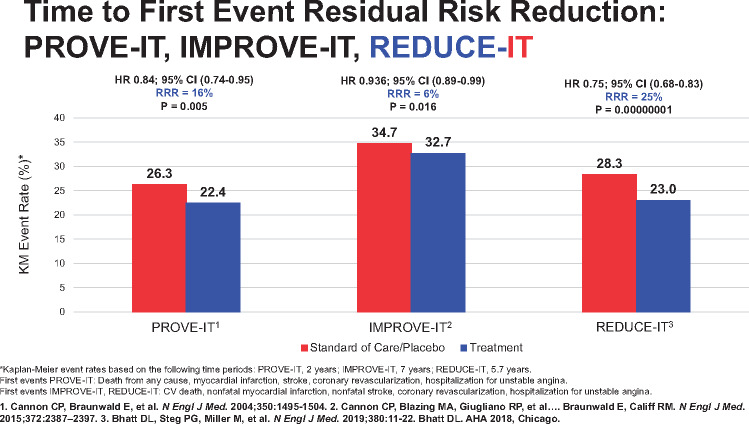
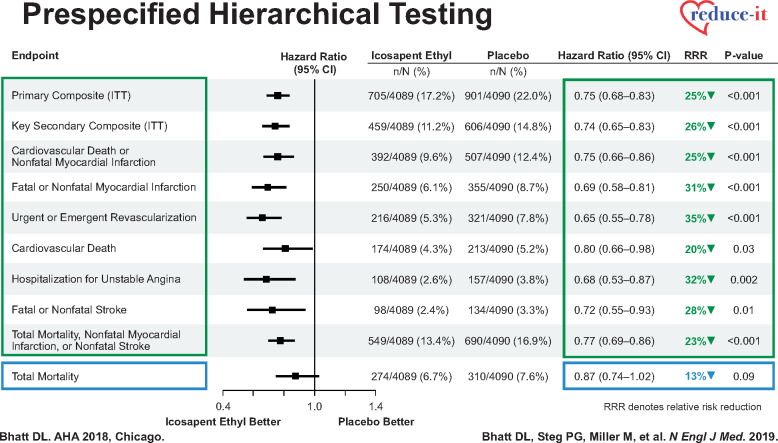
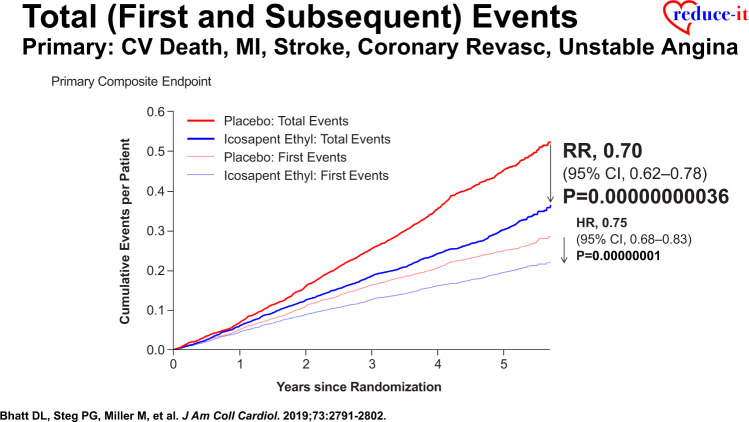
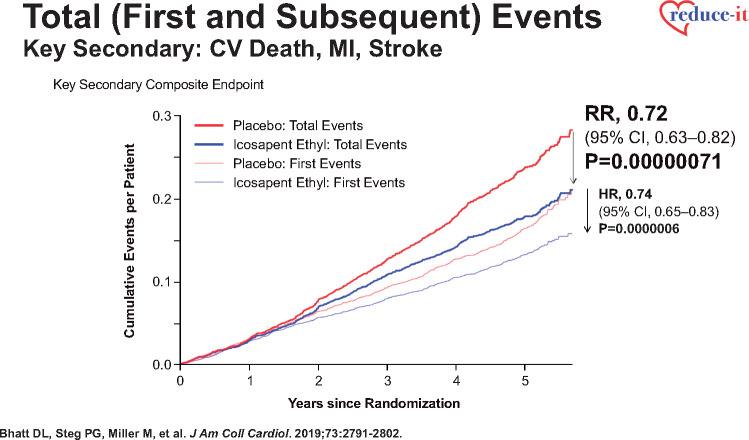
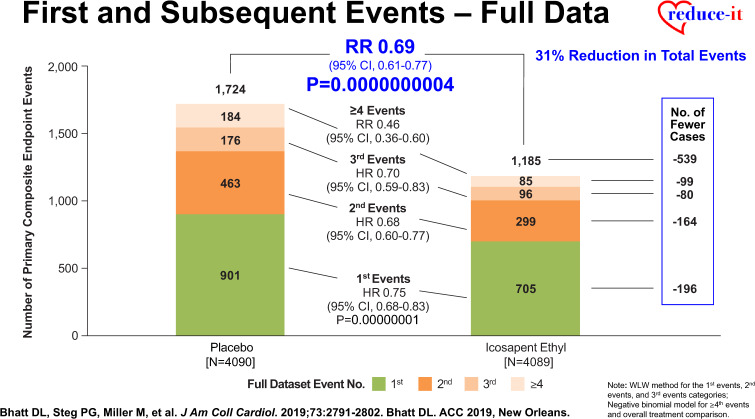
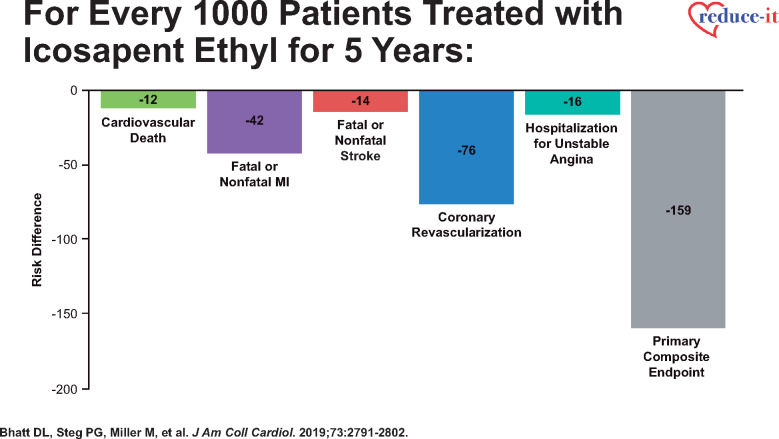
The aims of this clinical review are to: (i) highlight the importance of elevated baseline triglycerides (TG) in the setting of well-controlled low-density lipoprotein cholesterol (LDL-C) on statins as a major contributor to residual atherosclerotic cardiovascular disease (ASCVD) risk, particularly among patients with type 2 diabetes mellitus, metabolic syndrome, and obesity whose distinctive lipid phenotype cannot be optimally treated with LDL-C reduction therapy alone; (ii) describe the findings and clinical implications of the landmark REDUCE-IT trial in which ethyl eicosapentaenoic acid significantly improved ASCVD outcomes. While many genetic studies have shown that elevated TG are an independent causal factor for ASCVD, prior placebo-controlled trials using niacin, fibrates, omega-3 fatty acids, and dietary supplement fish oil preparations have failed to demonstrate significant CV event reduction when added to statin therapy. In contrast, the REDUCE-IT trial in 8179 participants showed convincingly that the administration of 4 g daily of icosapent ethyl (an ethyl ester of eicosapentaenoic acid) in patients at high risk for ASCVD with increased levels of baseline TG [median value, 2.44 mmol/L (216.0 mg/dL)] but well-controlled LDL-C [median value, 1.94 mmol/L (75.0 mg/dL)] reduced significantly incident events across both the trial primary endpoint and multiple prespecified secondary endpoints, including cardiovascular death, as well as both subsequent and total primary endpoint and key secondary endpoint events. Icosapent ethyl unequivocally contributed to ASCVD event reduction over and above statin therapy. The REDUCE-IT trial results should alter our approach to managing a growing population of hypertriglyceridaemic patients whose lipid phenotype requires more intensive treatment beyond LDL-C lowering alone.
Overview
The claims and statistics of this paper haven’t been checked yet.
Free: it reads the open-access text and checks the first 5 claims that cite a source we can check. Create a free account to check every claim.
Integrity signals
Registry
Cites
Statistics
Figures
Verification
Claims the paper makes
The claims and statistics of this paper haven’t been checked yet.
Free: it reads the open-access text and checks the first 5 claims that cite a source we can check. Create a free account to check every claim.
Claims other papers make about this one
Each is checked against this paper’s own text: does it say what the citing paper says it does?
The cited source says what the claim attributes to it.
In the citing paper
“Besides LDL-C, hypertriglyceridaemia is thought to contribute to development and progression of atherosclerotic coronary plaques”
From Effects of omega-3 fatty acids on coronary revascularization and cardiovascular events: a meta-analysis (2024) · cites this paper as [9]
In the citing paper
“also debated are specific benefits of eicosapentaenoic acid (EPA)”
From Effects of omega-3 fatty acids on coronary revascularization and cardiovascular events: a meta-analysis (2024) · cites this paper as [9]
In the citing paper
“Benefits of pharmacologic omega-3 fatty acid administration in cardiovascular prevention are controversial.”
From Effects of omega-3 fatty acids on coronary revascularization and cardiovascular events: a meta-analysis (2024) · cites this paper as [9]
Self-check
Percentages, sums and reported differences re-computed from the paper’s own numbers.
The self-check needs the paper’s full text.
Citations
Cites
Mach, F., Baigent, C., Catapano, A. L., Koskinas, K. C., Casula, M., Badimon, L., Chapman, M. J., De Backer, G. G., Delgado, V., Ference, B. A., et al. (2020) · European Heart Journal · doi:10.1093/eurheartj/ehz455 · Cited by 8,961
Self-citationEvolocumab and Clinical Outcomes in Patients with Cardiovascular Disease
Sabatine, M. S., Giugliano, R. P., Keech, A. C., Honarpour, N., Wiviott, S. D., Murphy, S. A., Kuder, J. F., Wang, H., Liu, T., Wasserman, S. M., et al. (2017) · New England Journal of Medicine · doi:10.1056/nejmoa1615664 · Cited by 6,138
Intensive versus Moderate Lipid Lowering with Statins after Acute Coronary Syndromes
Cannon, C. P., Braunwald, E., McCabe, C. H., Rader, D. J., Rouleau, J. L., Belder, R., Joyal, S. V., Hill, K. A., Pfeffer, M. A., & Skene, A. M. (2004) · New England Journal of Medicine · doi:10.1056/nejmoa040583 · Cited by 4,938
Mach, F., Baigent, C., Catapano, A. L., Koskinas, K. C., Casula, M., Badimon, L., Chapman, M. J., De Backer, G. G., Delgado, V., Ference, B. A., et al. (2019) · Atherosclerosis · doi:10.1016/j.atherosclerosis.2019.08.014 · Cited by 4,854
Self-citationEzetimibe Added to Statin Therapy after Acute Coronary Syndromes
Cannon, C. P., Blazing, M. A., Giugliano, R. P., McCagg, A., White, J. A., Theroux, P., Darius, H., Lewis, B. S., Ophuis, T. O., Jukema, J. W., et al. (2015) · New England Journal of Medicine · doi:10.1056/nejmoa1410489 · Cited by 4,487
Alirocumab and Cardiovascular Outcomes after Acute Coronary Syndrome
Schwartz, G. G., Steg, P. G., Szarek, M., Bhatt, D. L., Bittner, V. A., Diaz, R., Edelberg, J. M., Goodman, S. G., Hanotin, C., Harrington, R. A., et al. (2018) · New England Journal of Medicine · doi:10.1056/nejmoa1801174 · Cited by 3,634
Self-citationRubins, H. B., Robins, S. J., Collins, D., Fye, C. L., Anderson, J. W., Elam, M. B., Faas, F. H., Linares, E., Schaefer, E. J., Schectman, G., et al. (1999) · New England Journal of Medicine · doi:10.1056/nejm199908053410604 · Cited by 3,439
Cardiovascular Risk Reduction with Icosapent Ethyl for Hypertriglyceridemia
Bhatt, D. L., Steg, P. G., Miller, M., Brinton, E. A., Jacobson, T. A., Ketchum, S. B., Doyle, R. T., Juliano, R. A., Jiao, L., Granowitz, C., et al. (2019) · New England Journal of Medicine · doi:10.1056/nejmoa1812792 · Cited by 3,317 · cited 12×
“Of note, even the subset of patients with baseline TG <_ 150 mg/dL benefitted.(40)”
BackgroundResultInfluentialSelf-citationEffects of Combination Lipid Therapy in Type 2 Diabetes Mellitus
(2010) · New England Journal of Medicine · doi:10.1056/nejmoa1001282 · Cited by 2,837 · cited 1×
“Multiple prior placebocontrolled trials in the statin era, which tested the co-administration of fibrates or niacin, have failed to demonstrate incremental ASCVD event reduction after ‘optimally controlled’ LDL-C levels have been achieved with statins.(24) Notably, therapies such as fibrates (in particular gemfibrozil…”
BackgroundYokoyama, M., Origasa, H., Matsuzaki, M., Matsuzawa, Y., Saito, Y., Ishikawa, Y., Oikawa, S., Sasaki, J., Hishida, H., Itakura, H., et al. (2007) · The Lancet · doi:10.1016/s0140-6736(07)60527-3 · Cited by 2,516
Interpretation of the evidence for the efficacy and safety of statin therapy
Collins, R., Reith, C., Emberson, J., Armitage, J., Baigent, C., Blackwell, L., Blumenthal, R., Danesh, J., Smith, G. D., DeMets, D., et al. (2016) · The Lancet · doi:10.1016/s0140-6736(16)31357-5 · Cited by 1,857
Chapman, M. J., Ginsberg, H. N., Amarenco, P., Andreotti, F., Borén, J., Catapano, A. L., Descamps, O. S., Fisher, E., Kovanen, P. T., Kuivenhoven, J. A., et al. (2011) · European Heart Journal · doi:10.1093/eurheartj/ehr112 · Cited by 1,227
Self-citationRemnant Cholesterol as a Causal Risk Factor for Ischemic Heart Disease
Varbo, A., Benn, M., Tybjærg-Hansen, A., Jørgensen, A. B., Frikke-Schmidt, R., & Nordestgaard, B. G. (2013) · Journal of the American College of Cardiology · doi:10.1016/j.jacc.2012.08.1026 · Cited by 1,115 · cited 1×
“In addition to their TG cargo, remnant lipoproteins may be proatherogenic because they also carry cholesterol and are proinflammatory.(22,23) Multiple prior placebocontrolled trials in the statin era, which tested the co-administration of fibrates or niacin, have failed to demonstrate incremental ASCVD event reduction…”
BackgroundLoss-of-Function Mutations in APOC3, Triglycerides, and Coronary Disease
The TG and HDL Working Group of the Exome Sequencing Project, N. H. (2014) · New England Journal of Medicine · doi:10.1056/nejmoa1307095 · Cited by 1,071
Marine n−3 Fatty Acids and Prevention of Cardiovascular Disease and Cancer
Manson, J. E., Cook, N. R., Lee, I.-M., Christen, W., Bassuk, S. S., Mora, S., Gibson, H., Albert, C. M., Gordon, D., Copeland, T., et al. (2019) · New England Journal of Medicine · doi:10.1056/nejmoa1811403 · Cited by 979
Rizos, E. C., Ntzani, E. E., Bika, E., Kostapanos, M. S., & Elisaf, M. S. (2012) · JAMA · doi:10.1001/2012.jama.11374 · Cited by 960
Genetic and Pharmacologic Inactivation of ANGPTL3 and Cardiovascular Disease
Dewey, F. E., Gusarova, V., Dunbar, R. L., O’Dushlaine, C., Schurmann, C., Gottesman, O., McCarthy, S., Van Hout, C. V., Bruse, S., Dansky, H. M., et al. (2017) · New England Journal of Medicine · doi:10.1056/nejmoa1612790 · Cited by 885
Bucher, H. C., Hengstler, P., Schindler, C., & Meier, G. (2002) · The American Journal of Medicine · doi:10.1016/s0002-9343(01)01114-7 · Cited by 823
Ference, B. A., Kastelein, J. J. P., Ray, K. K., Ginsberg, H. N., Chapman, M. J., Packard, C. J., Laufs, U., Oliver-Williams, C., Wood, A. M., Butterworth, A. S., et al. (2019) · JAMA · doi:10.1001/jama.2018.20045 · Cited by 703
Self-citationEffects of n−3 Fatty Acid Supplements in Diabetes Mellitus
The ASCEND Study Collaborative Group (2018) · New England Journal of Medicine · doi:10.1056/nejmoa1804989 · Cited by 698
Varbo, A., Benn, M., Tybjærg-Hansen, A., & Nordestgaard, B. G. (2013) · Circulation · doi:10.1161/circulationaha.113.003008 · Cited by 692
Genetics of coronary artery disease: discovery, biology and clinical translation
Khera, A. V., & Kathiresan, S. (2017) · Nature Reviews Genetics · doi:10.1038/nrg.2016.160 · Cited by 659
Hegele, R. A., Ginsberg, H. N., Chapman, M. J., Nordestgaard, B. G., Kuivenhoven, J. A., Averna, M., Borén, J., Bruckert, E., Catapano, A. L., Descamps, O. S., et al. (2014) · The Lancet Diabetes & Endocrinology · doi:10.1016/s2213-8587(13)70191-8 · Cited by 635
Self-citationAung, T., Halsey, J., Kromhout, D., Gerstein, H. C., Marchioli, R., Tavazzi, L., Geleijnse, J. M., Rauch, B., Ness, A., Galan, P., et al. (2018) · JAMA Cardiology · doi:10.1001/jamacardio.2017.5205 · Cited by 632
Siscovick, D. S., Barringer, T. A., Fretts, A. M., Wu, J. H. Y., Lichtenstein, A. H., Costello, R. B., Kris-Etherton, P. M., Jacobson, T. A., Engler, M. B., Alger, H. M., et al. (2017) · Circulation · doi:10.1161/cir.0000000000000482 · Cited by 629
Very Low Levels of Atherogenic Lipoproteins and the Risk for Cardiovascular Events
Boekholdt, S. M., Hovingh, G. K., Mora, S., Arsenault, B. J., Amarenco, P., Pedersen, T. R., LaRosa, J. C., Waters, D. D., DeMicco, D. A., Simes, R. J., et al. (2014) · Journal of the American College of Cardiology · doi:10.1016/j.jacc.2014.02.615 · Cited by 581 · cited 1×
“and small dense LDL particles, but also with elevated levels of serum triglycerides (TG), low levels of high-density lipoprotein cholesterol (HDL-C), and increased remnant lipoproteins.(1,3,6) It is also important to underscore that, despite intensive treatment with statins as well as newer and more powerful therapies…”
BackgroundKwak (2012) · doi:10.1001/archinternmed.2012.262 · Cited by 368
Saito, Y., Yokoyama, M., Origasa, H., Matsuzaki, M., Matsuzawa, Y., Ishikawa, Y., Oikawa, S., Sasaki, J., Hishida, H., Itakura, H., et al. (2008) · Atherosclerosis · doi:10.1016/j.atherosclerosis.2008.06.003 · Cited by 316 · cited 1×
“043].(38) Of note, the benefits seen in JELIS were consistent in both the secondary and primary prevention cohorts enrolled.”
ResultFish oil — How does it reduce plasma triglycerides?
Shearer, G. C., Savinova, O. V., & Harris, W. S. (2012) · Biochimica et Biophysica Acta (BBA) - Molecular and Cell Biology of Lipids · doi:10.1016/j.bbalip.2011.10.011 · Cited by 285 · cited 1×
“Omega-3 fatty acids are known to be efficacious in lowering TG levels by reducing VLDL production, stimulating lipoprotein lipase activity, and augmenting VLDL clearance.(28) The OM3FA may also exert pleiotropic effects, such as attenuating atherogenesis and reducing plaque instability, which could likewise contribute…”
BackgroundJacobson, T. A., Glickstein, S. B., Rowe, J. D., & Soni, P. N. (2012) · Journal of Clinical Lipidology · doi:10.1016/j.jacl.2011.10.018 · Cited by 263 · cited 1×
“The OM3FA may also exert pleiotropic effects, such as attenuating atherogenesis and reducing plaque instability, which could likewise contribute to residual ASCVD risk reduction.(29) The OM3FA are substrates for the formation of protectins and resolvins, molecules which promote the resolution of inflammation in a vari…”
BackgroundEffects of Icosapent Ethyl on Total Ischemic Events
Bhatt, D. L., Steg, P. G., Miller, M., Brinton, E. A., Jacobson, T. A., Ketchum, S. B., Doyle, R. T., Juliano, R. A., Jiao, L., Granowitz, C., et al. (2019) · Journal of the American College of Cardiology · doi:10.1016/j.jacc.2019.02.032 · Cited by 259
Self-citationVarbo, A., Benn, M., & Nordestgaard, B. G. (2014) · Pharmacology & Therapeutics · doi:10.1016/j.pharmthera.2013.11.008 · Cited by 251 · cited 1×
“Triglyceride-enriched lipoproteins correlate highly with increased risk for ASCVD events.(20,21) In addition to their TG cargo, remnant lipoproteins may be proatherogenic because they also carry cholesterol and are proinflammatory.”
BackgroundXiao, C., Dash, S., Morgantini, C., Hegele, R. A., & Lewis, G. F. (2016) · Diabetes · doi:10.2337/db16-0046 · Cited by 212 · cited 1×
“and small dense LDL particles, but also with elevated levels of serum triglycerides (TG), low levels of high-density lipoprotein cholesterol (HDL-C), and increased remnant lipoproteins.(1,3,6) It is also important to underscore that, despite intensive treatment with statins as well as newer and more powerful therapies…”
BackgroundUnmet Need for Adjunctive Dyslipidemia Therapy in Hypertriglyceridemia Management
Ganda, O. P., Bhatt, D. L., Mason, R. P., Miller, M., & Boden, W. E. (2018) · Journal of the American College of Cardiology · doi:10.1016/j.jacc.2018.04.061 · Cited by 195
Self-citationBhatt, D. L., Steg, P. G., Brinton, E. A., Jacobson, T. A., Miller, M., Tardif, J., Ketchum, S. B., Doyle, R. T., Murphy, S. A., Soni, P. N., et al. (2017) · Clinical Cardiology · doi:10.1002/clc.22692 · Cited by 183
Self-citationRelationship of Lipoproteins to Cardiovascular Events
Guyton, J. R., Slee, A. E., Anderson, T., Fleg, J. L., Goldberg, R. B., Kashyap, M. L., Marcovina, S. M., Nash, S. D., O'Brien, K. D., Weintraub, W. S., et al. (2013) · Journal of the American College of Cardiology · doi:10.1016/j.jacc.2013.07.023 · Cited by 182
Self-citationJoshi, P. H., Khokhar, A. A., Massaro, J. M., Lirette, S. T., Griswold, M. E., Martin, S. S., Blaha, M. J., Kulkarni, K. R., Correa, A., D'Agostino, R. B., et al. (2016) · Journal of the American Heart Association · doi:10.1161/jaha.115.002765 · Cited by 177 · cited 1×
“Triglyceride-enriched lipoproteins correlate highly with increased risk for ASCVD events.(20,21) In addition to their TG cargo, remnant lipoproteins may be proatherogenic because they also carry cholesterol and are proinflammatory.”
BackgroundSelf-citationNicholls, S. J., Lincoff, A. M., Bash, D., Ballantyne, C. M., Barter, P. J., Davidson, M. H., Kastelein, J. J. P., Koenig, W., McGuire, D. K., Mozaffarian, D., et al. (2018) · Clinical Cardiology · doi:10.1002/clc.23055 · Cited by 167 · cited 1×
“will have the same or different findings.(48) Because there are fundamental differences between EPA and DHA in the duration of antioxidant activity as well as effects on membrane lipid structure and function within peripheral cells, it cannot be assumed that the same clinical findings observed in REDUCE-IT will be fou…”
ResultSelf-citationSurprises from genetic analyses of lipid risk factors for atherosclerosis
Musunuru, K., & Kathiresan, S. (2016) · Circulation Research · doi:10.1161/circresaha.115.306398 · Cited by 159
Robinson (2012) · doi:10.1016/j.amjcard.2012.07.007 · Cited by 137
Preston Mason, R. (2019) · Current Atherosclerosis Reports · doi:10.1007/s11883-019-0762-1 · Cited by 129 · cited 3×
“2310 W.E. Boden et al. D ow nloaded from https://academ ic.oup.com /eurheartj/article/41/24/2304/5686013 by BIU SJ (Paris 6) user on 09 Septem ber 2020 .. .. .. .. .. .. .. .. .. .. .. .. .. .. .. .. .. .. .. .. .. .. .. .. .. .. .. .. .. .. .. .. .. .. .. .. .. .. .. .. .. .. .. .. .. .. .. .. .. ..will have the same…”
ResultInfluentialHalcox, J. P., Banegas, J. R., Roy, C., Dallongeville, J., De Backer, G., Guallar, E., Perk, J., Hajage, D., Henriksson, K. M., & Borghi, C. (2017) · BMC Cardiovascular Disorders · doi:10.1186/s12872-017-0591-5 · Cited by 122 · cited 1×
“30 mmol/L (204 mg/ dL).(10) In a more recent NHANES analysis spanning 2007–14, an estimated one-third of all patients on statin therapy have a serum TG >_1.”
BackgroundOrringer, C. E., Jacobson, T. A., & Maki, K. C. (2019) · Journal of Clinical Lipidology · doi:10.1016/j.jacl.2019.10.014 · Cited by 103
Bhatt, D. L., Steg, P. G., Miller, M., Brinton, E. A., Jacobson, T. A., Jiao, L., Tardif, J.-C., Gregson, J., Pocock, S. J., & Ballantyne, C. M. (2019) · Journal of the American College of Cardiology · doi:10.1016/j.jacc.2019.06.043 · Cited by 97
Self-citationNosaka, K., Miyoshi, T., Iwamoto, M., Kajiya, M., Okawa, K., Tsukuda, S., Yokohama, F., Sogo, M., Nishibe, T., Matsuo, N., et al. (2017) · International Journal of Cardiology · doi:10.1016/j.ijcard.2016.11.105 · Cited by 88
Triglycerides on the rise: should we swap seats on the seesaw?
Libby, P. (2015) · European Heart Journal · doi:10.1093/eurheartj/ehu500 · Cited by 85
FISHing for the Miracle of Eicosapentaenoic Acid
Kastelein, J. J. P., & Stroes, E. S. G. (2019) · New England Journal of Medicine · doi:10.1056/nejme1814004 · Cited by 74 · cited 4×
“In their editorial to the REDUCE-IT trial, ‘FISHing for the Miracle of Eicosapentaenoic Acid,’ Kastelein and Stroes stated that they ‘welcome these results with surprise, speculation, and hope’.(47) What remains unsettled until the completion of the ongoing Statin Residual Risk Reduction With EpaNova in High Cardiovas…”
BackgroundInfluentialFan, W., Philip, S., Granowitz, C., Toth, P. P., & Wong, N. D. (2019) · Journal of Clinical Lipidology · doi:10.1016/j.jacl.2018.11.008 · Cited by 67 · cited 1×
“69 mmol/L in whom over 1 million ASCVD-related events are expected in the next decade.(11) It is highly likely that the prevalence of elevated TG will continue to escalate in all regions of the world as the ‘triple-threat’ epidemics of T2DM, metabolic syndrome, and obesity continue to accelerate globally.”
BackgroundSelf-citationGeneralizability of the REDUCE-IT Trial in Patients With Stable Coronary Artery Disease
Picard, F., Bhatt, D. L., Ducrocq, G., Elbez, Y., Ferrari, R., Ford, I., Tardif, J.-C., Tendera, M., Fox, K. M., & Steg, P. G. (2019) · Journal of the American College of Cardiology · doi:10.1016/j.jacc.2019.01.016 · Cited by 39 · cited 1×
“Furthermore, the results of REDUCE-IT appear to be quite generalizable to routine clinical practice.(46) Outcomes were shown to be independent of both baseline serum TG and LDL-C levels.”
Self-citationBhatt, D. L. (2019) · European Heart Journal · doi:10.1093/eurheartj/ehz179 · Cited by 37
Self-citation
Research works printed but not linked: 6
- Hong KN, Fuster V, Rosenson RS, Rosendorff C, Bhatt DL. How low to go with glucose, cholesterol, and blood pressure in primary prevention of CVD. J Am Coll Cardiol 2017; 70: 2171– 2185. 29050566 · DOI · Paper page
- Rosinger A, Carroll MD, Lacher D, Ogden C. Trends in total cholesterol, triglycerides, and low-density lipoprotein in US adults, 1999-2014. JAMA Cardiol 2017; 2: 339– 341. 27902824 PMC7388068 · DOI · Paper page
- Amber V, Kotseva K, Turner EL, Jennings C, Atrey A, Jones J, Connolly S, Bowker TJ, Wood DA. Dyslipidaemia and atherosclerotic vascular disease: DYSIS results in the UK. Br J Cardiol 2013; 20(suppl 3): S9– S10.
- Kohli P, Levy BD. Resolvins and protectins: mediating solutions to inflammation. Br J Pharmacol 2009; 158: 960– 971. 19594757 PMC2785519 · DOI · Paper page
- Alexander DD, Miller PE, Van Elswyk ME, Kuratko CN, Bylsma LC. A meta-analysis of randomized controlled trials and prospective cohort studies of eicosapentaenoic and docosahexaenoic long-chain omega-3 fatty acids and coronary heart disease risk. Mayo Clin Proc 2017; 92: 15– 29. 28062061 · DOI · Paper page
- Orringer CE, Jacobson TA, Maki KC. National Lipid Association position on the use of icosapent ethyl in high and very high risk patients. Clin Lipid Update 2019; 2019. 31787586
Cited by
Budoff, M. J., Bhatt, D. L., Kinninger, A., Lakshmanan, S., Muhlestein, J. B., Le, V. T., May, H. T., Shaikh, K., Shekar, C., Roy, S. K., et al. (2020) · European Heart Journal · doi:10.1093/eurheartj/ehaa652 · Cited by 446
Self-citationEmerging Mechanisms of Cardiovascular Protection for the Omega-3 Fatty Acid Eicosapentaenoic Acid
Mason, R. P., Libby, P., & Bhatt, D. L. (2020) · Arteriosclerosis, Thrombosis, and Vascular Biology · doi:10.1161/atvbaha.119.313286 · Cited by 407
Self-citationCauses and consequences of hypertriglyceridemia
Packard, C. J., Boren, J., & Taskinen, M.-R. (2020) · Frontiers in Endocrinology · doi:10.3389/fendo.2020.00252 · Cited by 239
“Finally, it is recognized increasingly that the size of the unmet clinical need is substantial in the “real-world” where surveys have revealed a high prevalence of persistent hypertriglyceridemia in well-treated patients with established ASCVD (126), and in patients with diabetes and metabolic syndrome (127, 128).”
BackgroundThe role of remnant cholesterol beyond low-density lipoprotein cholesterol in diabetes mellitus
Hu, X., Liu, Q., Guo, X., Wang, W., Yu, B., Liang, B., Zhou, Y., Dong, H., & Lin, J. (2022) · Cardiovascular Diabetology · doi:10.1186/s12933-022-01554-0 · Cited by 150
Mineral oil: safety and use as placebo in REDUCE-IT and other clinical studies
Olshansky, B., Chung, M. K., Budoff, M. J., Philip, S., Jiao, L., Doyle, Jr., Copland, C., Giaquinto, A., Juliano, R. A., & Bhatt, D. L. (2020) · European Heart Journal Supplements · doi:10.1093/eurheartj/suaa117 · Cited by 103
“001].(8,14,15) While reduction in TG levels may contribute to overall outcomes, they likely did not contribute substantially to the degree of CV risk reduction observed.”
BackgroundSelf-citation
Metadata
- Authors
- Boden, W. E., Bhatt, D. L., Toth, P. P., Ray, K. K., Chapman, M. J., & Lüscher, T. F.
- Affiliations
- VA New England Healthcare System, Boston University School of Medicine , 150 S. Huntington Avenue, Boston, MA 02130, USA
- Brigham and Women’s Hospital Heart & Vascular Center , Harvard Medical School, Boston, MA, USA
- CGH Medical Center , Sterling, IL, USA
- Imperial Centre for Cardiovascular Disease Prevention, School of Public Health , Imperial College London, London, UK
- Sorbonne University, Pitie-Salpetriere University Hospital , Paris, France
- University Heart Center, University Hospital , Zurich, Switzerland
- Venue
- European Heart Journal
- Publisher
- Oxford University Press (OUP)
- Published
- 2019-12-23
- Volume
- 41
- Issue
- 24
- Pages
- 2304-2312
- ISSN
- 0195-668X
- 1522-9645
- PMC
- PMC7308541
- Semantic Scholar
- df221e2281899a35e027fbaea2adf4f354dc961e
- Cited by
- 72
- References
- 50
- Language
- en
About these checks
Registry, retraction, Cites and statistics results are computed, not judged, with one exception: a printed reference that no index lists is read once by a model before it counts as a citation error. Claims are extracted by a model and kept only when their quote appears verbatim in the text; each cited source is then checked, with a model’s help, for whether it says what the claim relies on. Those verdicts can be wrong — read the claim’s quote and the cited source before relying on one.
Statistics and arithmetic are recomputed, not judged.
Confidence bands are shown only for fields calibrated on our annotated test set. None is calibrated yet, so no band is shown.
What counts as a claim ›How we measure confidence ›How we check this ›
Are you an author, or do you see a problem with this page? Request a review
Data sources
Bibliographic data: Semantic Scholar, OpenAlex, Crossref.
Contains information from the Semantic Scholar Academic Graph Datasets, made available under the ODC Attribution License (ODC-BY 1.0).
Semantic Scholar’s data is described in: Kinney, R., et al. (2023). The Semantic Scholar Open Data Platform. arXiv:2301.10140.
