

Adverse childhood experiences, childhood relationships and associated substance use and mental health in young Europeans
Open accessThe DOI matches its Crossref record; 29 of the 31 references it cites were found in a registry or an index.
Abstract
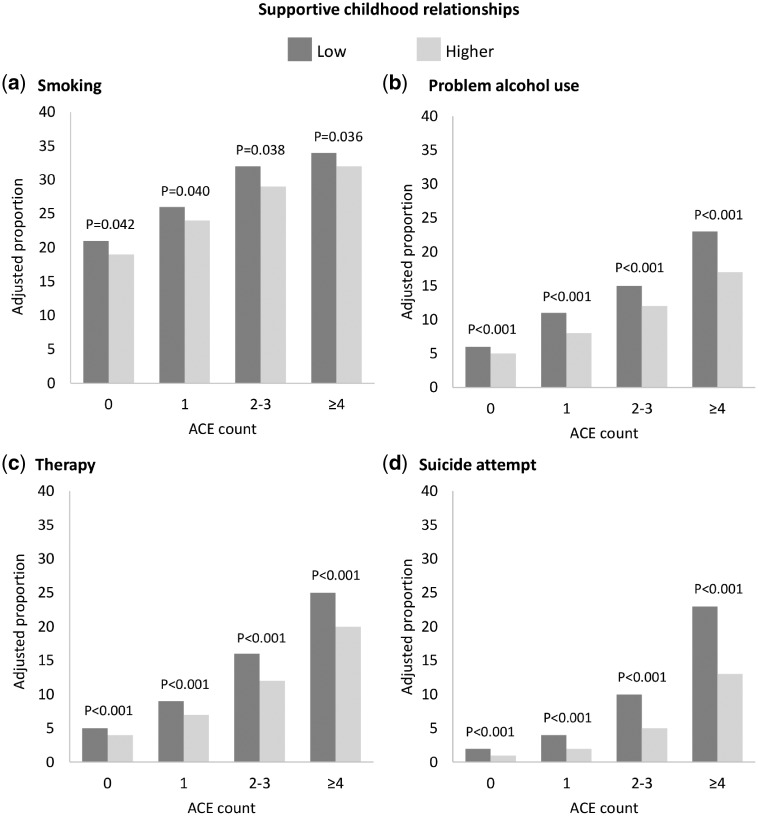
Background: Adverse childhood experiences (ACEs) can increase risks of health-harming behaviours and poor health throughout life. While increases in risk may be affected by resilience resources such as supportive childhood relationships, to date few studies have explored these effects. Methods: We combined data from cross-sectional ACE studies among young adults (n = 14 661) in educational institutions in 10 European countries. Nine ACE types, childhood relationships and six health outcomes (early alcohol initiation, problem alcohol use, smoking, drug use, therapy, suicide attempt) were explored. Multivariate modelling estimated relationships between ACE counts, supportive childhood relationships and health outcomes. Results: Almost half (46.2%) of participants reported ≥1 ACE and 5.6% reported ≥4 ACEs. Risks of all outcomes increased with ACE count. In individuals with ≥4 ACEs (vs. 0 ACEs), adjusted odds ratios ranged from 2.01 (95% CIs: 1.70–2.38) for smoking to 17.68 (95% CIs: 12.93–24.17) for suicide attempt. Supportive childhood relationships were independently associated with moderating risks of smoking, problem alcohol use, therapy and suicide attempt. In those with ≥4 ACEs, adjusted proportions reporting suicide attempt reduced from 23% with low supportive childhood relationships to 13% with higher support. Equivalent reductions were 25% to 20% for therapy, 23% to 17% for problem drinking and 34% to 32% for smoking. Conclusions: ACEs are strongly associated with substance use and mental illness. Harmful relationships are moderated by resilience factors such as supportive childhood relationships. Whilst ACEs continue to affect many children, better prevention measures and interventions that enhance resilience to the life-long impacts of toxic childhood stress are required.
Overview
The claims and statistics of this paper haven’t been checked yet.
Free: it reads the open-access text and checks the first 5 claims that cite a source we can check. Create a free account to check every claim.
Integrity signals
Registry
Cites
Statistics
Figures
Verification
Claims the paper makes
The claims and statistics of this paper haven’t been checked yet.
Free: it reads the open-access text and checks the first 5 claims that cite a source we can check. Create a free account to check every claim.
Self-check
Percentages, sums and reported differences re-computed from the paper’s own numbers.
The self-check needs the paper’s full text.
Citations
Cites
Hughes, K., Bellis, M. A., Hardcastle, K. A., Sethi, D., Butchart, A., Mikton, C., Jones, L., & Dunne, M. P. (2017) · The Lancet Public Health · doi:10.1016/s2468-2667(17)30118-4 · Cited by 5,255
Self-citationValidity of adult retrospective reports of adverse childhood experiences: review of the evidence
Hardt, J., & Rutter, M. (2004) · Journal of Child Psychology and Psychiatry · doi:10.1111/j.1469-7610.2004.00218.x · Cited by 2,827
Childhood adversities and adult psychopathology in the WHO World Mental Health Surveys
Kessler, R. C., McLaughlin, K. A., Green, J. G., Gruber, M. J., Sampson, N. A., Zaslavsky, A. M., Aguilar-Gaxiola, S., Alhamzawi, A. O., Alonso, J., Angermeyer, M., et al. (2010) · British Journal of Psychiatry · doi:10.1192/bjp.bp.110.080499 · Cited by 2,640
Adverse childhood experiences, allostasis, allostatic load and age-related disease
Danese, A., & McEwen, B. S. (2012) · Physiology & Behavior · doi:10.1016/j.physbeh.2011.08.019 · Cited by 2,140
The effects of childhood maltreatment on brain structure, function and connectivity
Teicher, M. H., Samson, J. A., Anderson, C. M., & Ohashi, K. (2016) · Nature Reviews Neuroscience · doi:10.1038/nrn.2016.111 · Cited by 1,856
The resilience framework as a strategy to combat stress-related disorders
Kalisch, R., Baker, D. G., Basten, U., Boks, M. P., Bonanno, G. A., Brummelman, E., Chmitorz, A., Fernàndez, G., Fiebach, C. J., Galatzer-Levy, I., et al. (2017) · Nature Human Behaviour · doi:10.1038/s41562-017-0200-8 · Cited by 782
Adverse childhood experiences and life opportunities: shifting the narrative
Metzler, M., Merrick, M. T., Klevens, J., Ports, K. A., & Ford, D. C. (2017) · Children and Youth Services Review · doi:10.1016/j.childyouth.2016.10.021 · Cited by 713
European report on preventing child maltreatment.
Sethi, D., Bellis, M. D. D., Hughes, K. N., Gilbert, R. E., Mitis, F., & Galea, G. (2013) · Cited by 560
Self-citationEffects of Parenting Programs on Child Maltreatment Prevention: A Meta-Analysis
Chen, M., & Chan, K. L. (2016) · Trauma, Violence, & Abuse · doi:10.1177/1524838014566718 · Cited by 441
Bellis, M. A., Hughes, K., Leckenby, N., Hardcastle, K. A., Perkins, C., & Lowey, H. (2015) · Journal of Public Health · doi:10.1093/pubmed/fdu065 · Cited by 391
Self-citation
Research works printed but not linked: 9
- World Health Organization Regional Office for Europe. Health 2020: A European Framework and Strategy for the 21st Century. Copenhagen: World Health Organization Regional Office for Europe, 2013.
- World Health Organization Regional Office for Europe. Investing in Children: The European Child Maltreatment Prevention Action Plan 2015-2020. Copenhagen: World Health Organization Regional Office for Europe, 2015.
- Welsh Government. Prosperity for All: The National Strategy. Cardiff: Welsh Government, 2017.
- Sethi D, Yon Y, Parekh N, et al European Status Report on Preventing Child Maltreatment. Copenhagen: World Health Organization Regional Office for Europe, 2018.
- NHS Education for Scotland. Transforming Psychological Trauma: A Knowledge and Skills Framework for the Scottish Workforce. Edinburgh: NHS Education for Scotland, 2017.
- World Health Organization Regional Office for Europe. Roadmap to implement the 2030 Agenda for Sustainable Development, building on Health 2020, the European policy for health and well-being. Budapest: Regional Committee for Europe, 2017.
- World Health Organization Regional Office for Europe. The European Mental Health Action Plan 2013-2020. Copenhagen: World Health Organization Regional Office for Europe, 2015.
- World Health Organization. INSPIRE: Seven Strategies for Ending Violence against Children. Geneva: World Health Organization, 2016.
- European Monitoring Centre for Drugs and Drug Addiction. European Drug Report 2018: Trends and Developments. Luxembourg: Publication Office of the European Union, 2018.
Cited by
Adverse childhood experiences (ACEs) and substance use disorder (SUD): A scoping review
Leza, L., Siria, S., López-Goñi, J. J., & Fernández-Montalvo, J. (2021) · Drug and alcohol dependence · doi:10.1016/j.drugalcdep.2021.108563 · Cited by 305
Hughes, K., Ford, K., Bellis, M. A., Glendinning, F., Harrison, E., & Passmore, J. (2021) · The Lancet Public Health · doi:10.1016/s2468-2667(21)00232-2 · Cited by 295
Self-citationButler, N., Quigg, Z., Bates, R., Jones, L., Ashworth, E., Gowland, S., & Jones, M. (2022) · School Mental Health · doi:10.1007/s12310-022-09502-9 · Cited by 254
Stress and substance use disorders: risk, relapse, and treatment outcomes
Sinha, R. (2024) · Journal of Clinical Investigation · doi:10.1172/jci172883 · Cited by 203
Brindle, R. C., Pearson, A., & Ginty, A. T. (2022) · Neuroscience & Biobehavioral Reviews · doi:10.1016/j.neubiorev.2022.104530 · Cited by 128
Turner, H. A., Finkelhor, D., Mitchell, K. J., Jones, L. M., & Henly, M. (2020) · Child Abuse & Neglect · doi:10.1016/j.chiabu.2020.104522 · Cited by 106
“This literature points very consistently to the large number of later health and mental health conditions that appear to be associated with the accumulation of exposures to stressful conditions in childhood (Felitti et al., 1998; Hughes et al., 2019; Nurius, Fleming, & Brindle, 2019; Petruccelli, Davis, & Berman, 2019…”
BackgroundRogers, C. J., Pakdaman, S., Forster, M., Sussman, S. Y., Grigsby, T. J., Victoria, J., & Unger, J. B. (2022) · Drug and Alcohol Dependence · doi:10.1016/j.drugalcdep.2022.109407 · Cited by 101
Hughes, K., Ford, K., Kadel, R., Sharp, C. A., & Bellis, M. A. (2020) · BMJ Open · doi:10.1136/bmjopen-2019-036374 · Cited by 82
Self-citationThai, T. T., Cao, P. L. T., Kim, L. X., Tran, D. P., Bui, M. B., & Bui, H. H. T. (2020) · Asian Journal of Psychiatry · doi:10.1016/j.ajp.2020.102134 · Cited by 74
Bhushan, D., Kotz, K. J., McCall, J., Wirtz, S., Gilgoff, R., Dube, S. R., Powers, C., Olson-Morgan, J., Galeste, M., Patterson, K., et al. (2020) · doi:10.48019/peam8812 · Cited by 121
Ghrelin as a Stress Hormone: Implications for Psychiatric Illness
Stone, L. A., Harmatz, E. S., & Goosens, K. A. (2020) · Biological Psychiatry · doi:10.1016/j.biopsych.2020.05.013 · Cited by 63
Abate, B. B., Sendekie, A. K., Tadesse, A. W., Engdaw, T., Mengesha, A., Zemariam, A. B., Alamaw, A. W., Abebe, G., & Azmeraw, M. (2024) · Frontiers in Psychiatry · doi:10.3389/fpsyt.2024.1391312 · Cited by 60
“For instance, studies have reported ACE prevalence rates ranging from 31% to 93.5% in China (5, 6), 46.2% in young Europeans (7), and a substantial 72% to 82% in Sub-Saharan Africa (8).”
BackgroundResultInfluentialSebalo, I., Königová, M. P., Vňuková, M., Anders, M., & Ptáček, R. (2023) · Substance Abuse Research and Treatment · doi:10.1177/11782218231193914 · Cited by 94
Grummitt, L., Kelly, E., Barrett, E., Keyes, K., & Newton, N. (2021) · PLOS ONE · doi:10.1371/journal.pone.0252815 · Cited by 51
Broekhof, R., Nordahl, H. M., Tanum, L., & Selvik, S. G. (2023) · Addictive Behaviors Reports · doi:10.1016/j.abrep.2023.100488 · Cited by 81
Lachman, J. M., Heinrichs, N., Jansen, E., Brühl, A., Tăut, D., Fang, X., Gardner, F. E. M., Hutchings, J., Ward, C. L., Williams, M. E., et al. (2019) · Contemporary Clinical Trials · doi:10.1016/j.cct.2019.105855 · Cited by 50
“This is particularly relevant in Eastern Europe countries where studies on adverse childhood experiences (ACE) have shown associations with subsequent mental health and behavioral problems in adolescence and adulthood (Hughes et al., 2019).”
BackgroundSelf-citationBellis, M. A., Hughes, K. E., Cresswell, K., & Ford, K. (2023) · BMJ Open · doi:10.1136/bmjopen-2023-072916 · Cited by 51
Self-citationMacalli, M., Côté, S. M., & Tzourio, C. (2020) · Journal of Affective Disorders · doi:10.1016/j.jad.2020.02.009 · Cited by 56
The association between adverse childhood experiences and young adult outcomes: A scoping study
Park, E., Lee, J., & Han, J. (2021) · Children and Youth Services Review · doi:10.1016/j.childyouth.2020.105916 · Cited by 46
Meulewaeter, F., Schauwer, E. D., Pauw, S. S. W. D., & Vanderplasschen, W. (2022) · Frontiers in Psychiatry · doi:10.3389/fpsyt.2022.768802 · Cited by 61
Childhood Poverty, Adverse Childhood Experiences, and Adult Health Outcomes
Lee, H., Slack, K. S., Berger, L. M., Mather, R. S., & Murray, R. K. (2021) · Health & Social Work · doi:10.1093/hsw/hlab018 · Cited by 63
Early trauma and associations with altruistic attitudes and behaviours among young adults
Prior, K., Carvalheiro, M., Lawler, S., Stapinski, L. A., Newton, N. C., Mooney‐Somers, J., Basto-Pereira, M., & Barrett, E. L. (2021) · Child Abuse & Neglect · doi:10.1016/j.chiabu.2021.105091 · Cited by 31
Harland, J., Adams, E. A., Boobis, S., Cheetham, M., Wiseman, A., & Ramsay, S. E. (2021) · European Journal of Public Health · doi:10.1093/eurpub/ckab142 · Cited by 25
Hansen, C. D., Kirkeby, M. J., Kjelmann, K. G., Andersen, J. H., & Møberg, R. J. (2021) · BMC Public Health · doi:10.1186/s12889-021-12060-5 · Cited by 34
“Other studies have demonstrated that ACEs are associated with a higher risk of smoking [6, 8, 9], alcohol consumption [5], substance abuse [10], and suicide attempts [6].”
BackgroundGaming disorder and bidirectional relationships with aggression and impulsivity
Jeong, H., Lee, H. K., Kweon, Y., Yim, H. W., & Lee, S. (2019) · Current Opinion in Behavioral Sciences · doi:10.1016/j.cobeha.2019.12.003 · Cited by 34
Sumnall, H. R., Hamilton, I., Atkinson, A. M., Montgomery, C., & Gage, S. H. (2020) · Drugs Education Prevention and Policy · doi:10.1080/09687637.2020.1820450 · Cited by 26
Adverse childhood experiences and substance use among university students: a systematic review
Schwartz, A. N., Arsandaux, J., Montagni, I., Meschke, L. L., Galéra, C., & Tzourio, C. (2022) · Journal of Substance Use · doi:10.1080/14659891.2022.2114389 · Cited by 26
“Most studies found that ACEs were associated with current risky (Brett et al., 2018; Forster et al., 2019; Windle et al., 2018) or problem alcohol use (Hughes et al., 2019; Kameg & Mitchell, 2021; Schafer, 2021; Wiehn et al., 2018).”
BackgroundInfluentialFlett, G. L., Casale, S., Stoakes, A., Nepon, T. B., & Su, C. (2023) · Journal of Ethnicity in Substance Abuse · doi:10.1080/15332640.2023.2218283 · Cited by 21
“Similarly, Hughes et al. (2019) showed with a sample of over 14,000 emerging adults from Europe that a composite measure of supportive childhood relationships that included an item tapping having someone who made them feel special and important (i.e., greater mattering) was linked with less smoking…”
Abufarsakh, B., Okoli, C. T. C., Darville, A. K., Williams, L. B., Garcia, A. R., & Martin, C. A. (2023) · Addictive Behaviors · doi:10.1016/j.addbeh.2023.107948 · Cited by 21
Tăut, D., Băban, A., Frantz, I., Dănilă, I., Lachman, J. M., Heinrichs, N., Ward, C. L., Gardner, F. E. M., Fang, X., Hutchings, J., et al. (2021) · Trials · doi:10.1186/s13063-021-05817-1 · Cited by 19
Self-citationCaregiver and Child Adverse Childhood Experiences: A Meta-Analysis
Zhu, J., Deneault, A., Turgeon, J., & Madigan, S. L. (2025) · PEDIATRICS · doi:10.1542/peds.2024-068578 · Cited by 21
Lakkireddy, S. P., Balachander, S., Dayalamurthy, P., Bhattacharya, M., Joseph, M. S., Kumar, P., Kannampuzha, A. J., Mallappagari, S., Narayana, S., Alexander, A. C., et al. (2022) · Progress in Neuro-Psychopharmacology and Biological Psychiatry · doi:10.1016/j.pnpbp.2022.110620 · Cited by 22
Hinckley, J. D., Adams, Z. W., Dellucci, T. V., & Berkowitz, S. J. (2024) · Medical Research Archives · doi:10.18103/mra.v12i8.5688 · Cited by 21
“…childhood events (e.g., maltreatment, caregiver psychopathology, violence in the home), are common among European children and adolescents with data from multi-country surveys showing that approximately 50% of youth have experienced at least one adverse childhood event in their lifetime 1,2 .”
Patterns of adverse childhood experiences and cardiovascular risk factors in U.S. adults
Wooldridge, J. S., Tynan, M. E., Rossi, F. S., Gasperi, M., McLean, C. L., Bosch, J. O., TRIVEDI, R. B., Herbert, M. S., & Afari, N. (2022) · Stress and Health · doi:10.1002/smi.3167 · Cited by 16
Evaluation of an ACE-informed whole-school project development
Sparling, E., Woods, K., & Ford, A. (2022) · Educational Psychology in Practice · doi:10.1080/02667363.2021.2016373 · Cited by 10
“…studies conducted in the UK and internationally over the past two decades have contributed to a better understanding of adversity and childhood trauma, and their impacts upon adult mental and physical health and life outcomes (Hughes et al., 2019, 2017; Petrucelli et al, 2019; Thai et al., 2020).”
BackgroundSilke, C., Brady, B., Devaney, C., O’Brien, C., Durcan, M., Bunting, B. P., & Heary, C. (2023) · Journal of Youth and Adolescence · doi:10.1007/s10964-023-01762-1 · Cited by 16
“Given the array of research linking childhood adversity to poorer (short and longer-term) health outcomes (Hughes et al., 2019; Oh et al., 2018), these findings have relevant implications for policy and practice.”
BackgroundShi, X., Meng, Y., Cheng, B., Lu, L., Yin, L., Ye, A., Yi, X., & Ran, M. (2024) · Psychiatry Research · doi:10.1016/j.psychres.2024.115762 · Cited by 12
“Previous literature has established a graded association between traumatic exposure and adolescents ’ mental health (Daníelsd ´ ottir et al., 2022; Hughes et al., 2019).”
Chaudhary, V., Kaushik, A., Devi, N. K., Jain, S. G., & Saraswathy, K. N. (2025) · Scientific Reports · doi:10.1038/s41598-025-16079-1 · Cited by 10
Zhu, J., Racine, N. M., Tough, S., & Madigan, S. L. (2024) · Child Maltreatment · doi:10.1177/10775595241279365 · Cited by 12
“That is, the greater number of ACEs experienced, the greater the likelihood of problematic physical, mental, and relational outcomes (Felitti et al., 1998; Hughes et al., 2019; Petruccelli et al., 2019; Zhu et al., 2023).”
Swedo, E. A., Anderson, K. N., Okwori, G., DePadilla, L. M., Clayton, H. B., Villaveces, A., Ray, C. M., Niolon, P. H., & Massetti, G. M. (2024) · Journal of Adolescent Health · doi:10.1016/j.jadohealth.2024.07.030 · Cited by 9
The Role of Childhood Adversity and Social Drivers of Health in Subjective Cognitive Decline
Joshi, A., & Yeo, J. (2025) · Preventing Chronic Disease · doi:10.5888/pcd22.250116 · Cited by 11
Davis, A. K., Mangini, P., & Xin, Y. (2021) · Journal of Psychedelic Studies · doi:10.1556/2054.2021.00179 · Cited by 13
“Independent of a PTSD diagnosis, ACEs are correlated to the development of MDD, panic disorder, binge drinking, and increased suicide risk (Allem et al., 2015; Hughes et al., 2019; Maercker et al., 2004; Stein et al., 1996).”
BackgroundExamining the pathways from adverse childhood experiences to substance use
Azagba, S., Ebling, T., & Korkmaz, A. (2024) · Journal of Affective Disorders · doi:10.1016/j.jad.2024.10.090 · Cited by 11
Quigg, Z., Bellis, M. A., Butler, N., Wilson, C., Harris, J., Hearne, E., & Millings, M. (2025) · BMC Medicine · doi:10.1186/s12916-025-04459-3 · Cited by 7
Self-citationNguyen, P. T., Basson, D., & Perry, D. (2022) · Research on Child and Adolescent Psychopathology · doi:10.1007/s10802-022-00998-y · Cited by 8
“Research has shown that exposure to such adverse events, especially those that are traumatic, can threaten youth’s health and development (Shonkoff et al., 2012; Hughes et al., 2019).”
BackgroundBarnett, J. E. F., & Howe, T. R. (2020) · Violence and Victims · doi:10.1891/vv-d-19-00158 · Cited by 9
Surakka, A., Vengeliene, V., Skorodumov, I., Meinhardt, M. W., Hansson, A. C., & Spanagel, R. (2021) · Alcoholism Clinical and Experimental Research · doi:10.1111/acer.14640 · Cited by 8
Vinh, N. A., Hanh, V. T. M., Van, D. T. B., Tài, D. A., Loan, D. M., & Thủy, L. T. T. (2024) · Journal of Affective Disorders Reports · doi:10.1016/j.jadr.2024.100795 · Cited by 7
Adverse childhood experiences and smoking status in children: A systematic review and meta‐analysis
Amiri, S., Taridashti, S., & Khan, M. A. (2024) · Child Abuse Review · doi:10.1002/car.2882 · Cited by 7
Suleiman, A. O., Grasso, D. J., Hunter, A. A., Rosenheck, R. A., & Rhee, T. G. (2021) · Psychiatric Quarterly · doi:10.1007/s11126-021-09900-3 · Cited by 7
“While several studies have reported the impact of AFEs on behavioral conditions or mental health problems, and on school performance separately [8, 14, 15], there is a dearth of research on the potential mediating role that behavioral health conditions play between AFEs and school engagement and/or performance.”
BackgroundAn analysis of primary school student’s holistic well-being using PhotoVoice
Cashman, D., O’Brien, W., & Chambers, F. C. (2025) · Health Education · doi:10.1108/he-05-2024-0062 · Cited by 11
Walsh, C., Bunting, L., Davidson, G., Mulholland, C. C., McCartan, C. J., Doherty, N. N., & Shevlin, M. E. (2025) · BMJ Public Health · doi:10.1136/bmjph-2025-003360 · Cited by 7
Huang, L. (2022) · Substance Abuse Treatment Prevention and Policy · doi:10.1186/s13011-022-00460-8 · Cited by 7
Arat-Çelik, H. E., Tuna, G., Kendirlioglu, B. K., Kaymakçı, E. Ç., Yorguner, N., Teke, Z. Ş., & Ceylan, D. (2023) · Neuroscience Applied · doi:10.1016/j.nsa.2023.101138 · Cited by 5
“…trauma is widely recognized as a crucial risk factor for the development of various psychiatric conditions, including BD, more than 25% of adult psychiatric disorders have been linked to childhood trauma exposure (Pfaltz et al., 2022; Hughes et al., 2019; Selous et al., 2020; Sugaya et al., 2012).”
Schwartz, A. N., Galéra, C., Arsandaux, J., Montagni, I., & Tzourio, C. (2024) · International Journal of Behavioral Medicine · doi:10.1007/s12529-023-10256-0 · Cited by 5
Jebraeili, H., Davudizadeh, S., & Rezaee, R. (2023) · PubMed Central · doi:10.5249/jivr.v15i1.1748 · Cited by 9
Bebere, S., & Vrubļevska, J. (2023) · Education Innovation Diversity · doi:10.17770/eid2023.1.7054 · Cited by 4
“According to Hughes et al. (2019), more men than women reported current smoking, early drinking, problematic drinking and drug use.”
BackgroundMethodInfluentialFrederiksen, K. S., Hesse, M., & Pedersen, M. U. (2023) · Nordic Studies on Alcohol and Drugs · doi:10.1177/14550725221143177 · Cited by 5
“Different studies of adverse childhood experiences (ACEs) have shown how ACEs not only affect the children ’ s physical and mental health but also the risk of negative life course outcomes (Hansen et al., 2021; Hughes et al., 2019; Shin et al., 2018).”
BackgroundLou, X., Hu, H., Zou, X., Chen, X., Wu, Y., & Zhang, T. (2025) · Journal of Interpersonal Violence · doi:10.1177/08862605251343193 · Cited by 5
“%) reported in earlier studies conducted in Western nations (Hughes et al., 2019; Petruccelli et al., 2019; Swedo et al., 2023; Witt et al., 2019).”
Ong, E. J., Naidu, K. N. C., Tee, M., Tan, R. K. J., & Howard, N. (2026) · Comprehensive Psychiatry · doi:10.1016/j.comppsych.2026.152669 · Cited by 3
Childhood Maltreatment and Borderline Personality Disorder
Salavati, M., & Selby, E. A. (2024) · Springer eBooks · doi:10.1007/978-3-031-75503-3_4 · Cited by 5
Youth in Foster Care and the Reasonable and Prudent Parenting Standard
McRell, A. S., Holmes, C. E., Singh, A., Levkoff, S. E., Schooley, B. L., Hikmet, N., & Seay, K. D. (2020) · Child Maltreatment · doi:10.1177/1077559520957748 · Cited by 4
“…increases the risk for neurodevelopmental impairment (Schauss et al., 2019), aggressive behavior (Khodabandeh et al., 2018), mental health concerns (Hughes et al., 2019; Poletti et al., 2017), substance use disorders (Garland et al., 2019; Hughes et al., 2019), attachment difficulties (Fowler et…”
BackgroundInfluentialLee, H., & Chung, I. (2021) · Korean Journal of Child Studies · doi:10.5723/kjcs.2021.42.3.343 · Cited by 6
“하지만, 최근 해외 ACE 선행연구들 을 살펴보면, ACE의 정의를 기존의 전통적인 역경 경험의 유 형들(학대, 방임, 한정적인 가족 내의 문제들) 뿐만 아니라, 더 나아가 유년기의 가족의 사회경제적 수준(socioeconomic status [SES]) 또한 ACE의 문항에 포함시키거나 혹은 기존의 ACE와 더불어 주요한 추가적인 유년기 역경 경험의 독립변수로써 활 용하는 몇몇의 사례들을 확인할 수 있다(Braveman et al., 2018; Crouch, Jones, Strompolis, & Merrick, 2020;…”
Jacobs, W., Bristow, A., Sajan, S., Lowry, V., & Leventhal, A. M. (2023) · Journal of Ethnicity in Substance Abuse · doi:10.1080/15332640.2023.2280092 · Cited by 5
“Despite the variation in prevalence of specific ACE among racial/ethnic groups, studies examining the impact of ACE tend to examine its cumulative effect (e.g., Grigsby et al., 2020; Hughes et al., 2019; Lee & Chen, 2017).”
Halvaiepour, Z., & Nosratabadi, M. (2021) · Journal of Child & Adolescent Trauma · doi:10.1007/s40653-021-00383-9 · Cited by 6
Adverse Childhood Experience among Adolescents in the Ethnic Minorities of Lang Son Province
Vinh, N. A., & Hoan, N. T. M. (2024) · Tạp chí Nghiên cứu Y học · doi:10.52852/tcncyh.v177i4e14.2410 · Cited by 2
Adverse Childhood events of individuals and its relationship with resilience
Canatan, S. D., Arifoğlu, B., & Yatmaz, G. (2024) · Archives of Psychiatric Nursing · doi:10.1016/j.apnu.2024.05.003 · Cited by 6
Leza, L., López-Goñi, J. J., Arteaga, A., & Fernández‐Montalvo, J. (2025) · The Spanish Journal of Psychology · doi:10.1017/sjp.2025.6 · Cited by 3
Cepuch, G., Liber, P., & Kruszecka-Krówka, A. (2022) · Medical Studies · doi:10.5114/ms.2022.115150 · Cited by 2
Development and Validation of the Weighted Index for Childhood Adverse Conditions (WICAC)
Jacobsen, S. A., Bibby, B. M., Frostholm, L., Petersen, M. W., Ørnbøl, E., Schovsbo, S. U., Dantoft, T. M., & Carstensen, T. B. W. (2022) · International Journal of Environmental Research and Public Health · doi:10.3390/ijerph192013251 · Cited by 3
“We found estimates for cardiovascular disease [2,4,6,13], cancer [4,6,13], obesity [6,13], depression [2,4,6,13], anxiety [2,6,13], daily smoking [2,6,13], and alcohol addiction [2,6,13].”
BackgroundHaider, M. R., Clinton, S., Brown, M. J., & Hansen, N. B. (2024) · Drug and Alcohol Dependence Reports · doi:10.1016/j.dadr.2024.100309 · Cited by 1
“ACEs are associated with increased risk-taking as well as an increased likelihood of adverse health outcomes, like substance use disorder, later in life (Borgert et al., 2022; CDC, 2019; Hughes et al., 2019).”
Zhang, M., He, J., Young, J. M., You, J., & Li, J. (2025) · Frontiers in Public Health · doi:10.3389/fpubh.2025.1518607 · Cited by 1
Esen, B. K., Tugcu, U. E., Inan, K., & Can, G. (2025) · Medicine · doi:10.1097/md.0000000000043259 · Cited by 2
“[3] 6] According to data from 2018, the World Health Organization revealed that more than 55 million children in the European region were subjected to neglect or abuse.”
EMBRACE the Healing: Cultivating Compassion in Trauma-Informed Schools
McKernan, R., & O’Toole, C. (2025) · IGI Global eBooks · doi:10.4018/979-8-3693-1293-3.ch008 · Cited by 1
Atasoy, S. U., & Arslan, M. (2025) · The Journal of Nervous and Mental Disease · doi:10.1097/nmd.0000000000001855 · Cited by 1
Lin, W., Su, H.-K., & Chiao, C. (2025) · Children and Youth Services Review · doi:10.1016/j.childyouth.2025.108743 · Cited by 1
Predicting Substance Use in Young Adults: The Role of Childhood Adversity
Sinkevicius, L. V., Sakalauskaitė, S., Poškus, M. S., & Serapinas, D. (2026) · Medicina · doi:10.3390/medicina62040772 · Cited by 1
“Like other researchers [54,69,71], we found a connection between childhood sexual abuse and alcohol use severity.”
de Machala, U. T., Bryan, R., Y., C. E., de Machala, U. T., Padilla, Y. L. S., de Machala, U. T., R., P. M., & de Machala, U. T. (2023) · ESPACIOS · doi:10.48082/espacios-a23v44n09p08 · Cited by 3
Childhood Trauma Linked to Adult Waterpipe Smoking: A Survey of Health Science Students in Iran.
Naghavi, M., & Khosropour, F. (2020) · PubMed Central · doi:10.22122/ahj.v12i3.270 · Cited by 1
Osibogun, O. I., Erinoso, O. A., Li, W., Kalan, M. E., Bursac, Z., & Osibogun, A. O. (2023) · Health Education & Behavior · doi:10.1177/10901981231178696 · Cited by 3
“…factors is adverse childhood experiences (ACEs) which includes events related to parental mental illness, domestic violence, alcoholism, emotional, physical, and sexual abuse in childhood (Hughes et al., 2017; Hughes et al., 2019; Krinner et al., 2020; Mersky et al., 2013; Rogers et al., 2022).”
BackgroundSurakka, A., Vengeliene, V., Skorodumov, I., Meinhardt, M. W., Hansson, A. C., & Spanagel, R. (2020) · bioRxiv (Cold Spring Harbor Laboratory) · doi:10.1101/2020.12.07.411306
“The impact of multiple ACEs is best illustrated by the fact that the risk for suicide attempts is massively increased with an odds ratio of almost 18 (Hughes et al., 2019).”
BackgroundAcquarini, E., Ardino, V., & Rombaldoni, R. (2022) · IntechOpen eBooks · doi:10.5772/intechopen.104834 · Cited by 1
Zhang, M., He, J., Lu, T., Luo, O., You, J., & Li, J. (2023) · Research Square · doi:10.21203/rs.3.rs-3196422/v1
Adverse childhood experiences and the nurse’s role in prevention - literature review
Kyvetou, M., & Michalopoulou, E. (2023) · Hellenic Journal of Nursing Science · doi:10.24283/hjns.202315
Lordos, A., Christou, G., Yarema, B., Dryga, A., Petrou, A., & Symeou, M. (2023) · Adversity and Resilience Science · doi:10.1007/s42844-023-00108-x · Cited by 3
“Furthermore, conflict also results in affecting childrens, household lives with many children experiencing emotional or physical abuse or neglect, and household challenges (e.g., parental substance use or separation) (Lordos, et al., 2021; Hughes et al., 2019; Fowler et al., 2020).”
Parenting and Infant Mental Health in European Countries
Puura, K., & Latva, R. (2024) · Springer eBooks · doi:10.1007/978-3-031-48631-9_6
Τόγκας, Κ. (2024) · Koinōnikī Ergasia · doi:10.12681/socialwork-rss.37548
“Συνεπώς, υπάρχει μεγάλη ανάγκη να σπάσει ο φαύλος κύκλος αυτών των εμπειριών και η διαγενεακή του αναπαραγωγή (Hughes et al., 2019).”
An Emerging Role for Gut-Brain Signaling Involving Ghrelin in Chronic Stress
Salcido, A. A., Reyes, N. F., Macias, A. Y., Batson, S. A., Beck, D. W., Friedman, A., & Goosens, K. A. (2025) · Advances in experimental medicine and biology · doi:10.1007/978-3-031-89525-8_7 · Cited by 1
Injuries and well-being among adolescents in Finland from 2013 to 2021
Korpilahti, U., Koivisto, M. A., Partonen, T., Haikonen, K., Hakulinen, T., Lillsunde, P. M., Rautava, P. T., & Koivusilta, L. K. (2025) · European Journal of Public Health · doi:10.1093/eurpub/ckaf171
Hansen, C. D., Kirkeby, M. J., Kjelmann, K. G., Jh, A., & Møberg, R. J. (2021) · Figshare · doi:10.6084/m9.figshare.16960574
Tăut, D., Băban, A., Frantz, I., Dănilă, I., Lachman, J. M., Heinrichs, N., Ward, C. L., Gardner, F. E. M., Fang, X., Hutchings, J., et al. (2021) · Figshare · doi:10.6084/m9.figshare.17696256
Self-citationParental Adverse Childhood Experiences and Parenting Stress: A Systematic Review
Sindhura, B. S., & Ganesh Kumar, J. (2026) · Trauma Violence & Abuse · doi:10.1177/15248380251408737
Drivers and Consequences of Family Violence
Campbell, J. C., & Pokharel, B. (2026) · Springer eBooks · doi:10.1007/978-3-032-06072-3_3
Risk Factors for Drug and Alcohol Usage Among School Children in the Caribbean
Seepersad, R., & Bailey, C. (2026) · Springer eBooks · doi:10.1007/978-3-032-20903-0_4
Hørte, C., Vederhus, J., Strømland, M., Haugland, S. H., Birkeland, B., & Abildsnes, E. (2026) · Discover Public Health · doi:10.1186/s12982-026-02634-2
“For the analysis of adult outcomes, we used an ACE sum score to capture the cumulative burden of adverse experiences, following the widely used approach in ACE research [9, 28].”
Vatou, A., Krousorati, K., Kossyvaki, L., & Vatou, A. (2026) · Family Sciences · doi:10.3390/famsci2030023
Thai, T. T., Nguyen, D. L., Mai, X. L., Pham, P. T. T., Tran, H. G. N., Bui, H.-H. T., Truong, H. B. T., Le, P. D., & Huynh, C. G. (2026) · AIDS Care · doi:10.1080/09540121.2026.2731764
Zuali, L., Ralte, L., Fente, H. K. L., & Kumar, N. S. (2026) · Clinical Epidemiology and Global Health · doi:10.1016/j.cegh.2026.102492
Coronel, M. A. C., Silva, J. E. N., Cofre, C. E. M., Trujillo, I., & Barrera, K. S. C. (2026) · Salud Medicina e Innovación Journal · doi:10.70577/dr8esp98
Metadata
- Authors
- Hughes, K., Bellis, M. A., Sethi, D., Andrew, R., Yon, Y., Wood, S., Ford, K., Baban, A., Boderscova, L., Kachaeva, M., Makaruk, K., Markovic, M., Povilaitis, R., Raleva, M., Terzic, N., Veleminsky, M., Włodarczyk, J., & Zakhozha, V.
- Affiliations
- Bangor University (GB)
- World Health Organization Regional Office for Europe (DK)
- Public Health Wales (GB)
- Department of Psychology, Babes-Bolyai University, Cluj-Napoca, Romania
- WHO Country Office, Chisinau, Republic of Moldova
- Forensic Psychiatric Department, V. Serbsky Federal Medical Research Centre for Psychiatry and Narcology, Ministry of Health, Moscow, Russian Federation
- Empowering Children Foundation, Warsaw, Poland
- Centre for Promotion of Health, Institute of Public Health of Belgrade, Belgrade, Serbia
- Vilnius University (LT)
- PHI University Psychiatric Clinic - Skopje (MK)
- Center for Health System Development, Institute of Public Health of Montenegro, Podgorica, Montenegro
- Faculty of Health and Social Sciences, University of South Bohemia in Ceske Budejovice, České Budějovice, Czech Republic
- Kyiv International Institute of Sociology (Ukraine) (UA)
- Corresponding author
- Hughes, Karen
- Venue
- European Journal of Public Health
- Publisher
- Oxford University Press (OUP)
- Published
- 2019-03-20
- Volume
- 29
- Issue
- 4
- Pages
- 741-747
- ISSN
- 1101-1262 (ISSN-L)
- 1464-360X
- PMC
- PMC6660110
- OpenAlex
- W2922836595
- Cited by
- 99
- References
- 31
- Citations by year
- 2026: 10 · 2025: 15 · 2024: 16 · 2023: 16 · 2022: 12 · 2021: 17 · 2020: 11 · 2019: 2
- FWCI
- 12.17
- Type
- journal article
- Language
- en
- Open access
- hybrid
- doi.org
- Licence
- Locations
- European Journal of Public Health (publishedVersion, cc-by-nc)
- Europe PMC (PubMed Central) (publishedVersion, cc-by-nc)
- PubMed Central (publishedVersion, cc-by-nc)
- PubMed (publishedVersion)
- Liverpool John Moores University (acceptedVersion)
- Bangor University Research Portal (Bangor University) (submittedVersion, other-oa)
- Funders
- World Health Organization Regional Office for Europe
- Topics
- Social Sciences › Psychology › Clinical Psychology › Child Abuse and Trauma
- Social Sciences › Sociology and Political Science › Child Welfare and Adoption
- Health Sciences › Medicine › Epidemiology › Substance Abuse Treatment and Outcomes
- Keywords
- adverse childhood experiences, resilience, substance use, mental health, young adults, alcohol consumption, smoking, drug use, suicide attempts, treatment, early alcohol initiation, toxic stress
- MeSH terms
- Adverse Childhood Experiences, Adolescent, Adult, Child, Child, Preschool, Cross-Sectional Studies, Dangerous Behavior, Europe, Female, Humans, Male, Parent-Child Relations, Risk Assessment, Substance-Related Disorders, Young Adult
About these checks
Registry, retraction, Cites and statistics results are computed, not judged, with one exception: a printed reference that no index lists is read once by a model before it counts as a citation error. Claims are extracted by a model and kept only when their quote appears verbatim in the text; each cited source is then checked, with a model’s help, for whether it says what the claim relies on. Those verdicts can be wrong — read the claim’s quote and the cited source before relying on one.
Statistics and arithmetic are recomputed, not judged.
Confidence bands are shown only for fields calibrated on our annotated test set. None is calibrated yet, so no band is shown.
What counts as a claim ›How we measure confidence ›How we check this ›
Are you an author, or do you see a problem with this page? Request a review
Data sources
Bibliographic data: Semantic Scholar, OpenAlex, Crossref.
Contains information from the Semantic Scholar Academic Graph Datasets, made available under the ODC Attribution License (ODC-BY 1.0).
Semantic Scholar’s data is described in: Kinney, R., et al. (2023). The Semantic Scholar Open Data Platform. arXiv:2301.10140.
