

Viscoelasticity of biofilms and their recalcitrance to mechanical and chemical challenges
Open accessThe DOI matches its Crossref record; 121 of the 121 references it cites were found in a registry or an index.
Abstract
We summarize different studies describing mechanisms through which bacteria in a biofilm mode of growth resist mechanical and chemical challenges. Acknowledging previous microscopic work describing voids and channels in biofilms that govern a biofilms response to such challenges, we advocate a more quantitative approach that builds on the relation between structure and composition of materials with their viscoelastic properties. Biofilms possess features of both viscoelastic solids and liquids, like skin or blood, and stress relaxation of biofilms has been found to be a corollary of their structure and composition, including the EPS matrix and bacterial interactions. Review of the literature on viscoelastic properties of biofilms in ancient and modern environments as well as of infectious biofilms reveals that the viscoelastic properties of a biofilm relate with antimicrobial penetration in a biofilm. In addition, also the removal of biofilm from surfaces appears governed by the viscoelasticity of a biofilm. Herewith, it is established that the viscoelasticity of biofilms, as a corollary of structure and composition, performs a role in their protection against mechanical and chemical challenges. Pathways are discussed to make biofilms more susceptible to antimicrobials by intervening with their viscoelasticity, as a quantifiable expression of their structure and composition.
Overview
The claims and statistics of this paper haven’t been checked yet.
Free: it reads the open-access text and checks the first 5 claims that cite a source we can check. Create a free account to check every claim.
Integrity signals
Registry
Cites
Statistics
Figures
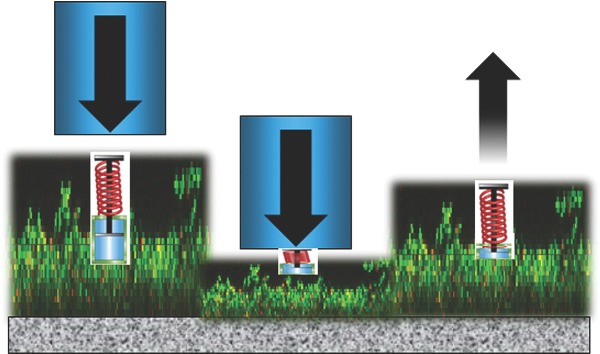
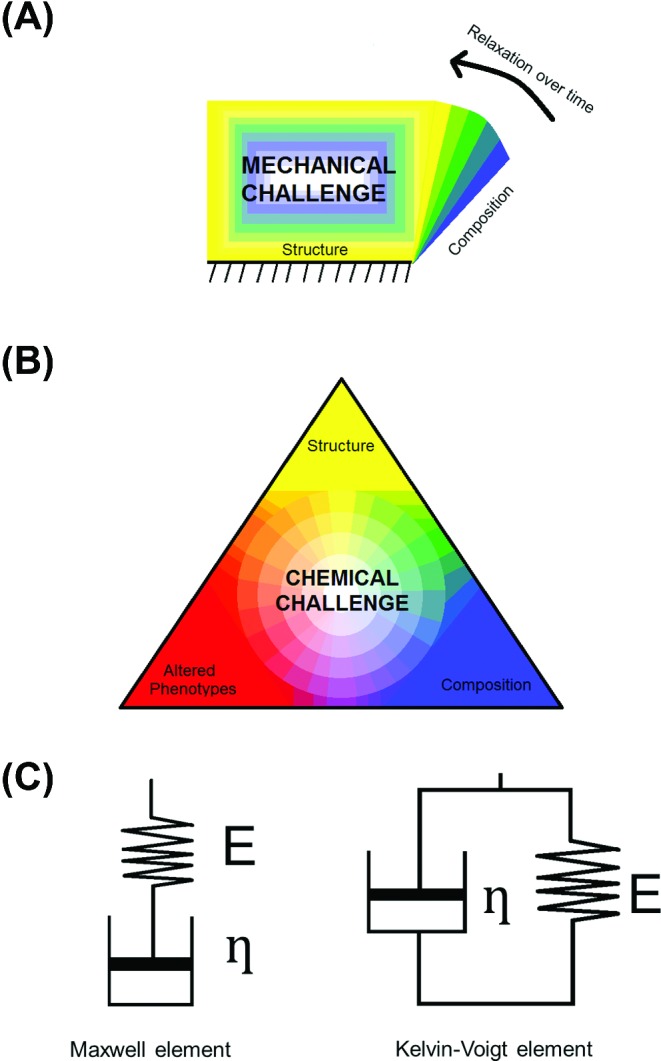
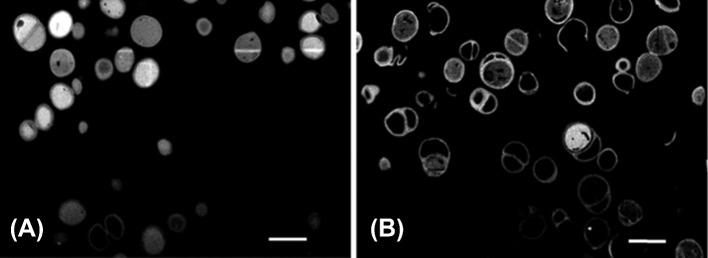
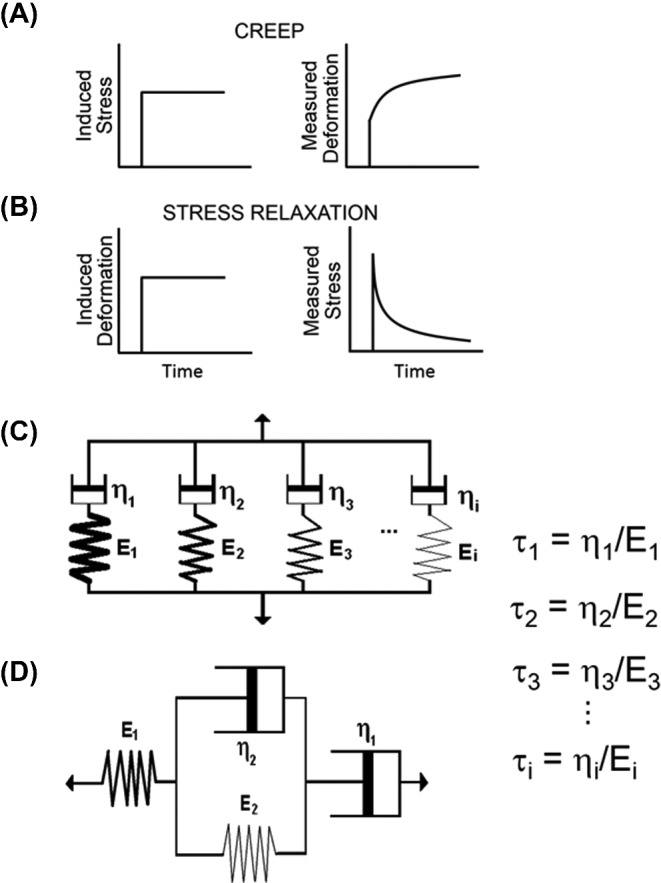
Verification
Claims the paper makes
The claims and statistics of this paper haven’t been checked yet.
Free: it reads the open-access text and checks the first 5 claims that cite a source we can check. Create a free account to check every claim.
Claims other papers make about this one
Each is checked against this paper’s own text: does it say what the citing paper says it does?
The source backs part of the claim, not all of it — or backs it for a different population, condition or comparison.
In the citing paper
“The mechanical properties of a biofilm and its sturdiness against detachment forces are further influenced by the shear forces that the biofilm experiences during growth.13,234,235”
From The dental plaque biofilm matrix (2021) · cites this paper as [234]
Experimental — accuracy not yet measuredThe source backs part of the claim, not all of it — or backs it for a different population, condition or comparison.
In the citing paper
“Biofilms are generally able to resist mechanical challenges to a certain extent due to the physical protection provided by the biofilm matrix, and in particular by its exopolysaccharide components.13,234”
From The dental plaque biofilm matrix (2021) · cites this paper as [234]
Experimental — accuracy not yet measuredThe source backs part of the claim, not all of it — or backs it for a different population, condition or comparison.
In the citing paper
“If enough energy is absorbed and the deformation of the biofilm exceeds a given yield point, biofilm removal will occur.”
From The dental plaque biofilm matrix (2021) · cites this paper as [234]
Experimental — accuracy not yet measuredThe source backs part of the claim, not all of it — or backs it for a different population, condition or comparison.
In the citing paper
“This viscoelastic nature of a biofilm may not be a crucial factor when its removal is accomplished by forces applied directly (eg, by means of a curette), but it is of vital importance when hydrodynamic forces are applied in a noncontact mode (eg, by means of sonic scalers during subgingival debridement or by brushing with powered toothbrushes).234,286,287”
From The dental plaque biofilm matrix (2021) · cites this paper as [234]
Experimental — accuracy not yet measuredThe cited source says what the claim attributes to it.
In the citing paper
“This means that the biofilm will deform under a given stress (eg, shear stress) but will return to a state that is similar to, but not necessarily identical to, the initial state after this given stress is removed.234”
From The dental plaque biofilm matrix (2021) · cites this paper as [234]
4 more claims about this paper
Create a free account to see every claim other papers make about this one.
Self-check
Percentages, sums and reported differences re-computed from the paper’s own numbers.
The self-check needs the paper’s full text.
Citations
Cites
Bacterial Biofilms: A Common Cause of Persistent Infections
Costerton, J. W., Stewart, P. S., & Greenberg, E. P. (1999) · Science · doi:10.1126/science.284.5418.1318 · Cited by 12,167 · cited 1×
“Review of the literature on viscoelastic properties of biofilms in ancient and modern environments as well as of infectious biofilms reveals that the viscoelastic properties of a biofilm relate with antimicrobial penetration in a biofilm.”
BackgroundFlemming, H.-C., & Wingender, J. (2010) · Nature Reviews Microbiology · doi:10.1038/nrmicro2415 · Cited by 10,137
(2013) · doi:10.1016/c2009-0-02433-7 · Cited by 5,127
Antibiotic resistance of bacteria in biofilms
Stewart, P. S., & William Costerton, J. (2001) · The Lancet · doi:10.1016/s0140-6736(01)05321-1 · Cited by 4,585
Biofilms: Microbial Life on Surfaces
Donlan, R. M. (2002) · Emerging Infectious Diseases · doi:10.3201/eid0809.020063 · Cited by 4,145
Mechanisms of biofilm resistance to antimicrobial agents
Mah, T.-F. C., & O'Toole, G. A. (2001) · Trends in Microbiology · doi:10.1016/s0966-842x(00)01913-2 · Cited by 3,921
Materials Properties Handbook: Titanium Alloys
Boyer, R. R., Welsch, G. E., & Collings, E. W. (1994) · Medical Entomology and Zoology · Cited by 2,637
Properties and Selection: Nonferrous Alloys and Special-Purpose Materials
(1990) · ASM International eBooks · doi:10.31399/asm.hb.v02.9781627081627 · Cited by 2,624
Extracellular DNA Required for Bacterial Biofilm Formation
Whitchurch, C. B., Tolker-Nielsen, T., Ragas, P. C., & Mattick, J. S. (2002) · Science · doi:10.1126/science.295.5559.1487 · Cited by 2,203 · cited 1×
“EPS alone is a multi-component substance (Whitchurch et al., 2002; Flemming and Wingender 2010; Koo, Falsetta and Klein 2013), and, as a consequence, biofilms react in a time-dependent manner with a combination of distinct elastic and viscous responses to external stress.”
BackgroundSurvival strategies of infectious biofilms
Fux, C. A., Costerton, J. W., Stewart, P. S., & Stoodley, P. (2005) · Trends in Microbiology · doi:10.1016/j.tim.2004.11.010 · Cited by 1,812
Self-citation
Research works printed but not linked: 7
- Elert G Viscosity The Physics Hypertextbook 2014 http://physics.info
- Guelon T Mathias JD Stoodley P Flemming HC Wingender J Szewzyk U Advances in biofilm Mechanics Biofilm Highlights 2011 5th edn Berlin, Heidelberg Springer 111 39
- Kim MK Drescher K Pak OS Filaments in curved streamlines: rapid formation of Staphylococcus aureus biofilm streamers New J Phys 2014 16 065024.422a PMC4255984 25484614
- Lopez D Vlamakis H Kolter R Biofilms Cold Spring Harb Perspect Biol 2010 2 a000398 20519345 PMC2890205
- Ratner BD Hoffman AS Schoen FJ 2004b San Diego, CA, USA Elsevier, Academic Press 28 31 Bulk properties of materials by Cooke FW. In: Biomaterials Science: An introduction to materials in medicine
- Van Leeuwenhoek AP Containing some microscopical observations, about animals in the scrurf of the teeth Philos T R Soc Lond 1684 14 568 74
- Vincent J Structural Biomaterials 2012 3rd edn Princeton, NJ, USA Princeton University Press
Cited by
Targeting microbial biofilms: current and prospective therapeutic strategies
Koo, H., Allan, R. N., Howlin, R. P., Stoodley, P., & Hall-Stoodley, L. (2017) · Nature Reviews Microbiology · doi:10.1038/nrmicro.2017.99 · Cited by 1,800
Self-citationBiofilm Matrixome: Extracellular Components in Structured Microbial Communities
Karygianni, L., Ren, Z., Koo, H., & Thurnheer, T. (2020) · Trends in Microbiology · doi:10.1016/j.tim.2020.03.016 · Cited by 1,487
Microbial Surface Colonization and Biofilm Development in Marine Environments
Dang, H., & Lovell, C. R. (2016) · Microbiology and Molecular Biology Reviews · doi:10.1128/mmbr.00037-15 · Cited by 1,231
Oral Biofilms: Pathogens, Matrix, and Polymicrobial Interactions in Microenvironments
Bowen, W. H., Burne, R. A., Wu, H., & Koo, H. (2018) · Trends in Microbiology · doi:10.1016/j.tim.2017.09.008 · Cited by 1,059
Critical review on biofilm methods
Azeredo, J., Azevedo, N. F., Briandet, R., Cerca, N., Coenye, T., Costa, A. R., Desvaux, M., Di Bonaventura, G., Hébraud, M., Jaglic, Z., et al. (2017) · Critical Reviews in Microbiology · doi:10.1080/1040841x.2016.1208146 · Cited by 1,045
Metadata
- Authors
- Peterson, B. W., He, Y., Ren, Y., Zerdoum, A., Libera, M. R., Sharma, P. K., van Winkelhoff, A.-J., Neut, D., Stoodley, P., van der Mei, H. C., & Busscher, H. J.
- Affiliations
- University Medical Center Groningen (NL)
- Stevens Institute of Technology (US)
- University of Southampton (GB)
- Corresponding author
- van der Mei, Henny C.
- ORCID
- Venue
- FEMS Microbiology Reviews
- Publisher
- Oxford University Press (OUP)
- Published
- 2015-02-25
- Volume
- 39
- Issue
- 2
- Pages
- 234-245
- ISSN
- 0168-6445 (ISSN-L)
- 1574-6976
- PMC
- PMC4398279
- OpenAlex
- W2146979979
- Semantic Scholar
- abb616a2735cdb50082d960cd4ef6e2742e4485f
- Cited by
- 346
- References
- 121
- Citations by year
- 2026: 36 · 2025: 32 · 2024: 42 · 2023: 26 · 2022: 36 · 2021: 27 · 2020: 34 · 2019: 35 · 2018: 25 · 2017: 30 · 2016: 16 · 2015: 7
- FWCI
- 2.52
- Type
- journal article
- Language
- en
- Open access
- bronze
- doi.org
- Locations
- FEMS Microbiology Reviews (publishedVersion)
- Europe PMC (PubMed Central) (publishedVersion, cc-by-nc)
- PubMed Central (publishedVersion, cc-by-nc)
- PubMed (publishedVersion)
- University of Groningen research database (University of Groningen / Centre for Information Technology) (publishedVersion, cc-by)
- ePrints Soton (University of Southampton) (submittedVersion)
- University of Groningen research database (University of Groningen / Centre for Information Technology) (submittedVersion, cc-by)
- Funders
- China Scholarship Council
- Serbian Academy of Sciences and Arts
- Topics
- Life Sciences › Biochemistry, Genetics and Molecular Biology › Molecular Biology › Bacterial biofilms and quorum sensing
- Life Sciences › Agricultural and Biological Sciences › Food Science › Polysaccharides Composition and Applications
- Physical Sciences › Engineering › Ocean Engineering › Marine Biology and Environmental Chemistry
- Keywords
- stress relaxation, antimicrobial penetration, biofilm removal, biofilm structure
- MeSH terms
- Anti-Infective Agents, Environmental Microbiology, Viscosity, Biofilms, Microbial Viability
About these checks
Registry, retraction, Cites and statistics results are computed, not judged, with one exception: a printed reference that no index lists is read once by a model before it counts as a citation error. Claims are extracted by a model and kept only when their quote appears verbatim in the text; each cited source is then checked, with a model’s help, for whether it says what the claim relies on. Those verdicts can be wrong — read the claim’s quote and the cited source before relying on one.
Statistics and arithmetic are recomputed, not judged.
Confidence bands are shown only for fields calibrated on our annotated test set. None is calibrated yet, so no band is shown.
What counts as a claim ›How we measure confidence ›How we check this ›
Are you an author, or do you see a problem with this page? Request a review
Data sources
Bibliographic data: Semantic Scholar, OpenAlex, Crossref.
Contains information from the Semantic Scholar Academic Graph Datasets, made available under the ODC Attribution License (ODC-BY 1.0).
Semantic Scholar’s data is described in: Kinney, R., et al. (2023). The Semantic Scholar Open Data Platform. arXiv:2301.10140.
