

The DOI matches its Crossref record; 52 of the 54 references it cites were found in a registry or an index, and 2 are not checked yet.
Glycans Are a Novel Biomarker of Chronological and Biological Ages
Open accessAbstract
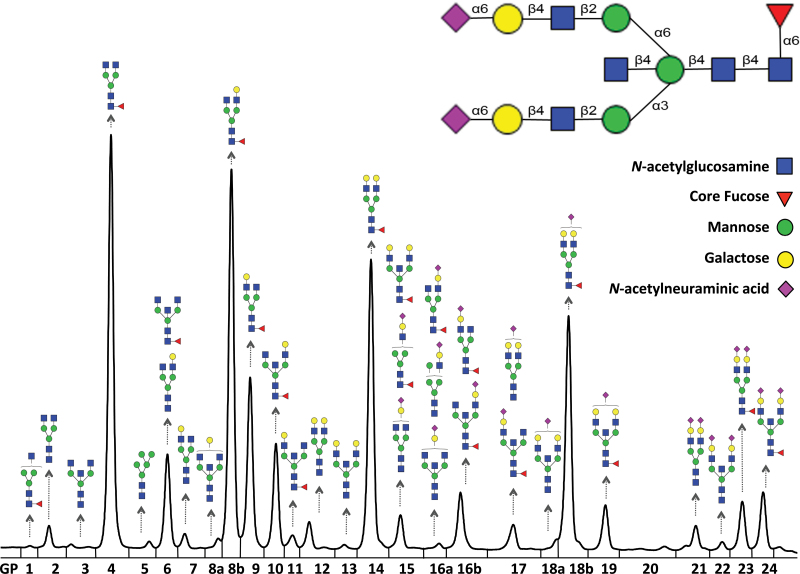
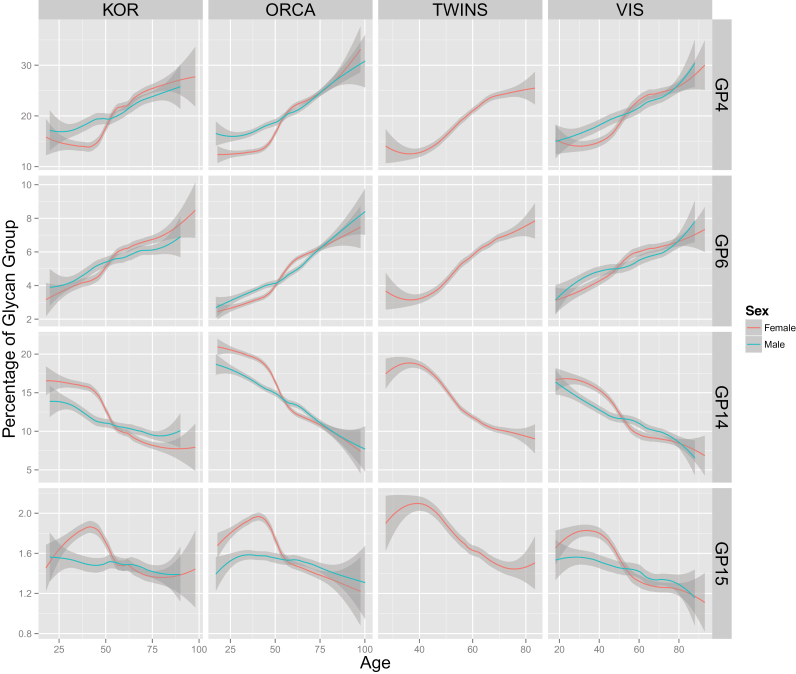
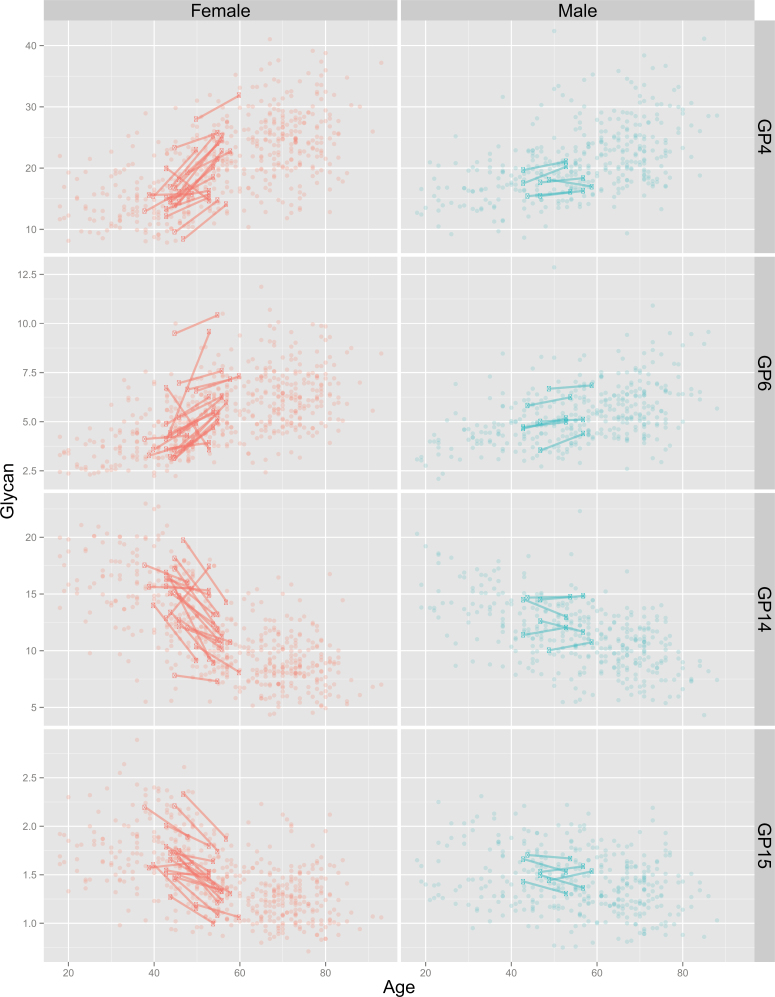
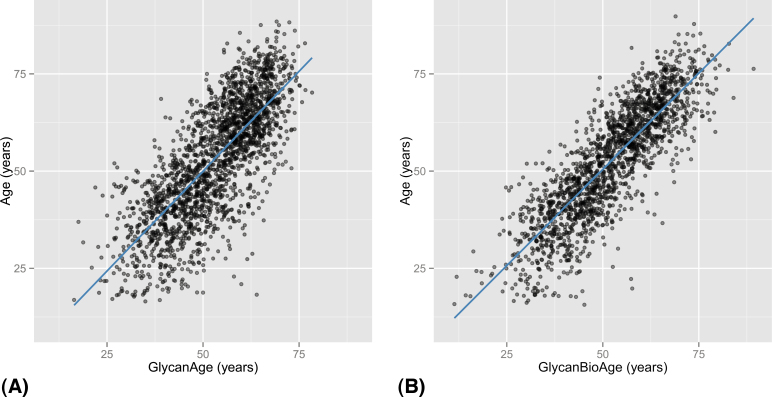
Fine structural details of glycans attached to the conserved N-glycosylation site significantly not only affect function of individual immunoglobulin G (IgG) molecules but also mediate inflammation at the systemic level. By analyzing IgG glycosylation in 5,117 individuals from four European populations, we have revealed very complex patterns of changes in IgG glycosylation with age. Several IgG glycans (including FA2B, FA2G2, and FA2BG2) changed considerably with age and the combination of these three glycans can explain up to 58% of variance in chronological age, significantly more than other markers of biological age like telomere lengths. The remaining variance in these glycans strongly correlated with physiological parameters associated with biological age. Thus, IgG glycosylation appears to be closely linked with both chronological and biological ages. Considering the important role of IgG glycans in inflammation, and because the observed changes with age promote inflammation, changes in IgG glycosylation also seem to represent a factor contributing to aging. SIGNIFICANCE STATEMENT: Glycosylation is the key posttranslational mechanism that regulates function of immunoglobulins, with multiple systemic repercussions to the immune system. Our study of IgG glycosylation in 5,117 individuals from four European populations has revealed very extensive and complex changes in IgG glycosylation with age. The combined index composed of only three glycans explained up to 58% of variance in age, considerably more than other biomarkers of age like telomere lengths. The remaining variance in these glycans strongly correlated with physiological parameters associated with biological age; thus, IgG glycosylation appears to be closely linked with both chronological and biological ages. The ability to measure human biological aging using molecular profiling has practical applications for diverse fields such as disease prevention and treatment, or forensics.
Overview
The claims and statistics of this paper haven’t been checked yet.
Run the check — free, no account needed. It reads the open-access text and checks the sources it cites.
Integrity signals
Registry
Cites
Statistics
Figures
Verification
Claims the paper makes
The claims and statistics of this paper haven’t been checked yet.
Run the check — free, no account needed. It reads the open-access text and checks the sources it cites.
Claims other papers make about this one
Each is checked against this paper’s own text: does it say what the citing paper says it does?
In the citing paper
“Although it is not yet possible to comprehensively survey the glycome, recent mass spectrometry studies examining the concentrations of just a few well-studied glycans have been able to accurately predict chronological age and ageing phenotypes.”
From Measuring biological age using omics data (2022) · cites this paper as [129]
In the citing paper
“Krištić et al.129 observed changes in the N-glycosylation pattern of serum IgG protein, which predicted age in multiple European cohorts.”
From Measuring biological age using omics data (2022) · cites this paper as [129]
In the citing paper
“Moreover, IgG glycan age correlated with clinical markers of metabolic health129.”
From Measuring biological age using omics data (2022) · cites this paper as [129]
In the citing paper
“We could thus not assess the association of facial aging with individual lifestyle parameters, endocrine status, or molecular aging markers (Krištić et al., 2014).”
From Facial aging trajectories: A common shape pattern in male and female faces is disrupted after menopause (2019) · cites this paper as Krištić et al., 2014
Self-check
Percentages, sums and reported differences re-computed from the paper’s own numbers.
The self-check needs the paper’s full text.
Citations
Cites
R: A Language and Environment for Statistical Computing
R Core Team (2000) · doi:10.32614/r.manuals · Cited by 355,893
A new look at the statistical model identification
Akaike, H. (1974) · IEEE Transactions on Automatic Control · doi:10.1109/tac.1974.1100705 · Cited by 51,879
Inflamm‐aging: An Evolutionary Perspective on Immunosenescence
FRANCESCHI, C., BONAFÈ, M., VALENSIN, S., OLIVIERI, F., DE LUCA, M., OTTAVIANI, E., & DE BENEDICTIS, G. (2000) · Annals of the New York Academy of Sciences · doi:10.1111/j.1749-6632.2000.tb06651.x · Cited by 5,358
Algebraic decay in hierarchical graphs
Garcia, A., Sonnino, G., Malek-Mansour, M.-A., & Baras, F. (1998) · Dépôt institutionnel de l'Université libre de Bruxelles (Université Libre de Bruxelles) · doi:10.1023/a · Cited by 5,186
Genome-wide methylation profiles reveal quantitative views of human aging rates
Hannum, G., Guinney, J., Zhao, L., Zhang, L., Hughes, G., Sadda, S., Klotzle, B., Bibikova, M., Fan, J.-B., Gao, Y., et al. (2013) · Molecular Cell · doi:10.1016/j.molcel.2012.10.016 · Cited by 4,270
ANew Look at the Statistical Model Identification
AKAlKE, H. (2011) · Cited by 4,177
Extending Healthy Life Span—From Yeast to Humans
Fontana, L., Partridge, L., & Longo, V. D. (2010) · Science · doi:10.1126/science.1172539 · Cited by 3,023
Physical Fitness and All-Cause Mortality: A Prospective Study of Healthy Men and Women
Blair, S. N. (1989) · JAMA · doi:10.1001/jama.1989.03430170057028 · Cited by 2,658
Glycosylation and the Immune System
Rudd, P. M., Elliott, T., Cresswell, P., Wilson, I. A., & Dwek, R. A. (2001) · Science · doi:10.1126/science.291.5512.2370 · Cited by 1,588
Metabolism of Inflammation Limited by AMPK and Pseudo-Starvation
O'Neill, L. A. J., & Hardie, D. G. (2013) · Nature · doi:10.1038/nature11862 · Cited by 1,133
Research works printed but not linked: 1
- Lauc, 2013, Loci associated with N-glycosylation of human immunoglobulin G show pleiotropy with autoimmune diseases and haematological cancers, PLoS Genet, 9, 10.1371/journal.pgen.1003225 · DOI
Cited by
Sorted by citations
Items 101–200 of 401
IgG N-glycome changes during the course of severe COVID-19: An observational study
Petrović, T., Vijay, A., Vučković, F., Trbojević‐Akmačić, I., Ollivere, B. J., Marjanović, D., Bego, T., Prnjavorac, B., Đerek, L., Markotić, A., et al. (2022) · EBioMedicine · doi:10.1016/j.ebiom.2022.104101 · Cited by 37
Self-citationMethods for the absolute quantification of N-glycan biomarkers
Etxebarria, J., & Reichardt, N. (2016) · Biochimica et Biophysica Acta (BBA) - General Subjects · doi:10.1016/j.bbagen.2016.03.003 · Cited by 38
IgG Fc glycosylation as an axis of humoral immunity in childhood
Cheng, H. D., Tirosh, I., de Haan, N., Stöckmann, H., Adamczyk, B., McManus, C. A., O’Flaherty, R., Greville, G., Saldova, R., Bonilla, F. A., et al. (2019) · Journal of Allergy and Clinical Immunology · doi:10.1016/j.jaci.2019.10.012 · Cited by 38
Sluiskes, M. H., Goeman, J. J., Beekman, M., Slagboom, P. E., Putter, H., & Rodríguez‐Girondo, M. (2024) · BMC Medical Research Methodology · doi:10.1186/s12874-024-02181-x · Cited by 39
Thermal facial image analyses reveal quantitative hallmarks of aging and metabolic diseases
Yu, Z., Zhou, Y., Mao, K., Pang, B., Wang, K., Jin, T., Zheng, H., Zhai, H., Wang, Y., Xu, X., et al. (2024) · Cell Metabolism · doi:10.1016/j.cmet.2024.05.012 · Cited by 40
A roadmap to the molecular human linking multiomics with population traits and diabetes subtypes
Halama, A., Zaghlool, S. B., Thareja, G., Kader, S. A., Al‐Muftah, W., Mook-Kanamori, M. J., Sarwath, H., Mohamoud, Y. A., Stephan, N., Ameling, S., et al. (2024) · Nature Communications · doi:10.1038/s41467-024-51134-x · Cited by 43
Self-citationHeritability of Human Plasma N-Glycome
Zaytseva, O. O., Freidin, M. B., Keser, T., Štambuk, J., Ugrina, I., Šimurina, M., Vilaj, M. Ć., Štambuk, T., Trbojević‐Akmačić, I., Pučić‐Baković, M., et al. (2019) · Journal of Proteome Research · doi:10.1021/acs.jproteome.9b00348 · Cited by 36
Self-citationMurray, A., Gough, G., Cindrić, A., Vučković, F., Koschut, D., Borelli, V., Petrović, D. J., Bekavac, A., Plećaš, A., Hribljan, V., et al. (2023) · EBioMedicine · doi:10.1016/j.ebiom.2023.104692 · Cited by 38
Self-citationFedintsev, A., Kashtanova, D. A., Ткачева, О. Н., Strazhesko, I. D., Kudryavtseva, A. V., Baranova, A. V., & Moskalev, A. (2017) · Aging · doi:10.18632/aging.101227 · Cited by 34
Mijakovac, A., Jurić, J., Kohrt, W. M., Krištić, J., Kifer, D., Gavin, K. M., Miškec, K., Frkatović-Hodžić, A., Vučković, F., Pezer, M., et al. (2021) · Frontiers in Immunology · doi:10.3389/fimmu.2021.680227 · Cited by 35
Self-citationReece, A. S., Wang, W., & Hulse, G. K. (2018) · Medical Hypotheses · doi:10.1016/j.mehy.2018.04.011 · Cited by 34
Application of AI in biological age prediction
Meng, D., Zhang, S., Huang, Y., Mao, K., & Han, J. J. (2024) · Current Opinion in Structural Biology · doi:10.1016/j.sbi.2024.102777 · Cited by 35
Gender and developmental specific N-glycomes of the porcine parasite Oesophagostomum dentatum
Jiménez-Castells, C., Vanbeselaere, J., Kohlhuber, S., Ruttkowski, B., Joachim, A., & Paschinger, K. (2016) · Biochimica et Biophysica Acta (BBA) - General Subjects · doi:10.1016/j.bbagen.2016.10.011 · Cited by 34
Hematological and biochemical parameters for Chinese rhesus macaque
Yu, W., Hao, X., Yang, F., Ma, J., Zhao, Y., Li, Y., Wang, J., Xu, H., Chen, L., Liu, Q., et al. (2019) · PLoS ONE · doi:10.1371/journal.pone.0222338 · Cited by 34
Multi-omics characterization of partial chemical reprogramming reveals evidence of cell rejuvenation
Mitchell, W., Goeminne, L. J., Tyshkovskiy, A., Zhang, S., Chen, J. Y., Paulo, J. A., Pierce, K. A., Choy, A. H., Clish, C. B., Gygi, S. P., et al. (2024) · eLife · doi:10.7554/elife.90579.3 · Cited by 33
Immunoglobulin G N-glycan markers of accelerated biological aging during chronic HIV infection
Giron, L. B., Liu, Q., Adeniji, O. S., Yin, X., Kannan, T., Ding, J., Lu, D. Y., Langan, S. J., Zhang, J., Azevedo, J. L. L. C., et al. (2024) · Nature Communications · doi:10.1038/s41467-024-47279-4 · Cited by 33
Bertók, T., Šedivá, A., Filip, J., Ilčíková, M., Kasák, P., Velič, D., Jáné, E., Mravcová, M., Rovenský, J., Kunzo, P., et al. (2015) · Langmuir · doi:10.1021/acs.langmuir.5b00944 · Cited by 32
Dall’Olio, F. (2018) · Sub-cellular biochemistry/Subcellular biochemistry · doi:10.1007/978-981-13-2835-0_17 · Cited by 33
Verhagen, J. H., Eriksson, P., Leijten, L. M. E., Blixt, O., Olsén, B., Waldenström, J., Ellström, P., & Kuiken, T. (2020) · Journal of Virology · doi:10.1128/jvi.01873-20 · Cited by 32
Chen, Q., Dwaraka, V. B., Carreras-Gallo, N., Mendez, K. M., Chen, Y., Begum, S., Kachroo, P., Prince, N., Went, H., Mendez, T. L., et al. (2023) · bioRxiv (Cold Spring Harbor Laboratory) · doi:10.1101/2023.10.16.562114 · Cited by 37
The Human Blood N-Glycome: Unraveling Disease Glycosylation Patterns
Pongrácz, T., Mayboroda, O. A., & Wuhrer, M. (2024) · JACS Au · doi:10.1021/jacsau.4c00043 · Cited by 31
Effects of estradiol on biological age measured using the glycan age index
Jurić, J., Kohrt, W. M., Kifer, D., Gavin, K. M., Pezer, M., Nigrovic, P. A., & Lauc, G. (2020) · Aging · doi:10.18632/aging.104060 · Cited by 31
Self-citationSpazzafumo, L., Mensa’, E., Matacchione, G., Galeazzi, T., Zampini, L., Recchioni, R., Marcheselli, F., Prattichizzo, F., Testa, R., Antonicelli, R., et al. (2017) · Oncotarget · doi:10.18632/oncotarget.21848 · Cited by 31
HIV Antibody Fc N-Linked Glycosylation Is Associated with Viral Rebound
Offersen, R., Yu, W., Scully, E. P., Jülg, B. D., Euler, Z., Sadanand, S., Garcia-Dominguez, D., Zheng, L., Rasmussen, T. A., Jennewein, M. F., et al. (2020) · Cell Reports · doi:10.1016/j.celrep.2020.108502 · Cited by 32
Physical resilience in older adults: Potential use in promoting healthy aging
Li, J., Chhetri, J. K., & Ma, L. (2022) · Ageing Research Reviews · doi:10.1016/j.arr.2022.101701 · Cited by 31
Human disease glycomics: technology advances enabling protein glycosylation analysis – part 2
Everest‐Dass, A., Moh, E. S. X., Ashwood, C., Shathili, A. M. M., & Packer, N. H. (2018) · Expert Review of Proteomics · doi:10.1080/14789450.2018.1448710 · Cited by 32
Pribić, T., Alves, I., Bugada, D., Pascual, J., Vučković, F., Skelin, A., Gaifem, J., Villar-García, J., Vicente, M. M., Fernandes, Â., et al. (2020) · Glycobiology · doi:10.1093/glycob/cwaa102 · Cited by 30
Self-citationBelyi, A. A., Alekseev, A. A., Fedintsev, A., Balybin, S. N., Proshkina, E., Shaposhnikov, M. V., & Moskalev, A. (2020) · Antioxidants · doi:10.3390/antiox9121239 · Cited by 31
ACE2 glycans preferentially interact with SARS-CoV-2 over SARS-CoV
Acharya, A., Lynch, D. L., Pavlova, À., Pang, Y. T., & Gumbart, J. C. (2021) · Chemical Communications · doi:10.1039/d1cc02305e · Cited by 30
Plant oligosaccharides — outsiders among elicitors?
Алексеевна, Л. И., & Gorshkova, T. (2015) · Biochemistry (Moscow) · doi:10.1134/s0006297915070081 · Cited by 30
Structural and functional changes of fibrinogen due to aging
Gligorijević, N., Križáková, M., Penezić, A., Katrlı́k, J., & Nedić, O. (2017) · International Journal of Biological Macromolecules · doi:10.1016/j.ijbiomac.2017.11.016 · Cited by 30
Murine Plasma N-Glycosylation Traits Associated with Sex and Strain
Reiding, K. R., Ederveen, A. L. H., Rombouts, Y., & Wuhrer, M. (2016) · Journal of Proteome Research · doi:10.1021/acs.jproteome.6b00071 · Cited by 29
Cheng, H. D., Stöckmann, H., Adamczyk, B., McManus, C. A., Ercan, A., Holm, I. A., Rudd, P. M., Ackerman, M. E., & Nigrovic, P. A. (2017) · Glycobiology · doi:10.1093/glycob/cwx082 · Cited by 29
Breaking the Glyco-Code of HIV Persistence and Immunopathogenesis
Colomb, F., Giron, L. B., Trbojević‐Akmačić, I., Lauc, G., & Abdel‐Mohsen, M. (2019) · Current HIV/AIDS Reports · doi:10.1007/s11904-019-00433-w · Cited by 28
Self-citationde Haas, P., Hendriks, W. J. A. J., Lefeber, D. J., & Cambi, A. (2020) · Frontiers in Chemistry · doi:10.3389/fchem.2020.00055 · Cited by 30
Liu, D., Li, Q., Zhang, X., Wang, H., Cao, W., Li, D., Xing, W., Song, M., Wang, W., Meng, Q., et al. (2019) · OMICS A Journal of Integrative Biology · doi:10.1089/omi.2019.0032 · Cited by 29
Estimation of human age using N-glycan profiles from bloodstains
Gudelj, I., Keser, T., Vučković, F., Škaro, V., Goreta, S. Š., Štambuk, T., Dumić, J., Primorac, D., Lauc, G., & Gornik, O. (2015) · International Journal of Legal Medicine · doi:10.1007/s00414-015-1162-x · Cited by 28
Self-citationGiron, L. B., Tanes, C., Schleimann, M. H., Engen, P. A., Mattei, L. M., Anzurez, A., Damra, M., Zhang, H., Bittinger, K. L., Bushman, F. D., et al. (2020) · Mucosal Immunology · doi:10.1038/s41385-020-0279-5 · Cited by 31
Konno, N., Sugimoto, M., Takagi, T. J., Furuya, M. Y., Asano, T., Sato, S., Kobayashi, H., Migita, K., Miura, Y., Aihara, T., et al. (2018) · PLoS ONE · doi:10.1371/journal.pone.0196163 · Cited by 28
Protein N-Glycosylation in Cardiovascular Diseases and Related Risk Factors
Gudelj, I., & Lauc, G. (2018) · Current Cardiovascular Risk Reports · doi:10.1007/s12170-018-0579-4 · Cited by 28
Self-citationThe importance of IgG N-glycosylation in Health, Disease, and Neonatal hemochromatosis
Thaçi, K., & Anthony, R. M. (2025) · Glycoscience & Therapy · doi:10.1016/j.glycos.2025.100002 · Cited by 26
Cindrić, A., Krištić, J., Kavur, M. M., & Pezer, M. (2021) · Advances in experimental medicine and biology · doi:10.1007/978-3-030-70115-4_17 · Cited by 28
Self-citationImmunoglobulin G glycome composition in transition from premenopause to postmenopause
Deriš, H., Kifer, D., Cindrić, A., Petrović, T., Cvetko, A., Trbojević‐Akmačić, I., Kolčić, I., Polašek, O., Newson, L. R., Spector, T. D., et al. (2022) · iScience · doi:10.1016/j.isci.2022.103897 · Cited by 27
Self-citationComparative analysis of transferrin and IgG N-glycosylation in two human populations
Trbojević‐Akmačić, I., Vučković, F., Pribić, T., Vilaj, M. Ć., Černigoj, U., Vidič, J., Šimunović, J., Kępka, A., Kolčić, I., Klarić, L., et al. (2023) · Communications Biology · doi:10.1038/s42003-023-04685-6 · Cited by 26
Self-citationLung transcriptomic clock predicts premature aging in cigarette smoke-exposed mice
Choukrallah, M.-A., Hoeng, J., Peitsch, M. C., & Martin, F. (2020) · BMC Genomics · doi:10.1186/s12864-020-6712-z · Cited by 27
IgG Glycosylation: Biomarker, Functional Modulator, and Structural Component
Radovani, B., & Nimmerjahn, F. (2024) · The Journal of Immunology · doi:10.4049/jimmunol.2400447 · Cited by 25
Site‐specific glycosylation of SARS‐CoV‐2: Big challenges in mass spectrometry analysis
Campos, D., Girgis, M. J., & Šanda, M. (2022) · PROTEOMICS · doi:10.1002/pmic.202100322 · Cited by 26
Chakraborty, S., Cheng, B. Y.-L., Edwards, D. L., González, J. C., Chiu, D. K., Zheng, H., Scallan, C., Guo, X., Tan, G. S., Coffey, G., et al. (2024) · Immunity · doi:10.1016/j.immuni.2024.10.002 · Cited by 24
Modelling biological age based on plasma peptides in Han Chinese adults
Cao, W., Zheng, D., Wang, G., Zhang, J., Ge, S., Singh, M., Wang, H., Song, M., Li, D., Wang, W., et al. (2020) · Aging · doi:10.18632/aging.103286 · Cited by 25
Hatano, K., Yoneyama, T., Hatakeyama, S., Tomiyama, E., Tsuchiya, M., Nishimoto, M., Yoshimura, K., Miyoshi, E., Uemura, H., Οhyama, C., et al. (2021) · British Journal of Cancer · doi:10.1038/s41416-021-01637-x · Cited by 25
Evaluation of different PNGase F enzymes in immunoglobulin G and total plasma N-glycans analysis
Vilaj, M. Ć., Lauc, G., & Trbojević‐Akmačić, I. (2020) · Glycobiology · doi:10.1093/glycob/cwaa047 · Cited by 25
Self-citationCook, M. C., Kaldas, S. J., Muradia, G., Rosu‐Myles, M., & Kunkel, J. P. (2015) · Journal of Chromatography B · doi:10.1016/j.jchromb.2015.05.035 · Cited by 25
Effects of statins on the immunoglobulin G glycome
Keser, T., Vučković, F., Barrios, C., Zierer, J., Wahl, A., Akinkuolie, A. O., Štambuk, J., Nakić, N., Štambuk, T., Periša, J., et al. (2017) · Biochimica et Biophysica Acta (BBA) - General Subjects · doi:10.1016/j.bbagen.2017.02.029 · Cited by 23
Self-citationSeo, S.-H., Na, C.-S., Park, S.-E., Kim, E.-J., Kim, W.-S., Park, C., Oh, S., You, Y., Lee, M., Cho, K., et al. (2023) · Gut Microbes · doi:10.1080/19490976.2023.2226915 · Cited by 25
Coillie, J. V., Pongrácz, T., Šuštić, T., Wang, W., Nouta, J., Gars, M. L., Keijzer, S., Linty, F., Cristianawati, O., Keijser, J. B. D., et al. (2023) · iScience · doi:10.1016/j.isci.2023.107619 · Cited by 27
Aging-related Changes in Mouse Serum Glycerophospholipid Profiles
Kim, S., Cheon, H., Song, J.-C., Yun, S., Park, S. I., & Jeon, J. (2014) · Osong Public Health and Research Perspectives · doi:10.1016/j.phrp.2014.10.002 · Cited by 24
Alocci, D., Ghraichy, M., Barletta, E., Gastaldello, A., Mariethoz, J. A., & Lisacek, F. (2018) · Glycobiology · doi:10.1093/glycob/cwy019 · Cited by 24
Immunoglobulin G glycosylation and its alterations in aging-related diseases
Wu, Y., Zhang, Z., Chen, L., & Sun, S. (2024) · Acta Biochimica et Biophysica Sinica · doi:10.3724/abbs.2024137 · Cited by 24
Goudsmit, J., van den Biggelaar, A. H. J., Koudstaal, W., Albert Hofman, D., Koff, W. C., Schenkelberg, T., Alter, G., Mina, M. J., & Wu, J. W. (2021) · European Journal of Epidemiology · doi:10.1007/s10654-021-00767-z · Cited by 22
Precision medicine that transcends genomics: Glycans as integrators of genes and environment
Lauc, G. (2016) · Biochimica et Biophysica Acta (BBA) - General Subjects · doi:10.1016/j.bbagen.2016.05.001 · Cited by 23
Self-citationAlteration of Serum IgG Galactosylation as a Potential Biomarker for Diagnosis of Neuroblastoma
Qin, W., Pei, H., Qin, R., Zhao, R., Han, J., Zhang, Z., Dong, K., Ren, S., & Gu, J. (2018) · Journal of Cancer · doi:10.7150/jca.22014 · Cited by 22
Biological Age is a Universal Marker of Aging, Stress, and Frailty
Pyrkov, T. V., & Fedichev, P. O. (2019) · Healthy Ageing and Longevity · doi:10.1007/978-3-030-24970-0_3 · Cited by 8
An update in toxicology of ageing
Račková, L., Mach, M., & Brnoliaková, Z. (2021) · Environmental Toxicology and Pharmacology · doi:10.1016/j.etap.2021.103611 · Cited by 22
Zaytseva, O. O., Jansen, B. C., Hanić, M., Mrčela, M., Razdorov, G., Stojković, R., Erhardt, J., Brizić, I., Jonjić, S., Pezer, M., et al. (2018) · Scientific Reports · doi:10.1038/s41598-018-31844-1 · Cited by 22
Self-citationMuenchhoff, M., Chung, A. W., Roider, J., Dugast, A., Richardson, S. I., Kløverpris, H. N., Leslie, A. J., Ndung’u, T., Moore, P. L., Alter, G., et al. (2020) · mSphere · doi:10.1128/msphere.00880-20 · Cited by 22
The use of a systems approach to increase NAD+ in human participants
Henderson, J. D., Quigley, S. N. Z., Chachra, S. S., Conlon, N. J., & Ford, D. (2024) · npj Aging · doi:10.1038/s41514-023-00134-0 · Cited by 22
Mining for humoral correlates of HIV control and latent reservoir size
Das, J., Devadhasan, A., Linde, C., Broge, T., Sassic, J. K., Mangano, M., O’Keefe, S. J., Suscovich, T. J., Streeck, H., Irrinki, A., et al. (2020) · PLoS Pathogens · doi:10.1371/journal.ppat.1008868 · Cited by 21
Benedetti, E., Gerstner, N., Pučić‐Baković, M., Keser, T., Reiding, K. R., Ruhaak, L. R., Štambuk, T., Selman, M. H. J., Rudan, I., Polašek, O., et al. (2020) · Metabolites · doi:10.3390/metabo10070271 · Cited by 21
Self-citationWu, Z., Li, H., Liu, D., Tao, L., Zhang, J., Liang, B., Liu, X., Wang, X., Li, X., Wang, Y., et al. (2020) · Journal of Diabetes Research · doi:10.1155/2020/5041346 · Cited by 21
Comprehensive role of SARS‐CoV‐2 spike glycoprotein in regulating host signaling pathway
Banerjee, S., Wang, X., Du, S., Zhu, C., Jia, Y., Wang, Y., & Cai, Q. (2022) · Journal of Medical Virology · doi:10.1002/jmv.27820 · Cited by 21
IgG N-Glycosylation Cardiovascular Age Tracks Cardiovascular Risk Beyond Calendar Age
Wu, Z., Guo, Z., Zheng, Y., Wang, Y., Zhang, H., Pan, H., Li, Z., Balmer, L. A., Li, X., Tao, L., et al. (2023) · Engineering · doi:10.1016/j.eng.2022.12.004 · Cited by 20
Holmes, H. E., Valentin, R. E., Jernerén, F., Loots, C. A. D. J., Refsum, H., Smith, A. D., Guarente, L., Dellinger, R. W., Sampson, D. L., & Initiative, A. D. N. (2024) · Aging Cell · doi:10.1111/acel.14255 · Cited by 19
Choosing proper normalization is essential for discovery of sparse glycan biomarkers
Uh, H., Klarić, L., Ugrina, I., Lauc, G., Smilde, A. K., & Houwing‐Duistermaat, J. J. (2020) · Molecular Omics · doi:10.1039/c9mo00174c · Cited by 20
Self-citationComposition of the immunoglobulin G glycome associates with the severity of COVID-19Preprint
Petrović, T., Alves, I., Bugada, D., Pascual, J., Vučković, F., Skelin, A., Gaifem, J., Villar-García, J., Vicente, M. M., Fernandes, Â., et al. (2020) · medRxiv · doi:10.1101/2020.10.17.20214205 · Cited by 20
Self-citationAwari, A., Kaushik, D., Kumar, A., Öz, E., Çadırcı, K., Brennan, C. S., Proestos, C., Kumar, M., & Öz, F. (2025) · MedComm · doi:10.1002/mco2.70169 · Cited by 20
Chinello, C., de Haan, N., Capitoli, G., Trezzi, B., Radice, A., Pagani, L., Criscuolo, L., Signorini, S. G., Galimberti, S., Sinico, R. A., et al. (2022) · International Journal of Molecular Sciences · doi:10.3390/ijms23094664 · Cited by 19
Successive remodeling of IgG glycans using a solid-phase enzymatic platform
Hsu, Y., Verma, D., Sun, S.-W., McGregor, C., Mangion, I. K., & Mann, B. F. (2022) · Communications Biology · doi:10.1038/s42003-022-03257-4 · Cited by 19
The Role of Clinical Glyco(proteo)mics in Precision Medicine
van der Burgt, Y. E. M., & Wuhrer, M. (2023) · Molecular & Cellular Proteomics · doi:10.1016/j.mcpro.2023.100565 · Cited by 22
Adding intrinsically disordered proteins to biological ageing clocks
Dormann, D., & Lemke, E. A. (2024) · Nature Cell Biology · doi:10.1038/s41556-024-01423-w · Cited by 23
Shadrina, A. S., Zlobin, A. S., Zaytseva, O. O., Klarić, L., Sharapov, S., Pakhomov, E., Perola, M., Esko, T., Hayward, C., Wilson, J. F., et al. (2021) · Human Molecular Genetics · doi:10.1093/hmg/ddab072 · Cited by 19
Self-citationOMICmAge quantifies biological age by integrating multi-omics with electronic medical records
Chen, Q., Dwaraka, V. B., Carreras-Gallo, N., Armstrong, J., Sehgal, R., Argentieri, M. A., Richmond, A., Aparicio, A., Mendez, K. M., Chen, Y., et al. (2026) · Nature Aging · doi:10.1038/s43587-026-01073-7 · Cited by 21
Zaytseva, O. O., Sharapov, S., Perola, M., Esko, T., Landini, A., Hayward, C., Wilson, J. F., Lauc, G., Aulchenko, Y. S., Klarić, L., et al. (2021) · Human Molecular Genetics · doi:10.1093/hmg/ddab335 · Cited by 19
Self-citationZhang, Z., Wang, H., Lian, T., Zhou, Y., Xu, X., Guo, F., Wei, Y., Li, J., Sun, K., Liu, C., et al. (2023) · Hypertension · doi:10.1161/hypertensionaha.123.21408 · Cited by 17
Predicting physiological imbalance in Holstein dairy cows by three different sets of milk biomarkers
Foldager, L., Gaillard, C., Sørensen, M. T., Larsen, T., Matthews, E., O’Flaherty, R., Carter, F., Crowe, M. A., Grelet, C., Salavati, M., et al. (2020) · Preventive Veterinary Medicine · doi:10.1016/j.prevetmed.2020.105006 · Cited by 18
Prada, D., Belsky, D. W., & Baccarelli, A. (2021) · La Medicina del Lavoro · doi:10.23749/mdl.v112i1.10826 · Cited by 17
Wei, K., Peng, S., Liu, N., Li, G., Wang, J., Chen, X., He, L., Chen, Q., Lv, Y., Guo, H., et al. (2022) · The Journals of Gerontology Series A · doi:10.1093/gerona/glac081 · Cited by 18
Wang, B., Liu, D., Song, M., Wang, W., Guo, B., & Wang, Y. (2022) · Molecular Medicine · doi:10.1186/s10020-022-00543-z · Cited by 17
DNA methylation and chromatin accessibility predict age in the domestic dog
Jin, K., McCoy, B. M., Goldman, E. A., Usova, V., Tkachev, V., Chitsazan, A., Kakebeen, A. D., Jeffery, U., Creevy, K. E., Wills, A. E., et al. (2024) · Aging Cell · doi:10.1111/acel.14079 · Cited by 17
ImAge quantitates aging and rejuvenation
Alvarez-Kuglen, M., Ninomiya, K., Qin, H., Rodriguez, D., Fiengo, L., Farhy, C., Hsu, W.-M., Kirk, B. D., Havas, A. P., Kaufman, C., et al. (2024) · Nature Aging · doi:10.1038/s43587-024-00685-1 · Cited by 20
Glycosylation and Cardiovascular Diseases
Dashti, H., Pabón, M. A., & Mora, S. (2021) · Advances in experimental medicine and biology · doi:10.1007/978-3-030-70115-4_15 · Cited by 17
Glycomic profiling and the mammalian brain
Tena, J., & Lebrilla, C. B. (2020) · Proceedings of the National Academy of Sciences · doi:10.1073/pnas.2022238118 · Cited by 16
Bertók, T., Bertóková, A., Jáné, E., Híreš, M., Aguedo, J., Potočárová, M., Lukáč, Ľ., Vikartovská, A., Kasák, P., Borsig, L., et al. (2021) · Frontiers in Oncology · doi:10.3389/fonc.2021.735338 · Cited by 16
Oinam, L., & Tateno, H. (2022) · Frontiers in Cell and Developmental Biology · doi:10.3389/fcell.2022.919168 · Cited by 15
Monzó, C., Gkioni, L., Beyer, A., Valenzano, D. R., Grönke, S., & Partridge, L. (2023) · Cell Reports · doi:10.1016/j.celrep.2023.112722 · Cited by 16
Viral and Host Biomarkers of HIV Remission Post Treatment Interruption
Giron, L. B., & Abdel‐Mohsen, M. (2022) · Current HIV/AIDS Reports · doi:10.1007/s11904-022-00607-z · Cited by 15
Lakerveld, A. J., Gelderloos, A. T., Schepp, R. M., de Haan, C. A. M., van Binnendijk, R. S., Rots, N. Y., van Beek, J., van Els, C. A. C. M., & van Kasteren, P. B. (2023) · Clinical & Experimental Immunology · doi:10.1093/cei/uxad101 · Cited by 16
The immunosenescence clock: A new method for evaluating biological age and predicting mortality risk
Li, S., Wang, K., Wu, J., & Zhu, Y. (2024) · Ageing Research Reviews · doi:10.1016/j.arr.2024.102653 · Cited by 18
Zwi‐Dantsis, L., Jayarajan, V., Church, G. M., Kamm, R. D., de Magalhães, J. P., & Moeendarbary, E. (2025) · Advanced Healthcare Materials · doi:10.1002/adhm.202500217 · Cited by 16
Biological Age versus Chronological Age in the Prevention of Age Associated Diseases
Rollandi, G. A., Chiesa, A., Sacchi, N., Castagnetta, M., Puntoni, M., Amaro, A. A., Banelli, B., & Pfeffer, U. (2019) · OBM Geriatrics · doi:10.21926/obm.geriatr.1902051 · Cited by 16
N-glycomic Profile in Combat Related Post-Traumatic Stress Disorder
Tudor, L., Erjavec, G. N., Perković, M. N., Konjevod, M., Štrac, D. Š., Uzun, S., Kozumplik, O., Jovanović, T., Lauc, G., & Pivac, N. (2019) · Biomolecules · doi:10.3390/biom9120834 · Cited by 15
Self-citation
Metadata
- Authors
- Krištić, J., Vučković, F., Menni, C., Klarić, L., Keser, T., Beceheli, I., Pučić-Baković, M., Novokmet, M., Mangino, M., Thaqi, K., Rudan, P., Novokmet, N., Šarac, J., Missoni, S., Kolčić, I., Polašek, O., Rudan, I., Campbell, H., Hayward, C., Aulchenko, Y., Valdes, A., Wilson, J. F., Gornik, O., Primorac, D., Zoldoš, V., Spector, T., & Lauc, G.
- Affiliations
- King's College London (GB)
- University of Zagreb (HR)
- Institute for Anthropological Research (HR)
- University of Split (HR)
- University of Edinburgh (GB)
- Institute of Genetics and Cancer (GB)
- Institute of Cytology and Genetics (RU)
- University of Osijek (HR)
- Corresponding author
- Krištić, Jasminka
- Vučković, Frano
- ORCID
- Krištić, Jasminka
- Vučković, Frano
- Menni, Cristina
- Klarić, Lucija
- Keser, Toma
- Novokmet, Mislav
- Mangino, Massimo
- Novokmet, Natalija
- Šarac, Jelena
- Missoni, Saša
- Kolčić, Ivana
- Polašek, Ozren
- Rudan, Igor
- Hayward, Caroline
- Aulchenko, Yurii
- Valdes, Ana
- Wilson, James F.
- Gornik, Olga
- Primorac, Dragan
- Zoldoš, Vlatka
- Spector, Tim
- Lauc, Gordan
- Venue
- The Journals of Gerontology: Series A
- Publisher
- Oxford University Press (OUP)
- Published
- 2013-12-10
- Volume
- 69
- Issue
- 7
- Pages
- 779-789
- ISSN
- 1079-5006 (ISSN-L)
- 1758-535X
- PMC
- PMC4049143
- OpenAlex
- W2136722035
- Cited by
- 400
- References
- 52
- Citations by year
- 2026: 33 · 2025: 41 · 2024: 50 · 2023: 41 · 2022: 40 · 2021: 37 · 2020: 44 · 2019: 25 · 2018: 28 · 2017: 18 · 2016: 25 · 2015: 13 · 2014: 2 · 2013: 1
- FWCI
- 6.12
- Type
- journal article
- Language
- en
- Open access
- hybrid
- doi.org
- Licence
- cc-by-nc
- Locations
- The Journals of Gerontology Series A (publishedVersion, cc-by-nc)
- PubMed Central (publishedVersion, cc-by-nc)
- PubMed (publishedVersion)
- Research Portal (King's College London) (publishedVersion, other-oa)
- Archivio Istituzionale della Ricerca (Universita Degli Studi Di Milano) (submittedVersion, other-oa)
- Edinburgh Research Explorer (University of Edinburgh) (submittedVersion, cc-by-nc)
- Funders
- Wellcome Trust
- National Institute for Health and Care Research
- European Commission (305479)
- Russian Foundation for Basic Research
- National Institutes of Health
- Topics
- Life Sciences › Biochemistry, Genetics and Molecular Biology › Molecular Biology › Glycosylation and Glycoproteins Research
- Life Sciences › Biochemistry, Genetics and Molecular Biology › Clinical Biochemistry › Advanced Glycation End Products research
- Life Sciences › Immunology and Microbiology › Immunology › Monoclonal and Polyclonal Antibodies Research
- Keywords
- IgG glycosylation, glycans, biological age, chronological age, aging biomarkers, N-glycosylation, telomere length, inflammation, post-translational modification, IgG
- MeSH terms
- Adolescent, Adult, Aged, Aged, 80 and over, Aging, Female, Glycosylation, United Kingdom, Humans, Immunoglobulin G, Longevity, Male, Middle Aged, Models, Biological, Polysaccharides, Protein Processing, Post-Translational, Scotland, Cohort Studies, Biomarkers, Croatia, Inflammation Mediators, Young Adult
About these checks
Registry, retraction, Cites and statistics results are computed, not judged, with one exception: a printed reference that no index lists is read once by a model before it counts as a citation error. Claims are extracted by a model and kept only when their quote appears verbatim in the text; each cited source is then checked, with a model’s help, for whether it says what the claim relies on. Those verdicts can be wrong — read the claim’s quote and the cited source before relying on one.
Statistics and arithmetic are recomputed, not judged.
Confidence bands are shown only for fields calibrated on our annotated test set. None is calibrated yet, so no band is shown.
What counts as a claim ›How we measure confidence ›How we check this ›
Are you an author, or do you see a problem with this page? Request a review
