

Allogeneic Mesenchymal Stem Cells Ameliorate Aging Frailty: A Phase II Randomized, Double-Blind, Placebo-Controlled Clinical Trial
Open accessThe DOI matches its Crossref record; 49 of the 49 references it cites were found in a registry or an index.
Abstract
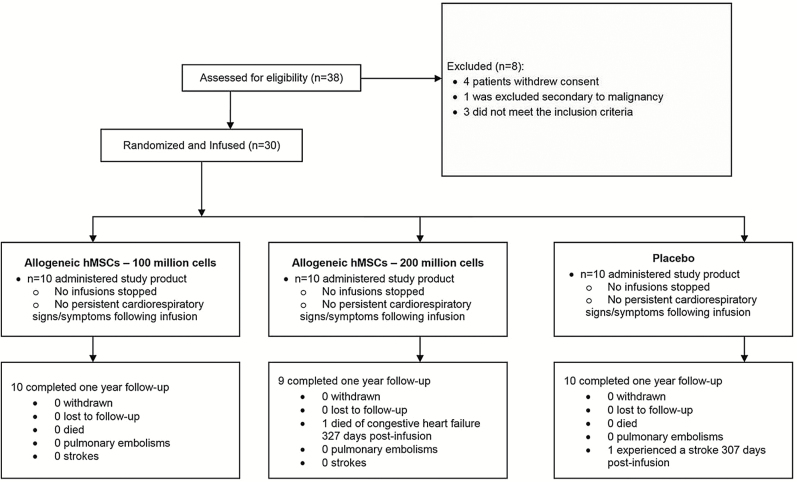
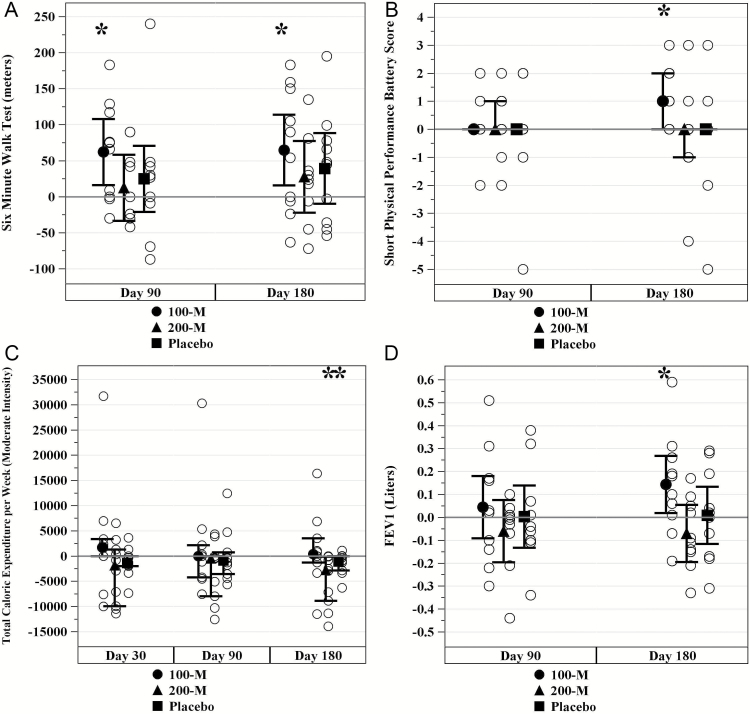
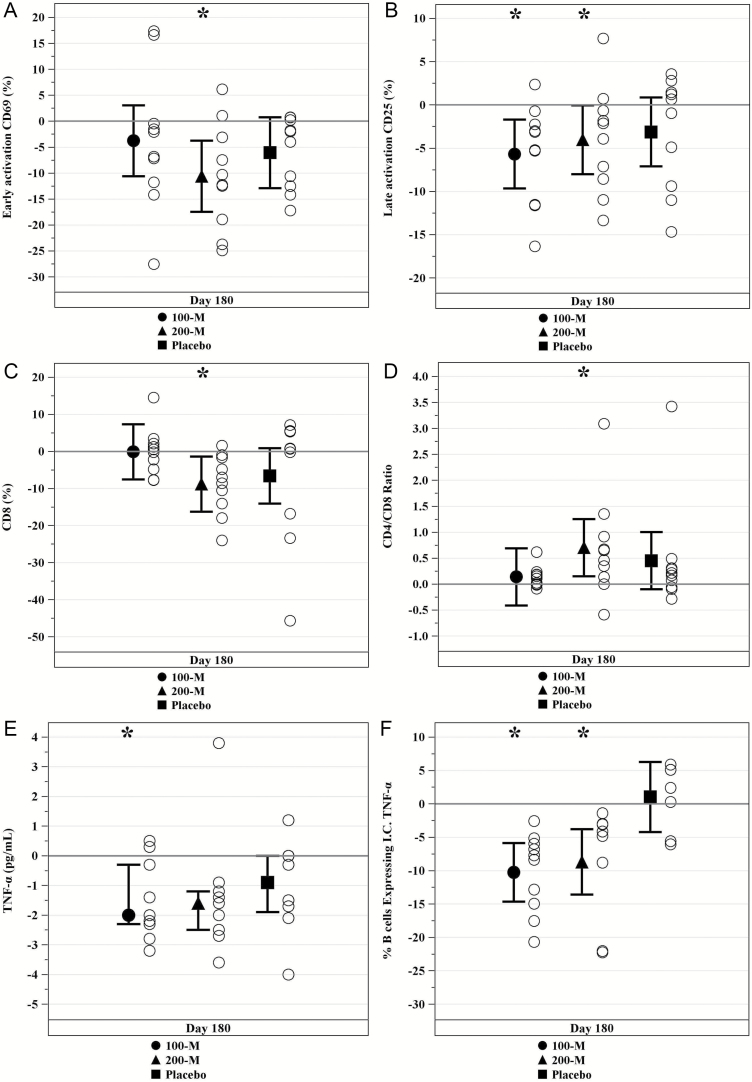
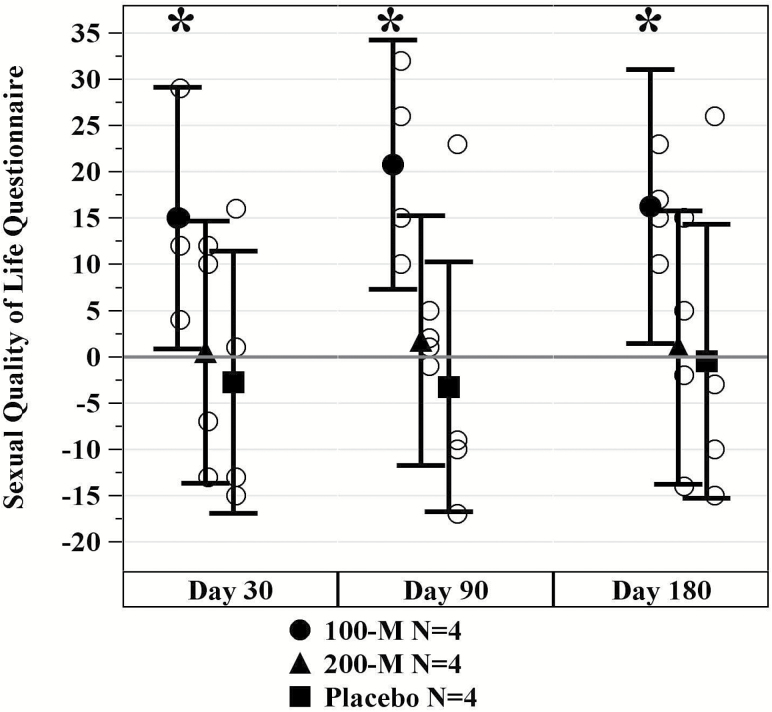
BACKGROUND: Aging frailty, characterized by decreased physical and immunological functioning, is associated with stem cell depletion. Human allogeneic mesenchymal stem cells (allo-hMSCs) exert immunomodulatory effects and promote tissue repair. METHODS: This is a randomized, double-blinded, dose-finding study of intravenous allo-hMSCs (100 or 200-million [M]) vs placebo delivered to patients (n = 30, mean age 75.5 ± 7.3) with frailty. The primary endpoint was incidence of treatment-emergent serious adverse events (TE-SAEs) at 1-month postinfusion. Secondary endpoints included physical performance, patient-reported outcomes, and immune markers of frailty measured at 6 months postinfusion. RESULTS: No therapy-related TE-SAEs occurred at 1 month. Physical performance improved preferentially in the 100M-group; immunologic improvement occurred in both the 100M- and 200M-groups. The 6-minute walk test, short physical performance exam, and forced expiratory volume in 1 second improved in the 100M-group (p = .01), not in the 200M- or placebo groups. The female sexual quality of life questionnaire improved in the 100M-group (p = .03). Serum TNF-α levels decreased in the 100M-group (p = .03). B cell intracellular TNF-α improved in both the 100M- (p < .0001) and 200M-groups (p = .002) as well as between groups compared to placebo (p = .003 and p = .039, respectively). Early and late activated T-cells were also reduced by MSC therapy. CONCLUSION: Intravenous allo-hMSCs were safe in individuals with aging frailty. Treated groups had remarkable improvements in physical performance measures and inflammatory biomarkers, both of which characterize the frailty syndrome. Given the excellent safety and efficacy profiles demonstrated in this study, larger clinical trials are warranted to establish the efficacy of hMSCs in this multisystem disorder. CLINICAL TRIAL REGISTRATION: www.clinicaltrials.gov: CRATUS (#NCT02065245).
Overview
The claims and statistics of this paper haven’t been checked yet.
Free: it reads the open-access text and checks the first 5 claims that cite a source we can check. Create a free account to check every claim.
Integrity signals
Registry
Cites
Statistics
Figures
Verification
Claims the paper makes
The claims and statistics of this paper haven’t been checked yet.
Free: it reads the open-access text and checks the first 5 claims that cite a source we can check. Create a free account to check every claim.
Claims other papers make about this one
Each is checked against this paper’s own text: does it say what the citing paper says it does?
The cited source says what the claim attributes to it.
In the citing paper
“An early human study suggests a role for mesenchymal stem cells in managing frailty468.”
From Sarcopenic obesity in older adults: aetiology, epidemiology and treatment strategies (2018) · cites this paper as [468]
The cited source says what the claim attributes to it.
In the citing paper
“Trials have found that after stem cell injections in aging debilitated patients, many symptoms improve, and inflammatory marker levels decrease.359”
From Inflammation and aging: signaling pathways and intervention therapies (2023) · cites this paper as [359]
Self-check
Percentages, sums and reported differences re-computed from the paper’s own numbers.
The self-check needs the paper’s full text.
Citations
Cites
Frailty in Older Adults: Evidence for a Phenotype
Fried, L. P., Tangen, C. M., Walston, J., Newman, A. B., Hirsch, C., Gottdiener, J., Seeman, T., Tracy, R., Kop, W. J., Burke, G., et al. (2001) · The Journals of Gerontology Series A: Biological Sciences and Medical Sciences · doi:10.1093/gerona/56.3.m146 · Cited by 24,907
López-Otín, C., Blasco, M. A., Partridge, L., Serrano, M., & Kroemer, G. (2013) · Cell · doi:10.1016/j.cell.2013.05.039 · Cited by 14,982
ATS Statement: Guidelines for the Six-Minute Walk Test
(2002) · American Journal of Respiratory and Critical Care Medicine · doi:10.1164/ajrccm.166.1.at1102 · Cited by 11,195
Clegg, A., Young, J., Iliffe, S., Rikkert, M. O., & Rockwood, K. (2013) · The Lancet · doi:10.1016/s0140-6736(12)62167-9 · Cited by 9,503
A global clinical measure of fitness and frailty in elderly people
Rockwood, K. (2005) · Canadian Medical Association Journal · doi:10.1503/cmaj.050051 · Cited by 8,968 · cited 3×
“The inclusion criteria were as follows: (i) Patients were provided written informed consent, (ii) patients were aged ≥60 and ≤95 years at the time of signing the Informed Consent Form, and (iii) they showed the signs of frailty based on physician assessment, apart from a concomitant condition, by a score between 4 and…”
MethodFrailty Consensus: A Call to Action
Morley, J. E., Vellas, B., Abellan van Kan, G., Anker, S. D., Bauer, J. M., Bernabei, R., Cesari, M., Chumlea, W. C., Doehner, W., Evans, J., et al. (2013) · Journal of the American Medical Directors Association · doi:10.1016/j.jamda.2013.03.022 · Cited by 4,043 · cited 3×
“Currently, several multimodal interventions are employed to manage frailty, namely resistance/aerobic exercise, caloric support, vitamin D, and optimization of polypharmacy (7).”
BackgroundMethodFried, L. P., Ferrucci, L., Darer, J., Williamson, J. D., & Anderson, G. (2004) · The Journals of Gerontology Series A: Biological Sciences and Medical Sciences · doi:10.1093/gerona/59.3.m255 · Cited by 4,032 · cited 1×
“The physical phenotype model consists of the identification of at least three factors: weight loss, exhaustion, weakness, slowness, and decreased physical activity, which together comprise an underlying state of multisystem dysregulation (9,10).”
BackgroundPrevalence of frailty in community-dwelling older persons: a systematic review
Collard, R. M., Boter, H., Schoevers, R. A., & Oude Voshaar, R. C. (2012) · Journal of the American Geriatrics Society · doi:10.1111/j.1532-5415.2012.04054.x · Cited by 3,073
Guralnik, J. M., Ferrucci, L., Pieper, C. F., Leveille, S. G., Markides, K. S., Ostir, G. V., Studenski, S., Berkman, L. F., & Wallace, R. B. (2000) · The Journals of Gerontology Series A: Biological Sciences and Medical Sciences · doi:10.1093/gerona/55.4.m221 · Cited by 2,898 · cited 1×
“Similarly, the SPPB is a physical measure utilized to identify an individual’s future risk of disability, institutionalization, and mortality in the elderly adults (38).”
The Frailty Syndrome: Definition and Natural History
Xue, Q.-L. (2011) · Clinics in Geriatric Medicine · doi:10.1016/j.cger.2010.08.009 · Cited by 2,061 · cited 1×
“However, there are no specific medical or biologic treatments that ameliorate or reverse frailty (12,13).”
Background
Cited by
Items 101–186 of 186
Process development and manufacturing approaches for mesenchymal stem cell therapies
Couto, P. S., Bersenev, A., & Rafiq, Q. A. (2019) · Elsevier eBooks · doi:10.1016/b978-0-12-816221-7.00002-1 · Cited by 12
Demographic representation in clinical trials for cell-based therapy
Saltzman, R., Jayaweera, D. T., Caceres, L. V., Tovar, J. A., Vidro-Casiano, M., Karakeshishyan, V., Soto, J., Khan, A., Mitrani, R. D., Schulman, I. H., et al. (2021) · Contemporary Clinical Trials Communications · doi:10.1016/j.conctc.2021.100702 · Cited by 11
Self-citationDias, R. B., Guimaräes, J. A. M., Fernandes, M. B. C., da Rocha, L. R., da Costa, E. S., Nogueira, L. P., Hochman‐Mendez, C., Fortuna-Costa, A., da Silva, A. K. F., Cunha, K. S., et al. (2019) · Stem Cells International · doi:10.1155/2019/2608482 · Cited by 11
“…[1 – 4], avascular osteonecrosis [5, 6], critical-sized defects [1, 7 – 12], and osteochondral lesions [13 – 19] because of their inherent potential to di ff erentiate into multiple skeletal cell types [20 – 22], modulate in fl ammatory responses [23 – 28], and support angiogenesis [29 – 32].”
Sarcopenia in the setting of nonalcoholic fatty liver
Arrese, M. A., Cabello‐Verrugio, C., Arab, J. P., Francisco Barrera, M., Baudrand, R., Guarda, F. J., Gul, I., & Cabrera, D. (2022) · Metabolism and Target Organ Damage · doi:10.20517/mtod.2021.16 · Cited by 10
Systematic Intravenous Administration of Autologous Mesenchymal Stem Cells Is Safe
Matsuoka, T., Kobayashi, N., Hara, Y., & Hara, Y. (2024) · Journal of Clinical Medicine · doi:10.3390/jcm13237460 · Cited by 9
Loh, J.-K., Wang, M., Cheong, S., Tsai, F.-T., Huang, S.-H., Wu, J.-R., Yang, Y., Chiou, S., & Ong, A. H.-K. (2022) · Journal of the Chinese Medical Association · doi:10.1097/jcma.0000000000000759 · Cited by 9
The potential role of mesenchymal stem cells in modulating antiageing process
Govindasamy, V., Rajendran, A., LEE, Z., Ooi, G., Then, K.-Y., Then, K., Gayathri, M., Das, A. K., & Cheong, S. (2021) · Cell Biology International · doi:10.1002/cbin.11652 · Cited by 9
“Overall, the safety parameters were satisfactory and immunological and frailty indicators showed improvement in the 100 million groups (Tompkins et al., 2017).”
BackgroundRecent progress in stem cell and immune cell-based interventions for aging and age-related disorders
Li, H., Han, D., Zong, F., Zhang, Y., Han, Z., & Xu, Z. (2025) · Frontiers in Aging · doi:10.3389/fragi.2025.1638168 · Cited by 8
Inflammaging: Experimental Insights and Translational Advances
Cossarizza, A. (2026) · European Journal of Immunology · doi:10.1002/eji.70239 · Cited by 8
The path to biotechnological singularity: Current breakthroughs and outlook
Wen, Z., Yang, D., Yang, Y., Hu, J., Parviainen, A., Chen, X., Li, Q., VanDeusen, E. A., Ma, J., & Tay, F. R. (2025) · Biotechnology Advances · doi:10.1016/j.biotechadv.2025.108667 · Cited by 8
Patusco, R., Gyasi, K., & Kaufmann, A. (2026) · Aging Clinical and Experimental Research · doi:10.1007/s40520-025-03278-z · Cited by 7
“Clinical trials report symptom improvement and inflammatory markers level reduced in older adults with age-related conditions [157, 158].”
Safety of intravenous mesenchymal stem cell therapy: a meta-analysis of randomized controlled trials
Habiba, U. E., Greene, D. L., Ahmad, K., Shamim, S., Khan, N., & Umer, A. (2025) · Regenerative medicine reports . · doi:10.4103/regenmed.regenmed-d-25-00006 · Cited by 7
Barmada, A., Sharan, J., Band, N., Rumschlag, T., Yaqub, A., Liebman, E., & Prodromos, C. C. (2022) · Current Stem Cell Research & Therapy · doi:10.2174/1574888x17666220823092202 · Cited by 8
Cross-Cultural Adaptation of the CHAMPS Questionnaire in French Canadians with COPD
Mak, S., Soicher, J. E., Mayo, N. E., Wood-Dauphinée, S., & Bourbeau, J. (2016) · Canadian Respiratory Journal · doi:10.1155/2016/9304505 · Cited by 7
Senolytics: The Modern Snake Oil?
Morley, J. E. (2019) · The journal of nutrition health & aging · doi:10.1007/s12603-019-1202-1 · Cited by 8
Anderson, R. M., & Couteur, D. G. L. (2018) · The Journals of Gerontology Series A · doi:10.1093/gerona/gly004 · Cited by 6
Hoang, D. M., Nguyen, K. T., Hoang, V. T., Dao, L. T. M., Bui, H. T. T., Ho, T. T. K., Nguyen, T. T. P., Ngo, A. T., Nguyen, H. K., & Thanh, L. N. (2021) · The Journals of Gerontology Series A · doi:10.1093/gerona/glab326 · Cited by 6
“In terms of efficacy, the trial indicated that 100 million cell doses were more effective than 200 million cell doses (11).”
BackgroundSantos, E. J. C., Winck, C. P., & Braga, C. L. (2019) · Medicina Veterinária (UFRPE) · doi:10.26605/medvet-v13n4-3662 · Cited by 5
Stubbs, B. J., Azañedo, G. A., Peralta, S., Diaz, S. R., Gray, W., Alexander, L. E. C., Silverman-Martin, W., Garcia, T. Y., Blonquist, T. M., Upadhyay, V., et al. (2024) · PLoS ONE · doi:10.1371/journal.pone.0307951 · Cited by 5
Jian, Z., Yang, D., Tang, C., Zheng, L., Zhao, W., Zhou, Z., Wang, F., & Peng, X. (2025) · Stem Cell Reviews and Reports · doi:10.1007/s12015-025-10969-7 · Cited by 4
Mackie, E. C., Cheng, C.-H., Alibrio, M. N., Rutledge, C., Xin, H., Chopp, M., McCann, R. P., Rosene, D. L., Yang, Q., Zeldich, E., et al. (2025) · GeroScience · doi:10.1007/s11357-025-01992-0 · Cited by 4
Aligning Intrinsic Capacity and Geroscience: Linking Function with Biology
Zhu, S. N., Tao, L., Fan, C., Wei, Y., Chhetri, J. K., & Chan, P. (2025) · Aging and Disease · doi:10.14336/ad.2025.1419 · Cited by 4
Yu, A., Ma, C., & Hu, M. (2025) · Cells · doi:10.3390/cells14151153 · Cited by 4
“A clinical trial investigated the safety and efficacy of intravenous administration of allogeneic mesenchymal stem cells (allo-hMSCs) in elderly patients with frailty [54].”
Mesenchymal Stromal Cells as a Therapeutic Intervention
Schulman, I. H., & Hare, J. M. (2019) · IntechOpen eBooks · doi:10.5772/intechopen.78586 · Cited by 4
Self-citationGaray, R. P. (2024) · Exploration of Drug Science · doi:10.37349/eds.2024.00040 · Cited by 4
Pandey, K., Srivastava, P., Pandey, S. K., Johari, S., Bhatnagar, P., Sonane, M., & Mishra, A. (2024) · Current Molecular Medicine · doi:10.2174/0115665240334785240913071442 · Cited by 4
MSCs, but not mesenchymal stem cells
Pham, P. V. (2024) · Biomedical Research and Therapy · doi:10.15419/bmrat.v11i9.924 · Cited by 4
Mesenchymal Stem Cells: A Promising Treatment for Thymic Involution
Yang, Z., Peng, Y., Yuan, J., Xia, H., Luo, L., & Wu, X. (2023) · Advances in experimental medicine and biology · doi:10.1007/5584_2023_780 · Cited by 4
Potential of Stem Cell-Based Therapy to Restore Function in Aging Systems: Are We There Yet?
Hare, J. M., & Beerman, I. (2022) · The Journals of Gerontology Series A · doi:10.1093/gerona/glac003 · Cited by 3
Self-citationSundin, A., Ionescu, S. I., Balkan, W., & Hare, J. M. (2023) · Future Cardiology · doi:10.2217/fca-2023-0081 · Cited by 3
Self-citationKlinaki, E., & Ogrodnik, M. B. (2024) · Mechanisms of Ageing and Development · doi:10.1016/j.mad.2024.111929 · Cited by 3
A systematic review of lifespan studies in rodents using stem cell transplantations
Frost, O. G., Ramkilawan, P., Rebbaa, A., & Stolzing, A. (2024) · Ageing Research Reviews · doi:10.1016/j.arr.2024.102295 · Cited by 3
Late‐onset primary muscle diseases mimicking sarcopenia
Yamashita, S. (2024) · Geriatrics and gerontology international/Geriatrics & gerontology international · doi:10.1111/ggi.15000 · Cited by 3
Grounding: An Anti-Aging Breakthrough?
Koniver, L. (2024) · Trends in General Medicine · doi:10.33425/2996-3893.1014 · Cited by 3
Schulman, I. H., Khan, A., & Hare, J. M. (2018) · Circulation Research · doi:10.1161/circresaha.118.310426 · Cited by 3
Self-citationRegenerative Medicine and the Biology of Aging
Hare, J. M., & Beerman, I. (2019) · The Journals of Gerontology Series A · doi:10.1093/gerona/glz132 · Cited by 3
Self-citationNguyen, L. T., Nguyen, K. T., Dao, L. T. M., Hoang, V. H., Phan, T. T. K., Dinh, N. H., Nguyen, H. T., Nguyen, A. T. P., Nguyen, T. T. N., Ho, T. T. K., et al. (2026) · EBioMedicine · doi:10.1016/j.ebiom.2026.106268 · Cited by 2
“Our findings align with previous trials by Tompkins et al. 17 and Zhu et al., 18 which reported superior physical performance and favourable immunological profiles following MSC infusion.”
InfluentialHighlights from the 2019 International Congress on Frailty and Sarcopenia Research
Maltais, M. L., Aubertin‐Leheudre, M., Dray, C., Fielding, R. A., Rolland, Y., Cesari, M., & Vellas, B. J. (2019) · The Journal of Frailty & Aging · doi:10.14283/jfa.2019.13 · Cited by 2
“Dr Joshua Hare et al. presented data from their laboratory showing that stem cell injection increased muscle function in older adults with physical frailty (21).”
Galera, M. R., Oikonomou, A., Elsborg, J. D., Harth, L., Fischer‐Nielsen, A., Løvendorf, M. B., Dyring‐Andersen, B., Iorio, F., Munthe‐Fog, L., Woetmann, A., et al. (2025) · Molecular Therapy — Methods & Clinical Development · doi:10.1016/j.omtm.2025.101512 · Cited by 1
Hien, L. T., & Tu, P. L. M. (2026) · Tạp chí Y học Dự phòng · doi:10.51403/0868-2836/2025/2988 · Cited by 1
Mesenchymal stem cells for recurrent miscarriage
Ramos, F., Perez, J., Ng, G. K., Veltmeyer, J. D., Koumjian, M. P., Lin, F., Byrne, D., & Delgado, G. (2026) · Journal of Translational Medicine · doi:10.1186/s12967-026-08179-x · Cited by 1
“…signals seen in clinical trials of major degenerative, autoimmune, and inflammatory diseases including liver failure [37–39], heart failure [40–52], multiple sclerosis [53–57], rheumatoid arthritis [58–60], type 1 diabetes [61–63], osteoarthritis [64, 65], and in some cases even aging itself [66].”
Yu, Y., He, Y., Wang, Y., Wu, C., Zhou, R., Chen, F., & Ma, W. (2026) · The FASEB Journal · doi:10.1096/fj.202601360r · Cited by 1
Dinislam, K., Shamsi, A., Syed, T., Anwar, S., & Shahwan, M. J. (2026) · Frontiers in Cell and Developmental Biology · doi:10.3389/fcell.2026.1830358 · Cited by 1
“Many studies have shown that improvements in physical performance measures have been limited, leading to ongoing debate over whether the observed benefits reflect true regenerative repair or transient immunomodulatory effects (Golpanian et al., 2017; Schulman et al., 2018; Tompkins et al., 2017).”
The Isolation and Manufacture of GMP-Grade Bone Marrow Stromal Cells from Bone Specimens
Dias, R. B., & Bonfim, D. C. (2021) · Methods in molecular biology · doi:10.1007/7651_2020_319 · Cited by 1
Evidence for a Geroscience Approach to Late Life Depression: Bioenergetics and the Frail-Depressed
Brown, P. J. (2021) · American Journal of Geriatric Psychiatry · doi:10.1016/j.jagp.2021.11.003 · Cited by 1
Mesenchymal Stem Cells Therapy for Muscular Atrophy and Sarcopenia
Yang, J. (2022) · Epidemiology International Journal · doi:10.23880/eij-16000231 · Cited by 1
The impact of cell-based therapy on female sexual dysfunction: a systematic review and meta-analysis
Saltzman, R., Campbell, K., Ripps, S. J., Golan, R., Cabreja-Castillo, M., Garzon, A. M., Rahman, F., Caceres, L. V., Tovar, J. A., Khan, A., et al. (2023) · Sexual Medicine Reviews · doi:10.1093/sxmrev/qead023 · Cited by 1
Self-citationFrailty: Focus on Regenerative Medicine
Barna, O. М., Korost, Y. V., Pogrebnyak, O. O., & Maleeva, V. O. (2024) · Medicine of Ukraine · doi:10.37987/1997-9894.2024.2(278).306660 · Cited by 1
Effect of hypoxic/ischemic environment on the immunoprivilege of allogeneic mesenchymal stem cells
Abu‐El‐Rub, E. (2020) · Mspace (University of Manitoba)
Establishing a Comprehensive Anti-aging Research Center: Experiences and ChallengesPreprint
Chen, X., Ge, J., Huang, J., Geng, S., Li, Q., Zhu, Y., Yuan, H., Wang, Z., & Jiang, H. (2020) · Research Square · doi:10.21203/rs.3.rs-29136/v1
Ontogenetic Principles of Accelerated Aging and the Prospects for Its Prevention and Treatment
Meshchaninov, V. N., Tsyvian, P. B., Myakotnykh, V. S., Kovtun, O. P., Shcherbakov, D., & Blagodareva, M. S. (2022) · Advances in Gerontology · doi:10.1134/s2079057022030080
Skeletal muscle health in aging: a focus on mitochondria, metabolism and physical performance
Grevendonk, L. (2021) · Research Publications (Maastricht University) · doi:10.26481/dis.20211006lg
Kregel, H. R., Puzio, T. J., & Adams, S. D. (2022) · Current Trauma Reports · doi:10.1007/s40719-022-00241-5
“Tompkins et al. investigated infusion of human allogeneic mesenchymal stem cells into patients meeting criteria for frailty and found that the intervention arm had significantly improved physical function and patient-related outcome measures, as well as immunomodulatory changes such as decreased levels of TNF-alpha [4…”
BackgroundThe ABC of Stem Cell Therapies for Neurological Disorders
Pappolla, M. A., Wu, P., & Sambamurti, K. (2024) · Springer eBooks · doi:10.1007/978-3-031-50357-3_30
Healthy aging in the era of scientific and technological utopia
Zhu, S., Tao, L., & Chhetri, J. K. (2025) · Maturitas · doi:10.1016/j.maturitas.2025.108230
Insights in Aging Interventions: 2022
Scheibye-Knudsen, M. (2025) · Frontiers research topics · doi:10.3389/978-2-8325-6125-6
Islam, M. A., Gu, W., Song, Y., Xu, Y., & Xu, H. (2025) · Acta Materia Medica · doi:10.15212/amm-2024-0091
“In addition, ongoing clinical trials have confirmed that allogeneic ADSCs could effectively alleviate aging-related symptoms by increasing mitophagy [203, 204].”
Stem Cell-Based Therapy for Treatment of Frailty
Hoang, D. M. (2025) · Springer eBooks · doi:10.1007/978-981-96-1261-1_22
Stem-Cell Therapy for Anti-Aging
Sureshkumar, T., Krishnasreya, M., Elakkiya, M. R., Saraswathy, C. D. B., & Moin, S. (2025) · IGI Global eBooks · doi:10.4018/979-8-3693-9730-5.ch006
de Paula, J. A., Rabito, E. I., Rebelatto, C. L. K., Senegaglia, A. C., Franck, C. L., Shigunov, P., Stimamiglio, M. A., Correa, A., Leitão, C. A., González, M. C., et al. (2026) · Nutrición Hospitalaria · doi:10.20960/nh.06632
“(27, 28, 29) MSCs have a remarkable capacity for directed differentiation, enabling them to transform into skeletal muscle cells under speci�c conditions.”
Zhu, Y., Huang, C., Zheng, L., Li, Q., Ge, J., Geng, S., Zhai, M., Chen, X., Yuan, H., Li, Y., et al. (2024) · Figshare · doi:10.6084/m9.figshare.26713753
Exploring the possibility of improving longevity through late-life intervention
Gavriilidis, G. (2021) · Oxford University Research Archive (ORA) (University of Oxford) · doi:10.5287/ora-xvvkwkyxy
Zhu, Y., Huang, C., Zheng, L., Li, Q., Ge, J., Geng, S., Zhai, M., Chen, X., Yuan, H., Li, Y., et al. (2024) · Figshare · doi:10.6084/m9.figshare.25711215
Ali, I. (2026) · Lancaster EPrints (Lancaster University) · doi:10.17635/lancaster/thesis/3118
Staging concept for aging management: Definition, mechanism, and coping strategies
Wang, Z., Liu, S. S., Du, S., Cui, X., Chao, B., Liu, M., & Wu, M. (2026) · View · doi:10.1002/viw.20250201
Deciphering the role of the telomere-mitochondria connections during senescence
Lin, P. (2024) · theses.fr (ABES) · doi:10.70675/5437405ez9ab8z4656zab11z024ef945decd
Wedharga, I. G. P. A., & Jaya, F. W. (2026) · Jurnal Widya Medika · doi:10.33508/jwm.v12i2.8384
“Tompkins et al. (2017) showed a low risk in randomization, blinding, and measurement, but raised some concerns regarding missing outcome data and selective reporting due to unclear attrition handling and multiple secondary outcomes without clear prespecification.”
Lei, J., & Wang, S. (2026) · Ageing and Cancer Research & Treatment · doi:10.70401/acrt.2026.0021
Wen, Y., Zhang, X., Hedström, Y., Cacciani, N., Bergquist, J., Ikeno, Y., Simonson, O. E., Rodin, S., Grinnemo, K., & Larsson, L. (2026) · Skeletal Muscle · doi:10.1186/s13395-026-00433-6
“Intravenous BM-MSC treatment has been shown to be safe in clinical trials in individuals with aging-related frailty [32].”
Toward Cellular Immortality: A Biotechnological Perspective on Radical Human Longevity
Caussy, R. (2026) · International Journal For Multidisciplinary Research · doi:10.36948/ijfmr.2026.v08i03.80967
Genetically enhanced mesenchymal stem cells for aging intervention
Jing-Hui, L. E. I., Guang-Hui, L. I. U., & Wang, S. (2026) · Shengming kexue · doi:10.3724/cbls.2026094
Nanotechnological Strategies to Promote Skeletal Muscle Regeneration in Aging
Carton, F., & Malatesta, M. (2026) · International Journal of Molecular Sciences · doi:10.3390/ijms27146167
“In addition, emerging pharmacological approaches include therapies based on stem cells [60,61], gene expression modulation to promote muscle regeneration [62,63], the administration of regulators of androgen receptors to promote an increase in muscle mass and strength [64,65], or of inhibitors of…”
Huang, C., Zhu, Y., Gong, X., Feng, S., Huo, G., Liu, H., Jiang, H., & Liu, Z. (2026) · Frontiers in Immunology · doi:10.3389/fimmu.2026.1796161
“Although these clinical fi ndings are preliminary and must be interpreted cautiously due to the limited sample size, they align with previous reports indicating that MSC therapy may confer functional bene fi ts in older adults with frailty (19 – 21).”
The efficacy of stem cell therapy: cells or their microenvironment?
Li, Z., Yuan, W., Hao, S., Liu, F., San, C. A., Ding, Q., Sun, Y., Li, Y. X., & Zhu, Y. Z. (2026) · Stem Cell Research & Therapy · doi:10.1186/s13287-026-05251-7
Regenerative medicine and stem cell approaches in cardiac aging
Khan, Y., Fatima, R., Rana, A. J., Eltaib, L., Rejili, M., Hussain, M. S., Ashique, S., & Yasmin, S. (2026) · Elsevier eBooks · doi:10.1016/b978-0-443-45811-8.00014-3
Kim, I., Song, Y., Choo, S., & Lee, S. S. (2026) · Ageing Research Reviews · doi:10.1016/j.arr.2026.103320
Safety and Efficacy of Mesenchymal Stem Cell Therapy in Aging Frailty: A Systematic Review
Poutouri, E., Sotiropoulou, M., Potoupnis, M. E., Koliakos, G., Kassi, E. N., Tournis, S., & Anagnostis, P. G. (2026) · International Journal of Molecular Sciences · doi:10.3390/ijms27177596
“Tompkins et al. [19] conducted a phase II RCT in older adults with clinically defined frailty, evaluating the intravenous IV administration of allogeneic bone-marrow-derived MSCs at doses of 100 million and 200 million cells versus placebo [19].”
InfluentialLi, F., Wang, Y., Wang, G., Chen, J., & Huang, S. (2026) · Aging Cell · doi:10.1111/acel.70658
Yu, C., Li, X., Zhao, W., & Zhou, L. (2026) · PubMed Central · doi:10.22038/ijbms.2026.94824.20458
Chubak, B. M., Chan, C. W., Feghali, J. A., Karakus, S., Pozzi, E., Prabhu, N., Raheem, O. A., & El‐Sakka, A. I. (2026) · Sexual Medicine Reviews · doi:10.1093/sxmrev/qeag048
The Effect of Chronic Inflammation on Cellular Aging Processes and Current Treatment Approaches
Başaran, A. (2026) · Uluslararası Sağlık Bilimlerinde Disiplinler Arası Etkileşim Dergisi · doi:10.65349/nxpt1964
Stem Cell and Exosome Treatment for Organ Health and Longevity
Prodromos, C. C., Villar, R. D., Striegel, A., Pena, G. R., Dixit, R., & Xu, A. (2026) · International Journal of Molecular Sciences · doi:10.3390/ijms27209174
Geriatric Regenerative Medicine: Mechanisms, Strategies, and Clinical Translation
Li, Q., Wang, C., Chong, J., Liu, Z., Wang, B., Liu, S., Zhang, X., Liu, H., Qin, S., Wu, C., et al. (2026) · iNew Medicine · doi:10.1002/inm3.70089
Wiese, D. M., Wood, C. A., & Braid, L. R. (2022) · doi:10.3389/fcell.2022.867426.s002
Metadata
- Authors
- Tompkins, B. A., DiFede, D. L., Khan, A., Landin, A. M., Schulman, I. H., Pujol, M. V., Heldman, A. W., Miki, R., Goldschmidt-Clermont, P. J., Goldstein, B. J., Mushtaq, M., Levis-Dusseau, S., Byrnes, J. J., Lowery, M., Natsumeda, M., Delgado, C., Saltzman, R., Vidro-Casiano, M., Da Fonseca, M., Golpanian, S., Premer, C., Medina, A., Valasaki, K., Florea, V., Anderson, E., El-Khorazaty, J., Mendizabal, A., Green, G., Oliva, A. A., & Hare, J. M.
- Affiliations
- The Interdisciplinary Stem Cell Institute,
- University of Miami (US)
- Department of Medicine, University of Miami Miller School of Medicine, Florida.
- Department of Surgery, and
- Emmes (United States) (US)
- Longeveron LLC, Miami, Florida.
- Corresponding author
- Hare, Joshua M
- ORCID
- Venue
- The Journals of Gerontology: Series A
- Publisher
- Oxford University Press (OUP)
- Published
- 2017-07-17
- Volume
- 72
- Issue
- 11
- Pages
- 1513-1522
- ISSN
- 1079-5006 (ISSN-L)
- 1758-535X
- PMC
- PMC5861900
- OpenAlex
- W2734481251
- Cited by
- 169
- References
- 49
- Citations by year
- 2026: 22 · 2025: 16 · 2024: 24 · 2023: 16 · 2022: 14 · 2021: 27 · 2020: 14 · 2019: 21 · 2018: 11 · 2017: 3
- FWCI
- 7.70
- Type
- journal article
- Language
- en
- Open access
- hybrid
- doi.org
- Licence
- cc-by
- Locations
- The Journals of Gerontology Series A (publishedVersion, cc-by)
- PubMed Central (publishedVersion, cc-by)
- PubMed (publishedVersion)
- Greater South Information System
- Funders
- Starr Foundation
- Topics
- Life Sciences › Biochemistry, Genetics and Molecular Biology › Cell Biology › Mesenchymal stem cell research
- Health Sciences › Medicine › Geriatrics and Gerontology › Frailty in Older Adults
- Health Sciences › Medicine › Hematology › Hematopoietic Stem Cell Transplantation
- Keywords
- allogeneic mesenchymal stem cells, frailty, aging, intravenous cell therapy, physical performance, immunomodulation, TNF-α, inflammation, T cell activation, B cells, quality of life, stem cell dose, safety
- MeSH terms
- Aged, Aged, 80 and over, Aging, Double-Blind Method, Female, Follow-Up Studies, Humans, Immunity, Innate, Infusions, Intravenous, Male, Middle Aged, Transplantation, Homologous, Frail Elderly, Treatment Outcome, Regenerative Medicine, Mesenchymal Stem Cell Transplantation
About these checks
Registry, retraction, Cites and statistics results are computed, not judged, with one exception: a printed reference that no index lists is read once by a model before it counts as a citation error. Claims are extracted by a model and kept only when their quote appears verbatim in the text; each cited source is then checked, with a model’s help, for whether it says what the claim relies on. Those verdicts can be wrong — read the claim’s quote and the cited source before relying on one.
Statistics and arithmetic are recomputed, not judged.
Confidence bands are shown only for fields calibrated on our annotated test set. None is calibrated yet, so no band is shown.
What counts as a claim ›How we measure confidence ›How we check this ›
Are you an author, or do you see a problem with this page? Request a review
Data sources
Bibliographic data: Semantic Scholar, OpenAlex, Crossref.
Contains information from the Semantic Scholar Academic Graph Datasets, made available under the ODC Attribution License (ODC-BY 1.0).
Semantic Scholar’s data is described in: Kinney, R., et al. (2023). The Semantic Scholar Open Data Platform. arXiv:2301.10140.
