

Allogeneic Mesenchymal Stem Cells Ameliorate Aging Frailty: A Phase II Randomized, Double-Blind, Placebo-Controlled Clinical Trial
Open accessThe DOI matches its Crossref record; 49 of the 49 references it cites were found in a registry or an index.
Abstract
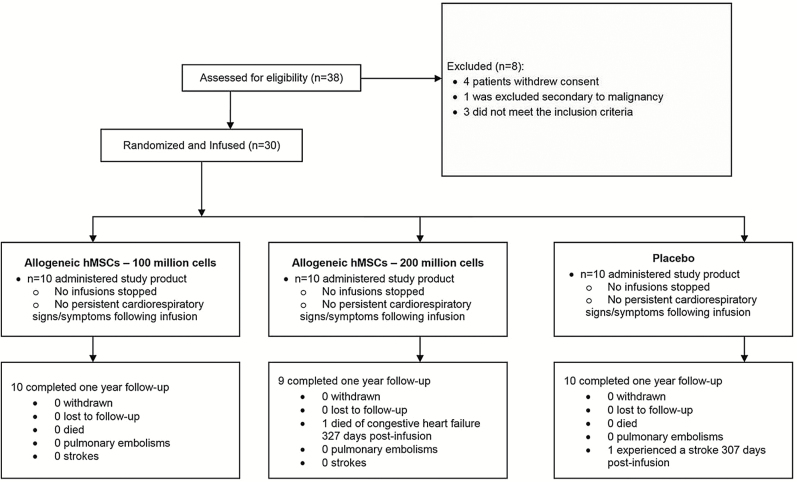
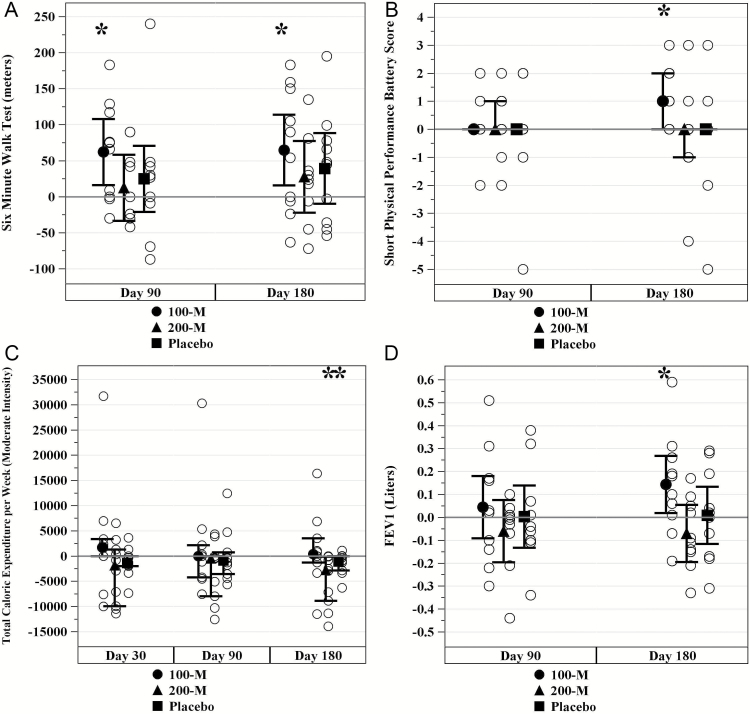
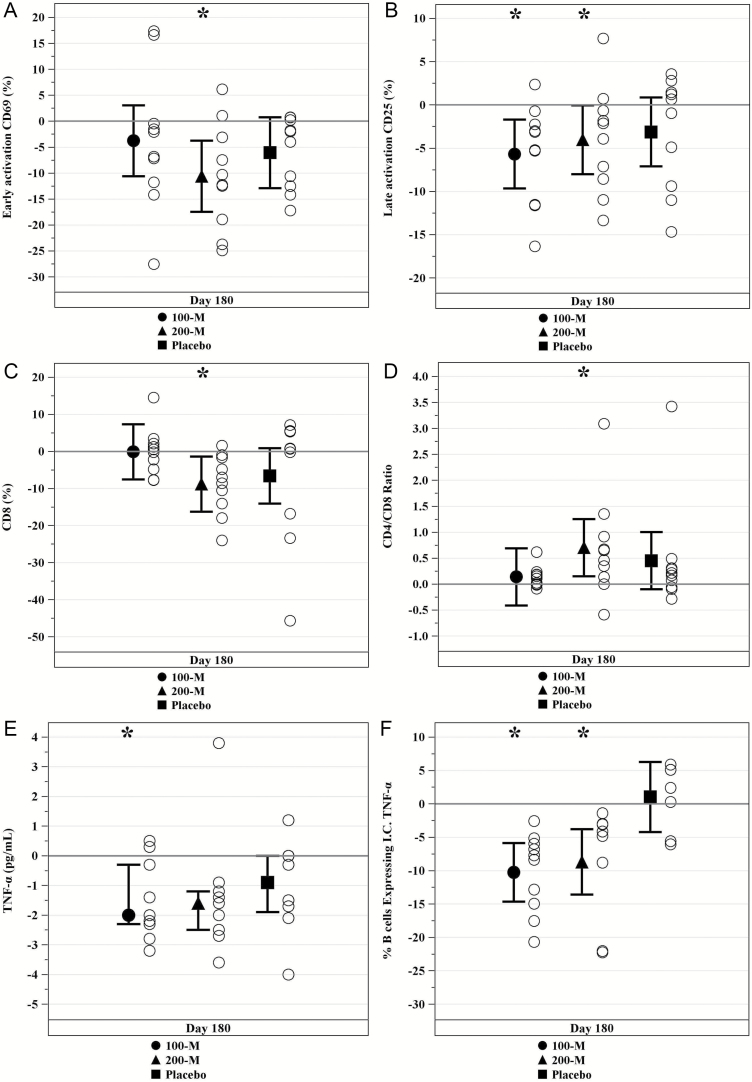
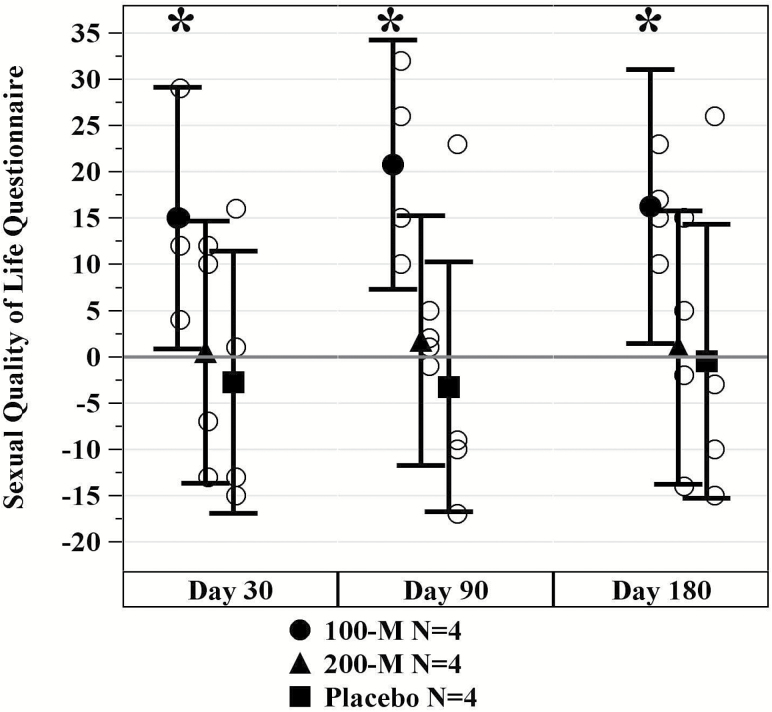
BACKGROUND: Aging frailty, characterized by decreased physical and immunological functioning, is associated with stem cell depletion. Human allogeneic mesenchymal stem cells (allo-hMSCs) exert immunomodulatory effects and promote tissue repair. METHODS: This is a randomized, double-blinded, dose-finding study of intravenous allo-hMSCs (100 or 200-million [M]) vs placebo delivered to patients (n = 30, mean age 75.5 ± 7.3) with frailty. The primary endpoint was incidence of treatment-emergent serious adverse events (TE-SAEs) at 1-month postinfusion. Secondary endpoints included physical performance, patient-reported outcomes, and immune markers of frailty measured at 6 months postinfusion. RESULTS: No therapy-related TE-SAEs occurred at 1 month. Physical performance improved preferentially in the 100M-group; immunologic improvement occurred in both the 100M- and 200M-groups. The 6-minute walk test, short physical performance exam, and forced expiratory volume in 1 second improved in the 100M-group (p = .01), not in the 200M- or placebo groups. The female sexual quality of life questionnaire improved in the 100M-group (p = .03). Serum TNF-α levels decreased in the 100M-group (p = .03). B cell intracellular TNF-α improved in both the 100M- (p < .0001) and 200M-groups (p = .002) as well as between groups compared to placebo (p = .003 and p = .039, respectively). Early and late activated T-cells were also reduced by MSC therapy. CONCLUSION: Intravenous allo-hMSCs were safe in individuals with aging frailty. Treated groups had remarkable improvements in physical performance measures and inflammatory biomarkers, both of which characterize the frailty syndrome. Given the excellent safety and efficacy profiles demonstrated in this study, larger clinical trials are warranted to establish the efficacy of hMSCs in this multisystem disorder. CLINICAL TRIAL REGISTRATION: www.clinicaltrials.gov: CRATUS (#NCT02065245).
Overview
The claims and statistics of this paper haven’t been checked yet.
Free: it reads the open-access text and checks the first 5 claims that cite a source we can check. Create a free account to check every claim.
Integrity signals
Registry
Cites
Statistics
Figures
Verification
Claims the paper makes
The claims and statistics of this paper haven’t been checked yet.
Free: it reads the open-access text and checks the first 5 claims that cite a source we can check. Create a free account to check every claim.
Claims other papers make about this one
Each is checked against this paper’s own text: does it say what the citing paper says it does?
The cited source says what the claim attributes to it.
In the citing paper
“An early human study suggests a role for mesenchymal stem cells in managing frailty468.”
From Sarcopenic obesity in older adults: aetiology, epidemiology and treatment strategies (2018) · cites this paper as [468]
The cited source says what the claim attributes to it.
In the citing paper
“Trials have found that after stem cell injections in aging debilitated patients, many symptoms improve, and inflammatory marker levels decrease.359”
From Inflammation and aging: signaling pathways and intervention therapies (2023) · cites this paper as [359]
Self-check
Percentages, sums and reported differences re-computed from the paper’s own numbers.
The self-check needs the paper’s full text.
Citations
Cites
Frailty in Older Adults: Evidence for a Phenotype
Fried, L. P., Tangen, C. M., Walston, J., Newman, A. B., Hirsch, C., Gottdiener, J., Seeman, T., Tracy, R., Kop, W. J., Burke, G., et al. (2001) · The Journals of Gerontology Series A: Biological Sciences and Medical Sciences · doi:10.1093/gerona/56.3.m146 · Cited by 24,907
López-Otín, C., Blasco, M. A., Partridge, L., Serrano, M., & Kroemer, G. (2013) · Cell · doi:10.1016/j.cell.2013.05.039 · Cited by 14,982
ATS Statement: Guidelines for the Six-Minute Walk Test
(2002) · American Journal of Respiratory and Critical Care Medicine · doi:10.1164/ajrccm.166.1.at1102 · Cited by 11,195
Clegg, A., Young, J., Iliffe, S., Rikkert, M. O., & Rockwood, K. (2013) · The Lancet · doi:10.1016/s0140-6736(12)62167-9 · Cited by 9,503
A global clinical measure of fitness and frailty in elderly people
Rockwood, K. (2005) · Canadian Medical Association Journal · doi:10.1503/cmaj.050051 · Cited by 8,968 · cited 3×
“The inclusion criteria were as follows: (i) Patients were provided written informed consent, (ii) patients were aged ≥60 and ≤95 years at the time of signing the Informed Consent Form, and (iii) they showed the signs of frailty based on physician assessment, apart from a concomitant condition, by a score between 4 and…”
MethodFrailty Consensus: A Call to Action
Morley, J. E., Vellas, B., Abellan van Kan, G., Anker, S. D., Bauer, J. M., Bernabei, R., Cesari, M., Chumlea, W. C., Doehner, W., Evans, J., et al. (2013) · Journal of the American Medical Directors Association · doi:10.1016/j.jamda.2013.03.022 · Cited by 4,043 · cited 3×
“Currently, several multimodal interventions are employed to manage frailty, namely resistance/aerobic exercise, caloric support, vitamin D, and optimization of polypharmacy (7).”
BackgroundMethodFried, L. P., Ferrucci, L., Darer, J., Williamson, J. D., & Anderson, G. (2004) · The Journals of Gerontology Series A: Biological Sciences and Medical Sciences · doi:10.1093/gerona/59.3.m255 · Cited by 4,032 · cited 1×
“The physical phenotype model consists of the identification of at least three factors: weight loss, exhaustion, weakness, slowness, and decreased physical activity, which together comprise an underlying state of multisystem dysregulation (9,10).”
BackgroundPrevalence of frailty in community-dwelling older persons: a systematic review
Collard, R. M., Boter, H., Schoevers, R. A., & Oude Voshaar, R. C. (2012) · Journal of the American Geriatrics Society · doi:10.1111/j.1532-5415.2012.04054.x · Cited by 3,073
Guralnik, J. M., Ferrucci, L., Pieper, C. F., Leveille, S. G., Markides, K. S., Ostir, G. V., Studenski, S., Berkman, L. F., & Wallace, R. B. (2000) · The Journals of Gerontology Series A: Biological Sciences and Medical Sciences · doi:10.1093/gerona/55.4.m221 · Cited by 2,898 · cited 1×
“Similarly, the SPPB is a physical measure utilized to identify an individual’s future risk of disability, institutionalization, and mortality in the elderly adults (38).”
The Frailty Syndrome: Definition and Natural History
Xue, Q.-L. (2011) · Clinics in Geriatric Medicine · doi:10.1016/j.cger.2010.08.009 · Cited by 2,061 · cited 1×
“However, there are no specific medical or biologic treatments that ameliorate or reverse frailty (12,13).”
BackgroundWalston, J., Hadley, E. C., Ferrucci, L., Guralnik, J. M., Newman, A. B., Studenski, S. A., Ershler, W. B., Harris, T., & Fried, L. P. (2006) · Journal of the American Geriatrics Society · doi:10.1111/j.1532-5415.2006.00745.x · Cited by 1,605 · cited 1×
“Frailty confers an increased vulnerability to adverse health outcomes and mortality in response to stressors (1,2).”
BackgroundHare, J. M., Traverse, J. H., Henry, T. D., Dib, N., Strumpf, R. K., Schulman, S. P., Gerstenblith, G., DeMaria, A. N., Denktas, A. E., Gammon, R. S., et al. (2009) · Journal of the American College of Cardiology · doi:10.1016/j.jacc.2009.06.055 · Cited by 1,350 · cited 1×
“Given the novel use of MSCs in frailty, a patient population for whom a successful therapy has yet to be developed, dosing was based on safety as established by previous studies (18,19) and phase I (17), and was further investigated in the current study.”
MethodSelf-citationAge-Associated Increased Interleukin-6 Gene Expression, Late-Life Diseases, and Frailty
Ershler, W. B., & Keller, E. T. (2000) · Annual Review of Medicine · doi:10.1146/annurev.med.51.1.245 · Cited by 1,282 · cited 1×
“Currently, most research on frailty has focused on improvements on physiologic reserve, with a focus on the dysregulation of inflammation (49).”
BackgroundCHAMPS Physical Activity Questionnaire for Older Adults: outcomes for interventions
STEWART, A. L., MILLS, K. M., KING, A. C., HASKELL, W. L., GILLIS, D., & RITTER, P. L. (2001) · Medicine & Science in Sports & Exercise · doi:10.1097/00005768-200107000-00010 · Cited by 1,252 · cited 2×
“CHAMPS was created to improve physical activity in the elderly (39).”
MethodStolzing, A., Jones, E., McGonagle, D., & Scutt, A. (2008) · Mechanisms of Ageing and Development · doi:10.1016/j.mad.2007.12.002 · Cited by 1,195
Hare, J. M., Fishman, J. E., Gerstenblith, G., DiFede Velazquez, D. L., Zambrano, J. P., Suncion, V. Y., Tracy, M., Ghersin, E., Johnston, P. V., Brinker, J. A., et al. (2012) · JAMA · doi:10.1001/jama.2012.25321 · Cited by 1,192 · cited 3×
“Given the novel use of MSCs in frailty, a patient population for whom a successful therapy has yet to be developed, dosing was based on safety as established by previous studies (18,19) and phase I (17), and was further investigated in the current study.”
BackgroundMethodResultSelf-citationPrevalence and 10‐Year Outcomes of Frailty in Older Adults in Relation to Deficit Accumulation
Song, X., Mitnitski, A., & Rockwood, K. (2010) · Journal of the American Geriatrics Society · doi:10.1111/j.1532-5415.2010.02764.x · Cited by 1,104
Frailty Defined by Deficit Accumulation and Geriatric Medicine Defined by Frailty
Rockwood, K., & Mitnitski, A. (2011) · Clinics in Geriatric Medicine · doi:10.1016/j.cger.2010.08.008 · Cited by 994 · cited 1×
“The deficit model accounts for a person’s geriatric syndromes, diseases, psychosocial, physical, and cognitive impairments, and combines them to create a “Frailty Index” (8).”
BackgroundEnright, P. L., McBurnie, M. A., Bittner, V., Tracy, R. P., McNamara, R., Arnold, A., & Newman, A. B. (2003) · Chest · doi:10.1378/chest.123.2.387 · Cited by 788
Bone Marrow Mesenchymal Stem Cells Stimulate Cardiac Stem Cell Proliferation and Differentiation
Hatzistergos, K. E., Quevedo, H., Oskouei, B. N., Hu, Q., Feigenbaum, G. S., Margitich, I. S., Mazhari, R., Boyle, A. J., Zambrano, J. P., Rodriguez, J. E., et al. (2010) · Circulation Research · doi:10.1161/circresaha.110.222703 · Cited by 715 · cited 1×
“Given their pleiotropic mechanisms of action, which include antifibrotic, anti-inflammatory, proangiogenic properties (23), and their ability to stimulate endogenous progenitor cells (21,24), we hypothesize that their use may offer a novel treatment strategy in frail patients.”
BackgroundSelf-citationAging of mesenchymal stem cells
SETHE, S., SCUTT, A., & STOLZING, A. (2006) · Ageing Research Reviews · doi:10.1016/j.arr.2005.10.001 · Cited by 614 · cited 1×
“The AllogeneiC Human Mesenchymal Stem Cells in Patients with Aging FRAilTy via IntravenoUS Delivery (CRATUS) study (#NCT02065245) is a phase II, randomized, double-blinded, placebo-controlled study of allo-hMSCs delivered intravenously (IV) in frail individuals to test the safety and efficacy of allo-hMSCs in reducing…”
MethodUse of Mesenchymal Stem Cells for Therapy of Cardiac Disease
Karantalis, V., & Hare, J. M. (2015) · Circulation Research · doi:10.1161/circresaha.116.303614 · Cited by 425 · cited 1×
“Given their pleiotropic mechanisms of action, which include antifibrotic, anti-inflammatory, proangiogenic properties (23), and their ability to stimulate endogenous progenitor cells (21,24), we hypothesize that their use may offer a novel treatment strategy in frail patients.”
BackgroundSelf-citationA Placebo-Controlled, Randomized Trial of Mesenchymal Stem Cells in COPD
Weiss, D. J., Casaburi, R., Flannery, R., LeRoux-Williams, M., & Tashkin, D. P. (2013) · Chest · doi:10.1378/chest.12-2094 · Cited by 423 · cited 1×
“Similar approaches have been shown to exert beneficial effects on the cardiovascular system, with functional improvements on various types of heart disease (18– 20), endothelial function (21), and systemic inflammation (22).”
BackgroundHare, J. M., DiFede, D. L., Rieger, A. C., Florea, V., Landin, A. M., El-Khorazaty, J., Khan, A., Mushtaq, M., Lowery, M. H., Byrnes, J. J., et al. (2017) · Journal of the American College of Cardiology · doi:10.1016/j.jacc.2016.11.009 · Cited by 355
Self-citationGolpanian, S., Wolf, A., Hatzistergos, K. E., & Hare, J. M. (2016) · Physiological Reviews · doi:10.1152/physrev.00019.2015 · Cited by 343 · cited 1×
“MSCs harbor immunomodulatory properties and have been shown to decrease inflammatory markers in several studies (45,46).”
BackgroundSelf-citationImmunosenescence: what does it mean to health outcomes in older adults?
McElhaney, J. E., & Effros, R. B. (2009) · Current Opinion in Immunology · doi:10.1016/j.coi.2009.05.023 · Cited by 340 · cited 2×
“This is a crucial finding as aging is marked by an expansion of CD8 cells (29).”
BackgroundElevated levels of tumor necrosis factor alpha and mortality in centenarians
Bruunsgaard, H., Andersen-Ranberg, K., Hjelmborg, J. V. B., Pedersen, B. K., & Jeune, B. (2003) · The American Journal of Medicine · doi:10.1016/s0002-9343(03)00329-2 · Cited by 325 · cited 1×
“TNF-α in particular has been correlated with increased mortality in the elderly adults (44).”
BackgroundAutologous mesenchymal stem cells produce reverse remodelling in chronic ischaemic cardiomyopathy
Schuleri, K. H., Feigenbaum, G. S., Centola, M., Weiss, E. S., Zimmet, J. M., Turney, J., Kellner, J., Zviman, M. M., Hatzistergos, K. E., Detrick, B., et al. (2009) · European Heart Journal · doi:10.1093/eurheartj/ehp265 · Cited by 253
Self-citationKawamoto, A., Katayama, M., Handa, N., Kinoshita, M., Takano, H., Horii, M., Sadamoto, K., Yokoyama, A., Yamanaka, T., Onodera, R., et al. (2009) · Stem Cells · doi:10.1002/stem.207 · Cited by 247 · cited 1×
“It is important to note that there is a precedent for this in earlier studies, and a number of stem cell-based clinical trials exhibit greater effects with lower doses (19,30).”
ResultMadonna, R., Van Laake, L. W., Davidson, S. M., Engel, F. B., Hausenloy, D. J., Lecour, S., Leor, J., Perrino, C., Schulz, R., Ytrehus, K., et al. (2016) · European Heart Journal · doi:10.1093/eurheartj/ehw113 · Cited by 243 · cited 1×
“Therefore, studies have recently been focusing on cell activity and or genetic modification to enhance their activity, rather than quantity (34,35).”
BackgroundHypoactive Sexual Desire Disorder
Goldstein, I., Kim, N. N., Clayton, A. H., DeRogatis, L. R., Giraldi, A., Parish, S. J., Pfaus, J., Simon, J. A., Kingsberg, S. A., Meston, C., et al. (2017) · Mayo Clinic Proceedings · doi:10.1016/j.mayocp.2016.09.018 · Cited by 230 · cited 1×
“is intrinsically linked to hypoactive sexual desire disorder (HSDD), a disorder marked by clinically significant personal distress (41).”
BackgroundAhmed, A. S. I., Sheng, M. H., Wasnik, S., Baylink, D. J., & Lau, K.-H. W. (2017) · World Journal of Experimental Medicine · doi:10.5493/wjem.v7.i1.1 · Cited by 201
Perico, N., Casiraghi, F., Gotti, E., Introna, M., Todeschini, M., Cavinato, R. A., Capelli, C., Rambaldi, A., Cassis, P., Rizzo, P., et al. (2013) · Transplant International · doi:10.1111/tri.12132 · Cited by 178 · cited 1×
“MSCs harbor immunomodulatory properties and have been shown to decrease inflammatory markers in several studies (45,46).”
BackgroundGolpanian, S., Schulman, I. H., Ebert, R. F., Heldman, A. W., DiFede, D. L., Yang, P. C.-M., Wu, J. C., Bolli, R., Perin, E. C., Moyé, L., et al. (2015) · Stem Cells Translational Medicine · doi:10.5966/sctm.2015-0101 · Cited by 171
Self-citationDifferential inflammatory responses in aging and disease: TNF-α and IL-6 as possible biomarkers
de Gonzalo-Calvo, D., Neitzert, K., Fernández, M., Vega-Naredo, I., Caballero, B., García-Macía, M., Suárez, F. M., Rodríguez-Colunga, M. J., Solano, J. J., & Coto-Montes, A. (2010) · Free Radical Biology and Medicine · doi:10.1016/j.freeradbiomed.2010.05.019 · Cited by 165 · cited 1×
“Frailty in advancing age is associated with a heightened state of inflammation termed “inflammaging” (42).”
BackgroundInflammation, Coagulation, and the Pathway to Frailty
Kanapuru, B., & Ershler, W. B. (2009) · The American Journal of Medicine · doi:10.1016/j.amjmed.2009.01.030 · Cited by 163 · cited 1×
“Markers of chronic inflammation, such as TNF-α and leukocytosis, are all associated with aging and age-related diseases (43).”
BackgroundPremer, C., Blum, A., Bellio, M. A., Schulman, I. H., Hurwitz, B. E., Parker, M., Dermarkarian, C. R., DiFede, D. L., Balkan, W., Khan, A., et al. (2015) · EBioMedicine · doi:10.1016/j.ebiom.2015.03.020 · Cited by 133 · cited 2×
“Similar approaches have been shown to exert beneficial effects on the cardiovascular system, with functional improvements on various types of heart disease (18– 20), endothelial function (21), and systemic inflammation (22).”
BackgroundSelf-citationDrug Policy for an Aging Population — The European Medicines Agency's Geriatric Medicines Strategy
Cerreta, F., Eichler, H.-G., & Rasi, G. (2012) · New England Journal of Medicine · doi:10.1056/nejmp1209034 · Cited by 133 · cited 1×
“Early intervention may improve quality of life, reduce hospitalizations, and nursing home costs (6,7).”
BackgroundHamamoto, H., Gorman, J. H., Ryan, L. P., Hinmon, R., Martens, T. P., Schuster, M., Plappert, T. A., Kiupel, M., John-Sutton, M. G. S., Itescu, S., et al. (2009) · The Annals of Thoracic Surgery · doi:10.1016/j.athoracsur.2008.11.057 · Cited by 130 · cited 1×
“However, the available preclinical and clinical evidence regarding dose relationship in stem cell therapy is conflicting (31), with some studies reporting that lower cell dosage and/ or infusion cell concentration may provide the most benefit (19,32), while others finding either a direct or nonlinear relationship (33).”
BackgroundFrailty in older adults: Implications for end-of-life care
Koller, K., & Rockwood, K. J. (2013) · Cleveland Clinic Journal of Medicine · doi:10.3949/ccjm.80a.12100 · Cited by 115 · cited 2×
“The inclusion criteria were as follows: (i) Patients were provided written informed consent, (ii) patients were aged ≥60 and ≤95 years at the time of signing the Informed Consent Form, and (iii) they showed the signs of frailty based on physician assessment, apart from a concomitant condition, by a score between 4 and…”
MethodRitt, M., Ritt, J., Sieber, C. C., & Gaßmann, K. (2017) · Clinical Interventions in Aging · doi:10.2147/cia.s124342 · Cited by 111
Allogeneic Human Mesenchymal Stem Cell Infusions for Aging Frailty
Golpanian, S., DiFede, D. L., Khan, A., Schulman, I. H., Landin, A. M., Tompkins, B. A., Heldman, A. W., Miki, R., Goldstein, B. J., Mushtaq, M., et al. (2017) · The Journals of Gerontology: Series A · doi:10.1093/gerona/glx056 · Cited by 106
Self-citationMesenchymal stem cells, aging and regenerative medicine.
Raggi, C., & Berardi, A. C. (2012) · Europe PMC (PubMed Central) · Cited by 90
Golpanian, S., DiFede, D. L., Pujol, M. V., Lowery, M. H., Levis-Dusseau, S., Goldstein, B. J., Schulman, I. H., Longsomboon, B., Wolf, A., Khan, A., et al. (2016) · Oncotarget · doi:10.18632/oncotarget.7727 · Cited by 49
Self-citationStem Cells as Vehicles for Youthful Regeneration of Aged Tissues
Rando, T. A., & Wyss-Coray, T. (2014) · The Journals of Gerontology Series A: Biological Sciences and Medical Sciences · doi:10.1093/gerona/glu043 · Cited by 36 · cited 1×
“Aging is characterized by a diminished reserve in all organ systems, with impaired stem cell production and/or function being implicated as contributing to the body’s inability to repair itself (47).”
BackgroundPeffers, M. J., Collins, J., Loughlin, J. A., Proctor, C. J., & Clegg, P. (2016) · Stem Cell Research & Therapy · doi:10.1186/s13287-016-0384-2 · Cited by 31
Cell and gene therapy for severe heart failure patients: The time and place for Pim-1 kinase
Siddiqi, S., & Sussman, M. A. (2013) · Expert Review of Cardiovascular Therapy · doi:10.1586/14779072.2013.814830 · Cited by 21 · cited 1×
“Therefore, studies have recently been focusing on cell activity and or genetic modification to enhance their activity, rather than quantity (34,35).”
BackgroundCross-Cultural Adaptation of the CHAMPS Questionnaire in French Canadians with COPD
Mak, S., Soicher, J. E., Mayo, N. E., Wood-Dauphinée, S., & Bourbeau, J. (2016) · Canadian Respiratory Journal · doi:10.1155/2016/9304505 · Cited by 7 · cited 1×
“The survey utilizes a series of questions to measure physical activities which are then employed to estimate caloric expenditure per week (39,40).”
MethodAllogeneic Mesenchymal Stem Cells as a Treatment for Aging Frailty
Tompkins, B. A., Landin, A. M., Florea, V., Natsumeda, M., Rieger, A. C., Balkan, W., Schulman, I. H., & Hare, J. M. (2017) · InTech eBooks · doi:10.5772/intechopen.69194 · Cited by 6 · cited 1×
“However, there are no specific medical or biologic treatments that ameliorate or reverse frailty (12,13).”
BackgroundSelf-citation
Cited by
Inflammageing: chronic inflammation in ageing, cardiovascular disease, and frailty
Ferrucci, L., & Fabbri, E. (2018) · Nature Reviews Cardiology · doi:10.1038/s41569-018-0064-2 · Cited by 3,690
The Bidirectional Relationship of Depression and Inflammation: Double Trouble
Beurel, E., Toups, M., & Nemeroff, C. B. (2020) · Neuron · doi:10.1016/j.neuron.2020.06.002 · Cited by 2,136
Mesenchymal stem cell perspective: cell biology to clinical progress
Pittenger, M. F., Discher, D. E., Péault, B. M., Phinney, D. G., Hare, J. M., & Caplan, A. I. (2019) · npj Regenerative Medicine · doi:10.1038/s41536-019-0083-6 · Cited by 2,008
Self-citationInflammation and aging: signaling pathways and intervention therapies
Li, X., Li, C., Zhang, W., Wang, Y., Qian, P., & Huang, H. (2023) · Signal Transduction and Targeted Therapy · doi:10.1038/s41392-023-01502-8 · Cited by 1,443
“Trials have found that after stem cell injections in aging debilitated patients, many symptoms improve, and inflammatory marker levels decrease.(359) MSC transplantation for acute stroke improves patient symptoms and promotes neurological recovery in ischemic stroke patients without adverse effects.”
BackgroundSarcopenic obesity in older adults: aetiology, epidemiology and treatment strategies
Batsis, J. A., & Villareal, D. T. (2018) · Nature Reviews Endocrinology · doi:10.1038/s41574-018-0062-9 · Cited by 1,382
Metadata
- Authors
- Tompkins, B. A., DiFede, D. L., Khan, A., Landin, A. M., Schulman, I. H., Pujol, M. V., Heldman, A. W., Miki, R., Goldschmidt-Clermont, P. J., Goldstein, B. J., Mushtaq, M., Levis-Dusseau, S., Byrnes, J. J., Lowery, M., Natsumeda, M., Delgado, C., Saltzman, R., Vidro-Casiano, M., Da Fonseca, M., Golpanian, S., Premer, C., Medina, A., Valasaki, K., Florea, V., Anderson, E., El-Khorazaty, J., Mendizabal, A., Green, G., Oliva, A. A., & Hare, J. M.
- Affiliations
- The Interdisciplinary Stem Cell Institute,
- University of Miami (US)
- Department of Medicine, University of Miami Miller School of Medicine, Florida.
- Department of Surgery, and
- Emmes (United States) (US)
- Longeveron LLC, Miami, Florida.
- Corresponding author
- Hare, Joshua M
- ORCID
- Venue
- The Journals of Gerontology: Series A
- Publisher
- Oxford University Press (OUP)
- Published
- 2017-07-17
- Volume
- 72
- Issue
- 11
- Pages
- 1513-1522
- ISSN
- 1079-5006 (ISSN-L)
- 1758-535X
- PMC
- PMC5861900
- OpenAlex
- W2734481251
- Cited by
- 169
- References
- 49
- Citations by year
- 2026: 22 · 2025: 16 · 2024: 24 · 2023: 16 · 2022: 14 · 2021: 27 · 2020: 14 · 2019: 21 · 2018: 11 · 2017: 3
- FWCI
- 7.70
- Type
- journal article
- Language
- en
- Open access
- hybrid
- doi.org
- Licence
- cc-by
- Locations
- The Journals of Gerontology Series A (publishedVersion, cc-by)
- PubMed Central (publishedVersion, cc-by)
- PubMed (publishedVersion)
- Greater South Information System
- Funders
- Starr Foundation
- Topics
- Life Sciences › Biochemistry, Genetics and Molecular Biology › Cell Biology › Mesenchymal stem cell research
- Health Sciences › Medicine › Geriatrics and Gerontology › Frailty in Older Adults
- Health Sciences › Medicine › Hematology › Hematopoietic Stem Cell Transplantation
- Keywords
- allogeneic mesenchymal stem cells, frailty, aging, intravenous cell therapy, physical performance, immunomodulation, TNF-α, inflammation, T cell activation, B cells, quality of life, stem cell dose, safety
- MeSH terms
- Aged, Aged, 80 and over, Aging, Double-Blind Method, Female, Follow-Up Studies, Humans, Immunity, Innate, Infusions, Intravenous, Male, Middle Aged, Transplantation, Homologous, Frail Elderly, Treatment Outcome, Regenerative Medicine, Mesenchymal Stem Cell Transplantation
About these checks
Registry, retraction, Cites and statistics results are computed, not judged, with one exception: a printed reference that no index lists is read once by a model before it counts as a citation error. Claims are extracted by a model and kept only when their quote appears verbatim in the text; each cited source is then checked, with a model’s help, for whether it says what the claim relies on. Those verdicts can be wrong — read the claim’s quote and the cited source before relying on one.
Statistics and arithmetic are recomputed, not judged.
Confidence bands are shown only for fields calibrated on our annotated test set. None is calibrated yet, so no band is shown.
What counts as a claim ›How we measure confidence ›How we check this ›
Are you an author, or do you see a problem with this page? Request a review
Data sources
Bibliographic data: Semantic Scholar, OpenAlex, Crossref.
Contains information from the Semantic Scholar Academic Graph Datasets, made available under the ODC Attribution License (ODC-BY 1.0).
Semantic Scholar’s data is described in: Kinney, R., et al. (2023). The Semantic Scholar Open Data Platform. arXiv:2301.10140.
