

Social Isolation and Memory Decline in Later-life
Open accessThe DOI matches its Crossref record; 45 of the 46 references it cites were found in a registry or an index; 1 of the 27 sources its claims cite were checked for support.
Abstract
Objectives: To investigate associations between level and changes in social isolation and in memory in older men and women. Methods: The sample included 6,123 women and 5,110 men aged 50+ from the English Longitudinal Study of Aging (ELSA). Extended latent change score models from six measurement occasions every 2 years from 2002 were used to investigate associations between social isolation and memory. Models were adjusted for age, socioeconomic position, and health. Results: Social isolation increased and memory decreased over time. Among men an initially high level of social isolation was associated with a somewhat greater decrease in memory. Among women a greater increase in social isolation predicted a greater decrease in memory and a larger change in social isolation was associated with further larger changes in isolation, although when social isolation reached a higher level it subsequently decreased. Conclusions: Results suggest that the association between social isolation and memory decline arises because social isolation is associated with increased memory decline rather than poor memory leading to increases in social isolation. Men with high levels of social isolation and women with accumulated social isolation over time are especially affected as these patterns of isolation were associated with more profound memory decline.
Overview
CoChat Summary
TL;DR
Using six waves of the English Longitudinal Study of Aging, this study finds that social isolation increased and memory decreased over time, and that the association is better explained by social isolation predicting memory decline than by poor memory leading to isolation. Patterns differed by gender: high initial isolation mattered more in men, while accumulating isolation over time mattered more in women.
Key findings
- In the ELSA sample, social isolation increased and memory decreased over the follow-up period.
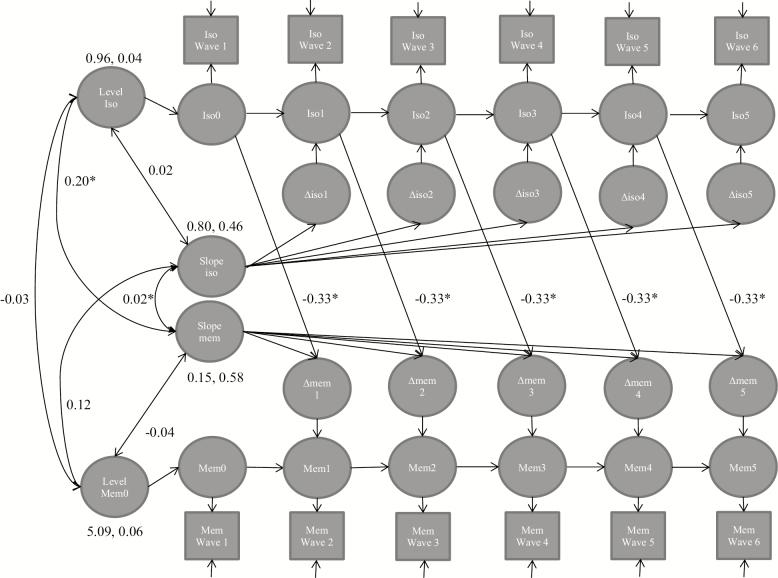
- Among men, an initially high level of social isolation was associated with a somewhat greater decrease in memory: a high social isolation score (4+) was associated with a 0.9-point (18%) memory decline over 2 years, compared with a 0.3-point (6%) decline among men with an average isolation score of one.
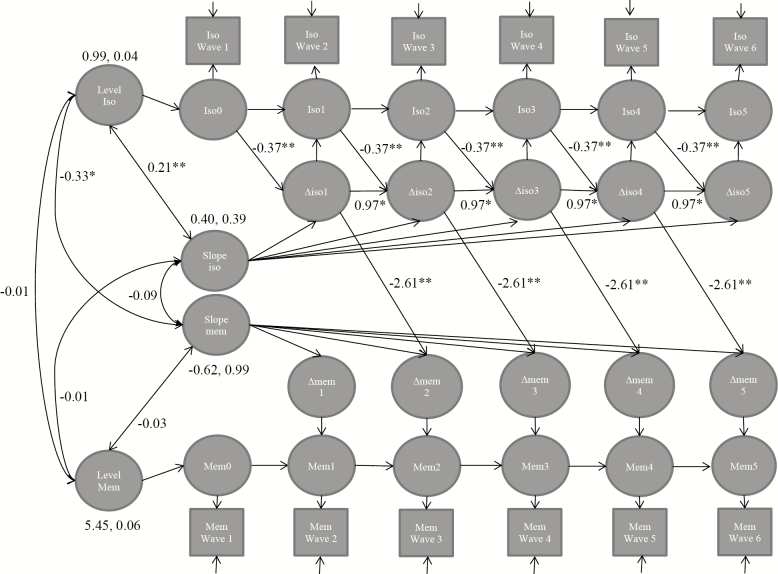
- Among women, a greater increase in social isolation predicted a greater decrease in memory: one increase in the social isolation scale involved a decrement of 2.6 on the memory score in the subsequent follow-up window, on average a 0.5-point (9%) decrease over 2 years.
- Women who experienced larger changes in social isolation were more likely to experience further changes in isolation, although when social isolation reached a higher level it subsequently decreased.
Methods
- The sample included 6,123 women and 5,110 men aged 50+ from the English Longitudinal Study of Aging (ELSA), using six measurement occasions every 2 years from 2002.
- Extended latent change score models were estimated in Mplus 7.3, separately for men and women, and adjusted for age, socioeconomic position, and health-related covariates.
- Memory was measured with immediate and delayed word-list recall; social isolation was measured with a 0–5 index based on living alone, contact frequency with children/other family/friends, and organizational membership.
Limitations
- The paper states that the sample may be initially selected, that ELSA does not cover people in institutional settings at baseline so results generalize only to community-dwelling older people, and that attrition bias may remain despite FIML.
- The paper also states that gender differences were not formally tested due to the complexity of the latent change score modeling, that the social isolation score does not capture perceived support or contact quality, and that 2-year intervals may miss shorter-term changes.
- Evident from the design: this is an observational longitudinal study, so the reported associations cannot by themselves establish causal effects of social isolation on memory.
Model-written summary. Check it against the paper before relying on it.
Integrity signals
Registry
Cites
Statistics
Figures
Verification
Claims the paper makes
0 Valid · 1 Not valid · 16 Not checked · 45 Own results and interpretations
At least one cited source doesn’t support this claim or points to a different paper, and none confirmed it — see the verdicts below.
In the paper
“none of these studies assessed associations between the initial level of either factor and subsequent change.”
§ Social Isolation and Memory Decline in Later-life > Abstract > Conclusions
What the sources say
- Not checked yetcites Andrew & Rockwood, 2010
- Disputedcites Armstrong et al., 2015 matched to “Cumulative impact of health deficits, social vulnerabilities, and protective factors on cognitive dynamics in late life: A multistate modeling approach” (2015) sourceExperimental — accuracy not yet measured
Our copy shows Armstrong et al. (2015) did exactly what the citing sentence says these studies did not do: the Statistical analysis section states that 'the effects of the baseline level of frailty, social vulnerability, and protective factors were evaluated for two time intervals (3 and 6 years)', and the Abstract/Results report the baseline social vulnerability index (built from 18 baseline social deficits including living alone, social networks and marital status) as significantly associated with 3-year (β = 0.16) and 6-year (β = 0.14) changes in CASI scores. The transition models also take the baseline cognitive state into account and estimate probabilities of worsening, stability and improvement from each baseline state, so initial memory/cognitive level and subsequent change are modelled together. The paper's own limitation note ('these analyses only evaluated the impact of baseline measurements with future health outcomes') concerns treating the indices as non-time-varying, not an absence of baseline-level-to-change associations. The only qualification is that social isolation is captured as a composite SVI rather than as a discrete isolation variable. (LLM, conf=0.75)
Checked by a reasoning model — may be wrong.
- Not checked yetcites Shankar et al., 2013 source
plain- Asserted: passes — The authors put it forward as true.
- Checkable: passes — It can be checked against evidence.
- Load-bearing: passes — The paper’s conclusions depend on it.
- Based: passes — The paper gives a reason why it holds.
A result the paper reports from its own data — it cites no other source for it, so there is none to check. The quote shows it is in the paper.
In the paper
“Social isolation increased and memory decreased over time.”
- Also stated in: § Descriptive Results · hedged
“Memory score was between 4.2 and 4.9 and tended to decline somewhat over the follow-up.”
§ Social Isolation and Memory Decline in Later-life > Abstract > Results
plain- Asserted: passes — The authors put it forward as true.
- Checkable: passes — It can be checked against evidence.
- Load-bearing: unclear — It is unclear whether the paper’s conclusions depend on it.
- Based: passes — The paper gives a reason why it holds.
- Also stated in: § Descriptive Results · hedged
A result the paper reports from its own data — it cites no other source for it, so there is none to check. The quote shows it is in the paper.
In the paper
“Among women a greater increase in social isolation predicted a greater decrease in memory”
§ Social Isolation and Memory Decline in Later-life > Abstract > Results
plainstates a cause- Asserted: passes — The authors put it forward as true.
- Checkable: passes — It can be checked against evidence.
- Load-bearing: passes — The paper’s conclusions depend on it.
- Based: passes — The paper gives a reason why it holds.
- Rests on an assumption not shown here.
A result the paper reports from its own data — it cites no other source for it, so there is none to check. The quote shows it is in the paper.
In the paper
“Among men an initially high level of social isolation was associated with a somewhat greater decrease in memory.”
- Also stated in: § Bivariate LCS Models · plain
“men with a higher level of social isolation experienced a faster decline in memory.”
§ Social Isolation and Memory Decline in Later-life > Abstract > Results
plainstates an association- Asserted: passes — The authors put it forward as true.
- Checkable: passes — It can be checked against evidence.
- Load-bearing: passes — The paper’s conclusions depend on it.
- Based: passes — The paper gives a reason why it holds.
- Rests on an assumption not shown here.
- Also stated in: § Bivariate LCS Models · plain
A result the paper reports from its own data — it cites no other source for it, so there is none to check. The quote shows it is in the paper.
In the paper
“Social isolation increased and memory decreased over time.”
- Also stated in: § Univariate LCS Models · plain
“Women also showed an overall increase in social isolation (on average 0.4 points over 10 years).”
§ Social Isolation and Memory Decline in Later-life > Abstract > Results
plain- Asserted: passes — The authors put it forward as true.
- Checkable: passes — It can be checked against evidence.
- Load-bearing: unclear — It is unclear whether the paper’s conclusions depend on it.
- Based: passes — The paper gives a reason why it holds.
- Also stated in: § Univariate LCS Models · plain
28 more claims
Create a free account to see all 62 claims and to verify the 26 references still open.
- It may state two separate claims as one. 17
- Probably not a substantial claim. 15
Claims other papers make about this one
Each is checked against this paper’s own text: does it say what the citing paper says it does?
The cited source says what the claim attributes to it.
In the citing paper
“One study reported that increased memory decline was associated with baseline social isolation (ie, a combination of living situation, frequency of social contact, and membership of community or religious groups at baseline) for men and accumulated social isolation (ie, social isolation across multiple waves of the study) for women.13”
From Associations between social connections and cognition: a global collaborative individual participant data meta-analysis (2022) · cites this paper as [13]
Self-check
Percentages, sums and reported differences re-computed from the paper’s own numbers.
Each contradiction between two passages listed here was confirmed by an independent check.
Rated minor: it would not touch a result — a value no result rests on, a p-value that stays on the same side of the significance level, or a conflict that is clerical, resolved elsewhere in the paper, or outside its own findings.
In the paper
§ Social Isolation and Memory Decline in Later-life > Results > Bivariate LCS Models
“AIC/BIC values were lower (better) when change-to-change parameters were included in the models (Table 2).”
§ Social Isolation and Memory Decline in Later-life > Results > Bivariate LCS Models
“bThe full level-to-change model fit: −2LL = 140,599.01, df = 469, AIC = 282,136, BIC = 285,202 for men; −2LL = 176,112.58, df = 469, AIC = 353,163, BIC = 356,315 for women. cThe full change-to-change model fit: −2LL = 140,596.49, df = 473, AIC = 282,139, BIC = 285,231 for men; −2LL = 176,095.99, df = 473, AIC = 353,138, BIC = 356,316 for women.”
Citations
Cites
The CES-D Scale: A Self-Report Depression Scale for Research in the General Population
Radloff, L. S. (1977) · Applied Psychological Measurement · doi:10.1177/014662167700100306 · Cited by 53,267 · cited 1×
“Depressive symptoms were measured with a short version of the Centre for Epidemiological Studies Depression Scale (CES-D; Radloff, 1977).”
MethodLeigh-Hunt, N., Bagguley, D., Bash, K., Turner, V., Turnbull, S., Valtorta, N., & Caan, W. (2017) · Public Health · doi:10.1016/j.puhe.2017.07.035 · Cited by 2,158 · cited 1×
“Social isolation has numerous detrimental health effects, including higher morbidity and mortality, (for recent reviews see Courtin & Knapp, 2017; Leigh-Hunt et al., 2017).”
Perceived social isolation and cognition
Cacioppo, J. T., & Hawkley, L. C. (2009) · Trends in Cognitive Sciences · doi:10.1016/j.tics.2009.06.005 · Cited by 2,144
Latent Variable Modeling of Differences and Changes with Longitudinal Data
McArdle, J. J. (2009) · Annual Review of Psychology · doi:10.1146/annurev.psych.60.110707.163612 · Cited by 1,952 · cited 1×
“We used an extended latent change score (LCS) model (Grimm, An, McArdle, Zonderman, & Resnick, 2012; McArdle, 2009; McArdle & Hamagami, 2001) based on the structural equation framework to investigate the direction of longitudinal associations between social isolation and memory.”
Cohort profile: The English longitudinal study of ageing
Steptoe, A., Breeze, E., Banks, J., & Nazroo, J. (2013) · International Journal of Epidemiology · doi:10.1093/ije/dys168 · Cited by 1,779 · cited 5×
“The first wave of ELSA, conducted in 2002–2003, included men and women then aged 50 years or more from private households which had participated in any one of the 1998, 1999, or 2001 rounds of the cross-sectional Health Survey for England (HSE); an annual government health survey based on a stratified random sample of…”
InfluentialSocial isolation, loneliness and health in old age: a scoping review
Courtin, E., & Knapp, M. (2017) · Health & Social Care in the Community · doi:10.1111/hsc.12311 · Cited by 1,463 · cited 2×
“Previous studies have noted a dearth of research on these processes (Courtin & Knapp, 2017; Sörman, Rönnlund, Sundström, Adolfsson, & Nilsson, 2015).”
Mild Cognitive Impairment: Ten Years Later
Petersen, R. C., Roberts, R. O., Knopman, D. S., Boeve, B. F., Geda, Y. E., Ivnik, R. J., Smith, G. E., & Jack, C. R. (2009) · Archives of Neurology · doi:10.1001/archneurol.2009.266 · Cited by 1,447 · cited 1×
“cognitive impairment (Petersen et al., 2009) prior to dementia, compared to 2-4% biannual”
Loneliness and Risk of Alzheimer Disease
Wilson, R. S., Krueger, K. R., Arnold, S. E., Schneider, J. A., Kelly, J. F., Barnes, L. L., Tang, Y., & Bennett, D. A. (2007) · Archives of General Psychiatry · doi:10.1001/archpsyc.64.2.234 · Cited by 1,363 · cited 1×
“A number of studies also indicate that perceived isolation and quality of social contacts play an important role in cognitive functioning (Cacioppo, Hawkley, & Hawkey, 2009; Gow, Corley, Starr, & Deary, 2013; O’Luanaigh et al., 2012; Wilson et al., 2007).”
Influence of social network on occurrence of dementia: a community-based longitudinal study
Fratiglioni, L., Wang, H.-X., Ericsson, K., Maytan, M., & Winblad, B. (2000) · The Lancet · doi:10.1016/s0140-6736(00)02113-9 · Cited by 1,361 · cited 2×
“…have found associations with various dimensions of cognition, especially poor memory and dementia in later life (Bennett, Schneider, Tang, Arnold, & Wilson, 2006; DiNapoli, Wu, & Scogin, 2014; Evans, Llewellyn, et al., 2018; Fratiglioni et al., 2000; Shankar, Hamer, McMunn, & Steptoe, 2013).”
Loneliness, health, and mortality in old age: A national longitudinal study
Luo, Y., Hawkley, L. C., Waite, L. J., & Cacioppo, J. T. (2012) · Social Science & Medicine · doi:10.1016/j.socscimed.2011.11.028 · Cited by 1,232 · cited 1×
“…effects of social isolation itself and conditions such as depression and perceived loneliness (dissatisfaction with the frequency and closeness of contacts), all of which may be associated with cognitive function and physical health (Luo, Hawkley, Waite, & Cacioppo, 2012; Shankar et al., 2013).”
Research works printed but not linked: 2
- Hubbert F. A., Gardener E., & McWilliams B (2006). Cognitive function. In Banks J., Breeze E., Lessof C., & Nazroo J. (Eds.), Retirement, health and relationships of the older person in England: The English Longitudinal Study of Ageing (Wave 2) (pp. 217– 230). London: Institute for Fiscal Studies.
- de Oliveira C., Shankar A., Kumari M., Nunn S., & Steptoe A (2010). Health risk and health protective biological measures in later life. In Banks J., Lessof C., Nazroo J., Rogers N., Stafford M., & Steptoe A. (Eds.), Financial circumstances, health and well-being of the older population in England (pp. 275– 347). London: The Institute of Fiscal Studies.
Cited by
Czaja, S. J., Moxley, J. H., & Rogers, W. A. (2021) · Frontiers in Psychology · doi:10.3389/fpsyg.2021.728658 · Cited by 221
Safiri, S., Ghaffari Jolfayi, A., Fazlollahi, A., Morsali, S., Sarkesh, A., Daei Sorkhabi, A., Golabi, B., Aletaha, R., Motlagh Asghari, K., Hamidi, S., et al. (2024) · Frontiers in Medicine · doi:10.3389/fmed.2024.1474043 · Cited by 200
Are social isolation and loneliness associated with cognitive decline in ageing?
Cardona, M., & Andrés, P. (2023) · Frontiers in Aging Neuroscience · doi:10.3389/fnagi.2023.1075563 · Cited by 170
Social Isolation Among Older Adults in Long-Term Care: A Scoping Review
Boamah, S. A., Weldrick, R., Lee, T.-S. J., & Taylor, N. (2021) · Journal of Aging and Health · doi:10.1177/08982643211004174 · Cited by 152
“Studies have shown longitudinal associations between cognitive decline and social isolation and vice versa (Evans et al., 2019; Read et al., 2020; Thomas, 2011).”
BackgroundSamtani, S., Mahalingam, G., Lam, B. C. P., Lipnicki, D. M., Lima-Costa, M. F., Blay, S. L., Castro-Costa, E., Shifu, X., Guerchet, M., Preux, P.-M., et al. (2022) · The Lancet Healthy Longevity · doi:10.1016/s2666-7568(22)00199-4 · Cited by 151
“13 Interaction with community groups has been associated with slower cognitive decline for men than for women.”
Impact of Social Isolation on People with Dementia and Their Family Caregivers
Azevedo, L. V. D. S., Calandri, I. L., Slachevsky, A., Graviotto, H. G., Vieira, M. C. S., de Andrade, C. B., Rossetti, A. P., Generoso, A. B., Carmona, K. C., Pinto, L. A. C., et al. (2021) · Journal of Alzheimer s Disease · doi:10.3233/jad-201580 · Cited by 139
Luo, M. (2022) · The Journals of Gerontology Series B · doi:10.1093/geronb/gbac174 · Cited by 145
Social isolation during COVID ‐19 lockdown impairs cognitive function
Ingram, J., Hand, C. J., & Maciejewski, G. (2021) · Applied Cognitive Psychology · doi:10.1002/acp.3821 · Cited by 132
“However, research has indicated causal links using cross-lagged modelling (Thomas, 2011) and latent change score modelling (Read et al., 2020).”
BackgroundDichter, M., Sander, M., Seismann-Petersen, S., & Köpke, S. (2020) · International Psychogeriatrics · doi:10.1017/s1041610220000897 · Cited by 124
Effect of COVID-19 on the mental health care of older people in Canada
Flint, A. J., Bingham, K. S., & Iaboni, A. (2020) · International Psychogeriatrics · doi:10.1017/s1041610220000708 · Cited by 92
Social Isolation Changes and Long-Term Outcomes Among Older Adults
Lyu, C., Siu, K., Xu, I., Osman, I., & Zhong, J. (2024) · JAMA Network Open · doi:10.1001/jamanetworkopen.2024.24519 · Cited by 121
Kim, J., Kang, H., Lee, Y., Lee, B., & Lee, D. (2023) · Scientific Reports · doi:10.1038/s41598-023-41996-4 · Cited by 122
“Although the negative impact of social isolation on memory has garnered significant attention, previous studies have focused on examining the effects of long-term social isolation 39–41 .”
BackgroundSocial Isolation: An Unequally Distributed Health Hazard
Umberson, D., & Donnelly, R. (2023) · Annual Review of Sociology · doi:10.1146/annurev-soc-031021-012001 · Cited by 98
Factors Associated With Social Isolation in Older Adults: A Systematic Review and Meta-Analysis
Wen, Z., Peng, S., Yang, L., Wang, H., Liao, X., Liang, Q., & Zhang, X. (2022) · Journal of the American Medical Directors Association · doi:10.1016/j.jamda.2022.11.008 · Cited by 91
Lammer, L., Beyer, F., Luppa, M., Sander, C., Baber, R., Engel, C., Wirkner, K., Löffler, M., Riedel-Heller, S. G., Villringer, A., et al. (2023) · eLife · doi:10.7554/elife.83660 · Cited by 72
“For example, data from the English Longitudinal Study of Aging from >6000 older adults measured at up to 6 twoyear intervals supports the assumed causality of social isolation with regards to memory performance (Read et al., 2020).”
MethodSocial Connectivity is Related to Mild Cognitive Impairment and Dementia
Gardener, H. E., Levin, B. E., DeRosa, J. T., Rundek, T., Wright, C. B., Elkind, M. S. V., & Sacco, R. L. (2021) · Journal of Alzheimer s Disease · doi:10.3233/jad-210519 · Cited by 59
Xiang, X., Lai, P. H. L., Bao, L., Sun, Y., Chen, J., Dunkle, R. E., & Maust, D. T. (2020) · Journal of Aging and Health · doi:10.1177/0898264320953693 · Cited by 59
Muntsant-Soria, A., & Giménez‐Llort, L. (2020) · Frontiers in Psychiatry · doi:10.3389/fpsyt.2020.572583 · Cited by 58
Teshale, A. B., Htun, H. L., Hu, J., Dalli, L. L., Lim, M. H., Neves, B. B., Baker, J. R., Phyo, A. Z. Z., Reid, C. M., Ryan, J. L., et al. (2023) · Archives of Gerontology and Geriatrics · doi:10.1016/j.archger.2023.105008 · Cited by 55
Risk factors for social isolation in older adults: A systematic review and meta‐analysis
Wang, S., Ji, L., Kuang, L., Yang, X., Yu, B., & Cui, Y. (2023) · Public Health Nursing · doi:10.1111/phn.13266 · Cited by 59
Hajek, A., & König, H. (2021) · Journal of the American Medical Directors Association · doi:10.1016/j.jamda.2021.04.004 · Cited by 39
Quail, Z., Bolton, L., & Massey, K. (2021) · BMJ Case Reports · doi:10.1136/bcr-2021-242550 · Cited by 45
Pilozzi, A. R., & Huang, X. (2020) · Brain Sciences · doi:10.3390/brainsci10030183 · Cited by 40
“Indeed, social isolation tends to increase with age [30,31], and the level of isolation has been found to be associated with the profundity of memory decline [31,32], and increases in various signs/symptoms of cognitive decline [33].”
BackgroundHuang, Y., Zhu, X., Liu, X., & Li, J. (2022) · Aging & Mental Health · doi:10.1080/13607863.2022.2116396 · Cited by 34
The effect of bereavement on cognitive functioning among elderly people: Evidence from Australia
Atalay, K., & Staneva, A. V. (2020) · Economics & Human Biology · doi:10.1016/j.ehb.2020.100932 · Cited by 36
“This finding is consistent with the negative differential effects reported in cross sectional evidences by Rosnick et al. (2007) and Comijs et al.”
ResultZhang, J., Liu, D., Fu, P., Liu, Z., Lai, C., Yang, C., Chen, K., Bao, W.-D., Hu, F., Du, H., et al. (2022) · Molecular Psychiatry · doi:10.1038/s41380-022-01694-5 · Cited by 28
Zhao, Y., Inder, B., & Kim, J. S. (2021) · Economics & Human Biology · doi:10.1016/j.ehb.2021.101055 · Cited by 28
Sexual Well-Being Across the Lifespan: Is Sexual Satisfaction Related to Adjustment to Aging?
Miguel, I. C., von Humboldt, S., & Leal, I. M. P. (2024) · Sexuality Research and Social Policy · doi:10.1007/s13178-024-00939-y · Cited by 38
“…as sharing intimacy with a partner and being cherished by family, as the most relevant factor for AtA, underlining growing evidence that suggests the importance of social connectivity and support for well-being and aging well (Czaja et al., 2021; Domenech-Abella et al., 2019; Read et al., 2020).”
Ferdous, F. (2021) · INQUIRY The Journal of Health Care Organization Provision and Financing · doi:10.1177/00469580211044287 · Cited by 30
Religion, Spirituality, and Coping During the Pandemic: Perspectives of Dementia Caregivers
Britt, K. C., Richards, K. C., Radhakrishnan, K., Vanags-Louredo, A., Park, E. Y., Gooneratne, N. S., & Fry, L. (2022) · Clinical Nursing Research · doi:10.1177/10547738221115239 · Cited by 35
Zadeh, Z. T., Rahmani, S., Alidadi, F., Joushi, S., & Esmaeilpour, K. (2021) · International Journal of Clinical Practice · doi:10.1111/ijcp.14949 · Cited by 26
Tanner, C. T., Yorgason, J. B., Richardson, S., Redelfs, A. H., Hill, M., White, A., Stagg, B. C., Ehrlich, J. R., & Markides, K. S. (2022) · The Journals of Gerontology Series B · doi:10.1093/geronb/gbac001 · Cited by 22
Digital Intervention for the Management of Alzheimer’s Disease
Manchanda, N., Aggarwal, A., Setya, S., & Talegaonkar, S. (2022) · Current Alzheimer Research · doi:10.2174/1567205020666230206124155 · Cited by 21
Muntsant, A., & Giménez-Llort, L. (2022) · Frontiers in Aging Neuroscience · doi:10.3389/fnagi.2022.969381 · Cited by 17
“Regarding AD, social isolation not only increases the risk of developing dementia (Kuiper et al., 2015; Read et al., 2020), but it is also associated with an increased memory decline, negatively affecting cognitive performance, and worsening neuropsychiatric symptoms (NPS) (Friedler et al.”
BackgroundEverly, J., Plummer, J., Lohman, M. C., & Neils‐Strunjas, J. (2022) · American Journal of Speech-Language Pathology · doi:10.1044/2022_ajslp-22-00035 · Cited by 23
Wong, E. L., Qiu, H., Cheung, A. W.-L., Leung, H., Chen, F. Y., & Yeoh, E. (2023) · Frontiers in Public Health · doi:10.3389/fpubh.2023.1099734 · Cited by 19
“Evidence in the literature also supported the adverse effect of social isolation on mental disorders, including decreased cognitive function in later life (12–14), memory decline over time (15), depressive symptoms (2), and depression (16).”
BackgroundMishra, B., & Pradhan, J. (2023) · International Journal of Geriatric Psychiatry · doi:10.1002/gps.5946 · Cited by 20
Weather Woes? Exploring Potential Links between Precipitation and Age-Related Cognitive Decline
Finlay, J., Khan, A. M., Gronlund, C. J., Sol, K., Jang, J. B., Melendez, R. A., Judd, S. E., & Clarke, P. J. (2020) · International Journal of Environmental Research and Public Health · doi:10.3390/ijerph17239011 · Cited by 16
Kang, G., Hajduk, A. M., Marottoli, R. A., & Nuñez-Smith, M. (2021) · Journal of the American Geriatrics Society · doi:10.1111/jgs.17363 · Cited by 15
Lim, E., Nielsen, N. N., Lapane, L., Barooah, A., Xu, S., Qu, S., McPhillips, E., Dube, C. E., & Lapane, K. L. (2023) · International Journal of Older People Nursing · doi:10.1111/opn.12577 · Cited by 23
Li, K., Tang, F., Albert, S. M., Rauktis, M. E., & Ohmer, M. L. (2024) · The Gerontologist · doi:10.1093/geront/gnae056 · Cited by 22
Hardy, M., Fanaki, C., Savoie, C., Dallaire, C., Wilchesky, M., Gallani, M. C. B. J., Gagnon, M., Laberge, M., Voyer, P., Côtéc, A., et al. (2022) · Geriatric Nursing · doi:10.1016/j.gerinurse.2022.09.006 · Cited by 19
Rai, A. R., Joy, T., Poojari, M. S., Pai, M. M., Massand, A., & Murlimanju, B. V. (2023) · Veterinary World · doi:10.14202/vetworld.2023.1755-1764 · Cited by 21
“Social isolation stress rats exhibit symptoms similar to human anxiety, depression, schizophrenia, and memory loss [17, 18, 73].”
BackgroundKang, J. W., Oremus, M., Dubin, J. A., Tyas, S. L., Omenka, C. O., & Golberg, M. (2024) · Archives of Gerontology and Geriatrics · doi:10.1016/j.archger.2024.105483 · Cited by 15
Perić, I., Costina, V., Findeisen, P., Gass, P., & Filipović, D. (2020) · Neuroscience · doi:10.1016/j.neuroscience.2020.09.061 · Cited by 15
Li, K., & Tang, F. (2021) · Journal of Gerontological Social Work · doi:10.1080/01634372.2021.1958115 · Cited by 15
Ferrario, A., Luo, M., Polsinelli, A. J., Moseley, S., Mehl, M. R., Yordanova, K., Martin, M., & Demiray, B. (2022) · JMIR Aging · doi:10.2196/28333 · Cited by 17
“Moreover, social isolation has been shown to be associated with memory decline in old age [70].”
BackgroundPan, C., & Cao, N. (2023) · Archives of Gerontology and Geriatrics · doi:10.1016/j.archger.2023.105229 · Cited by 13
Pan, C., & Yu, L. (2024) · Journal of Global Health · doi:10.7189/jogh.14.04031 · Cited by 12
da Fonseca, C. J. V., Ramos, A., de Pinho, L. G., Morgado, B., Oliveira, H. J. M., & Lopes, M. J. (2022) · Journal of Personalized Medicine · doi:10.3390/jpm12111937 · Cited by 14
Improving Family Presence in Long-Term Care during the COVID-19 Pandemic
Gallant, N. L., Hardy, M., Beogo, I., Conklin, J., Connelly, D. M., Kaasalainen, S., Keefe, J. M., Robitaille, A., Yous, M., Fanaki, C., et al. (2022) · Healthcare Quarterly · doi:10.12927/hcq.2022.26980 · Cited by 11
Alnassar, N., Hillman, C., Fontana, B. D., Robson, S. C., Norton, W., & Parker, M. O. (2023) · Neurobiology of Aging · doi:10.1016/j.neurobiolaging.2023.08.004 · Cited by 9
Social isolation from childhood to mid-adulthood: is there an association with older brain age?
Lay‐Yee, R., Hariri, A. R., Knodt, A. R., Barrett-Young, A., Matthews, T., & Milne, B. J. (2023) · Psychological Medicine · doi:10.1017/s0033291723001964 · Cited by 11
Oksuz, A., Kılınçel, O., MURATDAĞI, G., AYDIN, A., Öksüz, A., Atadağ, Y. B., ETÇİOĞLU, E., & ÖZEN, F. (2020) · Journal of Clinical Psychiatry · doi:10.5505/kpd.2020.04382 · Cited by 20
Life Course Religious Attendance and Cognitive Health at Midlife: Exploring Gendered Contingencies
Upenieks, L., & Zhu, X. (2023) · Research on Aging · doi:10.1177/01640275231188998 · Cited by 11
“In the realm of cognitive health, higher social engagement has been found to be associated with lower odds of cognitive impairment (Zhou et al., 2020), while social isolation tends to predict greater memory decline (Read et al., 2020) and a higher risk of cognitive impairment (Noguchi et al., 2021).”
BackgroundSchweighart, R., Klemmt, M., Neuderth, S., & Teti, A. (2021) · Zeitschrift für Gerontologie und Geriatrie · doi:10.1007/s00391-021-01926-3 · Cited by 11
The Association Between Social Isolation and Memory Loss Among Older Adults
Mosen, D. M., Banegas, M. P., Keast, E. M., & Ertz-Berger, B. L. (2022) · The Journal of the American Board of Family Medicine · doi:10.3122/jabfm.2022.210497r2 · Cited by 10
“Another study found an association between social isolation and increased memory loss for both older men and women.(16) However,”
BackgroundLuo, M. S., & Li, L. (2023) · Aging & Mental Health · doi:10.1080/13607863.2023.2214099 · Cited by 7
“Following recent research (Read et al., 2020) objective isolation score was derived from five binary items: whether the respondent (1) lived alone; had less than monthly contact, including face-to-face, telephone, or written/email contact with (2) child(ren), (3) other family members or (4)…”
Hajek, A., Bertram, F., van Rüth, V., Kretzler, B., Püschel, K., Heinrich, F., & König, H. (2021) · Risk Management and Healthcare Policy · doi:10.2147/rmhp.s317039 · Cited by 10
Social Isolation and Nursing Leadership in Long-Term Care
Woods, D. L., Navarro, A. E., LaBorde, P., Dawson, M., & Shipway, S. (2022) · Nursing Clinics of North America · doi:10.1016/j.cnur.2022.02.009 · Cited by 13
Jiang, H.-X., Liu, Y., Jiang, J., Wei, J.-H., Niu, C.-C., & Yu, J. (2023) · Aging & Mental Health · doi:10.1080/13607863.2023.2230919 · Cited by 10
“We also observed evidence for the other direction, that T1 subjective sleep predicted higher amounts of T2 loneliness ( β = 0.06, p 0.01), and loneliness significantly predicted T3 subjective social isolation ( β = −0.09, p 0.01).”
ResultInfluentialMao, W., Silverstein, M. D., Prindle, J., & Chi, I. (2020) · Journal of Aging and Health · doi:10.1177/0898264320943759 · Cited by 11
Negrey, J. D., Frye, B. M., Craft, S., Register, T. C., Baxter, M. G., Jorgensen, M. J., & Shively, C. A. (2023) · GeroScience · doi:10.1007/s11357-023-00820-7 · Cited by 9
“The causal direction of this association remains unclear, as social isolation has been observed to precede impairments in memory [12, 13] and general cognitive performance [14, 15].”
Wang, K., Zhou, Y., Su, S., Jin, X., Lei, L., Ma, H., Liu, A., & Yang, Y. (2025) · Social Psychiatry and Psychiatric Epidemiology · doi:10.1007/s00127-025-02837-z · Cited by 11
“Longitudinal studies conducted in China [8], Germany [9], the U.K [10], and Spain [11] similarly support this view.”
Kwon, K. Y., & Kim, J. (2025) · Social Science & Medicine · doi:10.1016/j.socscimed.2025.118874 · Cited by 7
Tanner, C. T., Yorgason, J. B., White, A., Armstrong, C., Cash, A., Case, R., & Ehrlich, J. R. (2023) · International Journal of Environmental Research and Public Health · doi:10.3390/ijerph20156456 · Cited by 9
Ferdous, F. (2021) · Journal of Aging & Social Policy · doi:10.1080/08959420.2021.1924345 · Cited by 7
Casey, K. S., Sim, E., Lavezza, A., Iannuzzi, K., Friedman, L. A., Hoyer, E. H., & Young, D. L. (2023) · American Journal of Occupational Therapy · doi:10.5014/ajot.2023.050028 · Cited by 9
“Cognitive impairment contributes to impairments in activities of daily living (ADLs) and instrumental activities of daily living, including medication management, return to work, driving, and social participation and leisure (Petersen et al., 2014; Read et al., 2020).”
Reciprocal Relations of Social Isolation and Multimorbidity in Chinese Elderly
Pan, C., Yu, L., & Cao, N. (2024) · American Journal of Preventive Medicine · doi:10.1016/j.amepre.2024.08.020 · Cited by 6
Meade, M. E., Chang, M., Savel, K. A., Hong, B., Martin, C. B., & Barense, M. D. (2024) · Scientific Reports · doi:10.1038/s41598-024-80591-z · Cited by 10
Saldanha, M. F., de Moraes, E. N., dos Santos, R. R., & Jansen, A. K. (2022) · Revista Brasileira de Geriatria e Gerontologia · doi:10.1590/1981-22562022025.220077.pt · Cited by 8
Marhánková, J. H. (2021) · Czech Sociological Review · doi:10.13060/csr.2021.008 · Cited by 6
Lee, H., Choi, Y., & Sung, J. E. (2024) · Frontiers in Psychology · doi:10.3389/fpsyg.2024.1334788 · Cited by 5
“For instance, social isolation and segregation in older adults’ later years in life have been linked to cognitive declines (Read et al., 2020; Cardona and Andrés, 2023; Ren et al., 2023).”
BackgroundPan, C., Ye, J., Yu, L., & Cao, N. (2025) · Archives of Public Health · doi:10.1186/s13690-025-01764-4 · Cited by 8
“Extensive research has consistently linked SI to a range of adverse health outcomes, including cognitive decline, disability, and even mortality [2, 4, 5].”
Foláyan, M. O., Zúñiga, R. A. A., Virtanen, J. I., Ezechi, O., Aly, N. M., Lusher, J. M., Nguyen, A. L., & Tantawi, M. E. (2023) · Brain Sciences · doi:10.3390/brainsci13020249 · Cited by 5
“Prior studies had identified that social isolation has a detrimental effect on the memory because of a lack of social stimulation on the brain, resulting from low levels of social contacts [49,50].”
BackgroundSocial isolation and subclinical vascular pathways to cerebrovascular disease
Arcidiacono, D. M., Machia, L. V., Lefferts, W. K., Wolf, D. A., & Heffernan, K. S. (2023) · Biodemography and Social Biology · doi:10.1080/19485565.2023.2182274 · Cited by 5
da Silva, R. V., Soares, N. M., Pereira, G. M., Figueiredo, R. I. D. N., & Eulálio, M. D. C. (2024) · Psychogeriatrics · doi:10.1111/psyg.13067 · Cited by 6
“28 Along the same lines, our results showed that non-isolated older persons had increased scores on cognitive tests.”
ResultLammer, L., Beyer, F., Riedel-Heller, S. G., Sacher, J., Glaesmer, H., Villringer, A., & Witte, A. V. (2025) · European Journal of Epidemiology · doi:10.1007/s10654-025-01296-9 · Cited by 7
“Research focusing on directionality points towards a bidi - rectional connection with mental health outcomes [71] while the evidence on cognitive outcomes varies [72, 73].”
dos Santos, G., & da Silva, T. B. L. (2023) · Dementia & Neuropsychologia · doi:10.1590/1980-5764-dn-2022-0032 · Cited by 5
Shang, Q. S., Dong, Y.-B., Xu, L., Yang, J.-H., Li, J.-W., Yu, W., Sun, J., Gao, X., Huang, Y., & Zhang, X. (2023) · Molecular Neurobiology · doi:10.1007/s12035-023-03750-9 · Cited by 6
“In particular, a higher level of SI during the COVID-19 outbreak or among older individuals was associated with a greater decline in memory [1–3].”
Chan, K., Marsack‐Topolewski, C. N., Ratnayake, M., Kaplan, D. B., Voet, K. A., Riemenschneider, M., & Graves, J. (2024) · Journal of Gerontological Social Work · doi:10.1080/01634372.2024.2373290 · Cited by 3
“Social isolation has been linked to increased risk of becoming physically frail (Gale et al., 2018), accelerated functional decline (Fujiwara et al., 2017) and memory loss (Read et al., 2020), as well as heightened severity of psychological distress (Findlay, 2003; Peng et al., 2022).”
Cui, M., Liu, Y., Yang, M., Miura, K. W., Zhang, J., & Anme, T. (2025) · Archives of Gerontology and Geriatrics · doi:10.1016/j.archger.2025.105871 · Cited by 5
Babić, D., Železnik, D., & Milošević, M. (2021) · Journal of Health Sciences · doi:10.17532/jhsci.2021.1174 · Cited by 4
Graves, E. A., Sajjadi, A., & Hughes, M. L. (2024) · Ear and Hearing · doi:10.1097/aud.0000000000001483 · Cited by 4
“Likewise, Read et al. (2020) found that memory decline can result from social isolation, leading to further social isolation.”
BackgroundStellefson, M., Wang, M. Q., Flora, S. M., & Campbell, O. (2024) · International Journal of Environmental Research and Public Health · doi:10.3390/ijerph21030278 · Cited by 3
“Moreover, our results align with those of Read et al. [35], who showed that problems with memory are associated with older individuals’ withdrawal from social activities.”
ResultRisk Factors for Social Isolation Among Older Adults in Long Term Care: A Scoping ReviewPreprint
Boamah, S. A., Weldrick, R., Lee, T. J., & Taylor, N. M. (2020) · Preprints.org · doi:10.20944/preprints202012.0779.v1 · Cited by 3
Venegas, J. J., Weisz, J. M., Choi, C. Y., Herringshaw, R. E., Nabelsi, O. A., & Liang, N. (2025) · Physiological Reports · doi:10.14814/phy2.70184 · Cited by 3
Fang, Y., Ma, L., Chen, H., Cai, S., Jiang, W., Luo, F., Wang, J., Zheng, E., Zhou, C., Zhu, L., et al. (2024) · Frontiers in Psychology · doi:10.3389/fpsyg.2024.1421729 · Cited by 5
“Specially, longitudinal aging studies with extensive sample sizes across Europe, Asia, and the Americas show that social isolation is closely associated with diminished cognitive ability among older adults (Griffin et al., 2020; Read et al., 2020; Yu et al., 2021).”
BackgroundLandsteiner, I., Pinheiro, J. A., de Souza, B. L. V., Frizon, D. M. S., Chagas, E. F. B., & Payão, S. L. M. (2025) · Neurology India · doi:10.4103/neurol-india.neurol-india-d-24-00337 · Cited by 2
Kawakami, A., Tomida, K., Shimoda, T., Nakajima, C., & Shimada, H. (2025) · Geriatrics and gerontology international/Geriatrics & gerontology international · doi:10.1111/ggi.70117 · Cited by 3
Individual differences in experiential diversity shape event segmentation granularity
Hodgetts, C. J., Berry, S. C., Postans, M., & Williams, A. N. (2025) · iScience · doi:10.1016/j.isci.2025.113134 · Cited by 2
“21 Studies on spatial diversity indicate that individuals raised in areas with high street network entropy (i.e., more complex, less ordered environments) exhibit better navigation skills in adulthood 22 (see also ref.”
Mental, Physical, and Cognitive Wellbeing during the COVID-19 Pandemic: Data from Scotland and Japan
Ingram, J., Hand, C. J., Hijikata, Y., & Maciejewski, G. (2022) · Journal of Open Psychology Data · doi:10.5334/jopd.65 · Cited by 2
Vaculíková, J., & Hanková, M. (2021) · Journal of Gerontological Social Work · doi:10.1080/01634372.2021.1939219 · Cited by 3
“A complementary explanation concerns the general decline of the late-life social activity and increased risks of social isolation (Bowling et al., 1995; Read et al., 2020).”
BackgroundCognitive Consequences of Social Isolation During COVID-19: side effects and treatmentsPreprint
Taherizadeh, Z., Rahmani, S., Alidadi, F., & Esmaeilpour, K. (2021) · doi:10.22541/au.161405241.15229546/v1 · Cited by 2
Hung, A., & Lin, C.-C. (2023) · Research in Arts and Education · doi:10.54916/rae.130334 · Cited by 1
“Some seniors faced challenges in meeting their basic needs during the pandemic, while others experienced social isolation, loneliness, and mental and physical health issues (Frank, 2020; Read et al., 2020; Steinman et al., 2020).”
BackgroundLater Life Food Insecurity and Social Isolation in Ghana: The Importance of Psychological Factors
Gyasi, R. M., Phillips, D. R., Aikins, E., Peltzer, K., Accam, B. T., Frempong, F., Dwumah, P., Koomson-Yalley, E. N. M., Asiedu, H. B., Abass, K., et al. (2024) · International Journal of Geriatric Psychiatry · doi:10.1002/gps.6134 · Cited by 3
“Moreover, SI is linked with an increased risk of depression [7], cognitive decline [8], hospitalization, and nursing home placement [9], and premature mortality [10].”
Stefan, H., Watkins, V. J., Hutchinson, A. M., & Horan, B. (2025) · Virtual Reality · doi:10.1007/s10055-025-01171-8 · Cited by 4
“Indeed, recent studies have linked loneliness and social isolation with declining cognitive function (Evans et al. 2019; Read et al. 2020).”
Mansfield, R., Richards, M., Ploubidis, G. B., Henderson, M., & Patalay, P. (2026) · Social Psychiatry and Psychiatric Epidemiology · doi:10.1007/s00127-025-03041-9 · Cited by 1
Tan, C. H., & Tan, J. J. X. (2026) · Journal of Affective Disorders · doi:10.1016/j.jad.2026.121218 · Cited by 1
Tanner, C. T., Yorgason, J. B., Case, R., Olmo, J., Wanlass, J., Wettstein, M., Ehrlich, J. R., & Markides, K. S. (2026) · The Journals of Gerontology Series B · doi:10.1093/geronb/gbag023 · Cited by 2
Metadata
- Authors
- Read, S., Comas-Herrera, A., & Grundy, E.
- Affiliations
- London School of Economics and Political Science (GB)
- Care Policy and Evaluation Centre, London School of Economics and Political Science, UK
- University of Essex (GB)
- Corresponding author
- Read, Sanna
- Venue
- The Journals of Gerontology: Series B
- Publisher
- Oxford University Press (OUP)
- Published
- 2019-11-29
- Volume
- 75
- Issue
- 2
- Pages
- 367-376
- ISSN
- 1079-5014 (ISSN-L)
- 1758-5368
- PMC
- PMC6963696
- OpenAlex
- W2990762867
- Semantic Scholar
- a32fdff3b9607af27dc208f0b9a6506b9f0e0fbd
- Cited by
- 135
- References
- 46
- Citations by year
- 2026: 13 · 2025: 13 · 2024: 25 · 2023: 29 · 2022: 21 · 2021: 22 · 2020: 12
- FWCI
- 13.35
- Type
- journal article
- Language
- en
- Open access
- hybrid
- doi.org
- Licence
- Locations
- The Journals of Gerontology Series B (publishedVersion, cc-by)
- Europe PMC (PubMed Central) (publishedVersion, cc-by)
- PubMed Central (publishedVersion, cc-by)
- PubMed (publishedVersion)
- Open Access at Essex (University of Essex) (acceptedVersion)
- London School of Economics and Political Science Research Online (London School of Economics and Political Science) (submittedVersion)
- London School of Economics and Political Science Theses Online (London School of Economics and Political Science) (submittedVersion)
- RePEc: Research Papers in Economics (submittedVersion)
- Funders
- UK Economic and Social Research Council (1025561/2/3)
- National Institute for Health Research (ES/L001896/1)
- Topics
- Social Sciences › Health › Health disparities and outcomes
- Social Sciences › Psychology › Developmental and Educational Psychology › Aging and Gerontology Research
- Health Sciences › Medicine › Psychiatry and Mental health › Dementia and Cognitive Impairment Research
- Keywords
- social isolation, memory decline, older adults, aging, sex differences, longitudinal change, latent change score models, English Longitudinal Study of Ageing
- MeSH terms
- Latent Class Analysis, Age Factors, Aged, Female, Health Status, Humans, Longitudinal Studies, Male, Memory Disorders, Middle Aged, Social Isolation, Socioeconomic Factors
About these checks
Registry, retraction, Cites and statistics results are computed, not judged, with one exception: a printed reference that no index lists is read once by a model before it counts as a citation error. Claims are extracted by a model and kept only when their quote appears verbatim in the text; each cited source is then checked, with a model’s help, for whether it says what the claim relies on. Those verdicts can be wrong — read the claim’s quote and the cited source before relying on one.
The claim verdicts this report counts are experimental: their accuracy is not yet measured.
A language model drew the claims from the paper on 2026-10-05, under version 3 of the claim definition (model deepseek-v4.1-flash, prompt extract-v3).
A second model labelled each claim on 2026-10-05 (model jev-1.13-20260917, definition revision gold-guideline-v0.2).
Cited sources are checked with a language model’s help (qwen3.8-omni-flash).
Statistics and arithmetic are recomputed, not judged.
Confidence bands are shown only for fields calibrated on our annotated test set. None is calibrated yet, so no band is shown.
What counts as a claim ›How we measure confidence ›How we check this ›
Are you an author, or do you see a problem with this page? Request a review
Data sources
Bibliographic data: Semantic Scholar, OpenAlex, Crossref.
Contains information from the Semantic Scholar Academic Graph Datasets, made available under the ODC Attribution License (ODC-BY 1.0).
Semantic Scholar’s data is described in: Kinney, R., et al. (2023). The Semantic Scholar Open Data Platform. arXiv:2301.10140.
