

Development of an artificial intelligence-based assessment model for prediction of embryo viability using static images captured by optical light microscopy during IVF
Open accessThe DOI matches its Crossref record; 21 of the 23 references it cites were found in a registry or an index.
Abstract
STUDY QUESTION: Can an artificial intelligence (AI)-based model predict human embryo viability using images captured by optical light microscopy? SUMMARY ANSWER: We have combined computer vision image processing methods and deep learning techniques to create the non-invasive Life Whisperer AI model for robust prediction of embryo viability, as measured by clinical pregnancy outcome, using single static images of Day 5 blastocysts obtained from standard optical light microscope systems. WHAT IS KNOWN ALREADY: Embryo selection following IVF is a critical factor in determining the success of ensuing pregnancy. Traditional morphokinetic grading by trained embryologists can be subjective and variable, and other complementary techniques, such as time-lapse imaging, require costly equipment and have not reliably demonstrated predictive ability for the endpoint of clinical pregnancy. AI methods are being investigated as a promising means for improving embryo selection and predicting implantation and pregnancy outcomes. STUDY DESIGN, SIZE, DURATION: These studies involved analysis of retrospectively collected data including standard optical light microscope images and clinical outcomes of 8886 embryos from 11 different IVF clinics, across three different countries, between 2011 and 2018. PARTICIPANTS/MATERIALS, SETTING, METHODS: The AI-based model was trained using static two-dimensional optical light microscope images with known clinical pregnancy outcome as measured by fetal heartbeat to provide a confidence score for prediction of pregnancy. Predictive accuracy was determined by evaluating sensitivity, specificity and overall weighted accuracy, and was visualized using histograms of the distributions of predictions. Comparison to embryologists’ predictive accuracy was performed using a binary classification approach and a 5-band ranking comparison. MAIN RESULTS AND THE ROLE OF CHANCE: The Life Whisperer AI model showed a sensitivity of 70.1% for viable embryos while maintaining a specificity of 60.5% for non-viable embryos across three independent blind test sets from different clinics. The weighted overall accuracy in each blind test set was >63%, with a combined accuracy of 64.3% across both viable and non-viable embryos, demonstrating model robustness and generalizability beyond the result expected from chance. Distributions of predictions showed clear separation of correctly and incorrectly classified embryos. Binary comparison of viable/non-viable embryo classification demonstrated an improvement of 24.7% over embryologists’ accuracy (P = 0.047, n = 2, Student’s t test), and 5-band ranking comparison demonstrated an improvement of 42.0% over embryologists (P = 0.028, n = 2, Student’s t test). LIMITATIONS, REASONS FOR CAUTION: The AI model developed here is limited to analysis of Day 5 embryos; therefore, further evaluation or modification of the model is needed to incorporate information from different time points. The endpoint described is clinical pregnancy as measured by fetal heartbeat, and this does not indicate the probability of live birth. The current investigation was performed with retrospectively collected data, and hence it will be of importance to collect data prospectively to assess real-world use of the AI model. WIDER IMPLICATIONS OF THE FINDINGS: These studies demonstrated an improved predictive ability for evaluation of embryo viability when compared with embryologists’ traditional morphokinetic grading methods. The superior accuracy of the Life Whisperer AI model could lead to improved pregnancy success rates in IVF when used in a clinical setting. It could also potentially assist in standardization of embryo selection methods across multiple clinical environments, while eliminating the need for complex time-lapse imaging equipment. Finally, the cloud-based software application used to apply the Life Whisperer AI model in clinical practice makes it broadly applicable and globally scalable to IVF clinics worldwide. STUDY FUNDING/COMPETING INTEREST(S): Life Whisperer Diagnostics, Pty Ltd is a wholly owned subsidiary of the parent company, Presagen Pty Ltd. Funding for the study was provided by Presagen with grant funding received from the South Australian Government: Research, Commercialisation and Startup Fund (RCSF). ‘In kind’ support and embryology expertise to guide algorithm development were provided by Ovation Fertility. J.M.M.H., D.P. and M.P. are co-owners of Life Whisperer and Presagen. Presagen has filed a provisional patent for the technology described in this manuscript (52985P pending). A.P.M. owns stock in Life Whisperer, and S.M.D., A.J., T.N. and A.P.M. are employees of Life Whisperer.
Overview
The claims and statistics of this paper haven’t been checked yet.
Free: it reads the open-access text and checks the first 5 claims that cite a source we can check. Create a free account to check every claim.
Integrity signals
Registry
Cites
Statistics
Figures



Verification
Claims the paper makes
The claims and statistics of this paper haven’t been checked yet.
Free: it reads the open-access text and checks the first 5 claims that cite a source we can check. Create a free account to check every claim.
Claims other papers make about this one
Each is checked against this paper’s own text: does it say what the citing paper says it does?
In the citing paper
“Beyond the analysis of disease states, CV can serve the future of human health and welfare through applications such as screening human embryos for implantation 52 .”
From Deep learning-enabled medical computer vision (2021) · cites this paper as [52]
Self-check
Percentages, sums and reported differences re-computed from the paper’s own numbers.
The self-check needs the paper’s full text.
Citations
Cites
Deep Residual Learning for Image Recognition
He, K., Zhang, X., Ren, S., & Sun, J. (2016) · 2016 IEEE Conference on Computer Vision and Pattern Recognition (CVPR) · doi:10.1109/cvpr.2016.90 · Cited by 235,474 · cited 1×
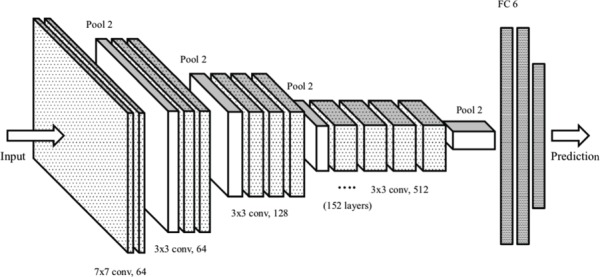
“ResNet-101 (He et al., 2016), and densely connected networks, such as DenseNet-121 and DenseNet-161 (Huang et al.”
BackgroundBreiman, L. (2001) · Machine Learning · doi:10.1023/a:1010933404324 · Cited by 133,538
Adam: A Method for Stochastic Optimization
Kingma, D. P., & Ba, J. (2014) · arXiv · doi:10.48550/arxiv.1412.6980 · Cited by 98,946
Densely Connected Convolutional Networks
Huang, G., Liu, Z., Van Der Maaten, L., & Weinberger, K. Q. (2017) · 2017 IEEE Conference on Computer Vision and Pattern Recognition (CVPR) · doi:10.1109/cvpr.2017.243 · Cited by 48,566
Learning representations by back-propagating errors
Rumelhart, D. E., Hinton, G. E., & Williams, R. J. (1986) · Nature · doi:10.1038/323533a0 · Cited by 31,892 · cited 9×
“One full-embryo DenseNet-161 model, trained using SGD with momentum = 0.9, CE loss, learning rate 1.0e-4, step-wise scheduler halving the learning rate every 5 epochs, batch size of 32, input resolution of 299 x 299, a dropout value of 0.”
MethodInfluentialHearst, M. A., Dumais, S. T., Osuna, E., Platt, J., & Scholkopf, B. (1998) · IEEE Intelligent Systems and their Applications · doi:10.1109/5254.708428 · Cited by 7,243
Inception-v4, Inception-ResNet and the Impact of Residual Connections on Learning
Szegedy, C., Ioffe, S., Vanhoucke, V., & Alemi, A. (2017) · Proceedings of the AAAI Conference on Artificial Intelligence · doi:10.1609/aaai.v31i1.11231 · Cited by 4,636
Rokach, L. (2010) · Artificial Intelligence Review · doi:10.1007/s10462-009-9124-7 · Cited by 2,657 · cited 1×
“The final prediction model was an ensemble of the highest performing individual models (Rokach, 2010).”
MethodWong, C. C., Loewke, K. E., Bossert, N. L., Behr, B., De Jonge, C. J., Baer, T. M., & Pera, R. A. R. (2010) · Nature Biotechnology · doi:10.1038/nbt.1686 · Cited by 783
Murray, C. J. L., Callender, C. S. K. H., Kulikoff, X. R., Srinivasan, V., Abate, D., Abate, K. H., Abay, S. M., Abbasi, N., Abbastabar, H., Abdela, J., et al. (2018) · The Lancet · doi:10.1016/s0140-6736(18)32278-5 · Cited by 484
Cited by
Items 301–326 of 326
Spatio-temporal Transformers for High-Accuracy Detection of Embryo Developmental Transitions
Souda, A. B., Bechar, M. E. A., Hamza-Cherif, S., Guyader, J.-M., Elbouz, M., Morel, F., Perrin, A., & Settouti, N. (2026) · Communications in computer and information science · doi:10.1007/978-3-032-21585-7_18
Anushya, A., Hazber, M. A. G., & Alrashidi, H. S. (2026) · Signal Image and Video Processing · doi:10.1007/s11760-026-05317-2
EMFiT: Embryo Multi-focus and Frame-index Transformer for developmental stage classification
Fu, L., Chen, J., Zhang, Y. V., Huang, X., Li, W., & Sun, L. (2026) · Biomedical Signal Processing and Control · doi:10.1016/j.bspc.2026.110681
Ghadirkhomi, E., & Fatehifar, A. (2026) · International Journal of Reproductive BioMedicine (IJRM) · doi:10.18502/ijrm.v24i4.21168
AI and automation in assisted reproduction
Lorimer, J., McLachlan, R., Zander‐Fox, D., O’Bryan, M. K., & Nosrati, R. (2026) · Nature Reviews Bioengineering · doi:10.1038/s44222-026-00454-2 · Cited by 1
“It achieved 64.3% accuracy on blind test sets, including an independent clinic, and outperformed embryologists 2.2-fold in identifying viable embryos 148 .”
InfluentialArtificial intelligence in the in vitro fertilization laboratory: a committee opinion
Gracia, C. R., Flyckt, R. L., Sakkas, D., Hansen, K., Jain, T., Kalra, S., Pier, B., Yauger, B. J., Plowden, T. C., Smith, R., et al. (2026) · Fertility and Sterility · doi:10.1016/j.fertnstert.2026.05.004
Dirican, E. K. (2026) · Journal of Assisted Reproduction and Genetics · doi:10.1007/s10815-026-03946-7
“The Life Whisperer/Genea family of convolutional networks demonstrated higher accuracy than individual embryologists in identifying embryos likely to produce a fetal-heart pregnancy from static blastocyst images [7].”
Hu, X., 陈智英, & Luo, H. (2026) · Journal of Assisted Reproduction and Genetics · doi:10.1007/s10815-026-03939-6
“To address these limitations, a deep learning model trained on more than 440,000 time-lapse embryo images was developed [49]; when the confidence threshold was set at 0.341, high-scoring embryos showed markedly higher live birth rates than low-scoring ones.”
InfluentialJohnsson, M., Shahbazi, Z., Tarlani, R., & Frisk, F. (2026) · Discover Artificial Intelligence · doi:10.1007/s44163-026-01712-3
“VerMilyea et al. [16] developed an artificial intelligence-based system for predicting embryo viability using static microscopy images, reporting performance comparable to experienced embryologists.”
Giménez-Rodríguez, C., Caparrós, B., Bori, L., Bellver, J., Remohi, J. A., & Meseguer, M. (2026) · Reproductive BioMedicine Online · doi:10.1016/j.rbmo.2026.105865
Jamshidvand, H., Mohsennezhad, A., Salehisedeh, N., Riahi, A., Sahbafar, H., & Sabbaghian, M. (2026) · Tissue and Cell · doi:10.1016/j.tice.2026.103777
Morimoto, T., Matsubayashi, H., Takeuchi, T., Ishikawa, T., & Haraguchi, R. (2026) · Reproductive Sciences · doi:10.1007/s43032-026-02148-x
Singh, S., Abass, M., Bartlewski, J., Kochan, J., Murawski, M., Wyroba, J., & Bartlewski, P. M. (2026) · Biology of Reproduction · doi:10.1093/biolre/ioag147
“As a result, several research teams have been working to develop ML algorithms that integrate TLI data to holistically assess morphological changes during in vitro development [ 41, 140, 146].”
InfluentialWelfare and AI: Female Representation and Social Inequalities
Ferrari, M. (2026) · IGI Global eBooks · doi:10.4018/979-8-2600-3043-1.ch011
Artificial intelligence in assisted reproduction: Navigating the next frontier in fertility care
Chakraborty, P., Nandi, P., & Rahman, S. M. (2026) · Elsevier eBooks · doi:10.1016/b978-0-443-43934-6.00002-x
Gan, H., Wang, X., Tang, F., Ibrahim, H., Chen, X., Xie, P., Zhang, S., Lin, G., Zeng, J., Chu, H., et al. (2026) · bioRxiv (Cold Spring Harbor Laboratory) · doi:10.64898/2026.07.30.741666 · Cited by 1
Machine learning-enabled prediction of ART pregnancy outcomes: a systematic review and meta-analysis
Li, B., Liu, H., Yu, F., Xiong, M., Tang, T., Wu, R.-H., Zhao, S.-M.-Z., Shi, C.-L., Zhang, T.-W., Yao, B., et al. (2026) · Journal of Assisted Reproduction and Genetics · doi:10.1007/s10815-026-03988-x · Cited by 1
Research Advances in Non-Invasive Preimplantation Evaluation of Embryonic Chromosomal Aneuploidy
Hu, G., Liu, J., & Chen, J. (2026) · Industry science and engineering. · doi:10.62381/i265607
Advancements in Sperm and Embryo Selection for ART
Anagnostopoulou, C., Rosas, I. M., & Vogiatzi, P. (2026) · Springer eBooks · doi:10.1007/978-3-032-29112-7_15
Extracellular cues and cellular conversations: the molecular choreography of embryo implantation
Jeschke, J., Nordhoff, V., Götte, M., & Kyriakopoulou, K. (2026) · American Journal of Physiology-Cell Physiology · doi:10.1152/ajpcell.00048.2026
Chang, C. L. (2026) · Frontiers in Endocrinology · doi:10.3389/fendo.2026.1910448
Emmanuel, E., & Precious, E. (2026) · Research Square · doi:10.21203/rs.3.rs-11182063/v1
Thirumalaraju, P., Kanakasabapathy, M. K., Kandula, H., Kandula, T., Katkuri, A. V. R., Cipriano, C., Malmsten, J. E., Zaninović, N., Bormann, C. L., & Shafiee, H. (2026) · Heliyon · doi:10.1016/j.heliyon.2026.e45457
Yuan, Z., Shao, J., Wen, Y., Yuan, M., Bai, M., 宋雪梅, & Huang, X. (2026) · Reproductive Sciences · doi:10.1007/s43032-026-02230-4
Yaghi, S., Gasol, F. F., Espinós, J. J., Ángel, C. M., Owais, A., Fares, A., & Roca, P. F. (2026) · European Journal of Obstetrics & Gynecology and Reproductive Biology · doi:10.1016/j.ejogrb.2026.115495
Conversa, L., Ezoe, K., Miki, T., Fujiwara, N., Kuroda, T., Cobo, A. C., Meseguer, M., & Kato, K. (2026) · Reproductive BioMedicine Online · doi:10.1016/j.rbmo.2026.106036
Metadata
- Authors
- VerMilyea, M., Hall, J. M. M., Diakiw, S. M., Johnston, A., Nguyen, T., Perugini, D., Miller, A., Picou, A., Murphy, A. P., & Perugini, M.
- Affiliations
- Texas Fertility Center (US)
- ARC Centre for Nanoscale BioPhotonics (AU)
- Life Whisperer Diagnostics, Presagen Pty Ltd., Adelaide, SA 5000, Australia
- The University of Adelaide (AU)
- Ovation Fertility (US)
- Corresponding author
- Perugini, M
- Venue
- Human Reproduction
- Publisher
- Oxford University Press (OUP)
- Published
- 2020-04
- Volume
- 35
- Issue
- 4
- Pages
- 770-784
- ISSN
- 0268-1161 (ISSN-L)
- 1460-2350
- PMC
- PMC7192535
- OpenAlex
- W3015106848
- Cited by
- 331
- References
- 23
- Citations by year
- 2026: 47 · 2025: 59 · 2024: 72 · 2023: 49 · 2022: 49 · 2021: 38 · 2020: 16
- FWCI
- 27.61
- Type
- journal article
- Language
- en
- Open access
- hybrid
- doi.org
- Licence
- Locations
- Human Reproduction (publishedVersion, cc-by-nc)
- PubMed Central (publishedVersion, cc-by-nc)
- PubMed (publishedVersion)
- Funders
- South Australian Government: Research, Commercialisation and Startup Fund
- Topics
- Health Sciences › Medicine › Reproductive Medicine › Reproductive Biology and Fertility
- Health Sciences › Medicine › Reproductive Medicine › Reproductive Health and Technologies
- Health Sciences › Medicine › Pediatrics, Perinatology and Child Health › Assisted Reproductive Technology and Twin Pregnancy
- Keywords
- embryo viability prediction, embryo selection, in vitro fertilization, day 5 blastocyst, deep learning, computer vision, clinical pregnancy outcomes, non-invasive embryo assessment, embryo morphokinetics, implantation prediction
- MeSH terms
- Artificial Intelligence, Australia, Female, Fertilization in Vitro, Humans, Microscopy, Pregnancy, Retrospective Studies
About these checks
Registry, retraction, Cites and statistics results are computed, not judged, with one exception: a printed reference that no index lists is read once by a model before it counts as a citation error. Claims are extracted by a model and kept only when their quote appears verbatim in the text; each cited source is then checked, with a model’s help, for whether it says what the claim relies on. Those verdicts can be wrong — read the claim’s quote and the cited source before relying on one.
Statistics and arithmetic are recomputed, not judged.
Confidence bands are shown only for fields calibrated on our annotated test set. None is calibrated yet, so no band is shown.
What counts as a claim ›How we measure confidence ›How we check this ›
Are you an author, or do you see a problem with this page? Request a review
Data sources
Bibliographic data: Semantic Scholar, OpenAlex, Crossref.
Contains information from the Semantic Scholar Academic Graph Datasets, made available under the ODC Attribution License (ODC-BY 1.0).
Semantic Scholar’s data is described in: Kinney, R., et al. (2023). The Semantic Scholar Open Data Platform. arXiv:2301.10140.
