

The DOI matches its Crossref record; 27 of the 27 references it cites were found in a registry or an index.
Vigorous intensity physical activity is related to the metabolic syndrome independent of the physical activity dose
Open accessAbstract
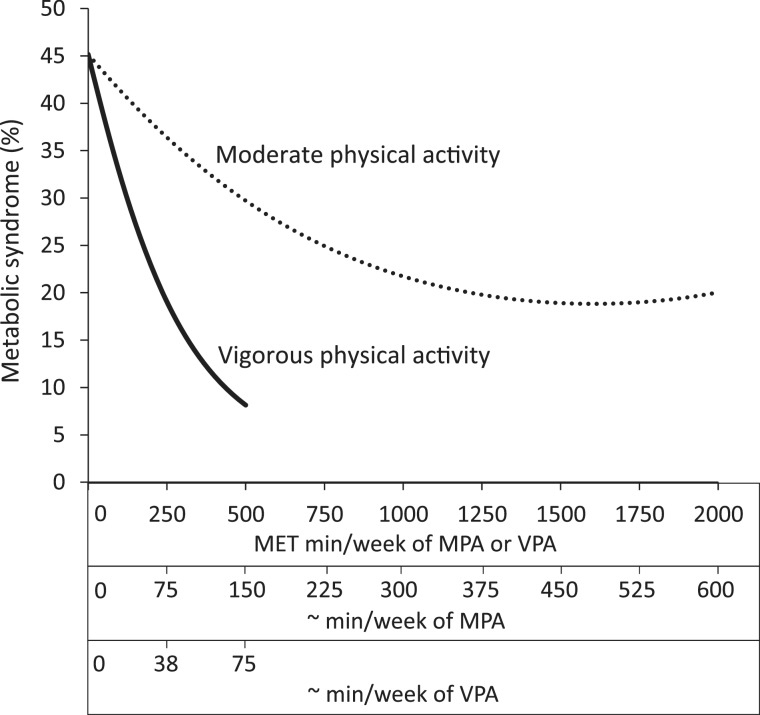
BACKGROUND: Current physical activity guidelines imply that, by comparison with moderate physical activity (MPA), the benefits of engaging in vigorous physical activity (VPA) are attributed to the greater energy expenditure dose per unit of time and do not relate to intensity per se. The purpose of this study was to determine whether VPA influences the metabolic syndrome (MetS) independent of its influence on the energy expenditure dose of moderate-to-vigorous physical activity (MVPA). METHODS: Participants consisted of 1841 adults from the 2003-06 National Health and Nutrition Examination Survey, a representative cross-sectional study. MPA and VPA were measured objectively over 7 days using Actigraph accelerometers. MetS was determined using an established clinical definition. Associations between physical activity and the MetS were determined using logistic regression and controlled for relevant covariates. RESULTS: Analyses revealed that VPA remained a meaningful predictor of the MetS after controlling for the total energy expenditure dose of MVPA such that the relative odds of the MetS was 0.28 (95% confidence interval 0.17-0.46) in the group with the highest VPA compared with the group with no VPA. VPA had a greater influence on the MetS than an equivalent energy expenditure dose of MPA. For instance, between 0 and 500 MET min/week of MPA the adjusted prevalence of the MetS decreased by 15.5%, whereas between 0 and 500 MET min/week of VPA the prevalence decreased by 37.1%. CONCLUSION: These cross-sectional findings suggest that VPA per se has an important role in cardiometabolic disease prevention.
Overview
The claims and statistics of this paper haven’t been checked yet.
Run the check — free, no account needed. It reads the open-access text and checks the sources it cites.
Integrity signals
Registry
Cites
Statistics
Figures
Verification
Claims the paper makes
The claims and statistics of this paper haven’t been checked yet.
Run the check — free, no account needed. It reads the open-access text and checks the sources it cites.
Claims other papers make about this one
Each is checked against this paper’s own text: does it say what the citing paper says it does?
In the citing paper
“Epidemiological data suggests that more vigorous-intensity physical activity may confer greater benefits to metabolic health [19].”
From High-Intensity Interval Training as an Efficacious Alternative to Moderate-Intensity Continuous Training for Adults with Prediabetes (2015) · cites this paper as [19]
In the citing paper
“In other words, it appears that vigorous-intensity physical activity has an important independent role in the prevention of cardiometabolic disease.”
From High-Intensity Interval Training as an Efficacious Alternative to Moderate-Intensity Continuous Training for Adults with Prediabetes (2015) · cites this paper as [19]
In the citing paper
“Specifically, NHANES data suggests that individuals accumulating more vigorous-intensity physical activity have reduced odds of metabolic syndrome (closely related to prediabetes), independent of total physical activity levels [19].”
From High-Intensity Interval Training as an Efficacious Alternative to Moderate-Intensity Continuous Training for Adults with Prediabetes (2015) · cites this paper as [19]
Self-check
Percentages, sums and reported differences re-computed from the paper’s own numbers.
The self-check needs the paper’s full text.
Citations
Cites
Alberti, K. G. M. M., Eckel, R. H., Grundy, S. M., Zimmet, P. Z., Cleeman, J. I., Donato, K. A., Fruchart, J.-C., James, W. P. T., Loria, C. M., & Smith, S. C. (2009) · Circulation · doi:10.1161/circulationaha.109.192644 · Cited by 14,860
‘Small Changes' to Diet and Physical Activity Behaviors for Weight Management
Hills, A. P., Byrne, N. M., Lindstrom, R. C., & Hill, J. O. (2013) · Obesity Facts · doi:10.1159/000345030 · Cited by 9,526
Physical Activity in the United States Measured by Accelerometer
TROIANO, R. P., BERRIGAN, D., DODD, K. W., MÂSSE, L. C., TILERT, T., & MCDOWELL, M. (2008) · Medicine & Science in Sports & Exercise · doi:10.1249/mss.0b013e31815a51b3 · Cited by 7,638
Calibration of the Computer Science and Applications, Inc. accelerometer
FREEDSON, P. S., MELANSON, E., & SIRARD, J. (1998) · Medicine & Science in Sports & Exercise · doi:10.1097/00005768-199805000-00021 · Cited by 3,825
Prince, S. A., Adamo, K. B., Hamel, M., Hardt, J., Connor Gorber, S., & Tremblay, M. (2008) · International Journal of Behavioral Nutrition and Physical Activity · doi:10.1186/1479-5868-5-56 · Cited by 3,162
National Center for Health Statistics (NCHS)
Feinleib, M. (2005) · Encyclopedia of Biostatistics · doi:10.1002/0470011815.b2a16042 · Cited by 3,134
Correlates of adults??? participation in physical activity: review and update
TROST, S. G., OWEN, N., BAUMAN, A. E., SALLIS, J. F., & BROWN, W. (2002) · Medicine & Science in Sports & Exercise · doi:10.1097/00005768-200212000-00020 · Cited by 3,040
Gralton, B. (2008) · Art monthly Australia · Cited by 3,001
Harris, M. I., Flegal, K. M., Cowie, C. C., Eberhardt, M. S., Goldstein, D. E., Little, R. R., Wiedmeyer, H.-M., & Byrd-Holt, D. D. (1998) · Diabetes Care · doi:10.2337/diacare.21.4.518 · Cited by 2,703
Dietary Guidelines for Americans 2005
SKOLNIK, N., & King, M. (2005) · Family Practice News · doi:10.1016/s0300-7073(05)71075-6 · Cited by 1,072
Research works printed but not linked: 3
- Colley, 2010, Health reports / Statistics Canada, Canadian Centre for Health Information = Rapports sur la sant / Statistique Canada, Centre canadien d'information sur la sant , 21, 63
- Johnson, 1993, JAMA, 269, 3002, 10.1001/jama.1993.03500230084034 · DOI
- 2012, EUR J CARDIOVASC PREV REHABIL, 19, 151
Cited by
Sorted by citations
Gebel, K., Ding, D., Chey, T., Stamatakis, E., Brown, W. J., & Bauman, A. E. (2015) · JAMA Internal Medicine · doi:10.1001/jamainternmed.2015.0541 · Cited by 344
Sultana, R. N., Sabag, A., Keating, S. E., & Johnson, N. A. (2019) · Sports Medicine · doi:10.1007/s40279-019-01167-w · Cited by 286
Wang, Y., Nie, J., Ferrari, G., Rey-Lopez, J. P., & Rezende, L. F. M. (2021) · JAMA Internal Medicine · doi:10.1001/jamainternmed.2020.6331 · Cited by 229
High Intensity Interval Training for Maximizing Health Outcomes
Karlsen, T., Aamot, I., Haykowsky, M. J., & Rognmo, Ø. (2017) · Progress in Cardiovascular Diseases · doi:10.1016/j.pcad.2017.03.006 · Cited by 256
Change in objectively measured physical activity during the transition to adolescence
Corder, K., Sharp, S. J., Atkin, A. J., Griffin, S. J., Jones, A. P., Ekelund, U., & van Sluijs, E. M. F. (2015) · British Journal of Sports Medicine · doi:10.1136/bjsports-2013-093190 · Cited by 220
Ross, R., Hudson, R., Stotz, P. J., & Lam, M. (2015) · Annals of Internal Medicine · doi:10.7326/m14-1189 · Cited by 188
Self-citationAccelerometer-based Physical Activity
Bassett, D. R., Troiano, R. P., McClain, J. J., & Wolff, D. L. (2014) · Medicine & Science in Sports & Exercise · doi:10.1249/mss.0000000000000468 · Cited by 186
“(On the other hand, if researchers use ActiGraph-derived METminutes of LPA, MPA, and VPA, they would need to use multipliers to adjust for the mean MET level of intensity categories (20).”
Vigorous physical activity and longitudinal associations with cardiometabolic risk factors in youth
Carson, V., Rinaldi, R. L., Torrance, B. D., Maximova, K., Ball, G. D. C., Majumdar, S. R., Plotnikoff, R. C., Veugelers, P. J., Boulé, N. G., Wozny, P. D., et al. (2013) · International Journal of Obesity · doi:10.1038/ijo.2013.135 · Cited by 188
Zhang, D., Liu, X., Liu, Y., Sun, X., Wang, B., Ren, Y., Zhao, Y., Zhou, J., Han, C., Yin, L., et al. (2017) · Metabolism · doi:10.1016/j.metabol.2017.08.001 · Cited by 165
“This finding might due to the differences in PA patterns, with men performing VPA more frequently and for a longer duration than women [19, 21, 53].”
BackgroundJung, M. E., Bourne, J. E., Beauchamp, M. R., Robinson, E., & Little, J. P. (2015) · Journal of Diabetes Research · doi:10.1155/2015/191595 · Cited by 165
“Specifically, NHANES data suggests that individuals accumulating more vigorous-intensity physical activity have reduced odds of metabolic syndrome (closely related to prediabetes), independent of total physical activity levels [19].”
BackgroundKim, J., Tanabe, K., Yokoyama, N., Zempo, H., & Kuno, S. (2013) · International Journal of Behavioral Nutrition and Physical Activity · doi:10.1186/1479-5868-10-30 · Cited by 136
“However, it is important to consider that a greater amount of lightintensity lifestyle activity may be required to prevent MetS, as compared with MVPA [12].”
BackgroundPhysical Activity and its Relation to Cancer Risk: Updating the Evidence
Kruk, J., & Czerniak, U. (2013) · Asian Pacific Journal of Cancer Prevention · doi:10.7314/apjcp.2013.14.7.3993 · Cited by 124
“Scientific evidence indicates that these three types of physical activity may have different physiological effects (Janssen and Ross, 2012).”
BackgroundCorder, K. L., Sharp, S. J., Atkin, A. J., Andersen, L. B., Cardon, G., Page, A. S., Davey, R., Grøntved, A., Hallal, P. C., Janz, K. F., et al. (2016) · Preventive Medicine Reports · doi:10.1016/j.pmedr.2016.05.006 · Cited by 116
“It has been suggested that vigorous-intensity physical activity may be more important than lower intensity activity for weight control (Janssen and Ross, 2012; Steele et al., 2009) and has more predictive value for obesity among boys (Latt et al.”
BackgroundInfluentialEkblom, Ö. B., Ekblom‐Bak, E., Rosengren, A., Hallsten, M., Bergström, G. M. L., & Börjesson, M. (2015) · PLoS ONE · doi:10.1371/journal.pone.0131586 · Cited by 106
“In this regard, the present findings are in line with previous studies [7–12,15,25].”
BackgroundResultHajian‐Tilaki, K., Heidari, B., Firouzjahi, A., Bagherzadeh, M., Hajian-Tilaki, A., & Halalkhor, S. (2014) · Diabetes & Metabolic Syndrome Clinical Research & Reviews · doi:10.1016/j.dsx.2014.04.012 · Cited by 98
Vollmer, R. L., Adamsons, K. L., Gorin, A. A., Foster, J. S., & Mobley, A. R. (2015) · Journal of the Academy of Nutrition and Dietetics · doi:10.1016/j.jand.2014.12.003 · Cited by 73
Thorp, A. A., McNaughton, S. A., Owen, N. G., & Dunstan, D. W. (2013) · International Journal of Behavioral Nutrition and Physical Activity · doi:10.1186/1479-5868-10-96 · Cited by 62
“Background While certain lifestyle behaviors such as physical activity [1] and diet [2] have been shown to be inversely associated with the metabolic syndrome (MetS), recent evidence from cross-sectional studies have also identified time spent in leisure-time sedentary behaviors [3-7] and overall sitting time [8,9] to…”
BackgroundEvaluation of immune response after moderate and overtraining exercise in wistar rat.
Gholamnezhad, Z., Boskabady, M. H., Hosseini, M., Sankian, M., & Rad, A. K. (2014) · Europe PMC (PubMed Central) · Cited by 61
Pal, R., Aggarwal, A., Singh, T., Sharma, S., Khandelwal, N. K., Garg, A., Bhansali, A. K., Kumar, A., Yadav, U., Singh, P., et al. (2020) · European Geriatric Medicine · doi:10.1007/s41999-020-00332-z · Cited by 61
“Exclusion criteria were exhaustive and were applicable at each and every stage of the survey: (a) At the time of initial proforma filling, individuals with a history of hepatic, renal, neoplastic, respiratory, rheumatological, gastrointestinal, dermatological, endocrine (notably diabetes mellitus, hyperthyroidism, Cus…”
MethodInfluentialImpact of Moderate-Intensity and Vigorous-Intensity Physical Activity on Mortality
Kikuchi, H., Inoue, S., Lee, I.-M. M., Odagiri, Y., Sawada, N., Inoue, M., & Tsugane, S. (2017) · Medicine & Science in Sports & Exercise · doi:10.1249/mss.0000000000001463 · Cited by 58
“(18) In a study of 1,841 American adults, objectively measured VPA showed a stronger association than MPA with regard to lower prevalence of metabolic syndrome.(19) The association between intensity of activity and health appears to vary in relation to health outcomes.”
BackgroundLeisure-Time Physical Activity and All-Cause Mortality
Lahti, J., Holstila, A., Lahelma, E. T., & Rahkonen, O. (2014) · PLoS ONE · doi:10.1371/journal.pone.0101548 · Cited by 59
“Few previous studies have examined the intensity of physical activity controlling for the volume of physical activity using different methods and health outcomes [15], [20]–[23].”
BackgroundMethodInfluentialAmirfaiz, S., & Shahril, M. R. (2018) · Metabolic Syndrome and Related Disorders · doi:10.1089/met.2018.0032 · Cited by 60
“…involved middle-aged adults, 27,29,35,50,64 another 5 studies involved older adults, 25,30,48,51,66 15 studies involved young and middle-aged adults, 23,28,32,33,37,38,42,43,45,49,53,58,60,61,65 3 studies involved middle-aged and older adults, 24,40,57 and 15 studies involved all age subgroups.”
InfluentialPark, S. K., & Larson, J. L. (2013) · The Journal of Cardiovascular Nursing · doi:10.1097/jcn.0000000000000096 · Cited by 57
“Vigorous PA, in particular, had a stronger negative relationship with metabolic syndrome than other types of PA did.(24,28)”
BackgroundCorder, K. L., Craggs, C., Jones, A., Ekelund, U., Griffin, S. J., & van Sluijs, E. M. F. (2013) · International Journal of Behavioral Nutrition and Physical Activity · doi:10.1186/1479-5868-10-69 · Cited by 50
“In addition, this information could be useful for health promotion programs aiming to target specific activity intensities, for example VPA which appears to decline more rapidly than other activity intensities during adolescence [13] and may be more important than lower intensity activity for weight control [16,17].”
BackgroundResultNilsson, A. E., Wåhlin‐Larsson, B., & Kadi, F. (2017) · PLoS ONE · doi:10.1371/journal.pone.0175496 · Cited by 47
Changes in physical activity patterns from adolescence to young adulthood: the BELINDA study
Vanhelst, J., Béghin, L., Drumez, É., Labreuche, J., Polito, A., Ruyter, T. D., Censi, L., Ferrari, M., Miguel‐Berges, M. L., Michels, N., et al. (2023) · European Journal of Pediatrics · doi:10.1007/s00431-023-04948-8 · Cited by 43
“For the BELINDA study, the assessment of time spent in sedentary activities, LPA, MPA and VPA was based on the cut-off points of 0–99, 100–1951, 1952–5724 and > 5724 counts/min, respectively [18].”
BackgroundInfluentialFüssenich, L. M., Boddy, L. M., GREEN, D. J., Graves, L., Foweather, L., Dagger, R. M., McWhannell, N., Henaghan, J., Ridgers, N. D., Stratton, G., et al. (2015) · BMC Public Health · doi:10.1186/s12889-016-2708-7 · Cited by 43
“CCVR ORs were ~5 times higher in Q1 compared to Q5 ( p 0.05), whilst no differences were observed across MPA quintiles (Fig.”
InfluentialKwaśniewska, M., Jegier, A., Kostka, T., Dziankowska–Zaborszczyk, E., Rębowska, E., Kozińska, J., & Drygas, W. (2014) · PLoS ONE · doi:10.1371/journal.pone.0085209 · Cited by 42
Lahti, J., Lahelma, E. T., & Rahkonen, O. (2012) · Preventive Medicine · doi:10.1016/j.ypmed.2012.10.006 · Cited by 41
Dose–response association of physical activity with HbA1c: Intensity and bout length
Gay, J. L., Büchner, D. M., & Schmidt, M. D. (2016) · Preventive Medicine · doi:10.1016/j.ypmed.2016.01.008 · Cited by 43
“The present data suggest that volume and intensity of activity may bemore important than duration of bouts, and is similar to other studies documenting inverse associations between higher intensity PA with metabolic syndrome (Church et al., 2007; Janssen and Ross, 2012; Laursen et al., 2012; Ross et al., 2015).”
ResultLeisure-time exercise, physical activity during work and commuting, and risk of metabolic syndrome
Kuwahara, K., Honda, T., Nakagawa, T., Yamamoto, S., Akter, S., Hayashi, T., & Mizoue, T. (2016) · Endocrine · doi:10.1007/s12020-016-0911-z · Cited by 35
“Only one cross-sectional study [14] and two cohort studies [10, 13] have investigated this issue and showed that the reduction of the odds or risk for metabolic syndrome was greater for vigorous-intensity physical activity than moderate-intensity activity.”
BackgroundResultExercise Intensity and Incidence of Metabolic Syndrome: The SUN Project
Hidalgo-Santamaría, M., Fernández‐Montero, A., Martínez‐González, M. Á., Moreno‐Galarraga, L., Sánchez‐Villegas, A., Barrio-López, M. T., & Bes‐Rastrollo, M. (2017) · American Journal of Preventive Medicine · doi:10.1016/j.amepre.2016.11.021 · Cited by 37
Pal, R., Bhadada, S. K., Aggarwal, A., & Singh, T. (2021) · Osteoporosis and Sarcopenia · doi:10.1016/j.afos.2020.12.003 · Cited by 37
“Individuals having a medical history of any underlying renal, gastrointestinal/hepatic, respiratory, rheumatological, endocrine (namely, diabetes mellitus, Cushing’s syndrome, hyperthyroidism, hyperparathyroidism that could potentially affect muscle mass and/or fat mass), infective or neoplastic disorders, addictions,…”
BackgroundGebel, K., Ding, D., & Bauman, A. E. (2014) · Preventive Medicine · doi:10.1016/j.ypmed.2013.12.030 · Cited by 36
“Similarly, recent studies indicated that the benefits of VPA for different health outcomes, such as metabolic health (Janssen and Ross, 2012) and cardiovascular risk (Sassen et al.”
BackgroundDaily stair climbing is associated with decreased risk for the metabolic syndrome
Phillips, A. C., Eves, F. F., Carroll, D., Roseboom, T. J., Ginty, A. T., Painter, R. C., & de Rooij, S. R. (2021) · BMC Public Health · doi:10.1186/s12889-021-10965-9 · Cited by 40
Lahti, J., Holstila, A., Mänty, M., Lahelma, E. T., & Rahkonen, O. (2016) · International Journal of Behavioral Nutrition and Physical Activity · doi:10.1186/s12966-016-0426-2 · Cited by 37
“[5], sickness absence [6] and mortality [7–9], also sug-”
BackgroundHigh-Intensity Interval or Continuous Moderate Exercise: A 24-Week Pilot Trial
Locke, S., Bourne, J. E., Beauchamp, M. R., Little, J. P., Barry, J., Singer, J., & Jung, M. E. (2018) · Medicine & Science in Sports & Exercise · doi:10.1249/mss.0000000000001668 · Cited by 35
Physical Activity, Fitness, and Metabolic Syndrome in Young Adults
López-Martínez, S., Sánchez‐López, M., Solera-Martínez, M., Arias-Palencia, N. M., Chacón, R. M. F., & Martínez‐Vizcaíno, V. (2013) · International Journal of Sport Nutrition and Exercise Metabolism · doi:10.1123/ijsnem.23.4.312 · Cited by 38
“Similarly, data from U.S. National Health and Nutrition Examination Survey do not support that 75 min of vigorous physical activity are equivalent to 150 min of moderate physical activity (Janssen & Ross, 2012).”
BackgroundMethodRezkallah, S. S., & Takla, M. K. N. (2018) · Diabetes Spectrum · doi:10.2337/ds18-0024 · Cited by 36
“suggest that individuals accumulating more vigorous-intensity physical activity have reduced odds of developing metabolic syndrome (closely related to prediabetes), independent of their total physical activity levels (21).”
BackgroundHome-Based Stair Climbing as an Intervention for Disease Risk in Adult Females; A Controlled Study
Michael, E., White, M. J., & Eves, F. F. (2021) · International Journal of Environmental Research and Public Health · doi:10.3390/ijerph18020603 · Cited by 30
Ba, D. M., Gao, X., Al‐Shaar, L., Muscat, J. E., Chinchilli, V. M., Ssentongo, P., Zhang, X., Liu, G., Beelman, R. B., & Richie, J. P. (2021) · Nutrition Journal · doi:10.1186/s12937-021-00738-w · Cited by 28
“500 MET min/week is equivalent to the minimal guideline, and ≥ 1000 MET min/week is equivalent to double the minimal guideline [48, 49].”
MethodKról-Zielińska, M., Groffik, D., Bronikowski, M., Kantanista, A., Laudańska–Krzemińska, I., Bronikowska, M., Korcz, A., Borowiec, J., & Frömel, K. (2018) · BioMed Research International · doi:10.1155/2018/1849715 · Cited by 27
“Vigorous intensity of PA may be more beneficial than lower intensity activity in the control of one’s weight [5].”
Bai, J., Wang, Y., Zhang, X. F., Ouyang, Y. F., Zhang, B., Wang, Z. H., Du, S. F., & Wang, H. (2021) · PubMed · doi:10.3967/bes2021.132 · Cited by 25
Waidyatilaka, I., Lanerolle, P., Wickremasinghe, R., Atukorala, S., Somasundaram, N. P., & de Silva, A. (2013) · PLoS ONE · doi:10.1371/journal.pone.0058328 · Cited by 27
“Sedentary behaviour, a separate entity defined as engaging in activities at the resting level of energy expenditure which includes sleeping, sitting, lying down, computer time, and viewing television [11], its associations and role in diabetes mellitus are less well studied.”
BackgroundPhysical Exercise as an Immunomodulator of Chronic Diseases in Aging
Ciolac, E. G., da Silva, J. M. R., & Vieira, R. P. (2020) · Journal of Physical Activity and Health · doi:10.1123/jpah.2019-0237 · Cited by 28
Fairclough, S. J., Hurter, L., Dumuid, D., Gába, A., Rowlands, A. V., Cruz, B. D. P., Cox, A., Crotti, M., Foweather, L., Graves, L., et al. (2022) · International Journal of Environmental Research and Public Health · doi:10.3390/ijerph19148778 · Cited by 22
“However, even small amounts of higher intensity physical activity are beneficial for cardiorespiratory fitness in youth [18], and it has been shown in adults that similarly low doses may be favourably associated with other outcomes related to cardiometabolic health [19], such as adiposity [7].”
BackgroundAdolescent physical activity levels: discrepancies with accelerometer data analysis
LOGAN, G. R. M., Duncan, S., Harris, N. K., Hinckson, E. A., & Schofield, G. (2016) · Journal of Sports Sciences · doi:10.1080/02640414.2016.1150599 · Cited by 21
Alahmadi, M. A., Almasoud, K. H., Aljahani, A. H., Alzaman, N. S., Nozha, O. M. A., Alahmadi, O. M., Jalloun, R. A., Alfadhli, E. M., Alahmadi, J. M., Zuair, A. A., et al. (2023) · BMC Public Health · doi:10.1186/s12889-023-15030-1 · Cited by 25
García‐Hermoso, A., Martínez‐Vizcaíno, V., Recio-Rodriguez, J. I., Díez‐Fernández, A., Gómez-Marcos, M. Á., García‐Ortiz, L., & for the EVIDENT Group (2015) · Preventive Medicine · doi:10.1016/j.ypmed.2015.11.012 · Cited by 19
“However, we found a relationship between insulin, IR and vigorous physical activity in men, independent of WC, suggesting that obesity mechanisms may not be so relevant (Janssen and Ross, 2012) in this population.”
BackgroundHamer, M., & Stamatakis, E. A. (2018) · International Journal of Obesity · doi:10.1038/s41366-018-0128-8 · Cited by 18
Walton, K., Ambrose, T., Annis, A., David, W. L., & Haines, J. (2018) · BMC Medical Research Methodology · doi:10.1186/s12874-018-0588-5 · Cited by 18
Sardinha, L. B., Magalhães, J. P., Santos, D. A., & Hetherington‐Rauth, M. (2022) · European Journal of Clinical Nutrition · doi:10.1038/s41430-022-01242-y · Cited by 17
“, 500 METs min/week), VPA had superior benefits for improving metabolic syndrome when compared to MPA [8].”
BackgroundMethodInfluentialGugusheff, J., Foley, B. C., Owen, K. B., Drayton, B., Ding, D., Stamatakis, E. A., Rasmussen, C. L., Bauman, A. E., & Thomas, M. M. (2020) · Journal of Physical Activity and Health · doi:10.1123/jpah.2020-0070 · Cited by 17
Dumith, S. C., Maciel, F. V., Borchardt, J. L., Alam, V. S., Silveira, F. D. C., & Paulitsch, R. G. (2019) · Revista Brasileira de Epidemiologia · doi:10.1590/1980-549720190023 · Cited by 15
Muñoz-Vera, T., Sañudo, B., Cruz, B. D. P., del Pozo-Cruz, J., López‐Lluch, G., & Sánchez-Oliver, A. J. (2017) · Science & Sports · doi:10.1016/j.scispo.2016.05.006 · Cited by 16
Azmi, I. S. M. M., Wallis, G. A., White, M. J. D., Puig-Ribera, A. M., & Eves, F. F. (2022) · BMC Public Health · doi:10.1186/s12889-022-14393-1 · Cited by 14
Shin, S. W., & Kim, J. (2024) · Reviews in Cardiovascular Medicine · doi:10.31083/j.rcm2504115 · Cited by 11
“For example, running, a popular form of vigorous-intensity physical activity, re-7 duces the risk of MetS, even in low amounts [22].”
BackgroundHidalgo-Santamaría, M., Bes-Rastrollo, M., Martínez-González, M., Moreno-Galarraga, L., Ruíz-Canela, M., & Fernández-Montero, A. (2018) · American Journal of Cardiology · doi:10.1016/j.amjcard.2018.08.031 · Cited by 13
Wei, J., Shen, M., Li, S., Xiao, Y., Luo, D., Ferrari, G., Lee, D. H., Rezende, L. F. M., Gill, J. M. R., Ahmadi, M. N., et al. (2026) · European Heart Journal · doi:10.1093/eurheartj/ehag168 · Cited by 11
Development of Step-Count Cut Points for School-Day Vigorous Physical Activity
Burns, R. D., Brusseau, T. A., Fu, Y., & Zhang, P. (2018) · BioMed Research International · doi:10.1155/2018/9717848 · Cited by 10
“By convention, physical activity recommendations and research in physical activity surveillance and intervention efficacy use moderate-tovigorous physical activity (MVPA) as the primary metric for assessment [3]; however research supports there being stronger independent correlations between VPA and health in the pedi…”
BackgroundKaino, W., Daimon, M., Sasaki, S., Karasawa, S., Takase, K., Tada, K., Wada, K., Kameda, W., Susa, S., Oizumi, T., et al. (2013) · Endocrine Journal · doi:10.1507/endocrj.ej12-0351 · Cited by 11
Stojanović, S., Валеріївна, А. О., & Trajković, N. (2024) · BMC Public Health · doi:10.1186/s12889-024-20835-9 · Cited by 9
“On the contrary, low levels of PA have been associated with higher rates of obesity and other health-related issues among children and adolescents [16, 17].”
Werneck, A. O., Oyeyemi, A. L., Collings, P. J., Cyrino, E. S., Ronque, Ê. R. V., Szwarcwald, C. L., Sardinha, L. B., & da Silva, D. R. P. (2019) · Journal of Public Health · doi:10.1093/pubmed/fdz148 · Cited by 9
Park, D. Y., Lee, O., Lee, Y., Lee, C. G., & Kim, Y. S. (2024) · Journal of Obesity & Metabolic Syndrome · doi:10.7570/jomes24007 · Cited by 8
“32 The decreased risk of metabolic syndrome observed in the newly active group for walking (Table 2) is presumed to result from a reduction in ST and the adoption of health-promoting behaviors that lower the risk of metabolic syndrome.”
BackgroundEroglu, E. I., Ahmadi, M. N., Biswas, R. K., Ding, D., Rezende, L. F. M., Lee, I.-M. M., Giovannucci, E. L., & Stamatakis, E. A. (2024) · Cancer Epidemiology Biomarkers & Prevention · doi:10.1158/1055-9965.epi-23-1185 · Cited by 8
Park, H., Yang, P., Sung, J., Jin, M., Jang, E., Yu, H. T., Kim, T., Pak, H., Lee, M., & Joung, B. (2023) · Mayo Clinic Proceedings · doi:10.1016/j.mayocp.2023.04.017 · Cited by 8
Park, K., Huh, Y., Nam, G. E., Han, K., Jung, J., Cho, Y. J., Kim, S. M., Hwang, H., & Park, Y. (2024) · British Journal of Sports Medicine · doi:10.1136/bjsports-2024-108264 · Cited by 7
Qian, C., Zhou, F., Lu, D., Huang, J., & Sun, M. (2024) · BMC Public Health · doi:10.1186/s12889-024-20498-6 · Cited by 7
“VPA has been shown to significantly improve cardiorespiratory fitness and certain cardiometabolic risk factors [51–53].”
BackgroundYuan, C., Zhou, T., Xx, C., Xie, S., Lu, X., & Liu, F. (2026) · European Journal of Preventive Cardiology · doi:10.1093/eurjpc/zwag054 · Cited by 7
Proneness for exercise, cognitive and psychophysiological consequences of action observation
Oliveira, P. A., Araújo, D., & Abreu, A. M. (2013) · Psychology of sport and exercise · doi:10.1016/j.psychsport.2013.09.008 · Cited by 7
García-Sánchez, E., Rubio‐Arias, J. Á., Ávila-Gandía, V., López-Román, F. J., & Menarguez-Puche, J. F. (2020) · Journal of Personalized Medicine · doi:10.3390/jpm10040176 · Cited by 12
“As a result, the recommendations for exercise to combat obesity suggest higher volumes (equivalent to ≥ 1000 MET-min/week) [45] of exercise for significant weight loss [46].”
BackgroundDupuy, E. G., Besnier, F., Gagnon, C., Vincent, T. L., Vrinceanu, T., Blanchette, C., Gervais, J., Breton, J., Saillant, K., Iglesies‐Grau, J., et al. (2024) · Experimental Gerontology · doi:10.1016/j.exger.2024.112628 · Cited by 6
Worska, A., Maciaszek, J., Ciążyńska, J., & Szumilewicz, A. (2025) · Frontiers in Public Health · doi:10.3389/fpubh.2025.1540355 · Cited by 6
“Moreover, Powell’s review (42) concluded that vigorous activity may offer greater cardioprotective benefits than moderate-intensity activity comparing the cardioprotective benefits of vigorous and moderate-intensity aerobic activity.”
Prevalence of Metabolic Syndrome (MetS) and Determinants Among Obese Teachers in Makassar, Indonesia
Nurzakiah Hasan, M. K. M., Hadju, V., Jafar, N., & Thaha, R. M. (2020) · IIUM Medical Journal Malaysia · doi:10.31436/imjm.v18i2.100 · Cited by 9
“5%).(45) A regular physical activity is closely related to MetS parameters (waist circumference, HDL levels, and blood pressure).”
BackgroundLim, J., Kim, J.-S., & Kim, Y. S. (2022) · Exercise Science · doi:10.15857/ksep.2022.00339 · Cited by 6
“[36]의 연구에 따르면 신체활동 지침을 달성하였을 경우 대사증후군 위험인자 중 고혈당, 고중성지방혈증, 그 리고 낮은 수치의 HDL-C 관련 요인에서만 긍정적인 결과를 보고 하 였으며, Tucker et al.”
Physical activity and metabolic syndrome: A population base study (forest and tree model algorithms)
Nikbakht, H., Rezaianzadeh, A., Seif, M., Shojaie, L., Johari, M. G., & Ghaem, H. (2023) · Clinical Nutrition ESPEN · doi:10.1016/j.clnesp.2023.05.014 · Cited by 6
Associations between sensor-based physical activity behaviour features and health-related parameters
Marschollek, M. (2015) · Human Movement Science · doi:10.1016/j.humov.2015.10.003 · Cited by 6
“…parameters and risk, the author has chosen to investigate the following exemplary parameters: HDL (high density lipoprotein) (Glazer et al., 2013; Janssen & Ross, 2012), C-reactive protein (CRP) (Kasapis & Thompson, 2005; Plaisance & Grandjean, 2006; Stewart et al., 2007), body mass index (BMI)…”
BackgroundKim, M., & Kobori, T. (2025) · Nutrition & Metabolism · doi:10.1186/s12986-025-00978-1 · Cited by 6
“In line with this, a previous study reported that 0–500 MET-minutes per week of moder-ate-intensity activity reduced MetS prevalence by 15.5%, while the same amount of vigorous-intensity activity led to a 37.1% reduction [66].”
InfluentialCurran, M., Larade, N., Özakinci, G., Tymowski-Gionet, G., & Dombrowski, S. U. (2024) · Health Psychology and Behavioral Medicine · doi:10.1080/21642850.2024.2416505 · Cited by 5
“Higher levels of physical activity typically increase health benefits, with added benefits diminishing somewhat at very high volumes (Bull et al., 2020; Janssen & Ross, 2012; Lee et al., 2022; Wen et al., 2011).”
BackgroundPal, R., Aggarwal, A., Sachdeva, N. K., Ram, S., Garg, A., Bhansali, A. K., & Bhadada, S. K. (2021) · Archives of Osteoporosis · doi:10.1007/s11657-020-00855-9 · Cited by 6
Wilson, H., Leonard, W. R., Tarskaia, L. A., Klimova, T. M., Krivoshapkin, V. G., & Snodgrass, J. J. (2014) · American Journal of Human Biology · doi:10.1002/ajhb.22625 · Cited by 5
The irresistible rise of the Cohort Profile
Ferrie, J. E. (2012) · International Journal of Epidemiology · doi:10.1093/ije/dys119 · Cited by 5
Epidemiological ramifications of diagnosing diabetes with HbA1c levels
Davidson, M. B., & Pan, D. (2014) · Journal of Diabetes and its Complications · doi:10.1016/j.jdiacomp.2014.03.016 · Cited by 4
“Each item was calculated as follows: (duration of activity) × (frequency of activity during the last 30 days) × (MET value of activity) [17] based on previously published classification schemes [18].”
MethodYuan, H., & Kim, M. (2023) · Daehan imsang geon-gang jeungjin hakoeji/Daehan imsang geon'gang jeungjin haghoeji · doi:10.15384/kjhp.2023.23.2.75 · Cited by 4
“In contrast, light PA (LPA) correlates with more chronic diseases, 9) suggesting that increased PA intensity reduces MetS.”
BackgroundTavares, Ó. M., Duarte, J. P., Werneck, A. O., Costa, D. C., Sousa-e-Silva, P., Martinho, D. V., Luz, L. G. D. O., Morouço, P., Valente‐dos‐Santos, J., Gonçalves, R. S., et al. (2019) · Einstein (São Paulo) · doi:10.31744/einstein_journal/2019ao4419 · Cited by 4
“A high value is attributed to interventions aimed to promote physical activity,(3) and special emphasis is placed on high-intensity activities, which are more effective for body composition regulation.(4) Adiposity, especially in adult life, may lead to several metabolic disorders, which are risk factors for metabolic…”
BackgroundRiley, N., Leahy, A. A., Eather, N., Verswijveren, S. J. J. M., & Lander, N. (2025) · Pilot and Feasibility Studies · doi:10.21203/rs.3.rs-3714149/v1 · Cited by 6
Exploring the relationship between adolescent physical activity and anthropometric parameters
LOGAN, G. R. M., Harris, N., Duncan, S., Hinckson, E. A., & Schofield, G. (2016) · Sport Sciences for Health · doi:10.1007/s11332-016-0266-0 · Cited by 3
Booker, R., Jones, R., Galloway, R., & Holmes, M. E. (2021) · American Journal of Lifestyle Medicine · doi:10.1177/15598276211056874 · Cited by 3
“37,38 Regarding SB, 3 MetS clusters which included WC were found to have more SB than the only non-WC four-criteria MetS cluster.”
Liu, Z., 起荣宇, Qu, L., Wang, G., Li, J., & Liu, X. (2026) · Scientific Reports · doi:10.1038/s41598-026-50014-2 · Cited by 3
Kim, G., Sung, H., Ryu, Y., Lim, J., Kim, J.-S., Kim, H. K., & Kim, Y. S. (2021) · Epidemiology and Health · doi:10.4178/epih.e2021056 · Cited by 2
“org 2 portion of vigorous PA was found to be associated with lower mortality risk and a low prevalence of metabolic diseases [4,5].”
BackgroundDunston, E. R., & Taylor, K. (2023) · International journal of exercise science · doi:10.70252/fqav8949 · Cited by 2
Lin, J., Yang, R., Zhang, Y., Li, S., Yang, H., Ma, Y., Li, H., Zhou, L., Hou, Y., & Wang, Y. (2022) · Journal of Public Health · doi:10.1007/s10389-022-01782-4 · Cited by 1
“…may be explained by the fact that moderate or vigorous physical activity is able to bring greater improvement in peak oxygen consumption and counters the increased oxidative stress, inflammation, and sympathetic activation (Dobrosielski et al. 2017; Janssen and Ross 2012; Swain and Franklin 2006).”
Association of life’s simple 7 with cognitive function in a multi-ethnic cohort
Huang, X., Samad, M. H. B., Koh, G. C. H., Müller, A. M., Müller‐Riemenschneider, F., Sim, X., & Hilal, S. (2026) · The Journal of Prevention of Alzheimer s Disease · doi:10.1016/j.tjpad.2025.100453 · Cited by 1
“…intensity or ≥ 150 min/week moderate and vigorous intensity, while in this study an equivalent value of 500 MET-min/week is used as the criterion [25] Healthy diet is defined as meeting at least 3 of following criteria: fruits or vegetables ( ≥ 450 g/day), fish ( ≥ 198 g/week), whole grains ( ≥…”
Paschoalino, T. M. P. F., Oliveira, R. B., Borges, J. P., & Farinatti, P. (2018) · International Journal of Diabetes in Developing Countries · doi:10.1007/s13410-018-0639-9 · Cited by 1
“While it has been recognized that cardiometabolic effects of exercise would be proportional to its intensity and volume [4, 5], some research indicated that even low levels of physical activity vs.”
BackgroundPrescott, E. (2017) · Elsevier eBooks · doi:10.1016/b978-0-323-42880-4.00018-2 · Cited by 1
Sedentary Behaviors and Sleeping Duration among Saudi Basketball Players
Sakr, M. A. E. M., & AlNaggar, M. (2021) · Journal of Theories and Applications of Physical Education Sport Sciences · doi:10.21608/jat.2021.226117 · Cited by 1
“A number of scientific works have demonstrated that physical inactivity and SB are two independent entities (Chomistek et al. 2013; Janssen and Ross 2012; Tremblay et al. 2017; Young et al. 2016).”
BackgroundJo, H.-D., & Kim, M. (2023) · Exercise Science · doi:10.15857/ksep.2023.00241 · Cited by 1
“PA consists of a variety of activities, including aerobic-and resistance exercise (RE), and many studies have been investigated the optimal frequency, intensity, and duration of PA for improving MetS [6-9].”
BackgroundSíndrome metabólico: enfoque fisiopatológico
Duque, O. A. P., Zapata, D. F. L., & Trujillo, J. C. G. (2015) · Areandina · doi:10.33132/01248146.544 · Cited by 1
Atividade Física e Saúde – Donde para onde?
Mota, J. A. P. S., de Oliveira, J. J. F., & Duarte, J. A. (2017) · Revista Brasileira de Atividade Física & Saúde · doi:10.12820/rbafs.v.22n2p107-109 · Cited by 1
Metadata
- Authors
- Janssen, I., & Ross, R.
- Affiliations
- Queen's University (CA)
- Corresponding author
- Janssen, I.
- ORCID
- Janssen, I.
- Venue
- International Journal of Epidemiology
- Publisher
- Oxford University Press (OUP)
- Published
- 2012-03-24
- Volume
- 41
- Issue
- 4
- Pages
- 1132-1140
- ISSN
- 0300-5771 (ISSN-L)
- 1464-3685
- PMC
- PMC3429871
- OpenAlex
- W2100553130
- Cited by
- 124
- References
- 27
- Citations by year
- 2026: 8 · 2025: 5 · 2024: 8 · 2023: 9 · 2022: 8 · 2021: 13 · 2020: 6 · 2019: 5 · 2018: 9 · 2017: 9 · 2016: 7 · 2015: 10 · 2014: 10 · 2013: 13 · 2012: 4
- FWCI
- 7.93
- Type
- journal article
- Language
- en
- Open access
- hybrid
- doi.org
- Licence
- cc-by-nc
- Locations
- International Journal of Epidemiology (publishedVersion, cc-by-nc)
- Europe PMC (PubMed Central) (publishedVersion, cc-by-nc)
- PubMed Central (publishedVersion, cc-by-nc)
- PubMed (publishedVersion)
- HighWire Press Open Archive (submittedVersion)
- Funders
- Heart and Stroke Foundation of Canada
- Ontario Ministry of Research and Innovation
- Topics
- Health Sciences › Medicine › Public Health, Environmental and Occupational Health › Physical Activity and Health
- Health Sciences › Medicine › Physiology (medical) › Cardiovascular and exercise physiology
- Health Sciences › Medicine › Public Health, Environmental and Occupational Health › Obesity, Physical Activity, Diet
- Keywords
- high-intensity exercise, metabolic syndrome, moderate physical activity, physical activity intensity, cardiometabolic disease prevention, accelerometer-measured activity, MET-minutes per week
- MeSH terms
- Adult, Cross-Sectional Studies, Energy Metabolism, Female, Humans, Male, Motor Activity, Nutrition Surveys, Ontario, Logistic Models, Metabolic Syndrome
About these checks
Registry, retraction, Cites and statistics results are computed, not judged, with one exception: a printed reference that no index lists is read once by a model before it counts as a citation error. Claims are extracted by a model and kept only when their quote appears verbatim in the text; each cited source is then checked, with a model’s help, for whether it says what the claim relies on. Those verdicts can be wrong — read the claim’s quote and the cited source before relying on one.
Statistics and arithmetic are recomputed, not judged.
Confidence bands are shown only for fields calibrated on our annotated test set. None is calibrated yet, so no band is shown.
What counts as a claim ›How we measure confidence ›How we check this ›
Are you an author, or do you see a problem with this page? Request a review
