

'I'm usually being my own doctor': women's experiences of managing polycystic ovary syndrome in Canada
Open accessThe DOI matches its Crossref record; 65 of the 67 references it cites were found in a registry or an index; 33 of the 82 sources its claims cite were checked for support.
Abstract
BACKGROUND: Polycystic ovary syndrome (PCOS) is a complex, chronic condition characterized by anovulation, polycystic ovarian morphology and hyperandrogenism that requires lifelong management. To reduce the risk of comorbidity and to manage symptoms, lifestyle management and pharmaceuticals such as oral contraceptives are the most common forms of treatment and should be tailored to the individual patient. The literature to date has shown PCOS patients to experience widespread dissatisfaction with the amount and quality of information they receive from providers, along with lower levels of trust in physicians. Little is known about the lived experiences of women managing PCOS in Canada, across age groups. METHODS: In-depth remote interviews explored women's lived experiences managing PCOS and the barriers and facilitators they encountered in their management journeys. Data were analyzed using thematic analysis and interpretive description methodology. RESULTS: Twenty-five in-depth, telephone interviews conducted with participants (aged 18-63 y) across Canada revealed participants lacking sufficient information and guidance from physicians, especially in primary care. Areas in need of more guidance included lifestyle management and mental health. Lack of empathy and weight bias among physicians were also perceived by participants. Older participants received little guidance on treatment options postmenopause. Loss of trust and withdrawal from seeking medical care were prominent themes, along with greater self-reliance on self-management, including self-educating and self-experimenting with treatments. CONCLUSIONS: Most women in this study were frustrated with the level of involvement and information provision from their doctors. Key recommendations are identified for the provision of care to younger and older patients with PCOS. Improved education for physicians may be needed to improve the quality of healthcare provision for PCOS.
Overview
CoChat Summary
TL;DR
This qualitative study of 25 women with polycystic ovary syndrome (PCOS) across Canada found widespread frustration with insufficient physician information and guidance, especially in primary care, leading many to lose trust and rely on self-management. Participants commonly self-educated, self-advocated, and self-experimented, while attentive/empathic doctors and social support helped facilitate management.
Key findings
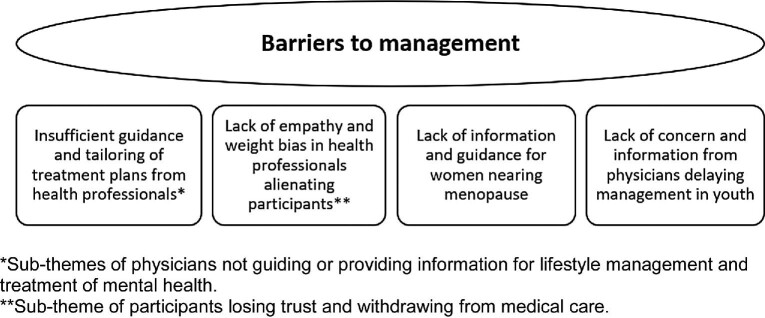
- 68% (17/25) reported insufficient guidance or individualized treatment planning from physicians; primary care physicians were cited in 36% of experiences as particularly uninvolved, often not offering specialist referrals.
- Mental health support was rare: only 8% had GPs who followed up on or discussed PCOS-related mental health; 44% (11/25) were told to lose weight but received little lifestyle guidance or dietitian referrals.
- 24% perceived lack of empathy or weight bias from physicians; loss of trust and withdrawal from medical care were prominent, and older/postmenopausal participants reported little guidance after being taken off medications.
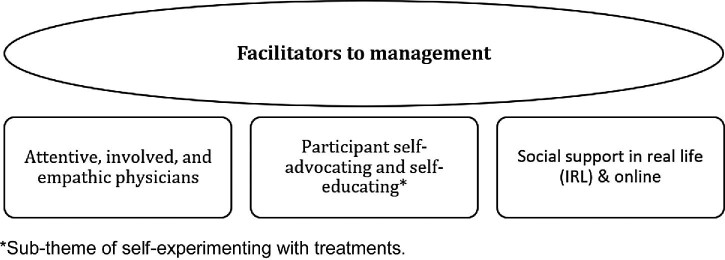
- Facilitators included attentive, involved doctors even when they had little PCOS knowledge (40%), self-education (88%, 22/25), self-advocacy (44%), self-experimentation with treatments (48%), and social support (72%).
Methods
- In-depth, semistructured telephone interviews (one via Skype) with 25 participants aged 18–63 y across Canada, recruited online through PCOS Facebook groups, Reddit, online forums, and the PCOS Awareness Association; inclusion required age ≥18 y, self-reported medical diagnosis of PCOS, living in Canada since diagnosis, and English ability.
- Interviews were conducted October–December 2018, averaged 1 h, were audio-recorded and transcribed verbatim; data were analyzed using thematic analysis and Thorne et al.’s interpretive description methodology, coded by the first author in NVivo 12.
- The study drew participants from a larger multi-methods survey and reports only themes relating to management experience; reporting followed COREQ.
Limitations
- Stated by the paper: self-reported PCOS diagnoses, small sample size, uneven age distribution (only three participants aged >40 y), possible selection bias from online recruitment, mostly Caucasian participants, limited conclusions for other world regions, and no member checking.
- Evident from the text: the sample was concentrated in Ontario (13/25, 52%) and white/Caucasian (18/25, 72%), and recruitment used gendered women-specific language, so findings may not represent people with PCOS who do not identify as women or those less active online.
Model-written summary. Check it against the paper before relying on it.
Integrity signals
Registry
Cites
Statistics
Figures
Verification
Claims the paper makes
16 Valid · 1 Not valid · 13 Not checked · 59 Own results and interpretations
The sources with a verdict support this claim; the rest weren’t checked yet, have no full text we could read, or their verdicts aren’t rated yet.
In the paper
“Several other studies similarly report women with PCOS not being given information on lifestyle management.”
§ ‘I'm usually being my own doctor’: women's experiences of managing polycystic ovary syndrome in Canada > Discussion
What the sources say
- Supportedcites [33] Lin AW, Bergomi EJ, Dollahite JS et al. Trust in physicians and medical experience beliefs differ between women with and without polycystic ovary syndrome. J Endocrine Soc. 2018; 2: 1001– 9. 30140785 PMC6101505 source
The Results report that women with PCOS only sometimes received specific information about nutrition. The Discussion adds that they only sometimes received information about beneficial dietary and physical activity behaviors and describes this as consistent with earlier findings of limited information from providers. The source supports the claim as a report of inadequate information, not a claim that no information was ever given. (LLM, conf=0.90)
- Not checked — no full text of the sourcecites [39] Crete J, Adamshick P. Managing polycystic ovary syndrome: What our patients are telling us. J Holist Nurs. 2011; 29: 256– 66. 21357181 source
- Not checked — no full text of the sourcecites [44] Humphreys L, Costarelli V. Implementation of dietary and general lifestyle advice among women with polycystic ovarian syndrome. J Royal Soc Promot Health. 2008; 128: 190– 5. 18678115 source
plain- Asserted: passes — The authors put it forward as true.
- Checkable: passes — It can be checked against evidence.
- Load-bearing: unclear — It is unclear whether the paper’s conclusions depend on it.
- Based: passes — The paper gives a reason why it holds.
- Supported
The cited sources support only part of this claim — read each source’s verdict below.
In the paper
“previous studies found low referral rates from PCPs to dietitians.”
§ ‘I'm usually being my own doctor’: women's experiences of managing polycystic ovary syndrome in Canada > Discussion
What the sources say
- Partly supportedcites [19] Jeanes YM, Barr S, Smith K et al. Dietary management of women with polycystic ovary syndrome in the United Kingdom: the role of dietitians. J Hum Nutr Diet. 2009; 22: 551– 8. 19735349 sourceExperimental — accuracy not yet measured
The Results (p. 4) report that many surveyed dietitians rarely saw women with PCOS and that GPs supplied 36% of referrals. The Discussion (p. 7) says very few women saw dietitians, but the paper does not establish a low referral rate from primary care providers specifically: its GP figure is a share of referrals received, not a referral rate. (LLM, conf=0.85)
- Supportedcites [45] Mulquiney KJ, Tapley A, van Driel ML et al. Referrals to dietitians/nutritionists: A cross-sectional analysis of Australian GP registrars’ clinical practice. Nutrition Dietetics. 2018; 75: 98– 105. 28905462 sourceExperimental — accuracy not yet measured
The Discussion reports low referral rates for established Australian GPs—0.2 referrals per 100 problems and 0.4 per 100 consultations—and finds similarly modest rates among GP registrars. The paper groups referrals to dietitians and nutritionists together; no page number is available in the supplied copy. (LLM, conf=0.87)
plain- Asserted: passes — The authors put it forward as true.
- Checkable: passes — It can be checked against evidence.
- Load-bearing: unclear — It is unclear whether the paper’s conclusions depend on it.
- Based: passes — The paper gives a reason why it holds.
- Partly supported
The cited sources support only part of this claim — read each source’s verdict below.
In the paper
“yet most attempts to modify lifestyle appear to be self-initiated and maintained.”
§ ‘I'm usually being my own doctor’: women's experiences of managing polycystic ovary syndrome in Canada > Discussion
What the sources say
- Partly supportedcites [19] Jeanes YM, Barr S, Smith K et al. Dietary management of women with polycystic ovary syndrome in the United Kingdom: the role of dietitians. J Hum Nutr Diet. 2009; 22: 551– 8. 19735349 sourceExperimental — accuracy not yet measured
The Discussion (p. 7) says nutritional information came most commonly from books and only 15% of women had seen a dietitian, consistent with changes often being self-initiated. The dietary-advice results (p. 5) report that 57% were following a PCOS-specific diet, but the paper does not establish that most lifestyle changes were maintained over time. (LLM, conf=0.82)
- Not checked — no full text of the sourcecites [44] Humphreys L, Costarelli V. Implementation of dietary and general lifestyle advice among women with polycystic ovarian syndrome. J Royal Soc Promot Health. 2008; 128: 190– 5. 18678115 source
- Partly supportedcites [46] Lim S, Smith CA, Costello MF et al. Barriers and facilitators to weight management in overweight and obese women living in Australia with PCOS: a qualitative study. BMC Endocr Disord. 2019; 19: 106. 31647000 PMC6813064 sourceExperimental — accuracy not yet measured
The Discussion section, “Past weight loss attempts,” says most attempts appeared to be self-initiated, with little or no professional support. It does not say they were maintained; instead, “Facilitators and barriers to lifestyle modifications” describes a lack of long-term success with weight-management strategies. (LLM, conf=0.88)
hedged- Asserted: passes — The authors put it forward as true.
- Checkable: passes — It can be checked against evidence.
- Load-bearing: passes — The paper’s conclusions depend on it.
- Based: passes — The paper gives a reason why it holds.
- Partly supported
The cited sources support only part of this claim — read each source’s verdict below.
In the paper
“Previous qualitative studies largely involved women aged <50 y.”
§ ‘I'm usually being my own doctor’: women's experiences of managing polycystic ovary syndrome in Canada > Discussion > Limitations and strengths
What the sources say
- Partly supportedcites [35] Ee C, Smith C, Moran L et al. “the whole package deal”: Experiences of overweight/obese women living with polycystic ovary syndrome. BMC Women's Health. 2020; 20: 221. 33008386 PMC7532653 sourceExperimental — accuracy not yet measured
The Methods > Participants section says this qualitative study included women aged 18–46, so it is an example of a study involving women under 50. The Background mentions other qualitative studies but does not give their participants’ ages; this paper alone does not establish that previous studies largely involved women under 50. Page numbers are unavailable in our copy. (LLM, conf=0.82)
- Not checked — no full text of the sourcecites [36] Soucie K, Samardzic T, Schramer K et al. The diagnostic experiences of women with polycystic ovary syndrome (PCOS) in Ontario, Canada. Qual Health Res. 2021; 31: 523– 34. 33213256 source
- Supportedcites [37] Williams S, Sheffield D, Knibb RC. ‘Everything's from the inside out with PCOS’: Exploring women's experiences of living with polycystic ovary syndrome and co-morbidities through SkypeTM interviews. Health Psychol Open. 2015; 2: 2055102915603051. 28070371 PMC5193274 source
The Methods > Participants section describes this qualitative interview study and reports that six of the nine women in the analysis who disclosed their ages were 20–41 years old; three did not disclose their ages. The paper therefore supports the claim as an example of a previous qualitative study largely involving women known to be under 50, though it does not establish the age distribution across all previous studies. (LLM, conf=0.84)
- Not checked — no full text of the sourcecites [41] Tomlinson J, Pinkney J, Adams L et al. The diagnosis and lived experience of polycystic ovary syndrome: A qualitative study. J Adv Nurs. 2017; 73: 2318– 26. 28329428 source
plain- Asserted: passes — The authors put it forward as true.
- Checkable: passes — It can be checked against evidence.
- Load-bearing: passes — The paper’s conclusions depend on it.
- Based: passes — The paper gives a reason why it holds.
- Partly supported
The cited sources support only part of this claim — read each source’s verdict below.
In the paper
“which adds to the growing body of evidence of frustration in women with PCOS with the quality of information they receive.”
§ ‘I'm usually being my own doctor’: women's experiences of managing polycystic ovary syndrome in Canada > Discussion
What the sources say
- Not checked — no full text of the sourcecites [16] Dokras A, Witchel SF. Are young adult women with polycystic ovary syndrome slipping through the healthcare cracks? J Clin Endocrinol Metab. 2014; 99: 1583– 5. 24606098 source
- Not checked — no full text of the sourcecites [21] Ching HL, Burke V, Stuckey BGA. Quality of life and psychological morbidity in women with polycystic ovary syndrome: body mass index, age and the provision of patient information are significant modifiers. Clin Endocrinol. 2007; 66: 373– 9. 17302871 source
- Supportedcites [22] Avery JC, Braunack-Mayer AJ. The information needs of women diagnosed with polycystic ovarian syndrome – implications for treatment and health outcomes. BMC Women's Health. 2007; 7: 9. 17578583 PMC1906750 source
The Results and discussion section (‘Information sources’) says most participants were dissatisfied with the information doctors gave them. It also reports a similar finding in an earlier PCOS study and says other studies reflected it, supporting the description of a growing body of evidence. (LLM, conf=0.91)
- Supportedcites [23] Gibson-Helm M, Teede H, Dunaif A et al. Delayed diagnosis and a lack of information associated with dissatisfaction in women with polycystic ovary syndrome. J Clin Endocrinol Metab. 2017; 102: 604– 12. 27906550 PMC6283441 source
The Abstract reports that only 15.6% of women were satisfied with the information they received. The Discussion says few women were satisfied with information given at diagnosis and notes that previous research also found a desire for more information, supporting the reference to a growing body of evidence. (LLM, conf=0.92)
- Supportedcites [33] Lin AW, Bergomi EJ, Dollahite JS et al. Trust in physicians and medical experience beliefs differ between women with and without polycystic ovary syndrome. J Endocrine Soc. 2018; 2: 1001– 9. 30140785 PMC6101505 source
The Discussion reports that women with PCOS received PCOS-specific and lifestyle information only sometimes, consistent with earlier findings of limited information from providers. The paper also reports that patients in studies across several countries felt frustrated with their early medical experiences. Together, these passages support the claim about a growing body of evidence of frustration with the information received. (LLM, conf=0.89)
- Supportedcites [34] Wasata R, Chertok IRA, Kingori C et al. Exploratory study of knowledge and experience of polycystic ovary syndrome (PCOS) among PCOS-diagnosed Bangladeshi women. JWHCI. 2020; 3: 1– 9. source
Section 4.1 reports that many participants were dissatisfied with their PCOS diagnosis experience, specifically because they received too little explanation or information about PCOS and its management. The Discussion says similar dissatisfaction has been noted in previous studies, supporting the claim that this finding adds to a broader body of evidence. Page numbers are not provided in our copy. (LLM, conf=0.93)
- Supportedcites [35] Ee C, Smith C, Moran L et al. “the whole package deal”: Experiences of overweight/obese women living with polycystic ovary syndrome. BMC Women's Health. 2020; 20: 221. 33008386 PMC7532653 source
The Discussion (page not supplied) reports that women in the study were frustrated by inadequate information after diagnosis and says this was consistent with previous research. This supports the claim that their frustration with the information they receive is part of a broader body of evidence. (LLM, conf=0.92)
- Not checked — no full text of the sourcecites [36] Soucie K, Samardzic T, Schramer K et al. The diagnostic experiences of women with polycystic ovary syndrome (PCOS) in Ontario, Canada. Qual Health Res. 2021; 31: 523– 34. 33213256 source
- Supportedcites [37] Williams S, Sheffield D, Knibb RC. ‘Everything's from the inside out with PCOS’: Exploring women's experiences of living with polycystic ovary syndrome and co-morbidities through SkypeTM interviews. Health Psychol Open. 2015; 2: 2055102915603051. 28070371 PMC5193274 source
In Support > Healthcare professionals (page unavailable), the paper reports that every participant expressed frustration with the support received from healthcare professionals. Support > Education (page unavailable) says several participants had to educate themselves because clinicians provided too little information or explanation about PCOS. Together, these passages support the cited point about frustration with the information women receive. (LLM, conf=0.90)
- Partly supportedcites [38] Sterling EW, Vincent T, DeZarn C et al. A study of perceptions, experiences, and satisfaction with healthcare among women with polycystic ovary syndrome (PCOS). Fertil Steril. 2010; 94: S7. sourceExperimental — accuracy not yet measured
The Results (Abstract; page not given) report that women with PCOS were dissatisfied with aspects of their healthcare, particularly limited treatment options and not feeling well cared for. They do not report frustration with the quality of information received, so the source supports the broader dissatisfaction but not that specific reason. (LLM, conf=0.78)
plain- Asserted: passes — The authors put it forward as true.
- Checkable: passes — It can be checked against evidence.
- Load-bearing: unclear — It is unclear whether the paper’s conclusions depend on it.
- Based: passes — The paper gives a reason why it holds.
33 more claims
Create a free account to see all 89 claims and to verify the 6 references still open.
- It may state two separate claims as one. 35
- Probably not a substantial claim. 27
Claims other papers make about this one
Each is checked against this paper’s own text: does it say what the citing paper says it does?
The source backs part of the claim, not all of it — or backs it for a different population, condition or comparison.
In the citing paper
“This finding is consistent with other studies, using focus groups and surveys, that report information provided at diagnosis was not sufficient to allow for improved knowledge and effective self-management of PCOS symptoms [2, 46, 48].”
From Challenges in diagnosis and health care in polycystic ovary syndrome in Canada: a patient view to improve health care (2023) · cites this paper as [48]
Experimental — accuracy not yet measuredThe source backs part of the claim, not all of it — or backs it for a different population, condition or comparison.
In the citing paper
“Nine included papers report on patients’ own preferences, views, and experiences of the IoT for PCOS-related reasons [17,44,45,97,98,99,100,101,102] (Supplementary File S4).”
From Polycystic Ovary Syndrome and the Internet of Things: A Scoping Review (2024) · cites this paper as [98]
Experimental — accuracy not yet measuredThe cited source says what the claim attributes to it.
In the citing paper
“Our data is consistent with other reports of a protracted diagnosis of PCOS taking greater than two years, and associated with multiple visits to health professionals and examination by three or more physicians before a diagnosis [2, 30, 48].”
From Challenges in diagnosis and health care in polycystic ovary syndrome in Canada: a patient view to improve health care (2023) · cites this paper as [48]
The cited source says what the claim attributes to it.
In the citing paper
“These findings are consistent with another Canadian study which reported a reliance on self-education and self-advocacy by respondents in their PCOS management [48].”
From Challenges in diagnosis and health care in polycystic ovary syndrome in Canada: a patient view to improve health care (2023) · cites this paper as [48]
The cited source says what the claim attributes to it.
In the citing paper
“women with PCOS report inadequate information and disconcerting interactions with health care professionals [1112]”
From Availability and Use of Digital Technology Among Women With Polycystic Ovary Syndrome: Scoping Review (2025) · cites this paper as [11]
2 more claims about this paper
Create a free account to see every claim other papers make about this one.
Self-check
Percentages, sums and reported differences re-computed from the paper’s own numbers.
Each contradiction between two passages listed here was confirmed by an independent check.
Rated minor: it would not touch a result — a value no result rests on, a p-value that stays on the same side of the significance level, or a conflict that is clerical, resolved elsewhere in the paper, or outside its own findings.
In the paper
§ ‘I'm usually being my own doctor’: women's experiences of managing polycystic ovary syndrome in Canada > Results > Barriers
“Margaret (age 33 y) detailed how her unconcerned GP, who initially diagnosed her in her early 20s, affected her attitude towards her health:”
§ ‘I'm usually being my own doctor’: women's experiences of managing polycystic ovary syndrome in Canada > Results
“| Margaret | 33 | 9 mo | GP | 4 | 10 y |”
Citations
Cites
Using thematic analysis in psychology
Braun, V., & Clarke, V. (2006) · Qualitative Research in Psychology · doi:10.1191/1478088706qp063oa · Cited by 194,414
Tong, A., Sainsbury, P., & Craig, J. (2007) · International Journal for Quality in Health Care · doi:10.1093/intqhc/mzm042 · Cited by 42,509
Teede, H. J., Misso, M. L., Costello, M. F., Dokras, A., Laven, J., Moran, L., Piltonen, T., Norman, R. J., & the International PCOS Network (2018) · Clinical Endocrinology · doi:10.1111/cen.13795 · Cited by 1,823
The analytic challenge in interpretive description
Thorne, S., Kirkham, S. R., & O'Flynn-Magee, K. (2004) · International Journal of Qualitative Methods · doi:10.1177/160940690400300101 · Cited by 1,793
Bozdag, G., Mumusoglu, S., Zengin, D., Karabulut, E., & Yildiz, B. O. (2016) · Human Reproduction · doi:10.1093/humrep/dew218 · Cited by 1,526
Teede, H. J., Misso, M. L., Costello, M. F., Dokras, A., Laven, J., Moran, L., Piltonen, T., Norman, R. J., Andersen, M., Azziz, R., et al. (2018) · Fertility and Sterility · doi:10.1016/j.fertnstert.2018.05.004 · Cited by 1,325
Lim, S. S., Davies, M. J., Norman, R. J., & Moran, L. J. (2012) · Human Reproduction Update · doi:10.1093/humupd/dms030 · Cited by 939
Cooney, L. G., Lee, I., Sammel, M. D., & Dokras, A. (2017) · Human Reproduction · doi:10.1093/humrep/dex044 · Cited by 631
Update on PCOS: consequences, challenges, and guiding treatment
Hoeger, K. M., Dokras, A., & Piltonen, T. (2021) · The Journal of Clinical Endocrinology & Metabolism · doi:10.1210/clinem/dgaa839 · Cited by 610
Azziz, R., Marin, C., Hoq, L., Badamgarav, E., & Song, P. (2005) · The Journal of Clinical Endocrinology & Metabolism · doi:10.1210/jc.2005-0628 · Cited by 537
Gibson-Helm, M., Teede, H., Dunaif, A., & Dokras, A. (2016) · The Journal of Clinical Endocrinology & Metabolism · doi:10.1210/jc.2016-2963 · Cited by 428
Depression and Body Image among Women with Polycystic Ovary Syndrome
Himelein, M. J., & Thatcher, S. S. (2006) · Journal of Health Psychology · doi:10.1177/1359105306065021 · Cited by 248
Depression, anxiety and perceived stress in women with and without PCOS: a community-based study
Damone, A. L., Joham, A. E., Loxton, D., Earnest, A., Teede, H. J., & Moran, L. J. (2019) · Psychological Medicine · doi:10.1017/s0033291718002076 · Cited by 230
Dokras, A., Saini, S., Gibson-Helm, M., Schulkin, J., Cooney, L., & Teede, H. (2017) · Fertility and Sterility · doi:10.1016/j.fertnstert.2017.04.011 · Cited by 218
Riestenberg, C., Jagasia, A., Markovic, D., Buyalos, R. P., & Azziz, R. (2022) · The Journal of Clinical Endocrinology & Metabolism · doi:10.1210/clinem/dgab613 · Cited by 210
Ching, H. L., Burke, V., & Stuckey, B. G. A. (2007) · Clinical Endocrinology · doi:10.1111/j.1365-2265.2007.02742.x · Cited by 209
Jeanes, Y. M., & Reeves, S. (2017) · Nutrition Research Reviews · doi:10.1017/s0954422416000287 · Cited by 194
Schmid, J., Kirchengast, S., Vytiska-Binstorfer, E., & Huber, J. (2004) · Human Reproduction · doi:10.1093/humrep/deh432 · Cited by 152
Lifecycle of polycystic ovary syndrome (PCOS): from in utero to menopause
Welt, C. K., & Carmina, E. (2013) · The Journal of Clinical Endocrinology & Metabolism · doi:10.1210/jc.2013-2375 · Cited by 148
Moran, L. J., Ranasinha, S., Zoungas, S., McNaughton, S. A., Brown, W. J., & Teede, H. J. (2013) · Human Reproduction · doi:10.1093/humrep/det256 · Cited by 144
Health-related quality of life among adolescents with polycystic ovary syndrome
Jones, G. L., Hall, J. M., Lashen, H. L., Balen, A. H., & Ledger, W. L. (2011) · Journal of Obstetric, Gynecologic & Neonatal Nursing · doi:10.1111/j.1552-6909.2011.01279.x · Cited by 124
Tay, C. T., Teede, H. J., Hill, B., Loxton, D., & Joham, A. E. (2019) · Fertility and Sterility · doi:10.1016/j.fertnstert.2019.03.027 · Cited by 120
Teede, H. J., Misso, M. L., Boyle, J. A., Garad, R. M., McAllister, V., Downes, L., Gibson‐Helm, M., Hart, R. J., Rombauts, L., Moran, L., et al. (2018) · Medical Journal of Australia · doi:10.5694/mja18.00656 · Cited by 115
Schmidt, J., Brännström, M., Landin-Wilhelmsen, K., & Dahlgren, E. (2011) · The Journal of Clinical Endocrinology & Metabolism · doi:10.1210/jc.2010-2959 · Cited by 113
Puurunen, J., Piltonen, T., Morin-Papunen, L., Perheentupa, A., Järvelä, I., Ruokonen, A., & Tapanainen, J. S. (2011) · The Journal of Clinical Endocrinology & Metabolism · doi:10.1210/jc.2011-0039 · Cited by 108
Alberga, A. S., Russell-Mayhew, S., von Ranson, K. M., & McLaren, L. (2016) · Journal of Eating Disorders · doi:10.1186/s40337-016-0112-4 · Cited by 107
Longterm management of Polycystic Ovarian Syndrome (PCOS)
Bates, G. W., & Legro, R. S. (2013) · Molecular and Cellular Endocrinology · doi:10.1016/j.mce.2012.10.029 · Cited by 106
Lim, S., Smith, C. A., Costello, M. F., MacMillan, F., Moran, L., & Ee, C. (2019) · BMC Endocrine Disorders · doi:10.1186/s12902-019-0434-8 · Cited by 105
Avery, J. C., & Braunack-Mayer, A. J. (2007) · BMC Women's Health · doi:10.1186/1472-6874-7-9 · Cited by 100
Açmaz, G., Albayrak, E., Acmaz, B., Başer, M., Soyak, M., Zararsız, G., & İpekMüderris, İ. (2013) · The Scientific World Journal · doi:10.1155/2013/851815 · Cited by 88
The diagnosis and lived experience of polycystic ovary syndrome: A qualitative study
Tomlinson, J., Pinkney, J., Adams, L., Stenhouse, E., Bendall, A., Corrigan, O., & Letherby, G. (2017) · Journal of Advanced Nursing · doi:10.1111/jan.13300 · Cited by 88
Al‐Jefout, M., Alnawaiseh, N. A., & Al-Qtaitat, A. (2017) · Scientific Reports · doi:10.1038/s41598-017-05717-y · Cited by 86
Epidemiology and Comorbidities of Polycystic Ovary Syndrome in an Indigent Population
Sirmans, S. M., Parish, R. C., Blake, S., & Wang, X. (2014) · Journal of Investigative Medicine · doi:10.1097/01.jim.0000446834.90599.5d · Cited by 79
Young women's experiences living with polycystic ovary syndrome
Weiss, T. R., & Bulmer, S. M. (2011) · Journal of Obstetric, Gynecologic & Neonatal Nursing · doi:10.1111/j.1552-6909.2011.01299.x · Cited by 73
Ismayilova, M., & Yaya, S. (2022) · BMC Women's Health · doi:10.1186/s12905-022-01630-3 · Cited by 68
Self-citationWilliams, S., Sheffield, D., & Knibb, R. C. (2015) · Health Psychology Open · doi:10.1177/2055102915603051 · Cited by 65
Managing Polycystic Ovary Syndrome: What Our Patients Are Telling Us
Crete, J., & Adamshick, P. (2011) · Journal of Holistic Nursing · doi:10.1177/0898010111398660 · Cited by 61
Jeanes, Y. M., Barr, S., Smith, K., & Hart, K. H. (2009) · Journal of Human Nutrition and Dietetics · doi:10.1111/j.1365-277x.2009.00988.x · Cited by 59
Gibson-Helm, M., Dokras, A., Karro, H., Piltonen, T., & Teede, H. (2018) · Seminars in Reproductive Medicine · doi:10.1055/s-0038-1667155 · Cited by 56
The Diagnostic Experiences of Women With Polycystic Ovary Syndrome (PCOS) in Ontario, Canada
Soucie, K., Samardzic, T., Schramer, K., Ly, C., & Katzman, R. (2021) · Qualitative Health Research · doi:10.1177/1049732320971235 · Cited by 56
Hadjiconstantinou, M., Mani, H., Patel, N., Levy, M., Davies, M., Khunti, K., & Stone, M. (2017) · Endocrine Connections · doi:10.1530/ec-17-0053 · Cited by 55
Lin, A. W., Bergomi, E. J., Dollahite, J. S., Sobal, J., Hoeger, K. M., & Lujan, M. E. (2018) · Journal of the Endocrine Society · doi:10.1210/js.2018-00181 · Cited by 52
Colwell, K., Lujan, M. E., Lawson, K. L., Pierson, R. A., & Chizen, D. R. (2010) · Journal of Obstetrics and Gynaecology Canada · doi:10.1016/s1701-2163(16)34499-1 · Cited by 51
The Current Description and Future Need for Multidisciplinary PCOS Clinics
Wolf, W. M., Wattick, R. A., Kinkade, O. N., & Olfert, M. D. (2018) · Journal of Clinical Medicine · doi:10.3390/jcm7110395 · Cited by 49
Tassone, E., Teede, H., Dokras, A., Garad, R., & Gibson-Helm, M. (2018) · Seminars in Reproductive Medicine · doi:10.1055/s-0038-1668086 · Cited by 48
Cipkala-Gaffin, J., Talbott, E. O., Song, M.-K., Bromberger, J., & Wilson, J. (2012) · Journal of Women's Health · doi:10.1089/jwh.2010.2541 · Cited by 47
Implementation of dietary and general lifestyle advice among women with polycystic ovarian syndrome
Humphreys, L., & Costarelli, V. (2008) · Journal of the Royal Society for the Promotion of Health · doi:10.1177/1466424008092230 · Cited by 47
Knowledge of PCOS in physicians-in-training: identifying gaps and educational opportunities
Chemerinski, A., Cooney, L., Shah, D., Butts, S., Gibson-Helm, M., & Dokras, A. (2020) · Gynecological Endocrinology · doi:10.1080/09513590.2020.1746761 · Cited by 45
Are young adult women with polycystic ovary syndrome slipping through the healthcare cracks?
Dokras, A., & Witchel, S. F. (2014) · The Journal of Clinical Endocrinology & Metabolism · doi:10.1210/jc.2013-4190 · Cited by 43
A life course perspective on polycystic ovary syndrome
Sanchez, N. (2014) · International Journal of Women's Health · doi:10.2147/ijwh.s55748 · Cited by 43
Why does Polycystic Ovary Syndrome (PCOS) Need Long-term Management?
Ruan, X., Li, M., & Mueck, A. O. (2019) · Current Pharmaceutical Design · doi:10.2174/1381612825666190130104922 · Cited by 43
Polycystic ovary syndrome (PCOS)
Balen, A. H. (2017) · The Obstetrician & Gynaecologist · doi:10.1111/tog.12345 · Cited by 37
Mulquiney, K. J., Tapley, A., van Driel, M. L., Morgan, S., Davey, A. R., Henderson, K. M., Spike, N. A., Kerr, R. H., Watson, J. F., Catzikiris, N. F., et al. (2018) · Nutrition & Dietetics · doi:10.1111/1747-0080.12377 · Cited by 35
Ee, C., Smith, C., Moran, L., MacMillan, F., Costello, M., Baylock, B., & Teede, H. (2020) · BMC Women's Health · doi:10.1186/s12905-020-01090-7 · Cited by 35
Sharma, S., & Mishra, A. J. (2018) · Clinical Epidemiology and Global Health · doi:10.1016/j.cegh.2017.09.001 · Cited by 34
Pitchai, P., Sreeraj, S., & Anil, P. (2016) · International Journal of Reproduction, Contraception, Obstetrics and Gynecology · doi:10.18203/2320-1770.ijrcog20160393 · Cited by 31
A mixed-methods study of coping and depression in adolescent girls with polycystic ovary syndrome
Hopkins, C. S., Kimble, L. P., Hodges, H. F., Koci, A. F., & Mills, B. B. (2019) · Journal of the American Association of Nurse Practitioners · doi:10.1097/jxx.0000000000000125 · Cited by 27
Senior Consultant, R. D. H., & Rajkumari, P. (2016) · Journal of Medical Science And clinical Research · doi:10.18535/jmscr/v4i11.119 · Cited by 22
Bazarganipour, F., Social Determinants of Health Research Center, Y. U. O. M. S., Taghavi, S. A., Fertility and Infertility Research Center, H. U. O. M. S., Allan, H., Centre for Critical Research in Nursing and Midwifery, S. O. H. A. E., Hosseini, N., & Social Determinants of Health Research Center, Y. U. O. M. S. (2017) · International Journal of Reproductive BioMedicine · doi:10.29252/ijrm.15.9.553 · Cited by 21
Mental health and body image in polycystic ovary syndrome.
Lee, I., & Dokras, A. (2020) · Current Opinion in Endocrine and Metabolic Research · doi:10.1016/j.coemr.2020.04.004 · Cited by 18
Raising awareness of polycystic ovary syndrome
Tomlinson, J., Letherby, G., Pinkney, J., Millward, A., & Stenhouse, E. (2013) · Nursing Standard · doi:10.7748/ns2013.06.27.40.35.e7536 · Cited by 17
Kudesia, R., Illions, E. H., & Lieman, H. J. (2017) · Journal of Immigrant and Minority Health · doi:10.1007/s10903-016-0454-7 · Cited by 15
Wasata, R., R. A. Chertok, I., Kingori, C., & T. Haile, Z. (2020) · Women Health Care and Issues · doi:10.31579/2642-9756/021 · Cited by 13
Sterling, E. W., Vincent, T., DeZarn, C., & Perloe, M. (2010) · Fertility and Sterility · doi:10.1016/j.fertnstert.2010.07.025 · Cited by 2
(2021) · Majallah-i ghudad-i darūn/rīz va mitābulīsm-i Īrān./Majallah-i ghudad-i darūn/rīz va mitābulīsm-i Īrān.
Cited by
Sydora, B. C., Wilke, M. S., McPherson, M., Chambers, S., Ghosh, M., & Vine, D. F. (2023) · BMC Women's Health · doi:10.1186/s12905-023-02732-2 · Cited by 60
“Our data is consistent with other reports of a protracted diagnosis of PCOS taking greater than two years, and associated with multiple visits to health professionals and examination by three or more physicians before a diagnosis [2, 30, 48].”
ResultMalhotra, K., & Kempegowda, P. (2023) · Journal of Medical Internet Research · doi:10.2196/49220 · Cited by 26
McGowan, M., Garad, R. M., Wadhwani, G., Torkel, S., Rao, V. S., Maunder, A., Osei‐Safo, E. K., Moran, L., & Cowan, S. (2024) · Obesity Reviews · doi:10.1111/obr.13854 · Cited by 44
“42,69 People with PCOS want their health care teams to consist of HCP specialized in PCOS 53,54,90,91 and both groups value the input of dietitians, 48,71,72,76,80,90 exercise physiologists/personal trainers 48,76 and psychologists.”
Gomula, J., Warner, M., & Blandford, A. (2024) · BMC Women's Health · doi:10.1186/s12905-024-02993-5 · Cited by 22
“Gaining knowledge of the self through experimentation with treatments is consistent with research by O’Kane et al. [41] around complex long-term conditions, and by Chopra et al. [57] and Ismayilova and Sanni [25] around PCOS.”
ResultPolycystic Ovary Syndrome and the Internet of Things: A Scoping Review
Graca, S., Alloh, F., Lagojda, L., Dallaway, A., Kyrou, I., Randeva, H. S., & Kite, C. (2024) · Healthcare · doi:10.3390/healthcare12161671 · Cited by 14
Metadata
- Authors
- Ismayilova, M., & Yaya, S.
- Affiliations
- University of Ottawa (CA)
- Corresponding author
- Yaya, Sanni
- Venue
- International Health
- Publisher
- Oxford University Press (OUP)
- Published
- 2022-05-14
- Volume
- 15
- Issue
- 1
- Pages
- 56-66
- ISSN
- 1876-3405 (ISSN-L)
- 1876-3413
- PMC
- PMC9808519
- OpenAlex
- W4225563995
- Cited by
- 38
- References
- 67
- Citations by year
- 2026: 11 · 2025: 8 · 2024: 10 · 2023: 5 · 2022: 1
- FWCI
- 4.85
- Type
- journal article
- Language
- en
- Open access
- gold
- doi.org
- Licence
- Locations
- International Health (publishedVersion, cc-by-nc)
- PubMed (publishedVersion)
- PubMed Central (submittedVersion, cc-by-nc)
- Topics
- Health Sciences › Medicine › Reproductive Medicine › Ovarian function and disorders
- Health Sciences › Medicine › Reproductive Medicine › Endometriosis Research and Treatment
- Health Sciences › Medicine › Reproductive Medicine › Reproductive Health and Technologies
- Keywords
- polycystic ovary syndrome, women's experiences, patient-provider communication, physician empathy, weight bias, trust in physicians, self-management, lifestyle management
- MeSH terms
- Canada, Female, Humans, Life Style, Physicians, Polycystic Ovary Syndrome, Comorbidity
About these checks
Registry, retraction, Cites and statistics results are computed, not judged, with one exception: a printed reference that no index lists is read once by a model before it counts as a citation error. Claims are extracted by a model and kept only when their quote appears verbatim in the text; each cited source is then checked, with a model’s help, for whether it says what the claim relies on. Those verdicts can be wrong — read the claim’s quote and the cited source before relying on one.
The claim verdicts this report counts are experimental: their accuracy is not yet measured.
A language model drew the claims from the paper on 2026-10-10, under version 3 of the claim definition (model deepseek-v4.1-flash, prompt extract-v3).
A second model labelled each claim on 2026-10-10 (model jev-1.13-20260917, definition revision gold-guideline-v0.2).
Cited sources are checked with a language model’s help (gpt-6-sol).
Statistics and arithmetic are recomputed, not judged.
Confidence bands are shown only for fields calibrated on our annotated test set. None is calibrated yet, so no band is shown.
What counts as a claim ›How we measure confidence ›How we check this ›
Are you an author, or do you see a problem with this page? Request a review
Data sources
Bibliographic data: Semantic Scholar, OpenAlex, Crossref.
Contains information from the Semantic Scholar Academic Graph Datasets, made available under the ODC Attribution License (ODC-BY 1.0).
Semantic Scholar’s data is described in: Kinney, R., et al. (2023). The Semantic Scholar Open Data Platform. arXiv:2301.10140.
