

The DOI matches its Crossref record; 57 of the 57 references it cites were found in a registry or an index.
PDL1 Regulation by p53 via miR-34
Open accessAbstract
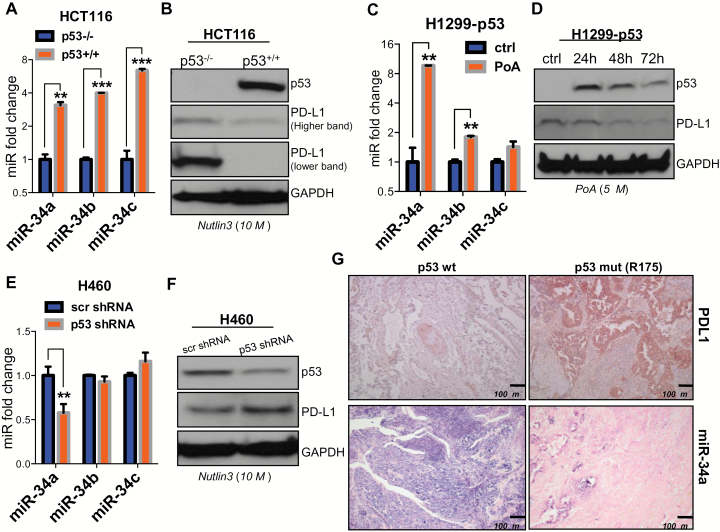
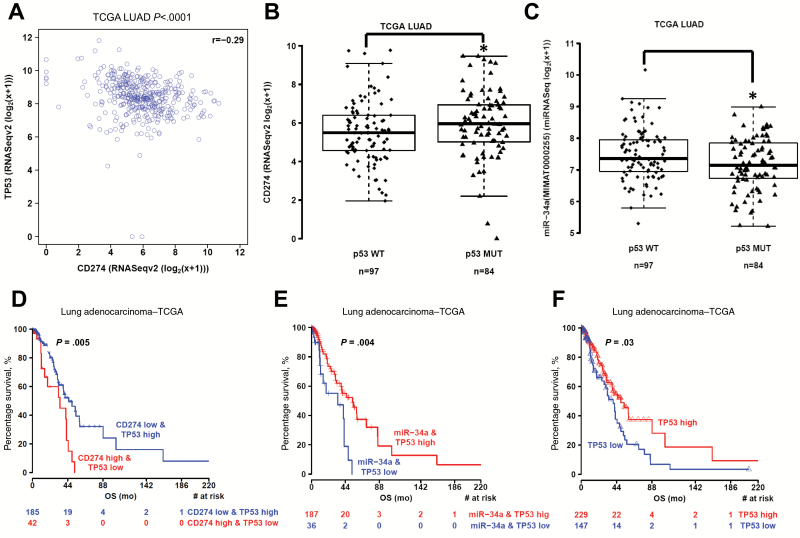
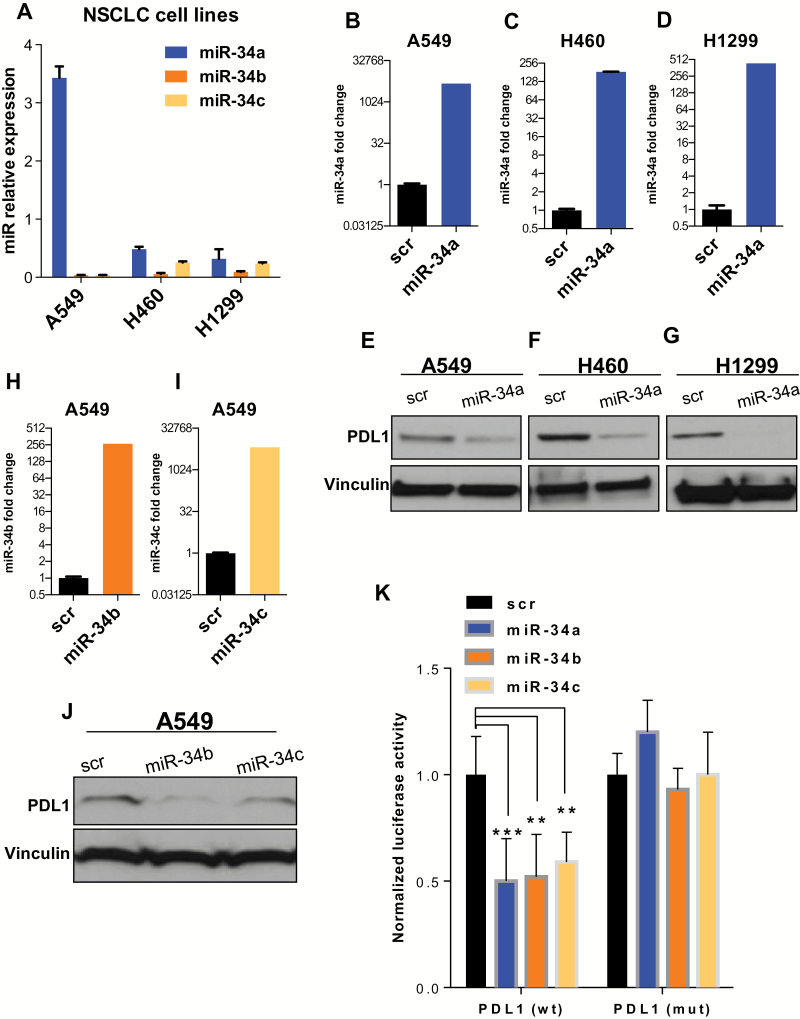
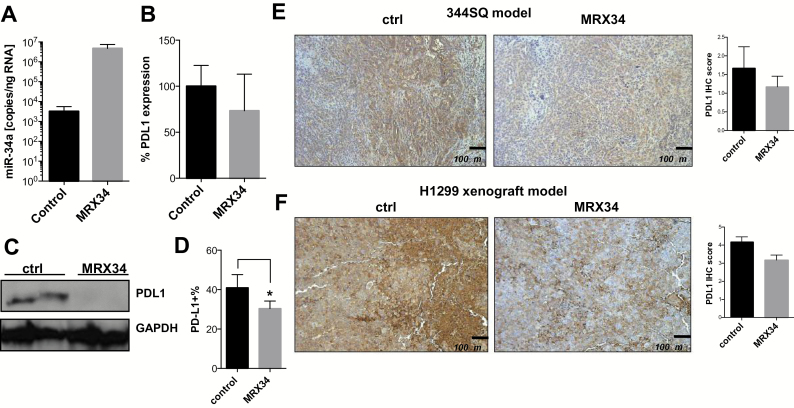
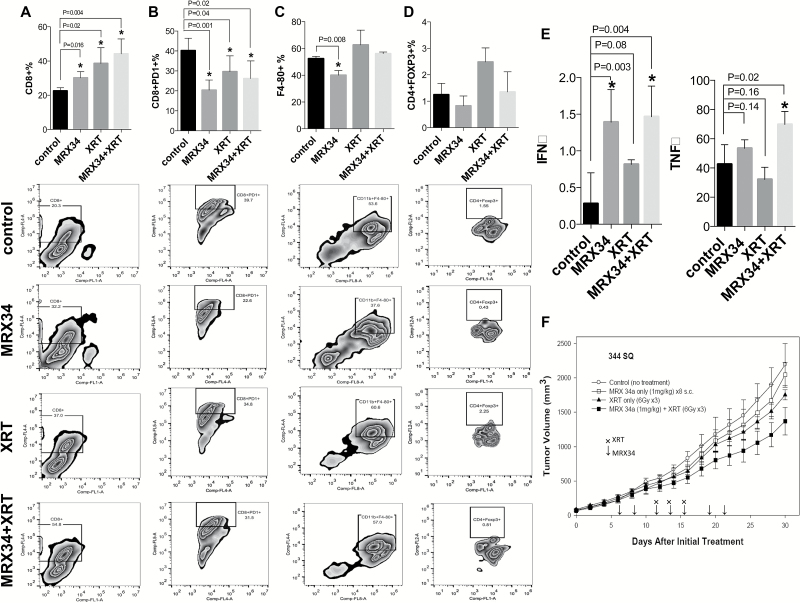
BACKGROUND: Although clinical studies have shown promise for targeting PD1/PDL1 signaling in non-small cell lung cancer (NSCLC), the regulation of PDL1 expression is poorly understood. Here, we show that PDL1 is regulated by p53 via miR-34. METHODS: p53 wild-type and p53-deficient cell lines (p53(-/-) and p53(+/+) HCT116, p53-inducible H1299, and p53-knockdown H460) were used to determine if p53 regulates PDL1 via miR-34. PDL1 and miR-34a expression were analyzed in samples from patients with NSCLC and mutated p53 vs wild-type p53 tumors from The Cancer Genome Atlas for Lung Adenocarcinoma (TCGA LUAD). We confirmed that PDL1 is a direct target of miR-34 with western blotting and luciferase assays and used a p53(R172HΔ)g/+K-ras(LA1/+) syngeneic mouse model (n = 12) to deliver miR-34a-loaded liposomes (MRX34) plus radiotherapy (XRT) and assessed PDL1 expression and tumor-infiltrating lymphocytes (TILs). A two-sided t test was applied to compare the mean between different treatments. RESULTS: We found that p53 regulates PDL1 via miR-34, which directly binds to the PDL1 3' untranslated region in models of NSCLC (fold-change luciferase activity to control group, mean for miR-34a = 0.50, SD = 0.2, P < .001; mean for miR-34b = 0.52, SD = 0.2, P = .006; and mean for miR-34c = 0.59, SD = 0.14, and P = .006). Therapeutic delivery of MRX34, currently the subject of a phase I clinical trial, promoted TILs (mean of CD8 expression percentage of control group = 22.5%, SD = 1.9%; mean of CD8 expression percentage of MRX34 = 30.1%, SD = 3.7%, P = .016, n = 4) and reduced CD8(+)PD1(+) cells in vivo (mean of CD8/PD1 expression percentage of control group = 40.2%, SD = 6.2%; mean of CD8/PD1 expression percentage of MRX34 = 20.3%, SD = 5.1%, P = .001, n = 4). Further, MRX34 plus XRT increased CD8(+) cell numbers more than either therapy alone (mean of CD8 expression percentage of MRX34 plus XRT to control group = 44.2%, SD = 8.7%, P = .004, n = 4). Finally, miR-34a delivery reduced the numbers of radiation-induced macrophages (mean of F4-80 expression percentage of control group = 52.4%, SD = 1.7%; mean of F4-80 expression percentage of MRX34 = 40.1%, SD = 3.5%, P = .008, n = 4) and T-regulatory cells. CONCLUSIONS: We identified a novel mechanism by which tumor immune evasion is regulated by p53/miR-34/PDL1 axis. Our results suggest that delivery of miRNAs with standard therapies, such as XRT, may represent a novel therapeutic approach for lung cancer.
Overview
The claims and statistics of this paper haven’t been checked yet.
Run the check — free, no account needed. It reads the open-access text and checks the sources it cites.
Integrity signals
Registry
Cites
Statistics
Figures
Verification
Claims the paper makes
The claims and statistics of this paper haven’t been checked yet.
Run the check — free, no account needed. It reads the open-access text and checks the sources it cites.
Claims other papers make about this one
Each is checked against this paper’s own text: does it say what the citing paper says it does?
The cited source says what the claim attributes to it.
In the citing paper
“In brief, the status of genes can influence tumor cells not only through the impact of wild-type gene loss but also through their effects on the TIME.”
From Recent advances in targeting the “undruggable” proteins: from drug discovery to clinical trials (2023) · cites this paper as [612]
In the citing paper
“On the other hand, activating wild-type proteins can increase IFNγ signaling and sensitize tumors to immune checkpoint inhibitors, whereas corresponding mutant proteins can reduce the efficacy of immune checkpoint inhibitors.612–614”
From Recent advances in targeting the “undruggable” proteins: from drug discovery to clinical trials (2023) · cites this paper as [612]
In the citing paper
“Some missense mutant proteins can lose the transcriptional effects of wild-type genes, such as keeping PDL1 expression levels low, thereby making cancer cells more susceptible to cytotoxic T cells and NK cells, limiting the immune system’s ability to attack cancer cells.”
From Recent advances in targeting the “undruggable” proteins: from drug discovery to clinical trials (2023) · cites this paper as [612]
Self-check
Percentages, sums and reported differences re-computed from the paper’s own numbers.
The self-check needs the paper’s full text.
Citations
Cites
PD-1 and PD-L1 Immune Checkpoint Blockade to Treat Breast Cancer
Hartkopf, A. D., Taran, F., Wallwiener, M., Walter, C. B., Krämer, B., Grischke, E., & Brucker, S. Y. (2016) · Breast Care · doi:10.1159/000453569 · Cited by 30,989
The blockade of immune checkpoints in cancer immunotherapy
Pardoll, D. M. (2012) · Nature Reviews Cancer · doi:10.1038/nrc3239 · Cited by 13,838
Safety, activity, and immune correlates of anti–PD-1 antibody in cancer
Topalian, S. L., Hodi, F. S., Brahmer, J. R., Gettinger, S. N., Smith, D. C., McDermott, D. F., Powderly, J. D., Carvajal, R. D., Sosman, J. A., Atkins, M. B., et al. (2012) · New England Journal of Medicine · doi:10.1056/nejmoa1200690 · Cited by 12,628
Safety and activity of anti-PD-L1 antibody in patients with advanced cancer
Brahmer, J. R., Tykodi, S. S., Chow, L. Q. M., Hwu, W.-J., Topalian, S. L., Hwu, P., Drake, C. G., Camacho, L. H., Kauh, J., Odunsi, K., et al. (2012) · New England Journal of Medicine · doi:10.1056/nejmoa1200694 · Cited by 7,945
Comprehensive molecular profiling of lung adenocarcinoma
The Cancer Genome Atlas Research Network (2014) · Nature · doi:10.1038/nature13385 · Cited by 5,732
Wherry, E. J. (2011) · Nature Immunology · doi:10.1038/ni.2035 · Cited by 4,062 · cited 2×
“Previous studies have suggested that PD1/PDL1 signaling induces T-cell exhaustion, a process described broadly as dysfunction and subsequent physical deletion of specific T-cells and more specifically as changed intratumoral levels of CD8+ T-cells, macrophages, MDSCs, and dendritic cells (47).”
BackgroundRestoring function in exhausted CD8 T cells during chronic viral infection
Barber, D. L., Wherry, E. J., Masopust, D., Zhu, B., Allison, J. P., Sharpe, A. H., Freeman, G. J., & Ahmed, R. (2005) · Nature · doi:10.1038/nature04444 · Cited by 4,057
Widespread changes in protein synthesis induced by microRNAs
Selbach, M., Schwanhäusser, B., Thierfelder, N., Fang, Z., Khanin, R., & Rajewsky, N. (2008) · Nature · doi:10.1038/nature07228 · Cited by 3,429
Iwai, Y., Ishida, M., Tanaka, Y., Okazaki, T., Honjo, T., & Minato, N. (2002) · Proceedings of the National Academy of Sciences · doi:10.1073/pnas.192461099 · Cited by 3,261
Requirement for p53 and p21 to Sustain G 2 Arrest After DNA Damage
Bunz, F., Dutriaux, A., Lengauer, C., Waldman, T., Zhou, S., Brown, J. P., Sedivy, J. M., Kinzler, K. W., & Vogelstein, B. (1998) · Science · doi:10.1126/science.282.5393.1497 · Cited by 2,803
Research works printed but not linked: 1
- 1998, Requirement for p53 and p21 to sustain G2 arrest after DNA damage, Science, 282, 1497
Cited by
Sorted by citations
MicroRNA therapeutics: towards a new era for the management of cancer and other diseases
Rupaimoole, R., & Slack, F. J. (2017) · Nature Reviews Drug Discovery · doi:10.1038/nrd.2016.246 · Cited by 4,741
Regulation and Function of the PD-L1 Checkpoint
Sun, C., Mezzadra, R., & Schumacher, T. N. (2018) · Immunity · doi:10.1016/j.immuni.2018.03.014 · Cited by 2,248
Immune checkpoint inhibitors: recent progress and potential biomarkers
Darvin, P., Toor, S. M., Sasidharan Nair, V., & Elkord, E. (2018) · Experimental & Molecular Medicine · doi:10.1038/s12276-018-0191-1 · Cited by 2,035
Kastenhuber, E. R., & Lowe, S. W. (2017) · Cell · doi:10.1016/j.cell.2017.08.028 · Cited by 1,906
PD-1/PD-L1 pathway: current researches in cancer.
Han, Y., Liu, D., & Li, L. (2020) · PubMed Central · Cited by 1,602
Metadata
- Authors
- Cortez, M. A., Ivan, C., Valdecanas, D., Wang, X., Peltier, H. J., Ye, Y., Araujo, L., Carbone, D. P., Shilo, K., Giri, D. K., Kelnar, K., Martin, D., Komaki, R., Gomez, D. R., Krishnan, S., Calin, G. A., Bader, A. G., & Welsh, J. W.
- Affiliations
- The University of Texas MD Anderson Cancer Center (US)
- Corresponding author
- Welsh, James W.
- ORCID
- Venue
- JNCI: Journal of the National Cancer Institute
- Publisher
- Oxford University Press (OUP)
- Published
- 2015-11-17
- Volume
- 108
- Issue
- 1
- ISSN
- 0027-8874 (ISSN-L)
- 1460-2105
- PMC
- PMC4862407
- OpenAlex
- W2173135538
- Cited by
- 683
- References
- 57
- Citations by year
- 2026: 42 · 2025: 53 · 2024: 72 · 2023: 66 · 2022: 72 · 2021: 94 · 2020: 86 · 2019: 61 · 2018: 62 · 2017: 50 · 2016: 24
- FWCI
- 19.80
- Type
- journal article
- Language
- en
- Open access
- bronze
- doi.org
- Locations
- JNCI Journal of the National Cancer Institute (publishedVersion)
- PubMed Central (publishedVersion, cc-by)
- PubMed (publishedVersion)
- HighWire Press Open Archive (submittedVersion)
- Funders
- U.S. Department of Defense (W81XWH0610303, W81XWH, W81XWH-07-1-03060)
- Cancer Prevention and Research Institute of Texas (CA016672)
- Doctors Cancer Foundation
- Lung Cancer Research Foundation
- National Institutes of Health (UH2TR000943, W81XWH, CA- 016672, 1UH2TR00943-01)
- University of Texas MD Anderson Cancer Center ((CA016672), grant CA016672)
- National Cancer Institute (Grant CA016672, CA 016672, CA016672 to, 1UH2TR00943-01, R01CA182905, P30CA016672)
- National Center for Advancing Translational Sciences (1UH2TR00943-01)
- Topics
- Health Sciences › Medicine › Oncology › Cancer Immunotherapy and Biomarkers
- Life Sciences › Biochemistry, Genetics and Molecular Biology › Cancer Research › MicroRNA in disease regulation
- Health Sciences › Medicine › Oncology › Cancer-related Molecular Pathways
- Keywords
- PD-L1, p53, miR-34, non-small cell lung cancer, lung adenocarcinoma, miR-34a, miR-34b, miR-34c, 3' untranslated region, tumor-infiltrating lymphocytes, radiotherapy, immune checkpoint, TP53 mutation
- MeSH terms
- Adenocarcinoma of Lung, Adenocarcinoma, Animals, Carcinoma, Non-Small-Cell Lung, Liposomes, Lung Neoplasms, Neoplasms, Experimental, Gene Expression Regulation, Neoplastic, Tumor Suppressor Protein p53, CD8 Antigens, MicroRNAs, Cell Line, Tumor, Cell Proliferation, Mice, B7-H1 Antigen
About these checks
Registry, retraction, Cites and statistics results are computed, not judged, with one exception: a printed reference that no index lists is read once by a model before it counts as a citation error. Claims are extracted by a model and kept only when their quote appears verbatim in the text; each cited source is then checked, with a model’s help, for whether it says what the claim relies on. Those verdicts can be wrong — read the claim’s quote and the cited source before relying on one.
Statistics and arithmetic are recomputed, not judged.
Confidence bands are shown only for fields calibrated on our annotated test set. None is calibrated yet, so no band is shown.
What counts as a claim ›How we measure confidence ›How we check this ›
Are you an author, or do you see a problem with this page? Request a review
