

Radiobiological description of the LET dependence of the cell survival of oxic and anoxic cells irradiated by carbon ions
Open accessThe DOI matches its Crossref record; 24 of the 24 references it cites were found in a registry or an index.
Abstract
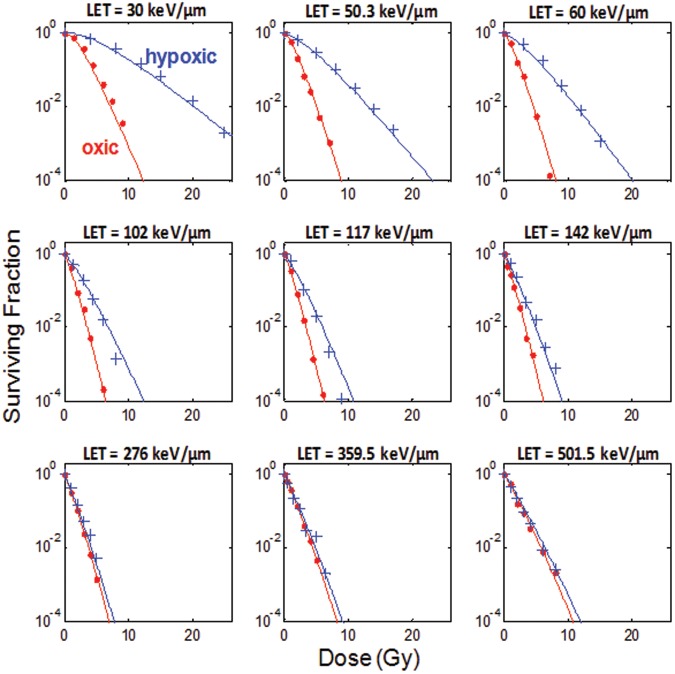
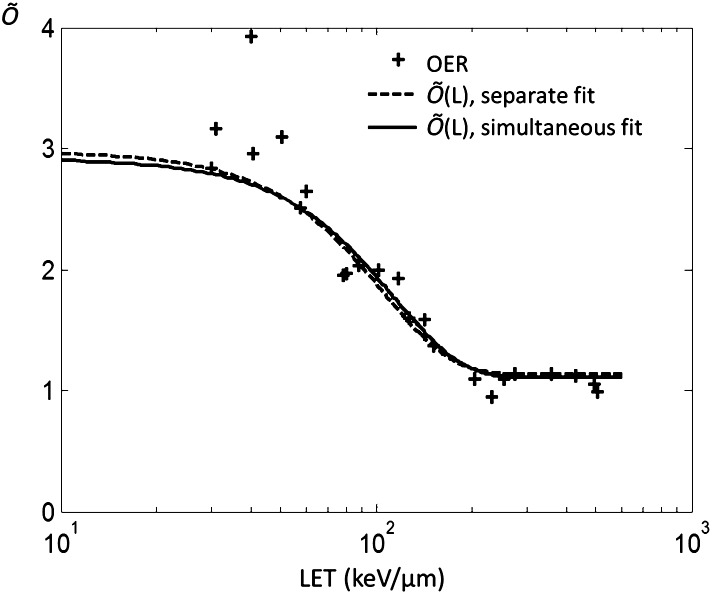
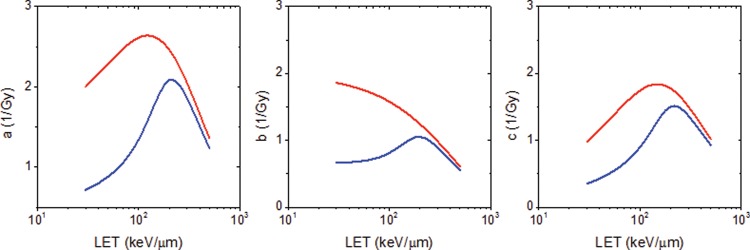
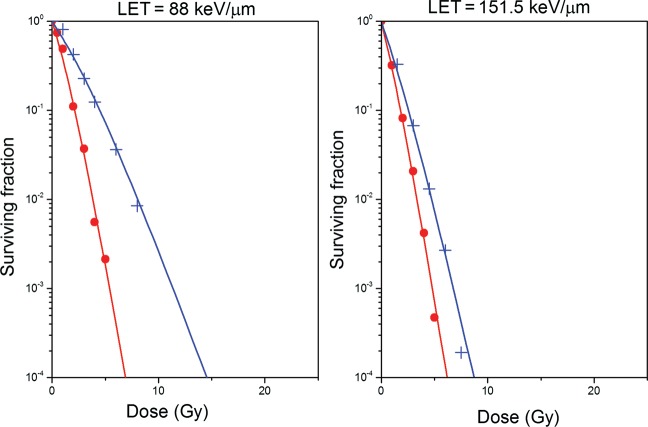
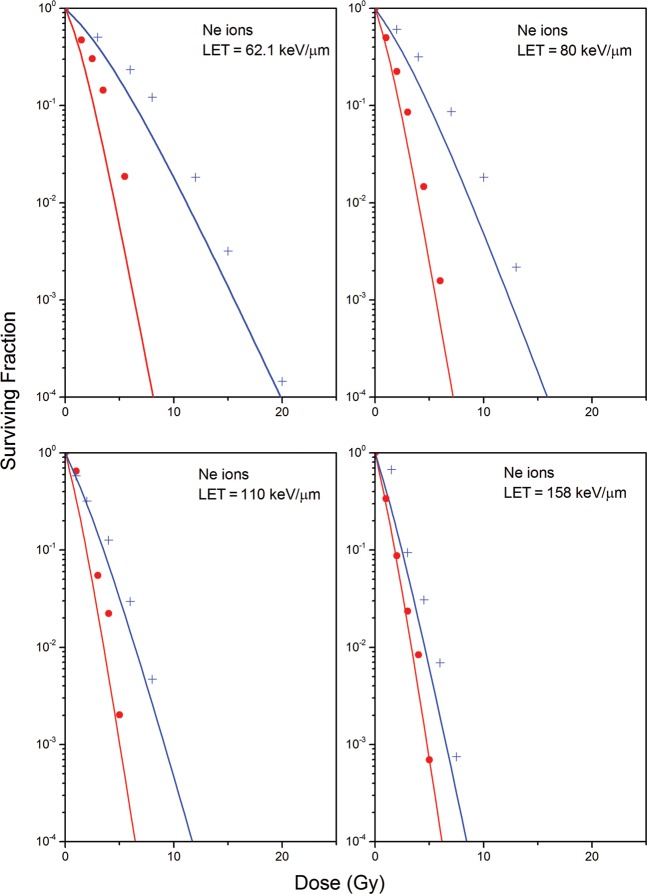
Light-ion radiation therapy against hypoxic tumors is highly curative due to reduced dependence on the presence of oxygen in the tumor at elevated linear energy transfer (LET) towards the Bragg peak. Clinical ion beams using spread-out Bragg peak (SOBP) are characterized by a wide spectrum of LET values. Accurate treatment optimization requires a method that can account for influence of the variation in response for a broad range of tumor hypoxia, absorbed doses and LETs. This paper presents a parameterization of the Repairable Conditionally-Repairable (RCR) cell survival model that can describe the survival of oxic and hypoxic cells over a wide range of LET values, and investigates the relationship between hypoxic radiation resistance and LET. The biological response model was tested by fitting cell survival data under oxic and anoxic conditions for V79 cells irradiated with LETs within the range of 30-500 keV/µm. The model provides good agreement with experimental cell survival data for the range of LET investigated, confirming the robustness of the parameterization method. This new version of the RCR model is suitable for describing the biological response of mixed populations of oxic and hypoxic cells and at the same time taking into account the distribution of doses and LETs in the incident beam and its variation with depth in tissue. The model offers a versatile tool for the selection of LET and dose required in the optimization of the therapeutic effect, without severely affecting normal tissue in realistic tumors presenting highly heterogeneous oxic and hypoxic regions.
Overview
The claims and statistics of this paper haven’t been checked yet.
Free: it reads the open-access text and checks the first 5 claims that cite a source we can check. Create a free account to check every claim.
Integrity signals
Registry
Cites
Statistics
Figures
Verification
Claims the paper makes
The claims and statistics of this paper haven’t been checked yet.
Free: it reads the open-access text and checks the first 5 claims that cite a source we can check. Create a free account to check every claim.
Claims other papers make about this one
Each is checked against this paper’s own text: does it say what the citing paper says it does?
The source backs part of the claim, not all of it — or backs it for a different population, condition or comparison.
In the citing paper
“In this work, the database describing cell survival for ion beams with Z up to 8 was extended to heavier ions, after reproducing experimental survival curves taken from the literature for Ne-ions (LET values: 28, 42, 62, 80, 91, 110, 158, 294, 360, 448 and 452 keV µm -1 ) [23,24], Si-ions (LET: 55 keV µm -1 ) [25], Ar-ions (LET: 85 keV µm -1 ) [26] and Fe-ions (LET: 200, 440, 797 and 860 keV µm -1”
From Radiobiological damage by space radiation: extension of the BIANCA model to heavy ions up to iron, and pilot application to cosmic ray exposure (2022) · cites this paper as [24]
Experimental — accuracy not yet measured
Self-check
Percentages, sums and reported differences re-computed from the paper’s own numbers.
The self-check needs the paper’s full text.
Citations
Cites
Nordsmark, M., Overgaard, M., & Overgaard, J. (1996) · Radiotherapy and Oncology · doi:10.1016/s0167-8140(96)91811-3 · Cited by 942 · cited 1×
“This is an important aspect for developing successful ion treatments, since it has been shown that tumors contain subpopulations of hypoxic cells and that their presence has been associated with poor outcome for treatments with low LET radiation [17–19].”
BackgroundLow-dose hypersensitivity: current status and possible mechanisms
Joiner, M. C., Marples, B., Lambin, P., Short, S. C., & Turesson, I. (2001) · International Journal of Radiation Oncology*Biology*Physics · doi:10.1016/s0360-3016(00)01471-1 · Cited by 570 · cited 2×
“Furthermore, the LQ model is not able to describe the response in cases of low-dose hypersensitivity without slight modifications [14].”
MethodOxygenation of head and neck cancer: changes during radiotherapy and impact on treatment outcome
Brizel, D. M., Dodge, R. K., Clough, R. W., & Dewhirst, M. W. (1999) · Radiotherapy and Oncology · doi:10.1016/s0167-8140(99)00102-4 · Cited by 548 · cited 1×
“This is an important aspect for developing successful ion treatments, since it has been shown that tumors contain subpopulations of hypoxic cells and that their presence has been associated with poor outcome for treatments with low LET radiation [17–19].”
BackgroundFurusawa, Y., Fukutsu, K., Aoki, M., Itsukaichi, H., Eguchi-Kasai, K., Ohara, H., Yatagai, F., Kanai, T., & Ando, K. (2000) · Radiation Research · doi:10.1667/0033-7587(2000)154[0485:ioaahc]2.0.co;2 · Cited by 474 · cited 5×
“The available 23 oxic and 23 hypoxic datasets were obtained by irradiating the cells with C in vitro at an average of five dose levels, ranging from 1–25 Gy [11,12].”
BackgroundMethodSelf-citationProton vs carbon ion beams in the definitive radiation treatment of cancer patients
Suit, H., DeLaney, T., Goldberg, S., Paganetti, H., Clasie, B., Gerweck, L., Niemierko, A., Hall, E., Flanz, J., Hallman, J., et al. (2010) · Radiotherapy and Oncology · doi:10.1016/j.radonc.2010.01.015 · Cited by 290 · cited 1×
“The encouraging results from the most experienced ion therapy centres in Heidelberg (Germany), Chiba and Hyogo (Japan) support the potential of carbon ions in terms of physical dose distributions and increased radiobiological effectiveness [1, 2].”
BackgroundBarendsen, G. W., Koot, C. J., van Kersen, G. R., Bewley, D. K., Field, S. B., & Parnell, C. J. (1966) · International Journal of Radiation Biology and Related Studies in Physics, Chemistry and Medicine · doi:10.1080/09553006614550421 · Cited by 259 · cited 1×
“The dependence of OER on LET has been studied in vitro for different ion types [9–13].”
BackgroundInactivation of Human Kidney Cells by High-Energy Monoenergetic Heavy-Ion Beams
Blakely, E. A., Tobias, C. A., Yang, T. C. H., Smith, K. C., & Lyman, J. T. (1979) · Radiation Research · doi:10.2307/3575121 · Cited by 239 · cited 1×
“The dependence of OER on LET has been studied in vitro for different ion types [9–13].”
BackgroundINACTIVATION OF HUMAN KIDNEY CELLS BY HIGH-ENERGY MONOENERGETIC HEAVY-ION BEAMS
Blakely, E. A. (1979) · eScholarship (California Digital Library) · Cited by 216
Movsas, B., Chapman, J. D., Hanlon, A. L., Horwitz, E. M., Greenberg, R. E., Stobbe, C., Hanks, G. E., & Pollack, A. (2002) · Urology · doi:10.1016/s0090-4295(02)01858-7 · Cited by 188 · cited 1×
“This is an important aspect for developing successful ion treatments, since it has been shown that tumors contain subpopulations of hypoxic cells and that their presence has been associated with poor outcome for treatments with low LET radiation [17–19].”
BackgroundDose- and LET-painting with particle therapy
Bassler, N., Jäkel, O., Søndergaard, C. S., & Petersen, J. B. (2010) · Acta Oncologica · doi:10.3109/0284186x.2010.510640 · Cited by 175 · cited 1×
“[23] has recently presented an analysis of dose- and LET-painting with particle therapy, taking into account the variation of the LETs along the ion track and assuming a fixed OER calculated at 10% survival as a dose-modifying factor for each LET in the distribution.”
Background
Research works printed but not linked: 3
- -1, Journal of Radiation Research, -1, MASTER, 10.1269/jrr.10129 · DOI
- 1966, International journal of radiation biology, 10, 317, 10.1080/09553006614550421 · DOI · Paper page
- Furusawa Y Fukutsu K Aoki M Corrections: in the article ‘Inactivation of Aerobic and Hypoxic Cells from Three Different Cell Lines by Accelerated 3He-, 12C- and 20Ne-Ion Beams’by Furusawa et al. Radiat Res 2012 177 129 31 11025645
Cited by
RBE and related modeling in carbon-ion therapy
Karger, C. P., & Peschke, P. (2017) · Physics in Medicine & Biology · doi:10.1088/1361-6560/aa9102 · Cited by 211
Review of Functionalized Nanomaterials for Photothermal Therapy of Cancers
Bian, W., Wang, Y., Pan, Z., Chen, N., Li, X., Wong, W.-L., Liu, X., He, Y., Zhang, K., & Lu, Y.-J. (2021) · ACS Applied Nano Materials · doi:10.1021/acsanm.1c01903 · Cited by 194
LET-painting increases tumour control probability in hypoxic tumours
Bassler, N., Toftegaard, J., Lühr, A., Sørensen, B. S., Scifoni, E., Krämer, M., Jäkel, O., Mortensen, L. S., Overgaard, J., & Petersen, J. B. (2013) · Acta Oncologica · doi:10.3109/0284186x.2013.832835 · Cited by 160
A systematic review on the usage of averaged LET in radiation biology for particle therapy
Kalholm, F., Grzanka, L., Tranéus, E., & Bassler, N. (2021) · Radiotherapy and Oncology · doi:10.1016/j.radonc.2021.04.007 · Cited by 138
Klein, C., Đokić, I., Mairani, A., Mein, S., Brons, S., Bolívar, P. H., Haberer, T., Jäkel, O., Zimmermann, A., Zenke, F. T., et al. (2017) · Radiation Oncology · doi:10.1186/s13014-017-0939-0 · Cited by 112
“It has been further reported that cell killing by high-LET radiation might be less dependent on the tumor oxygen status [9, 15].”
BackgroundAntonovic, L., Lindblom, E. K., Daşu, A., Bassler, N., Furusawa, Y., & Toma-Daşu, I. (2014) · Journal of Radiation Research · doi:10.1093/jrr/rru020 · Cited by 79
“and a0, a1, b1, c0, c1, Ln and Ld are free parameters depending on both the intrinsic radiosensitivity of the cells and the ion type [24].”
BackgroundSelf-citationZhao, Y., Chen, B., Kankala, R. K., Wang, S., & Chen, A. (2020) · ACS Biomaterials Science & Engineering · doi:10.1021/acsbiomaterials.0c00830 · Cited by 72
Wozny, A., Lauret, A., Battiston-Montagne, P., Guy, J., Beuve, M., Cunha, M., Saintigny, Y., Blond, E., Magné, N., Lalle, P., et al. (2017) · British Journal of Cancer · doi:10.1038/bjc.2017.100 · Cited by 68
“As expected, and previously reported in CHO-K1 (Antonovic et al, 2013), we observed in HNSCC cell lines on one hand that hypoxia induces radioresistance after photon exposure, thus leading to an OER 41 and on the other hand, that the absence of oxygen effect for FaDuCD44low and SQ20BCD44low cell…”
ResultMoore, S., Stanley, F. K. T., & Goodarzi, A. A. (2014) · DNA repair · doi:10.1016/j.dnarep.2014.01.014 · Cited by 72
The Role of Hypoxia and SRC Tyrosine Kinase in Glioblastoma Invasiveness and Radioresistance
Torrisi, F., Vicario, N., Spitale, F. M., Cammarata, F. P., Minafra, L., Salvatorelli, L., Russo, G. I., Cuttone, G., Valable, S., Gulino, R., et al. (2020) · Cancers · doi:10.3390/cancers12102860 · Cited by 62
Influence of chronic hypoxia and radiation quality on cell survival
Ma, N., Tinganelli, W., Maier, A., Durante, M., & Kraft-Weyrather, W. (2013) · Journal of Radiation Research · doi:10.1093/jrr/rrs135 · Cited by 60
“In particular, several studies suggest that the effectiveness of high linear energy transfer (LET) radiation on tumor-cell killing is less dependent on oxygen concentration than low-LET [15–18].”
BackgroundImpact of variable RBE on proton fractionation
Daşu, A., & Toma-Daşu, I. (2012) · Medical Physics · doi:10.1118/1.4769417 · Cited by 55
Chondrosarcoma Resistance to Radiation Therapy: Origins and Potential Therapeutic Solutions
Gilbert, A., Tudor, M., Montanari, J., Commenchail, K., Savu, D., Lesueur, P., & Chevalier, F. (2023) · Cancers · doi:10.3390/cancers15071962 · Cited by 54
Bellinzona, V. E., Cordoni, F., Missiaggia, M., Tommasino, F., Scifoni, E., Tessa, C. L., & Attili, A. (2021) · Frontiers in Physics · doi:10.3389/fphy.2020.578492 · Cited by 57
High LET 56Fe ion irradiation induces tissue‐specific changes in DNA methylation in the mouse
Lima, F., Ding, D., Goetz, W., Yang, A. J., & Baulch, J. E. (2013) · Environmental and Molecular Mutagenesis · doi:10.1002/em.21832 · Cited by 51
“Further, it has been shown that the quality, or linear energy transfer (LET), of the radiation can alter the radiation response [Brooks et al., 2001; Hada and Sutherland, 2006; Antonovic et al., 2013].”
BackgroundValable, S., Gérault, A. N., Lambert, G., Leblond, M. M., Anfray, C., Toutain, J., Bordji, K., Petit, E., Bernaudin, M., & Pérès, E. A. (2020) · Cancers · doi:10.3390/cancers12082019 · Cited by 44
“Interestingly, OER is inversely correlated with LET, suggesting a potential clinical advantage of high-LET radiotherapy with heavy ion beams such as CIRT compared to low-LET photon or proton irradiation [17,18].”
BackgroundModelling Tumour Oxygenation, Reoxygenation and Implications on Treatment Outcome
Toma-Daşu, I., & Daşu, A. (2013) · Computational and Mathematical Methods in Medicine · doi:10.1155/2013/141087 · Cited by 48
“New models for taking into account the response of hypoxic cells to high LET radiation are being developed [90] and will be tested with”
BackgroundHabermehl, D., Ilicic, K., Dehne, S., Rieken, S., Orschiedt, L., Brons, S., Haberer, T., Weber, K., Debus, J., & Combs, S. E. (2014) · PLoS ONE · doi:10.1371/journal.pone.0113591 · Cited by 43
“High-LET irradiation exerts a higher relative biological effectiveness (RBE) in tumour cells which therefore can overcome relative radio-resistance induced by hypoxia through induction of clustered DNA double-strand breaks [11, 12].”
BackgroundHollow Mesoporous Tantalum Oxide Based Nanospheres for Triple Sensitization of Radiotherapy
Peng, C., Yu, L., Chen, Y., Qian, X., Luo, W., Chen, S., Zhang, S., Dan, Q., Zhang, L., Li, M., et al. (2019) · ACS Applied Materials & Interfaces · doi:10.1021/acsami.9b20053 · Cited by 37
Strigari, L., Torriani, F., Manganaro, L., Inaniwa, T., Dalmasso, F., Cirio, R., & Attili, A. (2017) · Physics in Medicine and Biology · doi:10.1088/1361-6560/aa89ae · Cited by 40
“In this case, an additional comparison with the model proposed in (Antonovic et al. 2013) is also reported.”
BackgroundResultA generalized target theory and its applications
Zhao, L., Mi, D., Hu, B., & Sun, Y. (2015) · Scientific Reports · doi:10.1038/srep14568 · Cited by 40
Wozny, A., Alphonse, G., Cassard, A., Malésys, C., Louati, S., Beuve, M., Lalle, P., Ardail, D., Nakajima, T., & Rodriguez‐Lafrasse, C. (2020) · Scientific Reports · doi:10.1038/s41598-020-78354-7 · Cited by 36
Inaniwa, T., Kanematsu, N., Shinoto, M., Koto, M., & Yamada, S. (2021) · Physics in Medicine and Biology · doi:10.1088/1361-6560/ac29cc · Cited by 35
Reitkopf, S., Confino, H., Schmidt, M. T., Cooks, T., Efrati, M., Arazi, L., Rath‐Wolfson, L., Marshak, G., Kelson, I., & Keisari, Y. (2014) · International Journal of Radiation Biology · doi:10.3109/09553002.2015.959666 · Cited by 29
“As with heavy ions, the eff ect of alpha particles is less sensitive to the cell oxygenation state compared to photons and electrons (Tobias et al. 1982, Antonovic et al. 2013, Tinganelli et al. 2013).”
BackgroundRashid, R. A., Razak, K. A., Geso, M., Abdullah, R., Dollah, N., & Rahman, W. N. (2018) · BioNanoScience · doi:10.1007/s12668-018-0524-5 · Cited by 27
Glowa, C., Peschke, P., Brons, S., Neels, O. C., Kopka, K., Debus, J., & Karger, C. P. (2017) · Radiation Oncology · doi:10.1186/s13014-017-0914-9 · Cited by 26
“In vitro the OER for high LET irradiations decreases with increasing LET and is expected to be negligible at LETs higher than 200 keV/μm [31].”
Radiosensitivity and relative biological effectiveness based on a generalized target model
Zhao, L., Wu, D., Mi, D., & Sun, Y. (2016) · Journal of Radiation Research · doi:10.1093/jrr/rrw062 · Cited by 23
“The current models used in Heidelberg (Germany), Chiba or Hyogo (Japan) are mainly based on the linear–quadratic (LQ) model [14], with the cell survival (S):”
MethodDahle, T. J., Rusten, E., Stokkevåg, C. H., Silvoniemi, A., Mairani, A., Fjæra, L. F., Rørvik, E., Henjum, H., Wright, P., Boer, C. G., et al. (2020) · Physica Medica · doi:10.1016/j.ejmp.2020.07.003 · Cited by 19
Sato, T., & Hamada, N. (2014) · PLoS ONE · doi:10.1371/journal.pone.0114056 · Cited by 18
Ramos, R. L., Embriaco, A., Carante, M. P., Ferrari, A., Sala, P., Vercesi, V., & Ballarini, F. (2022) · Journal of Radiological Protection · doi:10.1088/1361-6498/ac6991 · Cited by 17
“…experimental survival curves taken from the literature for Ne-ions (LET values: 28, 42, 62, 80, 91, 110, 158, 294, 360, 448 and 452 keV µ m − 1 ) [23, 24], Si-ions (LET: 55 keV µ m − 1 ) [25], Ar-ions (LET: 85 keV µ m − 1 ) [26] and Fe-ions (LET: 200, 440, 797 and 860 keV µ m − 1 ) [25, 26].”
Behnaz, P., Raisali, G., Alirezapour, B., & Mirzaii, M. (2018) · International Journal of Radiation Biology · doi:10.1080/09553002.2018.1440329 · Cited by 17
“Although as mentioned by Antonovic et al. (2012) and reported by Ito et al. (2006) and also by Hirayama et al. (2009) for high LET particles, DSBs induced by direct effects are dominant with respect to indirect induced DSBs, but the lower calculated value of DSBs compared to the experimental…”
MethodResultRBE for proton radiation therapy – a Nordic view in the international perspective
Toma-Daşu, I., Daşu, A., Vestergaard, A., Nyström, P. W., & Nyström, H. (2020) · Acta Oncologica · doi:10.1080/0284186x.2020.1826573 · Cited by 17
Radiotoxicity of alpha particles versus high and low energy electrons in hypoxic cancer cells
Runge, R., Oehme, L., Kotzerke, J., Freudenberg, R., & Maucksch, U. (2018) · Nuklearmedizin - NuclearMedicine · doi:10.3413/nukmed-0950-17-12 · Cited by 15
“The OER decreases with increasing LET because high LET α-particles or Auger electrons cause primarily direct DNA lesions, leading to oxygen-independent tumor cell damage (2, 33).”
BackgroundManganaro, L., Russo, G., Bourhaleb, F., Fausti, F., Giordanengo, S., Monaco, V., Sacchi, R., Vignati, A., Cirio, R., & Attili, A. (2018) · Physics in Medicine and Biology · doi:10.1088/1361-6560/aab697 · Cited by 14
Kalospyros, S. A., Nikitaki, Z., Kyriakou, I., Kokkoris, M., Emfietzoglou, D., & Georgakilas, A. G. (2021) · Molecules · doi:10.3390/molecules26040840 · Cited by 14
Chishti, A. A., Hellweg, C. E., Berger, T., Baumstark‐Khan, C., Feles, S., Kätzel, T., & Reitz, G. (2015) · Life Sciences in Space Research · doi:10.1016/j.lssr.2014.12.005 · Cited by 13
“For a wide range of mammalian cells including HEK cells, the RBE for cell killing reaches its maximum in this LET range (Antonovic et al., 2013; Hellweg et al., 2007b; Hu et al., 2014).”
BackgroundSunada, S., Hirakawa, H., Fujimori, A., Uesaka, M., & Okayasu, R. (2017) · Radiation Research · doi:10.1667/rr14824.1 · Cited by 13
“that the OER was also dependent on oxygen concentration (4, 15, 20), further investigation may be necessary with”
BackgroundCheng, P.-C., Huang, C.-C., Chiang, P.-F., Lin, C.-N., Li, L., Lee, T., Lin, B., Chen, I., Chang, K., Fan, C., et al. (2014) · International Journal of Radiation Biology · doi:10.3109/09553002.2014.911989 · Cited by 12
“The survivals of oxic and hypoxic cells change over a wide range of LET values, and severely affect normal tissue in realistic tumors presenting highly heterogeneous oxic and hypoxic regions (Falzone et al. 2006; Antonovic et al. 2013).”
BackgroundAutsavapromporn, N., Kobayashi, A., Liu, C., Jaikang, C., Ahmad, T. A. T., Oikawa, M., & Konishi, T. (2021) · Radiation Research · doi:10.1667/rade-21-00112.1 · Cited by 11
Heger, G., Dumančić, M., Luz, I., Vatarescu, M., Weizman, N., Miller, B. W., Cooks, T., & Arazi, L. (2024) · Medical Physics · doi:10.1002/mp.17020 · Cited by 11
A DNA Repair-Based Model of Cell Survival with Important Clinical Consequences
Brahme, A. (2020) · Radiation Research · doi:10.1667/rade-20-00052.1 · Cited by 12
“15A (40, 41), and is quite similar to those in Figs.”
ResultSelf-citationZhou, X., Xie, J., Tao, L., Xin, Z., Feng-Wu, Z. H. A. O., Lu, X.-H., Zhao, M., Wang, L. F., & Liang, J.-P. (2013) · BMC Microbiology · doi:10.1186/1471-2180-13-213 · Cited by 9
Relative clinical effectiveness of carbon ion radiotherapy: theoretical modelling for H&N tumours
Antonovic, L., Daşu, A., Furusawa, Y., & Toma-Daşu, I. (2015) · Journal of Radiation Research · doi:10.1093/jrr/rrv016 · Cited by 8
“The model chosen for the calculation of the surviving fraction of cells per voxel is the LET-parameterized repairable–conditionally repairable damage (RCR) cell-survival model adapted to account for oxygenation [15, 18].”
MethodSelf-citationPyTRiP - a toolbox and GUI for the proton/ion therapy planning system TRiP
Toftegaard, J., Petersen, J. B. B., & Bassler, N. (2014) · Journal of Physics Conference Series · doi:10.1088/1742-6596/489/1/012045 · Cited by 7
Modeling the oxygen effect in DNA strand break induced by gamma-rays with TOPAS-nBio
D-Kondo, J. N., Masilela, T. A. M., Shin, W., Faddegon, B., LaVerne, J. A., Schuemann, J., & Ramos‐Méndez, J. (2024) · Physics in Medicine and Biology · doi:10.1088/1361-6560/ad87a7 · Cited by 6
“The impact of oxygen on biological effect is widely known and supported by experimental results (Epp et al 1968, Frankenberg et al 1981, Révész and Palcic 1985, Palcic et al 1989; Antonovic et al 2013).”
Wang, Y., Guan, H., Xie, D.-F., Xie, Y., Liu, X.-D., Wang, Q., Sui, L., Song, M. S., Zhang, H., Zhou, J., et al. (2016) · PLoS ONE · doi:10.1371/journal.pone.0163896 · Cited by 7
Brahme, A. (2014) · Elsevier eBooks · doi:10.1016/b978-0-444-53632-7.00807-8 · Cited by 6
Self-citationIto, A., Kitabatake, S., Furuichi, W., Takase, N., Nakahara, T., Akiyama, T., Yoshida, S., Kusano, Y., Furusawa, Y., & Hirayama, R. (2024) · Radiation Research · doi:10.1667/rade-23-00046.1 · Cited by 4
Self-citationInaniwa, T., Masuda, T., & Kanematsu, N. (2025) · Physics in Medicine and Biology · doi:10.1088/1361-6560/ada5a5 · Cited by 4
“…treatments against hypoxic tumors, several biological models incorporating hypoxia-induced radioresistance have been developed for ion-beam radiotherapy (Wenzl and Wilkens 2011a, 2011b, Antonovic et al 2013, 2014, Scifoni et al 2013, Tinganelli et al 2013, Bopp et al 2016, Strigari et al 2018).”
Intra-operative radiation therapy with laser-accelerated carbon ions
Mur, P., Bellido, P., Seimetz, M., Lera, R., la Cruz, A. R.-D., Galán, M., Roso, L., Sánchez, F., & Benlloch, J. (2017) · Journal of Instrumentation · doi:10.1088/1748-0221/12/03/c03083 · Cited by 3
“As a simple, but realistic example RBE and OER have been computed from LET using direct, published measurements [13, 14] for the specific case of V79 cells.”
MethodFormulation of Time-Dependent Cell Survival with Saturable Repairability of Radiation Damage
Sakae, T., Takada, K., Kamizawa, S., Terunuma, T., & Andō, K. (2023) · Radiation Research · doi:10.1667/rade-21-00066.1 · Cited by 2
“Lethal and repair model [lethal and potentially lethal (LPL) (23, 59), Repair mis-repair (60), Repairable-conditionally repairable (35, 61, 62)]; and 6.”
BackgroundHeavy-Ion Carbon Radiation Regulates Long Non-Coding RNAs in Cervical Cancer HeLa Cells
Yang, Z. H., Gu, Q., Wang, Y., Liu, B., Zhou, G., Shao, C., Ruan, J., Jia, R., & Ge, S. (2019) · Journal of Cancer · doi:10.7150/jca.30846 · Cited by 2
“For instance, LET radiation causes less damage to the normal cells around the tumor than X-ray irradiation and causes greater damage to the malignant cells by depositing higher energy within the tumor [4, 5].”
BackgroundFeasibility study of LYSO-SiPM in-beam TOF-PET for dose monitoring in carbon-ion radiotherapy
Zhang, Q., Liu, Z., Shan, C., Huang, C., Guo, D., Wang, P., Liu, R., Zhang, Q., Yin, Y., & Ding, B. (2025) · Physics in Medicine and Biology · doi:10.1088/1361-6560/adfe30 · Cited by 1
“Carbon ions have a lower oxygen enhancement ratio than lighter ions, including protons, enabling superior therapeutic efficacy in hypoxic and deep-seated tumours (Antonovic et al 2013, Tinganelli et al 2015).”
Modeling the biological effects of combined radiation exposures
Parousis-Paraskevas, O., Gkikoudi, A., Wójcik, A., & Georgakilas, A. G. (2026) · International Journal of Radiation Biology · doi:10.1080/09553002.2026.2699720 · Cited by 1
“Lind et al.’s (2003) RCR model was later extended to light-ion LET dependence and carbon-ion oxygen effects (Wedenberg et al. 2010; Antonovic et al. 2013), with focus shifting toward ion-therapy parameterization instead of combined-exposure validation.”
Yoo, D., Kim, J., Min, B. J., Rah, C. J., Lee, E., Jang, W. I., & Kim, E. H. (2022) · Journal of the Korean Physical Society · doi:10.1007/s40042-022-00444-8
Toshito, T., & Sakama, M. (2023) · Elsevier eBooks · doi:10.1016/b978-0-323-99191-9.00028-1
Anti-Glioma Agents and Hyperbaric Oxygen for Prospective Therapeutic Approaches
Pucko, E. B., Godlewski, J., Kazmierczak, N., & Ostrowski, R. P. (2026) · International Journal of Molecular Sciences · doi:10.3390/ijms27198504
“However, even in largely investigational approaches using high-LET radiation, which is much less oxygen-dependent, therapeutic effectiveness remains somewhat oxygen-dependent due to LET heterogeneity within the radiation beam and the presence of extremely hypoxic tumor regions [102,103].”
Metadata
- Authors
- Antonovic, L., Brahme, A., Furusawa, Y., & Toma-Dasu, I.
- Affiliations
- Stockholm University (SE)
- Karolinska Institutet (SE)
- National Institute of Radiological Sciences (JP)
- ORCID
- Furusawa, Y.
- Venue
- Journal of Radiation Research
- Publisher
- Oxford University Press (OUP)
- Published
- 2012-08-21
- Volume
- 54
- Issue
- 1
- Pages
- 18-26
- ISSN
- 0449-3060 (ISSN-L)
- 1349-9157
- PMC
- PMC3534272
- OpenAlex
- W2170033793
- Semantic Scholar
- 9b36f829ec96322b73d0f13140d165bee764ecf5
- Cited by
- 60
- References
- 23
- Citations by year
- 2026: 2 · 2025: 2 · 2024: 3 · 2023: 3 · 2022: 2 · 2021: 6 · 2020: 8 · 2019: 2 · 2018: 5 · 2017: 7 · 2016: 2 · 2015: 3 · 2014: 9 · 2013: 5 · 2012: 1
- FWCI
- 4.64
- Type
- journal article
- Language
- en
- Open access
- gold
- doi.org
- Locations
- Journal of Radiation Research (publishedVersion)
- Europe PMC (PubMed Central) (publishedVersion, cc-by-nc)
- PubMed Central (publishedVersion, cc-by-nc)
- PubMed (publishedVersion)
- Institutional Repositories DataBase (IRDB) (submittedVersion, cc-by-nc-nd)
- Topics
- Physical Sciences › Physics and Astronomy › Radiation › Radiation Therapy and Dosimetry
- Health Sciences › Medicine › Radiology, Nuclear Medicine and Imaging › Effects of Radiation Exposure
- Physical Sciences › Physics and Astronomy › Radiation › Advanced Radiotherapy Techniques
- Keywords
- carbon ion radiotherapy, hypoxic cells, cell survival, V79 cells, tumor hypoxia, spread-out Bragg peak, LET spectrum, normal tissue sparing, radiobiological modeling
- MeSH terms
- Animals, Carbon Radioisotopes, Cell Survival, Computer Simulation, Dose-Response Relationship, Radiation, Humans, Models, Biological, Neoplasms, Radiation Dosage, Cell Hypoxia, Linear Energy Transfer, Heavy Ions
About these checks
Registry, retraction, Cites and statistics results are computed, not judged, with one exception: a printed reference that no index lists is read once by a model before it counts as a citation error. Claims are extracted by a model and kept only when their quote appears verbatim in the text; each cited source is then checked, with a model’s help, for whether it says what the claim relies on. Those verdicts can be wrong — read the claim’s quote and the cited source before relying on one.
Statistics and arithmetic are recomputed, not judged.
Confidence bands are shown only for fields calibrated on our annotated test set. None is calibrated yet, so no band is shown.
What counts as a claim ›How we measure confidence ›How we check this ›
Are you an author, or do you see a problem with this page? Request a review
Data sources
Bibliographic data: Semantic Scholar, OpenAlex, Crossref.
Contains information from the Semantic Scholar Academic Graph Datasets, made available under the ODC Attribution License (ODC-BY 1.0).
Semantic Scholar’s data is described in: Kinney, R., et al. (2023). The Semantic Scholar Open Data Platform. arXiv:2301.10140.
