

Identification of candidate genes affecting Δ9-tetrahydrocannabinol biosynthesis in Cannabis sativa
Open accessThe DOI matches its Crossref record; 62 of the 63 references it cites were found in a registry or an index.
Abstract
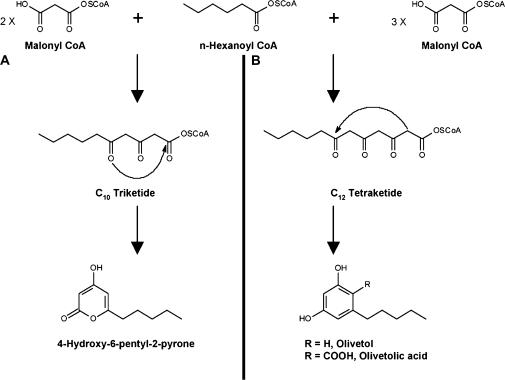
RNA isolated from the glands of a Delta(9)-tetrahydrocannabinolic acid (THCA)-producing strain of Cannabis sativa was used to generate a cDNA library containing over 100 000 expressed sequence tags (ESTs). Sequencing of over 2000 clones from the library resulted in the identification of over 1000 unigenes. Candidate genes for almost every step in the biochemical pathways leading from primary metabolites to THCA were identified. Quantitative PCR analysis suggested that many of the pathway genes are preferentially expressed in the glands. Hexanoyl-CoA, one of the metabolites required for THCA synthesis, could be made via either de novo fatty acids synthesis or via the breakdown of existing lipids. qPCR analysis supported the de novo pathway. Many of the ESTs encode transcription factors and two putative MYB genes were identified that were preferentially expressed in glands. Given the similarity of the Cannabis MYB genes to those in other species with known functions, these Cannabis MYBs may play roles in regulating gland development and THCA synthesis. Three candidates for the polyketide synthase (PKS) gene responsible for the first committed step in the pathway to THCA were characterized in more detail. One of these was identical to a previously reported chalcone synthase (CHS) and was found to have CHS activity. All three could use malonyl-CoA and hexanoyl-CoA as substrates, including the CHS, but reaction conditions were not identified that allowed for the production of olivetolic acid (the proposed product of the PKS activity needed for THCA synthesis). One of the PKS candidates was highly and specifically expressed in glands (relative to whole leaves) and, on the basis of these expression data, it is proposed to be the most likely PKS responsible for olivetolic acid synthesis in Cannabis glands.
Overview
The claims and statistics of this paper haven’t been checked yet.
Free: it reads the open-access text and checks the first 5 claims that cite a source we can check. Create a free account to check every claim.
Integrity signals
Registry
Cites
Statistics
Figures
Verification
Claims the paper makes
The claims and statistics of this paper haven’t been checked yet.
Free: it reads the open-access text and checks the first 5 claims that cite a source we can check. Create a free account to check every claim.
Claims other papers make about this one
Each is checked against this paper’s own text: does it say what the citing paper says it does?
The cited source says what the claim attributes to it.
In the citing paper
“It is important to mention here that two transcription factors belonging to the MYB family were already shown to be preferentially expressed in Cannabis glands (Marks et al., 2009) and therefore represent ideal candidates to express.”
From Cannabis sativa: The Plant of the Thousand and One Molecules (2016) · cites this paper as Marks et al., 2009
The cited source says what the claim attributes to it.
In the citing paper
“These genes show homology with Arabidopsis thaliana MYB112 and MYB12, which are known to be involved in the tolerance to oxidative stress and flavonol biosynthesis, respectively (Marks et al., 2009 and references therein).”
From Cannabis sativa: The Plant of the Thousand and One Molecules (2016) · cites this paper as Marks et al., 2009
Self-check
Percentages, sums and reported differences re-computed from the paper’s own numbers.
The self-check needs the paper’s full text.
Citations
Cites
Molecular Cloning: A Laboratory Manual
Sambrook, J., Fritsch, E., & Maniatis, T. (1989) · UCLA - Biblioteca de Ciencias de la Salud · Cited by 133,589
Gene Ontology: tool for the unification of biology
Ashburner, M., Ball, C. A., Blake, J. A., Botstein, D., Butler, H., Cherry, J. M., Davis, A. P., Dolinski, K., Dwight, S. S., Eppig, J. T., et al. (2000) · Nature Genetics · doi:10.1038/75556 · Cited by 43,206 · cited 1×
“Gene Ontology (GO) analysis was performed on the sequence dataset (Ashburner et al., 2000).”
MethodP HYTOCHELATINS AND M ETALLOTHIONEINS : Roles in Heavy Metal Detoxification and Homeostasis
Cobbett, C., & Goldsbrough, P. (2002) · Annual Review of Plant Biology · doi:10.1146/annurev.arplant.53.100301.135154 · Cited by 2,518 · cited 2×
“All three of these proteins have functions related to biotic or abiotic stress responses (Cobbett and Goldsbrough, 2002; Granger et al., 2002; Van den Bergh et al., 2004).”
BackgroundThe R2R3-MYB gene family in Arabidopsis thaliana
Stracke, R., Werber, M., & Weisshaar, B. (2001) · Current Opinion in Plant Biology · doi:10.1016/s1369-5266(00)00199-0 · Cited by 2,197 · cited 1×
“CAN833 and CAN738 are most similar to the Arabidopsis MYBs related to AtMYB112 and AtMYB12, respectively (see Supplementary Table 5 at JXB online; Stracke et al., 2001).”
BackgroundComprehensive natural products chemistry
(1999) · Choice Reviews Online · doi:10.5860/choice.37-0939 · Cited by 1,617
Rohmer, M., & Rohmer, M. (1999) · Natural Product Reports · doi:10.1039/a709175c · Cited by 1,193 · cited 1×
“Two different biochemical pathways support the synthesis of isoprenoids in plants (Eisenreich et al., 1998; Rohmer, 1999).”
BackgroundThe chalcone synthase superfamily of type III polyketide synthases
Austin, M. B., & Noel, J. P. (2003) · Natural Product Reports · doi:10.1039/b100917f · Cited by 993 · cited 2×
“For example, both monoterpenes and sesquiterpenes have been identified and candidate ESTs encoding activities to produce these compounds have been identified.”
BackgroundInfluentialMehrtens, F., Kranz, H., Bednarek, P., & Weisshaar, B. (2005) · Plant Physiology · doi:10.1104/pp.104.058032 · Cited by 831 · cited 1×
“AtMYB12 controls the synthesis of flavonol secondary metabolites in Arabidopsis and can induce the synthesis of similar compounds in tobacco (Mehrtens et al., 2005; Luo et al., 2008).”
BackgroundCannabinoid pharmacology: the first 66 years
Pertwee, R. G. (2006) · British Journal of Pharmacology · doi:10.1038/sj.bjp.0706406 · Cited by 782
Xanthohumol and related prenylflavonoids from hops and beer: to your good health!
Stevens, J. F., & Page, J. E. (2004) · Phytochemistry · doi:10.1016/j.phytochem.2004.04.025 · Cited by 673 · cited 1×
“Hop glands produce the bitter acid humulone, which is important for beer flavour, and the prenylated chalcone xanthohumol, which has several potential health beneficial properties (Stevens and Page, 2004).”
BackgroundAntibacterial Cannabinoids from Cannabis sativa: A Structure−Activity Study
Appendino, G., Gibbons, S., Giana, A., Pagani, A., Grassi, G., Stavri, M., Smith, E., & Rahman, M. M. (2008) · Journal of Natural Products · doi:10.1021/np8002673 · Cited by 661 · cited 1×
“Synthesis of THCA is extracellular and results in hydrogen peroxide production, which has general antimicrobial properties (Sirikantaramas et al., 2005), and a recent report further indicates that THCA may directly inhibit microbial growth (Appendino et al., 2008).”
BackgroundMengiste, T., Chen, X., Salmeron, J., & Dietrich, R. (2003) · The Plant Cell · doi:10.1105/tpc.014167 · Cited by 553 · cited 2×
“bos1 mutants are more susceptible to pathogens such as Botrytis cinerea and Alternaria brassicicola, and have impaired tolerance to oxidative stress (Mengiste et al., 2003).”
BackgroundAn Investigation of the Storage and Biosynthesis of Phenylpropenes in Sweet Basil
Gang, D. R., Wang, J., Dudareva, N., Nam, K. H., Simon, J. E., Lewinsohn, E., & Pichersky, E. (2001) · Plant Physiology · doi:10.1104/pp.125.2.539 · Cited by 506 · cited 1×
“The present study highlights the utility of using isolated glands as starting material for making EST libraries to study gland metabolism, as was the case in other plant species (Lange et al., 2000; Gang et al., 2001; Fridman et al., 2005).”
BackgroundSelf-citationMechoulam, R. (1970) · Science · doi:10.1126/science.168.3936.1159 · Cited by 492 · cited 3×
“This compound is produced as an acid in the glandular trichomes of inflorescence bracts and undergoes decarboxylation with age or heating to D 9 -tetrahydrocannabinol (THC) (Mechoulam, 1970; Turner et al., 1980; Pertwee, 2006).”
BackgroundThe deoxyxylulose phosphate pathway of terpenoid biosynthesis in plants and microorganisms
Eisenreich, W., Schwarz, M., Cartayrade, A., Arigoni, D., Zenk, M. H., & Bacher, A. (1998) · Chemistry & Biology · doi:10.1016/s1074-5521(98)90002-3 · Cited by 436 · cited 1×
“Two different biochemical pathways support the synthesis of isoprenoids in plants (Eisenreich et al., 1998; Rohmer, 1999).”
BackgroundCannabidiol, a Cannabis sativa constituent, as an antipsychotic drug
Zuardi, A. W., Crippa, J. A. S., Hallak, J. E. C., Moreira, F. A., & Guimarães, F. S. (2006) · Brazilian Journal of Medical and Biological Research · doi:10.1590/s0100-879x2006000400001 · Cited by 402 · cited 1×
“CBD and THC are enatiomers, but only THC elicits psychotropic effects, whereas CBD may mediate anti-psychotropic effects (Long et al., 2006; Zuardi et al., 2006), a difference highlighting the stereo-selectivity of receptors in the human body that bind these compounds.”
BackgroundSecondary metabolism in cannabis
Flores-Sanchez, I. J., & Verpoorte, R. (2008) · Phytochemistry Reviews · doi:10.1007/s11101-008-9094-4 · Cited by 400 · cited 4×
“In addition to cannabinoids, many other classes of secondary compounds have been found in Cannabis (Flores-Sanchez and Verpoorte, 2008b).”
BackgroundInfluentialYamaguchi-Shinozaki, K., & Shinozaki, K. (1993) · Molecular and General Genetics MGG · doi:10.1007/bf00279525 · Cited by 381 · cited 1×
“The function of RD22-like proteins is unknown but some members of this class of genes are induced by dehydration (Yamaguchi-Shinozaki and Shinozaki, 1993).”
BackgroundThe Inheritance of Chemical Phenotype in Cannabis sativa L.
de Meijer, E. P. M., Bagatta, M., Carboni, A., Crucitti, P., Moliterni, V. M. C., Ranalli, P., & Mandolino, G. (2003) · Genetics · doi:10.1093/genetics/163.1.335 · Cited by 354
The therapeutic potential of cannabis
Baker, D., Pryce, G., Giovannoni, G., & Thompson, A. J. (2003) · The Lancet Neurology · doi:10.1016/s1474-4422(03)00381-8 · Cited by 343
A chemotaxonomic analysis of cannabinoid variation in Cannabis (Cannabaceae)
Hillig, K. W., & Mahlberg, P. G. (2004) · American Journal of Botany · doi:10.3732/ajb.91.6.966 · Cited by 337 · cited 5×
“CBD and THC are enatiomers, but only THC elicits psychotropic effects, whereas CBD may mediate anti-psychotropic effects (Long et al., 2006; Zuardi et al., 2006), a difference highlighting the stereo-selectivity of receptors in the human body that bind these compounds.”
BackgroundInfluentialLuo, J., Butelli, E., Hill, L., Parr, A., Niggeweg, R., Bailey, P., Weisshaar, B., & Martin, C. (2008) · The Plant Journal · doi:10.1111/j.1365-313x.2008.03597.x · Cited by 328 · cited 1×
“AtMYB12 controls the synthesis of flavonol secondary metabolites in Arabidopsis and can induce the synthesis of similar compounds in tobacco (Mehrtens et al., 2005; Luo et al., 2008).”
BackgroundDATF: a database of Arabidopsis transcription factors
Guo, A., He, K., Liu, D., Bai, S., Gu, X., Wei, L., & Luo, J. (2005) · Bioinformatics · doi:10.1093/bioinformatics/bti334 · Cited by 328 · cited 2×
“Identification of potential transcription factors expressed in Cannabis glands Cannabis unigenes were compared to known Arabidopsis thaliana transcription factors (Guo et al., 2005).”
BackgroundLange, B. M., Wildung, M. R., Stauber, E. J., Sanchez, C., Pouchnik, D., & Croteau, R. (2000) · Proceedings of the National Academy of Sciences · doi:10.1073/pnas.97.6.2934 · Cited by 311 · cited 1×
“The present study highlights the utility of using isolated glands as starting material for making EST libraries to study gland metabolism, as was the case in other plant species (Lange et al., 2000; Gang et al., 2001; Fridman et al., 2005).”
BackgroundPotency Trends of Δ9-THC and Other Cannabinoids in Confiscated Marijuana from 1980–1997
ElSohly, M., Ross, S., Mehmedic, Z., Arafat, R., Yi, B., & Banahan, B. (2000) · Journal of Forensic Sciences · doi:10.1520/jfs14636j · Cited by 308 · cited 2×
“Marijuana consists of the dried female inflorescences in which the quantity of THC exceeds that of cannabidiol (CBD, produced initially as cannabidiolic acid (CBDA)), and potency varies among cultivars by several orders of magnitude (ElSohly et al., 2000).”
BackgroundJez, J. M., Ferrer, J.-L., Bowman, M. E., Dixon, R. A., & Noel, J. P. (2000) · Biochemistry · doi:10.1021/bi991489f · Cited by 299 · cited 4×
“All three Cannabis PKS genes encoded polypeptides containing the conserved amino acids, Cys 167, His 307, and Asn 340, that are believed to constitute the reaction centre (see Supplementary Table 3 at JXB online; Jez et al., 2000).”
BackgroundMethodInfluentialSelf-citationThe Gene Controlling Marijuana Psychoactivity
Sirikantaramas, S., Morimoto, S., Shoyama, Y., Ishikawa, Y., Wada, Y., Shoyama, Y., & Taura, F. (2004) · Journal of Biological Chemistry · doi:10.1074/jbc.m403693200 · Cited by 271 · cited 2×
“Two ESTs (CAN296 and 720) with sequences identical to the previous reportedly THCA synthase were identified (Sirikantaramas et al., 2004).”
Cannabidiolic‐acid synthase, the chemotype‐determining enzyme in the fiber‐type Cannabis sativa
Taura, F., Sirikantaramas, S., Shoyama, Y., Yoshikai, K., Shoyama, Y., & Morimoto, S. (2007) · FEBS Letters · doi:10.1016/j.febslet.2007.05.043 · Cited by 243 · cited 1×
“THCA and CBDA share the same biosynthetic pathway except for the last step in which THCA synthase and CBDA synthase produce THCA or CBDA, respectively (Taura et al., 2007).”
BackgroundSirikantaramas, S., Taura, F., Tanaka, Y., Ishikawa, Y., Morimoto, S., & Shoyama, Y. (2005) · Plant and Cell Physiology · doi:10.1093/pcp/pci166 · Cited by 237 · cited 3×
“A role for CAN883 in tolerance to oxidative stress in Cannabis glandular trichomes is logical, as the last enzymatic reaction in THCA synthesis releases hydrogen peroxide (Sirikantaramas et al., 2005).”
BackgroundFellermeier, M., & Zenk, M. H. (1998) · FEBS Letters · doi:10.1016/s0014-5793(98)00450-5 · Cited by 230 · cited 1×
“However , previous studies identified a soluble aromatic geranylpyrophosphate:olivetolate geranyltransferase in the extract of young leaves with the appropriate activity (Fellermeier and Zenk, 1998).”
BackgroundTerpene Biosynthesis in Glandular Trichomes of Hop
Wang, G., Tian, L., Aziz, N., Broun, P., Dai, X., He, J., King, A., Zhao, P. X., & Dixon, R. A. (2008) · Plant Physiology · doi:10.1104/pp.108.125187 · Cited by 229 · cited 6×
“CAN41 is most similar to hop monoterpene synthase HIMTS2 (NCBI accession EU760349; 66% identity over the first 160 amino acid residues; Wang et al., 2008).”
BackgroundInfluentialSelf-citationQuality of chemically modified hemp fibers.
Kostic, M., Pejic, B., & Skundric, P. (2008) · Bioresource Technology · doi:10.1016/j.biortech.2006.11.050 · Cited by 217 · cited 1×
“Cannabis sativa has a long history of cultivation for a variety of uses including food, fibre, medicine, and recreational drugs (Measham et al., 1994; Ware and Tawfik, 2005; Kostic et al., 2008).”
BackgroundNagel, J., Culley, L. K., Lu, Y., Liu, E., Matthews, P. D., Stevens, J. F., & Page, J. E. (2008) · The Plant Cell · doi:10.1105/tpc.107.055178 · Cited by 198 · cited 4×
“In two independent studies, ESTs representing VPS were among the most abundant in the collections and were at least 5-fold more abundant than other PKS encoding ESTs ( Nagel et al., 2008; Wang et al., 2008).”
BackgroundMethodInfluentialFridman, E., Wang, J., Iijima, Y., Froehlich, J. E., Gang, D. R., Ohlrogge, J., & Pichersky, E. (2005) · The Plant Cell · doi:10.1105/tpc.104.029736 · Cited by 187 · cited 1×
“The present study highlights the utility of using isolated glands as starting material for making EST libraries to study gland metabolism, as was the case in other plant species (Lange et al., 2000; Gang et al., 2001; Fridman et al., 2005).”
BackgroundSelf-citationThe Normalization of Recreational Drug Use amongst Young People in North-West England
Measham, F., Newcombe, R., & Parker, H. (1994) · The British Journal of Sociology · doi:10.2307/591497 · Cited by 186 · cited 1×
“Cannabis sativa has a long history of cultivation for a variety of uses including food, fibre, medicine, and recreational drugs (Measham et al., 1994; Ware and Tawfik, 2005; Kostic et al., 2008).”
BackgroundCannabidiol Reverses MK-801-Induced Disruption of Prepulse Inhibition in Mice
Long, L. E., Malone, D. T., & Taylor, D. A. (2006) · Neuropsychopharmacology · doi:10.1038/sj.npp.1300838 · Cited by 173 · cited 1×
“CBD and THC are enatiomers, but only THC elicits psychotropic effects, whereas CBD may mediate anti-psychotropic effects (Long et al., 2006; Zuardi et al., 2006), a difference highlighting the stereo-selectivity of receptors in the human body that bind these compounds.”
BackgroundPrenyl transfer to aromatic substrates: genetics and enzymology
Heide, L. (2009) · Current Opinion in Chemical Biology · doi:10.1016/j.cbpa.2009.02.020 · Cited by 172 · cited 1×
“However, the encoded protein is more closely related to members of the membrane-bound chloroplast-localized family of prenyltransferases than to soluble prenyltransferases (Heide, 2009).”
BackgroundOn the origin of the fig: phylogenetic relationships of Moraceae from ndh F sequences
Datwyler, S. L., & Weiblen, G. D. (2004) · American Journal of Botany · doi:10.3732/ajb.91.5.767 · Cited by 172 · cited 1×
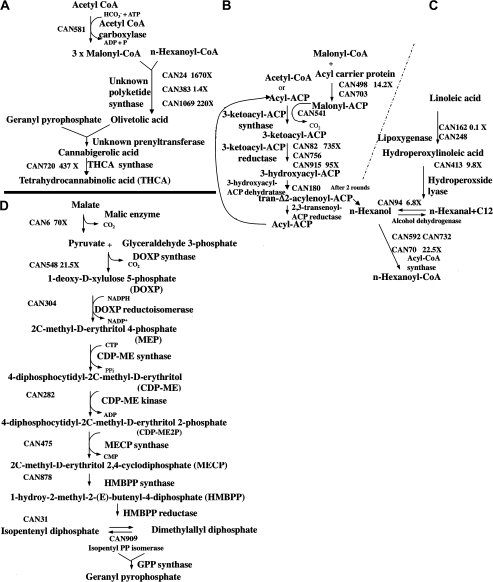
“Unigene Predicted protein Gland versus leaf P- value MEP pathway CAN548 DOXP synthase 21.5 0.0002 CAN6 Malic enzyme 70.5 0.0001”
BackgroundInfluentialSelf-citationBiosynthesis of cannabinoids: Incorporation experiments with 13C‐labeled glucoses
Fellermeier, M., Eisenreich, W., Bacher, A., & Zenk, M. H. (2001) · European Journal of Biochemistry · doi:10.1046/j.1432-1327.2001.02030.x · Cited by 169 · cited 3×
“7B; Fellermeier et al., 2001).”
ResultMarks, M. D., Wenger, J. P., Gilding, E., Jilk, R., & Dixon, R. A. (2009) · Molecular Plant · doi:10.1093/mp/ssp037 · Cited by 163 · cited 2×
“This is potentially significant as studies have shown that all but one of the 12 transcription factors required for Arabidopsis trichome formation are preferentially expressed in trichomes compared to whole leaves (Marks et al., 2009).”
BackgroundSelf-citationGenetics and Marker-assisted Selection of the Chemotype in Cannabis sativa L.
Pacifico, D., Miselli, F., Micheler, M., Carboni, A., Ranalli, P., & Mandolino, G. (2006) · Molecular Breeding · doi:10.1007/s11032-005-5681-x · Cited by 127 · cited 1×
“Recent evidence suggests that the genes encoding the two synthases are allelic (de Meijer et al., 2003; Pacifico et al., 2006).”
BackgroundPlant cannabinoids: a neglected pharmacological treasure trove
Mechoulam, R. (2005) · British Journal of Pharmacology · doi:10.1038/sj.bjp.0706415 · Cited by 121 · cited 1×
“For these reasons, a better understanding of the secondary metabolic pathways that lead to the synthesis of bioactive natural products in Cannabis is needed (Mechoulam, 2005).”
BackgroundDatwyler, S. L., & Weiblen, G. D. (2006) · Journal of Forensic Sciences · doi:10.1111/j.1556-4029.2006.00061.x · Cited by 109 · cited 2×
“Plants were grown under hydroponic conditions in a secure growth chamber yielding cannabinoid levels in mature plants as reported in Datwyler and Weiblen (2006).”
MethodSelf-citationOKADA, Y., & Ito, K. (2001) · Bioscience Biotechnology and Biochemistry · doi:10.1271/bbb.65.150 · Cited by 99 · cited 1×
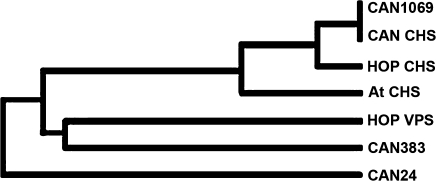
“The relationships of hop phlorisovalerophenone synthase (VPS), which mediates the conversion of malonyl-CoA and isovaleryl-CoA to phlorisovalerophenone, to CAN24 and CAN383 is less clear (Okada and Ito, 2001).”
BackgroundPKS Activities and Biosynthesis of Cannabinoids and Flavonoids in Cannabis sativa L. Plants
Flores-Sanchez, I. J., & Verpoorte, R. (2008) · Plant and Cell Physiology · doi:10.1093/pcp/pcn150 · Cited by 93 · cited 3×
“In addition to cannabinoids, many other classes of secondary compounds have been found in Cannabis (Flores-Sanchez and Verpoorte, 2008b).”
BackgroundMORPHOGENESIS OF CAPITATE GLANDULAR HAIRS OF CANNABIS SATIVA (CANNABACEAE)
Hammond, C. T., & Mahlberg, P. G. (1977) · American Journal of Botany · doi:10.1002/j.1537-2197.1977.tb11948.x · Cited by 76 · cited 1×
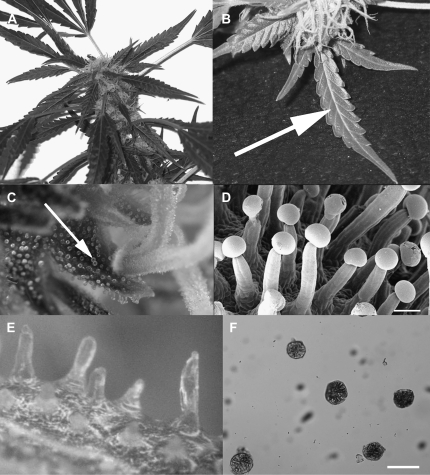
“These glands are located on multicellular stalks and typically are composed of eight cells (Hammond and Mahlberg, 1977, 1978).”
BackgroundKim, E., & Mahlberg, P. G. (1997) · American Journal of Botany · doi:10.2307/2446007 · Cited by 72 · cited 1×
“Anatomical study revealed that glands located on mature floral bracts of female plants are the site of enhanced secondary metabolism leading to the production of THCA and other compounds in Cannabis sativa (Kim and Mahlberg, 1997) (Fig.”
BackgroundComparative proteomics of Cannabis sativa plant tissues.
Raharjo, T. J., Widjaja, I., Roytrakul, S., & Verpoorte, R. (2004) · PubMed · Cited by 70
Kroumova, A. B., Xie, Z., & Wagner, G. J. (1994) · Proceedings of the National Academy of Sciences · doi:10.1073/pnas.91.24.11437 · Cited by 69 · cited 1×
“An third pathway related to the biosynthesis of branched chain amino acids has been proposed to be involved in the production of short-chain and medium-chain fatty acids (Kroumova et al., 1994).”
BackgroundULTRASTRUCTURAL DEVELOPMENT OF CAPITATE GLANDULAR HAIRS OF CANNABIS SATIVA L. (CANNABACEAE)
Hammond, C. T., & Mahlberg, P. G. (1978) · American Journal of Botany · doi:10.1002/j.1537-2197.1978.tb06051.x · Cited by 61
den Bergh, K. P. B. V., Rougé, P., Proost, P., Coosemans, J., Krouglova, T., Engelborghs, Y., Peumans, W. J., & Damme, E. J. M. V. (2004) · Planta · doi:10.1007/s00425-004-1238-1 · Cited by 58 · cited 2×
“All three of these proteins have functions related to biotic or abiotic stress responses (Cobbett and Goldsbrough, 2002; Granger et al., 2002; Van den Bergh et al., 2004).”
BackgroundPolyketides and other secondary metabolites including fatty acids and their derivatives
三川, 潮. (1999) · Elsevier eBooks · Cited by 51
Abe, I., Watanabe, T., Lou, W., & Noguchi, H. (2005) · FEBS Journal · doi:10.1111/j.1742-4658.2005.05059.x · Cited by 51 · cited 1×
“In addition, two of the three amino acids that are important for defining the size of the reaction cavity in chalcone synthases (Jez et al., 2000; Abe et al., 2006) are conserved.”
BackgroundA polyketide synthase of Plumbago indica that catalyzes the formation of hexaketide pyrones
Springob, K., Samappito, S., Jindaprasert, A., Schmidt, J., Page, J. E., De‐Eknamkul, W., & Kutchan, T. M. (2006) · FEBS Journal · doi:10.1111/j.1742-4658.2006.05588.x · Cited by 51 · cited 1×
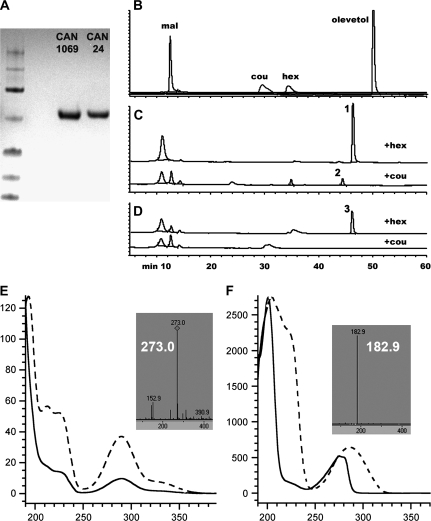
“The failure of in vitro conditions to support the complete synthesis of native PKS products is welldocumented (Springob et al., 2007).”
BackgroundOlivetol as product of a polyketide synthase in Cannabis sativa L
Raharjo, T. J., Chang, W.-T., Choi, Y. H., Peltenburg-Looman, A. M. G., & Verpoorte, R. (2003) · Plant Science · doi:10.1016/j.plantsci.2003.09.027 · Cited by 47 · cited 13×
“That plant extracts used in in vitro assays have also not yielded olivetolic acid suggests that in vivo-like reaction conditions have yet to be imitated (Raharjo et al., 2004a; FloresSanchez and Verpoorte, 2008a).”
BackgroundResultInfluentialCloning and over-expression of a cDNA encoding a polyketide synthase from Cannabis sativa
Raharjo, T. J., Chang, W.-T., Verberne, M. C., Peltenburg-Looman, A. M. G., Linthorst, H. J. M., & Verpoorte, R. (2004) · Plant Physiology and Biochemistry · doi:10.1016/j.plaphy.2004.02.011 · Cited by 44 · cited 12×
“CAN1069 was identical to a previously identified Cannabis gene encoding a chalcone synthase, and is the most closely related of the PKS sequences to other known chalcone synthases from hop and Arabidopsis (Raharjo et al., 2004b).”
BackgroundResultInfluentialGranger, C. L., Coryell, V. H., Khanna, A., Keim, P., Vodkin, L. O., & Shoemaker, R. C. (2002) · Genome · doi:10.1139/g02-032 · Cited by 44 · cited 2×
“All three of these proteins have functions related to biotic or abiotic stress responses (Cobbett and Goldsbrough, 2002; Granger et al., 2002; Van den Bergh et al., 2004).”
BackgroundKim, E. S., & Mahlberg, P. G. (2003) · Molecules and Cells · doi:10.1016/s1016-8478(23)13755-1 · Cited by 37
Safety Issues Concerning the Medical Use of Cannabis and Cannabinoids
Ware, M. A., & Tawfik, V. L. (2005) · Pain Research and Management · doi:10.1155/2005/312357 · Cited by 36 · cited 1×
“Cannabis sativa has a long history of cultivation for a variety of uses including food, fibre, medicine, and recreational drugs (Measham et al., 1994; Ware and Tawfik, 2005; Kostic et al., 2008).”
BackgroundTurner, C. E., Bouwsma, O. J., Billets, S., & ElSohly, M. A. (1980) · Journal of Mass Spectrometry · doi:10.1002/bms.1200070605 · Cited by 23 · cited 1×
“This compound is produced as an acid in the glandular trichomes of inflorescence bracts and undergoes decarboxylation with age or heating to D 9 -tetrahydrocannabinol (THC) (Mechoulam, 1970; Turner et al., 1980; Pertwee, 2006).”
BackgroundBiosynthesis of So-called “Green Odor” Emitted by Green Leaves
Hatanaka, A. (1999) · Elsevier eBooks · doi:10.1016/b978-0-08-091283-7.00003-5 · Cited by 18 · cited 2×
“A second route to hexanoyl-CoA would involve the production of hexanol from the breakdown of the fatty acid linoleic acid via the lipoxygenase (LOX) pathway (Fig. 2C; Hatanaka, 1999).”
BackgroundMarks, M. D., Gilding, E. K., & Wenger, J. P. (2007) · The Plant Journal · doi:10.1111/j.1365-313x.2007.03243.x · Cited by 14 · cited 1×
“Quantitative (qPCR) reactions were performed as described previously (Marks et al., 2007) using primers listed in Supplementary Table 4B at JXB online.”
MethodSelf-citation
Cited by
Cannabis sativa: The Plant of the Thousand and One Molecules
Andre, C. M., Hausman, J.-F., & Guerriero, G. (2016) · Frontiers in Plant Science · doi:10.3389/fpls.2016.00019 · Cited by 1,544
The draft genome and transcriptome of Cannabis sativa.
van Bakel, H., Stout, J. M., Cote, A. G., Tallon, C. M., Sharpe, A. G., Hughes, T. R., & Page, J. E. (2011) · Genome Biology · doi:10.1186/gb-2011-12-10-r102 · Cited by 575
“Abbreviations AAE: acyl-activating enzyme; bp: base pair; BP: before present; CBC: cannabichromene; CBCA: cannabichromenic acid; CBCAS: cannabichromenic acid synthase; CBD: cannabidiol; CBDA: cannabidiolic acid; CBDAS: cannabidiolic acid synthase; CBGA: cannabigerolic acid; CMK: 4- diphosphocytidyl-2-C-methyl-D-erythr…”
InfluentialFarinon, B., Molinari, R., Costantini, L., & Merendino, N. (2020) · Nutrients · doi:10.3390/nu12071935 · Cited by 473
Gagne, S. J., Stout, J. M., Liu, E., Boubakir, Z., Clark, S. M., & Page, J. E. (2012) · Proceedings of the National Academy of Sciences · doi:10.1073/pnas.1200330109 · Cited by 287
Glandular trichomes: what comes after expressed sequence tags?
Tissier, A. (2012) · The Plant Journal · doi:10.1111/j.1365-313x.2012.04913.x · Cited by 263
Metadata
- Authors
- Marks, M. D., Tian, L., Wenger, J. P., Omburo, S. N., Soto-Fuentes, W., He, J., Gang, D. R., Weiblen, G. D., & Dixon, R. A.
- Affiliations
- University of Minnesota (US)
- Noble Research Institute (US)
- University of Arizona (US)
- Corresponding author
- Marks, M. David
- ORCID
- Venue
- Journal of Experimental Botany
- Publisher
- Oxford University Press (OUP)
- Published
- 2009-07-06
- Volume
- 60
- Issue
- 13
- Pages
- 3715-3726
- ISSN
- 0022-0957 (ISSN-L)
- 1460-2431
- PMC
- PMC2736886
- OpenAlex
- W2167526734
- Cited by
- 125
- References
- 63
- Citations by year
- 2026: 4 · 2025: 3 · 2024: 5 · 2023: 10 · 2022: 7 · 2021: 15 · 2020: 15 · 2019: 10 · 2018: 9 · 2017: 10 · 2016: 8 · 2015: 6 · 2014: 2 · 2013: 5 · 2012: 7
- FWCI
- 2.15
- Type
- journal article
- Language
- en
- Open access
- hybrid
- doi.org
- Licence
- cc-by-nc
- Locations
- Journal of Experimental Botany (publishedVersion, cc-by-nc)
- Europe PMC (PubMed Central) (publishedVersion, cc-by-nc)
- PubMed Central (publishedVersion, cc-by-nc)
- PubMed (publishedVersion)
- University of North Texas Digital Library (University of North Texas) (submittedVersion)
- eScholarship (California Digital Library) (submittedVersion)
- eScholarship (California Digital Library) (submittedVersion, cc-by-nc)
- Funders
- Samuel Roberts Noble Foundation
- University of Minnesota
- Directorate for Biological Sciences
- National Institute on Drug Abuse (N01 DA 57746)
- Topics
- Life Sciences › Biochemistry, Genetics and Molecular Biology › Molecular Biology › Plant biochemistry and biosynthesis
- Health Sciences › Medicine › Pharmacology (medical) › Cannabis and Cannabinoid Research
- Life Sciences › Biochemistry, Genetics and Molecular Biology › Molecular Biology › Plant Gene Expression Analysis
- Keywords
- Cannabis sativa, expressed sequence tags, glandular trichomes, candidate genes, MYB transcription factors, chalcone synthase, polyketide synthase, olivetolic acid, de novo lipogenesis, tetrahydrocannabinolic acid, gland development, gene expression
- MeSH terms
- Cannabis, Molecular Sequence Data, Plant Proteins, Dronabinol, Biosynthetic Pathways
About these checks
Registry, retraction, Cites and statistics results are computed, not judged, with one exception: a printed reference that no index lists is read once by a model before it counts as a citation error. Claims are extracted by a model and kept only when their quote appears verbatim in the text; each cited source is then checked, with a model’s help, for whether it says what the claim relies on. Those verdicts can be wrong — read the claim’s quote and the cited source before relying on one.
Statistics and arithmetic are recomputed, not judged.
Confidence bands are shown only for fields calibrated on our annotated test set. None is calibrated yet, so no band is shown.
What counts as a claim ›How we measure confidence ›How we check this ›
Are you an author, or do you see a problem with this page? Request a review
Data sources
Bibliographic data: Semantic Scholar, OpenAlex, Crossref.
Contains information from the Semantic Scholar Academic Graph Datasets, made available under the ODC Attribution License (ODC-BY 1.0).
Semantic Scholar’s data is described in: Kinney, R., et al. (2023). The Semantic Scholar Open Data Platform. arXiv:2301.10140.
