

The DOI matches its Crossref record; 45 of the 45 references it cites were found in a registry or an index.
Dynamic metabolic profiling of cyanobacterial glycogen biosynthesis under conditions of nitrate depletion
Open accessAbstract
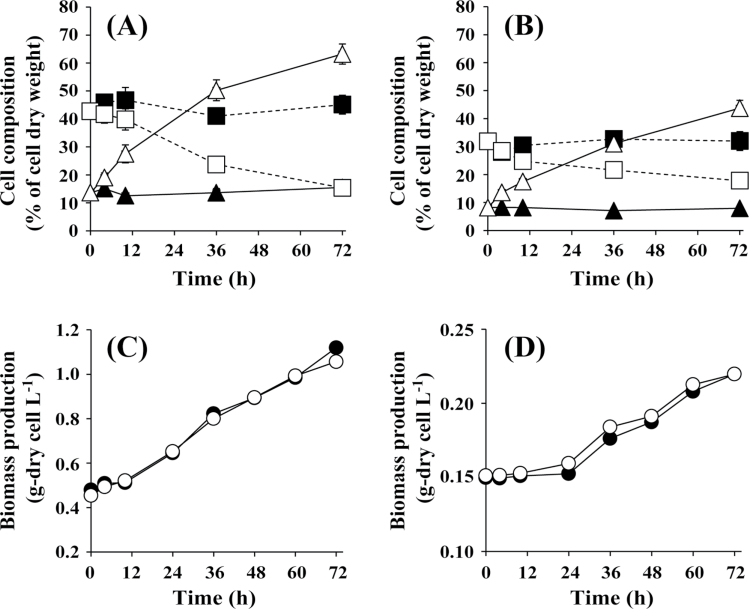
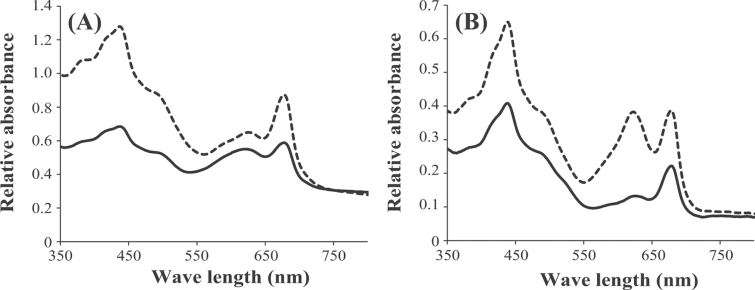
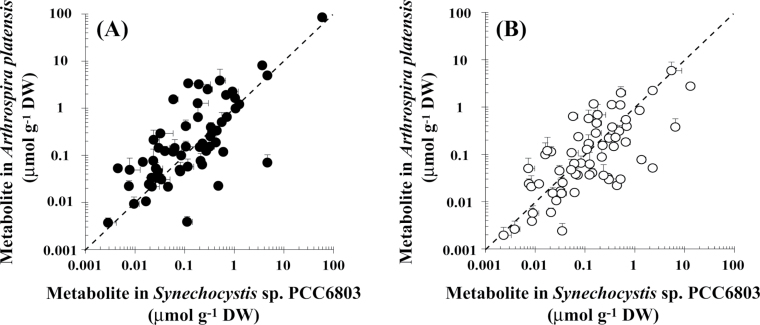
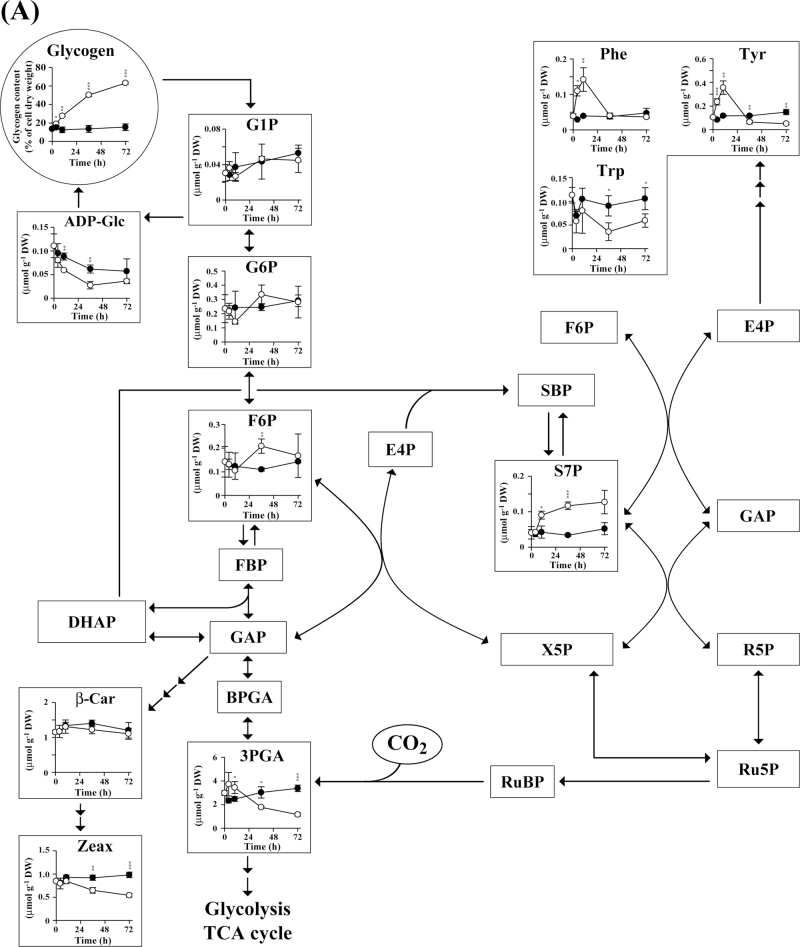
Cyanobacteria represent a globally important biomass because they are responsible for a substantial proportion of primary production in the hydrosphere. Arthrospira platensis is a fast-growing halophilic cyanobacterium capable of accumulating glycogen and has the potential to serve as a feedstock in the fermentative production of third-generation biofuels. Accordingly, enhancing cyanobacterial glycogen production is a promising biofuel production strategy. However, the regulatory mechanism of glycogen metabolism in cyanobacteria is poorly understood. The aim of the present study was to determine the metabolic flux of glycogen biosynthesis using a dynamic metabolomic approach. Time-course profiling of widely targeted cyanobacterial metabolic intermediates demonstrated a global metabolic reprogramming that involves transient increases in the levels of some amino acids during the glycogen production phase induced by nitrate depletion. Also, in vivo labelling with NaH(13)CO3 enabled direct measurement of metabolic intermediate turnover in A. platensis, revealing that under conditions of nitrate depletion glycogen is biosynthesized with carbon derived from amino acids released from proteins via gluconeogenesis. This dynamic metabolic profiling approach provided conclusive evidence of temporal alterations in the metabolic profile in cyanobacterial cells.
Overview
The claims and statistics of this paper haven’t been checked yet.
Run the check — free, no account needed. It reads the open-access text and checks the sources it cites.
Integrity signals
Registry
Cites
Statistics
Figures
Verification
Claims the paper makes
The claims and statistics of this paper haven’t been checked yet.
Run the check — free, no account needed. It reads the open-access text and checks the sources it cites.
Claims other papers make about this one
Each is checked against this paper’s own text: does it say what the citing paper says it does?
In the citing paper
“In the presence of nitrate, the glycogen and protein contents remained nearly constant at ~15% DW and ~50% DW, respectively.”
From Arthrospira platensis as a Feasible Feedstock for Bioethanol Production (2021) · cites this paper as [64]
In the citing paper
“Time-course profiling of metabolites demonstrated transient increases in the levels of other amino acids (glycine, histidine, isoleucine, leucine, methionine, phenylalanine, proline, threonine, and tyrosine).”
From Arthrospira platensis as a Feasible Feedstock for Bioethanol Production (2021) · cites this paper as [64]
In the citing paper
“Analyzing the metabolic intermediates, they observed that shifting the cyanobacterial cells into nitrogen depletion and cultivating them for 72 h resulted in global metabolic modifications that involved reductions in the levels of several free amino acids (aspartate, glutamate, and glutamine), and increased in the levels of organic acids (2-ketoglutarate, malate, and succinate).”
From Arthrospira platensis as a Feasible Feedstock for Bioethanol Production (2021) · cites this paper as [64]
In the citing paper
“In contrast, in the absence of nitrate, the glycogen content increased to 63.2% DW while the protein content decreased to 15.4%.”
From Arthrospira platensis as a Feasible Feedstock for Bioethanol Production (2021) · cites this paper as [64]
Self-check
Percentages, sums and reported differences re-computed from the paper’s own numbers.
The self-check needs the paper’s full text.
Citations
Cites
Generic Assignments, Strain Histories and Properties of Pure Cultures of Cyanobacteria
Rippka, R., Stanier, R. Y., Deruelles, J., Herdman, M., & Waterbury, J. B. (1979) · Microbiology · doi:10.1099/00221287-111-1-1 · Cited by 7,606
Kaneko, T., Sato, S., Kotani, H., Tanaka, A., Asamizu, E., Nakamura, Y., Miyajima, N., Hirosawa, M., Sugiura, M., Sasamoto, S., et al. (1996) · DNA Research · doi:10.1093/dnares/3.3.185 · Cited by 2,434
Kaneko, T., Sato, S., Kotani, H., Tanaka, A., Asamizu, E., Nakamura, Y., Miyajima, N., Hirosawa, M., Sugiura, M., Sasamoto, S., et al. (1996) · DNA Research · doi:10.1093/dnares/3.3.109 · Cited by 2,132
Prochlorococcus , a Marine Photosynthetic Prokaryote of Global Significance
Partensky, F., Hess, W. R., & Vaulot, D. (1999) · Microbiology and Molecular Biology Reviews · doi:10.1128/mmbr.63.1.106-127.1999 · Cited by 1,357 · cited 1×
“Cyanobacteria represent a globally important biomass because they are responsible for a substantial proportion of primary production in the hydrosphere (Partensky et al., 1999).”
Micro and macroalgal biomass: a renewable source for bioethanol
John, R. P., Anisha, G. S., Nampoothiri, K. M., & Pandey, A. (2011) · Bioresource Technology · doi:10.1016/j.biortech.2010.06.139 · Cited by 1,090 · cited 2×
“The cultivation of terrestrial plants as energy resources is also limited by the availability of fresh water supplies (John et al., 2011; Quintana et al., 2011).”
From Bacterial Glycogen to Starch: Understanding the Biogenesis of the Plant Starch Granule
Ball, S. G., & Morell, M. K. (2003) · Annual Review of Plant Biology · doi:10.1146/annurev.arplant.54.031902.134927 · Cited by 748
Aquatic phototrophs: efficient alternatives to land-based crops for biofuels
Dismukes, G. C., Carrieri, D., Bennette, N., Ananyev, G. M., & Posewitz, M. C. (2008) · Current Opinion in Biotechnology · doi:10.1016/j.copbio.2008.05.007 · Cited by 733 · cited 2×
“Cyanobacteria are especially attractive because their photosynthetic and biomass production rates are higher than those of terrestrial plants (Dismukes et al., 2008; Quintana et al., 2011).”
Technological trends, global market, and challenges of bio-ethanol production
Mussatto, S. I., Dragone, G., Guimarães, P. M. R., Silva, J. P. A., Carneiro, L. M., Roberto, I. C., Vicente, A. A., Domingues, L., & Teixeira, J. A. (2010) · Biotechnology Advances · doi:10.1016/j.biotechadv.2010.07.001 · Cited by 730 · cited 1×
“Biofuels are generally classified as either ‘first-generation fuels’ if they are produced from sugar/starch crops or ‘second-generation fuels’ if they are produced from lignocellulosic biomass feedstocks such as crop residues, grasses, sawdust, and wood chips (Mussatto et al., 2010; Hasunuma and Kondo, 2012).”
Bioethanol production using carbohydrate-rich microalgae biomass as feedstock
Ho, S.-H., Huang, S.-W., Chen, C.-Y., Hasunuma, T., Kondo, A., & Chang, J.-S. (2013) · Bioresource Technology · doi:10.1016/j.biortech.2012.10.015 · Cited by 683 · cited 1×
“in green algae such as Chlorella vulgaris and Dunaliella tertiolecta (Rismani-Yazdi et al., 2011; Ho et al., 2013).”
Self-citationThe phycobilisome, a light-harvesting complex responsive to environmental conditions
Grossman, A. R., Schaefer, M. R., Chiang, G. G., & Collier, J. L. (1993) · Microbiological Reviews · doi:10.1128/mr.57.3.725-749.1993 · Cited by 666
Cited by
Sorted by citations
Kodama, M. (2020) · Institutional Repositories DataBase (IRDB) · Cited by 267
Möllers, K. B., Cannella, D., Jørgensen, H., & Frigaard, N.-U. (2014) · Biotechnology for Biofuels · doi:10.1186/1754-6834-7-64 · Cited by 215
“Thus, the progress of PBS degradation in Synechococcus is a useful proxy for estimating both the initiation of nitrate limitation and the timing of maximum carbohydrate accumulation.”
BackgroundInfluentialBiophotovoltaics: Green Power Generation From Sunlight and Water
Tschörtner, J., Lai, B., & Krömer, J. O. (2019) · Frontiers in Microbiology · doi:10.3389/fmicb.2019.00866 · Cited by 186
Ho, S., Nakanishi, A., Kato, Y., Yamasaki, H., Chang, J., Misawa, N., Hirose, Y., Minagawa, J., Hasunuma, T., & Kondo, A. (2017) · Scientific Reports · doi:10.1038/srep45471 · Cited by 159
“The intermediate metabolites in lipid/starch synthesis pathway ( e.g. , 3 PGA, pyruvate, AcCoA, G3P, F6P, G6P, and G1P) were targeted and determined according to a previously described method 28 .”
A RuBisCO-mediated carbon metabolic pathway in methanogenic archaea
Takunari, K., Mehrotra, S., Endo, C., Kizu, N., Matusda, M., Kimura, H., Mizohata, E., Tsuyoshi Inoue, A., Hasunuma, T., Yokota, A., et al. (2017) · Nature Communications · doi:10.1038/ncomms14007 · Cited by 140
Metadata
- Authors
- Hasunuma, T., Kikuyama, F., Matsuda, M., Aikawa, S., Izumi, Y., & Kondo, A.
- Affiliations
- Japan Science and Technology Agency (JP)
- Kobe University (JP)
- Corresponding author
- Hasunuma, Tomohisa
- Venue
- Journal of Experimental Botany
- Publisher
- Oxford University Press (OUP)
- Published
- 2013-05-08
- Volume
- 64
- Issue
- 10
- Pages
- 2943-2954
- ISSN
- 0022-0957 (ISSN-L)
- 1460-2431
- PMC
- PMC3697948
- OpenAlex
- W2103644949
- Cited by
- 160
- References
- 45
- Citations by year
- 2026: 4 · 2025: 6 · 2024: 10 · 2023: 8 · 2022: 16 · 2021: 18 · 2020: 10 · 2019: 15 · 2018: 12 · 2017: 12 · 2016: 17 · 2015: 13 · 2014: 17 · 2013: 1
- FWCI
- 7.16
- Type
- journal article
- Language
- en
- Open access
- hybrid
- doi.org
- Licence
- cc-by-nc
- Locations
- Journal of Experimental Botany (publishedVersion, cc-by-nc)
- PubMed Central (publishedVersion, cc-by-nc)
- PubMed (publishedVersion)
- Funders
- Japan Science and Technology Agency
- Precursory Research for Embryonic Science and Technology
- Topics
- Life Sciences › Biochemistry, Genetics and Molecular Biology › Molecular Biology › Microbial Metabolic Engineering and Bioproduction
- Physical Sciences › Energy › Renewable Energy, Sustainability and the Environment › Algal biology and biofuel production
- Life Sciences › Biochemistry, Genetics and Molecular Biology › Biochemistry › Lipid metabolism and biosynthesis
- Keywords
- Spirulina platensis, nitrate depletion, metabolic flux, metabolic reprogramming, amino acid accumulation, gluconeogenesis, metabolic intermediates, third-generation biofuels, halophilic cyanobacteria
- MeSH terms
- Cyanobacteria, Amino Acids, Gluconeogenesis, Glycogen, Nitrates, Metabolome, Biofuels
About these checks
Registry, retraction, Cites and statistics results are computed, not judged, with one exception: a printed reference that no index lists is read once by a model before it counts as a citation error. Claims are extracted by a model and kept only when their quote appears verbatim in the text; each cited source is then checked, with a model’s help, for whether it says what the claim relies on. Those verdicts can be wrong — read the claim’s quote and the cited source before relying on one.
Statistics and arithmetic are recomputed, not judged.
Confidence bands are shown only for fields calibrated on our annotated test set. None is calibrated yet, so no band is shown.
What counts as a claim ›How we measure confidence ›How we check this ›
Are you an author, or do you see a problem with this page? Request a review
