

Targeting senescent cells for a healthier longevity: the roadmap for an era of global aging
Open accessThe DOI matches its Crossref record; 148 of the 149 references it cites were found in a registry or an index.
Abstract
Aging is a natural but relentless process of physiological decline, leading to physical frailty, reduced ability to respond to physical stresses (resilience) and, ultimately, organismal death. Cellular senescence, a self-defensive mechanism activated in response to intrinsic stimuli and/or exogenous stress, is one of the central hallmarks of aging. Senescent cells cease to proliferate, while remaining metabolically active and secreting numerous extracellular factors, a feature known as the senescence-associated secretory phenotype. Senescence is physiologically important for embryonic development, tissue repair, and wound healing, and prevents carcinogenesis. However, chronic accumulation of persisting senescent cells contributes to a host of pathologies including age-related morbidities. By paracrine and endocrine mechanisms, senescent cells can induce inflammation locally and systemically, thereby causing tissue dysfunction, and organ degeneration. Agents including those targeting damaging components of the senescence-associated secretory phenotype or inducing apoptosis of senescent cells exhibit remarkable benefits in both preclinical models and early clinical trials for geriatric conditions. Here we summarize features of senescent cells and outline strategies holding the potential to be developed as clinical interventions. In the long run, there is an increasing demand for safe, effective, and clinically translatable senotherapeutics to address healthcare needs in current settings of global aging.
Overview
The claims and statistics of this paper haven’t been checked yet.
Free: it reads the open-access text and checks the first 5 claims that cite a source we can check. Create a free account to check every claim.
Integrity signals
Registry
Cites
Statistics
Figures
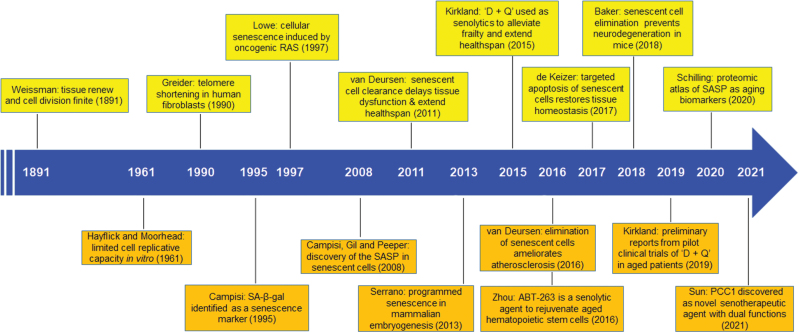
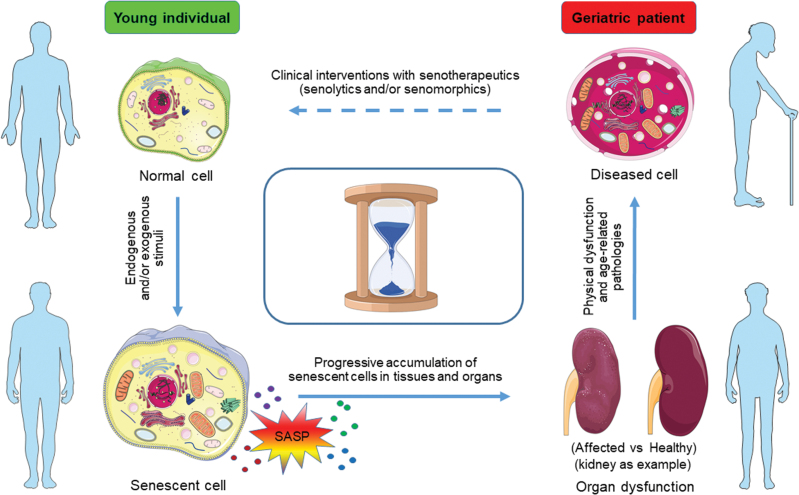
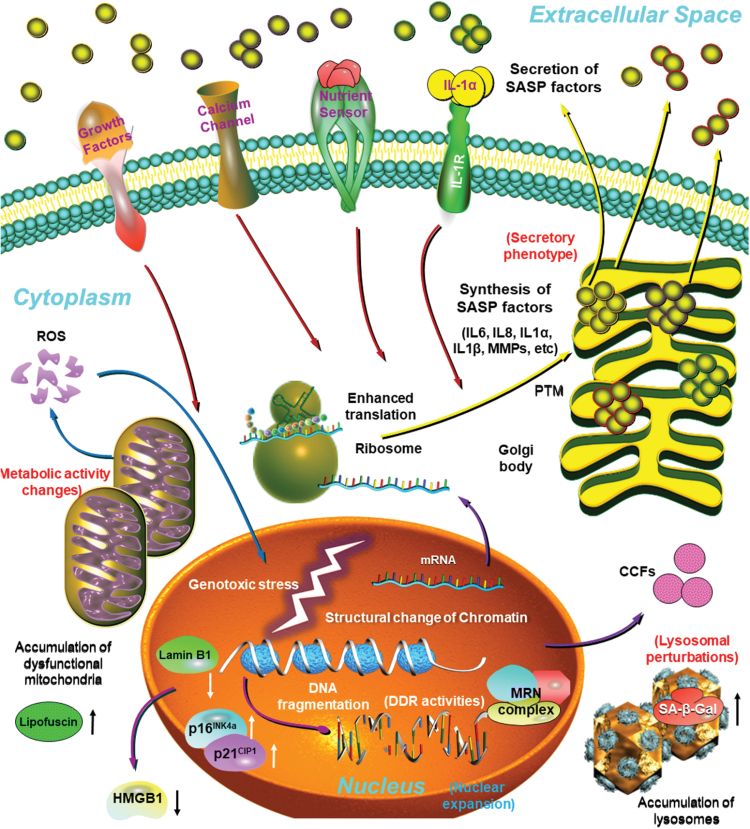
Verification
Claims the paper makes
The claims and statistics of this paper haven’t been checked yet.
Free: it reads the open-access text and checks the first 5 claims that cite a source we can check. Create a free account to check every claim.
Claims other papers make about this one
Each is checked against this paper’s own text: does it say what the citing paper says it does?
The source backs part of the claim, not all of it — or backs it for a different population, condition or comparison.
In the citing paper
“several senomorphic agents (eg, RAD001, ruxolitinib, KU‐60019, loperamide, simvastatin, anakinra, canakinumab, etanercept, siltuximab, tocilizumab) evaluated in clinical and preclinical studies have been found to diminish SASP, prevent senescence progression, and improve physical function in naturally aged animals.”
From Senescence, brain inflammation, and oligomeric tau drive cognitive decline in Alzheimer's disease: Evidence from clinical and preclinical studies (2024) · cites this paper as [193]
Experimental — accuracy not yet measured
Self-check
Percentages, sums and reported differences re-computed from the paper’s own numbers.
The self-check needs the paper’s full text.
Citations
Cites
1 retracted
Han, L., Long, Q., Li, S., Xu, Q., Zhang, B., Dou, X., Qian, M., Jiramongkol, Y., Guo, J., Cao, L., et al. (2020) · Cancer Research · doi:10.1158/0008-5472.can-20-0506 · Cited by 91
Self-citationRetractedLópez-Otín, C., Blasco, M. A., Partridge, L., Serrano, M., & Kroemer, G. (2013) · Cell · doi:10.1016/j.cell.2013.05.039 · Cited by 14,982
The serial cultivation of human diploid cell strains
Hayflick, L., & Moorhead, P. S. (1961) · Experimental Cell Research · doi:10.1016/0014-4827(61)90192-6 · Cited by 8,508
A biomarker that identifies senescent human cells in culture and in aging skin in vivo.
Dimri, G. P., Lee, X., Basile, G., Acosta, M., Scott, G., Roskelley, C., Medrano, E. E., Linskens, M., Rubelj, I., & Pereira-Smith, O. (1995) · Proceedings of the National Academy of Sciences · doi:10.1073/pnas.92.20.9363 · Cited by 7,477
Pulmonary Vascular Endothelialitis, Thrombosis, and Angiogenesis in Covid-19
Ackermann, M., Verleden, S. E., Kuehnel, M., Haverich, A., Welte, T., Laenger, F., Vanstapel, A., Werlein, C., Stark, H., Tzankov, A., et al. (2020) · New England Journal of Medicine · doi:10.1056/nejmoa2015432 · Cited by 5,613
Inflamm‐aging: An Evolutionary Perspective on Immunosenescence
FRANCESCHI, C., BONAFÈ, M., VALENSIN, S., OLIVIERI, F., DE LUCA, M., OTTAVIANI, E., & DE BENEDICTIS, G. (2000) · Annals of the New York Academy of Sciences · doi:10.1111/j.1749-6632.2000.tb06651.x · Cited by 5,358
Chronic Inflammation (Inflammaging) and Its Potential Contribution to Age-Associated Diseases
Franceschi, C., & Campisi, J. (2014) · The Journals of Gerontology Series A: Biological Sciences and Medical Sciences · doi:10.1093/gerona/glu057 · Cited by 3,891
Rapamycin fed late in life extends lifespan in genetically heterogeneous mice
Harrison, D. E., Strong, R., Sharp, Z. D., Nelson, J. F., Astle, C. M., Flurkey, K., Nadon, N. L., Wilkinson, J. E., Frenkel, K., Carter, C. S., et al. (2009) · Nature · doi:10.1038/nature08221 · Cited by 3,766
Clearance of p16Ink4a-positive senescent cells delays ageing-associated disorders
Baker, D. J., Wijshake, T., Tchkonia, T., LeBrasseur, N. K., Childs, B. G., van de Sluis, B., Kirkland, J. L., & van Deursen, J. M. (2011) · Nature · doi:10.1038/nature10600 · Cited by 3,670
Self-citationCellular Senescence: Defining a Path Forward
Gorgoulis, V., Adams, P. D., Alimonti, A., Bennett, D. C., Bischof, O., Bishop, C., Campisi, J., Collado, M., Evangelou, K., Ferbeyre, G., et al. (2019) · Cell · doi:10.1016/j.cell.2019.10.005 · Cited by 3,225
Research works printed but not linked: 1
- Xu Q, Fu Q, Li Z, et al. The flavonoid procyanidin C1 has senotherapeutic activity and increases lifespan in mice. Nat Metab 2021; 12: 1706– 26. PMC8688144 34873338 · DOI · Paper page
Cited by
Epigenetic regulation of aging: implications for interventions of aging and diseases
Wang, K., Liu, H., Hu, Q., Wang, L., Liu, J., Zheng, Z., Zhang, W., Ren, J., Zhu, F., & Liu, G.-H. (2022) · Signal Transduction and Targeted Therapy · doi:10.1038/s41392-022-01211-8 · Cited by 663
Resurrection of endogenous retroviruses during aging reinforces senescence
Liu, X., Liu, Z., Wu, Z., Ren, J., Fan, Y., Sun, L., Cao, G., Niu, Y., Zhang, B., Ji, Q., et al. (2023) · Cell · doi:10.1016/j.cell.2022.12.017 · Cited by 390
Aging Biomarker Consortium, Bao, H., Cao, J., Chen, M., Chen, M., Chen, W., Chen, X., Chen, Y., Chen, Y., Chen, Y., et al. (2023) · Science China Life Sciences · doi:10.1007/s11427-023-2305-0 · Cited by 376
Self-citationPDK4-dependent hypercatabolism and lactate production of senescent cells promotes cancer malignancy
Dou, X., Fu, Q., Long, Q., Liu, S., Zou, Y., Fu, D., Xu, Q., Jiang, Z., Ren, X., Zhang, G., et al. (2023) · Nature Metabolism · doi:10.1038/s42255-023-00912-w · Cited by 183
“The net effect of the SASP is mostly detrimental in advanced life stages, as it contributes to pathological incidence and clinical mortality 6 .”
Self-citationNAD metabolism: Role in senescence regulation and aging
Chini, C. C. S., Cordeiro, H. S., Tran, N. L. K., & Chini, E. N. (2023) · Aging Cell · doi:10.1111/acel.13920 · Cited by 168
“Preclinical studies and clinical trials on sonotherapeutics have been recently reviewed (Raffaele & Vinciguerra, 2022; Sun et al., 2022; Zhang et al., 2022).”
BackgroundDetermining a multimodal aging clock in a cohort of Chinese women
Li, J., Xiong, M., Fu, X.-H., Fan, Y., Dong, C., Sun, X., Zheng, F., Wang, S.-W., Liu, L., Xu, M., et al. (2023) · Med · doi:10.1016/j.medj.2023.06.010 · Cited by 140
Targeting Senescence: A Review of Senolytics and Senomorphics in Anti-Aging Interventions
Saliev, T., & Singh, P. B. (2025) · Biomolecules · doi:10.3390/biom15060860 · Cited by 160
“For instance, efforts to modulate the SASP (e.g., via senomorphics) should consider not only which SASP components to suppress but also when during the senescence timeline such modulation will be most effective or least disruptive to physiological repair mechanisms [90].”
Stress, epigenetics, and aging: Unraveling the intricate crosstalk
Wu, Z., Qu, J., Zhang, W., & Liu, G.-H. (2024) · Molecular Cell · doi:10.1016/j.molcel.2023.10.006 · Cited by 134
Liu, H., Xu, Q., Wufuer, H., Li, Z., Sun, R., Jiang, Z., Dou, X., Fu, Q., Campisi, J., & Sun, Y. (2023) · Aging Cell · doi:10.1111/acel.13921 · Cited by 147
“…therapy-induced senescence (TIS) often re-emerge as more aggressive colonies and significantly contribute to recurrence, for which reason senolytics and/or se - nomorphics are increasingly proposed as adjuvant treatments to deplete senescent cells in vivo (Liu et al., 2022 ; Sun et al., 2022 ).”
BackgroundSelf-citationIncreased cell senescence in human metabolic disorders
Spinelli, R., Baboota, R. K., Gogg, S., Bèguinot, F., Blüher, M., Nerstedt, A., & Smith, U. (2023) · Journal of Clinical Investigation · doi:10.1172/jci169922 · Cited by 125
“Their nuclear integrity is also compromised owing to the loss of lamin B1 ( LMNB1 ), and chromatin reorganization caused by epigenetic alterations (19, 22).”
Zumerle, S., Sarill, M., Saponaro, M., Colucci, M., Contu, L., Lazzarini, E., Sartori, R., Pezzini, C., Rinaldi, A. M., Scanu, A., et al. (2024) · Nature Aging · doi:10.1038/s43587-024-00663-7 · Cited by 119
“The accumulation of senescent cells within the body is a main contributor to organismal aging 7,8 .”
Wu, Z., Qu, J., & Liu, G.-H. (2024) · Nature Reviews Molecular Cell Biology · doi:10.1038/s41580-024-00775-3 · Cited by 118
“Understanding the determinants of cellular senescence and their relevance to ageing is crucial to dissect the underlying mechanisms of ageing and age-related diseases and explore potential therapeutic avenues 16,17 .”
Gaikwad, S., Senapati, S., Haque, M. A., & Kayed, R. (2024) · Alzheimer's & Dementia · doi:10.1002/alz.13490 · Cited by 117
Decoding aging-dependent regenerative decline across tissues at single-cell resolution
Cai, Y., Xiong, M., Xin, Z., Liu, C., Ren, J., Yang, X., Lei, J., Li, W., Liu, F., Chu, Q., et al. (2023) · Cell stem cell · doi:10.1016/j.stem.2023.09.014 · Cited by 100
Giroud, J., Bouriez, I., Paulus, H., Pourtier, A., Debacq-Chainiaux, F., & Pluquet, O. (2023) · International Journal of Molecular Sciences · doi:10.3390/ijms241310788 · Cited by 73
m6A epitranscriptomic regulation of tissue homeostasis during primate aging
Wu, Z., Lu, M., Liu, D., Shi, Y. X., Ren, J., Wang, S., Jing, Y., Zhang, S., Zhao, Q., Li, H., et al. (2023) · Nature Aging · doi:10.1038/s43587-023-00393-2 · Cited by 88
Cellular senescence in brain aging and cognitive decline
Shafqat, A., Khan, S., Omer, M. H., Niaz, M., Albalkhi, I., AlKattan, K. M., Yaqinuddin, A., Tchkonia, T., Kirkland, J. L., & Hashmi, S. K. (2023) · Frontiers in Aging Neuroscience · doi:10.3389/fnagi.2023.1281581 · Cited by 88
Self-citationSun, S., Ma, S., Cai, Y., Wang, S., Ren, J., Yang, Y., Ping, J., Wang, X., Zhang, Y., Yan, H., et al. (2023) · The Innovation · doi:10.1016/j.xinn.2023.100380 · Cited by 81
Emerging epigenetic insights into aging mechanisms and interventions
Wu, Z., Zhang, W., Qu, J. T., & Liu, G. (2024) · Trends in Pharmacological Sciences · doi:10.1016/j.tips.2023.12.002 · Cited by 81
Aging hallmarks of the primate ovary revealed by spatiotemporal transcriptomics
Lu, H., Jing, Y., Zhang, C., Ma, S., Zhang, W., Huang, D., Zhang, B., Zuo, Y., Qin, Y., Liu, G.-H., et al. (2024) · Protein & Cell · doi:10.1093/procel/pwad063 · Cited by 69
“…calculated gene scores associated with inflammatory responses and the senescence-associated secretory phenotype (SASP), both well known to elicit chronic inflammation and facilitate aging (Birch and Gil, 2020; Sun et al., 2022), and examined their spatial distribution in young and aged NHP ovaries.”
Kong, J., Xie, Y., Fan, R., Wang, Q., Luo, Y., & Dong, P. (2025) · European journal of medical research · doi:10.1186/s40001-025-02751-9 · Cited by 78
“Therefore, in terms of slowing the progression of aging and averting neurodegenerative diseases, exercise not only improves cellular autophagy to remove senescent cells, but also modulates the immune system and lowers chronic inflammation, demonstrating its several protective influences [242].”
Senescence and tissue fibrosis: opportunities for therapeutic targeting
O’Reilly, S., Tsou, P., & Varga, J. (2024) · Trends in Molecular Medicine · doi:10.1016/j.molmed.2024.05.012 · Cited by 73
Yang, S., Liu, C., Jiang, M., Liu, X., Geng, L., Zhang, Y., Sun, S., Wang, K., Yin, J., Ma, S., et al. (2024) · Protein & Cell · doi:10.1093/procel/pwad039 · Cited by 62
“…line with the increased accumulation of senescent cells, we also noticed that senescence-associated secretory phenotype (SASP)- associated factors (Sun et al., 2022), including tumor necrosis factor alpha (TNF α ), interleukin-6 (IL6) and interleukin-1 β (IL1 β ), were specifically upregulated in…”
Targeting Cellular Senescence for Healthy Aging: Advances in Senolytics and Senomorphics
Alum, E., Izah, S., Uti, D., Ugwu, O., Betiang, P., Basajja, M., & Ejemot-Nwadiaro, R. (2025) · Drug Design, Development and Therapy · doi:10.2147/dddt.s543211 · Cited by 63
Clearance of senescent cells enhances skin wound healing in type 2 diabetic mice
Samarawickrama, P. N., Zhang, G., Zhu, E., Dong, X. W., Nisar, A., Zhu, H., Ma, Y., Zhou, Z., Yang, H., Gui, L., et al. (2024) · Theranostics · doi:10.7150/thno.100991 · Cited by 60
Zhang, H., Xu, Q., Jiang, Z., Sun, R., Wang, Q., Liu, S., Luan, X., Campisi, J., Kirkland, J. L., Zhang, W., et al. (2025) · Advanced Science · doi:10.1002/advs.202412950 · Cited by 56
Self-citationBi, S., Jiang, X., Ji, Q., Wang, Z., Ren, J., Wang, S., Yu, Y., Wang, R., Liu, Z., Liu, J., et al. (2024) · Developmental Cell · doi:10.1016/j.devcel.2024.02.008 · Cited by 48
Single-nucleus transcriptomics reveals a gatekeeper role for FOXP1 in primate cardiac aging
Zhang, Y., Zheng, Y., Wang, S., Fan, Y., Ye, Y., Jing, Y., Liu, Z., Yang, S., Xiong, M., Yang, K., et al. (2022) · Protein & Cell · doi:10.1093/procel/pwac038 · Cited by 45
“Together with previous studies (Sun et al., 2022; Wang et al., 2022a, 2022b), our work will help improve our understanding of the biology of the human heart and will provide a valuable resource for future studies.”
4E-BP1 counteracts human mesenchymal stem cell senescence via maintaining mitochondrial homeostasis
He, Y., Ji, Q., Wu, Z., Cai, Y., Yin, J., Zhang, Y., Zhang, S., Liu, X., Zhang, W., Liu, G.-H., et al. (2022) · Protein & Cell · doi:10.1093/procel/pwac037 · Cited by 32
“1M), consistent with previous findings in senescent hMSCs (Bi et al., 2020; Diao et al., 2021; Sun et al., 2022).”
Targeting senescent cells to reshape the tumor microenvironment and improve anticancer efficacy
Jiang, B., Zhang, W., Zhang, X., & Sun, Y. (2024) · Seminars in Cancer Biology · doi:10.1016/j.semcancer.2024.05.002 · Cited by 39
Self-citationHu, C. (2025) · Ageing Research Reviews · doi:10.1016/j.arr.2025.102727 · Cited by 38
RetractedSutanto, H., Fetarayani, D., Narendra, M. R., & Nasution, S. A. (2025) · European Journal of Internal Medicine · doi:10.1016/j.ejim.2025.106488 · Cited by 39
“These compounds have shown promise in improving endothelial function, reducing vascular stiffness, and mitigating myocardial remodeling in animal models of aging and metabolic syndrome [200,201].”
Decoding Aging Hallmarks at the Single-Cell Level
Ma, S., Chi, X., Cai, Y., Ji, Z., Wang, S., Ren, J., & Liu, G.-H. (2023) · Annual Review of Biomedical Data Science · doi:10.1146/annurev-biodatasci-020722-120642 · Cited by 35
MAVS Antagonizes Human Stem Cell Senescence as a Mitochondrial Stabilizer
Wang, C., Yang, K., Liu, X., Wang, S., Song, M., Belmonte, J. C. I., Qu, J. T., Liu, G., & Zhang, W. (2023) · Research · doi:10.34133/research.0192 · Cited by 37
A comparative study of metformin and nicotinamide riboside in alleviating tissue aging in rats
Geng, L., Zhang, B., Liu, H., Wang, S., Cai, Y., Yang, K., Zou, Z., Jiang, X., Liu, Z., Li, W., et al. (2022) · Life Medicine · doi:10.1093/lifemedi/lnac045 · Cited by 37
“Aging is also malleable, and some conserved and inherent biological mechanisms can be targeted for therapeutic interventions to regulate aging or delay aging-related characteristics [6–8].”
Reducing oxidative protein folding alleviates senescence by minimizing ER‐to‐nucleus H2O2 release
Cheng, F., Ji, Q., Wang, L., Wang, C., Liu, G., & Wang, L. (2023) · EMBO Reports · doi:10.15252/embr.202256439 · Cited by 36
Genetic enhancement: an avenue to combat aging-related diseases
Cai, Y., Ji, Z., Wang, S., Zhang, W., Qu, J., Belmonte, J. C. I., & Liu, G.-H. (2022) · Life Medicine · doi:10.1093/lifemedi/lnac054 · Cited by 33
Gulej, R., Patai, R., Ungvari, A., Kállai, A., Tarantini, S., Yabluchanskiy, A., Huffman, D. M., Conboy, M. J., Conboy, I. M., Kivimäki, M., et al. (2025) · GeroScience · doi:10.1007/s11357-025-01657-y · Cited by 32
Understanding cellular senescence: pathways involved, therapeutics and longevity aiding
Kumar, A., & Thirumurugan, K. (2023) · Cell Cycle · doi:10.1080/15384101.2023.2287929 · Cited by 31
“These treatments include small-molecule drugs among others [196].”
BackgroundLu, Y., Zhao, M., Chen, L., Wang, Y., Liu, T., & Liu, H. (2024) · Frontiers in Immunology · doi:10.3389/fimmu.2024.1380517 · Cited by 30
“Cellular senescence is a self-defense mechanism activated by intrinsic stimuli and/or exogenous stress, and is one of the central hallmarks of senescence (116).”
BackgroundDeciphering RNA m 6 A regulation in aging: Perspectives on current advances and future directions
Wu, Z., Ren, J., & Liu, G. (2023) · Aging Cell · doi:10.1111/acel.13972 · Cited by 28
“…process characterized by the progres - sive deterioration of physiological functions and is associated with increased susceptibility to various age-related chronic diseases (Cai, Ji, et al., 2022; Cai, Song, et al., 2022; Kennedy et al., 2014; Ren et al., 2023 ; Sun, Li, & Kirkland, 2022 ).”
BackgroundLiu, F., Lü, Y., Wang, X., Sun, S., Pan, H., Wang, M., Wang, Z., Zhang, W., Ma, S., Sun, G., et al. (2023) · Protein & Cell · doi:10.1093/procel/pwad060 · Cited by 25
“Senescent cell accumulation is known to be associated with pro-inflammatory processes in various organs (Zhang et al., 2021, 2023b; Liu et al., 2023a; Sun et al., 2022a), and we further investigated inflammation in the .”
Zhang, Z.-W., Wang, Y., Chen, X., Wu, C., Zhou, J., Chen, Y., Liu, X., & Tang, X. (2024) · Ageing Research Reviews · doi:10.1016/j.arr.2024.102542 · Cited by 25
Hepatocyte reprogramming in liver regeneration: Biological mechanisms and applications
Jiang, M., Ren, J., Belmonte, J. C. I., & Liu, G. (2023) · FEBS Journal · doi:10.1111/febs.16930 · Cited by 25
Advances in Nanotherapy for Targeting Senescent Cells
Shi, Y., Zhang, Y., Zhang, Y., Yao, J., Guo, J., Xu, X., & Wang, L. (2024) · International Journal of Nanomedicine · doi:10.2147/ijn.s469110 · Cited by 23
“95 2.”
BackgroundCRISPR screening uncovers nucleolar RPL22 as a heterochromatin destabilizer and senescence driver
Li, H., Wang, M., Jiang, X., Jing, Y., Wu, Z., He, Y., Yan, K., Sun, S., Ma, S., Ji, Z., et al. (2024) · Nucleic Acids Research · doi:10.1093/nar/gkae740 · Cited by 23
“Senescent cells accumulate across tissues during aging, ultimately leading to functional decline of organs and aging-related diseases ( 7–11 ).”
BackgroundCRISPR-based screening identifies XPO7 as a positive regulator of senescence
Li, L., Yang, K., Jing, Y., Fan, Y., Jiang, X., Wang, S., Liu, G., Qu, J. T., Ma, S., & Zhang, W. (2023) · Protein & Cell · doi:10.1093/procel/pwad012 · Cited by 21
Exploring the heterogeneous targets of metabolic aging at single-cell resolution
Sun, S., Jiang, M., Ma, S., Ren, J., & Liu, G. (2024) · Trends in Endocrinology and Metabolism · doi:10.1016/j.tem.2024.07.009 · Cited by 21
ARID5A orchestrates cardiac aging and inflammation through MAVS mRNA stabilization
Fan, Y., Zheng, Y., Zhang, Y., Xu, G., Liu, C., Hu, J., Ji, Q., Zhang, S., Fang, S., Lei, J., et al. (2025) · Nature Cardiovascular Research · doi:10.1038/s44161-025-00635-z · Cited by 20
“6c,d), a factor associated with the acceleration of cardiac aging and the onset of various CVDs 34–36 .”
Vitamin D, Cellular Senescence and Chronic Kidney Diseases: What Is Missing in the Equation?
Martinelli, R. P., Rayego‐Mateos, S., Alique, M., Márquez‐Expósito, L., Tejedor-Santamaria, L., Ortíz, A., González‐Parra, E., & Ruiz‐Ortega, M. (2023) · Nutrients · doi:10.3390/nu15061349 · Cited by 20
“Nowadays, intensive research is focused on deciphering the mechanisms of aging and finding new therapeutic strategies to treat agerelated disorders and increase lifespan [8,9].”
BackgroundSharma, R. (2024) · Cell Biochemistry and Function · doi:10.1002/cbf.3970 · Cited by 20
“10,32,33 The molecular mechanisms of cellular senescence primarily involve gradual telomere attrition that results in the induction of cell cycle suppressor pathways p16 Ink4a /Rb and/or p53/p21 WAF1 .”
The Quest for Eternal Youth: Hallmarks of Aging and Rejuvenating Therapeutic Strategies
Nunkoo, V. S., Cristian, A., Jurcău, A., Diaconu, R. G., & Jurcău, M. C. (2024) · Biomedicines · doi:10.3390/biomedicines12112540 · Cited by 19
Exploring the anti-aging effects of fisetin in telomerase-deficient progeria mouse model
Zhao, R., Kou, H., Jiang, D., & Wang, F. (2023) · PeerJ · doi:10.7717/peerj.16463 · Cited by 18
Sip, S., Rosiak, N., Sip, A., Żarowski, M., Hojan, K., & Cielecka‐Piontek, J. (2023) · Antioxidants · doi:10.3390/antiox13010024 · Cited by 18
“…of polyphenols, such as fisetin presents a fascinating avenue for exploring preventive strategies In summary, FIS’s senolytic activity in the CNS represents a hopeful avenue for addressing age-related neurological challenges and improving the overall well-being of a ff ected individuals [16,17].”
BackgroundThe Intersection of Epigenetics and Senolytics in Mechanisms of Aging and Therapeutic Approaches
Burdusel, D., Doeppner, T. R., Surugiu, R., Hermann, D. M., Olaru, D. G., & Popa‐Wagner, A. (2024) · Biomolecules · doi:10.3390/biom15010018 · Cited by 18
Aronoff, J. E., & Trumble, B. C. (2025) · Evolution Medicine and Public Health · doi:10.1093/emph/eoaf010 · Cited by 17
“The first is the accumulation of SASP cells, which contribute to hypofunction by dysregulating, damaging, and overall impairing surrounding cells [66, 67].”
Sun, Y. (2023) · Translational Medicine of Aging · doi:10.1016/j.tma.2023.06.001 · Cited by 16
Self-citationEthical concerns in aging research: perspectives of global frontline researchers
Peng, Y., Ding, L., Xiao, Z., Song, M., Lv, J., & Liu, G. (2024) · Science China Life Sciences · doi:10.1007/s11427-024-2650-y · Cited by 16
Immune cell senescence drives responsiveness to immunotherapy in melanoma
Pantelis, P., Tremoulis, D. C., Evangelou, K., Bakouros, P., Magkouta, S., Ntintas, O. A., Veroutis, D., Theocharous, G., Kostopoulos, I. V., Thanos, D.-F., et al. (2025) · Molecular Cancer · doi:10.1186/s12943-025-02517-1 · Cited by 15
Identification of senescent cell subpopulations by CITE ‐seq analysis
Abdelmohsen, K., Mazan-Mamczarz, K., Munk, R. B., Tsitsipatis, D., Meng, Q., Rossi, M. S., Pal, A., Shin, C. H., Martindale, J. L., Piao, Y., et al. (2024) · Aging Cell · doi:10.1111/acel.14297 · Cited by 14
“Consequently, targeting senescent cells through selective removal using senolytic drugs has shown promise in extending health span and improving age-associated disorders in animals (Chaib et al., 2022 ; Sun et al., 2022 ).”
Jiang, B., Zhang, H., Xu, Q., Jiang, Z., He, R., Fu, Q., & Sun, Y. (2025) · Aging Cell · doi:10.1111/acel.70138 · Cited by 14
“Aging is a major risk factor for the vast majority of human chronic pathologies, including but not limited to cardiovascular diseases, neurodegenerative disorders, various cancers, osteoporosis, sarcopenia, and metabolic conditions (Costa et al. 2024; Sun et al. 2022).”
Self-citationA narrative review of organoids for investigating organ aging: opportunities and challenges
Sun, X., Sun, F., Zhang, Y., Qu, J. T., Zhang, W., & Liu, G. (2023) · Journal of Bio-X Research · doi:10.1097/jbr.0000000000000139 · Cited by 12
“The onset and progression of some aging-related diseases are also mediated by inter-organ crosstalk.[154] In combination with organoids, organ-on-a-chip will be a powerful tool for studying multi-organ pathologies.”
BackgroundBo, M. D., Gambirasi, M., Vruzhaj, I., Cecchin, E., Pishdadian, A., Toffoli, G., & Safa, A. (2025) · International Journal of Molecular Sciences · doi:10.3390/ijms26114982 · Cited by 10
“By reducing local inflammation, neutralizing pro-inflammatory cytokines may help to either delay or stop tissue deterioration in aging organs [34–36].”
Harinath, G., Zalzala, S., Nyquist, A., Wouters, M. C. A., Isman, A., Moel, M., Verdin, E. M., Kaeberlein, M. R., Kennedy, B. K., & Bischof, E. Y. (2024) · Ageing Research Reviews · doi:10.1016/j.arr.2024.102293 · Cited by 9
Sax, S. L., Centomo, M. L., Centofanti, F., Rizzacasa, B., Cox, S., Cox, C., Latini, A., D’Apice, M. R., Mannucci, L., Novelli, G., et al. (2024) · International Journal of Molecular Sciences · doi:10.3390/ijms252111652 · Cited by 9
“Senomorphics targeting TNF-α aim to reduce inflammation and help clear senescent cells [20].”
BackgroundShi, Y. X., Wu, Z., Zhang, W., Qu, J. T., Ci, W., & Liu, G. (2023) · Journal of Biological Methods · doi:10.14440/jbm.2023.403 · Cited by 8
“Senescence is also as a hallmark of organismal aging and a risk factor for a variety of age-related diseases [2,5-8].”
BackgroundNewman, J. C., Al‐Naggar, I. M., & Kuchel, G. A. (2024) · JAMA Internal Medicine · doi:10.1001/jamainternmed.2024.2534 · Cited by 8
Synergistic ROS Reduction Through the Co-Inhibition of BRAF and p38 MAPK Ameliorates Senescence
Kuk, M. U., Kim, D., Lee, Y. H., Yoon, J. H., Park, J. H., Lee, Y. J., So, B., Kim, M., Kwon, H. W., Byun, Y., et al. (2024) · Antioxidants · doi:10.3390/antiox13121465 · Cited by 8
“Various senotherapeutics targeting senescent cells are known to alleviate the negative effects of senescent cells, extend lifespan, and treat aging [12].”
Xu, Q., Li, G., Zhang, H., Jiang, Z., Gao, X., Li, Z., Prata, L. G. P. L., Kirkland, J. L., Zhang, G., & Sun, Y. (2026) · Nature Communications · doi:10.1038/s41467-026-70302-9 · Cited by 7
Self-citationAedh, A. I., Al‐kuraishy, H. M., Shokr, M. M., Alruwaili, M., & Batiha, G. E. (2026) · Molecular and Cellular Endocrinology · doi:10.1016/j.mce.2026.112802 · Cited by 7
Li, D., Onodera, S., Yu, Q., & Zhou, J. (2024) · Biochimica et Biophysica Acta (BBA) - Molecular Cell Research · doi:10.1016/j.bbamcr.2024.119817 · Cited by 7
Deciphering the role of cytokines in aging: Biomarker potential and effective targeting
Poulios, P., Skampouras, S., & Piperi, C. (2025) · Mechanisms of Ageing and Development · doi:10.1016/j.mad.2025.112036 · Cited by 5
Natural Products as Anti-Senescence-Associated Secretory Phenotype (SASP) Agents
Yang, L., Liu, Y., Li, Y., Fu, P., & Ma, L. (2026) · Current Medicinal Chemistry · doi:10.2174/0109298673399133251206205537 · Cited by 5
Miwa, S., Fielder, E., Ishaq, A., Low, E., Laws, J., Calista, A., Castle, J., & von Zglinicki, T. (2024) · doi:10.59368/agingbio.20240022 · Cited by 5
Dietary ingredients inducing cellular senescence in animals and humans: A systematic review
Guan, L., Zdantsevich, K., Sandalova, E., Crasta, K., & Maier, A. B. (2025) · Mechanisms of Ageing and Development · doi:10.1016/j.mad.2025.112083 · Cited by 4
“This gradual deterioration is marked by changes at the cellular and molecular levels, which lead to decreased physical function, increased frailty, and the onset of age-related diseases (Sun et al., 2022).”
Reprogramming the GRHL2−CDK19 axis by gene therapy alleviates prostate aging
Sun, G., He, Z., Lv, D., Wang, Q., Xu, G., Liu, F., Wang, P., Luo, B., Zheng, Y., Hu, J., et al. (2025) · Nature Aging · doi:10.1038/s43587-025-01020-y · Cited by 5
Cellular Senescence in Cancer: Mechanisms, Roles in Tumor Progression, and Therapeutic Implications
Yan, J., Zhang, Y., Mao, G., Yu, J., Zhou, T., & Hao, J. (2025) · MedComm – Oncology · doi:10.1002/mog2.70029 · Cited by 3
Interconnected Pathways and Therapeutic Implications for Cardiovascular Aging and Diseases
Bai, X., Zhang, Y., Qu, J. T., & Liu, G. (2025) · JACC Asia · doi:10.1016/j.jacasi.2025.10.017 · Cited by 3
Apigenin as a bioactive compound for longevity: Targets and mechanisms in senescent cells
Chaiyasit, K., Likitkriengkri, K., Muangsri, K., & Srisukthaveerat, V. (2026) · Bioactive Compounds in Health and Disease · doi:10.31989/bchd.v9i3.1929 · Cited by 3
“Therefore, the term longevity is no longer limited to older adults [20-21 The senolytic activity of apigenin, similar to other senolytic agents, is thought to target mitochondria to induce apoptosis in senescent cells [34], thereby reducing the population of aged or “zombie” cells.”
Lu, H., Cai, L., Lv, D., Sun, G., Lei, J., Ning, T., Xin, Z., Huang, H., Jing, Y., Huang, D., et al. (2026) · Protein & Cell · doi:10.1093/procel/pwag020 · Cited by 3
Dissecting the Heterogeneity of Senescent Cells Through CITE-seq Integration
Abdelmohsen, K., Mazan-Mamczarz, K., Tsitsipatis, D., Rossi, M. S., Munk, R. B., & Gorospe, M. (2025) · Methods in molecular biology · doi:10.1007/978-1-0716-4434-8_7 · Cited by 3
Potential prognostic markers of cellular senescence in age-associated cardiovascular pathology
Kyryk, V. M., & Parkhomenko, A. N. (2025) · Fìzìologìčnij žurnal · doi:10.15407/fz71.02.093 · Cited by 2
Network-Based Analysis of Rutin-Induced Gene Expression Changes in Human Senescent Stromal Cells
Novakova, L., Dolezal, P., & HORÁKOVÁ, J. (2024) · Specialty journal of Pharmacognosy Phytochemistry and Biotechnology · doi:10.51847/k2ybtj5pym · Cited by 2
Fielder, E., Ishaq, A., Low, E., Laws, J., Calista, A., Castle, J., von Zglinicki, T., & Miwa, S. (2023) · bioRxiv (Cold Spring Harbor Laboratory) · doi:10.1101/2023.08.23.554476 · Cited by 2
CD4⁺ T cells confer transplantable rejuvenation via Rivers of telomeresPreprint
Lanna, A., Valvo, S., Dustin, M. L., & Rinaldi, F. (2025) · bioRxiv (Cold Spring Harbor Laboratory) · doi:10.1101/2025.11.14.688504 · Cited by 2
Cell Level- Modeling of Aging and Rejuvenation
Koptyug, A. V., Суховей, Ю. Г., Костоломова, Е. Г., Unger, I., & Va, K. (2023) · OBM Geriatrics · doi:10.21926/obm.geriatr.2304263 · Cited by 1
Asmaz, E. D., Murat, T. A. N., Genç, A. İ., Teker, H. T., & Ceylani, T. (2025) · Biogerontology · doi:10.1007/s10522-025-10204-3 · Cited by 1
“Many factors have been reported to affect the aging process and longevity (Sun et al. 2022; Cai et al. 2022).”
Fielder, E., Ishaq, A., Low, E., Laws, J., Calista, A., Castle, J., von Zglinicki, T., & Miwa, S. (2023) · SSRN Electronic Journal · doi:10.2139/ssrn.4631509 · Cited by 1
Actionable Health Investments for Longevity: Empowering Consumers to Shape the Healthcare EcosystemPreprint
Mittler-Matica, R., Friebe, M., & Niestroj, B. (2025) · Qeios · doi:10.32388/ev4w77 · Cited by 1
Hypotheses on the extended phenotype of the mitochondrion: sex, mortality, and agingPreprint
Irlam, G. (2023) · EcoEvoRxiv · doi:10.32942/x2h309
A PILLAR OF CARDIOVASCULAR DISEASES: INFLAMMAGING
Kutsal, A. (2023) · The Turkish Journal of Geriatrics · doi:10.29400/tjgeri.2023.350
fgfdghdfg hgj, ipgsdf vfsdfg fhj i lui ktui ktui
hdfgh, G. F. G. H. D. H. D. (2023) · Cuadernos de Educación y Desarrollo · doi:10.55905/cuadv15n12-ed.esp.366
Disruptors of sestrin-MAPK interactions rejuvenate T cells and expand TCR specificityPreprint
Lanna, A., D’Ambra, C., Rinaldi, F., Chocarro, L., Delpero, M., Capitani, M., & Karin, M. (2024) · bioRxiv (Cold Spring Harbor Laboratory) · doi:10.1101/2024.05.17.594698
Bennett, G. (2024) · SpringerBriefs in modern perspectives on disability research. · doi:10.1007/978-981-97-3637-9_1
Aging and longevity of human populations
van Heemst, D. (2024) · Elsevier eBooks · doi:10.1016/b978-0-443-13825-6.00009-1
Senescência celular e uso de senolíticos: uma saída para o envelhecimento
Lazzarini, P. R. C., Rodrigues, R. J. F., Silva, E. G. O., Mouro, G. H. S., & Vieira, B. M. (2024) · Cuadernos de Educación y Desarrollo · doi:10.55905/cuadv16n2-ed.esp.366
Halk Sağlığı Usul ve Üslubu İkinci Kitap (bis) KAPSAM – Mikro
Turaman, C. (2024) · Akademisyen Kitabevi eBooks · doi:10.37609/akya.3364
Nucleus Pulposus Cell Senescence in IVDD: Mechanisms and Therapeutic Perspectives
Jiang, F. (2025) · International Journal of Biology and Life Sciences · doi:10.54097/2ggt8s93
“This evidence suggest that SCAPs represent promising therapeutic targets for senolytic interventions aimed at minimizing collateral tissue damage [34,35].”
Anti-inflammatory and immunomodulating agents
Britten, J. L. (2025) · Elsevier eBooks · doi:10.1016/b978-0-443-30008-0.00014-4
Ferreira, J. S. B. (2025) · Portuguese National Funding Agency for Science, Research and Technology (RCAAP Project by FCT)
Metadata
- Authors
- Sun, Y., Li, Q., & Kirkland, J. L.
- Affiliations
- Binzhou Medical University (CN)
- Shanghai Jiao Tong University (CN)
- Mayo Clinic (US)
- Corresponding author
- Sun, Yu
- Li, Qingfeng
- Kirkland, James L
- Venue
- Life Medicine
- Publisher
- Oxford University Press (OUP)
- Published
- 2022-08-09
- Volume
- 1
- Issue
- 2
- Pages
- 103-119
- ISSN
- 2755-1733 (ISSN-L)
- PMC
- PMC9869767
- OpenAlex
- W4299302962
- Cited by
- 105
- References
- 149
- Citations by year
- 2026: 13 · 2025: 23 · 2024: 28 · 2023: 36 · 2022: 5
- FWCI
- 3.17
- Type
- journal article
- Language
- en
- Open access
- diamond
- doi.org
- Licence
- Locations
- Life Medicine (publishedVersion, cc-by)
- PubMed Central (publishedVersion, cc-by)
- PubMed (publishedVersion)
- Funders
- National Key Research and Development Program of China (2020YFC2002800, 2016YFC1302400)
- National Natural Science Foundation of China (81472709, 31671425, 31871380, 82130045, XDB39010500)
- Key Laboratory of Tissue Microenvironment and Tumor of Chinese Academy of Sciences (201706, 202008, SHSMU-ZDCX20210400, SHSLCZDZK00901)
- National Institutes of Health (R37 AG13925, R33 AG61456, R01 AG072301, R01 AG61414, P01 AG62413, UH3 AG56933)
- Topics
- Life Sciences › Biochemistry, Genetics and Molecular Biology › Cell Biology › Telomeres, Telomerase, and Senescence
- Life Sciences › Biochemistry, Genetics and Molecular Biology › Aging › Genetics, Aging, and Longevity in Model Organisms
- Health Sciences › Medicine › Geriatrics and Gerontology › Sirtuins and Resveratrol in Medicine
- Keywords
- cellular senescence, senescence-associated secretory phenotype, senotherapeutics, aging, global aging, inflammaging, age-related diseases, paracrine signaling, clinical translation
About these checks
Registry, retraction, Cites and statistics results are computed, not judged, with one exception: a printed reference that no index lists is read once by a model before it counts as a citation error. Claims are extracted by a model and kept only when their quote appears verbatim in the text; each cited source is then checked, with a model’s help, for whether it says what the claim relies on. Those verdicts can be wrong — read the claim’s quote and the cited source before relying on one.
Statistics and arithmetic are recomputed, not judged.
Confidence bands are shown only for fields calibrated on our annotated test set. None is calibrated yet, so no band is shown.
What counts as a claim ›How we measure confidence ›How we check this ›
Are you an author, or do you see a problem with this page? Request a review
Data sources
Bibliographic data: Semantic Scholar, OpenAlex, Crossref.
Contains information from the Semantic Scholar Academic Graph Datasets, made available under the ODC Attribution License (ODC-BY 1.0).
Semantic Scholar’s data is described in: Kinney, R., et al. (2023). The Semantic Scholar Open Data Platform. arXiv:2301.10140.
