

A new APE1/Ref-1-dependent pathway leading to reduction of NF- B and AP-1, and activation of their DNA-binding activity
Open accessThe DOI matches its Crossref record; 57 of the 57 references it cites were found in a registry or an index.
Abstract
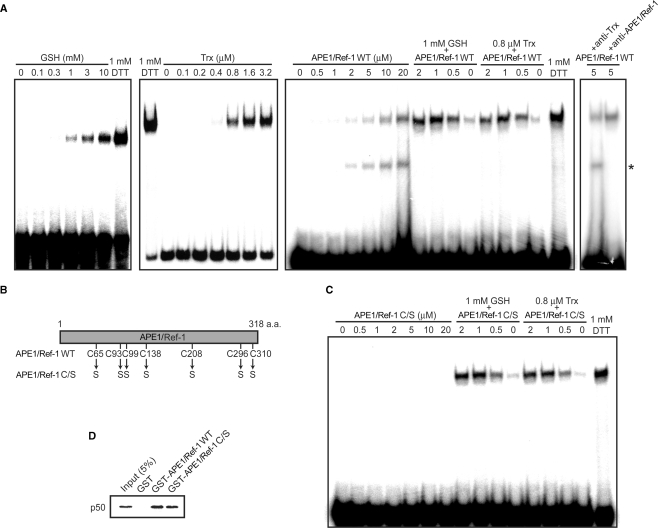
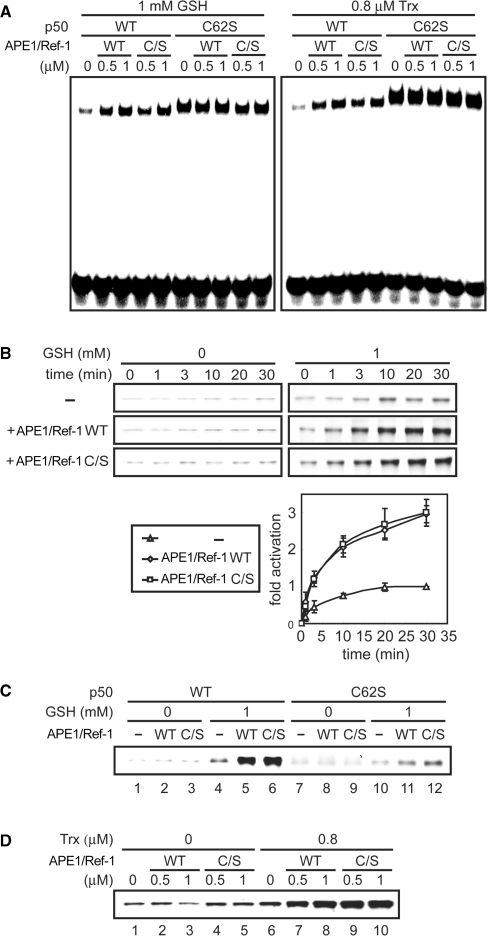
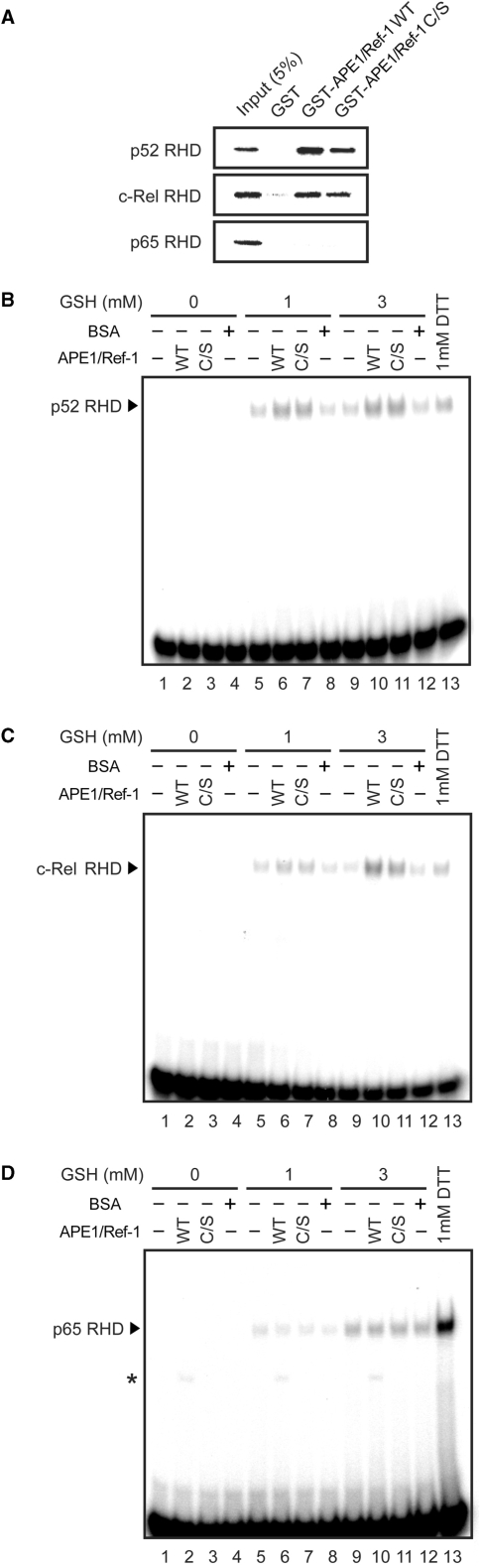
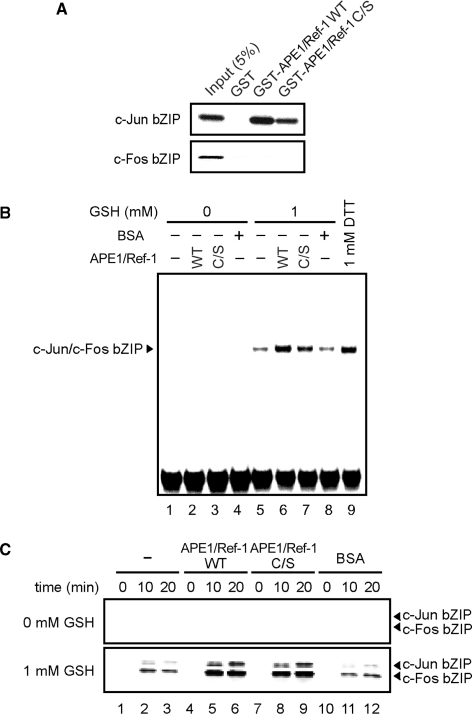
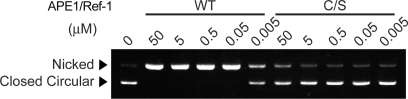
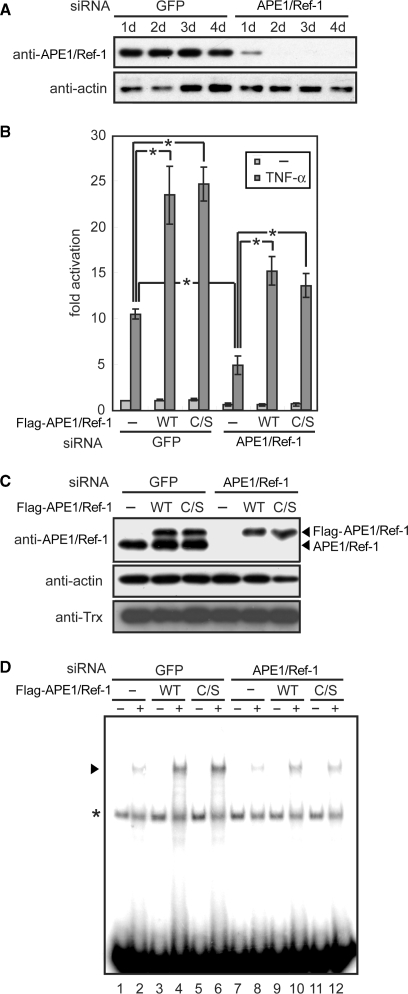
APE1/Ref-1 is thought to be a multifunctional protein involved in reduction-oxidation (redox) regulation and base excision DNA repair, and is required for early embryonic development in mice. APE1/Ref-1 has redox activity and AP endonuclease activity, and is able to enhance DNA-binding activity of several transcription factors, including NF-kappaB, AP-1 and p53, through reduction of their critical cysteine residues. However, it remains elusive exactly how APE1/Ref-1 carries out its essential functions in vivo. Here, we show that APE1/Ref-1 not only reduces target transcription factors directly but also facilitates their reduction by other reducing molecules such as glutathione or thioredoxin. The new activity of APE1/Ref-1, termed redox chaperone activity, is exerted at concentration significantly lower than that required for its redox activity and is neither dependent on its redox activity nor on its AP endonuclease activity. We also show evidence that redox chaperone activity of APE1/Ref-1 is critical to NF-kappaB-mediated gene expression in human cells and is mediated through its physical association with target transcription factors. Thus, APE1/Ref-1 may play multiple roles in an antioxidative stress response pathway through its different biochemical activities. These findings also provide new insight into the mechanism of intracellular redox regulation.
Overview
The claims and statistics of this paper haven’t been checked yet.
Free: it reads the open-access text and checks the first 5 claims that cite a source we can check. Create a free account to check every claim.
Integrity signals
Registry
Cites
Statistics
Figures
Verification
Claims the paper makes
The claims and statistics of this paper haven’t been checked yet.
Free: it reads the open-access text and checks the first 5 claims that cite a source we can check. Create a free account to check every claim.
Claims other papers make about this one
Each is checked against this paper’s own text: does it say what the citing paper says it does?
The source backs part of the claim, not all of it — or backs it for a different population, condition or comparison.
In the citing paper
“The latter factor is able to interact with thioredoxin to reduce a specific cysteine (Cys-62) in the Rel-homology domain (RHD) of the NF-kB subunit p50 that had been previously oxidized by ROS34, restoring its ability to interact with specific responsive DNA sequences35,36.”
From ROS in cancer therapy: the bright side of the moon (2020) · cites this paper as [34]
Experimental — accuracy not yet measured
Self-check
Percentages, sums and reported differences re-computed from the paper’s own numbers.
The self-check needs the paper’s full text.
Citations
Cites
Glutathione metabolism and its selective modification.
Meister, A. (1988) · Journal of Biological Chemistry · doi:10.1016/s0021-9258(19)77815-6 · Cited by 2,011
Redox Regulation of Fos and Jun DNA-Binding Activity in Vitro
Abate, C., Patel, L., Rauscher, F. J., & Curran, T. (1990) · Science · doi:10.1126/science.2118682 · Cited by 1,573
The Glutathione Status of Cells
Kosower, N. S., & Kosower, E. M. (1978) · International Review of Cytology · doi:10.1016/s0074-7696(08)60166-7 · Cited by 1,211
Huang, L. E., Arany, Z., Livingston, D. M., & Bunn, H. F. (1996) · Journal of Biological Chemistry · doi:10.1074/jbc.271.50.32253 · Cited by 1,190
Biologic and pharmacologic regulation of mammalian glutathione synthesis
Griffith, O. W. (1999) · Free Radical Biology and Medicine · doi:10.1016/s0891-5849(99)00176-8 · Cited by 1,190
Redox activation of Fos-Jun DNA binding activity is mediated by a DNA repair enzyme.
Xanthoudakis, S., Miao, G., Wang, F., Pan, Y. C., & Curran, T. (1992) · The EMBO Journal · doi:10.1002/j.1460-2075.1992.tb05411.x · Cited by 913 · cited 5×
“APE1/Ref-1 targets Cys-272 of c-Fos and Cys-154 of c-Jun, conserved cysteine residues that are located in their respective basic leucine zipper (bZIP)type DNA-binding domains (6).”
BackgroundInfluentialCellular glutathione and thiols metabolism
Dickinson, D. A., & Forman, H. J. (2002) · Biochemical Pharmacology · doi:10.1016/s0006-2952(02)01172-3 · Cited by 851
AP-1 transcriptional activity is regulated by a direct association between thioredoxin and Ref-1
Hirota, K., Matsui, M., Iwata, S., Nishiyama, A., Mori, K., & Yodoi, J. (1997) · Proceedings of the National Academy of Sciences · doi:10.1073/pnas.94.8.3633 · Cited by 843
Matthews, J. R., Wakasugi, N., virelizier, J.-L., Yodoi, J., & Hay, R. T. (1992) · Nucleic Acids Research · doi:10.1093/nar/20.15.3821 · Cited by 831 · cited 1×
“Previously, we and others have shown that Cys-62 of NF-kB p50, the key cysteine residue involved in its DNA binding is redox-regulated by APE1/Ref-1 and Trx (20, 22 ,23,34).”
BackgroundFas-Induced Caspase Denitrosylation
Mannick, J. B., Hausladen, A., Liu, L., Hess, D. T., Zeng, M., Miao, Q. X., Kane, L. S., Gow, A. J., & Stamler, J. S. (1999) · Science · doi:10.1126/science.284.5414.651 · Cited by 742
Research works printed but not linked: 8
- Nishi T Shimizu N Hiramoto M Sato I Yamaguchi Y Hasegawa M Aizawa S Tanaka H Kataoka K Watanabe H Spatial redox regulation of a critical cysteine residue of NF-kappa B in vivo J. Biol. Chem. 2002 277 44548 44556 12213807
- Kobayashi-Miura M Shioji K Hoshino Y Masutani H Nakamura H Yodoi J Oxygen sensing and redox signaling: the role of thioredoxin in embryonic development and cardiac diseases Am. J. Physiol. Heart Circ. Physiol. 2007 292 H2040 H2050 17293486
- Kataoka K Yoshitomo-Nakagawa K Shioda S Nishizawa M A set of Hox proteins interact with the Maf oncoprotein to inhibit its DNA binding, transactivation, and transforming activities J. Biol. Chem. 2001 276 819 826 11036080
- Liu Y Prasad R Beard WA Kedar PS Hou EW Shock DD Wilson SH Coordination of steps in single-nucleotide base excision repair mediated by apurinic/apyrimidinic endonuclease 1 and DNA polymerase beta J. Biol. Chem. 2007 282 13532 13541 17355977 PMC2366199
- Guan Z Basi D Li Q Mariash A Xia YF Geng JG Kao E Hall JL Loss of redox factor 1 decreases NF-kappaB activity and increases susceptibility of endothelial cells to apoptosis Arterioscler. Thromb. Vasc. Biol. 2005 25 96 101 15539619
- Hall JL Wang X Van A Zhao Y Gibbons GH Overexpression of Ref-1 inhibits hypoxia and tumor necrosis factor-induced endothelial cell apoptosis through nuclear factor-kappab-independent and -dependent pathways Circ. Res. 2001 88 1247 1253 11420300
- Watson WH Yang X Choi YE Jones DP Kehrer JP Thioredoxin and its role in toxicology Toxicol. Sci. 2004 78 3 14 14691207
- Daily D Vlamis-Gardikas A Offen D Mittelman L Melamed E Holmgren A Barzilai A Glutaredoxin protects cerebellar granule neurons from dopamine-induced apoptosis by activating NF-kappa B via Ref-1 J. Biol. Chem. 2001 276 1335 1344 11035035
Cited by
Items 101–158 of 158
The dam replacing gene product enhances Neisseria gonorrhoeae FA1090 viability and biofilm formation
Kwiatek, A., Bącal, P., Wasiluk, A., Trybunko, A., & Adamczyk-Popławska, M. (2014) · Frontiers in Microbiology · doi:10.3389/fmicb.2014.00712 · Cited by 17
“It was only demonstrated that a multifunctional eukaryotic endonuclease APE-1/Ref-1 regulates the DNA-binding activity of a number of transcription factors in a redox-dependent manner by the reduction of conserved cysteine residues in their DNA binding domains (Ando et al., 2008).”
BackgroundKrishnamurthy, N., Ngam, C. R., Berdis, A. J., & Montano, M. M. (2011) · Oncogene · doi:10.1038/onc.2011.186 · Cited by 14
“As a result, we performed endonuclease assays based on previous work by Ando et al. (2008).”
MethodHartman, G. D., Muniyandi, A., Sishtla, K. L., Kpenu, E. K., Miller, W. P., Kaplan, B. A., Kim, L. A., Liu, S., Wan, J., Qi, X., et al. (2025) · The FASEB Journal · doi:10.1096/fj.202401989rr · Cited by 13
One-Pot Rlock-Mediated CRISPR/Cas12a-Driven RCA Cycle for Rapid and High-Sensitive APE1 Detection
Shan, J., Sheng, Y., Luo, L., Wang, W., Liu, X., Ma, Y., & Wang, J. (2025) · Analytical Chemistry · doi:10.1021/acs.analchem.5c03234 · Cited by 13
Mijit, M., Wireman, R., Armstrong, L., Gampala, S., Hassan, Z., Schneeweis, C., Schneider, G., Zhang, C., Fishel, M. L., & Kelley, M. R. (2022) · Frontiers in Oncology · doi:10.3389/fonc.2022.826617 · Cited by 13
“Ref-1 redox activity can be regulated by direct interactions with other proteins such as Peroxiredoxin 1 (PRDX1) or thioredoxin 1 (TRX1) and constitute the PRDX1/Ref-1/TRX1 redox regulatory cycle in cells (15, 16).”
BackgroundGuo, L., Ding, G., Xu, W., Lu, Y., Ge, H., Jiang, Y., Chen, X., & Li, Y. (2018) · Experimental and Therapeutic Medicine · doi:10.3892/etm.2018.6936 · Cited by 13
PAMAM-Based DNA Fluorescence Nanoprobe for Rapid Whole Cellular APE1 Detection and Imaging
Li, H., Yuan, X., Ren, M., Liu, J., Zheng, Y., Lin, Z., Chen, Z., Yang, Z., Su, X., & Shen, H. (2025) · Analytical Chemistry · doi:10.1021/acs.analchem.4c06820 · Cited by 11
Oliveira, T. T., Fontes-Dantas, F. L., Oliveira, R. K. D. M., Pinheiro, D. M. L., Coutinho, L. G., da Silva, V. L., SOUZA, S. J. D., & Agnez‐Lima, L. F. (2021) · Frontiers in Cell and Developmental Biology · doi:10.3389/fcell.2021.731588 · Cited by 12
“We should also consider TFs that were not enriched by iRegulon analysis but are classic APE1/Ref-1 redox activity targets; examples include EGR1 and Jun/Fos (AP-1) (Xanthoudakis and Curran, 1992; Huang and Adamson, 1993; Pines et al., 2005; Ando et al., 2008; Fantini et al., 2008).”
BackgroundInfluentialBase excision repair in human cancer: Emerging diagnostic and therapeutic target
Zhou, W., Jing, X., Hang, R., Liu, Z., Cao, L., & Li, M. (2025) · DNA repair · doi:10.1016/j.dnarep.2025.103879 · Cited by 10
APEX1 protects against oxidative damage-induced cardiomyocyte apoptosis
Hu, Z., Ding, X., JI, Y., Liu, X., & Ding, Z. (2021) · Biocell · doi:10.32604/biocell.2021.013293 · Cited by 10
“…transcription factors, including AP-1, early growth response 1, hypoxia-inducible factor 1 subunit-α, p53, and NF-κβ to influence biological events such as the stress response and inflammation (Schindl et al., 2001; Ando et al., 2008; Luo et al., 2008; Fantini et al., 2008; Poletto et al., 2016).”
BackgroundNew insights into how adenovirus might lead to obesity: An oxidative stress theory
Waye, M. M. Y. (2011) · Free Radical Research · doi:10.3109/10715762.2011.571684 · Cited by 10
“To explain how Ref-1 might function, a mechanism has been described: APE1/Ref-1 not only reduces target transcription factors (such as NF-kappaB and AP-1) directly but also facilitates their reduction by other reducing molecules such as glutathione or thioredoxin [52].”
BackgroundLiao, C.-H., Chang, W. S., Liao, J., Wu, H., Shen, T., Yang, J., Tsai, F., Tsai, C.-W., Yu, C.-C., & BAU, D.-T. (2020) · The Chinese Journal of Physiology · doi:10.4103/cjp.cjp_72_19 · Cited by 9
“[10] In addition to its role in DNA repair, apurinic/APE is also known as a transcriptional coactivator for numerous transcription factors such as AP-1, NF-kB, Myb, HIF-1α, HLF, PAX, and p53 that are involved in cancer promotion and progression by regulating the expression of their target downstream genes.[44]”
Backgroundden Hartog, G., Butcher, L. D., Ablack, A. L., Pace, L., Ablack, J., Xiong, R., Das, S., Stappenbeck, T. S., Eckmann, L., Ernst, P. B., et al. (2021) · Frontiers in Immunology · doi:10.3389/fimmu.2020.553994 · Cited by 9
AP endonuclease 1: Biological updates and advances in activity analysis
Almeida, K. H., Andrews, M. E., & Sobol, R. W. (2024) · Methods in enzymology on CD-ROM/Methods in enzymology · doi:10.1016/bs.mie.2024.07.011 · Cited by 8
Zheng, Z., Du, W., Li, Y., Gao, M., Huang, A., & Liu, J. (2015) · Oncology Reports · doi:10.3892/or.2015.3976 · Cited by 8
Bassiouny, A. R., Atteya, M. A., El-Rashidy, F. H., & Neenaa, H. M. (2011) · Functional Foods in Health and Disease · doi:10.31989/ffhd.v1i12.108 · Cited by 8
Song, J., Futagami, S., Nagoya, H., Kawagoe, T., Yamawaki, H., Kodaka, Y., Tatsuguchi, A., Gudis, K., Wakabayashi, T., Yonezawa, M., et al. (2013) · Journal of Clinical Biochemistry and Nutrition · doi:10.3164/jcbn.12-95 · Cited by 9
Kiran, S., Wireman, R., Peil, J., Mitchell, D. K., Potchanant, E. A. S., Rai, R., Vilseck, J. Z., Cao, S., Haiaty, S., Georgiadis, M. M., et al. (2025) · Redox Biology · doi:10.1016/j.redox.2025.103848 · Cited by 6
Champion, J. D., Dodd, K. M., Lam, H. C., Alzahrani, M. A. M., Seifan, S., Rad, E., Scourfield, D. O., Fishel, M. L., Calver, B. L., Ager, A., et al. (2022) · Cancers · doi:10.3390/cancers14246195 · Cited by 7
“Ref-1 was previously described as having a redox chaperone activity, where Ref-1 regulated the DNAbinding activity of NF-κB through promoting a reduction in the critical cysteine residues within NF-κB by other reducing molecules such as GSH and thioredoxin (Trx) [25].”
BackgroundBlockade of Base Excision Repair
Vascotto, C., & Fishel, M. L. (2011) · Elsevier eBooks · doi:10.1016/b978-0-12-384999-1.10003-4 · Cited by 6
MITF Is Regulated by Redox Signals Controlled by the Selenoprotein Thioredoxin Reductase 1
Kline, C. D., Anderson, M., Bassett, J. W., Kent, G., Berryman, R., Honeggar, M., Ito, S., Wakamatsu, K., Indra, A. K., Moos, P. J., et al. (2022) · Cancers · doi:10.3390/cancers14205011 · Cited by 7
Sharma, A., Grimsley, H. E., Courtemanche, K., & Powell, S. N. (2025) · NAR Cancer · doi:10.1093/narcan/zcaf048 · Cited by 5
“The target genes under APE1 redox con-trol include HIF-1 α , p53, NF-κ B, AP-1, and others, which are involved in hypoxic adaptation, cell cycle arrest, inflammation, and apoptosis evasion [ 67 , 68 , 70 ].”
Chu, A., Sun, C., Liu, Z., Liu, S., Li, M., 宋锐, Gan, L., Wang, Y., & Fan, R. (2025) · Frontiers in Genetics · doi:10.3389/fgene.2025.1549371 · Cited by 5
Joo, H. K., Kim, S., Choi, E., Jin, H., Lee, Y., Lee, E., Kim, C., & Jeon, B. H. (2024) · Free Radical Biology and Medicine · doi:10.1016/j.freeradbiomed.2024.07.033 · Cited by 5
APE1: A Molecule of Focus with Neuroprotective and Anti-Cancer Properties
Mantha, A. K. (2013) · Journal of Biotechnology & Biomaterials · doi:10.4172/2155-952x.1000e120 · Cited by 4
Synthetic lethality in cancer: mechanisms, therapeutic exploitation and clinical translation
Camps-Fajol, C., Minguillón, J., & Surrallés, J. (2026) · Signal Transduction and Targeted Therapy · doi:10.1038/s41392-026-02954-4 · Cited by 3
“527,528 Ref-1/APE1 expression is upregulated in many tumors, which has been associated not only with increased cancer cell proliferation, migration and survival, but also with chemoresistance.”
Lee, H., Yoo, S.-J., Kim, J., Lee, Y. R., Joo, H. K., Jeon, B. H., & Kang, S. W. (2024) · Central European Journal of Immunology · doi:10.5114/ceji.2024.141946 · Cited by 3
“It serves as an antioxidant by reducing a redox-sensitive cysteine residue in activator protein-1 (AP-1) in response to oxidative stress [12, 13].”
BackgroundAPEX1 attenuates ERS-induced paraptosis by inhibiting the P53 pathway in LECs
Zhong, R., Kang, L., Geng, W., Xu, L., Li, P., Wu, M., Zhang, G., Zhou, M., Zhang, K., Ji, M., et al. (2025) · Experimental Eye Research · doi:10.1016/j.exer.2025.110393 · Cited by 3
Genetic Instability of Cancer: Biological Predictions and Clinical Implications
(2013) · CRC Press eBooks · doi:10.1201/b14587-9 · Cited by 3
Endutkin, A. V., Yatsenko, D. D., & Zharkov, D. O. (2022) · Biochemistry (Moscow) · doi:10.1134/s0006297922010023 · Cited by 3
Wang, X., & Chen, S.-Y. (2026) · Antioxidants · doi:10.3390/antiox15040470 · Cited by 2
“Early oxidative events include the nuclear accumulation of Ref-1/APE1, which regulates the DNA-binding of transcription factors such as NF-κ B and AP-1 [94,95].”
APE1/Ref-1: multifunctional biology, selective inhibition, and the path to clinical translation
Moerland, J. A., Gampala, S., Fishel, M. L., & Kelley, M. R. (2026) · Expert Opinion on Therapeutic Targets · doi:10.1080/14728222.2026.2706465 · Cited by 2
The Role of Mitochondrial Reactive Oxygen Species in Cancer
Dakubo, G. (2010) · Springer eBooks · doi:10.1007/978-3-642-11416-8_10 · Cited by 4
Expression Engineering – The IE2 Promoter/Enhancer from Mouse CMV
Imhof, M. O., Chatellard, P., Kobr, M., Pankiewicz, R., Duverger, V., Bagnoud, L., Sauvage, C., & Mossu, C. (2009) · Cell engineering · doi:10.1007/978-90-481-2245-5_2 · Cited by 2
“Moreover, DNA-binding and transcriptional activity of both AP1 and NF-kB were described to be sensitive to cellular redox status ( Ando et al., 2008 ).”
BackgroundAPE1‐Triggered Inhalable Microsphere (ATIM) for In Situ Non‐Small Cell Lung Cancer Theranostics
Guo, X., Qiu, X., Hu, X., Yang, F., Li, H., Wang, X., Lv, L., Xie, J., Yu, Z., Li, P., et al. (2026) · Advanced Materials · doi:10.1002/adma.202520216 · Cited by 1
“ItsN-terminalredoxeffectordomainfurther modulates the activity of transcription factors (e.g., NF-κ B, AP-1) by regulating their redox states, influencing cell survival and proliferation [8].”
Xu, P., Zhou, P., Luo, J., Liu, Y. F., Xiao, H., Du, J., Li, M., & Chen, C. (2026) · Molecular Biology Reports · doi:10.1007/s11033-026-11898-5 · Cited by 1
Kong, J., Ju, X., Zhang, Y., Li, J., & Jin, Y. (2026) · Analytical Chemistry · doi:10.1021/acs.analchem.6c00768 · Cited by 1
Cell Signaling and Gene Regulation by Oxidative Stress
Bansal, M., & Kaushal, N. (2014) · Springer eBooks · doi:10.1007/978-81-322-2032-9_5 · Cited by 1
Redox Factor-1 Mediates Inflammatory Response during Tumor Promotion in Skin Epidermal JB6 Cells
Robbins, D. F., Li, W., Humphrey, K., & Zhao, Y. (2012) · Open Journal of Apoptosis · doi:10.4236/ojapo.2012.13003 · Cited by 1
“Discussion cal cysteine residues of NF-B [17], we further investigated the correlation of APE1/Ref-1 and NF-B expression in early stage skin tumor promotion by comparing the expression of the NF-B transactivation subunit p65 in both promotion-sensitive (P+) and promotion-resistant (P−) cells.”
BackgroundInfluentialOxidative Stress, Redox Homeostasis and NF-κB Signaling in Neurodegeneration
Anandhan, A., Hernández-Franco, P., & Franco, R. (2015) · ACS symposium series · doi:10.1021/bk-2015-1200.ch003 · Cited by 2
Endutkin, A. V., Yatsenko, D. D., & Zharkov, D. O. (2022) · Biochemistry (Moscow) · doi:10.31857/s0320972522010018 · Cited by 1
Cell Cycle, DNA Damage Repair Systems, and Impact of Redox Regulation in Cancer
Bansal, M. P. (2023) · Springer eBooks · doi:10.1007/978-981-99-7342-2_8 · Cited by 2
den Hartog, G., Crowe, S. E., Das, S., & Ernst, P. B. (2018) · Elsevier eBooks · doi:10.1016/b978-0-12-809954-4.00027-x · Cited by 2
Intricate aspects of the thioredoxin system in redox signaling
Cebula, M. (2014) · Figshare
Montaldi, A. P. D. L. (2013) · Digital Library of Theses and Dissertations (Universidade de São Paulo) · doi:10.11606/t.17.2013.tde-24102013-103232 · Cited by 2
Functional interactions of the Tax and p13 proteins of Human T-cell Leukemia Virus Type I
Manicone, M. (2013) · Padua@research (University of Padova)
Büchner, N. (2010) · Univ. Duesseldorf: Duesseldorfer Dokumenten- und Publikationsserver
Apurinic/Apyrimindinic Endonuclease in Redox Regulation and Oxidative Stress
Georgiadis, M. M. (2011) · Elsevier eBooks · doi:10.1016/b978-0-12-384999-1.10011-3
The role of inhibitor of apoptosis (IAP) family member survivin in prostatic disease
McIlwain, D. W. (2017) · IUScholarWorks (Indiana University) · doi:10.7912/c2/328
Oxidative Stress Player in Head and Neck Cancer Therapy Response
Bostan, M., Ion, G., Mihaila, M. A., Roman, V., Constantin, C., & Neagu, M. T. (2022) · Interdisciplinary cancer research · doi:10.1007/16833_2022_39
Yang, W., Zhang, X., Xu, R., Huang, Z., Ma, Y., Yang, J., Zheng, L., Ma, G., Xu, J., Qiao, Y., et al. (2025) · bioRxiv (Cold Spring Harbor Laboratory) · doi:10.1101/2025.07.12.664497
Seifermann, M. (2017) · Gutenberg Open Science · doi:10.25358/openscience-2534 · Cited by 1
A logic-gated DNA circuit for cooperative imaging of multiple targets in living cells
Muyizere, T., Pan, Z., Dai, K., Zhao, J., Li, L., & Zhao, Y. (2026) · Chinese Chemical Letters · doi:10.1016/j.cclet.2026.113374
Haiaty, S., Moerland, J. A., Kpenu, E. K., Wireman, R., Mijit, M., Gampala, S., Mitchell, D. K., Wang, X., Sharma, A., Sardar, R., et al. (2026) · Antioxidants and Redox Signaling · doi:10.1177/15230864261489484
Computational targeting of APE1–miRNA interactions in Cancer: Prioritization of candidate modulators
Amera, G. M., Canarutto, G., Bellina, A., Tanushi, X., Sirch, D., Cacciatore, S., D’Agostino, V., Tell, G., & Piazza, S. (2026) · Bioorganic Chemistry · doi:10.1016/j.bioorg.2026.110613
Singh, D., Juvvanapudi, S. R. V., Jabbar, M. A., Heera, M. S., Sree, S. R., & Li, C. (2026) · Scientific Reports · doi:10.1038/s41598-026-74673-3
Metadata
- Authors
- Ando, K., Hirao, S., Kabe, Y., Ogura, Y., Sato, I., Yamaguchi, Y., Wada, T., & Handa, H.
- Affiliations
- Tokyo Institute of Technology (JP)
- Corresponding author
- Handa, H.
- Venue
- Nucleic Acids Research
- Publisher
- Oxford University Press (OUP)
- Published
- 2008-06-27
- Volume
- 36
- Issue
- 13
- Pages
- 4327-4336
- ISSN
- 0305-1048 (ISSN-L)
- 1362-4962
- PMC
- PMC2490748
- OpenAlex
- W2145380341
- Semantic Scholar
- b15d6666e79fbf80e0f444cbec26bffe68f6c8a4
- Cited by
- 155
- References
- 57
- Citations by year
- 2026: 8 · 2025: 9 · 2024: 8 · 2023: 5 · 2022: 13 · 2021: 8 · 2020: 3 · 2019: 6 · 2018: 5 · 2017: 5 · 2016: 4 · 2015: 6 · 2014: 15 · 2013: 10 · 2012: 7
- FWCI
- 5.90
- Type
- journal article
- Language
- en
- Open access
- gold
- doi.org
- Licence
- Locations
- Nucleic Acids Research (publishedVersion, cc-by-nc)
- PubMed Central (publishedVersion, cc-by-nc)
- PubMed (publishedVersion)
- Funders
- Ministry of Education, Culture, Sports, Science and Technology
- Japan Society for the Promotion of Science
- Japan Science and Technology Agency
- Topics
- Life Sciences › Biochemistry, Genetics and Molecular Biology › Molecular Biology › Redox biology and oxidative stress
- Life Sciences › Biochemistry, Genetics and Molecular Biology › Cancer Research › NF-κB Signaling Pathways
- Life Sciences › Biochemistry, Genetics and Molecular Biology › Molecular Biology › Genomics, phytochemicals, and oxidative stress
- Keywords
- APE1/Ref-1, NF-κB, AP-1, cysteine reduction, glutathione, thioredoxin, redox regulation, antioxidant stress response, transcriptional regulation
- MeSH terms
- Animals, Cell Line, Cysteine, DNA, Glutathione, Humans, Oxidation-Reduction, Thioredoxins, Transcription Factors, Transcriptional Activation, NF-kappa B, Transcription Factor AP-1, Molecular Chaperones, DNA-(Apurinic or Apyrimidinic Site) Lyase, Rats, NF-kappa B p50 Subunit
About these checks
Registry, retraction, Cites and statistics results are computed, not judged, with one exception: a printed reference that no index lists is read once by a model before it counts as a citation error. Claims are extracted by a model and kept only when their quote appears verbatim in the text; each cited source is then checked, with a model’s help, for whether it says what the claim relies on. Those verdicts can be wrong — read the claim’s quote and the cited source before relying on one.
Statistics and arithmetic are recomputed, not judged.
Confidence bands are shown only for fields calibrated on our annotated test set. None is calibrated yet, so no band is shown.
What counts as a claim ›How we measure confidence ›How we check this ›
Are you an author, or do you see a problem with this page? Request a review
Data sources
Bibliographic data: Semantic Scholar, OpenAlex, Crossref.
Contains information from the Semantic Scholar Academic Graph Datasets, made available under the ODC Attribution License (ODC-BY 1.0).
Semantic Scholar’s data is described in: Kinney, R., et al. (2023). The Semantic Scholar Open Data Platform. arXiv:2301.10140.
