

A new APE1/Ref-1-dependent pathway leading to reduction of NF- B and AP-1, and activation of their DNA-binding activity
Open accessThe DOI matches its Crossref record; 57 of the 57 references it cites were found in a registry or an index.
Abstract
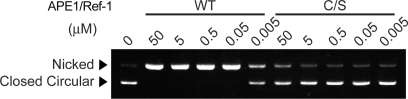
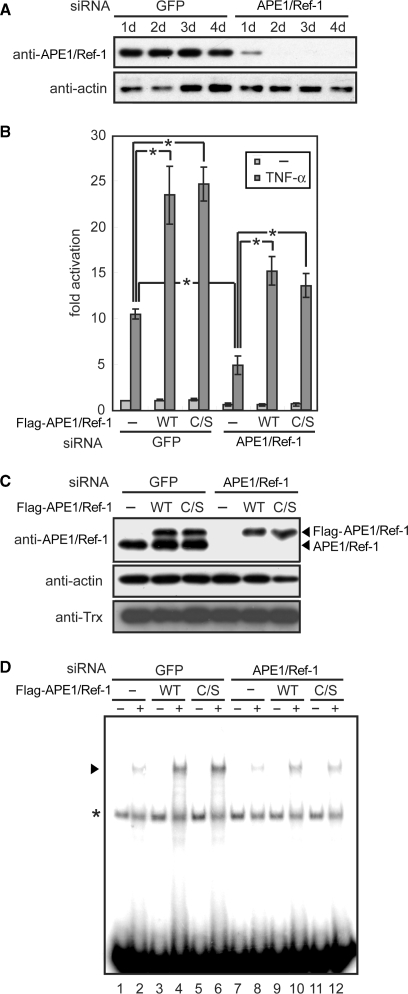
APE1/Ref-1 is thought to be a multifunctional protein involved in reduction-oxidation (redox) regulation and base excision DNA repair, and is required for early embryonic development in mice. APE1/Ref-1 has redox activity and AP endonuclease activity, and is able to enhance DNA-binding activity of several transcription factors, including NF-kappaB, AP-1 and p53, through reduction of their critical cysteine residues. However, it remains elusive exactly how APE1/Ref-1 carries out its essential functions in vivo. Here, we show that APE1/Ref-1 not only reduces target transcription factors directly but also facilitates their reduction by other reducing molecules such as glutathione or thioredoxin. The new activity of APE1/Ref-1, termed redox chaperone activity, is exerted at concentration significantly lower than that required for its redox activity and is neither dependent on its redox activity nor on its AP endonuclease activity. We also show evidence that redox chaperone activity of APE1/Ref-1 is critical to NF-kappaB-mediated gene expression in human cells and is mediated through its physical association with target transcription factors. Thus, APE1/Ref-1 may play multiple roles in an antioxidative stress response pathway through its different biochemical activities. These findings also provide new insight into the mechanism of intracellular redox regulation.
Overview
The claims and statistics of this paper haven’t been checked yet.
Free: it reads the open-access text and checks the first 5 claims that cite a source we can check. Create a free account to check every claim.
Integrity signals
Registry
Cites
Statistics
Figures
Verification
Claims the paper makes
The claims and statistics of this paper haven’t been checked yet.
Free: it reads the open-access text and checks the first 5 claims that cite a source we can check. Create a free account to check every claim.
Claims other papers make about this one
Each is checked against this paper’s own text: does it say what the citing paper says it does?
The source backs part of the claim, not all of it — or backs it for a different population, condition or comparison.
In the citing paper
“The latter factor is able to interact with thioredoxin to reduce a specific cysteine (Cys-62) in the Rel-homology domain (RHD) of the NF-kB subunit p50 that had been previously oxidized by ROS34, restoring its ability to interact with specific responsive DNA sequences35,36.”
From ROS in cancer therapy: the bright side of the moon (2020) · cites this paper as [34]
Experimental — accuracy not yet measured
Self-check
Percentages, sums and reported differences re-computed from the paper’s own numbers.
The self-check needs the paper’s full text.
Citations
Cites
Glutathione metabolism and its selective modification.
Meister, A. (1988) · Journal of Biological Chemistry · doi:10.1016/s0021-9258(19)77815-6 · Cited by 2,011
Redox Regulation of Fos and Jun DNA-Binding Activity in Vitro
Abate, C., Patel, L., Rauscher, F. J., & Curran, T. (1990) · Science · doi:10.1126/science.2118682 · Cited by 1,573
The Glutathione Status of Cells
Kosower, N. S., & Kosower, E. M. (1978) · International Review of Cytology · doi:10.1016/s0074-7696(08)60166-7 · Cited by 1,211
Huang, L. E., Arany, Z., Livingston, D. M., & Bunn, H. F. (1996) · Journal of Biological Chemistry · doi:10.1074/jbc.271.50.32253 · Cited by 1,190
Biologic and pharmacologic regulation of mammalian glutathione synthesis
Griffith, O. W. (1999) · Free Radical Biology and Medicine · doi:10.1016/s0891-5849(99)00176-8 · Cited by 1,190
Redox activation of Fos-Jun DNA binding activity is mediated by a DNA repair enzyme.
Xanthoudakis, S., Miao, G., Wang, F., Pan, Y. C., & Curran, T. (1992) · The EMBO Journal · doi:10.1002/j.1460-2075.1992.tb05411.x · Cited by 913 · cited 5×
“APE1/Ref-1 targets Cys-272 of c-Fos and Cys-154 of c-Jun, conserved cysteine residues that are located in their respective basic leucine zipper (bZIP)type DNA-binding domains (6).”
BackgroundInfluentialCellular glutathione and thiols metabolism
Dickinson, D. A., & Forman, H. J. (2002) · Biochemical Pharmacology · doi:10.1016/s0006-2952(02)01172-3 · Cited by 851
AP-1 transcriptional activity is regulated by a direct association between thioredoxin and Ref-1
Hirota, K., Matsui, M., Iwata, S., Nishiyama, A., Mori, K., & Yodoi, J. (1997) · Proceedings of the National Academy of Sciences · doi:10.1073/pnas.94.8.3633 · Cited by 843
Matthews, J. R., Wakasugi, N., virelizier, J.-L., Yodoi, J., & Hay, R. T. (1992) · Nucleic Acids Research · doi:10.1093/nar/20.15.3821 · Cited by 831 · cited 1×
“Previously, we and others have shown that Cys-62 of NF-kB p50, the key cysteine residue involved in its DNA binding is redox-regulated by APE1/Ref-1 and Trx (20, 22 ,23,34).”
BackgroundFas-Induced Caspase Denitrosylation
Mannick, J. B., Hausladen, A., Liu, L., Hess, D. T., Zeng, M., Miao, Q. X., Kane, L. S., Gow, A. J., & Stamler, J. S. (1999) · Science · doi:10.1126/science.284.5414.651 · Cited by 742
Xanthoudakis, S., & Curran, T. (1992) · The EMBO Journal · doi:10.1002/j.1460-2075.1992.tb05097.x · Cited by 708 · cited 5×
“Depurination of the DNA was performed as described previously (7).”
BackgroundInfluentialEma, M. (1999) · The EMBO Journal · doi:10.1093/emboj/18.7.1905 · Cited by 587 · cited 2×
“Tel: +81 45 924 5872; Fax: +81 45 924 5834; Email: handa.h.aa@m.titech.ac.jp The authors wish it to be known that, in their opinion, the first two authors should be regarded as joint First Authors 2008 The Author(s) This is an Open Access article distributed under the terms of the Creative Commons Attribution Non-Comm…”
InfluentialDemple, B., Herman, T., & Chen, D. S. (1991) · Proceedings of the National Academy of Sciences · doi:10.1073/pnas.88.24.11450 · Cited by 537
Chaperone Activity with a Redox Switch
Jakob, U., Muse, W., Eser, M., & Bardwell, J. C. A. (1999) · Cell · doi:10.1016/s0092-8674(00)80547-4 · Cited by 513
The redox/DNA repair protein, Ref-1, is essential for early embryonic development in mice.
Xanthoudakis, S., Smeyne, R. J., Wallace, J. D., & Curran, T. (1996) · Proceedings of the National Academy of Sciences · doi:10.1073/pnas.93.17.8919 · Cited by 504 · cited 1×
“APE1/Ref-1 null mice are unable to develop beyond the point of implantation, underscoring its vital role in vivo (50).”
BackgroundProtein Disulfide Isomerase Acts as a Redox-Dependent Chaperone to Unfold Cholera Toxin
Tsai, B., Rodighiero, C., Lencer, W. I., & Rapoport, T. A. (2001) · Cell · doi:10.1016/s0092-8674(01)00289-6 · Cited by 483
Identification of redox/repair protein Ref-1 as a potent activator of p53.
Jayaraman, L., Murthy, K. G., Zhu, C., Curran, T., Xanthoudakis, S., & Prives, C. (1997) · Genes & Development · doi:10.1101/gad.11.5.558 · Cited by 481 · cited 1×
“several transcription factors, includingNF-kB (6,20,23,34), Egr-1 (8), HIF-1a (9–11), HLF (9), Pax-5, Pax-8 (12–15) and p53 (16,17), by regulating their redox states.”
Functions of glutathione and glutathione disulfide in immunology and immunopathology
Dröge, W., Schulze‐Osthoff, K., Mihm, S., Galter, D., Schenk, H., Eck, H., Roth, S., & Gmünder, H. (1994) · The FASEB Journal · doi:10.1096/fasebj.8.14.7958618 · Cited by 444
The Skeletal Muscle Calcium Release Channel
Eu, J. P., Sun, J., Xu, L., Stamler, J. S., & Meissner, G. (2000) · Cell · doi:10.1016/s0092-8674(00)00054-4 · Cited by 433
Ramana, C. V., Boldogh, I., Izumi, T., & Mitra, S. (1998) · Proceedings of the National Academy of Sciences · doi:10.1073/pnas.95.9.5061 · Cited by 409
Protein Sulfhydryls and Their Role in the Antioxidant Function of Protein S-Thiolation
Thomas, J. A., Poland, B., & Honzatko, R. (1995) · Archives of Biochemistry and Biophysics · doi:10.1006/abbi.1995.1261 · Cited by 399
Oxidative Protein Folding Is Driven by the Electron Transport System
Bader, M., Muse, W., Ballou, D. P., Gassner, C., & Bardwell, J. C. A. (1999) · Cell · doi:10.1016/s0092-8674(00)81016-8 · Cited by 385
The redox and DNA-repair activities of Ref-1 are encoded by nonoverlapping domains.
Xanthoudakis, S., Miao, G. G., & Curran, T. (1994) · Proceedings of the National Academy of Sciences · doi:10.1073/pnas.91.1.23 · Cited by 354 · cited 1×
“For redox activity of APE1/Ref-1, the N-terminal region spanning amino acids 1–127 is shown to be necessary and sufficient for this activity (48).”
BackgroundGorman, M. A. (1997) · The EMBO Journal · doi:10.1093/emboj/16.21.6548 · Cited by 323 · cited 2×
“Although initial studies suggested that Cys-65 of human APE1/Ref-1 (Cys-64 of mouse APE1/Ref-1) is critical for redox regulation of AP-1 (35), subsequent analyses showed that this cysteine residue is not involved in redox regulation (36,37).”
BackgroundRobson, C. N., & Hickson, I. D. (1991) · Nucleic Acids Research · doi:10.1093/nar/19.20.5519 · Cited by 304
A Vital Role for Ape1/Ref1 Protein in Repairing Spontaneous DNA Damage in Human Cells
Fung, H., & Demple, B. (2005) · Molecular Cell · doi:10.1016/j.molcel.2004.12.029 · Cited by 284 · cited 2×
“More recently, it was shown that potent downregulation of APE1/Ref-1 with siRNA arrests cell proliferation and causes apoptosis with accumulation of abasic DNA damage in several human cell lines (52).”
BackgroundWalker, L. J., Robson, C. N., Black, E., Gillespie, D., & Hickson, I. D. (1993) · Molecular and Cellular Biology · doi:10.1128/mcb.13.9.5370 · Cited by 275 · cited 9×
“G AGCCGCAAGTGACTCAGCGCGGGGCGTGTG-30 and antisense, 50-GGCGTTCACTGAGTCGCGCCCCG CACACGTCC-30 for AP-1.”
BackgroundInfluentialHigh-performance affinity beads for identifying drug receptors
Shimizu, N., Sugimoto, K., Tang, J., Nishi, T., Sato, I., Hiramoto, M., Aizawa, S., Hatakeyama, M., Ohba, R., Hatori, H., et al. (2000) · Nature Biotechnology · doi:10.1038/78496 · Cited by 250 · cited 8×
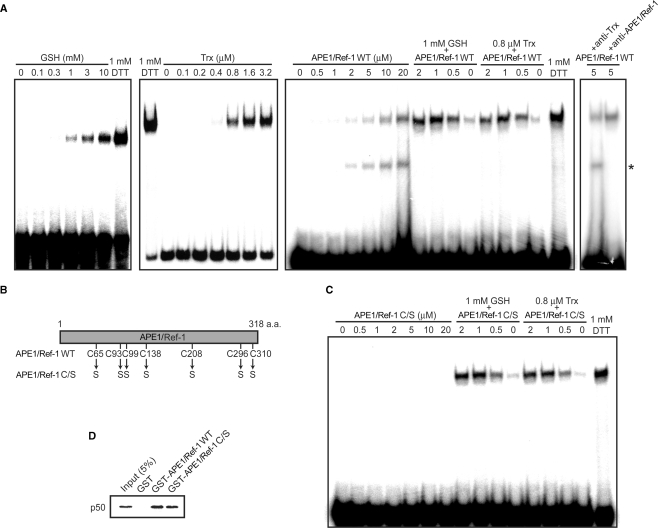
“As reported previously (20,23,34), APE1/Ref-1 also increased p50 DNA binding at relatively high concentrations, that is, at concentrations >50-fold higher than that of p50.”
BackgroundMethodSelf-citationThioredoxin and Its Role in Toxicology
Watson, W. H. (2004) · Toxicological Sciences · doi:10.1093/toxsci/kfh050 · Cited by 247 · cited 1×
“On the other hand, intracellular concentrations of GSH and Trx are estimated to be around 1mM and 1 mM, respectively (44), which are also comparable to the concentrations used in this study.”
ResultRef-1 regulates the transactivation and pro-apoptotic functions of p53 in vivo
Gaiddon, C. (1999) · The EMBO Journal · doi:10.1093/emboj/18.20.5609 · Cited by 245 · cited 1×
“several transcription factors, includingNF-kB (6,20,23,34), Egr-1 (8), HIF-1a (9–11), HLF (9), Pax-5, Pax-8 (12–15) and p53 (16,17), by regulating their redox states.”
Yao, K. S., Xanthoudakis, S., Curran, T., & O'Dwyer, P. J. (1994) · Molecular and Cellular Biology · doi:10.1128/mcb.14.9.5997 · Cited by 243
Sj, W., Botero, A. C., Hirota, K., Cm, B., Markovina, S. S., Laszlo, A., Spitz, D. R., Goswami, P. C., Yodoi, J., & Gius, D. R. (2000) · PubMed · Cited by 226
Spatial Redox Regulation of a Critical Cysteine Residue of NF-κB in Vivo
Nishi, T., Shimizu, N., Hiramoto, M., Sato, I., Yamaguchi, Y., Hasegawa, M., Aizawa, S., Tanaka, H., Kataoka, K., Watanabe, H., et al. (2002) · Journal of Biological Chemistry · doi:10.1074/jbc.m202970200 · Cited by 226 · cited 12×
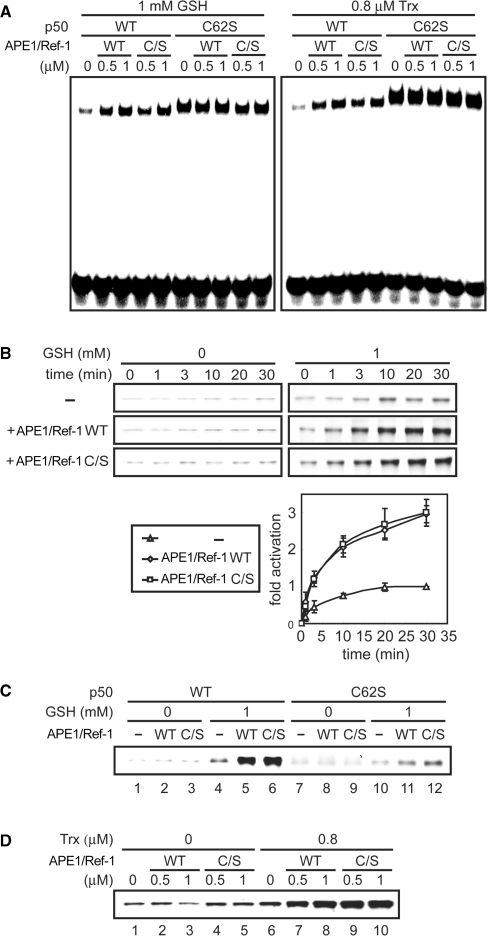
“Second, we analyzed the redox status of p50 using a thiol-modifying fluorescent reagent, F5M, as described ( 23 ).”
BackgroundMethodSelf-citationLiu, Y., Prasad, R., Beard, W. A., Kedar, P. S., Hou, E. W., Shock, D. D., & Wilson, S. H. (2007) · Journal of Biological Chemistry · doi:10.1074/jbc.m611295200 · Cited by 185 · cited 1×
“APE1/Ref-1 also has DNA-binding activity (41).”
Lando, D., Pongratz, I., Poellinger, L., & Whitelaw, M. L. (2000) · Journal of Biological Chemistry · doi:10.1074/jbc.275.7.4618 · Cited by 178
Qin, J., Clore, G. M., Kennedy, W. P., Kuszewski, J. J., & Gronenborn, A. M. (1996) · Structure · doi:10.1016/s0969-2126(96)00065-2 · Cited by 173
HUANG, R.-P., & ADAMSON, E. D. (1993) · DNA and Cell Biology · doi:10.1089/dna.1993.12.265 · Cited by 166 · cited 2×
“Tel: +81 45 924 5872; Fax: +81 45 924 5834; Email: handa.h.aa@m.titech.ac.jp The authors wish it to be known that, in their opinion, the first two authors should be regarded as joint First Authors 2008 The Author(s) This is an Open Access article distributed under the terms of the Creative Commons Attribution Non-Comm…”
InfluentialMitomo, K., Kohzo, N., Kotaro, F., Xiangao, S., Shuji, S., & Yamamoto, K.-I. (1994) · Gene · doi:10.1016/0378-1119(94)90005-1 · Cited by 162
Role of cysteine62in DNA recognition by the P50 subunit of NF-xB
Matthews, J. R., Kaszubska, W., Turcatti, G., Wells, T. N. C., & Hay, R. T. (1993) · Nucleic Acids Research · doi:10.1093/nar/21.8.1727 · Cited by 147
Toledano, M. B., Ghosh, D., Trinh, F., & Leonard, W. J. (1993) · Molecular and Cellular Biology · doi:10.1128/mcb.13.2.852 · Cited by 124
Robson, C. N., Milne, A. M., Pappin, D. J. C., & Hickson, I. D. (1991) · Nucleic Acids Research · doi:10.1093/nar/19.5.1087 · Cited by 118
Daily, D., Vlamis-Gardikas, A., Offen, D., Mittelman, L., Melamed, E., Holmgren, A., & Barzilai, A. (2001) · Journal of Biological Chemistry · doi:10.1074/jbc.m008121200 · Cited by 118 · cited 1×
“Others reported that moderate downregulation of APE1/Ref-1 with antisense cDNA in human cells increases sensitivity to oxidative stress and attenuates NF-kB activation (51).”
BackgroundRedox Potential Controls the Structure and DNA Binding Activity of the Paired Domain
Tell, G., Scaloni, A., Pellizzari, L., Formisano, S., Pucillo, C., & Damante, G. (1998) · Journal of Biological Chemistry · doi:10.1074/jbc.273.39.25062 · Cited by 109
Tell, G. (2000) · Nucleic Acids Research · doi:10.1093/nar/28.5.1099 · Cited by 109
Ref-1 Controls Pax-8 DNA-Binding Activity
Tell, G., Pellizzari, L., Cimarosti, D., Pucillo, C. E. M., & Damante, G. (1998) · Biochemical and Biophysical Research Communications · doi:10.1006/bbrc.1998.9548 · Cited by 98
Hall, J. L., Wang, X., Adamson, V., Zhao, Y., & Gibbons, G. H. (2001) · Circulation Research · doi:10.1161/hh1201.091796 · Cited by 93 · cited 1×
“A number of previous studies have implicated APE1/Ref-1 in the activation of NF-kB-mediated transcription in living cells (42,43).”
BackgroundKataoka, K., Yoshitomo-Nakagawa, K., Shioda, S., & Nishizawa, M. (2001) · Journal of Biological Chemistry · doi:10.1074/jbc.m007643200 · Cited by 81 · cited 1×
“05mg of pEF-Rluc containing the control Renilla luciferase gene (40) using Lipofectamine 2000 reagent.”
MethodNuclear targeted suppression of NF-kappa B activity by the novel quinone derivative E3330.
Hiramoto, M., Shimizu, N., Sugimoto, K., et al. (1998) · PubMed · Cited by 78
Cysteine 64 of Ref-1 Is Not Essential for Redox Regulation of AP-1 DNA Binding
Ordway, J. M., Eberhart, D., & Curran, T. (2003) · Molecular and Cellular Biology · doi:10.1128/mcb.23.12.4257-4266.2003 · Cited by 68 · cited 1×
“Although initial studies suggested that Cys-65 of human APE1/Ref-1 (Cys-64 of mouse APE1/Ref-1) is critical for redox regulation of AP-1 (35), subsequent analyses showed that this cysteine residue is not involved in redox regulation (36,37).”
BackgroundNuclear Targeted Suppression of NF-κB Activity by the Novel Quinone Derivative E3330
Hiramoto, M., Shimizu, N., Sugimoto, K., Tang, J., Kawakami, Y., Ito, M., Aizawa, S., Tanaka, H., Makino, I., & Handa, H. (1998) · The Journal of Immunology · doi:10.4049/jimmunol.160.2.810 · Cited by 67
Self-citationCao, X., Kambe, F., Ohmori, S., & Seo, H. (2002) · Biochemical and Biophysical Research Communications · doi:10.1016/s0006-291x(02)02196-4 · Cited by 50
Flaherty, D. M., Monick, M. M., Carter, A. B., Peterson, M. W., & Hunninghake, G. W. (2002) · The Journal of Immunology · doi:10.4049/jimmunol.168.11.5675 · Cited by 48
Yang, S., Misner, B. J., Chiu, R. J., & Meyskens, F. L. (2007) · Carcinogenesis · doi:10.1093/carcin/bgm128 · Cited by 46
Kobayashi‐Miura, M., Shioji, K., Hoshino, Y., Masutani, H., Nakamura, H., & Yodoi, J. (2007) · American Journal of Physiology-Heart and Circulatory Physiology · doi:10.1152/ajpheart.01316.2006 · Cited by 43
Unusual Role of a Cysteine Residue in Substrate Binding and Activity of Human AP-Endonuclease 1
Mantha, A. K., Oezguen, N., Bhakat, K. K., Izumi, T., Braun, W. A., & MITRA, S. P. (2008) · Journal of Molecular Biology · doi:10.1016/j.jmb.2008.03.052 · Cited by 37 · cited 1×
“As for AP endonuclease activity, it has been shown that mutation of each of the seven cysteine residues has no discernable effect on this activity (49).”
BackgroundGuan, Z., Basi, D. L., Li, Q., Mariash, A., Xia, Y.-F., Geng, J.-G., Kao, E., & Hall, J. L. (2004) · Arteriosclerosis Thrombosis and Vascular Biology · doi:10.1161/01.atv.0000150418.14698.75 · Cited by 32 · cited 1×
“A number of previous studies have implicated APE1/Ref-1 in the activation of NF-kB-mediated transcription in living cells (42,43).”
BackgroundSchreiber, E. H., & Schaffner, W. (1989) · Somatic Cell and Molecular Genetics · doi:10.1007/bf01534920 · Cited by 14 · cited 1×
“In Figure 6D, nuclear extracts were prepared from transfected 293T cells as described before (38), and subjected to electrophoretic mobility shift assay (EMSA).”
Method
Research works printed but not linked: 8
- Nishi T Shimizu N Hiramoto M Sato I Yamaguchi Y Hasegawa M Aizawa S Tanaka H Kataoka K Watanabe H Spatial redox regulation of a critical cysteine residue of NF-kappa B in vivo J. Biol. Chem. 2002 277 44548 44556 12213807
- Kobayashi-Miura M Shioji K Hoshino Y Masutani H Nakamura H Yodoi J Oxygen sensing and redox signaling: the role of thioredoxin in embryonic development and cardiac diseases Am. J. Physiol. Heart Circ. Physiol. 2007 292 H2040 H2050 17293486
- Kataoka K Yoshitomo-Nakagawa K Shioda S Nishizawa M A set of Hox proteins interact with the Maf oncoprotein to inhibit its DNA binding, transactivation, and transforming activities J. Biol. Chem. 2001 276 819 826 11036080
- Liu Y Prasad R Beard WA Kedar PS Hou EW Shock DD Wilson SH Coordination of steps in single-nucleotide base excision repair mediated by apurinic/apyrimidinic endonuclease 1 and DNA polymerase beta J. Biol. Chem. 2007 282 13532 13541 17355977 PMC2366199
- Guan Z Basi D Li Q Mariash A Xia YF Geng JG Kao E Hall JL Loss of redox factor 1 decreases NF-kappaB activity and increases susceptibility of endothelial cells to apoptosis Arterioscler. Thromb. Vasc. Biol. 2005 25 96 101 15539619
- Hall JL Wang X Van A Zhao Y Gibbons GH Overexpression of Ref-1 inhibits hypoxia and tumor necrosis factor-induced endothelial cell apoptosis through nuclear factor-kappab-independent and -dependent pathways Circ. Res. 2001 88 1247 1253 11420300
- Watson WH Yang X Choi YE Jones DP Kehrer JP Thioredoxin and its role in toxicology Toxicol. Sci. 2004 78 3 14 14691207
- Daily D Vlamis-Gardikas A Offen D Mittelman L Melamed E Holmgren A Barzilai A Glutaredoxin protects cerebellar granule neurons from dopamine-induced apoptosis by activating NF-kappa B via Ref-1 J. Biol. Chem. 2001 276 1335 1344 11035035
Cited by
Crosstalk of reactive oxygen species and NF-κB signaling
Morgan, M. J., & Liu, Z.-G. (2011) · Cell Research · doi:10.1038/cr.2010.178 · Cited by 3,505
ROS in cancer therapy: the bright side of the moon
Perillo, B., Di Donato, M., Pezone, A., Di Zazzo, E., Giovannelli, P., Galasso, G., Castoria, G., & Migliaccio, A. (2020) · Experimental & Molecular Medicine · doi:10.1038/s12276-020-0384-2 · Cited by 2,176
Oxidative Stress in Cancer Cell Metabolism
Arfin, S., Jha, N. K., Jha, S. K., Kesari, K. K., Ruokolainen, J., Roychoudhury, S., Rathi, B., & Kumar, D. (2021) · Antioxidants · doi:10.3390/antiox10050642 · Cited by 665
Basic Principles and Emerging Concepts in the Redox Control of Transcription Factors
Brigelius-Flohé, R., & Flohé, L. (2011) · Antioxidants & Redox Signaling · doi:10.1089/ars.2010.3534 · Cited by 576
Thioredoxins and Glutaredoxins: Unifying Elements in Redox Biology
Meyer, Y., Buchanan, B. B., Vignols, F., & Reichheld, J.-P. (2009) · Annual Review of Genetics · doi:10.1146/annurev-genet-102108-134201 · Cited by 488
“Ref1 then either directly reduces NF kappaB, AP-1, p53 (3), and ASK1 (45) or facilitates reduction by Trx, Grx, or GSH.”
Background
Metadata
- Authors
- Ando, K., Hirao, S., Kabe, Y., Ogura, Y., Sato, I., Yamaguchi, Y., Wada, T., & Handa, H.
- Affiliations
- Tokyo Institute of Technology (JP)
- Corresponding author
- Handa, H.
- Venue
- Nucleic Acids Research
- Publisher
- Oxford University Press (OUP)
- Published
- 2008-06-27
- Volume
- 36
- Issue
- 13
- Pages
- 4327-4336
- ISSN
- 0305-1048 (ISSN-L)
- 1362-4962
- PMC
- PMC2490748
- OpenAlex
- W2145380341
- Semantic Scholar
- b15d6666e79fbf80e0f444cbec26bffe68f6c8a4
- Cited by
- 155
- References
- 57
- Citations by year
- 2026: 8 · 2025: 9 · 2024: 8 · 2023: 5 · 2022: 13 · 2021: 8 · 2020: 3 · 2019: 6 · 2018: 5 · 2017: 5 · 2016: 4 · 2015: 6 · 2014: 15 · 2013: 10 · 2012: 7
- FWCI
- 5.90
- Type
- journal article
- Language
- en
- Open access
- gold
- doi.org
- Licence
- Locations
- Nucleic Acids Research (publishedVersion, cc-by-nc)
- PubMed Central (publishedVersion, cc-by-nc)
- PubMed (publishedVersion)
- Funders
- Ministry of Education, Culture, Sports, Science and Technology
- Japan Society for the Promotion of Science
- Japan Science and Technology Agency
- Topics
- Life Sciences › Biochemistry, Genetics and Molecular Biology › Molecular Biology › Redox biology and oxidative stress
- Life Sciences › Biochemistry, Genetics and Molecular Biology › Cancer Research › NF-κB Signaling Pathways
- Life Sciences › Biochemistry, Genetics and Molecular Biology › Molecular Biology › Genomics, phytochemicals, and oxidative stress
- Keywords
- APE1/Ref-1, NF-κB, AP-1, cysteine reduction, glutathione, thioredoxin, redox regulation, antioxidant stress response, transcriptional regulation
- MeSH terms
- Animals, Cell Line, Cysteine, DNA, Glutathione, Humans, Oxidation-Reduction, Thioredoxins, Transcription Factors, Transcriptional Activation, NF-kappa B, Transcription Factor AP-1, Molecular Chaperones, DNA-(Apurinic or Apyrimidinic Site) Lyase, Rats, NF-kappa B p50 Subunit
About these checks
Registry, retraction, Cites and statistics results are computed, not judged, with one exception: a printed reference that no index lists is read once by a model before it counts as a citation error. Claims are extracted by a model and kept only when their quote appears verbatim in the text; each cited source is then checked, with a model’s help, for whether it says what the claim relies on. Those verdicts can be wrong — read the claim’s quote and the cited source before relying on one.
Statistics and arithmetic are recomputed, not judged.
Confidence bands are shown only for fields calibrated on our annotated test set. None is calibrated yet, so no band is shown.
What counts as a claim ›How we measure confidence ›How we check this ›
Are you an author, or do you see a problem with this page? Request a review
Data sources
Bibliographic data: Semantic Scholar, OpenAlex, Crossref.
Contains information from the Semantic Scholar Academic Graph Datasets, made available under the ODC Attribution License (ODC-BY 1.0).
Semantic Scholar’s data is described in: Kinney, R., et al. (2023). The Semantic Scholar Open Data Platform. arXiv:2301.10140.
