

PCNA directs type 2 RNase H activity on DNA replication and repair substrates
Open accessThe DOI matches its Crossref record; 60 of the 60 references it cites were found in a registry or an index.
Abstract
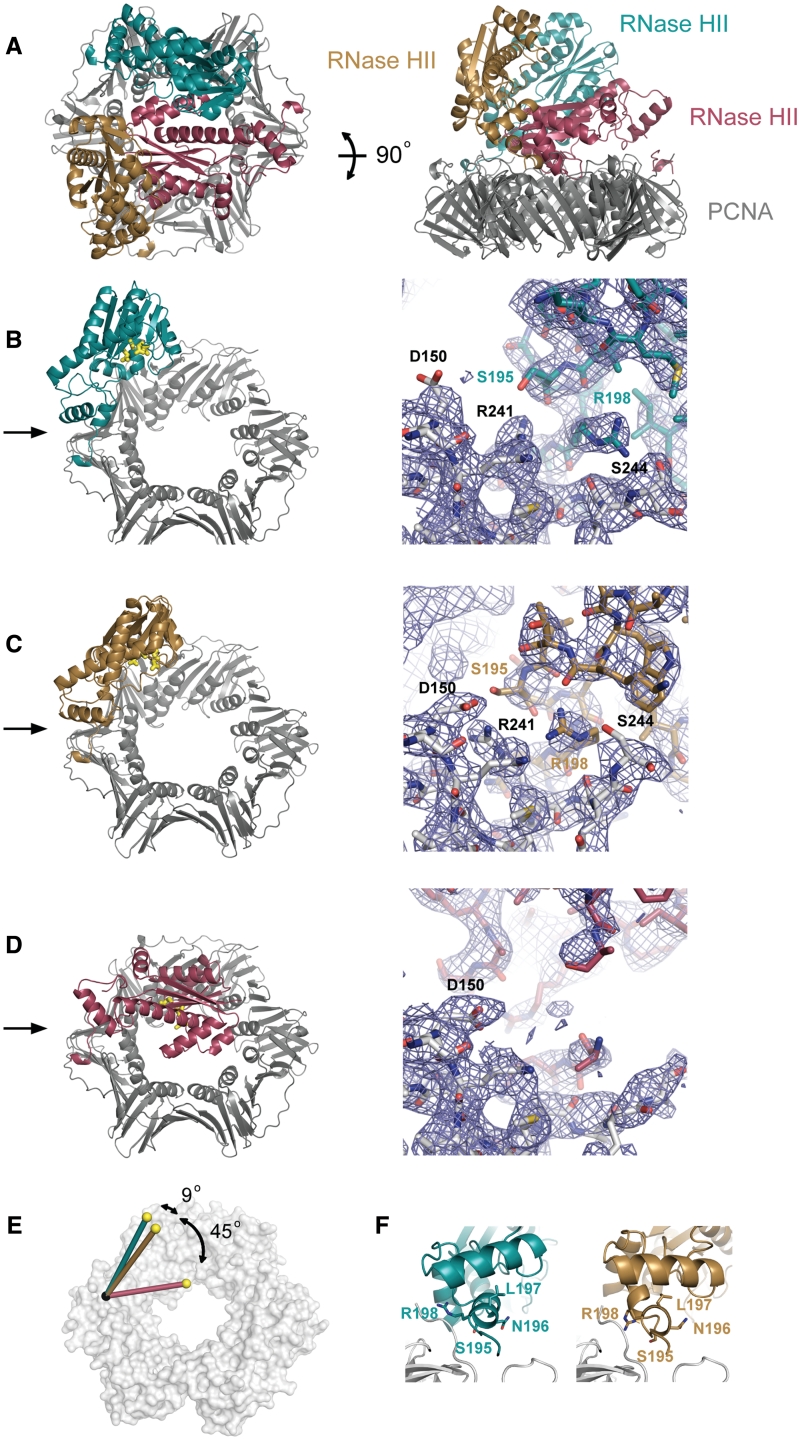
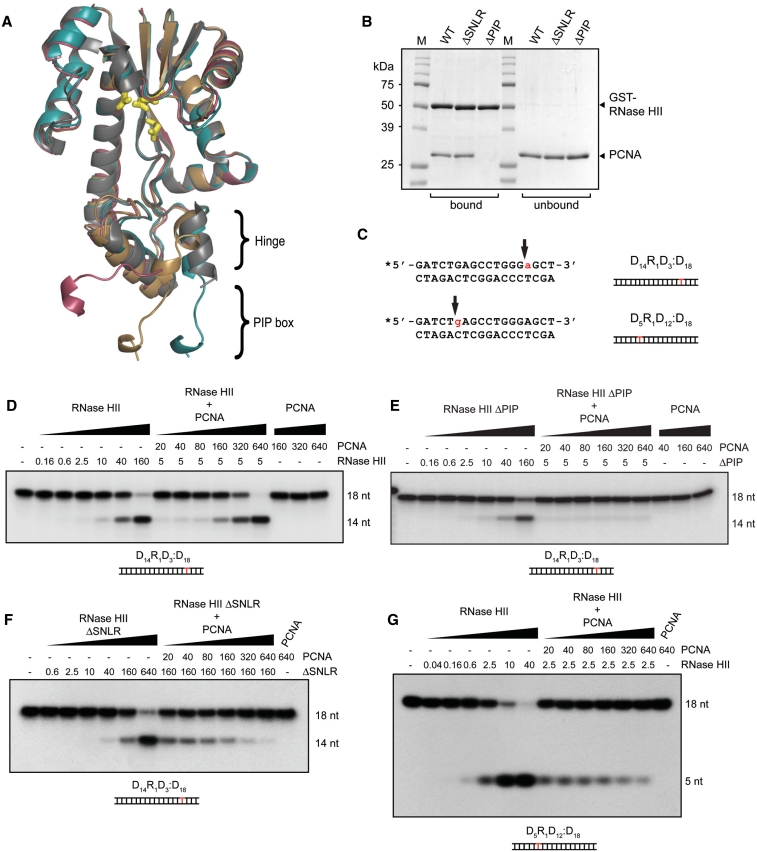
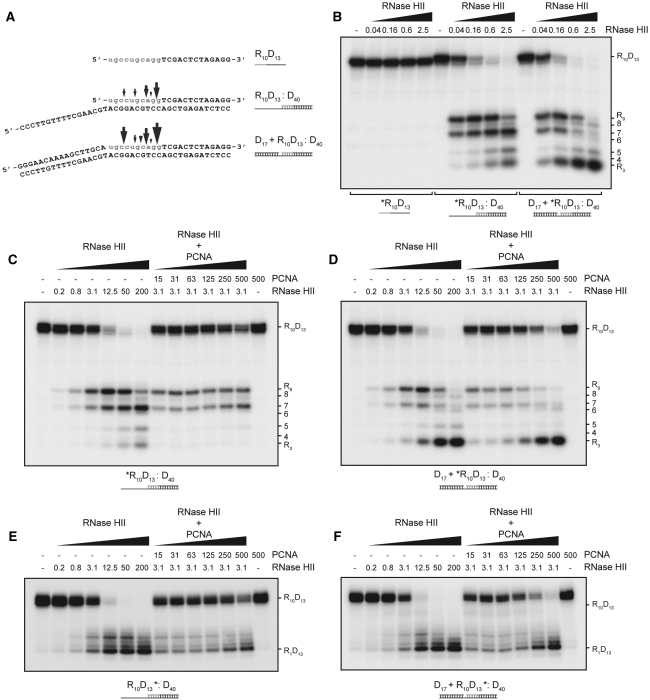
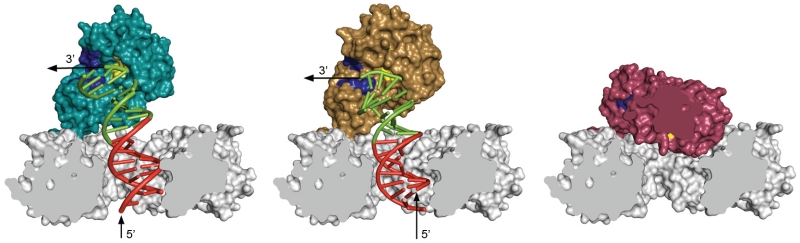
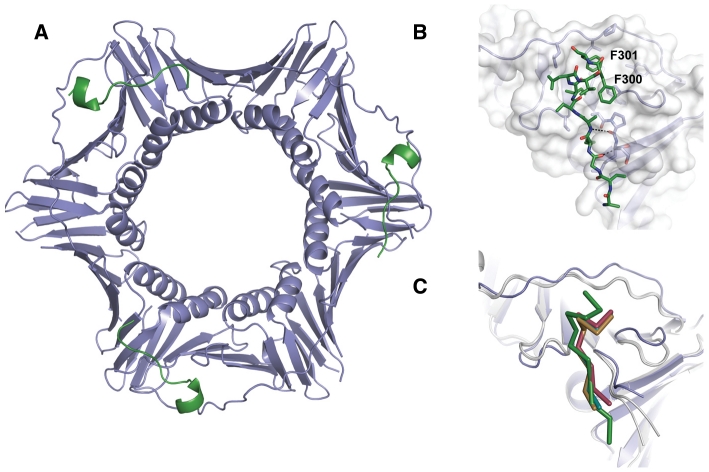
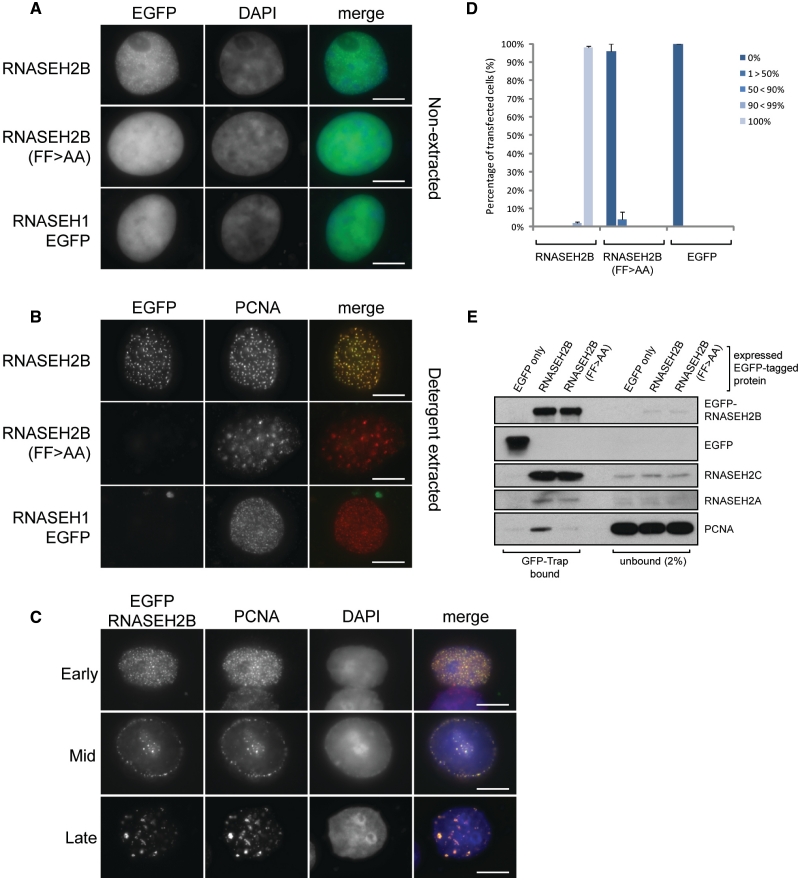
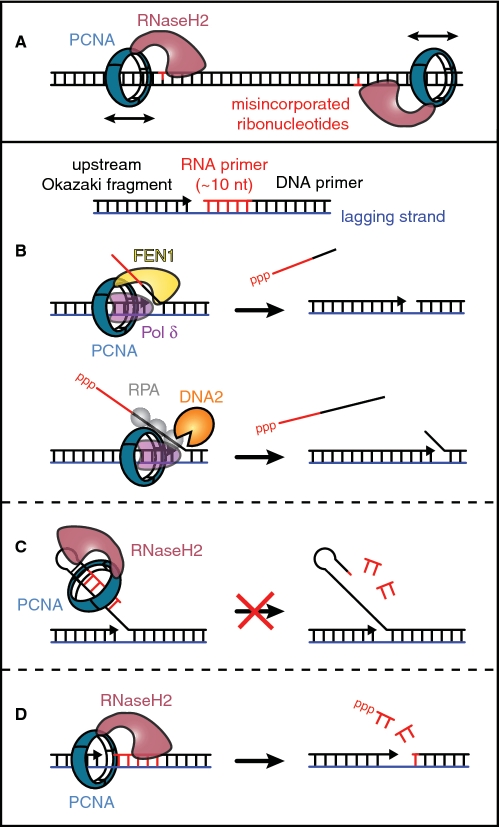
Ribonuclease H2 is the major nuclear enzyme degrading cellular RNA/DNA hybrids in eukaryotes and the sole nuclease known to be able to hydrolyze ribonucleotides misincorporated during genomic replication. Mutation in RNASEH2 causes Aicardi-Goutières syndrome, an auto-inflammatory disorder that may arise from nucleic acid byproducts generated during DNA replication. Here, we report the crystal structures of Archaeoglobus fulgidus RNase HII in complex with PCNA, and human PCNA bound to a C-terminal peptide of RNASEH2B. In the archaeal structure, three binding modes are observed as the enzyme rotates about a flexible hinge while anchored to PCNA by its PIP-box motif. PCNA binding promotes RNase HII activity in a hinge-dependent manner. It enhances both cleavage of ribonucleotides misincorporated in DNA duplexes, and the comprehensive hydrolysis of RNA primers formed during Okazaki fragment maturation. In addition, PCNA imposes strand specificity on enzyme function, and by localizing RNase H2 and not RNase H1 to nuclear replication foci in vivo it ensures that RNase H2 is the dominant RNase H activity during nuclear replication. Our findings provide insights into how type 2 RNase H activity is directed during genome replication and repair, and suggest a mechanism by which RNase H2 may suppress generation of immunostimulatory nucleic acids.
Overview
The claims and statistics of this paper haven’t been checked yet.
Free: it reads the open-access text and checks the first 5 claims that cite a source we can check. Create a free account to check every claim.
Integrity signals
Registry
Cites
Statistics
Figures
Verification
Claims the paper makes
The claims and statistics of this paper haven’t been checked yet.
Free: it reads the open-access text and checks the first 5 claims that cite a source we can check. Create a free account to check every claim.
Claims other papers make about this one
Each is checked against this paper’s own text: does it say what the citing paper says it does?
The cited source says what the claim attributes to it.
In the citing paper
“It has been shown in mammalian cells that this domain, which contains important residues F300 and F301, is essential for RNase H2 localization to the site of replication (Bubeck et al. 2011).”
From Ribonucleotide errors, RNase HII, and ribonucleotide excision repair (2026) · cites this paper as Bubeck et al. 2011
The cited source says what the claim attributes to it.
In the citing paper
“The motif inserts into a hydrophobic groove near the C-terminus of PCNA, stimulating activity of RNase HII on Okazaki fragments and single ribonucleotide errors (Bubeck et al. 2011).”
From Ribonucleotide errors, RNase HII, and ribonucleotide excision repair (2026) · cites this paper as Bubeck et al. 2011
The cited source says what the claim attributes to it.
In the citing paper
“Similar to what has been observed in eukaryotes, archaeal RNase HII can bind PCNA in three different modes via the PIP-box motif (Bubeck et al. 2011).”
From Ribonucleotide errors, RNase HII, and ribonucleotide excision repair (2026) · cites this paper as Bubeck et al. 2011
Self-check
Percentages, sums and reported differences re-computed from the paper’s own numbers.
The self-check needs the paper’s full text.
Citations
Cites
Coot : model-building tools for molecular graphics
Emsley, P., & Cowtan, K. (2004) · Acta Crystallographica Section D Biological Crystallography · doi:10.1107/s0907444904019158 · Cited by 30,571
PHENIX : a comprehensive Python-based system for macromolecular structure solution
Adams, P. D., Afonine, P. V., Bunkóczi, G., Chen, V. B., Davis, I. W., Echols, N., Headd, J. J., Hung, L.-W., Kapral, G. J., Grosse-Kunstleve, R. W., et al. (2010) · Acta Crystallographica Section D Biological Crystallography · doi:10.1107/s0907444909052925 · Cited by 23,716
The CCP4 suite: programs for protein crystallography
Collaborative Computational Project, N. 4. (1994) · Acta Crystallographica Section D Biological Crystallography · doi:10.1107/s0907444994003112 · Cited by 17,270
Inference of Macromolecular Assemblies from Crystalline State
Krissinel, E., & Henrick, K. (2007) · Journal of Molecular Biology · doi:10.1016/j.jmb.2007.05.022 · Cited by 9,984
PHENIX: a comprehensive Python-based system for macromolecular structure solution
Adams, P. D., Afonine, P. V., Bunkóczi, G., Chen, V. B., Davis, I. W., Echols, N., Headd, J. J., Hung, L.-W., Kapral, G. J., Grosse-Kunstleve, R. W., et al. (2012) · International Tables for Crystallography · doi:10.1107/97809553602060000865 · Cited by 7,334
MolProbity: all-atom contacts and structure validation for proteins and nucleic acids
Davis, I. W., Leaver-Fay, A., Chen, V. B., Block, J. N., Kapral, G. J., Wang, X., Murray, L. W., Arendall, W. B., Snoeyink, J., Richardson, J. S., et al. (2007) · Nucleic Acids Research · doi:10.1093/nar/gkm216 · Cited by 3,896
Likelihood-enhanced fast translation functions
McCoy, A. J., Grosse-Kunstleve, R. W., Storoni, L. C., & Read, R. J. (2005) · Acta Crystallographica Section D Biological Crystallography · doi:10.1107/s0907444905001617 · Cited by 1,639
xia2: an expert system for macromolecular crystallography data reduction
Winter, G. (2010) · Journal of Applied Crystallography · doi:10.1107/s0021889809045701 · Cited by 1,413
REFMAC 5 dictionary: organization of prior chemical knowledge and guidelines for its use
Vagin, A. A., Steiner, R. A., Lebedev, A. A., Potterton, L., McNicholas, S., Long, F., & Murshudov, G. N. (2004) · Acta Crystallographica Section D Biological Crystallography · doi:10.1107/s0907444904023510 · Cited by 1,350
Proliferating cell nuclear antigen (PCNA): a dancer with many partners
Maga, G., & Hübscher, U. (2003) · Journal of Cell Science · doi:10.1242/jcs.00653 · Cited by 1,096
Research works printed but not linked: 1
- Smart O Brandl M Flensburg C Keller P Paciorek W Vonrhein C Womack T Bricogne G Abstract TP139 Annual Meeting of the ACA 2008 Knoxville, TN, 137
Cited by
Items 101–144 of 144
A novel DNAzyme-based paper sensor for the simple visual detection of RNase H activity
Zhang, S., Xie, Y., Li, Y., Ren, J., Deng, T., & Li, J. (2020) · Sensors and Actuators B Chemical · doi:10.1016/j.snb.2020.129400 · Cited by 8
Tannous, E., & Kanaya, S. (2014) · PLoS ONE · doi:10.1371/journal.pone.0109016 · Cited by 6
Iwata, F., Hirakawa, H., & Nagamune, T. (2016) · Scientific Reports · doi:10.1038/srep26588 · Cited by 6
Li, H., Sandhu, M., Malkas, L. H., Hickey, R. J., & Vaidehi, N. (2017) · Journal of Chemical Information and Modeling · doi:10.1021/acs.jcim.7b00171 · Cited by 6
Genetic requirements for repair of lesions caused by single genomic ribonucleotides in S phase
Schindler, N., Tonn, M., Kellner, V., Fung, J. J., Lockhart, A., Vydzhak, O., Juretschke, T., Möckel, S., Beli, P., Khmelinskii, A., et al. (2023) · Nature Communications · doi:10.1038/s41467-023-36866-6 · Cited by 5
Wilkins, R. J., & Petermann, E. (2025) · Journal of Cell Science · doi:10.1242/jcs.264148 · Cited by 6
Human RNase H2 upregulation counteracts oncogene- and chemotherapy-induced replication stress
Wilkins, R. J., Kannan, A., Plass, S., Wilson, C., Kelly, R. D., Tang, C. H. M., Kotsantis, P., Reijns, M. A. M., Kanhere, A., & Petermann, E. (2025) · Oncogene · doi:10.1038/s41388-025-03489-8 · Cited by 5
Self-citationThe relevance of RNA–DNA interactions as regulators of physiological functions
Stötzel, J., Warwick, T., Tirunagari, P., Brandes, R. P., & Leisegang, M. S. (2025) · Pflügers Archiv - European Journal of Physiology · doi:10.1007/s00424-025-03091-7 · Cited by 5
Brain somatic mutations in Alzheimer’s disease: linking genetic mosaicism to neurodegeneration
Li, Z., Zhang, J., Liu, Z., Yu, L., Yang, C., Zhang, L., Xiang, Z., Hu, F., Brazh, N., Shu, K., et al. (2025) · Molecular Neurodegeneration · doi:10.1186/s13024-025-00895-0 · Cited by 7
An Overview of Ribonuclease Repertoire and RNA Processing Pathways in Archaea
Phung, D. K., Bouvier, M., & Clouet-d’Orval, B. (2017) · Nucleic acids and molecular biology · doi:10.1007/978-3-319-65795-0_4 · Cited by 6
Hashimoto, H., Hara, K., & Hishiki, A. (2022) · The Journal of Biochemistry · doi:10.1093/jb/mvac053 · Cited by 4
Redox-driven ADAR1 activation promotes Okazaki fragment maturation and DNA replication integrity
Chen, B., Sun, G., Kloeber, J. A., Xiao, H., Ouyang, Y., Zhao, F., Li, Y., Xu, S., Dragojevic, S., Wu, Z., et al. (2026) · Nature Structural & Molecular Biology · doi:10.1038/s41594-025-01736-w · Cited by 4
A Novel DNAzyme Signal Amplification-based Colorimetric Method for RNase H Assays
Xie, Y., Zhang, S., Deng, T., Zhang, K., Ren, J., & Li, J. (2020) · Analytical Sciences · doi:10.2116/analsci.20p337 · Cited by 3
N(6)-methyladenosine modification of RNA is regulated by senataxin and E6 to control HPV replication
Templeton, C. W., & Laimins, L. A. (2026) · Cell Reports · doi:10.1016/j.celrep.2025.116828 · Cited by 2
Ribonucleotide and R-Loop Damage in Plastid DNA and Mitochondrial DNA during Maize Development
Tripathi, D., Oldenburg, D. J., & Bendich, A. J. (2023) · Plants · doi:10.3390/plants12173161 · Cited by 2
Kowalska, E., Strzałka, W., & Oyama, T. (2020) · Acta Biochimica Polonica · doi:10.18388/abp.2020_2896 · Cited by 3
Ding, S., Wei, Y., Yang, M., Shi, J., Ren, K., Li, X., & Tang, Z. (2025) · Frontiers in Pharmacology · doi:10.3389/fphar.2025.1589150 · Cited by 1
APOBEC3B regulates HPV replication by inducing R-loop formation and DNA damage
Templeton, C. W., Gulik, J. S., & Laimins, L. A. (2026) · PLoS Pathogens · doi:10.1371/journal.ppat.1014088 · Cited by 1
Lagging Strand Synthesis and Genomic Stability
Nguyen, T. A., Lee, C., & Seo, Y. (2011) · InTech eBooks · doi:10.5772/22007 · Cited by 3
New Technologies, Cultures and Drug Campaigns
Al, B. (2009) · InTech eBooks · doi:10.5772/7406 · Cited by 1
Duffy, C. M. (2016) · The Journal of the American Medical Association (JAMA) Network (American Medical Association) · doi:10.13028/m22p45 · Cited by 1
Ribonucleotide errors, RNase HII, and ribonucleotide excision repair
Cresti, J. R., & Simmons, L. A. (2026) · Critical Reviews in Biochemistry and Molecular Biology · doi:10.1080/10409238.2026.2704628
“The PIP-box motif on RNase H2B (dark purple) aids in recruitment through PCNA (dark blue) and Pol δ (Bubeck et al. 2011).”
InfluentialLestini, R., Crézé, C., Flament, D., Myllykallio, H., & Henneke, G. (2011) · InTech eBooks · doi:10.5772/23361
Potenski, C. J., & Klein, H. L. (2014)
Genome-wide DNA hypomethylation and RNA:DNA hybrid accumulation in Aicardi-Gouti`
Lim, Y. W., Sanz, L. A., Xu, X., & Hartono, S. R. (2015)
Bui, T. T. T. (2016) · Scholarship@Western (Western University)
Briggs, E. M., Crouch, K., Lemgruber, L., Hamilton, G. M., Lapsley, C. T., & McCulloch, R. (2019) · bioRxiv (Cold Spring Harbor Laboratory) · doi:10.1101/541300
Lichten, M. (2013) · Faculty Opinions – Post-Publication Peer Review of the Biomedical Literature · doi:10.3410/f.718001967.793476723
Nanjundagowda, V. K., Paikaraya, S., Srinivasan, V. M., & Srivastava, A. (2023) · Cureus · doi:10.7759/cureus.40366
RNA Classes and Their Maturation and Degradation Enzymes
Batista, M., Clouet-d’Orval, B., & Bouvier, M. (2025) · Wiley eBooks · doi:10.1002/9781394372560.ch4
Replisome progression regulates R-loop mediated transcriptional repressionPreprint
Tsirkas, I., Lee, C. S. K., Dovrat, D., Singh, N., Paleiov, Z., Lalonde, M., Sajid, A., Aharoni, A., & Hamperl, S. (2025) · bioRxiv (Cold Spring Harbor Laboratory) · doi:10.1101/2025.07.29.667376 · Cited by 1
Voronin, A. A., Oscorbin, I. P., Novikova, L. M., Voskoboev, M. E., & Филипенко, М. Л. (2025) · bioRxiv (Cold Spring Harbor Laboratory) · doi:10.64898/2025.12.08.693097
Role of CTF18 and SAMHD1 in human DNA replication and genome integrity maintenance
Silva, M. J. (2014) · theses.fr (ABES) · doi:10.70675/988b3c5fzb231z4dbfz989cz8f4343b71a76
Cellular factors controlling human L1 retrotransposition
Galantonu, R. N. (2017) · theses.fr (ABES) · doi:10.70675/f24810a8z4f50z444fz84f0z11863b900b95
Phung, D. K. (2017) · theses.fr (ABES) · doi:10.70675/6b748733ze6b4z4f6fza40czb1f63377973a · Cited by 1
Lü, Y. (2018) · theses.fr (ABES) · doi:10.70675/16499280z0b60z48c3z9daez312cfec633a3 · Cited by 1
Étude du rôle des protéines Ribonucléases H dans la réponse cellulaire au stress réplicatif
Kemiha, S. (2022) · theses.fr (ABES) · doi:10.70675/838e1563z0a0ez4ecdza7c4zc6dc0a36d63f
Characterizing the interplay between DNA : RNA hybrids and genome stability
Mangione, R. M. (2024) · theses.fr (ABES) · doi:10.70675/9ac3610bz2f0ez4ce2zac24zd9863979d34e
An integrated G-quadruplex–hemin DNAzyme for detection of RNase H activity and its inhibition
Zhu, M., Zheng, K., Zhao, B., Li, M., Lu, X., Feng, B., Xi, Y., & Gao, C. (2026) · The Analyst · doi:10.1039/d6an00472e
When circular RNAs meet the genome: CiR-loops as chromatin regulators and disease drivers
Zhou, M., You, J., Chen, L., Su, R., & Huang, C. (2026) · Nucleic Acids Research · doi:10.1093/nar/gkag816
Metadata
- Authors
- Bubeck, D., Reijns, M. A. M., Graham, S. C., Astell, K. R., Jones, E. Y., & Jackson, A. P.
- Affiliations
- Centre for Human Genetics (GB)
- Corresponding author
- Jackson, Andrew P.
- Venue
- Nucleic Acids Research
- Publisher
- Oxford University Press (OUP)
- Published
- 2011-01-17
- Volume
- 39
- Issue
- 9
- Pages
- 3652-3666
- ISSN
- 0305-1048 (ISSN-L)
- 1362-4962
- PMC
- PMC3089482
- OpenAlex
- W2117423564
- Semantic Scholar
- 6147f0430c9753cc18a75bf4f700011721396955
- Cited by
- 144
- References
- 60
- Citations by year
- 2026: 7 · 2025: 10 · 2024: 9 · 2023: 7 · 2022: 8 · 2021: 4 · 2020: 8 · 2019: 16 · 2018: 4 · 2017: 12 · 2016: 8 · 2015: 8 · 2014: 13 · 2013: 16 · 2012: 9
- FWCI
- 5.46
- Type
- journal article
- Language
- en
- Open access
- gold
- doi.org
- Licence
- Locations
- Nucleic Acids Research (publishedVersion, cc-by-nc)
- PubMed Central (publishedVersion, cc-by-nc)
- PubMed (publishedVersion)
- Edinburgh Research Explorer (University of Edinburgh) (submittedVersion, cc-by-nc)
- Funders
- Wellcome Trust (075491, 075491/Z/04,, 090532)
- Diamond Light Source
- Cancer Research UK
- Medical Research Council (MC_EX_G0601852)
- Topics
- Life Sciences › Biochemistry, Genetics and Molecular Biology › Molecular Biology › DNA Repair Mechanisms
- Life Sciences › Biochemistry, Genetics and Molecular Biology › Molecular Biology › DNA and Nucleic Acid Chemistry
- Life Sciences › Biochemistry, Genetics and Molecular Biology › Structural Biology › Enzyme Structure and Function
- Keywords
- PCNA, RNase H2, RNase H1, DNA replication, DNA repair, Aicardi-Goutières syndrome, Archaeoglobus fulgidus, crystal structure, Okazaki fragment maturation, strand specificity, autoinflammatory disease
- MeSH terms
- Crystallography, DNA Replication, Humans, Models, Molecular, Peptides, Ribonuclease H, Proliferating Cell Nuclear Antigen, Archaeoglobus fulgidus, DNA Repair Enzymes
About these checks
Registry, retraction, Cites and statistics results are computed, not judged, with one exception: a printed reference that no index lists is read once by a model before it counts as a citation error. Claims are extracted by a model and kept only when their quote appears verbatim in the text; each cited source is then checked, with a model’s help, for whether it says what the claim relies on. Those verdicts can be wrong — read the claim’s quote and the cited source before relying on one.
Statistics and arithmetic are recomputed, not judged.
Confidence bands are shown only for fields calibrated on our annotated test set. None is calibrated yet, so no band is shown.
What counts as a claim ›How we measure confidence ›How we check this ›
Are you an author, or do you see a problem with this page? Request a review
Data sources
Bibliographic data: Semantic Scholar, OpenAlex, Crossref.
Contains information from the Semantic Scholar Academic Graph Datasets, made available under the ODC Attribution License (ODC-BY 1.0).
Semantic Scholar’s data is described in: Kinney, R., et al. (2023). The Semantic Scholar Open Data Platform. arXiv:2301.10140.
