

UVA-induced DNA double-strand breaks result from the repair of clustered oxidative DNA damages
Open accessThe DOI matches its Crossref record; 63 of the 63 references it cites were found in a registry or an index.
Abstract
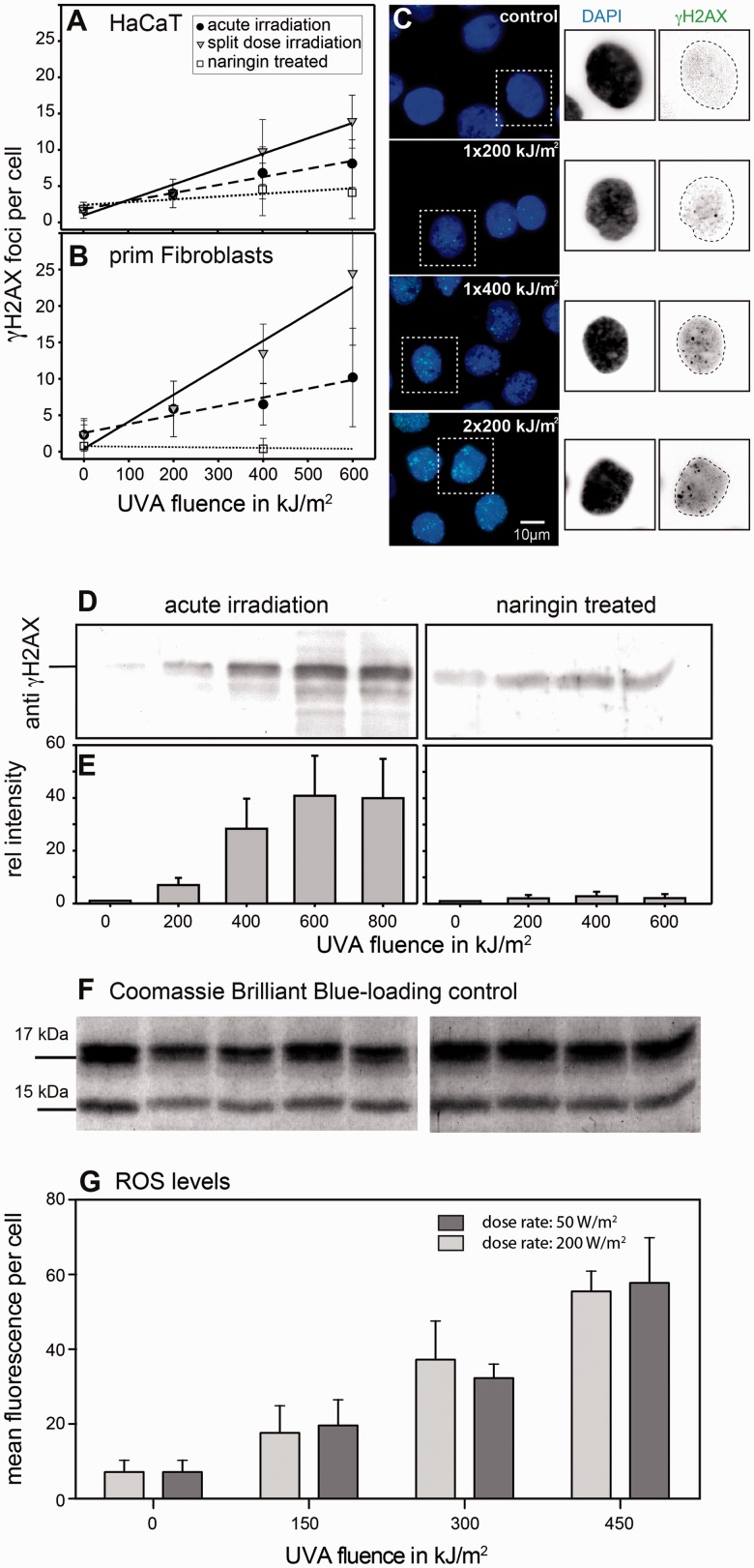
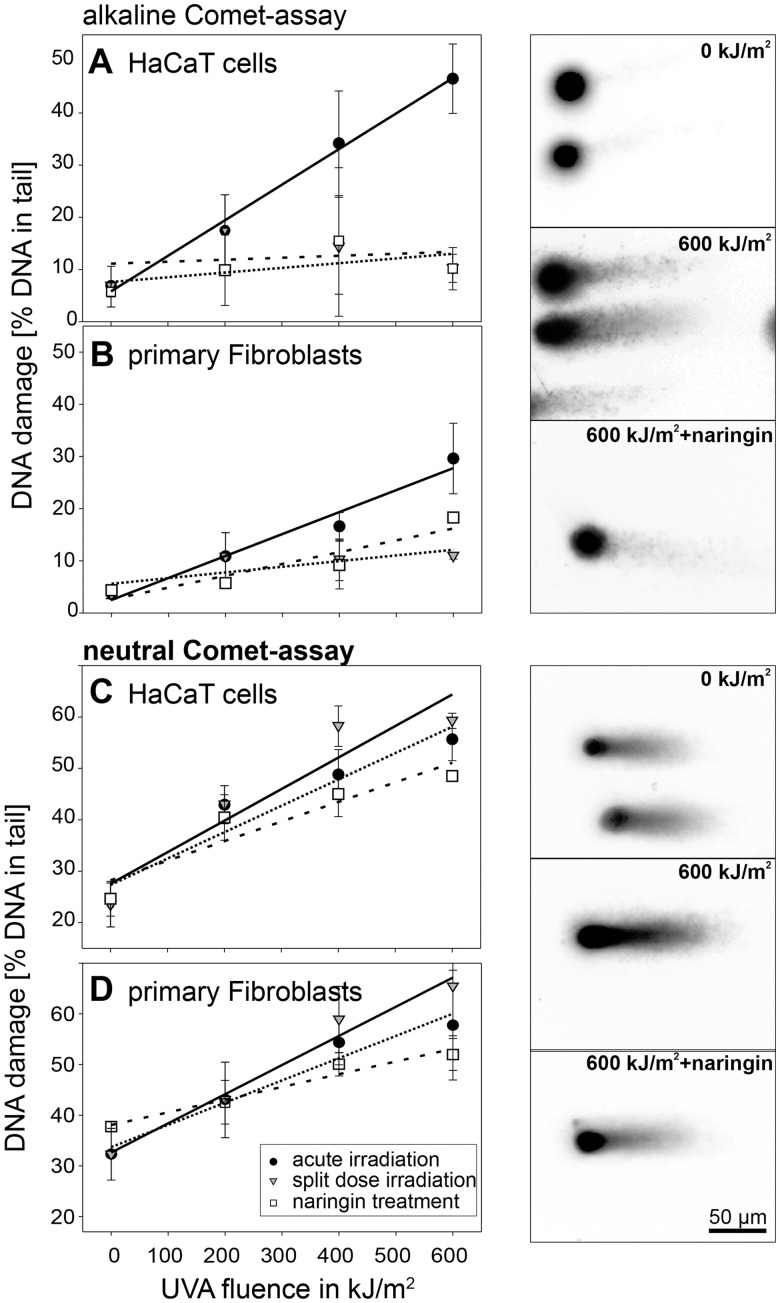
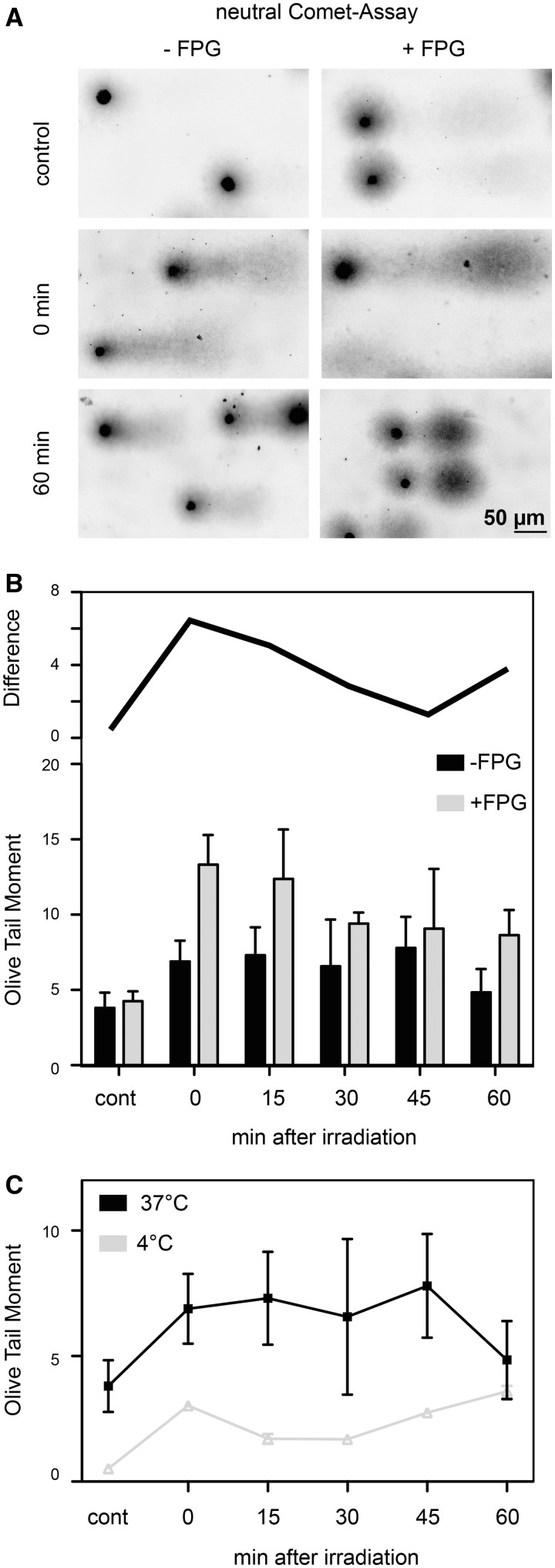
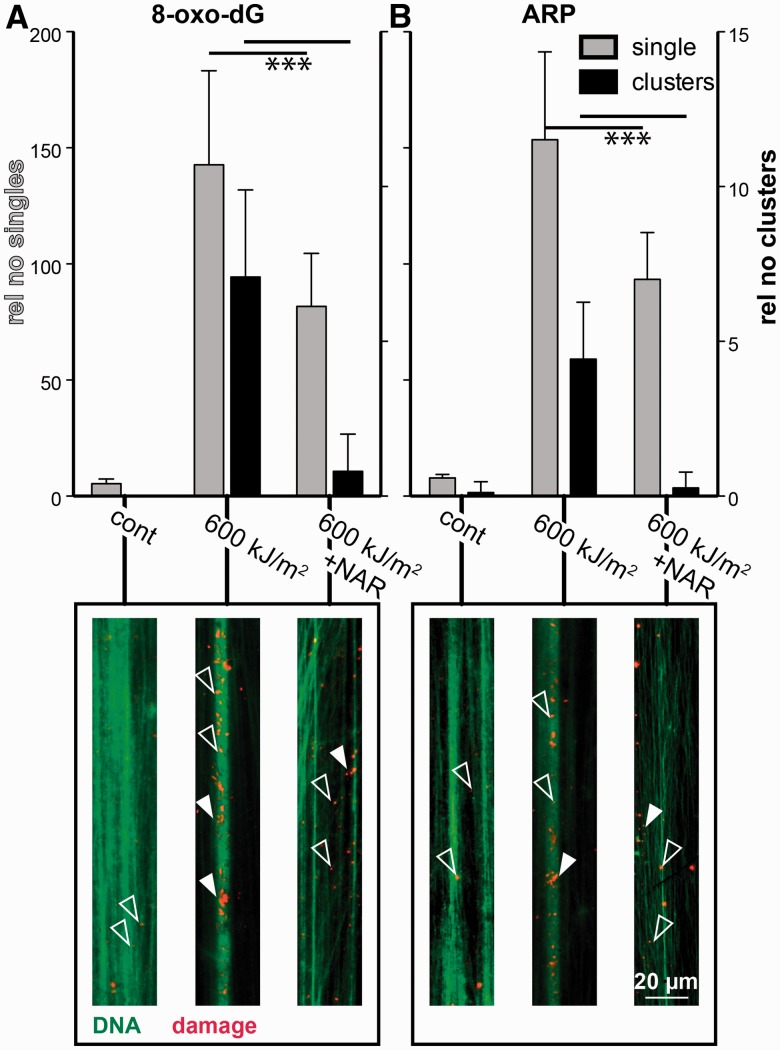
UVA (320-400 nm) represents the main spectral component of solar UV radiation, induces pre-mutagenic DNA lesions and is classified as Class I carcinogen. Recently, discussion arose whether UVA induces DNA double-strand breaks (dsbs). Only few reports link the induction of dsbs to UVA exposure and the underlying mechanisms are poorly understood. Using the Comet-assay and γH2AX as markers for dsb formation, we demonstrate the dose-dependent dsb induction by UVA in G(1)-synchronized human keratinocytes (HaCaT) and primary human skin fibroblasts. The number of γH2AX foci increases when a UVA dose is applied in fractions (split dose), with a 2-h recovery period between fractions. The presence of the anti-oxidant Naringin reduces dsb formation significantly. Using an FPG-modified Comet-assay as well as warm and cold repair incubation, we show that dsbs arise partially during repair of bi-stranded, oxidative, clustered DNA lesions. We also demonstrate that on stretched chromatin fibres, 8-oxo-G and abasic sites occur in clusters. This suggests a replication-independent formation of UVA-induced dsbs through clustered single-strand breaks via locally generated reactive oxygen species. Since UVA is the main component of solar UV exposure and is used for artificial UV exposure, our results shine new light on the aetiology of skin cancer.
Overview
The claims and statistics of this paper haven’t been checked yet.
Free: it reads the open-access text and checks the first 5 claims that cite a source we can check. Create a free account to check every claim.
Integrity signals
Registry
Cites
Statistics
Figures
Verification
Claims the paper makes
The claims and statistics of this paper haven’t been checked yet.
Free: it reads the open-access text and checks the first 5 claims that cite a source we can check. Create a free account to check every claim.
Claims other papers make about this one
Each is checked against this paper’s own text: does it say what the citing paper says it does?
The source backs part of the claim, not all of it — or backs it for a different population, condition or comparison.
In the citing paper
“To ensure that such a detrimental damage will be repaired, cells evolved complex ATM and ATR signaling events leading to activation of the two basic DSB repair mechanisms compared in Table 2 [115,116,117].”
From Focus on UV-Induced DNA Damage and Repair—Disease Relevance and Protective Strategies (2020) · cites this paper as [117]
Experimental — accuracy not yet measuredThe cited source says what the claim attributes to it.
In the citing paper
“In addition, UVA-induced DNA double-strand breaks can be generated from the repair of clustered oxidative DNA damages [28].”
From Molecular Mechanisms of UV-Induced Apoptosis and Its Effects on Skin Residential Cells: The Implication in UV-Based Phototherapy (2013) · cites this paper as [28]
In the citing paper
“However, the capacity of UVA radiation to directly induce double-strand breaks has recently been refuted [59], and the presence of this type of lesion may be an indirect result of DNA damage replication [58,60], or, occasionally, due to UVA-induced clusters of single-strand breaks or the repair of close oxidized bases in the DNA [61].”
From Sunlight damage to cellular DNA: focus on oxidatively generated lesions (2017) · cites this paper as [61]
Self-check
Percentages, sums and reported differences re-computed from the paper’s own numbers.
The self-check needs the paper’s full text.
Citations
Cites
A simple technique for quantitation of low levels of DNA damage in individual cells
Singh, N. P., McCoy, M. T., Tice, R. R., & Schneider, E. L. (1988) · Experimental Cell Research · doi:10.1016/0014-4827(88)90265-0 · Cited by 10,828 · cited 1×
“Alkaline Comet-assay was performed according to Singh and Tice (30,31) and is described in detail elsewhere (32).”
MethodSingle cell gel/comet assay: Guidelines for in vitro and in vivo genetic toxicology testing
Tice, R. R., Agurell, E., Anderson, D., Burlinson, B., Hartmann, A., Kobayashi, H., Miyamae, Y., Rojas, E., Ryu, J.-C., & Sasaki, Y. F. (2000) · Environmental and Molecular Mutagenesis · doi:10.1002/(sici)1098-2280(2000)35:3<206::aid-em8>3.0.co;2-j · Cited by 4,860 · cited 1×
“Alkaline Comet-assay was performed according to Singh and Tice (30,31) and is described in detail elsewhere (32).”
MethodNormal keratinization in a spontaneously immortalized aneuploid human keratinocyte cell line.
Boukamp, P., Petrussevska, R. T., Breitkreutz, D., Hornung, J., Markham, A., & Fusenig, N. E. (1988) · The Journal of cell biology · doi:10.1083/jcb.106.3.761 · Cited by 4,170 · cited 1×
“The human keratinocyte cell line HaCaT (27), obtained from the Deutsches Krebsforschungszentrum (DKFZ) Heidelberg, Germany, was cultured as described elsewhere (22).”
MethodA review of human carcinogens--part D: radiation
El Ghissassi, F., Baan, R., Straif, K., Grosse, Y., Secretan, B., Bouvard, V., Benbrahim-Tallaa, L., Guha, N., Freeman, C., Galichet, L., et al. (2009) · The Lancet Oncology · doi:10.1016/s1470-2045(09)70213-x · Cited by 900 · cited 2×
“Recently, UV radiation (UVB and UVA) has been classified as a Class I carcinogen (3) by the International Agency for the Research on Cancer.”
BackgroundOxidative damage to DNA: formation, measurement and biochemical features
Cadet, J., Douki, T., Gasparutto, D., & Ravanat, J.-L. (2003) · Mutation Research - Fundamental and Molecular Mechanisms of Mutagenesis · doi:10.1016/j.mrfmmm.2003.09.001 · Cited by 697 · cited 1×
“UVA exerts its DNA-damaging effects through these (so far unknown) cellular photosensitizers (PS), which are photo-excited and involved in Type I or II photoreactions to produce reactive oxygen species (ROS), like OH, O2 , H2O2 or (1)O2 (9,11,12) in the presence or absence of metal ions.”
BackgroundMouret, S., Baudouin, C., Charveron, M., Favier, A., Cadet, J., & Douki, T. (2006) · Proceedings of the National Academy of Sciences · doi:10.1073/pnas.0604213103 · Cited by 684 · cited 1×
“More recently, it was demonstrated that UVA is also able to induce thymidine dimers, especially TT-CPDs, although at a 1000-fold lower efficiency compared to UVC (43,44).”
BackgroundComparison of nonhomologous end joining and homologous recombination in human cells
MAO, Z., BOZZELLA, M., SELUANOV, A., & GORBUNOVA, V (2008) · DNA Repair · doi:10.1016/j.dnarep.2008.06.018 · Cited by 671 · cited 1×
“It is known that dsbs are predominantly repaired by the non-homologous end joining systems, especially if the cells are in G1 phase of the cell cycle and breaks are directly ligatable (60), which is the predominant case for dsbs generated by clustered ssbs.”
BackgroundWavelength dependence of oxidative DNA damage induced by UV and visible light
Kielbassa, C. (1997) · Carcinogenesis · doi:10.1093/carcin/18.4.811 · Cited by 616
Dynamic Molecular Combing: Stretching the Whole Human Genome for High-Resolution Studies
Michalet, X., Ekong, R., Fougerousse, F., Rousseaux, S., Schurra, C., Hornigold, N., Slegtenhorst, M. V., Wolfe, J., Povey, S., Beckmann, J. S., et al. (1997) · Science · doi:10.1126/science.277.5331.1518 · Cited by 611 · cited 1×
“Receding meniscus stretching of chromatin fibres was done as described elsewhere (35,36) with 1mm/s using a homemade linear device.”
MethodTHE BIOLOGY OF THE (6–4) PHOTOPRODUCT
MITCHELL, D. L., & NAIRN, R. S. (1989) · Photochemistry and Photobiology · doi:10.1111/j.1751-1097.1989.tb05578.x · Cited by 592 · cited 1×
“The mechanism underlying UVB-induced mutagenesis is well understood and can be accounted to the two major forms of pre-mutagenic DNA lesions, the cyclobutane pyrimidine dimer (CPD) and the pyrimidine-(6-4)pyrimidone photoproduct (6-4 PP) (4,5).”
Background
Cited by
Biofilms: The Microbial “Protective Clothing” in Extreme Environments
Yin, W., Wang, Y., Liu, L., & He, J. (2019) · International Journal of Molecular Sciences · doi:10.3390/ijms20143423 · Cited by 1,004
“Besides their implication in damaging proteins and membranes, UV-A can damage DNA by generating reactive oxygen species to induce single-strand DNA breaks [44,45], while UV-B can be absorbed directly by DNA to alter or”
BackgroundSunlight damage to cellular DNA: focus on oxidatively generated lesions
Schuch, A. P., Moreno, N. C., Schuch, N. J., Menck, C. F. M., & Garcia, C. C. M. (2017) · Free Radical Biology and Medicine · doi:10.1016/j.freeradbiomed.2017.01.029 · Cited by 436
Oxidatively Generated Damage to Cellular DNA by UVB and UVA Radiation ,
Cadet, J., Douki, T., & Ravanat, J. (2015) · Photochemistry and Photobiology · doi:10.1111/php.12368 · Cited by 355
Induction and Repair of Clustered DNA Lesions: What Do We Know So Far?
Georgakilas, A. G., O'Neill, P., & Stewart, R. D. (2013) · Radiation Research · doi:10.1667/rr3041.1 · Cited by 278
Radiation-induced clustered DNA lesions: Repair and mutagenesis
Sage, E., & Shikazono, N. (2017) · Free Radical Biology and Medicine · doi:10.1016/j.freeradbiomed.2016.12.008 · Cited by 274
Lee, C.-H., Wu, S.-B., Hong, C.-H., Yu, H.-S., & Wei, Y.-H. (2013) · International Journal of Molecular Sciences · doi:10.3390/ijms14036414 · Cited by 271
“In addition, UVA-induced DNA double-strand breaks can be generated from the repair of clustered oxidative DNA damages [28].”
Preclinical Evidence for the Pharmacological Actions of Naringin: A Review
Bharti, S., Rani, N., Krishnamurthy, B., & Arya, D. (2014) · Planta Medica · doi:10.1055/s-0034-1368351 · Cited by 244
“A radiation, which is considered to be an important etiological factor for skin cancer in humans [168].”
BackgroundBlue light-induced oxidative stress in live skin
Nakashima, Y., Ohta, S., & Wolf, A. M. (2017) · Free Radical Biology and Medicine · doi:10.1016/j.freeradbiomed.2017.03.010 · Cited by 220
“Oxidative DNA modifications can be produced by blue light with an action spectrum closely resembling flavin absorption [41], and clusters of these oxidative modifications result in double strand breaks during repair, which could be prevented with an anti-oxidant [42].”
BackgroundAutophagy and genomic integrity
Vessoni, A. T., Filippi-Chiela, E. C., Menck, C. F., & Lenz, G. (2013) · Cell Death & Differentiation · doi:10.1038/cdd.2013.103 · Cited by 211
Identification of the elementary structural units of the DNA damage response
Natale, F., Rapp, A., Yu, W., Maiser, A., Harz, H., Scholl, A., Grulich, S., Anton, T., Hörl, D., Chen, W., et al. (2017) · Nature Communications · doi:10.1038/ncomms15760 · Cited by 203
Self-citationOxidative Stress in the Pathogenesis of Keratoconus and Fuchs Endothelial Corneal Dystrophy
Wojcik, K., Kaminska, A., Blasiak, J., Szaflik, J., & Szaflik, J. (2013) · International Journal of Molecular Sciences · doi:10.3390/ijms140919294 · Cited by 176
“Moreover, it was demonstrated that UVA (wavelength range 315–400 nm), the main component of solar UV, induced bi-stranded oxidatively-induced clustered DNA lesions, which can be converted into DNA double strand breaks, when misrepaired [2].”
BackgroundFocus on UV-Induced DNA Damage and Repair—Disease Relevance and Protective Strategies
Kciuk, M., Marciniak, B., Mojzych, M., & Kontek, R. (2020) · International Journal of Molecular Sciences · doi:10.3390/ijms21197264 · Cited by 168
Pathophysiology of ocular surface squamous neoplasia
Gichuhi, S., Ohnuma, S.-I., Sagoo, M. S., & Burton, M. J. (2014) · Experimental Eye Research · doi:10.1016/j.exer.2014.10.015 · Cited by 161
Amente, S., Di Palo, G., Scala, G., Castrignanò, T., Gorini, F., Cocozza, S., Moresano, A., Pucci, P., Ma, B., Stepanov, I., et al. (2019) · Nucleic Acids Research · doi:10.1093/nar/gky1152 · Cited by 123
European Code against Cancer 4th Edition: Ultraviolet radiation and cancer
Greinert, R., de Vries, E., Erdmann, F., Espina, C., Auvinen, A. P., Kesminiene, A., & Schüz, J. (2015) · Cancer Epidemiology · doi:10.1016/j.canep.2014.12.014 · Cited by 148
“In vitro, UVA also induces double-stranded breaks in DNA of human keratinocytes and skin fibroblasts [12,13], rendering an UVA-irradiated genome prone to the production of chromosomal aberrations.”
BackgroundSelf-citationNeggers, J. E., Kwanten, B., Dierckx, T., Noguchi, H., Voet, A., Bral, L., Minner, K., Massant, B., Kint, N., Delforge, M., et al. (2018) · Nature Communications · doi:10.1038/s41467-017-02349-8 · Cited by 112
Song, X., Narzt, M. S., Nagelreiter, I. M., Hohensinner, P., Terlecki-Zaniewicz, L., Tschachler, E., Grillari, J., & Gruber, F. (2017) · Redox Biology · doi:10.1016/j.redox.2016.12.015 · Cited by 101
“This modification is detectable at sites of (UV induced-) DNA damage, including strand breaks, stalled replication forks or oxidative DNA damage [39] and is required to maintain cellular senescence [40].”
BackgroundBiofilm as an adaptation strategy to extreme conditions
Parrilli, E., Tutino, M. L., & Marino, G. (2022) · RENDICONTI LINCEI · doi:10.1007/s12210-022-01083-8 · Cited by 122
“, the formation of reactive oxygen species) actions (Greinert et al. 2012).”
BackgroundDNA damage as a biological sensor for environmental sunlight
Schuch, A. P., Machado Garcia, C. C., Makita, K., & Menck, C. F. M. (2013) · Photochemical & Photobiological Sciences · doi:10.1039/c3pp00004d · Cited by 90
Szpiech, Z. A., Novak, T. E., Bailey, N. P., & Stevison, L. S. (2021) · Evolution Letters · doi:10.1002/evl3.232 · Cited by 100
“DNA damage, including double-strand breaks and pyrimidine dimerization, can manifest as a result of oxidative stress (Ye et al. 2016) or increased exposure to UV radiation (Zhang et al. 2000; Greinert et al. 2012), both of which increase at high altitudes.”
BackgroundCalò, R., & Marabini, L. (2014) · Journal of Photochemistry and Photobiology B Biology · doi:10.1016/j.jphotobiol.2014.01.013 · Cited by 91
“The UVA-induced LPO was reduced by V. myrtillus, from the lower to the higher UVA doses, but it had less protective effect at the higher doses (40 J/ cm2).”
BackgroundSignificance of Singlet Oxygen Molecule in Pathologies
Murotomi, K., Umeno, A., Shichiri, M., Tanito, M., & Yoshida, Y. (2023) · International Journal of Molecular Sciences · doi:10.3390/ijms24032739 · Cited by 91
The relative roles of DNA damage induced by UVA irradiation in human cells
Cortat, B., Garcia, C. C. M., Quinet, A., Schuch, A. P., de Lima-Bessa, K. M., & Menck, C. F. M. (2013) · Photochemical & Photobiological Sciences · doi:10.1039/c3pp50023c · Cited by 80
All You Need Is Light. Photorepair of UV-Induced Pyrimidine Dimers
Banaś, A. K., Zgłobicki, P., Kowalska, E., Bażant, A., Dziga, D., & Strzałka, W. (2020) · Genes · doi:10.3390/genes11111304 · Cited by 91
“[42] proposed that the DSBs detected in UV-A irradiated DNA originate from clusters of other oxidative DNA lesions.”
BackgroundLiu, W., Yan, F., Xu, Z., Chen, Q., Ren, J., Wang, Q., Chen, L., Ying, J., Liu, Z., Zhao, J., et al. (2022) · Journal of Photochemistry and Photobiology B Biology · doi:10.1016/j.jphotobiol.2022.112462 · Cited by 81
Physiological aspects of UV-excitation of DNA.
Richa, Sinha, R., & Häder, D. (2015) · Topics in current chemistry · doi:10.1007/128_2014_531 · Cited by 64
Mechanisms of DNA damage repair in adult stem cells and implications for cancer formation
Weeden, C. E., & Asselin-Labat, M.-L. (2017) · Biochimica et Biophysica Acta (BBA) - Molecular Basis of Disease · doi:10.1016/j.bbadis.2017.10.015 · Cited by 71
Ultraviolet light and melanoma
Craig, S., Earnshaw, C. H., & Virós, A. (2018) · The Journal of Pathology · doi:10.1002/path.5039 · Cited by 66
“UVA excites intracellular photosensitizers and the subsequent production of reactive oxygen species (ROS) [49] to induce DNA damage [50].”
BackgroundTannin–Titanium Oxide Multilayer as a Photochemically Suppressed Ultraviolet Filter
Son, H. Y., Koo, B. I., Lee, J. B., Kim, K. R., Kim, W., Jang, J., Yoon, M. S., Cho, J., & Nam, Y. S. (2018) · ACS Applied Materials & Interfaces · doi:10.1021/acsami.8b09200 · Cited by 52
Hamada, N., & FUJIMICHI, Y. (2015) · Cancer Letters · doi:10.1016/j.canlet.2015.02.017 · Cited by 58
Squamous cell carcinoma of the skin: Emerging need for novel biomarkers
Kivisaari, A., & Kähäri, V. (2013) · World Journal of Clinical Oncology · doi:10.5306/wjco.v4.i4.85 · Cited by 49
When you’re strange: Unusual features of the MUTYH glycosylase and implications in cancer
Raetz, A. G., & David, S. S. (2019) · DNA repair · doi:10.1016/j.dnarep.2019.05.005 · Cited by 50
DNA damage and somatic mutations in mammalian cells after irradiation with a nail polish dryer
Zhivagui, M., Hoda, A., Valenzuela, N., Yeh, Y.-Y., Dai, J., He, Y., Nandi, S. P., Otlu, B., Houten, B. V., & Alexandrov, L. B. (2023) · Nature Communications · doi:10.1038/s41467-023-35876-8 · Cited by 57
Current Insights into the Role of UV Radiation-Induced Oxidative Stress in Melanoma Pathogenesis
Gieniusz, E., Skrzydlewska, E., & Łuczaj, W. (2024) · International Journal of Molecular Sciences · doi:10.3390/ijms252111651 · Cited by 58
“…with PCA assembly products and two-step UVA, although less frequently, causes DNA damage either directly or indirectly via triplet energy transfer [74], typically occurring in TT sequences [75]. annealing to ) Number of positive samples of amplified products after two rounds of correction with…”
BackgroundRather, R. A., Bhagat, M., & Singh, S. K. (2020) · Mutation Research/Reviews in Mutation Research · doi:10.1016/j.mrrev.2020.108321 · Cited by 46
Insights and controversies on sunscreen safety
de Paiva, J. P., Diniz, R. R., Leitão, Á. C., Cabral, L. M., Fortunato, R. S., Santos, B. A. M. C., & de Padula, M. (2020) · Critical Reviews in Toxicology · doi:10.1080/10408444.2020.1826899 · Cited by 46
Increased DNA double-strand breaks and enhanced apoptosis in patients with lupus nephritis
Souliotis, V. L., & Sfikakis, P. P. (2014) · Lupus · doi:10.1177/0961203314565413 · Cited by 39
Regulation of melanocyte stem cell behavior by the niche microenvironment
Li, H., & Hou, L. (2018) · Pigment Cell & Melanoma Research · doi:10.1111/pcmr.12701 · Cited by 41
“…ultraviolet radiation (UVR) induces DNA damage through creation of photoproducts and reactive oxygen species, either through direct induction of chemical reactions within DNA or through DNA strand breaks (Greinert et al., 2012; Lankinen, Vilpo, & Vilpo, 1996; Suwanpradid, Holcomb, & MacLeod, 2017).”
BackgroundThe effect of delphinidin on the mechanical properties of keratinocytes exposed to UVB radiation
Sobiepanek, A., Milner‐Krawczyk, M., Bobecka, K., & Kobiela, T. (2016) · Journal of Photochemistry and Photobiology B Biology · doi:10.1016/j.jphotobiol.2016.09.038 · Cited by 44
Nair‐Shalliker, V., Dhillon, V. S., Clements, M., Armstrong, B. K., & Fenech, M. F. (2014) · Mutation research. Fundamental and molecular mechanisms of mutagenesis · doi:10.1016/j.mrfmmm.2014.04.001 · Cited by 38
Emerging Skin T-Cell Functions in Response to Environmental Insults
Suwanpradid, J., Holcomb, Z. E., & MacLeod, A. S. (2016) · Journal of Investigative Dermatology · doi:10.1016/j.jid.2016.08.013 · Cited by 39
“UV radiation induces DNA damage through creation of photoproducts and reactive oxygen species, either through direct induction of chemical reactions within DNA or through DNAstrand breaks (Barnes et al., 2010; Gehrke et al., 2013; Greinert et al., 2012; Kripke et al., 1992; Lankinen et al., 1996).”
BackgroundUnravelling the molecular mechanism of mutagenic factors impacting human health
Goyal, K., Goel, H., Baranwal, P., Dixit, A., Khan, F., Jha, N. K., Kesari, K. K., Pandey, P., Pandey, A. K., Benjamin, M., et al. (2021) · Environmental Science and Pollution Research · doi:10.1007/s11356-021-15442-9 · Cited by 37
Thymol and Thymus Vulgaris L. activity against UVA- and UVB-induced damage in NCTC 2544 cell line
Calò, R., Visone, C. M., & Marabini, L. (2015) · Mutation Research/Genetic Toxicology and Environmental Mutagenesis · doi:10.1016/j.mrgentox.2015.07.009 · Cited by 36
Suppression of colorectal carcinogenesis by naringin
Ansari, B., Aschner, M., Hussain, Y., Efferth, T., & Khan, H. Z. (2021) · Phytomedicine · doi:10.1016/j.phymed.2021.153897 · Cited by 35
Pyruvate kinase M2 phosphorylates H2AX and promotes genomic instability in human tumor cells
Li, X., Qin, K., Wang, X., Wang, X., Zhou, A., Chen, G., & Lu, Y. (2017) · Oncotarget · doi:10.18632/oncotarget.22621 · Cited by 34
Further Investigation Into the Risk of Skin Cancer Associated With the Use of UV Nail Lamps
Shipp, L. R., Warner, C. A., Rueggeberg, F. A., & Davis, L. S. (2014) · JAMA Dermatology · doi:10.1001/jamadermatol.2013.8740 · Cited by 31
Non-DSB clustered DNA lesions. Does theory colocalize with the experiment?
Nikitaki, Z., Nikolov, V., Mavragani, I. V., Plante, I., Emfietzoglou, D., Iliakis, G. E., & Georgakilas, A. G. (2016) · Radiation Physics and Chemistry · doi:10.1016/j.radphyschem.2016.06.020 · Cited by 41
4-Hydroxynonenal Contributes to Fibroblast Senescence in Skin Photoaging Evoked by UV-A Radiation
Swiader, A., Camaré, C., Guerby, P., Salvayre, R., & Nègre‐Salvayre, A. (2021) · Antioxidants · doi:10.3390/antiox10030365 · Cited by 35
“UV-B and-C may promote the formation of γH2AX independently of DSB, possibly via an intervention of nucleotide excision repair factors that could expose the phosphorylation site on H2AX [53].”
BackgroundAccelerated Regeneration of ATP Level after Irradiation in Human Skin Fibroblasts by Coenzyme Q10
Schniertshauer, D., Müller, S., Mayr, T., Sonntag, T., Gebhard, D., & Bergemann, J. (2016) · Photochemistry and Photobiology · doi:10.1111/php.12583 · Cited by 34
Muster, B., Rapp, A. W., & Cardoso, M. C. (2017) · Global Medical Genetics · doi:10.3934/genet.2017.1.47 · Cited by 30
“The latter leads to the formation of reactive oxygen species (ROS), which in turn reacts with DNA and forms oxidative damage like 8-oxoguanine or single strand breaks (SSB) [48-50].”
BackgroundSelf-citationAnderson, D. C., Najafzadeh, M., Gopalan, R. C., Ghaderi, N., Scally, A., Britland, S. T., Jacobs, B. K., Reynolds, P., Davies, J. D., Wright, A. L., et al. (2014) · The FASEB Journal · doi:10.1096/fj.14-254748 · Cited by 35
“clusters of single-strand breaks, which, in turn, promote the double-strand breaks (36).”
BackgroundPhotosensitive human syndromes
Spivak, G., & Hanawalt, P. C. (2015) · Mutation Research - Fundamental and Molecular Mechanisms of Mutagenesis · doi:10.1016/j.mrfmmm.2014.11.003 · Cited by 27
“Ultraviolet radiation may result in complex DNA lesions and structures, including double-strand breaks and interstrand crosslinks, such as at sites of clustered oxidized bases [55], or as a consequence of the processing of DNA or RNA polymerases blocked by photoproducts [56].”
BackgroundNADPH Oxidases and Their Roles in Skin Homeostasis and Carcinogenesis
Rudolf, J., Raad, H., Taïeb, A., & Rezvani, H. R. (2018) · Antioxidants and Redox Signaling · doi:10.1089/ars.2017.7282 · Cited by 29
“The formation of DSBs by UVA is, however, a subject of debate (63, 153).”
A high-resolution map of bacteriophage ϕX174 transcription
Logel, D. Y., & Jaschke, P. R. (2020) · Virology · doi:10.1016/j.virol.2020.05.008 · Cited by 25
Current concepts of photosensitivity in cutaneous lupus erythematosus
Klein, B., & Kunz, M. (2022) · Frontiers in Medicine · doi:10.3389/fmed.2022.939594 · Cited by 27
“Indirect DNA damage occurs upon exposure to UV irradiation of all wavelengths via ROS, which can lead to oxidized bases (8-Oxo-2’-deoxyguanosine, 8-oxo-dG) and single-strand breaks (16, 17).”
BackgroundWang, T., Qin, Y., Qiao, J., Liu, Y., Wang, L., & Zhang, X. (2023) · Journal of Photochemistry and Photobiology B Biology · doi:10.1016/j.jphotobiol.2023.112801 · Cited by 26
MC 1R and NR 4A receptors in cellular stress and DNA repair: implications for UVR protection
Yin, K., Sturm, R. A., & Smith, A. G. (2014) · Experimental Dermatology · doi:10.1111/exd.12420 · Cited by 26
DNA Double Strand Breaks Repair Inhibitors: Relevance as Potential New Anticancer Therapeutics
Kopa-Stojak, P. N., Macieja, A., Galita, G., Witczak, Z. J., & Popławski, T. (2018) · Current Medicinal Chemistry · doi:10.2174/0929867325666180214113154 · Cited by 23
Beta Human Papillomavirus 8E6 Attenuates Non-Homologous End Joining by Hindering DNA-PKcs Activity
Hu, C., Bugbee, T., Gamez, M., & Wallace, N. A. (2020) · Cancers · doi:10.3390/cancers12092356 · Cited by 22
“physiological type of DSB, as ROS are caused by cell metabolism [57].”
BackgroundSun, D., Tseng, Y., Wu, W.-S., Wong, M., & Chang, H. (2016) · Nanomaterials · doi:10.3390/nano7010002 · Cited by 19
“ROS-related DNA oxidation is a major cause of mutations, and it can produce several types of damage, including nonbulky (8-oxoguanine and formamidopyrimidine) and bulky (cyclopurine and etheno adducts) base modifications, abasic sites, nonconventional single-strand breaks, protein-DNA adducts and intrastrand or inters…”
BackgroundImmunostaining of UVA-induced DNA damage in erythrocytes of medaka (Oryzias latipes)
Sayed, A. E. H., & Mitani, H. (2017) · Journal of Photochemistry and Photobiology B Biology · doi:10.1016/j.jphotobiol.2017.04.032 · Cited by 18
UVA‐Induced DNA Damage and Apoptosis in Red Blood Cells of the African Catfish Clarias gariepinus
Sayed, A. E. H. (2017) · Photochemistry and Photobiology · doi:10.1111/php.12818 · Cited by 18
“damage by various mechanisms, such as oxidized bases, cyclobutane pyrimidine dimers (29), and DSBs (26).”
BackgroundInfluentialRNF8 ubiquitinates RecQL4 and promotes its dissociation from DNA double strand breaks
Tan, Q., Niu, K., Zhu, Y., Chen, Z., Li, Y., Li, M., Wei, D., Balajee, A. S., Fang, H., & Zhao, Y. (2021) · Oncogenesis · doi:10.1038/s41389-021-00315-0 · Cited by 20
Kim, J. H., Kang, D.-J., Bae, J.-S., Lee, J. H., Jeon, S., Choi, H., Kim, N., Kim, H., & Kim, H. R. (2021) · Scientific Reports · doi:10.1038/s41598-021-87263-2 · Cited by 24
Flori, E., Mastrofrancesco, A., Kovacs, D., Bellei, B., Briganti, S., Maresca, V., Cardinali, G., & Picardo, M. (2017) · Scientific Reports · doi:10.1038/s41598-017-09578-3 · Cited by 19
Pizzuti, V. J., Misra, R. D., Lee, J., Torregrosa‐Allen, S. E., Currie, M. P., Clark, S. R., Patel, A. P., Schorr, C. R., Jones‐Hall, Y., Childress, M. O., et al. (2019) · ACS Biomaterials Science & Engineering · doi:10.1021/acsbiomaterials.9b00773 · Cited by 17
Impact of ecological UV radiation on the photochemistry of nuclear DNA
Sánchez, A. G., Gabrielli, A., & Keszenman, D. J. (2025) · Biophysical Reviews · doi:10.1007/s12551-025-01275-0 · Cited by 17
“Since the energy of a single UVA photon is not high enough to produce a break or a covalent bond on a molecule, all the oxidatively damaged DNA induced by UV is dependent on cellular photosensitizers (Greinert et al. 2012).”
Liu, S., Quek, S. Y., & Huang, K. (2024) · Small · doi:10.1002/smll.202403465 · Cited by 18
Fang, X., Ide, N., Higashi, S.-I., Kamei, Y., Toyooka, T., Ibuki, Y., Kawai, K., Kasai, H., Okamoto, K., Arimoto‐Kobayashi, S., et al. (2014) · Photochemical & Photobiological Sciences · doi:10.1039/c4pp00148f · Cited by 15
Yang, T., Lai, Y., Lin, T.-P., Liu, W., Kuan, L.-C., & Liu, C. (2014) · International Journal of Molecular Sciences · doi:10.3390/ijms15021686 · Cited by 15
“UVA causes photoaging via the induction of MMPs that lead to the propagation of various signaling pathways and several downstream effects [6,7].”
BackgroundInfluentialIbuki, Y., Komaki, Y., Yang, G., & Toyooka, T. (2021) · Photochemical & Photobiological Sciences · doi:10.1007/s43630-021-00050-w · Cited by 17
“The group of Rapp [12, 13] reported that the repair of bi-stranded, oxidative, clustered DNA lesions resulted in DSBs independent of replication after UVA irradiation.”
BackgroundSzilágyi, Z., Németh, Z., Bakos, J., Necz, P. P., Sáfár, A., Kubinyi, G., Selmaoui, B., & Thuróczy, G. (2020) · International Journal of Environmental Research and Public Health · doi:10.3390/ijerph17124401 · Cited by 45
“Antioxidants can also reduce DSBs and single-strand breaks (SSBs) [39].”
BackgroundResultChang, Y., Ignatova, D., Hoetzenecker, W., Pascolo, S., Fassnacht, C., & Guenova, E. (2021) · JID Innovations · doi:10.1016/j.xjidi.2021.100069 · Cited by 13
“6 These data point toward an important effect of targeting MF skin tumor T cells, which could be beneficial, especially in the setting of combination treatments with, for example, phototherapy (Brown and Jackson, 2015; Greinert et al., 2012; Kim et al., 2020).”
BackgroundGlobal methylation of blood leukocyte DNA and risk of melanoma
Shen, J., Song, R., Wan, J., Huff, C. D., Fang, S., Lee, J. E., & Zhao, H. (2016) · International Journal of Cancer · doi:10.1002/ijc.30577 · Cited by 13
Moura, L. M. S. (2015) · Digital Library of Theses and Dissertations (Universidade de São Paulo) · doi:10.11606/d.95.2015.tde-10112015-173956 · Cited by 13
PERSPECTIVE: The comet assay as a method for assessing DNA damage in cryopreserved samples
Plitta-Michalak, B. P., Ramos, A. A., Stępień, D., Trusiak, M., & Michalak, M. (2024) · Cryoletters · doi:10.54680/fr24110110112 · Cited by 12
Diniz, R. R., de Paiva, J. P., de Aquino, R. M. A., Gonçalves, T. C. W., Leitão, Á. C., Santos, B. A. M. C., Pinto, A. V., Leandro, K. C., & de Padula, M. (2019) · Journal of Photochemistry and Photobiology B Biology · doi:10.1016/j.jphotobiol.2019.111584 · Cited by 13
Oxidative damage and DNA repair in desiccated recalcitrant embryonic axes of Acer pseudoplatanus L.
Plitta-Michalak, B. P., Ramos, A. A., Pupel, P., & Michalak, M. (2022) · BMC Plant Biology · doi:10.1186/s12870-021-03419-2 · Cited by 14
Wang, D., Shimamura, N., Mochizuki, M., Nakahara, T., Sunada, K., & Xiao, L. (2023) · Antioxidants · doi:10.3390/antiox12030609 · Cited by 12
“and injures intracellular membranes resulting in cell dysfunction and cell death in the skin [4,5].”
BackgroundThe human DNA ends proteome uncovers an unexpected entanglement of functional pathways
Berthelot, V., Cardoso, G. M., Hégarat, N., Guillonneau, F., François, J., Giovannangeli, C., Praseuth, D., & Rusconi, F. (2016) · Nucleic Acids Research · doi:10.1093/nar/gkw121 · Cited by 13
“Abnormal events include failure during topoisomerase catalytic cycles (5), stalled replication forks (6) and clustered DNA damages induced by either UV radiations (7) or ionizing radiations (8,9).”
Type I Interferon Induction in Cutaneous DNA Damage Syndromes
Klein, B., & Günther, C. (2021) · Frontiers in Immunology · doi:10.3389/fimmu.2021.715723 · Cited by 16
“Upon repair of this direct DNA damage, the formation of DNA DSB can be induced (48, 49).”
BackgroundSun, Z., Wang, T., Hou, X., Bai, W., Li, J., Li, Y., Zhang, J., Zheng, Y., Wu, Z., Wu, P., et al. (2024) · Stem Cells Translational Medicine · doi:10.1093/stcltm/szae069 · Cited by 12
A predictive chromatin architecture nexus regulates transcription and DNA damage repair
Bhat, A., Bhan, S., Kabiraj, A., PANDITA, R. K., Ramos, K. S., Nandi, S., Sopori, S., Sarkar, P. S., Dhar, A., Pandita, S., et al. (2025) · Journal of Biological Chemistry · doi:10.1016/j.jbc.2025.108300 · Cited by 14
“In contrast to UVC and UVB, absorption by endogenous photosensitizers can cause oxidized bases (8-oxo-dG, thymidine-glycol), SSBs, DSBs, and other types of DNA lesions, (198, 243, 244).”
Yu, X., Cong, P., Wei, W., Zhou, Y., Bao, Z., & Hou, H. (2022) · Computational and Mathematical Methods in Medicine · doi:10.1155/2022/4261329 · Cited by 11
Gkikoudi, A., Manda, G., Beinke, C., Giesen, U., Al-Qaaod, A., Dragnea, E. M., Dobre, M., Neagoe, I. V., Sangsuwan, T., Haghdoost, S., et al. (2025) · Biomolecules · doi:10.3390/biom15040536 · Cited by 14
“In contrast, exposure to 100 J/m 2 UVB resulted in significantly lower colocalization levels, consistent with the study by Marti et al. [17] demonstrating that that γ H2AX phosphorylation induced by UVB is primarily pan-nuclear and is associated with NER, rather than being localized to discrete…”
Gęgotek, A., Jarocka-Karpowicz, I., Atalay, S., & Skrzydlewska, E. (2023) · Journal of Pharmacology and Experimental Therapeutics · doi:10.1124/jpet.123.001731 · Cited by 9
“Finally, when the aforementioned modifications overlap with UVA-induced DNA mutations, the physiological condition of the skin becomes disturbed, resulting in the cancer development (Greinert et al., 2012).”
BackgroundKarentz, D. (2014) · Photochemistry and Photobiology · doi:10.1111/php.12388 · Cited by 10
“Like UVB effects, repair of UVA-induced damage can result in DNA strand breaks (43).”
BackgroundMapelli, M., Calò, R., & Marabini, L. (2016) · Oxidants and Antioxidants in Medical Science · doi:10.5455/oams.170416.or.095 · Cited by 8
Anti-genotoxic and anti-mutagenic effects of melatonin supplementation in a mouse model of melanoma
Longaretti, L. M., Luciano, J. A., Strapazzon, G., Pereira, M., Damiani, A. P., Rohr, P., Rigo, F. K., de Oliveira, C. A., Steiner, B. T., Vilela, T. C., et al. (2020) · Drug and Chemical Toxicology · doi:10.1080/01480545.2020.1726380 · Cited by 9
Smijs, T. G. M., & Pavel, S. (2015) · Elsevier eBooks · doi:10.1016/b978-0-444-62747-6.00013-0 · Cited by 8
Guthrie, J. W., Limmer, R. T., Brooks, E. A., Wisnewski, C. C., Loggins-Davis, N. D., & Bouzid, A. (2014) · Analytica Chimica Acta · doi:10.1016/j.aca.2014.11.003 · Cited by 8
Visible light‐induced photodeoxygenation of polycyclic selenophene Se‐oxides
Chintala, S. M., Throgmorton, J. C., Maness, P. F., & McCulla, R. D. (2020) · Journal of Physical Organic Chemistry · doi:10.1002/poc.4144 · Cited by 7
Recognition and removal of clustered DNA lesions via nucleotide excision repair
Naumenko, N. V., Petruseva, I. O., Lomzov, A., & Lavrik, O. I. (2021) · DNA repair · doi:10.1016/j.dnarep.2021.103225 · Cited by 7
An Overview of Biofilm as a Virulence Factor for Bacteria to Survive in the Harsh Environment
Al-Tayawi, T. S., Adel, E. M., & Omer, F. H. (2023) · International Journal of Medical Science and Clinical Research Studies · doi:10.47191/ijmscrs/v3-i6-30 · Cited by 12
Beylin, D., Kornhaber, R. A., Lagadec, D. L., & Cleary, M. L. (2025) · International Journal of Dermatology · doi:10.1111/ijd.17669 · Cited by 10
Manova, V. I., Georgieva, R., Borisov, B., & Stoilov, L. (2016) · Physiologia Plantarum · doi:10.1111/ppl.12446 · Cited by 7
Chromatin imaging and new technologies for imaging the nucleome
Szydlowski, N., Go, J. S., & Hu, Y. (2018) · WIREs Systems Biology and Medicine · doi:10.1002/wsbm.1442 · Cited by 6
“In addition, ultraviolet (UV) radiation generates ROS through its interactions with cellular chromophores (Brem, Guven, & Karran, 2017) and can also directly induce DNA double-stranded breaks (Greinert et al., 2012).”
BackgroundDNA Damage Response Differentially Affects BoHV-1 Gene Transcription in Cell Type-Dependent Manners
Tang, L., Yuan, W., Li, S., Ding, X., & Zhu, L. (2022) · Biomedicines · doi:10.3390/biomedicines10092282 · Cited by 6
“Here, UV exposure, a known efficient method to generate DSBs that subsequently triggers DDR [26,27], was employed to induce DDR prior to virus infection.”
MethodGerić, M., Azqueta, A., Møller, P., Bankoglu, E. E., Gajski, G., Giovannelli, L., Haverić, A., Stopper, H., Collins, A. R., & Ladeira, C. (2025) · Mutation Research/Reviews in Mutation Research · doi:10.1016/j.mrrev.2025.108565 · Cited by 8
Málková, A., Köhlerová, R., Fiala, Z., Hamáková, K., Krulichová, I. S., & Borská, L. (2016) · Biomedical Papers · doi:10.5507/bp.2016.032 · Cited by 5
“Aberrations were classified as structural aberrations (49) and numerical aberrations (10).”
Background
Metadata
- Authors
- Greinert, R., Volkmer, B., Henning, S., Breitbart, E. W., Greulich, K. O., Cardoso, M. C., & Rapp, A.
- Affiliations
- Technische Universität Darmstadt (DE)
- Corresponding author
- Rapp, Alexander
- Venue
- Nucleic Acids Research
- Publisher
- Oxford University Press (OUP)
- Published
- 2012-08-30
- Volume
- 40
- Issue
- 20
- Pages
- 10263-10273
- ISSN
- 0305-1048 (ISSN-L)
- 1362-4962
- PMC
- PMC3488256
- OpenAlex
- W1998256342
- Cited by
- 146
- References
- 63
- Citations by year
- 2026: 8 · 2025: 8 · 2024: 8 · 2023: 8 · 2022: 9 · 2021: 12 · 2020: 12 · 2019: 4 · 2018: 14 · 2017: 10 · 2016: 17 · 2015: 9 · 2014: 18 · 2013: 9
- FWCI
- 4.63
- Type
- journal article
- Language
- en
- Open access
- gold
- doi.org
- Licence
- Locations
- Nucleic Acids Research (publishedVersion, cc-by-nc)
- Europe PMC (PubMed Central) (publishedVersion, cc-by-nc)
- PubMed Central (publishedVersion, cc-by-nc)
- PubMed (publishedVersion)
- HighWire Press Open Archive (submittedVersion)
- Funders
- Australian Government
- Deutsche Forschungsgemeinschaft (GRK 1657)
- Bundesministerium für Bildung und Forschung (GRK 1657, 02S8355)
- Gottfried Wilhelm Leibniz Universität Hannover
- Leibniz-Gemeinschaft
- Topics
- Life Sciences › Biochemistry, Genetics and Molecular Biology › Molecular Biology › DNA Repair Mechanisms
- Life Sciences › Biochemistry, Genetics and Molecular Biology › Cancer Research › Carcinogens and Genotoxicity Assessment
- Health Sciences › Medicine › Dermatology › Skin Protection and Aging
- Keywords
- UVA, DNA double-strand breaks, clustered DNA damage, oxidative DNA damage, DNA repair, 8-oxoguanine, abasic sites, single-strand breaks, reactive oxygen species, naringin, skin cancer, keratinocytes, dermal fibroblasts, γH2AX foci
- MeSH terms
- Cells, Cultured, Chromatin, DNA Damage, DNA Repair, Histones, Humans, Oxidation-Reduction, Phosphorylation, Skin, Ultraviolet Rays, Free Radical Scavengers, Reactive Oxygen Species, Comet Assay, DNA Breaks, Double-Stranded
About these checks
Registry, retraction, Cites and statistics results are computed, not judged, with one exception: a printed reference that no index lists is read once by a model before it counts as a citation error. Claims are extracted by a model and kept only when their quote appears verbatim in the text; each cited source is then checked, with a model’s help, for whether it says what the claim relies on. Those verdicts can be wrong — read the claim’s quote and the cited source before relying on one.
Statistics and arithmetic are recomputed, not judged.
Confidence bands are shown only for fields calibrated on our annotated test set. None is calibrated yet, so no band is shown.
What counts as a claim ›How we measure confidence ›How we check this ›
Are you an author, or do you see a problem with this page? Request a review
Data sources
Bibliographic data: Semantic Scholar, OpenAlex, Crossref.
Contains information from the Semantic Scholar Academic Graph Datasets, made available under the ODC Attribution License (ODC-BY 1.0).
Semantic Scholar’s data is described in: Kinney, R., et al. (2023). The Semantic Scholar Open Data Platform. arXiv:2301.10140.
