

The DOI matches its Crossref record; 65 of the 65 references it cites were found in a registry or an index.
Reverse engineering and analysis of large genome-scale gene networks
Abstract
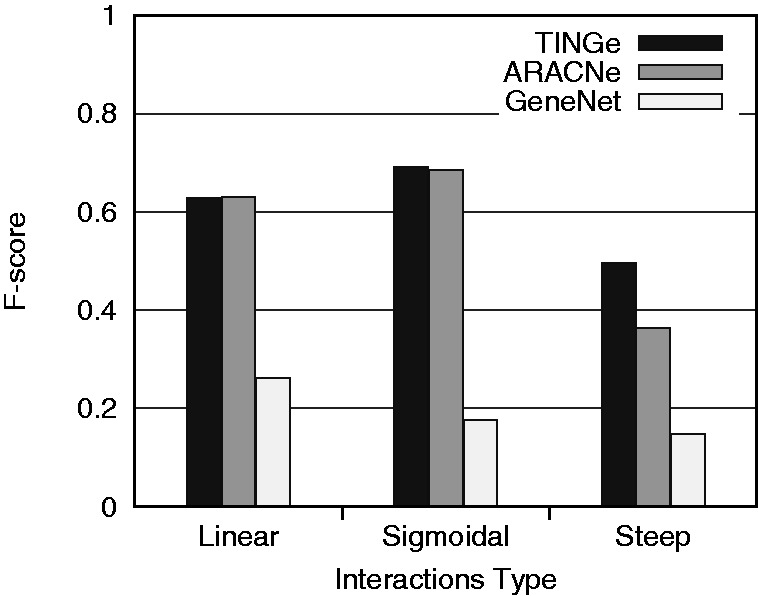
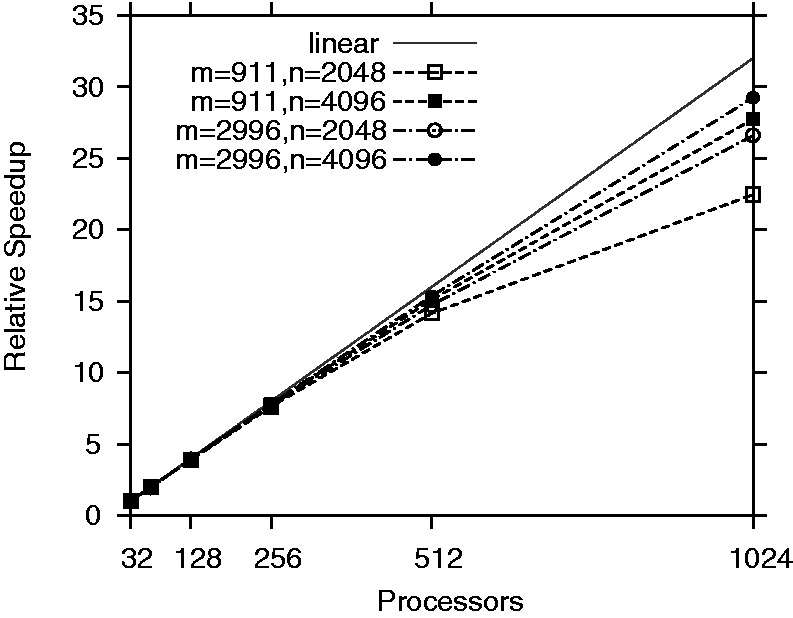
Reverse engineering the whole-genome networks of complex multicellular organisms continues to remain a challenge. While simpler models easily scale to large number of genes and gene expression datasets, more accurate models are compute intensive limiting their scale of applicability. To enable fast and accurate reconstruction of large networks, we developed Tool for Inferring Network of Genes (TINGe), a parallel mutual information (MI)-based program. The novel features of our approach include: (i) B-spline-based formulation for linear-time computation of MI, (ii) a novel algorithm for direct permutation testing and (iii) development of parallel algorithms to reduce run-time and facilitate construction of large networks. We assess the quality of our method by comparison with ARACNe (Algorithm for the Reconstruction of Accurate Cellular Networks) and GeneNet and demonstrate its unique capability by reverse engineering the whole-genome network of Arabidopsis thaliana from 3137 Affymetrix ATH1 GeneChips in just 9 min on a 1024-core cluster. We further report on the development of a new software Gene Network Analyzer (GeNA) for extracting context-specific subnetworks from a given set of seed genes. Using TINGe and GeNA, we performed analysis of 241 Arabidopsis AraCyc 8.0 pathways, and the results are made available through the web.
Overview
The claims and statistics of this paper haven’t been checked yet.
Run the check — free, no account needed. It reads the open-access text and checks the sources it cites.
Integrity signals
Registry
Cites
Statistics
Figures
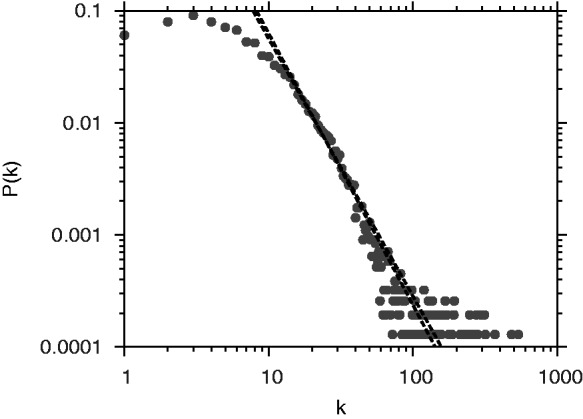
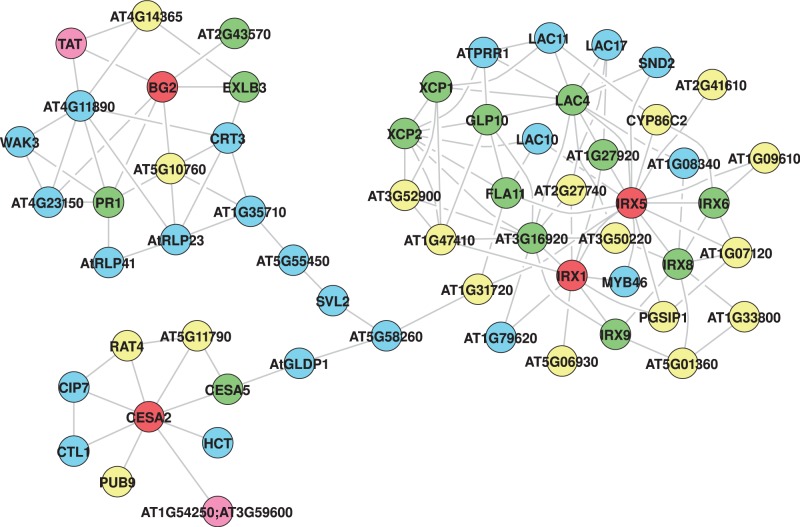
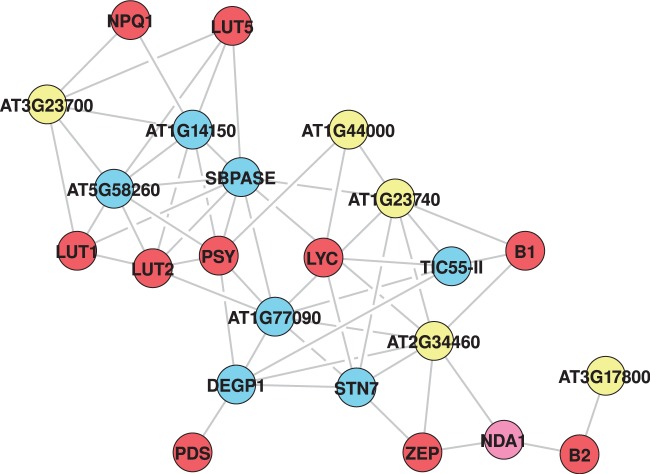
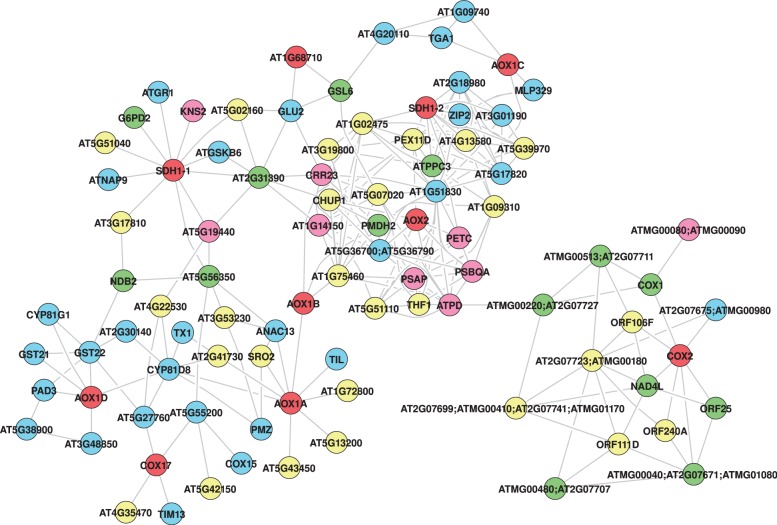
Verification
Claims the paper makes
The claims and statistics of this paper haven’t been checked yet.
Run the check — free, no account needed. It reads the open-access text and checks the sources it cites.
Claims other papers make about this one
Each is checked against this paper’s own text: does it say what the citing paper says it does?
In the citing paper
“We confirmed these findings with a second RNE approach (TINGe, Tool for Inferring Network of Genes) (Aluru et al., 2013), which demonstrated high similarity in the number of interactions, the average degree of connectivity and the rank of hubs based on degrees of connectivity as determined by ARACNe”
From Transcriptome-Based Network Analysis Reveals a Spectrum Model of Human Macrophage Activation (2014) · cites this paper as Aluru et al., 2013
Self-check
Percentages, sums and reported differences re-computed from the paper’s own numbers.
The self-check needs the paper’s full text.
Citations
Cites
Cytoscape: A software Environment for integrated models of biomolecular interaction networks
Shannon, P., Markiel, A., Ozier, O., Baliga, N. S., Wang, J. T., Ramage, D., Amin, N., Schwikowski, B., & Ideker, T. (2003) · Genome Research · doi:10.1101/gr.1239303 · Cited by 51,888
Collective dynamics of ‘small-world’ networks
Watts, D. J., & Strogatz, S. H. (1998) · Nature · doi:10.1038/30918 · Cited by 43,060
Elements of Information Theory
Cover, T. M., & Thomas, J. A. (2001) · Wiley eBooks · doi:10.1002/0471200611 · Cited by 36,808
Cluster analysis and display of genome-wide expression patterns
Eisen, M. B., Spellman, P. T., Brown, P. O., & Botstein, D. (1998) · Proceedings of the National Academy of Sciences · doi:10.1073/pnas.95.25.14863 · Cited by 16,184
The anatomy of a large-scale hypertextual Web search engine
Brin, S., & Page, L. (1998) · Computer Networks and ISDN Systems · doi:10.1016/s0169-7552(98)00110-x · Cited by 16,004
Elements of Information Theory
Cover, T. M., & Thomas, J. A. (2005) · doi:10.1002/047174882x · Cited by 13,791
Network biology: understanding the cell's functional organization
Barabási, A.-L., & Oltvai, Z. N. (2004) · Nature Reviews Genetics · doi:10.1038/nrg1272 · Cited by 7,903
Kraskov, A., Stögbauer, H., & Grassberger, P. (2004) · Physical Review E · doi:10.1103/physreve.69.066138 · Cited by 3,512
Bioinformatics and Computational Biology Solutions Using R and Bioconductor
(2005) · Statistics for Biology and Health · doi:10.1007/0-387-29362-0 · Cited by 3,289
Using Bayesian Networks to Analyze Expression Data
Friedman, N., Linial, M., Nachman, I., & Pe'er, D. (2000) · Journal of Computational Biology · doi:10.1089/106652700750050961 · Cited by 3,266
Cited by
Transcriptome-Based Network Analysis Reveals a Spectrum Model of Human Macrophage Activation
Xue, J., Schmidt, S. V., Sander, J., Draffehn, A., Krebs, W., Quester, I., De Nardo, D., Gohel, T. D., Emde, M., Schmidleithner, L., et al. (2014) · Immunity · doi:10.1016/j.immuni.2014.01.006 · Cited by 2,210
Metadata
- Authors
- Aluru, M., Zola, J., Nettleton, D., & Aluru, S.
- Affiliations
- Department of Genetics, Development, and Cell Biology, 2Department of Electrical and Computer Engineering, 3Department of Statistics, Iowa State University, Ames, IA 50011, USA and 4Department of Computer Science and Engineering, Indian Institute of Technology Bombay, Powai, Mumbai 400076, India
- Venue
- Nucleic Acids Research
- Publisher
- Oxford University Press (OUP)
- Published
- 2012-10-05
- Volume
- 41
- Issue
- 1
- Pages
- e24-e24
- ISSN
- 1362-4962
- 0305-1048
- PMC
- PMC3592423
- Cited by
- 34
- References
- 65
- Language
- en
About these checks
Registry, retraction, Cites and statistics results are computed, not judged, with one exception: a printed reference that no index lists is read once by a model before it counts as a citation error. Claims are extracted by a model and kept only when their quote appears verbatim in the text; each cited source is then checked, with a model’s help, for whether it says what the claim relies on. Those verdicts can be wrong — read the claim’s quote and the cited source before relying on one.
Statistics and arithmetic are recomputed, not judged.
Confidence bands are shown only for fields calibrated on our annotated test set. None is calibrated yet, so no band is shown.
What counts as a claim ›How we measure confidence ›How we check this ›
Are you an author, or do you see a problem with this page? Request a review
How to cite
Cite CoChat for the checks on this page, and the paper for its own findings.
- This page
- CoChat. (2026). Citation check: Reverse engineering and analysis of large genome-scale gene networks. https://app.cochat.ai/papers/10.1093/nar/gks904
- The paper
- Aluru, M., Zola, J., Nettleton, D., & Aluru, S. (2013). Reverse engineering and analysis of large genome-scale gene networks. Nucleic Acids Research. https://doi.org/10.1093/nar/gks904
Data sources
Bibliographic data: Semantic Scholar, OpenAlex, Crossref.
Contains information from the Semantic Scholar Academic Graph Datasets, made available under the ODC Attribution License (ODC-BY 1.0).
Semantic Scholar’s data is described in: Kinney, R., et al. (2023). The Semantic Scholar Open Data Platform. arXiv:2301.10140.
