

Androgen receptor uses relaxed response element stringency for selective chromatin binding and transcriptional regulation in vivo
Open accessThe DOI matches its Crossref record; 32 of the 32 references it cites were found in a registry or an index.
Abstract
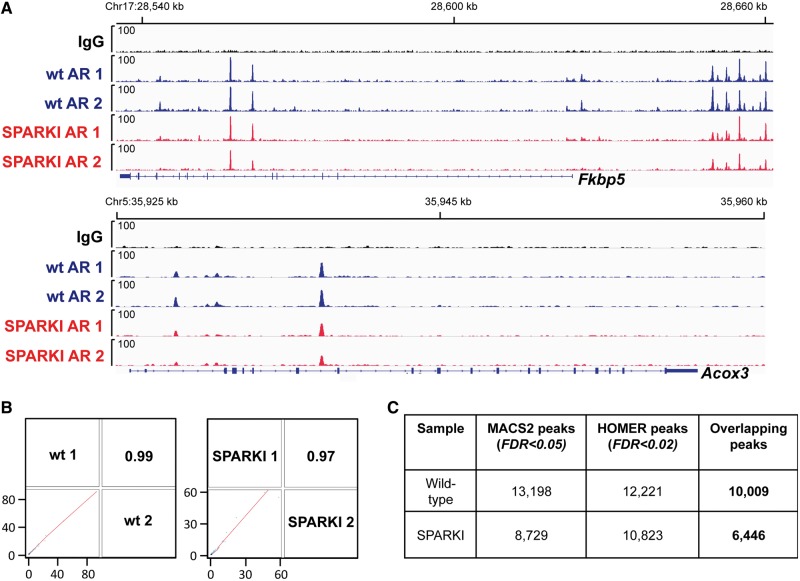
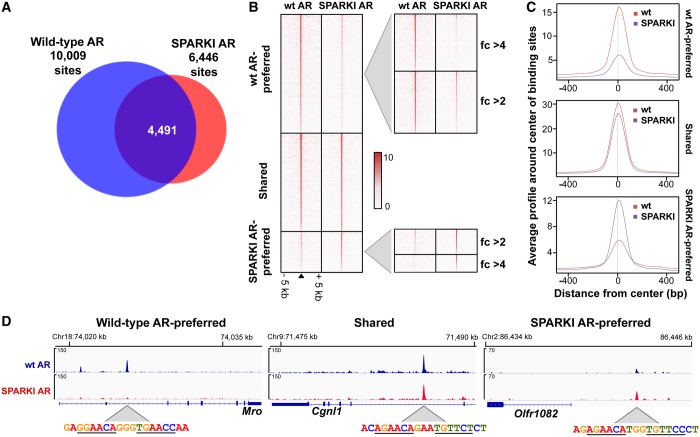
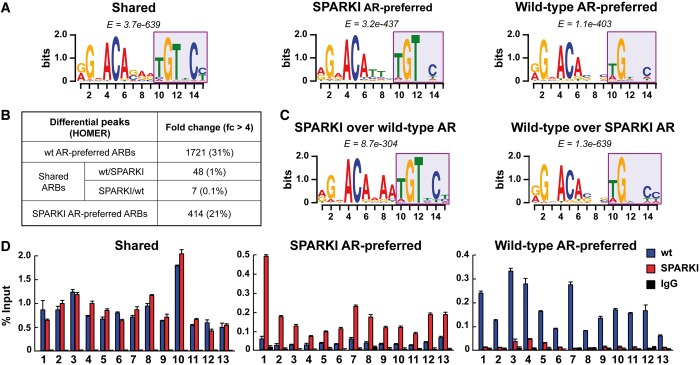
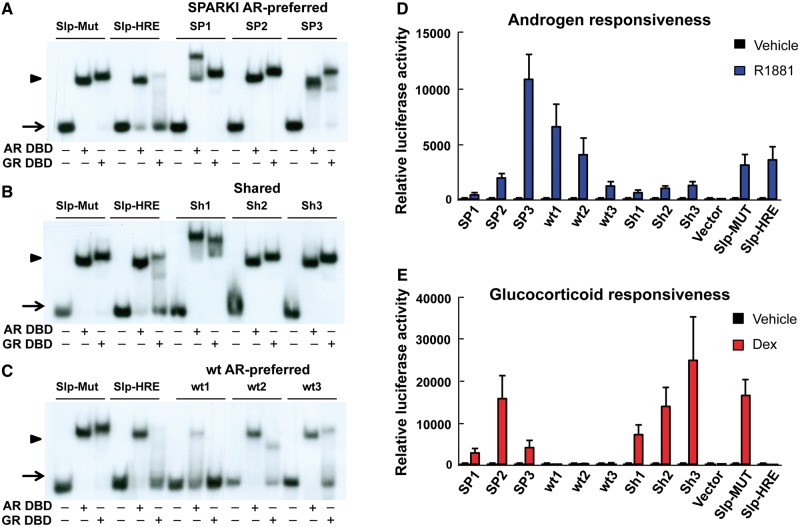
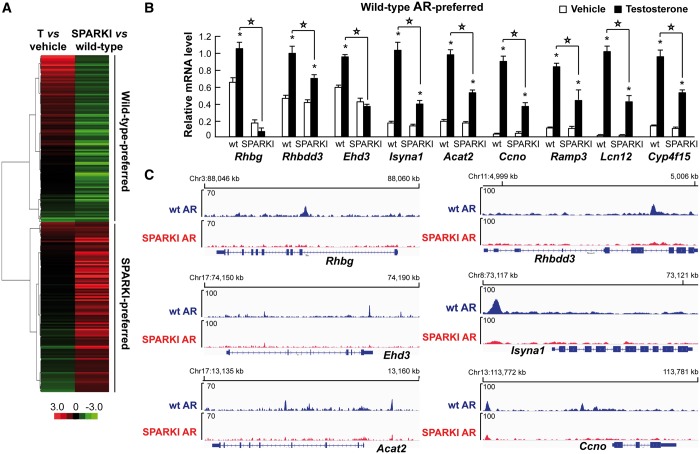
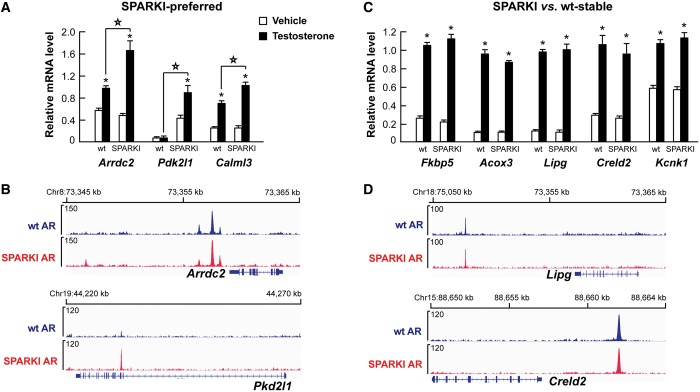
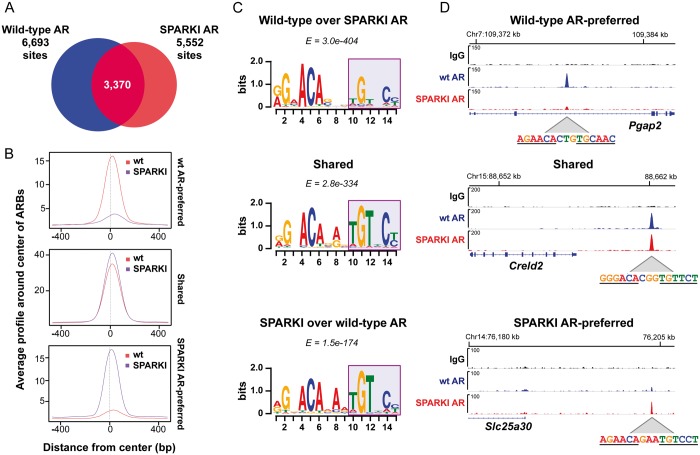
The DNA-binding domains (DBDs) of class I steroid receptors-androgen, glucocorticoid, progesterone and mineralocorticoid receptors-recognize a similar cis-element, an inverted repeat of 5'-AGAACA-3' with a 3-nt spacer. However, these receptors regulate transcription programs that are largely receptor-specific. To address the role of the DBD in and of itself in ensuring specificity of androgen receptor (AR) binding to chromatin in vivo, we used SPARKI knock-in mice whose AR DBD has the second zinc finger replaced by that of the glucocorticoid receptor. Comparison of AR-binding events in epididymides and prostates of wild-type (wt) and SPARKI mice revealed that AR achieves selective chromatin binding through a less stringent sequence requirement for the 3'-hexamer. In particular, a T at position 12 in the second hexamer is dispensable for wt AR but mandatory for SPARKI AR binding, and only a G at position 11 is highly conserved among wt AR-preferred response elements. Genome-wide AR-binding events agree with the respective transcriptome profiles, in that attenuated AR binding in SPARKI mouse epididymis correlates with blunted androgen response in vivo. Collectively, AR-selective actions in vivo rely on relaxed rather than increased stringency of cis-elements on chromatin. These elements are, in turn, poorly recognized by other class I steroid receptors.
Overview
The claims and statistics of this paper haven’t been checked yet.
Free: it reads the open-access text and checks the first 5 claims that cite a source we can check. Create a free account to check every claim.
Integrity signals
Registry
Cites
Statistics
Figures
Verification
Claims the paper makes
The claims and statistics of this paper haven’t been checked yet.
Free: it reads the open-access text and checks the first 5 claims that cite a source we can check. Create a free account to check every claim.
Claims other papers make about this one
Each is checked against this paper’s own text: does it say what the citing paper says it does?
In the citing paper
“AR has evolved in a manner that allows it to tolerate levels of sequence degeneracy for proper development, with this enhanced flexibility conferred through a plastic dimer interface and an extended hinge, both serving as regulatory mechanisms that allow AR to bind primarily half sites and other degenerate sequences in vivo”
From Allosteric interactions prime androgen receptor dimerization and activation (2022) · cites this paper as Sahu et al., 2014
Self-check
Percentages, sums and reported differences re-computed from the paper’s own numbers.
The self-check needs the paper’s full text.
Citations
Cites
Model-based Analysis of ChIP-Seq (MACS)
Zhang, Y., Liu, T., Meyer, C. A., Eeckhoute, J., Johnson, D. S., Bernstein, B. E., Nusbaum, C., Myers, R. M., Brown, M., Li, W., et al. (2008) · Genome Biology · doi:10.1186/gb-2008-9-9-r137 · Cited by 18,386
Robinson, J. T., Thorvaldsdóttir, H., Winckler, W., Guttman, M., Lander, E. S., Getz, G., & Mesirov, J. P. (2011) · Nature Biotechnology · doi:10.1038/nbt.1754 · Cited by 15,390
Heinz, S., Benner, C., Spann, N., Bertolino, E., Lin, Y. C., Laslo, P., Cheng, J. X., Murre, C., Singh, H., & Glass, C. K. (2010) · Molecular Cell · doi:10.1016/j.molcel.2010.05.004 · Cited by 13,382
MEME SUITE: tools for motif discovery and searching
Bailey, T. L., Boden, M., Buske, F. A., Frith, M., Grant, C. E., Clementi, L., Ren, J., Li, W. W., & Noble, W. S. (2009) · Nucleic Acids Research · doi:10.1093/nar/gkp335 · Cited by 10,648 · cited 3×
“To this end, we performed de novo motif search analyses using MEME Suite (17) for the three ARB categories: (i) binding sites shared by the two receptors or (ii) preferred by wt AR or (iii) SPARKI AR—on sequences comprising the top 1000 sites spanning±15 bp around the summit of the receptor binding locus.”
MethodInfluentialThe nuclear receptor superfamily: the second decade
Mangelsdorf, D. J., Thummel, C., Beato, M., Herrlich, P., Schütz, G., Umesono, K., Blumberg, B., Kastner, P., Mark, M., Chambon, P., et al. (1995) · Cell · doi:10.1016/0092-8674(95)90199-x · Cited by 6,964
Identifying ChIP-seq enrichment using MACS
Feng, J., Liu, T., Qin, B., Zhang, Y., & Liu, X. S. (2012) · Nature Protocols · doi:10.1038/nprot.2012.101 · Cited by 1,870 · cited 4×
“Peak calling with MACS2 and HOMER identified 6693 and 5552 high-confidence AR-binding events in prostates of wt and SPARKI mice, respectively, 3370 of which are shared by the two receptors (Figure 7A, Supplementary Data sets S6 and S7).”
MethodInfluentialPioneer transcription factors: establishing competence for gene expression
Zaret, K. S., & Carroll, J. S. (2011) · Genes & Development · doi:10.1101/gad.176826.111 · Cited by 1,589 · cited 1×
“However, specific transcriptional outcome in vivo by steroid receptors is influenced not only by the cis-element and its interaction with the DBD, but also by a number of chromatin modifications and divergent collaborating factors (29).”
BackgroundFoxA1 Translates Epigenetic Signatures into Enhancer-Driven Lineage-Specific Transcription
Lupien, M., Eeckhoute, J., Meyer, C. A., Wang, Q., Zhang, Y., Li, W., Carroll, J. S., Liu, X. S., & Brown, M. (2008) · Cell · doi:10.1016/j.cell.2008.01.018 · Cited by 983
Chromatin accessibility pre-determines glucocorticoid receptor binding patterns
John, S., Sabo, P. J., Thurman, R. E., Sung, M.-H., Biddie, S. C., Johnson, T. A., Hager, G. L., & Stamatoyannopoulos, J. A. (2011) · Nature Genetics · doi:10.1038/ng.759 · Cited by 954
Cistrome: an integrative platform for transcriptional regulation studies
Liu, T., Ortiz, J. A., Taing, L., Meyer, C. A., Lee, B., Zhang, Y., Shin, H., Wong, S. S., Ma, J., Lei, Y., et al. (2011) · Genome Biology · doi:10.1186/gb-2011-12-8-r83 · Cited by 716 · cited 1×
“The overlap analysis, tag density maps and binding site correlation plots were performed using Cistrome (16).”
Method
Cited by
Sex Steroid Actions in Male Bone
Vanderschueren, D., Laurent, M. R., Claessens, F., Gielen, E., Lagerquist, M. K., Vandenput, L., Börjesson, A. E., & Ohlsson, C. (2014) · Endocrine Reviews · doi:10.1210/er.2014-1024 · Cited by 327
“Two types of AREs exist: 1) canonical AREs that form a clear palindromic repeat of the 5 -AGAACA-3 consensus sequence; and 2) selective AREs with a more relaxed resemblance to direct or palindromic repeats of the same hexamer (61).”
BackgroundAndrogen insensitivity syndrome
Mongan, N. P., Tadokoro-Cuccaro, R., Bunch, T., & Hughes, I. A. (2015) · Best Practice & Research Clinical Endocrinology & Metabolism · doi:10.1016/j.beem.2015.04.005 · Cited by 195
Chan, S. C., Selth, L. A., Li, Y., Nyquist, M. D., Miao, L., Bradner, J. E., Raj, G. V., Tilley, W. D., & Dehm, S. M. (2015) · Nucleic Acids Research · doi:10.1093/nar/gkv262 · Cited by 151
“Further motif analysis revealed that occurrences of stringent and relaxed specificity AREs (33) were similar in both datasets (Supplemental Table S6).”
MethodResultDeterminants of Receptor- and Tissue-Specific Actions in Androgen Signaling
Pihlajamaa, P., Sahu, B., & Jänne, O. A. (2015) · Endocrine Reviews · doi:10.1210/er.2015-1034 · Cited by 141
Jung, Y. H., Kremsky, I., Gold, H. B., Rowley, M. J., Punyawai, K., Buonanotte, A., Lyu, X., Bixler, B. J., Chan, A. W. S., & Corces, V. G. (2019) · Molecular Cell · doi:10.1016/j.molcel.2019.04.014 · Cited by 125
“…2015 GEO: GSE67298 Foxa1 ChIP-seq in mouse caput epididymis Pihlajamaa et al., 2014 GEO: GSE47192 ERa ChIP-seq in mouse uterus Hewitt et al., 2012 GEO: GSE56501 AR ChIP-seq in mouse prostate Sahu et al., 2014 GEO: GSE51106 (Continued on next page) Molecular Cell 75, 1–18.e1–e5, July 11, 2019 e1”
The impact of epididymal proteins on sperm function
Björkgren, I., & Sipilä, P. (2019) · Reproduction · doi:10.1530/rep-18-0589 · Cited by 87
Evolution and function of mammalian binder of sperm proteins
Plante, G., Prud’homme, B., Fan, J., Lafleur, M., & Manjunath, P. (2015) · Cell and Tissue Research · doi:10.1007/s00441-015-2289-2 · Cited by 101
Malinen, M., Niskanen, E. A., Kaikkonen, M. U., & Palvimo, J. J. (2016) · Nucleic Acids Research · doi:10.1093/nar/gkw855 · Cited by 88
“The occupancy of FOXA1 on chromatin can either facilitate or prevent binding of AR to chromatin (20,21).”
BackgroundAndrogen–glucocorticoid interactions in the era of novel prostate cancer therapy
Narayanan, S., Srinivas, S., & Feldman, D. (2015) · Nature Reviews Urology · doi:10.1038/nrurol.2015.254 · Cited by 91
Toropainen, S., Malinen, M., Kaikkonen, S., Rytinki, M. M., Jääskeläinen, T. J., Sahu, B., Jänne, O. A., & Palvimo, J. J. (2014) · Nucleic Acids Research · doi:10.1093/nar/gku1375 · Cited by 76
Comparing the rules of engagement of androgen and glucocorticoid receptors
Claessens, F., Joniau, S., & Helsen, C. (2017) · Cellular and Molecular Life Sciences · doi:10.1007/s00018-017-2467-3 · Cited by 76
“ChIP-seq data on series of transcription factors in cell lines and more recently also on tissue confirmed that: (1) steroid receptors involve other transcription factors to activate their target genes [25, 29]; (2) transcription factors recruit histone mark writing, reading, and erasing coregulators; and (3) the co-re…”
BackgroundWang, J., Li, Z., & Yang, W.-X. (2022) · Frontiers in Endocrinology · doi:10.3389/fendo.2022.838858 · Cited by 91
“AR homodimers then bind to androgen response elements (AREs) in the promoter regions of targeted genes to regulate their transcription (37, 38).”
BackgroundThe Role of Androgen Signaling in Male Sexual Development at Puberty
Rey, R. A. (2020) · Endocrinology · doi:10.1210/endocr/bqaa215 · Cited by 75
Zhang, Z., Chng, K. R., Lingadahalli, S., Chen, Z., Liu, M. H., Do, H. H., Cai, S., Rinaldi, N. J., Poh, H. M., Li, G., et al. (2019) · Genome Research · doi:10.1101/gr.230243.117 · Cited by 58
“1G; Magee et al. 2006; Makkonen et al. 2009; Chng et al. 2012; Tan et al. 2012; Sahu et al. 2014) but with unclear roles.”
BackgroundThe androgen receptor depends on ligand-binding domain dimerization for transcriptional activation
Kharraz, S. E., Dubois, V., van Royen, M. E., Houtsmuller, A. B., Pavlova, E., Atanassova, N. N., Nguyen, T., Voet, A. R. D., Eerlings, R., Handle, F., et al. (2021) · EMBO Reports · doi:10.15252/embr.202152764 · Cited by 54
“For the AR and for other steroid receptors, dimerization via the DBD has been well characterized and is crucial for the recognition of the bipartite, inverted DNA repeats that act as androgen response elements (AREs) (Shaffer et al , 2004; Sahu et al , 2014).”
Eighty Years of Targeting Androgen Receptor Activity in Prostate Cancer: The Fight Goes on
Estébanez‐Perpiñá, E., Bevan, C. L., & McEwan, I. J. (2021) · Cancers · doi:10.3390/cancers13030509 · Cited by 57
“Furthermore, a relaxed stringency in the DNA sequence has been observed to be important for chromatin binding of the AR to selective response elements [51].”
BackgroundAllosteric interactions prime androgen receptor dimerization and activation
Wasmuth, E. V., Broeck, A. V., LaClair, J. R., Hoover, E. A., Lawrence, K. E., Paknejad, N., Pappas, K., Matthies, D., Wang, B., Feng, W., et al. (2022) · Molecular Cell · doi:10.1016/j.molcel.2022.03.035 · Cited by 50
Kulik, M., Bothe, M., Kibar, G., Fuchs, A., Schöne, S., Preković, S., Mayayo‐Peralta, I., Chung, H., Zwart, W. T., Helsen, C., et al. (2021) · Nucleic Acids Research · doi:10.1093/nar/gkab185 · Cited by 48
“Another difference we observed was that the canonical AR/GR consensus motif was more enriched for GR than for AR suggesting that AR might be able to bind to more degenerate sequences something that has also been described by others (75).”
BackgroundZhang, L., Martini, G. D., Rube, H. T., Kribelbauer, J. F., Rastogi, C., FitzPatrick, V., Houtman, J. C. D., Bussemaker, H. J., & Pufall, M. A. (2017) · Genome Research · doi:10.1101/gr.222844.117 · Cited by 42
Kregel, S., Bagamasbad, P., He, S., LaPensee, E. W., Raji, Y. R., Brogley, M. A., Chinnaiyan, A. M., Cieslik, M. P., & Robins, D. M. (2020) · Nucleic Acids Research · doi:10.1093/nar/gkaa178 · Cited by 32
“Thus, the ‘relaxed response element stringency’ of AR relies on DNA-binding partners, such as FOXA1, to achieve precise, strong activation (17,18).”
BackgroundInfluentialEffect of estrogen-active compounds on the expression of RACK1 and immunological implications
Buoso, E., Masi, M., Galbiati, V., Maddalon, A., Iulini, M., Kenda, M., Dolenc, M. S., Marinovich, M., Racchi, M., & Corsini, E. (2020) · Archives of Toxicology · doi:10.1007/s00204-020-02756-9 · Cited by 34
Effects of sex hormone-binding globulin (SHBG) on androgen bioactivity in vitro
Laurent, M. R., Helsen, C., Antonio, L., Schollaert, D., Joniau, S., Vos, M. J., Decallonne, B., Hammond, G. L., Vanderschueren, D., & Claessens, F. (2016) · Molecular and Cellular Endocrinology · doi:10.1016/j.mce.2016.08.041 · Cited by 31
Self-citationCell-lineage specificity and role of AP-1 in the prostate fibroblast androgen receptor cistrome
Leach, D. A., Panagopoulos, V., Nash, C. E., Bevan, C. L., Thomson, A. A., Selth, L. A., & Buchanan, G. (2016) · Molecular and Cellular Endocrinology · doi:10.1016/j.mce.2016.09.010 · Cited by 34
“This strategy of consolidating multiple sequencing replicates has been used successfully in other AR ChIP-seq studies to increase the depth of analysis (Chan et al., 2015; Sahu et al., 2014).”
Chaturvedi, A. P., & Dehm, S. M. (2019) · Advances in experimental medicine and biology · doi:10.1007/978-3-030-32656-2_15 · Cited by 37
Sun, N., Kohli, A., Huang, S., Chang, T., & Chao, C. C. ‐. (2018) · Journal of Cellular Physiology · doi:10.1002/jcp.27535 · Cited by 36
“Comparison of AR‐ binding events in the epididymis and prostate of wild‐type and mutant SPARKI mice (whose AR‐DNA‐binding domain has the second zinc finger replaced by that of the glucocorticoid receptor) revealed that AR achieves selective chromatin binding through a less stringent sequence requirement for the 3′‐hex…”
BackgroundBuoso, E., Galasso, M., Serafini, M. M., Ronfani, M., Lanni, C., Corsini, E., & Racchi, M. (2017) · Cellular Signalling · doi:10.1016/j.cellsig.2017.02.010 · Cited by 34
Buoso, E., Galasso, M., Ronfani, M., Papale, A., Galbiati, V., Eberini, I., Marinovich, M., Racchi, M., & Corsini, E. (2017) · Toxicology and Applied Pharmacology · doi:10.1016/j.taap.2017.04.011 · Cited by 30
Lack of androgen receptor SUMOylation results in male infertility due to epididymal dysfunction
Zhang, F., Malinen, M., Mehmood, A., Lehtiniemi, T., Jääskeläinen, T. J., Niskanen, E. A., Korhonen, H., Laiho, A., Elo, L. L., Ohlsson, C., et al. (2019) · Nature Communications · doi:10.1038/s41467-019-08730-z · Cited by 36
Sun, N., Huang, S., Lu, H., Chang, T., & Chao, C. C. ‐. (2015) · Oncotarget · doi:10.18632/oncotarget.4824 · Cited by 29
“Comparison of ARbinding events in the epididymis and prostate of wildtype (wt) and SPARKI mice (whose AR DNA-binding domain has the second zinc finger replaced by that of the glucocorticoid receptor) revealed that AR achieves selective chromatin binding through a less stringent sequence requirement for the 3′-hexamer…”
BackgroundRationale for the development of alternative forms of androgen deprivation therapy
Kumari, S., Senapati, D., & Heemers, H. V. (2017) · Endocrine Related Cancer · doi:10.1530/erc-17-0121 · Cited by 21
“Rather, recent ChIP-Seq data have clarified that AR binds to selective AREs because of less stringent sequence requirements for the 3′ hexamer (Sahu et al. 2014).”
Chromatin reprogramming as an adaptation mechanism in advanced prostate cancer
Braadland, P. R., & Urbanucci, A. (2019) · Endocrine Related Cancer · doi:10.1530/erc-18-0579 · Cited by 24
Coons, L. A., Hewitt, S. C., Burkholder, A., McDonnell, D. P., & Korach, K. S. (2017) · Endocrinology · doi:10.1210/en.2017-00468 · Cited by 21
“(68) (69) (25) (53) (45) (70) (71) (72) (47) (73) (74) (75) (76) (77) (78) (79) (80) (34) (81) (82) (83) (42)”
Mohideen-Abdul, K., Tazibt, K., Bourguet, M., Hazemann, I., Lebars, I., Takács, M., Cianférani, S., Klaholz, B. P., Moras, D., & Billas, I. M. L. (2017) · Frontiers in Endocrinology · doi:10.3389/fendo.2017.00140 · Cited by 22
Moore, N. L. T., Hanson, A. R., Ebrahimie, E., Hickey, T. E., & Tilley, W. D. (2019) · The Journal of Steroid Biochemistry and Molecular Biology · doi:10.1016/j.jsbmb.2019.105548 · Cited by 17
Epididymal Binder of SPerm genes and proteins: what do we know a decade later?
Plante, G., & Manjunath, P. (2015) · Andrology · doi:10.1111/andr.12089 · Cited by 17
“This hypothesis is further supported ChIP-seq analysis results in mice which showed that androgen receptors bound DNA regions between Bsph1 and Bsph2 genes as well as 500 bp upstream of the Bsph2 gene in cauda epididymides (Hu et al., 2010; Sahu et al., 2014).”
BackgroundResultChukhu, M., Dahiya, U. R., & Heemers, H. V. (2025) · Oncogene · doi:10.1038/s41388-025-03573-z · Cited by 28
“…of the DNA-bound DBD dimer that was observed in X-ray crystallography studies and observations of relaxed response element stringency for selective chromatin binding [51, 52], it did point to the potential of variability in the composition of AREs and to deviations from the ideal 15 bp sequence.”
Functional implications and therapeutic targeting of androgen response elements in prostate cancer
Senapati, D., Sharma, V., Rath, S. K., Rai, U., & Panigrahi, N. (2023) · Biochimie · doi:10.1016/j.biochi.2023.07.012 · Cited by 19
Coates, H. W., Chua, N. K., & Brown, A. J. (2019) · Biochimica et Biophysica Acta (BBA) - Molecular and Cell Biology of Lipids · doi:10.1016/j.bbalip.2019.08.006 · Cited by 15
Helabad, M. B., Volkenandt, S., & Imhof, P. (2020) · Frontiers in Molecular Biosciences · doi:10.3389/fmolb.2020.00004 · Cited by 11
“In contrast, binding of both wild-type AR and SPARKI to IR-like elements requires a specific HS2 sequence (Sahu et al., 2014).”
BackgroundResultInfluentialStructural mechanism underlying variations in DNA binding by the androgen receptor
Lee, X. Y., Eynde, W. V., Helsen, C., Willems, H., Peperstraete, K., Block, S. D., Voet, A. R. D., & Claessens, F. (2024) · The Journal of Steroid Biochemistry and Molecular Biology · doi:10.1016/j.jsbmb.2024.106499 · Cited by 10
“The fact that the AR can bind to elements resembling direct repeats, while the GR cannot, was explained by the fact that the AR has a more relaxed DNA binding mode, allowing more sequence variations X.Y. Lee et al. [17 – 19].”
Anderson, A. P., & Jones, A. G. (2022) · Evolution · doi:10.1111/evo.14483 · Cited by 6
“Paradoxically, higher specificity is achieved via more point mutations on one of the half-sites, so a loss in overall affinity accompanies higher specificity (Wilson et al., 2016, Nelson et al., 1999, Sahu et al., 2014).”
BackgroundRetractedBudreika, A., Phoenix, J. T., Kostlan, R. J., Deegan, C. D., Ferrari, M. G., Young, K. S., Fanning, S. W., & Kregel, S. (2025) · Cancers · doi:10.3390/cancers17020306 · Cited by 6
Sutinen, P., Malinen, M., & Palvimo, J. J. (2017) · Endocrinology · doi:10.1007/978-3-319-44441-3_12 · Cited by 8
Genetic disruption of the baculum compromises the ability of male mice to copulate
Ghione, C., Schultz, N. G., Park, S., Menke, D. B., & Dean, M. D. (2025) · PLoS Genetics · doi:10.1371/journal.pgen.1011787 · Cited by 3
“As a positive control, we focused on intron5 of Fkbp5 , which was bound by AR in multiple tissues in previous studies [126,127].”
Androgen Receptor in Health and Disease
Marcelli, M. (2017) · Springer eBooks · doi:10.1007/978-3-319-46086-4_2 · Cited by 3
Coons, L. A., Burkholder, A., Hewitt, S. C., McDonnell, D. P., & Korach, K. S. (2019) · iScience · doi:10.1016/j.isci.2019.04.006 · Cited by 4
“Furthermore, ER DNA-binding is increased at DNA elements with variants in palindromic position pair (3,5)(6,8), as well as at DNA elements with variants in palindromic position pair (4,5)-(6,7) (Figure S13).”
BackgroundInfluentialOnishi, T., Sakai, H., Uno, H., Sakakibara, I., Uezumi, A., Honda, M., Kai, T., Higashiyama, S., Miura, N., Kikugawa, T., et al. (2024) · Endocrine Journal · doi:10.1507/endocrj.ej24-0410 · Cited by 2
“The GSM 1276800 [22] dataset was displayed by Cistrome Data Browser [17, 18].”
Ghione, C., & Dean, M. D. (2025) · Genome Biology and Evolution · doi:10.1093/gbe/evaf068 · Cited by 3
“The 18 different AREs have variable binding specificity to AR and can be bound by transcription factors other than AR (De Umesono and Evans 1989; Nelson et al. 1999; Verrijdt et al. 2003; Shaffer et al. 2004; Denayer et al. 2010; Bruyn et al. 2011; Sahu et al. 2014).”
Prostat Kanseri: Androjen Reseptörü Sinyal Mekanizması
Erzurumlu, Y. (2020) · SDÜ Tıp Fakültesi Dergisi · doi:10.17343/sdutfd.726163 · Cited by 4
Androgen Receptor in Health and Disease
Hohl, A., & Marcelli, M. (2023) · Springer eBooks · doi:10.1007/978-3-031-31501-5_2 · Cited by 2
Androgens differentially modulate glucocorticoid effects on adipose tissue and lean mass
Sommers, V., David, K., Helsen, C., Moermans, K., Stockmans, I., Ferrari, G., Dmitriev, R. I., Stegen, S., Meijer, O. C., Kroon, J., et al. (2025) · Journal of Endocrinology · doi:10.1530/joe-24-0061 · Cited by 4
Desmoplastic Small Round Cell Tumors and the Role of Androgen Receptors
Truong, D. D., Cárdenas-Zúñiga, R., & Ludwig, J. A. (2025) · Current Treatment Options in Oncology · doi:10.1007/s11864-025-01334-4 · Cited by 1
“Selective AREs consist of direct repeats of the 5′-AGAACA-3′ hexamer sites with a stronger affinity to AR and are not recognized by GR or MR [28].”
The Androgen Receptor: Key to Testosterone Function and Androgen Sensitivity
Paakinaho, V., & Palvimo, J. J. (2025) · Springer eBooks · doi:10.1007/978-3-031-96376-6_12 · Cited by 2
Guo, Y., Xu, K., Zhou, Q., Du, L., Dang, C., Liu, G., Yi, X., Zhou, D., Cao, J., Liu, Z., et al. (2026) · Nature Communications · doi:10.1038/s41467-026-76120-3 · Cited by 2
What Determines the Difference in DNA Binding Between the Androgen and the Glucocorticoid Receptors?
Dubois, V., Helsen, C., Clinckemalie, L., Spans, L., Laurent, M. R., Antonio, L., den Broeck, T. V., Preković, S., Joniau, S., Vanderschueren, D., et al. (2015) · Springer eBooks · doi:10.1007/978-3-319-18729-7_4
SUMOylation in the Regulation of Androgen Receptor and Pioneer Factor FOXA1 in Prostate Cancer Cells
Sutinen, P. (2015) · UEF eRepo (University of Eastern Finland)
Androgen receptor-mediated growth suppression and apoptosis of human prostate epithelial cells
Chen, C. (2016) · Illinois Digital Environment for Access to Learning and Scholarship (University of Illinois at Urbana-Champaign)
Higgins, J. E. (2015) · Deep Blue (University of Michigan)
Sutinen, P., Malinen, M., & Palvimo, J. J. (2016) · Endocrinology · doi:10.1007/978-3-319-29456-8_12-1 · Cited by 2
der Steen, T. V., Schmidt, L. J., & Tindall, D. J. (2015) · Springer eBooks · doi:10.1007/978-1-4614-6613-0_111-1
der Steen, T. V., Schmidt, L. J., & Tindall, D. J. (2017) · Springer eBooks · doi:10.1007/978-1-4419-0717-2_111
Ghione, C. R., & Dean, M. D. (2024) · bioRxiv (Cold Spring Harbor Laboratory) · doi:10.1101/2024.12.07.627341
Androgenrezeptor in Gesundheit und Krankheit
Hohl, A., & Marcelli, M. (2024) · Springer eBooks · doi:10.1007/978-3-031-65245-5_2
Paakinaho, V., Sutinen, P., Malinen, M., & Palvimo, J. J. (2026) · Endocrinology · doi:10.1007/978-3-319-29456-8_12-2
Metadata
- Authors
- Sahu, B., Pihlajamaa, P., Dubois, V., Kerkhofs, S., Claessens, F., & Jänne, O. A.
- Affiliations
- University of Helsinki (FI)
- Corresponding author
- Jänne, Olli A.
- Venue
- Nucleic Acids Research
- Publisher
- Oxford University Press (OUP)
- Published
- 2014-01-22
- Volume
- 42
- Issue
- 7
- Pages
- 4230-4240
- ISSN
- 0305-1048 (ISSN-L)
- 1362-4962
- PMC
- PMC3985627
- OpenAlex
- W2076113315
- Cited by
- 66
- References
- 32
- Citations by year
- 2026: 2 · 2025: 7 · 2024: 4 · 2023: 2 · 2022: 3 · 2021: 3 · 2020: 5 · 2019: 10 · 2018: 1 · 2017: 10 · 2016: 5 · 2015: 12 · 2014: 2
- FWCI
- 3.96
- Type
- journal article
- Language
- en
- Open access
- gold
- doi.org
- Locations
- Nucleic Acids Research (publishedVersion, cc-by)
- Europe PMC (PubMed Central) (publishedVersion, cc-by)
- PubMed Central (publishedVersion, cc-by)
- PubMed (publishedVersion)
- Ghent University Academic Bibliography (Ghent University) (submittedVersion)
- Työväentutkimus Vuosikirja (submittedVersion)
- Lirias (submittedVersion, other-oa)
- Funders
- Helsingin ja Uudenmaan Sairaanhoitopiiri
- Fonds Wetenschappelijk Onderzoek
- KU Leuven
- Vlaamse regering
- Topics
- Life Sciences › Biochemistry, Genetics and Molecular Biology › Molecular Biology › Genomics and Chromatin Dynamics
- Life Sciences › Biochemistry, Genetics and Molecular Biology › Cancer Research › Prostate Cancer Treatment and Research
- Life Sciences › Biochemistry, Genetics and Molecular Biology › Endocrinology › Estrogen and related hormone effects
- Keywords
- androgen receptor, response elements, DNA-binding domain, zinc finger, glucocorticoid receptor, chromatin binding, transcriptional regulation, epididymis, prostate, androgen response, genome-wide binding
- MeSH terms
- Animals, Chromatin, Enhancer Elements, Genetic, Epididymis, Gene Expression Regulation, Male, Mice, Inbred C57BL, Receptors, Androgen, Transcription, Genetic, Response Elements, Mice, Gene Knock-In Techniques
About these checks
Registry, retraction, Cites and statistics results are computed, not judged, with one exception: a printed reference that no index lists is read once by a model before it counts as a citation error. Claims are extracted by a model and kept only when their quote appears verbatim in the text; each cited source is then checked, with a model’s help, for whether it says what the claim relies on. Those verdicts can be wrong — read the claim’s quote and the cited source before relying on one.
Statistics and arithmetic are recomputed, not judged.
Confidence bands are shown only for fields calibrated on our annotated test set. None is calibrated yet, so no band is shown.
What counts as a claim ›How we measure confidence ›How we check this ›
Are you an author, or do you see a problem with this page? Request a review
Data sources
Bibliographic data: Semantic Scholar, OpenAlex, Crossref.
Contains information from the Semantic Scholar Academic Graph Datasets, made available under the ODC Attribution License (ODC-BY 1.0).
Semantic Scholar’s data is described in: Kinney, R., et al. (2023). The Semantic Scholar Open Data Platform. arXiv:2301.10140.
