

Structural and sequencing analysis of local target DNA recognition by MLV integrase
Open accessThe DOI matches its Crossref record; 85 of the 85 references it cites were found in a registry or an index.
Abstract
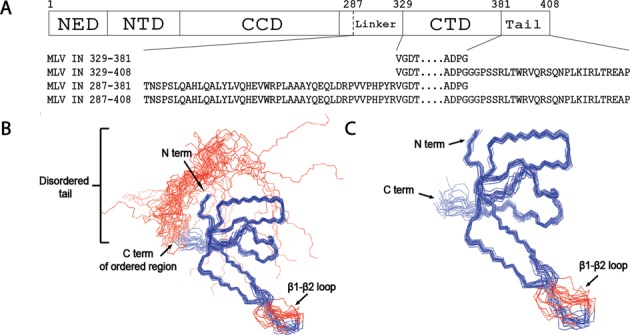
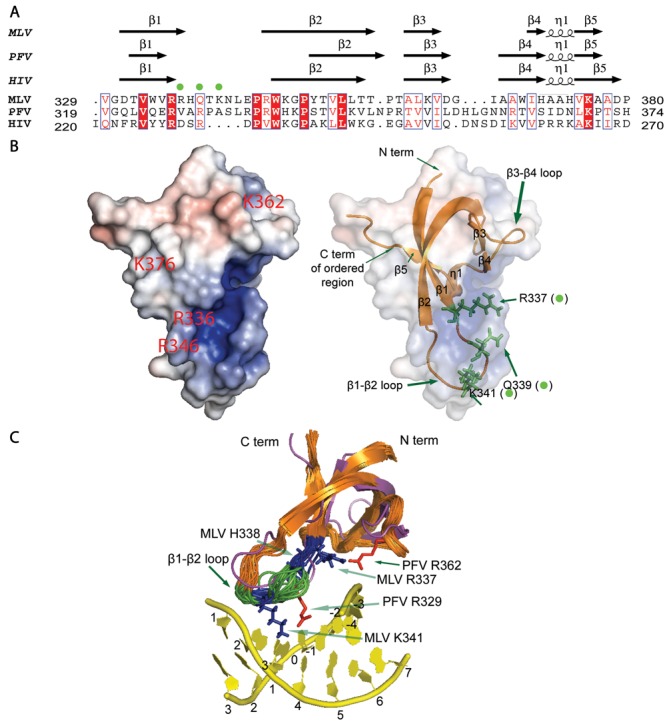
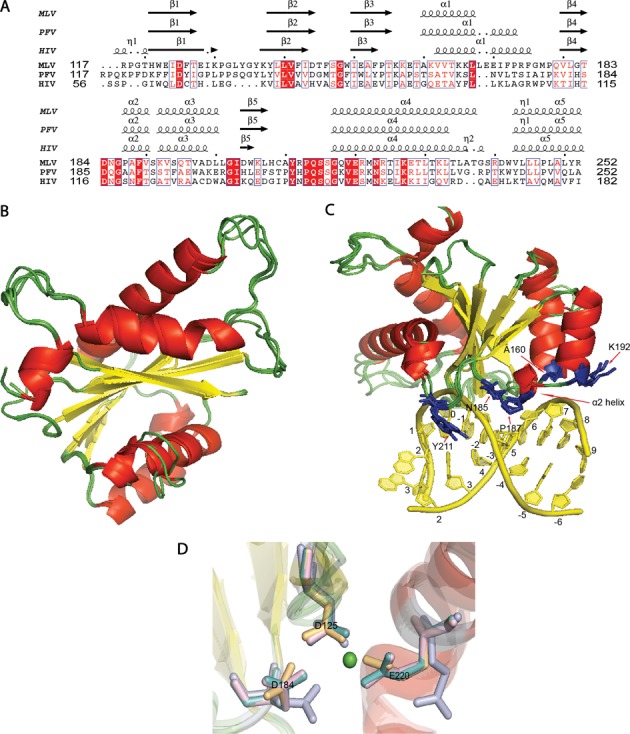
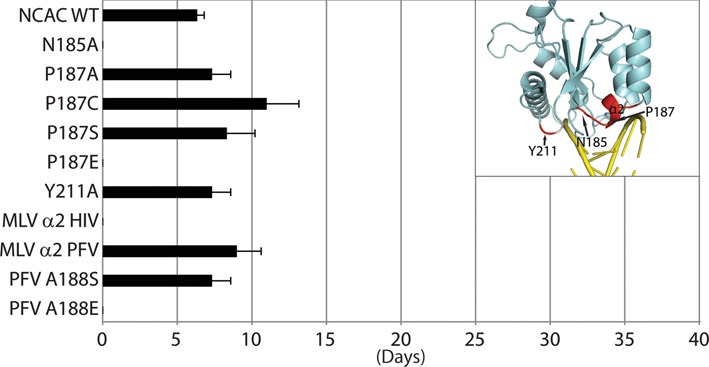
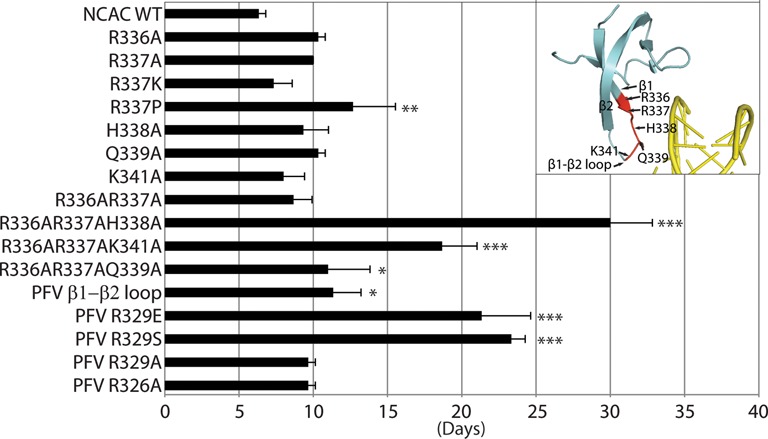
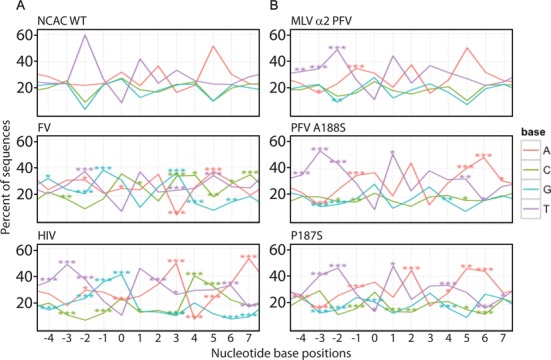
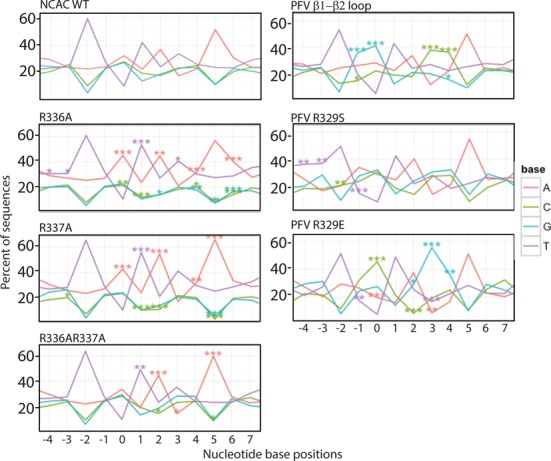
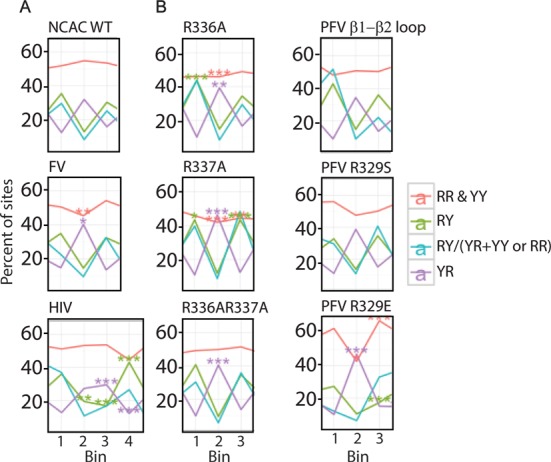
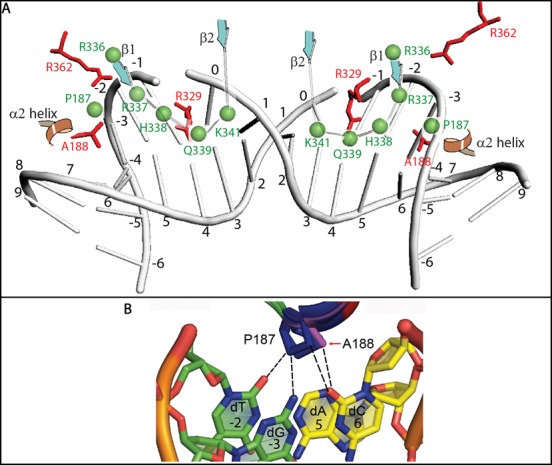
Target-site selection by retroviral integrase (IN) proteins profoundly affects viral pathogenesis. We describe the solution nuclear magnetic resonance structure of the Moloney murine leukemia virus IN (M-MLV) C-terminal domain (CTD) and a structural homology model of the catalytic core domain (CCD). In solution, the isolated MLV IN CTD adopts an SH3 domain fold flanked by a C-terminal unstructured tail. We generated a concordant MLV IN CCD structural model using SWISS-MODEL, MMM-tree and I-TASSER. Using the X-ray crystal structure of the prototype foamy virus IN target capture complex together with our MLV domain structures, residues within the CCD α2 helical region and the CTD β1-β2 loop were predicted to bind target DNA. The role of these residues was analyzed in vivo through point mutants and motif interchanges. Viable viruses with substitutions at the IN CCD α2 helical region and the CTD β1-β2 loop were tested for effects on integration target site selection. Next-generation sequencing and analysis of integration target sequences indicate that the CCD α2 helical region, in particular P187, interacts with the sequences distal to the scissile bonds whereas the CTD β1-β2 loop binds to residues proximal to it. These findings validate our structural model and disclose IN-DNA interactions relevant to target site selection.
Overview
The claims and statistics of this paper haven’t been checked yet.
Free: it reads the open-access text and checks the first 5 claims that cite a source we can check. Create a free account to check every claim.
Integrity signals
Registry
Cites
Statistics
Figures
Verification
Claims the paper makes
The claims and statistics of this paper haven’t been checked yet.
Free: it reads the open-access text and checks the first 5 claims that cite a source we can check. Create a free account to check every claim.
Claims other papers make about this one
Each is checked against this paper’s own text: does it say what the citing paper says it does?
The source backs part of the claim, not all of it — or backs it for a different population, condition or comparison.
In the citing paper
“PFV and MLV INs cut the target DNA major groove with 4-bp spacings and strongly disfavour rigid purine/pyrimidine (RY) dinucleotides at the centres of their integration sites29,55.”
From Structure and function of retroviral integrase (2022) · cites this paper as [55]
Experimental — accuracy not yet measuredThe cited source says what the claim attributes to it.
In the citing paper
“IN residues that interact with target DNA which, when altered, significantly changed base preferences at integration sites29,55–57.”
From Structure and function of retroviral integrase (2022) · cites this paper as [55]
Self-check
Percentages, sums and reported differences re-computed from the paper’s own numbers.
The self-check needs the paper’s full text.
Citations
Cites
PROCHECK: a program to check the stereochemical quality of protein structures
Laskowski, R. A., MacArthur, M. W., Moss, D. S., & Thornton, J. M. (1993) · Journal of Applied Crystallography · doi:10.1107/s0021889892009944 · Cited by 24,581 · cited 1×
“The final structures from each of the models were evaluated for quality assessment using Verify3D (57), Prosa II (58), Procheck (59) and Molprobity clash scores (60).”
MethodNMRPipe: A multidimensional spectral processing system based on UNIX pipes
Delaglio, F., Grzesiek, S., Vuister, G., Zhu, G., Pfeifer, J., & Bax, A. (1995) · Journal of Biomolecular NMR · doi:10.1007/bf00197809 · Cited by 15,965 · cited 2×
“Sample temperatures were maintained at 25◦C. NMR data were processed using NMRpipe (24) and SPARKY (T. D. Goddard and D. G. Kneller, SPARKY 3, University of California, San Francisco).”
MethodCrystallography & NMR System: A New Software Suite for Macromolecular Structure Determination
Brünger, A. T., Adams, P. D., Clore, G. M., DeLano, W. L., Gros, P., Grosse-Kunstleve, R. W., Jiang, J. S., Kuszewski, J., Nilges, M., Pannu, N. S., et al. (1998) · Acta Crystallographica Section D Biological Crystallography · doi:10.1107/s0907444998003254 · Cited by 15,715 · cited 1×
“and structure generation calculations were performed using the program Cyana (28,29) and constrained energy refinement was carried out using the program CNS in explicit solvent (30).”
MethodSWISS‐MODEL and the Swiss‐Pdb Viewer: An environment for comparative protein modeling
Guex, N., & Peitsch, M. C. (1997) · ELECTROPHORESIS · doi:10.1002/elps.1150181505 · Cited by 11,241
Electrostatics of nanosystems: Application to microtubules and the ribosome
Baker, N. A., Sept, D., Joseph, S., Holst, M. J., & McCammon, J. A. (2001) · Proceedings of the National Academy of Sciences · doi:10.1073/pnas.181342398 · Cited by 7,172 · cited 1×
“using the APBS plugin (47) in PyMOL (The PyMOL Molecular Graphics System, Version 1.”
MethodThe SWISS-MODEL workspace: a web-based environment for protein structure homology modelling
Arnold, K., Bordoli, L., Kopp, J., & Schwede, T. (2006) · Bioinformatics · doi:10.1093/bioinformatics/bti770 · Cited by 6,988
I-TASSER: a unified platform for automated protein structure and function prediction
Roy, A., Kucukural, A., & Zhang, Y. (2010) · Nature Protocols · doi:10.1038/nprot.2010.5 · Cited by 6,170
SWISS-MODEL: an automated protein homology-modeling server
Schwede, T. (2003) · Nucleic Acids Research · doi:10.1093/nar/gkg520 · Cited by 5,606
I-TASSER server for protein 3D structure prediction
Zhang, Y. (2008) · BMC Bioinformatics · doi:10.1186/1471-2105-9-40 · Cited by 5,124
Structure validation by Cα geometry: ϕ,ψ and Cβ deviation
Lovell, S. C., Davis, I. W., Arendall, W. B., de Bakker, P. I. W., Word, J. M., Prisant, M. G., Richardson, J. S., & Richardson, D. C. (2003) · Proteins: Structure, Function, and Bioinformatics · doi:10.1002/prot.10286 · Cited by 4,595
Research works printed but not linked: 3
- 1999, Journal of molecular biology, 296, 535
- 37. McCutchan J.H., Pagano J.S. Enchancement of the infectivity of simian virus 40 deoxyribonucleic acid with diethylaminoethyl-dextran. J. Natl. Cancer. Inst. 1968;41:351–357.
- 59. Laskowski R.A., Macarthur M.W., Moss D.S., Thornton J.M. PROCHECK - a program to check the stereochemical quality of protein structures. J. Appl. Crystallogr. 1993;26:283–291.
Cited by
Integration site selection by retroviruses and transposable elements in eukaryotes
Sultana, T., Zamborlini, A., Cristofari, G., & Lesage, P. (2017) · Nature Reviews Genetics · doi:10.1038/nrg.2017.7 · Cited by 275
Lesbats, P., Engelman, A. N., & Cherepanov, P. (2016) · Chemical Reviews · doi:10.1021/acs.chemrev.6b00125 · Cited by 233
Hindmarsh, P., & Leis, J. (1999) · Microbiology and Molecular Biology Reviews · doi:10.1128/mmbr.63.4.836-843.1999 · Cited by 202
Structure and function of retroviral integrase
Maertens, G. N., Engelman, A. N., & Cherepanov, P. (2022) · Nature Reviews Microbiology · doi:10.1038/s41579-021-00586-9 · Cited by 124
Crystal structure of the Rous sarcoma virus intasome
Yin, Z., Shi, K., Banerjee, S., Pandey, K. K., Bera, S., Grandgenett, D. P., & Aihara, H. (2016) · Nature · doi:10.1038/nature16950 · Cited by 95
“The larger (408 amino acids) IN from a gammaretrovirus murine leukemia virus (MLV) also has both the NED and a long CCD-CTD linker 25 , consistent with the idea that these two structural features have complementary functions.”
Crowe, B. L., Larue, R. C., Yuan, C., Hess, S., Kvaratskhelia, M., & Foster, M. P. (2016) · Proceedings of the National Academy of Sciences · doi:10.1073/pnas.1516813113 · Cited by 83
Amplification, Next-generation Sequencing, and Genomic DNA Mapping of Retroviral Integration Sites
Serrao, E., Cherepanov, P., & Engelman, A. N. (2016) · Journal of Visualized Experiments · doi:10.3791/53840 · Cited by 53
Sites of retroviral DNA integration: From basic research to clinical applications
Serrao, E., & Engelman, A. (2015) · Critical Reviews in Biochemistry and Molecular Biology · doi:10.3109/10409238.2015.1102859 · Cited by 36
“For example, Mo-MLV vectors with lowered propensity to target promoter-proximal regions have been generated by mutating the C-terminal tail of IN to prevent the BET protein interaction (Aiyer et al., 2014; El Ashkar et al., 2014), and the mutant IN viruses generated similar distribution profiles as those observed usin…”
BackgroundInfluentialAiyer, S., Swapna, G. V. T., Ma, L.-C., Liu, G., Hao, J., Chalmers, G., Jacobs, B. C., Montelione, G. T., & Roth, M. J. (2021) · Structure · doi:10.1016/j.str.2021.01.010 · Cited by 35
Self-citationMultifunctional facets of retrovirus integrase
Grandgenett, D. P., Pandey, K. K., Bera, S., & Aihara, H. (2015) · World Journal of Biological Chemistry · doi:10.4331/wjbc.v6.i3.83 · Cited by 23
Retroviral integrase: Structure, mechanism, and inhibition
Passos, D. O., Li, M., Craigie, R., & Lyumkis, D. (2021) · The Enzymes · doi:10.1016/bs.enz.2021.06.007 · Cited by 23
“Target DNA bending was subsequently also supported by bioinformatics analyses [44,68,69].”
B-to-A transition in target DNA during retroviral integration
Jozwik, I. K., Li, W., Zhang, D., Wong, D., Grawenhoff, J., Ballandras-Colas, A., Aiyer, S., Cherepanov, P., Engelman, A., & Lyumkis, D. (2022) · Nucleic Acids Research · doi:10.1093/nar/gkac644 · Cited by 18
“Although the absence of a change in phenotype among IN mutants Y149G and D223A/R was perhaps not surprising because these residues do not make base-specific contacts with tDNA, we anticipated that there would be some changes in local base selectivity for the P125T/D IN mutants based on prior results with similar subst…”
BackgroundResultSelf-citationLoyola, L. M., Achuthan, V., Gilroy, K. L., Borland, G., Kilbey, A., Mackay, N. A., Bell, M., Hay, J., Aiyer, S., Fingerman, D., et al. (2019) · PLoS Pathogens · doi:10.1371/journal.ppat.1008154 · Cited by 16
“Molecular modeling indicates that these positions are located in the predicted MLV CCD α6 helix (residues 264–270) and are close to the CCD dimer interface (S5 Fig).”
BackgroundMethodInfluentialSelf-citationGuan, R., Aiyer, S., Coté, M. L., Xiao, R., Jiang, M., Acton, T., Roth, M. J., & Montelione, G. T. (2017) · Proteins Structure Function and Bioinformatics · doi:10.1002/prot.25245 · Cited by 13
Self-citationThe Integrase: An Overview of a Key Player Enzyme in the Antiviral Scenario
Renzi, G., Carta, F., & Supuran, C. T. (2023) · International Journal of Molecular Sciences · doi:10.3390/ijms241512187 · Cited by 12
Borrenberghs, D., Zurnic, I., Wit, F. D., Acke, A., Dirix, L., Cereseto, A., Debyser, Z., & Hendrix, J. (2018) · Nucleic Acids Research · doi:10.1093/nar/gky1157 · Cited by 11
“Binding of BET proteins requires a disorder-to-order transition of the C-terminal tail of the IN (21,70) which may affect the quaternary structure of the IN oligomer.”
BackgroundPellaers, E., Bhat, A., Christ, F., & Debyser, Z. (2022) · Viruses · doi:10.3390/v15010032 · Cited by 8
“They corroborated, using nuclear magnetic resonance of the CTD and homology modeling of the CCD of the MLV IN, that the β1 and β2 loops of the CTD and the α2 helical region of the CCD mediate the binding of the IN to the target DNA [58].”
BackgroundInfluentialJones, N. D., Mackler, R. M., Lopez, M. A., Baltierra‐Jasso, L. E., Altman, M. P., Senavirathne, G., & Yoder, K. E. (2019) · Scientific Reports · doi:10.1038/s41598-018-36725-1 · Cited by 7
Nombela, I., Michiels, M., Looveren, D. V., Marcelis, L., Ashkar, S. E., Belle, S. V., Bruggemans, A., Tousseyn, T., Schwaller, J., Christ, F., et al. (2022) · Microbiology Spectrum · doi:10.1128/spectrum.01478-22 · Cited by 7
Akkawi, C., Feuillard, J., Leon-Diaz, F., Belkhir, K., Godefroy, N., Péloponèse, J., Mougel, M., & Lainé, S. (2023) · Retrovirology · doi:10.1186/s12977-023-00631-w · Cited by 6
Miklík, D., Grim, J., Elleder, D., & Hejnar, J. (2023) · Genome Research · doi:10.1101/gr.277694.123 · Cited by 4
“About 3 bp upstream of the cleavage site, structurally conserved intrusion into the minor groove of small amino acids like serine (HIV, RSV), proline (HTLV, MVV, MLV [Aiyer et al. 2015], and MMTV [Józ ́ wik et al. 2022]), and alanine (PFV) was documented.”
Foamy Virus Integrase in Development of Viral Vector for Gene Therapy
Kim, J., Lee, G., & Shin, C. (2020) · Journal of Microbiology and Biotechnology · doi:10.4014/jmb.2003.03046 · Cited by 3
“An improved understanding of the integration site selection process has recently emerged with the advent of next-generation sequencing methods to identify insertion sites [59], the resolution of the architecture of the PFV integration machinery [114], and the cellular cofactors involved in the process [115].”
BackgroundYang, Y., Lee, J., Jeong, H., Shim, J., Baek, M., Son, M.-J., Kim, Y., Noh, H., & Lim, K. (2020) · Biotechnology and Bioengineering · doi:10.1002/bit.27540 · Cited by 1
“…MLV integrations into regulatory genomic domains including TSSs, but frequencies of the virus integrations into the regulatory domains were still sig- nificantly higher compared with that of the random chance (Aiyer et al., 2015; De Rijck et al., 2013; El Ashkar et al., 2014; Sharma et al., 2013).”
ResultInfluence of the genomic context on integration site selection by human L1 retrotransposons
Sultana, T. (2016) · theses.fr (ABES) · doi:10.70675/be4b59d9zf7a0z4899zb1dczfce6ba9bc553 · Cited by 1
Carta, F., & Sechi, M. (2023) · Elsevier eBooks · doi:10.1016/b978-0-12-823974-2.00006-1
Akkawi, C., Feuillard, J., Leon-Diaz, F., Belkhir, K., Godefroy, N., Péloponèse, J., Mougel, M., & Lainé, S. (2023) · Figshare · doi:10.6084/m9.figshare.24130110
Akkawi, C., Feuillard, J., Leon-Diaz, F., Belkhir, K., Godefroy, N., Péloponèse, J., Mougel, M., & Lainé, S. (2023) · Figshare · doi:10.6084/m9.figshare.24130107
Etude du rétrotransposon SD' du rétrovirus leucémogène MLV
Akkawi, C. (2020) · theses.fr (ABES) · doi:10.70675/440d4c40zccb9z40b9z9038z0589be90e16d
Les β-rétrovirus des petits ruminants : de la génétique aux cancers respiratoires
Benjamin, R.-V. (2025) · theses.fr (ABES) · doi:10.70675/f40391b2z225az4ee9z8b5az43f40705b60d
Metadata
- Authors
- Aiyer, S., Rossi, P., Malani, N., Schneider, W. M., Chandar, A., Bushman, F. D., Montelione, G. T., & Roth, M. J.
- Affiliations
- Rutgers, The State University of New Jersey (US)
- University of Pennsylvania (US)
- Corresponding author
- Roth, M. J.
- Venue
- Nucleic Acids Research
- Publisher
- Oxford University Press (OUP)
- Published
- 2015-05-12
- Volume
- 43
- Issue
- 11
- Pages
- 5647-5663
- ISSN
- 0305-1048 (ISSN-L)
- 1362-4962
- PMC
- PMC4477651
- OpenAlex
- W1602453169
- Cited by
- 25
- References
- 85
- Citations by year
- 2023: 4 · 2022: 4 · 2021: 3 · 2020: 3 · 2019: 2 · 2018: 1 · 2017: 2 · 2016: 4 · 2015: 2
- FWCI
- 1.52
- Type
- journal article
- Language
- en
- Open access
- gold
- doi.org
- Locations
- Nucleic Acids Research (publishedVersion, cc-by)
- Europe PMC (PubMed Central) (publishedVersion, cc-by)
- PubMed Central (publishedVersion, cc-by)
- PubMed (publishedVersion)
- Funders
- National Institute of General Medical Sciences (R01GM070837, GM070837, R01GM088808, U54GM094597)
- National Institute of Allergy and Infectious Diseases (R01AI052845)
- Topics
- Life Sciences › Immunology and Microbiology › Virology › HIV Research and Treatment
- Health Sciences › Medicine › Infectious Diseases › HIV/AIDS drug development and treatment
- Life Sciences › Biochemistry, Genetics and Molecular Biology › Genetics › Virus-based gene therapy research
- Keywords
- Moloney murine leukemia virus, retroviral integrase, target site selection, SH3 domain, point mutants, viral pathogenesis
- MeSH terms
- DNA, Models, Molecular, Moloney murine leukemia virus, Mutation, Protein Binding, Viral Proteins, Sequence Analysis, DNA, Protein Structure, Tertiary, Integrases, Catalytic Domain
About these checks
Registry, retraction, Cites and statistics results are computed, not judged, with one exception: a printed reference that no index lists is read once by a model before it counts as a citation error. Claims are extracted by a model and kept only when their quote appears verbatim in the text; each cited source is then checked, with a model’s help, for whether it says what the claim relies on. Those verdicts can be wrong — read the claim’s quote and the cited source before relying on one.
Statistics and arithmetic are recomputed, not judged.
Confidence bands are shown only for fields calibrated on our annotated test set. None is calibrated yet, so no band is shown.
What counts as a claim ›How we measure confidence ›How we check this ›
Are you an author, or do you see a problem with this page? Request a review
Data sources
Bibliographic data: Semantic Scholar, OpenAlex, Crossref.
Contains information from the Semantic Scholar Academic Graph Datasets, made available under the ODC Attribution License (ODC-BY 1.0).
Semantic Scholar’s data is described in: Kinney, R., et al. (2023). The Semantic Scholar Open Data Platform. arXiv:2301.10140.
