

The DOI matches its Crossref record; 56 of the 56 references it cites were found in a registry or an index.
Ensembl 2017
Open accessAbstract
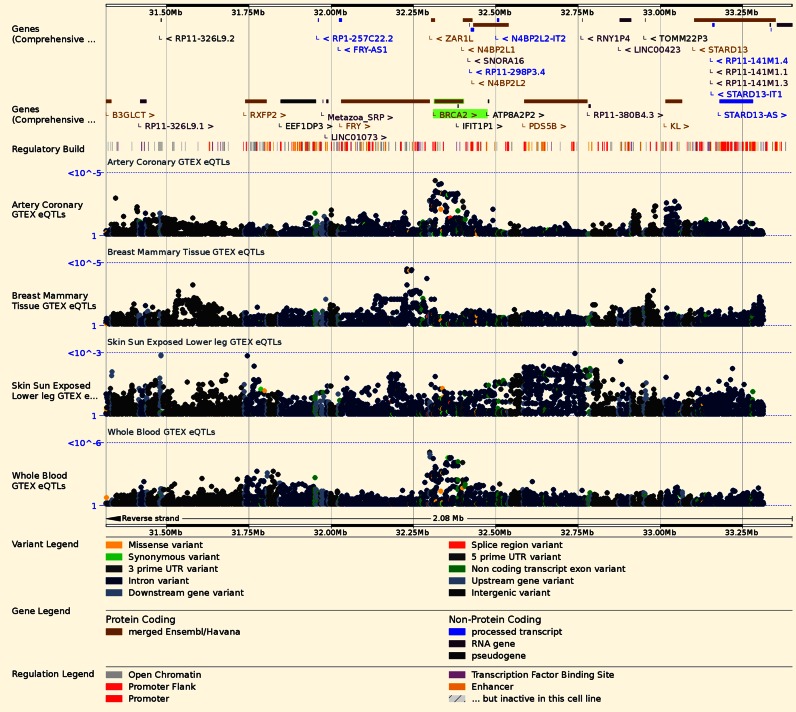
Ensembl (www.ensembl.org) is a database and genome browser for enabling research on vertebrate genomes. We import, analyse, curate and integrate a diverse collection of large-scale reference data to create a more comprehensive view of genome biology than would be possible from any individual dataset. Our extensive data resources include evidence-based gene and regulatory region annotation, genome variation and gene trees. An accompanying suite of tools, infrastructure and programmatic access methods ensure uniform data analysis and distribution for all supported species. Together, these provide a comprehensive solution for large-scale and targeted genomics applications alike. Among many other developments over the past year, we have improved our resources for gene regulation and comparative genomics, and added CRISPR/Cas9 target sites. We released new browser functionality and tools, including improved filtering and prioritization of genome variation, Manhattan plot visualization for linkage disequilibrium and eQTL data, and an ontology search for phenotypes, traits and disease. We have also enhanced data discovery and access with a track hub registry and a selection of new REST end points. All Ensembl data are freely released to the scientific community and our source code is available via the open source Apache 2.0 license.
Overview
The claims and statistics of this paper haven’t been checked yet.
Run the check — free, no account needed. It reads the open-access text and checks the sources it cites.
Integrity signals
Registry
Cites
Statistics
Figures
Verification
Claims the paper makes
The claims and statistics of this paper haven’t been checked yet.
Run the check — free, no account needed. It reads the open-access text and checks the sources it cites.
Claims other papers make about this one
Each is checked against this paper’s own text: does it say what the citing paper says it does?
The source backs part of the claim, not all of it — or backs it for a different population, condition or comparison.
In the citing paper
“However, if one considers that many genes are transcribed with splice variants, the number of human proteins increases to ~70,000 (per Ensembl 3 ).”
From How many human proteoforms are there? (2018) · cites this paper as [3]
Experimental — accuracy not yet measuredThe check wasn’t confident either way, so it gives no verdict — never disputed.
In the citing paper
“Thanks to the human genome project, we can now estimate the number of protein-coding genes to be in the range of 19,587-20,245 (refs. 1,3,4).”
From How many human proteoforms are there? (2018) · cites this paper as [3]
Experimental — accuracy not yet measured
Self-check
Percentages, sums and reported differences re-computed from the paper’s own numbers.
The self-check needs the paper’s full text.
Citations
Cites
A global reference for human genetic variation
The 1000 Genomes Project Consortium, authors, C., Auton, A., Abecasis, G. R., Steering committee, Altshuler, D. M., Durbin, R. M., Abecasis, G. R., Bentley, D. R., Chakravarti, A., et al. (2015) · Nature · doi:10.1038/nature15393 · Cited by 18,247
Self-citationAn integrated encyclopedia of DNA elements in the human genome
The ENCODE Project Consortium (2012) · Nature · doi:10.1038/nature11247 · Cited by 18,072
Haploview: analysis and visualization of LD and haplotype maps
Barrett, J. C., Fry, B., Maller, J., & Daly, M. J. (2005) · Bioinformatics · doi:10.1093/bioinformatics/bth457 · Cited by 14,525
Database resources of the National Center for Biotechnology Information: update
Wheeler, D. L. (2004) · Nucleic Acids Research · doi:10.1093/nar/gkh073 · Cited by 10,641
Analysis of protein-coding genetic variation in 60,706 humans
Exome Aggregation Consortium, Lek, M., Karczewski, K. J., Minikel, E. V., Samocha, K. E., Banks, E., Fennell, T., O’Donnell-Luria, A. H., Ware, J. S., Hill, A. J., et al. (2016) · Nature · doi:10.1038/nature19057 · Cited by 9,587
The Ensembl Variant Effect Predictor
McLaren, W., Gil, L., Hunt, S. E., Riat, H. S., Ritchie, G. R. S., Thormann, A., Flicek, P., & Cunningham, F. (2016) · Genome Biology · doi:10.1186/s13059-016-0974-4 · Cited by 8,099 · cited 2×
“To better support RefSeq transcripts (47), VEP now reports information on matched regions between Ensembl and RefSeq transcripts and mismatches between RefSeq transcripts and the reference genome assembly (46).”
MethodSelf-citationKumar, P., Henikoff, S., & Ng, P. C. (2009) · Nature Protocols · doi:10.1038/nprot.2009.86 · Cited by 6,521 · cited 2×
“The new tables can manage many hundreds of thousands of rows, and can be customized to display only variants with a range of SIFT (31) or PolyPhen (32) scores; those with particular consequence types or minor allele frequencies; or other properties.”
BackgroundInfluentialO'Leary, N. A., Wright, M. W., Brister, J. R., Ciufo, S., Haddad, D., McVeigh, R., Rajput, B., Robbertse, B., Smith-White, B., Ako-Adjei, D., et al. (2016) · Nucleic Acids Research · doi:10.1093/nar/gkv1189 · Cited by 6,357
UniProt: a hub for protein information
The UniProt Consortium (2015) · Nucleic Acids Research · doi:10.1093/nar/gku989 · Cited by 5,106
The Genotype-Tissue Expression (GTEx) pilot analysis: Multitissue gene regulation in humans
The GTEx Consortium, Ardlie, K. G., Deluca, D. S., Segrè, A. V., Sullivan, T. J., Young, T. R., Gelfand, E. T., Trowbridge, C. A., Maller, J. B., Tukiainen, T., et al. (2015) · Science · doi:10.1126/science.1262110 · Cited by 5,062
Cited by
ShinyGO: a graphical gene-set enrichment tool for animals and plants
Ge, S. X., Jung, D., & Yao, R. (2020) · Bioinformatics · doi:10.1093/bioinformatics/btz931 · Cited by 5,270
Zerbino, D. R., Achuthan, P., Akanni, W., Amode, M. R., Barrell, D., Bhai, J., Billis, K., Cummins, C., Gall, A., Girón, C. G., et al. (2018) · Nucleic Acids Research · doi:10.1093/nar/gkx1098 · Cited by 2,605
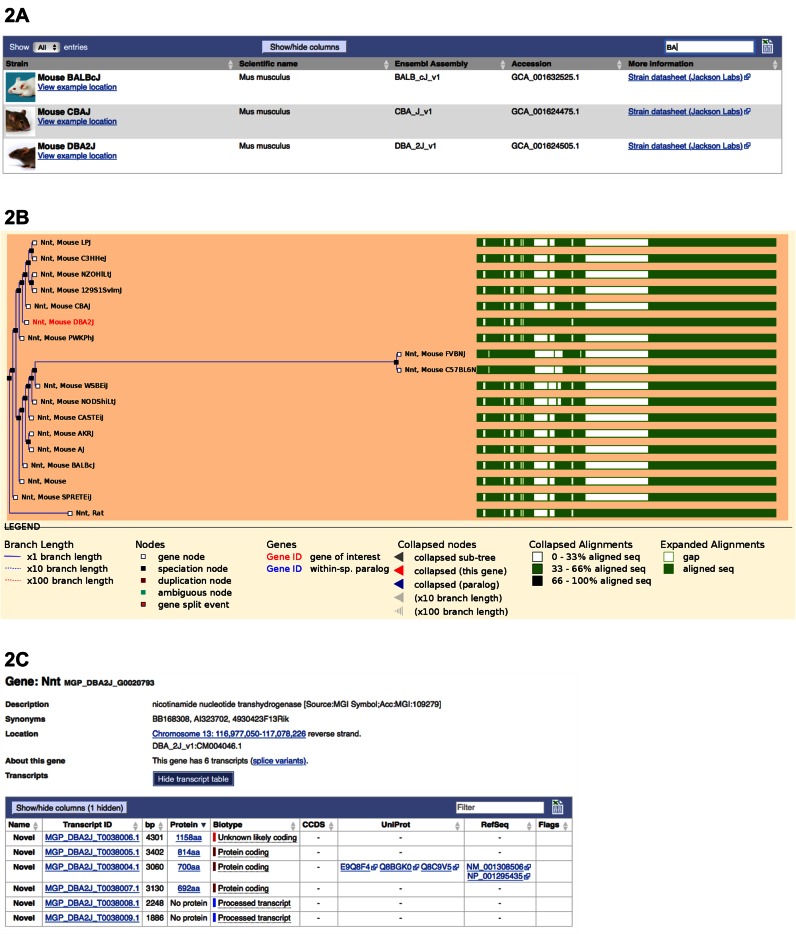
“Genomes are no longer sequenced one by one, rather in batches, and already Ensembl can display clades, as illustrated by our addition in 2016 of a collection of laboratory mouse strains (22).”
BackgroundSelf-citationSignificantly improving the quality of genome assemblies through curation
Howe, K., Chow, W., Collins, J., Pelan, S., Pointon, D.-L., Sims, Y., Torrance, J., Tracey, A., & Wood, J. (2021) · GigaScience · doi:10.1093/gigascience/giaa153 · Cited by 2,090
20 years of the SMART protein domain annotation resource
Letunic, I., & Bork, P. (2018) · Nucleic Acids Research · doi:10.1093/nar/gkx922 · Cited by 2,020
The Encyclopedia of DNA elements (ENCODE): data portal update
Davis, C. A., Hitz, B. C., Sloan, C. A., Chan, E. T., Davidson, J. M., Gabdank, I., Hilton, J. A., Jain, K., Baymuradov, U. K., Narayanan, A. K., et al. (2018) · Nucleic Acids Research · doi:10.1093/nar/gkx1081 · Cited by 1,717
Metadata
- Authors
- Aken, B. L., Achuthan, P., Akanni, W., Amode, M. R., Bernsdorff, F., Bhai, J., Billis, K., Carvalho-Silva, D., Cummins, C., Clapham, P., Gil, L., Girón, C. G., Gordon, L., Hourlier, T., Hunt, S. E., Janacek, S. H., Juettemann, T., Keenan, S., Laird, M. R., Lavidas, I., Maurel, T., McLaren, W., Moore, B., Murphy, D. N., Nag, R., Newman, V., Nuhn, M., Ong, C. K., Parker, A., Patricio, M., Riat, H. S., Sheppard, D., Sparrow, H., Taylor, K., Thormann, A., Vullo, A., Walts, B., Wilder, S. P., Zadissa, A., Kostadima, M., Martin, F. J., Muffato, M., Perry, E., Ruffier, M., Staines, D. M., Trevanion, S. J., Cunningham, F., Yates, A., Zerbino, D. R., & Flicek, P.
- Affiliations
- European Bioinformatics Institute (GB)
- Wellcome Sanger Institute (GB)
- Corresponding author
- Flicek, Paul
- ORCID
- Aken, Bronwen L.
- Achuthan, Premanand
- Akanni, Wasiu
- Bernsdorff, Friederike
- Bhai, Jyothish
- Billis, Konstantinos
- Cummins, Carla
- Gil, Laurent
- Girón, Carlos García
- Hourlier, Thibaut
- Hunt, Sarah E.
- Janacek, Sophie H.
- Juettemann, Thomas
- Keenan, Stephen
- Laird, Matthew R.
- Lavidas, Ilias
- Maurel, Thomas
- McLaren, William
- Moore, Benjamin
- Murphy, Daniel N.
- Nag, Rishi
- Nuhn, Michael
- Ong, Chuang Kee
- Taylor, Kieron
- Thormann, Anja
- Vullo, Alessandro
- Walts, Brandon
- Wilder, Steven P.
- Zadissa, Amonida
- Kostadima, Myrto
- Martin, Fergal J.
- Muffato, Matthieu
- Perry, Emily
- Ruffier, Magali
- Staines, Daniel M.
- Trevanion, Stephen J.
- Cunningham, Fiona
- Yates, Andrew
- Zerbino, Daniel R.
- Flicek, Paul
- Venue
- Nucleic Acids Research
- Publisher
- Oxford University Press (OUP)
- Published
- 2016-11-28
- Volume
- 45
- Issue
- D1
- Pages
- D635-D642
- ISSN
- 0305-1048 (ISSN-L)
- 1362-4962
- PMC
- PMC5210575
- OpenAlex
- W4210659358
- Cited by
- 512
- References
- 53
- Citations by year
- 2026: 10 · 2025: 16 · 2024: 16 · 2023: 22 · 2022: 28 · 2021: 54 · 2020: 58 · 2019: 103 · 2018: 129 · 2017: 75
- FWCI
- 53.90
- Type
- journal article
- Language
- en
- Open access
- gold
- doi.org
- Licence
- Locations
- Nucleic Acids Research (publishedVersion, cc-by)
- PubMed Central (publishedVersion, cc-by)
- PubMed (publishedVersion)
- HighWire Press Open Archive (submittedVersion)
- Funders
- Wellcome Trust (WT201535/Z/16/Z, FP7/2007–2013, WT104947, WT095908, 284209, WT104947/Z/14/Z, WT201535, WT 098051, 201535/Z/16/Z, WT200990/Z/16/Z)
- European Bioinformatics Institute
- European Molecular Biology Laboratory
- European Commission (282510, 2007–2013, FP7 2007-2013, HORIZON2020, FP7/2007, 284209, 634143)
- National Institutes of Health (FP7/2007-2013)
- Directorate for Biological Sciences
- Biotechnology and Biological Sciences Research Council (BB/M020398/1, BB/M01844X/1, BB/M011615/1, BB/M018458/1, BB/E011640/1, BB/I025360/2, BB/L024225/1, BB/I025360/1)
- National Human Genome Research Institute (U41HG007823, U41HG007234, U41HG007823-S1)
- Topics
- Life Sciences › Biochemistry, Genetics and Molecular Biology › Molecular Biology › Genomics and Phylogenetic Studies
- Life Sciences › Biochemistry, Genetics and Molecular Biology › Molecular Biology › Bioinformatics and Genomic Networks
- Life Sciences › Biochemistry, Genetics and Molecular Biology › Molecular Biology › Genetics, Bioinformatics, and Biomedical Research
- Keywords
- Ensembl, vertebrate genomes, genome browser, genome annotation, genomic variation, gene trees, gene expression regulation, comparative genomics, linkage disequilibrium, expression quantitative trait loci, phenotype ontologies, REST API
- MeSH terms
- Animals, Gene Expression Regulation, Humans, Software, Species Specificity, Genetic Variation, Vertebrates, Genome, Human, Evolution, Molecular, Computational Biology, Genomics, Databases, Genetic, Data Mining, Search Engine, Molecular Sequence Annotation, Web Browser
About these checks
Registry, retraction, Cites and statistics results are computed, not judged, with one exception: a printed reference that no index lists is read once by a model before it counts as a citation error. Claims are extracted by a model and kept only when their quote appears verbatim in the text; each cited source is then checked, with a model’s help, for whether it says what the claim relies on. Those verdicts can be wrong — read the claim’s quote and the cited source before relying on one.
Statistics and arithmetic are recomputed, not judged.
Confidence bands are shown only for fields calibrated on our annotated test set. None is calibrated yet, so no band is shown.
What counts as a claim ›How we measure confidence ›How we check this ›
Are you an author, or do you see a problem with this page? Request a review
How to cite
Cite CoChat for the checks on this page, and the paper for its own findings.
- This page
- CoChat. (2026). Citation check: Ensembl 2017. https://app.cochat.ai/papers/10.1093/nar/gkw1104
- The paper
- Aken, B. L., Achuthan, P., Akanni, W., Amode, M. R., Bernsdorff, F., Bhai, J., Billis, K., Carvalho-Silva, D., Cummins, C., Clapham, P., Gil, L., Girón, C. G., Gordon, L., Hourlier, T., Hunt, S. E., Janacek, S. H., Juettemann, T., Keenan, S., Laird, M. R., . . . Flicek, P. (2017). Ensembl 2017. Nucleic Acids Research. https://doi.org/10.1093/nar/gkw1104
Data sources
Bibliographic data: Semantic Scholar, OpenAlex, Crossref.
Contains information from the Semantic Scholar Academic Graph Datasets, made available under the ODC Attribution License (ODC-BY 1.0).
Semantic Scholar’s data is described in: Kinney, R., et al. (2023). The Semantic Scholar Open Data Platform. arXiv:2301.10140.
