

Ensembl 2017
Open accessThe DOI matches its Crossref record; 56 of the 56 references it cites were found in a registry or an index.
Abstract
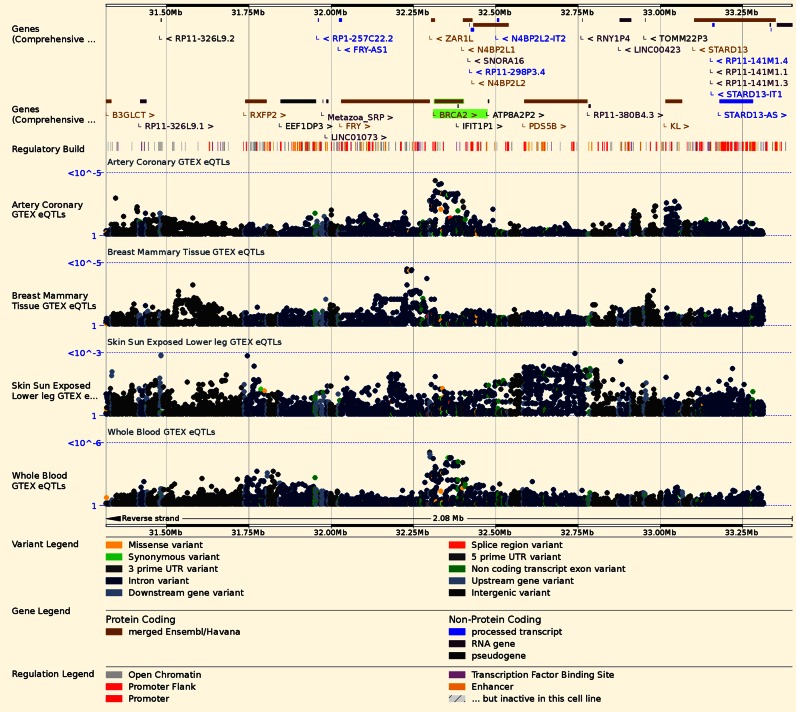
Ensembl (www.ensembl.org) is a database and genome browser for enabling research on vertebrate genomes. We import, analyse, curate and integrate a diverse collection of large-scale reference data to create a more comprehensive view of genome biology than would be possible from any individual dataset. Our extensive data resources include evidence-based gene and regulatory region annotation, genome variation and gene trees. An accompanying suite of tools, infrastructure and programmatic access methods ensure uniform data analysis and distribution for all supported species. Together, these provide a comprehensive solution for large-scale and targeted genomics applications alike. Among many other developments over the past year, we have improved our resources for gene regulation and comparative genomics, and added CRISPR/Cas9 target sites. We released new browser functionality and tools, including improved filtering and prioritization of genome variation, Manhattan plot visualization for linkage disequilibrium and eQTL data, and an ontology search for phenotypes, traits and disease. We have also enhanced data discovery and access with a track hub registry and a selection of new REST end points. All Ensembl data are freely released to the scientific community and our source code is available via the open source Apache 2.0 license.
Overview
The claims and statistics of this paper haven’t been checked yet.
Free: it reads the open-access text and checks the first 5 claims that cite a source we can check. Create a free account to check every claim.
Integrity signals
Registry
Cites
Statistics
Figures
Verification
Claims the paper makes
The claims and statistics of this paper haven’t been checked yet.
Free: it reads the open-access text and checks the first 5 claims that cite a source we can check. Create a free account to check every claim.
Claims other papers make about this one
Each is checked against this paper’s own text: does it say what the citing paper says it does?
The source backs part of the claim, not all of it — or backs it for a different population, condition or comparison.
In the citing paper
“However, if one considers that many genes are transcribed with splice variants, the number of human proteins increases to ~70,000 (per Ensembl 3 ).”
From How many human proteoforms are there? (2018) · cites this paper as [3]
Experimental — accuracy not yet measuredThe check wasn’t confident either way, so it gives no verdict — never disputed.
In the citing paper
“Thanks to the human genome project, we can now estimate the number of protein-coding genes to be in the range of 19,587-20,245 (refs. 1,3,4).”
From How many human proteoforms are there? (2018) · cites this paper as [3]
Experimental — accuracy not yet measured
Self-check
Percentages, sums and reported differences re-computed from the paper’s own numbers.
The self-check needs the paper’s full text.
Citations
Cites
A global reference for human genetic variation
The 1000 Genomes Project Consortium, authors, C., Auton, A., Abecasis, G. R., Steering committee, Altshuler, D. M., Durbin, R. M., Abecasis, G. R., Bentley, D. R., Chakravarti, A., et al. (2015) · Nature · doi:10.1038/nature15393 · Cited by 18,247
Self-citationAn integrated encyclopedia of DNA elements in the human genome
The ENCODE Project Consortium (2012) · Nature · doi:10.1038/nature11247 · Cited by 18,072
Haploview: analysis and visualization of LD and haplotype maps
Barrett, J. C., Fry, B., Maller, J., & Daly, M. J. (2005) · Bioinformatics · doi:10.1093/bioinformatics/bth457 · Cited by 14,525
Database resources of the National Center for Biotechnology Information: update
Wheeler, D. L. (2004) · Nucleic Acids Research · doi:10.1093/nar/gkh073 · Cited by 10,641
Analysis of protein-coding genetic variation in 60,706 humans
Exome Aggregation Consortium, Lek, M., Karczewski, K. J., Minikel, E. V., Samocha, K. E., Banks, E., Fennell, T., O’Donnell-Luria, A. H., Ware, J. S., Hill, A. J., et al. (2016) · Nature · doi:10.1038/nature19057 · Cited by 9,587
The Ensembl Variant Effect Predictor
McLaren, W., Gil, L., Hunt, S. E., Riat, H. S., Ritchie, G. R. S., Thormann, A., Flicek, P., & Cunningham, F. (2016) · Genome Biology · doi:10.1186/s13059-016-0974-4 · Cited by 8,099 · cited 2×
“To better support RefSeq transcripts (47), VEP now reports information on matched regions between Ensembl and RefSeq transcripts and mismatches between RefSeq transcripts and the reference genome assembly (46).”
MethodSelf-citationKumar, P., Henikoff, S., & Ng, P. C. (2009) · Nature Protocols · doi:10.1038/nprot.2009.86 · Cited by 6,521 · cited 2×
“The new tables can manage many hundreds of thousands of rows, and can be customized to display only variants with a range of SIFT (31) or PolyPhen (32) scores; those with particular consequence types or minor allele frequencies; or other properties.”
BackgroundInfluentialO'Leary, N. A., Wright, M. W., Brister, J. R., Ciufo, S., Haddad, D., McVeigh, R., Rajput, B., Robbertse, B., Smith-White, B., Ako-Adjei, D., et al. (2016) · Nucleic Acids Research · doi:10.1093/nar/gkv1189 · Cited by 6,357
UniProt: a hub for protein information
The UniProt Consortium (2015) · Nucleic Acids Research · doi:10.1093/nar/gku989 · Cited by 5,106
The Genotype-Tissue Expression (GTEx) pilot analysis: Multitissue gene regulation in humans
The GTEx Consortium, Ardlie, K. G., Deluca, D. S., Segrè, A. V., Sullivan, T. J., Young, T. R., Gelfand, E. T., Trowbridge, C. A., Maller, J. B., Tukiainen, T., et al. (2015) · Science · doi:10.1126/science.1262110 · Cited by 5,062
Cited by
Items 201–300 of 466
Chromosome-wide co-fluctuation of stochastic gene expression in mammalian cells
Sun, M., & Zhang, J. (2019) · PLoS Genetics · doi:10.1371/journal.pgen.1008389 · Cited by 27
“To produce duplicate-free gene pairs, we also downloaded all paralogous gene pairs from Ensembl BioMart.”
MethodInfluentialFlexible and Fast Mapping of Peptides to a Proteome with ProteoMapper
Mendoza, L., Deutsch, E. W., Sun, Z., Campbell, D. S., Shteynberg, D. D., & Moritz, R. L. (2018) · Journal of Proteome Research · doi:10.1021/acs.jproteome.8b00544 · Cited by 23
Minimal Standards for Reporting microRNA:Target Interactions
Piletič, K., & Kunej, T. (2017) · Omics · doi:10.1089/omi.2017.0023 · Cited by 21
“…(Federhen, 2012), target gene transcript, reference single nucleotide polymorphism (SNP) ID (rs) number (www .ensembl.org/, release 87) (Aken et al., 2017), disease ontology identification (DOID) number (http://disease-ontology.org) (Kibbe et al., 2015), and PubMed identification (PMID)…”
Genetic suppression features ABHD18 as a Barth syndrome therapeutic target
Masud, S. N., Srivastava, A., Mero, P., Echezarreta, V. E. S., Anderson, E., van Buren, L., Wei, J., Taylor, D. T., Farias, A. G., Mikolajewicz, N., et al. (2025) · Nature · doi:10.1038/s41586-025-09373-5 · Cited by 22
Dolata, K. M., Fuchs, W., Caignard, G., Dupré, J., Pannhorst, K., Blome, S., Mettenleiter, T. C., & Karger, A. (2023) · Journal of Virology · doi:10.1128/jvi.01943-22 · Cited by 20
Circ-LocNet: A Computational Framework for Circular RNA Sub-Cellular Localization Prediction
Asim, M. N., Ibrahim, M. A., Malik, M. I., Dengel, A. R., & Ahmed, S. (2022) · International Journal of Molecular Sciences · doi:10.3390/ijms23158221 · Cited by 27
Nectar-feeding bats and birds show parallel molecular adaptations in sugar metabolism enzymes
Potter, J. H. T., Drinkwater, R., Davies, K. T. J., Nesi, N., Lim, M., Yohe, L. R., Chi, H., Zhang, X., Levantis, I., Lim, B. K., et al. (2021) · Current Biology · doi:10.1016/j.cub.2021.08.018 · Cited by 20
LIN28B Underlies the Pathogenesis of a Subclass of Ewing Sarcoma
Keskin, T., Bakaric, A., Waszyk, P., Boulay, G., Torsello, M., Cornaz-Buros, S., Chevalier, N., Geiser, T., Martin, P., Volorio, A., et al. (2020) · Cell Reports · doi:10.1016/j.celrep.2019.12.053 · Cited by 22
Bruno, L., Ramlall, V., Studer, R. A., Sauer, S., Bradley, D. T. C., Dharmalingam, G., Carroll, T., Ghoneim, M., Chopin, M., Nutt, S. L., et al. (2019) · Nature Immunology · doi:10.1038/s41590-019-0471-5 · Cited by 23
Main constraints for RNAi induced by expressed long dsRNA in mouse cells
Demeter, T., Vaškovičová, M., Malík, R., Horvat, F., Pasulka, J., Táborská, E., Flemr, M., & Svoboda, P. (2019) · Life Science Alliance · doi:10.26508/lsa.201800289 · Cited by 18
Menschaert, G., Wang, X., Jones, A. R., Ghali, F., Fenyö, D., Olexiouk, V., Zhang, B., Deutsch, E. W., Ternent, T., & Vizcaíno, J. A. (2018) · Genome biology · doi:10.1186/s13059-017-1377-x · Cited by 23
Representativeness of variation benchmark datasets
Schaafsma, G. C. P., & Vihinen, M. (2018) · BMC Bioinformatics · doi:10.1186/s12859-018-2478-6 · Cited by 20
Lowe, E. K., Garm, A. L., Ullrich-Lüter, E., Cuomo, C., & Arnone, M. I. (2018) · BMC Evolutionary Biology · doi:10.1186/s12862-018-1276-0 · Cited by 21
The Pancreatic Expression Database: 2018 update
Marzec, J., Ullah, A. Z. D., Pirro, S., Gadaleta, E., Crnogorac‐Jurcevic, T., Lemoine, N. R., Kocher, H. M., & Chelala, C. (2017) · Nucleic Acids Research · doi:10.1093/nar/gkx955 · Cited by 19
Flies, A. S., Blackburn, N. B., Lyons, A. B., Hayball, J. D., & Woods, G. M. (2017) · Frontiers in Immunology · doi:10.3389/fimmu.2017.00513 · Cited by 19
Encoding and decoding selectivity and promiscuity in the human chemokine-GPCR interaction network
Kleist, A. B., Szpakowska, M., Talbot, L. J., Slodkowicz, G., Malinverni, D., Thomas, M. A., Crawford, K. S., McGrail, D. J., Dishman, A. F., Wedemeyer, M. J., et al. (2025) · Cell · doi:10.1016/j.cell.2025.03.046 · Cited by 22
IL-6 signaling drives self-renewal and alternative activation of adipose tissue macrophages
Ackermann, J., Arndt, L., Fröba, J. S., Lindhorst, A., Glaß, M., Kirstein, M., Hobusch, C., Wunderlich, F. T., Braune, J., & Gericke, M. T. (2024) · Frontiers in Immunology · doi:10.3389/fimmu.2024.1201439 · Cited by 22
Exosome-derived Small RNAs in mouse Sertoli cells inhibit spermatogonial apoptosis
Gao, H., Cao, H., Li, Z., Li, L., Guo, Y., Chen, Y., Peng, G., Zeng, W., Du, J., Dong, W., et al. (2023) · Theriogenology · doi:10.1016/j.theriogenology.2023.02.011 · Cited by 24
Dam, M. H. V., Cabras, A., Henderson, J., Rominger, A. J., Estrada, C. P., Omer, A. D., Dudchenko, O., Aiden, E. L., & Lam, A. W. (2021) · PLoS Genetics · doi:10.1371/journal.pgen.1009745 · Cited by 32
Genetic screening of children with marrow failure. The role of primary Immunodeficiencies
Miano, M., Grossi, A., Dell’Orso, G., Lanciotti, M., Fioredda, F., Palmisani, E., Lanza, T., Guardo, D., Beccaria, A., Ravera, S., et al. (2021) · American Journal of Hematology · doi:10.1002/ajh.26242 · Cited by 22
Stahlke, A. R., Epstein, B., Barbosa, S., Margres, M. J., Patton, A. H., Hendricks, S. A., Veillet, A., Fraik, A. K., Schönfeld, B., McCallum, H. I., et al. (2021) · Proceedings of the Royal Society B Biological Sciences · doi:10.1098/rspb.2021.0577 · Cited by 24
Backe, P. H., Laerdahl, J. K., Kittelsen, L. S., Dalhus, B., Mørkrid, L., & Bjørås, M. (2020) · Scientific Reports · doi:10.1038/s41598-020-62548-0 · Cited by 25
Dold, A., Han, H. R., Liu, N., Hildebrandt, A., Brüggemann, M., Rücklé, C., Hänel, H., Busch, A., Beli, P., Zarnack, K., et al. (2020) · PLoS Genetics · doi:10.1371/journal.pgen.1008581 · Cited by 19
Pullman, B. S., Wertz, J., Carver, J., & Bandeira, N. (2018) · Journal of Proteome Research · doi:10.1021/acs.jproteome.8b00496 · Cited by 18
“Peptide sequences are mapped to genomic coordinates 22,23 on ENSEMBL 89 19,20 to i) determine whether the mapping is unique (and thus indicative of exon presence/absence) and ii) whether the peptide is fully contained within an exon or it’s a junction peptide spanning one or more exons.”
BackgroundMethodRuebel, M. L., Schall, P. Z., Midic, U., Vincent, K. A., Goheen, B. B., VandeVoort, C. A., & Latham, K. E. (2018) · Molecular Human Reproduction · doi:10.1093/molehr/gay032 · Cited by 23
Leacock, S., Syed, P., James, V. M., Bode, A., Kawakami, K., Keramidas, A., Suster, M. L., Lynch, J. W., & Harvey, R. J. (2018) · Frontiers in Molecular Neuroscience · doi:10.3389/fnmol.2018.00023 · Cited by 20
“The human GlyR α4 subunit was aligned with orthologs predicted from Denisova, Neanderthal and other vertebrate genomes obtained via Ensembl version 87 (Aken et al., 2017) or the UCSC Genome Browser (Kent et al., 2002).”
MethodBánlaki, Z., Cimarelli, G., Virányi, Z., Kubinyi, E., Sasvári‐Székely, M., & Rónai, Z. (2017) · Molecular Genetics and Genomics · doi:10.1007/s00438-017-1305-5 · Cited by 27
Molecular genetics of maternally-controlled cell divisions
Abrams, E. W., Fuentes, R., Marlow, F. L., Kobayashi, M., Zhang, H., Lu, S., Kapp, L. D., Joseph, S. R., Kugath, A., Gupta, T., et al. (2020) · PLoS Genetics · doi:10.1371/journal.pgen.1008652 · Cited by 20
“This mutation produces a premature stop codon within the ORF, resulting in a predicted truncation of Mcm3l at amino acid 591 of 807 total residues.”
BackgroundInfluentialSingh, P. K., Rai, A., Dohare, R., Arora, S., Ali, S., Parveen, S., & Syed, M. A. (2020) · Molecular and Clinical Oncology · doi:10.3892/mco.2020.1991 · Cited by 19
Guria, A., Kumar, K. V. V., Srikakulam, N., Krishnamma, A., Chanda, S., Sharma, S., Fan, X., & Pandi, G. (2019) · BioMed Research International · doi:10.1155/2019/2756516 · Cited by 21
“Under genomic annotations from Ensembl plant release 29 [44], trimmed reads at Phred 23 were aligned with O.”
MethodCaciotti, A., Tonin, R., Mort, M., Cooper, D., Gasperini, S., Rigoldi, M., Parini, R., Deodato, F., Taurisano, R., Sibilio, M., et al. (2018) · BMC Medical Genetics · doi:10.1186/s12881-018-0694-6 · Cited by 17
Guichard, E., Peona, V., Tagliazucchi, G. M., Abitante, L., Jagoda, E., Musella, M., Ricci, M., Rubio-Roldán, A., Sarno, S., Luiselli, D., et al. (2018) · Mobile DNA · doi:10.1186/s13100-018-0133-4 · Cited by 22
“In addition, the ENSEMBL gene-annotation data revealed that, in general, the majority of genes in AMH genomes tend to have a low number of annotated transcript/splicing variants, with a decreasing trend between the proportion of genes and the number of transcripts (7.584 on average; mode: 1 transcript/gene).”
BackgroundMethodResultInfluentialRegulatorTrail: a web service for the identification of key transcriptional regulators
Kehl, T., Schneider, L., Schmidt, F., Stöckel, D., Gerstner, N., Backes, C., Meese, E. U., Keller, A., Schulz, M. H., & Lenhof, H. (2017) · Nucleic Acids Research · doi:10.1093/nar/gkx350 · Cited by 19
The Ensembl Genome Browser: Strategies for Accessing Eukaryotic Genome Data
Newman, V., Moore, B., Sparrow, H., & Perry, E. H. (2018) · Methods in molecular biology · doi:10.1007/978-1-4939-7737-6_6 · Cited by 25
Self-citationWang, Z., Feng, X., Tang, Z., & Li, S. C. (2019) · Genes · doi:10.3390/genes10050327 · Cited by 19
Amamoto, R., Zuccaro, E., Curry, N. C., Khurana, S., Chen, H.-H., Cepko, C., & Arlotta, P. (2019) · bioRxiv · doi:10.1101/602847 · Cited by 16
Bidirectional Selection for Body Weight on Standing Genetic Variation in a Chicken Model
Lillie, M., Honaker, C. F., Siegel, P. B., & Carlborg, Ö. (2019) · G3 Genes Genomes Genetics · doi:10.1534/g3.119.400038 · Cited by 29
Alvarez‐Ponce, D., Torres‐Sánchez, M., Feyertag, F., Kulkarni, A., & Nappi, T. J. (2018) · PLoS ONE · doi:10.1371/journal.pone.0195162 · Cited by 21
The therapeutic mavericks: Potent immunomodulating chaperones capable of treating human diseases
Eggleton, P., Alba, J. D., Weinreich, M. A., Calias, P., Foulkes, R., & Corrigall, V. (2023) · Journal of Cellular and Molecular Medicine · doi:10.1111/jcmm.17669 · Cited by 17
Identification of CD4+ T cells with T follicular helper cell characteristics in the pig
Hoog, A., Villanueva-Hernández, S., Razavi, M. A., van Dongen, K., Eder, T., Piney, L., Chapat, L., Luca, K. D., Grebien, F., Mair, K. H., et al. (2022) · Developmental & Comparative Immunology · doi:10.1016/j.dci.2022.104462 · Cited by 23
Identifying Euglena Gracilis Metabolic and Transcriptomic Adaptations in Response to Mercury Stress
Mangal, V., Donaldson, M. E., Lewis, A., Saville, B. J., & Guéguen, C. (2022) · Frontiers in Environmental Science · doi:10.3389/fenvs.2022.836732 · Cited by 17
Sidik, A., Dixon, G., Buckley, D. M., Kirby, H. G., Sun, S., & Eberhart, J. K. (2021) · BMC Biology · doi:10.1186/s12915-021-01062-9 · Cited by 24
Scaling Laws for Mitotic Chromosomes
Kramer, E., Tayjasanant, P. A., & Cordone, B. (2021) · Frontiers in Cell and Developmental Biology · doi:10.3389/fcell.2021.684278 · Cited by 15
Complex Analysis of Retroposed Genes’ Contribution to Human Genome, Proteome and Transcriptome
Kubiak, M. R., Szcześniak, M. W., & Makałowska, I. (2020) · Genes · doi:10.3390/genes11050542 · Cited by 17
Predicting links between tumor samples and genes using 2-Layered graph based diffusion approach
Timilsina, M., Yang, H., Sahay, R., & Rebholz‐Schuhmann, D. (2019) · BMC Bioinformatics · doi:10.1186/s12859-019-3056-2 · Cited by 18
Grimholt, U., Tsukamoto, K., Hashimoto, K., & Dijkstra, J. M. (2019) · Cells · doi:10.3390/cells8091056 · Cited by 21
Cartography of rhodopsin-like G protein-coupled receptors across vertebrate genomes
Rinne, M. K., Tanoli, Z., Khan, A., & Xhaard, H. (2019) · Scientific Reports · doi:10.1038/s41598-018-33120-8 · Cited by 20
Imaging Mass Spectrometry and Proteome Analysis of Marek’s Disease Virus-Induced Tumors
Pauker, V., Bertzbach, L. D., Hohmann, A., Kheimar, A., Teifke, J., Mettenleiter, T., Karger, A., & Kaufer, B. (2019) · Msphere · doi:10.1128/msphere.00569-18 · Cited by 15
Chickspress: a resource for chicken gene expression
McCarthy, F., Pendarvis, K., Cooksey, A. M., Gresham, C. R., Bomhoff, M., Davey, S. W., Lyons, E. H., Sonstegard, T. S., Bridges, S. M., & Burgess, S. C. (2019) · Database · doi:10.1093/database/baz058 · Cited by 19
Identification of Sex-associated SNPs of Greater Amberjack (Seriola dumerili)
Kawase, J., Aoki, J., Hamada, K., Ozaki, A., & Araki, K. (2018) · Journal of Genomics · doi:10.7150/jgen.24788 · Cited by 15
“The complementary DNA (cDNA) sequences of medaka were obtained from Ensembl [14].”
MethodJöud, M., Möller, M., & Olsson, M. L. (2018) · Scientific Reports · doi:10.1038/s41598-018-24445-5 · Cited by 19
Prediction of the Sex-Associated Genomic Region in Tunas (Thunnus Fishes)
Nakamura, Y., Higuchi, K., Kumon, K., Yasuike, M., Takashi, T., Gen, K., & Fujiwara, A. (2021) · International Journal of Genomics · doi:10.1155/2021/7226353 · Cited by 22
“The genes around the sex-associated region were predicted based on the protein sequences of model fish species in the Ensembl database (release 99) [24], namely, Danio rerio, Oryzias latipes, Gasterosteus aculeatus, Takifugu rubripes, and Tetraodon nigroviridis, by Exonerate v2.”
MethodChen, Z., Zhang, D., Reynolds, R. H., Gustavsson, E. K., García-Ruiz, S., D’Sa, K., Fairbrother-Browne, A., Vandrovcová, J., Noyce, A. J., Kaiyrzhanov, R. B., et al. (2021) · Nature Communications · doi:10.1038/s41467-021-22262-5 · Cited by 22
Astrocytes Drive Divergent Metabolic Gene Expression in Humans and Chimpanzees
Zintel, T. M., Pizzollo, J., Claypool, C. G., & Babbitt, C. C. (2023) · Genome Biology and Evolution · doi:10.1093/gbe/evad239 · Cited by 20
DNA methylation QTL analysis identifies new regulators of human longevity
Szymczak, S., Dose, J., Torres, G. G., Heinsen, F., Venkatesh, G., Datlinger, P., Nygaard, M., Mengel‐From, J., Flachsbart, F., Klapper, W., et al. (2020) · Human Molecular Genetics · doi:10.1093/hmg/ddaa033 · Cited by 20
Bryda, E. C., Men, H., Davis, D. J., Bock, A. S., Shaw, M. L., Chesney, K. L., & Hankins, M. A. (2019) · Scientific Reports · doi:10.1038/s41598-019-49783-w · Cited by 17
Comparative genomics of casein genes
Madende, M., & Osthoff, G. (2019) · Journal of Dairy Research · doi:10.1017/s0022029919000414 · Cited by 15
Multi-view Co-training for microRNA Prediction
Hassani, M. S., & Green, J. R. (2019) · Scientific Reports · doi:10.1038/s41598-019-47399-8 · Cited by 16
“For each species, we require five data sources: genomic data (UCSC genome browser database [28]), short RNA NGS expression data (NCBI GEO database [29]), a set of known miRNAs (miRbase release 22 [13]), a set of known coding regions (Ensembl sequence database [30]), and a set of non-miRNA known functional non-coding R…”
MethodImproving in-silico normalization using read weights
Durai, D. A., & Schulz, M. H. (2019) · Scientific Reports · doi:10.1038/s41598-019-41502-9 · Cited by 15
Association of increased primary breast tumorAGR2with decreased disease-specific survival
Ann, P., Seagle, B.-L. L., Shilpi, A., Kandpal, M., & Shahabi, S. (2018) · Oncotarget · doi:10.18632/oncotarget.25225 · Cited by 13
Tissue- and Cell Type-Specific Expression of the Long Noncoding RNA Klhl14-AS in Mouse
Credendino, S. C., Lewin, N., de Oliveira, M., Basu, S., D’Andrea, B., Amendola, E., Guida, L. D., Nardone, A., Sanges, R., Felice, M. D., et al. (2017) · International Journal of Genomics · doi:10.1155/2017/9769171 · Cited by 17
“To shed light on the Klhl14-AS expression pro fi le, we looked at di ff erent databases such as NCBI [22], UCSC [23], and Ensembl [24] to obtain information about gene structure and expression.”
InfluentialMesic, A., Markocic, E., Rogar, M., Juvan, R., Hudler, P., & Komel, R. (2017) · Environmental and Molecular Mutagenesis · doi:10.1002/em.22129 · Cited by 14
Rat Genome Databases, Repositories, and Tools
Laulederkind, S. J. F., Hayman, G. T., Wang, S., Hoffman, M. J., Smith, J. R., Bolton, E. R., Pons, J. D., Tutaj, M., Tutaj, M., Thota, J., et al. (2019) · Methods in molecular biology · doi:10.1007/978-1-4939-9581-3_3 · Cited by 17
Towards the routine use of in silico screenings for drug discovery using metabolic modelling
Bintener, T., Pacheco, M. P., & Sauter, T. (2020) · Biochemical Society Transactions · doi:10.1042/bst20190867 · Cited by 19
“The best-known databases for gene information are Ensembl [114], NCBI Entrez Gene [113], and HGNC [115].”
InfluentialPiechota, U., Słowacki, P., & Czembor, P. (2020) · Plant Breeding · doi:10.1111/pbr.12819 · Cited by 20
Caputo, D. R., Robson, S. C., Werner, I., & Ford, A. T. (2020) · Environment International · doi:10.1016/j.envint.2019.105319 · Cited by 15
Wang, P., Liu, L., Zhao, L.-F., Zhao, C.-N., Mao, Y.-M., Dan, Y.-L., Wu, Q., Li, X.-M., Wang, D.-G., & Pan, H.-F. (2019) · Journal of Immunological Research · doi:10.1155/2019/2397698 · Cited by 13
“html) (Ensembl Archive Release 90) was implemented to acquire the genetic and location information of MTNR1a, MTNR1b, and AANAT genes [28], and linkage pedigree file (PED) and marker information file were downloaded.”
MethodGene Fusions Derived by Transcriptional Readthrough are Driven by Segmental Duplication in Human
Cartney, A. M. M., Hyland, E. M., Cormican, P., Moran, R. J., Webb, A. E., Lee, K. D., Hernández-Rodríguez, J., Prado-Martinez, J., Creevey, C. J., Aspden, J. L., et al. (2019) · Genome Biology and Evolution · doi:10.1093/gbe/evz163 · Cited by 14
“An additional, more specific, SF analysis was carried out on the fusion breakpoint sequence of each TDGF. Fasta for-matted sequences of the intron and two exons (one from each parent) where the fusion occurred were downloaded from the Ensembl Genome Browser (Version 90) (Aken et al. 2017).”
MethodmRNA expression data in breast cancers before and after consumption of walnut by women
Hardman, W. E., Primerano, D. A., Legenza, M. T., Morgan, J., Fan, J., & Denvir, J. (2019) · Data in Brief · doi:10.1016/j.dib.2019.104050 · Cited by 13
Pérez-Rubio, G., López-Flores, L. A., García-Carmona, S., García‐Gómez, L., Noé-Díaz, V., Ambrocio-Ortiz, E., Nava-Quiroz, K. J., Morales‐González, F., Ángel-Pablo, A. D. D., Ramírez‐Venegas, A., et al. (2019) · Gene · doi:10.1016/j.gene.2019.01.036 · Cited by 13
Han, Z., Qu, J., Zhao, J., & Zou, X. (2018) · BioMed Research International · doi:10.1155/2018/8285653 · Cited by 13
Bank1 and NF-kappaB as key regulators in anti-nucleolar antibody development
Alkaissi, H., Havarinasab, S., Nielsen, J. B., Söderkvist, P., & Hultman, P. A. (2018) · PLoS ONE · doi:10.1371/journal.pone.0199979 · Cited by 17
Lawson, J., Syme, H., Wheeler-Jones, C. P. D., & Elliott, J. (2018) · BMC Veterinary Research · doi:10.1186/s12917-018-1387-2 · Cited by 13
“8%) [55], but receptor-ligand kinetics may”
Müller, M., Fischer, K., Wöhnke, E., Zaeck, L. M., Prönnecke, C., Knittler, M. R., Karger, A., Diederich, S., & Finke, S. (2023) · Viruses · doi:10.3390/v15040961 · Cited by 12
Xu, K., Jin, X., Luo, Y. H., Zou, H., Lv, D., Wang, L., Fu, L., Cai, Y., Shao, T., Li, Y., et al. (2023) · Journal of Zhejiang University SCIENCE B · doi:10.1631/jzus.b2200206 · Cited by 14
“…and more studies have observed an interesting group of proteincoding genes with TE expression in certain tissues or groups, which are either not expressed or expressed at lower levels in other tissues (She et al., 2009; Bur‐ gess, 2015; Uhlén et al., 2016; Aran et al., 2017; Wang et al., 2019).”
BackgroundUnveiling a Ghost Proteome in the Glioblastoma Non-Coding RNAs
Cardon, T., Fournier, I., & Salzet, M. (2021) · Frontiers in Cell and Developmental Biology · doi:10.3389/fcell.2021.703583 · Cited by 15
Maucher, D., Schmidt, B., & Schumann, J. E. (2021) · Cells · doi:10.3390/cells10112843 · Cited by 16
Laliotis, G., Chavdoula, E., Paraskevopoulou, M. D., Kaba, A., Ferlita, A. L., Singh, S. V., Anastas, V., Nair, K. A., Orlacchio, A., Taraslia, V., et al. (2021) · Nature Communications · doi:10.1038/s41467-021-24795-1 · Cited by 15
RetractedNewbrook, K., Carter, S. D., Crosby-Durrani, H. E., & Evans, N. J. (2021) · Frontiers in Cellular and Infection Microbiology · doi:10.3389/fcimb.2020.538591 · Cited by 13
Unusual β-Globin Haplotype Distribution in Newborns from Bengo, Angola
Borges, E., Tchonhi, C., Couto, C., Gomes, V., Amorim, A., Prata, M., & Brito, M. (2019) · Hemoglobin · doi:10.1080/03630269.2019.1647230 · Cited by 12
“The reference sequence of the b-globin gene cluster (11:5271844-11:5222404) encompassing the HBE1, HBG2, HBG1, HBBP1, HBD and HBB genes as well as the corresponding intergenic regions was then created using the platform Ensembl [15], where it was possible to identify the coordinates of the restriction enzymes cutting…”
BackgroundBrd4 and P300 regulate zygotic genome activation through histone acetylationPreprint
Chan, S.-H., Tang, Y., Miao, L.-Y., Darwich-Codore, H., Vejnar, C., Beaudoin, J.-D., Musaev, D., Fernández, J. P., Moreno-Mateos, M., & Giráldez, A. (2018) · bioRxiv · doi:10.1101/369231 · Cited by 12
GFF3sort: a novel tool to sort GFF3 files for tabix indexing
Zhu, T., Liang, C., Meng, Z., Guo, S., & Zhang, R. (2017) · BMC Bioinformatics · doi:10.1186/s12859-017-1930-3 · Cited by 10
“0), and Homo sapiens (GRCh38), were downloaded from the ENSEMBL database [10].”
MethodG3BP1 ribonucleoprotein complexes regulate focal adhesion protein mobility and cell migration
Boraas, L. C., Hu, M., Martino, P. A., Thornton, L., Vejnar, C. E., Zhen, G., Zeng, L., Parker, D. M., Cox, A. L., Giráldez, A. J., et al. (2025) · Cell Reports · doi:10.1016/j.celrep.2025.115237 · Cited by 19
“Annotations of human genes and the genome sequence of GRCh38 assembly was obtained from Ensembl 92 81 .”
IGF2BP1—An Oncofetal RNA-Binding Protein Fuels Tumor Virus Propagation
Glaß, M., & Hüttelmaier, S. (2023) · Viruses · doi:10.3390/v15071431 · Cited by 12
Babu, G., & Nobel, F. A. (2022) · Informatics in Medicine Unlocked · doi:10.1016/j.imu.2022.101038 · Cited by 12
“741 online tool was employed for the enrichment and GO analysis, which is based on 315 organisms’ annotation databases, including 184 at Ensembl (vertebrates, release 96) [27].”
Farrell, C. M., Goldfarb, T., Rangwala, S. H., Astashyn, A., Ermolaeva, O. D., Hem, V., Katz, K., Kodali, V. K., Ludwig, F., Wallin, C., et al. (2021) · Genome Research · doi:10.1101/gr.275819.121 · Cited by 23
“It is hosted from the RefSeq FTP site (connection URL: https://ftp.ncbi.nlm.nih.gov/refseq/FunctionalEle ments/trackhub/hub.txt), registered in the Track Hub Registry (Aken et al. 2017), and is a Public Hub in the UCSC Genome Browser.”
Novel prostate cancer susceptibility gene SP6 predisposes patients to aggressive disease
Sipeky, C., Tammela, T. L. J., Auvinen, A. P., & Schleutker, J. (2021) · Prostate Cancer and Prostatic Diseases · doi:10.1038/s41391-021-00378-5 · Cited by 11
Proto-sex locus in large yellow croaker provides insights into early evolution of the sex chromosomePreprint
Wang, Z., Xiao, S., Cai, M., Han, Z., Li, W., Xie, Y., Xu, G.-C., Lin, A., Zhang, Y., Ye, K., et al. (2020) · bioRxiv (Cold Spring Harbor Laboratory) · doi:10.1101/2020.06.23.166249 · Cited by 12
“de), proteins were obtained from Ensembl (Aken et al. 2017).”
Resources for functional genomic studies of health and development in nonhuman primates
Jasinska, A. J. (2020) · American Journal of Physical Anthropology · doi:10.1002/ajpa.24051 · Cited by 10
Permanyer, E., Laurie, S., Blasco-Lucas, A., Maldonado, G., Amador, A., Ferrer‐Curriu, G., Fusté, B., Perez, M. L., González‐Alujas, T., Beltrán, S., et al. (2020) · European Journal of Medical Genetics · doi:10.1016/j.ejmg.2020.103854 · Cited by 13
Rayon, T., Stamataki, D., Pérez-Carrasco, R., Garcia-Perez, L., Barrington, C., Melchionda, M., Exelby, K., Tybulewicz, V., Fisher, E., & Briscoe, J. (2019) · bioRxiv · doi:10.1101/2019.12.29.889543 · Cited by 11
“The GRCm38 mouse and the GRCh38 human 595 reference genomes were used with the Ensembl release-89 (47) gene annotations.”
MethodDesign, implementation, and operation of a rapid, robust named entity recognition web service
Pletscher-Frankild, S., & Jensen, L. J. (2019) · Journal of Cheminformatics · doi:10.1186/s13321-019-0344-9 · Cited by 11
“The dictionary was constructed based on NCBI Taxonomy [10], and all annotations are thus normalized to NCBI taxon identifiers.”
BackgroundMethodIdentifying Windows of Susceptibility by Temporal Gene Analysis
Bennett, K. P., Brown, E. M., Santos, H. D. L., Poegel, M., Kiehl, T. R., Patton, E. W., Norris, S., Temple, S., Erickson, J., McGuinness, D. L., et al. (2019) · Scientific Reports · doi:10.1038/s41598-019-39318-8 · Cited by 12
Sequence variation, evolutionary constraint, and selection at the CD163 gene in pigs
Johnsson, M., Ros‐Freixedes, R., Gorjanc, G., Campbell, M. A., Naswa, S., Kelly, K., Lightner, J. E., Rounsley, S., & Hickey, J. M. (2018) · Genetics Selection Evolution · doi:10.1186/s12711-018-0440-8 · Cited by 18
Deciphering the Dark Proteome: Use of the Testis and Characterization of Two Dark Proteins
Melaine, N., Com, E., Bellaud, P., Laetitia Guillot, D., Lagarrigue, M., MORRICE, N. A., Guével, B., Lavigne, R., de la Calle, J.-F. V., Dojahn, J., et al. (2018) · Journal of Proteome Research · doi:10.1021/acs.jproteome.8b00387 · Cited by 13
Identification of genes associated with reproductive function in dairy cattle
Ortega, M. S. (2018) · Animal Reproduction · doi:10.21451/1984-3143-ar2018-0018 · Cited by 21
Paredes, R., Schneider, M., Stevens, A., White, D. J., Williamson, A. J. K., Muter, J., Pearson, S., Kelly, J. R., Connors, K., Wiseman, D. H., et al. (2018) · Nucleic Acids Research · doi:10.1093/nar/gky536 · Cited by 14
ClusterScan: simple and generalistic identification of genomic clusters
Volpe, M., Miralto, M., Gustincich, S., & Sanges, R. (2018) · Bioinform. · doi:10.1093/bioinformatics/bty486 · Cited by 11
Making Biological Sense of Genetic Studies of Age-Related Macular Degeneration
Singh, N., Swaroop, A., & Ratnapriya, R. (2021) · Advances in Experimental Medicine and Biology · doi:10.1007/978-3-030-66014-7_8 · Cited by 11
Whitla, R., Hens, K., Hogan, J. E., Martin, G., Breuker, C. J., Shreeve, T. G., & Arif, S. (2024) · Molecular Ecology · doi:10.1111/mec.17518 · Cited by 9
“Both annotations were gen - erated by the Ensembl Gene Annotation System (Aken et al., 2017 ) optimized for non-vertebrates.”
Metadata
- Authors
- Aken, B. L., Achuthan, P., Akanni, W., Amode, M. R., Bernsdorff, F., Bhai, J., Billis, K., Carvalho-Silva, D., Cummins, C., Clapham, P., Gil, L., Girón, C. G., Gordon, L., Hourlier, T., Hunt, S. E., Janacek, S. H., Juettemann, T., Keenan, S., Laird, M. R., Lavidas, I., Maurel, T., McLaren, W., Moore, B., Murphy, D. N., Nag, R., Newman, V., Nuhn, M., Ong, C. K., Parker, A., Patricio, M., Riat, H. S., Sheppard, D., Sparrow, H., Taylor, K., Thormann, A., Vullo, A., Walts, B., Wilder, S. P., Zadissa, A., Kostadima, M., Martin, F. J., Muffato, M., Perry, E., Ruffier, M., Staines, D. M., Trevanion, S. J., Cunningham, F., Yates, A., Zerbino, D. R., & Flicek, P.
- Affiliations
- European Bioinformatics Institute (GB)
- Wellcome Sanger Institute (GB)
- Corresponding author
- Flicek, Paul
- ORCID
- Aken, Bronwen L.
- Achuthan, Premanand
- Akanni, Wasiu
- Bernsdorff, Friederike
- Bhai, Jyothish
- Billis, Konstantinos
- Cummins, Carla
- Gil, Laurent
- Girón, Carlos García
- Hourlier, Thibaut
- Hunt, Sarah E.
- Janacek, Sophie H.
- Juettemann, Thomas
- Keenan, Stephen
- Laird, Matthew R.
- Lavidas, Ilias
- Maurel, Thomas
- McLaren, William
- Moore, Benjamin
- Murphy, Daniel N.
- Nag, Rishi
- Nuhn, Michael
- Ong, Chuang Kee
- Taylor, Kieron
- Thormann, Anja
- Vullo, Alessandro
- Walts, Brandon
- Wilder, Steven P.
- Zadissa, Amonida
- Kostadima, Myrto
- Martin, Fergal J.
- Muffato, Matthieu
- Perry, Emily
- Ruffier, Magali
- Staines, Daniel M.
- Trevanion, Stephen J.
- Cunningham, Fiona
- Yates, Andrew
- Zerbino, Daniel R.
- Flicek, Paul
- Venue
- Nucleic Acids Research
- Publisher
- Oxford University Press (OUP)
- Published
- 2016-11-28
- Volume
- 45
- Issue
- D1
- Pages
- D635-D642
- ISSN
- 0305-1048 (ISSN-L)
- 1362-4962
- PMC
- PMC5210575
- OpenAlex
- W4210659358
- Cited by
- 512
- References
- 53
- Citations by year
- 2026: 10 · 2025: 16 · 2024: 16 · 2023: 22 · 2022: 28 · 2021: 54 · 2020: 58 · 2019: 103 · 2018: 129 · 2017: 75
- FWCI
- 53.90
- Type
- journal article
- Language
- en
- Open access
- gold
- doi.org
- Licence
- Locations
- Nucleic Acids Research (publishedVersion, cc-by)
- PubMed Central (publishedVersion, cc-by)
- PubMed (publishedVersion)
- HighWire Press Open Archive (submittedVersion)
- Funders
- Wellcome Trust (WT201535/Z/16/Z, FP7/2007–2013, WT104947, WT095908, 284209, WT104947/Z/14/Z, WT201535, WT 098051, 201535/Z/16/Z, WT200990/Z/16/Z)
- European Bioinformatics Institute
- European Molecular Biology Laboratory
- European Commission (282510, 2007–2013, FP7 2007-2013, HORIZON2020, FP7/2007, 284209, 634143)
- National Institutes of Health (FP7/2007-2013)
- Directorate for Biological Sciences
- Biotechnology and Biological Sciences Research Council (BB/M020398/1, BB/M01844X/1, BB/M011615/1, BB/M018458/1, BB/E011640/1, BB/I025360/2, BB/L024225/1, BB/I025360/1)
- National Human Genome Research Institute (U41HG007823, U41HG007234, U41HG007823-S1)
- Topics
- Life Sciences › Biochemistry, Genetics and Molecular Biology › Molecular Biology › Genomics and Phylogenetic Studies
- Life Sciences › Biochemistry, Genetics and Molecular Biology › Molecular Biology › Bioinformatics and Genomic Networks
- Life Sciences › Biochemistry, Genetics and Molecular Biology › Molecular Biology › Genetics, Bioinformatics, and Biomedical Research
- Keywords
- Ensembl, vertebrate genomes, genome browser, genome annotation, genomic variation, gene trees, gene expression regulation, comparative genomics, linkage disequilibrium, expression quantitative trait loci, phenotype ontologies, REST API
- MeSH terms
- Animals, Gene Expression Regulation, Humans, Software, Species Specificity, Genetic Variation, Vertebrates, Genome, Human, Evolution, Molecular, Computational Biology, Genomics, Databases, Genetic, Data Mining, Search Engine, Molecular Sequence Annotation, Web Browser
About these checks
Registry, retraction, Cites and statistics results are computed, not judged, with one exception: a printed reference that no index lists is read once by a model before it counts as a citation error. Claims are extracted by a model and kept only when their quote appears verbatim in the text; each cited source is then checked, with a model’s help, for whether it says what the claim relies on. Those verdicts can be wrong — read the claim’s quote and the cited source before relying on one.
Statistics and arithmetic are recomputed, not judged.
Confidence bands are shown only for fields calibrated on our annotated test set. None is calibrated yet, so no band is shown.
What counts as a claim ›How we measure confidence ›How we check this ›
Are you an author, or do you see a problem with this page? Request a review
Data sources
Bibliographic data: Semantic Scholar, OpenAlex, Crossref.
Contains information from the Semantic Scholar Academic Graph Datasets, made available under the ODC Attribution License (ODC-BY 1.0).
Semantic Scholar’s data is described in: Kinney, R., et al. (2023). The Semantic Scholar Open Data Platform. arXiv:2301.10140.
