

Ensembl 2017
Open accessThe DOI matches its Crossref record; 56 of the 56 references it cites were found in a registry or an index.
Abstract
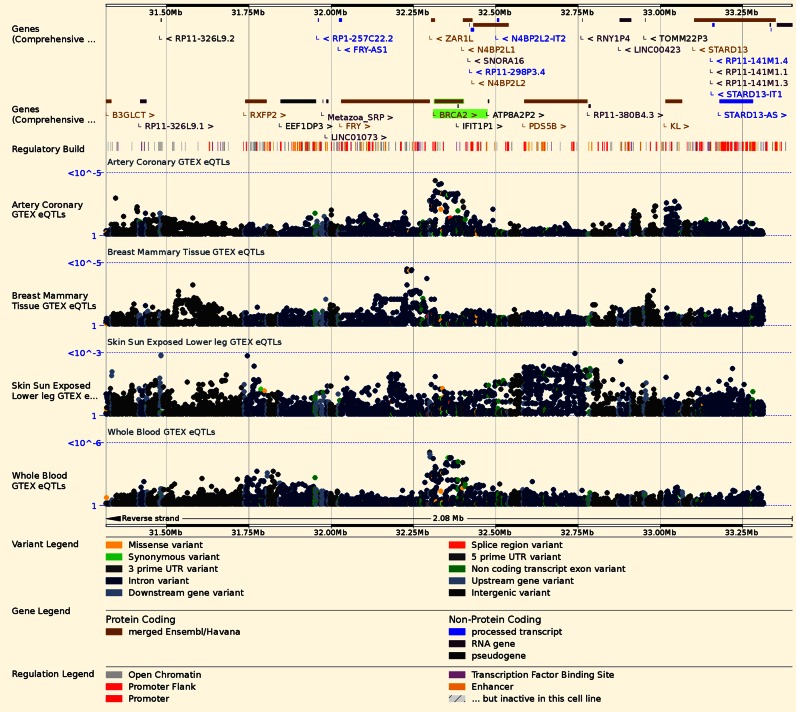
Ensembl (www.ensembl.org) is a database and genome browser for enabling research on vertebrate genomes. We import, analyse, curate and integrate a diverse collection of large-scale reference data to create a more comprehensive view of genome biology than would be possible from any individual dataset. Our extensive data resources include evidence-based gene and regulatory region annotation, genome variation and gene trees. An accompanying suite of tools, infrastructure and programmatic access methods ensure uniform data analysis and distribution for all supported species. Together, these provide a comprehensive solution for large-scale and targeted genomics applications alike. Among many other developments over the past year, we have improved our resources for gene regulation and comparative genomics, and added CRISPR/Cas9 target sites. We released new browser functionality and tools, including improved filtering and prioritization of genome variation, Manhattan plot visualization for linkage disequilibrium and eQTL data, and an ontology search for phenotypes, traits and disease. We have also enhanced data discovery and access with a track hub registry and a selection of new REST end points. All Ensembl data are freely released to the scientific community and our source code is available via the open source Apache 2.0 license.
Overview
The claims and statistics of this paper haven’t been checked yet.
Free: it reads the open-access text and checks the first 5 claims that cite a source we can check. Create a free account to check every claim.
Integrity signals
Registry
Cites
Statistics
Figures
Verification
Claims the paper makes
The claims and statistics of this paper haven’t been checked yet.
Free: it reads the open-access text and checks the first 5 claims that cite a source we can check. Create a free account to check every claim.
Claims other papers make about this one
Each is checked against this paper’s own text: does it say what the citing paper says it does?
The source backs part of the claim, not all of it — or backs it for a different population, condition or comparison.
In the citing paper
“However, if one considers that many genes are transcribed with splice variants, the number of human proteins increases to ~70,000 (per Ensembl 3 ).”
From How many human proteoforms are there? (2018) · cites this paper as [3]
Experimental — accuracy not yet measuredThe check wasn’t confident either way, so it gives no verdict — never disputed.
In the citing paper
“Thanks to the human genome project, we can now estimate the number of protein-coding genes to be in the range of 19,587-20,245 (refs. 1,3,4).”
From How many human proteoforms are there? (2018) · cites this paper as [3]
Experimental — accuracy not yet measured
Self-check
Percentages, sums and reported differences re-computed from the paper’s own numbers.
The self-check needs the paper’s full text.
Citations
Cites
A global reference for human genetic variation
The 1000 Genomes Project Consortium, authors, C., Auton, A., Abecasis, G. R., Steering committee, Altshuler, D. M., Durbin, R. M., Abecasis, G. R., Bentley, D. R., Chakravarti, A., et al. (2015) · Nature · doi:10.1038/nature15393 · Cited by 18,247
Self-citationAn integrated encyclopedia of DNA elements in the human genome
The ENCODE Project Consortium (2012) · Nature · doi:10.1038/nature11247 · Cited by 18,072
Haploview: analysis and visualization of LD and haplotype maps
Barrett, J. C., Fry, B., Maller, J., & Daly, M. J. (2005) · Bioinformatics · doi:10.1093/bioinformatics/bth457 · Cited by 14,525
Database resources of the National Center for Biotechnology Information: update
Wheeler, D. L. (2004) · Nucleic Acids Research · doi:10.1093/nar/gkh073 · Cited by 10,641
Analysis of protein-coding genetic variation in 60,706 humans
Exome Aggregation Consortium, Lek, M., Karczewski, K. J., Minikel, E. V., Samocha, K. E., Banks, E., Fennell, T., O’Donnell-Luria, A. H., Ware, J. S., Hill, A. J., et al. (2016) · Nature · doi:10.1038/nature19057 · Cited by 9,587
The Ensembl Variant Effect Predictor
McLaren, W., Gil, L., Hunt, S. E., Riat, H. S., Ritchie, G. R. S., Thormann, A., Flicek, P., & Cunningham, F. (2016) · Genome Biology · doi:10.1186/s13059-016-0974-4 · Cited by 8,099 · cited 2×
“To better support RefSeq transcripts (47), VEP now reports information on matched regions between Ensembl and RefSeq transcripts and mismatches between RefSeq transcripts and the reference genome assembly (46).”
MethodSelf-citationKumar, P., Henikoff, S., & Ng, P. C. (2009) · Nature Protocols · doi:10.1038/nprot.2009.86 · Cited by 6,521 · cited 2×
“The new tables can manage many hundreds of thousands of rows, and can be customized to display only variants with a range of SIFT (31) or PolyPhen (32) scores; those with particular consequence types or minor allele frequencies; or other properties.”
BackgroundInfluentialO'Leary, N. A., Wright, M. W., Brister, J. R., Ciufo, S., Haddad, D., McVeigh, R., Rajput, B., Robbertse, B., Smith-White, B., Ako-Adjei, D., et al. (2016) · Nucleic Acids Research · doi:10.1093/nar/gkv1189 · Cited by 6,357
UniProt: a hub for protein information
The UniProt Consortium (2015) · Nucleic Acids Research · doi:10.1093/nar/gku989 · Cited by 5,106
The Genotype-Tissue Expression (GTEx) pilot analysis: Multitissue gene regulation in humans
The GTEx Consortium, Ardlie, K. G., Deluca, D. S., Segrè, A. V., Sullivan, T. J., Young, T. R., Gelfand, E. T., Trowbridge, C. A., Maller, J. B., Tukiainen, T., et al. (2015) · Science · doi:10.1126/science.1262110 · Cited by 5,062
Cited by
Items 301–400 of 466
Carbeck, K. M., Arcese, P., Lovette, I. J., Pruett, C. L., Winker, K., & Walsh, J. (2023) · Nature Communications · doi:10.1038/s41467-023-42786-2 · Cited by 15
Riechert, G., Maucher, D., Schmidt, B., & Schumann, J. (2022) · Genes · doi:10.3390/genes13020211 · Cited by 10
Bútová, R., Vychytilová-Faltejsková, P., Gregorová, J., Radová, L., Almáši, M., Bezděková, R., Brožová, L., Jarkovský, J., Knechtová, Z., Štork, M., et al. (2021) · Biomedicines · doi:10.3390/biomedicines9111637 · Cited by 10
Dornburg, A., Wang, Z., Wang, J., Mo, E. S., López‐Giráldez, F., & Townsend, J. P. (2020) · Genome Biology and Evolution · doi:10.1093/gbe/evaa228 · Cited by 11
“The Evolutionary History of ALK , LTK , JEB , HEN-1 , and AUG Homologs BLAST searches (including BlastP and TBlastN) revealed a diversity of sequences that are potentially homologous to sequences of ALKs and associated ligands from model and nonmodel organisms across the genomes available at Ensembl (Kersey et al. 201…”
InfluentialO’Leary, H., Vanderlinden, L. A., Southard, L., Castano, A. M., Saba, L. M., & Benke, T. A. (2020) · Epilepsy Research · doi:10.1016/j.eplepsyres.2020.106283 · Cited by 11
Transcriptomics of a KDELR1 knockout cell line reveals modulated cell adhesion properties
Blum, A., Khalifa, S., Nordström, K. J. V., Simon, M. C., Schulz, M. H., & Schmitt, M. (2019) · Scientific Reports · doi:10.1038/s41598-019-47027-5 · Cited by 14
Pervaiz, N., Shakeel, N., Qasim, A., Raza, R. Z., Anwar, S., Rana, N., Xue, Y., Zhang, Z., Bào, Y., & Abbasi, A. A. (2019) · BMC Evolutionary Biology · doi:10.1186/s12862-019-1441-0 · Cited by 17
Drobik-Czwarno, W., Wolc, A., Fulton, J. E., & Dekkers, J. C. M. (2018) · Genetics Selection Evolution · doi:10.1186/s12711-018-0428-4 · Cited by 11
Liu, R., Hu, R., Zhang, W., & Zhou, H.-H. (2018) · Pharmacogenomics (London) · doi:10.2217/pgs-2018-0032 · Cited by 10
Designing an intuitive web application for drug discovery scientists
Karamanis, N., Carvalho‐Silva, D., Cham, J. A., Fumis, L., Hasan, S., Hulcoop, D. G., Koscielny, G., Maguire, M., Newell, W. R., Ong, C., et al. (2018) · Drug Discovery Today · doi:10.1016/j.drudis.2018.01.032 · Cited by 16
Self-citationKwon, D., Lee, D., Kim, J.-Y., Lee, J., Sim, M., & Kim, J. (2018) · Nucleic Acids Res. · doi:10.1093/nar/gky378 · Cited by 10
Dhar, D., Dey, D., & Basu, S. (2018) · bioRxiv · doi:10.1007/s12038-018-9821-y · Cited by 10
HGVA: the Human Genome Variation Archive
Lopez, J., Coll, J., Haimel, M., Kandasaamy, S., Tárraga, J., Furió‐Tarí, P., Bari, W., Bleda, M., Rueda, A., Gräf, S., et al. (2017) · Nucleic Acids Research · doi:10.1093/nar/gkx445 · Cited by 8
Müller, L., Keil, R., Glaß, M., & Hatzfeld, M. (2024) · Cellular and Molecular Life Sciences · doi:10.1007/s00018-024-05329-6 · Cited by 10
“105; [32]) was used as annotation basis.”
Kürekçi, G. K., Acar, A. C., & Dinçer, P. (2022) · International Journal of Molecular Sciences · doi:10.3390/ijms232113615 · Cited by 9
Wöhnke, E., Cackett, G., Werner, F., Blome, S., Mettenleiter, T. C., & Karger, A. (2022) · Viruses · doi:10.3390/v14102140 · Cited by 12
Non-coding function for mRNAs in Focal Adhesion Architecture and MechanotransductionPreprint
Boraas, L. C., Hu, M., Thornton, L., Vejnar, C. E., Zhen, G., Giráldez, A. J., Mayr, C., Wang, S., & Nicoli, S. (2021) · bioRxiv (Cold Spring Harbor Laboratory) · doi:10.1101/2021.10.04.463097 · Cited by 8
Vega, M. E., Finlay, J. B., Vasishtha, M., & Schwarzbauer, J. E. (2020) · Matrix Biology Plus · doi:10.1016/j.mbplus.2020.100048 · Cited by 11
Mobile element insertions and associated structural variants in longitudinal breast cancer samples
Steely, C. J., Russell, K. L., Feusier, J. E., Qiao, Y., Tavtigian, S. V., Marth, G., & Jorde, L. B. (2021) · Scientific Reports · doi:10.1038/s41598-021-92444-0 · Cited by 11
Kloth, K., Synofzik, M., Kernstock, C., Schimpf‐Linzenbold, S., Schuettauf, F., Neu, A. D., Wissinger, B., & Weisschuh, N. (2019) · BMC Medical Genetics · doi:10.1186/s12881-019-0795-x · Cited by 12
“There is a shorter isoform of TMEM126A, using an ATG in exon 3, which codes for a protein of 125 aa (Ensembl Transcript ENST00000528105.”
InfluentialFunctional genomics of the digestive tract in broilers
Juanchich, A., Hennequet‐Antier, C., Cabau, C., Bihan-Duval, É. L., Duclos, M. J. M. J., Mignon-Grasteau, S., & Narcy, A. (2018) · BMC Genomics · doi:10.1186/s12864-018-5344-z · Cited by 9
Tudini, E., Moghadasi, S., Parsons, M. T., van der Kolk, L., van den Ouweland, A. M. W., Niederacher, D., Feliubadaló, L., Wappenschmidt, B., Spurdle, A. B., & Lázaro, C. (2018) · Breast Cancer Research and Treatment · doi:10.1007/s10549-018-4903-y · Cited by 10
Cross-Kingdom Commonality of a Novel Insertion Signature of RTE-Related Short Retroposons
Nishiyama, E., & Ohshima, K. (2018) · Genome Biology and Evolution · doi:10.1093/gbe/evy098 · Cited by 11
Evolutionary fates of universal stress protein paralogs in Platyhelminthes
Espínola, S., Cancela, M., Corrêa, L. B., & Zaha, A. (2018) · BMC Evolutionary Biology · doi:10.1186/s12862-018-1129-x · Cited by 9
“The USP sequences of the molluscs Lottia gigantea, Crassostrea gigas, and Octopus bimaculoides, and the annelids Helobdella robusta and Capitella teleta, were retrieved from the Ensembl Genome and JGI databases [27, 28] using the Pfam code PF00582.”
Computational Approaches to Identify Genetic Interactions for Cancer Therapeutics
Benstead-Hume, G., Wooller, S. K., & Pearl, F. M. G. (2017) · Berichte aus der medizinischen Informatik und Bioinformatik/Journal of integrative bioinformatics · doi:10.1515/jib-2017-0027 · Cited by 7
Ashkenazy, H., Karin, E. L., Mertens, Z., Cartwright, R. A., & Pupko, T. (2017) · Nucleic Acids Research · doi:10.1093/nar/gkx322 · Cited by 9
A validated heart-specific model for splice-disrupting variants in childhood heart disease
Lesurf, R., Breckpot, J., Bouwmeester, J., Hanafi, N., Jain, A., Liang, Y., Papaz, T., Lougheed, J., Mondal, T. K., Alsalehi, M., et al. (2024) · Genome Medicine · doi:10.1186/s13073-024-01383-8 · Cited by 10
“6.1.c) [58] with basic two-pass mode and Ensembl GTF (release version 87) [59] was used for the annotation.”
MethodInfluentialGenetic Regulation of Cytokine Response in Patients with Acute Community-Acquired Pneumonia
Kühnapfel, A., Horn, K., Klotz, U., Kiehntopf, M., Rosołowski, M., Loeffler, M., Ahnert, P., Suttorp, N., Witzenrath, M., & Scholz, M. R. (2022) · Genes · doi:10.3390/genes13010111 · Cited by 8
Babaiha, N. S., Aghdam, R., Ghiam, S., & Eslahchi, C. (2023) · PLoS ONE · doi:10.1371/journal.pone.0258793 · Cited by 8
“…growth of biological sequences in the post-genomic era, one of the most important and challenging problems in computational biology is how to express a biological sequence using a discrete model or vector while retaining significant sequence-order information or essential pattern characteristics.”
Selective sweep for an enhancer involucrin allele identifies skin barrier adaptation out of Africa
Mathyer, M. E., Brettmann, E. A., Schmidt, A. D., Goodwin, Z. A., Quiggle, A., Oh, I. Y., Tycksen, E., Zhou, L., Estrada, Y. D., Wong, X. F. C. C., et al. (2021) · Nature Communications · doi:10.1038/s41467-021-22821-w · Cited by 10
Pinto, P. I. S., Andrade, A. R., Moreira, C., Zapater, C., Thorne, M. A. S., Santos, S., Estêvão, M. D., Gómez, A., Canário, A. V. M., & Power, D. M. (2019) · The Journal of Steroid Biochemistry and Molecular Biology · doi:10.1016/j.jsbmb.2019.105448 · Cited by 10
Han, Z., Hua, J., Xue, W., & Zhu, F. (2019) · Frontiers in Genetics · doi:10.3389/fgene.2019.01136 · Cited by 8
Liu, L.-N., Wang, P., Zou, Y.-F., Xu, Z.-W., Cheng, J., Zhang, Y.-Z., Hu, W.-B., & Pan, H.-F. (2019) · Autoimmunity · doi:10.1080/08916934.2019.1642333 · Cited by 8
Baumann, B., Lugli, G., Gao, S., Zenner, M. L., & Nonn, L. (2019) · The Prostate · doi:10.1002/pros.23789 · Cited by 11
“For alignment, miRNA stem‐ loop sequences were retrieved from miRBase (release 21),(23) piRNA sequences from piRNABank,(24) and ribosomal RNA (rRNA), small nuclear RNA (snRNA), snoRNA, and tRNA sequences from Ensembl version 90 (Hinxton, United Kingdom).(25) Reads were aligned to small”
Zhang, Y., Liu, J., Ma, Y., Wang, J., Zhu, J., Liu, J., & Zhang, J. (2018) · Molecular Medicine Reports · doi:10.3892/mmr.2018.9641 · Cited by 9
Baaklini, S., Afridi, S., Nguyen, T. N., Koukouikila-Koussounda, F., Ndounga, M., Imbert, J., Torres, M., Pradel, L. C., Ntoumi, F., & Rihet, P. (2017) · PLoS ONE · doi:10.1371/journal.pone.0187818 · Cited by 11
Models for the retention of duplicate genes and their biological underpinnings
Assis, R., Conant, G. C., Holland, B. R., Liberles, D. A., O’Reilly, M. M., & Wilson, A. E. (2023) · F1000Research · doi:10.12688/f1000research.141786.1 · Cited by 8
Suriyalaksh, M., Raimondi, C., Mains, A., Segonds-Pichon, A., Mukhtar, S., Murdoch, S., Aldunate, R., Krueger, F., Guimerà, R., Andrews, S., et al. (2021) · iScience · doi:10.1016/j.isci.2021.103663 · Cited by 11
“We identified TF-gene interactions from ChIP-seq data, motifs, eY1H assay, and transcription start sites (TSS) from Ensembl version 75 (Aken et al., 2017).”
MethodRNA Network Interactions During Differentiation of Human Trophoblasts
Chu, T., Mouillet, J., Cao, Z., Barak, O., Ouyang, Y., & Sadovsky, Y. (2021) · Frontiers in Cell and Developmental Biology · doi:10.3389/fcell.2021.677981 · Cited by 10
Suzuki, H., Nakamura, Y., Matsuo, K., Imaeda, N., Goto, C., Narita, A., Shimizu, A., Takashima, N., Matsui, K., Miura, K., et al. (2020) · European Journal of Clinical Nutrition · doi:10.1038/s41430-020-00823-z · Cited by 7
Wilkinson, K. A., Schneider-Luftman, D., Lai, R., Barrington, C., Jhilmeet, N., Lowe, D. M., Kelly, G. P., & Wilkinson, R. J. (2021) · Frontiers in Immunology · doi:10.3389/fimmu.2021.645446 · Cited by 7
Pandorf, C. E., Haddad, F., Owerkowicz, T., Carroll, L. P., Baldwin, K. M., & Adams, G. R. (2020) · American Journal of Physiology-Cell Physiology · doi:10.1152/ajpcell.00166.2018 · Cited by 11
Wang, P., Mao, Y.-M., Zhao, C.-N., Wang, J.-B., Li, X.-M., Ye, D., & Pan, H.-F. (2020) · Frontiers in Immunology · doi:10.3389/fimmu.2020.00110 · Cited by 7
Dvořák, P., Leupen, S., & Souček, P. (2019) · Cells · doi:10.3390/cells8060623 · Cited by 11
Systematics for types and effects of DNA variations
Vihinen, M. (2018) · BMC Genomics · doi:10.1186/s12864-018-5262-0 · Cited by 11
“In Table 1 [ 17 – 49 ] examples of Databases have been established for many diseases, those for cancer contain large amounts of data.”
BackgroundBoeckmann, B., Dylus, D. V., Moretti, S., Altenhoff, A., Train, C. M., Kriventseva, E. V., Bougueleret, L., Xénarios, I., Privman, E., Gabaldón, T., et al. (2017) · bioRxiv (Cold Spring Harbor Laboratory) · doi:10.1101/181966 · Cited by 6
Tagger: BeCalm API for rapid named entity recognitionPreprint
Jensen, L. J. (2017) · bioRxiv (Cold Spring Harbor Laboratory) · doi:10.1101/115022 · Cited by 6
Experimentally Validated Plant lncRNAs in EVLncRNAs Database
Zhou, B., Zhao, H., Yu, J., Guo, C., Dou, X., Song, F., Hu, G., Cao, Z., Qu, Y., Yang, Y., et al. (2019) · Methods in molecular biology · doi:10.1007/978-1-4939-9045-0_27 · Cited by 10
Brisebarre, A., Ancel, J., Ponchel, T., Loeffler, E., Germain, A., Dalstein, V., Dormoy, V., Durlach, A., Delépine, G., Deslée, G., et al. (2022) · Frontiers in Immunology · doi:10.3389/fimmu.2022.1058531 · Cited by 7
Meta-Analysis of RNA-Seq Datasets Identifies Novel Players in Glioblastoma
Sallam, M., Mysara, M., Baatout, S., Guns, P., Ramadan, R., & Benotmane, M. A. (2022) · Cancers · doi:10.3390/cancers14235788 · Cited by 9
Maskalenka, K., Alagöz, G., Krueger, F., Wright, J., Rostovskaya, M., Nakhuda, A., Bendall, A., Krueger, C., Walker, S., Scally, A., et al. (2022) · bioRxiv · doi:10.1101/2022.08.18.504441 · Cited by 6
Steep, A., Hildebrandt, E., Xu, H., Hearn, C. J., Frishman, D., Niikura, M., Dunn, J. R., Kim, T., Conrad, S. J., Muir, W. M., et al. (2022) · Microorganisms · doi:10.3390/microorganisms10020401 · Cited by 6
Gao, N., He, Z., Zhu, Q., Jiang, P., Hu, S., & Chen, W. (2021) · Genomics Proteomics & Bioinformatics · doi:10.1016/j.gpb.2021.03.002 · Cited by 8
““Vertebrata” was the only exception, possibly due to the fact that few species (14) were available in Ensembl [37] for this group (see Material and methods).”
Carter, T. C., Ye, Z., Ivacic, L. C., Budi, N., Rose, W. E., & Shukla, S. K. (2020) · Genes and Immunity · doi:10.1038/s41435-020-0101-0 · Cited by 6
Zhang, Z., Tian, M., Song, R., Xing, X., Fan, Y., Wang, L., Niu, C.-J., & Dalmo, R. (2020) · Biology · doi:10.3390/biology9050111 · Cited by 6
OMXWare, A Cloud-Based Platform for Studying Microbial Life at Scale
Seabolt, E., Nayar, G., Krishnareddy, H., Agarwal, A., Beck, K. L., Terrizzano, I. G., Kandogan, E., Roth, M., Mukherjee, V. V., & Kaufman, J. (2019) · arXiv.org · doi:10.48550/arxiv.1911.02095 · Cited by 6
“…comparison genome data availability for a subset of genera (common and more rare) in OMXWare versus other curated data sources, specifically Joint Genome Institute (JGI) Integrated Microbial Genomics (IMG) and Microbiomes (IMG/M) [26], Genome Taxonomy Database (GTDB) [27], and Ensembl Bacteria [28].”
BackgroundPeluzzo, T., Bonadia, L., Donatti, A., Molck, M. C., Jardim, L., Marques, W., Lopes-Cendes, Í., & França, M. (2019) · Cerebellum · doi:10.1007/s12311-019-01055-z · Cited by 6
Olney, K. C., Brotman, S. M., Andrews, J. P., Valverde-Vesling, V. A., & Wilson, M. A. (2019) · bioRxiv (Cold Spring Harbor Laboratory) · doi:10.1101/668376 · Cited by 3
Selection Shapes Synonymous Stop Codon Use in Mammals
Seoighe, C., Kiniry, S. J., Peters, A., Baranov, P. V., & Yang, H. (2020) · Journal of Molecular Evolution · doi:10.1007/s00239-020-09957-x · Cited by 9
Assigning confidence scores to homoeologs using fuzzy logic
Glover, N., Altenhoff, A., & Dessimoz, C. (2019) · PeerJ · doi:10.7717/peerj.6231 · Cited by 7
Active Learning for microRNA Prediction
Hassani, M. S., & Green, J. R. (2018) · IEEE International Conference on Bioinformatics and Biomedicine (BIBM) · doi:10.1109/bibm.2018.8621144 · Cited by 7
“This candidate negative set was then aligned against the coding region data of the related species, which was downloaded from the Ensembl sequence FTP database [33].”
MethodRole of recombination and faithfulness to partner in sex chromosome degeneration
Mackiewicz, D., Posacki, P., Burdukiewicz, M., & Błażej, P. (2018) · Scientific Reports · doi:10.1038/s41598-018-27219-1 · Cited by 8
Germline loss of MBD4 predisposes to leukaemia due to a mutagenic cascade driven by 5mCPreprint
Sanders, M., Chew, E., Flensburg, C., Zeilemaker, A., Miller, S. E., Hinai, A. A. A., Bajel, A., Luiken, B., Rijken, M., Mclennan, T., et al. (2017) · bioRxiv · doi:10.1101/180588 · Cited by 6
Proline Metabolism in Cancer: Emerging Roles in Redox Homeostasis and Therapeutic Opportunities
Rossman, T. C., Purohit, G., Daudu, O. I., & Becker, D. (2025) · Cancers · doi:10.3390/cancers17193156 · Cited by 8
Wöhnke, E., Klupp, B. G., Blome, S., Mettenleiter, T. C., & Karger, A. (2023) · Viruses · doi:10.3390/v15061283 · Cited by 5
Identifying genes with conserved splicing structure and orthologous isoforms in human, mouse and dog
Guillaudeux, N., Belleannée, C., & Blanquart, S. (2022) · BMC Genomics · doi:10.1186/s12864-022-08429-4 · Cited by 9
“Each predicted transcript T was first sought from additional annotations issued from four databases: UCSC (version June 2019, human, mouse and dog, [32]), Ensembl release 96, release 98, release 102 (human, mouse and dog) and release 103 (human, dog), XBSeq (human and mouse, [33]) and FEELnc (dog, [34]).”
InfluentialPlacenta DNA methylation at ZNF300 is associated with fetal sex and placental morphologyPreprint
Ladd‐Acosta, C., Andrews, S. V., Bakulski, K. M., Feinberg, J. I., Tryggvadóttir, R., Yao, R., Croen, L., Hertz‐Picciotto, I., Newschaffer, C. J., Salafia, C. M., et al. (2021) · bioRxiv (Cold Spring Harbor Laboratory) · doi:10.1101/2021.03.05.433992 · Cited by 5
“fastq files were aligned the human reference genome (hg38) downloaded from Ensembl[84] via Bismark (v0.”
MethodGemmell, N., Rutherford, K. M., Prost, S., Tollis, M., Winter, D. J., Macey, J., Adelson, D., Suh, A., Bertozzi, T., Grau, J., et al. (2019) · bioRxiv · doi:10.1101/867069 · Cited by 5
Self-citationNatriuretic peptides appeared after their receptors in vertebrates
Grandchamp, A., Tahir, S., & Monget, P. (2019) · BMC Evolutionary Biology · doi:10.1186/s12862-019-1517-x · Cited by 10
Amamoto, R., Zuccaro, E., Curry, N. C., Khurana, S., Chen, H.-H., Cepko, C. L., & Arlotta, P. (2019) · Nucleic Acids Research · doi:10.1093/nar/gkz968 · Cited by 20
Flannick, J., Mercader, J., Fuchsberger, C., Udler, M., Mahajan, A., Wessel, J., Teslovich, T., Caulkins, L., Koesterer, R., Blackwell, T., et al. (2018) · bioRxiv · doi:10.1101/371450 · Cited by 5
Characterisation of the UK honey bee (Apis mellifera) metagenomePreprint
Regan, T., Barnett, M., Laetsch, D., Bush, S., Wragg, D., Budge, G., Highet, F., Dainat, B., de Miranda, J. D., Blaxter, M., et al. (2018) · bioRxiv · doi:10.1101/293647 · Cited by 5
Chromosome-wide gene dosage rebalance may benefit tumor progression
Zhang, H., Yang, X., Xu, F., Xu, H., Yang, Q., Zou, L., Mei, Y., Liu, D., Su, X., & Jiao, B. (2018) · Molecular Genetics and Genomics · doi:10.1007/s00438-018-1429-2 · Cited by 5
Sequence variant affects GCSAML splicing, mast cell specific proteins, and risk of urticaria
Kristjansson, R. P., Oskarsson, G. R., Skúladóttir, Á., Oddsson, Á., Rögnvaldsson, S., Sveinbjörnsson, G., Lund, S. H., Jensson, B. Ö., Styrmisdottir, E. L., Halldorsson, G. H., et al. (2023) · Communications Biology · doi:10.1038/s42003-023-05079-4 · Cited by 9
Koller, D., Wendt, F., Pathak, G., Lillo, A. D., Angelis, F. D., Cabrera-Mendoza, B., Tucci, S., & Polimanti, R. (2021) · bioRxiv · doi:10.1101/2021.08.12.456138 · Cited by 4
Mustafa, R., Ghanbari, M., Evangelou, M., & Dehghan, A. (2018) · International Journal of Molecular Sciences · doi:10.3390/ijms19113666 · Cited by 6
Ahsan, K. B., Masuda, A., Rahman, M. A., Takeda, J., Nazim, M., Ohkawara, B., Ito, M., & Ohno, K. (2017) · Scientific Reports · doi:10.1038/s41598-017-11036-z · Cited by 7
The genetic architecture of osteoarthritis: insights from UK Biobank
Zengini, E., Hatzikotoulas, K., Tachmazidou, I., Steinberg, J., Hartwig, F., Southam, L., Hackinger, S., Boer, C., Styrkársdóttir, U., Suveges, D., et al. (2017) · bioRxiv · doi:10.1101/174755 · Cited by 4
Mapping Quantitative Trait Loci Underlying Circadian Light Sensitivity in Drosophila
Adewoye, A. B., Nuzhdin, S. V., & Tauber, E. (2017) · Journal of Biological Rhythms · doi:10.1177/0748730417731863 · Cited by 5
“To carry out analysis of regulatory motifs enrichment, a 2kb upstream sequence was extracted from each candidate gene using BioMart, a data mining tool from Ensembl (Aken et al. 2017).”
MethodZhang, R., Li, J., Badescu, D., Karaplis, A. C., Ragoussis, J., & Kremer, R. B. (2023) · Cancers · doi:10.3390/cancers15153763 · Cited by 6
Extending protein interaction networks using proteoforms and small molecules
Sánchez, L. F. H., Burger, B., Campos, R. A. C., Johansson, S., Njølstad, P. R., Barsnes, H., & Vaudel, M. (2023) · Bioinformatics · doi:10.1093/bioinformatics/btad598 · Cited by 3
“The estimated number of protein products resulting from alternative splicing is around 70 000 isoforms (Aken et al. 2017).”
BackgroundA genome-wide association study on adherence to low-carbohydrate diets in Japanese
Nakamura, Y., Tamura, T., Narita, A., Shimizu, A., Sutoh, Y., Takashima, N., Matsui, K., Miyagawa, N., Kadota, A., Miura, K., et al. (2022) · European Journal of Clinical Nutrition · doi:10.1038/s41430-022-01090-w · Cited by 3
Dornbos, P., Koesterer, R., Ruttenburg, A., Cole, J. B., Leong, A., Meigs, J., Florez, J. C., Rotter, J., Udler, M., & Flannick, J. (2021) · medRxiv · doi:10.1101/2021.11.04.21265868 · Cited by 3
First genome-wide association study of 99 body measures derived from 3-dimensional body scans
Kühnapfel, A., Ahnert, P., Horn, K., Kirsten, H., Loeffler, M., & Scholz, M. R. (2021) · Genes & Diseases · doi:10.1016/j.gendis.2021.02.003 · Cited by 6
Neural representation and generation for RNA secondary structuresPreprint
Yan, Z., Hamilton, W. L., & Blanchette, M. (2021) · arXiv (Cornell University) · doi:10.48550/arxiv.2102.00925 · Cited by 6
“The first dataset contains unlabeled RNA with moderate and highly-variable length (32-512 nts), obtained from the human transcriptome (Aken et al., 2016) and through which we focus on the generation aspect of structured RNA and evaluate the validity, stability and diversity of generated RNA…”
BackgroundPerturbation robustness analyses reveal important parameters in variant interpretation pipelinesPreprint
Wang, Y., Adhikari, A. N., Sunderam, U., Kvale, M. N., Currier, R. J., Gallagher, R. C., Kwok, P., Puck, J. M., Srinivasan, R., & Brenner, S. E. (2020) · bioRxiv (Cold Spring Harbor Laboratory) · doi:10.1101/2020.06.29.173815 · Cited by 2
Northover, D., Shank, S. D., & Liberles, D. A. (2020) · BMC Evolutionary Biology · doi:10.1186/s12862-020-1585-y · Cited by 3
Shen, Y., Wang, X., Guo, S., Qiu, M. S., Hou, G., & Tan, Z. (2019) · Neuroscience Letters · doi:10.1016/j.neulet.2019.134600 · Cited by 4
Sloutsky, R., & Naegle, K. M. (2019) · eLife · doi:10.7554/elife.47676 · Cited by 5
“Alternate statistical approaches are increasingly important with the advent of affordable genome sequencing and the resulting explosion in the number of sequenced and annotated species’ genomes ( Aken et al., 2017 ; Benson et al., 2017 ).”
BackgroundAnjos, L., Pinto, P. I. S., Tsironi, T. N., Dimopoulos, G., Santos, S., Santa, C., Manadas, B. J., Canário, A. V. M., Taoukis, P., & Power, D. M. (2019) · Data in Brief · doi:10.1016/j.dib.2019.104451 · Cited by 9
Li, Y.-Y., Aguilar-Martinez, E., & Sharrocks, A. (2019) · Journal of Integrative Bioinformatics · doi:10.1515/jib-2018-0090 · Cited by 3
Yu, G., Zhu, H., Chen, X., & Yang, J. (2021) · Genomics Proteomics & Bioinformatics · doi:10.1016/j.gpb.2019.11.013 · Cited by 4
Effect of the African-specific promoter polymorphisms on the SLC22A2 gene expression levels
Pearce, B., Abrahams-October, Z., Xhakaza, L., Jacobs, C., & Benjeddou, M. (2018) · Drug Metabolism and Personalized Therapy · doi:10.1515/dmpt-2017-0039 · Cited by 3
Gorenjak, V., Arguinano, A.-A. A., Dadé, S., Stathopoulou, M. G., Vance, D. R., Masson, C., & Visvikis‐Siest, S. (2018) · Scientific Reports · doi:10.1038/s41598-018-25553-y · Cited by 5
New Insights into Vertebrate Thyroid Hormone Receptor Evolution
Holzer, G., & Laudet, V. (2017) · Nuclear Receptor Research · doi:10.11131/2017/101287 · Cited by 3
“The sequence of the previously identified TR1 and TR2 were used to run a TBLASTN on the lamprey genome assembly available on Ensembl [29].”
MethodInfluentialRNA transcripts in salivary extracellular vesicle cargo isolated from aged populations
Wen, S., Chang, Y., Kelsey, M. M. G., Pereira, M., Alaimo, H., Teixeira, E. M., Pracht, J. R., Daiello, L. A., Drake, J. D., Sedivy, J. M., et al. (2026) · Frontiers in Aging · doi:10.3389/fragi.2025.1707720 · Cited by 3
Structural and Functional Analysis of ASFV pI73R Reveals GNB1 Binding and Host Gene Modulation
Dolata, K. M., Bettin, B., Küchler, R., Pannhorst, K., Ushakov, D. S., Fuchs, W., & Karger, A. (2025) · International Journal of Molecular Sciences · doi:10.3390/ijms262411768 · Cited by 3
“Proteomic data were searched against the ENSEMBL [68] Sus scrofa proteome (v.11.1.2021-11-10) and the NCBI ASFV Georgia proteome (version FR682468.”
InfluentialRbm8a deficiency causes hematopoietic defects by modulating Wnt/PCP signaling
Kocere, A., Chiavacci, E., Soneson, C., Jacobson, S. T., Harrison, E. N., Méndez-Acevedo, K. M., MacGowan, J. S., Wells, H. H., Hiltabidle, M. S., Raghunath, A., et al. (2025) · Developmental Biology · doi:10.1016/j.ydbio.2025.08.021 · Cited by 6
“87 catalog (Aken et al., 2017) and performed gene-level differential expression using tximport (version 1.4.0) (Soneson et al., 2016a) and edgeR (version 3.18.1) (Robinson et al., 2010) using the quasi-likelihood F test (Lun et al., 2016) and a Benjamini-Hochberg multiple testing correction…”
InfluentialOmdahl, A. R., Weinstock, J. S., Keener, R., Chhetri, S. B., Arvanitis, M., & Battle, A. J. (2025) · The American Journal of Human Genetics · doi:10.1016/j.ajhg.2025.07.003 · Cited by 3
“If multiple genes were assigned equal scores by Open Targets or no gene ID assignment was available (based on Ensembl v.79 55 ), we selected the gene with the closest protein-coding transcript start site to the SNP based on Gencode annotations.”
Multitasking Proteins: Exploring Noncanonical Functions of Proteins during Mitosis
Piano, V. (2025) · Biochemistry · doi:10.1021/acs.biochem.5c00083 · Cited by 2
Metadata
- Authors
- Aken, B. L., Achuthan, P., Akanni, W., Amode, M. R., Bernsdorff, F., Bhai, J., Billis, K., Carvalho-Silva, D., Cummins, C., Clapham, P., Gil, L., Girón, C. G., Gordon, L., Hourlier, T., Hunt, S. E., Janacek, S. H., Juettemann, T., Keenan, S., Laird, M. R., Lavidas, I., Maurel, T., McLaren, W., Moore, B., Murphy, D. N., Nag, R., Newman, V., Nuhn, M., Ong, C. K., Parker, A., Patricio, M., Riat, H. S., Sheppard, D., Sparrow, H., Taylor, K., Thormann, A., Vullo, A., Walts, B., Wilder, S. P., Zadissa, A., Kostadima, M., Martin, F. J., Muffato, M., Perry, E., Ruffier, M., Staines, D. M., Trevanion, S. J., Cunningham, F., Yates, A., Zerbino, D. R., & Flicek, P.
- Affiliations
- European Bioinformatics Institute (GB)
- Wellcome Sanger Institute (GB)
- Corresponding author
- Flicek, Paul
- ORCID
- Aken, Bronwen L.
- Achuthan, Premanand
- Akanni, Wasiu
- Bernsdorff, Friederike
- Bhai, Jyothish
- Billis, Konstantinos
- Cummins, Carla
- Gil, Laurent
- Girón, Carlos García
- Hourlier, Thibaut
- Hunt, Sarah E.
- Janacek, Sophie H.
- Juettemann, Thomas
- Keenan, Stephen
- Laird, Matthew R.
- Lavidas, Ilias
- Maurel, Thomas
- McLaren, William
- Moore, Benjamin
- Murphy, Daniel N.
- Nag, Rishi
- Nuhn, Michael
- Ong, Chuang Kee
- Taylor, Kieron
- Thormann, Anja
- Vullo, Alessandro
- Walts, Brandon
- Wilder, Steven P.
- Zadissa, Amonida
- Kostadima, Myrto
- Martin, Fergal J.
- Muffato, Matthieu
- Perry, Emily
- Ruffier, Magali
- Staines, Daniel M.
- Trevanion, Stephen J.
- Cunningham, Fiona
- Yates, Andrew
- Zerbino, Daniel R.
- Flicek, Paul
- Venue
- Nucleic Acids Research
- Publisher
- Oxford University Press (OUP)
- Published
- 2016-11-28
- Volume
- 45
- Issue
- D1
- Pages
- D635-D642
- ISSN
- 0305-1048 (ISSN-L)
- 1362-4962
- PMC
- PMC5210575
- OpenAlex
- W4210659358
- Cited by
- 512
- References
- 53
- Citations by year
- 2026: 10 · 2025: 16 · 2024: 16 · 2023: 22 · 2022: 28 · 2021: 54 · 2020: 58 · 2019: 103 · 2018: 129 · 2017: 75
- FWCI
- 53.90
- Type
- journal article
- Language
- en
- Open access
- gold
- doi.org
- Licence
- Locations
- Nucleic Acids Research (publishedVersion, cc-by)
- PubMed Central (publishedVersion, cc-by)
- PubMed (publishedVersion)
- HighWire Press Open Archive (submittedVersion)
- Funders
- Wellcome Trust (WT201535/Z/16/Z, FP7/2007–2013, WT104947, WT095908, 284209, WT104947/Z/14/Z, WT201535, WT 098051, 201535/Z/16/Z, WT200990/Z/16/Z)
- European Bioinformatics Institute
- European Molecular Biology Laboratory
- European Commission (282510, 2007–2013, FP7 2007-2013, HORIZON2020, FP7/2007, 284209, 634143)
- National Institutes of Health (FP7/2007-2013)
- Directorate for Biological Sciences
- Biotechnology and Biological Sciences Research Council (BB/M020398/1, BB/M01844X/1, BB/M011615/1, BB/M018458/1, BB/E011640/1, BB/I025360/2, BB/L024225/1, BB/I025360/1)
- National Human Genome Research Institute (U41HG007823, U41HG007234, U41HG007823-S1)
- Topics
- Life Sciences › Biochemistry, Genetics and Molecular Biology › Molecular Biology › Genomics and Phylogenetic Studies
- Life Sciences › Biochemistry, Genetics and Molecular Biology › Molecular Biology › Bioinformatics and Genomic Networks
- Life Sciences › Biochemistry, Genetics and Molecular Biology › Molecular Biology › Genetics, Bioinformatics, and Biomedical Research
- Keywords
- Ensembl, vertebrate genomes, genome browser, genome annotation, genomic variation, gene trees, gene expression regulation, comparative genomics, linkage disequilibrium, expression quantitative trait loci, phenotype ontologies, REST API
- MeSH terms
- Animals, Gene Expression Regulation, Humans, Software, Species Specificity, Genetic Variation, Vertebrates, Genome, Human, Evolution, Molecular, Computational Biology, Genomics, Databases, Genetic, Data Mining, Search Engine, Molecular Sequence Annotation, Web Browser
About these checks
Registry, retraction, Cites and statistics results are computed, not judged, with one exception: a printed reference that no index lists is read once by a model before it counts as a citation error. Claims are extracted by a model and kept only when their quote appears verbatim in the text; each cited source is then checked, with a model’s help, for whether it says what the claim relies on. Those verdicts can be wrong — read the claim’s quote and the cited source before relying on one.
Statistics and arithmetic are recomputed, not judged.
Confidence bands are shown only for fields calibrated on our annotated test set. None is calibrated yet, so no band is shown.
What counts as a claim ›How we measure confidence ›How we check this ›
Are you an author, or do you see a problem with this page? Request a review
Data sources
Bibliographic data: Semantic Scholar, OpenAlex, Crossref.
Contains information from the Semantic Scholar Academic Graph Datasets, made available under the ODC Attribution License (ODC-BY 1.0).
Semantic Scholar’s data is described in: Kinney, R., et al. (2023). The Semantic Scholar Open Data Platform. arXiv:2301.10140.
