

Restorative sleep predicts the resolution of chronic widespread pain: results from the EPIFUND study
Open accessThe DOI matches its Crossref record; 30 of the 30 references it cites were found in a registry or an index.
Abstract
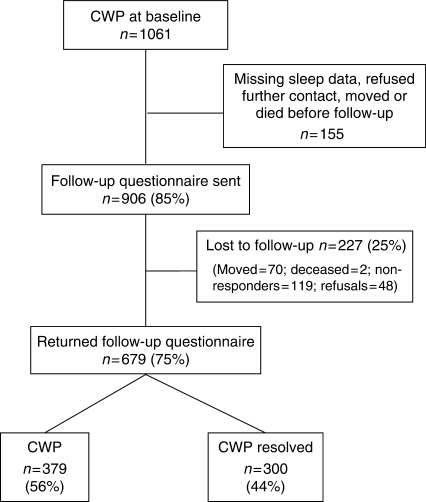
OBJECTIVES: Poor sleep is associated with chronic widespread pain (CWP). Conversely, good-quality sleep may play a role in the resolution of pain symptoms. Sleep is a multidimensional construct, comprising a number of diverse components. The aims of the current study were to examine the hypotheses that: (i) good sleep quality would predict the resolution of CWP, (ii) restorative sleep would predict the resolution of CWP and (iii) that these relationships would be independent of confounding psychological factors. METHODS: Subjects in a population-based prospective study completed a pain questionnaire at baseline from which subjects with CWP were identified. Baseline sleep was measured using the Estimation of Sleep Problems Scale which measures sleep onset, maintenance, early wakening and restorative sleep. The questionnaire also contained scales examining psychosocial status. Subjects were followed up 15 months later and pain status was assessed. RESULTS: A total of 1061 subjects reported CWP at baseline of whom 679 (75% of eligible subjects) responded at follow-up. Of those, a total of 300 (44%) no longer satisfied criteria for CWP. Univariate analysis revealed that three of the four sleep components were associated with the resolution of CWP: rapid sleep onset, odds ratio (OR) = 1.7, 95% CI 1.2, 2.5; absence of early wakening, OR = 1.6, 95% CI 1.1, 2.4; and restorative sleep, OR = 2.7, 95% CI 1.5, 4.8. After adjusting for the effect of psychosocial factors, which may have confounded the relationship, only restorative sleep (OR = 2.0, 95% CI 1.02, 3.8) was associated. CONCLUSIONS: Self-reported restorative sleep was independently associated with the resolution of CWP and return to musculoskeletal health.
Overview
The claims and statistics of this paper haven’t been checked yet.
Free: it reads the open-access text and checks the first 5 claims that cite a source we can check. Create a free account to check every claim.
Integrity signals
Registry
Cites
Statistics
Figures
Verification
Claims the paper makes
The claims and statistics of this paper haven’t been checked yet.
Free: it reads the open-access text and checks the first 5 claims that cite a source we can check. Create a free account to check every claim.
Claims other papers make about this one
Each is checked against this paper’s own text: does it say what the citing paper says it does?
The source backs part of the claim, not all of it — or backs it for a different population, condition or comparison.
In the citing paper
“Promising outcomes in terms of prevention are observed when regional and broad pain is diagnosed early and treated appropriately, with prominent risk factors including somatic symptoms, sick behavior, regional or non-widespread pain, and sleep disturbance [52,53,54].”
From The Role of Cortisol in Chronic Stress, Neurodegenerative Diseases, and Psychological Disorders (2023) · cites this paper as [53]
Experimental — accuracy not yet measured
Self-check
Percentages, sums and reported differences re-computed from the paper’s own numbers.
The self-check needs the paper’s full text.
Citations
Cites
The Hospital Anxiety and Depression Scale
Zigmond, A. S., & Snaith, R. P. (1983) · Acta Psychiatrica Scandinavica · doi:10.1111/j.1600-0447.1983.tb09716.x · Cited by 47,139
Depression and quality of life in older persons: A review
Sivertsen, H., Bjørkløf, G. H., Engedal, K., Selbæk, G., & Helvik, A.-S. (2015) · Dementia and Geriatric Cognitive Disorders · doi:10.1159/000437299 · Cited by 14,152
The american college of rheumatology 1990 criteria for the classification of fibromyalgia
Wolfe, F., Smythe, H. A., Yunus, M. B., Bennett, R. M., Bombardier, C., Goldenberg, D. L., Tugwell, P., Campbell, S. M., Abeles, M., Clark, P., et al. (1990) · Arthritis & Rheumatism · doi:10.1002/art.1780330203 · Cited by 9,563 · cited 1×
“Using the information on pain status, CWP was defined based on the ACR definition in their criteria for fibromyalgia [ 18 ].”
Method(1988) · NFER-Nelson eBooks · Cited by 5,560
A scale for the estimation of sleep problems in clinical research
Jenkins, C. D., Stanton, B.-A., Niemcryk, S. J., & Rose, R. M. (1988) · Journal of Clinical Epidemiology · doi:10.1016/0895-4356(88)90138-2 · Cited by 1,203 · cited 2×
“The internal consistency coefficient for the scale was 0.79 [ 13 ].”
BackgroundMethodInfluentialPrimary fibromyalgia (fibrositis): Clinical study of 50 patients with matched normal controls
Yunus, M., Masi, A. T., Calabro, J. J., Miller, K. A., & Feigenbaum, S. L. (1981) · Seminars in Arthritis and Rheumatism · doi:10.1016/0049-0172(81)90096-2 · Cited by 910
Crofford, L. J., Rowbotham, M. C., Mease, P. J., Russell, I. J., Dworkin, R. H., Corbin, A. E., Young, J. P., LaMoreaux, L. K., Martin, S. A., Sharma, U., et al. (2005) · Arthritis & Rheumatism · doi:10.1002/art.20983 · Cited by 654
Sleep deprivation and pain perception
LAUTENBACHER, S., KUNDERMANN, B., & KRIEG, J. (2006) · Sleep Medicine Reviews · doi:10.1016/j.smrv.2005.08.001 · Cited by 613 · cited 2×
“In a recent review, a number of potential biological mechanisms were identified [ 29 ].”
BackgroundInduction of Neurasthenic Musculoskeletal Pain Syndrome by Selective Sleep Stage Deprivation
Moldofsky, H., & Scarisbrick, P. (1976) · Psychosomatic Medicine · doi:10.1097/00006842-197601000-00006 · Cited by 564
Onen, S. H., Alloui, A., Gross, A., Eschallier, A., & Dubray, C. (2001) · Journal of Sleep Research · doi:10.1046/j.1365-2869.2001.00240.x · Cited by 512 · cited 2×
“Furthermore, sleep deprivation studies have shown that in healthy volunteers poor sleep lowers pressure pain threshold, whereas recovery sleep after sleep deprivation increases pain thresholds [ 8 ].”
Background
Research works printed but not linked: 1
- 1991, Canadian journal of psychology, 179, 184
Cited by
The association of sleep and pain: an update and a path forward
Finan, P. H., Goodin, B. R., & Smith, M. T. (2013) · The Journal of Pain · doi:10.1016/j.jpain.2013.08.007 · Cited by 1,620
“oping future chronic pain, and good sleep increases the chance that chronic pain will remit over time.(10,17,62,71,74,77) These studies provide a sound basis from which to hypothesize that sleep has a causal influence on pain.”
BackgroundThe Role of Cortisol in Chronic Stress, Neurodegenerative Diseases, and Psychological Disorders
Knezevic, E., Nenic, K., Milanovic, V., & Knezevic, N. N. (2023) · Cells · doi:10.3390/cells12232726 · Cited by 564
Pathophysiology of Fibromyalgia
Bradley, L. A. (2009) · The American Journal of Medicine · doi:10.1016/j.amjmed.2009.09.008 · Cited by 360
Aili, K., Åström-Paulsson, S., Stoetzer, U., Svartengren, M., & Hillert, L. (2017) · Journal of Clinical Sleep Medicine · doi:10.5664/jcsm.6384 · Cited by 294
Afolalu, E. F., Ramlee, F., & Tang, N. K. Y. (2018) · Sleep Medicine Reviews · doi:10.1016/j.smrv.2017.08.001 · Cited by 255
Tang, N. K. Y., Goodchild, C. E., Sanborn, A. N., Howard, J., & Salkovskis, P. M. (2012) · SLEEP · doi:10.5665/sleep.1830 · Cited by 209
Decreased alertness due to sleep loss increases pain sensitivity in mice
Alexandre, C., Latremoliere, A., Ferreira, A., Miracca, G., Yamamoto, M., Scammell, T. E., & Woolf, C. J. (2017) · Nature Medicine · doi:10.1038/nm.4329 · Cited by 171
Martínez, M. P., Miró, E., Sánchez, A. I., Díaz-Piedra, C., Cáliz, R., Vlaeyen, J. W. S., & Buela-Casal, G. (2014) · Journal of Behavioral Medicine · doi:10.1007/s10865-013-9520-y · Cited by 161
Han, J.-W., Choi, H., Jeon, Y.-H., Yoon, C.-H., Woo, J.-M., & Kim, W. (2016) · International Journal of Environmental Research and Public Health · doi:10.3390/ijerph13030255 · Cited by 159
“Besides the experiencing of musculoskeletal pain felt throughout the body, this condition is often associated with both physical and psychological problems including anxiety, depression, fatigue, sleep problems, and lower quality of life [2,3].”
BackgroundHUSAK, A., & Bair, M. J. (2020) · Pain Medicine · doi:10.1093/pm/pnz343 · Cited by 172
Sleep disturbances in fibromyalgia: A meta-analysis of case-control studies
Wu, Y.-L., Chang, L., Lee, H., Fang, S., & Tsai, P. (2017) · Journal of Psychosomatic Research · doi:10.1016/j.jpsychores.2017.03.011 · Cited by 164
Mundal, I., Gråwe, R. W., Bjørngaard, J. H., Linaker, O. M., & Fors, E. A. (2014) · BMC Musculoskeletal Disorders · doi:10.1186/1471-2474-15-213 · Cited by 139
“These factors are also assessed as risk factors of CWP onset in population-based prospective studies [15,26-28].”
BackgroundAviel, Y. B., Stremler, R., Benseler, S. M., Cameron, B., Laxer, R. M., Ota, S., Schneider, R., Spiegel, L. R., Stinson, J., Tse, S. M. L., et al. (2011) · Rheumatology · doi:10.1093/rheumatology/ker256 · Cited by 160
Sleep Disturbances as a Predictor of Cause-Specific Work Disability and Delayed Return to Work
Salo, P., Oksanen, T., Sivertsen, B., Hall, M., Pentti, J., Virtanen, M., Vahtera, J., & Kivimäki, M. (2010) · Sleep · doi:10.1093/sleep/33.10.1323 · Cited by 124
The psychological and physiological health effects of fatigue
Lock, A. M., Bonetti, D. L., & Campbell, A. D. K. (2018) · Occupational Medicine · doi:10.1093/occmed/kqy109 · Cited by 154
Wickwire, E. M., Schnyer, D. M., Germain, A., Smith, M. T., Williams, S. G., Lettieri, C. J., McKeon, A. B., Scharf, S. M., Stocker, R., Albrecht, J., et al. (2018) · Journal of Neurotrauma · doi:10.1089/neu.2017.5243 · Cited by 103
“185 Similarly, several acute non TBI-related injury studies also have demonstrated that poor sleep predicts the transition from acute to chronic pain after injury.”
Do Sleep Disorders Contribute to Pain Sensitivity?
Okifuji, A., & Hare, B. D. (2011) · Current Rheumatology Reports · doi:10.1007/s11926-011-0204-8 · Cited by 119
“Quality of sleep at the baseline, specifically rapid sleep onset, absence of early wakening, and restorative quality, predicted the resolution of CWP at the follow-up assessment [ 38 ].”
BackgroundMcBeth, J., Lacey, R. J., & Wilkie, R. (2014) · Arthritis & Rheumatology · doi:10.1002/art.38284 · Cited by 109
Self-citationSleep Disorders and Fibromyalgia
Roizenblatt, S., Neto, N. S. R., & Tufik, S. (2011) · Current Pain and Headache Reports · doi:10.1007/s11916-011-0213-3 · Cited by 107
The interfaces between vitamin D, sleep and pain
de Oliveira, D. L., Hirotsu, C., Tufik, S., & Andersen, M. L. (2017) · Journal of Endocrinology · doi:10.1530/joe-16-0514 · Cited by 91
Quartana, P. J., Wickwire, E. M., Klick, B., Grace, E., & Smith, M. T. (2010) · Pain · doi:10.1016/j.pain.2010.02.029 · Cited by 92
“Indeed, baseline levels of restorative sleep predicted resolution of chronic widespread pain 15 months later [59], and self-report and actigraph-based indexes of sleep disturbance have been linked to decreased positive affect on high stress days in fibromyalgia and rheumatoid arthritis [60–62] and poorer physical and…”
BackgroundPain in fibromyalgia and related conditions
Cassisi, G., Sarzi‐Puttini, P., Casale, R., Cazzola, M., Boccassini, L., Atzeni, F., & Stisi, S. (2014) · Reumatismo · doi:10.4081/reumatismo.2014.767 · Cited by 97
Chronic widespread pain is associated with worsening frailty in European men
Wade, K. F., Lee, D. M., McBeth, J., Ravindrarajah, R., Gielen, E., Pye, S. R., Vanderschueren, D., Pendleton, N., Finn, J. D., Bártfai, G., et al. (2015) · Age and Ageing · doi:10.1093/ageing/afv170 · Cited by 96
“Risk factors for CWP include psychological distress [10], poor sleep [11], low levels of physical activity and being overweight [12, 13].”
BackgroundMethodSelf-citationAlsaadi, S. M., McAuley, J. H., Hush, J. M., Lo, S., Lin, C. C., Williams, C. M., & Maher, C. G. (2014) · Arthritis & Rheumatology · doi:10.1002/art.38329 · Cited by 104
Long-term and Short-term Effects of Insomnia in Cancer and Effective Interventions
Davis, M. P., & Goforth, H. W. (2014) · The Cancer Journal · doi:10.1097/ppo.0000000000000071 · Cited by 92
“On the other hand, treatment of insomnia will also increase pain thresholds and make pain manageable.(79,205) Exercise at the time of diagnosis and during treatment improves insomnia, fatigue, mood, tolerance to treatment, aerobic capacity, and quality of life.”
BackgroundNitter, A. K., Pripp, A. H., & Forseth, K. Ø. (2012) · Scandinavian Journal of Pain · doi:10.1016/j.sjpain.2012.04.001 · Cited by 81
Generaal, E., Vogelzangs, N., Macfarlane, G. J., Geenen, R., Smit, J. H., Penninx, B. W. J. H., & Dekker, J. (2014) · BMC Musculoskeletal Disorders · doi:10.1186/1471-2474-15-227 · Cited by 100
“A previous longitudinal study found nonrestorative sleep (waking feeling unrefreshed) to be associated with the resolution of chronic widespread pain [54].”
BackgroundSelf-citationPsychosocial factors and risk of chronic widespread pain: An 11-year follow-up study—The HUNT study
Mundal, I. P., Gråwe, R. W., Bjørngaard, J. H., Linaker, O. M., & Fors, E. A. (2014) · Pain · doi:10.1016/j.pain.2014.04.033 · Cited by 96
Harrison, L., Wilson, S. J., & Munafo, M. R. (2014) · Pain Research and Management · doi:10.1155/2014/615203 · Cited by 91
“Similar studies also found that good-quality restorative sleep was more likely to predict the resolution of pain symptoms and the subsequent return to musculoskeletal health in patients with CWP (15).”
Huang, C., Chiang, R. P., Chen, C.-L., & Tsai, Y. (2014) · SLEEP · doi:10.5665/sleep.4002 · Cited by 79
The Role of the Work Context in Multiple Wellness Outcomes for Hospital Patient Care Workers
Sorensen, G., Stoddard, A. M., Stoffel, S. D., Buxton, O. M., Sembajwe, G. N., Hashimoto, D. M., Dennerlein, J. T., & Hopcia, K. L. (2011) · Journal of Occupational and Environmental Medicine · doi:10.1097/jom.0b013e318226a74a · Cited by 78
“75 For patient care workers, working nights and the associated sleep disruptions contribute to increased risk of MSDs and predict a decreased probability of returning to work.”
Sleep disorders as a cause of motor vehicle collisions.
de Mello, M. T., Narciso, F. V., Tufik, S., Paiva, T., Spence, D. W., BaHammam, A. S., Verster, J. C., & Pandi-Perumal, S. R. (2013) · PubMed Central · Cited by 101
Spaeth, M., Rizzi, M., & Sarzi‐Puttini, P. (2011) · Best Practice & Research Clinical Rheumatology · doi:10.1016/j.berh.2011.03.004 · Cited by 87
Louie, G. H., Tektonidou, M. G., Caban-Martinez, A. J., & Ward, M. M. (2011) · Arthritis Care & Research · doi:10.1002/acr.20362 · Cited by 82
Does Sleep Differ Among Patients with Common Musculoskeletal Pain Disorders?
Lavigne, G. J., Nashed, A., Manzini, C., & Carra, M. C. (2011) · Current Rheumatology Reports · doi:10.1007/s11926-011-0209-3 · Cited by 87
Spaeth, M., Bennett, R. M., Benson, B. A., Wang, Y. G., Lai, C., & Choy, E. (2012) · Annals of the Rheumatic Diseases · doi:10.1136/annrheumdis-2011-200418 · Cited by 80
Buxton, O. M., Hopcia, K., Sembajwe, G., Porter, J. H., Dennerlein, J. T., Kenwood, C., Stoddard, A. M., Hashimoto, D., & Sorensen, G. (2012) · Journal of Occupational & Environmental Medicine · doi:10.1097/jom.0b013e31824e6913 · Cited by 66
“(33, 51) Restoration of sleep sufficiency is associated with the resolution of pain.(52) Sleep deficiency may be related to the concept of chronic “exhaustion” developed from the vitality scale of the SF-36, which is related to psychosocial factors at work, controlling for pain and other sociodemographic factors.”
Fibromyalgia: mechanisms and potential impact of the ACR 2010 classification criteria
McBeth, J., & Mulvey, M. R. (2012) · Nature Reviews Rheumatology · doi:10.1038/nrrheum.2011.216 · Cited by 80
Self-citationNonrestorative sleep: Symptom or unique diagnostic entity?
Wilkinson, K., & Shapiro, C. M. (2012) · Sleep Medicine · doi:10.1016/j.sleep.2012.02.002 · Cited by 65
“[67] Sample of patients registered at three”
Sleep Disturbance and Chronic Widespread Pain
McBeth, J., Wilkie, R., Bedson, J., Chew-Graham, C. A., & Lacey, R. J. (2015) · Current Rheumatology Reports · doi:10.1007/s11926-014-0469-9 · Cited by 73
Self-citationClinical hypnosis for pain control.
Patterson, D. R. (2010) · doi:10.1037/12128-000 · Cited by 62
Moldofsky, H. (2009) · Rheumatic Disease Clinics of North America · doi:10.1016/j.rdc.2009.05.008 · Cited by 59
New Concepts in Pain Research and Pain Management of the Rheumatic Diseases
Goldenberg, D. L., Clauw, D. J., & Fitzcharles, M. (2011) · Seminars in Arthritis and Rheumatism · doi:10.1016/j.semarthrit.2011.04.005 · Cited by 67
“Self-reported restorative sleep was associated with the resolution of CWP (36,37).”
BackgroundInsomnia Really Hurts: Effect of a Bad Night's Sleep on Pain Increases With Insomnia Severity
Wei, Y., Blanken, T. F., & Someren, E. J. W. V. (2018) · Frontiers in Psychiatry · doi:10.3389/fpsyt.2018.00377 · Cited by 63
Aili, K., Andersson, M., Bremander, A., Haglund, E., Larsson, I., & Bergman, S. (2018) · BMC Musculoskeletal Disorders · doi:10.1186/s12891-018-2310-5 · Cited by 64
Aili, K., Nyman, T., Svartengren, M., & Hillert, L. (2014) · European Journal of Pain · doi:10.1002/ejp.552 · Cited by 56
“, 2007) and restorative sleep has been shown to predict resolution of CWP (Davies et al., 2008).”
BackgroundGeneralised musculoskeletal pain syndromes
Mourão, A. F., Blyth, F., & Branco, J. (2010) · Best Practice & Research Clinical Rheumatology · doi:10.1016/j.berh.2010.10.005 · Cited by 66
Lindell, M., & Grimby‐Ekman, A. (2022) · PLoS ONE · doi:10.1371/journal.pone.0262601 · Cited by 62
“Sleep quality affects the likelihood of the resolution of chronic widespread pain [30].”
BackgroundSutton, B. C., & Opp, M. R. (2014) · Sleep · doi:10.5665/sleep.3488 · Cited by 48
Sleep in Older Chronic Pain Patients: A Comparative Polysomnographic Study
Blågestad, T., Pallesen, S., Lunde, L.-H., Sivertsen, B., Nordhus, I. H., & Grønli, J. (2012) · Clinical Journal of Pain · doi:10.1097/ajp.0b013e3182313899 · Cited by 60
“The prevalence of chronic pain conditions has been shown to increase from 11% in younger adults(3) to an estimated 25% to 50% in community-dwelling older adults (age 55+ years).(3,4) Many patients report that their sleep difficulties were initiated subsequent to a chronic pain condition.”
BackgroundResultSantos, M. C. D. S., Gabani, F. L., de Andrade, S. M., Bizzozero‐Peroni, B., Martínez‐Vizcaíno, V., Gonzáléz, A. D., & Mesas, A. E. (2023) · Rheumatology · doi:10.1093/rheumatology/kead190 · Cited by 70
Pressman, S. D., Jenkins, B. N., Kraft-Feil, T. L., Rasmussen, H. N., & Scheier, M. F. (2017) · Emotion · doi:10.1037/emo0000256 · Cited by 53
“This supports the hypothesis that sleep is a critical restorative behavior for neuronal, physiological, and health resources (Cirelli & Tononi, 2008; Davies et al., 2008).”
BackgroundMiettinen, T., Sverloff, J., Lappalainen, O.-P., Linton, S. J., Sipilä, K., & Kalso, E. A. (2021) · Pain · doi:10.1097/j.pain.0000000000002497 · Cited by 54
Machine learning suggests sleep as a core factor in chronic pain
Miettinen, T., Mäntyselkä, P. T., Hagelberg, N. M., Mustola, S. T., Kalso, E. A., & Lötsch, J. (2020) · Pain · doi:10.1097/j.pain.0000000000002002 · Cited by 47
“In chronic pain, better sleep has predicted lessening of pain and pain-related anxiety.(23,60) Diagnosed sleep disorders have appeared among 44% of patients with chronic pain, with problems occurring in sleep continuity (delay in falling asleep, less time spent asleep, and nightly awakenings) more than in the sleep ar…”
BackgroundSommer, I., Lavigne, G. J., & Ettlin, D. A. (2014) · Sleep Medicine · doi:10.1016/j.sleep.2014.07.023 · Cited by 50
“NRS refers to the subjective experience of sleep as insufficiently refreshing or to the feeling that sleep is restless, light, or of poor quality even though traditionally assessed objective sleep parameters (e.g., total duration, sleep stage distribution) appear normal [74,75].”
BackgroundInfluentialKoffel, E., McCurry, S. M., Smith, M. T., & Vitiello, M. V. (2018) · Pain · doi:10.1097/j.pain.0000000000001423 · Cited by 43
“Conversely, good sleep quality controlling for psychosocial factors predicted a 2-fold remission rate from widespread chronic pain.(9) McBeth et al.”
BackgroundPain Extent, Pain Intensity, and Sleep Quality in Adolescents and Young Adults
de la Vega, R., Racine, M., Sánchez‐Rodríguez, E., Tomé‐Pires, C., Castarlenas, E., Jensen, M. P., & Miró, J. (2016) · Pain Medicine · doi:10.1093/pm/pnw118 · Cited by 47
Merante, D., Rosenstock, J., Sharma, U., Feins, K., Hsu, C., Vinik, A. I., & on behalf of the DS-5565-A-U201 US Phase 2 Study Investigators (2017) · Pain Medicine · doi:10.1093/pm/pnw342 · Cited by 38
Concordance of Sleep and Pain Outcomes of Diverse Interventions: An Umbrella Review
Doufas, A. G., Panagiotou, O. A., & Ioannidis, J. P. A. (2012) · PLoS ONE · doi:10.1371/journal.pone.0040891 · Cited by 37
“The presence of restorative sleep in patients suffering from fibromyalgia predicted the resolution of pain at 15 months [44].”
BackgroundWhether the weather influences pain? Results from the EpiFunD study in North West England
Macfarlane, T. V., McBeth, J., Jones, G. T., Nicholl, B., & Macfarlane, G. J. (2010) · Rheumatology · doi:10.1093/rheumatology/keq099 · Cited by 37
Self-citationPain and sleep: A bidirectional relationship
Frohnhofen, H. (2018) · Zeitschrift für Gerontologie und Geriatrie · doi:10.1007/s00391-018-01461-8 · Cited by 51
Nonopioid Medications for Pain
Tauben, D. J. (2015) · Physical Medicine and Rehabilitation Clinics of North America · doi:10.1016/j.pmr.2015.01.005 · Cited by 41
The Influence of Sleep Disturbance on Chronic Pain
Li, M. T., Robinson, C. L., Ruan, Q. Z., Surapaneni, S., & Southerland, W. A. (2022) · Current Pain and Headache Reports · doi:10.1007/s11916-022-01074-2 · Cited by 52
Sylwander, C., Larsson, I., Andersson, M., & Bergman, S. (2020) · BMC Musculoskeletal Disorders · doi:10.1186/s12891-020-3039-5 · Cited by 43
Burris, J. L., Cyders, M. A., de Leeuw, R., Smith, G. T., & Carlson, C. R. (2009) · PubMed · Cited by 41
Li, J. J., Appleton, S., Gill, T. K., Vakulin, A., Wittert, G., Antic, N. A., Taylor, A. W., Adams, R., & Hill, C. L. (2016) · Arthritis Care & Research · doi:10.1002/acr.22994 · Cited by 32
Pan, F., Tian, J., Cicuttini, F., & Jones, G. (2020) · Pain and Therapy · doi:10.1007/s40122-020-00208-x · Cited by 42
Sutton, B. C., & Opp, M. R. (2014) · Sleep · doi:10.5665/sleep.3486 · Cited by 31
Sleep disturbance and the older worker: findings from the Health and Employment after Fifty study
Palmer, K. T., Dâ€TMAngelo, S., Harris, E. C., Linaker, C., Sayer, A. A., Galé, C. R., Evandrou, M., van Staa, T. P., Cooper, C. C., & Coggon, D. (2017) · Scandinavian Journal of Work Environment & Health · doi:10.5271/sjweh.3618 · Cited by 42
“The scale has been shown to have acceptable psychometric properties in terms of internal consistency, test-retest repeatability, and convergent and predictive validity (26-28).”
Christensen, J. O., Johansen, S., & Knardahl, S. (2017) · BMC Musculoskeletal Disorders · doi:10.1186/s12891-017-1503-7 · Cited by 32
“having no pain and/or alleviation of musculoskeletal pain [1, 29].”
BackgroundElfering, A., Kottwitz, M. U., Tamcan, Ö., Müller, U., & Mannion, A. F. (2018) · Psychology Health & Medicine · doi:10.1080/13548506.2018.1479038 · Cited by 32
“In a study of individuals suffering from musculoskeletal problems, restorative sleep was found to predict the resolution of complaints (Davies et al., 2008).”
BackgroundSex and Sleep Disruption as Contributing Factors in Alzheimer’s Disease
Johnson, C. E., Duncan, M. J., & Murphy, M. P. (2023) · Journal of Alzheimer s Disease · doi:10.3233/jad-230527 · Cited by 37
The Contribution of Heart Failure to Sleep Disturbances and Depressive Symptoms in Older Adults
Johansson, P., Riegel, B. J., Svensson, E., Broström, A., Alehagen, U., Dahlström, U., & Jaarsma, T. (2012) · Journal of Geriatric Psychiatry and Neurology · doi:10.1177/0891988712458366 · Cited by 27
“A population-based study of adults aged 25 to 65 years showed that baseline self-reported good sleep was a predictor of the resolution of pain at 15 months of follow-up.(41) The results of this study suggest that reducing cardiopulmonary symptoms, pain, and/or sleep disturbances are important interventions.”
BackgroundFrange, C., Hachul, H., Hirotsu, C., Tufik, S., & Andersen, M. L. (2018) · Journal of Menopausal Medicine · doi:10.6118/jmm.2018.24.1.17 · Cited by 26
“The body temperature is a biologic rhythm closely associated with the circadian rhythm of sleepiness.(23) The thermoregulatory mechanism that lowers body temperature and the decline in cortisol concentrations can promote sleep.”
BackgroundSánchez, A. I., Díaz-Piedra, C., Miró, E., Martínez, M. P., Gálvez, R., & Buela‐Casal, G. (2012) · Redalyc (Universidad Autónoma del Estado de México) · Cited by 27
Pain-related and Psychological Symptoms in Adolescents With Musculoskeletal and Sleep Problems
Harrison, L., Wilson, S. J., & Munafo, M. R. (2015) · Clinical Journal of Pain · doi:10.1097/ajp.0000000000000252 · Cited by 30
Blågestad, T., Pallesen, S., Grønli, J., Tang, N. K. Y., & Nordhus, I. H. (2016) · Frontiers in Psychology · doi:10.3389/fpsyg.2016.01689 · Cited by 28
Alföldi, P., Dragioti, E., Wiklund, T., & Gerdle, B. U. C. (2016) · Journal of Rehabilitation Medicine · doi:10.2340/16501977-2162 · Cited by 26
“Our findings are consistent with previous studies showing that severe sleep problems were associated with CWP (8, 22).”
BackgroundResultInfluentialBlågestad, T., Nordhus, I. H., Grønli, J., Engesaeter, L. B., Ruths, S., Ranhoff, A. H., Bjorvatn, B., & Pallesen, S. (2015) · Pain · doi:10.1097/j.pain.0000000000000414 · Cited by 27
“The reduction in hypnotics may indicate that many patients experience improved sleep after surgery, which may be an underrecognized benefit of THA that contributes to lower levels of pain and improved quality of life.(18,24,54) It should be noted that although pharmacological treatment is effective for short-term slee…”
BackgroundMogård, E., Lindqvist, E., Bremander, A., & Bergman, S. (2019) · Scandinavian Journal of Rheumatology · doi:10.1080/03009742.2019.1602163 · Cited by 22
Cross National Comparisons of Levels and Trends in InequalityPreprint
Gottschalk, P. T., & Smeeding, T. M. (1995) · RePEc: Research Papers in Economics · Cited by 44
Physical Fitness and Resilience: A Review of Relevant Constructs, Measures, and Links to Well-Being
Robson, S. M. (2014) · Rand health quarterly · doi:10.7249/rhq-03-04-06 · Cited by 24
Weingarten, J. A., Dubrovsky, B., Basner, R. C., Redline, S. S., George, L., & Lederer, D. J. (2016) · SLEEP · doi:10.5665/sleep.6026 · Cited by 24
Ranque, B., & Nardon, O. (2017) · La Revue de Médecine Interne · doi:10.1016/j.revmed.2016.12.005 · Cited by 33
Yabe, Y., Hagiwara, Y., Sekiguchi, T., Sugawara, Y., Tsuchiya, M., Koide, M., Itaya, N., Yoshida, S., Sogi, Y., Yano, T., et al. (2018) · The Tohoku Journal of Experimental Medicine · doi:10.1620/tjem.246.9 · Cited by 20
Stroemel-Scheder, C., Karmann, A. J., Ziegler, E., Heesen, M. A., Knippenberg-Bigge, K., Lang, P. M., & Lautenbacher, S. (2019) · Journal of Pain Research · doi:10.2147/jpr.s211574 · Cited by 25
Chen, S., Xie, Y., Liang, Z., Lu, Y., Wang, J., Xing, F., Mao, Y., Wei, X., Wang, Z., Yang, J., et al. (2024) · Journal of Pain Research · doi:10.2147/jpr.s455621 · Cited by 27
“44 Another 5-year prospective study also suggested that disturbed sleep may predict the onset of multisite pain, and undisturbed sleep may be associated with pain relief.”
BackgroundGeneraal, E., Vogelzangs, N., Macfarlane, G. J., Geenen, R., Smit, J. H., de Geus, E. J. C., Dekker, J., & Penninx, B. W. J. H. (2016) · Journal of Pain · doi:10.1016/j.jpain.2016.10.010 · Cited by 25
Self-citationSleep and physiological systems: a functional perspective
Manzar, M. D., Zannat, W., & Hussain, M. E. (2014) · Biological Rhythm Research · doi:10.1080/09291016.2014.966504 · Cited by 22
“Davies et al. reported that poor sleep is associated with chronic widespread pain which improved with restorative sleep (Davies et al. 2008).”
BackgroundDevelopment of pain in older adults: a latent class analysis of biopsychosocial risk factors
O’Neill, A., O’Sullivan, K., O’Keeffe, M., Hannigan, A., Walsh, C., & Purtill, H. (2018) · Pain · doi:10.1097/j.pain.0000000000001251 · Cited by 22
Fighting Insomnia and Battling Lethargy: The Yin and Yang of Palliative Care
Davis, M. P., & Goforth, H. W. (2014) · Current Oncology Reports · doi:10.1007/s11912-014-0377-1 · Cited by 22
A noradrenergic pathway for the induction of pain by sleep loss
Lou, Q., Wei, H.-R., Chen, D., Zhang, Y., Dong, W., Qun, S., Wang, D., Luo, Y., Zhang, Z., & Jin, Y. (2024) · Current Biology · doi:10.1016/j.cub.2024.05.005 · Cited by 18
Sleep disturbance predicts future health status after stroke
Katzan, I. L., Thompson, N. R., Walia, H. K., Moul, D. E., & Foldvary‐Schaefer, N. (2020) · Journal of Clinical Sleep Medicine · doi:10.5664/jcsm.8700 · Cited by 19
Begum, N., Taylor, J. R., Brown, C. A., Rajan, J. N., Keevil, B. G., Pye, E., Rainey, T., & Jones, A. K. P. (2021) · European Journal of Pain · doi:10.1002/ejp.1854 · Cited by 17
“Regional or nonwidespread pain, illness behaviour, somatic symptoms and sleep disturbance all constitute prominent risk factors for future CWP and FM onset (Creed, 2020; Davies et al., 2008; Gupta et al., 2007; McBeth et al., 2001; McBeth et al., 2001).”
BackgroundMundt, J. M., Eisenschenk, S. J., & Robinson, M. E. (2017) · Pain Medicine · doi:10.1093/pm/pnx211 · Cited by 18
Lederman, S. M., Arnold, L. M., Vaughn, B. J., Engels, J., Kelley, M. A., & Sullivan, G. M. (2025) · Pain Medicine · doi:10.1093/pm/pnaf089 · Cited by 23
“13 12, 46”
Viniol, A., Jegan, N. R. A., Leonhardt, C., Strauch, K., Brugger, M., Barth, J., Baum, E., & Becker, A. (2012) · BMC Musculoskeletal Disorders · doi:10.1186/1471-2474-13-77 · Cited by 16
“They identified the following disorders to be associated with CWP: psychological distress (in this case anxiety, depression, somatization disorders) [10], health related quality of life [11], physical inactivity [12], and sleep disorders [13].”
BackgroundEvaluation of personality profile in patients with fibromyalgia syndrome and healthy controls
Vural, M., Berkol, T. D., Erdoğdu, Z., Kuçukserat, B., & Aksoy, C. (2013) · Modern Rheumatology · doi:10.3109/14397595.2013.868069 · Cited by 17
“A recent wide-scale epidemiological study supports the correlation between pain and sleep [28].”
BackgroundEffect of sleep restriction on pain perception: Towards greater attention !
Lavigne, G. J. (2009) · Pain · doi:10.1016/j.pain.2009.10.013 · Cited by 16
“, visual analogue scale or the Pittsburgh Sleep Quality index) [3,8].”
Sleep Disruption and Interstitial Cystitis Symptoms in Women
Panzera, A. K., Reishtein, J. L., & Shewokis, P. A. (2011) · Urologic Nursing · doi:10.7257/1053-816x.2011.31.3.159 · Cited by 14
Metadata
- Authors
- Davies, K. A., Macfarlane, G. J., Nicholl, B. I., Dickens, C., Morriss, R., Ray, D., & McBeth, J.
- Affiliations
- University of Manchester (GB)
- University of Nottingham (GB)
- Corresponding author
- Davies, K. A.
- Venue
- Rheumatology
- Publisher
- Oxford University Press (OUP)
- Published
- 2008-10-14
- Volume
- 47
- Issue
- 12
- Pages
- 1809-1813
- ISSN
- 1462-0324 (ISSN-L)
- 1462-0332
- PMC
- PMC2582170
- OpenAlex
- W2102434957
- Semantic Scholar
- 74c78083158959de01feae5e2b91e3551208762b
- Cited by
- 179
- References
- 30
- Citations by year
- 2026: 1 · 2025: 10 · 2024: 6 · 2023: 8 · 2022: 6 · 2021: 10 · 2020: 7 · 2019: 7 · 2018: 15 · 2017: 15 · 2016: 10 · 2015: 11 · 2014: 21 · 2013: 10 · 2012: 15
- FWCI
- 6.07
- Type
- journal article
- Language
- en
- Open access
- hybrid
- doi.org
- Licence
- cc-by-nc
- Locations
- Lara D. Veeken (publishedVersion, cc-by-nc)
- PubMed Central (publishedVersion, cc-by-nc)
- PubMed (publishedVersion)
- Research Explorer (The University of Manchester) (publishedVersion)
- ePrints Soton (University of Southampton) (acceptedVersion)
- ENLIGHTEN (Jurnal Bimbingan dan Konseling Islam) (submittedVersion)
- Figshare (submittedVersion)
- Open Research Exeter (University of Exeter) (submittedVersion, cc-by-nc)
- Funders
- Versus Arthritis (/17552)
- Topics
- Health Sciences › Medicine › Psychiatry and Mental health › Fibromyalgia and Chronic Fatigue Syndrome Research
- Social Sciences › Psychology › Experimental and Cognitive Psychology › Sleep and related disorders
- Health Sciences › Health Professions › Physical Therapy, Sports Therapy and Rehabilitation › Musculoskeletal pain and rehabilitation
- Keywords
- restorative sleep, chronic widespread pain, pain resolution, sleep quality, sleep onset, early waking, psychosocial factors, musculoskeletal health
- MeSH terms
- Adult, Aged, Chronic Disease, Epidemiologic Methods, Female, Fibromyalgia, Humans, Male, Middle Aged, Pain Measurement, Prognosis, Psychometrics, Sleep, Sleep Wake Disorders, Confounding Factors, Epidemiologic, Age Distribution, Sex Distribution
About these checks
Registry, retraction, Cites and statistics results are computed, not judged, with one exception: a printed reference that no index lists is read once by a model before it counts as a citation error. Claims are extracted by a model and kept only when their quote appears verbatim in the text; each cited source is then checked, with a model’s help, for whether it says what the claim relies on. Those verdicts can be wrong — read the claim’s quote and the cited source before relying on one.
Statistics and arithmetic are recomputed, not judged.
Confidence bands are shown only for fields calibrated on our annotated test set. None is calibrated yet, so no band is shown.
What counts as a claim ›How we measure confidence ›How we check this ›
Are you an author, or do you see a problem with this page? Request a review
Data sources
Bibliographic data: Semantic Scholar, OpenAlex, Crossref.
Contains information from the Semantic Scholar Academic Graph Datasets, made available under the ODC Attribution License (ODC-BY 1.0).
Semantic Scholar’s data is described in: Kinney, R., et al. (2023). The Semantic Scholar Open Data Platform. arXiv:2301.10140.
