

Inhibition of GPR35 Preserves Mitochondrial Function After Myocardial Infarction by Targeting Calpain 1/2
Open accessThe DOI matches its Crossref record; 39 of the 39 references it cites were found in a registry or an index.
Abstract
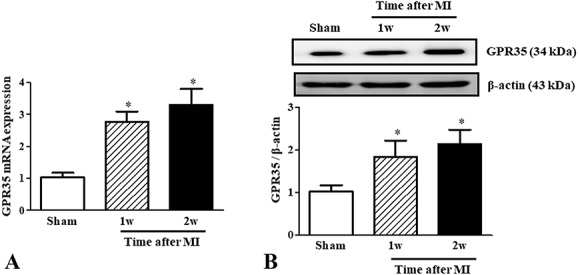
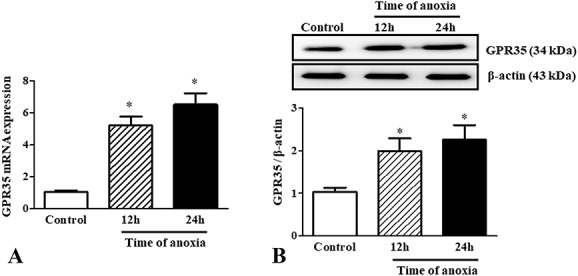
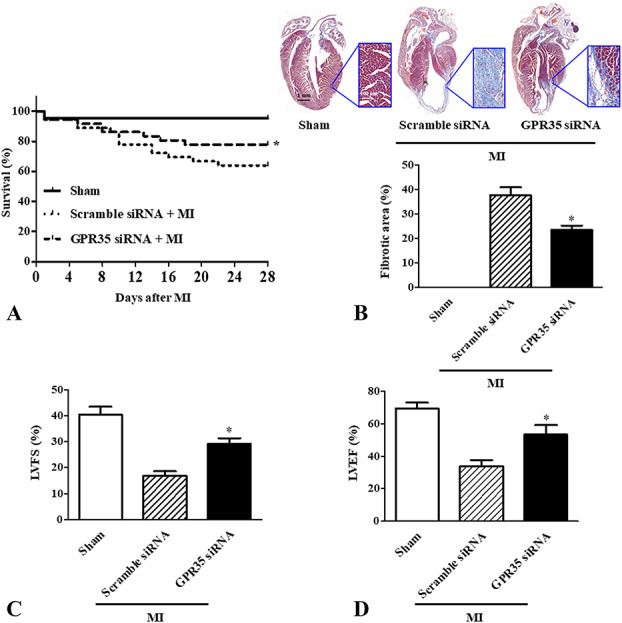
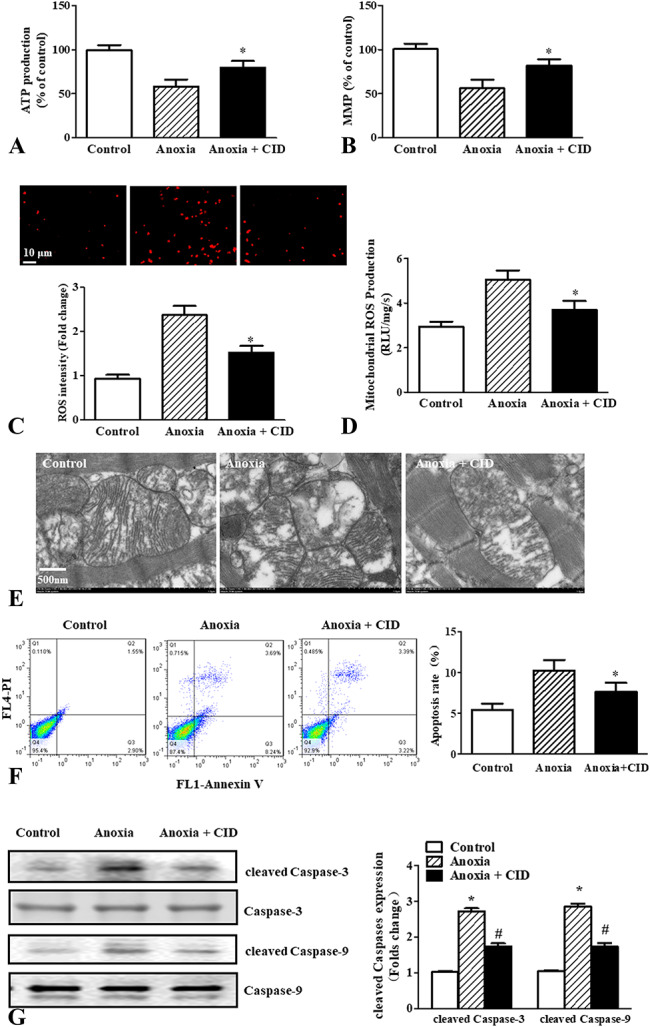
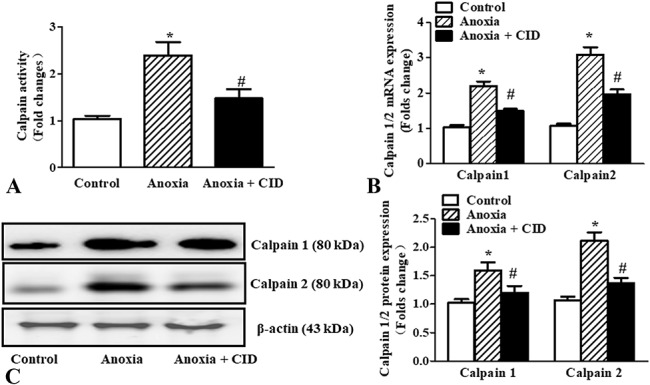
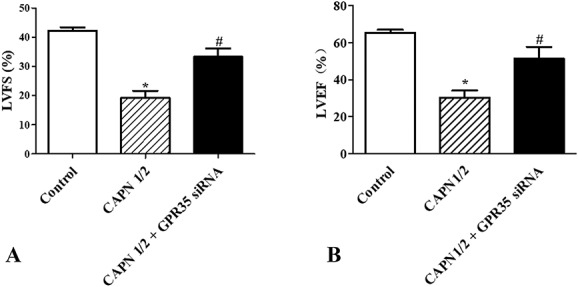
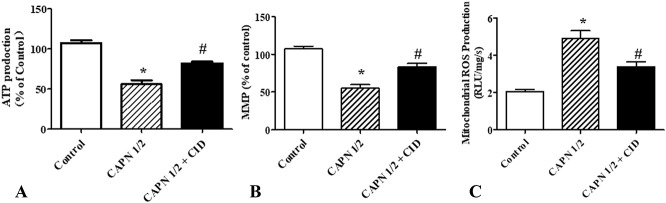
Ischemia and anoxia-induced mitochondrial impairment may be a key factor leading to heart injury during myocardial infarction (MI). Calpain 1 and 2 are involved in the MI-induced mitochondria injury. G protein-coupled receptor 35 (GPR35) could be triggered by hypoxia. Whether or not GPR35 regulates calpain 1/2 in the pathogenesis of MI is still unclear. In this study, we determined that MI increases GPR35 expression in myocardial tissue. Suppression of GPR35 protects heart from MI injury in mice through reduction of reactive oxygen species activity and mitochondria-dependent apoptosis. Further studies show that GPR35 regulates calpain 1/2. Suppression of GPR35 reduces the expression and activity of calpain 1/2, and alleviates calpain 1/2-associated mitochondrial injury to preserve cardiac function. Based on these data, we conclude that a functional inhibition of GPR35 downregulates calpain 1/2 and contributes to maintenance of cardiac function under pathologic conditions with mitochondrial disorder. In conclusion, our study showed that the identified regulation by GPR35 of calpain 1/2 has important implications for the pathogenesis of MI. Targeting the action of GPR35 and calpain 1/2 in mitochondria presents a potential therapeutic intervention for MI.
Overview
The claims and statistics of this paper haven’t been checked yet.
Free: it reads the open-access text and checks the first 5 claims that cite a source we can check. Create a free account to check every claim.
Integrity signals
Registry
Cites
Statistics
Figures
Verification
Claims the paper makes
The claims and statistics of this paper haven’t been checked yet.
Free: it reads the open-access text and checks the first 5 claims that cite a source we can check. Create a free account to check every claim.
Claims other papers make about this one
Each is checked against this paper’s own text: does it say what the citing paper says it does?
The cited source says what the claim attributes to it.
In the citing paper
“G protein-coupled receptor kinase 2 (GRK2) was reported to act as a gatekeeper of mitochondrial function in the heart, and the inhibition of G protein-coupled receptor 35 (GPR35) preserved mitochondrial function after myocardial infarction (Chen et al., 2020; Sorriento et al., 2019).”
From Comprehensive Multi-omics Analysis Reveals Mitochondrial Stress as a Central Biological Hub for Spaceflight Impact (2020) · cites this paper as Chen et al., 2020
Self-check
Percentages, sums and reported differences re-computed from the paper’s own numbers.
The self-check needs the paper’s full text.
Citations
Cites
GOLL, D. E., THOMPSON, V. F., LI, H., WEI, W., & CONG, J. (2003) · Physiological Reviews · doi:10.1152/physrev.00029.2002 · Cited by 2,829
A Novel and Efficient Model of Coronary Artery Ligation and Myocardial Infarction in the Mouse
Gao, E., Lei, Y. H., Shang, X., Huang, Z. M., Zuo, L., Boucher, M., Fan, Q., Chuprun, J. K., Ma, X. L., & Koch, W. J. (2010) · Circulation Research · doi:10.1161/circresaha.110.223925 · Cited by 760
Calcium and mitochondria in the regulation of cell death
Orrenius, S., Gogvadze, V., & Zhivotovsky, B. (2015) · Biochemical and Biophysical Research Communications · doi:10.1016/j.bbrc.2015.01.137 · Cited by 526
Mitochondrial Fusion is Essential for Organelle Function and Cardiac Homeostasis
Chen, Y., Liu, Y., & Dorn, G. W. (2011) · Circulation Research · doi:10.1161/circresaha.111.258723 · Cited by 505
Cao, G., Xing, J., Xiao, X., Liou, A. K. F., Gao, Y., Yin, X.-M., Clark, R. S. B., Graham, S. H., & Chen, J. (2007) · The Journal of Neuroscience · doi:10.1523/jneurosci.2826-07.2007 · Cited by 303
Chen, Q., Moghaddas, S., Hoppel, C. L., & Lesnefsky, E. J. (2008) · American Journal of Physiology-Cell Physiology · doi:10.1152/ajpcell.00211.2007 · Cited by 299
Zhou, Y.-Y., Wang, S.-Q., Zhu, W.-Z., Chruscinski, A., Kobilka, B. K., Ziman, B., Wang, S., Lakatta, E. G., Cheng, H., & Xiao, R.-P. (2000) · American Journal of Physiology-Heart and Circulatory Physiology · doi:10.1152/ajpheart.2000.279.1.h429 · Cited by 280
Calpain and Mitochondria in Ischemia/Reperfusion Injury
Chen, M., Won, D.-J., Krajewski, S., & Gottlieb, R. A. (2002) · Journal of Biological Chemistry · doi:10.1074/jbc.m204951200 · Cited by 270
Tahrir, F. G., Langford, D., Amini, S., Mohseni Ahooyi, T., & Khalili, K. (2019) · Journal of Cellular Physiology · doi:10.1002/jcp.27597 · Cited by 215
Ni, R., Zheng, D., Xiong, S., Hill, D. J., Sun, T., Gardiner, R. B., Fan, G., Lu, Y., Abel, E. D., Greer, P. A., et al. (2015) · Diabetes · doi:10.2337/db15-0963 · Cited by 159
Cited by
da Silveira, W. A., Fazelinia, H., Rosenthal, S. B., Laiakis, E. C., Kim, M. S., Meydan, C., Kidane, Y., Rathi, K. S., Smith, S. M., Stear, B., et al. (2020) · Cell · doi:10.1016/j.cell.2020.11.002 · Cited by 402
“Interesting, G protein-coupled receptor kinase 2 (GRK2) was reported to act as a gatekeeper of mitochondrial function in the heart, and the inhibition of G protein-coupled receptor 35 (GPR35) preserved mitochondrial function after myocardial infarction (Chen et al., 2020; Sorriento et al., 2019).”
Korbecki, J., Kojder, K., Kapczuk, P., Kupnicka, P., Gawrońska-Szklarz, B., Gutowska, I., Chlubek, D., & Baranowska-Bosiacka, I. (2021) · International Journal of Molecular Sciences · doi:10.3390/ijms22020843 · Cited by 273
“However, experiments on myocytes have shown that chronic hypoxia increases the expression of CXCR8 in a HIF-1-dependent process [292,293].”
BackgroundMitochondrial remodeling and ischemic protection by G protein–coupled receptor 35 agonists
Wyant, G. A., Yu, W., Doulamis, I. P., Nomoto, R. S., Saeed, M. Y., Duignan, T., McCully, J. D., & Kaelin, W. G. (2022) · Science · doi:10.1126/science.abm1638 · Cited by 121
Therapeutic Opportunities and Challenges in Targeting the Orphan G Protein-Coupled Receptor GPR35
Quon, T., Lin, L., Ganguly, A., Tobin, A. B., & Milligan, G. (2020) · ACS Pharmacology & Translational Science · doi:10.1021/acsptsci.0c00079 · Cited by 80
Targeted inhibition of calpain in mitochondria alleviates oxidative stress-induced myocardial injury
Zheng, D., Cao, T., Zhang, L., Fan, G., Qiu, J., & Peng, T. (2020) · Acta Pharmacologica Sinica · doi:10.1038/s41401-020-00526-y · Cited by 51
Calpain-Mediated Mitochondrial Damage: An Emerging Mechanism Contributing to Cardiac Disease
Zhang, M., Wang, G., & Peng, T. (2021) · Cells · doi:10.3390/cells10082024 · Cited by 53
“SNJ-1945, an oral calpain inhibitor, ameliorates mitochondrial dysfunction, reduces myocardial fibrosis and improves cardiac function in mice subjected to myocardial infarction [28].”
BackgroundMetabolite G-Protein Coupled Receptors in Cardio-Metabolic Diseases
Strassheim, D., Sullivan, T., Irwin, D. C., Gerasimovskaya, E. V., Lahm, T., Klemm, D. J., Dempsey, E. C., Stenmark, K. R., & Karoor, V. (2021) · Cells · doi:10.3390/cells10123347 · Cited by 24
Calpain: The regulatory point of cardiovascular and cerebrovascular diseases
Zhang, X., Zheng, Y., Wang, Z., Zhang, G., Yang, L., Gan, J., & Jiang, X. (2024) · Biomedicine & Pharmacotherapy · doi:10.1016/j.biopha.2024.117272 · Cited by 17
Recent advances in GPR35 pharmacology; 5-HIAA serotonin metabolite becomes a ligand
Im, D. (2023) · Archives of Pharmacal Research · doi:10.1007/s12272-023-01449-y · Cited by 12
Role of orphan G-protein coupled receptors in tissue ischemia: A comprehensive review
Bajestani, A. K., Alavi, M. S., Etemad, L., & Roohbakhsh, A. (2024) · European Journal of Pharmacology · doi:10.1016/j.ejphar.2024.176762 · Cited by 14
Kynurenic acid, a key L-tryptophan-derived metabolite, protects the heart from an ischemic damage
Bigelman, E., Pasmanik‐Chor, M., Dassa, B., Itkin, M., Malitsky, S., Dorot, O., Pichinuk, E., Levin‐Zaidman, S., Dezorella, N., Gross, A., et al. (2023) · PLoS ONE · doi:10.1371/journal.pone.0275550 · Cited by 12
“Furthermore, it has been suggested that an in vivo administration of a siRNA to GPR35 enhances cardiac function following an acute MI through reduction of reactive oxygen species activity and mitochondria-dependent apoptosis [56].”
BackgroundResultBu, Y., Liu, Y., Liu, M., Yan, C., Wang, J., Wu, H., Song, H., Zhang, D., Xu, K., Liu, D., et al. (2024) · JACC Basic to Translational Science · doi:10.1016/j.jacbts.2024.05.006 · Cited by 13
Meng, T., Zhang, Y., Fu, S., & Ma, S. (2025) · Research · doi:10.34133/research.0846 · Cited by 16
“Notably, Gpr35 expression is increased under inflammatory and hypoxic conditions, such as myocardial infarction and inflammatory bowel disease [ 21 , 22 ].”
Nógrádi-Halmi, D., Erdélyi-Furka, B., Csóré, D., Plechl, É., Igaz, N., Juhász, L., Poles, M. Z., Nógrádi, B., Patai, R., Polgár, T. F., et al. (2025) · Biomolecules · doi:10.3390/biom15101481 · Cited by 5
“However, controversial observations have been made, with reports that the suppression of GPR35 protects the heart from ischemic injury via reducing oxidative stress and mitochondria-dependent intrinsic apoptosis [60].”
Wang, K., Tao, L., Zhang, Q., Liu, L., Shan, B., Zhao, P., & Li, J. (2026) · Phytomedicine · doi:10.1016/j.phymed.2026.158006 · Cited by 3
Advances in Orphan G-Protein-Coupled Receptors Associated with Heart Failure
袁, 鑫. (2022) · Advances in Clinical Medicine · doi:10.12677/acm.2022.123257
Wen, S., Aki, T., & Unuma, K. (2025) · Legal Medicine · doi:10.1016/j.legalmed.2025.102651
Ye, S., Sun, H., Yang, C., & Lu, F. (2026) · International Journal of General Medicine · doi:10.2147/ijgm.s597913
“The optimism-corrected AUC for the combination model was 0.854 (95% CI: 0.811–0.897), representing a decrease of 0.009 from the original AUC of 0.863, with an optimism of 1.0%, indicating good model stability.”
InfluentialImmunopharmacology of GPR35: Context-driven signaling and functional plasticity in host defense
Deng, H., Lu, D., Wang, Q., Zhang, X., Xia, M., & Otkur, W. (2026) · Biochemical Pharmacology · doi:10.1016/j.bcp.2026.118156
Metadata
- Authors
- Chen, K., He, L., Li, Y., Li, X., Qiu, C., Pei, H., & Yang, D.
- Affiliations
- Army Medical University (CN)
- Chengdu Military General Hospital (CN)
- Department of Cardiology, The People's Hospital of Chaotian District in Guangyuan, Guangyuan, Sichuan, P.R. China.
- Corresponding author
- Chen, Ken
- He, Lei
- Li, Xiuchuan
- Qiu, Chenming
- Pei, Haifeng
- Yang, Dachun
- Venue
- Journal of Cardiovascular Pharmacology
- Published
- 2020-04-15
- Volume
- 75
- Issue
- 6
- Pages
- 556-563
- ISSN
- 0160-2446 (ISSN-L)
- PMC
- PMC7266003
- OpenAlex
- W3012231107
- Semantic Scholar
- 78bc759260caba94b32f371961894b6a3de1291e
- Cited by
- 19
- References
- 39
- Citations by year
- 2026: 3 · 2025: 3 · 2024: 3 · 2023: 2 · 2022: 2 · 2021: 3 · 2020: 3
- FWCI
- 1.25
- Type
- journal article
- Language
- en
- Open access
- hybrid
- doi.org
- Licence
- Locations
- Journal of Cardiovascular Pharmacology (publishedVersion, cc-by-nc-nd)
- PubMed Central (publishedVersion, cc-by-nc-nd)
- PubMed (publishedVersion)
- Funders
- National Natural Science Foundation of China (81470396, 81770299)
- Topics
- Life Sciences › Biochemistry, Genetics and Molecular Biology › Cell Biology › Calpain Protease Function and Regulation
- Health Sciences › Medicine › Cardiology and Cardiovascular Medicine › Cardiac Ischemia and Reperfusion
- Life Sciences › Biochemistry, Genetics and Molecular Biology › Molecular Biology › Mitochondrial Function and Pathology
- Keywords
- GPR35, myocardial infarction, mitochondrial dysfunction, ischemia-reperfusion injury, reactive oxygen species, mitochondrial apoptosis, cardiac function, G protein-coupled receptors, therapeutic target
- MeSH terms
- RNAi Therapeutics, Animals, Calpain, Cells, Cultured, Disease Models, Animal, Male, Mice, Inbred C57BL, Mitochondria, Heart, Myocardial Infarction, Signal Transduction, Apoptosis, Reactive Oxygen Species, Oxidative Stress, Myocytes, Cardiac, RNA, Small Interfering, Receptors, G-Protein-Coupled
About these checks
Registry, retraction, Cites and statistics results are computed, not judged, with one exception: a printed reference that no index lists is read once by a model before it counts as a citation error. Claims are extracted by a model and kept only when their quote appears verbatim in the text; each cited source is then checked, with a model’s help, for whether it says what the claim relies on. Those verdicts can be wrong — read the claim’s quote and the cited source before relying on one.
Statistics and arithmetic are recomputed, not judged.
Confidence bands are shown only for fields calibrated on our annotated test set. None is calibrated yet, so no band is shown.
What counts as a claim ›How we measure confidence ›How we check this ›
Are you an author, or do you see a problem with this page? Request a review
Data sources
Bibliographic data: Semantic Scholar, OpenAlex, Crossref.
Contains information from the Semantic Scholar Academic Graph Datasets, made available under the ODC Attribution License (ODC-BY 1.0).
Semantic Scholar’s data is described in: Kinney, R., et al. (2023). The Semantic Scholar Open Data Platform. arXiv:2301.10140.
