

Liver macrophages revisited: The expanding universe of versatile responses in a spatiotemporal context
Open accessThe DOI matches its Crossref record; 99 of the 99 references it cites were found in a registry or an index.
Abstract
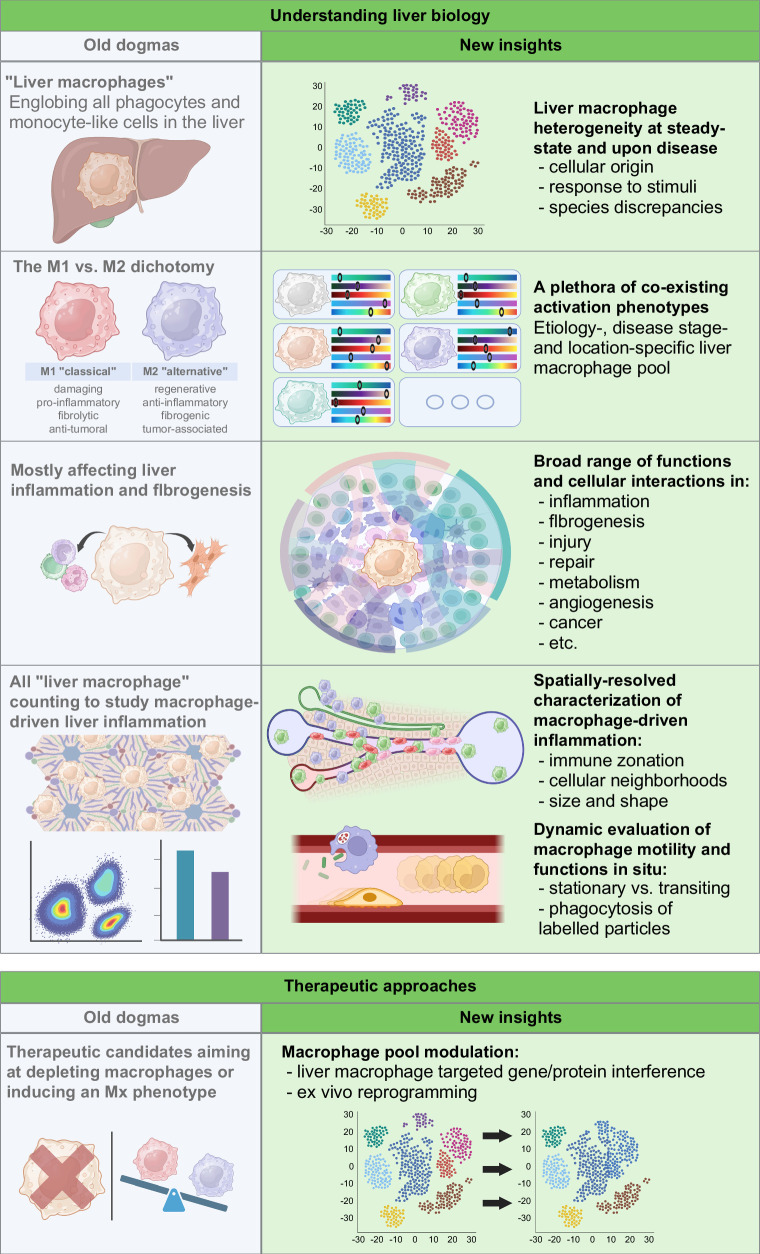
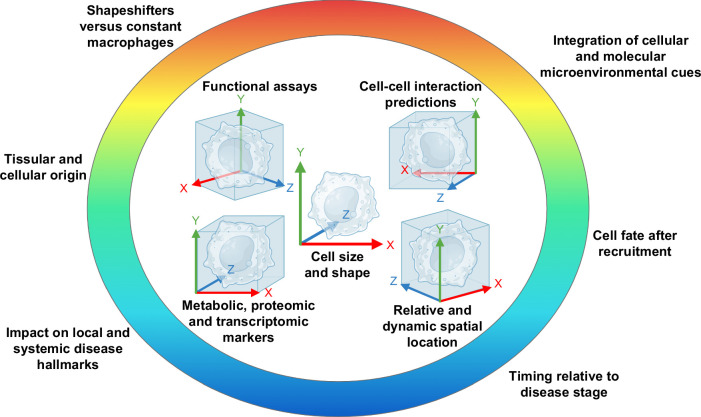
The liver is a vital organ that continuously adapts to a wide and dynamic diversity of self-antigens and xenobiotics. This involves the active contribution of immune cells, particularly by the liver-resident macrophages, the Kupffer cells (KCs), which exert a variety of central functions in liver homeostasis and disease. As such, KCs interact with their microenvironment to shape the hepatic cellular landscape, control gut-derived signal integration, and modulate metabolism. On injury, the rapid recruitment of bone marrow monocyte-derived macrophages alters this status quo and, when unrestrained, drastically compromises liver homeostasis, immune surveillance, and tissue organization. Several factors determine the functional roles of liver macrophages in these processes, such as their ontogeny, activation/polarization profile and, importantly, spatial distribution within the liver. Loss of tolerance and adaptability of the hepatic immune environment may result in persistent inflammation, hepatic fibrosis, cirrhosis, and a tumorigenic niche promoting liver cancer. In this review, we aim at providing the most recent breakthroughs in our understanding of liver macrophage biology, particularly their diversity and adaptability in the hepatic spatiotemporal context, as well as on potential therapeutic interventions that may hold the key to tackling remaining clinical challenges of varying etiologies in hepatology.
Overview
The claims and statistics of this paper haven’t been checked yet.
Free: it reads the open-access text and checks the first 5 claims that cite a source we can check. Create a free account to check every claim.
Integrity signals
Registry
Cites
Statistics
Figures
Verification
Claims the paper makes
The claims and statistics of this paper haven’t been checked yet.
Free: it reads the open-access text and checks the first 5 claims that cite a source we can check. Create a free account to check every claim.
Claims other papers make about this one
Each is checked against this paper’s own text: does it say what the citing paper says it does?
The cited source says what the claim attributes to it.
In the citing paper
“liver macrophages have emerged as key regulators of liver homeostasis and disease (6, 7).”
From Macrophage duality in liver diseases: heterogeneity, plasticity, and the quest for precision therapeutics (2026) · cites this paper as [7]
Self-check
Percentages, sums and reported differences re-computed from the paper’s own numbers.
The self-check needs the paper’s full text.
Citations
Cites
Inference and analysis of cell-cell communication using CellChat
Jin, S., Guerrero-Juarez, C. F., Zhang, L., Chang, I., Ramos, R., Kuan, C.-H., Myung, P., Plikus, M. V., & Nie, Q. (2021) · Nature Communications · doi:10.1038/s41467-021-21246-9 · Cited by 8,409
Obesity induces a phenotypic switch in adipose tissue macrophage polarization
Lumeng, C. N., Bodzin, J. L., & Saltiel, A. R. (2007) · Journal of Clinical Investigation · doi:10.1172/jci29881 · Cited by 4,664 · cited 1×
“[26,27] A variety of granulomas can be identified, including lipogranulomas associated with liver steatosis and nonspecific micro-granulomas.”
BackgroundEfremova, M., Vento-Tormo, M., Teichmann, S. A., & Vento-Tormo, R. (2020) · Nature Protocols · doi:10.1038/s41596-020-0292-x · Cited by 3,449
Resolving the fibrotic niche of human liver cirrhosis at single-cell level
Ramachandran, P., Dobie, R., Wilson-Kanamori, J. R., Dora, E. F., Henderson, B. E. P., Luu, N. T., Portman, J. R., Matchett, K. P., Brice, M., Marwick, J. A., et al. (2019) · Nature · doi:10.1038/s41586-019-1631-3 · Cited by 1,784
Self-citationCellChat for systematic analysis of cell–cell communication from single-cell transcriptomics
Jin, S., Plikus, M. V., & Nie, Q. (2025) · Nature Protocols · doi:10.1038/s41596-024-01045-4 · Cited by 1,448
Lipid-associated macrophages control metabolic homeostasis in a Trem2-dependent manner
Jaitin, D. A., Adlung, L., Thaiss, C. A., Weiner, A., Li, B., Descamps, H., Lundgren, P., Bleriot, C., Liu, Z., Deczkowska, A., et al. (2019) · Cell · doi:10.1016/j.cell.2019.05.054 · Cited by 1,377 · cited 1×
“[34] Other authors defined these phagocytes as scar-associated macrophages and notably identified them through their high expression in CD9 and trigger-ing-receptor-expressed-on-myeloid-cells-2 ( TREM2 ) in human disease.”
BackgroundSpatial proteogenomics reveals distinct and evolutionarily conserved hepatic macrophage niches
Guilliams, M., Bonnardel, J., Haest, B., Vanderborght, B., Wagner, C., Remmerie, A., Bujko, A., Martens, L., Thoné, T., Browaeys, R., et al. (2022) · Cell · doi:10.1016/j.cell.2021.12.018 · Cited by 985 · cited 2×
“[ 5,6 ] Yet, alternative cellular origins of liver macrophages remain to be demonstrated, particularly in view of potential interspecies peculiarities.”
BackgroundBone marrow-derived monocytes give rise to self-renewing and fully differentiated Kupffer cells
Scott, C. L., Zheng, F., De Baetselier, P., Martens, L., Saeys, Y., De Prijck, S., Lippens, S., Abels, C., Schoonooghe, S., Raes, G., et al. (2016) · Nature Communications · doi:10.1038/ncomms10321 · Cited by 860
Gut-liver axis: Pathophysiological concepts and clinical implications
Tilg, H., Adolph, T. E., & Trauner, M. (2022) · Cell Metabolism · doi:10.1016/j.cmet.2022.09.017 · Cited by 843
Bonnardel, J., T’Jonck, W., Gaublomme, D., Browaeys, R., Scott, C. L., Martens, L., Vanneste, B., De Prijck, S., Nedospasov, S. A., Kremer, A., et al. (2019) · Immunity · doi:10.1016/j.immuni.2019.08.017 · Cited by 631 · cited 1×
“[11] 12 – 14] Yet, it has been demonstrated that those KC-like macrophages differ from KC, in particular by inducing a stronger proinflammatory response on liver rechallenge and by altering the liver free fatty acid metabolism by limiting lipid toxicity through enhanced triglyceride storage in mice.”
Background
Cited by
Fibrosis: cross-organ biology and pathways to development of innovative drugs
Rieder, F., Nagy, L. E., Maher, T. M., Distler, J. H. W., Kramann, R., Hinz, B., & Prunotto, M. (2025) · Nature Reviews Drug Discovery · doi:10.1038/s41573-025-01158-9 · Cited by 154
Antifibrotic therapies for metabolic dysfunction-associated steatotic liver disease
Schwabe, R. F., Tacke, F., Sugimoto, A., & Friedman, S. L. (2025) · JHEP Reports · doi:10.1016/j.jhepr.2025.101421 · Cited by 70
Self-citationde Zawadzki, A., Leeming, D. J., Sanyal, A. J., Anstee, Q. M., Schattenberg, J. M., Friedman, S. L., Schuppan, D., & Karsdal, M. A. (2025) · Journal of Hepatology · doi:10.1016/j.jhep.2025.02.039 · Cited by 51
Liu, H., Lefere, S., Guillot, A., Zheng, M., & Tacke, F. (2025) · Hepatology · doi:10.1097/hep.0000000000001417 · Cited by 44
Self-citationSharma, S., Tiwari, N., & Tanwar, S. S. (2025) · Naunyn-Schmiedeberg s Archives of Pharmacology · doi:10.1007/s00210-025-04069-z · Cited by 35
Metabolic reprogramming of immune cells in MASH
Ma, C., Wang, S., Dong, B., & Tian, Y. (2025) · Hepatology · doi:10.1097/hep.0000000000001371 · Cited by 36
Dissecting the mechanisms of MASLD fibrosis in the era of single-cell and spatial omics
Colella, F., Henderson, N. C., & Ramachandran, P. (2025) · Journal of Clinical Investigation · doi:10.1172/jci186421 · Cited by 31
Zonation, Zonation, Zonation: The Real Estate of the Liver
Yasaka, T. M., Kim, C., Meadows, V., & Monga, S. P. (2025) · Annual Review of Pathology Mechanisms of Disease · doi:10.1146/annurev-pathmechdis-042624-091820 · Cited by 30
Liu, H., Yin, G., Franco Leonardi, B., Lan, T., Ait Ahmed, Y., Berger, H., Kohlhepp, M. S., Amiridze, N., Martagón Calderón, N., Frau, C., et al. (2025) · Gut · doi:10.1136/gutjnl-2024-334425 · Cited by 23
Self-citationAdvances in intrahepatic and extrahepatic vascular dysregulations in cirrhotic portal hypertension
Li, Y., Zhu, B., Shi, K., Lu, Y., Zeng, X., Li, Y., Zhang, Q., Feng, Y., & Wang, X. (2025) · Frontiers in Medicine · doi:10.3389/fmed.2025.1515400 · Cited by 23
Ahamed, F., Eppler, N., Jones, E., & Zhang, Y. (2024) · Livers · doi:10.3390/livers4030033 · Cited by 22
Lin, A., Xiong, M., Tang, B., Jiang, A., Shen, J., Liu, Z., Cheng, Q., Zhang, J., & Luo, P. (2025) · Hepatology International · doi:10.1007/s12072-025-10838-y · Cited by 21
Engineering macrophages for cancer immunotherapy: emerging insights and therapeutic potential
Block, A. V., Liu, X., Zhang, D., & Adebowale, K. (2026) · npj Biomedical Innovations. · doi:10.1038/s44385-026-00072-y · Cited by 18
Macrophage heterogeneity and plasticity in liver injury and repair mechanisms
Zhang, T., Horn, P., Peiseler, M., & Tacke, F. (2025) · Stem Cells · doi:10.1093/stmcls/sxaf072 · Cited by 16
Self-citationReviewing the function of macrophages in liver disease
Chen, L., Guillot, A., & Tacke, F. (2025) · Expert Review of Gastroenterology & Hepatology · doi:10.1080/17474124.2025.2508963 · Cited by 17
Self-citationThe Role of Galectin-3 in Liver Inflammation and Fibrosis
Lurje, I., Biegel, D. K., Zhang, I., & Tacke, F. (2026) · Journal of Inflammation Research · doi:10.2147/jir.s572637 · Cited by 16
Self-citationThe emerging role of alternatively activated macrophages to treat acute liver injury
Humphries, C., Addison, M., Dear, J. W., & Forbes, S. J. (2024) · Archives of Toxicology · doi:10.1007/s00204-024-03892-2 · Cited by 15
Death-associated protein kinase 1: a double-edged sword in health and disease
Zhang, X., Assaraf, Y. G., & Lin, Y. (2025) · Frontiers in Immunology · doi:10.3389/fimmu.2025.1593394 · Cited by 15
Engineering liver disease models in vitro: emerging trends and innovations
Rao, Q., Wang, L., Tacke, F., Guillot, A., & Ma, N. (2025) · eGastroenterology · doi:10.1136/egastro-2025-100279 · Cited by 10
Self-citationStrategies for Nanomaterials to Circumvent the Mononuclear Phagocyte System
Fu, B., Chen, D., Wang, G., Hu, H., & Zhao, M. (2026) · Advanced Healthcare Materials · doi:10.1002/adhm.71135 · Cited by 10
Papachristoforou, E., Kong, K., Colella, F., Tam, J., Luft, J., Parhar, R., Liang, Y., McCafferty-Brown, A., Finney, G. E., Rao, K., et al. (2026) · Nature Genetics · doi:10.1038/s41588-026-02774-w · Cited by 9
Chen, S., Zeng, Q., Cai, X., Xue, J., Yin, G., Song, P., Tang, L., Klein, C., Tacke, F., Guillot, A., et al. (2024) · International Journal of Biological Sciences · doi:10.7150/ijbs.98362 · Cited by 8
Self-citationAdvancing liver metabolic zonation with single-cell and spatial omics
Fujimoto, M., & Tanaka, T. (2025) · Endocrine Journal · doi:10.1507/endocrj.ej25-0140 · Cited by 8
Metabolic reprogramming in fibrosis-related diseases: underlying mechanisms and therapeutics
Feng, Y., Zhang, X., Wang, X., & Chen, C. (2026) · Molecular Biomedicine · doi:10.1186/s43556-026-00490-9 · Cited by 7
Current therapeutic landscape and future treatment perspectives of MASH
Gallage, S., Govaere, O., Anstee, Q. M., Shulman, G. I., Tacke, F., & Heikenwälder, M. F. (2026) · Nature · doi:10.1038/s41586-026-10672-8 · Cited by 7
Self-citationLi, Y. C., Hu, Y., He, Y. M., Yang, Y., Xue, D., Xue, E., Jia, J., Zhang, W., & Wang, J. (2026) · Frontiers in Immunology · doi:10.3389/fimmu.2026.1793092 · Cited by 7
Pi, Y., Wang, Y., Guo, Q., Zheng, W., Zhou, H., Deng, L., Xu, N., & Song, H. (2026) · International Immunopharmacology · doi:10.1016/j.intimp.2026.116162 · Cited by 4
Kupffer cells: Orchestrators of liver physiology
Qin, C., Chen, Y., & Tang, L. (2026) · Liver Research · doi:10.1016/j.livres.2026.01.004 · Cited by 4
The new era of MASH pharmacotherapy: a comprehensive review of FDA-approved and emerging agents
Qasim, A., Alataa, R., Veena, F., & Shehi, E. (2026) · Frontiers in Gastroenterology · doi:10.3389/fgstr.2026.1850915 · Cited by 4
Jiang, C., Ding, W., Hu, Y., & Yang, C. (2025) · Immunity Inflammation and Disease · doi:10.1002/iid3.70243 · Cited by 3
Lucibello, G., Ursino, G., Teixeira, P. D. S., Zahorán, S., Fanuele, F., Kallikourdis, M., Visentin, F., Veyrat‐Durebex, C., Widmer, A., Wu, Y., et al. (2025) · Endocrinology · doi:10.1210/endocr/bqaf131 · Cited by 2
Olson, K. E., Krishnan, A., Splinter, P. L., Wixom, A. Q., Guicciardi, M. E., Jalan‐Sakrikar, N., Azad, A. I., LaRusso, N. F., & Gores, G. J. (2025) · American Journal of Physiology-Gastrointestinal and Liver Physiology · doi:10.1152/ajpgi.00243.2025 · Cited by 2
Liu, Z., Liu, J., Xu, S., Zhong, Y., He, K., Lu, Z., Zheng, Y., Zhang, Y., Guo, Q., & Chu, H. (2026) · Frontiers in Immunology · doi:10.3389/fimmu.2026.1906870 · Cited by 2
Chen, L., Chen, Y., Zhao, M., Yang, X., Sutte, K., Lu, M., Chen, J., Zheng, X., Yang, D., & Liu, J. (2026) · Frontiers in Immunology · doi:10.3389/fimmu.2026.1814879 · Cited by 1
Liver biopsy and acute hepatology in intensive care unit patients
Mätzold, L., Roßner, F., & Tacke, F. (2025) · Expert Review of Gastroenterology & Hepatology · doi:10.1080/17474124.2025.2521346 · Cited by 1
Self-citationJerez, S., Cooper, S. A., Yaqoob, U., Kalaiger, M. F., Anwar, A. A., Wong, M., Arif, B., Doskey, L. C., Hernández‐Tejero, M., Sherman, W. A., et al. (2026) · JCI Insight · doi:10.1172/jci.insight.193172 · Cited by 1
Obesity history exacerbates liver macrophage-mediated fibrosis via IGFBP7
Soedono, S., Chun, S., Vo, D. H. N., Julietta, V., Chang, J., Oh, B., Lumeng, C. N.-K., & Cho, K. W. (2026) · Biochimica et Biophysica Acta (BBA) - Molecular Basis of Disease · doi:10.1016/j.bbadis.2026.168322 · Cited by 1
Liver immunology: new insights from cutting-edge technologies
Guillot, A., & Gao, B. (2025) · Cellular and Molecular Immunology · doi:10.1038/s41423-025-01342-2 · Cited by 1
Self-citationLiver Macrophage Changes during Early Adaptation to Alcohol Exposure
Yuquimpo, K., Averilla, J. N., Li, Z., Ghosh, P., Rooge, S. B., Ruiz, I. A. P., Dunn, W., Gunewardena, S., Wozniak, A. L., Tikhanovich, I., et al. (2025) · American Journal Of Pathology · doi:10.1016/j.ajpath.2025.10.004
Macrophage Heterogeneity in Liver Ischemia-Reperfusion InjuryPreprint
Zhai, Y., Wang, Y., Zhong, C., Chin, J. L., Xia, N. L., Kao, Y.-C., Huey, T., El-Shewy, H., van der Windt, D. J., Helke, K. L., et al. (2025) · Research Square · doi:10.21203/rs.3.rs-8347196/v1
The biliary tree: A new frontier in mucosal immunology?
Guo, Y., Chouik, Y., Hao, Y., Kohlhepp, M. S., & Guillot, A. (2026) · Mucosal Immunology · doi:10.1016/j.mucimm.2026.04.006
Self-citationYang, J., Zhou, H., Ma, X., Zhou, X., Wei, S., ZHAO, Y., & Li, C. (2026) · Frontiers in Immunology · doi:10.3389/fimmu.2026.1871133
Guo, S., Liu, B., Li, H., Yu, Y., & Xu, J. (2026) · Frontiers in Nutrition · doi:10.3389/fnut.2026.1878927
Zhang, H., Shen, T., Fan, R., Xia, F., Cai, S., Yang, J., Jiang, J., Hu, Y., Liu, Y., 涂宏蕾, et al. (2026) · Cancer Imaging · doi:10.1186/s40644-026-01102-z
Mao, F., & Shan, K. (2026) · Frontiers in Medicine · doi:10.3389/fmed.2026.1899423
Correlation Between TNF-α Levels and APRI Score with Ejection in Hepatic Cirrhosis
Thaher, M., Pramana, T. Y., Sulastomo, H., Harioputro, D. R., & Pamungkasari, E. P. (2026) · GEMA Lingkungan Kesehatan · doi:10.36568/gelinkes.v24i1.454
Taurocholic acid attenuates hepatic inflammation in MASH and modulates the PPARγ/NF-κB axis
Zhu, Y., San, J., Ouyang, G., Liu, Y., Li, W., Yang, J., & Wu, G. (2026) · European Journal of Pharmacology · doi:10.1016/j.ejphar.2026.179395
Liu, J., 辛永宁, & Bi, Y. (2026) · Hepatobiliary Communications · doi:10.1016/j.hbc.2026.100016
You, H., Minlie, L., Lin, H., Liu, Y., Huang, X., & Gong, Y. (2026) · Journal of Microbiology and Biotechnology · doi:10.4014/jmb.2602.02040
Jafari, A., Vazifedust, S., Harmileh, K. M., Karbasi, F., & Mazloomi, E. (2026) · Life Sciences · doi:10.1016/j.lfs.2026.124771
Huang, X., Shi, Y., Qi, L., Du, Y., Li, B., Ren, B., Liu, M., & Hu, X. (2026) · Frontiers in Medicine · doi:10.3389/fmed.2026.1972800
Metadata
- Authors
- Guillot, A., & Tacke, F.
- Affiliations
- Charité – Universitätsmedizin Berlin (DE)
- Corresponding author
- Tacke, Frank
- Venue
- Hepatology Communications
- Published
- 2024-07
- Volume
- 8
- Issue
- 7
- ISSN
- 2471-254X (ISSN-L)
- PMC
- PMC11227356
- OpenAlex
- W4400352735
- Semantic Scholar
- 0b283665237c6993f2cebccca75bbd6813c20e50
- Cited by
- 45
- References
- 97
- Citations by year
- 2026: 20 · 2025: 22 · 2024: 3
- FWCI
- 3.24
- Type
- journal article
- Language
- en
- Open access
- gold
- doi.org
- Licence
- Locations
- Hepatology Communications (publishedVersion, cc-by-nc-nd)
- PubMed Central (publishedVersion, cc-by-nc-nd)
- PubMed (publishedVersion)
- Funders
- Bristol-Myers Squibb
- Pfizer
- AstraZeneca
- Sanofi
- Gilead Sciences
- Alnylam Pharmaceuticals
- Deutsche Forschungsgemeinschaft (SFB 1382, DFGTa434/8‐1, SFB/TRR 296, Ta434/8‐1, 403224013)
- Novo Nordisk
- Allergan
- Topics
- Health Sciences › Medicine › Hepatology › Liver physiology and pathology
- Life Sciences › Immunology and Microbiology › Immunology › Immune cells in cancer
- Health Sciences › Medicine › Hepatology › Liver Diseases and Immunity
- Keywords
- Kupffer cells, hepatic macrophages, liver homeostasis, monocyte-derived macrophages, macrophage polarization, spatiotemporal variation, gut-liver axis, liver inflammation, liver fibrosis, liver cancer, macrophage ontogeny, therapeutic interventions
- MeSH terms
- Animals, Homeostasis, Humans, Kupffer Cells, Liver, Macrophages
About these checks
Registry, retraction, Cites and statistics results are computed, not judged, with one exception: a printed reference that no index lists is read once by a model before it counts as a citation error. Claims are extracted by a model and kept only when their quote appears verbatim in the text; each cited source is then checked, with a model’s help, for whether it says what the claim relies on. Those verdicts can be wrong — read the claim’s quote and the cited source before relying on one.
Statistics and arithmetic are recomputed, not judged.
Confidence bands are shown only for fields calibrated on our annotated test set. None is calibrated yet, so no band is shown.
What counts as a claim ›How we measure confidence ›How we check this ›
Are you an author, or do you see a problem with this page? Request a review
Data sources
Bibliographic data: Semantic Scholar, OpenAlex, Crossref.
Contains information from the Semantic Scholar Academic Graph Datasets, made available under the ODC Attribution License (ODC-BY 1.0).
Semantic Scholar’s data is described in: Kinney, R., et al. (2023). The Semantic Scholar Open Data Platform. arXiv:2301.10140.
