

A multisociety Delphi consensus statement on new fatty liver disease nomenclature
Open accessThe DOI matches its Crossref record; 33 of the 34 references it cites were found in a registry or an index.
Abstract
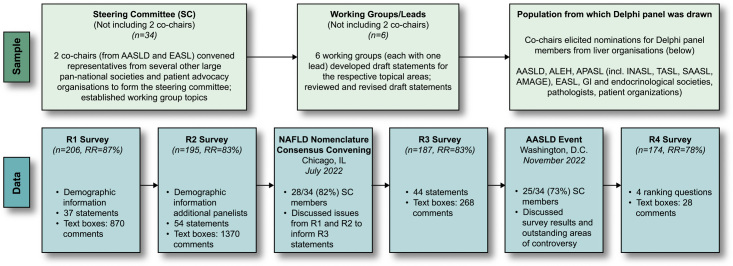
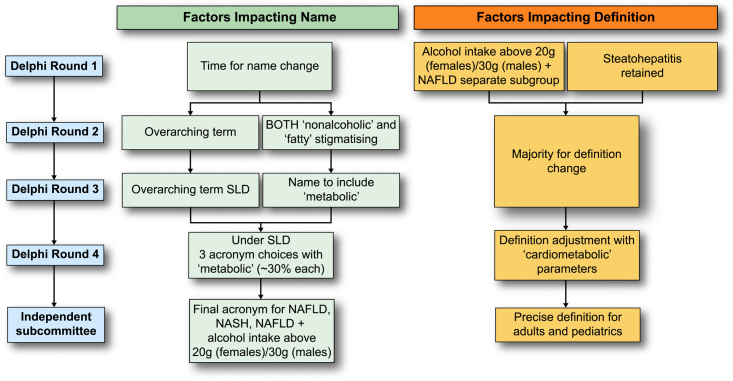
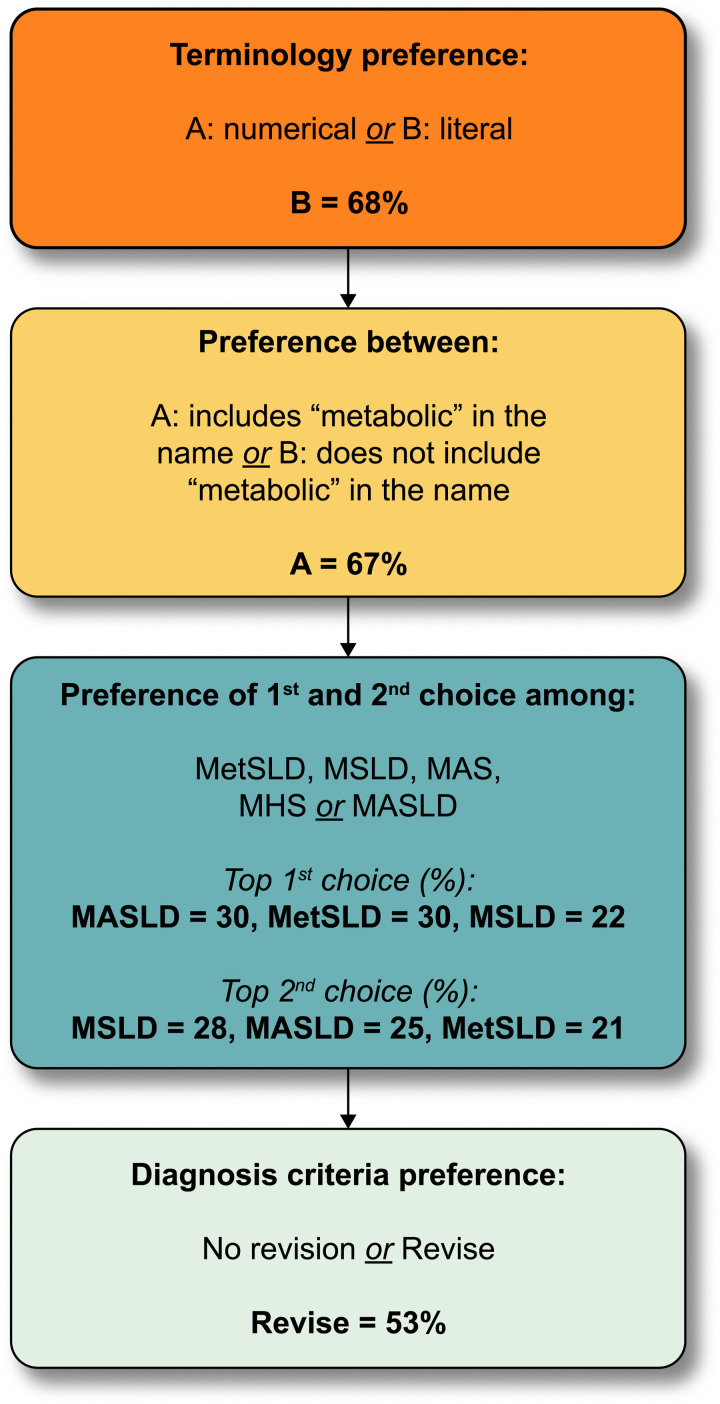
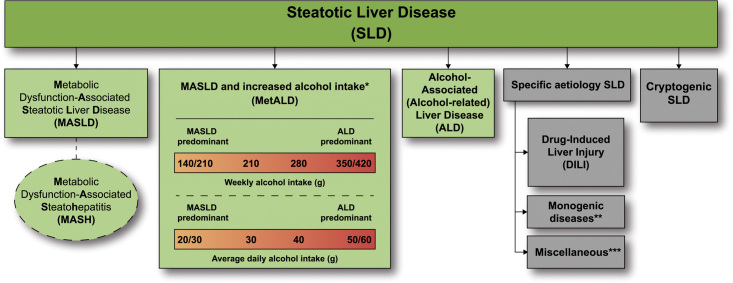
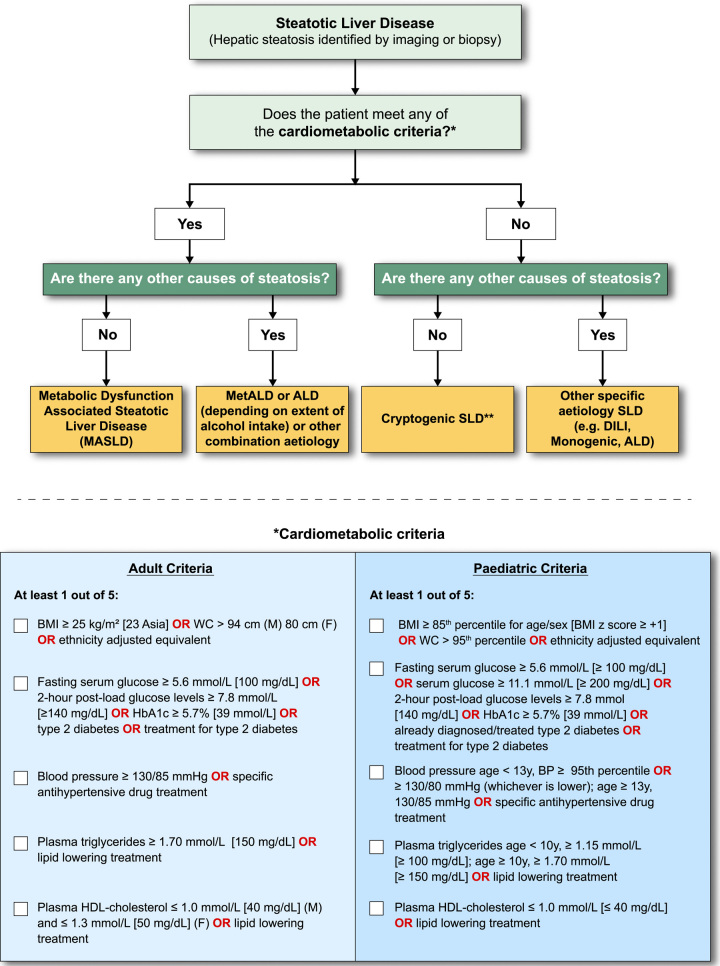
The principal limitations of the terms NAFLD and NASH are the reliance on exclusionary confounder terms and the use of potentially stigmatising language. This study set out to determine if content experts and patient advocates were in favor of a change in nomenclature and/or definition. A modified Delphi process was led by three large pan-national liver associations. The consensus was defined a priori as a supermajority (67%) vote. An independent committee of experts external to the nomenclature process made the final recommendation on the acronym and its diagnostic criteria. A total of 236 panelists from 56 countries participated in 4 online surveys and 2 hybrid meetings. Response rates across the 4 survey rounds were 87%, 83%, 83%, and 78%, respectively. Seventy-four percent of respondents felt that the current nomenclature was sufficiently flawed to consider a name change. The terms “nonalcoholic” and “fatty” were felt to be stigmatising by 61% and 66% of respondents, respectively. Steatotic liver disease was chosen as an overarching term to encompass the various aetiologies of steatosis. The term steatohepatitis was felt to be an important pathophysiological concept that should be retained. The name chosen to replace NAFLD was metabolic dysfunction–associated steatotic liver disease. There was consensus to change the definition to include the presence of at least 1 of 5 cardiometabolic risk factors. Those with no metabolic parameters and no known cause were deemed to have cryptogenic steatotic liver disease. A new category, outside pure metabolic dysfunction–associated steatotic liver disease, termed metabolic and alcohol related/associated liver disease (MetALD), was selected to describe those with metabolic dysfunction–associated steatotic liver disease, who consume greater amounts of alcohol per week (140–350 g/wk and 210–420 g/wk for females and males, respectively). The new nomenclature and diagnostic criteria are widely supported and nonstigmatising, and can improve awareness and patient identification.
Overview
The claims and statistics of this paper haven’t been checked yet.
Free: it reads the open-access text and checks the first 5 claims that cite a source we can check. Create a free account to check every claim.
Integrity signals
Registry
Cites
Statistics
Figures
Verification
Claims the paper makes
The claims and statistics of this paper haven’t been checked yet.
Free: it reads the open-access text and checks the first 5 claims that cite a source we can check. Create a free account to check every claim.
Claims other papers make about this one
Each is checked against this paper’s own text: does it say what the citing paper says it does?
The source backs part of the claim, not all of it — or backs it for a different population, condition or comparison.
In the citing paper
“While ALD and MASLD have different aetiologies, both encompass a spectrum of liver lesions beginning with steatosis but progressing to steatohepatitis (alcohol-induced steatohepatitis; ASH or metabolic dysfunction-associated steatohepatitis; MASH, respectively) and fibrosis in some individuals.”
From The liver as a central "hub" of the immune system: pathophysiological implications (2025) · cites this paper as [200]
Experimental — accuracy not yet measuredThe cited source says what the claim attributes to it.
In the citing paper
“The two leading causes of SLD are alcohol-induced liver disease (ALD) and metabolic dysfunction-associated steatotic liver disease (MASLD); the latter being recently renamed from non-alcoholic fatty liver disease (NAFLD)(200).”
From The liver as a central "hub" of the immune system: pathophysiological implications (2025) · cites this paper as [200]
The check wasn’t confident either way, so it gives no verdict — never disputed.
In the citing paper
“while MAR709 requires functional GIPR signaling in the CNS to outperform GLP-1R agonism to further reduce body weight and food intake45,127, tirzepatide does not lower body weight in Glp1r-deficient mice121.”
From Transforming obesity: The advancement of multi-receptor drugs (2024) · cites this paper as [127]
Experimental — accuracy not yet measured
Self-check
Percentages, sums and reported differences re-computed from the paper’s own numbers.
The self-check needs the paper’s full text.
Citations
Cites
Alberti, K. G. M. M., Eckel, R. H., Grundy, S. M., Zimmet, P. Z., Cleeman, J. I., Donato, K. A., Fruchart, J.-C., James, W. P. T., Loria, C. M., & Smith, S. C. (2009) · Circulation · doi:10.1161/circulationaha.109.192644 · Cited by 14,860
Design and validation of a histological scoring system for nonalcoholic fatty liver disease†
Kleiner, D. E., Brunt, E. M., Van Natta, M., Behling, C., Contos, M. J., Cummings, O. W., Ferrell, L. D., Liu, Y., Torbenson, M. S., Unalp‐Arida, A., et al. (2005) · Hepatology · doi:10.1002/hep.20701 · Cited by 10,791 · cited 1×
“The histological classi fi cation was further expanded on by various scoring systems categorising steatosis, disease activity, and fi brosis [2 − 4].”
Self-citationEslam, M., Newsome, P. N., Sarin, S. K., Anstee, Q. M., Targher, G., Romero-Gomez, M., Zelber-Sagi, S., Wai-Sun Wong, V., Dufour, J.-F., Schattenberg, J. M., et al. (2020) · Journal of Hepatology · doi:10.1016/j.jhep.2020.03.039 · Cited by 4,472 · cited 3×
“Indeed, there is a recognition now that there are overlapping biological processes that may contribute to both NAFLD and alcohol-associated/related liver disease (ALD).”
Self-citationNonalcoholic fatty liver disease: a spectrum of clinical and pathological severity.
MATTEONI, C., YOUNOSSI, Z., GRAMLICH, T., BOPARAI, N., LIU, Y., & MCCULLOUGH, A. (1999) · Gastroenterology · doi:10.1016/s0016-5085(99)70506-8 · Cited by 3,345 · cited 3×
“” [5] This important conceptual change has several practical consequences.”
Self-citationMAFLD: a consensus-driven proposed nomenclature for metabolic associated fatty liver disease
Eslam, M., Sanyal, A. J., George, J., Sanyal, A., Neuschwander-Tetri, B., Tiribelli, C., Kleiner, D. E., Brunt, E., Bugianesi, E., Yki-Järvinen, H., et al. (2020) · Gastroenterology · doi:10.1053/j.gastro.2019.11.312 · Cited by 3,286 · cited 1×
“Thiswas summarised in a paper by Eslam et al., [6,7] in 2020 and led to the proposal to use the term metabolic dysfunction − associated fatty liver disease (MAFLD), which includes patients with a fatty liver regardless of the amount and pattern of alcohol intake under this terminology.”
Self-citationLudwig, J., Viggiano, T. R., McGill, D. B., & Ott, B. J. (1980) · Mayo Clinic Proceedings · doi:10.1016/s0025-6196(24)00530-5 · Cited by 2,903
Rinella, M. E., Neuschwander-Tetri, B. A., Siddiqui, M. S., Abdelmalek, M. F., Caldwell, S., Barb, D., Kleiner, D. E., & Loomba, R. (2023) · Hepatology · doi:10.1097/hep.0000000000000323 · Cited by 2,667 · cited 1×
“Moreover, this nomenclature process, in line with published guidance [21,28,29], is not advocating for the routine use of tests to con fi rm hepatic steatosis although, in reality, most, if not all, patients will usually have imaging at some point.”
Self-citationBerzigotti, A., Tsochatzis, E., Boursier, J., Castera, L., Cazzagon, N., Friedrich-Rust, M., Petta, S., & Thiele, M. (2021) · Journal of Hepatology · doi:10.1016/j.jhep.2021.05.025 · Cited by 1,925 · cited 1×
“Moreover, this nomenclature process, in line with published guidance [21,28,29], is not advocating for the routine use of tests to con fi rm hepatic steatosis although, in reality, most, if not all, patients will usually have imaging at some point.”
Self-citationEddowes, P. J., Sasso, M., Allison, M., Tsochatzis, E., Anstee, Q. M., Sheridan, D., Guha, I. N., Cobbold, J. F., Deeks, J. J., Paradis, V., et al. (2019) · Gastroenterology · doi:10.1053/j.gastro.2019.01.042 · Cited by 1,410 · cited 1×
“Such cases and also cryptogenic cases that subsequently manifest CMRF can be rebadged as MASLD.”
Self-citationTaylor, R. S., Taylor, R. J., Bayliss, S., Hagström, H., Nasr, P., Schattenberg, J. M., Ishigami, M., Toyoda, H., Wai-Sun Wong, V., Peleg, N., et al. (2020) · Gastroenterology · doi:10.1053/j.gastro.2020.01.043 · Cited by 1,069
Self-citation
Research works printed but not linked: 1
- Zobair M Younossi YY Jian-Gao F Wai-Sun Wong V El-Kassas M Zelber-Sagi S. Lazarus and the Global NASH Council, Stigma in NAFLD and NASH: a global survey of patients and providers. Hepatology. 2023: 21– 24.
Cited by
Items 501–600 of 1,012
Clayton‐Chubb, D., Roberts, S. K., Majeed, A., Woods, R. L., Tonkin, A., Nelson, M. R., Chan, A. T., Ryan, J. L., Tran, C., Hodge, A. D., et al. (2024) · GeroScience · doi:10.1007/s11357-024-01435-2 · Cited by 30
Jarmakiewicz-Czaja, S., Sokal-Dembowska, A., & Filip, R. (2025) · Medicina · doi:10.3390/medicina61020192 · Cited by 32
Romeo, M., Dallio, M., Napolitano, C., Basile, C., Nardo, F. D., Vaia, P., Iodice, P., & Federico, A. (2025) · Diagnostics · doi:10.3390/diagnostics15030252 · Cited by 31
“MASLD currently represents the predominant hepatopathy, rapidly affirming itself as the most common cause of hepatic damage, liver cirrhosis, hepatic transplantation, and HCC [17,18].”
An Update on Animal Models of Alcohol-Associated Liver Disease
Cao, P., Chao, X., Ni, H., & Ding, W. (2025) · American Journal Of Pathology · doi:10.1016/j.ajpath.2024.11.011 · Cited by 32
Adipokines regulate the development and progression of MASLD through organellar oxidative stress
Zhao, K., Zhang, H., Ding, W., Yu, X., Hou, Y., Liu, X., Li, X., & Wang, X. (2025) · Hepatology Communications · doi:10.1097/hc9.0000000000000639 · Cited by 34
Sun, M., & Sun, H. (2025) · Pediatric Obesity · doi:10.1111/ijpo.70003 · Cited by 25
Cui, X., Sun, Q., & Wang, H. (2025) · Frontiers in Pharmacology · doi:10.3389/fphar.2025.1510322 · Cited by 28
Bile acid signaling in MASLD: From pathogenesis to therapeutic applications
Simbrunner, B., Paternostro, R., Reiberger, T., & Trauner, M. (2025) · Hepatology · doi:10.1097/hep.0000000000001539 · Cited by 33
Targeting MASLD and MASH in the US Hispanic/Latino Population: A Review
Cumpian, N. A., Gutierrez, J. A., Wu, W., & Saab, S. (2025) · JAMA Internal Medicine · doi:10.1001/jamainternmed.2025.4769 · Cited by 22
Schilcher, K., Dayoub, R., Kubitza, M., Riepl, J., Klein, K., Buechler, C., Melter, M., & Weiß, T. S. (2023) · International Journal of Molecular Sciences · doi:10.3390/ijms241713222 · Cited by 28
Fukunaga, S., Mukasa, M., Nakane, T., Nakano, D., Tsutsumi, T., Chou, T., Tanaka, H., Hayashi, D., Minami, S., Ohuchi, A., et al. (2023) · Hepatology Research · doi:10.1111/hepr.13973 · Cited by 28
Allen, A. M., Pose, E., Reddy, K. R., Russo, M. W., & Kamath, P. S. (2023) · Gastroenterology · doi:10.1053/j.gastro.2023.11.007 · Cited by 24
Clayton‐Chubb, D., Kemp, W. W., Majeed, A., Woods, R. L., Ryan, J. L., Murray, A. M., Chong, T. T. ‐., Lubel, J. S., Tran, C., Hodge, A. D., et al. (2024) · The Journals of Gerontology Series A · doi:10.1093/gerona/glae011 · Cited by 26
Tavaglione, F., Flagiello, V., Terracciani, F., Gallo, P., Capparelli, E., Spiezia, C., Vincentis, A. D., Palermo, A., Scriccia, S., Galati, G., et al. (2024) · Diabetes/Metabolism Research and Reviews · doi:10.1002/dmrr.3787 · Cited by 31
“Metabolic dysfunction ‐ associated steatotic liver disease (MASLD), 1,2 formerly known as non ‐ alcoholic fatty liver disease (NAFLD) and alternatively defined as metabolic dysfunction ‐ associated fatty liver disease (MAFLD), 3 with slight but substantial differences in the diagnostic criteria…”
BackgroundLi, M., Chen, W., Deng, Y., & Xie, W. (2024) · Nutrition Metabolism and Cardiovascular Diseases · doi:10.1016/j.numecd.2024.05.018 · Cited by 24
Miwa, T., Tajirika, S., Imamura, N., Adachi, M., Horita, R., Hanai, T., Ng, C. H., Siddiqui, M. S., Fukao, T., Shimizu, M., et al. (2024) · JGH Open · doi:10.1002/jgh3.13110 · Cited by 25
Alqahtani, S. A., Abaalkhail, F. A., Alghamdi, S. A., Bzeizi, K. I., Al-hamoudi, W., Paik, J. M., Henry, L. L., Al‐Judaibi, B., Sanai, F. M., & Younossi, Z. M. (2024) · Saudi Journal of Gastroenterology · doi:10.4103/sjg.sjg_62_24 · Cited by 25
“[Table 2].”
BackgroundSelf-citationAbuelazm, M. T., Mohamed, I., Naeem, A., Khlidj, Y., Tanashat, M., Katamesh, B. E., Abusuilik, H., Altobaishat, O., Abdelnabi, M., & Abdelazeem, B. (2024) · European Journal of Gastroenterology & Hepatology · doi:10.1097/meg.0000000000002715 · Cited by 21
“…beginning with a simple fatty liver showing no symptoms of nonalcoholic steatohepatitis, also replaced by the new term metabolic dysfunction-associated steatohepatitis [1], progressing to cirrhosis, and hepatocellular carcinoma if untreated, constituting a significant public health concern [7].”
BackgroundKim, K., Kim, M., Kang, J. I., Baek, J.-I., Jeon, B.-M., Kim, H. M., Kim, S., & Jeong, W. (2023) · Journal of Ginseng Research · doi:10.1016/j.jgr.2023.10.001 · Cited by 22
Self-citationPickhardt, P. J., Blake, G. M., Moeller, A., Garrett, J. W., & Summers, R. M. (2024) · European Radiology · doi:10.1007/s00330-024-10816-2 · Cited by 25
“To better re fl ect the broad clinical concern of hepatic steatosis and the risk for progression to hepatic fi brosis and cirrhosis, NAFLD has been appropriately renamed MASLD [6].”
InfluentialPractice Recommendations for the Management of MASLD in Primary Care: Consensus Results
Lionis, C. D., Papadakis, S., Anastasaki, M., Aligizakis, E., Anastasiou, F., Francque, S., Gergianaki, I., Mendive, J. M., Marketou, M. E., Muris, J. W. M., et al. (2024) · Diseases · doi:10.3390/diseases12080180 · Cited by 27
“Rates of MASLD among patients with obesity and/or type 2 diabetes mellitus (T2DM) have been shown to exceed 70% [2,8].”
BackgroundSelf-citationTargeting hepatic macrophages for non-alcoholic fatty liver disease therapy
Tian, Y., Ni, Y., Zhang, T., Cao, Y., Zhou, M., & Zhao, C. (2024) · Frontiers in Cell and Developmental Biology · doi:10.3389/fcell.2024.1444198 · Cited by 26
Passos, P. R. C., Filho, V. O. C., Noronha, M. M., Hyppólito, E. B., Saldanha, E. F., & Motta, R. V. (2024) · Journal of Gastroenterology and Hepatology · doi:10.1111/jgh.16752 · Cited by 26
Szudzik, M., Hutsch, T., Chabowski, D. S., Zajdel, M., & Ufnal, M. (2024) · Scientific Reports · doi:10.1038/s41598-024-74193-y · Cited by 31
Galicia‐Moreno, M., Monroy-Ramírez, H. C., Caloca-Camarena, F., Arceo-Orozco, S., Muriel, P., Sandoval-Rodriguez, A. S., Garcia-Bañuelos, J. J., García, A., Navarro‐Partida, J., & Armendáriz‐Borunda, J. (2024) · Naunyn-Schmiedeberg s Archives of Pharmacology · doi:10.1007/s00210-024-03539-0 · Cited by 25
Health disparities in cirrhosis care and liver transplantation
Goldberg, D. J., Wilder, J. M., & Terrault, N. A. (2024) · Nature Reviews Gastroenterology & Hepatology · doi:10.1038/s41575-024-01003-1 · Cited by 26
“Among the causes of cirrhosis in adults, viral hepatitis, alcohol-associated liver disease (ALD) and metabolic-dysfunction-associated steatotic liver disease (MASLD, formerly known as nonalcoholic fatty liver disease 8 ) account for the vast majority.”
Estrogen: the forgotten player in metaflammation
Zhu, B. T., Liao, Q.-Q., Tian, H., Yu, D., Xie, T., Sun, X., Zhou, X.-M., Han, Y., Zhao, Y., El‐Kassas, M., et al. (2024) · Frontiers in Pharmacology · doi:10.3389/fphar.2024.1478819 · Cited by 22
Self-citationWang, Z., Wan, X., Khan, M. A., Peng, L., Sun, X., Yi, X., & Chen, K. (2024) · Lipids in Health and Disease · doi:10.1186/s12944-024-02360-1 · Cited by 24
“The metabolic dysfunction associated steatotic liver disease (MASLD) has been extensively studied recently and named in 2023 [1].”
BackgroundThe evolving role of liver biopsy: Current applications and future prospects
Gopal, P., Hu, X., Robert, M. E., & Zhang, X. (2025) · Hepatology Communications · doi:10.1097/hc9.0000000000000628 · Cited by 27
Yu, Y., Yang, Y., Li, Q., Yuan, J., & Zha, Y. (2025) · Scientific Reports · doi:10.1038/s41598-025-96478-6 · Cited by 29
Advancing precision medicine in metabolic dysfunction-associated steatotic liver disease
Priego-Parra, B. A., Gallego‐Durán, R., Román-Calleja, B. M., Velasco, J. A. V.-R., Romero‐Gómez, M., & Gracia‐Sancho, J. (2025) · Trends in Endocrinology and Metabolism · doi:10.1016/j.tem.2025.03.006 · Cited by 28
Self-citationKawaharata, W., Tanaka, M., Sato, T., Akiyama, Y., Hosaka, I., Aida, H., Matsumori, R., Nakata, K., Nishizawa, K., Suzuki, T., et al. (2025) · Journal of the American Heart Association · doi:10.1161/jaha.125.043173 · Cited by 24
Mechanisms and therapeutic insights into MASH-associated fibrosis
Zhu, Y., & Cai, B. (2025) · Trends in Endocrinology and Metabolism · doi:10.1016/j.tem.2025.09.004 · Cited by 34
Westcott, F., Dearlove, D., & Hodson, L. (2023) · Atherosclerosis · doi:10.1016/j.atherosclerosis.2023.117237 · Cited by 26
Mak, A. L., Wassenaar, N. P. M., van Dijk, A., Troelstra, M., Houttu, V., van Son, K. C., Driessen, S., Zwirs, D., van den Berg‐Faay, S., Shumbayawonda, E., et al. (2024) · JHEP Reports · doi:10.1016/j.jhepr.2023.100998 · Cited by 24
Self-citationJamalinia, M., Zare, F., Noorizadeh, K., & Lankarani, K. B. (2024) · Alimentary Pharmacology & Therapeutics · doi:10.1111/apt.17869 · Cited by 25
Hegmar, H., Wester, A., Aleman, S., Backman, J., Degerman, E., Ekvall, H., Lund, K., Lundgren, Å., Nasr, P., Shahnavaz, A., et al. (2024) · Liver International · doi:10.1111/liv.15919 · Cited by 25
Mantovani, A., Lando, M. G., Borella, N. D., Scoccia, E., Pecoraro, B., Gobbi, F. G., Bisoffi, Z., Valenti, L. V. C., Tilg, H., Byrne, C. D., et al. (2024) · Liver International · doi:10.1111/liv.15925 · Cited by 28
Self-citationChen, Y., Chen, T., Yin, S., Huang, C., Huang, J., Lu, S., Yeh, M., Huang, C., Dai, C., Chen, Y., et al. (2024) · Journal of Gastroenterology and Hepatology · doi:10.1111/jgh.16592 · Cited by 21
Fishman, J., Qian, C., Kim, Y., Rochon, H., Szabo, S. M., Sun, R., & Charlton, M. (2024) · Journal of Managed Care & Specialty Pharmacy · doi:10.18553/jmcp.2024.24069 · Cited by 28
Ziółkiewicz, A., Niziński, P., Soja, J., Oniszczuk, T., Combrzyński, M., Kondracka, A., & Oniszczuk, A. (2024) · Metabolites · doi:10.3390/metabo14060346 · Cited by 27
“Metabolic dysfunction-associated steatotic liver disease, formerly known as nonalcoholic fatty liver disease, is a common reason of chronic liver disorder worldwide [7].”
BackgroundRole of gut microbiota and immune cells in metabolic-associated fatty liver disease: clinical impact
Alisi, A., McCaughan, G. W., & Grønbæk, H. (2024) · Hepatology International · doi:10.1007/s12072-024-10674-6 · Cited by 23
“Although the shift to MAFLD is still under debate, it reflects the need to emphasize the close connection between the metabolic syndrome and liver damage occurring in MAFLD [4–7].”
Miller, K. C., Geyer, B., Alexopoulos, A., Moylan, C. A., & Pagidipati, N. J. (2024) · Digestive Diseases and Sciences · doi:10.1007/s10620-024-08722-0 · Cited by 26
“The majority of this review was conducted prior to June 2023, when a change in nomenclature from NAFLD to MASLD was announced [12].”
Triple–Hormone-Receptor Agonist Retatrutide for Obesity
(2023) · New England Journal of Medicine · doi:10.1056/nejmc2310645 · Cited by 21
Lin, M. V., Gao, B., Peng, M., Chen, X., Xiao, H., Shi, M., Zhang, X., Zeng, F., & Chi, X. (2024) · Frontiers in Physiology · doi:10.3389/fphys.2024.1347459 · Cited by 24
“In 2023, a joint proposal, following the Delphi consensus, was made to rede fi ne NAFLD as metabolic dysfunction-associated steatotic liver disease (MASLD) and include patients with HS and at least one of fi ve cardiometabolic risk factors (CMRFs) (Rinella et al., 2023).”
BackgroundInfluentialEmerging Insights into the Role of BDNF on Health and Disease in Periphery
Ichimura‐Shimizu, M., Kurrey, K., Miyata, M., Dezawa, T., Tsuneyama, K., & Kojima, M. (2024) · Biomolecules · doi:10.3390/biom14040444 · Cited by 22
Younossi, Z. M., Mangla, K. K., Chandramouli, A. S., & Lazarus, J. V. (2024) · Hepatology Communications · doi:10.1097/hc9.0000000000000488 · Cited by 23
“[1] In the current study, we used the new nomenclature, although patients were identified and classified with the existing ICD codes for NASH.”
MethodSelf-citationBae, J., Han, E., Lee, H. W., Park, C., Chung, C. H., Lee, D. H., Cho, E. H., Rhee, E., Yu, J. H., Park, J. H., et al. (2024) · Diabetes & Metabolism Journal · doi:10.4093/dmj.2024.0541 · Cited by 27
“…have advocated for changing the terminology from non-alcoholic fatty liver disease (NAFLD), a diagnosis of exclusion, to more proactive terms, such as metabolic dys-function-associated fatty liver disease (MAFLD) and metabolic dysfunction-associated steatotic liver disease (MASLD) [1-3].”
InfluentialSelf-citationNoninvasive Quantitative CT for Diffuse Liver Diseases: Steatosis, Iron Overload, and Fibrosis
Pickhardt, P. J., & Lubner, M. G. (2024) · Radiographics · doi:10.1148/rg.240176 · Cited by 27
Mino, M., Kakazu, E., Sano, A., Tsuruoka, M., Matsubara, H., Kakisaka, K., Kogure, T., Sekine, K., Aoki, Y., Imamura, M., et al. (2024) · Amino Acids · doi:10.1007/s00726-024-03433-2 · Cited by 24
“Recently, metabolic dysfunction-associated steatotic liver disease (MASLD), has been redefined in place of NAFLD or nonalcoholic steatohepatitis (NASH) with worldwide consensus by Delphi method (Rinella et al. 2023).”
Davis, B., Lin, K., Shahub, S., Ramasubramanya, A. H., Fagan, A., Muthukumar, S., Prasad, S., & Bajaj, J. S. (2024) · npj Digital Medicine · doi:10.1038/s41746-024-01404-1 · Cited by 21
Functional compartmentalization of hepatic mitochondrial subpopulations during MASH progression
Talari, N. K., Mattam, U., Rahman, A. P., Hemmelgarn, B. K., Wyder, M. A., Sylvestre, P. B., Greis, K. D., & Krishnan, K. C. (2025) · Communications Biology · doi:10.1038/s42003-025-07713-9 · Cited by 25
“The hepatic manifestationof metabolic syndrome, in the absence of excessive alcohol, is metabolic dysfunction-associated steatotic liver disease (MASLD) 1 or fatty liver disease (MAFLD) 2 , formerly known as non-alcoholic fatty liver disease (NAFLD) 3 – 5 .”
Resmetirom: the first approved therapy for treating metabolic dysfunction associated steatohepatitis
Bhushan, S. R., Sohal, A., Noureddin, M., & Kowdley, K. V. (2025) · Expert Opinion on Pharmacotherapy · doi:10.1080/14656566.2025.2478917 · Cited by 28
Self-citationPecani, M., Andreozzi, P., Cangemi, R., Corica, B., Miglionico, M., Romiti, G. F., Stefanini, L., Raparelli, V., & Basili, S. (2025) · Journal of Clinical Medicine · doi:10.3390/jcm14082750 · Cited by 29
“If other causes of liver disease are identified, this is in line with a potential combined etiology [20].”
InfluentialHepatoprotective Effect of Kaempferol—A Review
Niziński, P., Krajewska, A., Oniszczuk, T., Polak, B., & Oniszczuk, A. (2025) · Molecules · doi:10.3390/molecules30091913 · Cited by 29
“In 2023, a consensus was reached that the acronym should be revised to MASLD, which signifies ‘metabolic dysfunction-associated steatotic liver disease’ [18].”
Flores-Peña, R., Monroy-Ramírez, H. C., Caloca-Camarena, F., Arceo-Orozco, S., Salto-Sevilla, J. A., Galicia‐Moreno, M., & Armendáriz‐Borunda, J. (2025) · Antioxidants · doi:10.3390/antiox14080979 · Cited by 27
“MASLD is the most current term for a group of liver diseases characterized by an abnormal deposition of fat in hepatocytes [55].”
Kobayashi, T., Iwaki, M., Nogami, A., Kawamura, N., Honda, Y., Ogawa, Y., Imajo, K., Yoneda, M., Saito, S., & Nakajima, A. (2023) · Journal of Gastroenterology · doi:10.1007/s00535-023-02049-9 · Cited by 28
Galad Score as a Prognostic Marker for Patients with Hepatocellular Carcinoma
Cagnin, S., Donghia, R., Martini, A., Pesole, P. L., Coletta, S., Shahini, E., Boninsegna, G., Biasiolo, A., Pontisso, P., & Giannelli, G. (2023) · International Journal of Molecular Sciences · doi:10.3390/ijms242216485 · Cited by 20
“…a high prevalence of metabolic comorbidities (40% of patients had arterial hypertension and 29% of them had diabetes), recalling the clinical characteristics of patients recently defined with metabolic dysfunction-associated steatotic liver disease or metabolic-associated fatty liver disease [21].”
BackgroundBranković, M., Dukić, M., Gmizić, T., Popadić, V., Nikolić, N., Sekulic, A. D., Brajković, M., Đokić, J., Mahmutović, E., Lasica, R., et al. (2024) · Diagnostics · doi:10.3390/diagnostics14020229 · Cited by 22
“They explained the proposed change by saying that this enables a clearer connection between metabolic syndrome and fatty liver disease, given that we know that metabolic syndrome is the most important etiological factor for the development of NAFLD [4].”
BackgroundNabrdalik, K., Kwiendacz, H., Irlik, K., Hendel, M., Drożdż, K., Wijata, A. M., Nalepa, J., Janota, O., Wójcik, W., Gumprecht, J., et al. (2024) · The Journal of Clinical Endocrinology & Metabolism · doi:10.1210/clinem/dgae060 · Cited by 26
Cusi, K. J., Budd, J., Johnson, E. L., & Shubrook, J. H. (2024) · Diabetes Spectrum · doi:10.2337/dsi23-0014 · Cited by 22
“…proposed replacing the term “ nonalcoholic fatty liver disease ” with “ metabolic dysfunction – associated steatotic liver disease ” (MASLD) (27,28) and to update the de fi nition to include, in addition to steatosis, at least one cardiometabolic risk factor associated with insulin resistance.”
BackgroundSelf-citationCombination Therapy of Endoscopic Gastric Remodeling with GLP-1RA for the Treatment of MASLD
Jirapinyo, P., Jaroenlapnopparat, A., Zucker, S. D., & Thompson, C. C. (2024) · Obesity Surgery · doi:10.1007/s11695-024-07178-5 · Cited by 22
Seko, Y., Yamaguchi, K., Shima, T., Iwaki, M., Takahashi, H., Kawanaka, M., Tanaka, S., Mitsumoto, Y., Yoneda, M., Nakajima, A., et al. (2024) · Clinical Gastroenterology and Hepatology · doi:10.1016/j.cgh.2024.02.031 · Cited by 25
Thrift, A. P., Kanwal, F., Lim, H., Duong, H. T., Liu, Y., Singal, A. G., Khaderi, S. A., Asrani, S. K., Amos, C. I., & El‐Serag, H. B. (2024) · Clinical Gastroenterology and Hepatology · doi:10.1016/j.cgh.2024.04.006 · Cited by 25
Self-citationSakane, S., Hikita, H., Shirai, K., Sakamoto, T., Narumi, R., Adachi, J., Kakita, N., Yamada, Y., Toyoda, H., Takahashi, H., et al. (2024) · Hepatology Communications · doi:10.1097/hc9.0000000000000448 · Cited by 23
Seidita, A., Cusimano, A., Giuliano, A., Meli, M., Carroccio, A., Soresi, M., & Giannitrapani, L. (2024) · Antioxidants · doi:10.3390/antiox13060731 · Cited by 29
“Recently, the definition of non-alcoholic fatty liver disease (NAFLD) has been changed to steatotic liver disease (SLD) [1], a new classification that better defines the spectrum of steatotic pathology, also allowing better prognostic evaluations [2].”
Feng, G., Mózes, F. E., Ji, D., Treeprasertsuk, S., Okanoue, T., Shima, T., Liang, H., Tsochatzis, E. A., Chen, J., Schattenberg, J. M., et al. (2024) · Clinical Gastroenterology and Hepatology · doi:10.1016/j.cgh.2024.07.045 · Cited by 20
Self-citationNo More NAFLD: The Term Is Now MASLD
Bae, J. C. (2024) · Endocrinology and Metabolism · doi:10.3803/enm.2024.103 · Cited by 25
“The term NAFLD has been widely used for the past 40 years [1], and it is a familiar designation within the medical community.”
BackgroundInfluentialTsutsumi, T., Kawaguchi, T., Fujii, H., Kamada, Y., Takahashi, H., Kawanaka, M., Sumida, Y., Iwaki, M., Hayashi, H., Toyoda, H., et al. (2024) · Alimentary Pharmacology & Therapeutics · doi:10.1111/apt.17995 · Cited by 21
Țâru, M.-G., Tefas, C., Neamți, L., Minciună, I., Țâru, V., Maniu, A., Rusu, I., Petrushev, B., Procopciuc, L. M., Leucuta, D., et al. (2024) · PLoS ONE · doi:10.1371/journal.pone.0303971 · Cited by 24
Hong, S., Hao, Y., Sun, L., Li, P., Yang, J., Zhang, F., He, L., Zhang, J., & Wei, H. (2024) · Annals of Hepatology · doi:10.1016/j.aohep.2024.101589 · Cited by 22
Progress in the Study of Animal Models of Metabolic Dysfunction-Associated Steatotic Liver Disease
Fu, Y., Hua, Y.-X., Alam, N., & Liu, E. (2024) · Nutrients · doi:10.3390/nu16183120 · Cited by 23
“In 2023, the Liver Association proposed replacing the term NAFLD with metabolic dysfunction-associated steatotic liver disease (MASLD) and NASH with metabolic dysfunction-associated steatohepatitis (MASH) [5].”
BackgroundPerry, A., Hadad, N., Chatterjee, E., Ramos, M. J., Farber‐Eger, E. H., Roshani, R., Stolze, L. K., Betti, M. J., Zhao, S., Huang, S., et al. (2024) · Cell Reports Medicine · doi:10.1016/j.xcrm.2024.101871 · Cited by 23
Castéra, L., Alazawi, W., Bugianesi, E., Caussy, C., Federici, M., Romero‐Gómez, M., Schattenberg, J. M., Basuroy, R., Prasad, P., Estulin, D., et al. (2025) · Liver International · doi:10.1111/liv.16224 · Cited by 20
Self-citationAbu-Rumaileh, M. A., Dhoop, S. M., Pace, J., Qapaja, T., Martinez, M. E., Tincopa, M. A., & Loomba, R. S. (2025) · The American Journal of Gastroenterology · doi:10.14309/ajg.0000000000003421 · Cited by 26
Self-citationThe People-First Liver Charter
Lazarus, J. V., Wajcman, D. I., Pannain, S., Brennan, P., Manolas, M. I., Jepsen, P., Treloar, C., Arora, A. K., Matthews, P. C., Picchio, C. A., et al. (2025) · Nature Medicine · doi:10.1038/s41591-025-03759-8 · Cited by 21
Self-citationTherapeutic Potential of Ellagic Acid in Liver Diseases
Wojtunik‐Kulesza, K. A., Niziński, P., Krajewska, A., Oniszczuk, T., Combrzyński, M., & Oniszczuk, A. (2025) · Molecules · doi:10.3390/molecules30122596 · Cited by 25
Liu, C., Chen, K., Xu, Z., Wang, L., Zhu, Y., Yu, Z., Li, T., & Huang, J. (2025) · Nutrients · doi:10.3390/nu17152484 · Cited by 21
“In June 2023, to better describe what chronic liver disease is rather than what it is not and to reduce potential stigma, a new term, “metabolic dysfunction-associated steatotic liver disease (MASLD)”, was published to replace the term “NAFLD” [3].”
Global performance of non-invasive tests in MASLD: Insights from the G-MASLD study
Younossi, Z. M., de Avila, L., Petta, S., Hagström, H., Kim, S. U., Nakajima, A., Crespo, J., Castéra, L., Alkhouri, N., Zheng, M., et al. (2025) · Hepatology · doi:10.1097/hep.0000000000001564 · Cited by 30
Self-citationThe Basics of Metabolic Dysfunction–Associated Steatotic Liver Disease for Cardiologists
Khan, M. S., Javaid, S. S., Dinani, A. M., Wegermann, K., Pandey, A., Bhatt, A. S., Muthiah, M. D., Spall, H. G. C. V., Zannad, F. M., Butler, J., et al. (2025) · Journal of the American College of Cardiology · doi:10.1016/j.jacc.2025.08.100 · Cited by 27
Potential Therapeutic Strategies in the Treatment of Metabolic-Associated Fatty Liver Disease
Bołdys, A., Bułdak, Ł., Maligłówka, M., Surma, S., & Okopień, B. (2023) · Medicina · doi:10.3390/medicina59101789 · Cited by 25
Duman, S., Kuru, D., Gümüşsoy, M., Kiremitçi, S., Gökcan, H., Ulas, B., Ellik, Z. M., Özercan, M., Er, R. E., Karakaya, F., et al. (2023) · European Radiology · doi:10.1007/s00330-023-10441-5 · Cited by 20
Self-citationEyck, A. V., Kwanten, W. J., Peleman, C., Makhout, S., Laere, S. V., Maele, K. V. D., Hoorenbeeck, K. V., Man, J. D., Winter, B. Y. D., Francque, S., et al. (2023) · International Journal of Obesity · doi:10.1038/s41366-023-01443-w · Cited by 23
Self-citationFrom MASH to HCC: the role of Gas6/TAM receptors
Apostolo, D., Ferreira, L. L., Vincenzi, F., Vercellino, N., Minisini, R., Latini, F., Ferrari, B., Burlone, M. E., Pirisi, M., & Bellan, M. (2024) · Frontiers in Immunology · doi:10.3389/fimmu.2024.1332818 · Cited by 20
Emerging therapies for MASLD and their impact on plasma lipids
Nguyen, M., Asgharpour, A., Dixon, D. L., Sanyal, A. J., & Mehta, A. (2024) · American Journal of Preventive Cardiology · doi:10.1016/j.ajpc.2024.100638 · Cited by 21
Self-citationTsai, C., Chiu, M., Kek, H.-P., Yang, M., Su, Y., Liu, H.-K., Wu, M., & Yeh, Y. (2024) · International Journal of Molecular Sciences · doi:10.3390/ijms25073640 · Cited by 19
“Childhood obesity poses a substantial risk for the development of adult obesity and several severe medical conditions, such as type 2 diabetes, cardiovascular disease, and metabolic dysfunction-associated fatty liver disease (MAFLD) [4–6].”
BackgroundChen, Y., Xie, C., Lei, Y., Ye, D., Wang, L., Xiong, F., Wu, H., He, Q., Zhou, H., Li, L., et al. (2024) · Biomedicine & Pharmacotherapy · doi:10.1016/j.biopha.2024.116582 · Cited by 25
Predicting Non-Alcoholic Steatohepatitis: A Lipidomics-Driven Machine Learning Approach
Mouskeftara, T., Kalopitas, G., Liapikos, T., Arvanitakis, K., Germanidis, G. S., & Gika, H. (2024) · International Journal of Molecular Sciences · doi:10.3390/ijms25115965 · Cited by 20
“…with metabolic risk factors, such as metabolic syndrome (MetS), type 2 diabetes (T2DM), insulin resistance (IR) as well as obesity, metabolic dysfunction-associated steatotic liver disease (MASLD) has been proposed as the latest term to describe steatotic liver disease associated with MetS [4].”
BackgroundWeiskirchen, R., & Lonardo, A. (2024) · Journal of Translational Genetics and Genomics · doi:10.20517/jtgg.2024.70 · Cited by 23
Prediction of MASLD using different screening indexes in Chinese type 2 diabetes mellitus
Hu, M., Yang, J., Gao, B., Wu, Z., Wu, Y., Hu, D., Shen, Q. “., & Chen, L. (2025) · Diabetology & Metabolic Syndrome · doi:10.1186/s13098-024-01571-x · Cited by 24
“In recent years, with the gradual updates to the diagnostic criteria for NAFLD, the international academic community has advocated for the use of the term “MASLD” (Metabolic Dysfunction-associated Steatotic Liver Disease) [5].”
Zhang, X., Chang, K., Yu, J. Q., & Loomba, R. S. (2025) · Annual Review of Pathology Mechanisms of Disease · doi:10.1146/annurev-pathmechdis-111523-023430 · Cited by 21
Self-citationLean MASLD and IBD: Exploring the Intersection of Metabolic Dysfunction and the Gut–Liver Axis
Rotaru, A., Stafie, R., Stratina, E., Zenovia, S., Năstasă, R., Minea, H. O., Huiban, L., Cuciureanu, T., Muzica, C. M., Chiriac, S. A., et al. (2025) · Life · doi:10.3390/life15020288 · Cited by 21
“Moreover, a new category, referred to as MetALD, has been established to specifically define individuals with MASLD who have a higher weekly alcohol consumption [10].”
MASLD vs. NAFLD: A better definition for children with obesity at higher risk of kidney damage
Sessa, A. D., Guarino, S., Umano, G. R., del Giudice, E. M., & Marzuillo, P. (2023) · Journal of Hepatology · doi:10.1016/j.jhep.2023.10.021 · Cited by 19
Castelnuovo, G., Pérez-Díaz-del-Campo, N., Rosso, C., Armandi, A., Caviglia, G. P., & Bugianesi, E. (2024) · Nutrients · doi:10.3390/nu16132027 · Cited by 21
“Hence, this new definition highlights the metabolic roots of the disease and its association with obesity, type 2 diabetes mellitus (T2DM) and other cardiometabolic risk factors [1,3].”
BackgroundSelf-citationRole of PNPLA3 in Hepatic Stellate Cells and Hepatic Cellular Crosstalk
Martins, M. C., Dixon, E. D., Lupo, G., Claudel, T., Trauner, M., & Rombouts, K. (2024) · Liver International · doi:10.1111/liv.16117 · Cited by 28
Baek, S., & Yoon, J. (2024) · Biomolecules · doi:10.3390/biom14111468 · Cited by 22
Metabolic dysfunction‐associated steatotic liver disease and cancer risk: A cohort study
Yu, P., Wang, P., Liu, F., Wang, X., Si, C., Gong, J., Zhou, H., Gu, J., Qin, A., Song, W., et al. (2025) · Diabetes Obesity and Metabolism · doi:10.1111/dom.16186 · Cited by 23
Larson, E. L., Ellias, S. D., Blezek, D. J., Klug, J., Hartman, R. P., Francisco‐Ziller, N., Bamlet, H., Mao, S. A., Perry, D. K., Nimma, I. R., et al. (2025) · Journal of Hepatology · doi:10.1016/j.jhep.2025.02.030 · Cited by 21
Alkhouri, N., Yip, T. C., Castéra, L., Takawy, M., Adams, L. A., Verma, N., Arab, J. P., Jafri, S., Zhong, B., Dubourg, J., et al. (2025) · The American Journal of Gastroenterology · doi:10.14309/ajg.0000000000003432 · Cited by 33
“The recent US Food and Drug Administration approval of resmetirom for the treatment of MASLD in patients with signi fi cant to advanced fi brosis speci fi cally targets this subset of patients.”
InfluentialSelf-citationDíaz, L. A., Tavaglione, F., Mittal, N., Bettencourt, R., Amangurbanova, M., Johnson, A., Aguado, D. M., Tincopa, M. A., Loomba, R. K., Khan-Riches, A., et al. (2025) · Hepatology Communications · doi:10.1097/hc9.0000000000000718 · Cited by 25
“[2,3] Based on these clinical criteria, MetALD has been estimated at 2.6% of the overall population and 4.8% of individuals with excess weight in the United States.”
InfluentialSelf-citation
Metadata
- Authors
- Rinella, M. E., Lazarus, J. V., Ratziu, V., Francque, S. M., Sanyal, A. J., Kanwal, F., Romero, D., Abdelmalek, M. F., Anstee, Q. M., Arab, J. P., Arrese, M., Bataller, R., Beuers, U., Boursier, J., Bugianesi, E., Byrne, C. D., Castro Narro, G. E., Chowdhury, A., Cortez-Pinto, H., Cryer, D. R., Cusi, K., El-Kassas, M., Klein, S., Eskridge, W., Fan, J., Gawrieh, S., Guy, C. D., Harrison, S. A., Kim, S. U., Koot, B. G., Korenjak, M., Kowdley, K. V., Lacaille, F., Loomba, R., Mitchell-Thain, R., Morgan, T. R., Powell, E. E., Roden, M., Romero-Gómez, M., Silva, M., Singh, S. P., Sookoian, S. C., Spearman, C. W., Tiniakos, D., Valenti, L., Vos, M. B., Wong, V. W.-S., Xanthakos, S., Yilmaz, Y., Younossi, Z., Hobbs, A., Villota-Rivas, M., Newsome, P. N., & on behalf of the NAFLD Nomenclature consensus group
- Affiliations
- University of Chicago (US)
- City University of New York (US)
- Sorbonne Université (FR)
- University of Antwerp (BE)
- Virginia Commonwealth University (US)
- Michael E. DeBakey VA Medical Center (US)
- Mayo Clinic (US)
- Western University (CA)
- Amsterdam UMC Location University of Amsterdam (NL)
- Hepato-Gastroenterology and Digestive Oncology Department, Angers University Hospital, Angers, France & HIFIH Laboratory UPRES EA3859, SFR 4208, Angers University, Angers, France
- University Hospital Southampton NHS Foundation Trust (GB)
- Latin American Association for the Study of the Liver (ALEH) Santiago, Chile
- Clínica Universitária de Gastrenterologia, Faculdade de Medicina, Universidade de Lisboa, Lisboa, Portugal
- Endemic Medicine Department, Faculty of Medicine, Helwan University, Cairo, Egypt
- Washington University in St. Louis (US)
- Xinhua Hospital, Shanghai Jiao Tong University School of Medicine, Shanghai, China
- Indiana University School of Medicine (US)
- Duke University Health System (US)
- University of Oxford (GB)
- Baylor College of Medicine (US)
- Hôpital Necker-Enfants Malades (FR)
- University of California San Diego (US)
- University of California, Irvine (US)
- Translational Research Institute (AU)
- Düsseldorf University Hospital (DE)
- Digestive Diseases and Ciberehd, Virgen del Rocio University Hospital, Institute of Biomedicine of Seville (CSIC/HUVR/US), University of Seville, Seville, Spain
- Antwerp University Hospital (BE)
- Consejo Nacional de Investigaciones Científicas y Técnicas (AR)
- Cincinnati Children's Hospital Medical Center (US)
- Inova Health System (US)
- Barcelona Institute for Global Health (ISGlobal), Hospital Clínic, University of Barcelona, Barcelona, Spain
- University Hospitals Birmingham NHS Foundation Trust (GB)
- Corresponding author
- Newsome, Philip N.
- ORCID
- Rinella, Mary E.
- Lazarus, Jeffrey V.
- Ratziu, Vlad
- Francque, Sven M.
- Sanyal, Arun J.
- Kanwal, Fasiha
- Romero, Diana
- Abdelmalek, Manal F.
- Anstee, Quentin M.
- Arab, Juan Pablo
- Arrese, Marco
- Bataller, Ramon
- Beuers, Ulrich
- Bugianesi, Elisabetta
- Byrne, Christopher D.
- Chowdhury, Abhijit
- Cryer, Donna R.
- Cusi, Kenneth
- Klein, Samuel
- Eskridge, Wayne
- Gawrieh, Samer
- Guy, Cynthia D.
- Harrison, Stephen A.
- Kim, Seung Up
- Koot, Bart G.
- Korenjak, Marko
- Kowdley, Kris V.
- Lacaille, Florence
- Loomba, Rohit
- Mitchell-Thain, Robert
- Morgan, Timothy R.
- Roden, Michael
- Silva, Marcelo
- Singh, Shivaram Prasad
- Sookoian, Silvia C.
- Spearman, C. Wendy
- Tiniakos, Dina
- Valenti, Luca
- Vos, Miriam B.
- Wong, Vincent Wai-Sun
- Xanthakos, Stavra
- Yilmaz, Yusuf
- Younossi, Zobair
- Newsome, Philip N.
- Venue
- Hepatology
- Published
- 2023-06-24
- Volume
- 78
- Issue
- 6
- Pages
- 1966-1986
- ISSN
- 0270-9139 (ISSN-L)
- PMC
- PMC10653297
- OpenAlex
- W4381681857
- Semantic Scholar
- 38b26c759cda9b762b35d1f4c036ecb2be5f45bc
- Cited by
- 3,476
- References
- 34
- Citations by year
- 2026: 919 · 2025: 1158 · 2024: 1106 · 2023: 290
- FWCI
- 689.89
- Type
- journal article
- Language
- en
- Open access
- hybrid
- doi.org
- Licence
- Locations
- Hepatology (publishedVersion, cc-by-nc-nd)
- PubMed Central (publishedVersion, cc-by-nc-nd)
- PubMed (publishedVersion)
- Pure Amsterdam UMC (publishedVersion, cc-by)
- IUScholarWorks (Indiana University) (submittedVersion, cc-by-nc-nd)
- eScholarship (California Digital Library) (submittedVersion, cc-by-nc-nd)
- Institutional Research Information System University of Turin (University of Turin) (submittedVersion, other-oa)
- PubliCatt (Università Cattolica del Sacro Cuore) (submittedVersion, cc-by-nc-nd)
- Archive ouverte UNIGE (University of Geneva) (submittedVersion, cc-by-nc-nd)
- Digital Commons-TMC (Texas Medical Center) (submittedVersion)
- Digital Commons@Becker (Washington University School of Medicine) (submittedVersion, cc-by-nc-nd)
- HAL (submittedVersion)
- BOA (University of Milano-Bicocca) (submittedVersion)
- Bern Open Repository and Information System (University of Bern) (submittedVersion, cc-by-nc-nd)
- DIGITAL.CSIC (Spanish National Research Council (CSIC)) (submittedVersion, cc-by-nc-nd)
- University of Southern Denmark Research Portal (University of Southern Denmark) (submittedVersion, cc-by-nc-nd)
- Funders
- Amgen
- Bristol-Myers Squibb
- Eli Lilly and Company
- Pfizer
- AstraZeneca
- American Association for the Study of Liver Diseases
- Gilead Sciences
- Alnylam Pharmaceuticals
- Celgene
- CSL Behring
- Regeneron Pharmaceuticals
- Verily Life Sciences
- NGM Biopharmaceuticals
- Coherus Biosciences
- National Institute for Health and Care Research (NIHR205082)
- Eisai
- Novo Nordisk
- Astellas Pharma
- Shionogi
- European Association for the Study of the Liver
- Novo Nordisk Fonden (NNF22OC0074397)
- Swedish Orphan Biovitrum
- Sun Pharma
- Genentech
- Allergan
- National Institute of Diabetes and Digestive and Kidney Diseases (P30DK056341, K23DK131290)
- Topics
- Health Sciences › Medicine › Hepatology › Liver Disease Diagnosis and Treatment
- Health Sciences › Medicine › Hepatology › Liver Diseases and Immunity
- Health Sciences › Medicine › Pathology and Forensic Medicine › Alcohol Consumption and Health Effects
- Keywords
- non-alcoholic fatty liver disease, nonalcoholic steatohepatitis, steatotic liver disease, MetALD, cardiometabolic risk factors, diagnostic criteria, patient advocacy, expert consensus
- MeSH terms
- Consensus Statements as Topic, Delphi Technique, Female, Hepatomegaly, Humans, Male, Surveys and Questionnaires, Non-alcoholic Fatty Liver Disease
About these checks
Registry, retraction, Cites and statistics results are computed, not judged, with one exception: a printed reference that no index lists is read once by a model before it counts as a citation error. Claims are extracted by a model and kept only when their quote appears verbatim in the text; each cited source is then checked, with a model’s help, for whether it says what the claim relies on. Those verdicts can be wrong — read the claim’s quote and the cited source before relying on one.
Statistics and arithmetic are recomputed, not judged.
Confidence bands are shown only for fields calibrated on our annotated test set. None is calibrated yet, so no band is shown.
What counts as a claim ›How we measure confidence ›How we check this ›
Are you an author, or do you see a problem with this page? Request a review
Data sources
Bibliographic data: Semantic Scholar, OpenAlex, Crossref.
Contains information from the Semantic Scholar Academic Graph Datasets, made available under the ODC Attribution License (ODC-BY 1.0).
Semantic Scholar’s data is described in: Kinney, R., et al. (2023). The Semantic Scholar Open Data Platform. arXiv:2301.10140.
