

A multisociety Delphi consensus statement on new fatty liver disease nomenclature
Open accessThe DOI matches its Crossref record; 33 of the 34 references it cites were found in a registry or an index.
Abstract
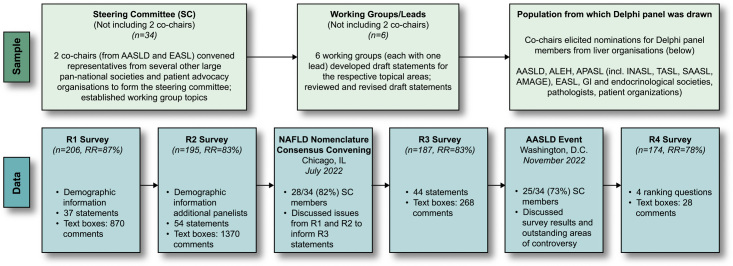
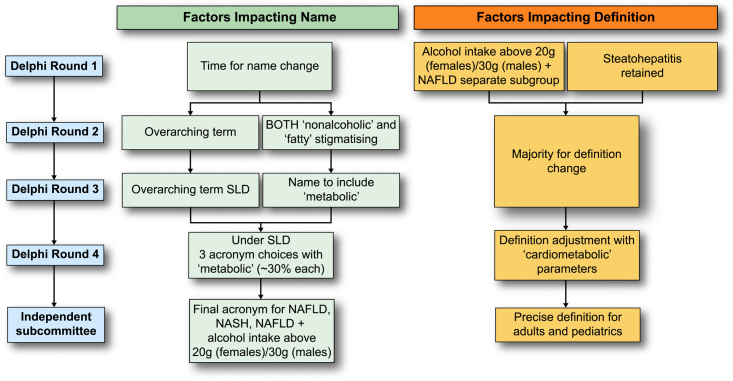
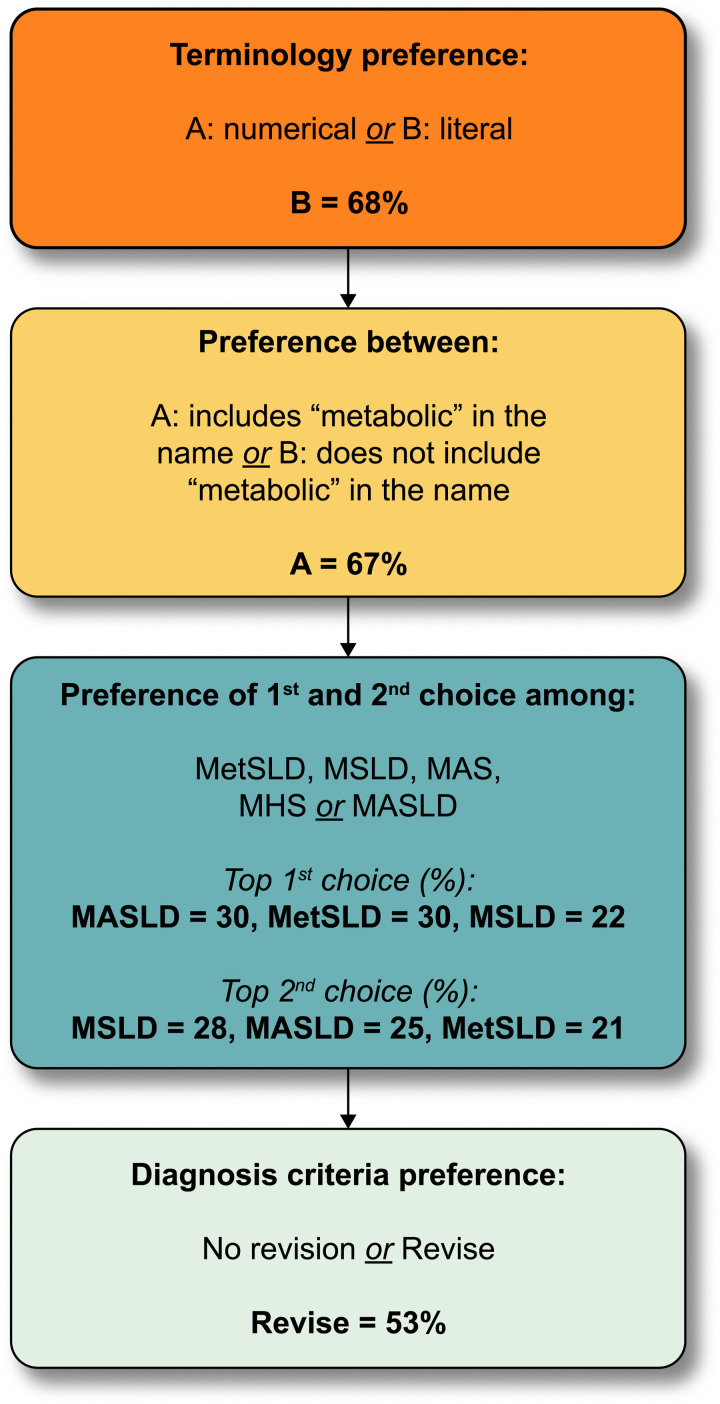
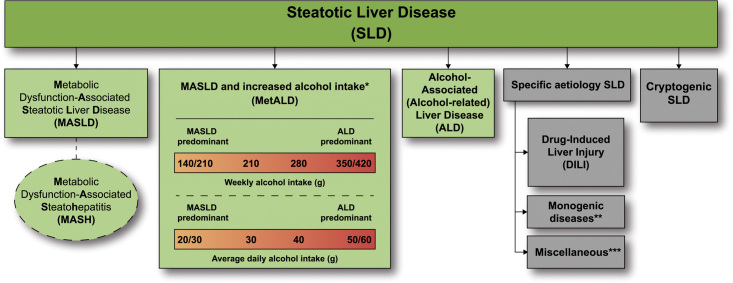
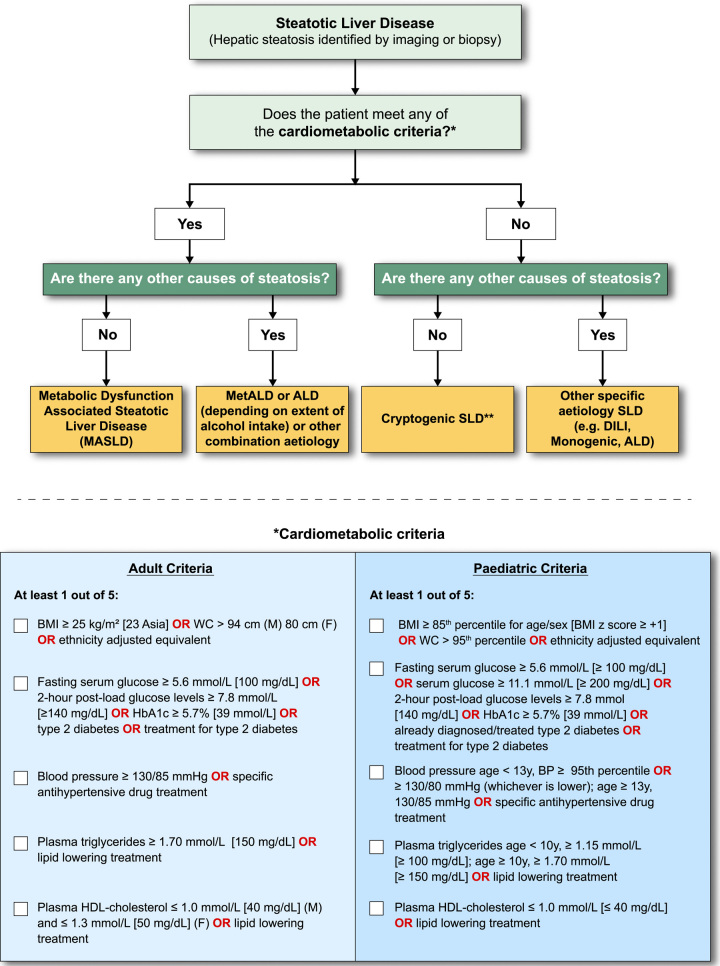
The principal limitations of the terms NAFLD and NASH are the reliance on exclusionary confounder terms and the use of potentially stigmatising language. This study set out to determine if content experts and patient advocates were in favor of a change in nomenclature and/or definition. A modified Delphi process was led by three large pan-national liver associations. The consensus was defined a priori as a supermajority (67%) vote. An independent committee of experts external to the nomenclature process made the final recommendation on the acronym and its diagnostic criteria. A total of 236 panelists from 56 countries participated in 4 online surveys and 2 hybrid meetings. Response rates across the 4 survey rounds were 87%, 83%, 83%, and 78%, respectively. Seventy-four percent of respondents felt that the current nomenclature was sufficiently flawed to consider a name change. The terms “nonalcoholic” and “fatty” were felt to be stigmatising by 61% and 66% of respondents, respectively. Steatotic liver disease was chosen as an overarching term to encompass the various aetiologies of steatosis. The term steatohepatitis was felt to be an important pathophysiological concept that should be retained. The name chosen to replace NAFLD was metabolic dysfunction–associated steatotic liver disease. There was consensus to change the definition to include the presence of at least 1 of 5 cardiometabolic risk factors. Those with no metabolic parameters and no known cause were deemed to have cryptogenic steatotic liver disease. A new category, outside pure metabolic dysfunction–associated steatotic liver disease, termed metabolic and alcohol related/associated liver disease (MetALD), was selected to describe those with metabolic dysfunction–associated steatotic liver disease, who consume greater amounts of alcohol per week (140–350 g/wk and 210–420 g/wk for females and males, respectively). The new nomenclature and diagnostic criteria are widely supported and nonstigmatising, and can improve awareness and patient identification.
Overview
The claims and statistics of this paper haven’t been checked yet.
Free: it reads the open-access text and checks the first 5 claims that cite a source we can check. Create a free account to check every claim.
Integrity signals
Registry
Cites
Statistics
Figures
Verification
Claims the paper makes
The claims and statistics of this paper haven’t been checked yet.
Free: it reads the open-access text and checks the first 5 claims that cite a source we can check. Create a free account to check every claim.
Claims other papers make about this one
Each is checked against this paper’s own text: does it say what the citing paper says it does?
The source backs part of the claim, not all of it — or backs it for a different population, condition or comparison.
In the citing paper
“While ALD and MASLD have different aetiologies, both encompass a spectrum of liver lesions beginning with steatosis but progressing to steatohepatitis (alcohol-induced steatohepatitis; ASH or metabolic dysfunction-associated steatohepatitis; MASH, respectively) and fibrosis in some individuals.”
From The liver as a central "hub" of the immune system: pathophysiological implications (2025) · cites this paper as [200]
Experimental — accuracy not yet measuredThe cited source says what the claim attributes to it.
In the citing paper
“The two leading causes of SLD are alcohol-induced liver disease (ALD) and metabolic dysfunction-associated steatotic liver disease (MASLD); the latter being recently renamed from non-alcoholic fatty liver disease (NAFLD)(200).”
From The liver as a central "hub" of the immune system: pathophysiological implications (2025) · cites this paper as [200]
The check wasn’t confident either way, so it gives no verdict — never disputed.
In the citing paper
“while MAR709 requires functional GIPR signaling in the CNS to outperform GLP-1R agonism to further reduce body weight and food intake45,127, tirzepatide does not lower body weight in Glp1r-deficient mice121.”
From Transforming obesity: The advancement of multi-receptor drugs (2024) · cites this paper as [127]
Experimental — accuracy not yet measured
Self-check
Percentages, sums and reported differences re-computed from the paper’s own numbers.
The self-check needs the paper’s full text.
Citations
Cites
Alberti, K. G. M. M., Eckel, R. H., Grundy, S. M., Zimmet, P. Z., Cleeman, J. I., Donato, K. A., Fruchart, J.-C., James, W. P. T., Loria, C. M., & Smith, S. C. (2009) · Circulation · doi:10.1161/circulationaha.109.192644 · Cited by 14,860
Design and validation of a histological scoring system for nonalcoholic fatty liver disease†
Kleiner, D. E., Brunt, E. M., Van Natta, M., Behling, C., Contos, M. J., Cummings, O. W., Ferrell, L. D., Liu, Y., Torbenson, M. S., Unalp‐Arida, A., et al. (2005) · Hepatology · doi:10.1002/hep.20701 · Cited by 10,791 · cited 1×
“The histological classi fi cation was further expanded on by various scoring systems categorising steatosis, disease activity, and fi brosis [2 − 4].”
Self-citationEslam, M., Newsome, P. N., Sarin, S. K., Anstee, Q. M., Targher, G., Romero-Gomez, M., Zelber-Sagi, S., Wai-Sun Wong, V., Dufour, J.-F., Schattenberg, J. M., et al. (2020) · Journal of Hepatology · doi:10.1016/j.jhep.2020.03.039 · Cited by 4,472 · cited 3×
“Indeed, there is a recognition now that there are overlapping biological processes that may contribute to both NAFLD and alcohol-associated/related liver disease (ALD).”
Self-citationNonalcoholic fatty liver disease: a spectrum of clinical and pathological severity.
MATTEONI, C., YOUNOSSI, Z., GRAMLICH, T., BOPARAI, N., LIU, Y., & MCCULLOUGH, A. (1999) · Gastroenterology · doi:10.1016/s0016-5085(99)70506-8 · Cited by 3,345 · cited 3×
“” [5] This important conceptual change has several practical consequences.”
Self-citationMAFLD: a consensus-driven proposed nomenclature for metabolic associated fatty liver disease
Eslam, M., Sanyal, A. J., George, J., Sanyal, A., Neuschwander-Tetri, B., Tiribelli, C., Kleiner, D. E., Brunt, E., Bugianesi, E., Yki-Järvinen, H., et al. (2020) · Gastroenterology · doi:10.1053/j.gastro.2019.11.312 · Cited by 3,286 · cited 1×
“Thiswas summarised in a paper by Eslam et al., [6,7] in 2020 and led to the proposal to use the term metabolic dysfunction − associated fatty liver disease (MAFLD), which includes patients with a fatty liver regardless of the amount and pattern of alcohol intake under this terminology.”
Self-citationLudwig, J., Viggiano, T. R., McGill, D. B., & Ott, B. J. (1980) · Mayo Clinic Proceedings · doi:10.1016/s0025-6196(24)00530-5 · Cited by 2,903
Rinella, M. E., Neuschwander-Tetri, B. A., Siddiqui, M. S., Abdelmalek, M. F., Caldwell, S., Barb, D., Kleiner, D. E., & Loomba, R. (2023) · Hepatology · doi:10.1097/hep.0000000000000323 · Cited by 2,667 · cited 1×
“Moreover, this nomenclature process, in line with published guidance [21,28,29], is not advocating for the routine use of tests to con fi rm hepatic steatosis although, in reality, most, if not all, patients will usually have imaging at some point.”
Self-citationBerzigotti, A., Tsochatzis, E., Boursier, J., Castera, L., Cazzagon, N., Friedrich-Rust, M., Petta, S., & Thiele, M. (2021) · Journal of Hepatology · doi:10.1016/j.jhep.2021.05.025 · Cited by 1,925 · cited 1×
“Moreover, this nomenclature process, in line with published guidance [21,28,29], is not advocating for the routine use of tests to con fi rm hepatic steatosis although, in reality, most, if not all, patients will usually have imaging at some point.”
Self-citationEddowes, P. J., Sasso, M., Allison, M., Tsochatzis, E., Anstee, Q. M., Sheridan, D., Guha, I. N., Cobbold, J. F., Deeks, J. J., Paradis, V., et al. (2019) · Gastroenterology · doi:10.1053/j.gastro.2019.01.042 · Cited by 1,410 · cited 1×
“Such cases and also cryptogenic cases that subsequently manifest CMRF can be rebadged as MASLD.”
Self-citationTaylor, R. S., Taylor, R. J., Bayliss, S., Hagström, H., Nasr, P., Schattenberg, J. M., Ishigami, M., Toyoda, H., Wai-Sun Wong, V., Peleg, N., et al. (2020) · Gastroenterology · doi:10.1053/j.gastro.2020.01.043 · Cited by 1,069
Self-citation
Research works printed but not linked: 1
- Zobair M Younossi YY Jian-Gao F Wai-Sun Wong V El-Kassas M Zelber-Sagi S. Lazarus and the Global NASH Council, Stigma in NAFLD and NASH: a global survey of patients and providers. Hepatology. 2023: 21– 24.
Cited by
Items 601–700 of 1,012
Increased Mortality Among Lean Versus Non‐Lean Adults With MASLD: A Multicenter Study
Ghani, L. K., Aboona, M. B., Faulkner, C., Rangan, P., Rubin, M. I. N., Han, M. A. T., Fallon, M. B., Chen, V. L., & Wijarnpreecha, K. (2025) · Journal of Gastroenterology and Hepatology · doi:10.1111/jgh.17015 · Cited by 23
Song, K., Kwon, Y., Lee, E., Lee, H. S., Youn, Y. H., Baik, S. J., Shin, H. J., & Chae, H. W. (2025) · Clinical Gastroenterology and Hepatology · doi:10.1016/j.cgh.2025.06.011 · Cited by 23
Endoplasmic reticulum stress at the forefront of fatty liver diseases and cancer
Karin, M., & Kim, J. Y. (2025) · Pharmacological Reviews · doi:10.1016/j.pharmr.2025.100096 · Cited by 28
“8 As MASLD progresses to more advanced stages, patients encounter an increased risk of cirrhosis and HCC, referred to as MASH-related HCC. 10”
Gao, Y., Li, C., Chang, W., Du, B., Ye, X., Yeo, Y. H., Xia, Y., Guo, H., Zhang, X., Liu, W., et al. (2026) · Nature Communications · doi:10.1038/s41467-026-68414-3 · Cited by 31
Zelows, M. M., Cady, C., Dharanipragada, N., Mead, A. E., Kipp, Z. A., Bates, E. A., Varadharajan, V., Banerjee, R., Park, S., Shelman, N. R., et al. (2023) · Molecular Metabolism · doi:10.1016/j.molmet.2023.101815 · Cited by 20
Saldarriaga, Ó. A., Wanninger, T. G., Arroyave, E., Gosnell, J., Krishnan, S., Oneka, M. D., Bao, D., Millian, D. E., Kueht, M., Moghe, A., et al. (2023) · JHEP Reports · doi:10.1016/j.jhepr.2023.100958 · Cited by 28
Gupta, U., Ruli, T. M., Buttar, D., Shoreibah, M., & Gray, M. E. (2023) · The American Journal of the Medical Sciences · doi:10.1016/j.amjms.2023.11.007 · Cited by 21
Tai, J., Hsu, C., Chen, W., Yang, S., Chiu, C., Chien, R., & Chang, M. (2023) · Cancer Science · doi:10.1111/cas.16042 · Cited by 17
Tracers and Imaging of Fatty Acid and Energy Metabolism of Human Adipose Tissues
Carpentier, A. C. (2023) · Physiology · doi:10.1152/physiol.00012.2023 · Cited by 27
New concept in fatty liver diseases
Tokushige, K. (2024) · Hepatology Research · doi:10.1111/hepr.14004 · Cited by 20
Yasin, A., Nguyen, M., Sidhu, A., Majety, P., Spitz, J. A., Asgharpour, A., Siddiqui, M. S., Sperling, L. S., Quyyumi, A. A., & Mehta, A. (2024) · Diabetes Research and Clinical Practice · doi:10.1016/j.diabres.2024.111650 · Cited by 20
Chouik, Y., Aubin, A., Maynard, M., Segrestin, B., Milot, L. M., Hervieu, V., Zoulim, F., Disse, E., Levrero, M., & Caussy, C. (2024) · Obesity · doi:10.1002/oby.24033 · Cited by 20
Celiac Disease, Gluten-Free Diet and Metabolic Dysfunction-Associated Steatotic Liver Disease
Cazac, G.-D., Mihai, B. M., Ștefănescu, G., Gîlcă-Blanariu, G.-E., Mihai, C., Grigorescu, E.-D., Onofriescu, A., & Lăcătușu, C.-M. (2024) · Nutrients · doi:10.3390/nu16132008 · Cited by 24
“The five cardiometabolic criteria are represented by either modified values of the body mass index (BMI) and fasting serum glucose, hypertension, high plasma triglycerides, and low HDL-cholesterol levels or an already existing treatment for these items [39].”
BackgroundInfluentialJamalinia, M., & Lonardo, A. (2024) · Metabolism and Target Organ Damage · doi:10.20517/mtod.2024.34 · Cited by 21
Afonso, M. B., David, J. C., Alves, M. I., Santos, A. A., Campino, G., Ratziu, V., Gautheron, J., & Rodrigues, C. M. P. (2024) · Metabolism · doi:10.1016/j.metabol.2024.155975 · Cited by 23
Self-citationCheu, J. W., & Wong, C. C. (2024) · Hepatology Communications · doi:10.1097/hc9.0000000000000516 · Cited by 25
“[7,8] It is important to note that MASLD, in addition to the 5% steatosis, also requires the presence of at least 1 cardiometabolic risk factor.”
BackgroundMethodCzapla, B., Dalvi, A., Hu, J., Moran, I. J., Wijarnpreecha, K., & Chen, V. L. (2025) · Scientific Reports · doi:10.1038/s41598-025-93082-6 · Cited by 21
Kaewdech, A., Assawasuwannakit, S., Churuangsuk, C., Chamroonkul, N., & Sripongpun, P. (2024) · Scientific Reports · doi:10.1038/s41598-024-64988-4 · Cited by 22
The roles and potential mechanisms of plant polysaccharides in liver diseases: a review
Wei, X., Luo, D., Li, H., Li, Y., Cen, S., Huang, M., Jiang, X., Zhong, G., & Zeng, W. (2024) · Frontiers in Pharmacology · doi:10.3389/fphar.2024.1400958 · Cited by 20
Gabbia, D. (2024) · Biology · doi:10.3390/biology13100760 · Cited by 17
Newton, K. P., Jayasekera, D. W., Blackford, A. L., Behling, C. A., Wilson, L., Fishbein, M. H., Molleston, J. P., Xanthakos, S. A., Vos, M. B., Schwimmer, J. B., et al. (2025) · Hepatology · doi:10.1097/hep.0000000000001216 · Cited by 17
Self-citationZhu, N., Li, Y., Lin, Y., Cui, X., & Li, X. (2025) · Frontiers in Medicine · doi:10.3389/fmed.2024.1491858 · Cited by 19
Shojaei, F., Erfanifar, A., Kalbasi, S., Nikpour, S., & Gachkar, L. (2025) · BMC Endocrine Disorders · doi:10.1186/s12902-025-01882-8 · Cited by 22
“According to the last version of consensus statement on new fatty liver disease nomenclature when there is at least 1 of 5 cardiometabolic risk factors, NAFLD can replaced with metabolic dysfunction–associated stea-totic liver disease (MASLD) [24].”
Erceg, S., Munjas, J., Sopić, M., Tomašević, R., Mitrović, M., Kotur‐Stevuljević, J., Mamić, M., Vujčić, S., Klisic, A. N., & Ninić, A. (2025) · International Journal of Molecular Sciences · doi:10.3390/ijms26062392 · Cited by 18
“…steatosis, characterized by the presence of fat accumulation in more than 5% of hepatocytes, and metabolic dysfunction-associated steatohepatitis (MASH), formerly known as non-alcoholic steatohepatitis (NASH), an advanced stage associated with inflammation and varying degrees of fibrosis [2,4–6].”
Tsutsumi, T., Kawaguchi, T., Fujii, H., Kamada, Y., Suzuki, Y., Sawada, K., Tatsuta, M., Maeshiro, T., Tobita, H., Akahane, T., et al. (2025) · Journal of Gastroenterology · doi:10.1007/s00535-025-02242-y · Cited by 18
Self-citationLipogenesis and MASLD: re-thinking the role of SREBPs
Nakagawa, H. (2025) · Archives of Toxicology · doi:10.1007/s00204-025-04052-w · Cited by 25
“MASLD is considered the hepatic manifestation of metabolic syndrome, and under the newly established diagnostic criteria, it is defined by the presence of at least one of five cardiometabolic risk factors (Rinella et al. 2023a, 2023b).”
Lee, M., Hong, S., Cho, Y., Rhee, H., Yu, M. H., Bae, J. H., Lee, Y., Lee, B., Kang, E. S., & Soo, B. (2025) · BMC Medicine · doi:10.1186/s12916-025-04017-x · Cited by 21
“Additionally, the term “meta-bolic dysfunction-associated steatohepatitis (MASH)” has been introduced to substitute non-alcoholic stea-tohepatitis (NASH) [2, 3], representing the advanced stage of NAFLD with inflammation and hepatocellular ballooning on histopathology [5].”
InfluentialCall to action—Pediatric MASLD requires immediate attention to curb health crisis
Hartmann, P., Mouzaki, M., Hassan, S. M., Kehar, M., Mysore, K. R., Mauney, E. E., Nonga, D., Karjoo, S., Sood, S., Tou, A. M., et al. (2025) · Hepatology · doi:10.1097/hep.0000000000001440 · Cited by 20
Self-citationKubina, M., Prasitsumrit, V., Tan, J., Quek, J. W. E., Peddu, D. K., Mishra, A. K., Danpanichkul, P., Mann, J. P., Trépo, E., Buch, S., et al. (2025) · Alimentary Pharmacology & Therapeutics · doi:10.1111/apt.70256 · Cited by 22
Loomba, R. S., Hagström, H., & Díaz, L. A. (2025) · Gastroenterology · doi:10.1053/j.gastro.2025.07.007 · Cited by 17
Self-citationYoung Adult Physical Activity Trajectories and Midlife Nonalcoholic Fatty Liver Disease
de Brito, J. N., McDonough, D. J., Mathew, M., VanWagner, L. B., Schreiner, P. J., Gabriel, K. P., Jacobs, D. R., Terry, J. G., Carr, J. J., & Pereira, M. A. (2023) · JAMA Network Open · doi:10.1001/jamanetworkopen.2023.38952 · Cited by 19
What Is in a Name: from NAFLD to MAFLD and MASLD—Unraveling the Complexities and Implications
Ramírez-Mejía, M. M., & Méndez‐Sánchez, N. (2023) · Current Hepatology Reports · doi:10.1007/s11901-023-00620-9 · Cited by 25
Association of five diet scores with severe NAFLD incidence: A prospective study from UK Biobank
Petermann-Rocha, F. E., Carrasco‐Marín, F., Boonpor, J., Parra-Soto, S. L., Shannon, O. M., Malcomson, F. C., Phillips, N., Jain, M., Deo, S. V., Livingstone, K. M., et al. (2023) · Diabetes Obesity and Metabolism · doi:10.1111/dom.15378 · Cited by 24
Bernal, K., Touma, C., Legrand, B., Rose, S., Degerli, S., Genêt, V., Lagadic‐Gossmann, D., Coumoul, X., Martin‐Chouly, C., Langouët, S., et al. (2023) · Chemosphere · doi:10.1016/j.chemosphere.2023.140883 · Cited by 19
Tanaka, M., Akiyama, Y., Mori, K., Hosaka, I., Kato, K., Endo, K., Ogawa, T., Sato, T., Suzuki, T., Yano, T., et al. (2023) · Diabetes Epidemiology and Management · doi:10.1016/j.deman.2023.100191 · Cited by 19
Zhang, J., Zhang, Q., Jin, Q., Yang, J., Lin, S., & Fan, J. (2023) · Molecular Metabolism · doi:10.1016/j.molmet.2023.101865 · Cited by 19
Self-citationMirrazavi, Z. S., & Behrouz, V. (2024) · Clinical Nutrition · doi:10.1016/j.clnu.2024.01.005 · Cited by 22
Sila, A., Nucci, S. D., Bonfiglio, C., Stasi, V. D., Cerabino, N., Chito, M. D., Rinaldi, R., Cantalice, P., Shahini, E., Giannuzzi, V., et al. (2024) · Nutrients · doi:10.3390/nu16060874 · Cited by 20
Golubić, R., Kennet, J., Parker, V., Robertson, D. C., Luo, D., Hansen, L. B., Jermutus, L., Ambery, P., Ryaboshapkina, M., Surakala, M., et al. (2024) · Diabetes Obesity and Metabolism · doi:10.1111/dom.15579 · Cited by 21
mARC1 in MASLD: Modulation of lipid accumulation in human hepatocytes and adipocytes
Jones, A. K., Bajrami, B., Campbell, M. K., Erzurumluoglu, A. M., Guo, Q., Chen, H., Zhang, X., Zeveleva, S., Kvaskoff, D., Brunner, A., et al. (2024) · Hepatology Communications · doi:10.1097/hc9.0000000000000365 · Cited by 20
“[1] Up to 10% of patients with MASH will progress to cirrhosis with a risk for HCC and death from liver decompensation.”
BackgroundIwadare, T., Kimura, T., Okumura, T., Wakabayashi, S., Nakajima, T., Kondo, S., Kobayashi, H., Yamashita, Y., Sugiura, A., Fujimori, N., et al. (2024) · Communications Medicine · doi:10.1038/s43856-024-00499-7 · Cited by 21
“%) met the criteria for MASLD (all cases of LRE onset were within the MASLD criteria), indicating results that remain applicable even after the change in NAFLD nomenclature.”
InfluentialGut Microbiota and Sinusoidal Vasoregulation in MASLD: A Portal Perspective
Baffy, G., & Portincasa, P. (2024) · Metabolites · doi:10.3390/metabo14060324 · Cited by 20
la Cruz-Color, L. D., Domínguez-Rosales, J. A., Maldonado‐González, M., Ruiz‐Madrigal, B., Sánchez-Muñoz, M. P., Zaragoza-Guerra, V. A., Espinoza-Padilla, V. H., Ruelas-Cinco, E. D. C., Ramírez-Meza, S. M., Torres-Baranda, J. R., et al. (2024) · International Journal of Molecular Sciences · doi:10.3390/ijms25126420 · Cited by 22
“The individuals in the study did not meet the criteria for T2D [7].”
BackgroundHeo, J. H., Lee, M. Y., Kim, S. H., Zheng, M., Byrne, C. D., Targher, G., & Sung, K. (2024) · HepatoBiliary Surgery and Nutrition · doi:10.21037/hbsn-23-558 · Cited by 31
“For the diagnosis of MASLD and NAFLD, we used standard definitions (5,13).”
Self-citationHaque, L., & Leggio, L. (2024) · Hepatology · doi:10.1097/hep.0000000000000996 · Cited by 23
“[ 150 ] Among individuals with metabolic dysfunction – associated steatotic liver disease without advanced fibrosis or cirrhosis, moderate alcohol intake (no more than 2 standard drinks per day) was associated with more persistent steatohepatitis as well as greater fibrosis.”
Semmler, G., López, S. A., Pons, M., Lens, S., Dajti, E., Griemsmann, M., Zanetto, A., Burghart, L., Hametner‐Schreil, S., Hartl, L., et al. (2024) · Hepatology · doi:10.1097/hep.0000000000001005 · Cited by 20
Hanai, T., Nishimura, K., Unome, S., Miwa, T., Nakahata, Y., Imai, K., Suetsugu, A., Takai, K., & Shimizu, M. (2024) · Journal of Gastroenterology · doi:10.1007/s00535-024-02137-4 · Cited by 25
Arold, D., Bornstein, S. R., Perakakis, N., Ehrlich, S., & Bernardoni, F. (2024) · Metabolism · doi:10.1016/j.metabol.2024.155983 · Cited by 20
Faienza, M. F., Farella, I., Khalil, M., & Portincasa, P. (2024) · International Journal of Molecular Sciences · doi:10.3390/ijms25189924 · Cited by 20
“Diagnostic criteria for the pediatric MASLD area are also detailed in the Delphi consensus paper and are very close to the adult ones [19].”
BackgroundInfluentialEl-Mihi, K. A., Leonard, K., Nelson, R. C., Thiesen, A., Clugston, R. D., & Jacobs, R. L. (2024) · The FASEB Journal · doi:10.1096/fj.202401321r · Cited by 24
Zhou, J., & Han, J. H. (2024) · BMC Public Health · doi:10.1186/s12889-024-20161-0 · Cited by 18
Pourmontaseri, H., Bazmi, S., Sepehrinia, M., Mostafavi, A., Arefnezhad, R., Homayounfar, R., & Vahid, F. (2025) · Frontiers in Nutrition · doi:10.3389/fnut.2024.1497364 · Cited by 23
“Metabolic (dysfunction)-associated steatotic liver disease (MASLD), previously known as Nonalcoholic Fatty Liver Disease (NAFLD) (62), is the most common liver disorder, primarily related to obesity.”
Karahan, T. Ö., Kenger, E. B., & Yilmaz, Y. N. (2025) · Journal of Human Nutrition and Dietetics · doi:10.1111/jhn.70033 · Cited by 20
Self-citationAtherogenic index of plasma identifies subjects with severe liver steatosis
Matteis, C. D., Novielli, F., Buduo, E. D., Arconzo, M., Gadaleta, R. M., Cariello, M., Moschetta, A., & Crudele, L. (2025) · Scientific Reports · doi:10.1038/s41598-025-93141-y · Cited by 21
Bołdys, A., & Bułdak, Ł. (2024) · World Journal of Gastroenterology · doi:10.3748/wjg.v30.i18.2387 · Cited by 19
The role of the microbiome in liver disease
Schöler, D., & Schnabl, B. (2024) · Current Opinion in Gastroenterology · doi:10.1097/mog.0000000000001013 · Cited by 16
Risk-stratified hepatocellular carcinoma surveillance in non-cirrhotic patients with MASLD
Mi, K., Ye, T., Zhu, L., & Pan, C. Q. (2025) · Gastroenterology report · doi:10.1093/gastro/goaf018 · Cited by 22
Allo-lithocholic acid, a microbiome derived secondary bile acid, attenuates liver fibrosis
Marchianò, S., Biagioli, M., Giorgio, C. D., Massa, C., Bellini, R., Bordoni, M., Urbani, G., Lachi, G., Sepe, V., Morretta, E., et al. (2025) · Biochemical Pharmacology · doi:10.1016/j.bcp.2025.116883 · Cited by 18
Panagiotopoulos, N., Wolfson, T. J., Harris, D. T., Batakis, D., Agni, R. M., Ceriani, L., Covarrubias, Y., Hamilton, G., Middleton, M. S., Martins, V. F., et al. (2025) · Hepatology · doi:10.1097/hep.0000000000001318 · Cited by 20
Lian, S., Lu, M., Jiajing, L., Zhang, B., Fang, Y., Wang, X., Zheng, M., Ni, Y., Xu, G., Yang, Y., et al. (2025) · Advanced Science · doi:10.1002/advs.202410602 · Cited by 24
Lipid Hormones at the Intersection of Metabolic Imbalances and Endocrine Disorders
Dobre, M.-Z., Vîrgolici, B., & Cioarca-Nedelcu, R. (2025) · Current Issues in Molecular Biology · doi:10.3390/cimb47070565 · Cited by 23
“Overall, MASLD refines MAFLD to support more holistic and patient-centered care [4].”
Choi, J., Choi, Y. R., Jeong, M. K., Song, H. H., Yu, J. S., Song, S. H., Park, J. H., Kim, M. J., Park, H., Ham, Y. L., et al. (2025) · Gut Microbes · doi:10.1080/19490976.2025.2539448 · Cited by 18
“18,19 MASLD was defined as the presence of hepatic steatosis in conjunction with one cardiometabolic risk factor and no other discernible cause, comprises the most common causes of steatotic liver disease.”
Zheng, H., Wu, K., Zheng, H., Chen, G., Lan, Y., Chen, S., Casu, G., Sechi, L. A., Wu, S., Vidili, G., et al. (2025) · JHEP Reports · doi:10.1016/j.jhepr.2025.101602 · Cited by 26
Perspective on alcohol-induced organ damage via autophagy-dependent cellular changes
Bakheet, A., Anbazhagan, M., Barve, S. S., Dasarathy, S., Dickinson, J. J., Ding, W., Donohue, T. M., Gopal, T., Gukovskaya, A. S., Kharbanda, K. K., et al. (2025) · Redox Biology · doi:10.1016/j.redox.2025.103879 · Cited by 18
“Previously, MASLD and MASH were known as non-alcohol-associated fatty liver disease (NAFLD) and non-alcohol-associated steatohepatitis (NASH), respectively [85].”
Jamalinia, M., Saeian, S., Nikkhoo, N., Nazerian, A., & Lankarani, K. B. (2025) · Metabolism and Target Organ Damage · doi:10.20517/mtod.2025.131 · Cited by 20
Clavreul, L., Bernard, L., Cotte, A. K., Hennuyer, N., Bourouh, C., Devos, C., Helleboid‐Chapman, A., Haas, J. T., Verrijken, A., Gheeraert, C., et al. (2023) · Metabolism · doi:10.1016/j.metabol.2023.155720 · Cited by 21
Self-citationMulgaonkar, A., Huang, D. Q., Siddiqi, H., Fowler, K. J., Sirlin, C. B., Marks, R. M., Loomba, R. S., & Konijeti, G. G. (2023) · The American Journal of Gastroenterology · doi:10.14309/ajg.0000000000002636 · Cited by 21
“A recent multisociety Delphi consensus statement recommends new terminology using metabolic dysfunction – associated steatotic liver disease or steatohepatitis (7).”
BackgroundSelf-citationAssociation of physical activity with MAFLD/MASLD and LF among adults in NHANES, 2017–2020
Li, M. (2024) · Wiener klinische Wochenschrift · doi:10.1007/s00508-023-02314-0 · Cited by 17
Francque, S., Hodge, A. D., Boursier, J., Younes, Z. H., Rodriguez‐Araujo, G., Park, G. S., Alkhouri, N., & Abdelmalek, M. F. (2024) · Hepatology Communications · doi:10.1097/hc9.0000000000000335 · Cited by 19
“8] In an estimated 10% – 25% of cases, NAFLD progresses to NASH, now known as metabolic dysfunction – associated steatohepatitis [1] ; however, in populations at risk (eg, patients with diabetes), this can increase to almost half of the cases.”
BackgroundSelf-citationDutta, T., Sasidharan, K., Ciociola, E., Pennisi, G., Noto, F. R., Kovooru, L., Kroon, T., Lindblom, A., Du, Y., Pirmoradian, M., et al. (2024) · Liver International · doi:10.1111/liv.15857 · Cited by 24
Serbis, A., Pοlyzos, S. A., Paschou, S. Α., Siomou, E. C., & Kiortsis, D. N. (2024) · Endocrine · doi:10.1007/s12020-024-03783-7 · Cited by 21
Martínez‐Urbistondo, D., Pérez-Díaz-del-Campo, N., Landecho, M. F., & Martínez, J. A. (2024) · Current Obesity Reports · doi:10.1007/s13679-024-00560-5 · Cited by 24
MAFLD Pandemic: Updates in Pharmacotherapeutic Approach Development
Khaznadar, F., Khaznadar, O., Petrovic, A., Hefer, M., Gjoni, F., Gjoni, S., Steiner, J., Smolić, M., & Bojanić, K. (2024) · Current Issues in Molecular Biology · doi:10.3390/cimb46070376 · Cited by 23
“In addition, patients with steatosis without cardiometabolic risk factors or other possible causes are considered cryptogenic and candidates for possible MAFLD who would benefit from regular reassessment [8,106,107].”
BackgroundÅström, H., Shang, Y., Hagström, H., & Wester, A. (2024) · Liver International · doi:10.1111/liv.16019 · Cited by 20
Molecular Pharmacology of Vitamin C and Relevance to Health and Obesity—A Narrative Review
Wilson, R. B., Liang, Y., Kaushal, D., & Carr, A. C. (2024) · International Journal of Molecular Sciences · doi:10.3390/ijms25147523 · Cited by 22
“NAFLD has recently been renamed metabolic dysfunction-associated steatotic liver disease (MASLD) and includes the spectrum of hepatic steatosis, steatohepatitis (MASH), fibrosis, cirrhosis, and hepatocellular carcinoma [75].”
BackgroundAlbhaisi, S. A. M., Tondt, J., Cyrus, J. W. W., Chinchilli, V. M., Conroy, D. E., & Stine, J. G. (2024) · Hepatology Communications · doi:10.1097/hc9.0000000000000499 · Cited by 16
“[1] MASLD affects ~30% of the world population and encompasses both steatosis, which is the noninflammatory form, and metabolic dysfunction – associated steatohepatitis (MASH), which is the inflammatory form.”
Yeh, M., Huang, J., Dai, C., Huang, C., Yu, M., & Chuang, W. (2024) · Expert Review of Gastroenterology & Hepatology · doi:10.1080/17474124.2024.2388790 · Cited by 16
Nasr, P., Shang, Y., Wester, A., Strandberg, R., Widman, L., Lazarus, J. V., & Hagström, H. (2024) · Liver International · doi:10.1111/liv.16091 · Cited by 20
Self-citationBaek, J. W., Yang, Y. S., Jung, K. J., Kimm, H., Kim, S. Y., Lee, S., & Jee, S. H. (2024) · Nutrition Metabolism and Cardiovascular Diseases · doi:10.1016/j.numecd.2024.09.001 · Cited by 21
Self-citationUntalan, M., Crimmins, N. A., Yates, K. P., Mencin, A., Xanthakos, S. A., & Thaker, V. (2024) · Hepatology · doi:10.1097/hep.0000000000001095 · Cited by 18
Self-citationRapacciuolo, P., Finamore, C., Giorgio, C. D., Fiorillo, B., Massa, C., Urbani, G., Marchianò, S., Bordoni, M., Cassiano, C., Morretta, E., et al. (2024) · Journal of Medicinal Chemistry · doi:10.1021/acs.jmedchem.4c01651 · Cited by 17
Navigating liver health with metabolomics: A comprehensive review
Singh, P., Singh, R., Pasricha, C., & Kumari, P. (2024) · Clinica Chimica Acta · doi:10.1016/j.cca.2024.120038 · Cited by 16
Impact of PNPLA3 in Lean Individuals and in Cryptogenic Steatotic Liver Disease
Seko, Y., Lin, H., Wong, V. W., & Okanoue, T. (2024) · Liver International · doi:10.1111/liv.16164 · Cited by 19
Self-citationKarataylı, E., Sadiq, S. C., Schattenberg, J. M., Grabbe, S., Biersack, B., & Kaps, L. (2025) · Cancers · doi:10.3390/cancers17030484 · Cited by 20
“SLD is divided into three main categories: metabolic dysfunction-associated steatotic liver disease (MASLD), alcohol-related liver disease (ALD), and the mixed entity metALD [58].”
The Lipidomic Profile Discriminates Between MASLD and MetALD
Schneider, K. M., Cao, F., Huang, H. Y. R., Chen, L., Chen, Y., Gong, R., Raptis, A. A., Creasy, K. T., Clusmann, J., van Haag, F., et al. (2025) · Alimentary Pharmacology & Therapeutics · doi:10.1111/apt.70012 · Cited by 20
Self-citationAbdallah, H., Khalil, M., Awada, E., Lanza, E., Ciaula, A. D., & Portincasa, P. (2025) · European Journal of Internal Medicine · doi:10.1016/j.ejim.2025.05.018 · Cited by 19
Chen, L. (2023) · World Journal of Hepatology · doi:10.4254/wjh.v15.i12.1253 · Cited by 20
Oh, J. H., & Jun, D. W. (2024) · Clinical and Molecular Hepatology · doi:10.3350/cmh.2024.0140 · Cited by 15
A1AT dysregulation of metabolically stressed hepatocytes by Kupffer cells drives MASH and fibrosis
Park, J.-S., Lee, J., Wang, F., Ma, H., Zhou, Z., Lee, Y.-S., Oh, K., Lee, H., Sui, G., Lee, S., et al. (2025) · Experimental & Molecular Medicine · doi:10.1038/s12276-025-01408-1 · Cited by 15
Bouajila, N., Domenighetti, C., Aubin, H., & Naassïla, M. (2024) · Frontiers in Epidemiology · doi:10.3389/fepid.2024.1385064 · Cited by 25
“…moderate alcohol consumption is protective or detrimental for the development of MASLD (Metabolic Dysfunction-Associated Steatotic Liver Disease) (31, 33, 34), recent reviews have concluded that a protective effect remains unsubstantiated, and consequently, any level of alcohol intake in…”
Wu, Y., Dong, P., Wu, Q., Zhang, Y., Xu, G., Pan, C., & Tong, H. (2025) · Clinical Pharmacology & Therapeutics · doi:10.1002/cpt.3606 · Cited by 20
Indole-3-propionic acid promotes hepatic stellate cells inactivation
Ilha, M., Sehgal, R., Matilainen, J., Rilla, K. J., Kamińska, D., Gandhi, S., Männistö, V., Ling, C., Romeo, S., Pajukanta, P., et al. (2025) · Journal of Translational Medicine · doi:10.1186/s12967-025-06266-z · Cited by 18
“HSCs can activate and transdiffer-entiate from a quiescent phenotype into a high energy demand proliferative fibroblast-like shape with increased expression of α-smooth muscle actin (α-SMA) and type I collagen (Col-I) [5, 6].”
Xun, Y., Chen, G., Tang, G., Zhang, C., Zhou, S., Fong, T.-L., Chen, Y., Xiong, R.-G., Wang, N., & Feng, Y. (2025) · Pharmacological Research · doi:10.1016/j.phrs.2025.107733 · Cited by 20
Paik, J. M., Hobbs, K., Gupta, A., Alkalbani, R., Reyes, M. A., & Younossi, Z. M. (2025) · Journal of Clinical Gastroenterology · doi:10.1097/mcg.0000000000002202 · Cited by 31
Self-citationPublic health policies to prevent alcohol-related liver disease
Parker, R., Arab, J. P., Lazarus, J. V., Bataller, R. A., & Singal, A. K. (2025) · Nature Reviews Gastroenterology & Hepatology · doi:10.1038/s41575-025-01084-6 · Cited by 20
Self-citationGut microbiota in non-alcoholic fatty liver disease: Pathophysiology, diagnosis, and therapeutics
Pandey, H., Goel, P., Srinivasan, V. M., Tang, D. W. T., Wong, S. H., & Lal, D. (2025) · World Journal of Hepatology · doi:10.4254/wjh.v17.i6.106849 · Cited by 23
Zelber‐Sagi, S., Paik, J. M., Wajcman, D. I., Henry, L. L., Yilmaz, Y. N., Alqahtani, S. A., El‐Kassas, M., Pekas, E. J., Gerber, L. H., & Younossi, Z. M. (2025) · Liver International · doi:10.1111/liv.70226 · Cited by 19
“(d) Hypertriglyceridemia: plasma triglyceride levels ≥ 150 mg/dL or use of lipid-lowering therapy and (e) low high-density lipoprotein cholesterol: levels 40 mg/dL for men and 50 mg/dL for women or use of lipid-lowering therapy [34, 35].”
Self-citationJin, S., Zhu, L., Bao, R., Yang, L., Zhuang, T.-L., Lian, L., Wang, T., Yin, J., Zhang, S., Zhou, L., et al. (2025) · Nature Communications · doi:10.1038/s41467-025-63351-z · Cited by 19
“Other potential causes of chronic liver disease such as viral hepatitis or excessive alcohol consumption were not observed 38,39 .”
Sex Differences in MASLD After Age 50: Presentation, Diagnosis, and Clinical Implications
Milani, I., Parrotta, M. E., Colangeli, L., Chinucci, M., Palleschi, S., Rossi, B., Sbraccia, P., Mantovani, A., Leonetti, F., Guglielmi, V., et al. (2025) · Biomedicines · doi:10.3390/biomedicines13092292 · Cited by 15
“A cross-sectional observational study was conducted in all consecutive patients aged ≥ 50 years and diagnosed with MASLD [4,30,31] at the Diabetes and Obesity Clinic of the Santa Maria Goretti Hospital in Latina, Italy, and the Obesity Medical Center of the Policlinico Tor Vergata Hospital in Rome,…”
Crosstalk between alcohol use disorder and obesity: two sides of the same coin?
Leggio, L., Farokhnia, M., Kenny, P. J., Pepino, M. Y., & Simmons, W. K. (2025) · Molecular Psychiatry · doi:10.1038/s41380-025-03259-8 · Cited by 18
Metadata
- Authors
- Rinella, M. E., Lazarus, J. V., Ratziu, V., Francque, S. M., Sanyal, A. J., Kanwal, F., Romero, D., Abdelmalek, M. F., Anstee, Q. M., Arab, J. P., Arrese, M., Bataller, R., Beuers, U., Boursier, J., Bugianesi, E., Byrne, C. D., Castro Narro, G. E., Chowdhury, A., Cortez-Pinto, H., Cryer, D. R., Cusi, K., El-Kassas, M., Klein, S., Eskridge, W., Fan, J., Gawrieh, S., Guy, C. D., Harrison, S. A., Kim, S. U., Koot, B. G., Korenjak, M., Kowdley, K. V., Lacaille, F., Loomba, R., Mitchell-Thain, R., Morgan, T. R., Powell, E. E., Roden, M., Romero-Gómez, M., Silva, M., Singh, S. P., Sookoian, S. C., Spearman, C. W., Tiniakos, D., Valenti, L., Vos, M. B., Wong, V. W.-S., Xanthakos, S., Yilmaz, Y., Younossi, Z., Hobbs, A., Villota-Rivas, M., Newsome, P. N., & on behalf of the NAFLD Nomenclature consensus group
- Affiliations
- University of Chicago (US)
- City University of New York (US)
- Sorbonne Université (FR)
- University of Antwerp (BE)
- Virginia Commonwealth University (US)
- Michael E. DeBakey VA Medical Center (US)
- Mayo Clinic (US)
- Western University (CA)
- Amsterdam UMC Location University of Amsterdam (NL)
- Hepato-Gastroenterology and Digestive Oncology Department, Angers University Hospital, Angers, France & HIFIH Laboratory UPRES EA3859, SFR 4208, Angers University, Angers, France
- University Hospital Southampton NHS Foundation Trust (GB)
- Latin American Association for the Study of the Liver (ALEH) Santiago, Chile
- Clínica Universitária de Gastrenterologia, Faculdade de Medicina, Universidade de Lisboa, Lisboa, Portugal
- Endemic Medicine Department, Faculty of Medicine, Helwan University, Cairo, Egypt
- Washington University in St. Louis (US)
- Xinhua Hospital, Shanghai Jiao Tong University School of Medicine, Shanghai, China
- Indiana University School of Medicine (US)
- Duke University Health System (US)
- University of Oxford (GB)
- Baylor College of Medicine (US)
- Hôpital Necker-Enfants Malades (FR)
- University of California San Diego (US)
- University of California, Irvine (US)
- Translational Research Institute (AU)
- Düsseldorf University Hospital (DE)
- Digestive Diseases and Ciberehd, Virgen del Rocio University Hospital, Institute of Biomedicine of Seville (CSIC/HUVR/US), University of Seville, Seville, Spain
- Antwerp University Hospital (BE)
- Consejo Nacional de Investigaciones Científicas y Técnicas (AR)
- Cincinnati Children's Hospital Medical Center (US)
- Inova Health System (US)
- Barcelona Institute for Global Health (ISGlobal), Hospital Clínic, University of Barcelona, Barcelona, Spain
- University Hospitals Birmingham NHS Foundation Trust (GB)
- Corresponding author
- Newsome, Philip N.
- ORCID
- Rinella, Mary E.
- Lazarus, Jeffrey V.
- Ratziu, Vlad
- Francque, Sven M.
- Sanyal, Arun J.
- Kanwal, Fasiha
- Romero, Diana
- Abdelmalek, Manal F.
- Anstee, Quentin M.
- Arab, Juan Pablo
- Arrese, Marco
- Bataller, Ramon
- Beuers, Ulrich
- Bugianesi, Elisabetta
- Byrne, Christopher D.
- Chowdhury, Abhijit
- Cryer, Donna R.
- Cusi, Kenneth
- Klein, Samuel
- Eskridge, Wayne
- Gawrieh, Samer
- Guy, Cynthia D.
- Harrison, Stephen A.
- Kim, Seung Up
- Koot, Bart G.
- Korenjak, Marko
- Kowdley, Kris V.
- Lacaille, Florence
- Loomba, Rohit
- Mitchell-Thain, Robert
- Morgan, Timothy R.
- Roden, Michael
- Silva, Marcelo
- Singh, Shivaram Prasad
- Sookoian, Silvia C.
- Spearman, C. Wendy
- Tiniakos, Dina
- Valenti, Luca
- Vos, Miriam B.
- Wong, Vincent Wai-Sun
- Xanthakos, Stavra
- Yilmaz, Yusuf
- Younossi, Zobair
- Newsome, Philip N.
- Venue
- Hepatology
- Published
- 2023-06-24
- Volume
- 78
- Issue
- 6
- Pages
- 1966-1986
- ISSN
- 0270-9139 (ISSN-L)
- PMC
- PMC10653297
- OpenAlex
- W4381681857
- Semantic Scholar
- 38b26c759cda9b762b35d1f4c036ecb2be5f45bc
- Cited by
- 3,476
- References
- 34
- Citations by year
- 2026: 919 · 2025: 1158 · 2024: 1106 · 2023: 290
- FWCI
- 689.89
- Type
- journal article
- Language
- en
- Open access
- hybrid
- doi.org
- Licence
- Locations
- Hepatology (publishedVersion, cc-by-nc-nd)
- PubMed Central (publishedVersion, cc-by-nc-nd)
- PubMed (publishedVersion)
- Pure Amsterdam UMC (publishedVersion, cc-by)
- IUScholarWorks (Indiana University) (submittedVersion, cc-by-nc-nd)
- eScholarship (California Digital Library) (submittedVersion, cc-by-nc-nd)
- Institutional Research Information System University of Turin (University of Turin) (submittedVersion, other-oa)
- PubliCatt (Università Cattolica del Sacro Cuore) (submittedVersion, cc-by-nc-nd)
- Archive ouverte UNIGE (University of Geneva) (submittedVersion, cc-by-nc-nd)
- Digital Commons-TMC (Texas Medical Center) (submittedVersion)
- Digital Commons@Becker (Washington University School of Medicine) (submittedVersion, cc-by-nc-nd)
- HAL (submittedVersion)
- BOA (University of Milano-Bicocca) (submittedVersion)
- Bern Open Repository and Information System (University of Bern) (submittedVersion, cc-by-nc-nd)
- DIGITAL.CSIC (Spanish National Research Council (CSIC)) (submittedVersion, cc-by-nc-nd)
- University of Southern Denmark Research Portal (University of Southern Denmark) (submittedVersion, cc-by-nc-nd)
- Funders
- Amgen
- Bristol-Myers Squibb
- Eli Lilly and Company
- Pfizer
- AstraZeneca
- American Association for the Study of Liver Diseases
- Gilead Sciences
- Alnylam Pharmaceuticals
- Celgene
- CSL Behring
- Regeneron Pharmaceuticals
- Verily Life Sciences
- NGM Biopharmaceuticals
- Coherus Biosciences
- National Institute for Health and Care Research (NIHR205082)
- Eisai
- Novo Nordisk
- Astellas Pharma
- Shionogi
- European Association for the Study of the Liver
- Novo Nordisk Fonden (NNF22OC0074397)
- Swedish Orphan Biovitrum
- Sun Pharma
- Genentech
- Allergan
- National Institute of Diabetes and Digestive and Kidney Diseases (P30DK056341, K23DK131290)
- Topics
- Health Sciences › Medicine › Hepatology › Liver Disease Diagnosis and Treatment
- Health Sciences › Medicine › Hepatology › Liver Diseases and Immunity
- Health Sciences › Medicine › Pathology and Forensic Medicine › Alcohol Consumption and Health Effects
- Keywords
- non-alcoholic fatty liver disease, nonalcoholic steatohepatitis, steatotic liver disease, MetALD, cardiometabolic risk factors, diagnostic criteria, patient advocacy, expert consensus
- MeSH terms
- Consensus Statements as Topic, Delphi Technique, Female, Hepatomegaly, Humans, Male, Surveys and Questionnaires, Non-alcoholic Fatty Liver Disease
About these checks
Registry, retraction, Cites and statistics results are computed, not judged, with one exception: a printed reference that no index lists is read once by a model before it counts as a citation error. Claims are extracted by a model and kept only when their quote appears verbatim in the text; each cited source is then checked, with a model’s help, for whether it says what the claim relies on. Those verdicts can be wrong — read the claim’s quote and the cited source before relying on one.
Statistics and arithmetic are recomputed, not judged.
Confidence bands are shown only for fields calibrated on our annotated test set. None is calibrated yet, so no band is shown.
What counts as a claim ›How we measure confidence ›How we check this ›
Are you an author, or do you see a problem with this page? Request a review
Data sources
Bibliographic data: Semantic Scholar, OpenAlex, Crossref.
Contains information from the Semantic Scholar Academic Graph Datasets, made available under the ODC Attribution License (ODC-BY 1.0).
Semantic Scholar’s data is described in: Kinney, R., et al. (2023). The Semantic Scholar Open Data Platform. arXiv:2301.10140.
