

A multisociety Delphi consensus statement on new fatty liver disease nomenclature
Open accessThe DOI matches its Crossref record; 33 of the 34 references it cites were found in a registry or an index.
Abstract
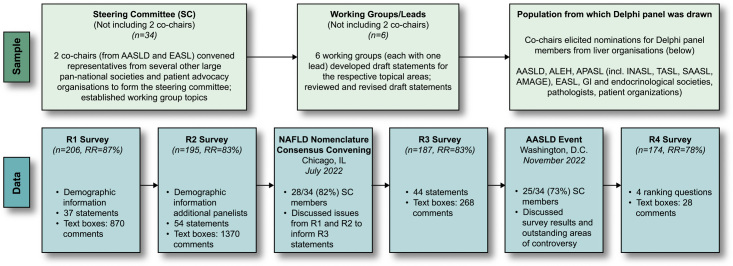
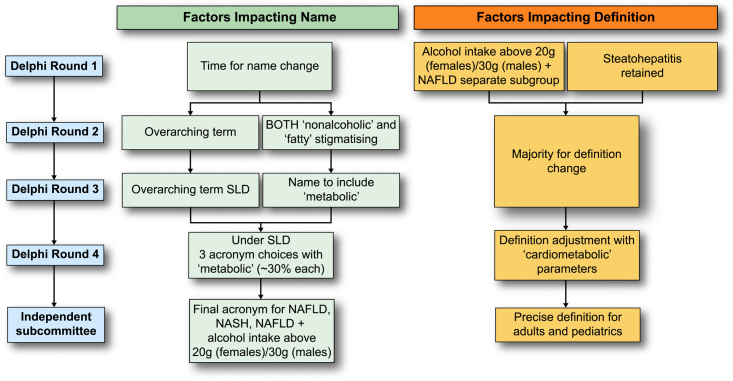
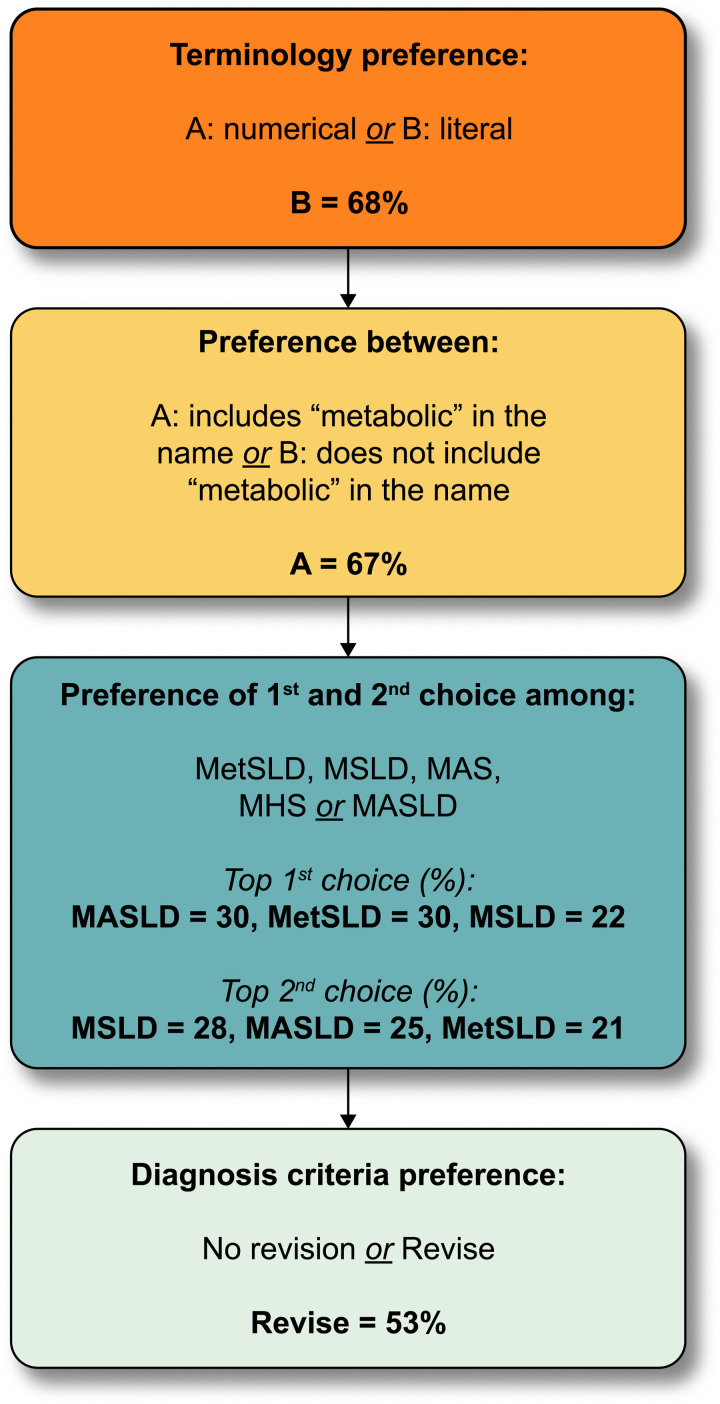
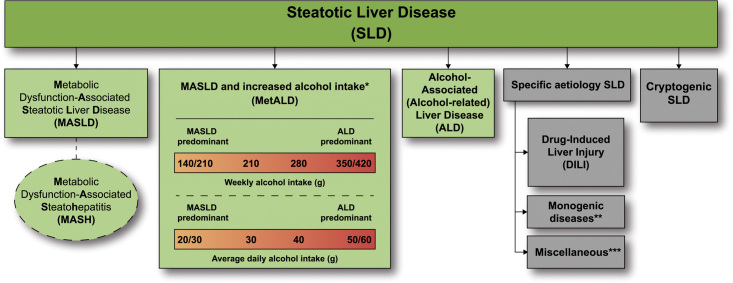
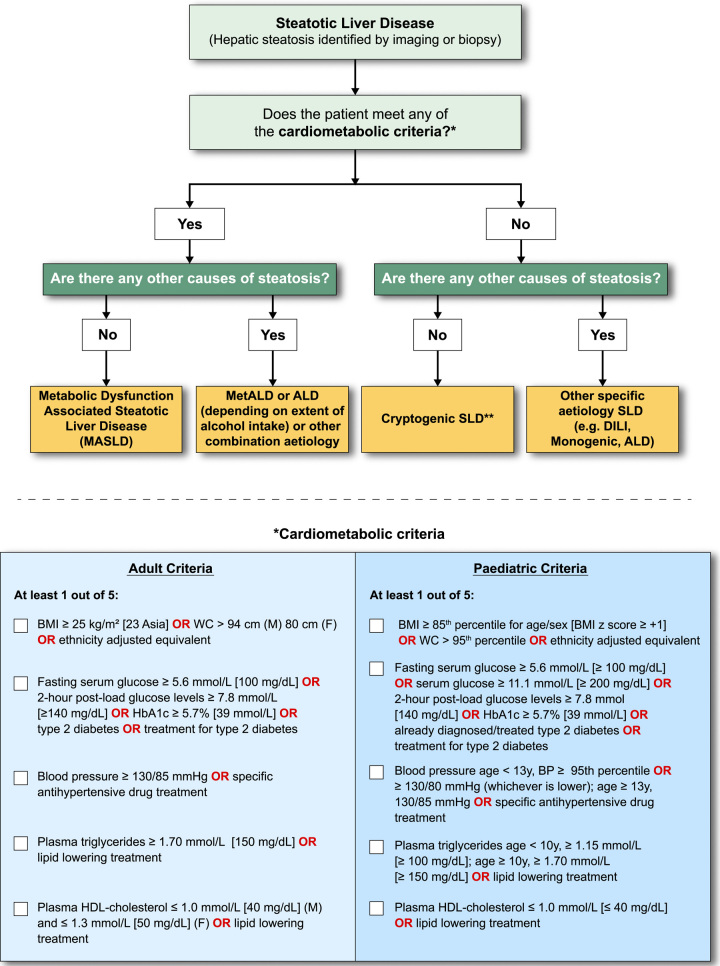
The principal limitations of the terms NAFLD and NASH are the reliance on exclusionary confounder terms and the use of potentially stigmatising language. This study set out to determine if content experts and patient advocates were in favor of a change in nomenclature and/or definition. A modified Delphi process was led by three large pan-national liver associations. The consensus was defined a priori as a supermajority (67%) vote. An independent committee of experts external to the nomenclature process made the final recommendation on the acronym and its diagnostic criteria. A total of 236 panelists from 56 countries participated in 4 online surveys and 2 hybrid meetings. Response rates across the 4 survey rounds were 87%, 83%, 83%, and 78%, respectively. Seventy-four percent of respondents felt that the current nomenclature was sufficiently flawed to consider a name change. The terms “nonalcoholic” and “fatty” were felt to be stigmatising by 61% and 66% of respondents, respectively. Steatotic liver disease was chosen as an overarching term to encompass the various aetiologies of steatosis. The term steatohepatitis was felt to be an important pathophysiological concept that should be retained. The name chosen to replace NAFLD was metabolic dysfunction–associated steatotic liver disease. There was consensus to change the definition to include the presence of at least 1 of 5 cardiometabolic risk factors. Those with no metabolic parameters and no known cause were deemed to have cryptogenic steatotic liver disease. A new category, outside pure metabolic dysfunction–associated steatotic liver disease, termed metabolic and alcohol related/associated liver disease (MetALD), was selected to describe those with metabolic dysfunction–associated steatotic liver disease, who consume greater amounts of alcohol per week (140–350 g/wk and 210–420 g/wk for females and males, respectively). The new nomenclature and diagnostic criteria are widely supported and nonstigmatising, and can improve awareness and patient identification.
Overview
The claims and statistics of this paper haven’t been checked yet.
Free: it reads the open-access text and checks the first 5 claims that cite a source we can check. Create a free account to check every claim.
Integrity signals
Registry
Cites
Statistics
Figures
Verification
Claims the paper makes
The claims and statistics of this paper haven’t been checked yet.
Free: it reads the open-access text and checks the first 5 claims that cite a source we can check. Create a free account to check every claim.
Claims other papers make about this one
Each is checked against this paper’s own text: does it say what the citing paper says it does?
The source backs part of the claim, not all of it — or backs it for a different population, condition or comparison.
In the citing paper
“While ALD and MASLD have different aetiologies, both encompass a spectrum of liver lesions beginning with steatosis but progressing to steatohepatitis (alcohol-induced steatohepatitis; ASH or metabolic dysfunction-associated steatohepatitis; MASH, respectively) and fibrosis in some individuals.”
From The liver as a central "hub" of the immune system: pathophysiological implications (2025) · cites this paper as [200]
Experimental — accuracy not yet measuredThe cited source says what the claim attributes to it.
In the citing paper
“The two leading causes of SLD are alcohol-induced liver disease (ALD) and metabolic dysfunction-associated steatotic liver disease (MASLD); the latter being recently renamed from non-alcoholic fatty liver disease (NAFLD)(200).”
From The liver as a central "hub" of the immune system: pathophysiological implications (2025) · cites this paper as [200]
The check wasn’t confident either way, so it gives no verdict — never disputed.
In the citing paper
“while MAR709 requires functional GIPR signaling in the CNS to outperform GLP-1R agonism to further reduce body weight and food intake45,127, tirzepatide does not lower body weight in Glp1r-deficient mice121.”
From Transforming obesity: The advancement of multi-receptor drugs (2024) · cites this paper as [127]
Experimental — accuracy not yet measured
Self-check
Percentages, sums and reported differences re-computed from the paper’s own numbers.
The self-check needs the paper’s full text.
Citations
Cites
Alberti, K. G. M. M., Eckel, R. H., Grundy, S. M., Zimmet, P. Z., Cleeman, J. I., Donato, K. A., Fruchart, J.-C., James, W. P. T., Loria, C. M., & Smith, S. C. (2009) · Circulation · doi:10.1161/circulationaha.109.192644 · Cited by 14,860
Design and validation of a histological scoring system for nonalcoholic fatty liver disease†
Kleiner, D. E., Brunt, E. M., Van Natta, M., Behling, C., Contos, M. J., Cummings, O. W., Ferrell, L. D., Liu, Y., Torbenson, M. S., Unalp‐Arida, A., et al. (2005) · Hepatology · doi:10.1002/hep.20701 · Cited by 10,791 · cited 1×
“The histological classi fi cation was further expanded on by various scoring systems categorising steatosis, disease activity, and fi brosis [2 − 4].”
Self-citationEslam, M., Newsome, P. N., Sarin, S. K., Anstee, Q. M., Targher, G., Romero-Gomez, M., Zelber-Sagi, S., Wai-Sun Wong, V., Dufour, J.-F., Schattenberg, J. M., et al. (2020) · Journal of Hepatology · doi:10.1016/j.jhep.2020.03.039 · Cited by 4,472 · cited 3×
“Indeed, there is a recognition now that there are overlapping biological processes that may contribute to both NAFLD and alcohol-associated/related liver disease (ALD).”
Self-citationNonalcoholic fatty liver disease: a spectrum of clinical and pathological severity.
MATTEONI, C., YOUNOSSI, Z., GRAMLICH, T., BOPARAI, N., LIU, Y., & MCCULLOUGH, A. (1999) · Gastroenterology · doi:10.1016/s0016-5085(99)70506-8 · Cited by 3,345 · cited 3×
“” [5] This important conceptual change has several practical consequences.”
Self-citationMAFLD: a consensus-driven proposed nomenclature for metabolic associated fatty liver disease
Eslam, M., Sanyal, A. J., George, J., Sanyal, A., Neuschwander-Tetri, B., Tiribelli, C., Kleiner, D. E., Brunt, E., Bugianesi, E., Yki-Järvinen, H., et al. (2020) · Gastroenterology · doi:10.1053/j.gastro.2019.11.312 · Cited by 3,286 · cited 1×
“Thiswas summarised in a paper by Eslam et al., [6,7] in 2020 and led to the proposal to use the term metabolic dysfunction − associated fatty liver disease (MAFLD), which includes patients with a fatty liver regardless of the amount and pattern of alcohol intake under this terminology.”
Self-citationLudwig, J., Viggiano, T. R., McGill, D. B., & Ott, B. J. (1980) · Mayo Clinic Proceedings · doi:10.1016/s0025-6196(24)00530-5 · Cited by 2,903
Rinella, M. E., Neuschwander-Tetri, B. A., Siddiqui, M. S., Abdelmalek, M. F., Caldwell, S., Barb, D., Kleiner, D. E., & Loomba, R. (2023) · Hepatology · doi:10.1097/hep.0000000000000323 · Cited by 2,667 · cited 1×
“Moreover, this nomenclature process, in line with published guidance [21,28,29], is not advocating for the routine use of tests to con fi rm hepatic steatosis although, in reality, most, if not all, patients will usually have imaging at some point.”
Self-citationBerzigotti, A., Tsochatzis, E., Boursier, J., Castera, L., Cazzagon, N., Friedrich-Rust, M., Petta, S., & Thiele, M. (2021) · Journal of Hepatology · doi:10.1016/j.jhep.2021.05.025 · Cited by 1,925 · cited 1×
“Moreover, this nomenclature process, in line with published guidance [21,28,29], is not advocating for the routine use of tests to con fi rm hepatic steatosis although, in reality, most, if not all, patients will usually have imaging at some point.”
Self-citationEddowes, P. J., Sasso, M., Allison, M., Tsochatzis, E., Anstee, Q. M., Sheridan, D., Guha, I. N., Cobbold, J. F., Deeks, J. J., Paradis, V., et al. (2019) · Gastroenterology · doi:10.1053/j.gastro.2019.01.042 · Cited by 1,410 · cited 1×
“Such cases and also cryptogenic cases that subsequently manifest CMRF can be rebadged as MASLD.”
Self-citationTaylor, R. S., Taylor, R. J., Bayliss, S., Hagström, H., Nasr, P., Schattenberg, J. M., Ishigami, M., Toyoda, H., Wai-Sun Wong, V., Peleg, N., et al. (2020) · Gastroenterology · doi:10.1053/j.gastro.2020.01.043 · Cited by 1,069
Self-citation
Research works printed but not linked: 1
- Zobair M Younossi YY Jian-Gao F Wai-Sun Wong V El-Kassas M Zelber-Sagi S. Lazarus and the Global NASH Council, Stigma in NAFLD and NASH: a global survey of patients and providers. Hepatology. 2023: 21– 24.
Cited by
Items 701–800 of 1,012
Zeng, J., Gu, C., Wen, C., & Shen, C. (2025) · Lipids in Health and Disease · doi:10.1186/s12944-025-02750-z · Cited by 21
“The updated terminology, established in June 2023, incorporates advances in understanding its pathophysiology, highlighting that metabolic dysfunction is recognized as the primary underlying cause [1, 2].”
Liu, Y., Wang, Y., Zhou, J., Li, H., Liu, C., Zhong, B., Liu, J., Liu, L., Zhang, L., & Sun, L. (2025) · Frontiers in Cell and Developmental Biology · doi:10.3389/fcell.2025.1718799 · Cited by 17
Evolving challenges with long‐term care of liver transplant recipients
Odenwald, M. A., Roth, H. F., Reticker, A., Segovia, M. C., & Pillai, A. A. (2023) · Clinical Transplantation · doi:10.1111/ctr.15085 · Cited by 16
Changes in m6A in Steatotic Liver Disease
Petri, B. J., Cave, M. C., & Klinge, C. M. (2023) · Genes · doi:10.3390/genes14081653 · Cited by 17
Downregulation of 15-PGDH enhances MASH-HCC development via fatty acid-induced T-cell exhaustion
Hu, X., Yasuda, T., Yasuda‐Yoshihara, N., Yonemura, A., Umemoto, T., Nakachi, Y., Yamashita, K., Semba, T., Arima, K., Uchihara, T., et al. (2023) · JHEP Reports · doi:10.1016/j.jhepr.2023.100892 · Cited by 18
García-Mateo, S., Martínez-Domínguez, S., Gargallo-Puyuelo, C., Villarino, M. A. A., de la Torre, V., Gallego, B., Alfambra, E., & Gomollón, F. (2023) · Nutrients · doi:10.3390/nu15183983 · Cited by 13
Metabolomic Phenotype of Hepatic Steatosis and Fibrosis in Mexican Children Living with Obesity
Garibay-Nieto, N., Pedraza-Escudero, K., Omaña‐Guzmán, I., Garcés-Hernández, M. J., Villanueva-Ortega, E., Flores-Torres, M., Pérez-Hernández, J. L., León-Hernández, M., Laresgoiti‐Servitje, E., Palacios‐González, B., et al. (2023) · Medicina · doi:10.3390/medicina59101785 · Cited by 16
Martínez‐Domínguez, S. J., García, S. G., Gargallo-Puyuelo, C. J., Llera, B. G., Refaie, E., Callau, P., Mendi, C., Baptista, P. M., Ainsa, M. H., Arroyo, M., et al. (2023) · European Journal of Internal Medicine · doi:10.1016/j.ejim.2023.10.019 · Cited by 18
Alcohol Intake Thresholds Among Individuals With Steatotic Liver Disease
Yeo, Y. H., Zhu, Y., Arab, J. P., Ni, W., Xu, X., Shi, J., & Li, J. (2023) · JAMA Network Open · doi:10.1001/jamanetworkopen.2023.47548 · Cited by 15
Self-citationTovoli, F., Stefanini, B., Mandrioli, D., Mattioli, S., Vornoli, A., Sgargi, D., Manservisi, F., Piscaglia, F., Curti, S., & Bolondi, L. (2023) · Digestive and Liver Disease · doi:10.1016/j.dld.2023.12.007 · Cited by 16
Optimal ALT threshold for the automated diagnosis of MASLD: A population-based study using iLFT
Lee, J., Byrne, C. J., Brennan, P., MacPherson, I. S., Dow, E., & Dillon, J. F. (2024) · Annals of Hepatology · doi:10.1016/j.aohep.2023.101280 · Cited by 21
Self-citationUK guideline on the transition and management of childhood liver diseases in adulthood
Joshi, D., Nayagam, J. S., Clay, L., Yerlett, J., Claridge, L. C., Day, J. M., Ferguson, J., Mckie, P., Vara, R., Pargeter, H., et al. (2024) · Alimentary Pharmacology & Therapeutics · doi:10.1111/apt.17904 · Cited by 17
Singh, A., Buckholz, A. P., Kumar, S. R., & Newberry, C. A. (2024) · Nutrients · doi:10.3390/nu16050658 · Cited by 20
“…relative risk of liver complications in those with metabolic risk factors as well as moderate alcohol use, which is currently defined by the American Association for the Study of Liver Diseases (AASLD) as >140–350 g per week of alcohol for females and >210–420 g per week of alcohol for males [3].”
BackgroundElsaid, M. I., Bridges, J. F. P., Mumtaz, K., Li, N., Sobotka, L. A., Rustgi, V. K., & Paskett, E. D. (2024) · PLoS ONE · doi:10.1371/journal.pone.0299836 · Cited by 17
Deshpande, K., Olynyk, J. K., Ayonrinde, O. T., & Nosaka, K. (2024) · Journal of Clinical Medicine Research · doi:10.14740/jocmr5113 · Cited by 18
Zhang, W., Song, W. J., Chen, W., Pan, Z., Zhang, J., Fan, L., & Li, J. (2024) · European Journal of Gastroenterology & Hepatology · doi:10.1097/meg.0000000000002767 · Cited by 21
Liu, C., Chang, Y., Fang, Y., Cheng, P., Chen, C.-Y., Kao, W., Lin, C., Yang, S., Shih, Y., Peng, C., et al. (2024) · Journal of Gastroenterology · doi:10.1007/s00535-024-02101-2 · Cited by 16
Glucagon augments the secretion of FGF21 and GDF15 in MASLD by indirect mechanisms
Richter, M. M., Kemp, I. M., Heebøll, S., Winther‐Sørensen, M., Kjeldsen, S. A. S., Jensen, N. J., Nybing, J. D., Linden, F. H., Høgh‐Schmidt, E., Boesen, M., et al. (2024) · Metabolism · doi:10.1016/j.metabol.2024.155915 · Cited by 15
Chang, M., Tai, J., Cheng, J., Chen, W., Yang, S., Chiu, C., & Chien, R. (2024) · Diabetes Obesity and Metabolism · doi:10.1111/dom.15622 · Cited by 15
Babu, A. F., Palomurto, S., Kärjä, V. J., Käkelä, P., Lehtonen, M., Hanhineva, K., Pihlajamäki, J., & Männistö, V. (2024) · Digestive and Liver Disease · doi:10.1016/j.dld.2024.05.015 · Cited by 16
Kalopitas, G., Arvanitakis, K., Tsachouridou, Ο., Malandris, K., Koufakis, T., Metallidis, S., & Germanidis, G. S. (2024) · Life · doi:10.3390/life14060742 · Cited by 21
“MetALD refers to patients suffering from MASLD who consume significant amounts of alcohol (140–350 g/week and 210–420 g/week for women and men, respectively), while the term cryptogenic steatotic liver disease probably refers to the former category of “lean or metabolically healthy NAFLD” [3].”
BackgroundInfluentialFu, C. E., Teng, M. L. P., Tung, D., Ramadoss, V., Ong, C. E. Y., Koh, B., Lim, W. H., Tan, D. J. H., Koh, J. H., Nah, B. K. Y., et al. (2024) · Digestive Diseases and Sciences · doi:10.1007/s10620-024-08540-4 · Cited by 18
Self-citationSteatotic liver disease and HIV: an agenda for 2030
Pericàs, J. M., Arora, A. K., Riebensahm, C., Jiménez-Masip, A., Mena, A. R., White, T. M., Dedes, N., Guaraldi, G., Berzigotti, A., Wandeler, G., et al. (2024) · The Lancet HIV · doi:10.1016/s2352-3018(24)00097-3 · Cited by 18
Self-citationShibata, N., Morita, Y., Ito, T., Kanzaki, Y., Watanabe, N., Yoshioka, N., Arao, Y., Yasuda, S., Koshiyama, Y., Toyoda, H., et al. (2024) · European Journal of Internal Medicine · doi:10.1016/j.ejim.2024.07.005 · Cited by 17
MASLD-Related Hepatocarcinoma: Special Features and Challenges
Caballero, C. Y., Deza, D. C., Espina, S., Oliver, A. P., Arbonés-Mainar, J. M., & Monterde, V. B. (2024) · Journal of Clinical Medicine · doi:10.3390/jcm13164657 · Cited by 21
“Its new nomenclature, MASLD, better reflects the relationship with this syndrome and its systemic consequences [4].”
BackgroundCoste, S. C., Orasan, O. H., Cozma, A., Negrean, V., Sitar-Tăut, A., Filip, G. A., Hangan, A. C., Lucaciu, R. L., Iancu, M., & Procopciuc, L. M. (2024) · Biomedicines · doi:10.3390/biomedicines12092144 · Cited by 20
Rho, H. K., Kim, S., Kim, S. U., Kim, J. W., Lee, S. H., Park, S., Escorcia, F. E., Chung, J., & Song, J. (2024) · Nature Communications · doi:10.1038/s41467-024-53002-0 · Cited by 21
Self-citationKang, M. K., Song, J. E., Loomba, R. S., Park, S. Y., Tak, W. Y., Kweon, Y. O., Lee, Y. R., & Park, J. G. (2024) · Scientific Reports · doi:10.1038/s41598-024-74287-7 · Cited by 17
Self-citationSeko, Y., Yamaguchi, K., Shima, T., Iwaki, M., Takahashi, H., Kawanaka, M., Tanaka, S., Mitsumoto, Y., Yoneda, M., Nakajima, A., et al. (2024) · Liver International · doi:10.1111/liv.16124 · Cited by 18
Vitamin E for people with non-alcoholic fatty liver disease
Wen, H.-Z., Deng, H., Yang, L., Li, L., Lin, J., Zheng, P., Bjelaković, M., & Ji, G. (2024) · Cochrane Database of Systematic Reviews · doi:10.1002/14651858.cd015033.pub2 · Cited by 26
Huang, J., Chang, T., Yeh, M., Shen, F., Tai, C., Chen, J., Huang, Y., Hsu, C., Cheng, P., Lin, C., et al. (2024) · Hepatology Communications · doi:10.1097/hc9.0000000000000571 · Cited by 17
Zhang, Q., Wang, Y., Liu, S., Zhu, S., Peng, L., & Wu, S. (2024) · Digestive and Liver Disease · doi:10.1016/j.dld.2024.11.002 · Cited by 16
Sepehrinia, M., Khanmohammadi, S., Rezaei, N., & Kuchay, M. S. (2024) · Clinical Nutrition ESPEN · doi:10.1016/j.clnesp.2024.11.032 · Cited by 18
Xu, R., Liu, B., & Zhou, X. (2024) · Endocrine Practice · doi:10.1016/j.eprac.2024.11.017 · Cited by 20
Shine, B.-K., Son, M., Moon, S. Y., & Han, S.-H. (2024) · Nutrients · doi:10.3390/nu17010125 · Cited by 19
“As a result of these efforts, in July 2023, a multinational group of experts from liver research associations agreed to revise the terminology and definitions for NAFLD to steatotic liver disease (SLD) [5].”
Katsiki, N., Kolovou, G. D., & Vrablík, M. (2025) · Current Cardiology Reports · doi:10.1007/s11886-024-02181-9 · Cited by 18
Lankarani, K. B., Jamalinia, M., Zare, F., Heydari, S. T., Ardekani, A., & Lonardo, A. (2025) · Advances in Therapy · doi:10.1007/s12325-025-03121-x · Cited by 18
Ciobârcă, D., Cătoi, A. F., Gavrilaș, L., Banc, R., Miere, D., & Filip, L. A. (2025) · Pharmaceuticals · doi:10.3390/ph18020279 · Cited by 18
Potential bidirectional communication between the liver and the central circadian clock in MASLD
Gachon, F., Bugianesi, E., Castelnuovo, G., Oster, H., Pendergast, J. S., & Montagnese, S. (2025) · npj Metabolic Health and Disease · doi:10.1038/s44324-025-00058-1 · Cited by 22
“Thenewde fi nitionthushighlights the metabolic roots of the disease and its tight association with type 2 diabetes (T2D), obesity and other cardiometabolic risk factors 30,31 .”
Self-citationKoh, J., Mohamed, A., Kong, G., Wong, E. S. P., Chen, Y., Anand, V. V., Chong, B., Chin, Y. H., Wang, J., Khoo, C. M., et al. (2024) · Diabetes Obesity and Metabolism · doi:10.1111/dom.16062 · Cited by 16
Demirci, S., & Sezer, S. (2025) · Diagnostics · doi:10.3390/diagnostics15050565 · Cited by 15
“To address these challenges, an updated term, “metabolic dysfunction-associated steatotic liver disease” (MASLD), was suggested in 2023 as an updated classification for steatotic liver disease (SLD) [5].”
Qin, L.-N., Yu, Y., Ma, L., & Yu, R. (2025) · Molecules and Cells · doi:10.1016/j.mocell.2025.100216 · Cited by 14
“In 2020, the term NAFLD was revised to metabolic associated fatty liver disease followed by subsequent refinement in 2023 to metabolic dysfunction-associated steatotic liver disease (MASLD) through an international multisociety Delphi consensus initiative (Rinella et al., 2023).”
Detecting at-risk steatotic liver disease and liver fibrosis in the community
Adams, L. A., Thiele, M. S., & Tsochatzis, E. A. (2025) · Hepatology · doi:10.1097/hep.0000000000001400 · Cited by 15
Intestinal L-cell mechanoreception regulates hepatic lipid metabolism through GLP-1
Gao, L., Yang, K., Zhao, Y., Zhang, J., Jiang, S., Zhang, R., He, W., Zhao, Y., Ye, Q., & Xu, G. (2025) · Science Advances · doi:10.1126/sciadv.adv3201 · Cited by 14
The role of matrix metalloproteinases in liver function and disease
Mitropoulou, G., Kompoura, V., Saffioti, F., & Mavroeidis, V. K. (2025) · Frontiers in Bioscience-Landmark · doi:10.31083/fbl27127 · Cited by 14
Hong, Y., Chen, X., Wang, L., Zhang, F., Zeng, Z., & Xie, W. (2025) · Frontiers in Nutrition · doi:10.3389/fnut.2025.1616229 · Cited by 21
Hansen, J. K., Israelsen, M. E., Nishijima, S., Stinson, S. E., Andersen, P., Johansen, S., Hansen, C. D., Brol, M. J., Klein, S., Schierwagen, R., et al. (2025) · Nature Communications · doi:10.1038/s41467-025-60755-9 · Cited by 15
“These individuals could technically be classi fi ed as MASLD according to the SLD nomenclature 46 as the SLD classi fi cation does not for past alcohol use or potential future increases in consumption 47 .”
Self-citationMonitoring ferroptosis in vivo: Iron-driven volatile oxidized lipids as breath biomarkers
Matsuoka, Y., Katsumata, Y., Chu, P., Morikawa, R., Nakamoto, N., Iguchi, K., Takahashi, K., Kou, T., Ito, R., Taura, K., et al. (2025) · Redox Biology · doi:10.1016/j.redox.2025.103858 · Cited by 20
Goodheart, R. H., & Ayonrinde, O. T. (2025) · Heart Lung and Circulation · doi:10.1016/j.hlc.2025.08.009 · Cited by 21
Aceituno, L., Bañares, J., Pons, M., Rivera‐Esteban, J., Sabiote, C., Cammà, C., Ciancimino, G., Pennisi, G., Tulone, A., Ma, M. M., et al. (2025) · Gastroenterology · doi:10.1053/j.gastro.2025.08.020 · Cited by 21
Zhang, C., Shi, J., & Shi, L. (2025) · Frontiers in Pharmacology · doi:10.3389/fphar.2025.1696506 · Cited by 18
Ajmera, V. H., Vuppalanchi, R., Khalili, M., Sheikh, M. Y., Risser, J. A., Klein, S., Tincopa, M. A., Madamba, E. V., Singh, S., Siddiqi, H., et al. (2026) · Alimentary Pharmacology & Therapeutics · doi:10.1111/apt.70516 · Cited by 17
Self-citationQiu, Y., Laguna, J. C., Alegret, M., & Vilà, L. (2026) · Nutrients · doi:10.3390/nu18040679 · Cited by 16
“This new classification highlights the metabolic origins of the disease and distinguishes these patients from those who consume moderate to high amounts of alcohol [2].”
Younossi, Z. M., Krag, A. A., Zelber‐Sagi, S., Kalligeros, M., Arrese, M., Díaz, L. A., Arab, J. P., Singal, A. K., Pessoa, M. G., Wong, R. J., et al. (2026) · The Lancet. Gastroenterology & hepatology · doi:10.1016/s2468-1253(25)00376-0 · Cited by 20
Self-citationAkabane, M., Imaoka, Y., Esquivel, C. O., Melcher, M. L., Kwong, A. J., & Sasaki, K. (2023) · Liver Transplantation · doi:10.1097/lvt.0000000000000245 · Cited by 16
Lee, J., Jung, J. H., Park, H., Oh, J. H., Ahn, S. B., Yoon, E. L., & Jun, D. W. (2023) · Scientific Reports · doi:10.1038/s41598-023-42176-0 · Cited by 19
“We anticipate that this new nomenclature, ’MASLD’, will help emphasize the association between fatty liver and metabolic dysfunctions to the public, fostering an understanding of the disease’s severity and encouraging more proactive lifestyle modifications.”
BackgroundBai, J., Zhu, L., Mi, W., Gao, Z., Ouyang, M., Sheng, W., Song, L., Bao, L., Ma, Y., & Xu, Y. (2023) · Hepatology Communications · doi:10.1097/hc9.0000000000000298 · Cited by 16
Xia, B., Yu, R., Liu, J., Liu, D., Li, S., Yang, L., Liu, N., Liang, B., Zeng, J., Wei, J., et al. (2023) · Toxicology Letters · doi:10.1016/j.toxlet.2023.11.006 · Cited by 14
Zhou, T., Ismail, A., & Francis, H. (2023) · Cells · doi:10.3390/cells12232725 · Cited by 14
Sasidharan, K., Caddeo, A. M., Jamialahmadi, O., Noto, F. R., Tomasi, M., Malvestiti, F., Ciociola, E., Tavaglione, F., Mancina, R. M., Cherubini, A., et al. (2024) · Cell Reports Medicine · doi:10.1016/j.xcrm.2023.101352 · Cited by 22
Self-citationMiwa, T., Tajirika, S., Hanai, T., Imamura, N., Adachi, M., Horita, R., Fukao, T., Shimizu, M., & Yamamoto, M. (2024) · Scientific Reports · doi:10.1038/s41598-024-52797-8 · Cited by 16
FILIPPO, O. D., Pietro, G. D., Nebiolo, M., Ribaldone, D. G., Gatti, M., Bruno, F., Gallone, G., Armandi, A., Birtolo, L. I., Zullino, V., et al. (2024) · European Journal of Clinical Investigation · doi:10.1111/eci.14188 · Cited by 14
Self-citationWang, Y., He, Y., Sun, W., Yu, H., Tao, W., Yu, X., Jia, D., Liu, Y., Pandol, S. J., & Li, L. (2024) · Drugs · doi:10.1007/s40265-024-02015-6 · Cited by 18
Choe, E. K., & Kang, H. Y. (2024) · Scientific Reports · doi:10.1038/s41598-024-56796-7 · Cited by 14
“MASLD was defined as the presence of steatotic liver disease revealed by ultrasonography, with at least 1 of 5 cardiometabolic risk factors, in the absence of other potential causes of chronic liver diseases 23 .”
BackgroundLee, H. W., Kim, K. H., Ahn, S. H., Lee, H. C., & Choi, J. (2024) · Liver International · doi:10.1111/liv.15897 · Cited by 16
Park, H. J., Lee, S., & Lee, J. S. (2024) · Abdominal Radiology · doi:10.1007/s00261-024-04285-w · Cited by 20
Wu, T., Ye, J., Mo, S., Ye, M., Li, X., Li, Q., Wang, W., Zheng, Q., Luo, K., Zhang, Y., et al. (2024) · Journal of Gastroenterology and Hepatology · doi:10.1111/jgh.16554 · Cited by 15
Zyśk, B., Ostrowska, L., Smarkusz-Zarzecka, J., Orywal, K., Mroczko, B., & Cwalina, U. (2024) · Nutrients · doi:10.3390/nu16091381 · Cited by 16
“…were secondary inclusion of according to and a group to was were presence of MASLD among all participants based on the latest diagnostic criteria [2]: following: ✓ BMI ≥ 25 kg/m² or waist circumference >94 cm (men) and >80 cm (women); ✓ glucose levels ✓ ✓ 150 mg/dL) or lipid lowering treatment;…”
BackgroundInfluentialBoutari, C., Stefanakis, K., Simati, S., Guatibonza-García, V., Valenzuela‐Vallejo, L., Anastasiou, I. A., Connelly, M. A., Kokkinos, A. D., & Mantzoros, C. S. (2024) · Cardiovascular Diabetology · doi:10.1186/s12933-024-02264-5 · Cited by 17
Nóvoa, E., Lima, N. D. S., Gonzalez-Rellan, M. J., Chantada‐Vázquez, M. D. P., Verheij, J., Rodríguez, A., Esquinas-Román, E. M., Fondevila, M. F., Koning, M., Fernandez, U., et al. (2024) · Hepatology · doi:10.1097/hep.0000000000000930 · Cited by 19
“…steatotic liver disease (MASLD) is a metabolic disorder marked by hepatic steatosis and at least 1 cardiometabolic risk factor, progressing from simple steatosis to steatohepatitis, fibrosis, cirrhosis, and HCC. [1] Its pathogenesis involves genetic, dietary, microbiota, and inflammatory factors.”
Kong, G., Cao, G., Koh, J., Chan, S. P., Zhang, A. A. Y., Wong, E. S. P., Chong, B., Jauhari, S. M., Wang, J., Mehta, A., et al. (2024) · Diabetes Obesity and Metabolism · doi:10.1111/dom.15660 · Cited by 16
“40”
Maeda, T. (2024) · Hypertension Research · doi:10.1038/s41440-024-01759-8 · Cited by 15
A Precision Medicine Guided Approach to the Utilization of Biomarkers in MASLD
Thakral, N., Desalegn, H., Díaz, L. A., Cabrera, D., Loomba, R. S., Arrese, M. A., & Arab, J. P. (2024) · Seminars in Liver Disease · doi:10.1055/a-2364-2928 · Cited by 16
Self-citationWang, S., Zhang, W., Wang, Z., Liu, Z., Yi, X., & Wu, J. (2024) · Cellular Signalling · doi:10.1016/j.cellsig.2024.111303 · Cited by 15
Huang, C., Dai, C., Lin, Y., Wang, C., Jang, T., Liang, P., Lin, T.-C., Tsai, P., Wei, Y., Yeh, M., et al. (2024) · Clinical and Molecular Hepatology · doi:10.3350/cmh.2024.0414 · Cited by 22
Role of Mitochondrial Iron Uptake in Acetaminophen Hepatotoxicity
Hu, J., Nieminen, A., Zhong, Z., & Lemasters, J. J. (2024) · Livers · doi:10.3390/livers4030024 · Cited by 15
“Nonalcoholic fatty liver disease (NAFLD), recently renamed metabolic dysfunction-associated steatotic liver disease (MASLD) [18], is also associated with increased CYP2E1 activity and is accompanied by an increased risk of APAP-induced hepatotoxicity [19].”
Kamada, Y., Fujii, H., Suzuki, Y., Sawada, K., Tatsuta, M., Maeshiro, T., Tobita, H., Tsutsumi, T., Akahane, T., Hasebe, C., et al. (2024) · Gastro Hep Advances · doi:10.1016/j.gastha.2024.08.006 · Cited by 19
Kawanaka, M., Kamada, Y., Takahashi, K., Iwaki, M., Nishino, K., Zhao, W., Seko, Y., Yoneda, M., Kubotsu, Y., Fujii, H., et al. (2024) · Gastro Hep Advances · doi:10.1016/j.gastha.2024.08.008 · Cited by 19
Udompap, P., Liu, K., Attia, I. Z., Canning, R. E., Benson, J. T., Therneau, T. M., Noseworthy, P. A., Friedman, P. A., Rattan, P., Ahn, J. C., et al. (2024) · Clinical Gastroenterology and Hepatology · doi:10.1016/j.cgh.2024.08.009 · Cited by 15
Kubotsu, Y., Sakamoto, Y., Tago, M., Chihara, A., Norita, M., Inadomi, C., Inoue, K., Takayanagi, H., Tanaka, K., Isoda, H., et al. (2024) · Journal of Atherosclerosis and Thrombosis · doi:10.5551/jat.64809 · Cited by 20
Su, T., He, Y., Wang, M., Zhou, H., Huang, Y., Ye, M., Guo, Q., Xiao, Y., Cai, G., Zhao, M., et al. (2024) · Advanced Science · doi:10.1002/advs.202406500 · Cited by 20
Muscogiuri, G., Barrea, L., Bettini, S., Ghoch, M. E., Katsiki, N., Tolvanen, L., Verde, L., Colao, A., Busetto, L., Yumuk, V., et al. (2024) · Obesity Facts · doi:10.1159/000542155 · Cited by 20
Self-citationThe Changing Demographics and Epidemiology of Hepatocellular Carcinoma
Gujarathi, R., Klein, J. A., Liao, C., & Pillai, A. A. (2024) · Clinics in Liver Disease · doi:10.1016/j.cld.2024.08.001 · Cited by 18
A Pragmatic Management Approach for Metabolic Dysfunction-Associated Steatosis and Steatohepatitis
Shah, N., & Sanyal, A. J. (2024) · The American Journal of Gastroenterology · doi:10.14309/ajg.0000000000003215 · Cited by 17
Self-citationDanpanichkul, P., Duangsonk, K., Kalligeros, M., Fallon, M. B., Vuthithammee, C., Pan, C., Saokhieo, P., Derrick, W. P., Pang, Y., Chen, V. L., et al. (2025) · Alimentary Pharmacology & Therapeutics · doi:10.1111/apt.18473 · Cited by 15
Chien, S.-C., Chiu, H., Chiu, Y., Wang, R.-H., Dillera, K. P., Lee, K., Tsai, H., Tsai, Y.-S., Ou, H., & Cheng, P. (2025) · Digestive Diseases and Sciences · doi:10.1007/s10620-025-08844-z · Cited by 16
Ng, H. Y., Zhang, L., Tan, J. T., Hui, R. W. H., Yuen, M., Seto, W., Leung, W. K., & Cheung, K. S. (2025) · Liver International · doi:10.1111/liv.70023 · Cited by 18
Forouzesh, P., Kheirouri, S., & Alizadeh, M. (2025) · Scientific Reports · doi:10.1038/s41598-024-73132-1 · Cited by 18
“Metabolic dysfunction-associated steatotic liver disease (MASLD), previously known as nonalcoholic fatty liver disease (NAFLD), is a type of chronic liver disease 1 .”
Therapeutic Potential of GLP-1 Receptor Agonists in Metabolic Associated Steatotic Liver Disease
Nowak, K., Łupina, K., Romac, A., Kalisz, A., Ilkiewicz, Ł., & Janczura, J. (2025) · Annals of Pharmacotherapy · doi:10.1177/10600280251322002 · Cited by 21
The Value of TyG‐Related Indices in Evaluating MASLD and Significant Liver Fibrosis in MASLD
Zou, H., Xie, J., Ma, X., & Xie, Y. (2025) · Canadian Journal of Gastroenterology and Hepatology · doi:10.1155/cjgh/5871321 · Cited by 19
Beyazal Polat, H., Beyazal, M., Arpa, M., Kızılkaya, B., Ayaz, T., Gündoğdu, Ö. L., Konur, K., Polat, Z., Beyazal Çeliker, F., & Atasoy, H. (2025) · Journal of Clinical Medicine · doi:10.3390/jcm14103513 · Cited by 13
“MASLD is often associated with morbidities such as obesity, insulin resistance, T2DM, metabolic syndrome (MetS), hyperlipidemia (dyslipidemia), and cardiovascular diseases (CVD) [12,19].”
Wu, W., Guo, Y., Li, Q., & Jia, C. (2024) · Liver International · doi:10.1111/liv.16112 · Cited by 22
Wong, S. W., Yang, Y., Chen, H., Xie, L. H., Shen, X., Zhang, N., & Wu, J. H. (2025) · Acta Pharmacologica Sinica · doi:10.1038/s41401-024-01466-7 · Cited by 14
“Recently,Delphi consensus statement mainly led by multiple professional societies has announced a change in new nomen-clatures and the re fi nement of its de fi nition to allow appropriate classi fi cation in patient identi fi cation [1].”
Cho, H., Ju, H., Ahn, Y., Jang, J., Cho, J. L., Park, E., Kang, S.-M., Lee, J., Seo, D., Baek, M., et al. (2025) · Biomaterials · doi:10.1016/j.biomaterials.2025.123321 · Cited by 17
Bogdan, R. G., Boicean, A., Anderco, P., Ichim, C., Iliescu-Glaja, M., Todor, S. B., Leonte, E., Bloancă, V., Crăiniceanu, Z. P., & Popa, M. L. (2025) · Journal of Clinical Medicine · doi:10.3390/jcm14072486 · Cited by 22
“More recently, in 2023, a multi-society Delphi consensus proposed the term metabolic dysfunction-associated steatotic liver disease (MASLD) to further standardize the terminology while accommodating coexisting liver conditions [12].”
Geographic diversity of human liver cancers mirrors global social inequalities
Cano, L., Foucher, F., & Musso, O. C. (2025) · Frontiers in Oncology · doi:10.3389/fonc.2025.1565692 · Cited by 17
“…5% of hepatocytes affected) plus at least one of fi ve cardiometabolic criteria, including body mass index (BMI), insulin resistance, blood pressure, plasma triglycerides, and HDL cholesterol levels, allowing for moderate alcohol consumption (20 – 50 g/day for women; 30 – 60 g/day for men) (3, 135).”
Menopause and gastrointestinal health and disease
Ley, D., & Saha, S. (2025) · Nature Reviews Gastroenterology & Hepatology · doi:10.1038/s41575-025-01075-7 · Cited by 19
Henry, D., Baugé, E., Hennuyer, N., Ory, K., Derudas, B., Vallez, E., Deprince, A., Lefèbvre, P., Haas, J. T., Staels, B., et al. (2025) · Science Translational Medicine · doi:10.1126/scitranslmed.adj8192 · Cited by 14
Zhang, S., Shen, C., Han, D., Wang, Y., & Guan, F. (2025) · Antioxidants · doi:10.3390/antiox14070760 · Cited by 15
“In 2023, “A multisociety Delphi consensus statement on new fatty liver disease nomenclature” introduced the term “metabolic dysfunction-associated steatotic liver disease (MASLD)” and recommended discontinuing the use of “NAFLD” [6].”
Gut microbiome-specific nanoparticle-based therapeutics for liver diseases
Khurana, A., & Hartmann, P. (2025) · World Journal of Gastroenterology · doi:10.3748/wjg.v31.i27.109105 · Cited by 16
Metadata
- Authors
- Rinella, M. E., Lazarus, J. V., Ratziu, V., Francque, S. M., Sanyal, A. J., Kanwal, F., Romero, D., Abdelmalek, M. F., Anstee, Q. M., Arab, J. P., Arrese, M., Bataller, R., Beuers, U., Boursier, J., Bugianesi, E., Byrne, C. D., Castro Narro, G. E., Chowdhury, A., Cortez-Pinto, H., Cryer, D. R., Cusi, K., El-Kassas, M., Klein, S., Eskridge, W., Fan, J., Gawrieh, S., Guy, C. D., Harrison, S. A., Kim, S. U., Koot, B. G., Korenjak, M., Kowdley, K. V., Lacaille, F., Loomba, R., Mitchell-Thain, R., Morgan, T. R., Powell, E. E., Roden, M., Romero-Gómez, M., Silva, M., Singh, S. P., Sookoian, S. C., Spearman, C. W., Tiniakos, D., Valenti, L., Vos, M. B., Wong, V. W.-S., Xanthakos, S., Yilmaz, Y., Younossi, Z., Hobbs, A., Villota-Rivas, M., Newsome, P. N., & on behalf of the NAFLD Nomenclature consensus group
- Affiliations
- University of Chicago (US)
- City University of New York (US)
- Sorbonne Université (FR)
- University of Antwerp (BE)
- Virginia Commonwealth University (US)
- Michael E. DeBakey VA Medical Center (US)
- Mayo Clinic (US)
- Western University (CA)
- Amsterdam UMC Location University of Amsterdam (NL)
- Hepato-Gastroenterology and Digestive Oncology Department, Angers University Hospital, Angers, France & HIFIH Laboratory UPRES EA3859, SFR 4208, Angers University, Angers, France
- University Hospital Southampton NHS Foundation Trust (GB)
- Latin American Association for the Study of the Liver (ALEH) Santiago, Chile
- Clínica Universitária de Gastrenterologia, Faculdade de Medicina, Universidade de Lisboa, Lisboa, Portugal
- Endemic Medicine Department, Faculty of Medicine, Helwan University, Cairo, Egypt
- Washington University in St. Louis (US)
- Xinhua Hospital, Shanghai Jiao Tong University School of Medicine, Shanghai, China
- Indiana University School of Medicine (US)
- Duke University Health System (US)
- University of Oxford (GB)
- Baylor College of Medicine (US)
- Hôpital Necker-Enfants Malades (FR)
- University of California San Diego (US)
- University of California, Irvine (US)
- Translational Research Institute (AU)
- Düsseldorf University Hospital (DE)
- Digestive Diseases and Ciberehd, Virgen del Rocio University Hospital, Institute of Biomedicine of Seville (CSIC/HUVR/US), University of Seville, Seville, Spain
- Antwerp University Hospital (BE)
- Consejo Nacional de Investigaciones Científicas y Técnicas (AR)
- Cincinnati Children's Hospital Medical Center (US)
- Inova Health System (US)
- Barcelona Institute for Global Health (ISGlobal), Hospital Clínic, University of Barcelona, Barcelona, Spain
- University Hospitals Birmingham NHS Foundation Trust (GB)
- Corresponding author
- Newsome, Philip N.
- ORCID
- Rinella, Mary E.
- Lazarus, Jeffrey V.
- Ratziu, Vlad
- Francque, Sven M.
- Sanyal, Arun J.
- Kanwal, Fasiha
- Romero, Diana
- Abdelmalek, Manal F.
- Anstee, Quentin M.
- Arab, Juan Pablo
- Arrese, Marco
- Bataller, Ramon
- Beuers, Ulrich
- Bugianesi, Elisabetta
- Byrne, Christopher D.
- Chowdhury, Abhijit
- Cryer, Donna R.
- Cusi, Kenneth
- Klein, Samuel
- Eskridge, Wayne
- Gawrieh, Samer
- Guy, Cynthia D.
- Harrison, Stephen A.
- Kim, Seung Up
- Koot, Bart G.
- Korenjak, Marko
- Kowdley, Kris V.
- Lacaille, Florence
- Loomba, Rohit
- Mitchell-Thain, Robert
- Morgan, Timothy R.
- Roden, Michael
- Silva, Marcelo
- Singh, Shivaram Prasad
- Sookoian, Silvia C.
- Spearman, C. Wendy
- Tiniakos, Dina
- Valenti, Luca
- Vos, Miriam B.
- Wong, Vincent Wai-Sun
- Xanthakos, Stavra
- Yilmaz, Yusuf
- Younossi, Zobair
- Newsome, Philip N.
- Venue
- Hepatology
- Published
- 2023-06-24
- Volume
- 78
- Issue
- 6
- Pages
- 1966-1986
- ISSN
- 0270-9139 (ISSN-L)
- PMC
- PMC10653297
- OpenAlex
- W4381681857
- Semantic Scholar
- 38b26c759cda9b762b35d1f4c036ecb2be5f45bc
- Cited by
- 3,476
- References
- 34
- Citations by year
- 2026: 919 · 2025: 1158 · 2024: 1106 · 2023: 290
- FWCI
- 689.89
- Type
- journal article
- Language
- en
- Open access
- hybrid
- doi.org
- Licence
- Locations
- Hepatology (publishedVersion, cc-by-nc-nd)
- PubMed Central (publishedVersion, cc-by-nc-nd)
- PubMed (publishedVersion)
- Pure Amsterdam UMC (publishedVersion, cc-by)
- IUScholarWorks (Indiana University) (submittedVersion, cc-by-nc-nd)
- eScholarship (California Digital Library) (submittedVersion, cc-by-nc-nd)
- Institutional Research Information System University of Turin (University of Turin) (submittedVersion, other-oa)
- PubliCatt (Università Cattolica del Sacro Cuore) (submittedVersion, cc-by-nc-nd)
- Archive ouverte UNIGE (University of Geneva) (submittedVersion, cc-by-nc-nd)
- Digital Commons-TMC (Texas Medical Center) (submittedVersion)
- Digital Commons@Becker (Washington University School of Medicine) (submittedVersion, cc-by-nc-nd)
- HAL (submittedVersion)
- BOA (University of Milano-Bicocca) (submittedVersion)
- Bern Open Repository and Information System (University of Bern) (submittedVersion, cc-by-nc-nd)
- DIGITAL.CSIC (Spanish National Research Council (CSIC)) (submittedVersion, cc-by-nc-nd)
- University of Southern Denmark Research Portal (University of Southern Denmark) (submittedVersion, cc-by-nc-nd)
- Funders
- Amgen
- Bristol-Myers Squibb
- Eli Lilly and Company
- Pfizer
- AstraZeneca
- American Association for the Study of Liver Diseases
- Gilead Sciences
- Alnylam Pharmaceuticals
- Celgene
- CSL Behring
- Regeneron Pharmaceuticals
- Verily Life Sciences
- NGM Biopharmaceuticals
- Coherus Biosciences
- National Institute for Health and Care Research (NIHR205082)
- Eisai
- Novo Nordisk
- Astellas Pharma
- Shionogi
- European Association for the Study of the Liver
- Novo Nordisk Fonden (NNF22OC0074397)
- Swedish Orphan Biovitrum
- Sun Pharma
- Genentech
- Allergan
- National Institute of Diabetes and Digestive and Kidney Diseases (P30DK056341, K23DK131290)
- Topics
- Health Sciences › Medicine › Hepatology › Liver Disease Diagnosis and Treatment
- Health Sciences › Medicine › Hepatology › Liver Diseases and Immunity
- Health Sciences › Medicine › Pathology and Forensic Medicine › Alcohol Consumption and Health Effects
- Keywords
- non-alcoholic fatty liver disease, nonalcoholic steatohepatitis, steatotic liver disease, MetALD, cardiometabolic risk factors, diagnostic criteria, patient advocacy, expert consensus
- MeSH terms
- Consensus Statements as Topic, Delphi Technique, Female, Hepatomegaly, Humans, Male, Surveys and Questionnaires, Non-alcoholic Fatty Liver Disease
About these checks
Registry, retraction, Cites and statistics results are computed, not judged, with one exception: a printed reference that no index lists is read once by a model before it counts as a citation error. Claims are extracted by a model and kept only when their quote appears verbatim in the text; each cited source is then checked, with a model’s help, for whether it says what the claim relies on. Those verdicts can be wrong — read the claim’s quote and the cited source before relying on one.
Statistics and arithmetic are recomputed, not judged.
Confidence bands are shown only for fields calibrated on our annotated test set. None is calibrated yet, so no band is shown.
What counts as a claim ›How we measure confidence ›How we check this ›
Are you an author, or do you see a problem with this page? Request a review
Data sources
Bibliographic data: Semantic Scholar, OpenAlex, Crossref.
Contains information from the Semantic Scholar Academic Graph Datasets, made available under the ODC Attribution License (ODC-BY 1.0).
Semantic Scholar’s data is described in: Kinney, R., et al. (2023). The Semantic Scholar Open Data Platform. arXiv:2301.10140.
