

The DOI matches its Crossref record; 43 of the 44 references it cites were found in a registry or an index.
Digital interventions to promote self-management in adults with hypertension systematic review and meta-analysis
Open accessAbstract
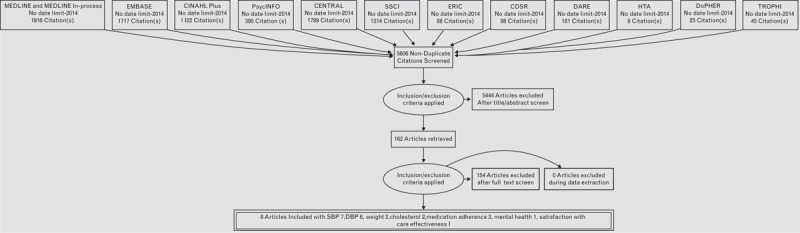
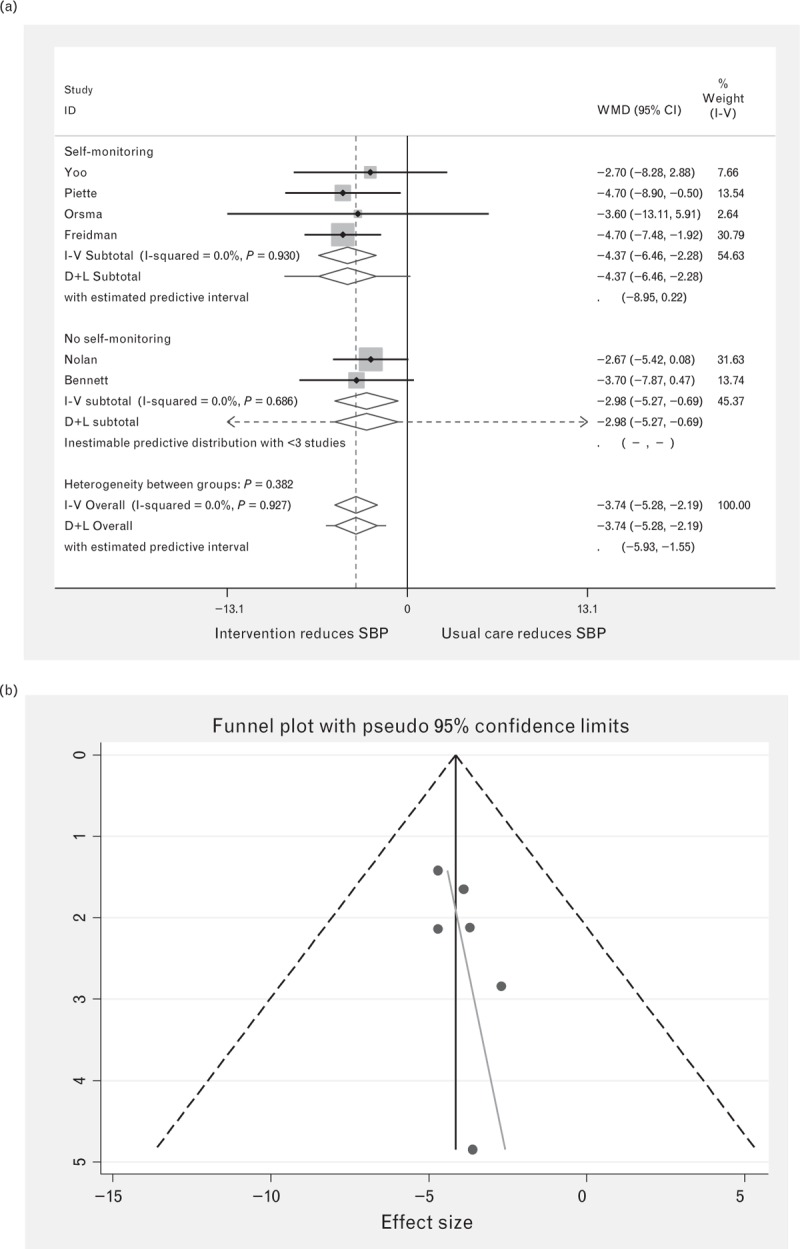
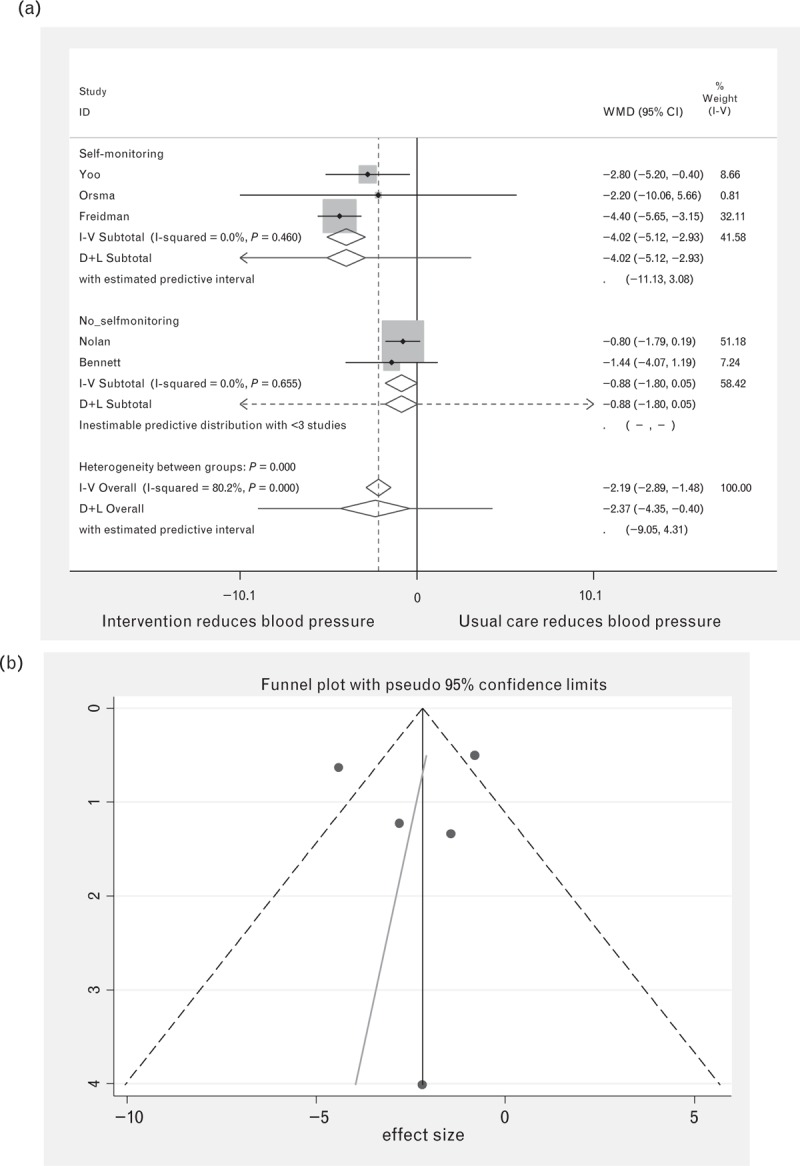
OBJECTIVE: To synthesize the evidence for using interactive digital interventions (IDIs) to support patient self-management of hypertension, and to determine their impact on control and reduction of blood pressure. METHOD: Systematic review with meta-analysis was undertaken with a search performed in MEDLINE, EMBASE, CINAHL, PsycINFO, ERIC, Cochrane Library, DoPHER, TROPHI, Social Science Citation Index and Science Citation Index. The population was adults (>18 years) with hypertension, intervention was an IDI and the comparator was usual care. Primary outcomes were change in SBP and DBP. Only randomized controlled trials and studies published in journals and in English were eligible. Eligible IDIs included interventions accessed through a computer, smartphone or other hand-held device. RESULTS: Four out of seven studies showed a significantly greater reduction for intervention compared to usual care for SBP, with no difference found for three. Overall, IDIs significantly reduced SBP, with the weighted mean difference being -3.74 mmHg [95% confidence interval (CI) -2.19 to -2.58] with no heterogeneity observed (I-squared = 0.0%, P = 0.990). For DBP, four out of six studies indicated a greater reduction for intervention compared to controls, with no difference found for two. For DBP, a significant reduction of -2.37 mmHg (95% CI -0.40 to -4.35) was found, but considerable heterogeneity was noted (I-squared = 80.1%, P = <0.001). CONCLUSION: IDIs lower both SBP and DBP compared to usual care. Results suggest these findings can be applied to a wide range of healthcare systems and populations. However, sustainability and long-term clinical effectiveness of these interventions remain uncertain.
Overview
The claims and statistics of this paper haven’t been checked yet.
Run the check — free, no account needed. It reads the open-access text and checks the sources it cites.
Integrity signals
Registry
Cites
Statistics
Figures
Verification
Claims the paper makes
The claims and statistics of this paper haven’t been checked yet.
Run the check — free, no account needed. It reads the open-access text and checks the sources it cites.
Claims other papers make about this one
Each is checked against this paper’s own text: does it say what the citing paper says it does?
The source backs part of the claim, not all of it — or backs it for a different population, condition or comparison.
In the citing paper
“Current evidence on digital health interventions is disproportionately concerned with high-income countries and hospital settings.”
From Digital health interventions for non-communicable disease management in primary health care in low-and middle-income countries (2023) · cites this paper as [19]
Experimental — accuracy not yet measuredThe cited source says what the claim attributes to it.
In the citing paper
“improve outcomes in people with long term conditions 7 such as cardiovascular disease (McClean in press), diabetes 8 and mental health conditions 9”
From Evaluating Digital Health Interventions (2016) · cites this paper as [7]
In the citing paper
“However, most of these original studies and reviews focused on high-income countries, hospital settings, or fields other than NCDs15,16,19–22.”
From Digital health interventions for non-communicable disease management in primary health care in low-and middle-income countries (2023) · cites this paper as [19]
In the citing paper
“Nevertheless, the long-term sustainable effects of digital health on behavioral changes remains uncertain19,20,84.”
From Digital health interventions for non-communicable disease management in primary health care in low-and middle-income countries (2023) · cites this paper as [19]
In the citing paper
“This disagreement may result from differences in study locations (high-income countries or LMICs), populations (general population or less advantaged populations), and study settings (hospitals or primary health care)19,20.”
From Digital health interventions for non-communicable disease management in primary health care in low-and middle-income countries (2023) · cites this paper as [19]
In the citing paper
“This mixture of findings on clinical outcomes added to the conflicting evidence in the existing literature, where many meta-analyses of related topics disagreed on outcomes such as blood pressure reduction19,20.”
From Digital health interventions for non-communicable disease management in primary health care in low-and middle-income countries (2023) · cites this paper as [19]
In the citing paper
“the included studies still presented high heterogeneity in the outcomes of using digital health, which was also found in other systematic reviews19–21.”
From Digital health interventions for non-communicable disease management in primary health care in low-and middle-income countries (2023) · cites this paper as [19]
Self-check
Percentages, sums and reported differences re-computed from the paper’s own numbers.
The self-check needs the paper’s full text.
Citations
Cites
Preferred Reporting Items for Systematic Reviews and Meta-Analyses: the PRISMA statement
Moher, D., Liberati, A., Tetzlaff, J., Altman, D. G., & for the PRISMA Group (2009) · BMJ · doi:10.1136/bmj.b2535 · Cited by 83,823
Preferred Reporting Items for Systematic Reviews and Meta-Analyses: The PRISMA Statement
Moher, D., Liberati, A., Tetzlaff, J., Altman, D. G., & The PRISMA Group (2009) · PLoS Medicine · doi:10.1371/journal.pmed.1000097 · Cited by 64,042
Bias in meta-analysis detected by a simple, graphical test
Egger, M., Smith, G. D., Schneider, M., & Minder, C. (1997) · BMJ · doi:10.1136/bmj.315.7109.629 · Cited by 56,722
Quantifying heterogeneity in a meta‐analysis
Higgins, J. P. T., & Thompson, S. G. (2002) · Statistics in Medicine · doi:10.1002/sim.1186 · Cited by 36,763
The Cochrane Collaboration's tool for assessing risk of bias in randomised trials
Higgins, J. P. T., Altman, D. G., Gotzsche, P. C., Juni, P., Moher, D., Oxman, A. D., Savovic, J., Schulz, K. F., Weeks, L., Sterne, J. A. C., et al. (2011) · BMJ · doi:10.1136/bmj.d5928 · Cited by 33,817
Dermyshi, E., Wang, Y., Yan, C., Hong, W., Qiu, G., Gong, X., & Zhang, T. (2017) · Neonatology · doi:10.1159/000454668 · Cited by 24,586
Wang, G., Ma, R., Qiao, G., Wada, K., Aizawa, Y., & Satoh, T. (2015) · Integrative Medicine International · doi:10.1159/000368408 · Cited by 18,762
Blood pressure, stroke, and coronary heart disease
Collins, R., Peto, R., MacMahon, S., Godwin, J., Qizilbash, N., Collins, R., MacMahon, S., Hebert, P., Eberlein, K. A., Taylor, J. O., et al. (1990) · The Lancet · doi:10.1016/0140-6736(90)90944-z · Cited by 4,491
Patient Self-management of Chronic Disease in Primary Care
Bodenheimer, T. (2002) · JAMA · doi:10.1001/jama.288.19.2469 · Cited by 3,598 · cited 1×
“Self-management can encompass a wide range of behaviours in addition to medication titration and monitoring of symptoms, such as individuals’ ability to manage physical, psychosocial and lifestyle behaviours related to their condition [6].”
BackgroundStages of change and decisional balance for 12 problem behaviors.
Prochaska, J., Velicer, W., Rossi, J., Goldstein, M., Marcus, B., Rakowski, W., Fiore, C., Harlow, L., Redding, C. A., & Rosenbloom, D. (1994) · Health Psychology · doi:10.1037/0278-6133.13.1.39 · Cited by 2,579
Research works printed but not linked: 1
- Bray, 2010, Does self-monitoring reduce blood pressure Meta-analysis with meta-regression of randomized controlled trials., Ann Med, 42, 371, 10.3109/07853890.2010.489567 · DOI · Paper page
Cited by
Sorted by citations
Mancia, G., Kreutz, R., Brunström, M., Burnier, M., Grassi, G., Januszewicz, A., Muiesan, M. L., Tsioufis, K., Agabiti-Rosei, E., Algharably, E. A. E., et al. (2023) · Journal of Hypertension · doi:10.1097/hjh.0000000000003480 · Cited by 3,473
Diretrizes Brasileiras de Hipertensão Arterial – 2020
Barroso, W. K. S., Rodrigues, C. I. S., Bortolotto, L. A., Gomes, M. A. M., Brandão, A. A., Feitosa, A. D. M., Machado, C. A., Poli‐de‐Figueiredo, C. E., Amodeo, C., Mion, D., et al. (2021) · Arquivos Brasileiros de Cardiologia · doi:10.36660/abc.20201238 · Cited by 1,389
Evaluating Digital Health Interventions
Murray, E., Hekler, E. B., Andersson, G., Collins, L. M., Doherty, A., Hollis, C., Rivera, D. E., West, R., & Wyatt, J. C. (2016) · American Journal of Preventive Medicine · doi:10.1016/j.amepre.2016.06.008 · Cited by 847
Self-citationSelf‐Care for the Prevention and Management of Cardiovascular Disease and Stroke
Riegel, B. J., Moser, D. K., Buck, H. G., Dickson, V. V., Dunbar, S. B., Lee, C. S., Lennie, T. A., Lindenfeld, J. M., Mitchell, J. E., Treat‐Jacobson, D., et al. (2017) · Journal of the American Heart Association · doi:10.1161/jaha.117.006997 · Cited by 694
Using smartphones and health apps to change and manage health behaviors: a population-based survey
Ernsting, C., Dombrowski, S. U., Oedekoven, M., O´Sullivan, J. L., Kanzler, M., Kuhlmey, A., & Gellert, P. (2017) · Journal of Medical Internet Research · doi:10.2196/jmir.6838 · Cited by 400
Omboni, S., McManus, R. J., Bosworth, H. B., Chappell, L. C., Green, B. B., Kario, K., Logan, A. G., Magid, D. J., Mckinstry, B., Margolis, K. L., et al. (2020) · Hypertension · doi:10.1161/hypertensionaha.120.15873 · Cited by 307
Self-citationLi, R., Liang, N., Bu, F., & Hesketh, T. (2020) · JMIR mHealth and uHealth · doi:10.2196/17776 · Cited by 262
McManus, R. J., Little, P. S., Stuart, B. L., Morton, K., Raftery, J. P., Kelly, J., Bradbury, K. J., Zhang, J., Zhu, S., Murray, E., et al. (2021) · BMJ · doi:10.1136/bmj.m4858 · Cited by 272
Self-citationManagement of Hypertension in the Digital Era
Kario, K. (2020) · Hypertension · doi:10.1161/hypertensionaha.120.14742 · Cited by 247
Kario, K., Nomura, A., Harada, N., Okura, A., Nakagawa, K., Tanigawa, T., & Hida, E. (2021) · European Heart Journal · doi:10.1093/eurheartj/ehab559 · Cited by 232
Persell, S. D., Peprah, Y. A., Lipiszko, D., Lee, J. Y., Li, J. J., Ciolino, J. D., Karmali, K. N., & Sato, H. (2020) · JAMA Network Open · doi:10.1001/jamanetworkopen.2020.0255 · Cited by 185
Liu, K., Xie, Z., & Or, C. K. (2020) · JMIR mHealth and uHealth · doi:10.2196/15779 · Cited by 181
Digital Support Interventions for the Self-Management of Low Back Pain: A Systematic Review
Nicholl, B. I., Sandal, L. F., Stochkendahl, M. J., McCallum, M., Suresh, N., Vasseljen, O., Hartvigsen, J., Mork, P. J., Kjær, P., Søgaard, K., et al. (2017) · Journal of Medical Internet Research · doi:10.2196/jmir.7290 · Cited by 190
Self-citationBand, R. J., Bradbury, K. J., Morton, K., May, C. R., Michie, S., Mair, F. S., Murray, E., McManus, R. J., Little, P. S., & Yardley, L. (2017) · Implementation Science · doi:10.1186/s13012-017-0553-4 · Cited by 172
Self-citationDorje, T., Zhao, G., Tso, K., Wang, J., Chen, Y., Tsokey, L., Tan, B.-K., Scheer, A., Jacques, A., Li, Z., et al. (2019) · The Lancet Digital Health · doi:10.1016/s2589-7500(19)30151-7 · Cited by 163
Alessa, T., Abdi, S., Hawley, M. S., & de Witte, L. (2018) · JMIR mhealth and uhealth · doi:10.2196/10723 · Cited by 160
Kitt, J., Fox, R., Tucker, K. L., & McManus, R. J. (2019) · Current Hypertension Reports · doi:10.1007/s11906-019-0949-4 · Cited by 155
Self-citationAdherence to Antihypertensive Therapy
Peacock, E., & Krousel-Wood, M. A. (2016) · Medical Clinics of North America · doi:10.1016/j.mcna.2016.08.005 · Cited by 150
Xiong, S., Lu, H., Peoples, N., Duman, E. K., Najarro, A., Ni, Z., Gong, E., Yin, R., Ostbye, T., Palileo-Villanueva, L. M., et al. (2023) · npj Digital Medicine · doi:10.1038/s41746-023-00764-4 · Cited by 126
Marthick, M., McGregor, D., Alison, J. A., Cheema, B. S., Dhillon, H. M., & Shaw, T. J. (2021) · Journal of Medical Internet Research · doi:10.2196/24722 · Cited by 124
Gomes, M., Murray, E., & Raftery, J. P. (2022) · PharmacoEconomics · doi:10.1007/s40273-022-01130-0 · Cited by 114
Self-citationShahaj, O., Denneny, D., Schwappach, A., Pearce, G., Epiphaniou, E., Parke, H. L., Taylor, S. J. C., & Pinnock, H. (2019) · Journal of Hypertension · doi:10.1097/hjh.0000000000001867 · Cited by 110
Kitt, J., Fox, R., Cairns, A., Mollison, J., Burchert, H. H., Kenworthy, Y., McCourt, A., Suriano, K., Lewandowski, A. J., Mackillop, L. H., et al. (2021) · Hypertension · doi:10.1161/hypertensionaha.120.17101 · Cited by 112
Self-citationXiong, S., Berkhouse, H., Schooler, M., Pu, W., Sun, A., Gong, E., & Yan, L. L. (2018) · Current Hypertension Reports · doi:10.1007/s11906-018-0886-7 · Cited by 106
Home Blood Pressure Monitoring: Current Status and New Developments
Kario, K. (2021) · American Journal of Hypertension · doi:10.1093/ajh/hpab017 · Cited by 106
Svendsen, M. J., Wood, K., Kyle, J., Cooper, K., Rasmussen, C. D. N., Sandal, L. F., Stochkendahl, M. J., Mair, F. S., & Nicholl, B. I. (2020) · BMJ Open · doi:10.1136/bmjopen-2020-038800 · Cited by 99
Self-citationSiopis, G., Moschonis, G., Eweka, E., Jung, J., Kwasnicka, D., Asare, B. Y.-A., Kodithuwakku, V., Willems, R., Verhaeghe, N., Annemans, L., et al. (2023) · The Lancet Digital Health · doi:10.1016/s2589-7500(23)00002-x · Cited by 87
Ampofo, A. G., Khan, E., & Ibitoye, B. M. (2020) · Heart & Lung · doi:10.1016/j.hrtlng.2020.02.039 · Cited by 94
Or, C. K., Liu, K., So, M. K. P., Cheung, B. M. Y., Yam, L. Y.-C., Tiwari, A., Lau, Y. F. E., Lau, T., Hui, P. S. G., Cheng, H. C., et al. (2020) · Journal of Medical Internet Research · doi:10.2196/16769 · Cited by 79
Arsenijevic, J., Tummers, L. G., & Bosma, N. S. (2019) · Journal of Medical Internet Research · doi:10.2196/11613 · Cited by 75
Li, J., Parrott, S., Sweeting, M. J., Farmer, A. A., Ross, J., Dack, C., Pal, K., Yardley, L., Barnard, M., Hudda, M. T., et al. (2018) · Journal of Medical Internet Research · doi:10.2196/jmir.9256 · Cited by 76
Self-citationMa, Y., Cheng, H. Y., Cheng, L., & Sit, J. W. H. (2018) · International Journal of Nursing Studies · doi:10.1016/j.ijnurstu.2018.11.007 · Cited by 69
Chen, Y.-J., Li, X., Jing, G., Pan, B., Ge, L., Bing, Z., Yang, K., & Han, X. (2020) · Public Health Nursing · doi:10.1111/phn.12698 · Cited by 62
Digital Patient Experience: Umbrella Systematic Review
Wang, T., Giunti, G., Melles, M., & Goossens, R. (2022) · Journal of Medical Internet Research · doi:10.2196/37952 · Cited by 57
Implications of the COVID-19 Pandemic for Cardiovascular Disease and Risk-Factor Management
Lau, D., & McAlister, F. A. (2020) · Canadian Journal of Cardiology · doi:10.1016/j.cjca.2020.11.001 · Cited by 55
Morrison, D., Mair, F. S., Yardley, L., Kirby, S. E., & Thomas, M. D. (2016) · Chronic Respiratory Disease · doi:10.1177/1479972316660977 · Cited by 54
Self-citationTrečiokienė, I., Postma, M. J., Nguyen, T. N., Fens, T., Petkevicius, J., Kubilius, R., Gulbinovič, J., & Taxis, K. (2021) · BMC Family Practice · doi:10.1186/s12875-021-01421-z · Cited by 57
Pamungkas, R. A., Usman, A. M., Chamroonsawasdi, K., & Abdurrasyid, A. (2022) · Diabetes & Metabolic Syndrome Clinical Research & Reviews · doi:10.1016/j.dsx.2022.102537 · Cited by 52
Connected Health Technology for Cardiovascular Disease Prevention and Management
Wongvibulsin, S., Martin, S. S., Steinhubl, S. R., & Muse, E. D. (2019) · Current Treatment Options in Cardiovascular Medicine · doi:10.1007/s11936-019-0729-0 · Cited by 52
Volpi, S. S., Biduski, D., Bellei, E. A., Rossa, D. T., McCleary, L., Alves, A. L. S., & Marchi, A. C. B. D. (2021) · PeerJ · doi:10.7717/peerj.11491 · Cited by 53
Lau, S. C. L., Bhattacharjya, S., Fong, M. W. M., Nicol, G. E., Lenze, E. J., Baum, C. M., Hardi, A., & Wong, A. (2020) · Journal of Telemedicine and Telecare · doi:10.1177/1357633x20955122 · Cited by 48
Khan, N. A., Stergiou, G. S., Omboni, S., Kario, K., Renna, N. F., Chapman, N., McManus, R. J., Williams, B., Parati, G., Конради, А. О., et al. (2022) · Journal of Hypertension · doi:10.1097/hjh.0000000000003205 · Cited by 47
Self-citationWang, Y., Guo, F., Wang, J., Li, Z., Tan, W., Xie, M., Yang, X., Duan, S., Song, L., Cheng, S., et al. (2023) · Journal of Medical Internet Research · doi:10.2196/52464 · Cited by 46
Hwang, M., & Chang, A. K. (2023) · Journal of Nursing Scholarship · doi:10.1111/jnu.12882 · Cited by 43
Kario, K., Williams, B., Tomitani, N., McManus, R. J., Schutte, A. E., Avolio, A. P., Shimbo, D., Wang, J., Khan, N. A., Picone, D. S., et al. (2024) · Journal of Hypertension · doi:10.1097/hjh.0000000000003827 · Cited by 41
Self-citationWright, P. J., Raynor, P. A., Bowers, D., Combs, E. M., Corbett, C. F., Hardy, H., & Patel, K. (2023) · DIGITAL HEALTH · doi:10.1177/20552076231204746 · Cited by 39
Salim, H. S., Lee, P. Y., Sazlina, S. G., Ching, S. M., Mawardi, M., Shamsuddin, N. H., Ali, H., Ismail, A. H., & Tan, N. C. (2019) · PLoS ONE · doi:10.1371/journal.pone.0224649 · Cited by 37
Bunting, J. W., Withers, T. M., Heneghan, N. R., & Greaves, C. J. (2020) · Physiotherapy · doi:10.1016/j.physio.2020.08.001 · Cited by 37
Ainsworth, B., Greenwell, K., Stuart, B. L., Raftery, J. P., Mair, F. S., Bruton, A., Yardley, L., & Thomas, M. D. (2019) · BMJ Open · doi:10.1136/bmjopen-2019-032465 · Cited by 35
Self-citationSakima, A., Akagi, Y., Akasaki, Y., Fujii, T., Haze, T., Kawakami-Mori, F., Kitajima, K., Kobayashi, Y., Matayoshi, T., Sakaguchi, T., et al. (2024) · Hypertension Research · doi:10.1038/s41440-024-01792-7 · Cited by 32
Band, R., Morton, K., Stuart, B., Raftery, J., Bradbury, K., Yao, G., Zhu, S.-H., Little, P., Yardley, L., & McManus, R. (2016) · BMJ Open · doi:10.1136/bmjopen-2016-012684 · Cited by 31
Self-citationGonzález‐Sánchez, J., Recio-Rodriguez, J. I., Fernandez-delRio, A., Sánchez, Á., Magdalena-Belio, J. F., Gómez-Marcos, M. Á., & García‐Ortiz, L. (2019) · International Journal of Medical Informatics · doi:10.1016/j.ijmedinf.2019.02.004 · Cited by 31
The current state and future of internet technology-based hypertension management in Japan
Yatabe, J., Yatabe, M., & Ichihara, A. (2020) · Hypertension Research · doi:10.1038/s41440-020-00591-0 · Cited by 33
Murray, E., Ross, J., Pal, K., Li, J., Dack, C., Stevenson, F. A., Sweeting, M. J., Parrott, S., Barnard, M., Yardley, L., et al. (2018) · Programme Grants for Applied Research · doi:10.3310/pgfar06050 · Cited by 33
Self-citationAdler, A. J., Laar, A. K., Kotoh, A. M., Legido‐Quigley, H., Perel, P., Lamptey, P. R., & Lange, I. L. (2020) · BMC Health Services Research · doi:10.1186/s12913-019-4774-x · Cited by 30
Abe, M., Hirata, T., Morito, N., Kawashima, M., Yoshida, S., Takami, Y., Fujimoto, T., Kawasoe, S., Shibukawa, T., Segawa, H., et al. (2024) · Hypertension Research · doi:10.1038/s41440-024-01939-6 · Cited by 31
Why Effective Interventions Do Not Work for All Patients
Edlind, M., Mitra, N., Grande, D., Barg, F. K., Carter, T., Turr, L., Glanz, K., Long, J. A., & Kangovi, S. (2018) · Medical Care · doi:10.1097/mlr.0000000000000939 · Cited by 29
Lau, S. C. L., Judycki, S., Mix, M., DePaul, O., Tomazin, R., Hardi, A., Wong, A., & Baum, C. M. (2022) · American Journal of Occupational Therapy · doi:10.5014/ajot.2022.049117 · Cited by 27
Jamshidnezhad, A., Kabootarizadeh, L., & Hoseini, S. M. (2019) · Acta Informatica Medica · doi:10.5455/aim.2019.27.263-267 · Cited by 25
Dash, S. R., Delibasic, V., Alsaeed, S. M., Ward, M., Jefferson, K., Manca, D. P., & Arcand, J. (2020) · Journal of Community Health · doi:10.1007/s10900-020-00831-x · Cited by 25
Kilfoy, A., Chu, C. H., Krisnagopal, A., McAtee, E., Baek, S., Zworth, M., Hwang, K., Park, H., & Jibb, L. (2024) · Journal of Clinical Nursing · doi:10.1111/jocn.17226 · Cited by 30
Ginsberg, K. H., Babbott, K. M., & Serlachius, A. S. (2024) · Journal of Medical Internet Research · doi:10.2196/62761 · Cited by 24
Role of Digital Games in Self-Management of Cardiovascular Diseases: A Scoping Review
Radhakrishnan, K., Baranowski, T., Julien, C., Thomaz, E., & Kim, M. T. (2018) · Games for Health Journal · doi:10.1089/g4h.2018.0011 · Cited by 24
Ukoha-Kalu, B. O., Isah, A., Biambo, A. A., Samaila, A., Abubakar, M. M., Kalu, U. A., & Soyiri, I. N. (2023) · BMJ Open · doi:10.1136/bmjopen-2023-073682 · Cited by 22
Medication Adherence and Intervention Strategies: Why Should We Care
Schnorrerova, P., Matalová, P., & Wawruch, M. (2025) · Bratislavské lekárske listy/Bratislava medical journal · doi:10.1007/s44411-025-00227-0 · Cited by 21
Munteanu, L. A., Frandeș, M., Timar, B., Tudorache, E., Fildan, A. P., Oancea, C. I., & Tofolean, D. E. (2020) · BMC Health Services Research · doi:10.1186/s12913-020-05340-0 · Cited by 21
Lim, M. T., Lim, Y. M. F., Teh, X. R., Lee, Y. L., Ismail, S. A., & Sivasampu, S. (2018) · International Journal for Quality in Health Care · doi:10.1093/intqhc/mzy252 · Cited by 21
Digitalizing Public Services: Opportunities for Latin America and the Caribbean
Cristia, J., & Vlaicu, R. (2022) · doi:10.18235/0004543 · Cited by 21
Ramasawmy, M., Poole, L., Thorlu-Bangura, Z., Chauhan, A., Murali, M., Jagpal, P., Bijral, M., Prashar, J., G-Medhin, A., Murray, E., et al. (2022) · JMIR Cardio · doi:10.2196/37360 · Cited by 22
Self-citationBand, R. J., Hinton, L., Tucker, K. L., Chappell, L. C., Crawford, C., Franssen, M., Greenfield, S., Hodgkinson, J., McCourt, C., McManus, R. J., et al. (2019) · Pilot and Feasibility Studies · doi:10.1186/s40814-019-0537-z · Cited by 20
Self-citationHospital-Owned Apps in Taiwan: Nationwide Survey
Liu, H.-Y., Lee, W., Sun, Y.-C., Fen, J.-J., Chen, T., Chou, L., & Hwang, S. (2018) · JMIR mhealth and uhealth · doi:10.2196/mhealth.8636 · Cited by 20
on behalf of the EVIDENT Investigators group, Recio-Rodriguez, J. I., Rodríguez‐Sánchez, E., Martín-Cantera, C., Martínez‐Vizcaíno, V., Arietaleanizbeaskoa, M. S., González-Viejo, N., Menéndez-Suárez, M., Gómez-Marcos, M. Á., & García‐Ortiz, L. (2018) · Hypertension Research · doi:10.1038/s41440-018-0182-6 · Cited by 19
Medication adherence: measurement methods and approaches
Schnorrerova, P., Matalová, P., & Wawruch, M. (2024) · Bratislavské lekárske listy/Bratislava medical journal · doi:10.4149/bll_2024_40 · Cited by 21
Home blood pressure measurement and digital health
Postel‐Vinay, N., Bobrie, G., Savard, S., Persu, A., Amar, L., Azizi, M., & Parati, G. (2018) · Journal of Hypertension · doi:10.1097/hjh.0000000000001860 · Cited by 18
Han, H., Guo, W., Lu, Y., & Wang, M. (2020) · Public Health · doi:10.1016/j.puhe.2020.05.024 · Cited by 18
Emmenis, M. V., Jamison, J. Q., Kassavou, A., Hardeman, W., Naughton, F., A’Court, C., Sutton, S., & Eborall, H. (2022) · BMJ Open · doi:10.1136/bmjopen-2021-053183 · Cited by 13
Hong, H. C., Min, A., & Kim, Y. M. (2021) · Journal of Advanced Nursing · doi:10.1111/jan.14925 · Cited by 15
Avegno, K. S., Roberson, K. B., Onsomu, E. O., Edwards, M. F., Dean, E. L., & Bertoni, A. G. (2023) · International Journal of Environmental Research and Public Health · doi:10.3390/ijerph20075287 · Cited by 14
Rivera, B. D., Nurse, C., Shah, V., Roldan, C., Jumbo, A. E., Faysel, M. A., Levine, S. R., Kaufman, D. R., & Afable, A. (2023) · BMC Public Health · doi:10.1186/s12889-023-17255-6 · Cited by 14
Zhang, X., Tan, S. S., Fierloos, I. N., Zanutto, O., Alhambra‐Borrás, T., Vasiljev, V., Bennett, S. E., Rentoumis, A., Buranello, A., Macchione, S., et al. (2019) · BMC Public Health · doi:10.1186/s12889-019-6979-7 · Cited by 14
Gibson, I., McCrudden, Z., Dunne, D., Harris, A., Hynes, L., Murphy, E., Murphy, A. W., Byrne, M., & McEvoy, J. W. (2023) · Open Heart · doi:10.1136/openhrt-2022-002211 · Cited by 12
Agnihothri, S., Cui, L., Rajan, B., Banerjee, A., & Ramanujan, R. (2021) · Journal of Hypertension · doi:10.1097/hjh.0000000000002909 · Cited by 12
Digital health intervention as an adjunct to a workplace health program in hypertension
Senecal, C., Widmer, R. J., Johnson, M. P., Lerman, L. O., & Lerman, A. (2018) · Journal of the American Society of Hypertension · doi:10.1016/j.jash.2018.05.006 · Cited by 12
Ruilope, L. M., Valenzuela, P. L., & Lucía, A. (2021) · European Heart Journal · doi:10.1093/eurheartj/ehab694 · Cited by 12
Sun, T., Zhao, H., Ding, Z., Xie, H., Ma, L., Zhang, Y., Wang, Y., Yang, Y., Xu, C., Sun, Y., et al. (2023) · JMIR Research Protocols · doi:10.2196/46883 · Cited by 11
Sukpattanasrikul, S., Singha-Dong, N., Sitthimongkol, Y., & Anonjarn, K. (2025) · International Journal of Nursing Sciences · doi:10.1016/j.ijnss.2025.04.001 · Cited by 12
Cardiovascular Disease Risk Management in Persons With HIV: Does Clinician Specialty Matter?
Okeke, N. L., Schafer, K. R., Meissner, E. G., Ostermann, J., Shah, A., Ostasiewski, B., Phelps, E., Kieler, C. A., Oladele, E., Garg, K., et al. (2020) · Open Forum Infectious Diseases · doi:10.1093/ofid/ofaa361 · Cited by 11
Targeting better hypertension control with the usage of the ESH smartphone application
Konstantinidis, D., Siafi, E. P., Iliakis, P., Mihas, C. C., Tatakis, F., Tsioufis, P., Kasiakogias, A., Dimitriadis, K. S., Protogerou, A. D., Κόλλιας, Α., et al. (2025) · European Journal of Preventive Cardiology · doi:10.1093/eurjpc/zwaf240 · Cited by 10
Transtheoretical model on the self-care behavior of hypertension patients: a systematic review
Hasriani, H., Sjattar, E. L., & Arafat, R. (2021) · Journal of Health Research · doi:10.1108/jhr-01-2021-0053 · Cited by 10
McManus, R. J., Smith, A., Temple, E., Yu, L., Allen, J., Doogue, R., Ford, G. A., Glynn, L. G., Guthrie, B., Hall, P. S., et al. (2024) · BMC Cardiovascular Disorders · doi:10.1186/s12872-024-04320-0 · Cited by 9
Self-citationPati, S., Menon, J. C., Rehman, T., Agrawal, R., Kshatri, J. S., Palo, S. K., Janakiram, C., Mitra, S., Sreedevi, A., & Anand, T. (2025) · BMC Public Health · doi:10.1186/s12889-024-20922-x · Cited by 9
Meyer, B., Riepenhausen, A., Betz, L. T., Jauch‐Chara, K., & Reshetnik, A. (2025) · BMC Cardiovascular Disorders · doi:10.1186/s12872-025-04698-5 · Cited by 9
Gómez‐Sánchez, L., Gómez‐Sánchez, M., Lugones‐Sánchez, C., Rodríguez‐Sánchez, E., Tamayo‐Morales, O., González‐Sánchez, S., Botaya, R. M., Ramírez‐Manent, J. I., Recio-Rodriguez, J. I., Agudo‐Conde, C., et al. (2022) · Nutrients · doi:10.3390/nu14224758 · Cited by 9
Development and Preliminary Feasibility of an Automated Hypertension Self-Management System
Irizarry, T., Allen, M., Suffoletto, B. P., Einhorn, J., Burke, L. E., Kamarck, T. W., Rollman, B. L., & Muldoon, M. F. (2018) · The American Journal of Medicine · doi:10.1016/j.amjmed.2018.04.038 · Cited by 9
Wildenauer, A., Maurer, L., Rötzer, L., Eggert, T., & Schöbel, C. (2024) · Journal of Clinical Hypertension · doi:10.1111/jch.14811 · Cited by 8
Harnessing digital strategies to manage emotional health among students of Gen Z
Song, C., Xia, Y., Zhang, Z., & Liu, R. (2024) · Metaverse · doi:10.54517/m.v5i1.2707 · Cited by 7
Yardley, L., Morton, K., Greenwell, K., Stuart, B. L., Rice, C., Bradbury, K. J., Ainsworth, B., Band, R. J., Murray, E., Mair, F. S., et al. (2022) · Programme Grants for Applied Research · doi:10.3310/bwfi7321 · Cited by 7
Self-citationLiu, Y., Lv, Z., Zhou, S., Fu, Z., Wang, Y., Li, Y., Li, X., Wang, Y., Hu, S., Zhou, Z., et al. (2024) · Clinical and Experimental Hypertension · doi:10.1080/10641963.2024.2304023 · Cited by 7
Ravindranath, R., Sarma, P. S., Sivasankaran, S., Thankappan, K. R., & Jeemon, P. (2024) · Frontiers in Public Health · doi:10.3389/fpubh.2024.1375227 · Cited by 7
Wechkunanukul, K. H., Parajuli, D. R., & Hamiduzzaman, M. (2020) · World Journal of Clinical Cases · doi:10.12998/wjcc.v8.i11.2266 · Cited by 8
Metadata
- Authors
- McLean, G., Band, R., Saunderson, K., Hanlon, P., Murray, E., Little, P., McManus, R. J., Yardley, L., & Mair, F. S.
- Affiliations
- University of Oxford (GB)
- Corresponding author
- McLean, Gary
- ORCID
- Venue
- Journal of Hypertension
- Published
- 2016-04
- Volume
- 34
- Issue
- 4
- Pages
- 600-612
- ISSN
- 0263-6352 (ISSN-L)
- PMC
- PMC4947544
- OpenAlex
- W2321682528
- Cited by
- 168
- References
- 44
- Citations by year
- 2026: 3 · 2025: 17 · 2024: 20 · 2023: 21 · 2022: 17 · 2021: 26 · 2020: 22 · 2019: 12 · 2018: 21 · 2017: 5 · 2016: 4
- FWCI
- 2.67
- Type
- journal article
- Language
- en
- Open access
- hybrid
- doi.org
- Licence
- cc-by-nc-nd
- Locations
- Journal of Hypertension (publishedVersion, cc-by-nc-nd)
- Europe PMC (PubMed Central) (publishedVersion, cc-by-nc-nd)
- PubMed Central (publishedVersion, cc-by-nc-nd)
- PubMed (publishedVersion)
- ENLIGHTEN (Jurnal Bimbingan dan Konseling Islam) (acceptedVersion)
- ePrints Soton (University of Southampton) (acceptedVersion)
- Bristol Research (University of Bristol) (submittedVersion, cc-by-nc-nd)
- Funders
- National Institute for Health and Care Research (CDF/01/017, RP-PG-1211-20001)
- Economic and Social Research Council (ES/F029624/1)
- Programme Grants for Applied Research (RP-PG-1211-20001)
- Topics
- Health Sciences › Health Professions › General Health Professions › Mobile Health and mHealth Applications
- Health Sciences › Medicine › Cardiology and Cardiovascular Medicine › Blood Pressure and Hypertension Studies
- Social Sciences › Psychology › Applied Psychology › Digital Mental Health Interventions
- Keywords
- hypertension, self-management, mobile health, blood pressure control, systolic blood pressure, diastolic blood pressure, mobile application, patient education
- MeSH terms
- Aged, Female, Health Promotion, Humans, Hypertension, Male, Middle Aged, Self Care, Internet
About these checks
Registry, retraction, Cites and statistics results are computed, not judged, with one exception: a printed reference that no index lists is read once by a model before it counts as a citation error. Claims are extracted by a model and kept only when their quote appears verbatim in the text; each cited source is then checked, with a model’s help, for whether it says what the claim relies on. Those verdicts can be wrong — read the claim’s quote and the cited source before relying on one.
Statistics and arithmetic are recomputed, not judged.
Confidence bands are shown only for fields calibrated on our annotated test set. None is calibrated yet, so no band is shown.
What counts as a claim ›How we measure confidence ›How we check this ›
Are you an author, or do you see a problem with this page? Request a review
