

The DOI matches its Crossref record; 3 of the 3 references it cites were found in a registry or an index.
Clinical Utility of Human Papillomavirus Genotyping in Cervical Cancer Screening: A Systematic Review.
Open accessAbstract
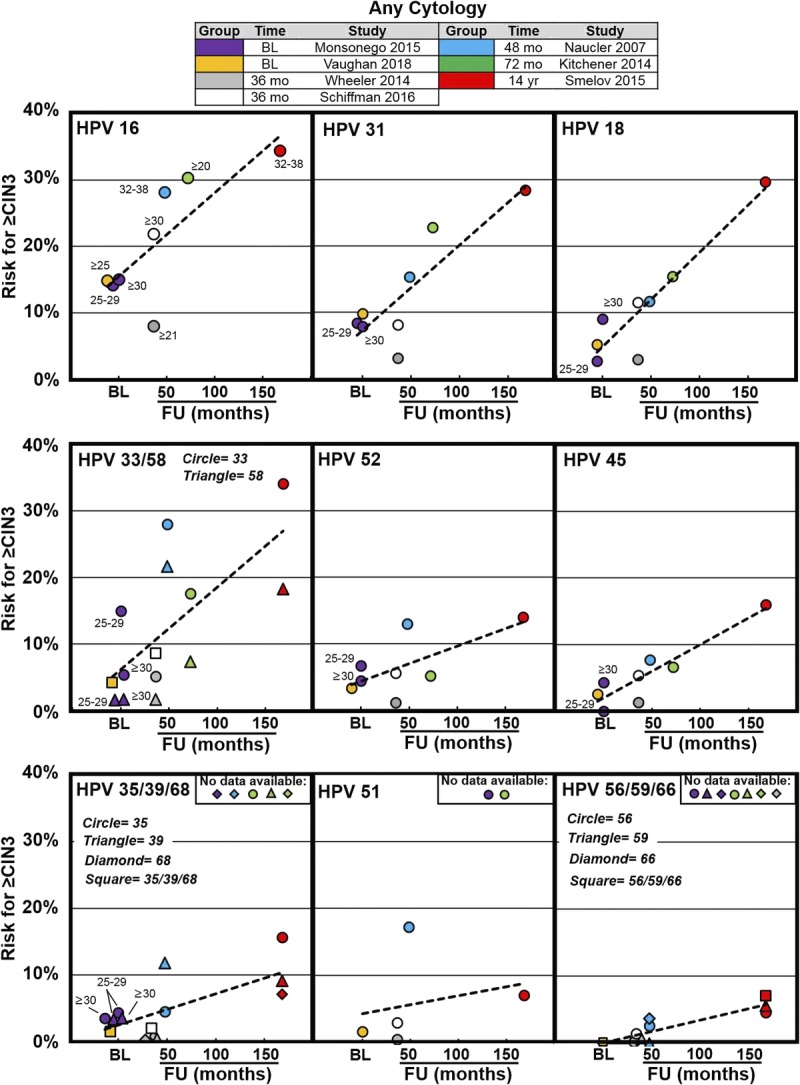
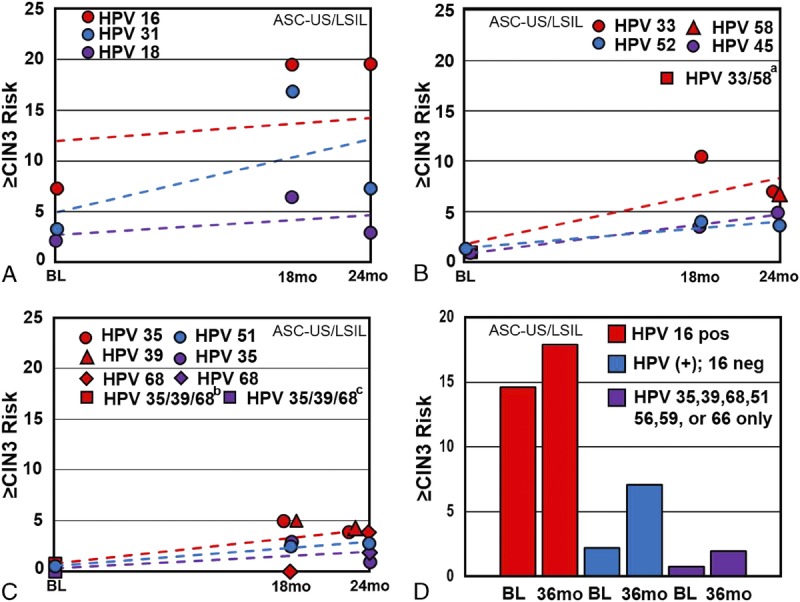
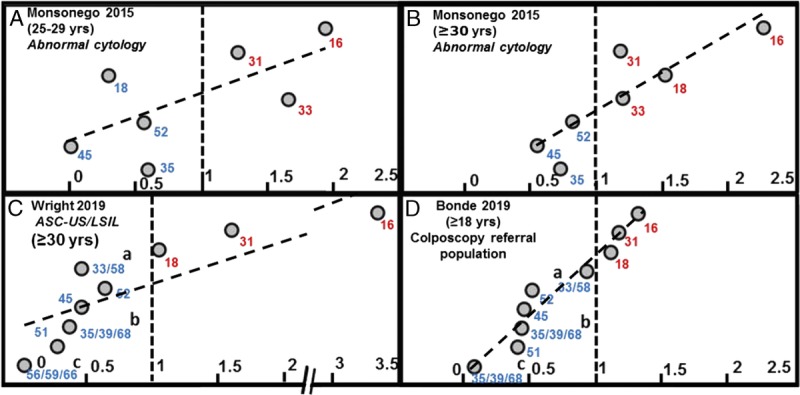
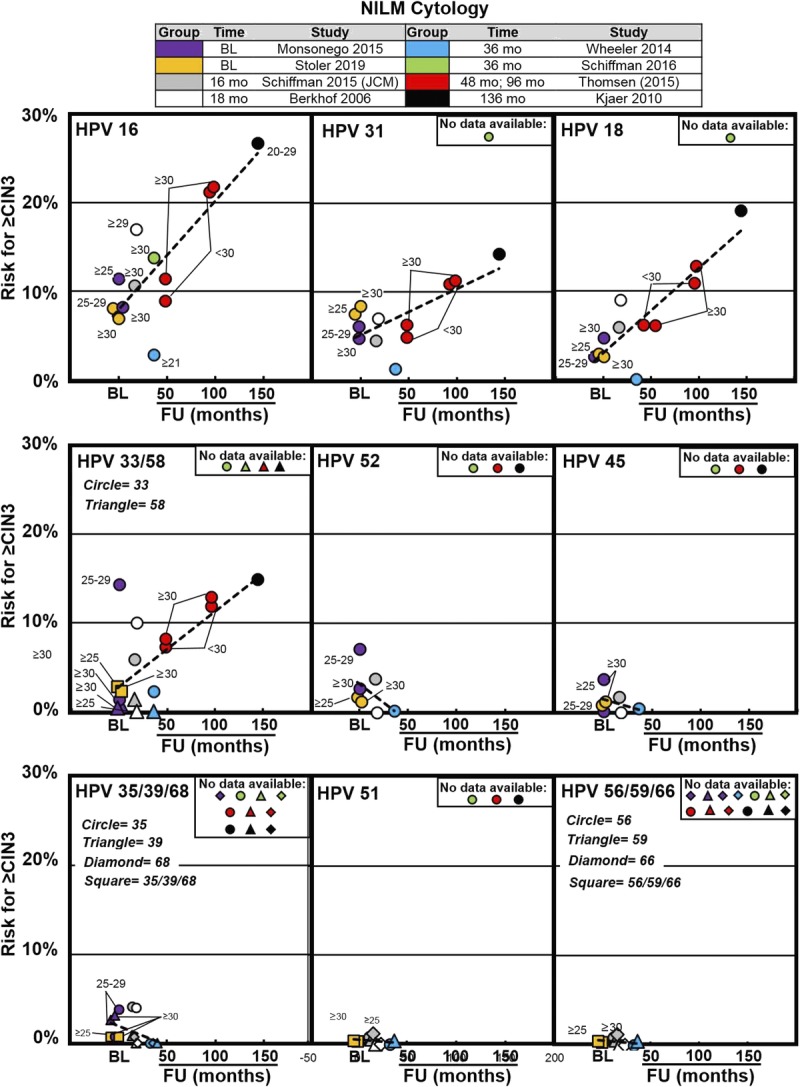
Objective: Thirteen human papillomavirus (HPV) genotypes are associated with the highest risk of cervical disease/cancer; however, the risk of disease progression and cancer is genotype dependent. The objective of this systematic review was to examine evidence for high-grade cervical intraepithelial neoplasia (≥CIN 3) risk discrimination using HPV genotyping. Materials and Methods: A systematic review of English and non-English articles through MEDLINE, Cochrane, clinicaltrials.gov, and abstracts presented at relevant professional society conferences were searched from 2000 to 2019. Search terms included: cervical cancer screening, HPV genotyping, CIN, HPV persistence, humans, and colposcopy; prospective, controlled trials, observational studies, and retrospective studies of residual specimens; evidence included HPV genotyping (beyond genotypes 16/18/45) results. Data were obtained independently by authors using predefined fields. Risk of bias was evaluated with a modified Newcastle-Ottawa Scale. The Grading of Recommendations, Assessment, Development and Evaluation methodology facilitated overall quality of evidence evaluation for risk estimation. The study protocol was registered with the PROSPERO International Prospective Register of Systematic Reviews (CRD42018091093). The primary outcome was CIN 3 or worse risk both at baseline and at different follow-up periods. Results: Of 236 identified sources, 60 full texts were retrieved and 16 articles/sources were included. Risk of bias was deemed low; the overall quality of evidence for CIN 3 or worse risk with negative for intraepithelial lesions or malignancies or low-grade squamous intraepithelial cytology was assessed as moderate; that with atypical squamous cells-undetermined significance and “all cytology” was assessed as high. Clinical and methodological heterogeneity precluded meta-analysis. Human papillomavirus genotyping discriminated risk of CIN 3 or worse to a clinically significant degree, regardless of cytology result. Conclusions: The evidence supports a clinical utility for HPV genotyping in risk discrimination during cervical cancer screening.
Overview
The claims and statistics of this paper haven’t been checked yet.
Run the check — free, no account needed. It reads the open-access text and checks the sources it cites.
Integrity signals
Registry
Cites
Statistics
Figures
Verification
Claims the paper makes
The claims and statistics of this paper haven’t been checked yet.
Run the check — free, no account needed. It reads the open-access text and checks the sources it cites.
Claims other papers make about this one
Each is checked against this paper’s own text: does it say what the citing paper says it does?
The source backs part of the claim, not all of it — or backs it for a different population, condition or comparison.
In the citing paper
“HPV genotyping is also needed to triage patients for cervical cancer screening [25]”
From Comparison of Seegene Anyplex II HPV28 assay with BD Onclarity HPV assay for human papillomavirus genotyping (2022) · cites this paper as [25]
Experimental — accuracy not yet measured
Self-check
Percentages, sums and reported differences re-computed from the paper’s own numbers.
The self-check needs the paper’s full text.
Citations
Cites
de Sanjose, S., Quint, W. G., Alemany, L., Geraets, D. T., Klaustermeier, J. E., Lloveras, B., Tous, S., Felix, A., Bravo, L. E., Shin, H.-R., et al. (2010) · The Lancet Oncology · doi:10.1016/s1470-2045(10)70230-8 · Cited by 2,728
Grading quality of evidence and strength of recommendations for diagnostic tests and strategies
Schünemann, H. J., Oxman, A. D., Brozek, J., Glasziou, P., Jaeschke, R., Vist, G. E., Williams, J. W., Kunz, R., Craig, J., Montori, V. M., et al. (2008) · BMJ · doi:10.1136/bmj.39500.677199.ae · Cited by 1,782
VALGENT: a protocol for clinical validation of human papillomavirus assays
Arbyn, M., Depuydt, C., Benoy, I., Bogers, J., Cuschieri, K., Schmitt, M., Pawlita, M., Geraets, D., Heard, I., Gheit, T., et al. (2016) · Journal of Clinical Virology · doi:10.1016/j.jcv.2015.09.014 · Cited by 157
Self-citation
Research works printed but not linked: 43
- 2004, Classification of papillomaviruses, Virology, 324, 17, 10.1016/j.virol.2004.03.033 · DOI
- 1983, Similarities of papillomavirus infections with tumor promoters, Princess Takamatsu Symp, 14, 147
- 2012, Human papillomaviruses, IARC Monogr Eval Carcinog Risks Hum, 100B, 255
- 2003, Comparison of HPV type distribution in high-grade cervical lesions and cervical cancer: a meta-analysis, Br J Cancer, 89, 101, 10.1038/sj.bjc.6601024 · DOI
- 2014, Individual detection of 14 high risk human papilloma virus genotypes by the PapType test for the prediction of high grade cervical lesions, J Clin Virol, 60, 44, 10.1016/j.jcv.2014.02.002 · DOI
- 2005, Re: A study of the impact of adding HPV types to cervical cancer screening and triage tests, J Natl Cancer Inst, 97, 938, 10.1093/jnci/dji159 · DOI
- 2015, HPV genotyping for triage of women with abnormal cervical cancer screening results: a multicenter prospective study, Int J Clin Oncol, 20, 974, 10.1007/s10147-015-0789-4 · DOI
- 2014, Lineages of oncogenic human papillomavirus types other than type 16 and 18 and risk for cervical intraepithelial neoplasia, J Natl Cancer Inst, 106, pii:dju270
- 2013, Human papillomavirus testing versus repeat cytology for triage of minor cytological cervical lesions, Cochrane Database Syst Rev, Cd008054
- 2017, Comparison of triage strategies for HPV-positive women: Canadian cervical cancer screening trial results, Cancer Epidemiol Biomarkers Prev, 26, 923, 10.1158/1055-9965.EPI-16-0705 · DOI
- 2013, 2012 updated consensus guidelines for the management of abnormal cervical cancer screening tests and cancer precursors, J Low Genit Tract Dis, 17, S1, 10.1097/LGT.0b013e318287d329 · DOI
- 2013, Five-year risks of CIN 2+ and CIN 3+ among women with HPV-positive and HPV-negative LSIL Pap results, J Low Genit Tract Dis, 17, S43, 10.1097/LGT.0b013e3182854269 · DOI
- 2015, Use of primary high-risk human papillomavirus testing for cervical cancer screening: interim clinical guidance, Gynecol Oncol, 136, 178, 10.1016/j.ygyno.2014.12.022 · DOI
- 2019, Accuracy of genotyping for HPV16 and 18 to triage women with low-grade squamous intraepithelial lesions: a pooled analysis of VALGENT studies, Expert Rev Mol Diagn, 19, 543, 10.1080/14737159.2019.1613890 · DOI
- 2009, Preferred reporting items for systematic reviews and meta-analyses: the PRISMA statement, PLoS Med, 6, e1000097, 10.1371/journal.pmed.1000097 · DOI · Paper page
- 2011, An international registry of systematic-review protocols, Lancet, 377, 108, 10.1016/S0140-6736(10)60903-8 · DOI · Paper page
- 2015, Prevalence of high-risk human papilloma virus genotypes and associated risk of cervical precancerous lesions in a large U.S. screening population: data from the ATHENA trial, Gynecol Oncol, 137, 47, 10.1016/j.ygyno.2015.01.551 · DOI
- 2014, The influence of type-specific human papillomavirus infections on the detection of cervical precancer and cancer: a population-based study of opportunistic cervical screening in the United States, Int J Cancer, 135, 624, 10.1002/ijc.28605 · DOI
- 2016, A cohort study of cervical screening using partial HPV typing and cytology triage, Int J Cancer, 139, 2606, 10.1002/ijc.30375 · DOI
- 2007, HPV type-specific risks of high-grade CIN during 4 years of follow-up: a population-based prospective study, Br J Cancer, 97, 129, 10.1038/sj.bjc.6603843 · DOI
- 2014, The clinical effectiveness and cost-effectiveness of primary human papillomavirus cervical screening in England: extended follow-up of the ARTISTIC randomised trial cohort through three screening rounds, Health Technol Assess, 18, 1
- 2015, Long-term HPV type-specific risks of high-grade cervical intraepithelial lesions: a 14-year follow-up of a randomized primary HPV screening trial, Int J Cancer, 136, 1171, 10.1002/ijc.29085 · DOI
- 2019, Risk detection for high-grade cervical disease using Onclarity HPV extended genotyping in women, >21 years of age, with ASC-US or LSIL cytology, Gynecol Oncol, 54, 360
- 2015, A study of HPV typing for the management of HPV-positive ASC-US cervical cytologic results, Gynecol Oncol, 138, 573, 10.1016/j.ygyno.2015.06.040 · DOI
- 2019, Bayesian analysis of baseline risk of CIN2 and ≥CIN3 by HPV genotype in a European referral cohort, Gynecol Oncol, 154, 360
- 2006, Human papillomavirus type-specific 18-month risk of high-grade cervical intraepithelial neoplasia in women with a normal or borderline/mildly dyskaryotic smear, Cancer Epidemiol Biomarkers Prev, 15, 1268, 10.1158/1055-9965.EPI-05-0764 · DOI
- 2006, Human papillomavirus genotypes and the cumulative 2-year risk of cervical precancer, J Infect Dis, 194, 1291, 10.1086/507909 · DOI
- 2019, Stratified risk of high-grade cervical disease using onclarity HPV extended genotyping in women, ≥25years of age, with NILM cytology, Gynecol Oncol, 153, 26, 10.1016/j.ygyno.2018.12.024 · DOI
- 2015, A study of genotyping for management of human papillomavirus-positive, cytology-negative cervical screening results, J Clin Microbiol, 53, 52, 10.1128/JCM.02116-14 · DOI
- 2015, Long-term risk of cervical intraepithelial neoplasia grade 3 or worse according to high-risk human papillomavirus genotype and semi-quantitative viral load among 33,288 women with normal cervical cytology, Int J Cancer, 137, 193, 10.1002/ijc.29374 · DOI
- 2010, Long-term absolute risk of cervical intraepithelial neoplasia grade 3 or worse following human papillomavirus infection: role of persistence, J Natl Cancer Inst, 102, 1478, 10.1093/jnci/djq356 · DOI
- 2018, The Valgent4 protocol: robust analytical and clinical validation of 11 HPV assays with genotyping on cervical samples collected in SurePath medium, J Clin Virol, 108, 64, 10.1016/j.jcv.2018.09.012 · DOI · Paper page
- 2017, Evaluation of the clinical performance of the HPV-risk assay using the VALGENT-3 panel, J Clin Microbiol, 55, 3544, 10.1128/JCM.01282-17 · DOI
- 2016, Cervical precancer and cancer risk by human papillomavirus status and cytologic interpretation: implications for risk-based management, Cancer Epidemiol Biomarkers Prev, 25, 1595, 10.1158/1055-9965.EPI-16-0330 · DOI
- 2013, Benchmarking CIN 3+ risk as the basis for incorporating HPV and Pap cotesting into cervical screening and management guidelines, J Low Genit Tract Dis, 17, S28, 10.1097/LGT.0b013e318285423c · DOI
- 2015, Comparison of onclarity human papillomavirus (HPV) assay with Hybrid Capture II HPV DNA assay for detection of cervical intraepithelial neoplasia grade 2 and 3 lesions, J Clin Microbiol, 53, 2109, 10.1128/JCM.00246-15 · DOI
- 2018, Validation of an HPV DNA cervical screening test that provides expanded HPV typing, J Clin Microbiol, 56;pii, e01910
- 2016, The BD Onclarity HPV assay on samples collected in SurePath medium meets the International Guidelines for Human Papillomavirus Test Requirements for Cervical Screening, J Clin Microbiol, 54, 2267, 10.1128/JCM.00508-16 · DOI
- 2016, Clinical and analytical performance of the BD Onclarity™ HPV assay for detection of CIN2+ lesions on SurePath samples, Papillomavirus Res, 2, 31, 10.1016/j.pvr.2016.01.003 · DOI · Paper page
- 2004, Multiple high risk HPV infections are common in cervical neoplasia and young women in a cervical screening population, J Clin Pathol, 57, 68, 10.1136/jcp.57.1.68 · DOI
- 2010, Hierarchical clustering of human papilloma virus genotype patterns in the ASCUS-LSIL triage study, Cancer Res, 70, 8578, 10.1158/0008-5472.CAN-10-1188 · DOI
- 2018, Relative performance of HPV and cytology components of cotesting in cervical screening, J Natl Cancer Inst, 110, 501, 10.1093/jnci/djx225 · DOI
- 2019, HPV testing compared with routine cytology in cervical screening: long-term follow-up of ARTISTIC RCT, Health Technol Assess, 23, 1
Cited by
Sorted by citations
Bukowski, A., Hoyo, C., Hudgens, M. G., Brewster, W. R., Valea, F., Bentley, R. C., Vidal, A. C., Maguire, R. L., Schmitt, J. W., Murphy, S. K., et al. (2022) · Cancer Epidemiology, Biomarkers & Prevention · doi:10.1158/1055-9965.epi-22-0054 · Cited by 9
Kim, M., Kim, J., Park, N. J.-Y., & Park, J. Y. (2022) · PLOS ONE · doi:10.1371/journal.pone.0267836 · Cited by 5
“HPV genotyping is also needed to triage patients for cervical cancer screening [25], distinguish transient HPV infections from permanent HPV infections [26], and establish the impact of HPV vaccination programs [27, 28].”
Background
Metadata
- Authors
- Bonde, J. H., Sandri, M.-T., Gary, D. S., & Andrews, J. C.
- Affiliations
- Hvidovre Hospital (DK)
- Laboratory Medicine, Humanitas Clinical and Research Center, Rozzano, Milan, Italy
- Becton Dickinson (United States) (US)
- Corresponding author
- Andrews, Jeffrey C.
- Venue
- Journal of Lower Genital Tract Disease
- Published
- 2019-11-12
- Volume
- 24
- Issue
- 1
- Pages
- 1-13
- ISSN
- 1089-2591 (ISSN-L)
- 1526-0976
- PMC
- PMC6924950
- OpenAlex
- W2984284967
- Cited by
- 149
- References
- 3
- Citations by year
- 2026: 17 · 2025: 24 · 2024: 23 · 2023: 38 · 2022: 20 · 2021: 17 · 2020: 10
- FWCI
- 1.71
- Type
- journal article
- Language
- en
- Open access
- hybrid
- doi.org
- Licence
- Locations
- Journal of Lower Genital Tract Disease (publishedVersion, cc-by-nc-nd)
- PubMed Central (publishedVersion, cc-by-nc-nd)
- PubMed (publishedVersion)
- Topics
- Health Sciences › Medicine › Epidemiology › Cervical Cancer and HPV Research
- Life Sciences › Immunology and Microbiology › Microbiology › Reproductive tract infections research
- Health Sciences › Medicine › Public Health, Environmental and Occupational Health › Women's cancer prevention and management
- Keywords
- HPV genotyping, cervical cancer screening, high-grade cervical intraepithelial neoplasia, risk discrimination, persistent HPV infection, colposcopy
- MeSH terms
- Squamous Intraepithelial Lesions, Adolescent, Adult, Aged, Aged, 80 and over, Uterine Cervical Neoplasms, Female, Humans, Middle Aged, Papillomaviridae, Early Detection of Cancer, Young Adult, Genotyping Techniques, Neoplasm Grading
About these checks
Registry, retraction, Cites and statistics results are computed, not judged, with one exception: a printed reference that no index lists is read once by a model before it counts as a citation error. Claims are extracted by a model and kept only when their quote appears verbatim in the text; each cited source is then checked, with a model’s help, for whether it says what the claim relies on. Those verdicts can be wrong — read the claim’s quote and the cited source before relying on one.
Statistics and arithmetic are recomputed, not judged.
Confidence bands are shown only for fields calibrated on our annotated test set. None is calibrated yet, so no band is shown.
What counts as a claim ›How we measure confidence ›How we check this ›
Are you an author, or do you see a problem with this page? Request a review
How to cite
Cite CoChat for the checks on this page, and the paper for its own findings.
- This page
- CoChat. (2026). Citation check: Clinical Utility of Human Papillomavirus Genotyping in Cervical Cancer Screening: A Systematic Review. https://app.cochat.ai/papers/10.1097/lgt.0000000000000494
- The paper
- Bonde, J. H., Sandri, M.-T., Gary, D. S., & Andrews, J. C. (2020). Clinical Utility of Human Papillomavirus Genotyping in Cervical Cancer Screening: A Systematic Review. Journal of Lower Genital Tract Disease. https://doi.org/10.1097/lgt.0000000000000494
