

The DOI matches its Crossref record; 87 of the 87 references it cites were found in a registry or an index.
Common and Dissociable Neural Activity After Mindfulness-Based Stress Reduction and Relaxation Response Programs
Open accessAbstract
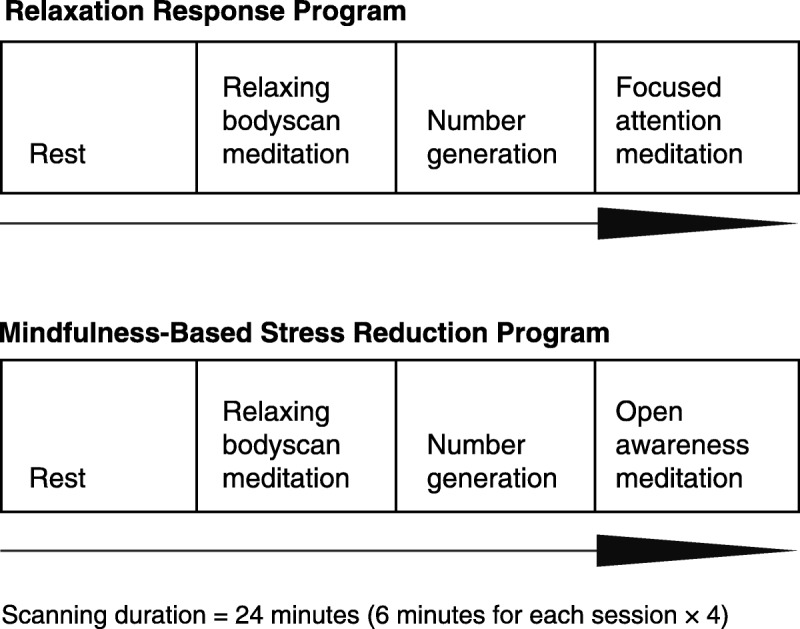
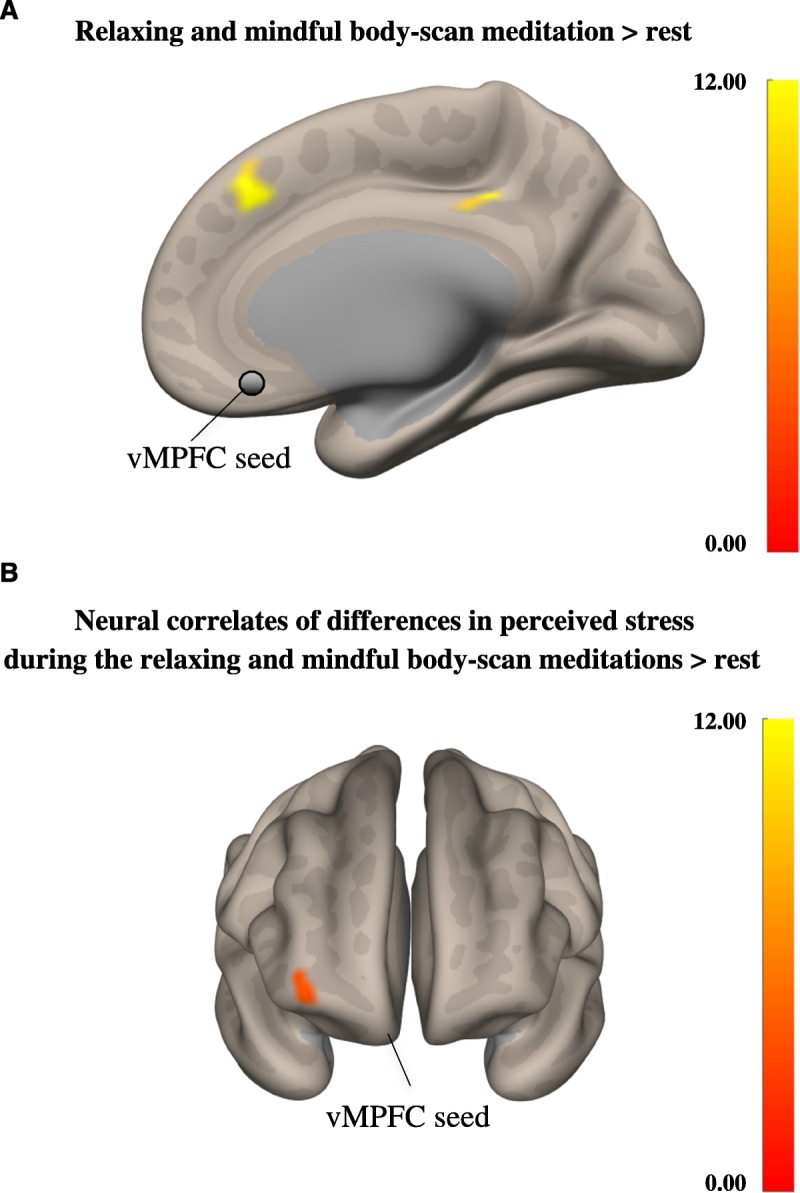
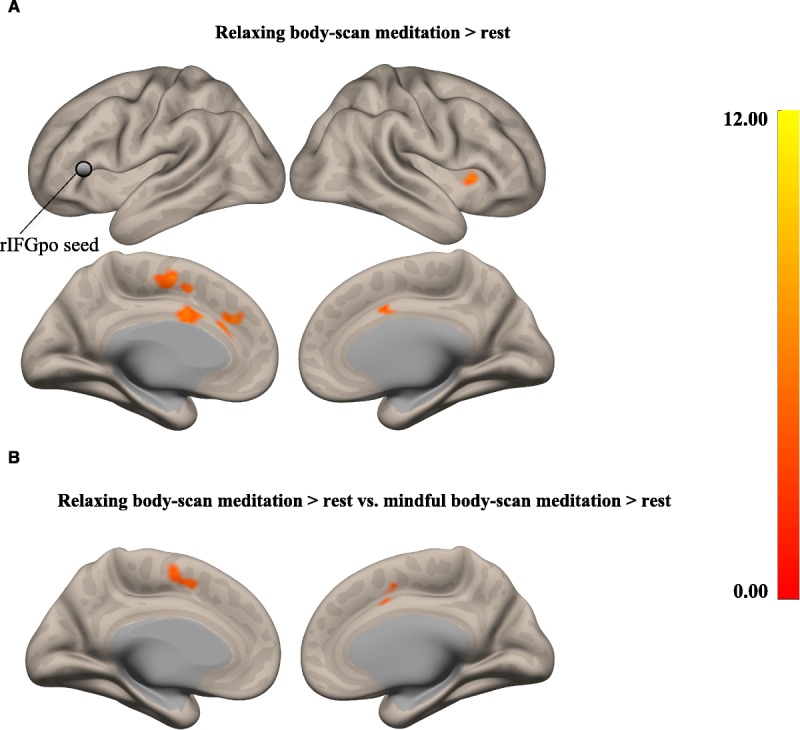
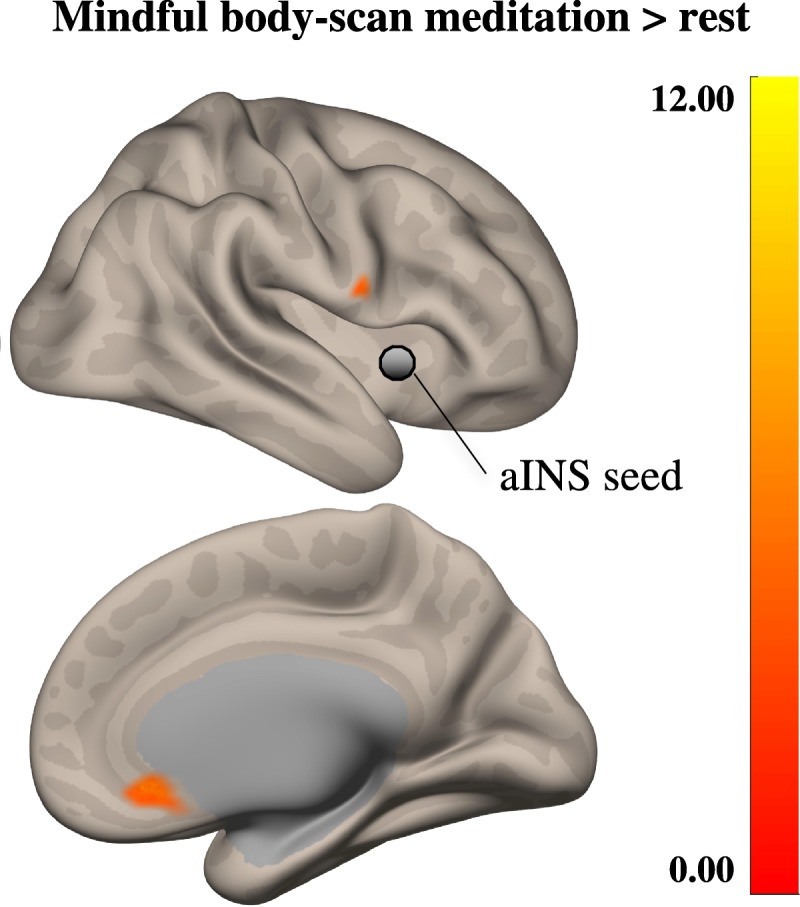
Objective: We investigated common and dissociable neural and psychological correlates of two widely used meditation-based stress reduction programs. Methods: Participants were randomized to the Relaxation Response (RR; n = 18; 56% female) or the Mindfulness-Based Stress Reduction (MBSR; n = 16; 56% female) programs. Both programs use a “bodyscan” meditation; however, the RR program explicitly emphasizes physical relaxation during this practice, whereas the MBSR program emphasizes mindful awareness with no explicit relaxation instructions. After the programs, neural activity during the respective meditation was investigated using functional magnetic resonance imaging. Results: Both programs were associated with reduced stress (for RR, from 14.1 ± 6.6 to 11.3 ± 5.5 [Cohen's d = 0.50; for MBSR, from 17.7 ± 5.7 to 11.9 ± 5.0 [Cohen's d = 1.02]). Conjunction analyses revealed functional coupling between ventromedial prefrontal regions and supplementary motor areas ( p < .001). The disjunction analysis indicated that the RR bodyscan was associated with stronger functional connectivity of the right inferior frontal gyrus—an important hub of intentional inhibition and control—with supplementary motor areas ( p < .001, family-wise error [FWE] rate corrected). The MBSR program was uniquely associated with improvements in self-compassion and rumination, and the within-group analysis of MBSR bodyscan revealed significant functional connectivity of the right anterior insula—an important hub of sensory awareness and salience—with pregenual anterior cingulate during bodyscan meditation compared with rest ( p = .03, FWE corrected). Conclusions: The bodyscan exercises in each program were associated with both overlapping and differential functional coupling patterns, which were consistent with each program's theoretical foundation. These results may have implications for the differential effects of these programs for the treatment of diverse conditions.
Overview
The claims and statistics of this paper haven’t been checked yet.
Run the check — free, no account needed. It reads the open-access text and checks the sources it cites.
Integrity signals
Registry
Cites
Statistics
Figures
Verification
Claims the paper makes
The claims and statistics of this paper haven’t been checked yet.
Run the check — free, no account needed. It reads the open-access text and checks the sources it cites.
Claims other papers make about this one
Each is checked against this paper’s own text: does it say what the citing paper says it does?
The source backs part of the claim, not all of it — or backs it for a different population, condition or comparison.
In the citing paper
“Because we used an a priori search region mask, we did not detect brain changes previously reported following MBSR, such as amygdala 48 and somatosensory regions.49”
From Evaluation of Cognitive Behavioral Therapy vs Mindfulness Meditation in Brain Changes During Reappraisal and Acceptance Among Patients With Social Anxiety Disorder: A Randomized Clinical Trial (2021) · cites this paper as [49]
Experimental — accuracy not yet measuredThe source backs part of the claim, not all of it — or backs it for a different population, condition or comparison.
In the citing paper
“Changes induced by MBSR in insular activity and functional connectivity are well-established and attributed to alterations in interoception, exteroception and emotional information processing.25,28,29”
From Distinct and shared therapeutic neural mechanisms of mindfulness-based and social support stress reduction groups in adults with autism spectrum disorder (2023) · cites this paper as [29]
Experimental — accuracy not yet measuredThe source backs part of the claim, not all of it — or backs it for a different population, condition or comparison.
In the citing paper
“It was reported that a functional change in insula was induced by MBSR (Sevinc et al., 2018) or MBSR tasks (Farb et al., 2013), as well as dispositional mindfulness (Laneri et al., 2017).”
From Enhanced Resting-State Functional Connectivity With Decreased Amplitude of Low-Frequency Fluctuations of the Salience Network in Mindfulness Novices (2022) · cites this paper as Sevinc et al., 2018
Experimental — accuracy not yet measuredThe source backs part of the claim, not all of it — or backs it for a different population, condition or comparison.
In the citing paper
“While relaxation is not a goal per se in mindfulness exercises, it is often reported as an outcome of mindfulness training (Sevinc et al., 2018).”
From Participant experiences of change in mindfulness-based stress reduction for anxiety disorders. (2020) · cites this paper as Sevinc et al., 2018
Experimental — accuracy not yet measuredThe cited source says what the claim attributes to it.
In the citing paper
“It has also been established that these interventions are associated with decreased levels of psychological distress (Goldberg et al., 2018; Hofmann et al., 2010; Sevinc et al., 2018).”
From Participant experiences of change in mindfulness-based stress reduction for anxiety disorders. (2020) · cites this paper as Sevinc et al., 2018
Self-check
Percentages, sums and reported differences re-computed from the paper’s own numbers.
The self-check needs the paper’s full text.
Citations
Cites
A Global Measure of Perceived Stress
Cohen, S., Kamarck, T., & Mermelstein, R. (1983) · Journal of Health and Social Behavior · doi:10.2307/2136404 · Cited by 32,807
How do you feel — now? The anterior insula and human awareness
(Bud) Craig, A. D. (2009) · Nature Reviews Neuroscience · doi:10.1038/nrn2555 · Cited by 6,657
The Development and Validation of a Scale to Measure Self-Compassion
NEFF, K. D. (2003) · Self and Identity · doi:10.1080/15298860309027 · Cited by 6,436
Saliency, switching, attention and control: a network model of insula function
Menon, V., & Uddin, L. Q. (2010) · Brain Structure and Function · doi:10.1007/s00429-010-0262-0 · Cited by 5,592
Conn : A Functional Connectivity Toolbox for Correlated and Anticorrelated Brain Networks
Whitfield-Gabrieli, S., & Nieto-Castanon, A. (2012) · Brain Connectivity · doi:10.1089/brain.2012.0073 · Cited by 4,885
A component based noise correction method (CompCor) for BOLD and perfusion based fMRI
Behzadi, Y., Restom, K., Liau, J., & Liu, T. T. (2007) · NeuroImage · doi:10.1016/j.neuroimage.2007.04.042 · Cited by 4,502
Kabat-Zinn, J. (1982) · General Hospital Psychiatry · doi:10.1016/0163-8343(82)90026-3 · Cited by 4,255
Mindfulness-based stress reduction and health benefits
Grossman, P., Niemann, L., Schmidt, S., & Walach, H. (2004) · Journal of Psychosomatic Research · doi:10.1016/s0022-3999(03)00573-7 · Cited by 3,958
Rumination reconsidered: a psychometric analysis.
Treynor, W., Gonzalez, R., & Nolen-Hoeksema, S. (2003) · Cognitive Therapy and Research · doi:10.1023/a:1023910315561 · Cited by 3,808
Neural systems supporting interoceptive awareness
Critchley, H. D., Wiens, S., Rotshtein, P., Öhman, A., & Dolan, R. J. (2004) · Nature Neuroscience · doi:10.1038/nn1176 · Cited by 3,406
Cited by
Sorted by citations
Galante, J., Friedrich, C., Dawson, A. F., Modrego-Alarcón, M., Gebbing, P., Delgado-Suárez, I., Gupta, R., Dean, L., Dalgleish, T., White, I. R., et al. (2021) · PLOS Medicine · doi:10.1371/journal.pmed.1003481 · Cited by 319
“…2018 [242], US 33 Primary care physicians (2) 43 (8.4) 73% Dis, Mindf, Real func Mindful Medicine Curriculum (2) Waitlist (1) Post–int, 3 m Sevinc 2018 [243], US 50 Adults (1) 39 (9.6) 56% Anx, Dis, Mindf, Self MBSR (3) Relaxation response (3) Post–int Shapiro 1998 [244], US 78 Medical…”
InfluentialDawson, A. F., Brown, W. W., Anderson, J., Datta, B., Donald, J. N., Hong, K., Allan, S., Mole, T. B., Jones, P. B., & Galante, J. (2020) · Applied Psychology: Health and Well-Being · doi:10.1111/aphw.12188 · Cited by 312
Mindfulness Training and Physical Health: Mechanisms and Outcomes
Creswell, J. D., Lindsay, E. K., Villalba, D. K., & Chin, B. (2019) · Psychosomatic Medicine · doi:10.1097/psy.0000000000000675 · Cited by 252
“group support, relaxation, daily home practice, and placebo expectancies (cf, (83)).”
Psychological Interventions for the Treatment of Chronic Pain in Adults
Driscoll, M. A., Edwards, R. R., Becker, W. C., Kaptchuk, T. J., & Kerns, R. D. (2021) · Psychological Science in the Public Interest · doi:10.1177/15291006211008157 · Cited by 176
“Recent findings have suggested that psychosocial and behavioral interventions that target cognitive processes such as catastrophizing can reverse functional and structural brain changes related to chronic pain within several months (Cunningham et al., 2019; Lazaridou et al., 2017; Seminowicz et al., 2011, 2013; Sevinc…”
BackgroundMindful Ethical Practice and Resilience Academy: Equipping Nurses to Address Ethical Challenges
Rushton, C. H., Swoboda, S. M., Reller, N., Skarupski, K. A., Prizzi, M., Young, P. D., & Hanson, G. C. (2021) · American Journal of Critical Care · doi:10.4037/ajcc2021359 · Cited by 117
A Perspective on the Similarities and Differences Between Mindfulness and Relaxation
Luberto, C. M., Hall, D. L., Park, E. R., Haramati, A., & Cotton, S. (2020) · Global Advances in Health and Medicine · doi:10.1177/2164956120905597 · Cited by 104
“Recently, researchers compared neural activity following a relaxation-based intervention (SMART-3RP) and mindfulness-based intervention (MBSR) and found both overlapping and dissociable patterns of activation, where differences aligned with each program’s theoretical focus described here.(91) In an RCT of yoga as comp…”
BackgroundGrossman, P. (2019) · Current Opinion in Psychology · doi:10.1016/j.copsyc.2018.11.008 · Cited by 84
Goldin, P. R., Thurston, M., Allende, S., Moodie, C., Dixon, M. L., Heimberg, R. G., & Gross, J. J. (2021) · JAMA Psychiatry · doi:10.1001/jamapsychiatry.2021.1862 · Cited by 69
What Has Neuroimaging Taught Us on the Neurobiology of Yoga? A Review
van Aalst, J., Ceccarini, J., Demyttenaere, K., Sunaert, S. G., & Laere, K. V. (2020) · Frontiers in Integrative Neuroscience · doi:10.3389/fnint.2020.00034 · Cited by 66
“However, the MBSR program was uniquely associated increased functional connectivity between the anterior insula (seed) and the pregenual anterior cingulate cortex during body scan meditation compared with rest (Sevinc et al., 2018).”
BackgroundMethodInfluentialGolden, H. L., Vosper, J., Kingston, J., & Ellett, L. (2021) · Mindfulness · doi:10.1007/s12671-020-01501-8 · Cited by 55
Quinones, C., & Griffiths, M. D. (2019) · Journal of Behavioral Addictions · doi:10.1556/2006.8.2019.45 · Cited by 82
Mindfulness-based therapy improves brain functional network reconfiguration efficiency
Yue, W. L., Ng, K. K., Koh, A. J., Perini, F., Doshi, K., Zhou, J. H., & Lim, J. (2023) · Translational Psychiatry · doi:10.1038/s41398-023-02642-9 · Cited by 41
Montero‐Marín, J., Andrés‐Rodríguez, L., Tops, M., Luciano, J. V., Navarro‐Gil, M., Feliu‐Soler, A., del Hoyo, Y. L., & García‐Campayo, J. (2019) · Scientific Reports · doi:10.1038/s41598-019-52260-z · Cited by 42
Nien, J., Gill, D. L., Chou, T.-Y., Liu, C.-S., Geng, X., Hung, T., & Chang, Y. (2023) · Psychology of sport and exercise · doi:10.1016/j.psychsport.2023.102422 · Cited by 40
Interoceptive awareness: MBSR training alters information processing of salience network
Guu, S.-F., Chao, Y., Huang, F., Cheng, Y.-T., Ng, H. H., Hsu, C., Chuang, C., Huang, C., & Wu, C. W. (2023) · Frontiers in Behavioral Neuroscience · doi:10.3389/fnbeh.2023.1008086 · Cited by 30
“Regarding the network specificity of FC, studies have indicated that interoceptive awareness (breathing and body scan) is associated with the salience network (SN), especially on dACC and insula (Singer et al., 2004; Sevinc et al., 2018; Gibson, 2019).”
BackgroundFunctional Connectivity of Prefrontal Cortex in Various Meditation Techniques – A Mini-Review
Rathore, M., Verma, M., Nirwan, M., Trivedi, S., & Pai, V. (2022) · International Journal of Yoga · doi:10.4103/ijoy.ijoy_88_22 · Cited by 38
“Mindfulness meditation was associated with a significant increase in right anterior insula functional connectivity – an important hub of sensory perception and emphasis compared to control.[32] An RCT showed improved competency‐related behavior and performance on attentional tasks in focused‐attention meditators.”
BackgroundZsadanyi, S. E., Kurth, F., & Eileen Luders, A. (2021) · Mindfulness · doi:10.1007/s12671-021-01712-7 · Cited by 35
Doborjeh, Z., Doborjeh, M., Crook‐Rumsey, M., Taylor, T., Wang, G., Moreau, D., Krägeloh, C. U., Wrapson, W., Siegert, R. J., Kasabov, N. K., et al. (2020) · Sensors · doi:10.3390/s20247354 · Cited by 28
“Some research suggests that meditation training affects inhibition identified with verbal, as opposed to motor execution performance [102,103].”
BackgroundParticipant experiences of change in mindfulness-based stress reduction for anxiety disorders.
Schanche, E., Vøllestad, J., Binder, P.-E., Hjeltnes, A., Dundas, I., & Nielsen, G. H. (2020) · International Journal of Qualitative Studies on Health and Well-Being · doi:10.1080/17482631.2020.1776094 · Cited by 24
“While relaxation is not a goal per se in mindfulness exercises, it is often reported as an outcome of mindfulness training (Sevinc et al., 2018).”
BackgroundA Review of the Methodology, Taxonomy, and Definitions in Recent fMRI Research on Meditation
Engström, M., Willander, J., & Simon, R. A. (2021) · Mindfulness · doi:10.1007/s12671-021-01782-7 · Cited by 21
Yu, X., Cohen, Z. P., Tsuchiyagaito, A., Cochran, G., Aupperle, R. L., Stewart, J. L., Singh, M. K., Misaki, M., Bodurka, J., Paulus, M. P., et al. (2022) · Brain Sciences · doi:10.3390/brainsci12030363 · Cited by 28
Liu, N., Deng, J., Lu, F., & Xiao, J. (2025) · Scientific Reports · doi:10.1038/s41598-025-96165-6 · Cited by 26
“This aligns with emerging neuroimaging evidence indicating that VR-based mindfulness training can induce structural changes in brain regions associated with emotional regulation and anxiety control 44 .”
Huckvale, K., Hoon, L., Stech, E. P., Newby, J. M., Zheng, W. Y., Han, J., Vasa, R., Gupta, S., Barnett, S., Senadeera, M., et al. (2023) · BMJ Open · doi:10.1136/bmjopen-2022-066249 · Cited by 21
Pagni, B. A., Hill, E., Walsh, M. J. M., Delaney, S., Ogbeama, D., Monahan, L., Cook, J. R., Guerithault, N., Dixon, M. V., Ballard, L., et al. (2023) · Journal of Psychiatry and Neuroscience · doi:10.1503/jpn.220159 · Cited by 20
“25,28,29 In support of our hypothesis, the present study extends this body of work in adults with ASD by showing MBSR-specific decreases in insula–thalamus connectivity using a gPPI approach.”
Justyna, M., Wąsek, W., Kamiński, B., Piotrowicz, K., & Krzesiński, P. (2020) · Kardiologia Polska · doi:10.33963/kp.15528 · Cited by 19
Gan, Q., Ding, N., Bi, G., Liu, R., Zhao, X., Zhong, J., Wu, S., Zeng, Y., Cui, L., Wu, K., et al. (2022) · Frontiers in Human Neuroscience · doi:10.3389/fnhum.2022.838123 · Cited by 18
Pragya, S. U., Mehta, N. D., Abomoelak, B., Uddin, P., Veeramachaneni, P., Mehta, N., Moore, S., Jean‐Francois, M. N., Garcia, S. J., Pragya, S. C., et al. (2021) · Frontiers in Psychology · doi:10.3389/fpsyg.2021.607573 · Cited by 19
“The prefrontal cortex has been associated with enhanced cognitive focus and the parietal lobe with improved spatial cognition (Somers and Sheremata, 2013).”
BackgroundFlor, H., Noguchi, K., Treede, R., & Turk, D. C. (2023) · Pain · doi:10.1097/j.pain.0000000000003063 · Cited by 16
Doorley, J. D., Greenberg, J., Stauder, M. J., & Vranceanu, A. (2021) · Mindfulness · doi:10.1007/s12671-021-01729-y · Cited by 15
Self-citationSim, S., Maldonado, I., Castelnau, P., Barantin, L., Hage, W. E., Andersson, F., & Cottier, J. (2023) · Journal of neuroradiology = Journal de neuroradiologie · doi:10.1016/j.neurad.2023.11.002 · Cited by 12
Pickett, S. M., Kozak, A. T., Lanni, D. J., Warnke, A. S., Gaillard, P., & Jarrett, N. L. (2022) · Journal of American College Health · doi:10.1080/07448481.2022.2066979 · Cited by 15
“22 Therefore, the current randomized controlled trial (RCT) was designed to examine whether brief, online, scaled back stress reduction interventions for college students supplemented with information and instructions for improving sleep using the behavioral components of insomnia treatments would…”
BackgroundHoge, E. A., Armstrong, C. H., Mete, M., Oliva, I. A., Lazar, S. W., Lago, T. R., & Grillon, C. (2023) · Biological Psychiatry · doi:10.1016/j.biopsych.2023.06.003 · Cited by 11
Self-citationHellem, T., Benavides‐Vaello, S., & Taylor‐Piliae, R. E. (2021) · Journal of Evidence-Based Integrative Medicine · doi:10.1177/2515690x211006332 · Cited by 13
de Jong, M., Wynchank, D. S. M. R., Michielsen, M., Beekman, A. T. F., & Kooij, J. J. S. (2024) · Journal of Clinical Medicine · doi:10.3390/jcm13072106 · Cited by 11
“The body scan developed as a part of mindfulness-based stress reduction [108] has been shown to be effective in stress reduction, increased self-compassion, decreased rumination, and medical symptom relief [48].”
BackgroundMindfulness Training Has Elements Common to Other Techniques
Peper, E., Harvey, R., & Lin, I. (2019) · Biofeedback · doi:10.5298/1081-5937-47.3.02 · Cited by 9
Palacios, G. R., Guerra, A. G., Sansores, G. M. Á., & Aguila, P. I. D. S. G. (2020) · Revista Digital Internacional de Psicología y Ciencia Social · doi:10.22402/j.rdipycs.unam.6.1.2020.212.81-103 · Cited by 7
Bransteter, I., McVoy, M. K., Miller, D. W., Gubitosi‐Klug, R., Segall, T. L., Divan, M. K., Surdam, J., Sajatovic, M., & Dusek, J. A. (2024) · JAACAP Open · doi:10.1016/j.jaacop.2024.01.005 · Cited by 6
Self-citationWhat can the psychoneuroimmunology of yoga teach us about depression's psychopathology?
Chiarpenello, C., & Brodmann, K. (2024) · Brain Behavior & Immunity - Health · doi:10.1016/j.bbih.2024.100877 · Cited by 5
“Practitioners have higher functional connectivity within the dorsal attention network (DAN), between the DAN, DMN and salience network (Santaella et al., 2019; Sevinc et al., 2018; Doll et al., 2015).”
BackgroundFunctional connectivity of the amygdala in relation to high stress and low mindfulness
Kim, H., Jeon, M.-J., Seong, G., Jung, Y., Park, J. Y., & Lee, D. (2024) · Neuroscience Letters · doi:10.1016/j.neulet.2024.137985 · Cited by 4
Remodeling the Epigenome Through Meditation: Effects on Brain, Body, and Well-being
Venditti, S. (2025) · Sub-cellular biochemistry/Subcellular biochemistry · doi:10.1007/978-3-031-75980-2_7 · Cited by 5
Effects of a Mindfulness Intervention to Improve Teachers’ Well-being
Almaguer-Botero, A. P., Miller, E. L., Chen, R. K., & Carlson, R. (2023) · Trends in Psychology · doi:10.1007/s43076-023-00318-3 · Cited by 5
“Sevinc et al. (2018) noted MBSR interventions affect one’s awareness, self-compassion, and salience while being an effective method for reducing stress.”
Ji, X., Ding, H., & Meng, Y. (2025) · Frontiers in Neurology · doi:10.3389/fneur.2025.1689318 · Cited by 3
Biomechanical aspects of Tai Chi Chuan countermeasure against health threats during spaceflight
Chu, T. J., & Szu, H. H. (2020) · MOJ Applied Bionics and Biomechanics · doi:10.15406/mojabb.2020.04.00146 · Cited by 3
Afonso, R. F., Santaella, D. F., & Kozasa, E. H. (2020) · Advances in medical diagnosis, treatment, and care (AMDTC) book series · doi:10.4018/978-1-7998-3254-6.ch018 · Cited by 2
Hopkins, S. W., Greenberg, J., Isaacs, J., & Vranceanu, A. (2022) · Journal of Integrative and Complementary Medicine · doi:10.1089/jicm.2021.0324 · Cited by 2
Self-citationThephilah Cathrine, R., Aruna, S., & Vijayaragahavan, R. (2022) · Bioscience Journal · doi:10.14393/bj-v38n0a2022-54176 · Cited by 2
Silver, A. I., James, L. E., & Small, B. (2020) · Language Cognition and Neuroscience · doi:10.1080/23273798.2020.1844246 · Cited by 2
“…is not a trivial one: Research has shown different neural responses to mindfulness training than to other training focused on relaxation (e.g. Sevinc et al., 2018), and the mechanisms underlying the effects of the different sub components of mindfulness manipulations are an important area of…”
BackgroundIntegrative Body, Mind, and Spirit Interventions used with Parents in the Child Welfare System
Nowakowski-Sims, E. (2021) · Journal of Child & Adolescent Trauma · doi:10.1007/s40653-021-00388-4 · Cited by 2
How Relaxing Develops and Affects Well-being Throughout Childhood
UNICEF Innocenti Research Centre, Cunsolo, S., Cebotari, V., Richardson, D., & Vrolijk, M. (2022) · Innocenti working papers · doi:10.18356/25206796-2021/18 · Cited by 2
Springer, R., Hansen, S., Meister, R., Kargl, S., Arlt, R., Oschmann, P., Rüsseler, J., & Keune, P. M. (2025) · Neuropsychological Rehabilitation · doi:10.1080/09602011.2025.2600421 · Cited by 1
“Furthermore, they may also yield adaptive cognitive alterations that do not rely on the relaxation response and involve distinct underlying neural processes (Luberto et al., 2020; Sevinc et al., 2018).”
Instytut kosmetyczny Cosmetology, M. K., & Kolankowska-Trzcińska, M. (2022) · Aesthetic Cosmetology and Medicine · doi:10.52336/acm.2022.019 · Cited by 1
“Bodyscan i elementów oddechowych wykorzystywanych w mindfulness [20], czy wybranych asan z jogi [25].”
BackgroundMcVoy, M. K., Miller, D., Bransteter, I., Gubitosi‐Klug, R., Segall, T. L., Surdam, J., Sajatovic, M., & Dusek, J. A. (2023) · Contemporary Clinical Trials · doi:10.1016/j.cct.2023.107317 · Cited by 1
Self-citationLearned Mindfulness—An Emotional Intelligence Perspective
Ninivaggi, F. J. (2019) · Elsevier eBooks · doi:10.1016/b978-0-12-816484-6.00004-x · Cited by 1
Moeenizadeh, M., Nezampour, R., & Golestan, N. S. H. (2021) · Military Caring Sciences · doi:10.52547/mcs.8.1.1
Afonso, R. F., Santaella, D. F., & Kozasa, E. H. (2022) · IGI Global eBooks · doi:10.4018/978-1-6684-5295-0.ch070
Popoola, R. (2019) · Springer eBooks · doi:10.1007/978-3-658-26794-0_2
Rodríguez, A. S. (2020) · Revista Digital Internacional de Psicología y Ciencia Social · doi:10.22402/j.rdipycs.unam.6.1.2020.281.1-246
Ninivaggi, F. J. (2019) · Elsevier eBooks · doi:10.1016/b978-0-12-816484-6.00002-6
Facilitating Meditation Practice in the Higher Education Classroom: A Conceptual Framework
Haberlin, S. (2023) · College Teaching · doi:10.1080/87567555.2023.2296081
“Research by Sevinc et al. (2018) found that mindfulness meditation, used in the MBSR curriculum, and the Relaxation Response method, which involves silently repeating a word or phrase, both decreased stress in meditators, though only the MBSR technique was found to enhance self-compassion and…”
Sim, S., Maldonado, I., Castelnau, P., Barantin, L., el-Hage, W., Andersson, F., & Cottier, J. (2024) · Douleurs : Évaluation - Diagnostic - Traitement · doi:10.1016/j.douler.2024.03.001
Zihin-Beden Tıbbı: Geleneksel Tıbbın Tamamlayıcısı ve Klinik Uygulamalardaki Yeri
Pars, H., & Sarı, T. (2025) · KTO Karatay Üniversitesi Sağlık Bilimleri Dergisi · doi:10.59244/ktokusbd.1725189
Livsstyrketrening kan bidra til bedre mestring av emosjonelt stress hos sykepleierstudenter
Lyngroth, M. B. F., & Akre, A.-G. D. (2026) · Sykepleien Forskning · doi:10.4220/sykepleiens.2026.104794
Devillers-Réolon, L. (2023) · theses.fr (ABES) · doi:10.70675/75486083zdc50z4f3az9c14z9aa2902a1270
Chen, Q., Zhang, Y., Liu, C., Fu, Y., Gan, Q., & Chen, Z. (2026) · Brain Research Bulletin · doi:10.1016/j.brainresbull.2026.112021
Springer, R., Peetz, T., Hansen, S., Meister, R., Kargl, S., Arlt, R., Oschmann, P., Rüsseler, J., & Keune, P. M. (2026) · Zeitschrift für Neuropsychologie · doi:10.1024/1016-264x/a000451
Robb, S. L., Harman, E., Burns, D. S., Dusek, J. A., Johnson, J. K., Rodgers‐Melnick, S. N., Chémali, K. R., Schlesinger, J. J., Ramirez, M., Gumert, L., et al. (2026) · Frontiers in Psychology · doi:10.3389/fpsyg.2026.1876240
“In relaxation and mindfulness research, for instance, a body scan with instructions that emphasize “awareness” activates different neural pathways than a body scan with “physical relaxation” instructions (Sevinc et al., 2018).”
Self-citation
Metadata
- Authors
- Sevinc, G., Hölzel, B. K., Hashmi, J., Greenberg, J., McCallister, A., Treadway, M., Schneider, M. L., Dusek, J. A., Carmody, J., & Lazar, S. W.
- Affiliations
- Dalhousie University (CA)
- ORCID
- Venue
- Psychosomatic Medicine
- Published
- 2018-06
- Volume
- 80
- Issue
- 5
- Pages
- 439-451
- ISSN
- 0033-3174 (ISSN-L)
- 1534-7796
- PMC
- PMC5976535
- OpenAlex
- W2799668744
- Cited by
- 67
- References
- 87
- Citations by year
- 2026: 4 · 2025: 5 · 2024: 5 · 2023: 13 · 2022: 9 · 2021: 11 · 2020: 11 · 2019: 8 · 2018: 1
- FWCI
- 9.08
- Type
- journal article
- Language
- en
- Open access
- hybrid
- doi.org
- Licence
- Locations
- Psychosomatic Medicine (publishedVersion, cc-by-nc-nd)
- Europe PMC (PubMed Central) (publishedVersion, other-oa)
- PubMed Central (publishedVersion, cc-by-nc-nd)
- PubMed (publishedVersion)
- eScholarship@UMassChan (submittedVersion, cc-by-nc-nd)
- Digital Access to Scholarship at Harvard (DASH) (Harvard University) (submittedVersion, cc-by)
- eScholarship (California Digital Library) (submittedVersion, cc-by-nc-nd)
- mediaTUM (Technical University of Munich) (submittedVersion)
- Funders
- National Institutes of Health (1s10rr019307-01, UL1TR000170)
- National Institute on Aging (R01AG048351)
- National Center for Research Resources (S10-RR019307, S10RR023401)
- National Center for Advancing Translational Sciences
- National Center for Complementary and Integrative Health (R21AT003425)
- Topics
- Social Sciences › Psychology › Clinical Psychology › Mindfulness and Compassion Interventions
- Social Sciences › Health › Religion, Spirituality, and Psychology
- Health Sciences › Medicine › Psychiatry and Mental health › Psychosomatic Disorders and Their Treatments
- Keywords
- mindfulness-based stress reduction, relaxation response, meditation, stress reduction, functional connectivity, ventromedial prefrontal cortex, supplementary motor area, inferior frontal gyrus, anterior insula, self-compassion, rumination
- MeSH terms
- Adult, Cerebral Cortex, Female, Humans, Magnetic Resonance Imaging, Male, Middle Aged, Relaxation Therapy, Stress, Psychological, Outcome Assessment, Health Care, Connectome, Mindfulness
About these checks
Registry, retraction, Cites and statistics results are computed, not judged, with one exception: a printed reference that no index lists is read once by a model before it counts as a citation error. Claims are extracted by a model and kept only when their quote appears verbatim in the text; each cited source is then checked, with a model’s help, for whether it says what the claim relies on. Those verdicts can be wrong — read the claim’s quote and the cited source before relying on one.
Statistics and arithmetic are recomputed, not judged.
Confidence bands are shown only for fields calibrated on our annotated test set. None is calibrated yet, so no band is shown.
What counts as a claim ›How we measure confidence ›How we check this ›
Are you an author, or do you see a problem with this page? Request a review
