

The DOI matches its Crossref record; 87 of the 87 references it cites were found in a registry or an index.
Common and Dissociable Neural Activity After Mindfulness-Based Stress Reduction and Relaxation Response Programs
Open accessAbstract
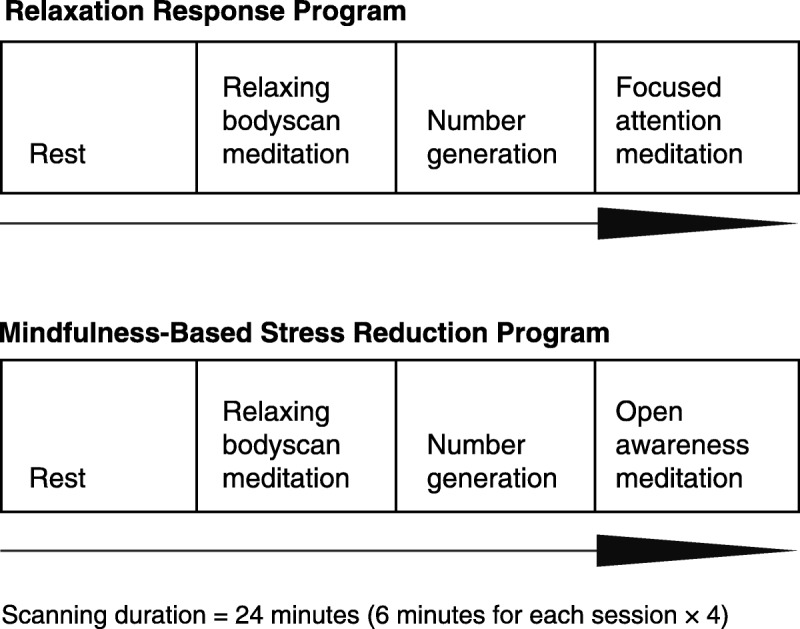
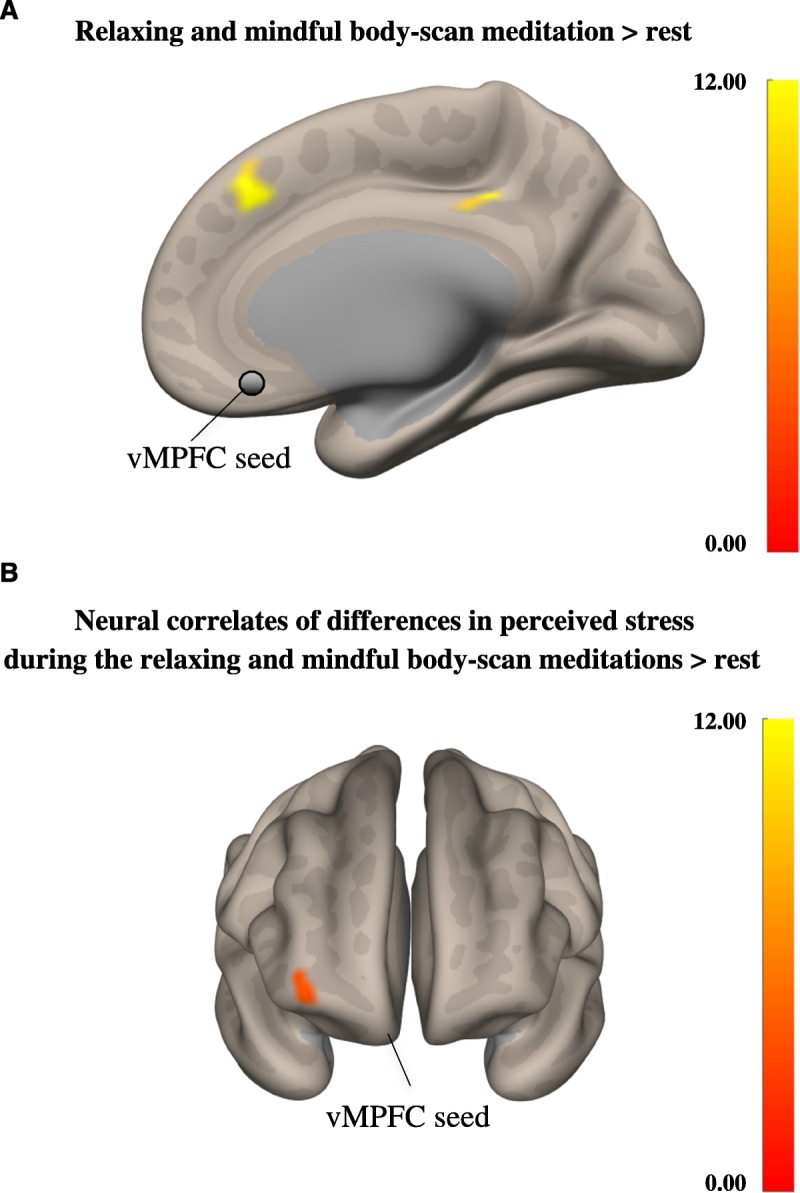
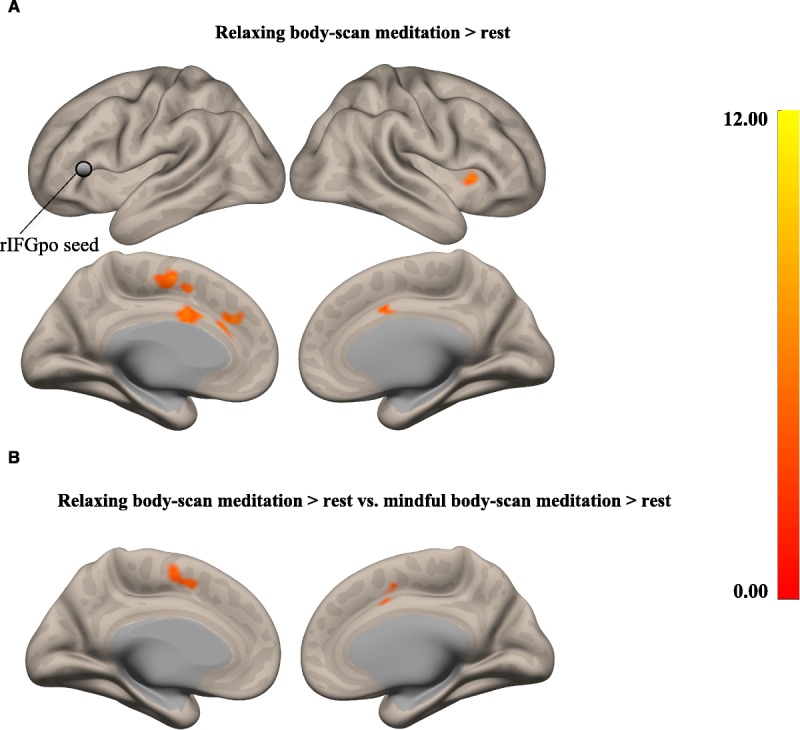
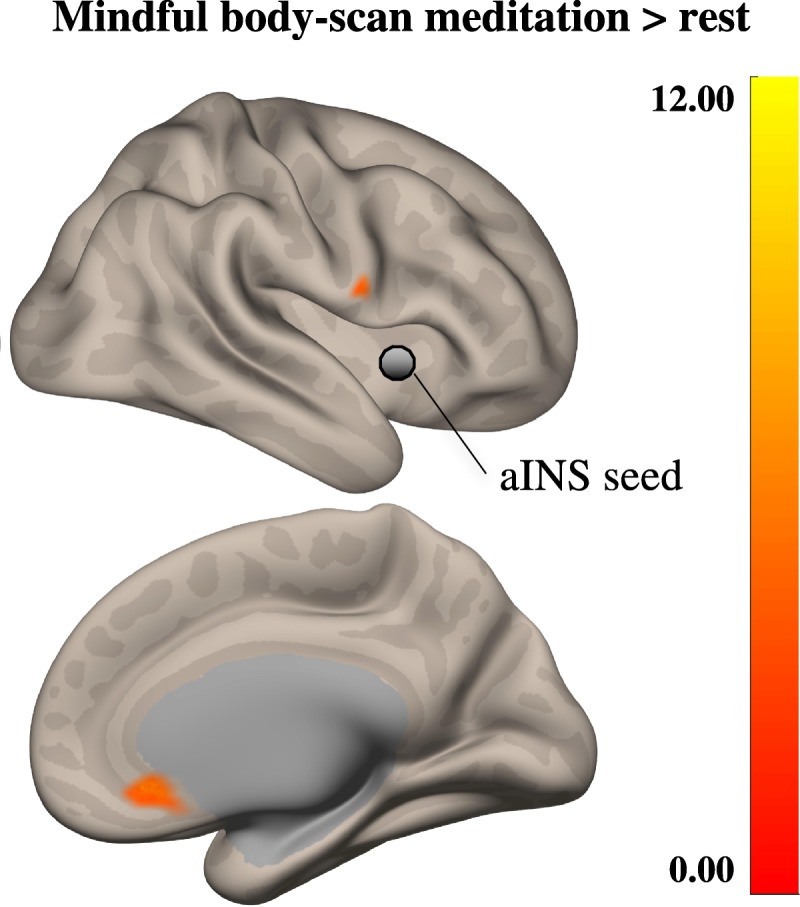
Objective: We investigated common and dissociable neural and psychological correlates of two widely used meditation-based stress reduction programs. Methods: Participants were randomized to the Relaxation Response (RR; n = 18; 56% female) or the Mindfulness-Based Stress Reduction (MBSR; n = 16; 56% female) programs. Both programs use a “bodyscan” meditation; however, the RR program explicitly emphasizes physical relaxation during this practice, whereas the MBSR program emphasizes mindful awareness with no explicit relaxation instructions. After the programs, neural activity during the respective meditation was investigated using functional magnetic resonance imaging. Results: Both programs were associated with reduced stress (for RR, from 14.1 ± 6.6 to 11.3 ± 5.5 [Cohen's d = 0.50; for MBSR, from 17.7 ± 5.7 to 11.9 ± 5.0 [Cohen's d = 1.02]). Conjunction analyses revealed functional coupling between ventromedial prefrontal regions and supplementary motor areas ( p < .001). The disjunction analysis indicated that the RR bodyscan was associated with stronger functional connectivity of the right inferior frontal gyrus—an important hub of intentional inhibition and control—with supplementary motor areas ( p < .001, family-wise error [FWE] rate corrected). The MBSR program was uniquely associated with improvements in self-compassion and rumination, and the within-group analysis of MBSR bodyscan revealed significant functional connectivity of the right anterior insula—an important hub of sensory awareness and salience—with pregenual anterior cingulate during bodyscan meditation compared with rest ( p = .03, FWE corrected). Conclusions: The bodyscan exercises in each program were associated with both overlapping and differential functional coupling patterns, which were consistent with each program's theoretical foundation. These results may have implications for the differential effects of these programs for the treatment of diverse conditions.
Overview
The claims and statistics of this paper haven’t been checked yet.
Run the check — free, no account needed. It reads the open-access text and checks the sources it cites.
Integrity signals
Registry
Cites
Statistics
Figures
Verification
Claims the paper makes
The claims and statistics of this paper haven’t been checked yet.
Run the check — free, no account needed. It reads the open-access text and checks the sources it cites.
Claims other papers make about this one
Each is checked against this paper’s own text: does it say what the citing paper says it does?
The source backs part of the claim, not all of it — or backs it for a different population, condition or comparison.
In the citing paper
“Because we used an a priori search region mask, we did not detect brain changes previously reported following MBSR, such as amygdala 48 and somatosensory regions.49”
From Evaluation of Cognitive Behavioral Therapy vs Mindfulness Meditation in Brain Changes During Reappraisal and Acceptance Among Patients With Social Anxiety Disorder: A Randomized Clinical Trial (2021) · cites this paper as [49]
Experimental — accuracy not yet measuredThe source backs part of the claim, not all of it — or backs it for a different population, condition or comparison.
In the citing paper
“Changes induced by MBSR in insular activity and functional connectivity are well-established and attributed to alterations in interoception, exteroception and emotional information processing.25,28,29”
From Distinct and shared therapeutic neural mechanisms of mindfulness-based and social support stress reduction groups in adults with autism spectrum disorder (2023) · cites this paper as [29]
Experimental — accuracy not yet measuredThe source backs part of the claim, not all of it — or backs it for a different population, condition or comparison.
In the citing paper
“It was reported that a functional change in insula was induced by MBSR (Sevinc et al., 2018) or MBSR tasks (Farb et al., 2013), as well as dispositional mindfulness (Laneri et al., 2017).”
From Enhanced Resting-State Functional Connectivity With Decreased Amplitude of Low-Frequency Fluctuations of the Salience Network in Mindfulness Novices (2022) · cites this paper as Sevinc et al., 2018
Experimental — accuracy not yet measuredThe source backs part of the claim, not all of it — or backs it for a different population, condition or comparison.
In the citing paper
“While relaxation is not a goal per se in mindfulness exercises, it is often reported as an outcome of mindfulness training (Sevinc et al., 2018).”
From Participant experiences of change in mindfulness-based stress reduction for anxiety disorders. (2020) · cites this paper as Sevinc et al., 2018
Experimental — accuracy not yet measuredThe cited source says what the claim attributes to it.
In the citing paper
“It has also been established that these interventions are associated with decreased levels of psychological distress (Goldberg et al., 2018; Hofmann et al., 2010; Sevinc et al., 2018).”
From Participant experiences of change in mindfulness-based stress reduction for anxiety disorders. (2020) · cites this paper as Sevinc et al., 2018
Self-check
Percentages, sums and reported differences re-computed from the paper’s own numbers.
The self-check needs the paper’s full text.
Citations
Cites
A Global Measure of Perceived Stress
Cohen, S., Kamarck, T., & Mermelstein, R. (1983) · Journal of Health and Social Behavior · doi:10.2307/2136404 · Cited by 32,807
How do you feel — now? The anterior insula and human awareness
(Bud) Craig, A. D. (2009) · Nature Reviews Neuroscience · doi:10.1038/nrn2555 · Cited by 6,657
The Development and Validation of a Scale to Measure Self-Compassion
NEFF, K. D. (2003) · Self and Identity · doi:10.1080/15298860309027 · Cited by 6,436
Saliency, switching, attention and control: a network model of insula function
Menon, V., & Uddin, L. Q. (2010) · Brain Structure and Function · doi:10.1007/s00429-010-0262-0 · Cited by 5,592
Conn : A Functional Connectivity Toolbox for Correlated and Anticorrelated Brain Networks
Whitfield-Gabrieli, S., & Nieto-Castanon, A. (2012) · Brain Connectivity · doi:10.1089/brain.2012.0073 · Cited by 4,885
A component based noise correction method (CompCor) for BOLD and perfusion based fMRI
Behzadi, Y., Restom, K., Liau, J., & Liu, T. T. (2007) · NeuroImage · doi:10.1016/j.neuroimage.2007.04.042 · Cited by 4,502
Kabat-Zinn, J. (1982) · General Hospital Psychiatry · doi:10.1016/0163-8343(82)90026-3 · Cited by 4,255
Mindfulness-based stress reduction and health benefits
Grossman, P., Niemann, L., Schmidt, S., & Walach, H. (2004) · Journal of Psychosomatic Research · doi:10.1016/s0022-3999(03)00573-7 · Cited by 3,958
Rumination reconsidered: a psychometric analysis.
Treynor, W., Gonzalez, R., & Nolen-Hoeksema, S. (2003) · Cognitive Therapy and Research · doi:10.1023/a:1023910315561 · Cited by 3,808
Neural systems supporting interoceptive awareness
Critchley, H. D., Wiens, S., Rotshtein, P., Öhman, A., & Dolan, R. J. (2004) · Nature Neuroscience · doi:10.1038/nn1176 · Cited by 3,406
Inhibition and the right inferior frontal cortex
Aron, A. R., Robbins, T. W., & Poldrack, R. A. (2004) · Trends in Cognitive Sciences · doi:10.1016/j.tics.2004.02.010 · Cited by 3,197
Emotional processing in anterior cingulate and medial prefrontal cortex
Etkin, A., Egner, T., & Kalisch, R. (2011) · Trends in Cognitive Sciences · doi:10.1016/j.tics.2010.11.004 · Cited by 3,059
Hölzel, B. K., Lazar, S. W., Gard, T., Schuman-Olivier, Z., Vago, D. R., & Ott, U. (2011) · Perspectives on Psychological Science · doi:10.1177/1745691611419671 · Cited by 3,024
Self-citationBaer, R. A., Smith, G. T., Lykins, E., Button, D., Krietemeyer, J., Sauer, S., Walsh, E., Duggan, D., & Williams, J. M. G. (2008) · Assessment · doi:10.1177/1073191107313003 · Cited by 2,930
The Neuroscience of Mindfulness Meditation
Tang, Y.-Y., Hölzel, B. K., & Posner, M. I. (2015) · Nature reviews. Neuroscience · doi:10.1038/nrn3916 · Cited by 2,889
Self-citationInteroception: the sense of the physiological condition of the body
(Bud) Craig, A. (2003) · Current Opinion in Neurobiology · doi:10.1016/s0959-4388(03)00090-4 · Cited by 2,556
Benson, H., Beary, J. F., & Carol, M. P. (1974) · Psychiatry · doi:10.1080/00332747.1974.11023785 · Cited by 2,467
Complementary and alternative medicine use among adults: United States, 2002
Barnes, P. M., Powell‐Griner, E., McFann, K., & Nahin, R. L. (2004) · Seminars in Integrative Medicine · doi:10.1016/j.sigm.2004.07.003 · Cited by 2,183
Inhibition and the right inferior frontal cortex: one decade on
Aron, A. R., Robbins, T. W., & Poldrack, R. A. (2014) · Trends in Cognitive Sciences · doi:10.1016/j.tics.2013.12.003 · Cited by 2,166
Uncertainty and anticipation in anxiety: an integrated neurobiological and psychological perspective
Grupe, D. W., & Nitschke, J. B. (2013) · Nature Reviews Neuroscience · doi:10.1038/nrn3524 · Cited by 2,007
Self-Control in Decision-Making Involves Modulation of the vmPFC Valuation System
Hare, T. A., Camerer, C. F., & Rangel, A. (2009) · Science · doi:10.1126/science.1168450 · Cited by 1,928
Ochsner, K. N., Silvers, J. A., & Buhle, J. T. (2012) · Annals of the New York Academy of Sciences · doi:10.1111/j.1749-6632.2012.06751.x · Cited by 1,879
Carmody, J., & Baer, R. A. (2008) · Journal of Behavioral Medicine · doi:10.1007/s10865-007-9130-7 · Cited by 1,823
Self-citationCircuitry and functional aspects of the insular lobe in primates including humans
AUGUSTINE, J. (1996) · Brain Research Reviews · doi:10.1016/s0165-0173(96)00011-2 · Cited by 1,776
The clinical use of mindfulness meditation for the self-regulation of chronic pain
Kabat-Zinn, J., Lipworth, L., & Burney, R. (1985) · Journal of Behavioral Medicine · doi:10.1007/bf00845519 · Cited by 1,745
Meditation states and traits: EEG, ERP, and neuroimaging studies.
Cahn, B. R., & Polich, J. (2006) · Psychological Bulletin · doi:10.1037/0033-2909.132.2.180 · Cited by 1,734
Meditation experience is associated with increased cortical thickness
Lazar, S. W., Kerr, C. E., Wasserman, R. H., Gray, J. R., Greve, D. N., Treadway, M. T., McGarvey, M., Quinn, B. T., Dusek, J. A., Benson, H., et al. (2005) · NeuroReport · doi:10.1097/01.wnr.0000186598.66243.19 · Cited by 1,698
Self-citationDisruption of Large-Scale Brain Systems in Advanced Aging
Andrews-Hanna, J. R., Snyder, A. Z., Vincent, J. L., Lustig, C., Head, D., Raichle, M. E., & Buckner, R. L. (2007) · Neuron · doi:10.1016/j.neuron.2007.10.038 · Cited by 1,592
Mindfulness-based stress reduction and health benefits: A meta-analysis
Grossman, P., Niemann, L., Schmidt, S., & Walach, H. (2003) · Focus on Alternative and Complementary Therapies · doi:10.1111/j.2042-7166.2003.tb04008.x · Cited by 1,394
Partial Least Squares (PLS) methods for neuroimaging: A tutorial and review
Krishnan, A., Williams, L. J., McIntosh, A. R., & Abdi, H. (2010) · NeuroImage · doi:10.1016/j.neuroimage.2010.07.034 · Cited by 1,335
The role of the right inferior frontal gyrus: inhibition and attentional control
Hampshire, A., Chamberlain, S. R., Monti, M. M., Duncan, J., & Owen, A. M. (2010) · NeuroImage · doi:10.1016/j.neuroimage.2009.12.109 · Cited by 1,327
Mindfulness-based stress reduction for health care professionals: results from a randomized trial
Shapiro, S. L., Astin, J. A., Bishop, S. R., & Cordova, M. (2005) · International Journal of Stress Management · doi:10.1037/1072-5245.12.2.164 · Cited by 1,323
Vago, D. R., & Silbersweig, D. A. (2012) · Frontiers in Human Neuroscience · doi:10.3389/fnhum.2012.00296 · Cited by 1,310
Attending to the present: mindfulness meditation reveals distinct neural modes of self-reference
Farb, N. A. S., Segal, Z. V., Mayberg, H., Bean, J., McKeon, D., Fatima, Z., & Anderson, A. K. (2007) · Social Cognitive and Affective Neuroscience · doi:10.1093/scan/nsm030 · Cited by 1,307
Jain, S., Shapiro, S. L., Swanick, S., Roesch, S. C., Mills, P. J., Bell, I., & Schwartz, G. E. R. (2007) · Annals of Behavioral Medicine · doi:10.1207/s15324796abm3301_2 · Cited by 1,300
(1990) · Cited by 1,282
Meditation, mindfulness and cognitive flexibility
Moore, A., & Malinowski, P. (2009) · Consciousness and Cognition · doi:10.1016/j.concog.2008.12.008 · Cited by 1,220
Anticorrelations in resting state networks without global signal regression
Chai, X. J., Nieto-Castañón, A., Öngür, D., & Whitfield, S. (2011) · NeuroImage · doi:10.1016/j.neuroimage.2011.08.048 · Cited by 1,193
Human volition: towards a neuroscience of will
Haggard, P. (2008) · Nature Reviews Neuroscience · doi:10.1038/nrn2497 · Cited by 1,134
Partial least squares analysis of neuroimaging data: applications and advances
McIntosh, A. R., & Lobaugh, N. J. (2004) · NeuroImage · doi:10.1016/j.neuroimage.2004.07.020 · Cited by 1,084
Speca, M., Carlson, L. E., Goodey, E., & Angen, M. (2000) · Psychosomatic Medicine · doi:10.1097/00006842-200009000-00004 · Cited by 1,082
Fox, K. C. R., Nijeboer, S., Dixon, M. L., Floman, J. L., Ellamil, M., Rumak, S. P., Sedlmeier, P., & Christoff, K. (2014) · Neuroscience & Biobehavioral Reviews · doi:10.1016/j.neubiorev.2014.03.016 · Cited by 804
Anterior Prefrontal Function and the Limits of Human Decision-Making
Koechlin, É., & Hyafil, A. (2007) · Science · doi:10.1126/science.1142995 · Cited by 776
Carlson, L. E., Speca, M., Patel, K. D., & Goodey, E. (2003) · Psychosomatic Medicine · doi:10.1097/01.psy.0000074003.35911.41 · Cited by 773
Conceptual and methodological issues in research on mindfulness and meditation.
Davidson, R. J., & Kaszniak, A. W. (2015) · American Psychologist · doi:10.1037/a0039512 · Cited by 773
Critchley, H. D., Corfield, D. R., Chandler, M. P., Mathias, C. J., & Dolan, R. J. (2000) · The Journal of Physiology · doi:10.1111/j.1469-7793.2000.t01-1-00259.x · Cited by 757
A systematic review of neurobiological and clinical features of mindfulness meditations
Chiesa, A., & Serretti, A. (2010) · Psychological Medicine · doi:10.1017/s0033291709991747 · Cited by 749
Functional brain mapping of the relaxation response and meditation
Lazar, S. W., Bush, G., Gollub, R. L., Fricchione, G. L., Khalsa, G., & Benson, H. (2000) · NeuroReport · doi:10.1097/00001756-200005150-00042 · Cited by 717
Self-citationCentral and autonomic nervous system interaction is altered by short-term meditation
Tang, Y.-Y., Ma, Y., Fan, Y., Feng, H., Wang, J., Feng, S., Lu, Q., Hu, B., Lin, Y., Li, J., et al. (2009) · Proceedings of the National Academy of Sciences · doi:10.1073/pnas.0904031106 · Cited by 680
Boorman, E. D., Behrens, T. E. J., Woolrich, M. W., & Rushworth, M. F. S. (2009) · Neuron · doi:10.1016/j.neuron.2009.05.014 · Cited by 665
Fox, K. C. R., Dixon, M. L., Nijeboer, S., Girn, M., Floman, J. L., Lifshitz, M., Ellamil, M., Sedlmeier, P., & Christoff, K. (2016) · Neuroscience & Biobehavioral Reviews · doi:10.1016/j.neubiorev.2016.03.021 · Cited by 656
Exploring self compassion and empathy in the context of mindfulness-based stress reduction (MBSR)
Birnie, K., Speca, M., & Carlson, L. E. (2010) · Stress and Health · doi:10.1002/smi.1305 · Cited by 600
A wakeful hypometabolic physiologic state
Wallace, R. K., Benson, H., & Wilson, A. (1971) · American Journal of Physiology-Legacy Content · doi:10.1152/ajplegacy.1971.221.3.795 · Cited by 599
Friston, K. J., Penny, W. D., & Glaser, D. E. (2005) · NeuroImage · doi:10.1016/j.neuroimage.2005.01.013 · Cited by 578
Mindfulness meditation training alters cortical representations of interoceptive attention
Farb, N. A. S., Segal, Z. V., & Anderson, A. K. (2013) · Social Cognitive and Affective Neuroscience · doi:10.1093/scan/nss066 · Cited by 566
Distinct frontal systems for response inhibition, attentional capture, and error processing
Sharp, D. J., Bonnelle, V., De Boissezon, X., Beckmann, C. F., James, S. G., Patel, M. C., & Mehta, M. A. (2010) · Proceedings of the National Academy of Sciences · doi:10.1073/pnas.1000175107 · Cited by 535
Duann, J., Ide, J. S., Luo, X., & Li, C. R. (2009) · Journal of Neuroscience · doi:10.1523/jneurosci.1300-09.2009 · Cited by 502
Feldman, G., Greeson, J., & Senville, J. (2010) · Behaviour Research and Therapy · doi:10.1016/j.brat.2010.06.006 · Cited by 455
Cai, W., Ryali, S., Chen, T., Li, C.-S. R., & Menon, V. (2014) · The Journal of Neuroscience · doi:10.1523/jneurosci.3048-14.2014 · Cited by 362
Deckro, G. R., Ballinger, K. M., Hoyt, M., Wilcher, M., Dusek, J., Myers, P., Greenberg, B., Rosenthal, D. S., & Benson, H. (2002) · Journal of American College Health · doi:10.1080/07448480209603446 · Cited by 353
Self-citationBhasin, M. K., Dusek, J. A., Chang, B.-H., Joseph, M. G., Denninger, J. W., Fricchione, G. L., Benson, H., & Libermann, T. A. (2013) · PLoS ONE · doi:10.1371/journal.pone.0062817 · Cited by 304
Self-citationThe effects of mindfulness on executive processes and autobiographical memory specificity
Heeren, A., Van Broeck, N., & Philippot, P. (2009) · Behaviour Research and Therapy · doi:10.1016/j.brat.2009.01.017 · Cited by 298
Neuropeptide Y applied in vitro can block the phase shifts induced by light in vivo
Yannielli, P. C., & Harrington, M. E. (2000) · Neuroreport · doi:10.1097/00001756-200005150-00043 · Cited by 296
Gard, T., Holzel, B. K., Sack, A. T., Hempel, H., Lazar, S. W., Vaitl, D., & Ott, U. (2012) · Cerebral Cortex · doi:10.1093/cercor/bhr352 · Cited by 276
Self-citationReduced sympathetic nervous system responsivity associated with the relaxation response.
Hoffman, J. W., Benson, H., Arns, P. A., Stainbrook, G. L., Landsberg, L., Young, J. B., & Gill, A. (1982) · Science · doi:10.1126/science.7031901 · Cited by 272
Beary, J. F., Benson, H., & Klemchuk, H. P. (1974) · Psychosomatic Medicine · doi:10.1097/00006842-197403000-00003 · Cited by 255
The Relaxation Response: Psychophysiologic Aspects and Clinical Applications
Benson, H., Greenwood, M. M., & Klemchuk, H. (1975) · The International Journal of Psychiatry in Medicine · doi:10.2190/376w-e4mt-qm6q-h0um · Cited by 246
Lutz, A., McFarlin, D. R., Perlman, D. M., Salomons, T. V., & Davidson, R. J. (2013) · NeuroImage · doi:10.1016/j.neuroimage.2012.09.030 · Cited by 233
“Mind the Trap”: Mindfulness Practice Reduces Cognitive Rigidity
Greenberg, J., Reiner, K., & Meiran, N. (2012) · PLoS ONE · doi:10.1371/journal.pone.0036206 · Cited by 214
Self-citationTaren, A. A., Gianaros, P. J., Greco, C. M., Lindsay, E. K., Fairgrieve, A., Brown, K. W., Rosen, R. K., Ferris, J. L., Julson, E., Marsland, A. L., et al. (2017) · Psychosomatic Medicine · doi:10.1097/psy.0000000000000466 · Cited by 214
The neural substrates of mindfulness: An fMRI investigation
Ives-Deliperi, V. L., Solms, M., & Meintjes, E. M. (2010) · Social Neuroscience · doi:10.1080/17470919.2010.513495 · Cited by 194
Amihai, I., & Kozhevnikov, M. (2014) · PLoS ONE · doi:10.1371/journal.pone.0102990 · Cited by 173
Mindfulness and Weight Loss: A Systematic Review
Olson, K. L., & Emery, C. F. (2015) · Psychosomatic Medicine · doi:10.1097/psy.0000000000000127 · Cited by 170
Toma, K., Honda, M., Hanakawa, T., Okada, T., Fukuyama, H., Ikeda, A., Nishizawa, S., Konishi, J., & Shibasaki, H. (1999) · Journal of Neuroscience · doi:10.1523/jneurosci.19-09-03527.1999 · Cited by 156
How Does Neuroscience Affect Our Conception of Volition?
Roskies, A. L. (2010) · Annual Review of Neuroscience · doi:10.1146/annurev-neuro-060909-153151 · Cited by 136
Dusek, J. A., Hibberd, P. L., Buczynski, B., Chang, B., Dusek, K. C., Johnston, J. M., Wohlhueter, A. L., Benson, H., & Zusman, R. M. (2008) · The Journal of Alternative and Complementary Medicine · doi:10.1089/acm.2007.0623 · Cited by 109
Self-citationDam, N. T. V., Hobkirk, A. L., Danoff‐Burg, S., & Earleywine, M. (2012) · Assessment · doi:10.1177/1073191112438743 · Cited by 105
Chronometric Electrical Stimulation of Right Inferior Frontal Cortex Increases Motor Braking
Wessel, J. R., Conner, C. R., Aron, A. R., & Tandon, N. (2013) · Journal of Neuroscience · doi:10.1523/jneurosci.3468-13.2013 · Cited by 102
Mechanisms of mindfulness: Rumination and self-compassion
Svendsen, J. L., Kvernenes, K. V., Wiker, A. S., & Dundas, I. (2017) · Nordic Psychology · doi:10.1080/19012276.2016.1171730 · Cited by 88
Mooneyham, B. W., Mrazek, M. D., Mrazek, A. J., Mrazek, K. L., Phillips, D. T., & Schooler, J. W. (2017) · Journal of Cognitive Neuroscience · doi:10.1162/jocn_a_01066 · Cited by 86
Hashmi, J. A., Kong, J., Spaeth, R. B., Khan, S., Kaptchuk, T. J., & Gollub, R. L. (2014) · Journal of Neuroscience · doi:10.1523/jneurosci.3155-13.2014 · Cited by 77
Self-citationYu, J., Tseng, P. H., Hung, D. L., Wu, S., & Juan, C.-H. (2015) · Human Brain Mapping · doi:10.1002/hbm.22893 · Cited by 75
Kirk, U., Gu, X., Harvey, A. H., Fonagy, P., & Montague, P. R. (2014) · NeuroImage · doi:10.1016/j.neuroimage.2014.06.035 · Cited by 55
Wessel, J. R., & Aron, A. R. (2014) · NeuroImage · doi:10.1016/j.neuroimage.2014.09.048 · Cited by 50
Exploring the Effectiveness of a Comprehensive Mind–Body Intervention for Medical Symptom Relief
Samuelson, M., Foret, M., Baim, M. A., Lerner, J. A., Fricchione, G. L., Benson, H., Dusek, J. A., & Yeung, A. (2010) · The Journal of Alternative and Complementary Medicine · doi:10.1089/acm.2009.0142 · Cited by 42
Self-citationPsychophysical Scaling of Stressful Life Events
Crandall, C. S. (1992) · Psychological Science · doi:10.1111/j.1467-9280.1992.tb00039.x · Cited by 16
Bhasin, M., Dusek, J. A., Chang, B., Joseph, M. G., Denninger, J. W., Fricchione, G. L., Benson, H., & Libermann, T. A. (2017) · PLoS ONE · doi:10.1371/journal.pone.0172873 · Cited by 5
Self-citation
Cited by
Sorted by citations
Galante, J., Friedrich, C., Dawson, A. F., Modrego-Alarcón, M., Gebbing, P., Delgado-Suárez, I., Gupta, R., Dean, L., Dalgleish, T., White, I. R., et al. (2021) · PLOS Medicine · doi:10.1371/journal.pmed.1003481 · Cited by 319
“…2018 [242], US 33 Primary care physicians (2) 43 (8.4) 73% Dis, Mindf, Real func Mindful Medicine Curriculum (2) Waitlist (1) Post–int, 3 m Sevinc 2018 [243], US 50 Adults (1) 39 (9.6) 56% Anx, Dis, Mindf, Self MBSR (3) Relaxation response (3) Post–int Shapiro 1998 [244], US 78 Medical…”
InfluentialDawson, A. F., Brown, W. W., Anderson, J., Datta, B., Donald, J. N., Hong, K., Allan, S., Mole, T. B., Jones, P. B., & Galante, J. (2020) · Applied Psychology: Health and Well-Being · doi:10.1111/aphw.12188 · Cited by 312
Mindfulness Training and Physical Health: Mechanisms and Outcomes
Creswell, J. D., Lindsay, E. K., Villalba, D. K., & Chin, B. (2019) · Psychosomatic Medicine · doi:10.1097/psy.0000000000000675 · Cited by 252
“group support, relaxation, daily home practice, and placebo expectancies (cf, (83)).”
Psychological Interventions for the Treatment of Chronic Pain in Adults
Driscoll, M. A., Edwards, R. R., Becker, W. C., Kaptchuk, T. J., & Kerns, R. D. (2021) · Psychological Science in the Public Interest · doi:10.1177/15291006211008157 · Cited by 176
“Recent findings have suggested that psychosocial and behavioral interventions that target cognitive processes such as catastrophizing can reverse functional and structural brain changes related to chronic pain within several months (Cunningham et al., 2019; Lazaridou et al., 2017; Seminowicz et al., 2011, 2013; Sevinc…”
BackgroundMindful Ethical Practice and Resilience Academy: Equipping Nurses to Address Ethical Challenges
Rushton, C. H., Swoboda, S. M., Reller, N., Skarupski, K. A., Prizzi, M., Young, P. D., & Hanson, G. C. (2021) · American Journal of Critical Care · doi:10.4037/ajcc2021359 · Cited by 117
Metadata
- Authors
- Sevinc, G., Hölzel, B. K., Hashmi, J., Greenberg, J., McCallister, A., Treadway, M., Schneider, M. L., Dusek, J. A., Carmody, J., & Lazar, S. W.
- Affiliations
- Dalhousie University (CA)
- ORCID
- Venue
- Psychosomatic Medicine
- Published
- 2018-06
- Volume
- 80
- Issue
- 5
- Pages
- 439-451
- ISSN
- 0033-3174 (ISSN-L)
- 1534-7796
- PMC
- PMC5976535
- OpenAlex
- W2799668744
- Cited by
- 67
- References
- 87
- Citations by year
- 2026: 4 · 2025: 5 · 2024: 5 · 2023: 13 · 2022: 9 · 2021: 11 · 2020: 11 · 2019: 8 · 2018: 1
- FWCI
- 9.08
- Type
- journal article
- Language
- en
- Open access
- hybrid
- doi.org
- Licence
- Locations
- Psychosomatic Medicine (publishedVersion, cc-by-nc-nd)
- Europe PMC (PubMed Central) (publishedVersion, other-oa)
- PubMed Central (publishedVersion, cc-by-nc-nd)
- PubMed (publishedVersion)
- eScholarship@UMassChan (submittedVersion, cc-by-nc-nd)
- Digital Access to Scholarship at Harvard (DASH) (Harvard University) (submittedVersion, cc-by)
- eScholarship (California Digital Library) (submittedVersion, cc-by-nc-nd)
- mediaTUM (Technical University of Munich) (submittedVersion)
- Funders
- National Institutes of Health (1s10rr019307-01, UL1TR000170)
- National Institute on Aging (R01AG048351)
- National Center for Research Resources (S10-RR019307, S10RR023401)
- National Center for Advancing Translational Sciences
- National Center for Complementary and Integrative Health (R21AT003425)
- Topics
- Social Sciences › Psychology › Clinical Psychology › Mindfulness and Compassion Interventions
- Social Sciences › Health › Religion, Spirituality, and Psychology
- Health Sciences › Medicine › Psychiatry and Mental health › Psychosomatic Disorders and Their Treatments
- Keywords
- mindfulness-based stress reduction, relaxation response, meditation, stress reduction, functional connectivity, ventromedial prefrontal cortex, supplementary motor area, inferior frontal gyrus, anterior insula, self-compassion, rumination
- MeSH terms
- Adult, Cerebral Cortex, Female, Humans, Magnetic Resonance Imaging, Male, Middle Aged, Relaxation Therapy, Stress, Psychological, Outcome Assessment, Health Care, Connectome, Mindfulness
About these checks
Registry, retraction, Cites and statistics results are computed, not judged, with one exception: a printed reference that no index lists is read once by a model before it counts as a citation error. Claims are extracted by a model and kept only when their quote appears verbatim in the text; each cited source is then checked, with a model’s help, for whether it says what the claim relies on. Those verdicts can be wrong — read the claim’s quote and the cited source before relying on one.
Statistics and arithmetic are recomputed, not judged.
Confidence bands are shown only for fields calibrated on our annotated test set. None is calibrated yet, so no band is shown.
What counts as a claim ›How we measure confidence ›How we check this ›
Are you an author, or do you see a problem with this page? Request a review
